
Marc A. Pitman's Blog, page 29
January 14, 2016
A warning about fall fundraising appeals
Fall fundraising is hard enough. But listening to NPR's All Things Considered on my ride home this evening, I remembered how much more challenging political mailing will make your fundraising this fall.
So I pulled to the side of the rode to record this reminder.
How are you re-engineering your fall fundraising letters?What ways are you testing to make your nonprofit's fall fundraising stand out? Tell us here in the comments!
There was an issue loading your timed LeadBox™. Please check plugin settings.There was an issue loading your exit LeadBox™. Please check plugin settings.The post A warning about fall fundraising appeals appeared first on FundraisingCoach.com.


January 12, 2016
4 things to check as you begin 2016
 I find it so easy to keep looking for the new thing, pressing toward the next deadline, looking for the next big "win," that I tend to forget routine maintenance systems. But just like our cars need routine maintenance or they'll fall apart, so do our fundraising systems.
As we begin 2016, here are some places to check.
4 Routine Maintenance IdeasCheck your donation pageLast month, I blogged about checking your donation page. My colleague Isaac Shalev, president of Sage70 told me:
Check your copyrightAs a general practice, you should be testing all of your website's forms and functions at least quarterly. That goes for donation forms, subscription boxes, and any other advanced tools you may offer like mapping, calculators, and visualizations.
I strongly recommend testing donation forms no later than 11/1 annually!
While you're on your website, go ahead and look at the copyright notice down in the footer (at the bottom of your pages). If your nonprofit typically includes the current year but it doesn't say 2016, make sure that gets updated too. Donors will see something like that and think that you're not serious or up-to-date. When I mentioned this to colleague Lauren Girardin, she said:
Yikes, don't do this manually every year. Here's code that updates the year automatically. I'd go with PHP. http://updateyourfooter.com/
She's definitely got a point. If you have the technical ability, or know someone who does, automating this would be much simpler in the long run.Check you Facebook messages "other" folder
If you use Facebook for work like many of us do - there are some pretty amazing groups to help with all sorts of things including work and software tech support - be sure to check your "other" folder. In Facebook, friends can message you. But non-friends messages get sent to the "other" folder. (Currently called "message requests.") It's mostly spam but there can be some important messages too. You can find that here:
It's a good idea to also check your nonprofit page messages. Facebook tells visitors how responsive your organization is to questions and messages. If responsiveness on Facebook is important to your branding and communications, checking this regularly is important. Check your plan
Successful fundraising isn't flashy. It's the result of consistent, reliable, strategic choices. So now, at the beginning of the calendar year, check your plan. I find it helpful to review the calendar year even when it's different than my organization's fiscal year. This perspective can help make sure things are lined up correctly.
If major gifts is your thing, I blogged about that to nonprofit executive directors over on The Concord Leadership Group blog and linked to a great post by the Veritus Group.Routine maintenance keeps your fundraising machine humming
Those are just four things to check as the new year starts. Fortunately, none of them really needs to take a long time. But doing them will keep your fundraising machine humming nicely for the next few thousand miles.
What other routine maintenance tasks have you found helpful in your work? Tell us in the comments below!
There was an issue loading your timed LeadBox™. Please check plugin settings.There was an issue loading your exit LeadBox™. Please check plugin settings.The post 4 things to check as you begin 2016 appeared first on FundraisingCoach.com.


December 17, 2015
PSA: Check your nonprofit's donation page NOW
Last night, my wife and I were doing some year-end giving. We went to a nonprofit we love and found this on their donation page: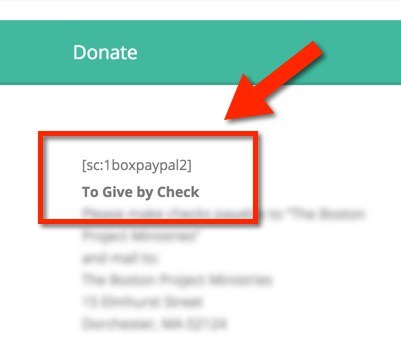
Where there should have been a giving form, there was just a line of code. No way to give online at all. Don't let this happen to you!This isn't the time of year to have a broken donation link!
We did end up sending a check but that wasn't our preference. And we communicated with the organization and they've fixed the page. (They also asked us to alert others to check their pages too.)
Stop what you're doing and check your nonprofit's donation page NOW!The post PSA: Check your nonprofit's donation page NOW appeared first on FundraisingCoach.com.


December 15, 2015
The 4 Donor Groups You Need to Contact Before the End of Year

Photo courtesy of Willy D on Flickr. Some rights reserved.
As we've been approaching the end of year, my coaching clients are asking me to help them prioritize their major gift fundraising contacts. Here are some of the ideas I share with them.1. People who gave in November or December in 2014 but haven't yet this yearThese calls are often simply asking them to repeat the great decision they made last year.
2. People who gave in November or December in previous years but not yet this yearParticularly people who exhibit a pattern of making year end gifts.
3. People who gave generously in previous years but not necessarily at year endThese are more or less the order I'd suggest. Start with more recent donors who have exhibited a behavior of giving at this time of the year and move to those whose last gifts were more distant.
Individual contacts, not spray-and-pray!Obviously, this is not a one-size-fits all letter or email blast! This assumes you're looking at each person as a person and seeing if following up this year is appropriate. Some people may have had a big life event trigger a large gift last year, like the sale of a company or the death of a loved one. Those people typically aren't going to repeat that level of gift. But some may. So looking at each person as a person is essential.
This is why your database is so important. And why your fundraising can't rely solely on spray-and-pray type fundraising letter appeals or email blasts.
A surprising list of major gift prospects to follow up with at end of yearThe most surprising one my coaching clients are discovering is:
4. Those donors you need to thankI'm honored that in reviewing their assignments, my clients keep sharing with me names of people who've been really generous but asking isn't appropriate. One made a large gift earlier in the year; another made the final payment in a multi-year pledge.
Their reaction is, "I want to call them or write a note, but what should I say?" My advice? Say thanks. The donor did something remarkable for the nonprofit, so thank them.
Thanking is the right thing to do. And an added bonus is that very few donors are getting thank you's at the end of year. So your thanks really stand out. Another bonus is that these calls are typically enjoyable. So you might even mix them in between calls to the other three groups.
Giving thanks with not strings attached is pretty contagious! And you'll find the gratitude spills over into the solicitations.
Have a happy end of year!
The post The 4 Donor Groups You Need to Contact Before the End of Year appeared first on FundraisingCoach.com.


November 24, 2015
How to not bore your donors to tears

Photo courtesy of scragz on Flickr. Some rights reserved.
Do you fear your donors are bored with you?Here's some good news: with all the holiday parties at this time of year, you have virtual laboratory for learning to be interesting!
How to be interesting to your donors
In his classic How to Win Friends and Influence People, Dale Carnegie gives you a secret to successful fundraising:
"You can make more friends in two months by becoming interested in other people than you can in two years by trying to get other people interested in you."
Everyone has a story to tell. And many people are just waiting for someone to be interested enough in them to ask them for the story.
You can be that person.
Questions to ask donors without being socially awkward
But have you ever noticed that some people think they're "being interested" but just being socially awkward? Sometimes it helps to arrive at the parties prepared with some questions.
My favorite question is:
"What do you do when you're not [at this event]"
The question is very intentional:
This question allows for humor: what do you do when you're not standing in this receiving line? The humor catches people off guard, catching their interest.
This question allows for any answer: Donors can share a hobby, talk about their family, or share about their work. But if you asked the more pedestrian, "What do you do for work?" not only are you boring, you risk offending stay at home parents, people out of work, and retired folks.
And it allows for a follow up I learned from Bob Burg:
"Wow! How did you get started in that?
This totally opens the door for them sharing their personal story.
It's remarkable how interesting people become when you become truly interested in them. (Click here to tweet that.)
More resources for asking interested questions
Those two questions will lead to hours and hours of conversation. But if you want more ideas here are two more resources:
Professed introvert Jon Swanson has three great conversation prompts in his post How to make the most of holiday gatherings. These will not only help you be interesting to others, but will help reduce the stress of not knowing what to say.
Another great resource is Michael Hyatt's post How to Maximize Your Holiday Conversations. His post comes complete with nine questions to practice.
Don't miss out
The only successful way to create sustainable funding for your nonprofit, you have to develop relationships with donors. And to develop relationships with donors, minimally, you need to not bore them to tears.
These questions will help you actually be interesting!
The post How to not bore your donors to tears appeared first on FundraisingCoach.com.


November 19, 2015
Averting the coming nonprofit leadership crisis - a study
We've been inspired to launch a nonprofit leadership survey. Last month's post on fundraising problems being leadership problems really hit a nerve.
And it's no wonder.
Charities are getting hit hard from outside pressures but based on my experience with the coaching and training I'm doing, I think what we're experiencing now is just the prelude to the leadership issues we'll start seeing coming from within organizations.
There is an alarming increase in the number of executive directors bullied by their own board of directors.CEOs are faced with so many distractions they often focus on the wrong issues at the expense of the right ones - like looking for a magic crowdfunding strategy when they should be retaining donors.And in the absence of a unifying mission, many staff members are creating fiefdoms and silos convincing themselves this will somehow benefit the whole nonprofit.Add to this the 10,000 Baby Boomers reaching retirement age every day, and we're in for quite a ride. Some might even call it a "perfect storm."
Unfortunately, leaders are still largely left with either 1950's style, one-size-fits-all leadership advice or anecdotal stories of what has worked for specific leaders. Very few research-based resources exist to help leaders. So it's probably not surprising that leadership development within our nonprofits is so inadequate that around half of nonprofit boards looking to hire have had to go outside of the organization to bring in a leader. While fresh ideas can be good, we all know what time and effort can be saved by promoting leaders from within.
Building on the researchBoards and executive directors don't have time to figure out what works through trial and error. So my company, the Concord Leadership Group, is partnering with some organizations like the Utah Nonprofit Association, NonprofitHUB, Bloomerang, Blackbaud, StratusLIVE, and DonorSearch to help fix that. Today, we're launching a survey to help take a snapshot of where nonprofits are and uncover best practices that are easy to implement.
We're building on the great work of organizations like CompassPoint and Bridgespan. And adding to it. Unlike many studies, this study isn't limited to the board room or the C-suite. We believe leadership can be exercised at all levels. So we're opening the survey up to all nonprofit roles - board, executive directors, senior leaders, middle managers, frontline staff, and volunteers. We're interested in seeing how the different groups perceive leadership in their nonprofits.
We're also using classifications used in GivingUSA to help identify possible trends across subsectors like health or human services.
Will you help spread the word?Our nonprofits are vital to our communities. But we don't have the klout to lobby for "bailouts" like the financial industry did. Nor do we want to. We're smart enough to figure this crisis out for ourselves.
Would you take the survey? The survey is only about 10 minutes. You can find it at The State of Nonprofit Leadership.
And would you share it with others? The link on the Concord Leadership Group page is:
http://concordleadershipgroup.com/approach/research/
The post Averting the coming nonprofit leadership crisis - a study appeared first on FundraisingCoach.com.


Averting the coming nonprofit leadership crisis – a study
We've been inspired to launch a nonprofit leadership survey. Last month's post on fundraising problems being leadership problems really hit a nerve.
And it's no wonder.
Charities are getting hit hard from outside pressures but based on my experience with the coaching and training I'm doing, I think what we're experiencing now is just the prelude to the leadership issues we'll start seeing coming from within organizations.
There is an alarming increase in the number of executive directors bullied by their own board of directors.
CEOs are faced with so many distractions they often focus on the wrong issues at the expense of the right ones - like looking for a magic crowdfunding strategy when they should be retaining donors.
And in the absence of a unifying mission, many staff members are creating fiefdoms and silos convincing themselves this will somehow benefit the whole nonprofit.
Add to this the 10,000 Baby Boomers reaching retirement age every day, and we're in for quite a ride. Some might even call it a "perfect storm."
Unfortunately, leaders are still largely left with either 1950's style, one-size-fits-all leadership advice or anecdotal stories of what has worked for specific leaders. Very few research-based resources exist to help leaders. So it's probably not surprising that leadership development within our nonprofits is so inadequate that around half of nonprofit boards looking to hire have had to go outside of the organization to bring in a leader. While fresh ideas can be good, we all know what time and effort can be saved by promoting leaders from within.
Building on the research
Boards and executive directors don't have time to figure out what works through trial and error. So my company, the Concord Leadership Group, is partnering with some organizations like the Utah Nonprofit Association, NonprofitHUB, Bloomerang, Blackbaud, StratusLIVE, and DonorSearch to help fix that. Today, we're launching a survey to help take a snapshot of where nonprofits are and uncover best practices that are easy to implement.
We're building on the great work of organizations like CompassPoint and Bridgespan. And adding to it. Unlike many studies, this study isn't limited to the board room or the C-suite. We believe leadership can be exercised at all levels. So we're opening the survey up to all nonprofit roles - board, executive directors, senior leaders, middle managers, frontline staff, and volunteers. We're interested in seeing how the different groups perceive leadership in their nonprofits.
We're also using classifications used in GivingUSA to help identify possible trends across subsectors like health or human services.
Will you help spread the word?
Our nonprofits are vital to our communities. But we don't have the klout to lobby for "bailouts" like the financial industry did. Nor do we want to. We're smart enough to figure this crisis out for ourselves.
Would you take the survey? The survey is only about 10 minutes. You can find it at The State of Nonprofit Leadership.
And would you share it with others? The link on the Concord Leadership Group page is:
http://concordleadershipgroup.com/approach/research/
The post Averting the coming nonprofit leadership crisis – a study appeared first on FundraisingCoach.com.
November 10, 2015
5 Amazing Prospect Research Tools to Learn More About Your Current Donors
I'm pleased to welcome back Bill Tedesco, founder and CEO of DonorSearch, my favorite prospect research tool. I love how easy they make it for nonprofits to do the research that helps you treat your donors well and raise the money you need to fund your mission. In this post, I've asked hime to recommend his top 5 prospect research tools. Isn't it cool that he leads with the theme song from the show "Cheers"?! You can learn more about Bill at DonorSearch.net. And DonorSearch can be reached on Twitter @DonorSearch.
5 Killer Prospect Research Tools to Learn More About Your Current Donors

by Bill Tedesco
Nonprofits could stand to learn something from the lyrics to the Cheers theme song. Yes, that Cheers. You know, the one with Sam and Diane and the whole gang.
The specific lyric that I’m referring to goes a little something like, “Sometimes you wanna go, where everybody knows your name, and they’re always glad you came.”
What made the sitcom Cheers and the bar it’s named after so special was that it was a home away from home for the characters and the audience. It tapped into an innate desire we all have.
We want to be welcomed and recognized.
Your donors are no exception. They want to know that you know them. So, if you haven’t already, it’s time to get to know them.
How can you do that? You can do so through prospect research. This blog has already provided one informative article of top resources for filling in your donor profiles.
Here are five more prospect research tools to take your understanding of your donors to the next level and make them feel at home with your organization.
FEC.GOV
The FEC Political Giving Database is publicly accessible and contains nearly all political contributions of over $200 from the past few decades.
Because the Federal Election Commission requires all campaigns to report any donations they receive, complete with donor name, occupation, address, and gift date, it’s easy to find an accurate political giving history on your donors.
Why is this a great tool for your fundraising efforts? Political giving can say a lot about a donor.
If the donor has made a large political gift, you know that supporter has the ability to make a major gift at your organization as well.
In a bigger sense, political giving demonstrates that the donor is willing to move from consideration to action for a cause that he or she is invested in. That fact is best exemplified by the statistic that donors who give over $2,500 to political campaigns are 14 times more likely to donate to a nonprofit organization than an average person is.
SEC.GOV
Similar to the searchable database of political filings, you can also sift through the Securities and Exchange Commission (SEC) Insider Stock Transactions.
In a nutshell, you’ll be able to see a donor’s stock holdings in publicly traded companies, which should inform your understanding of their giving capacity. Details from this database can help fill out whether a prospect
Although the SEC and FEC databases are separate sites, they’re so thematically similar that they naturally come one after the other. They are both government run websites with a deep wealth of valuable information about your donor’s giving tendencies and capacities. Both can provide key insights into whether a prospect may be a major or planned giving prospect.
MARQUIS WHO’S WHO
Marquis Who’s Who Biographies contains biographical information on more than 900,000 leaders across multiple professional fields. The collection of directories features biographies on important figures in the worlds of science, business, law, government, entertainment, and more.
This database is perfect for uncovering valuable information about those sometimes elusive major gifts donors.
Pick any kind of fundraiser. If you’ve managed to get powerful people to participate, Marquis Who’s Who is an ideal resource to build a working knowledge of all of your VIP’s histories. Starting a relationship with those prospects while equipped with background knowledge gives your team a huge advantage when it finally comes down to making a fundraising ask.
Don’t overlook the research power of LinkedIn. Especially if your budget is limited, LinkedIn gives you a free window into the professional lives of your donors and prospects.
Using LinkedIn, you can uncover valuable details about donors’ business affiliations. A quick search could reveal that one of your most loyal and active donors has close ties to a prospect that you’ve been extremely interested in building a relationship with. Now that you know that, you can ask your donor to make that introduction for you.
From another angle, depending on how you acquired your donors, you might not have complete donor profiles on them. LinkedIn will be fast to show you the employers of your donors. Many of those employers are likely to offer corporate giving opportunities, which you should be making your supporters aware of.
LinkedIn is not the best tool for bulk screening. But if you’re looking to fill in some professional blanks about a collection of donors, it is a worthwhile starting point.
HOW AMERICA GIVES — THE CHRONICLE OF PHILANTHROPY
The How America Gives page is a curveball on this list. The first four prospect research tools were hyper-focused on specific donors. They teach you A, B, C, D, and so on about your prospects and donors, all of which are significant and necessary. This page takes a different approach.
The site still teaches you about your donors, but from a new vantage point. It is an interactive tool that enables users to study charitable giving based on geography. It was built a few years ago, but the ongoing impact of this page is derived more from the trends it reveals than the exact specifics of the moment it was created.
Whether you want to search by county, city, ZIP code, or state, you can get a complete picture of the giving trajectory of communities in the United States. This tool will help you make better informed predictions about the giving tendencies of your prospects and donors, using the geographic data.
Oh, and it is really fun and engaging to use.
Research is an ongoing task
Why are you looking into prospect research tools? Maybe you’re new to the topic. Maybe your organization is not performing as well as you’d like it to be. Maybe you’re trying to reinvigorate your prospect research efforts.
No matter the reason, no matter which of these tools most caught your attention, the important takeaway here is that you should be researching your prospects — actively and avidly.
Make sure your donors know you know their names and that you’re always glad they came.
The post 5 Amazing Prospect Research Tools to Learn More About Your Current Donors appeared first on FundraisingCoach.com.


5 Killer Prospect Research Tools to Learn More About Your Current Donors
I'm pleased to welcome back Bill Tedesco, founder and CEO of DonorSearch, my favorite prospect research tool. I love how easy they make it for nonprofits to do the research that helps you treat your donors well and raise the money you need to fund your mission. In this post, I've asked hime to recommend his top 5 prospect research tools. Isn't it cool that he leads with the theme song from the show "Cheers"?! You can learn more about Bill at DonorSearch.net. And DonorSearch can be reached on Twitter @DonorSearch.
5 Killer Prospect Research Tools to Learn More About Your Current Donors
by Bill Tedesco
Nonprofits could stand to learn something from the lyrics to the Cheers theme song. Yes, that Cheers. You know, the one with Sam and Diane and the whole gang.
The specific lyric that I’m referring to goes a little something like, “Sometimes you wanna go, where everybody knows your name, and they’re always glad you came.”
What made the sitcom Cheers and the bar it’s named after so special was that it was a home away from home for the characters and the audience. It tapped into an innate desire we all have.
We want to be welcomed and recognized.
Your donors are no exception. They want to know that you know them. So, if you haven’t already, it’s time to get to know them.
How can you do that? You can do so through prospect research. This blog has already provided one informative article of top resources for filling in your donor profiles.
Here are five more prospect research tools to take your understanding of your donors to the next level and make them feel at home with your organization.
FEC.GOV
The FEC Political Giving Database is publicly accessible and contains nearly all political contributions of over $200 from the past few decades.
Because the Federal Election Commission requires all campaigns to report any donations they receive, complete with donor name, occupation, address, and gift date, it’s easy to find an accurate political giving history on your donors.
Why is this a great tool for your fundraising efforts? Political giving can say a lot about a donor.
If the donor has made a large political gift, you know that supporter has the ability to make a major gift at your organization as well.
In a bigger sense, political giving demonstrates that the donor is willing to move from consideration to action for a cause that he or she is invested in. That fact is best exemplified by the statistic that donors who give over $2,500 to political campaigns are 14 times more likely to donate to a nonprofit organization than an average person is.
SEC.GOV
Similar to the searchable database of political filings, you can also sift through the Securities and Exchange Commission (SEC) Insider Stock Transactions.
In a nutshell, you’ll be able to see a donor’s stock holdings in publicly traded companies, which should inform your understanding of their giving capacity. Details from this database can help fill out whether a prospect
Although the SEC and FEC databases are separate sites, they’re so thematically similar that they naturally come one after the other. They are both government run websites with a deep wealth of valuable information about your donor’s giving tendencies and capacities. Both can provide key insights into whether a prospect may be a major or planned giving prospect.
MARQUIS WHO’S WHO
Marquis Who’s Who Biographies contains biographical information on more than 900,000 leaders across multiple professional fields. The collection of directories features biographies on important figures in the worlds of science, business, law, government, entertainment, and more.
This database is perfect for uncovering valuable information about those sometimes elusive major gifts donors.
Pick any kind of fundraiser. If you’ve managed to get powerful people to participate, Marquis Who’s Who is an ideal resource to build a working knowledge of all of your VIP’s histories. Starting a relationship with those prospects while equipped with background knowledge gives your team a huge advantage when it finally comes down to making a fundraising ask.
Don’t overlook the research power of LinkedIn. Especially if your budget is limited, LinkedIn gives you a free window into the professional lives of your donors and prospects.
Using LinkedIn, you can uncover valuable details about donors’ business affiliations. A quick search could reveal that one of your most loyal and active donors has close ties to a prospect that you’ve been extremely interested in building a relationship with. Now that you know that, you can ask your donor to make that introduction for you.
From another angle, depending on how you acquired your donors, you might not have complete donor profiles on them. LinkedIn will be fast to show you the employers of your donors. Many of those employers are likely to offer corporate giving opportunities, which you should be making your supporters aware of.
LinkedIn is not the best tool for bulk screening. But if you’re looking to fill in some professional blanks about a collection of donors, it is a worthwhile starting point.
HOW AMERICA GIVES — THE CHRONICLE OF PHILANTHROPY
The How America Gives page is a curveball on this list. The first four prospect research tools were hyper-focused on specific donors. They teach you A, B, C, D, and so on about your prospects and donors, all of which are significant and necessary. This page takes a different approach.
The site still teaches you about your donors, but from a new vantage point. It is an interactive tool that enables users to study charitable giving based on geography. It was built a few years ago, but the ongoing impact of this page is derived more from the trends it reveals than the exact specifics of the moment it was created.
Whether you want to search by county, city, ZIP code, or state, you can get a complete picture of the giving trajectory of communities in the United States. This tool will help you make better informed predictions about the giving tendencies of your prospects and donors, using the geographic data.
Oh, and it is really fun and engaging to use.
Research is an ongoing task
Why are you looking into prospect research tools? Maybe you’re new to the topic. Maybe your organization is not performing as well as you’d like it to be. Maybe you’re trying to reinvigorate your prospect research efforts.
No matter the reason, no matter which of these tools most caught your attention, the important takeaway here is that you should be researching your prospects — actively and avidly.
Make sure your donors know you know their names and that you’re always glad they came.
The post 5 Killer Prospect Research Tools to Learn More About Your Current Donors appeared first on FundraisingCoach.com.
November 3, 2015
Enter into the DONOR'S story
Last week at the Blackbaud conference, I heard yet another story of good fundraising letters being eviscerated by marketing. Unfortunately, it happens all the time.
A fundraiser studies her craft, reads the results of fundraising tests, and creates a compelling appeal. Then a marketing person gets involved and tries to "fix it." They use passive voice in an attempt to sound lofty and confident. They put in keywords. They cut out most of the talk about the donor and shift the focus to the nonprofit.
You see, the marketing person has studied his field too. So he's doing his best with what he knows. Unfortunately, that will cause the nonprofit to lose money!
7 Ways to Improve Your Stories for FundraisingThere's help! The Movie Monday team recorded a 20-minute video with Steven Screen and Jeff Brooks. They brilliantly share what makes a good nonprofit story and what ends up sabotaging your stories.
One of the tips is that nonprofit storytelling is not journalism. Journalism type communication involves bringing a story to the donor. In fundraising, you are telling a story the donor is already in.
That means to be a successful fundraiser - in person or in writing - you need to listen to find the story. Watch this video to see what they mean. If you're nonprofit depends on donor gifts, you'll be glad you watched this.
The post Enter into the DONOR'S story appeared first on FundraisingCoach.com.


