Heather Rule's Blog, page 3
November 16, 2020
Angels in the Outfield commentary, part 5: ‘I love it when they come from above like that’
The next day, Knox shows up at Murphy’s office. Knox was fined $5,000 for “jumping Gates.” That seems to be a little light, but maybe I’m not factoring in that this was more than 25 years ago. But seriously, not even a suspension? OK then. Word on the street is that Ranch is looking into civil charges for Knox “popping him.”
 At the mention of that, Knox breaks out in a smile and says he’s felt better since he “slugged Wilder.”
 “Your pistol’s smoking pal,” Murphy replies, keeping up his southern lingo. He adds more context, saying Knox and Ranch have been at each other’s throats since they were players. Bingo. These middle-aged guys have issues that go way back. Not only that, Knox goes on to say that Ranch spiked his knee and ruined his career. Murphy dismisses it as an accident.
“It wasn’t an accident,” Knox says, in a serious tone. “When you slide into the catcher with your nails up, it’s on purpose.
“I was coming into my best years.”
Murphy ends the exchange by using two more terms from his lingo book: Cowpies (as in, Knox shouldn’t make more to step in) and Manure (as in, Knox has enough on his boots now).
Knox and Tony Danza exchange words
It’s a new day and new game for the Angels. A bus full of kids, with Roger and J.P. inside the stadium this time, arrives as the public address announcer mentions that every Wednesday is Kids Day. The boys run down toward some aluminum bleacher seats in the outfield and comment on how it’s much better than the tree. Look carefully, because they sit right in front of the Pine-Sol lady from the commercials. If you watched TV in the 90s, you know.
They’re at the stadium in time for batting practice, which I find a little strange. Would this many fans already be at the stadium as early as batting practice, for a team this bad? Anyway, Tony Danza is back and confirms he’s in fact a pitcher on the injured list. But he asks “skip”/Knox when he’s getting off that list, since the trainer has cleared him.

We start to get some context on Danza’s character. Knox doesn’t seem to like the guy and informs him he has no interest in sending him to the mound. To hear Knox tell it, the guy blew his arm out and took too many pain pills.
“Pain pills? You were the one stuffing down my throat five years ago in Cincinnati!” Danza sputters.
They don’t dig into it much, but this establishes that whatever the path, Knox managed Danza for those more successful teams. Knox said he traded him back then, even though managers don’t directly make trades, of course. Then Knox got stuck with him again. Danza has a random coughing fit to end the exchange.
Picking up where they left off
The Angels are lined up during the national anthem prior to the game. Many are singing along. Knox is rubbing at his eyes. Adrien Brody thinks he’s crying, but Knox tells him to “drop dead” because he only got sunscreen in his eyes. Knox gives you the warm-and-fuzzies, doesn’t he?

The dimwitted pitcher uses a magic eight ball to ask if he’s going to win. A “no” turns up first before a “maybe,” which seems to really please the dude. One of the middle infielders comes by and sings the anthem “Jose can you see…” Pitch is confused and clarifies that the song is about a Spanish guy. It takes all the fun out of making fun of him for the infielders. Pitch – his name is Bass – slides to the mound to prepare for the game.
In the radio booth, color-guy tries to offer up weird facts about Bass, because I’m sure his pitching isn’t anything special. Who doesn’t floss their catcher’s teeth in the dugout? Gotta love those media guides and game notes. Bass is 2-11 on the season.
Bass sets about 18 times before delivering to the first Toronto hitter. The pitch is lined into center and off the outfield wall with the 400’ mark. Williams slams into the wall and obviously does not catch the baseball. First pitch 1:10 p.m., temperature 75 degrees, error-8 and “a man on base.”
A gum-dropping catch
The scoreboard shows a scoreless game in the top of the sixth inning, which seems promising for a terrible team. Before the Jays bat, we see Ranch with his shiner that Knox gave him, putting on sunglasses… and pouring a generous amount of liquor into his Angels mug. This guy is the model employee.
At the plate, the batter offers some weird arm movements in his batting stance. Bass is still on the mound with his giant wad of bubble gum. The batter “smashes one to deep center,” Ranch says. But Williams is on his horse with his eye, we presume, on the ball. Meanwhile, we see Roger slowly stand in his seat looking up toward the sky, as the Pinesol lady sits behind him looking board.
 Roger sees a graphic of two angels coming down from the sky. They lift Williams up into the air and propel him toward the baseball. He’s suspended in the air so long that he makes the catch. The angels drop him like a bad habit, a significant drop, and high-five before disappearing. It’s actually kind of amazing Williams held onto the ball. He lands with his cheek on the baseball, which barely stays in his glove.
 Then the reactions start flying: A couple of “holy cow!” reactions from Roger and J.P., which is very 90s. Knox asks how he did that. Ranch shuts hit mic off, removes his shades with one hand and demands to know how he did that. Bass stands looking toward the outfield with his mouth open, causing his gum wad to fall to the dirt. Murphy looks through his binoculars in his suite.
Who were those guys in ‘sparkling pajamas?’
“That sports fans is a play you’re going to see on baseball highlights for years to come,” Ranch says, before going off-air and demanding for his lackeys to “get me something!” I’m not really sure what he wants here. Stats about the last time angels dropped from the sky? That’s not going to be in any media guide.
Roger tries to tell J.P. about the guys who came down from the sky in “sparkling pajamas.” But, as we all know in movieland, since this was Roger’s prayer, it’s not unusual that nobody else saw the sparkling guys.
Roger even tries to ask some middle-aged, beer-loving guy, who for some reason is sitting right next to these young boys when there are plenty of open spaces, about the angels. Gap-toothed guy with a blue tank top and an abundance of chest hair, is unimpressed with the play, calling it a lucky catch. He takes a swig of his yellow, paper beer cup (which I swear I remember seeing from my days going to the Metrodome) and tells Roger to tell his parents about it. There’s an audible belch as the guy gets up to walk away. Classy. I guess he has nothing better to do on a Wednesday afternoon.
 Enter, Christopher Lloyd. He appears out of nowhere with curly salt-and-pepper hair to comment on the amazing play. “I love it when they come from above like that.”
 Roger is just glad somebody else sees the sparkling guys but is still surprised to learn they’re actual angels. J.P. looks over and sees Roger talking to no one, confirming that Roger is in fact the only one who can see the angels; Lloyd confirms this in a second, too.
Lloyd makes a comment about one of them and his “training wings” as a rookie. Getting creative with the fictional figures. I like it. Lloyd uses his magic to get an AL hat off an umpire’s head and introduces himself as Al. That doesn’t seem like his real name though.
Roger asked for help, so the angels delivered as part of an “as-needed situation.” Then Beer-guy comes back with a fresh cup of suds, sitting right on top of Al, who morphs away.
 Angels in the Outfield commentary, part 1: 'I'd say when the Angels win the pennant'
Angels in the Outfield commentary, part 2: 'Boy, they're bad'
Angels in the Outfield commentary, part 3: 'You don't even *lose* as a team!'
Angels in the Outfield commentary, part 4: 'God, if there is a God...'
Angels in the Outfield commentary, part 1: 'I'd say when the Angels win the pennant'
Angels in the Outfield commentary, part 2: 'Boy, they're bad'
Angels in the Outfield commentary, part 3: 'You don't even *lose* as a team!'
Angels in the Outfield commentary, part 4: 'God, if there is a God...'


November 15, 2020
Angels in the Outfield commentary, part 4: ‘God, if there is a God…’
Knox and the team owner Murphy have a little chat in the next scene. For some odd reason, one I really didn’t realize until now, they’re meeting in one of the upper deck seating areas in the stadium. Rather than, I don’t know, one of the offices that I’m sure they both have at the park. Maybe it was a movie thing, because having the stadium as a backdrop is more exciting to look at than an office.
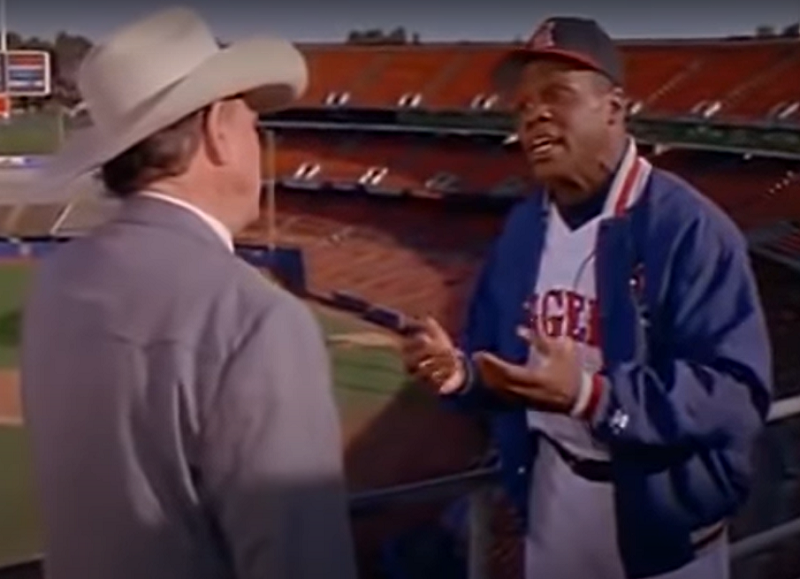 Murphy has a cowboy hat and a southern accent. Expect more of his southern drawl throughout the movie. Knox has cooled down from his clubhouse tirade, but not by much. He says he can’t take it anymore and wants his entire roster traded immediately. Obviously, Murphy says he can’t trade 25 players. I’m also wondering if this guy is both the owner and general manager, because the GM is the one who’s usually responsible for trades.
 “I can’t win with these guys,” Knox says, as he starts to raise his voice. “Nobody can. There’s a thing called talent. They don’t have it.”
Murphy tells him that it’s not Cincinnati, so nobody expects him to win with this team. There’s some unpacking here. What’s the deal with Cincinnati? Is that where Knox managed before? And what does that comment about this Angels team mean? Is this a rebuilding year?
If it is, Knox isn’t having it, saying he came to manage a winning baseball team. Murphy, spewing that cowboy stuff, calls him “partner,” and says “you’ll ride through the dark days.” Well. I don’t know about Knox, but that seems pretty reassuring to me.
Postgame show
Next up, Knox has a postgame interview with Ranch Wilder, via TV this time, down on the field. This seems rather odd and out of place. Either way, I guess he’s getting his exercise, first the wrestling match on the mound, tossing over the snack table, jogging up the upper-deck stairs to meet with Murphy and now back down on the field for an interview.
Showing again how Ranch and Knox have some past beef, Ranch starts right in off-camera, poking Knox by saying the commissioner’s fine will be “pretty hefty” for the ejection. Thanks, captain obvious. Of course, he’s going to get fined.
 A TV producer of some sort holds up a clipboard with a mirror for Ranch before she quickly ducks away with a 3, 2, 1 motion and barely manages to get out of the live shot. She also didn’t seem to get a signal with any earpiece, so I guess this broadcast team operates under psychic powers.
 Knox pulls out some dark shades for the interview, looking stoic and calm for a task I’m sure he’s annoyed with after a bad loss. Ranch annoys sports reporters everywhere when he starts with a non-question in which he might as well have said “tell me about…” but goes with a statement of “tough loss today.”
“Any loss is hard,” says Knox, super calm and… wow, what a hilarious delivery. Very insightful as well.
Ranch and Knox can’t play nice
Ranch dives in with his response to offer the viewers more context into Knox and his history: “But this one really got to you. You leave Cincinnati after 10 years of winning ball clubs, although the really big one always seemed to be just out of reach.”
Got it. Knox had success with the Reds and apparently didn’t win a World Series. Ranch goes on to say that there were high expectations on Knox to turn this Angels club around, but that’s not happening. Again, not exactly a professional moment for Ranch, especially if he works for the team.

Knox can’t take it anymore. It’s OK for him to badmouth his team, but he’s certainly not going to allow Ranch to slander the fellas, telling him the season’s only half over. Knox gets right up in Ranch’s face, taking off his glasses as he does this, one-handed, because this is the movies, after all. Ranch reminds him the Angels are in last place.
“You outta know how one incident can change the course of events,” Knox says. Oh yeah, you can cut the Ranch-Knox tension with a knife.
Ranch responds with some lame stuff about wrong place-wrong time. The dialogue, still on the air, isn’t all that exciting, but they are face-to-face. Professional-producer gal shifts the camera guy to color-guy standing with a microphone and trying to wrap it up. The movie cam pans back to Ranch as he tries to save the interview, but Knox is feeling feisty today, and he slugs Ranch in the face, dropping him to the ground like a sack of potatoes.
Color-guy tries to save the day as Knox walks away. FSNorth postgame shows are nothing like this nonsense.
Cat brains with food coloring
Back at the foster home, Maggie feeds the boys dinner, including a new character, Miguel, who’s a little older in his teenage years than Roger. He makes a comment about how the Angels never win, causing Roger to visibly scoff as he moves his fork around his plate. J.P. is the little optimist and thinks they could win before uttering “it could happen” for the second time.
“Yeah, and you could drop dead after dinner. With food poisoning,” Miguel taunts J.P. as the little boy’s mouth literally drops open in shock.
Maggie waves some mouthwatering Jell-O around in a plastic Tupperware container for dessert. Miguel is clearly only around to be an instigator and says it’s actually cat brains with food coloring, adding that Maggie kills the cats at night and does this all to save money. Roger is in a mood and aggressively tells him to “shut up!” Children’s-movie alert: Maggie will not have those words uttered in her house.
At bedtime, Maggie walks around the bunk-bed-filled room collecting clothes for the laundry as she goes through the verbal checklist with the boys to see if they brushed their teeth, washed their faces, said their prayers, and, for some reason, picked the lint from between their toes.
After she leaves the room, Miguel and Roger mention one item they didn’t do before J.P., cuddling a teddy bear, asks what lint is, causing Miguel to call him a “butthead” and also tell him to shut up. Such harsh words for a children’s movie! They’re tucked in sleeping bags, and Miguel takes a shot at Maggie being “too old to bend over and tuck in sheets.” Roger defends her, saying she has a lot to do.
Miguel fires one last verbal shot at J.P. before the young lad says he’ll pray that Miguel meet a nice family before “it could happen” instance No. 3 of the movie.

Did you say your prayers?
Roger, on the top bunk above J.P., stares out the high window by his bed and gazes at the night sky of stars. The visit from his dad is no doubt still weighing on him from earlier.
Roger offers up a prayer:
“God. If there is a God. If you’re a man, or a woman. If you’ll listen. I’d really, really like a family. My dad says that’ll only happen if the Angels win the pennant. The baseball team, I mean. So, maybe you could help them a little. Amen. … A-woman, too.”
It breaks your heart a little as a star shines brighter in the sky.
Angels in the Outfield commentary, part 1: 'I'd say when the Angels win the pennant'
Angels in the Outfield commentary, part 2: 'Boy, they're bad'
Angels in the Outfield commentary, part 3: 'You don't even *lose* as a team!'
November 14, 2020
Angels in the Outfield commentary, part 3: ‘You don’t even *lose* as a team!’
Now, let’s get to some personalities on the Angels team. We’re in the clubhouse postgame, watching players’ hands lightly touch a pillar in the room as they walk by. Pitcher Gates has a front-row seat to this as he’s icing his neck following the scuffle with his manager.
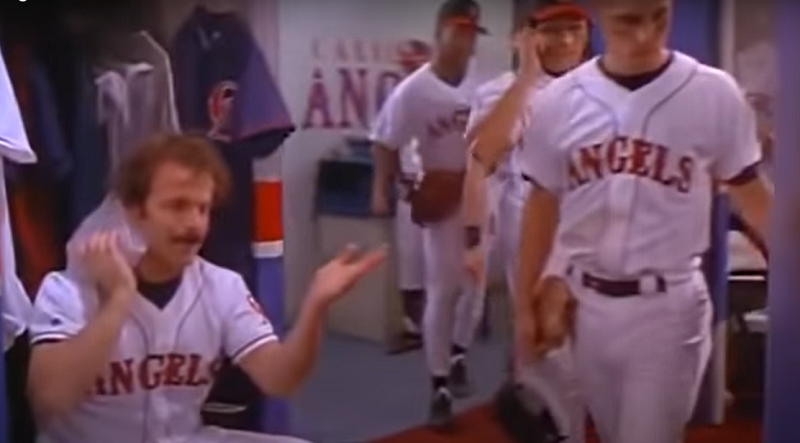 “Why do you idiots do that after we’ve lost?”
 “It’s for good luck, man,” an Angels teammate responds, acting like Gates is a moron for asking.
Then Adrien Brody walks by, saying that after 15-straight losses (remember the continuity from the boom box in part one?) they should find something else to rub. Another player says they should do it beforethey lose; he doesn’t seem too bright.
From meats to meeting one of the movie’s stars
Next, there’s the usual bustle of activity in a postgame clubhouse. Players are at a snack table taking in that postgame spread. Win or lose, everybody’s gotta eat. The catcher picks up a piece of lunch meat and is not pleased: “Aw, not again. They got the wrong kind of salami!” he exclaims to the room. This catcher, Messmer, is very tall and a bit portly. So, it looks like we’re establishing him as the stereotypical fat-joke/food-joke character for the movie. He and Doris Murphy should get together.
 Tony Danza is introduced in a hot tub working his right arm. He’s also the third actor in the first 20 minutes of the movie to puff on a cigarette. I didn’t realize how much smoking was still an everyday thing even in the 90s. Then again, I remember when we had “smoking or non” sections in restaurants.
 A couple of teammates ask Danza about his arm and tell him he’ll be pitching no-hitters any day now. Alright, so this guy is an injured pitcher. Got it.
Still on Danza, the audio cuts to some kind of musical rap starting. Here begins one of my favorite, funniest scenes in the movie. Back in the clubhouse, a random player is making up a rap on the fly as he walks around his teammates and starts to take off his jersey.

Rap it out
“Boys of summer
and it’s a big bummer
No matter who we play
We give the game away
Cuz we can’t win
That would be a sin
We even lose the games before we begi---”
This guy, Mapel, is abruptly cut off when Knox enters the room from behind and shouts “Save it, Mapel!” Something I recently noticed, is that when Knox startles Mapel, the player gets turned around and bangs his head on the “good-luck” pole.
The room falls silent at the Knox bark. Again with a purpose, Knox strolls across the room and uses both hands to turn over the table of cold cuts and postgame goodies. Avid Twitter users have probably seen this moment in GIF form as a sign of some frustration. For good measure, a random lunch meat rolls over to Messmer. He stops it with his foot and offers a “bummer.” Yes, the big guy is disappointed about the food. Shocker.
Manager tears into his team
And here we go. This is the rant where Knox is pissed. Again, it’s very PG without the profanity, but it’s still very good. Knox goes all out with his anger, straining his face/neck muscles, almost challenging a vein to pop, and he screams at his team for their terrible performance. We never do learn the final score of the game they just lost, but it really doesn’t matter.
“One more loss! One more loss which could have been a win!” Knox looks around at his team as the players stand around sheepishly.
“You call yourselves professionals!” I love the way Knox moves his head around in sarcasm mode right here.
“I have never, ever seen a worse group of 25 players!” On this line, Danza shows up in the back of the room, shirtless with a towel around his waist.

“You don’t think as a team! You don’t play as a team! You don’t even lose as a team!” Quick exit stage right for Danza. He doesn’t need this.
“You all got your heads, so far up your butts – you can’t even see the light of day!” Again, the delivery here is so good and full of rage that you forget there’s no profanity.
“One more loss (as he looks to the sky, imploring), and I’ll, and I’ll do this!” He grabs a chair by a locker and tosses it at a rack of bats, causing them to go flying in the direction of players.
“… To each and every one of you!”
“I want you here, in uniform at 9 (a.m.) tomorrow! We’re going back to work on fundamentals!”
Fundamentals?!
Another player quickly jumps in, asking why fundamentals, in the middle of the season, which establishes where we are time-wise. Probably June or July. For a team that’s lost 15 games in a row, and had two outfielders collide with each other on a play, do the players really think they have a right to question why their manager wants to send them back to basics?
Then the not-so-bright guy says he thought the game started at 1. “It does start at 1! And you’re a jackass!” Hey, a swear, haha.
I think we’ve established that this guy will be the stupid character of the movie. He responds by very seriously saying he’s a pitcher, not a jackass. Another teammate informs him that he can be both; it’s very common. The scene ends with the pitcher passing out backward into his locker, which makes sense since one of the flying bats nailed him right in the face.
 Angels in the Outfield commentary, part 1: 'I'd say when the Angels win the pennant'
Angels in the Outfield commentary, part 2: 'Boy, they're bad'
Angels in the Outfield commentary, part 1: 'I'd say when the Angels win the pennant'
Angels in the Outfield commentary, part 2: 'Boy, they're bad'
November 13, 2020
Angels in the Outfield commentary, part 2: ‘Boy, they’re bad’
Now that some of the family drama is out of the way, for now, let’s cut to a baseball game. We see a binocular shot with the circles and black screen around the view of the field. True to the radio broadcast from earlier, the Blue Jays are batting against the Angels. We hear a radio this time, too, letting fans know the Angels are down by 7 runs in the 8th inning. So, another banner game for the Halos.
 Roger and J.P. are viewing the game on some high tree limbs outside the stadium. Roger has the binoculars and J.P. has the radio. The avid little baseball fans want to see a strikeout. A righthanded pitcher with a mustache named Gates is the hurler for the California Angels. Yes, let’s take a moment here and remember that the team was known as the California Angels in the 90s, rather than the Anaheim Angels or the Los Angeles Angels of Anaheim.
 A pitch is driven into left-center as the two fielders run to attempt the catch. In center, Ben Williams (McConaughey) calls for the ball while Norton just kind of looks over at him like an idiot while he continues to also run toward the ball. Did I paint a good enough picture here? The fielders collide and definitely do not catch the ball.
“And Williams and Norton collide, and the catch is blown.”
Meeting the voice of the Angels and the fiery manager
Here, we see the first shot of the team’s play-by-play announcer in the radio booth, Ranch Wilder played by Jay O. Sanders. Wilder speaks into one of those old-fashioned microphones. He’s also not wearing headphones here, something I’ve seen all radio broadcasters do before. So, there’s a point off for realism.
For good measure in the outfield, Norton and Williams bump heads (with a loud sound effect) as they scramble around the field on their hands and knees looking for the baseball. We don’t see the result of the play, or where the batter ends up, but I’m not sure how this isn’t an inside-the-park home run, unless the batter is hobbling on one leg or something.
 Cut back Roger, who utters a “boy, they’re bad” from his perch in the tree. Then, the camera goes right to a perfect shot of a leg violently kicking over a Gatorade cooler full of ice and orange sports drink, spilling it all over the dugout steps and floor.
 The leg came from Angels manager George Knox, played by Danny Glover. His introduction into the movie shows his name on the back of his jersey with the audio of Wilder mentioning the manager’s temper. Knox puts up his right hand to signal the bullpen move, with an angry, but stoic, face. He’s going to take Gates out.
Not your average pitching change
Now, this is the 8th inning down 7 runs. I sure hope Gates is from the bullpen. Because if your starter is still pitching that late into the game down by 7, that’s a major problem. Still, Gates looks pissed he’s getting the hook as Knox holds out his hand and demands the baseball.
“It ain’t my fault, you need a new outfield!” Gates says, as we see Norton and Williams up walking around because apparently there’s no athletic trainer or concussion protocol. Knox reiterates that Gates is out of the game, a little more forcefully, and then Gates loses it.

“You want the ball? Go get it! You want my glove? Go get it!” As he throws the ball and glove like a child.
Cue the chaos. Knox grabs Gates by the shoulders and the two begin to fight it out. The middle infielders rush in. The catcher comes out to the mound, too, but he looks like he doesn’t know what to do as his manager and pitcher are rolling around on the ground in a tussle.
“You’re washed up, you’ll never pitch again!” Knox says.
The benches clear, but before Toronto gets too far, their (stereotypical old-dude) manager with a giant wad of tobacco in his cheeks calls them off by telling them it’s not their fight. Ranch says Knox has created total chaos and rises from his seat holding his mic calling the scene outrageous with Knox “fighting off his own players.” Gates gets pulled from the scrum and fires back: “You can’t manage a team, man!”
Ejection from the game, and from the tree
Here’s kind of a confusing part: The umpire then emphatically throws Knox out of the game. Roger, a kid I thought was a diehard fan, is mad and wants the ump to leave him in. Wait. Is he serious? You expect a manager to not get tossed after he wrestled his own pitcher to the ground in the middle of a game? Please. Then J.P. offers a lame “don’t throw him out!” The jury’s still out on how much he knows about baseball.
Their voices must have been loud enough to attract the attention of a security guard, who just so happened to be on the upper-deck grandstand stairs in view of the boys. He turns around and asks the kids what they’re doing in the tree. Um, I think it’s obvious, buddy. They didn’t want/have the money to pay for a ticket and are trying to watch a baseball game.
“You better have tickets for that tree!”
Seriously, the guard said that. It’s not even that funny. Obviously, if they had tickets, they’d be in the stadium. The boys quickly head down the tree trunk, and I’m always left wondering: How many games did they watch like this? They seemed genuinely surprised they got caught.
Ranch Wilder and his true colors
Meanwhile, Knox is trying to get his money's worth on his ejection, arguing in the umpire’s face, complete with his ball cap on backward. Knox gets all indignant and says that the ump can’t kick him out of the game, because he’s leaving. Sure, alright. This exchange is only funny because it’s totally a Disney/rated-G proof. You know this is a profanity-laced tirade if this is a real game.
 In the booth, Ranch flips his mic switch to the off position and puffs on a cigarette. He’s sitting next to who, I assume, is the color-radio guy; for some reason, when I watched as a kid this guy always reminded me of a Jim Carrey look alike. He asks Ranch if Ranch could do any better with the Angels, to which Wilder scoffs and says “blindfolded.” Color-guy promptly recalls Wilder’s troubles as a manager.
OK, so we’ve learned Wilder was at one time a baseball manager. File it away.
We’re seeing for the first time what a douchebag Ranch can be, as he tells color-guy to “zip it, pal,” and puts out his cigarette in color-guy’s Angels coffee mug. Ranch gets back on the air – without headphones on, it seems he’s psychic and knew the commercial was over – and comments about how long Hank Murphy, the Angels owner, will put up with these shenanigans. It would have been nice if he actually used that word, shenanigans.
Cut to an old fella in a cowboy hat listening to the broadcast; we’ll assume that’s Murphy. Ranch wraps up his coverage with this smug gem: “With George Knox calling the shots, you never know what will happen.” That definitely doesn’t seem like a homer-type announcer who works for the team.
Angels in the Outfield commentary, part 1: 'I'd say when the Angels win the pennant'
November 12, 2020
Angels in the Outfield commentary, part 1: ‘I’d say when the Angels win the pennant’
Back by popular demand, I’ve got another sports-movie commentary for everyone. OK, so maybe it’s back because I wanted to write about another movie. Though I do appreciate the nice feedback I received this summer when I wrote about A League of Their Own and The Rookie.
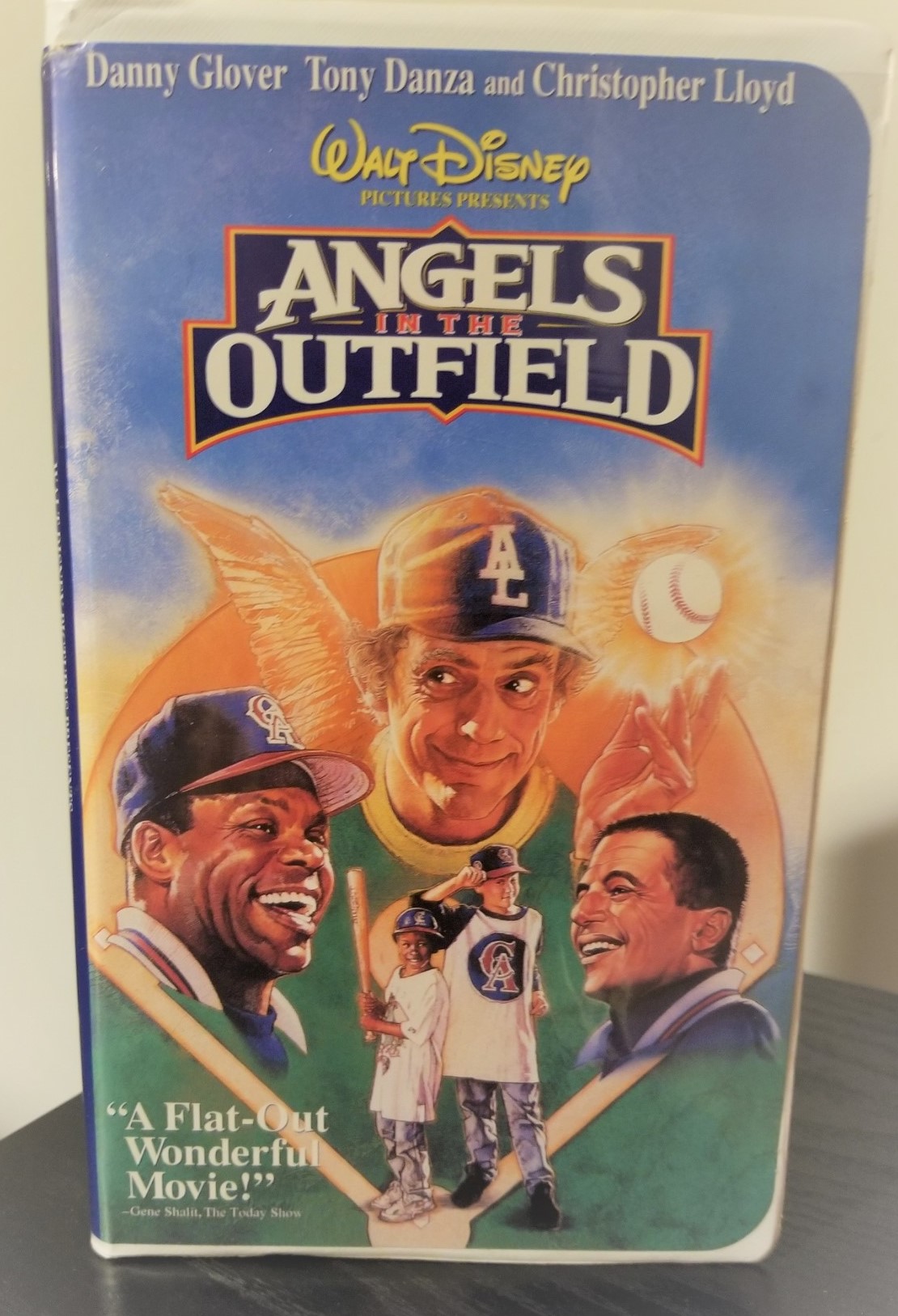 This time around, I’m dipping into the Disney well again for a baseball movie: Angels in the Outfield. Straight out of the summer of 1994 starring Danny Glover, Tony Danza and the ever-so-dreamy tween Joseph Gordon-Levitt.
 Here’s the premise as told by the film’s IMDB page: When a boy prays for a chance to have a family if the California Angels win the pennant, angels are assigned to make that possible.
Buckle up. If you read any parts of my first two movie commentaries, you know I dig deep into the details and my own personal takes.
Riding around the stadium
We start out in the clouds surrounded by blue sky and the movie’s musical theme in the background. The standard “Walt Disney Pictures Presents” comes across with the Angels in the Outfield graphic, followed by names in the opening credits flash across the sky, mixed in with baseballs flying around in slow motion.
The clouds start to break away, revealing the baseball stadium down below as the baseball from the sky sails toward the earth and presumably to the pitcher’s mound in Anaheim, Calif.
The young J.P. and Roger (Gordon-Levitt) are riding their bikes – J.P. has the big, arching handlebars – around on the street, and it’s J.P. who utters the first line of the movie: “Roger, do you believe in Heaven?” What comes next is the writers wasting absolutely zero time giving viewers background on these two kiddos. So if you arrived late to the theater (if you saw this in a movie theater, which I did not, having caught it on the Disney Channel and via the VHS player at home), you might have missed this early plot point.
 Roger responds to J.P.’s question by saying that he guesses he believes in Heaven, because that’s where people say his mom went. Point 1: Roger’s mother is deceased.
 The answer gets J.P. excited for a second, saying that maybe his dad and Roger’s mom are friends “up there,” in Heaven. Point 2: J.P.’s dad is also deceased.
Then the two make it a point to explicitly say that they’re best friends, in case we’re wondering.
The boys continue to ride their bikes with shots of the Major League stadium in the background as some more opening credits roll. Here are a couple of things that I only realized watching the movie later. Matthew McConaughey and Adrien Brody are in this movie. Big Hollywood stars, kind of before they were big Hollywood stars. We’ll meet them later.
Do they have to change their name to “Foster?”
J.P. isn’t done hitting viewers with the plot points here. Not only are these boys without at least one parent, but J.P. randomly asks Roger why Maggie’s house is called a “foster home.” Roger has no idea and makes something up, then adds that they won’t be there a long time because “something good’s going to happen.” Point 3: They’re foster kids who presumably live together.
J.P. is quite the optimist and agrees about something good before uttering what will become his catchphrase in the movie: “It could happen.”
 The end of the credits run as a few random kids run past what we come to know as Maggie’s house as Maggie walks out the front door toward the clothesline in the yard. A passerby wearing jeans, shades and a sleeveless white tee carrying a boom box (very 90s) strolls by on the sidewalk.
 Listen carefully, and you’ll hear he’s listening to a baseball game, as the announcer says that the Angels are trying to break a 14-game losing streak during their game against the Toronto Blue Jays this afternoon at Anaheim Stadium.
Roger and J.P. return from their bike ride, though apparently, they weren’t back by 5 p.m. when they said. Maggie flashes her watch in front of their faces for evidence, but J.P. says he can’t tell time yet. He politely asks if they’re back by 5. Exasperated Maggie, who must be their foster mother, says “close.”
Make room for daddy
Maggie tells Rogers to go inside and see his visitor. There must only be one person he’d expect because he drops his bike in the yard like a hot potato and scampers up the porch steps inside. The camera pans to a motorcycle parked right in front of the house as Roger calls out “Dad?”

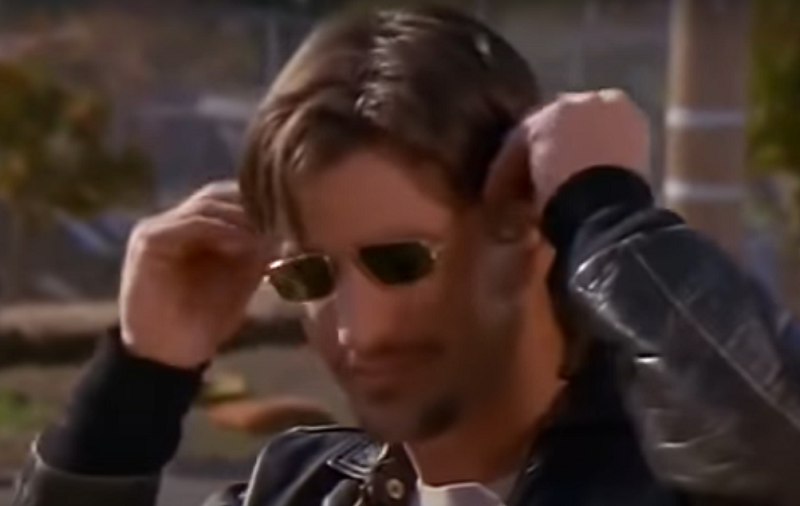
Behind a puffy cloud of cigarette smoke, we’re introduced to Roger’s dad. He’s seated in the living room portraying the classic, bad-boy, biker stereotype wearing a black leather jacket, white t-shirt and slick, black hair with cool-guy sideburns. This actor is Dermot Mulroney. He’s another one I didn’t recognize until many years later. He’s gone on to do a bunch of rom-com work, and he had a guest-star arc as Rachel’s co-worker/crush in season 9 of “Friends.”
Anyway. Daddy-o asks Roger if he’s surprised to see him, then remarks on how “scrawny” Roger looks while reaching out and poking at his abdomen. Roger assures him that he’s getting fed. Dad demands to know where Roger was and seems miffed that his son wasn’t a mind reader about his visit and kept him waiting. Roger tells him he was “riding around the stadium.”
Then, for some reason, dad feels the need to dump all over the Angels being Roger’s “team,” a fact that Roger tries to contain and hide his enthusiasm for his fandom.
“They’re in last place,” Pops says.
Roger agrees, looking dejected. Way to bond with the boy, dad. He then goes on to say a family “that likes losers” runs in the blood, as we get a close-up shot of him wiping cigarette ashes on his blue jeans. At this, Roger turns away disgusted, though also looking like he’s seen this maneuver dozens of times. To be honest, the line his dad says here never really stuck in my mind. And I’ve seen this movie enough times that I have a lot of lines committed to memory. But that’s how powerful the cigarette ashes and the reaction are.
A sad, brief reunion
As pops eases his way out of the chair amid another blow of smoke, he tells Roger he’s going up north (wherever that is, because I’m only familiar with “up north” as it relates to lake country in Minnesota). Here’s where daddy really starts to break his little boy’s heart. Apparently, he promised that when he returned, it would be to get Roger, which is evidently why the boy ran into the house to see him like it was Christmas morning. But here, Roger simply stares up at his dad with these oh-so-sad puppy-dog eyes.
Dad tells Roger that things aren’t working out, meaning to take care of his son, I guess. He says he’s signed a “release thing,” which I’m sure is the legal term for it, adding that they have to go to court to make it final.
“I did what I could with you. Maybe if your mom was alive it’d be different. … You understand what I’m saying, don’t ya?”
 Actually, no. For as blunt as the dialogue was at the start of the movie, pops isn’t exactly doing a great job of spelling out this legal stuff for junior. Is he saying he doesn’t want to be Roger’s dad anymore, ever? Or does he need a break or something? It’s a little confusing, except that the main thing we can gather is that dad is still going to leave Roger behind at the foster home. Roger, who also looks confused, manages a “yeah” in response.
 Dad seems satisfied with that answer and is glad to have that awkward exchange out of the way, which is rather cold. He heads out the front door with a fresh cigarette hanging from his lips. At the curb, the motorcycle is predictably his dad’s, though he had a pick-up truck before but tells Roger the bike is better for traveling.
A pie-in-the-sky promise from dead ol’ dad
Then Roger, still crushed from the brief conversation inside, asks when they’re going to be a family again.
“From where I’m sitting,” dad says, as he flicks something (a match?) in the direction of the visible baseball stadium off in the distance. “I’d say when the Angels win the pennant.”
And boom. We have our main plot for this movie, folks. Dad is basically telling this kid they’re never going to be a family again because as we know, the Angels are in last place. But Roger, though a pre-teen, is still a vulnerable child in this instance and definitely doesn’t see this as the final brush-off his dad means it to be. What a douchebag thing for the dad to say, knowing his kid is a big Angels fan.
Pops puts on some cool-guy sunglasses, starts up his hog and tells his “son” to stay out of trouble as he rides away from the curb and down the street, leaving a bewildered Roger what just happened in their very-brief visit.

August 22, 2020
The Indy 500 field in 2020: Andretti leads the way
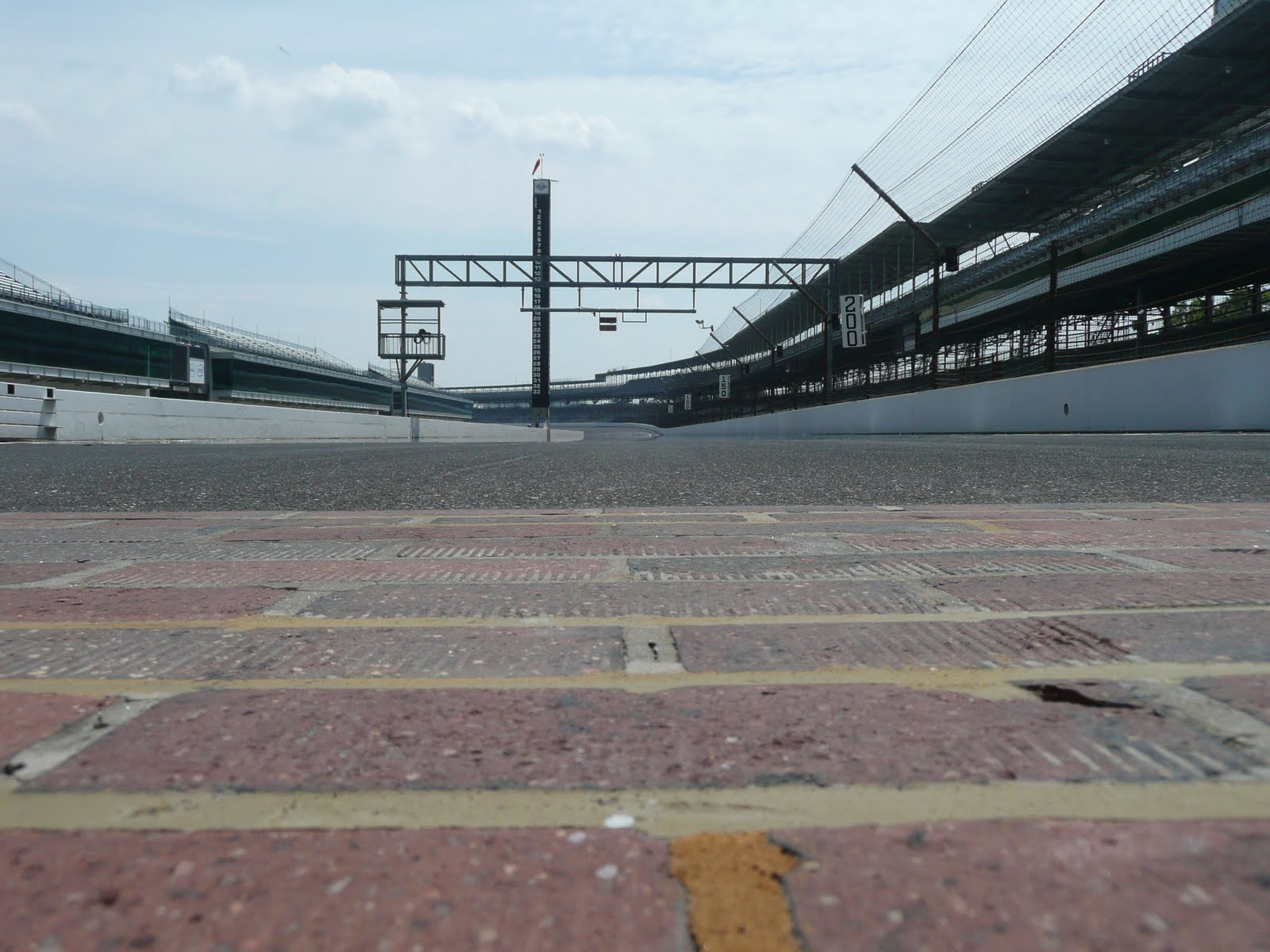 The number 33 came together for the Andretti family this year.
Thirty-three cars in the Indianapolis 500 field, a tradition. Marco Andretti, a third-generation driver, is 33 years old as he competes in his 15th Indy 500. The last time someone named Andretti was on the pole position for the 500? 1987, 33 years ago, when Marco's grandfather, Mario, accomplished the feat. Michael Andretti, now a team owner, will still be the best and most successful IndyCar driver to have never won the pole or the race at the Indy 500.
It all came together last weekend though when Marco turned in speeds topping 233 mph to beat out IndyCar points leader Scott Dixon for the pole position for the 104th running of the Indy 500 this Sunday.
In a year where everything seems strange, the Indy 500 will have a first: Running in August instead of May and running without any fans in the stands. I commented the other day, asking for someone to convince me that this isn't May since the baseball season started recently, there are NHL playoffs happening and now the Indy 500.
But as trying as 2020 has been across the country and the world, something finally broke right for Marco at the storied racetrack that has caused his family so much heartbreak over the years. Unless something changes, Mario will still be the only Andretti family member to win the race, drinking the milk in 1969. Son Michael has led the most laps in the race (431) without having ever won.
Andretti Curse
It looked like the rookie Marco was going to shatter the Andretti Curse in his very first shot back in 2006. Instead, Sam Hornish Jr., who didn't waste much time jumping to NASCAR afterward, beat out Marco at the line in one of the closest finishes ever.
Instead of sparking Marco's career, the race seemed to have solidified the Andretti Curse for him. He only has two race wins, back in 2008 and 2011. His grandfather ranks second on the all-time series wins list with 52, while dad Michael has 42 victories.
But it's not like Marco has raced poorly in the Indy 500. In 14 starts, he's finished in the top-5 five times and in the top-10 eight times. Of course, podium finishes aren't really a thing at Indy, where the winner's circle with milk is all that matters. Marco's worst Indy 500 finish was 30th in 2009 when he crashed out on the first lap with Mario Moraes. His second-worst finish was last year, the 50th anniversary of his grandfather's Indy 500 win, recording 26th place.The start of the race this year, always marked with pomp and circumstance, will feature the three Andretti generations leading the way. Mario will drive the famous two-seater car, known as Honda's Fastest Seat in Sports, before Marco leads the field to green as the polesitter.
A driver named Andretti has been in the Indy 500 since 1965.
If Marco wins, he'll be the 22nd driver to win the race from the pole position. It would be the first back-to-back pole winners since 2008 and 2009 when Dixon and Helio Castroneves accomplished the feat. It would also be the fifth time in Indy 500 history for back-to-back pole winners.
Starting-row stats
Pole aside, the odds are in the favor of row 1 as well, which this year is Dixon and Takuma Sato. 44-of-103 winners have come out of row 1 over the years. Nine winners have come from the front row since 2000, including the past two years. Row 2 starters do well also, with 19 winners. The last two were the late Dan Wheldon in 2011 and Takuma Sato in 2017. This year, row 2 is Rinus VeeKay, Ryan Hunter-Reay and James Hinchcliffe.
Here are the numbers from the rest of the grid, winners and where they've started:
Row 3: 8 winners (last in 1999)
Row 4: 7 winners (last in 2016)
Row 5: 9 winners (last in 2015)
Row 6: 4 winners (last in 2012)
Row 7: 6 winners (last in 2014)
I started keeping track of some starting grid/finishing position stats a couple of years ago. One still rings true: Only six Indy 500 winners out of 103 races have come from starting rows 8-10. It's been 46 years since it last happened, with Johnny Rutherford winning the race after starting in the 25th spot coming out of the ninth row.
No winner has ever gone from worst-to-first starting in the 11th and last row. That's not good news for Sage Karam, JR Hildebrand and Ben Hanley this year, making up positions 31, 32 and 33.
Past champs, vets, rookies
This year's starting grid includes eight past Indy 500 champions: Castroneves, Alexander Rossi, Sato, Will Power, Simon Pagenaud, Tony Kanaan, Hunter-Reay and Dixon.
Troy Ruttman is the youngest winner of the Indy 500, winning in 1952 at 22 years and 360 days old.
Points leader Dixon is looking for his second Indy 500 win. He's a five-time series champion and ranks third all-time in IndyCar victories with nearly 50 of them but just one at the Brickyard oval. He turned 40 years old in July and doesn't show any signs of slowing down, winning the first three races of this shortened/delayed 2020 season. He nearly had pole before Marco beat him out last weekend. The "Ice Man" is known for his consistency on track and will be one to watch.
Power is 39 years old, Sato is 43, Hunter-Reay will turn 40 in December, Ed Carpenter is 39 and Kanaan is 45. Meanwhile, in addition to some of the young rookies, Colton Herta is 20 and Santino Ferrucci is 22.
No women this year, plus other history
This race will also be the first Indy 500 without a female driver since 1999. For a while, the grid had featured multiple women, like Katherine Legge, Ana Beatriz, Pippa Mann, Danica Patrick and Simona de Silvestro. Mann was in the field last year after being bumped out in 2018, the year of Danica Patrick's final run at Indy. Lyn St. James ran from 1992-97 and 2000, the first year Sarah Fisher raced. Prior to 1992, Janet Guthrie was the first woman to race at Indy from 1997-79.
As has been the case since 2010, Castroneves will try to join the elite four-time winner club, joining A.J. Foyt, Al Unser and Rick Mears. The 45-year-old will have his work cut out for him in the Pennzoil-yellow machine though; he starts on the inside of row 10 in 28th position. The last time a winner came out of row 10? Louis Meyer in 1936. Ray Harroun also started in row 10 when he won the very first race in 1911; both started in 28th position, the lowest starting spot for a winner.
Pagenaud will have to claw from that 25th position if he wants to be the first back-to-back winner since Castroneves in 2001 and 2002. Back-to-back winners have only been done five times in Indy 500 history: Wilbur Shaw (1939-40), Mauri Rose (1947-48), Bill Vukovich (1953-54), Al Unser (1970-71) and Castroneves (2001-02).
The year is a bit of a swan song for Kanaan, a veteran driver focused on running ovals this year. After some bad luck at Indy, he finally won the race in 2013. He's led the most races of any driver in race history, with 14, including 7 consecutive races from 2002-08.
 The pole from 2009.Starting grid for the 104th running of the Indianapolis 500:
Row 1:
Marco Andretti
Scott Dixon
Takuma Sato
Row 2:
Rinus VeeKay
Ryan Hunter-Reay
James Hinchcliffe
Row 3:
Alex Palou
Graham Rahal
Alexander Rossi
Row 4:
Colton Herta
Marcus Ericsson
Spencer Pigot
Row 5:
Josef Newgarden
Felix Rosenqvist
Pato O'Ward
Row 6:
Ed Carpenter
Zach Veach
Conor Daly
Row 7:
Santino Ferrucci
Jack Harvey
Oliver Askew
Row 8:
Will Power
Tony Kanaan
Dalton Kellett
Row 9:
Simon Pagenaud
Fernando Alonso
James Davison
Row 10:
Helio Castroneves
Charlie Kimball
Max Chilton
Row 11:
Sage Karam
JR Hildebrand
Ben Hanley
July 24, 2020
Pandemic projects
 Masked-up at Road America.It's a day that many didn't think would arrive in 2020: Opening Day in Major League Baseball.
Yes, it's true. MLB teams will head to various ballparks across the country today and play baseball, with plenty of modifications because we're still in a pandemic, after all. One of the most notable things is that they'll be playing in empty ballparks without fans in attendance. Although from watching the Twins exhibition game the other night, the general buzz of crowd noise being pumped into the stadium is a nice touch.
It's certainly been a strange year, sports-wise and otherwise. In April, I struggled a little with how to fill my time in baseball's absence. Adjustments were made, and I started keeping a list of things I accomplished during quarantine times. There were small things and some bigger projects, but whatever made the list seemed like a productive use of my time, so I wrote them down.
Here are some of the things that made the list, in no particular order:
 Tuna pasta dish.
Organized/tossed five year's worth of Twins boxscores/statsOrganized files on my laptopUpdated my LinkedIn profileGrabbed PDFs of my various stories I've written over the yearsUpdated my website (a task that is never finished) Organized my nail polish container, tossing a lot of old bottlesOrganized/deleted items on my Google Drive to go from 84% full to 33% full Saved audio recordings to my laptop folders - and deleted nearly 200 recordings off the recorderWrote a blog post for the National Institute for Social Media Phone interviews, transcribing, writing for Otter Tail Lakes Country Magazine storiesMade a list of what to keep/delete from the DVR Organized my phone apps into foldersOrganized/deleted photos from my phoneMade GIFs for workPut together two puzzlesWrote five feature stories for USAHockey.com
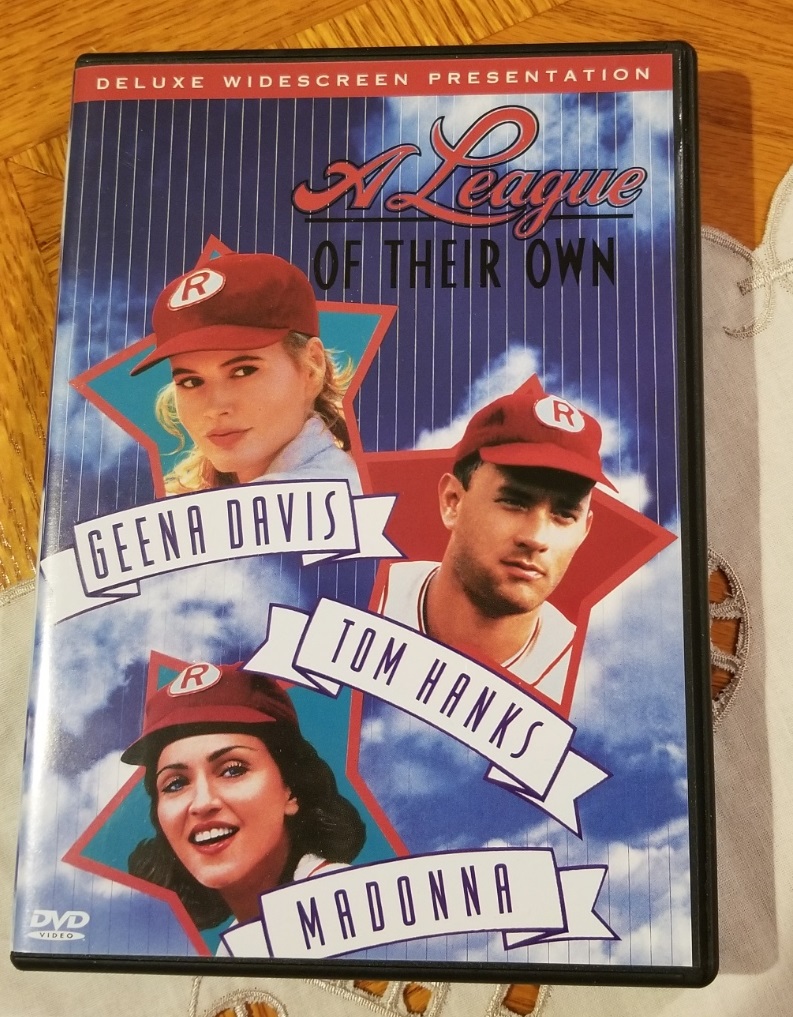
 Nail polish collection.A League of Their Own movie commentaryThe Rookie movie commentaryGuest on a couple of sports podcastsWatched old Twins and Wild games, leaving commentary on Twitter with #HeathWrites hashtagStayed active on social with #TwinsTuesdays, #MNWildWednesdays and #TBT posts Made new connections via webinars, Zoom happy hours and various social-media messagingPlayed pianoBecame active on TikTok, wasting a lot of time Went for a lot of walksTried out a bunch of new recipes - and then did a lot of dishesEnjoyed free evenings and weekends (sports colleagues feel me on this one, right?)Read booksAttended the first IndyCar race of the season with (socially-distanced) fans at Road AmericaBinged the last four seasons of Castle (ok, this one isn't really productive, but still)
 The upright piano.I hope loyal readers and followers will recognize a few things on the list, specifically the movie commentaries. I'm particularly proud of those. I think I will look back on this time and remember those as my biggest accomplishments of quarantine. And stay tuned, because I don't think I'm done with sports-movie commentaries yet. I'll see how that goes because writing up 14-part commentaries after watching a movie and taking notes isn't done in a day.
 Some things on the list are more for fun, like reading books and playing the piano. I've never stopped, it's just that during this time I started hitting the keys a lot more. I tried to work on the sheet music for "My Heart Will Go On" from Titanic so I could play it a little more smoothly. It's definitely much-improved now. To let you know just how empty my calendar/planner was early on, I started writing things like "play piano" and "go for a walk" in there just so I could check something off my list for the day.
 I know a lot of people cleaned things out in their homes in an amped-up spring cleaning this year. I didn't do as much of that with physical things, except for the nail polish collection and Twins boxscores, but I chose the electronic route. It felt good to get my recorder down to nearly zero, so I can stop having to delete random files to make room for additional recordings. Organizing photos, documents and files on my computer was also a necessary task.
 As I stayed active on my social media channels, I wanted to make sure I set aside time to update my website with writing clips and PDFs. It's a task that never seems to end, but I enjoy having the online portfolio to showcase my work.
Thanks to Todd Kortemeier with Red Line Editorial for throwing some work my way with USAHockey.com; it was nice to have some stories to write during the downtime. And thanks to my friend Marie Noplos, who got me started with the Otter Tail Lakes Country magazine feature stories. I was glad to get a jumpstart on those this spring and summer.
During a time when time takes on a different meaning, it was nice to be able to enjoy evenings and weekends. I have some opposite feelings of other friends, who felt busier and more stressed as they shifted to working from home and had no idea what day it was. That's how I often feel in the heart of a sports season working evenings and weekends (What's a weekend?). So, a silver lining for me was the slowdown and enjoy some of this time. Part of that was going for walks in the neighborhood after supper with my parents.
 Bring on Bomba SZN!
And now, baseball is here. Sure, it's for a scheduled 60-game season in roughly two months rather than a 162-game season in about six months, and there are more than 100 pages of rules for it to happen. COVID-19 is still here and ultimately still in control of what might happen. It's a consensus that the Minnesota Twins are fielding a team that's the best in the club's history - on paper. And this year more than any other, "on paper" might have a huge meaning.
For the Twins, it's 60 scheduled games for their 60th season in Minnesota. The record-setting Bomba Squad won't break the home-run record it set last year with 307 Bombas, but with most of the pieces back, and additions like Josh Donaldson and pitchers Homer Bailey, Rich Hill and Kenta Maeda, the Twins should be entertaining to watch once again.
As we all get back into the swing of sports, the best we can, I'll still be mindful of caution and health. I'll also be working from home this season, which is a bummer especially from the standpoint of the camaraderie I've been missing with friends and colleagues in the press box. But let's hope we can all adapt and find ways to get our work done while still enjoying some baseball.
Thanks to everyone for following along with me on my social channels and reading my work. It's always appreciated.
Now... bring on baseball!
July 14, 2020
The Rookie commentary, part 14: ‘Morris, you’re in’
 It’s a 5-1 Devil Rays deficit when the ‘pen’s phone jingles again. This time when the coach hangs up, he tells Jimmy to start warming up.
 Hunter, of course, notices right away from his seat in the upper deck. Jimmy stretches out his arm while the trio of “old guys” from Jimmy’s town peep at him through a pair of binoculars. Jimmy’s mom is in the stands, too. Back on the field, the Rangers bust the game wide-open with a couple of more runs thanks to a Rays error. So, the Devil Rays are in clean-up mode here. Not exactly a pressure-cooker situation for the bullpen.
The trainer heads to the mound, and the ‘pen phone rings once again.
“Morris, you’re in.”
His MLB debut
Jimmy jogs down the stairs to get from the bullpen to the field. While he makes his way, we see his loved ones in the stands – family, friends, Owls players – looking at the bullpen door with great anticipation that turns to cheers once they see that door open up and Jimmy jogging from the outfield toward the pitcher’s mound. We also get a nice close-up shot of him running in.
 The audio feed cuts to a TV announcer giving baseball fans an idea of Jimmy’s story: “Just three months ago, he was grading chemistry tests.” True, and he also coached his high school players to a district championship.
 Once he finally gets to the mound, the manager asks about that fastball Jimmy was telling him about before the game. “Well, I need three of them.”
With two outs late in the game, the PA announcer mentioned Jim Morris making his Major League debut. There’s a quick shot of the press box here, where each writer is sitting with his own TV set on the desk, all illuminated with a large, green desk lamp.
There’s that fastball again
Jimmy is on the mound, doing his usual preparation. He moves his foot back and forth, digging in. Holding the baseball down at his side, he gives it a subtle shake in his hand. The right-handed hitter falls behind 0-1 with a hack on a 98-mph fastball. The Owls in the stands are ecstatic.
Jimmy burns in another fastball, this time a looking strike, for an 0-2 count. More cheers from his fan club. Remember, this is a home game for Texas and Jimmy plays for Tampa Bay. It’s not like the entire stadium is behind Jimmy here.
 For the third pitch, we’re treated to a camera pan up from the bottom of the mound to Jimmy’s sweating face. That same concentration we’ve seen throughout the movie is there. The sound drops out for a moment, and the next pitch is delivered in slow motion.
 Fastball. Swing. Miss. Strike three. Jimmy Morris strikes out the first batter he faces in the Major Leagues on three pitches. Perfect.
Brooks is the first one to greet Jimmy when he walks off the mound to the dugout on the third-base side. More cheers from his loved ones, too.
Postgame scrum, and a reunion of sorts
Showered and dressed in that blue sport coat, Jimmy is swarmed by the press and TV reporters after the game. They ask what pitches he threw for that strikeout. “Fastball, fastball and fastball,” Jimmy says. Duh.
How’d it feel to pitch in the major leagues? Very to-the-point, basic softballs here. “Just like I hoped it would.”
Even though Jimmy has shown no signs of injury or anything, a reporter asks him how his arm feels. Jimmy never answers. His gaze shifts past the reporters, past the bright camera lights. Standing down the hall is his father. Jimmy excuses himself from the media scrum, quite clearly shocked to see his dad.
“I didn’t know you were here,” Jimmy tells his dad.
“Wasn’t missing this one… Watching you tonight, not many fathers get a chance to do that. I guess I let too many of those things get away,” Jimmy’s father says. The movie doesn’t show it, but there’s also a giant lightbulb hanging over his head, and it switched on.
“So did I,” Jimmy responds.
 When his father turns to leave, Jimmy calls him back. He pulls the game ball out of his pocket and gives it to him.
 If there was tension between the real Jimmy and his dad and they made up like this, awesome. Great story. But that’s what it feels like – a story. They didn’t get along for the entire movie, and it was made into a huge subplot. And now we’re supposed to believe that everything’s all good and he gives his first game ball to his dad? Seems to fit too well, if you ask me.
One reunion leads to another and another
His father walks away toward a dark area underneath the stadium. OK, how the hell did he get down there? This is clearly an area fans do not have access to. But he just happened to show up so they could have this little scene. And as Jimmy is on the verge of tears, he turns to see Lorri in one of the dark corners of the creepy underground.
“Does that mean I don’t get a baseball?”
Damn straight, Lorri. (Actually, I’d probably give it to Hunter.)
Lorri and Jimmy embrace with a passionate kiss. Well, as passionate as is allowed in a Disney film. Finally reunited after his months of playing ball on the road, they walk up a ramp (an exit to this underground part of the stadium?) with their arms around each other.
Jimmy asks about the kids, and I think Lorri says they’re with one of the old fellows from town – and he had a little help. Just then, Jimmy turns around offering one of the most pleasantly surprised looks on his face when he’s greeted with a sea of people applauding and cheering for him. His own hometown fan club. Hunter and Jessie jump into their dad’s arms. Jimmy takes in the moment of the crowd cheering for him.
He’s still so shocked by the ovation. It’s well deserved. He finally made it to the big leagues, after all. Wrapping it up
 Some time later, the movie takes us back to the front of the school in Big Lake, then the camera pans over to the trophy case in the hallway inside. Hanging up ever-so-neatly is a Devils Rays jersey with a crisp No. 63 and “Morris” on the back, facing outward. A Rays cap is also hanging nearby, because I suppose having a shine to a Jiffy Lube cap would be weird. And let’s be honest, Jimmy probably wore that same Jiffy Lube cap for decades.
On a nearby shelf in the case, there’s a team photo of the district-champion Owls baseball team. The camera gives us a close-up of Jimmy’s face in the photo, and the screen fades into a picture of the nuns from the beginning of the movie leaving the windy, dusty ballyard. With that as the backdrop, one last text graphic is displayed:
“Jim Morris pitched in the Major Leagues for two seasons. He lives, once again, in Texas.”
Fade to black, roll credits.
Thanks for reading!
For those of you who read through the end of my “A League of Their Own”commentary, you’ll recall how much I gushed over the ending credits in that movie, complete with baseball, old photos and a great song. Well, the credits in “The Rookie” are as basic as it gets. Sorry to disappoint you.
We’ve reached the end of my second sports-movie commentary. I’d like to thank the quarantine/pandemic for the time I’ve been given for this project. I’d also like to give a big shout-out to all my readers and followers on my various social channels. I always appreciate the support.
Now, let’s play ball!
 The Rookie commentary, part 1: ‘What kind of baseball do they have? … They don’t.
The Rookie commentary, part 2: ‘There are more important things in life than baseball’ The Rookie commentary, part 3: ‘Yeah dad, bring the heat!’
The Rookie commentary, part 4: ‘You don’t have dreams, you don’t have anything’
The Rookie commentary, part 5: 'You got your shot at baseball. You got hurt.'
The Rookie commentary, part 6: 'State! State! State!'
The Rookie commentary, part 7: 'It's your turn, coach'
The Rookie commentary, part 8: 'You just threw 98 mph'
The Rookie commentary, part 9: ‘Do you know how many guys can throw the ball 98 mph?’
The Rookie commentary, part 10: 'What are we telling him if you don't try now?'
The Rookie commentary, part 11: 'I'm the old guy'
The Rookie commentary, part 12: 'I'm wasting my time down here'
The Rookie commentary, part 13: 'There's a dress code in the Major Leagues'
July 13, 2020
The Rookie commentary, part 13: ‘There’s a dress code in the Major Leagues’
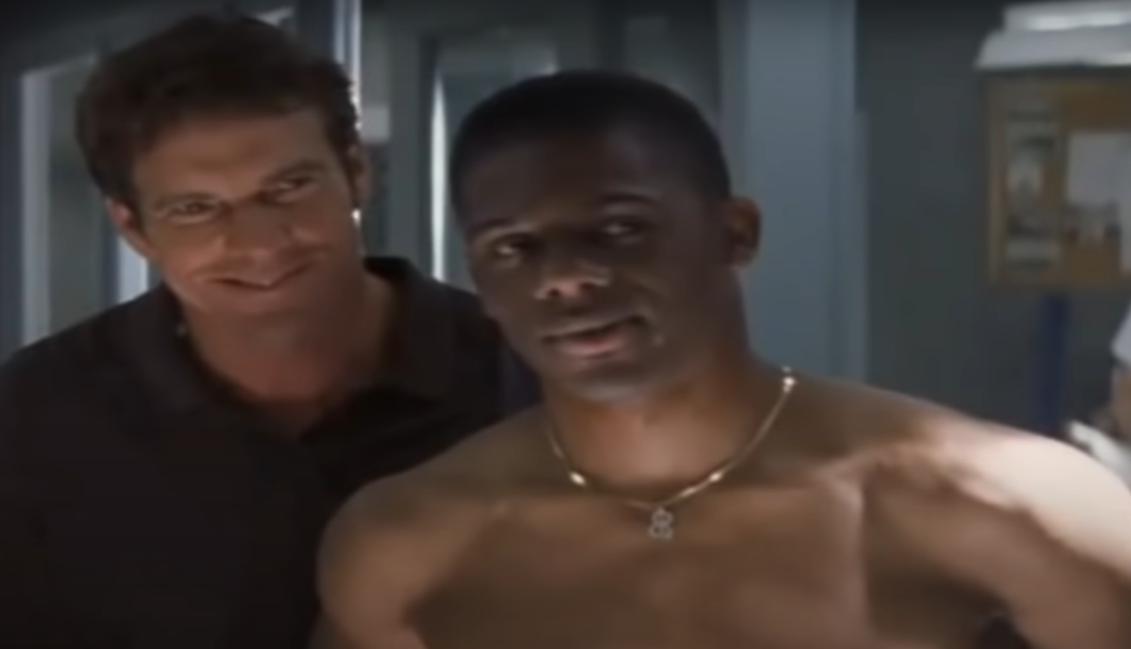 The next day, Jimmy is downright bubbly as he enters the locker room and strolls over to a shirtless Brooks in front of the mirror. “You know what we get to do today, Brooks? We get to play baseball!”
 Oh yeah, baseball-loving Jimmy is back.
Morris is pitching in the game, obviously inspired. We don’t see much of the game but get shots of some of his high-school players listening to the audio feed via a 1990s-bulky computer. “Coach is really bringing it tonight,” Rudy says. The Morris family is listening, too, and Hunter is keeping track of his dad’s strikeouts with Ks written on Post-Its. Have I mentioned I love this kid?
A visit to the skipper’s office
With a win for the good guys in the books, Jimmy is called into the manager’s office and told to shut the door. So serious. Skip tells Jimmy that he got off the phone with the big club. In a dramatic-effect movie twist, he says they’re calling up Brooks. Jimmy is all gentleman-like when he says how great that is and that Brooks won’t be back in the minors.
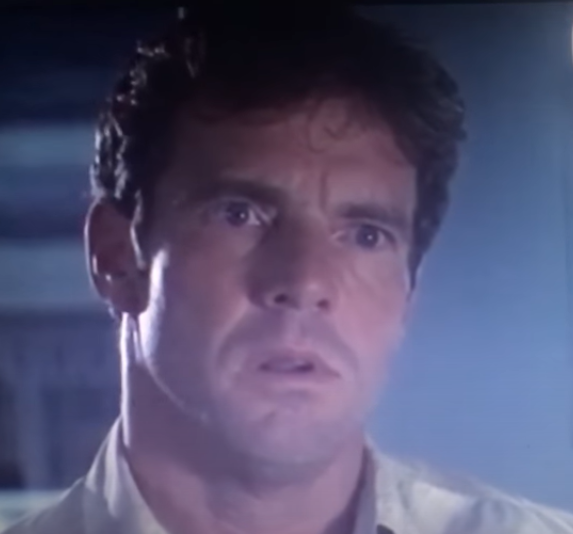 But skip is pretty coy here, and he deadpans that he thought Jimmy would like to tell Brooks the news “… being as you’re going, too.”
Jimmy is stunned. “They’re calling me up?”
As if it couldn’t get any more storybook, the manager informs Jimmy that the Rays are on the road right now. In Texas. The whole moment is a sly delivery from the manager. He keeps it simple, informational, but he’s also hiding a grin because he recognizes what this moment means for his pitcher. Jimmy takes in the news with a couple of big deep breaths before leaving the office.
Telling his people
Cut to Lorri assembling a salad in the kitchen at home as the phone rings. Sort of like the manager, Jimmy doesn’t just blurt out the news to her either. He asks Lorri about his blue sport coat that he never wears. His way of telling her that he made it to the Major Leagues is asking her to bring the coat to Arlington (Texas) tomorrow.
 It takes a very brief second, but Lorri catches her breath and catches on, prodding him to actually tell her the good news. “You tell me right now, Jimmy Morris.”
 “Uh, apparently,” Jimmy staggers. “There’s a dress code in the major leagues.”
Tears spring to Lorri’s eyes, leaving her speechless. Jimmy wants her to tell everybody the news, and of course, she will, but she wants him to tell one other person first. She calls Hunter to come to the phone.
Jimmy tries so hard to control those wet pockets in his eyes, needing to be composed though still choking back the tears.
 “Hey buddy,” Jimmy says to Hunter. “Hey, guess what? Your daddy is going to be a major league pitcher.”
 “Really? Cool.”
And then as a curious 8-year-old boy, Hunter asks which team he’ll play for and then he wants to know what a devil ray is, the color and if you can eat it. Don’t worry Hunter, they’ll drop the “devil” from the name in a few years. Much cooler.
We finish the scene hearing Hunter say: “My daddy’s a big-league pitcher.” #Heartstrings
Making it to the big-league ballpark
Lorri probably didn’t have to do much to spread the word in their small town. That night, some of the high school ballplayers caused a ruckus driving down main street, honking the car horn, yelling and celebrating the moment for their coach. They also print off flyers, handing them out at school, sticking them on windshields: “Come watch Coach Morris in the Big Leagues – tonight in Arlington – meet at ballfield at 2 p.m.”
Ticket sales at the Ballpark in Arlington that night probably went up by about the population of Big Lake.
 The next day, the street in front of the Ballpark in Arlington is completely deserted as a taxi pulls up to drop off Brooks and Jimmy. They walk into the gate, and camera shots from above help showcase the magnitude of the moment, with Jimmy looking around in awe knowing that this is his office for the night.
 A custodian lets them into the visitor’s clubhouse, saying the rest of the team won’t be there for a couple of hours. My hunch says this early arrival is to let movie-Jimmy have his moment and take it all in for the film purposes. A call-up playing in a game the next day, with travel, might arrive at the park later than the MLB team instead of before, right? Maybe. But that would have ruined the moment. “We aren’t in Kansas anymore, are we ‘Riv (Old Man River)?” Brooks says to Jimmy when they see the luxurious clubhouse space compared to their dank locker rooms they’re used to in the minors.
Jimmy finds a No. 63 Devil Rays jersey hanging in what appears to be his locker stall. Lorri successfully delivered the blue sport coat, hanging neatly alongside with another surprise: The Santa Rita coin.
 Pregame reunion
 Before game time out in the stadium, Jimmy warms up in the bullpen, and we’re treated to those familiar sound effects to showcase his pitch speed and crack into the mitt. The bullpen coaches grin from ear-to-ear seemingly very pleased with this new arm they’ve acquired.
Lorri shows up in the stands near the ‘pen and can’t resist yelling out to him. “Jimmy. Jimmy Morris!” Hunter and Jessie are in tow, and they run down the aisle to greet Jimmy, who stands on a bench to come as close to his family as he can. Lorri reaches her hand down to grab his, saying he looks great and she “can’t believe it.” Jimmy reaches out for the kids, too, saying he misses them and remarks on how big they’ve gotten. Typical dad stuff.
Their mom says they’ve got to let daddy get to work. They walk away and Jimmy raises himself up further, intent on keeping his eyes on his family for as long as he can. His smile spreads across his face like it’s Christmas morning. It’s adorable, really.
A few of the Owls players made it to the stadium, too, the camera follows behind as they make their way from the concourse into an upper-deck section in the outfield. This gives the audience a glimpse of how massive the stage is for Jimmy. It’s a true big-league ballpark. He’s not in Big Lake anymore.
Not showing a full nine-inning game, we see some game action and the Texas Rangers take a 1-0 lead before the Devil Rays tie it 1-1 in the second inning. Some more time passes before we see a call to the bullpen phone. It’s not for Jimmy.
The Rangers extended their lead to 3-1 in the bottom of the sixth while Jimmy sits nervously in the bullpen. Remember, there’s no guarantee he’ll get in to pitch in his first opportunity. But this being a movie, they wouldn’t take us down this path for him to sit there and spit seeds.
The Rookie commentary, part 1: ‘What kind of baseball do they have? … They don’t.
The Rookie commentary, part 2: ‘There are more important things in life than baseball’ The Rookie commentary, part 3: ‘Yeah dad, bring the heat!’
The Rookie commentary, part 4: ‘You don’t have dreams, you don’t have anything’
The Rookie commentary, part 5: 'You got your shot at baseball. You got hurt.'
The Rookie commentary, part 6: 'State! State! State!'
The Rookie commentary, part 7: 'It's your turn, coach'
The Rookie commentary, part 8: 'You just threw 98 mph'
The Rookie commentary, part 9: ‘Do you know how many guys can throw the ball 98 mph?’
The Rookie commentary, part 10: 'What are we telling him if you don't try now?'
The Rookie commentary, part 11: 'I'm the old guy'
The Rookie commentary, part 12: 'I'm wasting my time down here'
July 12, 2020
The Rookie commentary, part 12: ‘I’m wasting my time down here’
 Back on the bus, Jimmy pulls out a crayon drawing, a Morris Children original, and stares at it, no doubt missing home and his family. When the bus arrives at the team’s next destination, Jimmy, still looking rugged and tired, stretches out his pitching arm as he gets up from his bus seat before slowly grabbing his bag from underneath the bus.
His teammate, Brooks, calls Jimmy “Old Man River” and says he’s moving kind of slow. Brooks assures the old man that he has a recipe for him, which means they’re headed to a local dive bar for food and beverages. Of course.
Brooks and Jimmy are joined by another teammate who shortens the nickname to “River” and asks what it was like for Jimmy to watch Babe Ruth play baseball. Hardy-har-har, the jokes about Jimmy being old are getting old. Jimmy’s not slow on the uptick though, firing a zinger right back at the other pitcher. Then the guy starts to say something about Jimmy, essentially alluding to the fact that his whole team is talking crap about him behind his back.
Catching on, Jimmy can see that the guys think he’s there as some kind of PR stunt holding a roster spot hostage. He wants Brooks, a player he clearly trusts to at least some extent, to level with him. Brooks both dodges the question and offers a compliment.
“You’re too fast for me. That’s all I know,” Brooks says about Jimmy’s pitching.
Time in the minors is getting to Jimmy
At another ball game, Brooks hits one into the gap (this establishes that Brooks is a solid hitter and doing well in the minors) and checks in at second base as Jimmy starts to warm up in the ‘pen. Jimmy, wearing No. 15, faces the stands from his bullpen mound. He looks up to see a father helping his young son adjust the ball glove in his hand, and they’re seen talking about the game on the field. Jimmy can look at this from two directions – missing his son, Hunter, and perhaps missing out on the time he would have liked to share with his own father.
 Postgame, Jimmy is in the manager’s office saying he knows the call-up to the majors is going to be Brooks. The manager is more optimistic, saying there’s been more than one call-up before. But Jimmy seems to have made up his mind. He lays it all out for skip, mentioning the pile of unpaid bills at home when he’s only making $600 a month pitching, plus the family he hasn’t seen in three months. This gives us some idea of the timeframe, by the way. After the high school baseball season in the spring, Jimmy has pretty much been pitching in the minors all summer, so this is sometime in September when major-league rosters expand for players to call-up from the minors.
 To finish off his speech to the skipper, Jimmy offers up that line from his dad, the one that made him seething mad: “It’s OK to think about what you want to do until it was time to start doing what you were meant to do.”
The skipper lets Jimmy know that he’s been his best relief pitcher the past month. If that’s some kind of consolation.
He’s ready to pack it in
 Jimmy then calls Lorri, resigned to the fact that he’s given it his second shot. He tells her he’s coming home, and, of course, she’s worried he got hurt again. His pride might be hurt, I suppose, but he tells his wife that it’s just time. He’ll be ready to start that new job in three weeks.
 “I’m wasting my time down here,” Jimmy tells Lorri.
In a role reversal from when they discussed Jimmy giving pitching another try, Lorri is the one convincing Jimmy that he should stick it out. Or, at the very least he has to make sure he’s heading home for the right reasons. He’ll be the one that has to live with this decision. Then she poses this question, that I think a lot of us in any profession could ask ourselves when we find ourselves at a crossroads: “Do you still love it?”
Jimmy stays silent as Lorri tells him to think about it.
Thinking it over… with a brew and ball game
What better place to think than one of those local bars? Jimmy is nursing a bottle of Miller suds and eating peanuts while perched on a barstool. He looks up to the TV behind the bar and sees the ABC piece that was done on him (the one that annoyed his teammates), introduced by the real-life Charles Gibson.
Jimmy watches the story, hears the voiceover of his story, about him being too old for the minors but still throwing the ball hard. He says the game has been the true love of his life (other than his wife) since he was a little boy.
Back home in Texas, we see the mouthy Wack watching the story with his family. A random shot to remind us we’re not completely done with the high-school players.
 Watching this story is the first part for Jimmy that gets him thinking about his passion for the game. Apparently, this bar was within walking distance of a youth baseball field, because Jimmy steps outside and sees the stadium lights and hears the sounds of a game happening.
 He walks over to the outfield side of the field, resting his arms on top of the chain-link fence. A new half inning is about to commence, and the centerfielder, probably 10 or 11 years old, notices Jimmy and gives him a brief wave. Jimmy raises his pointer finger in acknowledgment and cracks a smile.
Yes, I think we’ve answered the question about Jimmy still loving baseball.
The Rookie commentary, part 1: ‘What kind of baseball do they have? … They don’t.
The Rookie commentary, part 2: ‘There are more important things in life than baseball’ The Rookie commentary, part 3: ‘Yeah dad, bring the heat!’
The Rookie commentary, part 4: ‘You don’t have dreams, you don’t have anything’
The Rookie commentary, part 5: 'You got your shot at baseball. You got hurt.'
The Rookie commentary, part 6: 'State! State! State!'
The Rookie commentary, part 7: 'It's your turn, coach'
The Rookie commentary, part 8: 'You just threw 98 mph'
The Rookie commentary, part 9: ‘Do you know how many guys can throw the ball 98 mph?’
The Rookie commentary, part 10: 'What are we telling him if you don't try now?'
The Rookie commentary, part 11: 'I'm the old guy'