Allison Raskin's Blog, page 2
September 16, 2025
I AM NOT A CRAZY WIFE
I’m going to admit something that I probably shouldn’t. But I’m going to do it anyway for the sake of more honest conversations about romantic relationships (and because I tend to overshare). When my husband, John, launched his Substack a few weeks ago and went public about being estranged from his parents, a part of me wanted to shout See! He has baggage too! This response is clearly pent-up aggression over the many online comments I’ve received that sound something like Why does he put up with her? Or, more bluntly, a simple instruction for John to run (away from me, his lunatic wife).
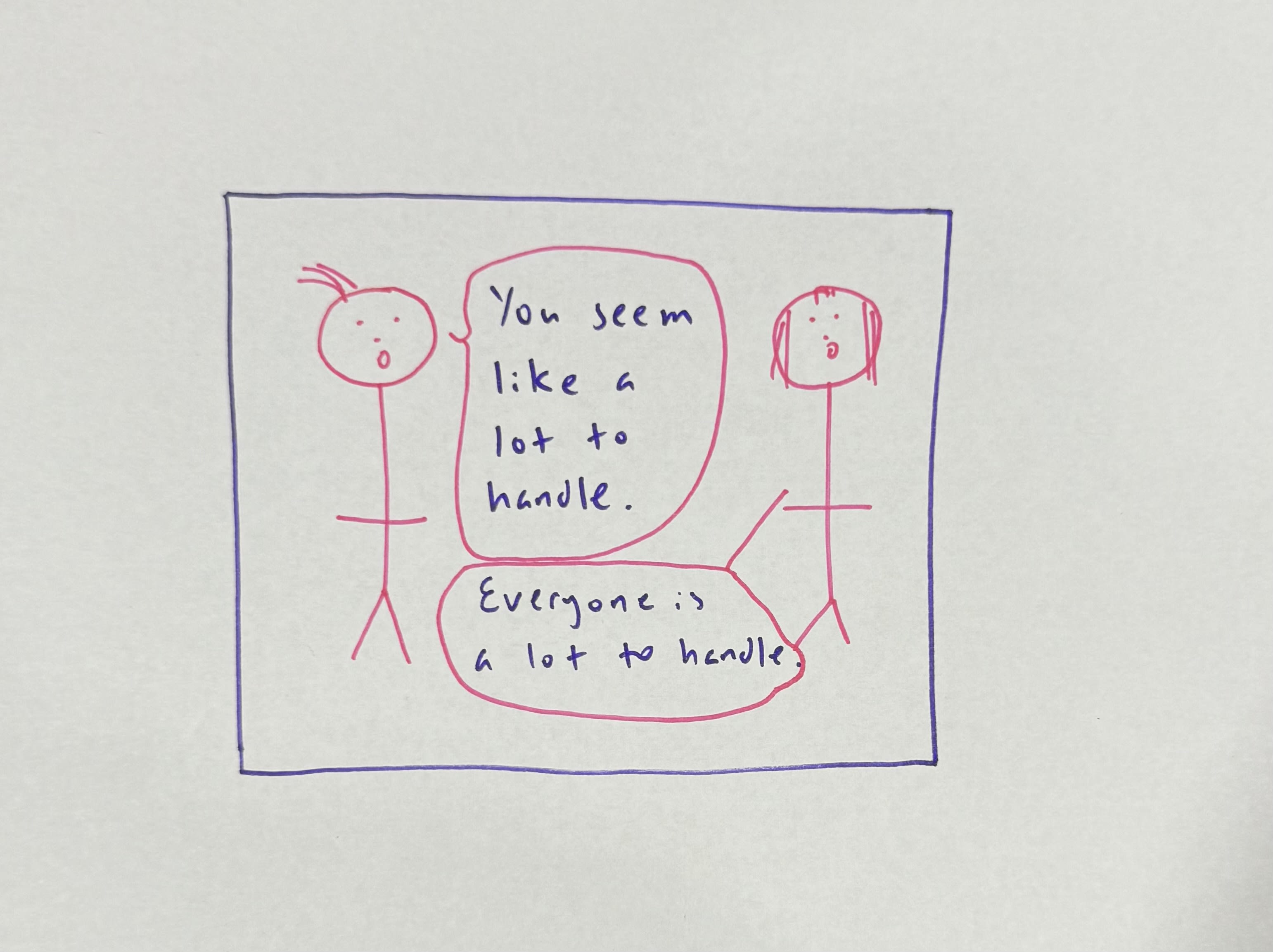
I shouldn’t be surprised that people on the internet are quick to judge a woman and assume that she is too much. (I was more surprised that at an in-person book event where I also did a storytelling set, a random man’s parting words to John were a loaded “good luck.”) Considering I am open about struggling with OCD and have written multiple books about my failed relationships, I have never presented myself as someone who is easy or go-with-the-flow. I know that I am not the ideal wife for everyone or even most people (given my affinity for Clorox wipes and tracking how often you’ve washed your pants). But it was starting to weigh on me that on the surface John presented as this totally untarnished person who was valiantly “putting up with my issues.” And I was the overbearing wife who was constantly asking for too much.
The reality is that, like all couples, we each have our burdens to bear that unavoidably impact our marriage. Mine are just more in your face while John’s only come out in the shadows. People who have known him for years don’t understand the extent of turmoil that his parents have had on his childhood, psyche and relationships. And why should they? We don’t owe everyone the full details of our trauma and hardship. Sometimes it is easier to just say yes when a casual acquaintance asks if his parents are excited about our upcoming baby rather than ruin the mood with the truth: hard to say because we don’t talk to them for our own emotional protection. Despite lingering mental health stigma, it is objectively easier for me to casually mention my antidepressants than for him to casually drop he is estranged from the people who raised him. One might be a bit taboo in certain circles, but the other is still universally shocking no matter how many think pieces come out about it.
Emotional Support Lady is a reader-supported publication. To receive new posts and support my work, consider becoming a free or paid subscriber.
I don’t think I can count the number of times people in my life have remarked, “I’m shocked John turned out so well after everything he’s been through.” The undercurrent of this comment is they can’t believe, given his family dynamic, that he is so normal. So articulate. So kind. So smart. So charming. Shouldn’t he be more fucked up? I often respond, “it impacts him more than you might realize.” I don’t say this to discredit all his incredible qualities. Because he is so exceptionally articulate, kind, smart, charming and snort-worthy funny. I say it so they don’t dismiss his suffering simply because he survived it. I want to acknowledge the pain I still see him carry every day because his parents don’t know how to be there for him the way he deserves.
We all have scars from our lived experience. Some just heal better than others or are easier to hide with a long-sleeved shirt and a confident smile. These differing outcomes can make those of us who are more blatantly wounded feel like we are lucky to be loved in the first place because we can’t mask our damage as deftly. Think of the chronically ill wife whose husband is applauded for taking care of her. What a mensch! What a sacrifice! What we don’t see is all the ways she undoubtably takes care of him too.
I write about my personal life for a living and none of you knew that my mother-in-law has repeatedly made me cry until a few weeks ago. This is further proof that we never really know what is going on in other people’s relationships—even though it is tempting to make assumptions. It is fun to gossip after a party and wonder why Partner A, who is so vibrant and driven, is with Partner B, who barely talks unless it’s about golf. We can look at our friends funny when they introduce us to someone who appears to have a lot of issues because we can’t yet see how those issues have shaped them into a capable and caring partner. This is not to suggest that all couples are a good match simply by virtue of the fact they got together in the first place. (As a relationship coach, I can assure you, we often pick wrong.) But there is a difference between you not being able to understand why a certain relationship works and the fact that it does.
For whatever reason, I am someone who can handle a less-than-ideal in-law dynamic and John is someone who can handle a partner with contamination OCD. This doesn’t make us more enlightened or mature than people who couldn’t. Instead, it is more likely that our shit simply doesn’t exacerbate the other person’s shit. Our biggest scars happen to be two distinct issues that don’t rub against what the other person struggles to deal with. This doesn’t mean they don’t cause problems—but it helps makes the size of the problems manageable. That might not be the case if I were to try to date a pathologically independent guy who viewed my OCD fueled requests as too controlling or John tried to marry a people-pleaser who couldn’t handle a family not accepting her. It is not the absence of baggage that makes our marriage work. It is instead the way it fits together without toppling either of us over.
Despite my oversharing tendencies, it's still embarrassing to admit that I feel slightly vindicated now that John’s struggles are out in the open. See, internet! I make accommodations too! But I think it highlights how sensitive we are to other people’s judgements about who lucked out and who settled. Public perception, however warped, can start to bleed into how we view our own status in the relationship and, in more extreme cases, contribute to an unhealthy power dynamic. So let this be a reminder that no one outside of the dyad understands the complex give-and-take that keeps a partnership going. Or how what might seem like a lot to carry for someone else is an easy lift for you. Other people will never get to witness all the little, medium and giant things you do for each other. The only thing that matters is that each of you notice (and remember to say thank you).
xoxo,
Allison
P.S. It would mean a lot to me if you hit the like button to increase chances of engagement! Also, if you are able to upgrade to paid subscriber or share my posts with a potential reader, I would be incredibly thankful! Thank you for reading!


September 9, 2025
THE (SHAMEFUL) REASON I ONLY WANT TO HAVE ONE KID
When I first saw a woman on TikTok say that no one will believe you if you tell them you only want to have one kid, I wasn’t sure if I should believe her. I live in Los Angeles and it’s 2025. In some ways it’s radical that I’m choosing to have a child at all given the declining birth rates and high cost of living. But then I started to experience the kind of push back she alluded to. A cocky guest on my podcast quickly retorted never say never when I mentioned my plan to be one and done. And my own family have—far more gently—encouraged me to have an open mind. But the truth is, I have a strong motive for only wanting to have one child. It’s just not a pretty one.
September 2, 2025
THE TRICKY BALANCE OF SUPPORTING YOUR PARTNER WHILE PROTECTING YOURSELF
My husband didn’t tell me his mother had referred to me as a “fat Jew” until months after she said it. I remember standing in the kitchen of my old apartment split in two. One part of me was furious, hurt and worried about my weight. The other felt awful that John had been carrying this secret on his own to protect me.
The whole point of being partnered is having someone else to help you hold your pain and amplify your joy. I knew his parents had a pattern of causing him turmoil. I wanted to step up so he wouldn’t feel so alone in the struggle. What I didn’t fully realize was how much damage doing so would cause me.
Before meeting John, it never occurred to me that my in-laws would hate me. Despite some risqué brand deals over the years, I present as a good candidate for a daughter-in-law. I value family, have an interesting career and always remember birthdays. I didn’t assume I’d get along as well with another family as I did with my own, but I certainly didn’t expect my partner to get a flurry of emails begging him not to marry me. Or a long message less than two months after my mother died bashing me and how I was raised. (Something I have since been told I need to get over because my mother-in-law insists she apologized for that. And therefore, I no longer have any right to be offended.) The vitriol that has been leveled at me over the last four years, in between periods of tenuous peace, has been destabilizing and, I’m embarrassed to admit, rage-inducing. Even worse than anything launched at me was witnessing what has been happening to my lovely husband his entire life. The two people who were supposed to be his safe place are anything but. And there is nothing I could do to fix it.
Emotional Support Lady is a reader-supported publication. To receive new posts and support my work, consider becoming a free or paid subscriber.
Being thrust into this complicated family dynamic has alternatively brought out the best and the worst in me. Meeting John later in life and with a background in psychology allowed me to not view everything so personally. I was able to take (most of) the insults in stride and encouraged John to maintain a relationship with his parents because estrangement is never the first, or easy, choice. I didn’t want to be the reason he lost his family. Even if that meant the people who had been meanest to me in my entire life were also honored guests at our wedding. For years, I felt proud that despite their vocal assumptions of the opposite, I never pressured him to cut them out.
But underneath these moments of understanding, something else was brewing inside of me. I developed a need for my mistreatment to be recognized by the other people in my life. I would rant about it to my parents and friends, wanting—demanding—them to be enraged on my behalf. For all my talk of keeping the peace, it pissed me off that my parents could go to a cordial dinner with my in-laws and not slam their fists down, shouting how dare you talk about my daughter like that! I wanted others to defend me because I felt unable to defend myself. I got wrapped up in fantasies of all the things I would say if I thought saying them would do any good. These periods of obsession turned my brain into something ugly and dark. I worried that they were right about me. I feared I was losing the capacity to fake it if I had to see them in person again (something that hasn’t happened since December 2023 despite them living one hour away).
For people I so rarely interacted with, they took up a disproportate amount of my thoughts because their damage was deeply rooted in our home and my husband. Although John went no-contact with them in November, it didn’t feel like a true reprieve because I assumed the channels of communication would reopen at some point like they had in the past. A few months later, we made the decision to tell them I was pregnant so they wouldn’t find out from social media and that brought us back into a limited form of contact. Only this time, after another barrage of attacks, I suddenly felt like I couldn’t handle it anymore. I would never prevent John from having a relationship with them, but I had reached my limit.
This made me feel like a terrible partner. But it also brought me an immense amount of relief.
From the beginning of my relationship with John, it has been obvious that any of my suffering in this area pales in comparison to what he goes through. I do not know what it is like for a mother to be so hot and cold. To cruelly and strategically lash out and then demand not forgiveness, which would be hard enough, but a new reality where that never happened or, if it did, it was completely justified. Gaslighting was a term I learned about from TV and movies. John learned about it from repeated first-hand experience. These are the only parents he has. I know he would do anything to be able to have a functional relationship with them. There is immeasurable grief in realizing that likely isn’t possible. I never lose sight of the pain he carries. But I think I have reached a place where it is no longer sustainable for me to ignore my own.
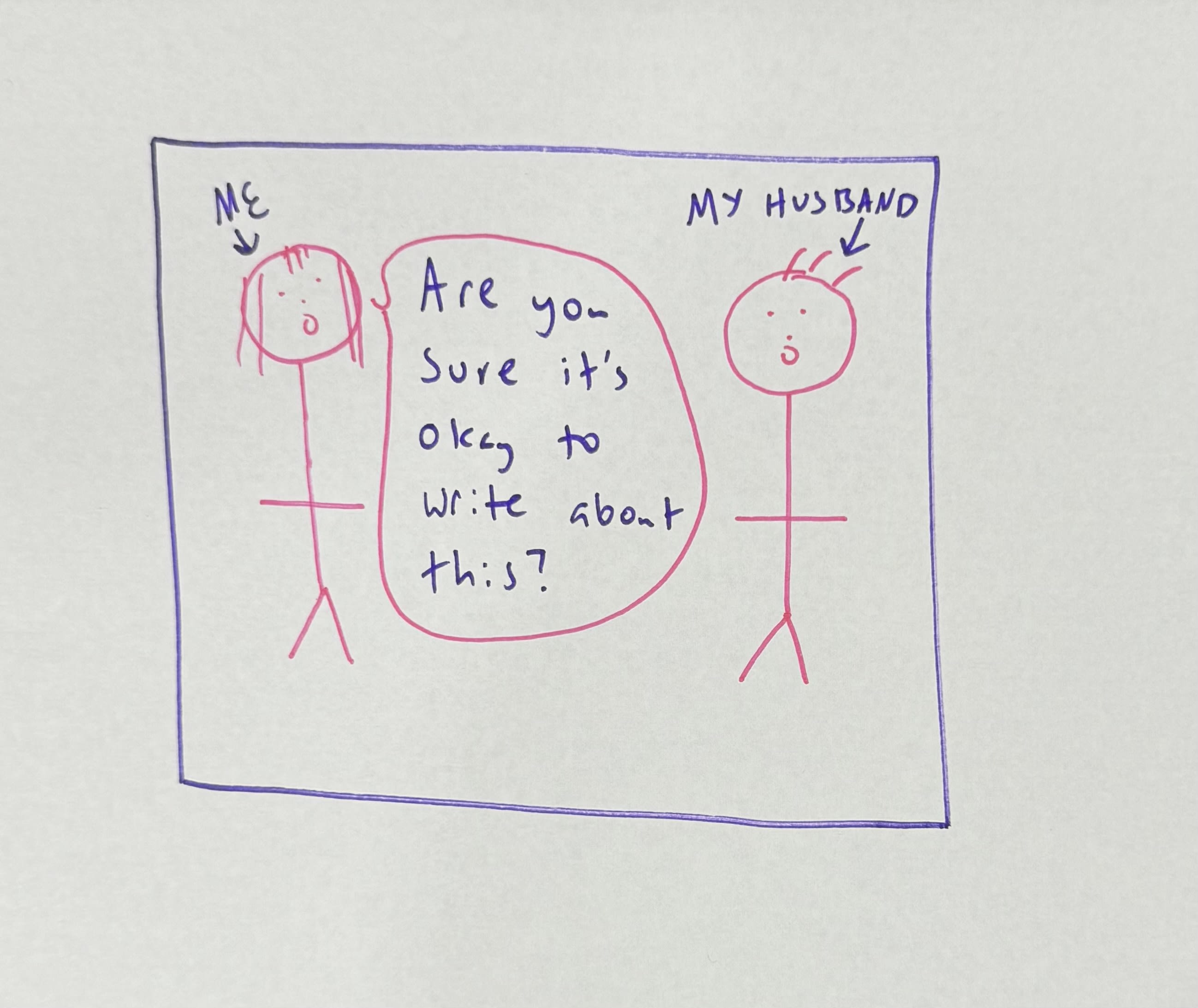
When John handed me a rough draft of his first Substack essay a few weeks ago, I was shocked. One of the first rules of our relationship has been that I am never to mention his complicated family situation publicly. Agreeing to this was a no-brainer—even though it felt uncomfortable to have to keep such a massive part of my life private. I use my writing to help me process my pain and connect with others in similar situations and for years that familiar resource has been (understandably) cut off when it comes to all of this. But now the rules have changed.
After much deliberation and conversation, John decided to go public about his estrangement. He no longer feels like there is anything worth protecting with his silence. He has also given me permission to do the same. Being able to write about this feels like another significant step in me prioritizing myself while remaining supportive of John. I will never publish anything on this topic without his approval first, but the fact that I can be open and honest about what has happened has already helped me begin to heal.
There is no perfect way to handle something as messy as parental estrangement, but remembering that we are in this together, feels like an important framework. I am John’s family now and he is mine. Our child might not have two full sets of grandparents, but he will have us. And we promise not to send him a bunch of nasty emails no matter who he dates.
xoxo,
Allison
P.S. It would mean a lot to me if you hit the like button to increase chances of engagement! Also, if you are able to upgrade to paid subscriber or share my posts with a potential reader, I would be incredibly thankful! Thank you for reading!
August 26, 2025
I’M NOT WHO MY HUSBAND WANTED TO MARRY
Last Wednesday was my two-year wedding anniversary. It was pleasantly uneventful compared to last year when we were in New York taking care of my dying mother. (Even if we did wake up to one of our dogs screaming from nerve pain.) Since getting married in 2023, our lives have dramatically changed. John is pursuing a new, more stable career path despite his love for screenwriting. I am becoming a mom as I grieve losing my own. And we started an incredibly vulnerable, and perhaps too revealing podcast together about our relationship that has forced me to confront my own limitations as a wife.
August 19, 2025
THE STRESS OF TRYING NOT TO BE STRESSED
One of the most common refrains that pregnant people hear is that your stress will fuck up your baby’s entire life. They might not use that exact wording, but the implication is clear. If you want a well-regulated, happy newborn turned child turned adult, you better spend the nine months they’re cooking in your belly in a state of perpetual bliss. Even as your body revolts and you prepare for one of life’s biggest upheavals—don’t let that get to you! STAY ZEN OR ELSE.
The idea that stress is bad on our bodies and minds isn’t unique to pregnancy. It’s a reality all of us face and it often feels like a trap. Because it is inherently stressful to fear stress. Especially in a world that isn’t going so well. You just need to scan the news to feel a tightening in your chest. Or have the words AI or climate change pop up in conversation. The future of humanity feels particularly fragile at this moment, and yet we aren’t supposed to stress about it. And if we fail, well, we can expect to die of heart disease as the robots cart our bodies away amid another natural disaster and we will have no one to blame but ourselves.
Emotional Support Lady is a reader-supported publication. To receive new posts and support my work, consider becoming a free or paid subscriber.
A few weeks ago, my area of Los Angeles was on tsunami watch. This was particularly challenging for me because I have a huge (and some might say irrational) fear of this specific scenario. I can trace my phobia back to a movie I watched years ago. The horrifying opening sequence of people and buildings being swept away remained burned in my brain—even if the film’s title did not. Given my heightened tsunami concerns, which for some reason do not apply to earthquakes or fires—two things far more likely to actually happen in California—I became worried that my house would flood and my home would be destroyed. But even more distressing, I became unreasonably pissed off at the possibility of having to pack a go bag and stay in a hotel overnight.
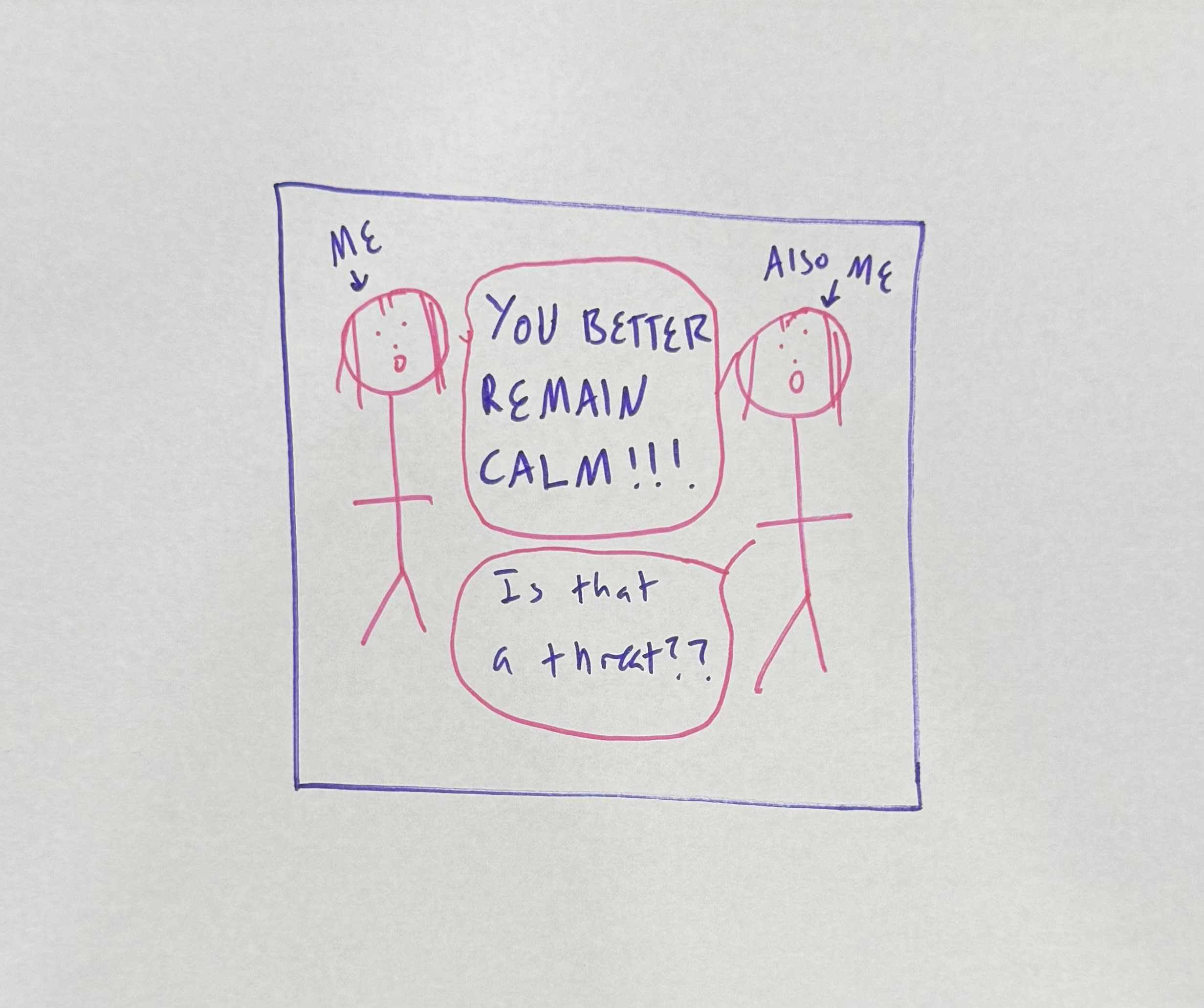
For someone who is normally good in a crisis, I could feel myself falling apart. It all felt like too much. I didn’t have the capacity for another disruption in my routine. Logically, packing a bag and driving across the city to safety wasn’t beyond my capabilities. If anything, I was lucky to have somewhere to go if the watch turned into a warning. But my regular regulation techniques were MIA. As I was spiraling, a voice in my head kept repeating this is bad for the baby. A lovely reminder that I was failing not only to be a mature adult but also screwing up as a mom.
As news came in that the tsunami was less likely to have a big impact outside of harbors and beaches, I decided that the only good option was to put myself to bed. I took two Benadryl and crawled beneath my sheets, no longer interested in being an active participant in reality. It all felt like too much, and I wanted my body to shut down before my stress did even more harm. If things took a turn, and we needed to flee, I would rally. But in the meantime, unconsciousness felt like my best, and healthiest, option.
Figuring out how to not be overly stressed while you remain awake is a trickier beast. Since my mother died, I have had an even more taxing relationship toward death than before, which has increased my anxiety level. Now that random, tragic death has touched my inner circle, I can’t logically convince myself that I am safe from the same fate. My delusion that that sort of thing only happens to other people no longer held any weight.
How does one face the constant possibility of death without being stressed out?
To me, it feels like there are two options for managing all the stress in your life—including the threat of impending death. The first is to lie to yourself. When a fear pops up, you push it away with thoughts like everything will be okay or that will never happen. This strategy won’t prevent those horrible things from happening, but they allow you to bury your head in the sand as the U.S. government barrels full force toward authoritarianism or you wait for important test results to come back from the lab. It requires you to live in a world of your own making where manifestation works and everything happens for a reason. Stress can’t get to you because you refuse to see it.
The problem with this approach is that it detaches you from reality. You can’t have an in-depth conversation about the danger of climate change because in your worldview that is either a problem that doesn’t really exist or one that will miraculously be solved in the nick of time. It makes it difficult for you to sit with other people’s real pain or problems because they are a reminder that bad things do happen and if you acknowledge that the stress might sneak through your carefully crafted barriers.
Personally, protecting my cortisol levels doesn’t feel more important than meeting people where they are and seeing the world for what it is. This leaves me to embrace the second option, which is a level of radical acceptance that goes against my natural, anxious state. It’s basically the if I die, I die approach. It’s living with acceptance that horrible things can and do happen at any moment, but I don’t need to spend my time or mental energy worrying about it. It’s basically the decision to not live in fear. This doesn’t mean I won’t take steps to create the life I want or fight for a better future. I will still care about myself, my loved ones and humanity as whole. But I won’t live a life trying to outrun or outmaneuver anything bad. And if I am okay with bad things happening, the stress doesn’t have anything to latch onto.
Obviously, I have not perfected this method given my recent mini breakdown. But having a framework other than admonishing myself for being stressed in a stressful world has been helpful. Is my new approach a little morbid? Yes, but so is the nature of being mortal creatures. We all die someday—even if we manage to avoid tsunamis.
xoxo,
Allison
P.S. It would mean a lot to me if you hit the like button to increase chances of engagement! Also, if you are able to upgrade to paid subscriber or share my posts with a potential reader, I would be incredibly thankful! Thank you for reading!
August 12, 2025
SOMEONE IN MY LIFE HATES ME
I’m not going to name names, but there is someone in my life who thinks I’m a bad person. And I’m not just saying that because of a vibe or low self-esteem. They have made their (negative) thoughts about me explicitly clear multiple times. At this point it would be delusional for me to try to convince myself that I am being too sensitive or that they probably didn’t mean it. So instead, I have to figure out how to exist with the uncomfortable feeling that someone with a undeniable role in my life believes that all my worst fears about myself are true.
August 5, 2025
MOM FAN FICTION
I recently went to dinner with my literary/film agent, Alice Lawson. Normally when I go to a meal with my reps, I enter with prepared questions and a plan of attack. How would you assess the current state and potential future of my career? What can I be doing differently to get more work? Can you please give me a much-needed ego boost while I order the most expensive thing on the menu because I know you can expense it? This time, though, I wasn’t interested in discussing my (slim) chances of optioning my latest novel into a feature film. I wanted talk about our dead moms.
In the relatively brief time I’ve worked with Alice, she has lost both her parents. I remember receiving an email sharing that her mother had died in February 2024. At the time, the unexpected, traumatic loss seemed unimaginable. How could someone survive such a thing? I had no way of knowing the same pain was coming for me only seven months later. When I returned to LA after my mom’s rapid decline last fall, Alice reached out and we had our first dinner together. We primarily spent it venting about all the parts of parental death most don’t want to talk about. (Like all the people who let you down and the true cost of losing the most nurturing, important person in your life.) Considering it was our first time meeting in person, the conversation was surprisingly raw and unfiltered. We didn’t need to hide the extent of our grief or present as anything other than current ourselves: two people who were angry and damaged.
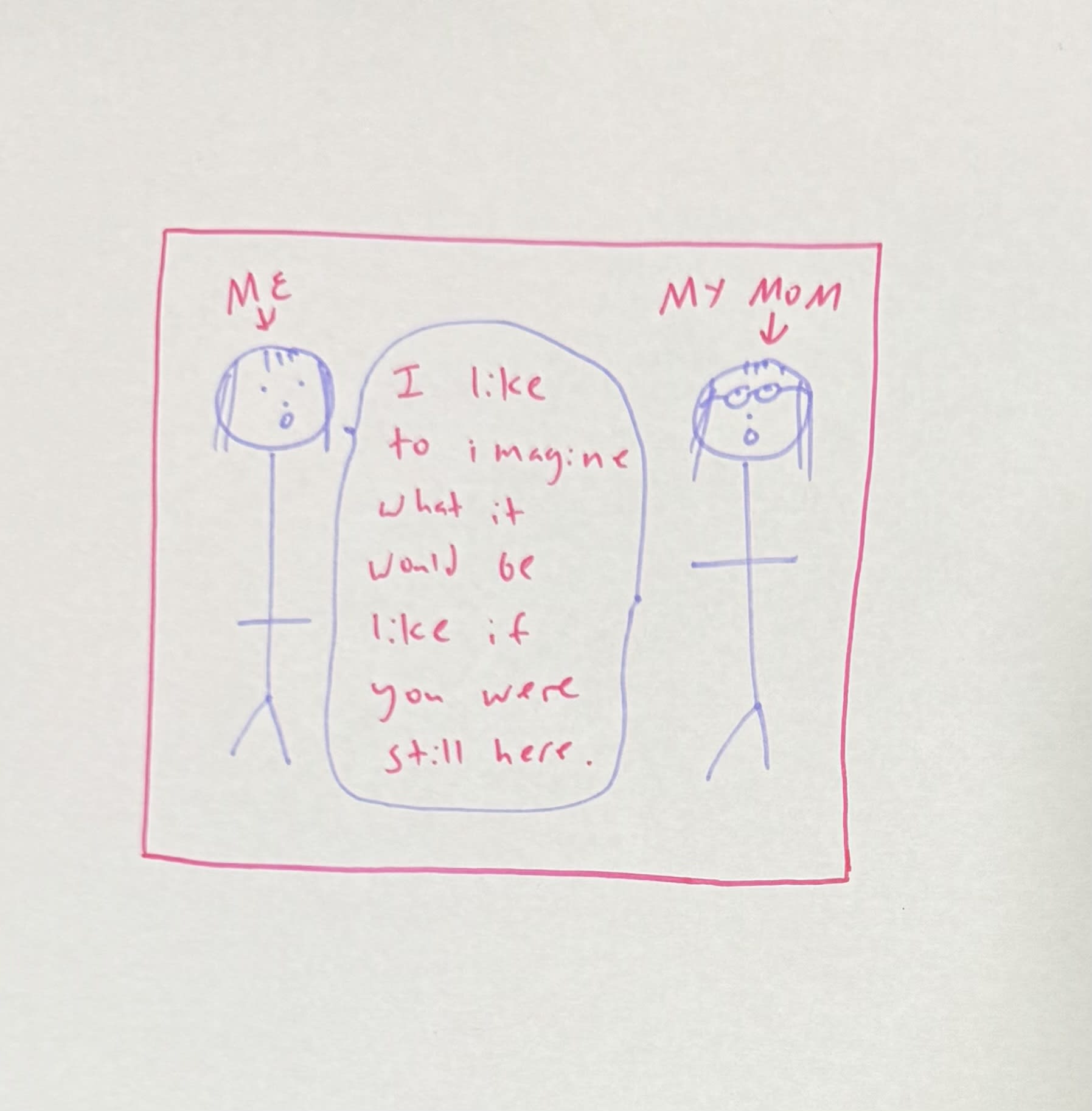
Considering how cathartic our first dinner was, I was excited to meet again in what had come to feel like a mini grief group. And, not one to disappoint, Alice blew my perception of loss wide open within moments of sitting down. She casually referred to something she had been calling Mom Fan Fiction, which is basically a made-up version of what your life would be like if your mom was still around. I immediately seized onto the idea because it gave a name and shape to something I had already been feeling.
Since my mom died last September, I can’t count how often I’ve said something along the lines of if mom were here. Often, it’s in reference to something small, like she would have loved this drink or been horrified at a certain grammatical mistake (mostly of my own making). Sometimes, though, it’s a reimagining of major life moments. Most notably, what would my pregnancy be like if my mom was still alive? Odds are I wouldn’t have hysterically sobbed in the parking lot before my 12-week ultrasound. Or teared up during my 20-week anatomy scan not from awe at seeing my baby in 3D but from grief at not being able to show her the (pretty spooky) images. I wonder if I would be taking far more photos of my bulging belly and feel more attached to this creature growing inside of me if she was still here. How many times would I have FaceTimed her after puking because hearing my mommy’s voice always made me feel better when I was sick? My guess is every single time.
Emotional Support Lady is a reader-supported publication. To receive new posts and support my work, consider becoming a free or paid subscriber.
Before hearing the term Mom Fan Fiction, thinking about this alternate reality simply highlighted what I don’t have anymore. But fan fiction is a way to get what you need outside of what’s provided by cannon (the official account of reality). In this case, cannon is my real life where my mom died far too young and I have to live out the rest of my days without her. But, in Mom Fan Fiction, I also get to live out a version of adulthood with her still by my side—even if it is just in my imagination. I can picture what she would say or do in certain situations and bring her with me into new experiences. Will the version of my fan fic mom be entirely accurate to how the real Ruth Raskin would have operated? Probably not—she was a complex woman who wasn’t always predictable—but that is where artistic license comes in. I don’t have to get it exactly right. I just have to remember to include her.
Figuring out how to keep the spirit and memory of my mother alive has been one of the most daunting parts of losing her. I have never had to keep a connection alive without the other person helping me before. The other people I have lost, either through death or friendship break ups, were people I could adjust to living without. Sure, I miss them on occasion, but the hole they left became filled with other things. The same can’t be said about my mom who was such a singular force in my life that the idea someone or something else could fill her role feels sacrilege.
While Mom Fan Fiction might seem like a weird loophole or avoidance of my loss to some, to me it is the opposite. True avoidance would be adapting to a life without my mother, so I never even have to think about her. Constantly inserting her into my current reality makes it impossible to ignore my grief. But it also keeps me wrapped in her embrace.
I feel so thankful to Alice for introducing the idea to me and I wonder if one day we will co-create a version of Mom Fan Ficion where our mothers become friends and talk about their daughters together as much as we talk about them.
xoxo,
Allison
P.S. It would mean a lot to me if you hit the like button to increase chances of engagement! Also, if you are able to upgrade to paid subscriber or share my posts with a potential reader, I would be incredibly thankful! Thank you for reading!
July 29, 2025
I AM AFRAID OF YOU
I recently spent a night freaking out that my career was over. A new episode of my podcast Starter Marriage had come out a few days earlier and people were (rightly) mad that I had behaved badly during a moment of conflict with my husband/cohost. I wasn’t listening to where he was coming from and instead doubled down on my perspective, lathering myself up in defensiveness. Marriages have these kinds of moments all the time. The goal is to get better at navigating them and reduce your instinct to fight back rather than listen. But when those moments happen in public, you open yourself up to people assuming the worst about you because they don’t get to see the repair that happens later—off screen.
Knowing this is what led me to having a full-blown panic that after over ten years of making consistent content online, this one interaction was going to be the end of my credibility as a relationship coach and mark the end of people wanting to engage with my work.
July 22, 2025
WHY ARE RELATIONSHIPS SO HARD?
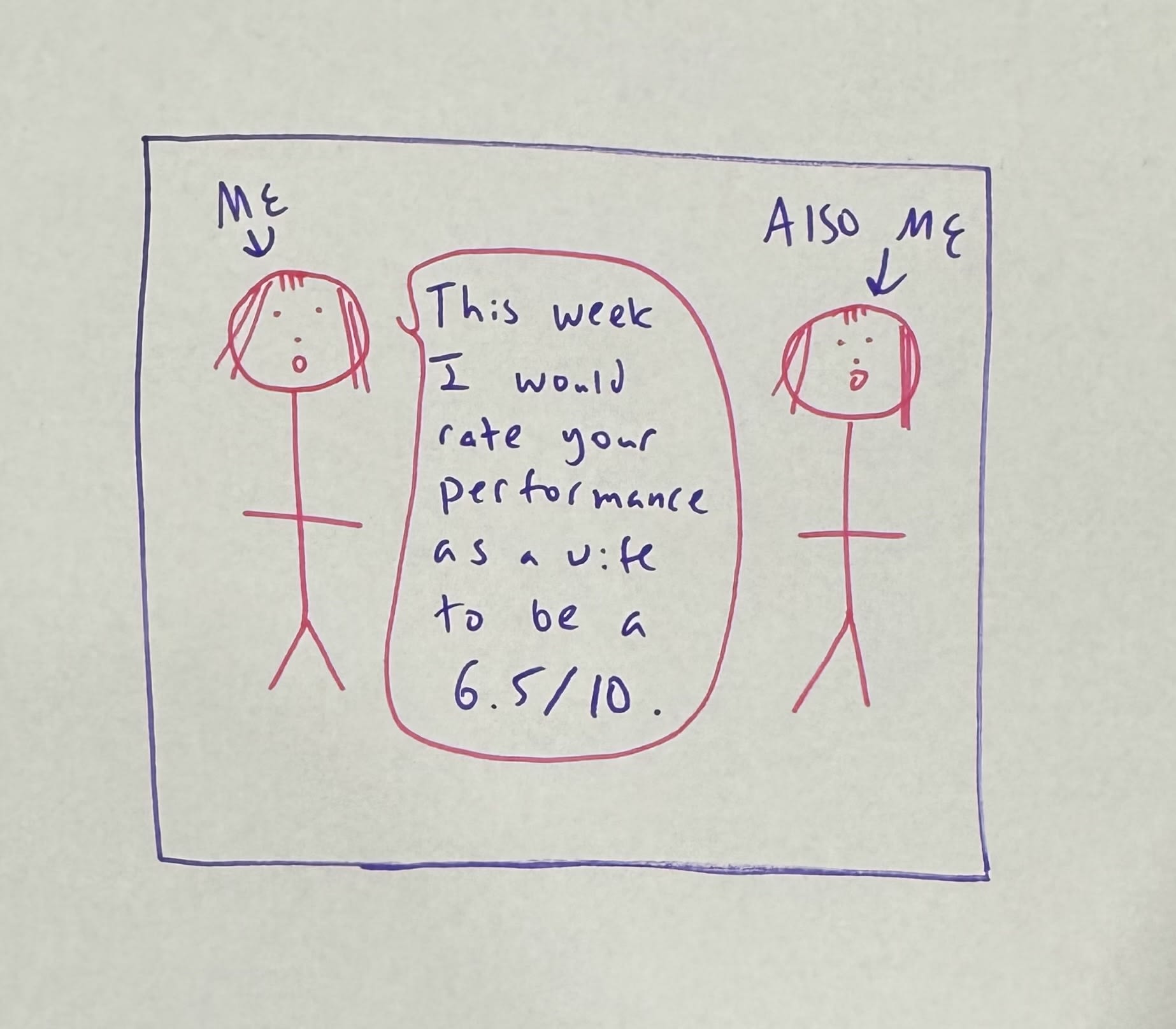
I am not a perfect partner. I know this might come as a huge shock considering I am a relationship coach and sometimes news outlets interview me for my expert opinion. But despite any assumptions that I am over here nailing it, I actually mess up quite a bit. Perhaps this is because knowing how you want to act in a partnership and being able to follow through with that intention in every moment, mood and situation isn’t the same thing. Not to mention the times I don’t even realize I’m making a mistake until my husband gently points it out to me.
While admitting all of this might come as a blow to my professional credibility, I think it’s important to normalize that being good at romantic relationships isn’t an inherent skill. We don’t come out of the womb knowing how to be perfectly attuned to our partner’s needs while still properly managing our own. Heck, we don’t even realize other people have their own feelings and thoughts until we are three or older. Rather than romance being a transcendent state that brings out the best in us, it is instead a constant struggle to figure out how to navigate the world with another person who not only operates differently than you but also demands an uncomfortable level of vulnerability.
Emotional Support Lady is a reader-supported publication. To receive new posts and support my work, consider becoming a free or paid subscriber.
Additive relationships, which is a term I find less complicated and charged than healthy, demand constant repair. They ask us to not only take responsibility over our blunders but offer future solutions. The problem is sometimes we don’t want to do either because life is hard and can’t you just get off my back? Things get even more complicated when it’s not totally clear who was in the wrong. Suddenly, the rules of engagement aren’t obvious as our emotions and defenses take over.
Doesn’t what you did justify what I did? My ex never cared about this, so why do you? Why are you bringing up something that happened five years ago right now? Can’t you just apologize so we can move on and agree I was right the whole time?
The hardest time to try to reasonably resolve a conflict is when you are already pissed off. I am least likely to want to want to see things your way when I feel like you are attacking me. It takes a lot of practice and self-control to be able to remind yourself that your partner isn’t your enemy in the heat of the moment. Even if you study relationships for a living and tell people that’s what they need to do.
Something I try to remember is that all the tough stuff is inevitable. It is impossible to spend years with a person, make your major decisions together and cohabitate without having bumps in the road. Any long-term partner will annoy you, hurt you and ignore you at different points in your relationship. Not because they are trying to do those things (hopefully) but because they are human. Wires get crossed, bad habits are formed, and the demands of daily life suck us dry.
And yet…relationships demand that we have to push through all of that and continuously reach for each other. Even when we are exhausted and it would be easier to retreat into a one-person-sized cave. Your connection is this living, breathing, fragile thing that needs constant maintenance and upkeep. Some days that is easy to do—joyful even. Other days, it takes everything we have to give the bare minimum.
This is what it means when people vaguely say, “relationships take work.” They require us to act differently than we want to for the sake of something bigger than us. They demand a level of responsibility to another person and with that responsibility comes a whole host of things we might rather avoid. Like taking care of our health or facing our flaws. Because our partners don’t just get to see our good parts; they get a front row seat to the icky stuff too. And, even more terrifying, they have the right to ask us to be better. To make even more accommodations and changes than we’d originally planned based on specific issues that arise because of a couple’s differences and individual needs. Take me exactly as I am isn’t an appropriate strategy if you view your partner as equally deserving of love and respect.
The idea that doing all of this should come naturally and easily is laughable. Especially when you add outside stressors like work, children and the current (awful) state of the world. You are not broken or selfish if it is hard for you to be a good partner. You just have to be interested in getting better at it. In learning from your inevitable screw ups and trigger points. The goal isn’t to coexist peacefully until you die in each other’s arms. It’s to learn how ride the waves as a team. And hopefully, in time, build a better boat together.
xoxo,
Allison
P.S. It would mean a lot to me if you hit the like button to increase chances of engagement! Also, if you are able to upgrade to paid subscriber or share my posts with a potential reader, I would be incredibly thankful! Thank you for reading!
July 15, 2025
HAVE I MADE A HUGE MISTAKE?
Well, it’s official. TikTok has figured I’m pregnant. I am being inundated with videos of pregnant women tracking their weight gain and infographics on how to optimize the parenting of a newborn. Did you know that some people start sleep training their babies at eight weeks old and it’s the best decision they ever made? Were you aware that not everything you put on your registry will be useful but there are certain items that are lifesaving and if you don’t acquire them your life will be hell? These are just a few examples of all the things I now know against my will. As a naturally curious person who asks her husband to explain the complexities of the filibuster for fun and listens to podcasts about a wide range of subjects from the Unabomber to Mormonism, my total lack of interest in learning about babies is alarming. Especially since I am going to have one soon.