Jennifer Swanson's Blog, page 89
August 2, 2021
August Middle-Grade Releases
Joy. Adventure. Mythology. Science. Sports. August brings these topics and more to middle-grade readers. What an exciting collection, brought to you by amazing authors!
Black Boy Joy: 17 Stories Celebrating Black Boyhood by Kwame Mbalia Delacorte Press, August 3
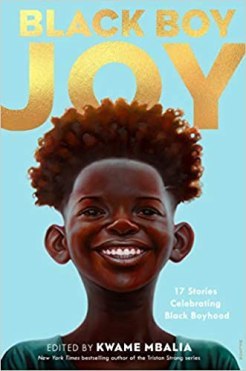
Celebrate the joys of Black boyhood with stories from seventeen bestselling, critically acclaimed Black authors–including Jason Reynolds (the Track series), Jerry Craft (New Kid), and Kwame Mbalia (the Tristan Strong series)!
“Pick up Black Boy Joy for a heavy dose of happiness.” —Booklist, starred review
Black boy joy is…
Picking out a fresh first-day-of-school outfit.
Saving the universe in an epic intergalactic race.
Finding your voice—and your rhymes—during tough times.
Flying on your skateboard like nobody’s watching.
And more! From seventeen acclaimed Black male and non-binary authors comes a vibrant collection of stories, comics, and poems about the power of joy and the wonders of Black boyhood.
Paola Santiago and the Forest of Nightmares by Tehlor Mejia Rick Riordan Presents, August 3
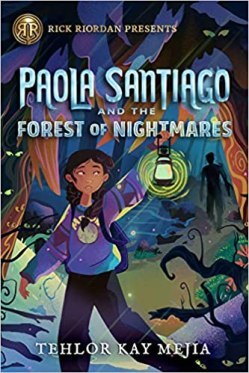
“Paola is a brilliant, furious girl who often trusts her brain but trips over her heart.”–Sarah Gailey, Hugo and Locus award-winning author of River of Teeth
Six months after Paola Santiago confronted the legendary La Llorona, life is nothing like she’d expected it to be. She is barely speaking to her best friends, Dante and Emma, and what’s worse, her mom has a totally annoying boyfriend. Even with her chupacabra puppy, Bruto, around, Pao can’t escape the feeling that she’s all alone in the world.
Pao has no one to tell that she’s having nightmares again, this time set in a terrifying forest. Even more troubling? At their center is her estranged father, an enigma of a man she barely remembers. And when Dante’s abuela falls mysteriously ill, it seems that the dad Pao never knew just might be the key to healing the eccentric old woman.
Pao’s search for her father will send her far from home, where she will encounter new monsters and ghosts, a devastating betrayal, and finally, the forest of her nightmares. Will the truths her father has been hiding save the people Pao loves, or destroy them?
Once again Tehlor Kay Mejia draws on her Mexican heritage to tell a wild and wondrous story that combines creatures from folklore with modern-day challenges.
Zeus the Mighty: The Trials of Hairy-Clees by Crispin Boyer Under the Stars, August 3
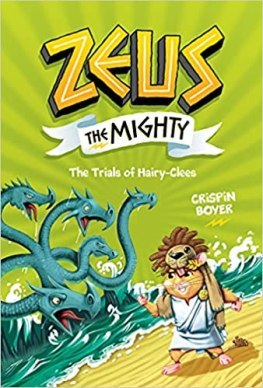
Zeus the hamster and his “god squad” are back to battle for the title of champion in the third title in this series that takes readers on a rollicking romp through Greek mythology.
Our story begins with a challenge: The Trials of Hairy-Clees are only for the bravest and most awesome gods of all. Who among them will become the ultimate champion?
The pets of Mount Olympus Pet Center are a true team: They conquer epic quests as easily as Ares the pug scarfs down Mutt Nuggets and they vanquish enemies who are pricklier than the spines on Poseidon the pufferfish. But when a chicken named Hermes shows up one day, things take a turn, and before the team knows it, the Oracle has spoken and the mysterious Trials of Hairy-Clees begin! Who will become top god? And can Zeus learn to share the limelight to fight alongside Hermes?
Join Zeus the overconfident hamster, Athena the wise cat, Ares the treat-loving pug, Poseidon the proud pufferfish, and Demeter the loyal cricket on another laugh-out-loud adventure through Greek mythology.
World Champions! A Max Einstein Adventure by James Patterson and Chris Grabenstein Jimmy Patterson, August 9
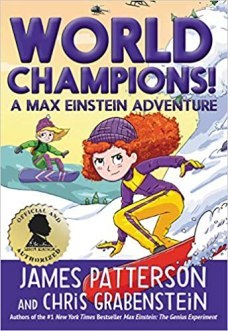
Max finally meets her hero, Albert Einstein, as she dashes across glaciers, visits the Great Barrier Reef, and flies a solar-powered jet in a race to stop Global Warming—before it’s too late for Planet Earth.
World Champions . . .
GET OUTDOORS
From racing across glaciers in Greenland and flying in a super fancy solar-powered jet to Hawaii, to visiting the Great Barrier Reef off the coast of Australia and hanging out with a robot named Leo, twelve-year-old genius Max and her friends live for adventure.
TAKE ACTION
Whenever there’s a problem to solve, the kids work better together. So does an evil group of the rich and powerful, who will do whatever it takes to split the kids up—even as the planet is changing before their eyes.
NEVER GIVE UP
Max has one more surprise in her playbook, and if she’s going to pull it off, she needs her team around her. Who said that kids can’t save the world?
Dark Waters by Katherine Arden G.P. Putnam’s Sons Books for Young Readers, August 10
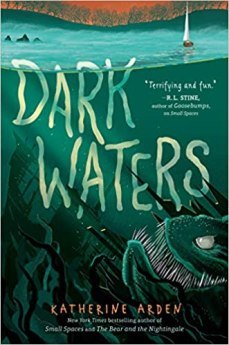
New York Times bestselling author Katherine Arden returns with another creepy, spine-tingling adventure in this follow-up to the critically acclaimed Small Spaces and Dead Voices.
Until next time. That chilling promise was made to Ollie, Coco, and Brian after they outsmarted the smiling man at Mount Hemlock Resort. And as the trio knows, the smiling man always keeps his promises. So when the lights flicker on and off at Brian’s family’s inn and a boom sounds at the door, there’s just one visitor it could be. Only, there’s no one there, just a cryptic note left outside signed simply as –S.
The smiling man loves his games and it seems a new one is underway. But first, the three friends will have to survive a group trip to Lake Champlain where it’s said Vermont’s very own Loch Ness monster lives. Brian is thrilled. He hasn’t sailed since visiting his family in Jamaica and even the looming threat of the smiling man can’t put a damper on what is guaranteed to finally be a day of fun–even if it is awkward being stuck on a boat with both his old best friend, Phil and his new best friends, Coco and Ollie. But when a misstep from Phil causes a tragedy onboard and leaves them shipwrecked on an island haunted by a monster on both land and sea, Brian’s survival instincts kick in and it’s up to him to help everyone work together and find a way to escape.
One thing is for sure, the smiling man is back and he wants a rematch. And this time Brian is ready to play.
Good Housekeeping Amazing Science: 83 Hands-on S.T.E.A.M Experiments for Curious Kids! by Aubre Andrus Hearst Home Kids August 24
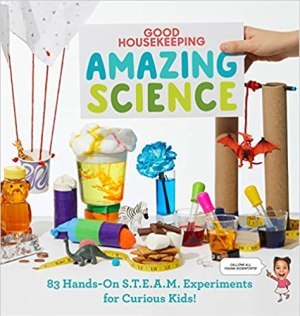
Awesome S.T.E.A.M.-based science experiments you can do right at home with easy-to-find materials designed for maximum enjoyment, learning, and discovery for kids ages 8 to 12
Join the experts at the Good Housekeeping Institute Labs and explore the science you interact with every day. Using the scientific method, you’ll tap into your own super-powers of logic and deduction to go on a science adventure.
The engaging experiments exemplify core concepts and range from quick and simple to the more complex. Each one includes clear step-by-step instructions and color photos that demonstrate the process and end result. Plus, secondary experiments encourage young readers to build on what they’ve discovered. A “Mystery Solved!” explanation of the science at work helps your budding scientist understand the outcomes of each experiment.
These super-fun, hands-on experiments include:
• Building a solar oven and making s’mores
• Creating an active rain cloud in a jar
• Using static electricity created with a balloon to power a light bulb
• Growing your own vegetables—from scraps!
• Investigating the forces that make an object sink or float
• And so much more!
Bursting with more than 200 color photos and incredible facts, this sturdy hardcover is the perfect gift for any aspiring biologist, chemist, physicist, engineer, and mathematician!
Legacy and the Double by Annie Matthew, created by Kobe Bryant Granity Studios August 24.
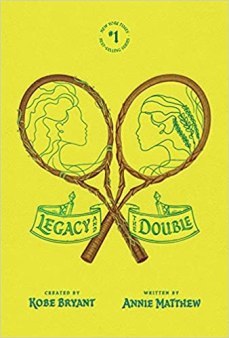
Kobe Bryant’s legacy of uplifting and inspiring young athletes continues in this highly anticipated follow-up to the #1 New York Times bestseller Legacy and the Queen.
Legacy Petrin is a national tennis champion, but she doesn’t feel like one. At the orphanage where she grew up, far from the city where she learned to shine, Legacy struggles to focus on her training. Her famous magical inner light dims and darkens until she barely recognizes herself.
Then a girl who looks exactly like Legacy―same burlap dress, same signature glow―starts playing in Legacy’s name. She wins matches in the city, makes charming speeches in support of “Queen” Silla, and gains a devoted following. Soon, Silla issues a decree against impersonating champions, which means that the real Legacy could be arrested simply for looking like herself.
To reclaim her name and her identity, Legacy has no choice but to compete in disguise . . . until she can rise through the ranks, face off against her imposter, and prove that she is the one and only Legacy Petrin―a champion who was born to shine.
The post August Middle-Grade Releases appeared first on From The Mixed Up Files.


July 30, 2021
Agent Spotlight: Ashley Herring Blake
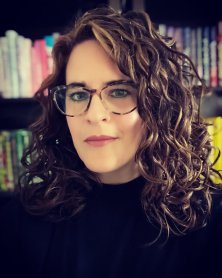
Today I’m thrilled to interview the amazing and energetic Ashley Herring Blake. You may remember reading about her here previously when she talked about being an author of middle-grade novels.
Recently, Ashley became an agent at the Rees Literary Agency, and I was delighted to speak to her about her new venture.
To learn more about Ashley, her books, and her new position as an agent, visit her at her website: http://www.ashleyherringblake.com
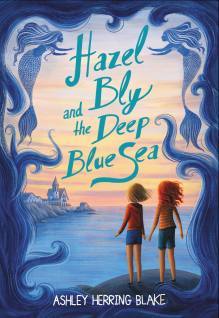
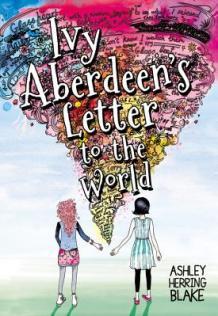
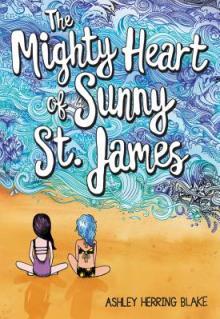
Dorian: You’ve been a prolific writer of middle-grade novels such as Hazel Bly and the Deep Blue Sea (published in May of this year), Ivy Aberdeen’s Letter to the World, and The Mighty Heart of Sunny St. James. You’ve also written for young adults, and I noticed you have an adult romance coming out next year. What made you want to add agenting into your busy schedule?
Ashley: That’s an excellent question! I’m also a teacher for my day job, and last year, I was really wanting to think about how I could move my whole career into publishing. I’ve always been a big reader, and I love helping bring stories to life. My own agent has been so integral in my life—a support, an advocate, a pseudo-therapist—and I wanted to be that for other authors.
Dorian: Can you tell us a bit about yourself and the Rees Literary Agency?
Ashley: Rees Agency has been around since the 1980s. They represent nonfiction and fiction, everything from literary to the very commercial, kid’s books, and romance. I’ve been with them as an author since 2014, so I knew joining them professionally as an agent was a smart move—I’m comfortable with them and I know they take care of their authors.
Click on this link for an archived interview with Ashley.
Dorian: Sounds great! How did you decide to specialize in the field of literature for children and teens?
Ashley: I actually didn’t! While I do rep middle grade and YA, I have more clients right now who write adult. I’m most interested in romance and contemporary fiction for all ages (sweet crushes for the MG set), and am really looking for queer stories more than anything right now.
 Dorian: What was your favorite middle-grade book as a child?
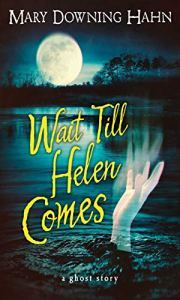
Ashley: Wait Till Helen Comes by Mary Downing Hahn. Something about that book wrapped itself around my heart and squeezed tight! While my love for the story didn’t translate into me writing ghost stories, I’ll always adore that book.
Dorian: I remember enjoying that book, too! What are some of your favorite middle-grade books now?
Ashley: There’s so much great middle grade out there right now. I love anything by Kacen Callender, Nicole Melleby, Kathryn Ormsbee, Karen Strong, Akemi Dawn Bowman, Erin Entrada Kelly, A. J. Sass, and more.
Dorian: I know our writers who are readers will want to know: What would you like to see in your submission box?
Ashley: As I mentioned above, I’m mostly looking for queer stories right now, mostly in the realistic fiction realm. I’m looking for MG, YA, and adult, and I’m a sucker for messy characters, super voicey writing, and a smidge (or a lot) of romance.
Dorian: Can you tell us about a special interest, hobby, or obsession you have that isn’t listed in your bio or wish list?
Ashley: I’m very into planners. I don’t create my own like bullet journalers, but the one I do use, I make look pretty with colors and washi tape and use it as part planner, part journal. When the mood hits me right and I’m not annoyed at all the frizz and effort, I’m into curly hair care as well. I’ve had curly hair since adolescence and am just now starting to really understand how to take care of it.
Writing and Query Tips
Dorian: What are two of your best writing tips?
Ashley: Write a lot and read a lot. That’s really the crux of it. You have to be willing to write badly, a lot, in order to get better. And reading widely will teach you what good writing is. It’ll also teach you what good writing isn’t. 
Dorian: How about putting your agenting hat on now, and telling us your two best tips for querying?
Ashley: Keep your query letter about the book. The agent doesn’t need to know why you wrote a book or the themes they may find therein. That won’t make them want to read further. Stick to the book’s character and plot—what do they want, why can’t they have it, and what do they plan on doing about it? Secondly, follow the agent’s sub guidelines. I know we’re all busy and it’s been a wild couple of years, but that’s a basic professional courtesy, and one which, if not followed, is a red flag in my opinion.
Dorian: That’s great advice. Thank you! How can writers query you?
Ashley: They can query me at this link: https://querymanager.com/query/ashleyblake
I ONLY take queries through query manager.
Dorian: How can people follow you on social media?
Ashley: My handle is ashleyhblake on both Twitter and Instagram.
Thanks so much for taking the time out to talk to us today. Best of luck with your writing and agenting!
The post Agent Spotlight: Ashley Herring Blake appeared first on From The Mixed Up Files.
July 28, 2021
Interview with Helen Rutter, author of the MG debut, THE BOY WHO MADE EVERYONE LAUGH + a giveaway!
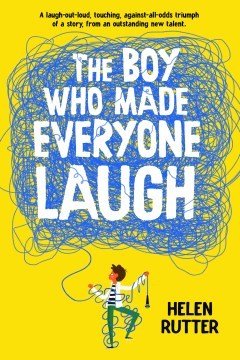
 Let’s give a hearty Mixed-Up Files welcome to Helen Rutter, author the MG debut, The Boy Who Made Everyone Laugh. Praised by children’s author Jacqueline Wilson as “Very funny, very touching, and very truthful”—and featured as a Waterstones Book of the Month—the novel was released in the U.K. by Scholastic on February 4, 2021. It will be available in the U.S. on August 3.
Billy Plimpton has a big dream: to become a famous comedian when he grows up. He already knows a lot of jokes, but thinks he has one big problem standing in his way: his stutter.
At first, Billy thinks the best way to deal with this is to . . . never say a word. That way, the kids in his new school won’t hear him stammer. But soon he finds out this is not the best way to deal with things. (For one thing, it’s very hard to tell a joke without getting a word out.)
As Billy makes his way toward the spotlight, a lot of funny things (and some less funny things) happen to him. In the end, the whole school will know—
If you think you can hold Billy Plimpton back, be warned: The joke will soon be on you!
MR: So glad to have you with us, Helen. Welcome to the Mixed-Up Files! Huge congratulations on having published your first novel.
HR: Thanks so much for having me! It’s so exciting that the book is coming out in the U.S. The whole publication process has been a wonderful series of lovely moments, and this really is a big one!
Struggling with StutteringMR: Billy Plimpton, the protagonist of the book, struggles with stuttering. I can relate, because I too have a speech disorder—spasmodic dysphonia. Although my voice problem is different from Billy’s, I connected deeply to the character’s challenges and frustrations. As a non-stutterer, how were you able to capture Billy’s story with such authenticity? Was there research involved?
HR: The research came through raising my son, who is a stutterer. Over the years, we have been to speech therapy together, and I’ve witnessed all the ups and downs that come with growing up with a stutter. As most parents would attest, watching your child struggle and then learn how to deal with challenges is a pretty powerful thing. It’s no wonder he inspired me to write my first novel!
Inspiration for BillyMR: As above, the idea for The Boy Who Made Everyone Laugh came from your son, Lenny, who has a stutter. I’m guessing that Lenny was instrumental in the formulation of Billy’s character. Did he have any specific thoughts and suggestions? Any objections? What did Lenny think of the final product?
HR: He was a HUGE part of the process. I read him each chapter when I’d finished it, and he would let me know when I had really hit the mark. It was such a lovely experience, and offered opportunities for us to talk about things that had happened to him. Also, he told me when things did not work, usually when I used words that “kids just don’t say anymore, Mum!” He really enjoyed hearing the drafts of the story as they developed, and he was an excellent proofreader as his grasp of punctuation and grammar is far better than mine!
When we found out that it was actually going to be published, Lenny was thrilled. He has been involved in TV interviews here in the U.K. and has loved every second of it! He’s much older now, and his stammer has changed a lot. He no longer struggles with it in the same way, and it doesn’t define him like it once did. Because of that, his stutter is not as apparent as it used to be, which gives him more confidence. When it does come back, he realizes that it’s just a tiny part of who his is. I think the story is a great reminder of that.
Creating a Nuanced AntagonistMR: At school, Billy is bullied mercilessly by a classmate, William Blakemore. I’ve never experienced deliberate cruelty because of my speech disorder, but I could empathize with Billy’s pain and humiliation. As a writer, how do you humanize a bully? What advice would you give to other writers who want to create a nuanced antagonist?
HR: Blakemore’s character grew a lot over the editing process. It took time to get enough of his backstory into the book, in order to give his character depth, without apologizing for his behavior. I didn’t want to hold back on the bullying, to show how brutal and heartbreaking it can be, but I also had to show glimpses of where Blakemore’s bullying behavior came from. For every character, you need to show that their life and personality are complicated, contradictory and nuanced, and to do that they have to do things that are not always expected.
The Joke’s on You
MR: Despite his stutter, Billy dreams about being a comedian when he grows up. His biggest fan is his beloved grandmother, Granny Bread. What is it about comedy—and about the act of telling jokes—that appeals to Billy? For someone who is reluctant to speak in class, telling jokes onstage seems like a herculean task.
HR: The size of the task is what made it so appealing to write. I love an against-all-odds story! Sometimes we are drawn to something that seems beyond our reach for that very reason. I also wanted to show that just because Billy stammers, he still has a lot to say. It’s easy to assume that people who stammer are nervous or shy, and that certainly is not the case with Lenny. He is incredibly confident. He never stopped talking, raising his hand in class, or making his voice heard, however hard it seemed.
Many kids who stammer do withdraw, so I wanted to show in Billy that even though he was tempted to retreat and stay silent, the need to tell jokes and make people respond to him in a positive way had more power. Lenny definitely doesn’t want to be a comedian in real life (he would prefer to be a drummer), but I do know a comedian with a very strong stammer, so when I had the idea of using comedy, I knew it was rooted in reality.
How to Respond to a StuttererMR: As a stutterer, Billy is hyperaware of how people react to him when he speaks. He’s even created four categories of listeners: The Encouragers; The Mind Readers; The Jokers; and The Waiters. How did you come up with these categories? Can you tell us a bit about each? Also, what advice would you give to people who interact with a stutterer? What should—and shouldn’t—they do?
HR: This section of the book was Lenny’s favorite. It came from how I had witnessed people responding to him, and he said that it felt like I had climbed inside his head!
The Encouragers do just that; they try and help by telling him to “keep going” or “slow down.” Generally, very kind people, but encouraging is not that far from interrupting and, as it says in the book, “Telling someone to relax when they are clearly struggling is like shouting, ‘Run faster!’ at someone being chased by a tiger.” They would if they could.
Mind Readers finish the sentence, trying to guess what a stammerer is going to say (and often getting it wrong, as far as Billy is concerned).
Jokers mimic the stammerer. I’ve seen this done to Lenny so many times. You may think that it’s just kids who would do this, but I’ve seen more adults do it. I think it’s an attempt to be playful, and I think it happens when a person doesn’t know that it’s a stutter they’re hearing. This is definitely the most shocking response I have witnessed.
Waiters are the best category as far as Billy (and Lenny) are concerned. This is what I would always try to do. It’s harder than you may think. People aren’t the most patient, but it’s a useful skill to practice and I’m grateful to Lenny’s stammer for reminding me to be more patient!
An Actor’s Life Is (not) for Me

MR: Before writing your first novel, you were an actor and stand-up comic. What prompted you to make the switch from acting to writing? Also, can you tell Mixed-Up Files readers about your path to publication?
HR: I loved acting, but after having kids the reality of auditioning and touring lost its appeal. In fact, I started to dread the calls from my agent instead of hoping for them, so I knew it was time for a change. After I had Lenny, I began to write and perform comedy as well as write plays and theater shows. I completely fell in love with writing–more so than any performing I was doing, so when I had the idea for this story, I knew that it was not a theatre show, but a book. It was an exciting moment!
A very quick draft followed, and I realized it was all character and no plot–and so the editing began! I found my wonderful agent and then things went super fast when she sent it out to publishers. After an auction, I was pleased to sign a two-book deal with Scholastic. It felt like I had just the right amount of luck and serendipity, as well as a pretty thick skin!
Writing Rituals

MR: What your writing process like, Helen? Do you have a specific routine or word-count goals? Any writing rituals?
HR: No word count goals; I think that would stress me out! I go and sit in my writing shed in the garden most days after school drop-off, and when the procrastination is out of the way, some writing usually happens.
MR: Finally, what’s next on your writing agenda?
HR: I’m working on book two, which is about a boy called Archie Crumb. He and his mum are really struggling, and just when he thinks things can’t get any worse, he bangs his head and his wishes start coming true! He has no idea if it’s all for real or just a huge set of strange coincidences. I guess, ultimately, the book is about hope, and how we can put positivity out into the universe.
Lightning Round!

MR: Oh! One last thing. No MUF interview is complete without a lightning round, so…
Preferred writing snack? Chocolate, of course!
Coffee or tea? Decaf tea for me. I don’t need to make my brain any busier!
Favorite joke? What did the drummer name his two daughters? Anna One Anna Two.

Zombie apocalypse: Yea or nay? Nay.
Superpower? Flight. No, invisibility. No, flight. No… How about decisiveness?!
Favorite place on earth? My home.
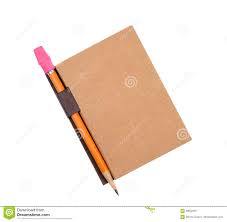
You’re stranded on a desert island, with only three items in your possession. What are they? I am assuming I’m not allowed to say my family or dogs? I’m also assuming that sensible items such as a lighter, water and a boat are not what you’re after either. In which case, I will say suncream, a snorkel/mask, one of those notepads with an attached pencil.
MR: Thank you for chatting with me, Helen—and congratulations on the upcoming publication of The Boy Who Made Everyone Laugh. I thoroughly enjoyed it, and I know MUF readers will too.
HR: Thanks so much. I am thrilled that you enjoyed the book. Fingers crossed at some point that I can come over to the US and see it in the shops!
And now… A GIVEAWAY!!!For a chance to win a copy of The Boy Who Made Everyone Laugh, comment on the blog–and, if you’re on Twitter, on the Mixed-Up Files’ Twitter account–for a chance to win!
All About HelenHelen Rutter lives in the English countryside, just outside Sheffield, with her comedian husband, two children, and two lovely dogs, Ronnie and Billy Whizz. When she is not tapping away in her writing room, she loves walking the dogs, playing board games, and reading. Before writing her first novel, Helen wrote and performed her work on the stage. She has even done some stand-up comedy, and before that she was a jobbing actress. She now much prefers to write the stories than be in them. Learn more about Helen on her website and follow her on Twitter and Instagram.
The post Interview with Helen Rutter, author of the MG debut, THE BOY WHO MADE EVERYONE LAUGH + a giveaway! appeared first on From The Mixed Up Files.
July 27, 2021
STEM Tuesday — STEM in Sports — Interview with Author Janet Slingerland
 Welcome to STEM Tuesday: Author Interview & Book Giveaway, a repeating feature for the fourth Tuesday of every month. Go Science-Tech-Engineering-Math!
Today we’re interviewing Janet Slingerland, author of The 12 Biggest Breakthroughs in Sports Technology.
Mary Kay Carson: Tell us a bit about The 12 Biggest Breakthroughs in Sports Technology?
Janet Slingerland: The book looks at sports-related cutting-edge technology through the years. Like its name implies, these were the 12 break-through technologies that I thought had the biggest impact on the world of sports. It’s written for middle-grade readers (ages 8-12), but hopefully it engages readers outside that range, too.
MKC: Do you play sports or are you a big sports fan?
Janet: My father was a gym teacher and track coach, so it’s probably not surprising that I played sports. My favorite sport to play, by far, was volleyball. I’ve always enjoyed playing more than watching, although I have enjoyed watching a wide variety of sports over the years. I especially love the Olympics, where we see sports that are more difficult to watch on a more regular basis.
MKC: What was challenging about writing the book?
Janet: I found trying to select the 12 “biggest” breakthroughs to be challenging. To make the decision, I considered how many people the breakthrough impacted and in what way. Some made the sport more accessible to people. Others were geared toward elite athletes, but are life-saving. Yet others make sports more enjoyable (and understandable) for fans to watch.
MKC: This book is packed full of facts! Would you like to share a favorite research discovery?
Janet: I think the thing that amazed me most was how long ago sports science originated. The study of how exercise changes the human body started when gladiators were fighting in the Roman coliseum. It may actually go even further back than that, but there are detailed records from gladiator times. Realizing the first indoor ice skating rink was built before electricity is a little mind-blowing, too. Here’s a really interesting article on the first skating rinks.
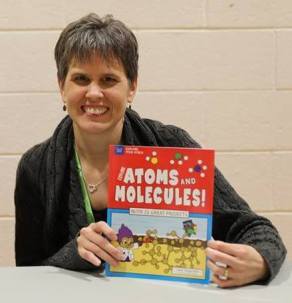
Janet Slingerland studied electrical engineering and programmed computers before deciding to share her love of STEM (and other things) with children. She has written more than 20 nonfiction books for grades K-12. Visit her at janetsbooks.com.
MKC: What inspires you to write about STEM subjects?
Janet: My background is in engineering and embedded programming (writing code for microchips that go inside things). I’ve always been fascinated by how science explains so many things that seem like magic. The puzzle-lover in me drew me to engineering. I started writing STEM books so I could share these loves with kids (and parents/teachers).
Lately, I’ve been thinking more about how everything is interconnected. So many people think they don’t like STEM, but it’s tied to everything. We hear music thanks to the physics of sound and the biology behind how our ears work. We see rainbows and blue skies thanks to the physics of light, the chemistry of the air the light passes through, and the biology behind how our eyes perceive color. Everything in our lives has ties to STEM.
Win a FREE copy of The 12 Biggest Breakthroughs in Sports Technology!
Enter the giveaway by leaving a comment below. The randomly-chosen winner will be contacted via email and asked to provide a mailing address (within the U.S. only) to receive the book.
Good luck!
 Your host is Mary Kay Carson, author of Wildlife Ranger Action Guide, The Tornado Scientist, Alexander Graham Bell for Kids, Mission to Pluto, and other nonfiction books for kids. @marykaycarson
The post STEM Tuesday — STEM in Sports — Interview with Author Janet Slingerland appeared first on From The Mixed Up Files.
July 26, 2021
Interview with Lauren Tarshis, author of the super popular I SURVIVED series, now with a new 9/11 graphic novel

Photo Credit: David Dreyfuss
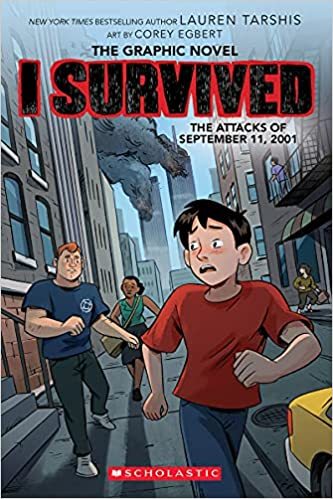
Lauren Tarshis is the author of the New York Times bestselling I Survived series of which there are 20 and counting! Each of these historical fiction books focuses on an iconic event from history, and tells the story through the eyes of a child who was there. The theme of the series is resilience: how human beings can struggle through even the most difficult experiences and somehow not simply survive but heal — and ultimately thrive. Now in time for the twentieth anniversary of 9/11, the bestselling I Survived the Attacks of September 11 has been adapted to graphic novel format to become I SURVIVED: THE ATTACKS OF SEPTEMBER 11, 2001, written by Lauren and illustrated with a gorgeous, realistic and contemporary art style by Corey Egbert. The Mixed-Up Files is excited to welcome Lauren Tarshis to our blog.
Meira: Hi Lauren, thanks so much for joining us over on The Mixed-Up Files!
The original I Survived the Attacks of September 11 was first published in 2012. What was the impetus to adapting it into a graphic novel in 2021?
Lauren: Scholastic proposed the idea of transforming my series into graphic novels, and at first I didn’t understand their reasoning. The stories were already written, right? But I trust the Scholastic team so much — my editor Katie Woehr cares as much about my series as I do, and understands how much work, care, and LOVE I put into creating each book, taking complicated topics and trying to make them accessible to kids, and bringing my characters to life for my readers. And so I green-lighted the Titanic graphic novel, which was an incredible experience. Fortunately Scholastic was able to hire Georgia Ball to write the scripts, and she captures my stories so perfectly for this format. And the artists they have chosen create such glorious worlds for my books. What a joy it’s been — first Titanic, then Shark Attacks, and most recently I Survived the Nazi Invasion. September 11 was a natural choice because of the anniversary. And what I’ve realized is that these books make my stories accessible to an entirely different audience of readers, including kids who either don’t like to read or struggle to read. And this is so exciting to me.
 Meira: In I SURVIVED: THE ATTACKS OF SEPTEMBER 11, 2001 one really feels like they are there. At the end in an Author’s Note you talk about how you lived in New York at the time but was en route from a trip abroad without your children, and your own personal terror at not being with them as you were rerouted back to London. Having been in New York on that fateful day myself, with my husband who worked in the World Financial Center, I really felt how well you capture the city, the mood, and what happened. I love the choice to tell the story through the eyes of a boy whose father is a firefighter. It’s a brilliant choice as the firefighters are such heroes in the fabric of New York City—even before this act of terrorism, —and so many of their lives were tragically lost. Did you consider other eyes from which to tell the story before settling on Lucas’s?
Lauren: Thank you so much for these kind words. I actually struggled through several drafts of this book before I realized that ultimately this book wasn’t just about September 11, but about an NYFD family. I started from scratch, delved into the culture and history of the NYFD, and also created a pretty “big” front story of Lucas dealing with concussions and the loss of football as a focus and a way of coping with his father’s injury from a warehouse fire years before. The size and depth of the character’s front story varies depending on the nature of the historical event I’m writing about. 9/11 is so intense and aspects are so complicated and potentially overwhelming for young readers. Focusing on other aspects of Lucas’s life enabled me to tell the story in a way that was appropriate for my younger readers.
Meira: How do you conduct research for the books in which there is less of a personal connection and you are not immediately familiar with the setting, time period and community? How do you put yourself into the shoes of a child through which you tell the story?
Lauren: I travel to all of the places I write about (with the exception of the bottom of the North Atlantic to see the Titanic wreckage and to the shores of Japan to research the 2011 tsunami). I want to walk in my characters’ footsteps, see and feel what they are feeling. For 9/11, of course, this was easier because I grew up in CT, went to college in NYC and work in NYC. Those two towers were part of my own landscape. But for other settings, those visited are so important. Another important step in researching the books is talking to people who actually experienced the event, or who have had stories passed down, or reading diaries of letters.
Meira: Can you talk a little bit about the themes of the I Survived series—on one hand kids have a lurid fascination with disaster, on the other hand your books offer a strong sense of resilience, which in this current time seems more important than ever. How do you achieve this balance?
Lauren: This is a great question. The theme of the series is resilience and healing — I try not portray a realistic sense of how we cope with loss, how we can slowly heal, how we can help each other and ask for help. But I’m also trying to write engaging adventure stories that kids — including struggling readers — will read. Finally, I want to build their knowledge in history, science, or important cultural touchstones and references points. I would say that I give equal weight to these three strands of the series.
Meira: What was it like to see your words come to life in this way? Authors whose books are turned into movies are often asked how it feels to see their characters with specific features, and their story acted out. What is it like to see your story told in this graphic format?
Lauren: I do feel that the experience of the graphic novels has been akin to seeing my books turned into an animated series. It’s been wonderful — because the team has done such a superb job. I’ve been dazzled by all of the artists who have worked on the series, and Corey Egbert was such a fantastic choice for this book.
Meira: I read an interview with you in which you mention how you started the series for your son and as an answer to reluctant readers. Can you talk a little bit about that here in light of this now being a graphic novel. (And I ask as the mother of two sons who find even short text tedious, especially if the font is small, but will devour anything in graphic format regardless of font size.)
Lauren: I so related to your boys, because not only were my boys reluctant readers but I struggled to read. And so these are the readers I’m picturing as I’m writing the books, and these are the readers I’m hoping will especially love the graphic novels.
Meira: Are there plans for more of the series to become graphic novels? Or for new I Survived books?
Lauren: We just finished I Survived the Grizzly Attacks, 1967, and the team is working on I Survived Hurricane Katrina. There are more planned after that, but we haven’t yet decided which topics.
Meira: What advice would you have for writers looking to break into series writing, in particular for reluctant readers?
Lauren: I would say that reluctant readers “deserve” access to important stories, fascinating chapters in history, characters who will inspire them and fortify them as they face challenges. Just because a child doesn’t love to read doesn’t mean they aren’t deeply curious about the world. Writers for reluctant readers have to work a little harder to make stories that much more engaging, to pull the reader through the book using suspense, rich descriptive details, and humor. These readers need to feel deeply connected to the characters, and invested in what happens. I will also say that there is no more rewarding audience to write for. NOTHING is more inspiring and motivating to me then en email from a kid saying “I hate to read but love your series!”
Meira: Is there anything I haven’t thought to ask that you’d like our readers to know?
Lauren: I just want to thank you for the chance to be a part of your wonderful blog, and for your thoughtful questions.
Meira: The pleasure is ours, thank YOU!
I SURVIVED: THE ATTACKS OF SEPTEMBER 11, 2001 can be purchased here or or wherever fine books are sold.
The post Interview with Lauren Tarshis, author of the super popular I SURVIVED series, now with a new 9/11 graphic novel appeared first on From The Mixed Up Files.
July 23, 2021
Interview with Alex London for BATTLE DRAGONS, Plus Giveaway
Alex London is joining us on From the Mixed Up Files today to talk about the first book in his brand new middle-grade fantasy series BATTLE DRAGONS. Alex is the author of more than 25 books for children, teens and adults, including the middle-grade series DOG TAGS, TIDES OF WAR, WILD ONES, and ACCIDENTAL ADVENTURES. His latest series launches on Sept. 21 with BATTLE DRAGONS: CITY OF THIEVES, which is a super fun adventure. Here’s the description:
In a modern mega-city built around dragons, one boy gets caught up in the world of illegal dragon battles and a high-stakes gang war that could tear his family apart.
Once, dragons nearly drove themselves to extinction. But in the city of Drakopolis, humans domesticated them centuries ago. Now dragons haul the city’s cargo, taxi its bustling people between skyscrapers, and advertise its wares in bright, neon displays. Most famously of all, the dragons battle. Different breeds take to the skies in nighttime bouts between the infamous kins―criminal gangs who rule through violence and intimidation.
Abel has always loved dragons, but after a disastrous showing in his dragon rider’s exam, he’s destined never to fly one himself. All that changes the night his sister appears at his window, entrusting him with a secret…and a stolen dragon.
Turns out, his big sister is a dragon thief! Too bad his older brother is a rising star in Drakopolis law enforcement…
To protect his friends and his family, Abel must partner with the stolen beast, riding in kin battles and keeping more secrets than a dragon has scales.
When everyone wants him fighting on their side, can Abel figure out what’s worth fighting for?
Doesn’t it sound awesome? Until you can get your dragon paws on your own copy, let’s go behind the scenes of the book’s creation. And make sure you read to the end to enter the giveaway.
Samantha: Hi Alex! Welcome to From the Mixed Up Files. I loved BATTLE DRAGONS: CITY OF THIEVES. Tell us where you got the idea from?

Alex London | Photo by Gina Clyne Photography
Alex: Thanks so much! The short pitch is that it’s The Fast and The Furious meets How to Train Your Dragon, except that I hadn’t actually seen those movies or read those books when I began this project. Of course, I’ve corrected that oversight now (and am kind of obsessed with the gleeful story-telling chaos of the Fast and The Furious franchise.
As to my inspirations, there are endless sparks that ignite the ideas in any novel, but this one combined so many influences that fueled my imagination when I was a middle schooler. It combines my love of cyberpunk like Akira and Blade Runner with my love of fantasy, of dragon lore, and ultimately of stories set in that middle school time, when young people start to come into their own and realize how much bigger, complicated, and wonderful the world is than they ever dreamed. I wanted to write a story that would have appealed to me in middle school, but that would’ve also expanded my imagination for what kind of a world was possible.
There are sibling rivalries and new friends and high stakes souped-up dragon riding action. There are also, I hope, a lot of laughs!
Samantha: You’ve incorporated a lot of dragon story lore (with the dragons keeping a hoard, for example), but you’ve also expanded on the roles of dragons, like having them be taxis, school buses and cleaners. How did you decide what to keep and what to add for this story?
Alex: Writing a mash-up of genres gave me the freedom to pick and choose what dragon lore was useful or interesting to me. What of my main concerns was using the lore that would make the dragons feel familiar and recognizable, without being derivative or boxing me in to any narrative corners. So, flying and hoarding and breath weapons were a must, but speaking English to humans, as they do in some wonderful dragon tales, was not something I wanted.
Samantha: I love all the different types of dragons you’ve come up with for the story. What inspired each one?
Alex: I couldn’t possibly go into detail on each one here, but I did develop a basic dragon taxonomy when I began, essentially dividing them into Short-Wing, Medium-Wing, and Long-Wing dragons, each more suited to different jobs for humans, and within each category a wide variety of species, from Infernal Long wings whose fire their hot breath from high in the clouds, the short winged Blue Foot, which are like the Honda Accords of the Drakopolis. Then there are the different Reapers, medium winged dragons who make the best battlers with their wide variety of breath weapons and skills, and the related Wyvers, pulled straight from mythology, but in my story, used mostly by the secret police. It’s a lot of fun researching and inventing dragons and their abilities! I spend a lot of time thinking of it like a card game, Pokemon or Magic: The Gathering. In fact, I even invented a game just like that for the story!
Samantha: Abel and his brother Silas and sister Lina are all very different. Are you closest to one of them or do they all have similarities to you in different ways?
Alex: I’m probably most like Abel, with my ADHD and tendency to catastrophize, though, like Lina, I’m idealist who broke more than a few rules as a teenager, but like Silas, I can slip into an inflated sense of self-righteousness if I’m not careful. This is the first series I’ve written since becoming a parent, however, so I do find myself identifying a lot more with their parents than anyone else! I hope I could stand up the gangsters and the secret police as well his Abel’s parents do!
Samantha: If you were one of your dragons from Drakopolis, which one would it be and what would be your favorite thing to hoard?
Alex: Oh, I would want to be Karak, the Sunrise Reaper, because describing him was just so cool! The scene where he meets Abel and Roa was the first I thought of, even before I starting writing. And I think I would probably hoard books…because I kind of do already!
Samantha: You’ve written both contemporary and fantasy books, but you said in an interview that the fantasy book Redwall helped you become an avid reader. As a writer, do you enjoy writing one genre more than another?
Alex: I like writing everything! As this fantasy-sci-fi mashup with real themes of middle school probably demonstrates, I can’t confine myself to just one genre. The world is so full of stories, I’d hate to limit myself to just one kind.
Samantha: Do you have any tips for teachers and librarians who are trying to encourage reluctant readers to read more?
Alex: Choice! Letting readers choose their own reading—even if it doesn’t seem like great literature to us—matters. I read far more Calvin and Hobbes as a kid than I did prose novels, and far more illustrated nonfiction magazines than ‘literature’ and far more “trashy novels’ than ‘great books’ and now I’m an avid and critical reader and a fairly prolific writer. People come to it in their own time and in their own ways, and I think we need to model following our interests and knowing when to put books down if they aren’t working for us. Life is too short and there are too many good books to force ourselves to read ones we hate. For every “reluctant reader’ out there, there are books that will feel like their were written just for them. They just need the chance to find them.
Aside from choice, I think removing the stigma from not loving to read could help. We put a lot of moral weight on reading, but I know brilliant people who don’t read much of anything and total monsters who are bookworms. I think reading is a source of great joy, insight, and inspiration, and I want to invite kids into it, but I don’t see any use for shaming them when they aren’t.
Samantha: Finally, can you give us a sneak peek at book 2 in the series? When is it coming out?
Alex: It will be called BATTLE DRAGONS: CITY OF SPEED. I don’t know the publication date, but I do know that there will be high stakes dragon races, new and wonderful breeds of dragons, and new friends and enemies for Abel and his crew. It’s gonna be a high stakes, high speed, high flying romp, that I hope readers love!
Samantha: I can’t wait!
Enter the giveaway below by July 30 for your chance to get one of three copies of BATTLE DRAGONS: CITY OF THIEVES plus a signed bookplate.
The post Interview with Alex London for BATTLE DRAGONS, Plus Giveaway appeared first on From The Mixed Up Files.
July 20, 2021
STEM Tuesday — STEM in Sports — Writing Tips & Resources

Title Talk
A good title can do a lot of work for both the reader and the writer. Of course the title conveys the subject of the book but it has many more jobs to do. It conveys the tone of the book. It gives clues to the scope of the book. Most importantly, it must hook a reader. All of that in just 1-5 words (and sometimes a subtitle).
Our STEM Tuesday book lists are a great place to study what titles can do. Take a look at just the titles of this month’s STEM in sports books:
Sports Science & Technology in the Real World
Super Gear: Nanotechnology and Sports Team Up
The 12 Biggest Breakthroughs in Sports Technology
STEM in Sports: Engineering
Learning STEM From Baseball: How Does A Curveball Curve? And Other Amazing Answers for Kids !
STEM In Sports
Science Behind Sports
The Secret Science of Sports: The Math, Physics, and Mechanical Engineering Behind Every Grand Slam, Triple Axel, and Penalty Kick
STEM Jobs in Sports
Sports Medicine: Science, Technology, Engineering
The Book of Wildly Spectacular Sports Science: 54 All-Star Experiments
Start asking questions: Why were those specific words chosen? The word “sport” is used frequently but in different positions. How does word placement matter? Who chooses the titles? Surprisingly, in many cases the title/subtitle are developed by the marketing team, not the author. Why might that be?
Here are a few ways you can look at what titles can do. In the nonfiction area of the library, sit down in front of one shelf. Find a section of 5-10 books that are all on a closely related topic. (For this exercise it is best to not use a series of books). Write down all of the titles and subtitles in a list.
Search for how the titles subtly or not-so-subtly convey more than the basic subject. Consider these elements (and add your own):
Subtopic: Does the book focus on one specific topic within the subject?Angle: Has the author selected a unique angle from which to approach the topic? Can you determine that from the title?Tone: Is this book humorous? Academic? Lyrical? Does the title convey that?

Upload your title list into a word cloud generator and see what other discoveries you can make.
Do one or more words dominate the titles?If so, are there any titles that do not rely on those words? How are those titles unique? How are those books unique?Compare and ContrastDo the titles on your list vary drastically or are they all fairly similar? Some things to analyze: content, length, specific words, presence of a subtitle, etc.In a new section of the library, pick a subject area which is very different (for example if your first list is about space, maybe go to the art section).Create a new title list. Repeat one or more of the above exercises.In what way is your new list similar to/different from your previous list? How much do you think the book’s subject affects that?Separate your books into two piles based on main purpose: to entertain or to inform. In what ways might that impact the choice of title?Titles can do a lot of work for the reader and the writer. Enjoy taking a closer look at all the titles in your future!
Heather L. Montgomery writes for kids who are wild about animals. Studying titles and subtitles in the library helped her create a few fun ones of her own: BUGS DON’T HUG, SURPRISING SCIENCE FROM ONE END TO THE OTHER, and SOMETHING ROTTEN. You can learn more about here wacky titles at www.HeatherLMontgomery.com
O.O.L.F

Here are some ways to add some STEAM into your work with titles:
Pick one book from your list and create at least 3 alternate titles.Using your stack of books, create a spine poem. Feel free to add other books to your pile as needed.Using your title list(s), create a blackout poem. Is it easier to do with one list than the other? Why might that be?New to spine or blackout poems? Kristen W. Larson explains how in this post: https://fromthemixedupfiles.com/stem-tuesday-stem-activity-books-writing-tips-resources/
The post STEM Tuesday — STEM in Sports — Writing Tips & Resources appeared first on From The Mixed Up Files.
July 18, 2021
Indy Spotlight: A Children’s Place, Portland OR
 It’s always a treat to feature an independent bookstore devoted to children’s books, especially one that has been in continuous operation for years. Today we’re talking with Pam Lewis, owner of A Children’s Place in Portland, Oregon (www.achildrensplacebookstore.com).
MUF: Portlanders love books. It would be hard to find another town with so many good independent bookstores, and yet some have folded recently. During the COVID challenge, what have your strategies been?
Pam: Well, it’s been a lot more work and procedure to get books out the door. We’ve relied on face-timing and phone orders and delivering at the curb or sometimes directly to cars.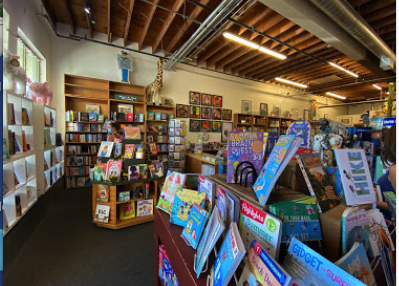
MUF Have you had good community support during this time?
Pam: Oh yes, that’s why we’re still here! Our community made a good effort to buy from us rather than from Amazon, even during the shutdown.
MUF: Have you been able to resume live events?
PAM: No. We will not have live events here again until all children can get vaccinated!
MUF: What kind of atmosphere do you aim to create in A Children’s Place?
PAM: Welcoming to all. We greet everyone, parents and kids, and offer to help them find their next best book. Our staff reads the books and talks about them with customers. The store has a little stage and colorful posters all around. Customers who have been coming to the store since they were babies are now in college and still coming.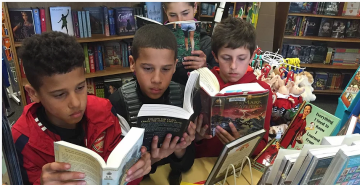
MUF: How do you choose the titles to carry in your store?
Pam: We talk with book reps about what books are “hot,” and we order books from authors we know and like. We listen to the interests of the children who come into the store. In addition to fiction, our customers look for books about birds, nature books, and guides to Oregon trails.
MUF: As middle-grade authors we’re curious to know: what are some books, new or old that you find yourselves recommending to readers 8-12 these days? That they ask for?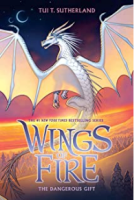
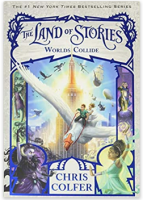
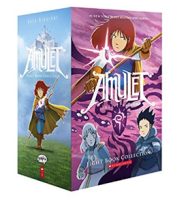
Pam: Dragons and dragon stories are always in demand, as well as unicorns and dinosaurs. Series are big with this age group: Tui Sutherland’s The Wings of Fire (dragon epic), Shannon Messenger’s Keeper of the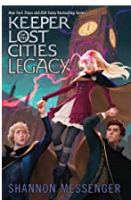 Lost Cities (a telepathic girl in a strange world), Chris Colfer’s Land of Stories
  (fairytale adventures). In graphic series there’s Kazu Kibuishi’s Amulet .
We’re finding, too, that parents who buy the books are looking back to the classics, books they read as children and want to share with their own.
 MUF: Tell us about how your store pursues it’s mission of “raising readers,” including your relationships with teachers and with homeless students in the Community Transitional School?
Pam: We give discounts to teachers and work closely with them to help build classroom and student libraries. We’ve been active with the Community Transitional School from the beginning. This welcoming school provides a stable education for homeless children pre-school to 8th grade. It even provides transportation to the site, something that is often difficult for the homeless to manage. Every Christmas, we have a Giving Tree with book requests on it that our customers can purchase. This means we can deliver a new book to every child in the school each year.
 MUF: Describe an ideal day for you at The Children’s Place.
Pam: It’s kids coming in and finding the next book they want to read. We get to know our customers, who the advanced readers are who are the reluctant readers. Helping them find good sci-fi or graphic novels or whatever their interests are is what we like to do.
MUF: If a family from out of town visited your store, would they find family-friendly places nearby to get a meal or snack after shopping and browsing? And if they could stay longer, are there some especially unique or interesting sites or activities nearby you’d recommend for a family to see?
Pam: Yes. There’s Caffe Destino, Grain Gristle, and Lucca (Italian). There are so many sites of interest in the area, including The Rose Garden, the Japanese Garden, Mt. Hood, and numerous hiking trails.
Thank you, Pam, for taking the time to talk with us today. Readers, if you haven’t been to A Children’s Place, be sure to visit next time you’re in Portland. 1423 NE Fremont Street.
The post Indy Spotlight: A Children’s Place, Portland OR appeared first on From The Mixed Up Files.
July 16, 2021
The Anatomy of a Middle Grade STEM book — AND a Giveaway!
People are always asking me where I come up with ideas for my STEM books. After all, if you’ve seen my books, I tend to use out-of-the-box angles to get kids excited about some interesting STEM topics.
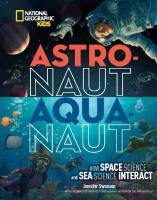
Take my Astronaut-Aquanaut book. This one compares and contrasts SPACE and the OCEAN. Pretty cool concept, especially when you learn that while these two places are very extreme enviroments, it takes a lot of similar training and equipment to go both places. Which would you rather be?
Then there’s my Save the Crash-test Dummy book. It’s the history of car safety engineering, told through the lens of a day in the life of a crash-test dummy. Yes, you read that right. 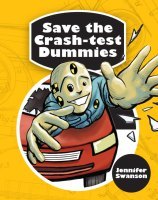
A crash-test dummy. Probably NOT a job you want to have. But it’s a great way to get kids interested in car safety. (Shhh… don’t tell the kids they are learning about Newton’s Laws of Motion)
So HOW do I come up with my ideas? And then HOW do I turn these ideas into books? Well, I’m going to give you a peek inside my creative process. It’ll be fun. You might even say, SPORTS-tacular.
Yep, I’m going to use my new book that releases next Tuesday, July 20th, from Black Dog & Leventhal, as my example. I’ll take you through how this book started as an idea, then a proposal, then… a book. (With amazing illustrations by Laurène Boglio)
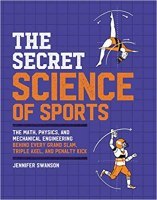
STEP 1: Come Up with an IDEA
The easiest thing to do is write what you KNOW. — For me, I grew up with 3 brothers and a father who love sports. It was natural that I would as well. After all, I spent most of my days playing baseball in the backyard with my brothers, shooting hoops in the driveway, swimming laps in the pool for swim practice, running, hiking, biking, etc. You name it, I’ve played the sport. It only seemed natural that I write a book about something I know and love.Write something that INTERESTS you. This one should also be easy. If you know the topic, hopefully, you’ll like it. I do happen to like sports, which is good.Find the HOOK– This can be the tough part! After all, just because YOU like it and find it interesting, does not mean that others will. You need to think about how you can make this topic exciting to others. For this book, it was natural to combine my love of STEM (science, technology, engineering, and math) + Sports = STEM Sports Book (Exciting!)
WHY STEM and Sports? To me, combining STEM and sports seemed natural. Many people watch sports and just look at the game, but I see the physics, the technology, and the math everywhere. I thought if I could get kids (of all ages) to see that, they might find it cool to know as well. Besides, using something a lot of people love (sports), with something everyone learns (science and STEM), that just seemed logical to me. Good thing my editor agreed.
STEP 2: Write the proposal and a really good pitch
Writing middle grade nonfiction book proposals are not for the faint of heart. They take a lot of time and research, but are totally worth it. Here is a great place that offers tips just for this: https://www.dystel.com/nonfiction-proposals
Writing pitches is not easy either. You need to include enough information to make the editors interested, but not too much to make it boring. Keep your voice fun and entertaining (it should match your voice in the book) and have LOTS of energy.
Here is my first pitch: Hey! Want to know the secret to winning at sports? It’s not what you’d think. It’s… SCIENCE! Yep. To be great at sports you need to know about physics, biology, neuroscience and even a little engineering. Who would have thought that science class would be the best place to learn how to be a better athlete. Shh…. don’t tell anyone.
STEP 3: WRITE the manuscript!
So now that you’ve sold the book. Yes, I skipped over the hardest part, selling it. It can take awhile or in the case of this book, it was relatively short. An editor happened to be looking for a book on this topic at just the right time that my proposal was ready. Pretty great, huh? That does not happen all the time. But let’s face it, part of this career is just plain luck, right?
Anyway, as I began writing, I knew I wanted this book to be different. First of all, it had to have a cool kid-friendly voice. Here are the first few sentences:
If you picked up this book, it’s probably because you like sports. Maybe you want to see if it has tips for how to improve your game (it does), or how to become more fit (it has that, too), or just because you want to learn more about different types of sports (also there). But wait, the title says, the Science of Sports. That means that this book also teaches you about science. What does a sports book have science in it? Those two subjects seem so different. It’s not as if sitting in a science class can teach you more about your sport than practicing it. Actually, it can.
©Jennifer Swanson, Secret Science of Sports
But most of all, I wanted kids to USE this book. After all, science is best when it’s in action. So, I as I wrote about the science and STEM, I had the readers DO activities like these:
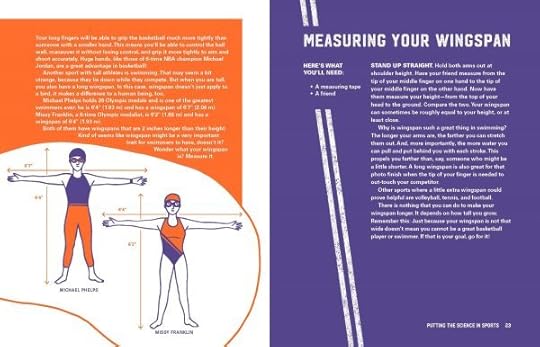
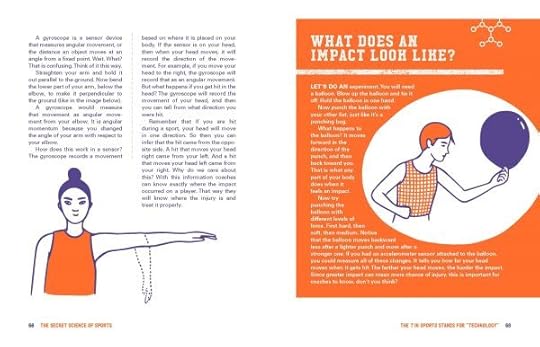
I also included images that showed the readers how the STEM was actually happening.

Again, my editor was totally on board with all of these ideas, thankfully. When you add in the amazing illustrations by Laurène Boglio it is really COOL! Readers get their own STEM sports-tastic view of the world!
So, THAT’s how I created my latest book. It was tons of fun and easy to write. For me, it was simply a trip through my sports-filled life. My hope is that readers of all ages find this book interesting, exciting, and useful. I want this book to get taken outside, sloshed through the mud-filled soccer fields, have sports drinks from tennis and football players spilled on it, and yes, even get a little wet from being beside the swimming pool.
It’s also a PERFECT companion for those of you that will sit down to watch the 2021 Summer Olympics

Finally, there NEEDS to be more STEM Middle grade books in the world, consider writing one. Kids of all ages will love you for it. GO STEM/STEAM!
I am giving away one copy of my Secret Science of Sports book. Leave a comment below with your favorite sport or favorite sports memory to be entered.
The post The Anatomy of a Middle Grade STEM book — AND a Giveaway! appeared first on From The Mixed Up Files.
July 13, 2021
STEM Tuesday — STEM in Sports — In the Classroom
While school may be out, there are plenty of sports science activities that kids can try at home. After reading the books on this month’s list, try some of these activities (or ones found in the books) or check out the list of resources to learn about drag, body fat, torque, sports medicine, and much more!
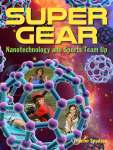 Super Gear: Nanotechnology and Sports Team Up by Jennifer Swanson
Nanotechnology and sports? Using a fun voice, easily understood analogies, and great graphics, this book explores the molecular properties of nanoparticles and the amazing developments that scientists have made in using harnessing them to improve the clothing, shoes, and equipment of athletes. Side bars and “Science in Action!” experiments help demonstrate and explain this cutting-edge science.
ActivityDo some historical research on sports equipment of the past versus modern equipment. Look at the first footballs, old tennis rackets, and tennis balls. See if you can find some old sports equipment at an antique or thrift store, or check out an online museum gallery (such as the National Museum of American History Sports &. Leisure collection: https://americanhistory.si.edu/collections/subjects/sports-leisure). Make an evolution timeline of a certain piece of sports equipment, noting how the materials have changed and why. Use images to illustrate how much that piece of gear has changed over time.
Check this out!Super Gear Discussion and activity guide: https://jenniferswansonbooks.com/wp-content/uploads/2016/01/super-gear-discussion-activity-guide.pdf
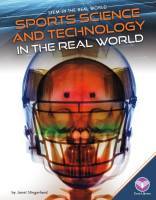 Sports Science & Technology in the Real World by Janet Slingerland
Discover how scientists, engineers, and mathematicians are using science to help athletes – and how this same technology is being used in everyday applications. This book provides a peek into the cutting-edge technology being developed and includes primary source sidebars and discussion questions.
Activity
Technology is designing better gear to protect athlete’s bodies. You can try too–design a better bike helmet! Analyze your bike helmet: what kind of padding does it have? How is it shaped? How do you think it could be better? Read about how bike helmets work too (try this article: https://kidshealth.org/en/kids/bike-s...). Draw your dream bike helmet, labeling all the ways it can better protect your head.
Check this out!ABDO Booklinks, Sports Science & Technology: http://www.abdobooklinks.com/browse/title/?pid=21894
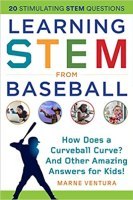 Learning STEM From Baseball: How Does A Curveball Curve? And Other Amazing Answers for Kids! by Marne Ventura
Numerous sciences play a role in baseball. From physics to virtual reality, engineering to woodworking this book does a great job of introducing many of the ways science, math, and technology have interacted throughout baseball’s history. The in-depth endnotes offer great resources for further exploration.
Activity
Baseball is all about physics—with the right force, you can get motion—a fast pitch or a home run hit! But gravity is always pulling down, so angle matters too. Try seeing how far you can throw a baseball by adjusting the angle you throw it. You need a baseball, objects to mark where the ball lands, a measuring tape, and a notebook/pencil. First throw the ball straight forward as hard as you can three times. Mark where it lands and measure the distance. Record the results and average the distances. Then try this with a slight angle upward three times. And then with a steep upward angle three times. Why method of throwing made the ball go the farthest? Why do you think that method worked best? How do you think that gravity affected the ball with the different kinds of throws?
Check this out!Exploratorium, Science of Baseball: https://www.exploratorium.edu/baseball/
Further ResourcesCheck out these sites for more fascinating and fun STEM sports resources:
Science Buddies, Sports Science STEM Activities for Kids: https://www.sciencebuddies.org/stem-activities/subjects/sports-scienceScience of Sport, Educator Resources: https://sciencesport.org/resources/Science Sparks, 20 Sporty Science Ideas: https://www.science-sparks.com/sports-science/Exploratorium, Sport Science: https://www.exploratorium.edu/sports/Sciencing, Science Fair Ideas That Involve Sports: https://sciencing.com/science-fair-ideas-involve-sports-6399056.htmlScience Kids, Sports Science: https://www.sciencekids.co.nz/sports.htmlScience News for Students, Baseball: From Pitch to Hits, https://www.sciencenewsforstudents.org/article/baseball-pitch-hitsPBS Learning Media, Basketball: https://tpt.pbslearningmedia.org/resource/c4719a6c-8c22-4d02-af07-24bd75964c1d/basketball/Education.com, Soccer Science: Air Pressure & Distance: https://www.education.com/science-fair/article/physics-soccer-ball/
 Karen Latchana Kenney loves to write books about animals, and looks for them wherever she goes—from leafcutter ants trailing through the Amazon rain forest in Guyana, where she was born, to puffins in cliff-side burrows on the Irish island of Skellig Michael. She especially enjoys creating books about nature, biodiversity, conservation, and groundbreaking scientific discoveries—but also writes about civil rights, astronomy, historical moments, and many other topics. She lives in Minnesota with her husband and son, and bikes, hikes, and gazes at the night sky in northern Minnesota any moment she can. Visit her at https://latchanakenney.wordpress.com.
The post STEM Tuesday — STEM in Sports — In the Classroom appeared first on From The Mixed Up Files.