Rodney Koeneke's Blog, page 8
October 13, 2010
Anselm Berrigan & Karen Weiser in Portland this Fri. 10/15
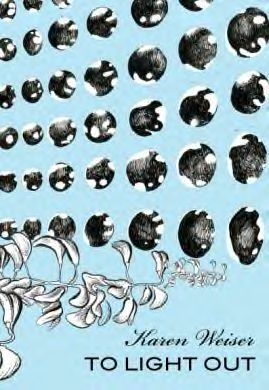 Karen Weiser
and
Anselm Berrigan
light out for Portland this Friday, 10/15 to read at the swank "near Mt. Tabor" demesne of
Jen Coleman
and
Allison Cobb
(street address in sidebar). Both have new books to read from (Karen and Anselm I mean, though Allison's
got one
, too). Fun starts at 7 PM, "poet snacks"-inclusive. Bring self, drinks, friends.
Karen Weiser
and
Anselm Berrigan
light out for Portland this Friday, 10/15 to read at the swank "near Mt. Tabor" demesne of
Jen Coleman
and
Allison Cobb
(street address in sidebar). Both have new books to read from (Karen and Anselm I mean, though Allison's
got one
, too). Fun starts at 7 PM, "poet snacks"-inclusive. Bring self, drinks, friends.


October 11, 2010
Dept. of Monday
"'Our chief business at present,' said Marlborough, 'is to subsist.'"
September 30, 2010
Michael Gizzi
I don't know what to say about
Michael Gizzi
, except to collect some of what I've said elsewhere about his work. He hardly knew me from Adam, but blurbed my first book when I found the courage to ask him. The times I met him he kept me on my toes, afraid I'd be the fool he'd have to suffer. His writing's like an air vent opened on a close room; the
last book
had a new ease and sweetness along with his famous razzed-up verbal closework that got me eager to see what's next.
A beautiful vernacular maneuverer
—I turn to his books to learn from all the time. Thank you Michael and goodbye.
NEW DEPTHS OF DEADPAN
Gizzi's the Moses of tablets turned to sound, then dropped from the cliffs to hit 'C'. This new Sinai's pure Barbasol, all wobble and aloe and swing. When "blessings descend but no one knows how to redeem them," then "grammar cracks eggs as best it can."
— Attention Span 2009
MY TERZA RIMA
Anyone who wears their heart in their head and considers the tongue a reed instrument will find in this book, my favorite from my favorite Gizzi, a rope dropped down from the lip of the well.
— Goodreads
JUST LIKE A REAL ITALIAN KID
The first real literary concentration of I guess what you'd call "ethnic" names I ever saw was in the Donald Allen New American Poetry anthology, where O'Haras, Duncans, Gleasons, Olsons, Blackburns, Adamses, Williamses and Guests shared pride of place with Levertovs, Eigners, Meltzers, Lamantias, Loewinsohns, Wienerses and Kochs. I wonder for how many people in the '60s—and even now—the special promise and threat of that collection began with the TOC.
But the top spot on my list of all-time-favorite poets' names goes to Michael Gizzi. Like his poetry, it's fun to just say out loud. I'd like to know how much those double 'zz's flanked by the goofy 'i's drive his poetic practice, where neologisms and hinky slang and improbable made-up proper names get to buzz like they haven't since be-bop ("Klackoveesedstene!")
Last month I found his "Just Like a Real Italian Kid" in the stacks at SPD, which is like finding a sliver from the true cross in that warehouse at the end of Raiders of the Lost Ark. It's an amazing little chapbook that in 20 short pages manages to connect the jazzy, slangy, fun-just-to-say-it wordplay of his other books to the voicings and rhythms of immigrant Italian English:
"Stazzit! Mangare! Horizontal wicks of fennel breath crisscross dinner board to lodge in prepubescent mustachio. Yuk! how can you eat that shit? Perpetual smiles of grief-striken gumbare."
The snappy rush of these 14 short pieces makes an implicit argument for the pleasures of English as an almost second language, a tongue that still feels new enough to stick out and twist at the boss. But Gizzi's also a serious recorder, out to get down the echoes of the "latinate herb breathy 'come sei bello ragazzo' litany" before the onset of "primness on Lake Amnesia," where everything ethnic sinks and goes white:
"Edison it was said had invented the phonograph to capture Caruso for posterity, that catch in the throat when he cried about being so much emotion trapped in the garb of a clown. That essence is Italian pressed into an essence of plastic come to mean maudlin. Those Pavlovian platters were tear-jerkers sure to make a paesan let his hair and everything else down."
—blog post on lime tree , 8/7/2005
EXCERPT FROM GIZZI INTERVIEW WITH MICHAEL MAGEE IN COMBO
The latest COMBO , double issue 14/15, has a long interview with Michael Gizzi, one of the best with him I've read. Gizzi's one of those touchstone poets for me, whose work I go back to whenever I feel my own writing slipping & getting crappy. Michael Magee leads him down conversational chutes that turn to his poetic influences, family history, aesthetic development, and take on contemporary poetry. Best of all, Magee asks substantial questions about Gizzi's writing, & how he arrived at his particular way with words:

NEW DEPTHS OF DEADPAN
Gizzi's the Moses of tablets turned to sound, then dropped from the cliffs to hit 'C'. This new Sinai's pure Barbasol, all wobble and aloe and swing. When "blessings descend but no one knows how to redeem them," then "grammar cracks eggs as best it can."
— Attention Span 2009
MY TERZA RIMA
Anyone who wears their heart in their head and considers the tongue a reed instrument will find in this book, my favorite from my favorite Gizzi, a rope dropped down from the lip of the well.
— Goodreads
JUST LIKE A REAL ITALIAN KID
The first real literary concentration of I guess what you'd call "ethnic" names I ever saw was in the Donald Allen New American Poetry anthology, where O'Haras, Duncans, Gleasons, Olsons, Blackburns, Adamses, Williamses and Guests shared pride of place with Levertovs, Eigners, Meltzers, Lamantias, Loewinsohns, Wienerses and Kochs. I wonder for how many people in the '60s—and even now—the special promise and threat of that collection began with the TOC.
But the top spot on my list of all-time-favorite poets' names goes to Michael Gizzi. Like his poetry, it's fun to just say out loud. I'd like to know how much those double 'zz's flanked by the goofy 'i's drive his poetic practice, where neologisms and hinky slang and improbable made-up proper names get to buzz like they haven't since be-bop ("Klackoveesedstene!")
Last month I found his "Just Like a Real Italian Kid" in the stacks at SPD, which is like finding a sliver from the true cross in that warehouse at the end of Raiders of the Lost Ark. It's an amazing little chapbook that in 20 short pages manages to connect the jazzy, slangy, fun-just-to-say-it wordplay of his other books to the voicings and rhythms of immigrant Italian English:
"Stazzit! Mangare! Horizontal wicks of fennel breath crisscross dinner board to lodge in prepubescent mustachio. Yuk! how can you eat that shit? Perpetual smiles of grief-striken gumbare."
The snappy rush of these 14 short pieces makes an implicit argument for the pleasures of English as an almost second language, a tongue that still feels new enough to stick out and twist at the boss. But Gizzi's also a serious recorder, out to get down the echoes of the "latinate herb breathy 'come sei bello ragazzo' litany" before the onset of "primness on Lake Amnesia," where everything ethnic sinks and goes white:
"Edison it was said had invented the phonograph to capture Caruso for posterity, that catch in the throat when he cried about being so much emotion trapped in the garb of a clown. That essence is Italian pressed into an essence of plastic come to mean maudlin. Those Pavlovian platters were tear-jerkers sure to make a paesan let his hair and everything else down."
—blog post on lime tree , 8/7/2005
EXCERPT FROM GIZZI INTERVIEW WITH MICHAEL MAGEE IN COMBO
The latest COMBO , double issue 14/15, has a long interview with Michael Gizzi, one of the best with him I've read. Gizzi's one of those touchstone poets for me, whose work I go back to whenever I feel my own writing slipping & getting crappy. Michael Magee leads him down conversational chutes that turn to his poetic influences, family history, aesthetic development, and take on contemporary poetry. Best of all, Magee asks substantial questions about Gizzi's writing, & how he arrived at his particular way with words:
Michael Gizzi: My two loves were poetry and athletics. I now realize that I was always trying to bring some sense of athleticism into my poems—I wanted things to speed along. I remember that little scissor step you had to do on the sidelines to catch a pass while still remaining in bounds. I tried to get that into a poem, or some sense of that.
Michael Magee: Did you do that by thinking about words themselves as physical?
MG: Well, I would try to get mentally engergized and then write as though I were involved in some sports event. I had bits of Latin like ecce homo and noli me tangere written on my helmet and because I'd studied opera with my father I knew that if you were screaming and your diaphragm was tightened you couldn't get the wind knocked out of you. This was pre-Bruce Lee. I'd run screaming through the line with the ball, which would freak some guys out. "What's he screaming about, and what's that crazy shit on his helmet?" which would give me a second in which to pick a hole in the line. So I really did bring poetry and my love of literature onto the playing field. Did I mention I wasn't a team player?
***
MM: [Your use of archaic or outmoded language] seems very local and I wonder where you get it from and how you do it and how you decide to do it.
MG: Maybe it's an audio-visual tone, like listening while you read. It also comes from swinging for the fences or tapping a pinstripe for syrup. It's just this side of nonsense, the magic of names and neologisms. It may be three senses channeling an experience at the same time. Sitting in my yard years ago I transcribed perfectly (to my mind) a sentence in birdspeak as "capuana keester meal gringa hocks of ham"—I'm also thinking "language surpasses itself by pointing out its limitations."
MM: Right.
MG: The English language is rich. Imagine finding actual cream in the dictionary, making the hoard that much richer. You'll know it when you see it.
September 28, 2010

September 27, 2010
Dept. of Monday (Fall Gumption Edition)
 "and in bronze tangle square of light
The master has said to you, Style"

September 24, 2010
A Hard Day's Night at the Opera
 I asked operaman; now I'll ask you. You know that scene in A Hard Day's Night when Wilfrid Brambell, the "clean old man" from Steptoe and Son, accidentally throws the switch on a stage elevator that thrusts him up into the middle of a televised opera? What opera is it? It's in German, the man's dressed as a hussar, and its sounds like it might be an operetta. Google's failed me on this one. Help!
September 23, 2010

September 22, 2010
Pauline
 Michael Cross just posted a text copy of one of my favorite recordings from the Bay Area Labor Day 2010 Event—David Brazil's wide-ranging riff on the idea of vocation that spins out from his reading of Paul. That, along with Benjamin Friedlander's searching revision of Paul in the recent Radical Poetics and Secular Jewish Culture, has me seeing Paul's prints on everything lately, from discussions of poetic coterie to the Spahr/Clover statement on the 95 Cent Skool, where their "doub...
September 20, 2010

September 15, 2010
Onngh Yanngh
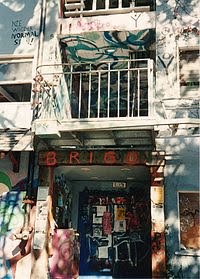 With the first-years all settling into dorm rooms, shocked to think it's twenty years since Barrington closed.