
Gerry Adams's Blog, page 8
April 2, 2024
Slán Leo: The Heartbreak of it All: Major International Conference on Moore St
S lán Leo
Leo Varadkar’s resignation from the office of An Taoiseach and as leader of Fine Gael caught observers by surprise. On reflection however it is very much inkeeping with his personality. A bit petulant. Awkward. Impulsive. Hehad done his best by his own lights. And his best had not been good enough, byhis own admission. So in fairness he probably did the right thing. Better toget out on his own terms.
Most people will have very little sympathy for seniorpoliticians and the wear and tear they and their families endure asa result of the long hours, relentlesspressure, the grinding nature of parliamentary work andongoing public scrutiny. You have to believe in what you are doing. Especiallywhen things are not going well. So I think Leo just got a sickner of it all,particularly after the recent referendum results. He was cheesed off andseems not to have the stomach for continuing in a government whichis just going through the motions and serving out its time.
He was facing into internal turbulence. The Fine Gael Ard Fheis waslikely to be troubled. Elevenof his TDs have said they will not be standing in the next election.
So why hang about? His resignation statementwas very honest. “I am no longer the best person for the job.”he said.
That was certainly the case on the North though his instinctsare better than Micheál Martin’s. The amount ofthe Irish Government’s moneyforCasement was probably Leo’s initiative. His refusal to go for a CitizensAssembly to discuss and plan for unity is a mistake. He and MicheálMartin are not advocates for a new constitutional future. They are deeplywedded to their own political dispensation. They are not SNQ. Sound on theNational Question. Neither is Simon Harris.
Labour !eader Ivana Bacik call for a dedicated department to look at thedetailed work for unity planning is important. And welcome. Not least becauseit is recognition of increased and increasing public interest on the need forplanning for constitutional change. Maybe if Leo had applied himself to that hewouldn't be out off a job. Ach well. Slán Leo.
The Heartbreak of it All
The million and a half Palestinianstrapped in southern Gaza city of Rafah, on the border with Egypt, are undersustained and ruthless attack by Israeli forces. Hundreds of women, childrenand men are being killed or severely wounded each day. Hospitals crammed fullof desperate human beings continue to be the target of bomb and tank and sniperattack.
At the same time tens of thousands are facing starvation while relieftrucks carrying desperately needed food, water and medicine are beensystematically blocked by the Israel state. On Sunday it told the UN thatit will no longer allow food convoys into north Gaza where 70 percent of peopleface the highest level of food scarcity. Speaking at the Rafah crossinglast Friday UN Secretary-General Antonio Guterres said: “Here fromthis crossing, we see the heartbreak and heartlessness of it all. A long lineof blocked relief trucks on one side of the gates, the long shadow ofstarvation on the other. That is more than tragic. It is a moraloutrage."
It is also a war crime. The Romestatute of the International Criminal Court is very clear on this. It definesthe deliberate starving of civilians as a crime if the intention is to deprive“them of objects indispensable to their survival.” This includes “willfullyimpeding relief supplies.”
Israeli Prime Minister BenjaminNetanyahu and his war cabinet are immune to all of this. He plans to launch aground offensive against Rafah. Netanyahu insists that this will take placeshortly. His stated aim is the defeat and destruction of Hamas. Common sensetells us that this is unachievable.
Our own experience of colonialismproves this. For centuries English governments sought to defeat the desire ofthe Irish people for freedom and self-determination. Every conceivable weaponof oppression was used: from mass executions and deportations, to coercion actsand special powers, to the impoverishment and dehumanisation of the Irishpeople, to the denial of basis rights and a cultural war against our language,music and art. These were all part of English policy. So too was starvation.
In his book ‘Ireland Since theFamine’ F. S. Lyons writing about the impact of An Gorta Mór – the Great Hunger– wrote: “…it may well be that the most profound impact on Irishhistory lay in its ultimate psychological legacy. Expressed in its simplestterms this legacy was that the long standing and deep rooted hatred of theEnglish connection was given not only a new intensity, but also a newdimension… this hatred, this bitterness, this resentment were carried overseas,and especially to America by nearly four million Irish men and women andchildren who left their homeland, decade by decade and year by year in the halfcentury after the Famine.”
In our own time and place the statedaim of successive unionist and British governments was the defeat of Irishrepublicanism. Collusion, special laws, torture, sectarian discrimination in employment,military occupation of communities, were all part of government policy. OneBritish Secretary of State was so gung-ho that he spoke of squeezingrepublicans like a tube of toothpaste! None of it worked.
What worked was a peace process,slowly and painfully built.
The lesson for the Israeli state isobvious. Occupation, genocide, repression, the theft of Palestinian land andnatural resources will not work. The mass slaughter of innocents will not work.The criminalisation and dehumanisation of the Palestinian people will not work.On the contrary the Israeli massacre of 32,000 in the Gaza Strip and the WestBank is storing up a legacy of bitterness that will ensure that resistanceto Israeli colonialism will continue.
Regrettably, I don’t see Netanyahuhaving any interest in a peace process. Pulitzer Prize-winning New YorkTimes columnist Thomas Friedman told the Israeli newspaper Haaretz on Sunday: "Ithink this is the worst government Israel has ever had. And I think Netanyahuwill go down in history as the worst leader in Jewish history, not just inIsraeli history,"
But there is now a discernible changewithin the international community’s approach to Israel’s genocidal strategy.Some allies of the Israeli state are now taking up publicly more criticalpositions. At the weekend it was reported that French President EmmanuelMacron in a phone call told Netanyahu the forced transfer of people from Rafahwould constitute “a war crime”
It is long-past time for the USA,Britain and others providing war materials to Israel to stop. They cannot fundand arm the genocide while decrying its awful effect on Palestinians. Stop thewar. No funds or arms for Netanyahu.
Major International Conference onMoore St
Uachtarán Shinn Féin Mary LouMcDonald TD, in association with the Moore St. Preservation Trust, will hold amajor international conference next month to discuss the future development ofthe Moore St. 1916 Battlefield site. The main focus of the conference will beon the alternative plan prepared by the Trust to that of the proposals from theprivate developer Hammerson.
Moore St. – as regular readers ofthis column know – is a hugely important part of the story of Easter 1916 andis the heart of the 1916 Battlefield site. It is where the GPO Garrisonretreated when the building caught fire and it was in 16 MooreSt. that five of the seven signatories to the Proclamation met and tookthe decision to order the surrender.
The Moore St. Trust has produced aformidable, alternative plan to that of the developer – who is supported by thegovernment. The plan aims to preserve the site and to sensitively develop it asa historical and cultural quarter that can play a significant role in theregeneration of that part of our Capital City.
The conference will take place in theGPO on 24 April, the date of the Easter Rising in 1916, and it will bringtogether leading experts in the fields of tourism, planning, academia, retailand the arts. Among those taking part will be Professor Terry Stevens a TourismAdvisor to the United Nations, Michael Murphy, architect of the nationallynching memorial Legacy Museum in Alabama, USA, Seán Antoin Ó Muirí architectof the alternative plan and well known historian Liz Gillis. Relatives of the1916 leaders and others will participate. It’s shaping up to be an informativeand crucial conference around the ongoing effort to Save Moore St.


March 18, 2024
International Women’s Day: Two formidable Belfast Women: Macalla na mBan
International Women’s Day
Last Friday was International Women’s Day – a day when around the world humankind celebrates the work of women who are active in their communities, in trade unions, voluntary organisations, business, politics, their families and across every facet of our society.
It is also a time to reflect on the long history of struggle by women for equality and fairness. In many aspects of life today women remain second class citizens - in pay and employment rights, conditions of work, in access to education and health and in protection before the law. Hardly a week passes without evidence emerging of the extent to which women continue to face violence in the home, in the workplace and within communities.
A fortnight ago the northern Assembly endorsed a motion calling on the Executive to urgently implement a strategy and framework to end violence against women and girls. During the debate it was revealed that since 2021 the North has the joint highest rate of femicide in Europe along with Romania. According to statistics from the PSNI between 2017 and 2022, “34 women and girls were killed by men. Many others faced other forms of violence, abuse and intimidation both within their own homes and the wider community.”
Calling for a whole of society approach to tackling this First Minister Michelle O’Neill said: “These women are not statistics, these women are our mothers, our sisters, our aunts, our daughters, our friends, our work colleagues, and they are us who have been speaking in this debate today. We must take action now to stop this violence and we must never forget those that have been killed.”
Last year almost 98% of women surveyed for a report into violence against women - ‘Every Voice Matters!’ Violence Against Women in Northern Ireland’, published by the Ulster University - revealed that that they had experienced at least one form of violence or abuse in their lifetime.
A second report, published by Queens University - ‘It’s Just What Happens’: Girls’ and Young Women’s Views and Experiences of Violence in Northern Ireland’ found that 73% of girls aged 12-17 reported having experienced at least one form of violence in their lifetime.
Irish Republicans have long understood the connection between Irish freedom and equality, and women’s rights. From Ann Devlin to Anna Parnell, from Countess Markievicz to Máire Drumm, from Sheena Campbell to Mairead Farrell, whose anniversary was last week, there is an unbroken line of women who sacrificed all in the quest for freedom and equality and justice.
I had the great privilege of knowing some of this generation of republican women activists. They were ordinary women, many little more than teenagers, who at a time of great crisis and challenge for our people came forward to stand against injustice and to give leadership.
At the end of this month Irish republicans will mark the 1916 Easter Rising. The Proclamation of the Republic recognises the rights of women. It opens by addressing Irish men and Irish women and guarantees not just ‘religious and civil liberty”; but also “equal rights and equal opportunities to all its citizens”. A century later the words of the Proclamation are as relevant as ever in the lives of women in Ireland.
Much of women’s work today is undervalued and underpaid. Irish women are still disproportionately concentrated in low-skill, low paid and part-time employment. Older women are more likely to live in social isolation. Traveller women face higher poverty, mortality and unemployment levels, and lower levels of educational attainment than their settled counterparts. Internationally girls and women continue to face additional issues like female genital mutilation and arranged marriages.
In Gaza over 8,000 women and girls have been killed in Israel’s genocide against the Palestinian people. Tens of thousands more have no access to health care or personal care because their health service has been destroyed. This is shameful.
Women on the island of Ireland and all over the world have won many battles for equality over the past century, but there are further battles ahead. The struggle for justice and equality and equal rights will continue.

Winifred Carney
Two formidable Belfast Women
On International Women’s Day history was made when two statues were unveiled at the front of Belfast City Hall to two formidable Irish republican women - Mary Anne McCracken and Winifred Carney. Despite the cold hundreds of people gathered for the ceremony to applaud these two fearless women and this important initiative by Belfast City Council.
Winifred Carney was born in Bangor but was reared at 5 Falls Road. She qualified as one of the first lady secretaries and short hand typists in Belfast and was a strong advocate for the rights of women and a committed socialist. She worked closely with James Connolly and in 1913 she published Connolly’s, Manifesto of Irish Textile Workers’ Union – To the Linen Slaves of Belfast.
Carney was also a member of the Cumann na mBan and the Irish Citizen Army. In 1916 she was the first women to enter the GPO during the Rising. She worked closely with Connolly in preparing dispatches. When the GPO was evacuated Carney was with the wounded Connolly as he was carried to number 16 Moore Street. There five of the signatories to the Proclamation held their last meeting as the Provisional Government. Julia Grenan, Winifred Carney and Elizabeth O’Farrell were present.
Following the surrender Winifred Carney was imprisoned in England. In 1922 she was imprisoned in Armagh jail.
In 1928 she married George McBride. He had fought in the First World War and was from the Shankill Road. They were both committed socialists although differed on the national issue and the Rising. Winifred Carney remained a committed trade unionist throughout her life. She died on 21 November 1943. Belfast Graves erected a headstone on her grave in Milltown Cemetery in 1985.
 Mary Ann McCracken was born in Belfast in July 1870 to a wealthy Presbyterian family. She was a radical thinker, social reformer, who was implacably opposed to slavery and poverty, and an advocate for the rights of women.
Her opposition to slavery was total. When Waddell Cunningham, a merchant, proposed in 1786 that the Belfast Slave Ship Company be established the scheme was vehemently opposed by those who later established the United Irish Society. This and Thomas Paine’s Rights of Man and the French and American revolutions hugely influenced Mary Ann her brother Henry Joy and all of those who came to found the United Irish Society in Belfast in October 1791.
In July 1798 her brother Henry Joy McCracken was sentenced to be hanged for his part in the United Irish Rising. She was with him as he died.
After the failure of the rebellion Mary Ann dedicated her life to many causes. The breadth of her interests and activism is remarkable. She helped provide education and apprenticeships for children through the Poor House Ladies Committee. In 1847 at the age of 77 she was one of those who established the “Ladies Industrial School for the Relief of Destitution” with the aim of helping those suffering as a result of An Gorta Mór.
Her opposition was such that as a small frail woman she would hand out leaflets opposing slavery to those boarding vessels to sail to the USA. Frail in body she might have been but strong in heart and spirit she remained all of her days. Mary Ann McCracken died on the 26 July 1866 aged 96.
Two great women now immortalised in statues in front of Belfast City Hall.
Macalla na mBan
On Saturday evening as part of the events to mark International Women’s Day the garden in the Roddy McCorley Club in west Belfast was rededicated after major renovations. The garden was first opened in 2007. Carál Ní Chuilín gave the main address reminding those present of the sacrifice of republican women in the struggle for Irish freedom. I was asked to read my poem which I wrote in 2006 as a tribute to my friend and comrade Siobhan O’Hanlon.
Macalla na mBan
Streachailt na mbBan
Caoineadh na mBan
Fulaingt na mBan
Neart na mBan
Foighne na mBan
Fearg na mBan
Dóchas na mBan
Craic na mBan
Gáire na mBan
Cairdeas na mBan
Áthas na mBan
Grá na mBan
Todhchaí na mBan
Saoirse na mBan
March 3, 2024
Roger Casement I have spent manyenjoyable afternoons in ...
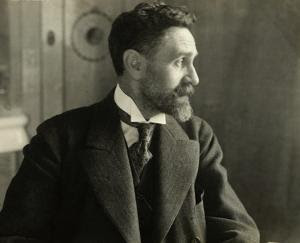
Roger Casemen t
I have spent manyenjoyable afternoons in Casement Park watching countless football and hurlinggames and playing in some of them. I have lost count of my man of the match triumphs. Especially for St. Marys or BelfastSchools in hurling. Or on Sports Days. In the past thestand and terraces or raised mounds aroundthe pitch provided a wonderful view of the contests. Some games attracted a fewhundred spectators while others were watched by enthralled thousands.
Casement Park wasopened in June 1953 and was named after Roger Casement. He was one of theleaders of the Easter Rising of 1916 who was hanged in London by the British inAugust that year. The people of Belfast, but especially the west of the City,raised over one hundred thousand pounds to construct Casement Park.
For much of its 71years Casement has been at the heart of the west Belfast community. At onepoint classes for primary school children were held under the stand. On the 50th anniversaryof the Easter Rising in 1966 a huge and colourful pageant was held in Casementto mark that historic moment in Irish history. For a time after OperationMotorman in 1972 it was occupied for more than a year by the British Army. Rallies in support of the hunger strikers were held there also.
For the last 8years it has lain empty and silent as a legal battle was fought over planningpermission for a new 34,000 seat stadium. That process is now at an end andlast week the first steps were taken to allow construction work to begin. Thedecision by the Irish government to allocate €50 million toward theconstruction is a very welcome development. The hope is that the new CasementPark will rise phoenix-like within the next three to four years in time to hostthe Euros in 2028.
These exciting newdevelopments got me thinking about Roger Casement. Who was this Dublin man whofound a home in North Antrim and wanted to be buried at Murlough Bay nearBallycastle?
Casement was amember of an Ulster Protestant family, a Knight of the British Empire and aBritish diplomat. He was also a gaeilgeoir who loved the Glens of Antrim. Hewas proud to be Irish. He was a thinker who took many of the weightiestdecisions of his life whilst pacing on Cushendall beach. He was resolute in hisopposition to British rule in Ireland and his goal was a free, united andindependent Ireland.
Casement came toNorth Antrim after his mother died when he was nine. His father decided tobring the family back from England to live near relatives. His father died inBallymena when Roger was 13. Roger remained in Ballymena, going to what laterbecame Ballymena Academy. He moved to England at the age of 16 and eventuallyjoined the civil service.
In 1903 he wasasked by the British government to produce a report on the conditions in aregion of the Congo controlled by the King Leopold of Belgium. Rubber and ivorywere the main produces. Indigenous workers were being mercilessly exploited.Millions died from exhaustion, hunger and disease. Casement’s expose of thecruelty of Leopold’s activities created an international outcry which led toLeopold being stripped of his control of the Congo.
Later Casement wassent to South America where he investigated the use of slaves and theill-treatment of local native people by a British rubber company. In 1911, forthis work Casement was given a Knighthood by the British. However, hisexperience had also opened his eyes to colonialism.
Two years laterCasement helped establish the Irish Volunteers. He travelled to the USA toraise money for that organisation and was involved in the smuggling of Germanweapons into Howth in July 1914. Casement negotiated with the German governmentduring the First World War for more guns and assistance for the plannedrebellion. He was arrested by the British at Banna Strand in County Kerry inApril 1916 three days before the Rising took place.
He was taken toLondon where he was initially held in the Tower of London. Casement was viewedby the English establishment as a traitor. He was tried for treason and hanged onAugust 3rd 1916. In his famous and powerful speech from theDock Casement lambasted the English establishment. For England, he said … “thereis only England; there is no Ireland; there is only the law of England, noright of Ireland; the liberty of Ireland and of an Irishman is to be judged bythe power of England.”
Addressing thedivisions created by English governments Casement said that IrishRepublicans: … “aimed at uniting all Irishmen in a natural andnational bond of cohesion based on mutual self-respect. Our hope was a naturalone, and if left to ourselves, not hard to accomplish. If external influencesof disintegration would but leave us alone, we were sure that nature itselfmust bring us together.”
And onthe right of the people of Ireland to independence and sovereignty RogerCasement told the court that condemned him to death that: “Self-governmentis our right, a thing born in us at birth, a thing no more to be doled out tous, or withheld from us, by another people than the right to life itself — thanthe right to feel the sun, or smell the flowers, or to love our kind. It isonly from the convict these things are withheld, for crime committed andproven, and Ireland, that has wronged no man, has injured no land, that hassought no dominion over others — Ireland is being treated today among thenations of the world as if she were a convicted criminal.”
In a letter to hiscousin Elizabeth ‘Eilis’ Bannister dated 25 July 1916 from Pentonville PrisonRoger Casement wrote: “Don’t let my body lie here – get me back to thegreen hill by Murlough – by the McGarry’s house looking down on the Moyle –that’s where I’d like to be now and that’s where I’d like to lie.” In1965 British Labour Prime Minister Harold Wilson agreed to the return ofCasement but only to Dublin. He was buried in Glasnevin Cemetery. The newCasement Park will be a fine tribute to a great patriot. Let’s get it built.

Starvation
There is now overwhelming evidence that the Israelistate has added a new weapon to its arsenal of genocide against the Palestinianpeople – hunger. The video and photographic images of starving children anddesperate parents searching for food and water are heart rending. The UNsays some 2.3 million people in Gaza are now on the brink of starvation.
Palestinian peoplehave been filmed eating grass in northern Gaza as emaciated children carrybowls hoping for some food in southern Gaza. There are reports of babies dyingfrom acute malnutrition.
We Irish have ourmemory of An Gorta Mór - The Great Hunger of 1845-52 - and of starving peopleeating grass. Some call it the Irish Famine but in a famine there is no fooddue to some natural catastrophe. In Ireland there was plenty offood. During those years the quaysides of Limerick were lined each day withabundant produce including pork, oats, eggs, sides of ham and beef––all boundfor export.
The reality andirony of this is appalling and was aptly described by George Bernard Shaw inhis play “Man and Superman.” The character Malone says: ‘My father died of starvationin Ireland in the Black 47. Maybe you’ve heard of it?
Violetreplies, ‘The Famine?’
‘No’, saysMalone ‘the starvation. When a country is full of food and exportingit, there can be no famine.’
And so it is in theGaza Strip. There is plenty of food waiting in food trucks. More will be sentbut the Israeli state is deliberately blocking these. Starvation and hunger arenow part of its strategy to kill Palestinians and drive them from their land.It cannot be allowed. Ceasefire now. We are all Palestinians.
February 26, 2024
Respect: A Window on the Past: Ceasefire Now

Respect
On Sunday last Ispoke at the 40th Anniversary Commemoration of the killing by the SAS of IRAVolunteers Henry Hogan and Declan Martin in Dunloy County Antrim. Declan was18. Henry was 20.
I was also thespeaker at the funerals in February1984. At that timehundreds of RUC and scores of landrovers surrounded HenryHogans wake house and myself, Martin McGuinness, Danny Morisson and Owen Carronlinked arms with other mourners to create a human barrier around the house andthe funeral to shield them from the RUC. That is the way many republicanfunerals were conducted in those days.
It was part of aconspiracy between the NIO, the RUC, British Army and the Catholic Hierarchy tostop patriot dead being buried with the national flag as part of their criminalisationstrategy. It eventually failed as a strategy not leastbecause of the resolve of the families involved, their neighboursand friends and local republican communities.
Sunday’s event whichdrew a huge crowd, was part of a weekend of discussions, music and remembrancein Dunloy. It got me to thinking of how this effort to criminalise our patriotdead is still the focus nowadays of some anti-republicanelements and some lazy journalists. One of the questions most askedof newly elected First Minister Michelle O Neill is whether she will attend IRAcommemorations. No questions to unionist representatives about their attendanceat commemorative events. And neither should there be.
I have noobjection to them or others commemorating their dead. This includesBritish soldiers, RUC or UDR officers and unionist paramilitaries. I said thisin Dunloy on Sunday. Of course all acts of rememberance should beconducted in a dignified and sensitive way. They should also be held only inplaces which are generally receptive tosuch events. No one should engage inprovocative language or offensive behaviour. Respect should be thewatchword.
Incidently thereare no IRA commemorations. The IRA is gone. Republican commemorations areorganised by groups like The National Graves Association or The NationalCommemoration Committee which is respnsible for 1916 events or bylocal committees drawn from local communities, old comrades, families, SinnFéin and others. They are not about - and should not be about -being provocative. We who have suffered in the conflict are notabout glamourising or glorifying the war. We should be mindful always of thefeeling of those who lost loved ones due to IRA actions.
And others whooften still describe republicans as terrororists need to ask themselves what isachieved by such offensive language. The war is over. The healing has begun formany people. This is for the good. Leaders can help this bytempering their language. We will probably never agree on the past. But we canagree to disagree. There is no single narrative. Only by including all thenarratives will a complete picture emerge of what happened and why it happened.Understanding that is part of being enabled to prevent it ever happeningagain.
Of course it is notonly elements of the British or unionist establishment who continue to insultrepublican communities or the families of republican patriot dead. The Dublinestablishment also repeats the same old story. Again and again. Theydon’t do irony. Fianna Fail leader Micheál Martinleads the chorus of ooh aah good old Ra of the 1920s while insulting thefamilies of the bad old Ra of more recent times.
Will he changehis tune? Probably not. But we live in hope. I’m not evenarguing for him to do so. Let’s keep our viewsof the past if that is all we can do but let’s tryto articulate it differently. I’m arguing for usto move into a new phase of our process of change. A phase of healing andshaping the future. The past is gone. Let’s not repeatit. Even rhetorically.
Of course somevictims cannot move on. Fair enough. That’s theirentitlement. But others have and continue to do so. They are an example to therest of us. Especially for those in political leadership.
The leader ofthe DUP was once a member of the UDR, an organisation which the BritishGovernment had to disband. The leader of the UUP is a former British soldier. Ihave yet to hear a Sinn Féin representative cast up about any of that.
So let’s reflect on howwe commemorate our dead. Republicans need to continue to do so in afitting manner, in tune with current political conditions and with a mind tobuilding an inclusive future.
Others shouldjoin us in this endeavour.
A Window on the Past
Ask almost everyone you know aboutthe date when internment was introduced and the 9 August 1971 will be thepopular answer. .
That was the day 342 men and boyswere dragged from their homes in the early hours of the morning to be beaten,interrogated and interned. Fourteen were the victims of planned torture – theHooded Men.
What is less well known is thatAugust 1971 was not the first time internment was introduced in the most recentphase of conflict. I was reminded of this by my good friend and comrade TomHartley – noted historian and collector - who presented me with a photocopy ofa page from the Irish Press – a Dublin based paper at the time – in which thenames of 24 Republicans interned in Crumlin Road Prison was published on 22August 1969.
Internment was a favoured weapon ofthe British and of the unionist regime at Stormont. It was also widely employedby Britain’s colonial administrations across its colonies. It was used bythe British after the Easter Rising and by the Free State government during theCivil War. In the North the unionist government used it in 1922-23; 1925; 1935;1938-45; 1950-51; and 1957-61.
In August 1969 unionist mobs led by BSpecials and the RUC attacked nationalist parts of Belfast. Hundreds of homeswere destroyed, thousands of families became refugees and … were killed. TheUnionist regime sought to blame Republicans for these events. Even claiming toa disbelieving media that nationalist families had destroyed their own homes.
The Unionist Prime MinisterChichester-Clarke issued a public statement in which he claimed that: “Well-disciplinedand ruthless men, working to an evident plan, attacked the police at a numberof points in the city.” He described this as a “…a deliberate conspiracyto subvert a democratically-elected Government.” The aim was to blame theIRA not unionism and its street mobs for the instigation of violence.
As British soldiers were beingdeployed on our streets the RUC raided homes and arrested two dozenRepublicans. They were all interned under the notorious Special Powers Act.They included Prionsias MacAirt; Jimmie Hargey; John McGuigan; J. McCann;Frank Campbell; Denis Cassidy; Denis Casson; M. Darity; J.J. Davey; FrankDonnelly; P. Duffy; R. Fitzpatrick; L. Johnston; D.J. Loy; H. Mallon; P.J. McCusker; John McEldowney; F. McGlennon; Malachy McGurran; Liam McIlvenna;Billy McMillan; L. Savage; M. Toal and F. White.
 I sent Deirdre Hargey MLA theclipping Tom sent me for her mother. In turn Deirdre sent me an RUC photoof her father taken at his arrest. So there you have. Another little exampleof the state we were in.
Most of the 24 internees werereleased within weeks. Billy McMillan, Prionsias MacAirt and Malachy McGurrancontinued to be held. McMillan was eventually released in late September whilePrionsias MacAirt and Malachy McGurran were held until the end of the year.
Ceasefire Now
The EuropeanUnion’s Foreign Policy chief Joseph Borrell took issue with US President JoeBiden and his remarks that the Israeli state’s offensive against thePalestinian people had been excessive. “If you believe that too many people arebeing killed maybe you should provide less arms,” Mr. Borrell said…”If theinternational community believes thatthis is a slaughter, that too many people are being killed, maybe they have tothink about the provision of arms.”
Mr. Borrell isright. The US administration along with Britain and other European powers arecomplicit in what Israeli state’s violations of international humanitarian law.It’s long since time for a ceasefire. The huge attendance at demonstrationsacross the world, including Ireland, shows there is popular support for an endto the genocide. People want peace. ThePalestinian people deserve peace. Ceasefire now.
An appeal for Information: Israel’s War Against Children: Moore St Raffle
An appealfor Information
Inthe 1970s the IRA shot dead and secretly buried a number of people. This is aterrible legacy of that period of our history. The families of thosekilled have suffered a grievous injustice. Republicans, including the IRA,recognise and have acknowledged this fact. What happened was wrong andunjustifiable.
Inthe autumn of 1997 as part of the outworking of the peace process and followingrepresentations from Fr. Alec Reid and me the IRA established a specialinvestigative unit to ascertain the whereabouts of these graves. Following thatinvestigation the IRA said it believedthat the number of persons involved was nine. In April 1999 it issued astatement acknowledging this and naming those killed and buried by it.
TheIndependent Commission for the Location of Victims Remains was established inthe same month by the Irish and British governments. This followedrepresentations from myself and Fr. Alec Reid. The hope at that time that theremains would be quickly recovered proved naïve.
One reason for this is that the IRA –as is widely acknowledged - had no institutional memory – no records to examinethat would provide accurate information. It was entirely reliant on thememories of those who were involved. After so many years memories provedelusive in some cases, small numbers of people were involved and some had diedin the interval. Geography and landscape too had changed making the pinpointingof locations challenging. And of course the IRA no longer exists.
Afterthe first bodies were recovered there was then a significant gap. I discussedthis with Fr. Alec Reid and we put a proposal to the governments in 2001 inwhich he urged them to employ experts in the recovery of remains. We alsoproposed the use of high-tech equipment and archaeological methods, includingarchaeological specialists, forensic experts, specialist scanning equipment andbody dogs. We also suggested that ‘a recreation of the scene’ approach beadopted.
Ittook some years for this to materialise. The service of a forensic scienceinvestigative consultant was secured. Geoff Knupfer took up his position in2005 and immediately carried out a review of the work up to that point.
Republicansimmediately engaged with Mr. Knupfer and up to his retirement last year metwith him on numerous occasions as the efforts to locate remains continued. In2007 Mr. Knupfer acknowledged the co-operation he and his team received. Hesaid:
"In a spirit of co-operation andreconciliation they [the IRA] are trying to help in every way they can. I amabsolutely convinced that they are doing everything they can to assist. Thesupport we have had from them has been absolutely 100 per cent from dayone."
Geoff Knupfer’s deputy Jon Hill, who has sincetaken over as lead investigator, reiterated this.
Theprocess to date has involved;
· The use of aerial photographs,from military or commercial sources of the sites at the time of the killings.
· Ordinance survey maps of thisperiod.
· Forestry records.
· X Ray equipment.
· Archaeological experts.
· Records, maps, photos, reportsof work already carried out on each site.
· The appointment of a projectmanager with the power to make things happen.
It success can be seen in its results.According to its most recent account the Commission reported that seventeenpeople were killed and secretly buried. Seamus Ruddy was victim of the INLA andhis remains were recovered in May 2017 and Seamus Maguire is believed to havebeen the victim of another republican group. The list does not include LisaDorrian who is believed to have been killed by the UVF and whose death afterthe Good Friday Agreement is outside the remit of the Commission. As a resultof the work of the Commission and information provided to it by republicansources thirteen bodies have been recovered.
Thereare still three outstanding cases that were the responsibility of the IRA.These are Columba McVeigh; Robert Nairac and Joseph Lynskey. The failure thusfar to find the remaining bodies is not due to any lack of resolve orcooperation by republicans.
Allof these families have a fundamental right to bury their loved ones withdignity. I continue to meet with the Commission and I want to appeal again foranyone with information to bring that information forward. They can do so incomplete confidence to me, or to the families involved or to the Commission. Ifthey wish to speak to someone else that too is fine. What is important is thatanyone with information makes that information available.
Finally, I want to commend all of the families who have campaigned with dignity for many years to locate the remains of their loved ones. I also want to acknowledge once again the grave injustice inflicted upon them and to express my deep regret about this. I want to thank everyone who has worked to help the families, including the Independent Commission for the Location of Victims Remains, An Garda Síochána and the experts and staff who have been brought in to assist in this work. They deserve our full support.The killing and secret burial ofpeople – has long been a brutal feature of war. In 2009 a report by a UNWorking Group recorded a total of 53,232 cases from 1980 affecting 82 states.
According to historians Pádraig Óg ÓRuairc and Dr Andy Bielenberg inan article, ‘Shallow Graves—documenting and assessing IRA disappearances duringthe Irish revolution 1919–1923’ the IRA was responsible for killing andsecretly burying approximately 110 people during that period.
No effort was made following the end of thecivil war to establish any process by which these bodies could be recovered andreturned to their families. We must continue our efforts to recover the remainsof Columba McVeigh; Robert Nairac and Joseph Lynskey. I would appeal to anyone with information tobring that forward. They can do so directly to the Commission on the basis ofconfidentiality. The confidential number for the Commission is 00800 – 55585500.
Israel’s War Against Children
The accountsof the Israeli genocide in the Gaza Strip against the Palestinian people haveproduced many difficult and heart wrenching moments. The destruction of homesand schools and hospitals; the deliberate killing of over 30,000 children,women and men; the mass murder of health workers, journalists and civilians; thedestruction of cemeteries; the premeditated shepherding of civilians intokilling zones by Israeli forces, and so much more have shocked and appalledmillions around the world. The Israeli state’s war on Gaza will be rememberedfor all this. It will also be forever remembered as Israel’s war againstchildren.
Hind Rajab was aged 6. Look at the photo ofthis beautiful young child. No threat to anyone. She went missing on 29 Januaryin Gaza City along with her Aunt and Uncle and cousins as they tried to flee intheir car. She spoke by mobile to the Palestine Red Crescent. An audiorecording of her last words were released by it. Her family had been killed by anIsraeli Tank and she was alone in the car with the bodies around her.
She wasterrified. She pleaded for help. “Come take me. You will come and take me? … I’m so scared, please come. Please call someoneto come and take me.” Desperately the Red Crescent sought clearance fromthe Israeli Army to send an ambulance. But contact was lost with that also.
At theweekend her decomposing body and those of her family were found in their bulletriddled car. The Ambulance was found parked nearby. It was destroyed and thetwo medics killed.
This isIsrael’s war on children. Almost 12,000 children have been killed and many morelie buried under the rubble.
And withIsrael marshalling its forces for an attack on Rafah - the largest displacedrefugee camp in the world – the scene is being set for a humanitariancatastrophe not witnessed before.
Moore St Raffle
The Moore Street Preservation Trust are raffling a framed,limited edition Moore Street Print by renowned Irish Artist RobertBallagh.
Tickets are €10/£9 and the draw will take place on EasterSunday.
Get your tickets here: http://msptshop.myshopify.com/
Remember our history. Support ourcampaign. Stop the demolition of Moore Street. Build a1916 Cultural Quarter.
Something fundamental has happened: Alex Maskey: Ivor Browne

Somethingfundamental has happened.
The restoration lastSaturday of the political institutions and the election of Michelle O'Neill asFirst Minister marks an extraordinary turning point in the process ofconstitutional change for the North and for the island of Ireland. It is asignificant new chapter in the transitional process of change that began withthe peace process. Last Saturday something fundamental happened.
In its century ofexistence the northern statelet reflected the ethos and wishes of those whoruled us. It was born out of colonialism, occupation, conflict, sectariandivision, fear and partition. Under successive unionist and British regimes itrelied for its survival on special powers, structured inequality anddiscrimination. Up to this point the northern state has had 11 unionist PrimeMinisters and First Ministers and a succession of largely mediocre BritishSecretaries of State who saw their role as shoring up unionism and defendingpartition and the union. Last Saturday that changed. A Republican is now FirstMinister. Structures foisted on us to block this from ever happening havecrumbled.
In 1998 the GoodFriday Agreement began the challenging process of unravelling all of this. Itprovided for a level playing field on which all of the political parties canpresent their analysis; promote their policies; and advocate for theirobjectives – Irish Unity or Union with Britain – while requiring that theyaccept the outcome of the democratic process.
On the core issues ofIrish Unity or the Union the Agreement recognised that it is for the people “ofthe island of Ireland alone, by agreement between the two parts respectivelyand without external impediment, to exercise their right of self-determinationon the basis of consent, freely and concurrently given, North and South, tobring about a united Ireland, if that is their wish, accepting that this rightmust be achieved and exercised with and subject to the agreement and consent ofa majority of the people of Northern Ireland.”
The Agreement alsoprovides for referendums North and South and if in the future, the people votefor Irish Unity there is a “binding obligation on both Governments to introduceand support in their respective Parliaments legislation to give effect to thatwish.”
Of course, Britishgovernments are not renowned for honouring commitments. Last week, followinghis deal with the DUP, British Secretary of State Chris Heaton-Harris claimedthat any change on the North’s place in the union “would absolutely depend onthe consent of both communities.” Not true. Any change will depend on ademocratic majority in a referendum voting for unity.
That places asignificant onus on republicans who want maximum constitutional change and anew Ireland – united and independent - to engage positively with those who donot share our vision of the future or with those who are unsure what thatfuture should look like.
Michelle O’Neill willcarry out her duties and responsibilities honestly and with diligence. As FirstMinister she will advocate for every citizen, and for every family irrespectiveof their attitude to the Union or Irish Unity. She will defend the right ofevery citizen, of every family, to choose their preferred future. But as acommitted Irish Republican activist and leader she will also work to advancethe objective of Irish Unity. These are not contradictory positions. They arecomplementary.
Michelle’s speech tothe Assembly is evidence of this. It was a confident, well deliveredwide-ranging manifesto for change for the future. It spoke of the need todeliver “for all our people, for every community” and to make “life better forworkers, families, communities.”
Michelle acknowledgedthat the new Executive will “face great challenges” and it will. Not leastbecause of the stranglehold British governments – Tory and Labour - have overthe North. Among these she identified the rising cost of living, patientswaiting for treatment and support, workers on the picket lines, the need forchildcare supports, social and affordable housing, key infrastructuredevelopment projects, the climate crisis and Lough Neagh, and using the WindsorFramework to advance the all-Ireland economy. She identified the epidemic ofviolence against women and girls and said she would prioritise a new strategyto tackle this.
She expressed hersorrow for all the lives lost during the conflict. And she committed herself tothe work of reconciliation.
Michelle spoke for allof us who have watched in horror the Israeli government’s genocide against the Palestinianpeople when she called for an immediate ceasefire. For dialogue and peace.
Last Saturday was agood day. Everyone who made a stand over the decades or in more recent timesshould be proud of the progress we have made. Inevitably there will be manychallenges. The Tories in London are not our friends. And the Executive is acoalition of parties with widely different opinions. But with good will andrespect we can make it work.
 Alex Maskey
Before the business ofelecting the Ministers my friend and comrade for many years Alex Maskey finallygot the opportunity to step back from the Ceann Chomhairle’s office.
Four years ago yearsAlex was elected Speaker and he did that job intelligently, fairly andpatiently. His time was up in 2022 but because the Assembly was suspended Alexcontinued to play that role for the last two years.
He took a number ofvery worthy initiatives even though the Assembly was suspended. They included A Youth Assembly made up of ninety young people aged fromthirteen to eighteen. He also convened A Women's Parliament and an Assembly forCitizens with Disabilities.
He met foreigndelegations and hosted others interested in the Good Friday Agreement and thepeace process. Last year he was front and centre in Parliament Buildings forthe 25th celebration of the Good Friday Agreement.
The respect and esteemin which he is held was evident at the weekend in the unanimous words of praiseand thanks he received from all sides of the Assembly.
It was a far cry fromAlex’s first entry into elected politics in 1983. In June that year he was SinnFéin’s first Belfast City Councillor. He ran a gauntlet of abuse fromunionists. They refused to talk to him. They tried to shout him down, soundedhorns, blew rape whistles, threatened him. He was the target of constantharassment by the British Army and RUC and the victim of several assassinationattempts by unionist death squads, including one in which his friend Alan Lundywas shot and killed in Alex’s home and another in which Alex was gravelywounded. Undaunted by all of this Alex went on to become the first ever SinnFéin Mayor.
Alex has committedhimself to continuing his activism and to the goal of Irish Unity and to theprinciples and objectives he has dedicated his life to. So, well done Alex andwell done also to Liz, an activist in her own right. She has been by his sidethrough all of these years. Ádh mor oraibh a chairde.
Ivor Browne
Ivor Browne died lastweek, aged ninety four. I admired him a lot. And I’m glad to say I met him afew times. He was one of the world’s leading and pioneering psychiatrists. AsPresident Micheal D Higgins said he ‘…left a profound mark on the understandingand attitudes to mental health in Ireland’. A visionary and a doer Ivordismantled mental institutions and developed community clinics. He was arevolutionary. Professor Brendan Kelly said his legacy was ‘the additionalliberty enjoyed by thousands of people who avoided institutionalisation as aresult of the reforms which Ivor came to represent’.
He spoke up on behalfof the political prisoners, especially the Armagh Women Political Prisoners.Speaking out in 1985 against strip searching he said: “Strip searching is arather violent procedure and tremendous intrusion on a human being . . . InIreland clothes are almost a part of a person’s body. To invade this is aviolation. It is a violent act, and I think, in this sense rapacious.”
Ivor was also amusician and a co founder in 1959, with Garech Browne, of Claddagh Records, torecord Irish traditional music, song and poetry. Claddagh is stillthriving and wonderful elements of our rich heritage is preserved thanks totheir vision.
Ivor was also SNQ -sound on the national question. He did great work in Derry in the 1970s andafterwards by assisting the development of community models forhuman development. My condolences to Ivor’s family. His life was a lifewell lived.
February 1, 2024
Comhghairdeas Kneecap; Irish government must join; Áras Uí Chonghaile – A world class visitor centre;

ComhghairdeasKneecap
Comhghairdeas Kneecap as an rath a bhí ar bhur scannán ag féile scannánSundance.
Last August Itravelled over to a studio close to Queen’s University to meet with Kneecap.The three west Belfast lads were busy putting the final touches to their moviewhich recounts – mostly i nGaeilge - how they were formed. That night they wereto do some work with Michael Fassbender but I was there to film a shortsegment.
Mo Chara, MóglaíBap and DJ Próvaí and director Rich Peppiatt all watched and laughed as I stammeredmy way through several different versions of my lines. That evening Kneecapplayed a sell out gig at the West Belfast Féile in the Falls Park.
I haven’t seenthe film yet. I am looking forward to it. Kneecap’s music is exuberant and fun.They have a sharp sense of the outrageous, the political and the ironic. Thecrowd that night in the Park was enthusiastic and we all enjoyed every minuteof the performance.
Despite criticism from the DUP and others who neverhave anything positive to say about the Irish language, the reports from theSundance Film Festival have been amazing. The festival is the mostimportant international film event for independent film makers. Kneecap beingscreened there was hugely significant. As is now well known the film receivedwidespread critical acclaim at its first night opening, with Variety, themajor entertainment trade paper, describing it as: “A triumph … to keep a languagealive it must be part of the culture now, and not only a remnant ofbygone eras. Their music has the power to inspire those their age to learn it,to pass it on.”
To add to this success the following day the filmwas picked up by Sony Picture Classics for distribution across theUSA, Latin America, Eastern Europe, Turkey and the Middle East. And thenat the end of last week came the news that it had picked up the Audience Award:NEXT. The first time a non-US film had been selected to take part in thatsection of the festival.
So well done again to Mo Chara, Móglaí Bap andDJ Próvaí, Rich, Trevor and all of those who helped make Kneecap. The moviewill be shown in Ireland later this year. Watch for the ads – Agus bígí linn.
Irishgovernment must join
Manythanks and commendations to the government of South Africa for taking the caseto the ICJ on behalf of the people of Palestine.
Therewas widespread welcome for the decision of the International Court of Justicelast week ordering Israel to:
· Refrain fromacts under the genocide convention
· Prevent andpunish the direct and public incitement to genocide
· Take measuresto ensure humanitarian assistance to civilians
· Preserveevidence of genocide and submit a report to the Court
· And submit areport to the ICJ in one month.
Whilethe Court did not call for an immediate ceasefire the import of its judgementis that a ceasefire is now imperative. The Court ordered that Israel ‘take allmeasures within its power to prevent’ the killing of Palestinians; causing them‘serious bodily or mental harm’; prevent the deliberate inflicting ‘conditionsof life calculated to bring about its physical destruction in whole or inpart.’ The Court said that ‘Israel must ensure with immediate effect that itsmilitary forces do not commit any of the above-described acts. How do they dothat and wage war?
Theonus is now on the international community to increase pressure on Israel andits allies to call an immediate ceasefire and to demand that all hostages arereleased. The ICJ specifically called on Israel to ‘take immediate andeffective measures to enable the provision of urgently needed basic servicesand humanitarian assistance.’
However,within hours the USA, British and German governments and seven other states hadwithdrawn funding from the United Nations agency – UNWRA – that is responsiblefor providing essential services, food and water to the Palestinians. Thedecision by these states is in response to claims by Israel that 12 UNofficials in Gaza – out of 13,000 - were involved in the Hamas attack on 7October. António Guterres, the UN Secretary General has appealed for the 10 countriesto reconsider their decision. Two million Palestinians, already sufferinghunger, are to be penalised because of the alleged acts of 12 UN staff.
Thisweek Sinn Féin is to table a motion in the Oireachtas calling on the Irishgovernment to join the South African case at the International Court ofJustice.
Finally, MaryLou McDonald and Michelle O’Neill have committed to raising the Israeligenocide against the Palestinian people when they visit Washington in March. MaryLou and I discussed this issue at a public event in Cabra, in her Dublinconstituency last Friday evening. I was asked about some calls on the party toboycott the US St. Patrick’s visit. I pointed out that those calling on us not to go to the USA are not calling on us to nottalk to the British. Sensible peopleknow that dialogue is the only means by which this or any issue of conflict canbe resolved. Our bridge into the USA is Irish America. St. Patrick’s Day isIreland’s national day. Boycotting this and denying ourselves the opportunityto advance our struggle or indeed the struggle of the people of Palestine wouldbe a mistake.
Sinn Féin disagrees with the USA administration on many issues,particularly foreign policy issues. We have always made that clear. When I met PresidentClinton in the 1990s I told him the US embargo on Cuba was wrong. I told GeorgeW Bush that his policy on Iraq and Afghanistan was wrong. I remember Martin andI urging Tony Blair not to invade Iraq. We told him it would be the biggestmistake of his leadership. We have a responsibility to raise these issues andMary Lou and Michelle will be equally forthright with those they meet in Marchabout US support for Israel’s war on the Palestinian people.
People in struggle, particularly people involved in national liberationstruggles, understand that your own struggle … has to be your primary focus. Theywill expect you to raise their issues, and we should. They will expect you tostand with them, and we should and will. But they would not expect us to doanything– any more than we would expect them to do anything – which would setback our own struggle or make space for those who are opposed to us.
 Áras Uí Chonghaile – A world class visitor centre
Áras UíChonghaile – the James Connolly Visitor Centre on the Falls Road – was formallyopened by Uachtarán Michael D Higgins in April 2019. The Áras celebrates thelife and times of James Connolly, the key role he played in Irish history, thestruggle for freedom and the Labour Movement. It be a world class visitorcentre exploring the life of Connolly; with a unique interactive exhibition; alibrary of writings by and about Connolly; historical objects relating toConnolly, and an all year round programme of engagement with communities,schools and visitors and a bialann.
Last week the Áras received theBronze award for sustainability and environmentally-friendly practice by GreenTourism. It joins the prestigious award from the Royal Society of UlsterArchitects that it won two years ago as building of the year.
Last week Áras Uí Chonghailealso announced its Clár an Earraigh – its spring programme of debates anddiscussions for the next three months. It is an excellent programme thatincludes a lecture on Mike Quill, one of America’s best known and most respecttrade union leaders who as an IRA Volunteer fought in the Civil War beforetravelling to the USA; Winifred Carney who was in the GPO during Easter Week1916; and The Future of the Irish Language. Takura Donald Makoni who is PolicyOfficer for the African and Caribbean Support Organisation will speak onInequity and Power in a post colonial world.
It is an exciting programme.Well worth a visit. The programme and information on membership is available athttps:arasuichonghaile.com. See you there.
January 21, 2024
100 Days of Hell: 100 Days of Hell: The Fermanagh Blackbird
100Days of Hell:

Israel’sgenocide against the Palestinian people in Gaza and the west Bank passed the100 day mark last week.
By the time this column is published the number of dead at the hands of Israel’s war machine is likely to have passed 25,000, mostly women and children. That’s almost equivalent to the entire population of Newry wiped out.Atthe same time almost two million Palestinians have been forcibly displaced.That is comparable to the population of the North forced from their homes whileevery hospital, school, university and most homes is destroyed. Oxfam hasconcluded that the daily death toll of civilians in Gaza is greater than anyother major conflict in the last quarter of a century.
Atthe weekend and across the world, in more than 120 cities – including Belfast,Cork and Dublin - millions gathered in a global day of action to demand aceasefire and an end to the Israeli genocide. The protests also criticised themilitary strikes by the British and US governments on Yemen.
Last weekthe South African government led the international demand for peace by takingthe Israeli state to the International Court of Justice at the Hague. More than50 countries are supporting the South African initiative. To its shame theIrish government, which supported a similar case being taken against Russia forits invasion of Ukraine, has refused to join with South Africa.
SouthAfrica lawyers presented an irresistible case against Israeli genocide. One ofits team of lawyers, Blinne Ní Ghrálaigh KC, gave the closing statement.She told how Israel’s actions had coined a new and horrifying label WCNSFs– Wounded Child No Surviving Family.
NíGhrálaigh’s concluding remarks summarised the savagery of Israeli actions. She said: “On average 247 Palestinians are being killed and are at risk ofbeing killed each day … They include 48 mothers each day, two every hour andover 117 children each day, leaving UNICEF to call Israel’s actions a war onchildren… The risk of famine will increase each day… Each day over 10Palestinian children will have one or both legs amputated, many withoutanaesthetic… Each day ambulances, hospitals and medics will continue to beattacked and killed… Entire multigenerational families will be obliterated.”
TheInternational Court of Justice could take years to reach a final judgementhowever it can make an emergency order against Israel’s continuing killing anddestruction in the Gaza Strip. That could take just weeks.Consequently, Blinne Ní Ghrálaigh concluded by calling onthe Court to “indicate the provisional measures that are so urgentlyrequired to prevent further irreparable harm to the Palestinian people in Gaza,whose hopes — including for their very survival — are now vested in the Court.”
 UachtaránMary Lou McDonald was in London last Saturday where she addressed severalhundred thousand protestors. She praised the South African initiative andcalled for an end to the slaughter. She said: “We won’t stay quiet aboutIsrael’s apartheid. We won’t be silenced in the face of genocide – a genocidethat is broadcast every day for nearly one hundred days now…” For 100days she said the mothers and fathers of Gaza have “wept an ocean of tears overthe still bodies of their dead children.”
Mary Lousaid: “The world stands at a crossroads and there is a choice to be made. Wenow demand human rights, justice, and the rule of law for Palestine, for Gaza,for the West Bank.”
IrishUnity Summit for New York
Thisweek the tickets became available for a major public event on Irish Unity to beheld in New York on 1st March. Billed as an ‘Irish UnitySummit’ the event is jointly sponsored by the Ancient Order of Hibernians, theBrehon Law Society, Friendly Sons of St. Patrick, Friends of Sinn Féin USA,Irish American Unity Conference, James Connolly Labor Coalition, Ladies AncientOrder of Hibernians.
The‘Summit’ will be held in The Great Hall at Cooper Union. It will start at1:00 pm on Friday 1st March and conclude at 6:00 pm. There willbe keynote speakers, panel discussions, and cultural performances.
 Sofar the programme will include Professor Brendan O’Leary (University ofPennsylvania) in conversation with Meghan Stack (New York Times). Also speakingwill be Uachtarán Mary Lou McDonald TD; Niall Murphy (Human Rights Lawyer andIreland’s Future Board Member); Glenn Bradley (Former British Soldier, formerUlster Unionist Party Officer, and member of Veterans for Peace); OlaMajekodunmi (born in Lagos, Nigeria, Radio Presenter, Irish Language Activistand member of Foras na Gaeilge); Sophie Colgan (Director of NavigatingNew York, dedicated to connecting individuals and businesses in the Irishdiaspora in NYC) and Professor Christine Kinealy (Irish historian, author, andfounding director of Ireland's Great Hunger Institute at QuinnipiacUniversity).
Theprogram will also include contributions from the Presidents of the sponsoringbodies and bipartisan US political leaders. There will be live music andspoken word contributions and performancesbetween speakers and paneldiscussions.
Ifyou are interested in Irish Unity and live in the New York area I would urgeyou to save the date and join the discussion on Irish Unity. I have no doubt itwill be a great event.
TheFermanagh Blackbird
Dónal O Connor and his family have made a long standingand continuing contribution to Irish traditional music and song. Dónal is awell known and respected musican, broadcaster and producer. We are all indebtedto and enriched by the work of the O Connor and Ní Uallacháin clanns. Becauseof them and others like them the traditional music scene is alive and well.Many songs and tunes which might have been lost have been retained orrecovered.
This is especially the case in Ulster. The song traditionis particularly strong here. Renowned singers and collectors like Len Graham,Paddy Tunney, Sarah Makem, Eddie Keenan, Pádraigín Ní Uallachaín, Grainne Holland, Davy Hammond, Albert Fry,Prionsais MacAirt, Seán McCorry and musicans like Davy Maguire, Neal Martin, SeanMaguire, John Sherry, Cathal Hayden, the Diamonds, theVallelys, the Sands andMcPeake families and many many more have ensured that our indigenous music is a part of every day life for many people. A livingtradition.
Every part of Ulster has lively circles of singers,musicians, dancers and story tellers. Theseare the custodians of our music. But they arealso teachers, whether formally through Comhaltas or Singing and MusicClubs or informally in sessions across all parts of the North. Many of themlearned their songs from parents or grandparents and from the generationsbefore them. And they are passing it on to the next generation.
 Number Gabriel McArdle among them. Gabriel, fromKinawley in Fermanagh, is a singer and a concertina andaccordion player. Dónal O Connor has produced an album - GabrielMcArdle The Fermanagh Blackbird - which showcases Gabrielstalents. It is a fine uplifting record of traditional songs and tunes whichcapture Gabriels great traditional singing style and music playing. It is alsohis first solo album, though hopefully not his last.
Gabriel’s singing is exquisite.Clear, melodic and true to his dialect. Sweet and easy on the ear.Érin Grá Mo Chroi is a gem of a song. So is Johnny and Molly. In fact there isnot a bad song in this collection.
The instrumentals are equally good. Many perhaps suitedto, and drawn from, the dance music of Ulster. I was particularlytaken by I Buried My Wife And Danced On Her Grave and The March Of The ClannMaguire. So well done to all involved with this fine album. ParticularlyGabriel McArdle. It has been on the go for a year now so thank you AntAthair Seos for my copy. It has given me hours of pleasure.
http://www.redbox recording.com
http://www.facebook.com/gabriel.mcardle.1
January 14, 2024
Death of a Hero: Kitson was amply rewarded for his foul deeds – in Ireland and elsewhere: Nollaig na mBan

Death of a HeroJustbefore Christmas my colleague Greg O'Loughlin,the Executive Director of Friends of Sinn Féin in the USA , gave methe sad news that veteran American Civil Rights leader King Hollands had died. I had the honour of meeting Kingand his fellow activists Rip Patton and Richard Dinkins during a visit toNashville in November 2018.I wasthere to speak in the Civil Rights Room in the Nashville Public Libraryalong with King on the connections between the Civil Rights Movement in the USAand the Civil Rights Association in Ireland in the 1960s.
King and Rip had participated inthe famous Woolworths Lunchtime sit-ins in 1960s. They were also FreedomRiders. At that time black citizens were banned by the draconian segregationlaws from sitting at Whites Only lunch counters. They were also segregated onpublic transport - confined to the Back of The Bus. When this legislation endedthere was violent opposition by white racists to the integration of theinterstate transport system. So some courageous women and men, black and white– Freedom Riders – took to the buses and trains to challenge segregation.Many were beaten and hundreds were imprisoned.

Mise agus King Hollands
While in Nashville I visited theWoolworths building where they did sit-ins, with Rip and King, and withJudge Richard Dinkins, another veteran of those days. We sat at the lunchcounter where almost 60 years ago African American citizens were attacked. Theyrecounted their experiences of those days, including arrests and assaults,before we sang ‘We shall overcome’ to our surprised guests.
The death of KingHollands is a huge loss to his family and friends. And to the struggle forrights. I enjoyed his company. And his singing. And celebrate his courage. Gondeanfaidh Dia trocaire air.

Richard has insisted that I write alittle bit about the death of Frank Kitson. Kitson, British Army general andleading advocate of counter-insurgency operations and collusion between stateforces and death squads died last week. I have written about him many times. Iam sure his death will be mourned by those within the British system whom heserved over many decades in defence of the Empire. He was rewarded with medals,a knighthood, and military promotions. He was for a time Commander in Chief ofthe UK Land Forces and from 1982 to 1985 he was Aide-de-Camp General to the British Queen.
Few if any of his manyvictims who were tortured, imprisoned, killed by his counter-gangs andcollusion strategies, whether in the North or in Malaya, Kenya, Aden or Cyprus,will shed tears at his passing.
After the Second WorldWar Britain fought over 50 colonial wars in defence of its Empire. Kitsonfought in some of these and his damaging influence was felt in others. Hefought in Malaya but it was in Kenya in the 1950s that he came to prominence.The dehumanisation of the native Kenyan people reached new levels of racism andbarbarity at that time. They were labeled animals, barbarians and vermin. Tensof thousands ended up in over 100 detention camps. Many of the men werecastrated using pliers. Men and women were raped, sometimes using bluntinstruments like bottles and rifle barrels. Others were mutilated by prison guardsand British Army officers. Some had fingers and ears sliced off. Others wereburned to death.
Kitson established counter-gangs.The groups were made up of British soldiers, including Kitson on occasion, andformer members of those fighting against British rule. They travelled thecountryside killing, maiming, interrogating and torturing. One particulartechnique Kitson introduced involved using ‘hooded’ agents/informers toidentify those who were then sent to the camps for torture.
The result of all this wasthat 30,000 Kenyans were killed; one and a half million were interned;torture was commonplace and 1090 were hanged using a portable gallows.
Kitson honed his skills in othercolonial conflicts including Aden and Cyprus and Oman. Consequently, when theBritish Army were deployed in Derry and Belfast in August 1969 many within itsranks had served in these conflict zones and brought with them the brutaltechniques they had learned.
Kitson joined them in 1970 asCommander in Belfast of the 39th Brigade area. He immediatelybegan implementing his strategies. In the autumn of 1971 the British Armycreated a new unionist paramilitary organisation – the Ulster DefenceAssociation – out of many small neighbourhood vigilante loyalist groups.
Kitson believed that to winagainst a guerrilla enemy which had the support of its community or at the veryleast a significant proportion of its community, the government, the law, thejudiciary and the media all had to be reshaped and moulded by government tosuit the aim of defeating the enemy.
It was about controllingthe population; using counter-gangs (death squads) to coerce it; establishingspecial units and employing psyops (psychological operations) and mediamanipulation. Kitson rationalised the use of death squads and the corruption ofjustice: ‘Everything done by a government and its agents in combatinginsurgency must be legitimate. But this does not mean that the government mustwork within exactly the same set of laws during an emergency as existedbeforehand. The law should be used as just another weapon in the government’sarsenal, in which case it becomes little more than a propaganda cover for thedisposal of unwanted members of the public.’
While Kitson was basedin Belfast he was responsible for establishing the Military Reaction Force(MRF). It sought to stoke sectarian conflict by killing Catholics. In addition1 Para was also based in Palace Barracks in Holywood where Kitson alsoresided. He encouraged the Paras to be violent and brutal in their actions. TheParas were known as ‘Kitson’s private army.’
The Parachute Regimentwas responsible for the Ballymurphy Massacre and Bloody Sunday inDerry. When the Paras killed 14 people in Derry the adjutant of 1 Para wasMichael Jackson. He subsequently produced in his own handwriting the ‘shotlist’ which claimed that all of the victims had guns or bombs. Like Kitson herose to the top of the British Army.
Later Jackson describedhis admiration for Kitson: “he was the sun around which the planets revolved … andvery much set the tone for the operation style in Belfast.”
I know that thosewho opposed British militarism by force in our own place, like the freedom fighters in other parts of the globe, were also responsible forinflicting hurt. I have never tried to disguise that and I regret the harmdone. Kitson was a failure. He never to my knowledge showed any concern for thebrutal policies he devised and implemented. His policies failed. They reflectedthe will of the British establishment at that time. Kitson was their man.
Youcannot begin to understand the conflict in Ireland or Kitson’s role in itwithout setting it in the context of the English colonization of Ireland. Norcan you understand the brutality and depravity that accompanied it without recognisingthat the British Empire was built on a deep rooted racism, arrogance, andintolerance that saw other peoples as less than human. Today’s genocide in Gazahas its roots in this history. Millions died across the world as Britishcolonialism exploited them in the interests of profit.
Kitson was the epitomeof this imperialist and colonial aggression and he was amply rewarded for hisruthless and cruel defence of that imperialism by successive Britishgovernments.
Nollaig na mBan
Nollaig na mBan - Women’s Christmasor Little Christmas – was celebrated last Saturday. Traditionally, it’sthe last day of the Christmas period when the role of women who did all thework preparing for and making Christmas a success for everyone else, wascelebrated. January the 6th was the day when they had the opportunity torest and celebrate.
It’s also the day when theChristmas tree and decorations are supposed to come down. Until recently thecelebration of Nollaig na mBan had declined. Thankfully that is now changingand this old custom is being revived.
Nowadays for many womenNollaig na mBan has a much broader meaning. It is a celebration of the strengthof women. Of their right to equality and parity of esteem. Long may thiscontinue.
January 8, 2024
This Land is Your Land: Gaza: 2024
 This Land Is Your Land.
 I am a long time fan of Woody Guthrie. He is one of the worlds great songwriters in the English language and many of his words are as releventtoday as they were when he wrote them. He was also an American activistwho agitated and educated and sang for social equality, immigrationreform, peace and fairness. He stood against fascism, racism, war,corruption and for a clean environment. He sang about love, for workersrights and a better life for all.
He also wrote a lot. I read his Bound For Glory book years ago as well ashis novel House of Earth. And now I am delighted to have a Christmas boxof a magnificent publication of Woody’s ‘Songs and Art * Words and Wisdom’ curated by his daughter Nora Guthrie and historianRobert Santelli.
This is a large handsome reproduction of some of Woodys drawings, doodles,scribbled thoughts, songs, poems and political observations on the back ofenvelopes, scraps of paper, jotters and dairies. He obviously knew theimportance of these notes because he dates them and in many cases noteswhere he is at the time. Woody travelled a lot. These tiny little details addgreatly to the readers enjoyment and knowledge. So do the many finephotos.
He also has lots of wisdom. Here he is on fascism.
‘ …..all human beings (need) to come always closer and closertogether – to know and understand all races, creeds, and colours better; andfascism says for us to split ourselves up into the thousand cliques and klansand beat our own chains of slavery onto our ankles by wasting our strengthfighting our friend and neighbour – and allowing the fascists to nip us off oneby one, little by little, group by group……’
He was equally opposed to racism. He had deep friendships with bluesmusicians Lead Belly and Sonny Terry and Brownie Magee who he toured with inthe 1950s. He challenged racism head on. They were often attacked bythe Klu Kluk Klan. They stood up to their attackers. And they playedtheir music.
And Woodys song’s are still sung today. Hewrote thousands of songs. We are very lucky that recording by him ofsome of these are still available. Many of his better known songs have beencovered by Irish singers. They include Deportees, Pretty Boy Floyd, The LudlowMassacre, Jesus Christ and many more. Bob Dylan also recorded Woody songs. Sodid Pete Seeger, Joan Baez and Bruce Springsteen, The Byrds, Grateful Dead,Billy Bragg, Fergus O Hare, Willie Nelson and Ry Cooder.
This Land Is Your Land is an anthem and rallying call to working people. It is perhaps his best known work. Woody was also a poet, a painter,illustrator, novelist, journal keeper, and prolific letter writer.
Incidentally, Woody Guthrie’s ‘Songs and Art * Words and Wisdom’ includes notes by Woody on how to write songs.It also contains contributions by other singers, artists andwriters. What more could you want?
Woody Guthrie ‘Songs and Art * Words and Wisdom’ is published by ChronicleBooks. www.chroniclebooks.com
Gaza
This column has published this wee poem before. Iwrote it in Gaza City fourteen years ago. Before it was as terrible as it isnow. It’s time to reprint this short verse aris.
Gaza
Rubble on rubble
Twisted metal
And Ghosts
Everywhere
Ghosts of little children
Playing in the ruins
Little ghosts
Páistí bochta
Laughing
Shouting
Crying
And dying in Gaza.
2024
Best wishes and blessings to you all in 2024.2024 is shaping up to be a decisive year that will determine the politicaldirection of travel for this island for the next ten years, and possibly evenlonger.
The many challenges facing all of us are enormousbut so too are the substantial opportunities for change and progress.
First up will be whether the DUP is prepared toend its damaging refusal to participate in the power sharing institutions. Theexcuse that its negotiations with the British government on the WindsorFramework and the Brexit mess are still ongoing is now patently absurd.
Thedecision for Jeffrey Donaldson will be brought to a conclusion in the next weewhile. The outworking of that decision - whatever it is - will close downanother option for unreconstructed unionism. Meantime the rest of us willcontinue the process of change. That includes constitutional change. Thesocial and economic interests of the people of the North have never been bestserved by London.
Thespeculation is rife that the British PM Rishi Sunak will go for a May generalelection. A crystal ball is not needed to know that the Tories face asignificant loss of seats in the local government elections in England andWales on 2 May. A general election with its higher turnout might salvage someof these but whether the British general election is in May or October theConservatives are headed for defeat. The next government in London will be aLabour government. Let’s not hold our breath waiting for that. With a fewnotable exceptions British Labour has not served Ireland well. It never willuntil it implements the Good Friday Agreement provision for a referendum on theUnion.
Inthe South there will be local government elections in June and elections to theEuropean Parliament on the same day. These will be a crucial test for all ofthe parties as they prepare for the general election in that jurisdiction whichcould be held before the end of the year.
Inrecent days Taoiseach Leo Varadkar has been setting out his vision for the nextfive years – more of the same. A Fine Gael, Fianna Fáil, Green Party governmentwith the leaders carving up the ministerial posts as Varadkar and MicheálMartin play tweedle dee and tweedle dum over the role of Taoiseach.
Forthe first time there is the real possibility of a government without either ofthem. Successive elections over the last decade have witnessed the consistentgrowth in the Sinn Féin vote. In 2020 it emerged with the greater share offirst preference votes. The party is now the largest in the Oireachtas. As MaryLou wisely put it her aim is to deliver real change with a fresh governmentthat will have neither of these parties in it. It’s a doable project. But, ofcourse it will depend on the voters.
Clearlythere is huge disenchantment with the policies of the current government. Manypeople want change. But they want more than just the language of change.
Sothe challenge for Sinn Féin is to present and deliver a new vision of the newIreland that a Sinn Féin government will seek to construct. That means clearpolicies on the economy, on housing, on health and mental health, on theenvironment, on investment in and the transformation of education and childcareand supports for carers. A programme for change that has fairness and equalityat its core. Much of this work is well underway.
Butit especially means for the oldest Republican party on this island that thereis an onus on us to map out the kind of United Ireland we are for – inclusive,with equality at the heart of policy making and delivery, anti-sectarian,pro-working family, standing up to the fascists and right wing who seek to whipup violence and division, and defending the rights and entitlements of allcitizens.
Much progress has been made. But we need to domore.
AnIrish government has the political and diplomatic resources to advance all ofthese propositions – if it has the political will. Irish governments have paidlip service to a united Ireland. That has to change. 2024 can see that change.
Gerry Adams's Blog
- Gerry Adams's profile
- 29 followers

