Loraine Tulleken's Blog, page 2
April 29, 2016
A DOSE OF HOLINESS FROM AN ARCHBISHOP CONCEIVED IN A DRUNKEN COUPLING
A healthy dose of realityThe recent revelation that our Anglican Archbishop, Justin Welby, is the illegitimate son of Sir Anthony Montague Browne has all the ingredients for a global scandal. After all, it has elements of sex, booze, high society, beautiful women, political power and religion. Yet the public face of some 77 million Anglicans worldwide has deftly deflated the story by resorting to good old fashioned honesty and, yes, holiness.
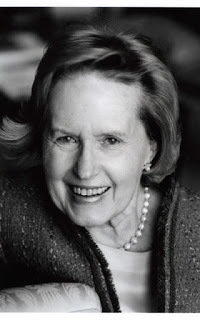 Lady Williams
Honesty is the best policyFor starters, his 86-year-old mother, a recovering alcoholic who hasn’t touch a drop in decades, deftly took the wind out of the yellow-press sails. Lady Williams of Elvel, a former magistrate and a deputy lieutenant for Greater London, said in an interview: “Naturally, my son has deserved an explanation and I have been as open as I can.”
She went on to reveal that, “fuelled by a large amount of alcohol on both sides”, she and Sir Anthony had slept together only days before her “very sudden marriage” to Gavin Welby, a whisky salesman with social aspirations.
Because our archbishop was born nine months after that wedding he was presumed to have been a honeymoon baby. So mother and son would have been shocked by the paternity news but there was no attempt by either to dodge the issue.
An uncomplicated responseThe Telegraph broke the story and a senior journalist reveals that, when he approached the archbishop with circumstantial evidence that had been garnered, Justin Welby’s uncomplicated reaction was “why don’t we do a DNA test?’ A saliva swab was taken from inside his cheek.
Lady Montague Browne, Sir Anthony’s widow and a former personal assistant to Churchill’s wife, readily produced a hair from her deceased husband’s hairbrush for the other half of the DNA test.

It appears that she had long suspected that he was Justin Welby’s father. She told The Telegraph that, many years earlier, her then husband had teasingly said: “I’m told I have a son… you’ll find out one day.”
Moreover, when Archbishop Justin’s appointment was announced her son from a previous marriage (seems the aristocracy and Elizabeth Taylor have multi-matrimony in common) began discussing with Sir Anthony how uncannily alike they looked.
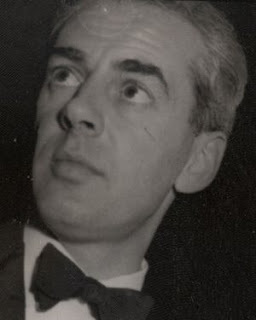 Sir Anthony Montague Browne
The old man was in a care home at the time and they spoke in French to avoid being overheard.
Separately, Jane Hoare-Temple, the daughter of Sir Anthony and his first wife, Noel, had concluded that there must be a family connection because the Archbishop was “the spitting image of my father”. (Add a half-sister to the already interesting equation)
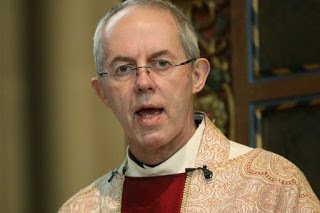 Archbishop Justin Welby
True leaders don’t duckIt all makes for a great story but I believe history will underscore the archbishop’s response rather that the juicy gossip.
I’ll treat you to his statement in full:-
In the last month I have discovered that my biological father is not Gavin Welby but, in fact, the late Sir Anthony Montague Browne.
This comes as a complete surprise.
My mother (Jane Williams) and father (Gavin Welby) were both alcoholics. My mother has been in recovery since 1968, and has not touched alcohol for over 48 years. I am enormously proud of her.
My father (Gavin Welby) died as a result of the alcohol and smoking in 1977 when I was 21.As a result of my parents’ addictions my early life was messy, although I had the blessing and gift of a wonderful education, and was cared for deeply by my grandmother, my mother once she was in recovery, and my father (Gavin Welby) as far as he was able.
I have had a life of great blessing and wonderful support, especially from Caroline and our children, as well as a great many wonderful friends and family.My own experience is typical of many people. To find that one's father is other than imagined is not unusual. To be the child of families with great difficulties in relationships, with substance abuse or other matters, is far too normal.
By the grace of God, found in Christian faith, through the NHS, through Alcoholics Anonymous and through her own very remarkable determination and effort, my mother has lived free of alcohol, has a very happy marriage, and has contributed greatly to society as a probation officer, member of the National Parole Board, Prison Visitor and with involvement in penal reform.
She has also played a wonderful part in my life and in the lives of my children and now grandchildren, as has my stepfather whose support and encouragement has been generous, unstinting and unfailing.
This revelation has, of course, been a surprise, but in my life and in our marriage Caroline and I have had far worse. I know that I find who I am in Jesus Christ, not in genetics, and my identity in him never changes. Even more importantly my role as Archbishop makes me constantly aware of the real and genuine pain and suffering of many around the world, which should be the main focus of our prayers.
Although there are elements of sadness, and even tragedy in my father's (Gavin Welby’s) case, this is a story of redemption and hope from a place of tumultuous difficulty and near despair in several lives. It is a testimony to the grace and power of Christ to liberate and redeem us, grace and power which is offered to every human being.
At the very outset of my inauguration service three years ago, Evangeline Kanagasooriam, a young member of the Canterbury Cathedral congregation, said: “We greet you in the name of Christ. Who are you, and why do you request entry?” To which I responded: “I am Justin, a servant of Jesus Christ, and I come as one seeking the grace of God to travel with you in His service together.” What has changed? Nothing!
Cheated by death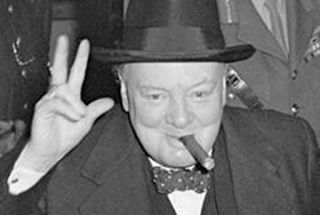 Sir Winston Churchill
Father and son had met within the Churchill circle. when Archbishop Justin was still a boy. Poignantly, when the archbishop was appointed in 2013, his father asked to see him but died before that could happen.
Sir Anthony Arthur Duncan Montague Browne KCMG CBE DFC was a decorated war time pilot and diplomat who was private secretary to Sir Winston Churchill for the last ten years of the latter's life.
Gavin Welby, who died of a heart attack in 1977, also served in the Second World War but later “promoted” himself from lieutenant to captain A social climber, he’d changed his name from Weiler to Welby and dated John F Kennedy’s sister Pat as well as the actress Vanessa Redgrave. The Gatsby-like character stood for the UK Parliament twice and never revealed a short-lived marriage to an American heiress.
The archbishop would later describe him as “a complicated man” but “really, really brilliant”. Notably, he honours Gavin Welby in his statement and once remarked that if his presumed father had been honest about his life, it would have been “a fantastic story” of overcoming setbacks.
Two very different ‘fathers’. No doubt our archbishop is the sum of both parts and I love how real he is.
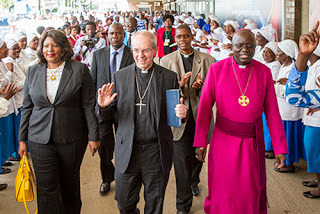
Lessons in identityIt appears that he hinted at the dramatic revelations to come when he spoke in Zambia to a gathering of young people from across Africa two days before the news broke.
Addressing the question of personal identity on the eve of the Anglican Consultative Council meeting, he told them: “We need to be a church where I am who I am because I am in Jesus Christ. That’s the only thing that gives me identity and you will see why I am saying that in a couple days’ time."
Since that dramatic disclosure Archbishop Welby has been widely praised by faith leaders, Coptic, Jewish and Catholic alike for the dignity, grace and forgiveness with which he greeted the revelation.
For my part I’m immensely relieved that the Church scrapped the rule that barred an illegitimate man from becoming archbishop. That particular Canon was around for hundreds of years so perhaps there is hope for a couple of others to be trashed.
I also know that by simply writing this blog I have not only been alerted to several potential sermons on identity, I have a glimmer of hope that the example of compassion will take us on a journey of love towards greater acceptance of political refugees and our LGBT brothers and sisters.
Lady WilliamsHonesty is the best policyFor starters, his 86-year-old mother, a recovering alcoholic who hasn’t touch a drop in decades, deftly took the wind out of the yellow-press sails. Lady Williams of Elvel, a former magistrate and a deputy lieutenant for Greater London, said in an interview: “Naturally, my son has deserved an explanation and I have been as open as I can.”
She went on to reveal that, “fuelled by a large amount of alcohol on both sides”, she and Sir Anthony had slept together only days before her “very sudden marriage” to Gavin Welby, a whisky salesman with social aspirations.
Because our archbishop was born nine months after that wedding he was presumed to have been a honeymoon baby. So mother and son would have been shocked by the paternity news but there was no attempt by either to dodge the issue.
An uncomplicated responseThe Telegraph broke the story and a senior journalist reveals that, when he approached the archbishop with circumstantial evidence that had been garnered, Justin Welby’s uncomplicated reaction was “why don’t we do a DNA test?’ A saliva swab was taken from inside his cheek.
Lady Montague Browne, Sir Anthony’s widow and a former personal assistant to Churchill’s wife, readily produced a hair from her deceased husband’s hairbrush for the other half of the DNA test.

It appears that she had long suspected that he was Justin Welby’s father. She told The Telegraph that, many years earlier, her then husband had teasingly said: “I’m told I have a son… you’ll find out one day.”
Moreover, when Archbishop Justin’s appointment was announced her son from a previous marriage (seems the aristocracy and Elizabeth Taylor have multi-matrimony in common) began discussing with Sir Anthony how uncannily alike they looked.
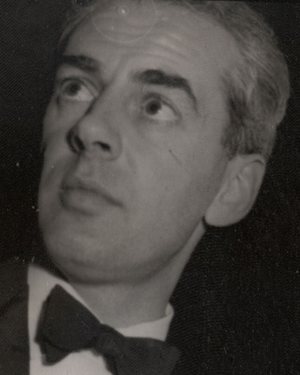 Sir Anthony Montague Browne
The old man was in a care home at the time and they spoke in French to avoid being overheard.
Separately, Jane Hoare-Temple, the daughter of Sir Anthony and his first wife, Noel, had concluded that there must be a family connection because the Archbishop was “the spitting image of my father”. (Add a half-sister to the already interesting equation)
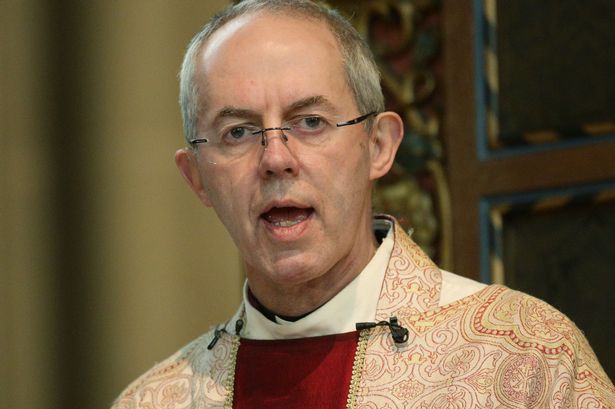 Archbishop Justin Welby
True leaders don’t duckIt all makes for a great story but I believe history will underscore the archbishop’s response rather that the juicy gossip.
I’ll treat you to his statement in full:-
In the last month I have discovered that my biological father is not Gavin Welby but, in fact, the late Sir Anthony Montague Browne.
This comes as a complete surprise.
My mother (Jane Williams) and father (Gavin Welby) were both alcoholics. My mother has been in recovery since 1968, and has not touched alcohol for over 48 years. I am enormously proud of her.
My father (Gavin Welby) died as a result of the alcohol and smoking in 1977 when I was 21.As a result of my parents’ addictions my early life was messy, although I had the blessing and gift of a wonderful education, and was cared for deeply by my grandmother, my mother once she was in recovery, and my father (Gavin Welby) as far as he was able.
I have had a life of great blessing and wonderful support, especially from Caroline and our children, as well as a great many wonderful friends and family.My own experience is typical of many people. To find that one's father is other than imagined is not unusual. To be the child of families with great difficulties in relationships, with substance abuse or other matters, is far too normal.
By the grace of God, found in Christian faith, through the NHS, through Alcoholics Anonymous and through her own very remarkable determination and effort, my mother has lived free of alcohol, has a very happy marriage, and has contributed greatly to society as a probation officer, member of the National Parole Board, Prison Visitor and with involvement in penal reform.
She has also played a wonderful part in my life and in the lives of my children and now grandchildren, as has my stepfather whose support and encouragement has been generous, unstinting and unfailing.
This revelation has, of course, been a surprise, but in my life and in our marriage Caroline and I have had far worse. I know that I find who I am in Jesus Christ, not in genetics, and my identity in him never changes. Even more importantly my role as Archbishop makes me constantly aware of the real and genuine pain and suffering of many around the world, which should be the main focus of our prayers.
Although there are elements of sadness, and even tragedy in my father's (Gavin Welby’s) case, this is a story of redemption and hope from a place of tumultuous difficulty and near despair in several lives. It is a testimony to the grace and power of Christ to liberate and redeem us, grace and power which is offered to every human being.
At the very outset of my inauguration service three years ago, Evangeline Kanagasooriam, a young member of the Canterbury Cathedral congregation, said: “We greet you in the name of Christ. Who are you, and why do you request entry?” To which I responded: “I am Justin, a servant of Jesus Christ, and I come as one seeking the grace of God to travel with you in His service together.” What has changed? Nothing!
Cheated by death
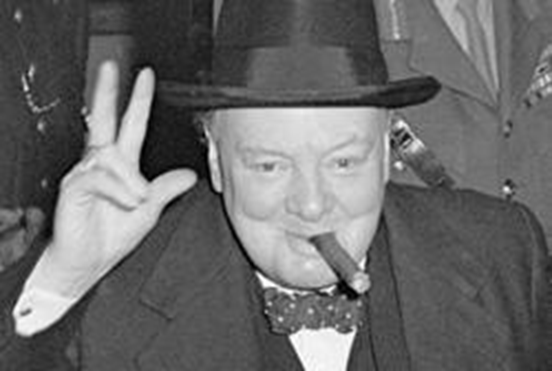 Sir Winston Churchill
Father and son had met within the Churchill circle. when Archbishop Justin was still a boy. Poignantly, when the archbishop was appointed in 2013, his father asked to see him but died before that could happen.
Sir Anthony Arthur Duncan Montague Browne KCMG CBE DFC was a decorated war time pilot and diplomat who was private secretary to Sir Winston Churchill for the last ten years of the latter's life.
Gavin Welby, who died of a heart attack in 1977, also served in the Second World War but later “promoted” himself from lieutenant to captain A social climber, he’d changed his name from Weiler to Welby and dated John F Kennedy’s sister Pat as well as the actress Vanessa Redgrave. The Gatsby-like character stood for the UK Parliament twice and never revealed a short-lived marriage to an American heiress.
The archbishop would later describe him as “a complicated man” but “really, really brilliant”. Notably, he honours Gavin Welby in his statement and once remarked that if his presumed father had been honest about his life, it would have been “a fantastic story” of overcoming setbacks.
Two very different ‘fathers’. No doubt our archbishop is the sum of both parts and I love how real he is.
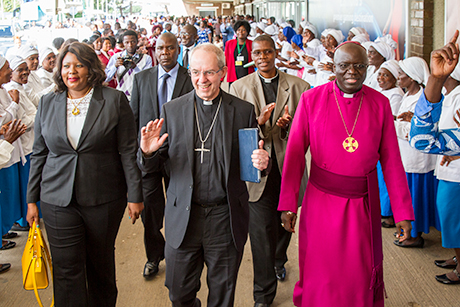
Lessons in identityIt appears that he hinted at the dramatic revelations to come when he spoke in Zambia to a gathering of young people from across Africa two days before the news broke.
Addressing the question of personal identity on the eve of the Anglican Consultative Council meeting, he told them: “We need to be a church where I am who I am because I am in Jesus Christ. That’s the only thing that gives me identity and you will see why I am saying that in a couple days’ time."
Since that dramatic disclosure Archbishop Welby has been widely praised by faith leaders, Coptic, Jewish and Catholic alike for the dignity, grace and forgiveness with which he greeted the revelation.
For my part I’m immensely relieved that the Church scrapped the rule that barred an illegitimate man from becoming archbishop. That particular Canon was around for hundreds of years so perhaps there is hope for a couple of others to be trashed.
I also know that by simply writing this blog I have not only been alerted to several potential sermons on identity, I have a glimmer of hope that the example of compassion will take us on a journey of love towards greater acceptance of political refugees and our LGBT brothers and sisters.


March 25, 2016
OF SCAPEGOATS, MEL GIBSON AND THE DONALD
We Christians have a knack for giving biblical personalities a bad press, or, at best, distorting their bios to suite our own agendas. We brand God as loving and forgiving while wielding the Scriptures much like the Pharisees who Jesus consistently exhorted us not to emulate. We peg our scapegoats and never let them go. It feeds our smugness.
For example, at this time of the year we contemplate the crucifixion– all too often like voyeurs at a motor accident. Soon after that we focus on Jesus’ re-appearance to his apostles. Pivotal to those narratives are Judas Iscariot (think greedy traitor) and Thomas (think doubter).

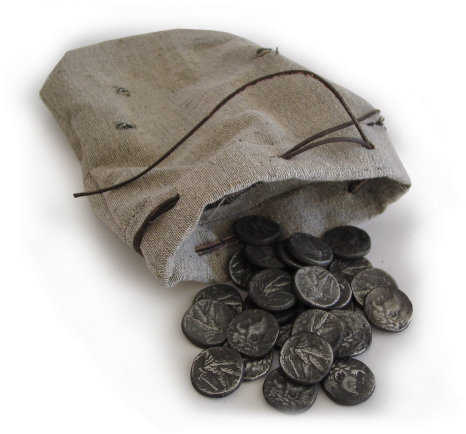
Judas has had a particularly bad press but it can be argued that there was much more to that infamous kiss than 30 pieces of silver.
Firstly, as the Jews suffered under Roman oppression their vision of a Messiah had little to do with heaven. The afterlife didn’t feature as powerfully as their worldly hardships and they were anxiously waiting for their very own ‘Che’ Guevara to overthrow their rulers.

Enter Judas who, it seems, was a passionate revolutionary probably growing impatient with Jesus’ dis-inclination to lead a political uprising. Well aware of Jesus’ miraculous powers (as in sticking an ear back after it had been chopped off by a sword), it was highly unlikely that he believed he was sending his leader to his death. His intention was simply to nudge Jesus into action. The man he had watched raise the dead and heal the sick could surely dethrone Herod and zap the Romans?
That kiss was a classic case of a plan gone wrong. Was Judas’ suicide akin to falling on one’s sword in other honour cultures?
There’s yet another factor. By classifying Mr Iscariot as the arch betrayer we paint Jesus as a victim. It’s the ultimate insult or do we find a gentle Jesus, meek and mild, easier to manipulate for our own purposes?
Yet, John’s gospel presents Jesus as being in full control of the situation from the Judas kiss to his last breath on the cross. The reasoning is that Jesus allowed those awful events to flow in order to live out the Messianic prophesy. The proof sits with the resurrection.

I suspect even Donald Trump would agree that power over death far outweighs political power.
On that basis Judas simply served Jesus’ purpose. But do we give him an iota of sympathy? No ways!
We’ve done such a good job of making him synonymous with betrayal that he is linked to one of the most famous rock and roll heckles of all time. It was 1966 at a concert in England that, as Bob Dylan switched to an electronic guitar an outraged member of the audience yelled “Judas!”
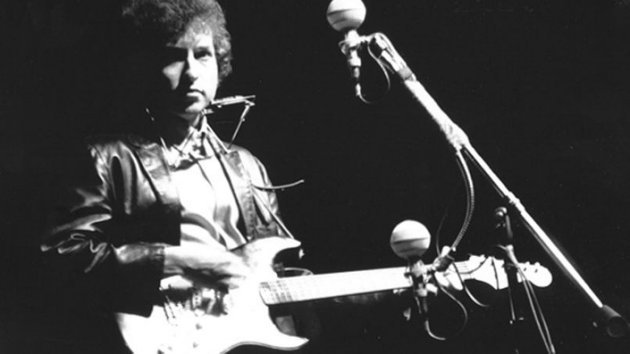
Dylan’s love for his new electric instrument was viewed a blasphemous.
That story would not have gone down in the annals of music history if we Christians had been less condemning of Judas. When he planted a kiss on his rabbi’s cheek after three years of faithful following, he was branded for ever. One can just imagine how quick the other disciples were to condemn, despite their own failings.
No one really knows what drove Judas. But, for sure, we Christians have judged and sentenced him mercilessly to our lectionary of derogatory terms.

Thomas is also much maligned. We’ve made him a synonym for doubt, particularly doubt in God, lack of faith.
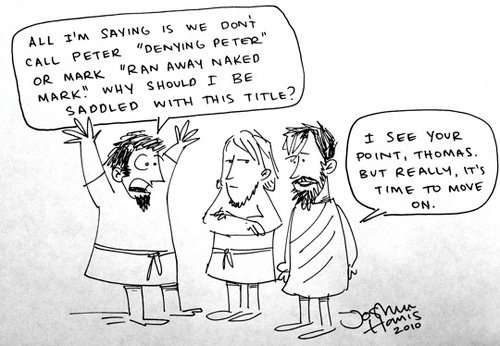 For starters nobody seems to notice that Jesus doesn’t reprimand him for doubting the resurrection. He simply seeks to reassures the disciple by inviting him to check out the crucifixion wounds. (No fuss, no rant. Just as nobody ever seems to notice that Jesus doesn’t criticise the woman at the well for the men in her life. He doesn’t even instruct her to leave the man she is living with.) But we Christians have an awful tendency to look askance at folk who have difficulty believing in God.
For heaven’s sake! Justin Welby, the Archbishop of Canterbury, has shared that sometimes he doubts. I know I do. Many of my Anglican friends grew up confident that God exists, they have absolute confidence that their guardian angel hovers and Jesus loves them. It’s not that easy for me. I have to work at my faith.
Sometimes I have to work extra hard but I do take comfort from Mother Theresa who wrote in her private journals that she lived much of her life not feeling God’s presence.
 In fact, I was only ready to place my chips on the roulette wheel of faith when reading Gerard Hughes God of Surprises at the grand age of 50. He helped me understand that I could not intelectualise God, God wouldn’t be God and my best bet was to get on with the game.
My spiritual journey will always involve potholes of doubt. But that’s okay. It’s part of my human condition and its never boring.
Another incredibly valuable lesson I learned for Father Gerry is not to confuse God-incidences with coincidences. As I prepare to launch the first in my Archbishop Shakes mystery series, I’m experiencing a major one. Besides a lot of grind, the book has inched forward against a backdrop of many arrow prayers for help.
In the short cul de sac I live in there is a friend on the opposite side of the road who edits non-fiction books and was an excellent beta reader for the novel. My neighbour on one side is an IT specialist who has helped me set up social media platforms, websites, blogs and all the other stuff one has to do when self-publishing. On the other side is a couple of graphic artists who are designing my cover. A stone’s through down the road is a friend who is a professional editor. Add to that all the other friends who have read the book to check for errors and know that there is one big God-incidence happening.
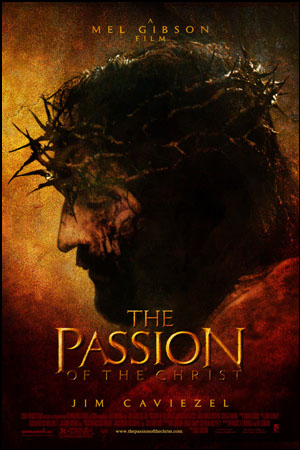
But, back to Good Friday for a moment. Do you remember the Mel Gibson movie called The Passion of the Christ? It grossed millions of dollars. Christians across the globe packed cinemas. Gibson, a conservative Catholic, brought home the sheer brutality of what Jesus went through.
Even now, 12 years later, if I meditate on the gruesome events, scenes from the movie spring to mind. The blood, the cruelty, the suffering. It worries me that too many of our Good Friday services assume a morbid overtone that isn’t healthy. I think we work too hard at blocking out the joy and promise of the resurrection. It’s too much like self-flagellation. I don’t think Jesus went through that ordeal for us to beat ourselves up about it, surely the whole point was to draw us into a joyous mystery?
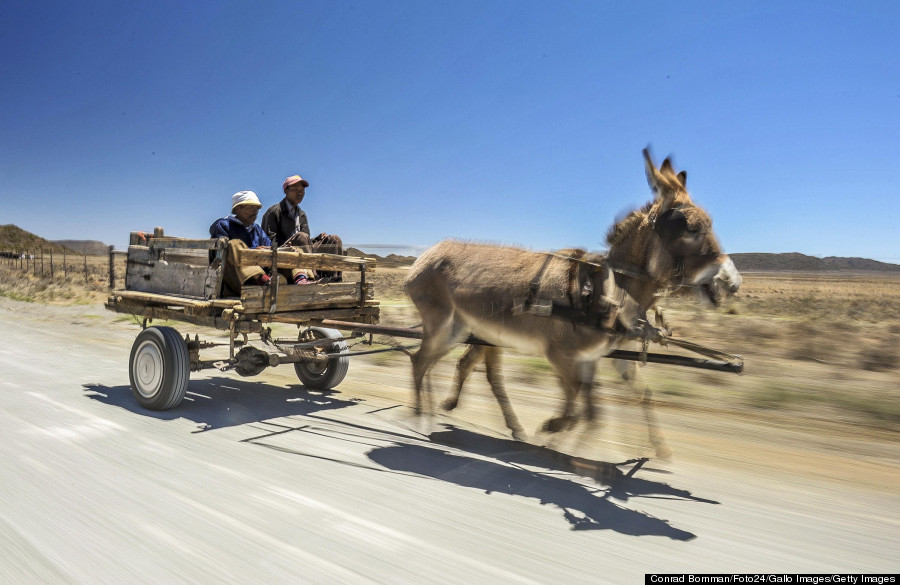
Another lasting impression I got from the movie was of the fine donkeys. (Not sure if they were Hollywood manicured and blow dried or the genuine Jerusalem breed.)
I’d always imagined Jesus riding into the Holy City on the kind of asses we see in the rural areas of South Africa. But the animals that starred in The Passion, especially around Herod’s court, were truly impressive.
I tried to source photos from Google by typing in ‘donkeys, Mel Gibson movie’ nothing came up so I tried ‘asses, Mel Gibson movie.’ Guess what it gave me? On second thoughts, let’s not go there.
February 23, 2016
INCREDIBLY HUNG UP ON SEX
Why do Christians flip at any suggestion that Jesus and Mary Magdalene may have been an item? Why did the nuns who taught me throughout my school years cultivate the myth that Jesus was an only child? Was it because, heaven forbid that Mary should have had sex with the long suffering Joseph? (I was 50 years old when I realised Jesus had siblings.)
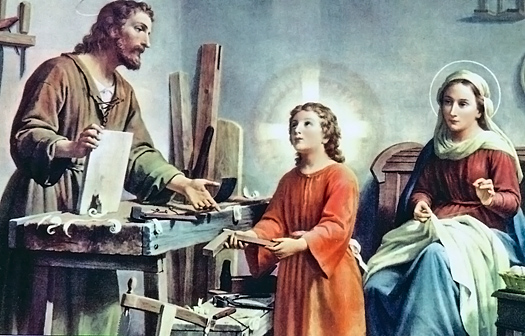 Not a sibling in sightWhat was the biggest unspoken question when Pope John Paul II’s letters, spanning 32 years, to a married woman were published? In my book, if he did have an oops with the beautiful Polish philosopher he deserved to be Ssainted for sticking with his vocation and serving a broken world.
SECOND COUSIN TO SIN
Fact is we Christians are incredibly hung up on sex, too often declaring it second cousin to another three-letter word – sin. Notably the heroines in our religious traditions are either virgins or reformed prostitutes. There is no middle ground. Too often we fail to take the measure of sexuality within the context of God’s plan for humankind.
Professor Dr Riffat Hassan, a Pakistani-American theologian, notes that human sexuality has been much debated in most religious traditions, including those of Judaism, Christianity and Islam.
 However, while the Jews and the Muslims regard being sexual as good and certainly not the opposite of spirituality, in our early tradition we even regarded sex within marriage, as a necessary evil!
 I paraphrase from Prof Hassan’s contribution to Behold, I make all things new, a book I recently co-edited.
The Qur’an encourages all Muslims who are able and willing, to marry a ‘virtuous’ or ‘chaste’ man or woman. Marriage is viewed as a sign of God’s mercy and a most solemn and serious pledge.
Traditional Judaism views marriage as a contractual bond commanded by God. A man and a woman come together and create a relationship in which God is directly involved (Deuteronomy 24:1).
GRUMPY OLD MEN
But in our early tradition celibacy was viewed as the prime Christian vocation. Paul didn’t think there was any point in saddling oneself with a spouse because he believed Jesus’ return was imminent. Although we must give grumpy Paul his due, he did say it was a personal opinion.

St Augustine didn’t make things easier. He taught that, while sex in the Garden of Eden had been good and rational, the grand Fall turned it into a mindless, bestial enjoyment. A sin that held us back from the contemplation of God.
As Karen Armstrong, eminent historian of religion, points out, his doctrine of original sin would fuse sexuality and sin indissolubly in the imagination of the Christian west. For centuries this tainted the institution of matrimony. Augustine’s teacher, St Ambrose of Milan, believed that ‘virginity is the one thing that keeps us from the beasts’. The North African theologian Tertullian equated marriage with fornication.
St Jerome wrote, ‘It is not disparaging wedlock to prefer virginity. ‘No one can compare two things if one is good and the other evil.’ (I kid you not)
IT GETS WORSE

Martin Luther, who left his monastery to marry, inherited Augustine’s bleak view of sex. ‘No matter what praise is given to marriage,’ he wrote, ‘I will not concede that it is no sin.’ (Nonetheless he and Katharina, a former nun, did produce six children.) He regarded matrimony as a ‘hospital for sick people’ which merely covered the shameful act with a veneer of respectability, so that ‘God winks at it.’
It wasn’t until the 16th Century that Frenchman, John Calvin, became the first western theologian to praise marriage unreservedly. Thereafter Christians began to speak of ‘holy matrimony.’
In short, the present enthusiasm for ‘family values’ is relatively recent. Mind you Catholic priests and gay Anglican priests are still required to be celibate. And the Catholic ban on artificial contraception implies that sex is only for making kids.
SEX CAN BE SPIRITUAL
Yet it was the Catholic Cardinal Basil Hume who wrote, ‘every experience of love gives us yet another glimpse of the meaning of love in God himself. Human love is the instrument we can use to explore the mystery of love which God is.’
Of course there is loveless sex but, let’s face it, sex between two people who do love each other can be glorious. A hymn to our Creator.
Needless to say, passion is fueled by obstacles – the basis of the world’s most famous love stories.
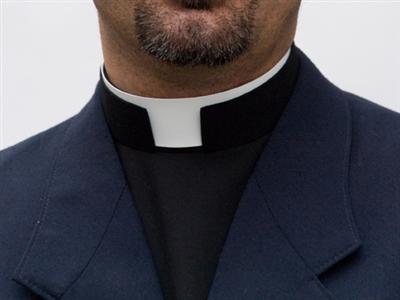
Throw a priest in the mix and you have a doozy.
MEGGIE AND FATHER RALPH
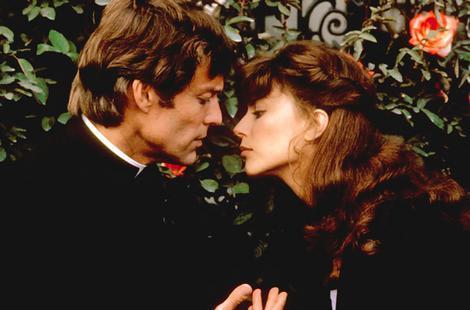

Anyone out there old enough to remember The Thorn Birds? A best-selling book in 1977 and a popular TV series starring Richard Chamberlain and Rachel Ward. The love story involving Meggie Cleary and the strikingly handsome and ambitious priest, Father Ralph de Bricassart tugged at heart string across the world.
It struck a special chord with me because a 17-year-old school friend had had an affair with an equally beautiful Catholic priest. All of 16 myself I walked her path of desolation through the minefield of nuns, parents and Church as she was labelled a temptress and he was relocated.
I’ll never forget the day he arrived to conduct a three-day silent retreat for us girls – about 150 teenagers with raging hormones and not a boy in sight. As he walked on the stage, black cassock, white dog collar, thick black hair, the collective ooh, aahs and giggles must have sent shock waves through the gaggle of nuns who had joined us for his first address.
It was group adoration at first sight.
For my friend – tall for her age, a bit overweight, introvert and battling a bad case of acne, it was the beginning of much, much more. Long story short, she arranged a private session to pour out her troubles. It was close to end of term and they continued to meet during the school holidays. Her mom, a single parent with problems of her own, thought it was for spiritual counselling.
I can’t remember how the truth eventually emerged but I will never forget the depth of my friend’s misery. How she was judged and why she attempted suicide. Nearly 20 years later we bumped into each other in a shopping mall and she shared that she still loved him. She even joked that he’d helped to clear her acne.
As a mature woman all I could think about was how he had abused a desperate young girl. Years later when I was ordained into Anglican priesthood I came to understand that it’s not all about paedophilia or abuse. Priests fall in love; ordination doesn’t stifle libido, therein lie some of history’s most famous love stories.
MODERN LOVE STORY
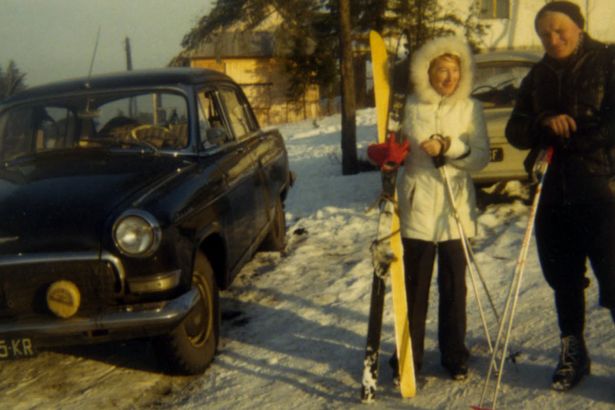
The recently published letters written by the sainted and popular Pope John Paul II to the Polish-born US philosopher Anna-Teresa Tymieniecka have added to the cache. Although her letters are still locked away, the 350 he wrote reveal real affection and I found his gift of a mini scapular to her deeply moving. A gift from his father, he’d worn it since childhood and it would have been one of very few possessions.
She was married and he had taken a vow of celibacy but that scapular, an intimate item, reflected a deep spiritual bond.
In case you are wondering, a mini-scapular consists of two postage pieces of cloth, wood or laminated paper. About the size of a postage stamp it features a prayer text or a devotional picture linked by cords and is worn with one image hanging on the chest, the other on the back.

DOING WHAT ONE OUGHT
One of Pope John Paul’s better known quotes is: Freedom consists not in doing what we like, but in having the right to do what we ought. Against the backdrop of his deep friendship with Tymieniecka it assumes huge significance.

Edward Stourton, the lead journalist behind the BBC report, was told that Tymieniecka had professed her love in a letter written from a park bench in Krakow in summer 1975.
John Paul visited her and her family the next year when he spoke at Harvard.
In a letter dated Sept. 10, 1976, he wrote: “Last year I was trying to find an answer to the words, ‘I belong to you.’ Finally, before leaving Poland, I found a way — a scapular.”
In subsequent letters, he referred repeatedly to it, saying it allowed him to “accept and feel you everywhere, in all kinds of situations, whether you are close, or far away.”
THE END
Friends of Tymieniecka told Stourton she was at the Pope’s bedside on the eve of his death at age 84 on April 2, 2005. Her husband, Hendrik S. Houthakker, a Harvard economist who served in the Nixon administration, died in 2008. She died in 2014, at 91.
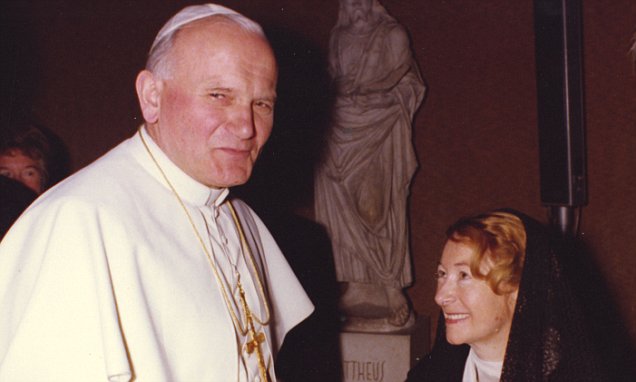
It’s a great story, possibly because it leaves so much to the imagination and it has the best of ingredients – a beautiful brainy woman and the most powerful man in the Catholic Church.
February 1, 2016
NO VOCATION UNDER THE DUVET
Writing this blog has been a wake-up call.
I have always fallen short in the retentive memory department and I really battle to recognise people until I have had a lot of interaction with them.
The former translates into cramming for school exams, struggling to remember names in my congregations, forgetting birthdays and the dates of life’s milestones. The latter is a mild form of ‘face blindness’ which is why it didn’t help when the Lesotho police once put me in the same room as a man who had held a gun to my head the night before.
 I’d helped them capture him and his accomplices but he’d changed his distinctive tee shirt and red shoes which I would have recognised like a shot. He was also too far from me in the large room to pick out his distinctive body odour which I still recall 40 years later.
 Of course the cops had to let him go.
Reams have been written about face-blindness, which in its extreme form is called prosopagnosia and is a neurological disorder. Who knows, my mother may have dropped me on my head as a baby but I’m pretty certain that both deficiencies are the outcome of being an adored only child primarily focussed on future achievement and self.
It hurts
Problem is, I hurt people, as in when I confused two women in my parish. The one had visited me in my home with her husband but I mistook another for her the following Sunday.
 It’s why when I shop in our local mall I smile and greet all shop assistants – many of my parish work there. I also do a lot of nodding and eye contact as I wander for shop to shop. If anyone half smiles at me I do a proper greeting. (Father Christmas and I should open a charm school together.)
A fuzzy past

As I blogged my journey towards Anglicanism and my rather unusual priesthood, I was forced to work out dates and remember details that were part of the blur of my past. Looking back, I am amazed that my lifelong friends have stuck with me. (Spare a thought too for the rectors I have worked under and my bishops.)
The now
The blog was also a whole lot more. It forced me to take measure of the present. One in which I, a ‘retired priest’, pick and choose my involvement with Church. I commiserate with friends who still have to attend Council meetings and synods as well as deal with pew politics. I pontificate on Facebook. Twitter, Google+ and in the blogosphere.

By the 20th post it was becoming increasingly more difficult to write. Besides being thoroughly bored with myself, the blog was a convenient distraction from the relevance of my present relationship with God and my chosen Church.
I’d forgotten the key lesson I’d learned so many years ago from the Mother’s Union at St James in Diepkloof, Soweto: There is no retirement from God or ministry. Vocational seasons may end but you can’t spend the Winter of your life in bed with a duvet over your head.

The blog posts proved a soul-jolting alert that I had allowed myself to drop into a quagmire of complacency. I’d forgotten the long hard journey I’d undergone to reach an understanding that my prime vocation lies in my talent for communication, not parish ministry.
I’d forgotten, and hadn’t even blogged about, the long battle to accept that editing the Southern Anglican magazine, serving as the archbishop’s international media person and using my writing skills was my vocation.
In recent years I’ve effectively relegated my vocation to ‘the good old days’.
As I reached blog post 32 it was like pushing a wheelbarrow full of rocks. December offered the excuse to take a break. Blog 33 wasn’t any easier, particularly within my personal anger of yet another Anglican delay regarding homosexuality. When I re-read that rant I knew it was less about my relationship with Anglicanism and a whole lot to do with spending the winter of my vocation under a duvet.
For what it’s worth, herewith the result of my reflections. If anything they prove, yet again, that there are no coincidences. They are God-incidences. And, yes, God does have a sense of humour.
The first step was to acknowledge that my vocation is not to swan in and out of my parish on high days and when the rector is on leave. I may have to use Google a whole lot more these days but I can still write.
So, if writing and editing is my ministry where do I stand?
Ever stood on a rake and had the handle swat your nose? That’s what happened to me as I reviewed 2015, which I’d come to regard as annus horribilis. I’d lost my main source of income as the publisher I worked for had his own problems. There was a mad scramble to survive financially.
True to form, I tackled the problem myself with only the occasional desperate arrow prayer. (I’m superstitious about praying for money.) Eventually things got so bad, I conceded that I could do with some Godly assistance. (A smidgeon off a grovel.)
Call it luck or a God-incidence, shortly afterwards I was commissioned by the Church of Sweden to edit a remarkable book. Called 'Behold I make all things new'. Its contributors present a compelling case for reinterpreting the Jewish, Christian and Muslim sacred texts with regard to homosexuality.
I’d lived through the reinterpretation of the Bible to prove that apartheid was not God’s will. I’d watched Anglican theologians reinterpret Scripture to allow women to be ordained into priesthood. I had seen the pain Christians inflict on God-loving homosexuals. In short, I jumped at the chance to edit that book.
Besides providing a welcome editing fee, it has proved a personal blessing and I can’t wait for it to be published. (I will keep you posted).
In January this year I finished my mystery novel. Far from holy, it is also in the publishing pipeline and is set in the Anglican Church. Its main character is Archbishop Sibonelo Shakespeare Khumalo (his mother was an English teacher) and some of you may have met him on his Facebook account.
Shakes has a lesbian daughter who expects him to live up to his promise to preside over her marriage service and a wife that reads the bible far more literally than he does. But his immediate challenge is that he needs to solve a couple of murders to stop a campaign to defrock him.
It’s meant to be a fun read. The God-incidence is that the writing of it has forced me to walk in the shoes of an Anglican archbishop who is torn between his personal life, current theology and the need to avoid schism.
Needless to say, I was so busy with both books that the ‘vocation thing’ lost priority. Besides, there are two other books in the pipeline, I manage three Facebooks accounts, two Twitter accounts, this blog, a LinkedIn account and I potter in Google+.
I’ve hit the pause button. Please pray for me as I try to discern if God has deftly recalled me into a vocation of communication or if I am just interpreting that ‘call in the night’ to suit myself.
 Meanwhile, I am encouraged by Rabbi Meir Baal Hanes who says: ‘Any interpretation of scripture which leads to hatred or disdain of other people is illegitimate.’
  In the same vein, Karen Armstrong, the moving spirit behind the worldwide launching of a Charter of Compassion in November 2009, has stated: ‘If your understanding of the divine made you kinder, more empathetic, and impelled you to express sympathy in concrete acts of loving-kindness, this was good theology. But if your notion of God made you unkind, belligerent, cruel, self-righteous, or if it led you to kill in God's name, it was bad theology.’
 January 24, 2016
'SORRY' DOESN'T CUT IT

A Facebook friend sent a 'proud to be an Anglican' photo and urged me to share it.
I couldn’t.
In the past couple of weeks I have seriously debated whether I want to be an Anglican. This is premised largely on the primates meeting that saw fit to ‘suspend’ the American church for three years BUT the trigger to my personal disgust was Archbishop Welby’s apology to the lesbian, gay, bisexual and transgender (LGBT) people for the hurt the Church has caused them over the years.
https://www.youtube.com/watch?v=DlB_tp0bu0E

I know that for many of you that apology was a gracious personal touch and incidental to Welby’s successful sidestepping of what seemed an inevitable schism. Perhaps you feel I should be more outraged by the primate’s readiness to accommodate African provinces that support the criminalisation of homosexuality? (Including the death sentence.) Or maybe I should be questioning the authority of that primates’ meeting? (Others, far better positioned than I am, are already doing so.)
I’m not gay, but..
Let me first share my context. I am neither lesbian nor bi or transgender. I don’t have gay children or grandchildren. I do have many gay friends, ironically, most met through the Church. Several are priests in leadership positions, others have powerful ministries in the NGO sector. Still others are faithful worshippers.
I have for 20 years watched them, including bishops and deans, being hurt by the Church. I have limped alongside a gay priest suffering a nervous breakdown. I have watched grown men, married and in committed service to God, weep uncontrollably because they could no longer deny their sexuality. I have tried to comfort their bewildered wives and children in the wake of an inevitable divorce.
I’ve seen a faithful rector, who’d been in a long term relationship with the knowledge of his bishop, forced to leave the Church. This because a handful of parishioners complained when his long-time partner arranged a permanent job transfer to the same small town. After a decade in a committed relationship they wanted to be closer to each other.
Others continue to live and work under the threatening shadow of the Anglican ‘don’t ask don’t tell system’.
It’s cruel and sorry doesn’t cut it.
Not Anglican enough?
I’m hardly a died-in-the-wool Anglican. From the age of 17 to my 50th birthday I didn’t attend church and only began to do so because at that milestone age it seemed a good insurance policy.
 In my maturity I was attracted to the three pillars of Anglicanism – Scripture, reason and tradition. I really liked that I could question dogma without being excommunicated. Liberation Theology was an elixir to a former political activist.
  People like Desmond Tutu made me realise that, while the church could be weird, it was often wonderful. I loved its commitment to justice and gobsmacked by a call into priesthood.
A heady era
At the time we Anglicans in Southern Africa, invariably decades ahead of the Church in England, had reinterpreted our sacred texts to permit divorcees to remarry and repentance of apartheid. Women were being priested. We’d even bought into Climate Change at a time when cynics were decrying apocalyptic forebodings as hogwash. In the context of Africa, Southern Africa lead the way in combatting the stigma surrounding HIV and AIDS.
But..

As always, there was an elephant in the room. Ours was homosexuality.
Then, as now, gay and lesbian priests were ordained but expected to remain celibate. No, these are not men and woman called by God into religious communities where celibacy is part of the package. These are folk called to a priesthood that encourages marriage because people in a stable relationship are more effective as clergy. (It’s our one-upmanship on the Catholics and, theoretically diminishes the incidence of paedophilia).
Adding insult to injury is the traditional readiness of our hetero bishops to forgive clergy who are unfaithful to their wives. At pew level we counsel hetero adulterers but still offer them Communion.
We offer the sacrament of marriage to couples who have cohabited for years. And we’ve long accepted that it’s okay for mutually accepting heterosexual partners to be far more creative and adventurous than ‘the missionary position’. So why are we so hung up on how gay people find sexual pleasure? Why do we presume to know how they do this?
By the way, those dudes in Genesis 19, who surrounded Lot’s home and threatened to have sex with the two angels in the guise of visitors, weren’t gay. They were townsmen intent on sexual aggression in a conflict situation, what the United Nations defines as a war crime. The abomination was violence.
Parenting

Why do we presume gay people can’t be good parents? Many single folk, men and women, do a great job. Surely in this day and age we know better than to equate good parenting with a particular set of genitalia?
Not sorry, repentance
If the Anglican Church is genuinely sorry for the hurt it has caused over too many decades, sorry won’t cut it. It’s repentance we need. Surely sound theology is based on more than culture and supposition?
Welby equates the church to a rowing boat going in circles. It needs to invests in an authoritative map. There was no mention of our primates consulting with experts on sexuality although they are happy to quote scientific evidence in regard to Climate Change.
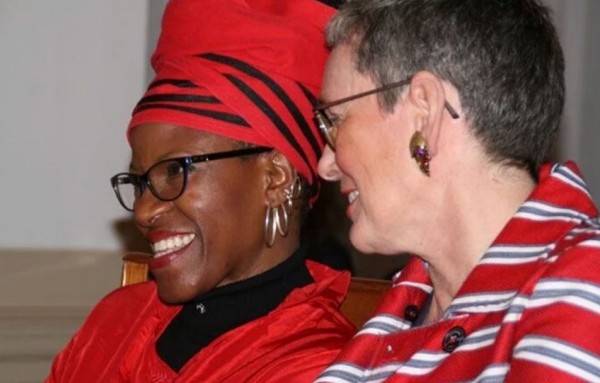
Enough said, I ache for parents like Desmond and Leah Tutu whose daughter Mpho recently married her lesbian partner. It’s not just LGBT people that are hurt by the Church. Those who love them are too.
I am proud of…
Michael Curry’s measured and loving response to the primate’s meeting.

http://ow.ly/XtR62
The American Presiding Bishop (archbishop) responded to the three-year suspension of the Episcopalian Church with amazing grace.
To quote him: "I stand before you as your brother. I stand before you as a descendant of African slaves, stolen from their native land, enslaved in a bitter bondage, and then even after emancipation, segregated and excluded in church and society. And this conjures that up again, and brings pain. The pain for many will be real. But God is greater than anything. I love Jesus and I love the church. I am a Christian in the Anglican way. And like you, as we have said in this meeting, I am committed to 'walking together' with you as fellow Primates in the Anglican family."
As Ruth Gledhill, Contributing Editor for Christian Today, commented: “The holiness in him and in his words is tangible. It is a genuine turning of the other cheek. He is not threatening to walk away; he is pledging his Church to walk together with all the Primates of the Anglican Communion.
“It is his grace in the face of terrible rejection that shines out from this whole sorry episode. This grace and sacrifice is what has allowed the Archbishop of Canterbury to preserve the unity of the Anglican Communion.”
She speaks of the terrible price exacted from The Episcopal Church in the US and from LGBT communities around the world.
I, in my anger and shame, am reminded by her of the need to focus on grace and the importance of finding a way forward.
One way could be parallel provinces of conservatives and liberals. Another possibility is a more federal model, similar to that of the Lutheran churches of northern Europe and Scandinavia.
Please God let Archbishop Welby, an expert in dispute resolution, find a way for the Communion to stop the hurt. We have to find a solution; we’ve been apologising for decades!
December 7, 2015
DON'T EXPECT STARBUCKS TO SERVE UP JESUS

When I launched this blog in April I had no idea what it would entail, emotionally or the effort it would take to feed it regularly. I don't have a retentive memory so digging into my past hasn't always been easy.
As an extrovert and ENTJ I am not naturally inclined to contemplate my navel, tending always to be planning forward. Besides, for the past year I've been writing a novel, editing and marketing a book on theology as well as earning a living as a journalist and as a PR professional.
Dolls there just hasn't been enough time in my days!
Bored with myself
Thirty-one posts later I decided to review what I have done and emerged thoroughly bored with myself. I am also aware of the temptation to linger in my Soweto period, because it was such a wonderful entry to priesthood.
As always in ministry, the season had to end.
I'd originally been designated to St James in Diepkloof for six months but managed to stretch that to two years. My ministry was focused on HIV/AIDS, my parish was vibrant, I was running a PR agency and serving as Archbishop Jongo's media liaison person. Eventually I would come to understand the gospel references to ‘the spirit being willing but the flesh being weak’.
Burnout was on the horizon.
A course for the horse

Brian Germond, My incredibly understanding bishop, sent me to St Michaels and All Angels in Weltevreden Park. Although the parish was quite a distance from my home its new rector, the Revd Dr Tim Long, had also recently emerged from a township.
He and his wife Kirstie had lived and served at St Bernard Mizeki in Atteridgeville in the Diocese of Pretoria. It wasn’t easy. For example when their geyser burst the wardens took a year to fix it – and this only after a threat to leave.
But, they like me, had fallen in love with their community.
So I had a boss who understood my need to dance in church. As importantly, he led me through my never ending journey of theological doubt and inquisitiveness.
Tim, a former teacher, had a doctorate in biblical studies and didn't bat an eyelid when I needed to question whether Jesus is God. He was erudite, non-judgmental and great at people development.
Back to school
Enrolling for an Honours degree in Systematic Theology was a natural progression and the Revd Dr Peter Wyngaard agreed to be my mentor.
My Prof at UNISA was gregarious and eccentric and encouraged my journalistic approach while others bothered about me not toeing the academic line. (Being in my mid-50s I was more concerned about enjoying the process than passing cum laude although I hated missing that by a few percentages.)
Tim was assisted by a retired priest who lived on the property, three self- supporting women priests – known as ‘Tim’s harem’ – and a self- supporting man.
There would be two key aspects to the next two years. I was involved in one of the fastest growing parishes in the diocese and I was having to cope with my lost “only white woman” status. That dreadful self centered only child syndrome that I carry inside me.
Not easy
Fortunately our ‘self-supporting’ team had all gone through the ordination process together so we were good friends. But it couldn’t have been easy for Tim.
Self supporters tend to decided when they can take leave and just how much time to allocate to the parish. The rector isn’t treated like God’s second cousin and we also usually have a fair amount of control over where we work.
(I sometimes envied the married women who could blame their husbands if they didn’t want to do something or move somewhere.)
In short, we are a mixed blessing and the result of an era in which the Church was battling with budgets and we were cheap labour. Most were women and many suffered under chauvinist rectors. Notably, we were not as subservient as young curates.
Go forth
Brian Germond often commented that Christianity is not a spectator sport. The study of Liberation Theology had convinced me that theology without praxis is just hot air. Tim Long who’d emerged from an Assembly of God background lived mission. With all this I was convinced that parishes that just tread water are little more than weekly side shows.
It is a gospel imperative that we draw community in and consistently expand our offerings.
Second class priests?
Looking back I think self-supporting ministry is incredibly difficult, largely because Church doesn’t know how to capitalise on this important human resource. Too often a self-supporting priest with invaluable business experience is under-used.
Equally sad is how many self-supporters feel like second class clergy or, at best, volunteers. Part of the problem is that deep down inside few feel like ‘real priests’ unless they are given a parish to run. They are not programmed to view their paying job as an important element of their ministry.
Seldom are they reminded that ordination doesn’t hang its hat up at the office door. We are priests 24/7 even if it isn’t all sacramental. I, for example, often found myself acting as unofficial chaplain to a newspaper group I worked for.

Through someone in that office I served a motor cycle club where the parties were wild and hearts were enormous.
One of the most difficult things about being a self-supporting are the weeks on end in which there is no break from the parish/work cycle. This has a terrible impact on families and relationships.
Integration
An interesting aspect of my move to the leafy suburbs was watching the slow integration of black families into traditionally white parishes.
St Mikes was a middle class traditionally white parish with a handful of mostly professional black parishioners. It helped that our rector had worked in a township and Tim was good at drawing black parishioners into leadership roles.
The dog thing
But they, like me, missed the traditional choruses. I also had one couple share how irritating it was at tea time when we whiteys discussed our dogs as if they were children. Another noted that we seemed to think Africa started north of the Limpopo, and excluded South Africa. I may not be guilty on the second point but mea culpa on the canine issue. I am always touched when black friends not only asked after my pets’ health but remember their names!
An easy mistake
Speaking of names. I really felt for that ANC Woman’s League representative who mixed up Oscar Pistorius’ surname with Reeva Steenkamp’s when expressing the league’s delight that he had been found guilty of murder.
Oh the high indignation and the social media tsunami among those whose grandparents used to call all male gardeners ‘John’ because black names were too difficult to learn! Besides it must have been pretty hectic outside the court as the media competed for comment.
Saved by the President
If only we South Africans could honour our Madiba legacy by giving each other a little leeway. Speaking of which, as we mark the second year since his death, I am reminded of an incident that epitomised his attitude to others.
I’d had a hectic shopping spree in Sandton City and was in danger of being late for a meeting. My car was parked in the hotel garage (Those good old Merc days when the concierge would park it for me).
 The passage to the Convention Centre, which was en-route, had been taped off for security reasons.
 Naturally I did what any woman in hurry would. I ducked under the tape and kept going. Around the next corner I bumped into President Nelson Mandela and his entourage heading for an event.
As bodyguards bristled the old man with twinkly eyes knew exactly what I’d done and came to my rescue by shaking my hand and asking “And how are you today?” The guards backed off and we all carried on.
Thank you Tata.
What would he think?
 It is two years since our national hero died and Archbishop Thabo Makgoba said at a memorial service in St George’s Cathedral this week: "As someone who prayed with Madiba, I cannot help but ask myself: If he were alive today, what would he think of South Africa?”
I’m thinking that it’s up to ordinary South Africans to sustain that legacy.
 Just as it’s up to Christians, not Starbucks or the local supermarket, to put Christ into Christmas. ***************************************
You may enjoy this video of the Nelson Mandela Commemoration service in St George's Cathedral https://youtu.be/Pg5DHxqTpFE
November 26, 2015
MAKE LOVE, NOT WAR
One of the wonderful advantages of only becoming “churchy” after the age of 50 is that it was much like travelling to a new country.

Your senses are in top gear. You get excited about stuff the locals take for granted. You ask: why? You take measure when others feel that’s unacceptable, simply because it’s never been done before. Change doesn’t bother you because you have no norm.
Preconceptions take a diveFor example, I like so many whiteys, had assumed that Anglican Church services would be far less formal in the townships than in the leafy suburbs. Wrong! In Soweto the best of British liturgy rules. Our Sunday altar party would be at least a dozen people, all superbly trained by their guilds.
Our choir was about 30 strong. Although African choruses were integral we also sang those ‘deep English’ hymns from old green hymn books, mostly passed down from parishes on the other side of town that had replaced them with Songs of Fellowship.
Another fallacy is that a black skin guarantees a wonderful singing voice. Not true. The objective is to worship God with the voice you’ve been given.
Incense was mandatory. The swinging of the thurible an art form.


A 45 minute sermon was par for the course and never warranted surreptitious glances at one’s watch.
My misconceptions included an assumption that my parishioners would be far more enthralled by a darker skinned Jesus.
When I suggested we should retouch a large mural so that Jesus would look less like an Oxford don dressed for a Nativity play and more like a darker skinned Middle Eastern Jew, the refusal was gentle but firm.
Fact is, the extra white Jesus is deeply loved. Those early missionaries who worked so hard at branding colonial standards as superior did a pretty good job. They were subsequently affirmed by apartheid, advertising, the education system, movies, nursery rhymes and even toys.
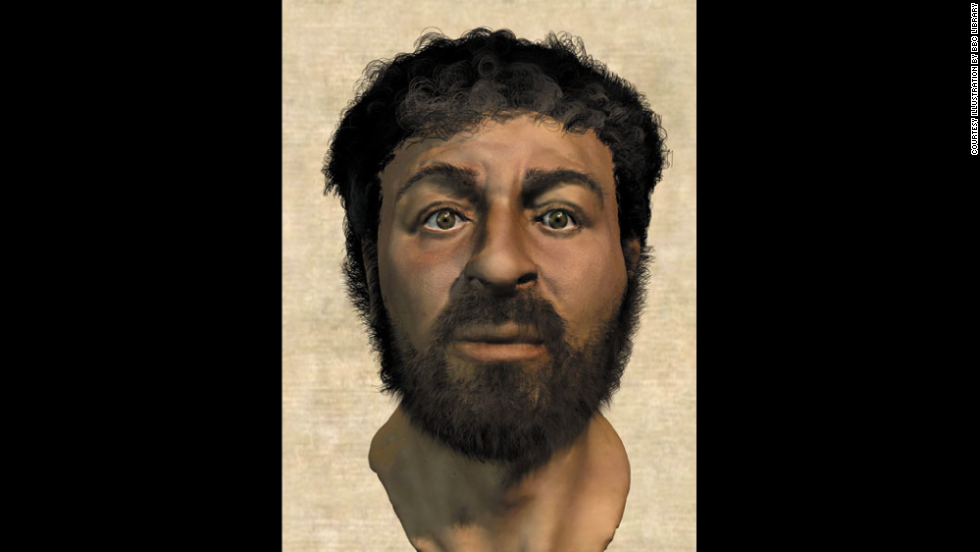 What some scientist think Jesus looked like
In a country where the colour of one’s skin is still a major differentiator a Messiah of a darker hue doesn’t stand much of a chance. Sure, some parishes have painted their statues dark brown but the pointed Caucasian nose is a dead giveaway.
The Queen is also loved
I remember taking a BBC TV crew to film a typical Anglican Eucharist in Soweto. The opening hymn (in their honour) was God Save the Queen and the choir, which was at least 60 strong, opted for a black tie and evening dress code. The film crew’s intention was to get a few good shots and then head back to the pool at their Sandton Hotel.
I had to explain that the parish and gone to extraordinary lengths for their visit, including items by the Sunday School and a major feast afterwards. Initially, they were a bit grumpy but as we headed home three hours later it was declared ‘an experience of a life time’.
Meanwhile, through Archbishop Njongo, I was working closely with Canon Ted Karpf and the Revd Jape Heath in the HIV/AIDS and gay arenas.
Confession time (once again).
Although I’d grown up in a family that regarded homosexuality as nothing to get excited about, few of my gay and lesbian friends had ever shown affection in public. There was a dinner party to which Jape arrived late. His partner had joined us earlier and they kissed each other hello. It was a Damascus moment.

As I registered my discomfort and was ashamed I suddenly understood how awful it must be for same-sex couples to have to refrain from everyday gestures of affection and the level of trust I’d been afforded in that moment.
I’d always understood how incredibly difficult it was for gay priests to honour the Church’s call for celibacy – usually from married heterosexual clergy. But never quite how this stretched to the daily fabric of their lives.
It didn’t help that HIV/AIDS was still largely viewed as God’s punishment for homosexuality and depraved promiscuity.
An inside jobIronically, the likes of Njongo, Ted and Jape were being hugely undermined by their own Church.
That brings me to another facet of Anglicanism. Some call it ‘diversity’ others speak of ‘schizophrenia’.
Somebody once told me that theologically the pulpit tends to be 19 years ahead of the pew. For me the fissures were less between clergy and laity and mostly between clergy and clergy.
People in the pews tend to take what they are dished.
The three pillars of Anglicanism, i.e. Scripture, reason and tradition are not adopted or applied in equal measure across the Church. The same priests who laugh off St Paul's injunction that women should cover their heads and are horrified by the Old Testament custom of offering one’s virgin daughter to an overnight visitor, continue to interpret other sacred texts literally.
Instead of examining our sacred texts by taking into consideration who wrote them, the circumstances as the time, the audience and the agenda they ignore reason and wield verses like weapons.
Schism. what schism?Within our global Anglican Communion we used to laugh off our differences and speak of bonds of affection. We scorned suggestions of a schism because historically the Anglican Church has shown a remarkable ability to accommodate differences.
Jongo would often urge his clergy and laity to come out of their corners of difference and find strength in diversity. He had every right to, having proved this could be done.
I’ve told how at the 1998 Lambeth Conference he’d chaired a 30 hour session, on homosexuality. Sixty bishops of diverse theologies, cultures and traditions had hammered out a proposal on the anvil of their pain. Yet the one and a half hour plenary session that followed ignored their 180 hours of input and produced ‘Resolution I.10: Human Sexuality’.
The resolution upholds faithfulness in marriage between a man and a woman in lifelong union, and believes that abstinence is right for those who are not called to marriage i.e. gay priests must be celibate. It also refuses “to advise the legitimising or blessing of same sex unions or ordaining those involved in same gender unions.”
Behold the chasmSubsequently 182 bishops would see fit to apologise to gay and lesbian Anglicans in a ‘Pastoral Statement’ but the pain and the resolution remain. That fissure would turn into a chasm.
I was working for Jongo and picked up stories of how several African bishops and their entourages had been financed by American conservatives who had set up camp just outside Canterbury. At the end of every meeting with the Archbishop they would meet to strategise for the next day.
Williams, an academic, a renowned theologian, poet, author and social activist would prove a babe in the political woods.

Despite him having persuaded a gay priest in a relationship to withdraw his controversial candidacy for Bishop of Reading, 250 bishops out of 800 boycotted Lambeth 2008 in protest against his perceived liberal sympathies.
 Photo: ReutersInstead they hived off to Jerusalem where they held a seven day Global African Future Conference (GAFCON) to address the rise of secularism, HIV/AIDS and poverty.
Notably, Welby has indefinitely postponed the 2018 Lambeth and we continue to tip-toe around that awful word “schism”. We can afford to. Each of the 38 provinces that make up the global Communion does its own thing anyway.
More recently Rowan Williams, has admitted he has "no problem" with legal parity for same-sex couples. But he feels the State rushed into "redefining" marriage without giving the Church enough time to think about it.
His biography, Rowan's Rule, by Rupert Shortt tells how the Archbishop, now a baron, was tackled by a disappointed friend at the Hay Festival: "A venerable Roman Catholic priest and scholar confronted Rowan after the ceremony for 'letting us down', by which he meant gay and pro-gay Catholics hoping for a lead from the Anglicans.
Rowan clasped his head in his hands – a characteristic gesture – in apparent acknowledgement that his questioner (also an old friend) had a point."
He would share with Shortt, "Let me just say that I think the present situation doesn't look very sustainable."
Gay marriage
On gay marriage, he said: "I have no problem with legal parity for same-sex couples. But I'm not sure it's an appropriate use of the state's power to change a social institution. It felt as though we were being bundled into redefining a word without sufficient time to reflect."
On the failure of General Synod to pass the legislation on women bishops (It has since changed its mind), Shortt writes: "Rowan fell into a pit of depression on returning to Lambeth, during which he hardly spoke to anyone but [his wife] Jane – invariably a model of calm as well as charm."
The book also tells of the massive emotional toll Williams suffered over the sexuality battle. In 2005 he had slumped against a doorway during a bishops' meeting and said to a colleague, 'I can't tell you how much I hate this job.'
Shortt’s own recent comment is, "It seems to me that the Church of England has got to the point on the formal affirmation of same-sex relationships that it had reached with remarried divorcees 40 years ago. A once rigid discipline is being gradually relaxed.
"Some traditionalists will see this as yet another example of the way Anglicans have buckled in response to changing attitudes in society at large. But that is not where Rowan Williams is coming from. The pro-gay arguments he voiced in the 1980s and 90s sprang from a belief that church teaching on sexuality might evolve for solid theological reasons, not through a desperation to keep up with the times at any cost.
In describing current teaching as very unstable, Dr Williams is echoing opinions also voiced by other retired archbishops.”
More important things
With millions of refugees needing help, terrorism and police brutality you’d think we Christians would stop worrying how people choose to express love.
This week I presided at the funeral of a parish stalwart. His last words to his children were: “Love each other, don’t fight.”
A prophet for our times.
You may find these interesting:
At COP21, the UN climate summit in Paris, Archbishop Thabo Makgoba joined other members of the international ecumenical grouping, the ACT Alliance, in handing over petitions signed by 1,7 million people, urging political leaders to take decisive action to curb global warming and deliver a strong, fair deal that helps poor countries adapt to their changing climate. In the photo with Archbishop Thabo is Cristiana Figueres, who as executive secretary of the UN Framework Convention on Climate Change is the UN's top official dealing with the issue.
https://drive.google.com/file/d/0ByhUzBudvygeU2xNYnZ3RHoyejA/view?usp=sharing
Arcbishop Thabo Makgoba's reflection on Advent : http://archbishop.anglicanchurchsa.org/2015/11/audio-archbishop-thabos-reflections-on.html
 Rupert Shortt speaking about difficulties Christians are experiencing across the world //ow.ly/V5TRd
November 14, 2015
THE CORRUPTION OF A PRIEST
I’ve skipped a week in my postings. Partly because I had to fly to Jo'burg for a church committee meeting.
Mostly because I have been doing some serious soul searching.
In my previous post, I recounted how the heady ‘New South Africa/’Rainbow Nation’ era had coincided with my ordination and a ministry in Soweto. Yet, even as I was recording those happy times, our University of Cape Town students were forcing their way into the parliamentary precinct and were being fired on by police stun guns. They and other students across the country were demonstrating against proposed fee hikes.
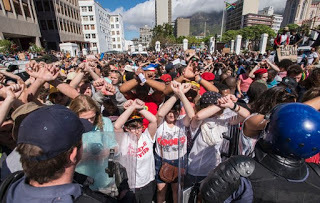
There was a point at which I wondered if I shouldn’t stop writing the blog post and hare across the mountain to join those kids. Would they accept a granny activist priest in their midst?
SA in demo mode
I couldn’t put this to the test.
Our nearest township was also on the march, protesting against the arrest of a community leader who has campaigned incessantly for better policing. Our village road to Cape Town was blocked. Just as it would be a few days later when Anglicans staged a silent vigil outside St George’s Cathedral.
South Africa is in permanent demo mode. Once again we speak of end times.
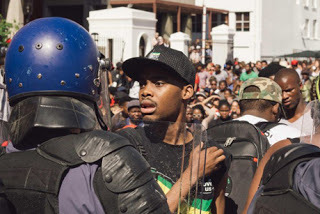 Among the non-partisan university students arrested outside Parliament was our Archbishop Thabo Makgoba’s son, Nyakallo.
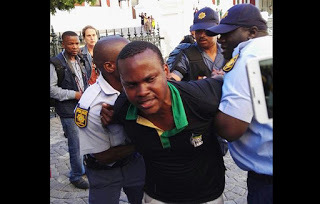
Kgotsi Chikane was another. His dad Frank is President of the Apostolic Faith Mission International and a former Director General of the presidency of South Africa.
Notably both the high profile clergy fathers support the protests and are proud of their sons.
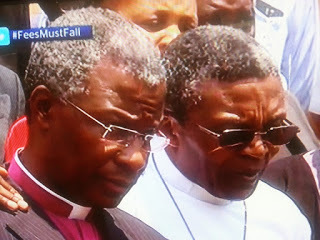 Bishop Malusi Mpumlwana, General Secretary of the South African Council of Churches (right) comforts Archbishop ThaboArchbishop Thabo commented, “As parents we find it difficult to hold back our tears. This is a hard one… they are kids. We had a wonderful conversation with him and I told him welcome to adulthood, and I have to be strong for him,”
He added, “I told him be strong, and not forget dad wants you to have a social conscience and equally to pass.”
A matter of principle
Yes, he worried about Nyakallo and the other kids being injured, “but otherwise they made a choice for a principle… this is a principled position and it is not about him or an ability to pay, it’s about the rest of people who are poor and have to pay.”
The following week-end our State President lambasted church leaders for their involvement.
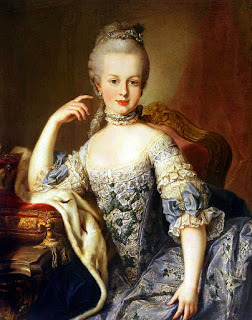
This confirmed my suspicion that some of the kids who were arrested while Parliament did a ‘Marie Antoinette’ and carried on with a budget speech had been cherry picked for arrest.
On social media the dominant hashtag was #FeesMustFall. Our State President announced that the proposed increase for 2016 would be put on hold. As the situation escalated government was promising to consider free tertiary education. The big question being how to fund this.
Corruption has left our state coffers very low. But deep down in my soul I know that this is about so much more than university fees.
Where were we?
Where were we adults as government steadily reduced its subsidies for tertiary institutions to the point that they have been forced to raise fees dramatically in order to survive? Why didn’t we protest?
Where were we when black students, two decades after Nelson Mandela was sworn in, were being made to feel like second class citizens on their campus?
Where were we when our politicians slurped at the trough of excess?
What did we, white and black parents, do to correct racist remarks at the dinner table. How many priests, pastors, imams and rabbis have preached on racism or corruption in recent years?
What have I done to stem corruption other than to post remarks on social media? In fact, to my eternal shame, I’ve contributed to our system of bribes.
My corruption
I own two semi-detached student houses and two cottages behind the University of Johannesburg and one Friday afternoon several years ago I was called by my house manager. The City Power guys were there to disconnect the electricity. I’d forgotten to pay the bill. The accounts office was closed so there was no way she could rush there and pay.
I explained to the disconnection guy that I had 17 students who needed to cook, bath, study and watch TV that week-end. That I was in Cape Town. He was sympathetic and had a solution. For R600 he would postpone the disconnection until the Monday afternoon which would give us time to sort the problem out.
It took a few minutes to call a hardware store proprietor a block or two from the student houses and he was happy to lend us R600. Problem solved. All was well.
Not quite.
No right to cast stones
I hadn’t hesitated to do what I had preached and pontificated against. I was no better than the guys who had strategically timed their visit to the student houses. Only a lousy steward would have forgotten to pay the bill. My own value system had been corrupted.
It was a humbling and deeply troubling experience.
An architect friend used to speak about God being in the detail of a design. I believe it is equally true of our lives and of our national well-being.
Stepping off my soap box
Okay, I’ll get off my soap box but I must share that I have since my previous blog post experienced real pain.
How did I allow the cocoon of self-interest to be spun? At my age do I still have time to make a difference? Or do I sit back and pray that our youth will do better than I did?
I don’t have an answer but I do know that I am increasingly proud to see the Anglican Church in Southern Africa don the mantle of prophetic ministry.
It seems that Archbishops are tempered by the challenges they face – Desmond Tutu by apartheid, Njongo Ndungane by Third World Debt and HIV/AIDS, Thabo Makgoba by our education crisis and corruption.
I am reminded of the folly of denying that Church and politics are first cousins, perhaps even more intimately related. It is when we allow politics to drive religion that the wheels fall off.
#AllLivesMatter
To quote Archbishop Thabo: “Covenant is entirely ubuntu-shaped – we find our humanity through the humanity of others – we flourish through promoting the flourishing of others. SePedi has a proverb for this: Mphiri o tee ga o lle – one bangle makes no sound. But working in harmony can create a beautiful symphony!"
#WeAllHaveAPartToPlay
The challenge is to identify our roles and to play our part.
Addressing a protesting crowd outside Parliament in September Archbishop Thabo said, "We need to stop marching against corruption. Yes, you heard me right. We need to stop debating and discussing anti-corruption. We need to start being pro-courage."
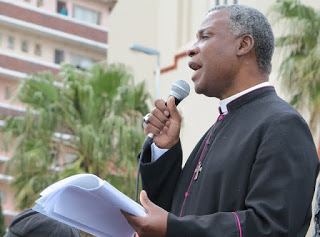
He reminded that courage is not the absence of fear but the conquering of it.
I assure myself that if we could overcome apartheid the struggle against corruption can also be won. And methinks its time to re-read some Liberation Theology.
Audio links you may find interesting:
In April Archbishop Desmond Tutu issued a stern warning to Government http://ow.ly/UCRVe
Archbishop Thabo speaks to radio host Tim Modise about courage: http://ow.ly/UCWcd
Nyakallo Makgoba speaks to AM Live about being arrested http://ow.ly/UDKcA

Mostly because I have been doing some serious soul searching.
In my previous post, I recounted how the heady ‘New South Africa/’Rainbow Nation’ era had coincided with my ordination and a ministry in Soweto. Yet, even as I was recording those happy times, our University of Cape Town students were forcing their way into the parliamentary precinct and were being fired on by police stun guns. They and other students across the country were demonstrating against proposed fee hikes.

There was a point at which I wondered if I shouldn’t stop writing the blog post and hare across the mountain to join those kids. Would they accept a granny activist priest in their midst?
SA in demo mode
I couldn’t put this to the test.
Our nearest township was also on the march, protesting against the arrest of a community leader who has campaigned incessantly for better policing. Our village road to Cape Town was blocked. Just as it would be a few days later when Anglicans staged a silent vigil outside St George’s Cathedral.
South Africa is in permanent demo mode. Once again we speak of end times.
 Among the non-partisan university students arrested outside Parliament was our Archbishop Thabo Makgoba’s son, Nyakallo.
Kgotsi Chikane was another. His dad Frank is President of the Apostolic Faith Mission International and a former Director General of the presidency of South Africa.
Notably both the high profile clergy fathers support the protests and are proud of their sons.
 Bishop Malusi Mpumlwana, General Secretary of the South African Council of Churches (right) comforts Archbishop ThaboArchbishop Thabo commented, “As parents we find it difficult to hold back our tears. This is a hard one… they are kids. We had a wonderful conversation with him and I told him welcome to adulthood, and I have to be strong for him,”
 He added, “I told him be strong, and not forget dad wants you to have a social conscience and equally to pass.”
A matter of principle
Yes, he worried about Nyakallo and the other kids being injured, “but otherwise they made a choice for a principle… this is a principled position and it is not about him or an ability to pay, it’s about the rest of people who are poor and have to pay.”
The following week-end our State President lambasted church leaders for their involvement.

This confirmed my suspicion that some of the kids who were arrested while Parliament did a ‘Marie Antoinette’ and carried on with a budget speech had been cherry picked for arrest.
On social media the dominant hashtag was #FeesMustFall. Our State President announced that the proposed increase for 2016 would be put on hold. As the situation escalated government was promising to consider free tertiary education. The big question being how to fund this.
Corruption has left our state coffers very low. But deep down in my soul I know that this is about so much more than university fees.
Where were we?
Where were we adults as government steadily reduced its subsidies for tertiary institutions to the point that they have been forced to raise fees dramatically in order to survive? Why didn’t we protest?
Where were we when black students, two decades after Nelson Mandela was sworn in, were being made to feel like second class citizens on their campus?
Where were we when our politicians slurped at the trough of excess?
What did we, white and black parents, do to correct racist remarks at the dinner table. How many priests, pastors, imams and rabbis have preached on racism or corruption in recent years?
What have I done to stem corruption other than to post remarks on social media? In fact, to my eternal shame, I’ve contributed to our system of bribes.
My corruption
I own two semi-detached student houses and two cottages behind the University of Johannesburg and one Friday afternoon several years ago I was called by my house manager. The City Power guys were there to disconnect the electricity. I’d forgotten to pay the bill. The accounts office was closed so there was no way she could rush there and pay.
I explained to the disconnection guy that I had 17 students who needed to cook, bath, study and watch TV that week-end. That I was in Cape Town. He was sympathetic and had a solution. For R600 he would postpone the disconnection until the Monday afternoon which would give us time to sort the problem out.
It took a few minutes to call a hardware store proprietor a block or two from the student houses and he was happy to lend us R600. Problem solved. All was well.
Not quite.
No right to cast stones
I hadn’t hesitated to do what I had preached and pontificated against. I was no better than the guys who had strategically timed their visit to the student houses. Only a lousy steward would have forgotten to pay the bill. My own value system had been corrupted.
It was a humbling and deeply troubling experience.
An architect friend used to speak about God being in the detail of a design. I believe it is equally true of our lives and of our national well-being.
Stepping off my soap box
Okay, I’ll get off my soap box but I must share that I have since my previous blog post experienced real pain.
How did I allow the cocoon of self-interest to be spun? At my age do I still have time to make a difference? Or do I sit back and pray that our youth will do better than I did?
I don’t have an answer but I do know that I am increasingly proud to see the Anglican Church in Southern Africa don the mantle of prophetic ministry.
It seems that Archbishops are tempered by the challenges they face – Desmond Tutu by apartheid, Njongo Ndungane by Third World Debt and HIV/AIDS, Thabo Makgoba by our education crisis and corruption.
I am reminded of the folly of denying that Church and politics are first cousins, perhaps even more intimately related. It is when we allow politics to drive religion that the wheels fall off.
#AllLivesMatter
To quote Archbishop Thabo: “Covenant is entirely ubuntu-shaped – we find our humanity through the humanity of others – we flourish through promoting the flourishing of others. SePedi has a proverb for this: Mphiri o tee ga o lle – one bangle makes no sound. But working in harmony can create a beautiful symphony!"
#WeAllHaveAPartToPlay
The challenge is to identify our roles and to play our part.
Addressing a protesting crowd outside Parliament in September Archbishop Thabo said, "We need to stop marching against corruption. Yes, you heard me right. We need to stop debating and discussing anti-corruption. We need to start being pro-courage."
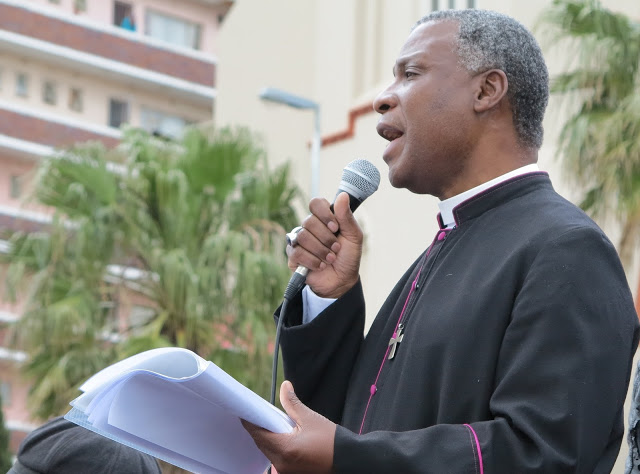
He reminded that courage is not the absence of fear but the conquering of it.
I assure myself that if we could overcome apartheid the struggle against corruption can also be won. And methinks its time to re-read some Liberation Theology.
Audio links you may find interesting:
In April Archbishop Desmond Tutu issued a stern warning to Government http://ow.ly/UCRVe
Archbishop Thabo speaks to radio host Tim Modise about courage: http://ow.ly/UCWcd
Nyakallo Makgoba speaks to AM Live about being arrested http://ow.ly/UDKcA
November 1, 2015
POLITICS, SEX AND BRIDGE
I am certain that if one grows up with Gentle Jesus on one shoulder and a cute guardian angel on the other your entry to priesthood would be quite different to mine. God was not an issue in my home so I’m not sure whether my family were agnostic or atheist. Dinner table conversations tended to revolve around politics, economics, topics such as the Kinsey Report on male sexual behaviour and my grandmother’s latest ‘brainless’ bridge bid.

The tone was often heated but never boring.
THE END IS NIGH
Perhaps the reason I’ve remained optimistic about South Africa is that I’ve been hearing predictions about my homeland’s demise ever since I was five years old. As with so many diet fads, it just hasn’t happened.
How clearly I remember my grandfather, who’d just failed to win a United Party seat in parliament, declaring in 1948 that the end was nigh. The Nationalist Party, architects of legislated apartheid, had clocked a landslide win.
My grandmother was more concerned about being raped by black men. This did require a basic sex lesson over breakfast which went largely over my five year old head. But I loved the hat pin she gave me as my very own weapon to carry in my school satchel.
A RELIGIOUS SMORGASBORD
The nuns at the nearest convent had accepted me at ‘big’ school early because I could read and knew my times tables.
 They also offered a smorgasbord of Mary, Jesus, God (in that order) and a host of useful saints. It is a credit to my doting family that there were no snorts of derision when I advised my grandmother to consult St Christopher whenever she lost her spectacles.
Ironically it was because I’d been taught by my elders ‘to think’ that by 14 I was seriously questioning their politics and my own perception of black people.
My first mentor was a ‘domestic helper’ who used to clean our bathrooms at the convent boarding school I later attended. How patiently she answered my questions about life in the township and her family.
We’d always had ‘help’ in our home but I’d never perceived them as having a life beyond my personal needs.
BEWARE GERMS
Although our domestic helpers (note the plural) lived on our property I was not allowed into their quarters. A while before I started school my mother had shown me a tiny bug in a basin and explained that germs were a thousand times smaller which was why we couldn’t see them.

And, she added, there were lots in those rooms in the backyard. So I was never to visit them and never to eat off a helper’s plate or take mealie pap out of a pot.
Oh, and it wasn’t a good idea to play touch tongues with the neighbour’s kids either – those damn germs were everywhere!
I wish I could tell you I’ll never forget the name of my first black mentor. I'm not sure if I ever knew it because the friendship ended quite soon. The Irish nun in charge of our boarding section forbade the friendship and the cleaning lady was allocated to another part of the school. As the sister explained, it was ‘a class thing’.
NO COUNTRY CLUB
Not that I had much social clout to spare.
Although my grandfather was a pharmacist, politician and intellectual he’d died when I was about six, having dropped while on a walk along the main Lyndhurst road.
We had a large property and I still remember a ‘green mamba’, what we used to call the buses for black people, slowly winding its way up our long driveway. The driver had emptied the vehicle of passengers and brought his body to us.
My father inherited the family canvas business but left most of the shares in his mother’s name so that when my mother divorced him there wasn’t a very generous maintenance settlement.
As a single-parent my mother couldn’t afford private school fees so a convent boarding school was our best option.
I’m sure many who read this will horrified by the overt racism in this tale. Fact is even if we didn’t have Country Club membership, we whites were privileged beyond sensitivity. Even the kindest, most religious folk lived in blissful ignorance of the cruelties of apartheid.
Frankly, my dears, many were of the opinion that the early missionaries hadn’t done much to civilise the locals.
Religious folk, including our Prime Minister, a pastor, were really clever at quoting the Bible to justify legislated segregation.
Most of us probably knew more about other planets than we did about the nearest township that provided our labour. Incidentally those townships were spatially designed so that if the ‘natives’ became troublesome they could be easily closed off with half a dozen tanks.
I’m not going to take you too deep down that atrocious pit. You may not be able to bear the pain.

Suffice to say that by the time I matriculated my political genes had kicked in. I was, and still am, aware that sorry doesn’t do the trick.
BYE BYE PARTY POLITICS
As I look back on my priesting I am reminded of the pain of having to disassociate myself from party politics. I cannot tell you what it meant to serve as an observer in our first democratic elections in 1994. The hopes, the dreams, the path towards a rainbow nation. Our beloved Madiba.
Looking back entering the priesthood was much like matriculating. So many years focusing on a particular goal. Then you leave school and the door opens on another chapter in your life. The expectations are invariably unrealistic and reality can be harsh.
However, my years in Soweto were a privilege.
In 2001 there was such a huge sense of new beginnings and of an emerging middle class. I’m often amused by those who are surprised by the growth of the cell phone industry in this country.
What did they expect? By far the majority of our population had not been served by Telkom, our state owned telecoms provider. There were very few landlines in Diepkloof but I remember so well my first ‘Baptism class’. Of about 15, mostly young unemployed women, by far the majority owned a cell phone.
For the first time in their lives my young parishioners were experiencing connectivity!
AN INTEREST TREADMILL
Meanwhile Archbishop Njongo was waging his battle to have third world debt cancelled. Among the many lessons I learned from him is that the debt incurred by emerging nations had already been repaid several times over.

They were on a hamster wheel fueled by interest.
More money was pouring into the global north than the other way round! Jongo’s allies included the world renowned economist Prof Jeffrey Sachs. They were both part of the Jubilee 2000 movement, named after the Biblical exhortation to observe a Jubilee year once every fifty years, in which debts would be forgiven.
As they campaigned for the UN’s Millennium Development goals and cancellation of debt for highly indebted poor countries they were joined by U2 frontman Bono. (It was never boring working for Jongo.)
A FOUNDATION
At yet another level, Jongo had Ted Karpf serving under him as an Episcopal Provincial Canon Missioner. This was on a HIV/Aids project called Isiseko Sokomeleza (Building the Foundation).
You may remember an earlier blog in which I mentioned how the then President of the United States, Bill Clinton had agreed that Ted should be seconded to Africa.
In 2001 Ted was funded by the United States Agency for International Development (USAID) to develop an international development pilot project under an initiative with the 10-million member Anglican Church of the Province of Southern Africa i.e. Jongo’s domain. (Angola, Lesotho, Mozambique, Namibia, South Africa, Swaziland and St Helena)
The project would run for nine years supported by the UK Department for International Development and the US President's PEPFAR programme. These provided more than USD10 million a year.
Two years later our ‘Big Gun’, as my son used to call Canon Ted, was also named HIV/AIDS Coordinator of the world-wide Anglican Communion. He developed faith-based responses and community planning programmes globally.
Traditionally the SA National Aids Council is chaired by our Deputy State President who at that time was Jacob Zuma.
It may surprise you that in the midst of the Mbeki denialism and Health Minister Manto Tshabalala’s much derided beetroot campaign he provided Isiseko Sokomeleza with welcome support.
This included addressing the All African Anglican Conference on HIV/AIDS in 2001.
Zuma lamented that the stigma attached to AIDS had resulted in horrific forms of discrimination and violence including rejection, ridicule and death. He spoke of the many families who had suffered untold pain and discrimination.
Jongo, who opened the conference warned the 130 delegates representing 34 countries, "We have an alarming tendency to be dazzled by statistics and a great need to put a human face to the people who are infected and affected."
It would become his mantra.
FORGET LEVITICUS
Ted was also a gay rights activist with a wonderful son and daughter from a marriage of 13 years. He'd ‘come out’ at age 40 in 1988, reporting that the role models were “few and far” between, but sexual liaisons were not. His partner for 12 years was HIV+ AIDS activist Warren W. Buckingham III.
At that conference I met another gay priest, Jape Heath. HIV positive, he was a founder of INERELA+ an international network of religious leaders, lay and ordained, women and men, living with, or personally affected, by HIV.
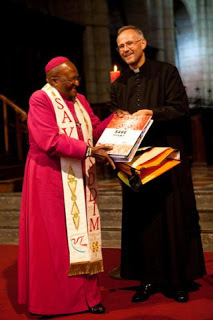 Jape with Archbishop Desmond TutuBoth men would go on to earn global reputations for their work in the HIV/AIDS arena. Both would also underscore the invaluable contribution gay priests can make and why they deserve better from their Church.
Although my lifelong best friend was lesbian, she didn’t move in church circles so I’d never understood the unholy hurt religious lesbian and gay people experience.
In short, I’d discovered another insidious form of discrimination that still runs deep.
My friendship with Ted and Jape would add another dimension to my ministry as I increasingly counselled deeply troubled Christian men and women who had opted for heterosexual marriage in a desperate attempt to deny their sexuality and to please God.
I live in the hope that if we could stop quoting the Scriptures to justify slavery and apartheid this is also possible regarding lesbian, gay, bi-sexual and trans (LGBT) rights.

The tone was often heated but never boring.
THE END IS NIGH
Perhaps the reason I’ve remained optimistic about South Africa is that I’ve been hearing predictions about my homeland’s demise ever since I was five years old. As with so many diet fads, it just hasn’t happened.
How clearly I remember my grandfather, who’d just failed to win a United Party seat in parliament, declaring in 1948 that the end was nigh. The Nationalist Party, architects of legislated apartheid, had clocked a landslide win.
My grandmother was more concerned about being raped by black men. This did require a basic sex lesson over breakfast which went largely over my five year old head. But I loved the hat pin she gave me as my very own weapon to carry in my school satchel.
A RELIGIOUS SMORGASBORD
The nuns at the nearest convent had accepted me at ‘big’ school early because I could read and knew my times tables.
 They also offered a smorgasbord of Mary, Jesus, God (in that order) and a host of useful saints. It is a credit to my doting family that there were no snorts of derision when I advised my grandmother to consult St Christopher whenever she lost her spectacles.
Ironically it was because I’d been taught by my elders ‘to think’ that by 14 I was seriously questioning their politics and my own perception of black people.
My first mentor was a ‘domestic helper’ who used to clean our bathrooms at the convent boarding school I later attended. How patiently she answered my questions about life in the township and her family.
We’d always had ‘help’ in our home but I’d never perceived them as having a life beyond my personal needs.
BEWARE GERMS
Although our domestic helpers (note the plural) lived on our property I was not allowed into their quarters. A while before I started school my mother had shown me a tiny bug in a basin and explained that germs were a thousand times smaller which was why we couldn’t see them.

And, she added, there were lots in those rooms in the backyard. So I was never to visit them and never to eat off a helper’s plate or take mealie pap out of a pot.
Oh, and it wasn’t a good idea to play touch tongues with the neighbour’s kids either – those damn germs were everywhere!
I wish I could tell you I’ll never forget the name of my first black mentor. I'm not sure if I ever knew it because the friendship ended quite soon. The Irish nun in charge of our boarding section forbade the friendship and the cleaning lady was allocated to another part of the school. As the sister explained, it was ‘a class thing’.
NO COUNTRY CLUB
Not that I had much social clout to spare.
Although my grandfather was a pharmacist, politician and intellectual he’d died when I was about six, having dropped while on a walk along the main Lyndhurst road.
We had a large property and I still remember a ‘green mamba’, what we used to call the buses for black people, slowly winding its way up our long driveway. The driver had emptied the vehicle of passengers and brought his body to us.
My father inherited the family canvas business but left most of the shares in his mother’s name so that when my mother divorced him there wasn’t a very generous maintenance settlement.
As a single-parent my mother couldn’t afford private school fees so a convent boarding school was our best option.

I’m sure many who read this will horrified by the overt racism in this tale. Fact is even if we didn’t have Country Club membership, we whites were privileged beyond sensitivity. Even the kindest, most religious folk lived in blissful ignorance of the cruelties of apartheid.
Frankly, my dears, many were of the opinion that the early missionaries hadn’t done much to civilise the locals.

Religious folk, including our Prime Minister, a pastor, were really clever at quoting the Bible to justify legislated segregation.
Most of us probably knew more about other planets than we did about the nearest township that provided our labour. Incidentally those townships were spatially designed so that if the ‘natives’ became troublesome they could be easily closed off with half a dozen tanks.
I’m not going to take you too deep down that atrocious pit. You may not be able to bear the pain.

Suffice to say that by the time I matriculated my political genes had kicked in. I was, and still am, aware that sorry doesn’t do the trick.
BYE BYE PARTY POLITICS
As I look back on my priesting I am reminded of the pain of having to disassociate myself from party politics. I cannot tell you what it meant to serve as an observer in our first democratic elections in 1994. The hopes, the dreams, the path towards a rainbow nation. Our beloved Madiba.
Looking back entering the priesthood was much like matriculating. So many years focusing on a particular goal. Then you leave school and the door opens on another chapter in your life. The expectations are invariably unrealistic and reality can be harsh.
However, my years in Soweto were a privilege.
In 2001 there was such a huge sense of new beginnings and of an emerging middle class. I’m often amused by those who are surprised by the growth of the cell phone industry in this country.
What did they expect? By far the majority of our population had not been served by Telkom, our state owned telecoms provider. There were very few landlines in Diepkloof but I remember so well my first ‘Baptism class’. Of about 15, mostly young unemployed women, by far the majority owned a cell phone.
For the first time in their lives my young parishioners were experiencing connectivity!
AN INTEREST TREADMILL
Meanwhile Archbishop Njongo was waging his battle to have third world debt cancelled. Among the many lessons I learned from him is that the debt incurred by emerging nations had already been repaid several times over.

They were on a hamster wheel fueled by interest.
More money was pouring into the global north than the other way round! Jongo’s allies included the world renowned economist Prof Jeffrey Sachs. They were both part of the Jubilee 2000 movement, named after the Biblical exhortation to observe a Jubilee year once every fifty years, in which debts would be forgiven.
As they campaigned for the UN’s Millennium Development goals and cancellation of debt for highly indebted poor countries they were joined by U2 frontman Bono. (It was never boring working for Jongo.)
A FOUNDATION
At yet another level, Jongo had Ted Karpf serving under him as an Episcopal Provincial Canon Missioner. This was on a HIV/Aids project called Isiseko Sokomeleza (Building the Foundation).
You may remember an earlier blog in which I mentioned how the then President of the United States, Bill Clinton had agreed that Ted should be seconded to Africa.
In 2001 Ted was funded by the United States Agency for International Development (USAID) to develop an international development pilot project under an initiative with the 10-million member Anglican Church of the Province of Southern Africa i.e. Jongo’s domain. (Angola, Lesotho, Mozambique, Namibia, South Africa, Swaziland and St Helena)
The project would run for nine years supported by the UK Department for International Development and the US President's PEPFAR programme. These provided more than USD10 million a year.
Two years later our ‘Big Gun’, as my son used to call Canon Ted, was also named HIV/AIDS Coordinator of the world-wide Anglican Communion. He developed faith-based responses and community planning programmes globally.

Traditionally the SA National Aids Council is chaired by our Deputy State President who at that time was Jacob Zuma.
It may surprise you that in the midst of the Mbeki denialism and Health Minister Manto Tshabalala’s much derided beetroot campaign he provided Isiseko Sokomeleza with welcome support.
This included addressing the All African Anglican Conference on HIV/AIDS in 2001.
Zuma lamented that the stigma attached to AIDS had resulted in horrific forms of discrimination and violence including rejection, ridicule and death. He spoke of the many families who had suffered untold pain and discrimination.
Jongo, who opened the conference warned the 130 delegates representing 34 countries, "We have an alarming tendency to be dazzled by statistics and a great need to put a human face to the people who are infected and affected."
It would become his mantra.
FORGET LEVITICUS
Ted was also a gay rights activist with a wonderful son and daughter from a marriage of 13 years. He'd ‘come out’ at age 40 in 1988, reporting that the role models were “few and far” between, but sexual liaisons were not. His partner for 12 years was HIV+ AIDS activist Warren W. Buckingham III.
At that conference I met another gay priest, Jape Heath. HIV positive, he was a founder of INERELA+ an international network of religious leaders, lay and ordained, women and men, living with, or personally affected, by HIV.
 Jape with Archbishop Desmond TutuBoth men would go on to earn global reputations for their work in the HIV/AIDS arena. Both would also underscore the invaluable contribution gay priests can make and why they deserve better from their Church.
Although my lifelong best friend was lesbian, she didn’t move in church circles so I’d never understood the unholy hurt religious lesbian and gay people experience.
In short, I’d discovered another insidious form of discrimination that still runs deep.
My friendship with Ted and Jape would add another dimension to my ministry as I increasingly counselled deeply troubled Christian men and women who had opted for heterosexual marriage in a desperate attempt to deny their sexuality and to please God.
I live in the hope that if we could stop quoting the Scriptures to justify slavery and apartheid this is also possible regarding lesbian, gay, bi-sexual and trans (LGBT) rights.