Michaela Bush's Blog, page 62
February 21, 2018
Resource: "Successful Self-Publishing" by Joanna Penn
Today is a quick post, but I wanted to share a great resource I recently discovered: "Successful Self-Publishing" by Joanna Penn, an indie author who has written several books to aid beginner indie authors and is a fiction author as well. HERE is the link for her book. It is fantastic for the beginner author who isn't sure whether self-publishing is the right route for them, or the author who needs to expand their income sources. It also involves some of the more legal sides of publishing and websites for inexpensive stock photos for covers, even links for design crews suitable for the beginner, budget-strapped writer. I found this book to be very insightful for publishing resources, both in print and digitally. She also includes information in her book about the writing resources she includes on her websites and a class she's develped specifically for indie authors. For $7, this book is an extremely helpful guide for beginner authors who are seeking self-publishing tips. I have several pages in my planner filled with only some of the resources she provided!
What are some helpful writing books you've read lately? Do you plan to check out any of Joanna Penn's books? Who's planning on taking the plunge into self-publishing this year? Sound off in the comments below!
What are some helpful writing books you've read lately? Do you plan to check out any of Joanna Penn's books? Who's planning on taking the plunge into self-publishing this year? Sound off in the comments below!


February 14, 2018
Romance to Make Your Readers Swoon
Happy Valentine's day, all! In the spirit of the holiday, today we're going to explore some great resources and tips for writing a good romance. Whether it's a sci-fi, crime drama, or plain romance novel, many books have a romantic relationship of some sort (whether it's the main focus or a side story is dependent on the plot), and each work differently. However, there are a few do's and don'ts that can be all-encompassing.
First and foremost, let it be believable from the perspective of their pasts. For example, someone who has dealt with a lot of loss, is very pessimistic, or simply doesn't care to be in a relationship won't fall head over heels immediately. Perhaps the love interest is persistent and "wears them down" so to say, but your book shouldn't be a Disney movie in that they take one look at each other and fall in love immediately (unless your book is a certain style of fairytale or one for young children, in which a plot must be accelerated to maintain interest). Taking Katniss Everdeen from The Hunger Games as an example: she struggled with her emotions and swayed between what she knew or thought was safe and what she felt (logic versus the limbic system, or emotions). It was logical that she would struggle with the desire to be in a relationship given the circumstances in which she lived. Even Han and Leia from the Star Wars franchise can be examined: Leia, a very headstrong princess, takes awhile to come around to the idea of loving the equally headstrong Han Solo, but she does (eventually, and even then, their relationship is somewhat tempestuous).
Secondly, passion doesn't necessarily mean hotheaded. I was reading Live Fearless by Sadie Robertson last night (which is an excellent book, just not about writing) and she wrote, to paraphrase, that relational passion doesn't mean drama, but rather intensity. This is an interesting tip not only for personal relationships, but in writing as well. What does this mean, exactly? It means that your characters aren't honestly passionate about each other if they're constantly fighting or "on again, off again." Intensity means that regardless of what happens to them, they still feel the same way about one another; that nothing will come between them in their love. This doesn't mean that your characters shouldn't fight/argue, either. That's just another facet of life, therefore a realistic addition. Just don't overdo it for the sake of drama and the "will they, won't they" storyline.
Third, romance isn't necessarily only the gushy, feel-good stuff. While we may enjoy reading it, the characters and their natural behavior should be more important than squeezing in as much fluff as possible. Do your characters call each other to make sure the other got home okay? What about a text asking how their day has been going? Grabbing a coffee and dropping it off at the office for them when they're having a bad day? This stuff may seen everyday, but it's the core of keeping romance around. You don't have to write speeches proclaiming love to be romantic, but rather, simply show that the characters care for each other and want to look out for one another. Note how it makes the character(s) feel when this occurs. That's an excellent way to integrate romance into everyday life or as a subplot without being overbearing. Any woman (most likely your target audience, especially for a romance novel) who's been in a relationship will probably swoon at the male character who just made dinner (no candlesticks and slow music, just dinner) for his love interest or even just cleaned up the kitchen after the fact.
Finally, make sure the characters mesh well. While you can have opposites attract as well as birds of the same feathers flocking together, make sure there are things in common. Personalities that work well together, the English and the mathematics nerds (creative versus logical but complement each other), the grad student and the woman who dropped out of high school to start her own business--so on. Characters who wouldn't realistically work together well in real life won't be very believable for the readers, and therefore the storyline will have much less of an impact.
Finally, check out some of these great websites for more tips on writing romance:
How to Write a Heart-Stopping Kissing Scene, from The Author Studio
How to Write Non-Cheesy Romance, from The Lexicon Writing Blog
How to Build a Romance Thread in Your Story, "Tangled" Style, from Go Teen Writers
How to Plot a Romance Novel, from Now Novel
What are your favorite romance stories, and how were they presented from a storyteller's perspective?
First and foremost, let it be believable from the perspective of their pasts. For example, someone who has dealt with a lot of loss, is very pessimistic, or simply doesn't care to be in a relationship won't fall head over heels immediately. Perhaps the love interest is persistent and "wears them down" so to say, but your book shouldn't be a Disney movie in that they take one look at each other and fall in love immediately (unless your book is a certain style of fairytale or one for young children, in which a plot must be accelerated to maintain interest). Taking Katniss Everdeen from The Hunger Games as an example: she struggled with her emotions and swayed between what she knew or thought was safe and what she felt (logic versus the limbic system, or emotions). It was logical that she would struggle with the desire to be in a relationship given the circumstances in which she lived. Even Han and Leia from the Star Wars franchise can be examined: Leia, a very headstrong princess, takes awhile to come around to the idea of loving the equally headstrong Han Solo, but she does (eventually, and even then, their relationship is somewhat tempestuous).
Secondly, passion doesn't necessarily mean hotheaded. I was reading Live Fearless by Sadie Robertson last night (which is an excellent book, just not about writing) and she wrote, to paraphrase, that relational passion doesn't mean drama, but rather intensity. This is an interesting tip not only for personal relationships, but in writing as well. What does this mean, exactly? It means that your characters aren't honestly passionate about each other if they're constantly fighting or "on again, off again." Intensity means that regardless of what happens to them, they still feel the same way about one another; that nothing will come between them in their love. This doesn't mean that your characters shouldn't fight/argue, either. That's just another facet of life, therefore a realistic addition. Just don't overdo it for the sake of drama and the "will they, won't they" storyline.
Third, romance isn't necessarily only the gushy, feel-good stuff. While we may enjoy reading it, the characters and their natural behavior should be more important than squeezing in as much fluff as possible. Do your characters call each other to make sure the other got home okay? What about a text asking how their day has been going? Grabbing a coffee and dropping it off at the office for them when they're having a bad day? This stuff may seen everyday, but it's the core of keeping romance around. You don't have to write speeches proclaiming love to be romantic, but rather, simply show that the characters care for each other and want to look out for one another. Note how it makes the character(s) feel when this occurs. That's an excellent way to integrate romance into everyday life or as a subplot without being overbearing. Any woman (most likely your target audience, especially for a romance novel) who's been in a relationship will probably swoon at the male character who just made dinner (no candlesticks and slow music, just dinner) for his love interest or even just cleaned up the kitchen after the fact.
Finally, make sure the characters mesh well. While you can have opposites attract as well as birds of the same feathers flocking together, make sure there are things in common. Personalities that work well together, the English and the mathematics nerds (creative versus logical but complement each other), the grad student and the woman who dropped out of high school to start her own business--so on. Characters who wouldn't realistically work together well in real life won't be very believable for the readers, and therefore the storyline will have much less of an impact.
Finally, check out some of these great websites for more tips on writing romance:
How to Write a Heart-Stopping Kissing Scene, from The Author Studio
How to Write Non-Cheesy Romance, from The Lexicon Writing Blog
How to Build a Romance Thread in Your Story, "Tangled" Style, from Go Teen Writers
How to Plot a Romance Novel, from Now Novel
What are your favorite romance stories, and how were they presented from a storyteller's perspective?
February 7, 2018
Touching an Audience
It's what every writer aspires to do at least once in their life: touch their audience's lives in a way that makes their work unforgettable, to make the audience reconsider their outlook on life or make them want to call up that old family member or friend just to say 'sorry.' And, you know, it's always a plus if your reader ends up crying, too, be it from happiness or sorrow. While the example we'll be using isn't a book, it was still written artfully and is captivating its audience every week. (And they're probably the reason why tissues are always sold out in stores...)
 (Credit: NBC) Ah, yes...This is Us. If you're a fan of the show, you probably know exactly how heartwrenching it is, and why there's just this inexplicable fascination with it. What makes This is Us such a good story?
First of all, the story feels real. While it is indeed fictitious, it shows an average family struggling with problems that are anything but average, but also not uncommon in reality. The Pearson family faces addiction, miscarriage, adoption, health problems and psychological issues connected with them, the fear of failure, anxiety--while this sounds like an absolutely disturbing list, these are things that a lot of people struggle with in real life. The siblings, even though one is adopted, struggle with familial relations. They deal with losses that are masterfully written to strike its audience to the core, along with the aftermath that follows.
As many fans know, Jack Pearson (the father in the story) dies when his children are 17 years old. Understandably, these characters still have psychological scars twenty years later. One refuses to accept his father's death, presumably because he wasn't there when the accident occurred. Another blames herself for it because she goaded the actions that caused her father's death. The last one is laden with responsibility and feels as though he can't slow down to heal or "wallow in the pain of loss," as his character puts it. He chooses to celebrate his father's life, but is simply putting up barriers so he can't do anything but. These are reactions that are very logical and important to note for writers. While everyone deals with grief differently, it's fairly universal that you can't heal totally from devastation. You may get better, but it will never go away or be forgotten. It will always be in the back of your mind, and some may even be affected for the rest of their lives because of it. When writing character arcs, keep this in mind. Characters are oftentimes defined by their past, and the future realistically cannot erase that in totality. It goes without saying that audiences love characters who are flawed because they are real. Perfection does not exist in humanity, even if it is nice to think about. Characters who are "perfect" or "flawless" are often viewed as almost robotic or too "good" and the audience can't see them or connect to them.
This is Us also has a very unique method of storytelling. Each episode, the plot rotates between an event that happened x amount of years in the past that is relevant to the present, then the current day. In the upcoming episodes, it appears as if they will be paralleling the future to the present and past as well. This is an interesting approach because it proves that the little things in life are what truly add up in the end. Little things like spats or family days out to the beach seem to trump events such as graduation. The audience is continually reminded that what they do on a daily basis counts, and it perhaps also reminds the audience of their own mortality and the importance of going out and doing what they aspire to do before time runs out. This is a crucial storytelling key as well, because it connects deeply to the audience. It's almost like a punch to the chest: what I am doing now will matter someday. How I'm treating someone might hang on to them for the rest of their lives. Who will I be remembered as? This element is also present in wildly popular books: stories were told of Bilbo Baggins' journey as well as the Fellowship, for example, and it is a somewhat common theme in the Star Wars franchise too. Again, it brings sheer humanness and reality into play. While it's difficult to use this exact model of storytelling in a novel, similar affects can be achieved through tasteful flashbacks (which are what these essentially are in the TV show).
Finally, the characters react to stress in realistic ways. When your character is faced with a war, will they bravely storm out onto the battlefield without a second thought? When your character is faced with life and death or the decision to pull the plug on their loved one, will they have their mind made up? How do they react to the news? A good way to put it: how would you react? When put under extreme stress, oftentimes our reactions are pretty illogical because we're riding a tide of emotions. The characters on This is Us do things such as laugh, freeze up, say things they don't mean, question or reject reality, stress eat, cry, start screaming at some poor sap who just happened to be walking by, talk to mentors or hole themselves up somewhere and refuse to talk at all. These reactions are something probably all of us have done at some point in our lives as well, and that's what gets the waterworks going: we (the audience) know how they feel in that exact moment, and it's terrible.
Finally, audiences connect with This is Us because, while they have their crazy lives and ambitions, when it comes down to it, family is at the core of everything. We identify with this because, regardless of our upbringing or who was in our lives, we all have people who at one point were "family" to us and shaped us. Don't let your storytelling get wrapped up in the grandeur of an insurmountable, 'save the world' scheme. Balance it out with just the right amount of family, too. Why is your character willing to sacrifice their life? Is there someone they're trying to protect, and who are they to the character? Who shaped your character? Remember, while your story focuses on a certain point in time in which your character is a specific age, they were born to someone and had a childhood of some sort like anyone else. (Unless your plot is really sci-fi, which is okay too--explain it!) How were your characters shaped by family? Remember that family doesn't necessarily mean 'blood relative' either. People love a story that winds down to family. Look at TV shows such as this one, NCIS, even Last Man Standing and Chuck: they were all very popular in their time and they all have family at the absolute core of their stories.
There are several facets to explore with this hit drama and how its storytelling techniques are important and relevant to writers. When you're writing, take into consideration some of these methods and how it might help you improve your story--you never know, you might have the plot for the next New York Times Bestseller in your mind!
 (Credit: NBC) Ah, yes...This is Us. If you're a fan of the show, you probably know exactly how heartwrenching it is, and why there's just this inexplicable fascination with it. What makes This is Us such a good story?
First of all, the story feels real. While it is indeed fictitious, it shows an average family struggling with problems that are anything but average, but also not uncommon in reality. The Pearson family faces addiction, miscarriage, adoption, health problems and psychological issues connected with them, the fear of failure, anxiety--while this sounds like an absolutely disturbing list, these are things that a lot of people struggle with in real life. The siblings, even though one is adopted, struggle with familial relations. They deal with losses that are masterfully written to strike its audience to the core, along with the aftermath that follows.
As many fans know, Jack Pearson (the father in the story) dies when his children are 17 years old. Understandably, these characters still have psychological scars twenty years later. One refuses to accept his father's death, presumably because he wasn't there when the accident occurred. Another blames herself for it because she goaded the actions that caused her father's death. The last one is laden with responsibility and feels as though he can't slow down to heal or "wallow in the pain of loss," as his character puts it. He chooses to celebrate his father's life, but is simply putting up barriers so he can't do anything but. These are reactions that are very logical and important to note for writers. While everyone deals with grief differently, it's fairly universal that you can't heal totally from devastation. You may get better, but it will never go away or be forgotten. It will always be in the back of your mind, and some may even be affected for the rest of their lives because of it. When writing character arcs, keep this in mind. Characters are oftentimes defined by their past, and the future realistically cannot erase that in totality. It goes without saying that audiences love characters who are flawed because they are real. Perfection does not exist in humanity, even if it is nice to think about. Characters who are "perfect" or "flawless" are often viewed as almost robotic or too "good" and the audience can't see them or connect to them.
This is Us also has a very unique method of storytelling. Each episode, the plot rotates between an event that happened x amount of years in the past that is relevant to the present, then the current day. In the upcoming episodes, it appears as if they will be paralleling the future to the present and past as well. This is an interesting approach because it proves that the little things in life are what truly add up in the end. Little things like spats or family days out to the beach seem to trump events such as graduation. The audience is continually reminded that what they do on a daily basis counts, and it perhaps also reminds the audience of their own mortality and the importance of going out and doing what they aspire to do before time runs out. This is a crucial storytelling key as well, because it connects deeply to the audience. It's almost like a punch to the chest: what I am doing now will matter someday. How I'm treating someone might hang on to them for the rest of their lives. Who will I be remembered as? This element is also present in wildly popular books: stories were told of Bilbo Baggins' journey as well as the Fellowship, for example, and it is a somewhat common theme in the Star Wars franchise too. Again, it brings sheer humanness and reality into play. While it's difficult to use this exact model of storytelling in a novel, similar affects can be achieved through tasteful flashbacks (which are what these essentially are in the TV show).
Finally, the characters react to stress in realistic ways. When your character is faced with a war, will they bravely storm out onto the battlefield without a second thought? When your character is faced with life and death or the decision to pull the plug on their loved one, will they have their mind made up? How do they react to the news? A good way to put it: how would you react? When put under extreme stress, oftentimes our reactions are pretty illogical because we're riding a tide of emotions. The characters on This is Us do things such as laugh, freeze up, say things they don't mean, question or reject reality, stress eat, cry, start screaming at some poor sap who just happened to be walking by, talk to mentors or hole themselves up somewhere and refuse to talk at all. These reactions are something probably all of us have done at some point in our lives as well, and that's what gets the waterworks going: we (the audience) know how they feel in that exact moment, and it's terrible.
Finally, audiences connect with This is Us because, while they have their crazy lives and ambitions, when it comes down to it, family is at the core of everything. We identify with this because, regardless of our upbringing or who was in our lives, we all have people who at one point were "family" to us and shaped us. Don't let your storytelling get wrapped up in the grandeur of an insurmountable, 'save the world' scheme. Balance it out with just the right amount of family, too. Why is your character willing to sacrifice their life? Is there someone they're trying to protect, and who are they to the character? Who shaped your character? Remember, while your story focuses on a certain point in time in which your character is a specific age, they were born to someone and had a childhood of some sort like anyone else. (Unless your plot is really sci-fi, which is okay too--explain it!) How were your characters shaped by family? Remember that family doesn't necessarily mean 'blood relative' either. People love a story that winds down to family. Look at TV shows such as this one, NCIS, even Last Man Standing and Chuck: they were all very popular in their time and they all have family at the absolute core of their stories.
There are several facets to explore with this hit drama and how its storytelling techniques are important and relevant to writers. When you're writing, take into consideration some of these methods and how it might help you improve your story--you never know, you might have the plot for the next New York Times Bestseller in your mind!
February 3, 2018
The Seconds Count
Hey, everyone! I know it's been an incredibly long time since I last posted, but college got in the way. Yuck. Anyway, I have plans for being a lot more active on the blog this year; not a resolution per se but a plan. For the first post this year, we'll be talking about laying the foundation for a second book (and subsequent books) in a series you may be writing.
When you're planning on releasing multiple books, it's important to decide how many books you plan to release, or at least how long you believe it will take to dissect the story you're unraveling. As a general rule, novels are roughly 70-90,000 words long, with young adult literature being roughly 50-70k in length. Novellas are about 17,500-40,000 words and novelettes are between 7500 and 17,500 words. If you wrote your first book in the series as a novella or novelette, it is best to continue the series as such for continuity: not only is it important for your writing, but also for your marketing and publishing! Always try to ensure that your future books in a series have the same print size, fonts/font size, and length as well as covers that correspond well, in whichever way seems best to you. Additionally, don't begin writing a YA series and then turn it into an adult fiction series, or vice versa.
If you already have one book published and have enough material leftover for another book (or two...or fifteen?) you should consider how you want to lay the material out for the rest of the series as a whole. Really work out the entire plot of your story and think about how much you're going to space the events out across books. Ideally, you'll want to end each book with a cliffhanger that will make readers itch for the next book to be released. In the mystery genre, it can mean your characters being faced with a terrifying situation or even imminent death. In the romance genre, it can mean your characters are either closer to their goals or are being pushed away from their goals. Keep in mind that the term 'cliffhanger' doesn't have to mean your characters' lives are in danger, but rather that they are kept from something, namely their end goal.
While this planning may take some time and tweaking throughout the planning stage and even while writing, it's definitely worth it in the long run. Once you've decided how much of the story you have to tell yet, it's a good idea to write out basic plots for each book so you don't forget your plans. You can get into more detailed plotting as you prepare for each book.
Perhaps the hardest thing to do when writing a series is deciding how to start the second book in such a way that readers are impacted as much as they were during the ending of the first. This moment is equally as crucial and will either make or break a reader's interest in your book. As with any book, you want to write an attention-snatching hook in the first page. Find one that is very relevant for your series and one that fits with the characters, their current situation, and the tone you're setting for the series.
Don't write something overly dramatic simply to catch attention. If it seems forced, don't leave it in. If it excites you to write about it, and you're really passionate about your opening lines, then they're probably the best for your situation. Passion is one of the most important parts of writing--if you're passionate about it, your readers will be too.
Do make sure your story doesn't start at a slow pace, necessarily. And if you're hung up on your first lines, don't worry about it yet. Start from the end of the book and work your way up to the beginning of it; by then you'll have a solid idea of what you're going to put your characters through later on! While it may seem counter-intuitive to write the ending first, there are several good reasons why.
Ending first: Chances are, you're pumped about what you'll be doing later on in the book as opposed to the beginning, where you're setting up for all of these events. Writing the ending first allows you to get the creative juices flowing, and you can use this final piece to compare the first ending to in order to see how much character development has to occur between the two. You may also think of different ways your story will go as you're writing the ending, as well as lines you might include for foreshadowing. Ultimately, writing the ending first gives you the flexibility that perhaps isn't always presented from writing the beginning first.
On top of the nitty-gritty writing you'll be doing, it's also important to have fun with it. Make Pinterest boards for your books for visual aids, playlists relevant to your characters, and even write down quotes that seem relevant to your characters or your plot. These will not only help you keep track of your goals, but also give you inspiration by bringing the characters outside of your head through external references. On top of that, write one-shots about your characters to delve deeper into their backstory; give them meaning outside of the specific work you're planning, then allow readers just a tiny window into their backstory so they seem more realistic. The better you understand your characters, the better your readers will understand them too. While you don't have to publish your one-shots, keeping them around as references for characters may be helpful to your planning as well.
Your best bet for writing a series, however, is to see how the experts have done it. Read a lot of series and standalone books so you can decipher the important structural differences between books of a series and standalone ones. Think about why these books are successful or impact you as a reader, and try to incorporate those values into your own writing. Conversely, if you find a book that isn't particularly fantastic, consider why it wasn't successful. Reading is as important to a writer as writing is; through reading we can understand our audience and how to improve our own writing, whether we've been doing it for years or days.
What are some of the ways you prepare for writing the future books in a series?
When you're planning on releasing multiple books, it's important to decide how many books you plan to release, or at least how long you believe it will take to dissect the story you're unraveling. As a general rule, novels are roughly 70-90,000 words long, with young adult literature being roughly 50-70k in length. Novellas are about 17,500-40,000 words and novelettes are between 7500 and 17,500 words. If you wrote your first book in the series as a novella or novelette, it is best to continue the series as such for continuity: not only is it important for your writing, but also for your marketing and publishing! Always try to ensure that your future books in a series have the same print size, fonts/font size, and length as well as covers that correspond well, in whichever way seems best to you. Additionally, don't begin writing a YA series and then turn it into an adult fiction series, or vice versa.
If you already have one book published and have enough material leftover for another book (or two...or fifteen?) you should consider how you want to lay the material out for the rest of the series as a whole. Really work out the entire plot of your story and think about how much you're going to space the events out across books. Ideally, you'll want to end each book with a cliffhanger that will make readers itch for the next book to be released. In the mystery genre, it can mean your characters being faced with a terrifying situation or even imminent death. In the romance genre, it can mean your characters are either closer to their goals or are being pushed away from their goals. Keep in mind that the term 'cliffhanger' doesn't have to mean your characters' lives are in danger, but rather that they are kept from something, namely their end goal.
While this planning may take some time and tweaking throughout the planning stage and even while writing, it's definitely worth it in the long run. Once you've decided how much of the story you have to tell yet, it's a good idea to write out basic plots for each book so you don't forget your plans. You can get into more detailed plotting as you prepare for each book.
Perhaps the hardest thing to do when writing a series is deciding how to start the second book in such a way that readers are impacted as much as they were during the ending of the first. This moment is equally as crucial and will either make or break a reader's interest in your book. As with any book, you want to write an attention-snatching hook in the first page. Find one that is very relevant for your series and one that fits with the characters, their current situation, and the tone you're setting for the series.
Don't write something overly dramatic simply to catch attention. If it seems forced, don't leave it in. If it excites you to write about it, and you're really passionate about your opening lines, then they're probably the best for your situation. Passion is one of the most important parts of writing--if you're passionate about it, your readers will be too.
Do make sure your story doesn't start at a slow pace, necessarily. And if you're hung up on your first lines, don't worry about it yet. Start from the end of the book and work your way up to the beginning of it; by then you'll have a solid idea of what you're going to put your characters through later on! While it may seem counter-intuitive to write the ending first, there are several good reasons why.
Ending first: Chances are, you're pumped about what you'll be doing later on in the book as opposed to the beginning, where you're setting up for all of these events. Writing the ending first allows you to get the creative juices flowing, and you can use this final piece to compare the first ending to in order to see how much character development has to occur between the two. You may also think of different ways your story will go as you're writing the ending, as well as lines you might include for foreshadowing. Ultimately, writing the ending first gives you the flexibility that perhaps isn't always presented from writing the beginning first.
On top of the nitty-gritty writing you'll be doing, it's also important to have fun with it. Make Pinterest boards for your books for visual aids, playlists relevant to your characters, and even write down quotes that seem relevant to your characters or your plot. These will not only help you keep track of your goals, but also give you inspiration by bringing the characters outside of your head through external references. On top of that, write one-shots about your characters to delve deeper into their backstory; give them meaning outside of the specific work you're planning, then allow readers just a tiny window into their backstory so they seem more realistic. The better you understand your characters, the better your readers will understand them too. While you don't have to publish your one-shots, keeping them around as references for characters may be helpful to your planning as well.
Your best bet for writing a series, however, is to see how the experts have done it. Read a lot of series and standalone books so you can decipher the important structural differences between books of a series and standalone ones. Think about why these books are successful or impact you as a reader, and try to incorporate those values into your own writing. Conversely, if you find a book that isn't particularly fantastic, consider why it wasn't successful. Reading is as important to a writer as writing is; through reading we can understand our audience and how to improve our own writing, whether we've been doing it for years or days.
What are some of the ways you prepare for writing the future books in a series?
August 24, 2017
"Strong Feminist" versus "Strong Feminine" Archetypes
You've probably heard a lot of buzz about "strong female roles" in the media--books, movies, etc. Many groups want to see a woman who can bash bad guys' heads in and then polish their manicured nails straight afterward. However, the first time a female character bashes a bad guy's head in, polishes off her nails, and then falls in love with the somewhat hapless young man helping her, the character is written off as a failure.
For example: the new Wonder Woman film from DC Comics. Gal Gadot's character in this film was the first female-centric superhero solo film to be released. It was a major box office success--one of the few this year--and actually included an island containing a female-only band of warriors and goddesses, Amazonians. However, the film was condemned to be a major flop...because Diana, Gadot's character, fell for a man she met during her journeys (trying to keep it spoiler-free here). Everyone was pumped for Wonder Woman, and it was held to the high standard of being the first major feminist film out there....until people flocked to the theaters to see it. The reason many groups started to condemn the movie was because of Diana's love interest, who nobody had known about until the film was released. Then they started to bash the actress herself for various and extremely odd reasons barely worth mentioning. (Gal Gadot, being a wonder woman herself, filmed while heavily pregnant and was also a 2-year member of the Israeli army prior to the film.)
Another example involves the extremely successful Hunger Games series by Suzanne Collins. The books were popular, but the fandom blew up into practically being a household name when the film adaptations were made. During the media campaigns for this film, an interesting shift occurred: during the first two films, Hunger Games and Catching Fire, the media jumped on the love triangle in the books: whether Katniss Everdeen chooses her friend Gale Hawthorne or her ally and protector, Peeta Mellark, to be her boyfriend. ("Team Gale or Team Peeta?" was a question everyone obsessed over.) But during Mockingjay 1 & 2's releases, the media started proclaiming Katniss as a wonderful feminist icon and promptly condemned the character as a disappointment when she, inevitably (anyone read the books?) ends up with Peeta. It's as if the drama of a relationship, the power of a girl having multiple options for relationships, pumps everyone up--but don't you dare take that jump into being into a relationship: you're immediately weak.
Let's also look at some timeless examples:
Anne of Green Gables, by L.M. Montgomery, and the subsequent Kevin Sullivan film adaptations, also show a fearless young woman who gets herself into a lot of scrapes but figured her way out of them. She was the top of her class, competing with the boys, and went to college in a time when a lot of people still thought girls shouldn't educate themselves more than necessary. She also, obviously, marries Gilbert Blythe after years of bantering. In the Kevin Sullivan adaptations, Anne also braves the dangers of WWI battlefields to find her husband after he's presumed MIA. Her story is timeless, classic, and even has TV and movie adaptations being created today.
Even the story of Dorothy in The Wonderful Wizard of Oz displays similar features. We have a little girl who gets thrown into an entirely new world, and while she can sit down and have a good cry about it, she also dusts herself off and gets back home to Kansas even when the odds seem clearly stacked against her. Baum faced a lot of criticism for his decision to write such a "strong female character" in the early 1900s, but her story remains today.
Other examples of timeless, female-led stories include Jane Eyre, Pride and Prejudice, etc. You've probably read at least one for school. Why? Did you notice any similarities between the old and the new? Of course, while the new characters may lead a rebellion or save the world, they're in separate genres than the older novels are. Aside from that, we have the bare bones: a girl who can hold her own and still be girly.
Why the dissonance? If we still hail these classic books and movies as masterpieces still to this day, but the exact same character archetype is sorely disapproved of in today's new books and movies--what's the difference?
This is what I call the struggle between a "Strong Feminist" versus a "Strong Feminine" role. In this new era of requesting "equality", it appears as though feminist groups and the media actually want male traits and roles imposed onto a female character/body. Conversely, a "Strong Feminine" role displays a gal who can get the job done and still be a lady about it--and it seems to be pretty successful.
When we are writing stories for the future generations, now, we must ask--should we write what is popular today, the "Strong Feminist" role, or should we write among giants and be the pioneers of the 21st century's "Strong Feminine" classics?
Lastly, something for you to chew on: what makes the "Strong Feminine" role so successful in comparison to the "Strong Feminist" role? Why is falling in love deemed a fatal flaw, a massive failure, when you've saved the world? Lastly, have you any examples of either archetype to add to the conversation? Sound off in the comments!
For example: the new Wonder Woman film from DC Comics. Gal Gadot's character in this film was the first female-centric superhero solo film to be released. It was a major box office success--one of the few this year--and actually included an island containing a female-only band of warriors and goddesses, Amazonians. However, the film was condemned to be a major flop...because Diana, Gadot's character, fell for a man she met during her journeys (trying to keep it spoiler-free here). Everyone was pumped for Wonder Woman, and it was held to the high standard of being the first major feminist film out there....until people flocked to the theaters to see it. The reason many groups started to condemn the movie was because of Diana's love interest, who nobody had known about until the film was released. Then they started to bash the actress herself for various and extremely odd reasons barely worth mentioning. (Gal Gadot, being a wonder woman herself, filmed while heavily pregnant and was also a 2-year member of the Israeli army prior to the film.)
Another example involves the extremely successful Hunger Games series by Suzanne Collins. The books were popular, but the fandom blew up into practically being a household name when the film adaptations were made. During the media campaigns for this film, an interesting shift occurred: during the first two films, Hunger Games and Catching Fire, the media jumped on the love triangle in the books: whether Katniss Everdeen chooses her friend Gale Hawthorne or her ally and protector, Peeta Mellark, to be her boyfriend. ("Team Gale or Team Peeta?" was a question everyone obsessed over.) But during Mockingjay 1 & 2's releases, the media started proclaiming Katniss as a wonderful feminist icon and promptly condemned the character as a disappointment when she, inevitably (anyone read the books?) ends up with Peeta. It's as if the drama of a relationship, the power of a girl having multiple options for relationships, pumps everyone up--but don't you dare take that jump into being into a relationship: you're immediately weak.
Let's also look at some timeless examples:
Anne of Green Gables, by L.M. Montgomery, and the subsequent Kevin Sullivan film adaptations, also show a fearless young woman who gets herself into a lot of scrapes but figured her way out of them. She was the top of her class, competing with the boys, and went to college in a time when a lot of people still thought girls shouldn't educate themselves more than necessary. She also, obviously, marries Gilbert Blythe after years of bantering. In the Kevin Sullivan adaptations, Anne also braves the dangers of WWI battlefields to find her husband after he's presumed MIA. Her story is timeless, classic, and even has TV and movie adaptations being created today.
Even the story of Dorothy in The Wonderful Wizard of Oz displays similar features. We have a little girl who gets thrown into an entirely new world, and while she can sit down and have a good cry about it, she also dusts herself off and gets back home to Kansas even when the odds seem clearly stacked against her. Baum faced a lot of criticism for his decision to write such a "strong female character" in the early 1900s, but her story remains today.
Other examples of timeless, female-led stories include Jane Eyre, Pride and Prejudice, etc. You've probably read at least one for school. Why? Did you notice any similarities between the old and the new? Of course, while the new characters may lead a rebellion or save the world, they're in separate genres than the older novels are. Aside from that, we have the bare bones: a girl who can hold her own and still be girly.
Why the dissonance? If we still hail these classic books and movies as masterpieces still to this day, but the exact same character archetype is sorely disapproved of in today's new books and movies--what's the difference?
This is what I call the struggle between a "Strong Feminist" versus a "Strong Feminine" role. In this new era of requesting "equality", it appears as though feminist groups and the media actually want male traits and roles imposed onto a female character/body. Conversely, a "Strong Feminine" role displays a gal who can get the job done and still be a lady about it--and it seems to be pretty successful.
When we are writing stories for the future generations, now, we must ask--should we write what is popular today, the "Strong Feminist" role, or should we write among giants and be the pioneers of the 21st century's "Strong Feminine" classics?
Lastly, something for you to chew on: what makes the "Strong Feminine" role so successful in comparison to the "Strong Feminist" role? Why is falling in love deemed a fatal flaw, a massive failure, when you've saved the world? Lastly, have you any examples of either archetype to add to the conversation? Sound off in the comments!
May 31, 2017
Welcoming "Everything I Never Said"
Hey everyone!
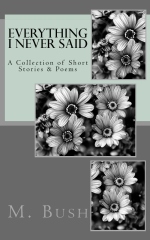
While I was trying to ignore my classes being a diligent student, I also published a book of short stories and poetry back in March. It's titled Everything I Never Said (misleading, I know. Definitely not everything I haven't said thus far in my life. When will I publish Everything I Never Said Vol. 2? I don't even know the answer to that one!) You can click HERE to check it out on Amazon. It includes works that I've published through Tobeco, my college's literary arts journal, pieces I've written for college, and some that I just wrote for the fun of it. If you've already gotten this book (I call it my "short story of short stories" because it stands around 100 pages long), can you tell which pieces I wrote for college--which were edited with the guidelines my professors provided--and which ones I wrote out of boredom? This is something I'm legitimately curious about.
"From writing about love to the depths of despair, this collection of stories, poems, and flash fiction covers it all. Open up the pages and find pieces of truth, love, beauty, and life's treacherous journeys folded inside." (Quoth the back cover.)
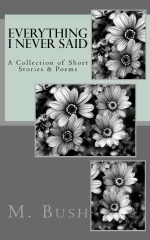
It's available on Amazon for $4.99 (paperback) or $3.99 (Kindle).
That being said, I'm hopefully going to be back with some more posts pretty soon--talk to you all then!
While I was trying to ignore my classes being a diligent student, I also published a book of short stories and poetry back in March. It's titled Everything I Never Said (misleading, I know. Definitely not everything I haven't said thus far in my life. When will I publish Everything I Never Said Vol. 2? I don't even know the answer to that one!) You can click HERE to check it out on Amazon. It includes works that I've published through Tobeco, my college's literary arts journal, pieces I've written for college, and some that I just wrote for the fun of it. If you've already gotten this book (I call it my "short story of short stories" because it stands around 100 pages long), can you tell which pieces I wrote for college--which were edited with the guidelines my professors provided--and which ones I wrote out of boredom? This is something I'm legitimately curious about.
"From writing about love to the depths of despair, this collection of stories, poems, and flash fiction covers it all. Open up the pages and find pieces of truth, love, beauty, and life's treacherous journeys folded inside." (Quoth the back cover.)
It's available on Amazon for $4.99 (paperback) or $3.99 (Kindle).
That being said, I'm hopefully going to be back with some more posts pretty soon--talk to you all then!
May 22, 2017
I'm Back & A Great Resource For Writers: Indie Hoot
Hey everyone!
(Credit: NBC "Chuck")
Yeah, yeah, I know. It's been since November (oops). Grade point averages don't improve themselves, though, and my classes over the spring semester were insane. Kind of like having quintuplets that are all very needy. Anyway--you don't want to hear about my plights as a college student, right? Well, I'm back and I have a lot of posts that I plan to share with you, including but not limited to:
A post introducing the book I managed to self-publish during the spring semesterHow to write on a schedule (I'm one to talk, I know...)How to write the second book in a seriesLists of publishers, magazines, and journals that accept open submissions
There will be plenty of time to go over these posts once I've, well...written them. Most importantly, though, I want to give a shout-out to a friend of mine who started his own podcast vlog earlier this year. He's a very talented young writer, and has been interviewing successful writers for tips on writing and marketing. His website can be found HERE, and it's called Indie Hoot. His podcast fills a need for indie artists out there because it covers the marketing aspect as well. A lot of websites, blogs, and vlogs (like my blog--whoops!) avoid talking about marketing your work because it's so complicated and, honestly, scary. However, Indie Hoot's got you covered with great Q&As and tips from authors, artists, and entrepreneurs who have been there, done that --successfully. We can all learn more about successful sales, right? No harm in that. I've learned a ton from his podcasts thus far, and really hope you check it out as well!
(Credit: NBC "Chuck")
Yeah, yeah, I know. It's been since November (oops). Grade point averages don't improve themselves, though, and my classes over the spring semester were insane. Kind of like having quintuplets that are all very needy. Anyway--you don't want to hear about my plights as a college student, right? Well, I'm back and I have a lot of posts that I plan to share with you, including but not limited to:
A post introducing the book I managed to self-publish during the spring semesterHow to write on a schedule (I'm one to talk, I know...)How to write the second book in a seriesLists of publishers, magazines, and journals that accept open submissions
There will be plenty of time to go over these posts once I've, well...written them. Most importantly, though, I want to give a shout-out to a friend of mine who started his own podcast vlog earlier this year. He's a very talented young writer, and has been interviewing successful writers for tips on writing and marketing. His website can be found HERE, and it's called Indie Hoot. His podcast fills a need for indie artists out there because it covers the marketing aspect as well. A lot of websites, blogs, and vlogs (like my blog--whoops!) avoid talking about marketing your work because it's so complicated and, honestly, scary. However, Indie Hoot's got you covered with great Q&As and tips from authors, artists, and entrepreneurs who have been there, done that --successfully. We can all learn more about successful sales, right? No harm in that. I've learned a ton from his podcasts thus far, and really hope you check it out as well!
November 2, 2016
Short Stories
Hey everyone! Since I'm currently taking a college course about short stories, I figured that I would write a quick post about how to write short stories. In some aspects, they're much harder to write than novels because you have to write an entire, purposeful, event in under 10,000 words. And provide enough information to create an enjoyable and understandable story for your reader!
First of all, instead of having a major plot figured out for your story, you first have to decide the moral or message that you want to convey. This is the single most important thing to consider when you're writing a short story: it's not going to make much sense if you don't have a reason to write your story. "A Cask of Amontillado" by Edgar Allan Poe could convey the idea that gluttony or greed is a deadly sin. "The Tell-Tale Heart" discusses guilty consciences. My short story for my college's arts journal, "The Runner", conveyed the importance of thinking instead of reacting.
Additionally, you have to decide how many characters you need to create your short story. Most short stories only have a couple of major characters (1-4) but if more are necessary, obviously, they can be added in. And like any other work, you'll have to figure out the point of view that you want to work from.
You will also have to consider other literary elements, such as the tone, style, characterization, etc. -- just like in a normal piece of writing. However, the most important part of creating a short story is probably your effectiveness in conveying the message(s) you want to convey...in a very limited word count. It might take you several editing cycles before your story reaches its best form. You don't need nearly as much descriptions in a short story (depending, of course, on what kind of a story you're presenting). However, you have to be a lot more concise with your deeper meanings and keep the story moving at a constant pace. In short stories, you have very little room for anything that does not tie into the story.
If you find yourself struggling to write a short story within the accurate constraints, I recommend taking a very objective look at your story, setting aside any personal motive for writing the story, and seeing exactly what's causing the "hangup", kind of like taking a machine apart to see which component doesn't work. Ensure that the details, while necessary in any story, don't drown out the important parts of the story, but the ending or the driving points aren't forced. Finally, the majority of techniques that you can use for short story formation are up to you and the story you want to present. However, these stories take a lot of fine-tuning in order to complete.
First of all, instead of having a major plot figured out for your story, you first have to decide the moral or message that you want to convey. This is the single most important thing to consider when you're writing a short story: it's not going to make much sense if you don't have a reason to write your story. "A Cask of Amontillado" by Edgar Allan Poe could convey the idea that gluttony or greed is a deadly sin. "The Tell-Tale Heart" discusses guilty consciences. My short story for my college's arts journal, "The Runner", conveyed the importance of thinking instead of reacting.
Additionally, you have to decide how many characters you need to create your short story. Most short stories only have a couple of major characters (1-4) but if more are necessary, obviously, they can be added in. And like any other work, you'll have to figure out the point of view that you want to work from.
You will also have to consider other literary elements, such as the tone, style, characterization, etc. -- just like in a normal piece of writing. However, the most important part of creating a short story is probably your effectiveness in conveying the message(s) you want to convey...in a very limited word count. It might take you several editing cycles before your story reaches its best form. You don't need nearly as much descriptions in a short story (depending, of course, on what kind of a story you're presenting). However, you have to be a lot more concise with your deeper meanings and keep the story moving at a constant pace. In short stories, you have very little room for anything that does not tie into the story.
If you find yourself struggling to write a short story within the accurate constraints, I recommend taking a very objective look at your story, setting aside any personal motive for writing the story, and seeing exactly what's causing the "hangup", kind of like taking a machine apart to see which component doesn't work. Ensure that the details, while necessary in any story, don't drown out the important parts of the story, but the ending or the driving points aren't forced. Finally, the majority of techniques that you can use for short story formation are up to you and the story you want to present. However, these stories take a lot of fine-tuning in order to complete.
October 5, 2016
Writing A Novel: Conclusions
Hey everyone! Long time no see! As promised in the last post, "Body Building", I have compiled a quick guide to writing a conclusion for your story; this is also the finale of the "Writing A Novel" blog-series. Stay tuned for more posts, however! Okay - let's get down to business.
So you have your story written all out, and you've just hit the tipping point called the "climax" of a story plot line. How do you write out the "falling action" of your story without, essentially, rushing or ending the story quickly or unresolved?
First of all, this is the point where it wouldn't hurt to go through the majority of your story or your plot information and make sure that you plan to tie up all remaining loose ends - that is, unless you're planning on creating a series. Therefore, I'm going to make separate sections for standalone books (and novel finales) and for novels in series.
Standalone / Last Book
For the end of your story, you need to make sure that you tie everything up in a box. But notice - I didn't say you couldn't make your box 'neat' or 'tidy'. It depends on your story, and it should be fairly clear to you how it should end by the way you wrote your story and genre. All stories shouldn't, or at the very least don't have to, have happy endings. Quite frankly, it would have been out of place if the story wasn't a very happy story, such as a horror/crime/etc. novel. Therefore, ensure that you have all your loose ends tied up and make sure that you don't forget any of the points you planned to make originally, back at the beginning of this story or series. However, you have to tie in these final points eloquently and not so obviously that it seems "hokey" or "sappy" to the reader. Imagine what kind of conclusions you enjoy in the stories you read, and consider these points as well if you need inspiration. However, getting to the conclusion, you shouldn't rush it. Just because the main action is over doesn't mean that the life of the story - or the lives of the characters - is over. Written well, this story will reside in the minds of every reader for a long time, playing and replaying that conclusion that resonated, that hurt, that made them weep. If it reads right, and doesn't leave out any crucial information, then it should be okay.
Books In A SeriesFor books that are part of a series - or perhaps for short stories and other works that are meant to be ambiguous - the conclusions don't have to be quite as articulate. However, they still have to be good. You want your reader to continue reading your stories or enjoy the finish, don't you?
For such endings, the complete falling action is a little trickier, especially for an action series but for any genre. You want to resolve any outstanding issues in this book that will not remain (or at least, your readers don't think those issues will come back around...) but you shouldn't necessarily resolve everything, especially if the same characters or main problem will be coming back later in the next book or the rest of the series. Therefore, you should start and end your book with a hook. Make the reader want to read the beginning of the book, and wait anxiously for the next book in the series once they hit the cliffhanger.
Mostly, conclusions are extremely dependent on the story that you've written. Once you get a well-written one - and it may take a few or even several rewrites or alternate scenes - you'll know when you get a conclusion that works well. After you have your story pieced together, it's a good idea to read your work through at least once as a finished manuscript. It doesn't hurt to re-read multiple times, however, and leave your story for at least a week between readings so that you can read with a fresh mind and, perhaps, notice some things you never noticed before: pieces that need reworked, a better way to phrase something, etc.
I hope that this blog series has at least shed a small amount of light or assisted you in your writing processes! If you have any questions or ideas for future posts, please feel free to drop a few lines and let me know.
So you have your story written all out, and you've just hit the tipping point called the "climax" of a story plot line. How do you write out the "falling action" of your story without, essentially, rushing or ending the story quickly or unresolved?
First of all, this is the point where it wouldn't hurt to go through the majority of your story or your plot information and make sure that you plan to tie up all remaining loose ends - that is, unless you're planning on creating a series. Therefore, I'm going to make separate sections for standalone books (and novel finales) and for novels in series.
Standalone / Last Book
For the end of your story, you need to make sure that you tie everything up in a box. But notice - I didn't say you couldn't make your box 'neat' or 'tidy'. It depends on your story, and it should be fairly clear to you how it should end by the way you wrote your story and genre. All stories shouldn't, or at the very least don't have to, have happy endings. Quite frankly, it would have been out of place if the story wasn't a very happy story, such as a horror/crime/etc. novel. Therefore, ensure that you have all your loose ends tied up and make sure that you don't forget any of the points you planned to make originally, back at the beginning of this story or series. However, you have to tie in these final points eloquently and not so obviously that it seems "hokey" or "sappy" to the reader. Imagine what kind of conclusions you enjoy in the stories you read, and consider these points as well if you need inspiration. However, getting to the conclusion, you shouldn't rush it. Just because the main action is over doesn't mean that the life of the story - or the lives of the characters - is over. Written well, this story will reside in the minds of every reader for a long time, playing and replaying that conclusion that resonated, that hurt, that made them weep. If it reads right, and doesn't leave out any crucial information, then it should be okay.
Books In A SeriesFor books that are part of a series - or perhaps for short stories and other works that are meant to be ambiguous - the conclusions don't have to be quite as articulate. However, they still have to be good. You want your reader to continue reading your stories or enjoy the finish, don't you?
For such endings, the complete falling action is a little trickier, especially for an action series but for any genre. You want to resolve any outstanding issues in this book that will not remain (or at least, your readers don't think those issues will come back around...) but you shouldn't necessarily resolve everything, especially if the same characters or main problem will be coming back later in the next book or the rest of the series. Therefore, you should start and end your book with a hook. Make the reader want to read the beginning of the book, and wait anxiously for the next book in the series once they hit the cliffhanger.
Mostly, conclusions are extremely dependent on the story that you've written. Once you get a well-written one - and it may take a few or even several rewrites or alternate scenes - you'll know when you get a conclusion that works well. After you have your story pieced together, it's a good idea to read your work through at least once as a finished manuscript. It doesn't hurt to re-read multiple times, however, and leave your story for at least a week between readings so that you can read with a fresh mind and, perhaps, notice some things you never noticed before: pieces that need reworked, a better way to phrase something, etc.
I hope that this blog series has at least shed a small amount of light or assisted you in your writing processes! If you have any questions or ideas for future posts, please feel free to drop a few lines and let me know.
September 13, 2016
Writing A Novel: Body Building
Hello everyone! I'm back with the next installment of "Writing A Novel". Writers are bodybuilders, you know that? Yes, I suppose you could be extremely interested in the physical bodybuilding process and be a writer too, but I'm thinking about building the body of your novel. If you want to catch up with the last post, First Chapters, just click the link!
You're probably really mad at me for making that pun about bodybuilding, right? But no -- really, think about it. Do you want a book that's "ripped" (metaphorically) and with a lot of strength? Or, to be blunt, do you want a book that's just kind of oozing in every which way?
In a more literal sense, do you want a book that is shaped excellently and that drives home strong points or do you want a book that meanders about in mediocre pointlessness before finally calling it quits?
Writing the body of a book covers a lot of terrain. A lot of elements of story writing come into play here, but I'm not going to cover any of them: it'd take too long. CLICK HERE for an excellent article from the Roane State Community College. You could also look up articles from Purdue OWL's website -- the entirety of which is amazing.
Once you have a solid understanding of all the elements of story writing and how each play a crucial part in the story, you're pretty much all set. However, you can still very easily fall into a rut with your story. How?
First of all, details. Either you don't have enough of them or you have too much detail. It's hard to find a perfect balance, and this is why it's important to find several people to read your work or at least parts of it in order to give you feedback on that. Too much detail will bore someone (unless you're like me and love detail), and too little detail will cause a reader to become confused and thus detached from the story. There is no exact equation to finding out how many details you should have in your story, because I think it varies quite a bit on what kind of story you're writing. However, you should try to include...
Appearance: occasionally. Anytime a new character is introduced, their appearance should be brought up within an appropriate time-frame. However, appearances shouldn't be brought up excessively. The mind's eye can figure it out on its own!Clothing: When necessary. How a person dresses is actually, to some extent, a mark of their personality. However, again, their clothing choices should not be outlined for every single day. Setting: Obviously, anywhere significant that a character travels or stays at should be described. Think about the buildings, if they're modern or dilapidated; the conditions of the roadways, the people that live there, etc. Get creative! Personality and emotions: Again, as needed. Any medical or mental condition that a character might have, you can describe through symptoms and will need to in order to make the book more realistic. Personality can be described as needed -- but not "She's an INFJ Gemini" for a description. Actually explain little things, like how she laughs over stupid jokes or how he can't stand people who chew loudly. Quirks, more like. Emotions should be explained but not to the extent that the reader isn't forced to feel the same thing or relate to the character. Any creation of your own imagination: This is where you should give your license to detail a go. Since readers have likely never seen anything of the sort, you need to inform them on how the creation works, what the uncharted land looks like, how the government operates, etc. Another important factor that affects your body is the continuity. You absolutely cannot do something dramatic just for the sake of a plot twist without prior planning; otherwise it's just a half-baked plot period. If the idea comes to you later, okay -- go back and make the necessary changes. You must also keep track of your details in order for nothing to change. I once read a book series (it was 24 books long and one of my absolute favorites through my childhood, and remains to hold a fond spot in my heart even though I'm technically too old to read them) in which a minor character's name changed halfway through the series. You don't want to do that in your book or book series. To combat this, do frequent re-reads of your work (although you'll hate your work by the time you're finished, guaranteed) or create charts of details or other info you may need in order to keep track of everything. Keep this on paper so that, in the event that your computer crashes or something happens to it or your other documents, you'll at least have that. Hindsight's 20/20, in my experience.
You also have to ensure that your plot is working well and not dragging along at a horrendously slow rate, or skipping along at warp-speed. Both can be a major turn-off for readers, but again, it largely depends on what kind of story you're writing.
Finally, ensure that each part of the body moves forward together to drive home the important points that you want to make, and finally, the ultimate message you're pulling together. Each piece of your plot, each chapter of your story, should eventually tie in or build up to a part of the story that is crucial. Anything else is unnecessary and, perhaps, detracts from the content.
Okay - that's really all the guidance I can give you concerning how one should build the body of a book. In short, just like the majority of writing: everything in moderation, but don't skimp on things that, to each individual plot, are crucial.
Thus closes this installment of the "Writing A Novel" blog-series; the next and final installment will be concerning the conclusion of your story.
You're probably really mad at me for making that pun about bodybuilding, right? But no -- really, think about it. Do you want a book that's "ripped" (metaphorically) and with a lot of strength? Or, to be blunt, do you want a book that's just kind of oozing in every which way?
In a more literal sense, do you want a book that is shaped excellently and that drives home strong points or do you want a book that meanders about in mediocre pointlessness before finally calling it quits?
Writing the body of a book covers a lot of terrain. A lot of elements of story writing come into play here, but I'm not going to cover any of them: it'd take too long. CLICK HERE for an excellent article from the Roane State Community College. You could also look up articles from Purdue OWL's website -- the entirety of which is amazing.
Once you have a solid understanding of all the elements of story writing and how each play a crucial part in the story, you're pretty much all set. However, you can still very easily fall into a rut with your story. How?
First of all, details. Either you don't have enough of them or you have too much detail. It's hard to find a perfect balance, and this is why it's important to find several people to read your work or at least parts of it in order to give you feedback on that. Too much detail will bore someone (unless you're like me and love detail), and too little detail will cause a reader to become confused and thus detached from the story. There is no exact equation to finding out how many details you should have in your story, because I think it varies quite a bit on what kind of story you're writing. However, you should try to include...
Appearance: occasionally. Anytime a new character is introduced, their appearance should be brought up within an appropriate time-frame. However, appearances shouldn't be brought up excessively. The mind's eye can figure it out on its own!Clothing: When necessary. How a person dresses is actually, to some extent, a mark of their personality. However, again, their clothing choices should not be outlined for every single day. Setting: Obviously, anywhere significant that a character travels or stays at should be described. Think about the buildings, if they're modern or dilapidated; the conditions of the roadways, the people that live there, etc. Get creative! Personality and emotions: Again, as needed. Any medical or mental condition that a character might have, you can describe through symptoms and will need to in order to make the book more realistic. Personality can be described as needed -- but not "She's an INFJ Gemini" for a description. Actually explain little things, like how she laughs over stupid jokes or how he can't stand people who chew loudly. Quirks, more like. Emotions should be explained but not to the extent that the reader isn't forced to feel the same thing or relate to the character. Any creation of your own imagination: This is where you should give your license to detail a go. Since readers have likely never seen anything of the sort, you need to inform them on how the creation works, what the uncharted land looks like, how the government operates, etc. Another important factor that affects your body is the continuity. You absolutely cannot do something dramatic just for the sake of a plot twist without prior planning; otherwise it's just a half-baked plot period. If the idea comes to you later, okay -- go back and make the necessary changes. You must also keep track of your details in order for nothing to change. I once read a book series (it was 24 books long and one of my absolute favorites through my childhood, and remains to hold a fond spot in my heart even though I'm technically too old to read them) in which a minor character's name changed halfway through the series. You don't want to do that in your book or book series. To combat this, do frequent re-reads of your work (although you'll hate your work by the time you're finished, guaranteed) or create charts of details or other info you may need in order to keep track of everything. Keep this on paper so that, in the event that your computer crashes or something happens to it or your other documents, you'll at least have that. Hindsight's 20/20, in my experience.
You also have to ensure that your plot is working well and not dragging along at a horrendously slow rate, or skipping along at warp-speed. Both can be a major turn-off for readers, but again, it largely depends on what kind of story you're writing.
Finally, ensure that each part of the body moves forward together to drive home the important points that you want to make, and finally, the ultimate message you're pulling together. Each piece of your plot, each chapter of your story, should eventually tie in or build up to a part of the story that is crucial. Anything else is unnecessary and, perhaps, detracts from the content.
Okay - that's really all the guidance I can give you concerning how one should build the body of a book. In short, just like the majority of writing: everything in moderation, but don't skimp on things that, to each individual plot, are crucial.
Thus closes this installment of the "Writing A Novel" blog-series; the next and final installment will be concerning the conclusion of your story.