Madeleine D'Este's Blog, page 21
April 8, 2016
What is steampunk? My pithy definition
When I tell people I’m writing a series of steampunk novellas (The Antics of Evangeline), the first question is often ‘what is steampunk?’ Not everyone appears to be familiar with the world of steampunk.
Here’s my pithy definition of steampunk.
Steampunk is a science-fiction genre based in the Victorian era but with anachronistic technology, generally steam-powered.
Steampunk is an alternate world where Victorian innovations are taken to new heights and fun inventions are inserted alongside the Victorian clichés of parasols, whiskers and London pea-soup fogs.
I hope this helps. Next up, I’ll post about “why I write steampunk?”
Further reading (with considerable more detail) on ‘what is steampunk’ including the history, the community, the elements of a steampunk story and of course, the fabulous fashion.
History of steampunk
Steampunk tropes
Steampunk fashion



Interview with Beverley Lee on dark fantasy novel, The Making of Gabriel Davenport
Today I’m speaking with Beverley Lee as she launches her new dark fantasy novel, The Making of Gabriel Davenport.
Beverley is also the moderator of April 2016’s Monthly Writing Challenge. A great way to form habits in your writing. But let’s hear about Beverley’s exciting new release.
How would you describe The Making of Gabriel Davenport?
It’s a dark fantasy, set in the present but with definite ties to the past.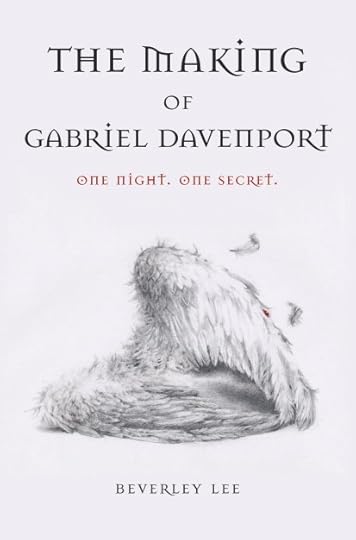
In a house built on truth something lays hidden.
Beth and Stu Davenport moved to the English hillside town of Meadowford Bridge to give their young son, Gabriel, an idyllic, rural childhood. But in a single evening, the Davenports’ dream is shattered by a hidden, ancient darkness– and their lives are forever changed.
Years later, Gabriel Davenport, now a capable, curious young man, makes the ill-fated decision to go looking for answers about his mysterious past. As soon as he begins his quest, his life becomes a place of shadows. The people he loves and trusts are acting abnormally. The strange woman who lives upstairs is even more haunted than usual. Even his most trusted friend seems to be hiding something.
As one fateful night deepens, and the line blurs between darkness and light, Gabriel must confront the terrible events that destroyed his family all those years ago. He is faced with a choice: continue living the life that was never his to begin with, or give himself over to a terrifying new reality more sinister than anything he’s ever known.
The darkness is watching.
Sounds spooky. What inspired you to write the book?
A long time ago I watched a TV series (that I can’t remember the name of!) which was set in an old house used by a paranormal organisation. I felt that was a great base, but it wasn’t until now that I believed that I had a story that could do it justice.
I did make another attempt a few years ago but it didn’t feel right, although a few details from that one have made it into this story. I’ve always been drawn to the darker side of fiction and I like to weave the complexity of human emotions into this. Inspiration comes to me from the indomitable spirit of courage and hope in seemingly hopeless situations.
I wanted to create something with layers that the reader could peel apart and step inside. I wanted them to *feel* the struggles all the characters go through.
What was one thing that surprised you about writing the book?
The whole process is surprising and it’s hard to pinpoint only one, but I would say two characters who I didn’t plan for, who appear halfway through the book. They both took flight and immediately became very important. That’s what I love about writing – you can plan down to the last detail but then something like this happens and any outline you had is firmly quashed!
What’s next for you?
The sequel is already written and is in its last draft before it goes out for beta reading. And then there’s one more after that to complete the trilogy. Which I don’t think is too bad for something that started off as the first 3,000 words to a writing competition that I never entered!
I also have a short story in an anthology about ‘doomed love’, coming out later this year, from a team of global writers and artists that I’m very excited about.
What are you currently reading?
Me Before You by Jojo Moyes, which is very much not my usual genre but I wanted to see what all the buzz was about. Before that was Blue Lily, Lily Blue by Maggie Stiefvater, which I loved.
Where can people find you and buy The Making of Gabriel Davenport?
The Making of Gabriel Davenport is available on Amazon and is part of Kindle Unlimited.
My website
Goodreads
Twitter – @constantvoice
Instagram – @theconstantvoice
April 5, 2016
Three reasons why I’m glad for my day job
In my dreams, I would be a full-time writer. But in reality, some days I’m glad to leave my writing at home and go to the day job.
Here’s three reasons why…

1. A break from the writing cave
Some days, it’s a relief to go to work and take a break from banging my forehead against the keyboard. Work is a completely neutral environment away from plot and character and whether my crisis is crisis-ey enough. My work gives my creative brain a rest and allows my subconscious to work through some of my problems.
Work also gives me a chance to miss my writing cave and I’m happy to see it again at the end of the day.
2. Pay cheque
Getting paid is helpful but addictive.
The three most harmful addictions are heroin, carbohydrates, and a monthly salary
Nassim Nicholas Taleb
But Elizabeth Gilbert takes a different view when it comes to writing.
But to yell at your creativity, saying, “You must earn money for me!” is sort of like yelling at a cat; it has no idea what you’re talking about, and all you’re doing is scaring it away, because you’re making really loud noises and your face looks weird when you do that.”
― Elizabeth Gilbert, Big Magic: Creative Living Beyond Fear
Having a regular salary (unrelated to my writing) gives me the freedom to experiment and not put pressure on myself to create. I can let my writing run free like a four year old without worrying about paying the mortgage. Wheeee…..
3. Fuel for the imagination
Whether it’s the Shakespearian or Games of Throne style office politics, the peculiar smell of a cubicle farm or the accountant with the metal plate in his head, work can be a source of writing inspiration. Not every day, but some days, interesting stuff will appear if you are playing close attention.
So these are my three reasons I’m glad for my day job. For the moment.
Why are you glad for your day job?
April 1, 2016
Writer’s Residence in a Scottish Castle – interview with Margaret Skea
Hmm…who would like the opportunity to write for a month in a Scottish castle?
Um…me.
So when I heard that Margaret Skea – fabulous historical fiction writer – had secured a residency at Hawthornden Castle, I was overcome with jealousy.
I caught up with Margaret after her experience and she shares a glimpse into the writing fellowship program at Hawthornden Castle as well as the imposed periods of silence, broken boilers in February and eating porridge from a pewter bowl.
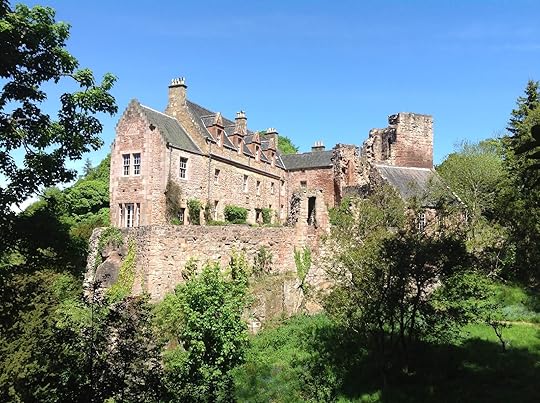
Hawthornden Castle
What was the programme?
I was privileged to be awarded an Hawthornden International Writers’ Fellowship for February / March 2016. This is a month of free accommodation with all meals, in Hawthornden Castle in the South of Scotland, providing dedicated writing time.

How did you find out about it?
Some years ago I came across it while browsing on the internet, and it looked absolutely fabulous, but there are strict eligibility criteria, so at that stage couldn’t apply. Once my first book (Turn of the Tide) was published by Capercailllie however I became eligible. (It is reserved to writers who have had at least one full-length fiction or non-fiction book, collection of poetry or short stories, or full-length play published by a mainstream publisher.) The application process is all by snail-mail, including an application form and references submitted by two referees, who are asked to comment both on the quality of a prospective fellow’s work and also their suitability to live in a small group setting for a month. I applied in May 2015 for a 2016 Fellowship and then the long wait began…
How was the experience?
The castle is not remote, but so well concealed that most of the locals don’t know of its existence. I arrived on a drizzly Sunday afternoon, as the light was beginning to fail. It felt surreal to have automatic gates opening in response to the code I’d been sent, allowing me access onto a long drive curving downwards through woodland carpeted with snowdrops, to an imposing red sandstone building perched on a triangle of rock above a gorge.
The main entrance leads to a grassed courtyard, bounded on two sides by the remains of an ancient keep and on the third by a low parapet, providing the only protection from the sheer drop of 100 feet or more to the river below. The Drummond coat of arms is carved above the castle doorway and a welcoming fire burns in the stone-flagged hallway.
The writers’ rooms are on the second and garret floors, the latter reached via a steep spiral staircase, so narrow that several Fellows had to open their cases in the hall and ferry up their belongings. Each room is different, varying from tiny to very large, but all are comfortable, and have everything we need. I quickly felt at home in mine.
The first meal was formal, in the castle dining room, with linen napkins and elaborate place settings, including huge pewter water goblets. It was also the opportunity to meet the other five writers with whom I’d spend the next four weeks. We all had very different backgrounds, coming variously from Denmark, America, Ulster and England, which made for lively and interesting discussion.
Breakfasts and dinners (other than Sundays) were served in the ‘hearth room’ at an elm table scarred by centuries of use. Pewter is a feature of the castle, from the enormous fire-irons in the ingle-nook fireplace, to table-ware – it was a novel experience to eat porridge from a pewter bowl. Lunch was delivered to our rooms in Fortnum and Mason wicker baskets, and our after–dinner conversations in the drawing room were presided over by near life-size portraits of Aldous Huxley, Jean Cocteau and Truman Capote.
The food was wonderful, the staff very helpful, and there was a sense that work could and must be done, no doubt helped by the lack of internet and mobile phone reception and the rule of silence between 9.30 am and 6.30 pm each day.
Aside from the individual rooms there were plenty of other work spaces including five library areas and (my personal favourite) two huge greenhouses.
Work was done, each of us finding our own rhythm, but all I think achieving our self-imposed targets; in between forays into the surrounding woods and along the river: ‘thinking’ time in which to process ideas, returning re-invigorated. I came hoping to start the third novel in my 16th century Scottish trilogy, but with no idea of a plot. I left with a storyboard covered in post-it notes and 23,500+ words of the first draft.
It’s impossible to adequately describe the experience, suffice to say it was one of the most productive months of my writing life.
Was it like you expected?
It was hard to know exactly what to expect. I was quite confident that a 9-hour rule of silence would suit me, and I was looking forward to having all the household chores done for me – the cooking, cleaning, washing of clothes etc, but living for a month with folk I’d not met before was more of an unknown quantity.
I’m a bit of a board-game fiend and I did hope that maybe some of the others would be too, so had come prepared with a couple of games to while away the evenings. Four of us did play a couple of times, but it didn’t become a feature, at least in part because at the end of the first week the boiler broke down and we had two weeks without central heating, which in a 17th century castle was atmospherically chilly. Although we were given small heaters for our rooms it wasn’t possible to heat the communal areas so our evenings in the lounge came to a temporary halt. None of us wanted to be sent home though, so we determined not to complain, donning extra layers, hugging our hot water bottles, and thinking of imaginative ways to minimize the discomfort.
I turned my room into a ‘cave’ covering over the windows with double layers of heavy card, the lack of natural light far out-weighed by the lack of draughts. And on days when the sun shone, I worked in the greenhouse by the main library – which even in February was much warmer than anywhere else in the castle.
One totally unexpected bonus was the insight we gained into the gaps in understanding caused by differences between US and UK English and by differing physical environments. I was astonished to realise (for example) that many American readers (and likely other nationalities also) wouldn’t have any mental picture of ‘moorland’ to draw on, and as my characters spend a lot of time trekking about on Scottish moors I might have to re-think the amount of description required to meet their needs.
On the last evening someone asked what we each might change when we went home? Imposing a 9-hour rule of silence in my house would be impossible (sadly), but I do hope to maintain a daytime embargo on internet use.
Thanks for sharing, Margaret. Where can people find out more about you and your books?
 There’s a lot of information about me on my website and I’d love folk to visit / browse / comment. I don’t post very frequently, but I’m hoping to do more in the future and would love more followers and feedback. I’m also on Facebook.
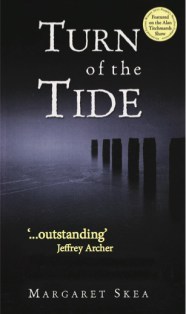
My two novels, Turn of the Tide and A House Divided, both set primarily in 16th century Scotland and centred on an historic clan feud, are available to order from any UK bookshop, and in both paperback and Kindle versions internationally via Amazon.
Turn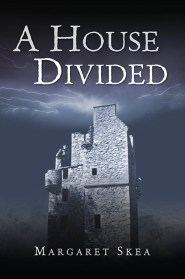 of the Tide: Winner of the Beryl Bainbridge Best First Time Author Award .
A House Divided – Long-listed for the Historical Novel Society New Novel Award 2015.
I also have two x two sets of short stories (30 minute reads) on Kindle as ‘tasters’ of a wider range of my writing.
March 19, 2016
Mysteries and mayhem in steampunk Melbourne – coming soon
While I query on Return to the Monolith, I’ve decided to keep anxiety at bay (see last week’s post) by putting my Evangeline novellas out into the world.
The Antics of Evangeline is a series of novellas involving mysteries and mayhem in steampunk Melbourne. In the 1880s, Melbourne was the second largest settlement in the British Empire after London and flush with post-gold rush cash.

The first novella in The Antics of Evangeline is Evangeline and the Alchemist.
Evangeline and the Alchemist
Evangeline, a seventeen year old reformed urchin and acrobat, is settling into a new comfortable life with her long lost father, Professor Caldicott. Although learning to be a lady is awfully dull.
When the police come to the door, seeking the Professor’s expertise in catching an alchemist, is this Evangeline’s chance to test her new invention and save the day? With well-deserved rests for cream buns, of course.
A beta reader described Evangeline and the Alchemist as “The Talons of Weng Chiang meets Buffy the Vampire Slayer.”
Here’s a sneak peek at the first page of Evangeline and the Alchemist (although a previous draft).
Evangeline will come into the world in mid-2016. I’ll post further updates on the launch date once all is confirmed. I’m currently in final beta reading, cover design and setting up copy-editing.