Susan Arnold's Blog, page 3
February 2, 2018
The Problem With Forever | Review
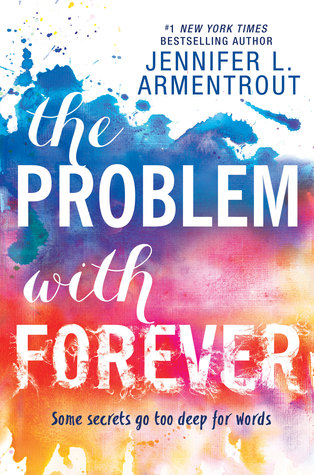 When I first started this book, I listened to the audio version, I was excited. The prologue was full of action and intrigue and made me want to continue on and learn more about the characters.
And then the actual story started.
First off, I noticed that the prologue was in third-person and the rest of the story was in first-person. That threw me off. I thought that there was maybe something wrong with the audiobook. I was really excited for the storyline to continue through from the prologue, but it almost instantly took a different turn.
It took over half of the book to figure out what had happened to the main character, Malory, through segmented flashbacks. The flashbacks connected to the prologue, which was good and bad. Good because there was a connection between the actual story and the very beginning. Bad because the flashbacks were choppy and incomplete, a contrast to the straightforwardness of the prologue. It should not take over half of a book to understand why the protagonist is the way they are. I wanted to know far sooner.
I was also looking forward to this being a coming of age story that came full circle. That did not happen. It was rather slow and turned into a love story and I don’t think it ever came full circle. I feel like half of the book could have been cut out and it would have been the same story, that’s how excessive and slow it was.
Overall, the beginning was great and super intriguing, but the slowness and the falling back into typical love story YA cliches ruined the book for me.


January 2, 2018
‘Wonder Woman: Warbringer’ Review
And my obsession with Wonder Woman continues!
I have wanted to read this book since the second I discovered it was coming out. And I was not let down.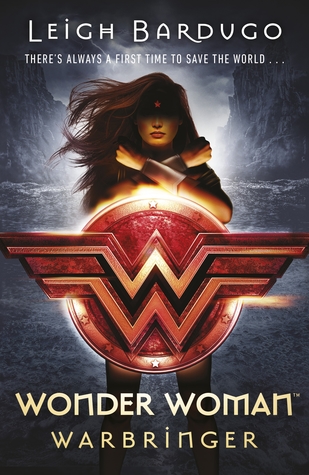 ‘Wonder Woman: Warbringer’ shows a different Diana and Themyscira than the one that Patty Jenkins showed us in the movie. We see more of this ‘Cult Island,’ as it is called, and we learn more about the Amazon way of life, rules, and regulations. The Amazons and their culture is more developed than in the movie. I really enjoyed seeing Diana in this light, and I don’t want to spoil anything so I won’t develop that any further.
In ‘Wonder Woman: Warbringer’ Diana is innocent. But she is also a kid; seventeen to be exact. She fights being the youngest of her people and being a teenager in modern day New York. That is something that I really enjoyed about the read, Diana was relatable in a way that isn’t really relatable. She doesn’t know how to work a smartphone, has never seen anything plastic, and has never flown in an airplane…but the way she feels about all of these new things is so relatable because we’ve all been there and experienced new things.
The ending was a twist that even I wasn’t expecting, and I’m pretty good at expecting twists. And that’s exactly what brought this book to five stars. The writing was well done, the characters well developed, which I enjoyed. But the twist ending worked. It didn’t seem far-fetched and fit character personalities. The twist ending was a real make it or break it moment; depending on how Leigh Bardugo handled the situation it could have gone off the rails and ruined the entire novel. But it didn’t. It tied it together really well and mended my heart (that had shattered a few pages beforehand).
Over 5/5 stars for a well-written ending that knew it’s characters.


December 16, 2017
Review of Stephenie Meyer’s ‘Life and Death’
 In all honesty, this book was awful.
For the first thirteen pages, I complained after every other sentence. I think that Stephenie Meyer literally went through her Word document that was Twilight and changed Bella to Beau and Edward to Edythe. I felt like I was reading her own version of fanfiction–for her own work! It seemed like such a money grab that I felt dirty reading it at points. And the title? Boring. There was no imagination whatsoever that went into naming Life and Death.
When I forgot what I was reading, though, it felt a lot more natural for the genders to be switched. Now, I haven’t read Twilight in about four or five years, so I don’t know if that impacts how I read this book. But I am a much bigger fan of Edythe and Beau than Bella and Edward.
The storyline felt sloppy, and maybe if I reread Twilight now I would say the same thing. There was hardly a story until the last half of the book, only two people unhealthily obsessed with each other. When Beau finally discovers what Edythe is, that’s when the storyline starts to pick up. And when the antagonists of the story appear (for about the last fifty or so pages) that’s when the action starts to happen. It seems that Meyer missed the first day of her creative writing class: in order to have a story, there has to be something happening…
The end at least was exciting. I don’t want to include any spoilers, but the way the story ended felt natural and not too forced. I wish Twilight had ended that way. If Meyer had continued “rewriting” and had the same ending, it would have begged for more books about Edythe and Beau, which do not need to be written. The wrap-up was well concluded and doesn’t seem to leave anything out.
I think the biggest reason why I’m most frustrated with Life and Death is because Meyer had the incredible opportunity to expand the universe she created and she ignored it. She could have done something similar to J.K. Rowling’s Fantastic Beasts. She could have moved the entire story to Maine or Europe and developed different (yet similar) characters and expanded this world and her franchise. And she blew it! I just don’t understand why she wasted this opportunity.
All in all, I wasn’t the biggest fan of Life and Death.


December 3, 2017
‘The Female of the Species’ Review
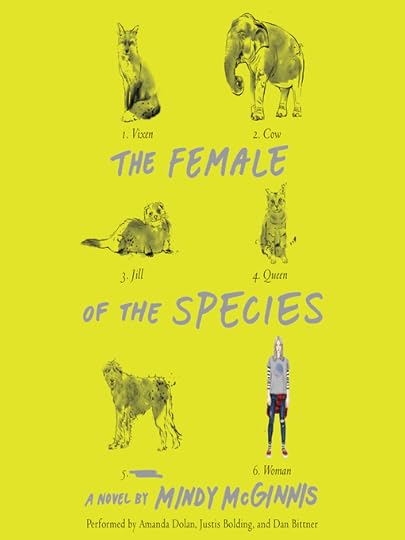 Now, I don’t just give out five-star ratings. But I absorbed this book. I first spotted it about a month and a half ago at a bookstore and finally purchased it yesterday. I read the first three chapters last night before bed and finished it just a few moments ago, in only twenty-five hours.
Instantly gripping and constantly compelling, this book was a rollercoaster of a ride. At first, I was a little bit frustrated because there were parts that were a mystery and all I wanted to know was the answer. As I continued to read I was transfixed (it’s cram-before-exams week in college, to give up any time is a rarity, so you know this is an honest review). I fell for all of the characters, even those who aren’t protagonists.
I felt that the depiction of high school was a bit exaggerated, but the language and thought process of the characters seemed incredibly accurate. McGinnis did an incredible job making me care about the characters so much so that I cried at the end; she painted villains as heroes and did a good chunk of storytelling through dialogue. Though the topics of the book are a bit on the heavy side, and some passages can be triggering to some audiences, The Female of the Species is a pretty easy read, the longest chapter wasn’t more than five pages.
McGinnis did justice to the split point of view narration, developing each protagonist in their own way and making sure that none of their personalities blurred together. While reading, I never felt like any part of the book was over the top or unbelievable and writing something like this could have easily gone that way.
Rating: ★★★★★


April 30, 2017
Meet the Reader (& Writer)
So, thanks to lottelikesbooks’ Instagram, I found this cool little list titled Meet the Reader. As a writer, I’m naturally a reader and I thought that I’d fill this out and pass it along for those who want to get to know me.
(a) How many books can you read at once?
Probably 3 or four, depending on what the books are.
(b) What’s your favorite reading drink?
I don’t tend to drink anything when I’m reading simply because I’m likely to spill it all over my book and I find that tragic. If I do have a drink though, it’s probably some sort of tea, the best bet being green tea.
(c) What’s your favorite reading snack?
Same as above, I don’t usually eat anything because then I get food-covered fingerprints all over the pages or crumbs in the binding, but if I do eat anything, it’s either chocolate chips or a snack food like goldfish/Cheez-Itz.
(d) How is your bookshelf organized?
I usually have it organized in alphabetical order, but I had too many books so I had to organize it by size so I could fit more books in.
(e) Hardcover or paperback? [Why?]
Paperback, they’re cheaper, more flexible, and cozier.
(f) Current read?
I’m currently reading Watched by C.J. Lyons.


March 25, 2017
How to get writing again!
Scrolling through Tumblr (I follow the #amwriting) I found a post that I think would help writers, including myself. Thank you, Kira Martin, for your wonderful advice!
Hello! I am a writer that is fairly new to the game. I realized I wanted to write full time a few ago. Since then, I’ve been working on a book, that I consider to be my baby; the masterpiece that will create my overall brand. However, I struggle with the discipline of it all. I have such a hard time getting myself to just sit down and finish! I’m currently working on my 23rd chapter but I know I still have so much to go. Working 40 hours a week isn’t necessarily helping either. Advice?
[asked by Anonomous]
What you’re experiencing is what a lot of aspiring/newbie writers go through–you need to sit yourself down and come up with a plan of action. And because it’s my style, here’s a list to help with that plan of action:
1. Find your motivation. What inspires you? Why do you want to finish your book? Why do you want to write? Once you find your motivation, surround yourself with it. Realizing that you will never be a career writer unless you write your book is a good kick in the ass.
2. Make writing a habit. The way to form habits is to do them daily. Put aside an hour every day to focus on your manuscript—you can even set an alert in your phone. Be very clear to everyone that if they interrupt you during this time that their deaths are on their hands. You’ll be surprised at how quickly it becomes natural (the writing, not the interruption murders).
3. Set goals. Find what works for you. A page a day? 700 words? Set you goals as your phone’s lock screen. Put sticky notes on your mirror. Do a goal thermometer and scribble out a notch for each chapter/page you complete. Hang it somewhere where you’ll see it every day.
4. Create a ritual. What I’ve always done is play some music, open my document, and read what I last wrote. By now, when the music comes on, I know it’s time to get to business. Combined with my habit of listening to the same song on repeat for days, I once accidently conditioned myself to open my doc when I heard a certain song. Find whatever works for you.
5. Consider your future. How serious are you about being a writer? For any sort of dream, there are risks/stresses/extra work required for them to come into fruition. If you can’t find time to write, you need to think about what that means for the future. In five years where will you be if you continue down this path? Where do you want to be? What are sacrifices (time/energy/money) you might need to get there?


March 14, 2017
BLUE VIGILANTE now available at Snowbound Books!
Do you plan on visiting Michigan’s Upper Peninsula anytime soon? If you do, stop by Snowbound Books in Marquette, where they now carry Blue Vigilante!
[image error] [image error]


March 10, 2017
3 Ways to Edit Your Own Book!
Thank you, Book Doctors, for this video and these tips. Check out the video here.
Read it out loud!
Trust me, hearing is different than seeing.
Have people read it!
But not people who are related/biased toward you
Join a critique group (Goodreads is a good place to meet people who love to read)
Hire a professional
If you have a smaller budget, try a librarian.
Make sure that they are experts in your genre!
Do research before you pay anybody–you don’t want to get scammed.


March 9, 2017
After College Portfolio Tips
A few months ago, I had a little seminar/chat thingy with a professor who gave me some tips and tricks on what to do afterward and I thought I’d share with you.
Step One: A real career
Is it right for you? Do you have roots anywhere? Travel first. Once you get a career, you’re locked in.
But a gap in a resume can be killer and draws attention
Location: it’s all about your personality, you have to like where you live.
Experience with Reservations: don’t get a soul-sucking job
Step Two: Welcome to the Jungle
What type of gig is it? Don’t appear too desperate when hiring, then you’re easy. Different jobs are connecting points to each other and the latter up.
Opportunity: you can have a day job that will support you until you can get to your dream job
Culture: Does the company care about their employees? Beware of gimmicks that get you to stay, lack of dental insurance in exchange for free coffee.
Are they connected? Big names à working with each other à it’s who you know
Step Three: Finding a Job
Indeed.com
Taylor the portfolio for the company
Make it as personal for the hirer as possible
Try to drop it off in person; physical rather than digital
Shutterfly? Other printing sources
Glassdoor.com
“Headhunters”… like Creative Circle
Pretty much sells you to companies
It sucks that the system is rigged, but it happens
Network!!!!!
Go to visiting artists
Don’t be a rude.
People want to work with people that they get along with
Step Four: Common Creative Gigs
Freelance
Pro: Your hours, your money, you choose, build your name
Con: Client is the boss, TAXES, inconsistency
In-house Industry
Pro: Doing something you love, clocking in and out (most places don’t pay overtime), moving up
Cons: Consistency, politics, glass ceiling, company pace
Creative Agency
Pro: Creative living, variety, good pay, great opportunities
Cons: Small fish big pond, design culture can suck, trust in leadership
Step Five: Present Your Work
Know the market: be prepared, double check, present your work, don’t be vague
Fake it ‘til you make it
Student work: have you peaked? Continue to work, work outside of class
Portfolio site, is it updated? It should be about the work that you want to do.
A little mystery is okay, but don’t go crazy
10-16 pages of work…20 maximum; make it efficient
Reels: 2:30 or less. Make it good enough that they want to see more
Step Six: Resume
Keep it clean, HR doesn’t care about your icons; it’s a resume not a poster
It’s not fun
Make it easy for them to see the information
It doesn’t need to be cute or creative
Copy and paste will make your life easy
Step Seven: Showcasing
Know the role you want; assess your clients’ needs
Don’t include every piece of work
That lucky shot isn’t enough; you have to be able to nail it
Photo and video are mashed together now, am I skilled for that?
Understand your client
Your reel should reflect the clients
Music selection can make or break you; play it safe
Audiojungle.com
Viewer fatigue is real
Show work that benefits the employer and the customer
Explain your role
Context to show how you work
A wide range of work is okay
Unless you’re going for specific companies
Make your portfolio easy to update
Make it presentable in every way
It’s okay to have different versions of the portfolio
Step Eight: Show That You Care
Hard work is obvious
So is laziness
Half of design is marketing and presentation
Where?
GraphicBurger, Pixeden, Dribbble, PSDCovers, Behance
Not all are free, but they’ll be worth the investment and a tax write-off
Showcase your work, but don’t distract
Don’t put it on a loaf of bread just because you can
Step Nine-ish: Process and Details
Employers hire people for talent…and to make it easier
Be a jack of all trades on styles, learn how to replicate and understand
Show off your ability to conceptualize and execute in short and long term
Have 10 ideas and pick the best one
Step Nine-ish: Webheads and Tech Nerds
UX/UI people
Show that you are a great communicator
Employers need to see that you can handle structure and a lot of information
Step Nine-ish: Photography isn’t Magic
Be prepared to achieve the results you promise
Show variety
Adapt with new technology
Do you know your equipment, lighting, and studios?
Step Ten: Interviews
Congrats!!! You’re qualified!
This is NOT show and tell!
They’ve already seen your work and they like it.
Bring another portfolio with different stuff unique to the employer/company, if you want to
Communication is as a creative is employable
Communicate with employers, coworkers, clients
Step Eleven: Checklist
Printed portfolio (or iPad) ready to go
An extra copy of your resume
Business card, makes you stand out
Dress to impress
HANDSHAKE
Don’t overtalk
Be cool, be respectful, be yourself
Step Twelve: Interviewing Basics
So, why do you want to work here?
Research the company
Kiss booty
Be prepared
What can you bring to the table?
Note some of the campaigns, expand on ideas, show your own creative thinking
What about your process? And your struggles?
Stick to the basics
Collaborate, learn, adapt
Don’t say that you’re a perfectionist.
Any questions for us?
NEVER SAY NOPE!
Ask about their favorite project, challenges
Learn
Should you follow up?
YES
Only after an interview
Backwards Step One: Didn’t get the Gig
Don’t get discouraged
Occupy your time
Find your stoke
Persistence pays off
Closing Checklist for the Real World
You’re outward facing in many ways
Control your social media
Is your work readily available, how is your brand?
Site, reel, business card, resume, portfolio, do they all have the same theme, are they consistent, is it great?
Update often
Are you evolving?
Work will evolve; design and visuals change.
Make sure you know the trends
Does it look current for what people are paying for?
Know what people want
Double check the contact
Have it simple yourname @gmail.com
Make your brand consistent
Earn it!!!!
Do whatever you can to progressively make yourself better every day.
If any of this is confusing, comment below so I can clarify for you.


February 17, 2017
New books in the works!
Hello everybody!
As some of you know, I’m currently working on the sequel to my debut novel, Blue Vigilante, aka Green Vigilante.
I’ve also started planning a short book titled Ramblings with some short stories/snippets of stuff/and some poetry.
I’ll be sure to keep you updated!