Jane Spavold Tims's Blog, page 56
June 27, 2016
on my book shelf – Triggerfish, a crime novel
‘… he had fifty feet under the hull. The carcass of a rowboat against the shore, cedar, pine and rock rimming the cove, no cottages out here … Switching to the trolling motor, Beck eased around the bend in the cove …’ (Triggerfish).
Around that bend in the cove, Beck meets his share of trouble. I usually think of crime novels as an easy read. Triggerfish challenges that notion. The characters are many and, to me, a bit hard to follow – there doesn’t seem to be a good guy among them. The action is non-stop giving the reader few chances to relax! And what, oh what is going to happen to Eddie???
~

~
Dietrich Kalteis, Triggerfish – a crime novel. ECW Press, Toronto: 2016. Published June 1, 2016.
~
This review is done as a result of my role as Shelf Monkey for ECW Press http://ecwpress.com/pages/shelf-monkey.
~
Not usually in the genre I read, Triggerfish was nevertheless entertaining. The main character, Rene Beckman, ‘Beck’, is an ex-cop, hard-hitting and resourceful. He is trying to stay out of trouble but accidentally views a murder and some ruthless drug runners in action. And the bad guys won’t look the other way.
The action takes place in the Vancouver area and so scenes feel, to me, Canadian, familiar. Description is gritty, but evocative: ‘Crunching on dead leaves, wet ferns slapping against him, he ducked under pine boughs … a dry creek bed. A crest beyond it. Moss, ferns and rock … ‘. Some of the action occurs on Beck’s boat, the thirty-two foot Triggerfish.
The book is the classic example of shortening sentences to move the action along. This, and the frequent inclusion of gerunds to provide an odd combination of past and present tense, mean the book is sometimes hard to read. I’m not certain I ever got used to phrases like: ‘ … Ramon and Eddie walked in from the dining room side, both stopping at the fireplace, Eddie looking like he wanted to turn and run, Ramon nudging him forward…’ Or ‘… He told her, and she said, ”Nice meeting you, Marty Schmidt.” The second shot spoiling his looks.’
The characters are diverse and multi-dimensional: Vicki, environmentalist and play girl; Ashika, skilled and patient terrorist with a sense of humour; and Hattie, mature girl next door. I liked one of the bad guys the best – poor Eddie, trying to outsmart the cruel bosses by stealing their dope, cooperating with Beck.
Ironic humour abounds – from the description of the vegan protest, with protesters wearing body paint diagramming cuts of meat, to Beck’s attempt to rescue a drowning Ashika. Ashika, hearing a rooster crow for the first time, almost blows it off the fence.
It took me a long time to finish this book, partly because of the sentence structure, but mostly because of my lack of familiarity with the genre. In the end the plot was satisfying and no loose ends were left dangling. I just may read it again.
~
~
Copyright 2015 Jane Tims


June 24, 2016
early schools – the exotic and the common
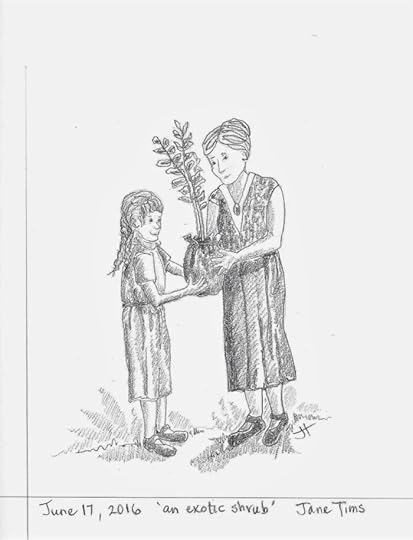
In my Aunt’s book about early schooling in Nova Scotia, she tells an amusing story about field days at school:
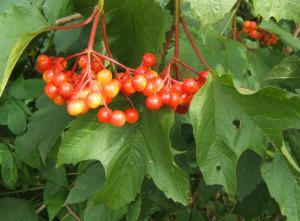
… I recall another field day when Dr. DeWolfe, Miss Harris, and Miss Baker came with shrubs to our school. The shrubs were ten cents each. My mother had always longed for a weigela and a snowball and we were delighted that at last she could have her wish, for both these varieties were among Dr. DeWolf’s collection. They were duly planted at my home on the bank of the French River. One turned out to be a high bush cranberry and the other a spiraea, but today we still refer to them as the “snowball” and “weigela” and, I may mention, they have many an offspring throughout our province.
~
I must have seen the high bush cranberry and spiraea many times at my mother’s old home, but I don’t remember them in particular. I do remember the gardens, lush with rose bushes, tiger lilies, and grape vines.
~
~
Copyright 2016 Jane Tims


June 23, 2016
within easy reach – another chance to win a painting
You will recall that earlier this month I held a draw to win the cover art for my book of poetry within easy reach. Carol Steel, a fellow blogger, was the winner of the painting ! http://carolsteel5050.blogspot.ca/
~
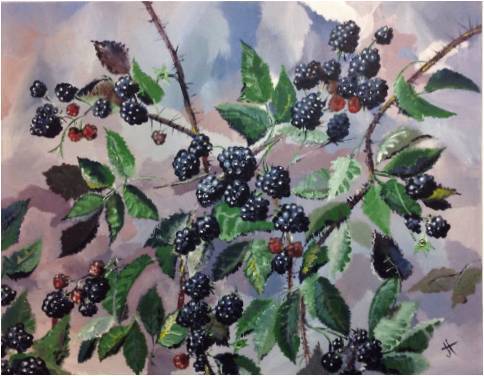
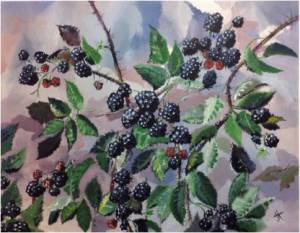
This is to remind you that I am holding a draw to win another painting — ‘berries and brambles’ (18”x 14”, acrylic, gallery edges, unframed). Anyone who has purchased my book from me or my publisher, Chapel Street Editions, has already been entered in the draw. This includes the blog comment folk who entered the earlier draw.
~
 ~
~
There is still time to enter to win the painting! Just purchase my book within easy reach between now and June 30, 2016 from me or my publisher! http://www.chapelstreeteditions.com
~
The draw will be held in mid-July at my book signing and workshop at the 8th Annual Free School at Falls Brook Center in New Brunswick. http://fallsbrookcentre.ca/wp/events2/8th-annual-free-school/
~
Copyright Jane Tims 2016


June 22, 2016
a place for Zoe
I’ve heard the theory that the Internet is 90% occupied by cats. I have spent a fair share of my time watching feline antics on stairways, kittens tumbling from chairs and cats sneaking up on cameras.
~
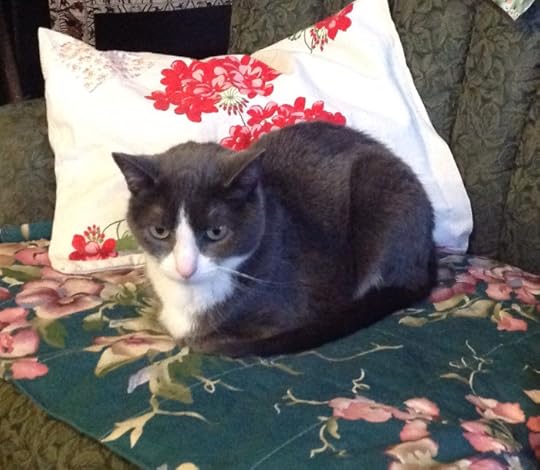
The cat I spend most time with is Zoe. She is a small cat, about eight years old. She tries so hard to communicate and can usually make herself understood via telepathy. She sits and stares at me and I go through the list. Food? No. Water? No. Ice cubes? Yes.
~
~
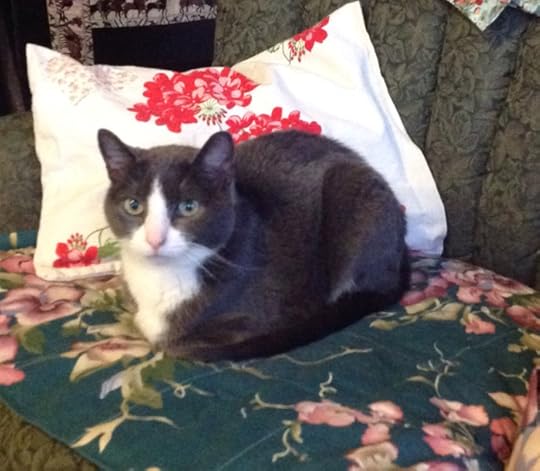
Zoe checks in with me at intervals through the day. She greets me and listens to the morning bird chorus with me. She runs in front of me to her bowls and waits while I feed her. When I am typing at the computer, she hops up and tries to help. Later, when I watch TV, she snoozes on my lap for a few minutes. She usually appears later to race through the house from corner to corner.
~
~
Nothing special about this particular cat post. But I wish I had Zoe’s nonchalance, her utter calm, her faith that all will be well.
~
Copyright Jane Tims 2016


June 21, 2016
within easy reach – what did you think?
I have had my book ‘within easy reach’ in circulation since early May and I have had an enjoyable time getting it into the hands of readers, including some of you!
~
~
I have had some feedback but I continue to be curious about what you think of my book. I wonder if you’d take the time to give me some comments. Positive or negative … all will help me in my quest to be a better writer.
~
~
If you are willing to go even further than the comments section here, perhaps you’d do a short review of my book on Goodreads or Amazon, or leave a comment on my Twitter account @TimsJane
https://www.goodreads.com/book/show/30105132-within-easy-reach?ac=1&from_search=true
~
You can also take part in my poll:
Take Our Poll
~
~
Copyright Jane Tims 2016


June 20, 2016
Arbour Day in New Brunswick – 1888
In a previous post, I wrote about the importance of trees in the school yard and the celebration of Arbour Day in schools in Nova Scotia during the early 1900s. One room schools in New Brunswick also celebrated Arbour Day.
~
The 1888 Annual Report of the Schools of New Brunswick, by the Chief Superintendent of Education, reports on 1888 Arbour Day celebrations in New Brunswick, years before the first official Arbour Day in Ontario, Canada (1906). The purpose of Arbour Day celebrations in the school was:
~
to encourage the improvement and ornamentation of school grounds and thereby of cultivating on the part of pupils habits of neatness and order, and a taste for the beautiful in nature …
~
In 1888 New Brunswick schools celebrated Arbour Day on May 18. In the whole province, students planted 6,571 trees, 650 shrubs and 393 flower beds!
~
~
Copyright Jane Tims 2016


June 17, 2016
early schools – searching for old schools
Last weekend we went on another excursion to try and find some remaining one room schools. We drove from Geary south to Gagetown by way of Westfield, in a loop, going down many side roads. We found six buildings that may have been one room schools. We were in a hurry so we did not stop to ask anyone about their knowledge of the area. That will happen on a future trip when I have a little more information.
~
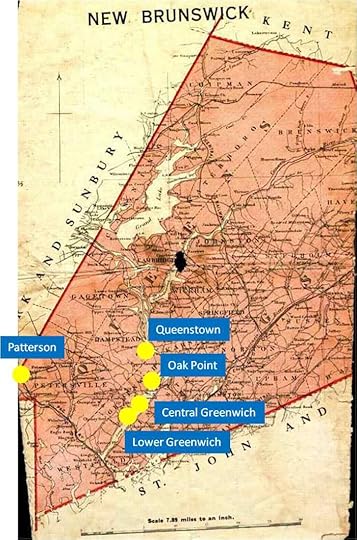
Map showing our drive to find one room school houses … the yellow dots and names in blue show the buildings we considered.
~
The one room school in Patterson is part of an historical settlement created by the community. It is typical of a one room school house in every way. It also has an outhouse. The historical settlement has the school, a church, a store, a house and a barn.
~
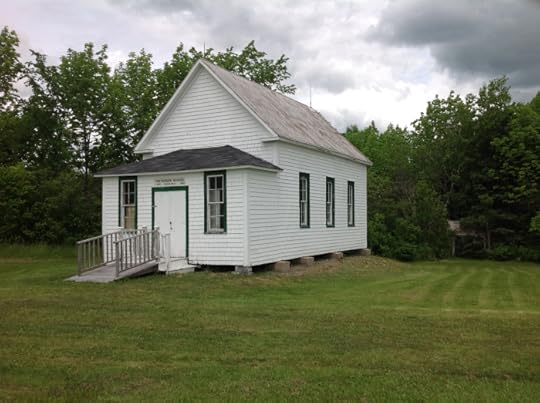
Patterson School at Patterson, Queens and partly Sunbury Counties, New Brunswick
~
The old meeting house in Lower Greenwich is in poor shape, deteriorated since I took the photo below in October of 2014. In spite of the embellishments it has all the characteristics of a one room school.
~
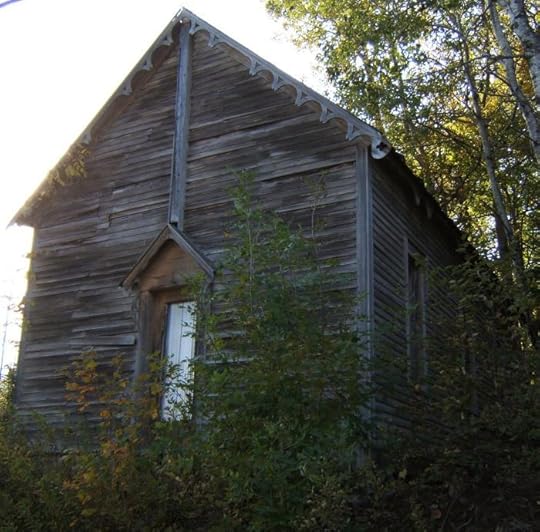
Meeting hall in Lower Greenwich, Kings County, New Brunswick
~
The Central Greenwich Women’s Institute (GEMS Senior Citizens) has an addition with a basement. Although it looks like a school, the middle side window is twice as wide as the other windows.
~
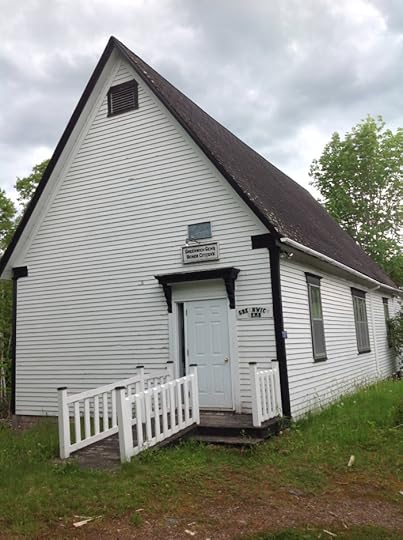
Women’s Institute building in Central Greenwich, Kings County, New Brunswick
~
A little house near Oak Point caught our eye. It was the same size as a one room school, but the windows and doors were all in the wrong places. The locations of these could have been changed to improve access and conform to an internal plan, but it may be just a small house.
~
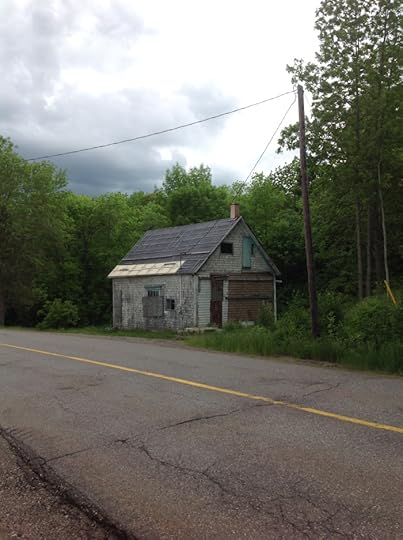
roadside building near Oak Point, Kings County, New Brunswick
~
There were two school-like buildings at Queenstown. The first was a small building used by the Hampstead Local Service District ( a governance unit in un-incorporated areas). This building had only two windows on each side and an added garage.
~
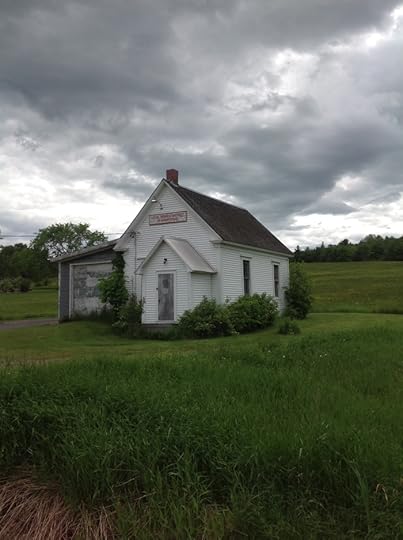
Hampstead Local Service District building, Queenstown, Queens County, New Brunswick
~
The second was just down the road, within sight of the Hampstead LSD building. It was larger than the LSD building, had an addition to the back, a stone basement and a tin roof, and was built on a slope beside a small stream. This building also had the larger middle window seen at the Women’s Institute building in Central Greenwich. I have verified this hall is the relocated Orange Hall from the community of Dunns’ Corner, lost when Base Gagetown was created.
~
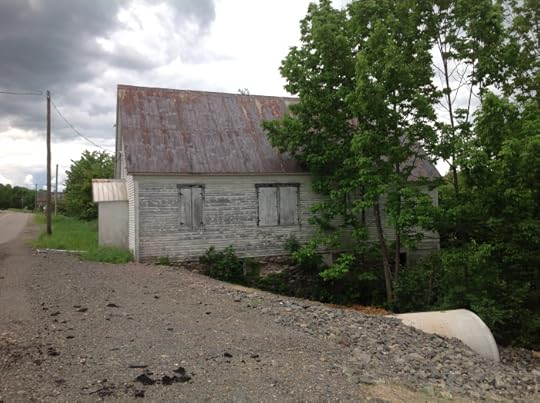
Meeting hall in Queenstown, Queens County, New Brunswick
~
I have three ways of discovering the history of these buildings. One is to talk to local people, to hear their stories. Another is to consult the Walling Map (1862) for the Kings County schools. The other is to have a look at a scrapbook of one room schools, kept at the New Brunswick Museum Archives in Saint John. The scrapbook was made by Marion Johnston Dunphy who photographed 150 schools from 1974 to 1984 (The One Room Schools of New Brunswick and What Became of Them). Her photos may help me identify which of the buildings above were once one room schools.
~
Regarding the Base Gagetown communities, the Base Gagetown Community History Association has an excellent website with photos of schools once located in the communities there http://www.bgcha.ca/communities.html .
~
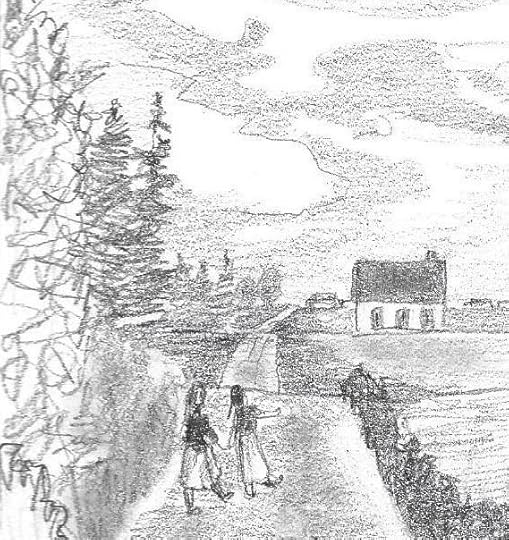
June 5 2016 detail of ‘way to school’ Jane Tims
~
Copyright Jane Tims 2016


June 15, 2016
early schools – the autograph book
A tradition in schools before the 1960s was the autograph book. I had one of these books in the 1960s, but although I collected some autographs, it was considered a quaint activity.
~
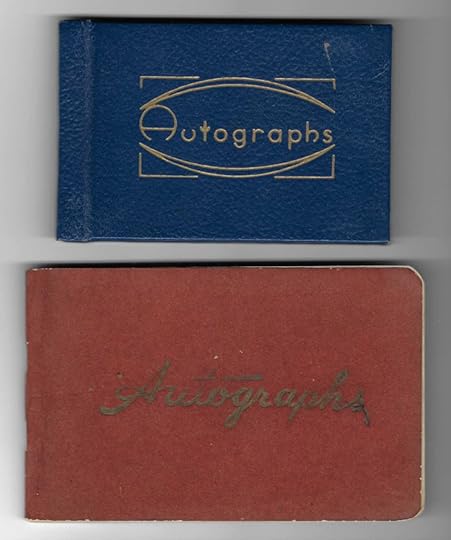
two of Jane Margaret Norman’s autograph albums
~
Both my mother and my aunt had autograph books in the 1940s and 1950s. One of my aunt’s albums was from her students when she taught in a one room school.
I also have my great-grandmother’s autograph album with messages from 1885 to 1914. Her name was Mary Jane (Johnson) Clarke. Her daughters (including my grand-mother) wrote in the album in the later years.
~
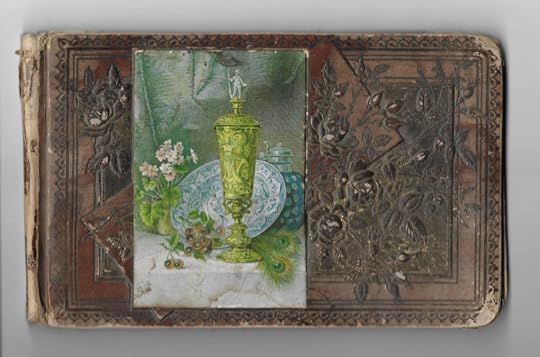
Mary Jane Johnson Clarke’s autograph album from the 1880s
~
These books are small, rectangular in shape. The covers are heavy stock paper, sometimes flocked. The older albums have embossed leather covers. The albums range in size from about 3″ by 5″ to 7 3/4″ by 4 3/4″ (the oldest books are the largest). Each page of the book held one autograph: the date, a message, saying or poem, perhaps an address and a signature. Males as well as females wrote in the albums. The albums from the 1940s and 1950s have variously coloured pages in now-faded pink, yellow and blue. The pages in my great-grandmother’s album are beige and white.
~
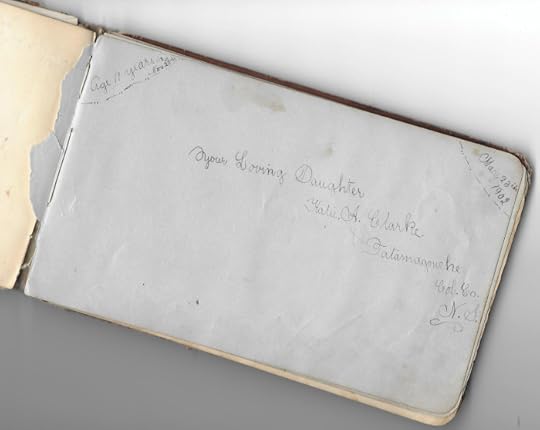
my grandmother’s autograph in my great-grandmother’s autograph album
~
Some of the messages offer serious advice for a good life:
Life is like a mirror
Reflecting what you do
And when you face it smiling
It smiles right back at you
~
Some messages are amusing or even politically incorrect. One from 1947 shows a disturbing flippancy about marital violence:
~
When your husband at you flings
Knives and forks and other things
Seek revenge and seek it soon
In the handle of a broom
~
Some messages are just funny, and seem almost modern:
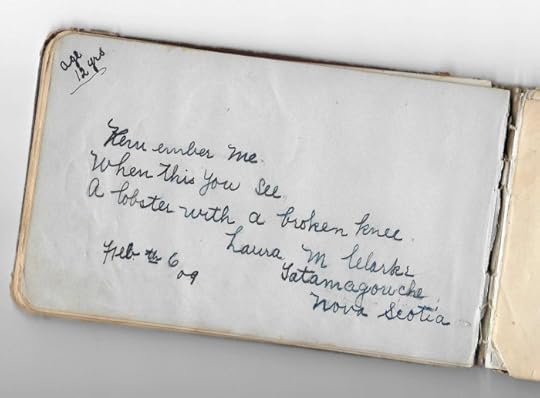
Great-Aunt Laura Clarke’s autograph in my Great-Grandmother’s autograph album in 1909
~
Since my focus in my ‘old schools’ project will be on the school in the context of the landscape, I was pleased to find one or two messages about landscape!
~
When hills and dales divide us
And distance is our lot
Just cultivate the little flower
That is called forget-me-not
~
And:
~
I’m glad the sky is painted blue
And the earth is painted green
And such a lot of nice fresh air
Is sandwiched in between
~
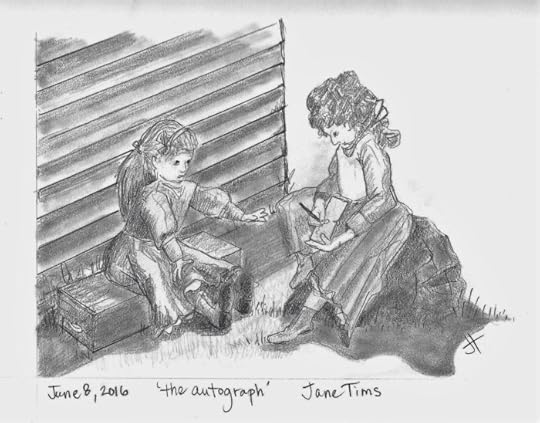
June 8 2016 ‘the autograph’ Jane Tims (Is she writing the autograph for her friend or her doll?)
~
Did you ever have an autograph album? Do you remember any of the verses people wrote?
~
Copyright 2016 JaneTims


June 13, 2016
early schools – Arbour Day
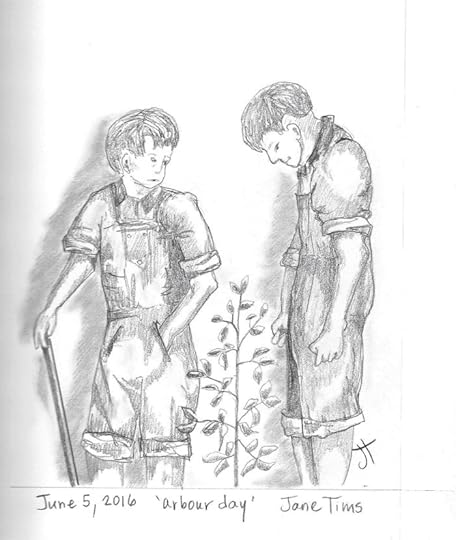
Trees in the school yard, especially big trees suitable for climbing and swinging, would have been an appreciated feature of the school landscape. On a hot June day, students would have enjoyed the shade under a big tree.
~
In the 1940s and 50s, some of these trees may have been planted sixty years before by students learning about abouriculture. By the early 1900s, there were Arbour Day celebrations in Canada when students planted trees at school and elsewhere in the community. The first official Arbour Day in Canada was established in 1906 by Don Clark of Schomberg, Ontario to remember his wife Margaret.
~
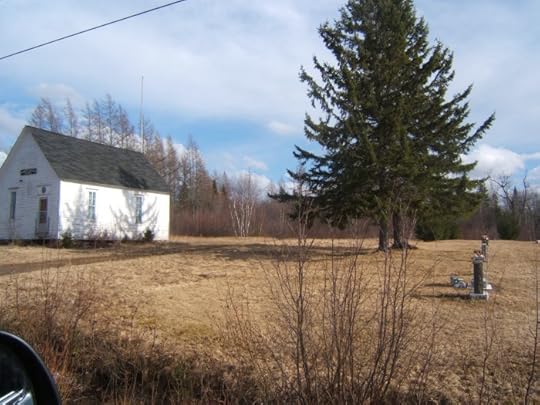
big spruce trees in the yard of the Cumberland Bay School, New Brunswick
~
In Nova Scotia, schools celebrated Arbour Day by 1929 and perhaps before. In May and June that year, officials organized the planting of trees and shrubs in the school yard and involved community members and local dignitaries in the events to encourage their interest in the school system. In 1928, the newspaper Halifax Harald offered, province-wide, a $700 prize for school beautification, which would have included the planting of trees (Jane Norman, Loran Arthur DeWolfe and The Reform of Education in Nova Scotia 1891-1959. Truro, Nova Scotia: Atlantic Early Learning Productions, 1989).
~
The idea of planting trees in school yards continues to this day. Trees are important because they:
clean our air of pollutants
remove carbon dioxide, to reduce the contribution to global warming
prevent soil erosion
trap water pollutants by directing flow downward
provide habitat for birds, bees and squirrels
raise property values
provide the oxygen we breathe
provide shade
make great places for climbing and swinging
~
~
~
Copyright Jane Tims 2016


morning chorus
This morning it began at 5:02. First the relentless delirious Robin.
Cheerio, Cheerie, Cheer-up … Robin
Oh dear Canada, Canada, Canada … White throated sparrow
Whee, whee, whee, wheezie … Black-throated green warbler
Ah-ah-rooo … Local rooster
Teacher, teacher, teacher … Ovenbird
Tweet-terreet-terreet-tereee … Goldfinch
All happy to greet the day.
Now 5:42
~
November 3, 2015 ‘morning fire’ Jane Tims