Jane Spavold Tims's Blog, page 3
October 29, 2024
Building a Family Tree
This year, I spent the months of August, September and October tracing the roots of my great-great-great-grandfather, William Spavold, and the origins of the Spavold family. I have used the services of Ancestry.ca in my search and thank the website and others who have studied the Spavold family before me.
~
I began with these bits of information:
William Spavold was born in Nottinghamshire in 1785 and died in 1815;William married Eliza Greenfield in 1807;William was a carpenter;after William died, Eliza married John Adam Hill in 1816.~
In my search, I soon encountered Spavolds in Nottinghamshire— many Spavolds. My tree, not yet available to the public, includes over 700 people, including spouses and some parents of spouses.
~
The earliest records are of three Spavold males: Anthony Spavalde (1500), an ‘Unknown Spavalde’ (1493-1552) (first name unknown), and a ‘Mr. Spavan,’ (given name also unknown). All three lived in the area of Gainsborough, in northern Lincolnshire, and may have been brothers or cousins. At the same time, there is also a family with the last name of Spafford living in the Collingham area, about 30 kms south of Gainsborough. The names Spavalde, Spavan and Spafford are so similar, I think the families were related to one another.
~
Anthony Spavalde married Alice and had a son Anthony, beginning at least seven generations of Spavolds. The Unknown Spavold married Maud of Gainsborough and had 3 sons and 1 daughter, beginning at least fourteen generations into the 1900s. Mr. Spavan had three sons and I have not yet been able to follow them into more generations. The Spafford family stayed in the Collingham area until the mid 1700s when some of the family had moved to Beckingham, near Gainsborough in northern Nottinghamshire; they also have more than fourteen generations into the 1900s.
~
The variable spelling of the name may have something to do with the difficulties tracing these families, but Ancestry.ca seems to be able to find records in spite of the various name spellings. ‘Spavold’ is an unusual name and has been listed in the various records as ‘Spaffield,’ ‘Spavin,’ ‘Spavald,’ ‘Spaviald,’ and so on. The ways of writing in the records and their tendency to use Latin phrases adds to the difficulties.
~
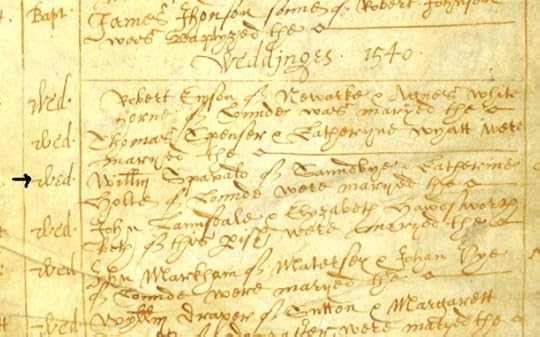 Screen capture of an early ‘Spavold’ record, from the ‘Nottinghamshire, England, Church of England Baptisms, Marriages and Burials, 1538-1812’: shows the marriage William Spavold (born 1523, son of Unknown Spavold and Maud, see above) to Katherine Holte in 1540 in St. Bartholomew, Nottinghamshire, England. The text is difficult to read but fortunately most of these records have been transcribed by hard-working historians.
~
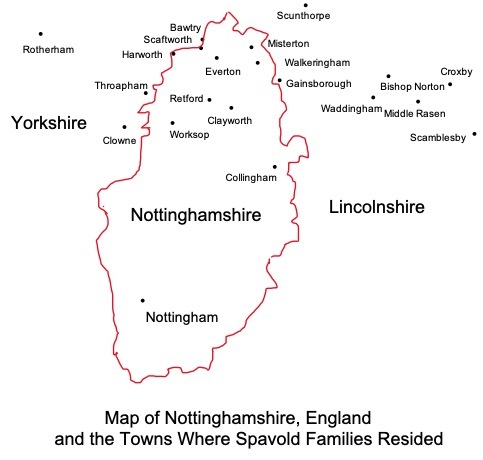
The families remained in the Gainsborough area for the first two or three generations, but by 1673 (family of Anthony) and 1583 (family of Unknown) had begun an outward migration to the nearby communities of Walkeringham and Misterton, both in Lincolnshire. By the fourth generation, with the marriage of Nicholai (1638), some of the families had shifted to the Everton area in northeastern Nottinghamshire and soon after to communities in eastern Yorkshire. The entire Spavold family, at least until the early 1800s remained in this group of communities in northern Yorkshire, Nottinghamshire and Lincolnshire.
~
~
The process of finding these Spavolds has been made more difficult due to the predominance of the given names Thomas, William, Robert, Elizabeth, Mary and Anne in the various families. I still haven’t found William, my great-great-grandfather, but in the next post I will talk about how best to sort family members with the same name.
~
All my best,
Jane Tims (a. k. a. Spavold)


October 27, 2024
Puzzling Over My Last Name
When I was growing up, I often puzzled over my last name: ‘Spavold.’ No one else in the community where we lived had that name. I made up stories to answer folks who asked me about my surname: we were Polish; we were the only family in the world to ever have that name; we were Italian and the real name was ‘Spavoldini.’
~
My dad was also interested in the orgins of the name, but he took a more studied approach. He found out the name of the first Spavold to arrive in Nova Scotia and wrote a book about the many Spavolds in Nova Scotia who were descendants of that first ‘Spavold’ in Canada: Spavold’s Wald, S.W. Spavold, unpublished, about 1990.
~
The first Spavold in Nova Scotia was a boy of only 8 years, born in England in 1808. He arrived in a shipwreck of the Trafalgar on Briar Island on July 30, 1817. He came to Briar Island with his mother (Eliza Greenfield), his step-father (John Adam Hill) and his half-brother (Thomas Hill, a boy of two). The family survived the shipwreck and stayed in the Digby area of Nova Scotia. For more about this story, see my earlier post at https://janetims.com/2011/12/03/briar-island-rock-2-the-shipwreck/ .
~
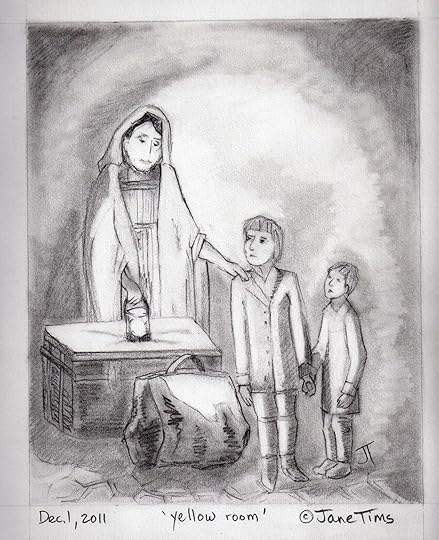 My drawing of my great-great-great grandmother Eliza (Greenfield)(Spavold) Hill waiting on the rocks with her two boys after the shipwreck of the Trafalger.
~
William’s father, my great, great, great grandfather, was William Spavold, born in Nottinghamshire in England in 1785. In 1807, when he was 22 years old, he married Eliza Greenfield. He was a carpenter and my Dad’s story was that when he died, Eliza sold his carpenter tools to get passage for Canada on the Trafalger with her second husband John Hill.
~
No other information was available to my dad, although he did track down ‘Spavolds’ elsewhere in Canada, in Australia and in England. I talked on the telephone with Helen Spavold who lives in Clowne, Yorkshire, and she said, with a proud lilt in her voice, “There are Spavolds in our graveyard.” My dad, and my brother (who lived in Australia for a time), corresponded with Joseph Spavould, who lived in Australia.
~
Now, with the help of Ancestry.com, I am determined to find out more about William Spavold of Nottinghamshire. The next few posts will talk about my discovery of the occurrence of Spavolds in England in the 15th, 16th, 17th, 18th and 19th centuries. And in the 20th and 21st centuries—I am not alone.
~
All my best,
Jane Tims (a. k. a. Spavold)
July 29, 2024
mnemonic: listening to birdsong
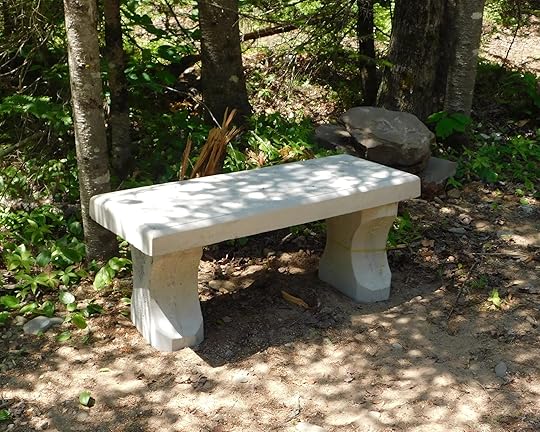
Each day, I walk the loop of our drive and stop for a moment at our concrete bench. I sit there and settle, listening to the sounds: a jet passing overhead, cars on the roadway, a neighbour using a saw. Then I start to hear the quiet mutter of the breeze, the rustling of leaves overhead, the occasional song of a bird.
~
~
This morning I heard the ‘caw’ of a crow, the ‘yank, yank’ of a nuthatch, the winnowing of a snipe. When we assign a pattern of words to mimic and remember the sound of a bird call, it is known as a ‘mnemonic.’ Various other sounds are remembered that way: the ‘chug, chug’ of a train, the ‘drip, drip’ of a tap. Bird mnemonics known to almost everyone are the ‘chick-a-dee-dee-dee’ of the chickadee, the ‘who cooks for you?’ of the barred owl, and the ‘conk-la-ree’ of the red-winged blackbird.
~
~
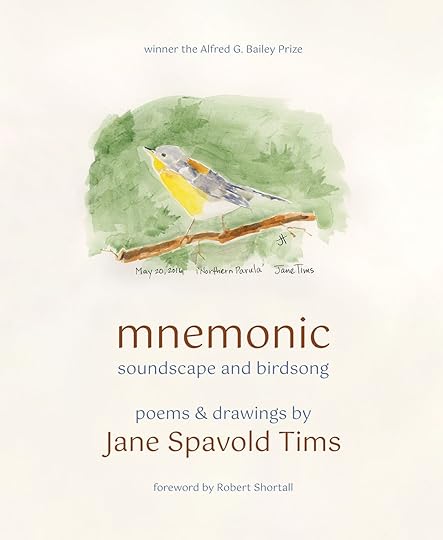
My new poetry book ‘mnemonic: soundscape and birdsong’ focusses on sounds in the woodland and along the shore. Most of the poems celebrate the way bird song can be a metaphor for the events in our lives. For example, the tapping of a pileated woodpecker on the wood of a backstop at the baseball diamond sounds like the connect of bat and ball during the game.
~
~
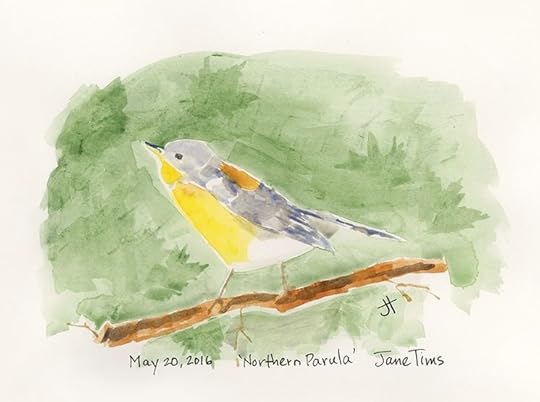
My book ‘mnemonic’ includes my poems and pencil drawings.
~
To obtain a copy of ‘mnemonic,’ take a visit to Dog Eared Books in Oromocto, or Westminster Bookmark in Fredericton. You can also order the book from Chapel Street Editions here, or from Amazon Canada here.
~
I hope you enjoy my poetry and my sketches. You can find a comprehensive list of bird mnemonics at South Bay Birders Unlimited ‘Mnemonic Bird Songs’ here.
~
All my best!
Jane Tims
June 21, 2024
daisy, daisy
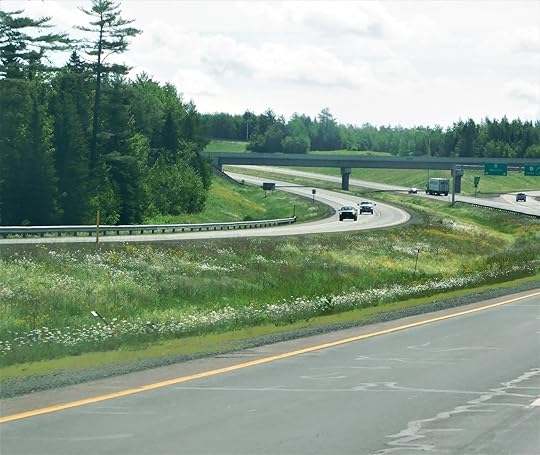
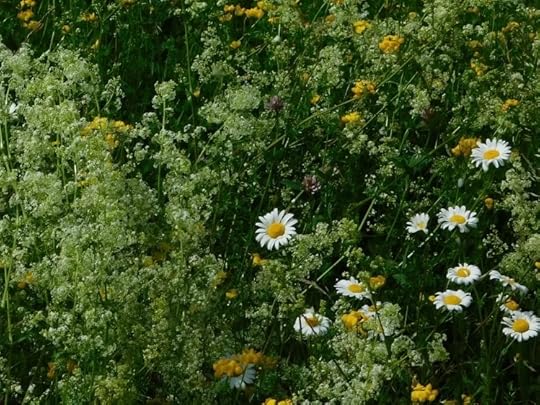
In the new book, A Child’s Botanical Alphabet, by Jennifer Houle, D is for daisy. So simple a flower, but one to be loved. Where I live in New Brunswick, this third week of June, the daisies are blooming along the edges of the road and in the meadows. Pull off the petals to ask a question: loves me, loves me not …
~
~
The common daisy (Leucanthemum vulgare) lives in ditches, meadows, fields, and other disturbed areas. The flower head consists of long white ray florets and small yellow disc florets. Where they grow wild, the flowers are arranged in perfect symmetry, each daisy head set apart from its neighbours.
~
~
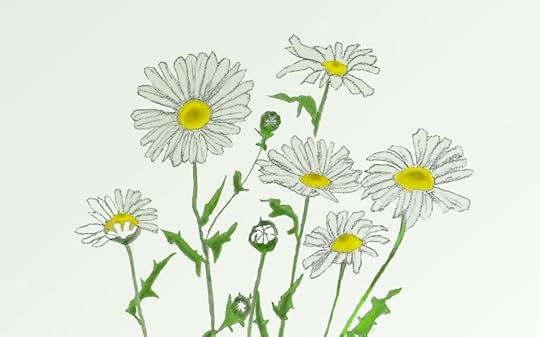 illustration of daisies from ‘A Child’s Botanical Alphabet’ by Jennifer Houle
~
Hope you take a moment to enjoy the gush of wildflower bloom this time of year!
All my best,
Jane
June 14, 2024
nuthatch: bold acrobat
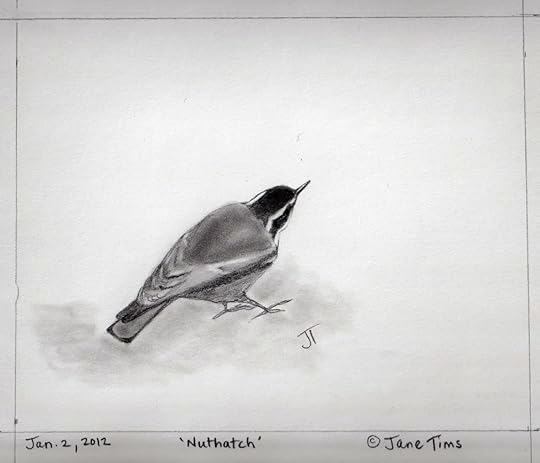
Sometimes I hear a knocking at the door and answer, to find no-one there. Instead, a nuthatch is tapping, banging a sunflower seed against the shingles. Later, he will sound off in the grey woods, ‘yank, yank, yank.’ He is one of my favourite birds: the red-breasted nuthatch, Sitta canadensis.
~
~
This nuthatch is slightly smaller and has a shorter beak than its cousin, the white-crested nuthatch. We have both but the white-breasted species has a faster-repeating ‘song’ to announce its territory.
~
~
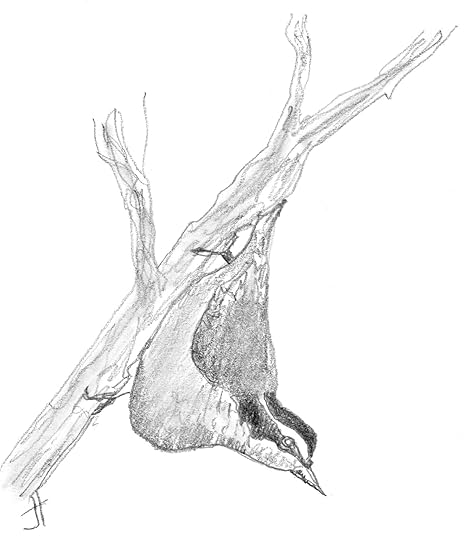
The red-breasted nuthatch has a reddish orange breast, a short tail, and sturdy feet and bill. It has a white eyebrow and a black line on either side of its eye. Perhaps its neatest trick is to walk upside down on branches, head downwards.
~
~
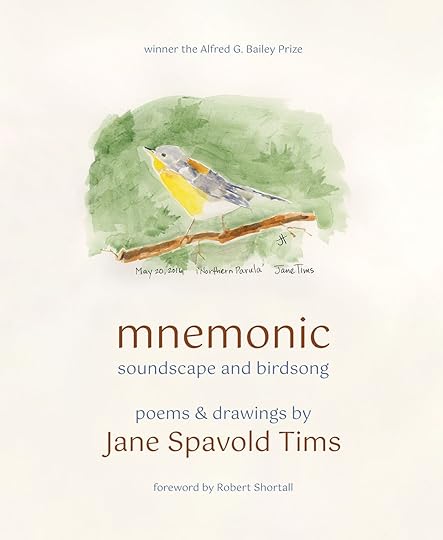
In my poetry book, mnemonic: soundscape and bird song, I pay tribute to the red-crested nuthatch in a couple of poems. Here is a stanza from ‘woodland mnemonic’ …
~
nuthatch, bored, pulls
endless rope, yank, yank, yank
hangs upside-down, beats
a seed against the shingles
~
In the book are 53 poems about bird song and other sounds in nature, and 15 illustrations of birds found in New Brunswick. Some poems are merely descriptive, others see bird calls and songs as metaphors for various life events. For a copy, contact Chapel Street Editions here, or Amazon.ca here.
~
“An orchestra of other surrounding sounds prompt the author’s poetic rendering, revealing a world chock-full of interesting information for those alert to its resonance. mnemonic offers a doorway in which to first stand, and then engage a journey from poem to poem into the author’s immersive experience of the great world’s soundscapes and birdsong.”
– publisher’s comments on the book
~
Enjoy your day and take a little time to watch our neighbours, the birds, and listen to their songs.
All my best
Jane
June 9, 2024
Bookmarks and Dog Ears-A Mystery
A few posts ago, I introduced you to my new poetry project: ‘Bookmarks and Dog Ears.‘ One of the subjects I want to include (briefly) in my manuscript is the ‘gloss.’ According to Merriam-Webster, a ‘gloss’ is a brief explanation (as in the margin or between the lines of a text) of a difficult or obscure word or expression.
~
A gloss marks a book using pencil or pen marks in the margins and counts in the scope of my writing about ‘bookmarks.’ Some think writing in a book is not a good idea and defaces the book. However, I have found during this project that glosses reveal a lot about the history of a book.
~
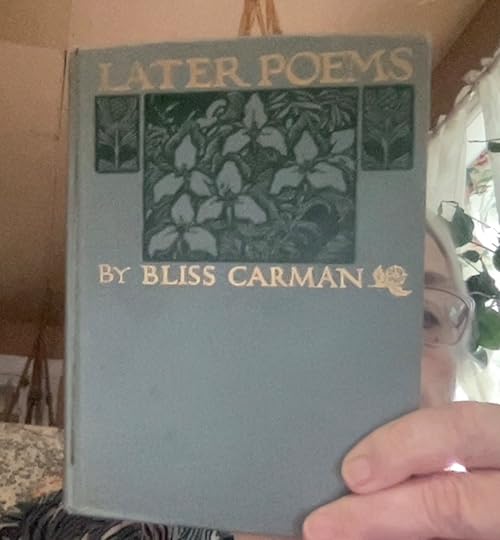
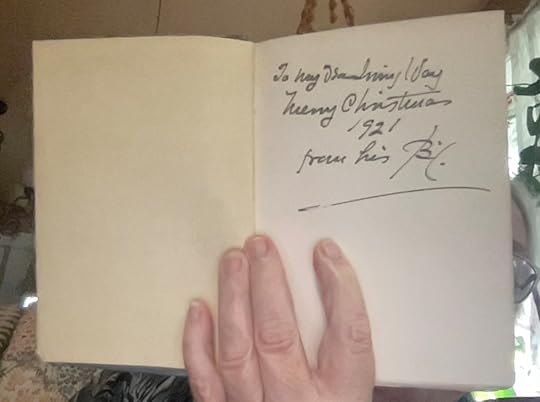
I will use one of my prized possessions to illustrate the power of glosses. This item is a book, a first edition, signed copy of Bliss Carman’s Later Poems, published in Toronto by McLelland & Stewart, 1921. Bliss Carman was a famous poet, born in Fredericton. The book Later Poems includes many poems I love, including ‘Vestigia’ which begins … ‘I searched for God and found him not…’ and goes on to say the poet finds God in many aspects of nature. I bought the book on-line for $80 some years ago. It is a ‘presentation copy’ and includes an inscription by Carman to friend, publisher and author, Irving Way.
~
~
Even better, my copy of Later Poems is glossed with pencil and points out some differences in this 1921 Edition from the 1922 American Edition (Small, Maynard and Company, Boston) and the 1926 Canadian Edition (McLelland & Stewart, Toronto). For example, my 1921 Edition is missing four lines from the end of the poem ‘Easter Eve.’ The lines are present in both 1922 and 1926 Editions. In another example, the glosses point out a duplication of two stanzas in the book: identical stanzas occur in ‘A Christmas Eve Choral’ and ‘The Sending of the Magi.’ The stanzas are entirely missing in the 1922 Edition and are included only in the poem ‘The Sending of the Magi’ in the 1926 Edition.
~
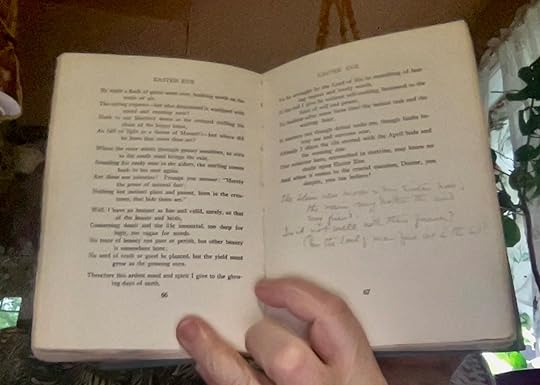 the poem ‘Easter Eve’ with the glosses in pencil
~
At first, I thought perhaps the book was a sort of ‘proof’ copy, and the glosses were Bliss Carman’s. But recently, I found a date in pencil in the same handwriting – 24 July 1932. The glosses were added by another person, not Bliss Carman who died in 1929, or Irving Way who died in 1931. The glosses were also added after the 1926 edition and so could not have been the impetus for changes in either of the other Editions.
~
So, who was the person who wrote in pencil in the book? An heir of Irving Way? An editor considering yet another Edition? Or simply a lover of poetry who did some research between Editions.
~
This is a first draft of part of my poem about the glosses in this book – this part of the poem explains why I love Bliss Carman’s work. One of the reasons – the writing group I meet each month (Wolf Tree Writers) has a member who is a distant cousin of Bliss Carman: Virginia Bliss Bjerkelund, author of Meadowlands- A Chronicle of the Scovil Family (Chapel Street Editions, 2020) and A Nurse for All Seasons (Chapel Street Editions, 2023); for a review of the book Meadowlands, click here.
~
My poem includes quotes from Bliss Carman’s Later Poems.
~
First Edition Glosses
~
1.
as she walked the forest edge
my mother quoted poets
William Cullen Bryant
‘Whither, ‘midst falling dew’
Bliss Carman
‘I took a day to search for God …’
~
at her funeral, knowing
she still ‘dwelt within my heart’
I read ‘Vestigia,’ by Carman
my poet of choice
~
I hear his voice
when purple lilacs ‘stir’
when I hear the wind
‘conversing with the leaves’
~
when I wander
in the meadow
chasing ‘stealthy shadows
of the summer clouds’
~
distant cousin brings his
charm and talent
to our writing group
when it meets each month
~
~
The poem goes on to talk about the other Editions, the glosses and how many hands have held the book before mine.
~
I am loving this Bookmark project. I am learning so many new things and I find the writing of ‘fact-filled’ poetry a bit of a challenge.
~
Enjoy your own reading and discoveries!
~
All my best,
Jane
June 7, 2024
plants in the city landscape
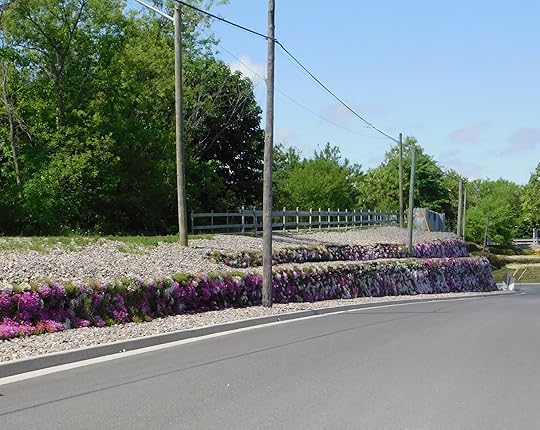
I live near Fredericton, New Brunswick, known for its green space and its many large trees. Lately I have been noticing how beautiful parts of the city are: most are plantings with lots of human intervention but they add to the beauty of the city as we drive around. Have a look at the photos I took as we went on a special drive today.
~
~
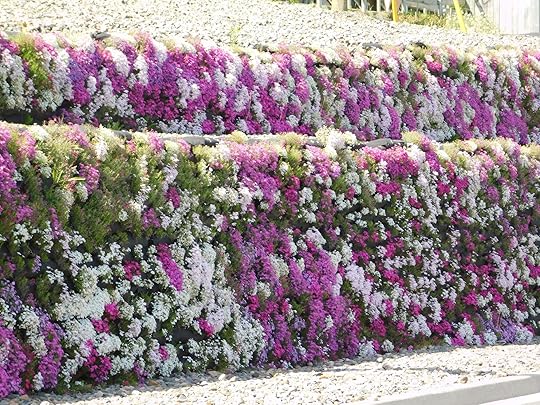
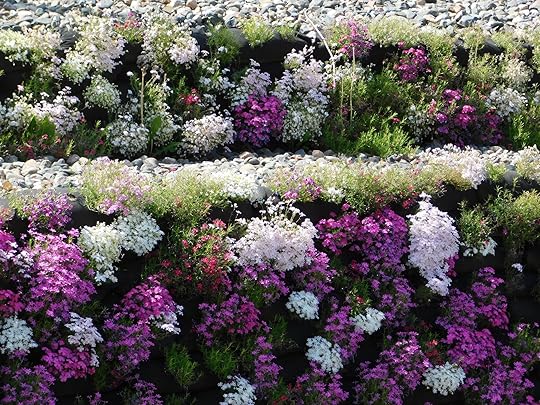
We began our drive on the north side of the city, off Union Street, on Station Road, near the end of the walking bridge. On the steep bank along the street is a stunning wall of flowers, all creeping phlox, in pink, white and purple with a touch of red.
~
~
~
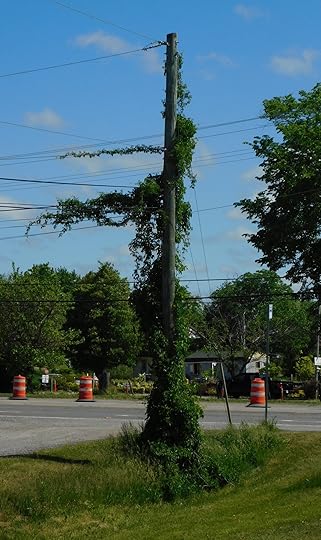
Our second stop was a bit further along the road (Highway 105), near the end of the Princess Margaret Bridge, almost in front of the Ramada Inn. It is a common sight, a phone pole covered with Virginia creeper, but I think it is a masterpiece of streetscape.
~
~
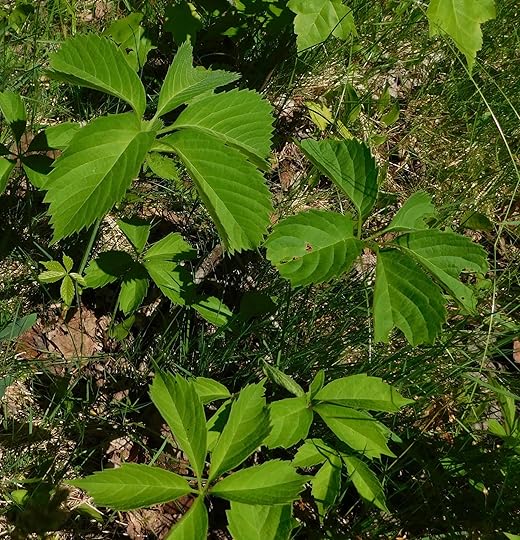 Virginia creeper… this vine-covered pole will be stunning when the leaves turn red in the fall…
~
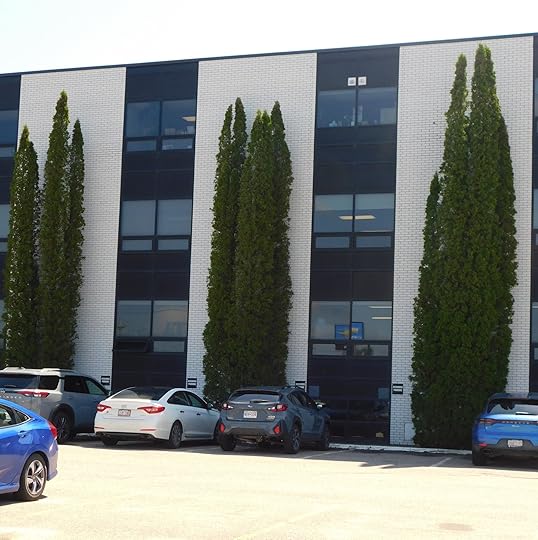
Afterwards, we crossed the river to the south side and stopped to photograph some very tall cedar trees against the side of a building on Prospect Street.
~

~
Their size and dimensions are amazing.
~
~
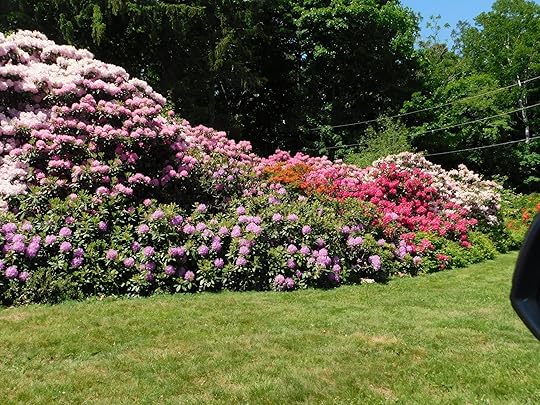
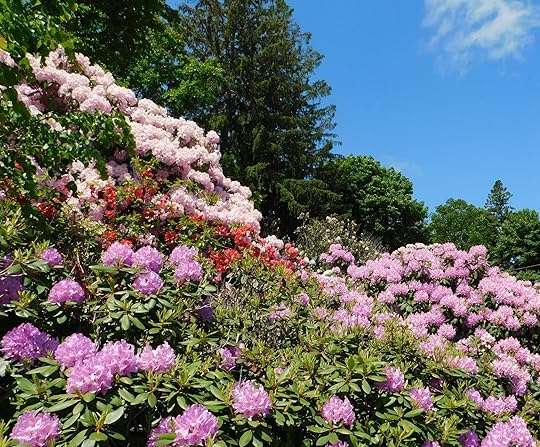
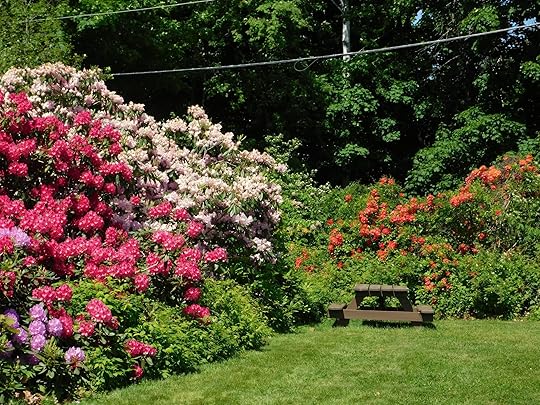
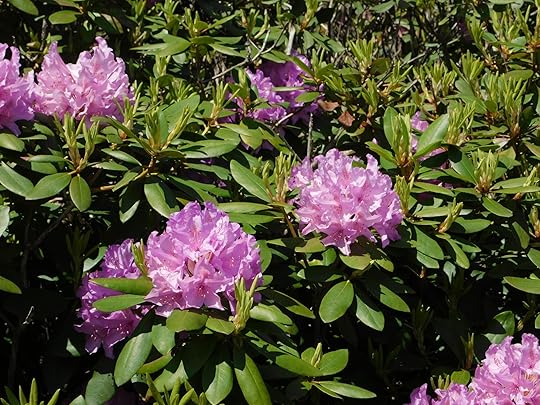
The highlight of our drive was a visit to the Agriculture Farm on Lincoln Road. Most years, we drive to see the azaleas in bloom and this year, they did not disappoint. Not far from the azaleas is a row of trees where I had my wedding gown photos taken back in 1980.
~
~
~
~
~
If you live in the Fredericton area, please go and see some of these lovely places. I live in and love the rural area, but our city streetscapes can be joyful.
~
All my best!
Jane
June 6, 2024
Rock Project: update
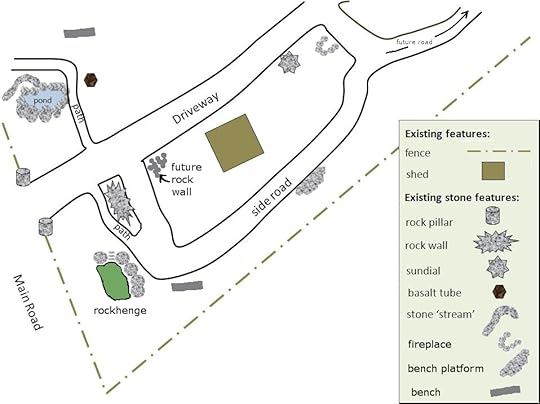
News about my ‘rock project.’ We have been building a side road to our driveway, to serve as a turn-about and also a walking trail. I have been working on embellishments for the last few years. For more about the ‘rock project’ click here.
~
~
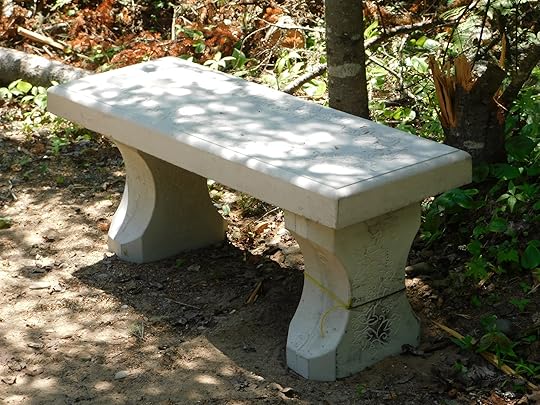
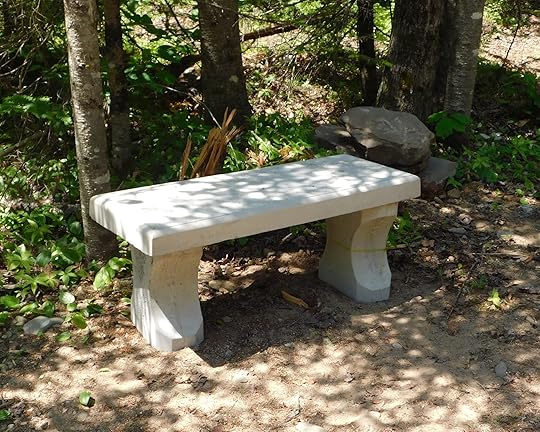
I bought a cement bench for our side road! I had put my name in for one at Scott’s Nursery and when I went to get seeds this week, it had arrived. The fine staff at Scott’s put it into the truck for me (it is very heavy). At home, my husband lifted the two pedestals and placed them in the chosen spot. Then he rigged two straps around the flat seat and lifted it into place with the tractor. We had prepared a bench platform, but after the wind storm, it is still filled with downed trees!
~
~
~
I had my first sit on the bench after it was stable. On a hot day, it was so cool to sit on! Now I have more incentive to go for walks around the ‘loop.’
~
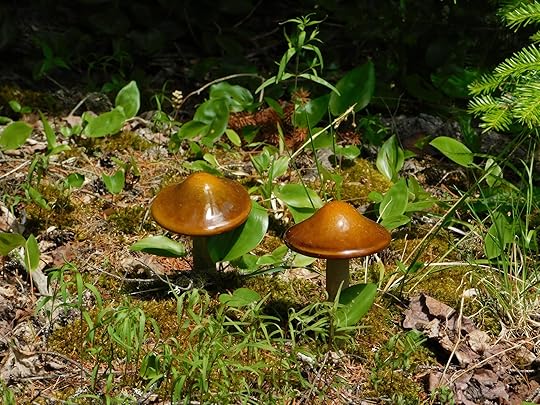 ceramic mushrooms … one of my ‘human’ touches on the side drive
~
All my best!
Jane
May 29, 2024
three robin’s nests
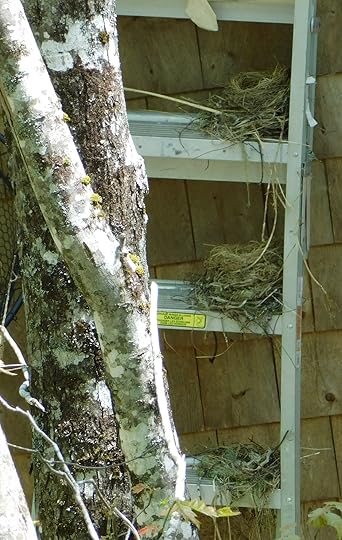
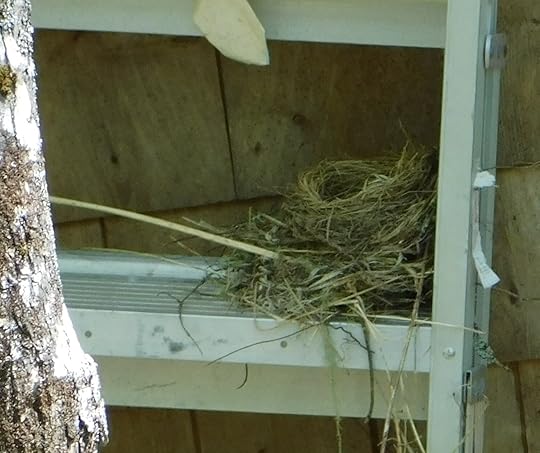
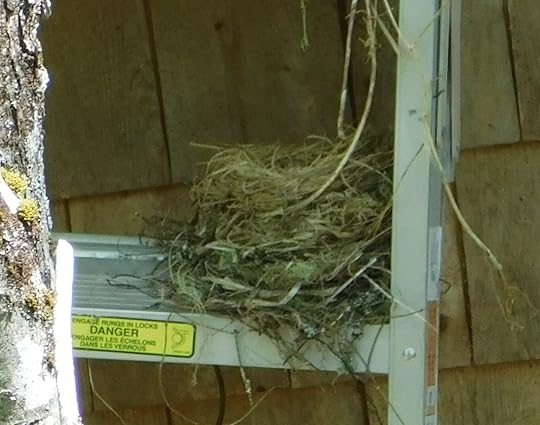
A robin has built three nests on the ladder leaning against our garage! The top two are well-formed and intact. The lower nest looks disarranged, as though construction was abandoned or a predator has pulled it apart.
~
~
Bird nests are built during a period of a few days using grasses and twigs, mud for a lining. They are used for incubation of eggs and brooding of young. Adult robins don’t use the nest as a bed, but roost on a tree branch. For a great description of how the nest is built, see allabout birds.org.
~
~
We have watched the nests on the ladder, but there is no sign of eggs or baby birds. Every day, we hear the robin singing nearby, ‘cheery, cheer-up, cheer-up, cheeree.’ I hear the robin singing as I type!
~
~
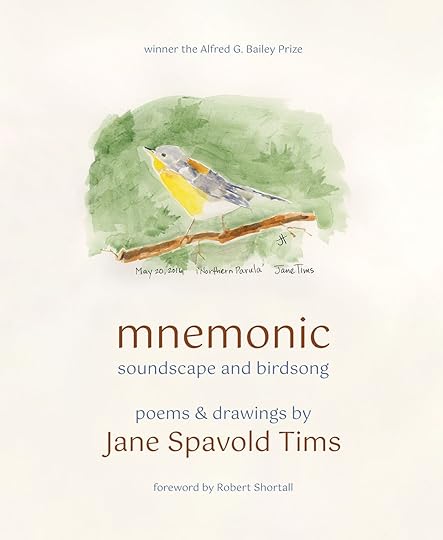
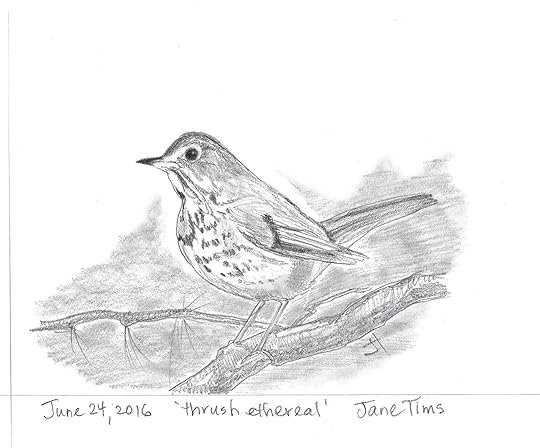
If you love birds and enjoy watching them through the seasons, you might like my new poetry book: ‘mnemonic: soundscape and birdsong.’ The book includes 53 poems about birdsong, bird behaviour, my experiences with birds, birdsong as a life metaphor, and celebration of other sounds in nature. I have also included 15 of my black and white drawings of birds. To get your copy of the book, click here to go to Chapel Street Edition’s (the publisher’s) website. If you would like to purchase the book on Amazon, click here. You can also find my book in several New Brunswick bookstores, including Westminster Bookmark in Fredericton and Dog Eared Books in Oromocto.
~
~
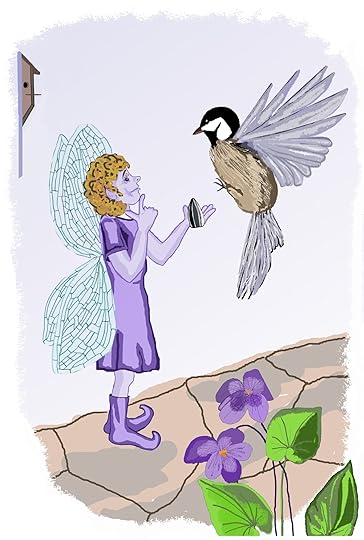
I want to write a story about the robin building nests in our ladder. I have decided to write a third book in my children’s books about ‘Wink.’ The first of these is ‘Wink in the Rain’ (available here), a story about a garden elf and his adventures in finding the perfect umbrella. The second book, ‘Wink and the Missing Sidewalk Chalk,’ a story of the hunt for a thief in the garden, will be published later this year. The story about ‘Wink and the Garden Ladder’ is written and I will soon be doing its illustrations.
~
~
Will our robin use the nests on the ladders to raise a family? I will keep you up to date.
~
All my best!
Jane
May 25, 2024
spring plants and flowers
A beautiful day here… I planted my small deck garden (yellow wax beans, zucchini, cucumber and lettuce), all old seed, so the seeds were planted thick. The red squirrel has already been here to see if he can purloin some seeds, but I have my beds covered with metal grates!!!!
~
I also nosed around for some springtime plants: the season moves so fast, it is hard to catch them! In our lawn, we have bugleweed (ajuga) and lily-of-the-valley in bloom, and columbines showing their floral buds. In the woods are bunchberry, teaberry and partridgeberry. No photos, but I have some drawings and paintings for you.
~
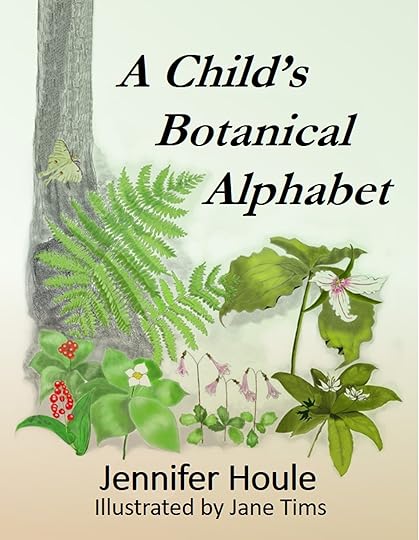
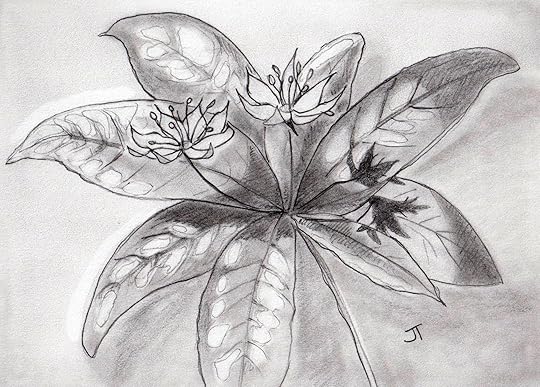 starflower – a drawing that formed the basis for the image in the new book I illustrated! ‘A Child’s Botanical Alphabet’
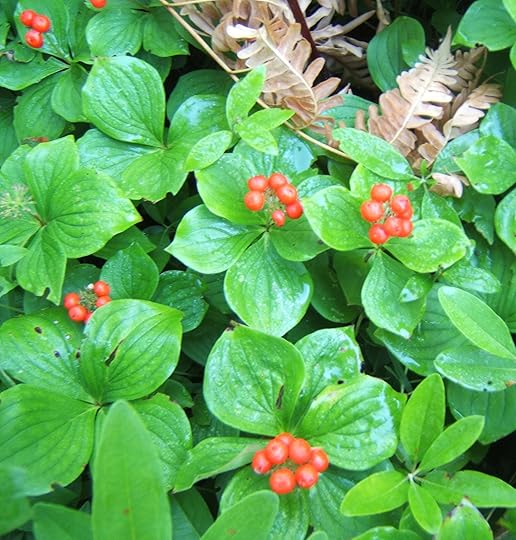 bunchberry, berry stage
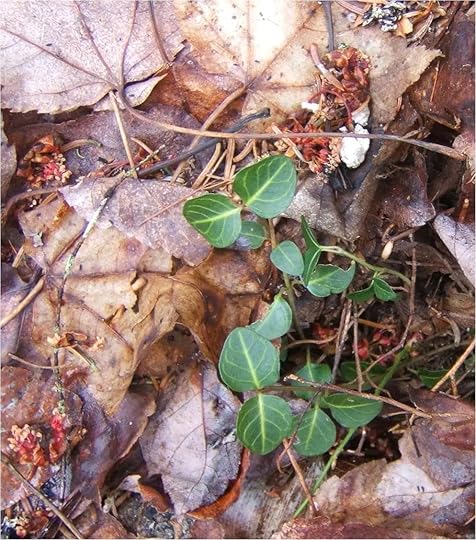 partridgeberry, no blossoms or berries on this little plant, poking up through fall’s debris
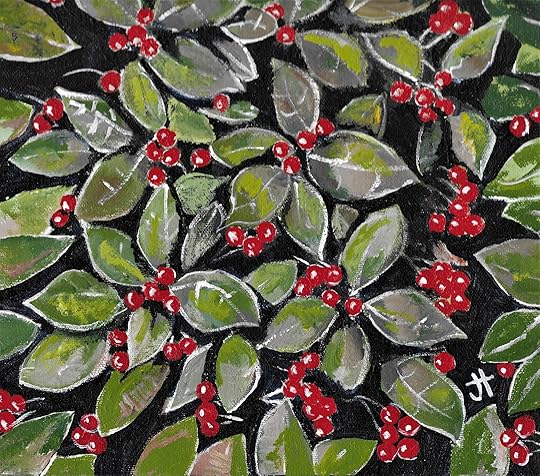 teaberry, a painting from later in the year when the berries are ripe
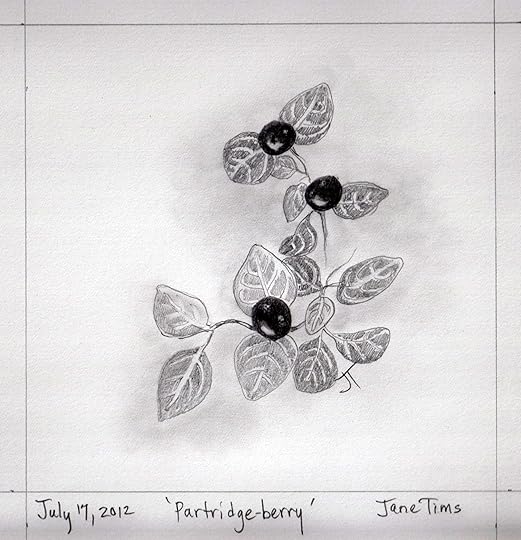 partridge berry – in late summer when the dark berries are ripe
~
If you love springtime flowers, you will love the new book ‘A Child’s Botanical Alphabet’ authored by Jennifer Houle and illustrated by me…. to order just click here.
~
~
I love this time of year. The wild shrubs are in bloom. Our flowering crab apple only lasted a day and now our walkway is a scattering of pink petals. Other types of apple are in bloom and create puffs of white and pink against the new-green of the tree leaves. Bushes with elongated bundles of white show me where there will be chokecherries.
~
All my best to you, on this lovely spring day.
Jane (a.k.a. Alexandra)