
Jane Kelly Kosek's Blog: All About Indie Filmmaking (and Storytelling), page 4
December 2, 2014
Revenue, Royalties, Residuals, Recoupment in Indie Film - Oh My!
I'd like to talk about some of the R words that float around indie filmmaking. I deal with them a lot and they are a cause of great joy and also great stress. The four words that I often throw around are: Revenue, Royalties, Residuals and Recoupment.
These are good words as they mean your film is earning money. They can also be bad words as they are a ton of work to manage and as a producer, it's your job to oversee them.
Revenue is the amount of money your film has made. Gross revenue is the total amount of money your film has made all around the world. Then there is the amount of revenue that your distributor(s) receives and the amount of revenue they pass down to you, which are called royalties. There are usually lots of hands in your film's till before money reach's a film's bank account. Oftentimes, your film will earn money and you will never see any of it. Scary, right? And definitely a major problem in indie filmmaking. How can an industry exist whereby the filmmakers who made the actual film see no money from the sales? It happens and it's wrong. The system needs fixing. That discussion is for another blog entry!
Royalties are payments made to the right's owner of the film by companies who license the film in order to earn revenue from it. For example, when you sign a deal with a distributor, it's usually for a certain timeframe. During that timeframe, said distributor may sell your film and earn revenue from it. They will then take their distribution fee, recoup their expenses, and write you a royalty check for what is left over. Basically, royalties are a percentage of the revenue earned by a distributor for your film.
Residuals are payments made to union hires on a film on sales to additional distribution avenues not covered in your original union contract. For example, when you hire a SAG actor, you are agreeing to a contract with SAG that states you are paying for an actor's service for a certain distribution avenue, i.e. theatrical, television or internet. Residuals come into play when you sell your film outside of that original distribution avenue. So if you tell SAG you are making this film for a theatrical release, you will not have to pay residuals on the money you earn from playing the film in theaters. The actor's salary covers that airing. But you will have to pay residuals on digital distribution on the internet as well as television and DVD sales.
Typical scenario on handling residuals: Residuals are calculated by the residual departments of the unions from the royalty statements sent to the production company (or the entity that is beholden to pay the residuals) by the distributor. The residual calculations are then reviewed by the production company and sent to a payroll company who calculates how much is owed to each union member. An invoice from the payroll company is sent back to the production company with the total residual amount owed. A check is then cut to the payroll company for the amount owed and the payroll company sends the checks for the union members to the union. If the union member is current on dues, he or she will receive the residual check. Bada bing bada boom.
Recoupment is what every producer and investor hopes for when making and/or investing in a film. Recoupment is when an investor starts getting his or her money back from the royalties earned on a film. This happens after the production company pays off all debt and deferrals. It doesn't typically happen right away or at once. The investor agreement usually states that royalty reports shall be sent to the investors along with any recoupment owed at that time a couple of times per year.
So let's look back over this procedure. You sign a contract with a distributor who sells your film. Revenue is earned and given to the distributor. The distributor takes a fee and recoups expenses and sends you any leftover money called royalties. From the royalties, you need to pay union residuals and then any debt or deferrals. Monies left over after all these commitments (minus some padding in your bank) is sent to investors for recoupment. Whew! That's a lot of work right? And it's multiple times per year.
That said, fellow indie producers, let's take a moment to pat ourselves on the back for overseeing union residuals, royalty statements, and royalty and deferral payments throughout each year on our films. This behind-the-scenes work lasts the life of the film (which we hope is the rest of our lives) and is a huge time commitment and most people have no clue we head this all up. They marvel at how checks end up in their mailbox.
Personally, I just wrapped payment of SAG residuals after 34 emails, dealing with invoices from SAG and the payroll company and providing proof of payment to our foreign sales agent so we could get reimbursed and a trip to the bank with the reimbursement. This took a couple of months and now I have to turn around and do it all over again.
This aforementioned work doesn't include royalty tracking and creating royalty statements and cutting checks to investors and crew for deferrals. That's a whole other set of reporting and check writing and overseeing.
While it makes me super happy to even be earning revenue, there are those days when managing all the Rs is overwhelming. This work is ongoing (happens throughout the year according to contractual terms), and no, I don't get paid to do this, and I handle it on three of my films at the moment. Yes, I'm wallowing. Some days I need to. #deepbreath #dayinlifeofindieproducer[image error]
These are good words as they mean your film is earning money. They can also be bad words as they are a ton of work to manage and as a producer, it's your job to oversee them.
Revenue is the amount of money your film has made. Gross revenue is the total amount of money your film has made all around the world. Then there is the amount of revenue that your distributor(s) receives and the amount of revenue they pass down to you, which are called royalties. There are usually lots of hands in your film's till before money reach's a film's bank account. Oftentimes, your film will earn money and you will never see any of it. Scary, right? And definitely a major problem in indie filmmaking. How can an industry exist whereby the filmmakers who made the actual film see no money from the sales? It happens and it's wrong. The system needs fixing. That discussion is for another blog entry!
Royalties are payments made to the right's owner of the film by companies who license the film in order to earn revenue from it. For example, when you sign a deal with a distributor, it's usually for a certain timeframe. During that timeframe, said distributor may sell your film and earn revenue from it. They will then take their distribution fee, recoup their expenses, and write you a royalty check for what is left over. Basically, royalties are a percentage of the revenue earned by a distributor for your film.
Residuals are payments made to union hires on a film on sales to additional distribution avenues not covered in your original union contract. For example, when you hire a SAG actor, you are agreeing to a contract with SAG that states you are paying for an actor's service for a certain distribution avenue, i.e. theatrical, television or internet. Residuals come into play when you sell your film outside of that original distribution avenue. So if you tell SAG you are making this film for a theatrical release, you will not have to pay residuals on the money you earn from playing the film in theaters. The actor's salary covers that airing. But you will have to pay residuals on digital distribution on the internet as well as television and DVD sales.
Typical scenario on handling residuals: Residuals are calculated by the residual departments of the unions from the royalty statements sent to the production company (or the entity that is beholden to pay the residuals) by the distributor. The residual calculations are then reviewed by the production company and sent to a payroll company who calculates how much is owed to each union member. An invoice from the payroll company is sent back to the production company with the total residual amount owed. A check is then cut to the payroll company for the amount owed and the payroll company sends the checks for the union members to the union. If the union member is current on dues, he or she will receive the residual check. Bada bing bada boom.
Recoupment is what every producer and investor hopes for when making and/or investing in a film. Recoupment is when an investor starts getting his or her money back from the royalties earned on a film. This happens after the production company pays off all debt and deferrals. It doesn't typically happen right away or at once. The investor agreement usually states that royalty reports shall be sent to the investors along with any recoupment owed at that time a couple of times per year.
So let's look back over this procedure. You sign a contract with a distributor who sells your film. Revenue is earned and given to the distributor. The distributor takes a fee and recoups expenses and sends you any leftover money called royalties. From the royalties, you need to pay union residuals and then any debt or deferrals. Monies left over after all these commitments (minus some padding in your bank) is sent to investors for recoupment. Whew! That's a lot of work right? And it's multiple times per year.
That said, fellow indie producers, let's take a moment to pat ourselves on the back for overseeing union residuals, royalty statements, and royalty and deferral payments throughout each year on our films. This behind-the-scenes work lasts the life of the film (which we hope is the rest of our lives) and is a huge time commitment and most people have no clue we head this all up. They marvel at how checks end up in their mailbox.
Personally, I just wrapped payment of SAG residuals after 34 emails, dealing with invoices from SAG and the payroll company and providing proof of payment to our foreign sales agent so we could get reimbursed and a trip to the bank with the reimbursement. This took a couple of months and now I have to turn around and do it all over again.
This aforementioned work doesn't include royalty tracking and creating royalty statements and cutting checks to investors and crew for deferrals. That's a whole other set of reporting and check writing and overseeing.
While it makes me super happy to even be earning revenue, there are those days when managing all the Rs is overwhelming. This work is ongoing (happens throughout the year according to contractual terms), and no, I don't get paid to do this, and I handle it on three of my films at the moment. Yes, I'm wallowing. Some days I need to. #deepbreath #dayinlifeofindieproducer[image error]


November 28, 2014
Giving Thanks to Yourself (and Others)
I'd like to thank my readers for continuing to follow my journey in filmmaking and so much more. I started this blog in order to organize my thoughts about my experiences in filmmaking. I had no idea my journey would appeal to anyone else but me. So thanks for checking in and I hope my journey has helped yours.
Looking back, I'm shocked that I've been a full-time film producer since 2005. It's a daily struggle that I find both exhilarating and exhausting. I know I couldn't keep going without knowing you're out there rooting for indie film to stay alive. I'll do my best to continue to breathe life into our industry.
I think the most positive and exciting progression for me as a storyteller has been investing time in developing my own creative voice. For so long, I put my entire heart and soul into the creative development of others. And while I love working with other creators and will definitely continue to do so, I am also spending time on myself and what a gift it has been for my own growth as an artist and a person. I think it has made me an even better collaborator with my creative partners.
So while we take time to reflect on our work for others this year, let's also taking time to reflect and work on ourselves. Take the time to listen to your inner voice and express it. You may not think you can be a writer or director when in reality, all you need to do is try. Investing in yourself is probably the single most important thing you can do in your career because if you're better then so is everything else around you. Good luck! I'll be rooting for you!
Looking back, I'm shocked that I've been a full-time film producer since 2005. It's a daily struggle that I find both exhilarating and exhausting. I know I couldn't keep going without knowing you're out there rooting for indie film to stay alive. I'll do my best to continue to breathe life into our industry.
I think the most positive and exciting progression for me as a storyteller has been investing time in developing my own creative voice. For so long, I put my entire heart and soul into the creative development of others. And while I love working with other creators and will definitely continue to do so, I am also spending time on myself and what a gift it has been for my own growth as an artist and a person. I think it has made me an even better collaborator with my creative partners.
So while we take time to reflect on our work for others this year, let's also taking time to reflect and work on ourselves. Take the time to listen to your inner voice and express it. You may not think you can be a writer or director when in reality, all you need to do is try. Investing in yourself is probably the single most important thing you can do in your career because if you're better then so is everything else around you. Good luck! I'll be rooting for you!
November 26, 2014
LA Film Series in Support of Ferguson Protests on November 28, 2014
CINEMA + CONVERSATION + CHANGEA Film Series Presented by AFFRM and BLACKOUT
WHAT: African American Film Festival Releasing Movement (AFFRM) in partnership with BLACKOUT For Human Rights (BLACKOUT) presents a Los Angeles film series at the Downtown Independent.
Free to the public, the films included in the series are MIDDLE OF NOWHERE (2012 Sundance Best Director Winner), FRUITVALE STATION (2013 Sundance Grand Jury Winner) and 25 TO LIFE (2014 American Black Film Festival Grand Jury Winner).
Founded in 2011 by award winning filmmaker Ava DuVernay, AFFRM is a distribution collective of black arts organizations dedicated to quality black independent films.
BLACKOUT, founded by award winning filmmaker Ryan Cooglar, is a nationwide network of high profile artists, activists and faith leaders, who stand against human rights violations perpetrated against US citizens by public servants.
WHO: Film screenings and community conversations in support of Ferguson protests as an alternative to Black Friday shopping moderated by award winning filmmaker Ava DuVernay (SELMA).
WHERE: Downtown Independent
251S. Main Street
Los Angeles, CA 90012
WHEN: Friday, November 28th
3:00 PM FRUITVALE STATION
5:00 PM MIDDLE OF NOWHERE
7:00 PM 25 TO LIFE
WHAT: African American Film Festival Releasing Movement (AFFRM) in partnership with BLACKOUT For Human Rights (BLACKOUT) presents a Los Angeles film series at the Downtown Independent.
Free to the public, the films included in the series are MIDDLE OF NOWHERE (2012 Sundance Best Director Winner), FRUITVALE STATION (2013 Sundance Grand Jury Winner) and 25 TO LIFE (2014 American Black Film Festival Grand Jury Winner).
Founded in 2011 by award winning filmmaker Ava DuVernay, AFFRM is a distribution collective of black arts organizations dedicated to quality black independent films.
BLACKOUT, founded by award winning filmmaker Ryan Cooglar, is a nationwide network of high profile artists, activists and faith leaders, who stand against human rights violations perpetrated against US citizens by public servants.
WHO: Film screenings and community conversations in support of Ferguson protests as an alternative to Black Friday shopping moderated by award winning filmmaker Ava DuVernay (SELMA).
WHERE: Downtown Independent
251S. Main Street
Los Angeles, CA 90012
WHEN: Friday, November 28th
3:00 PM FRUITVALE STATION
5:00 PM MIDDLE OF NOWHERE
7:00 PM 25 TO LIFE
November 19, 2014
"Hope for Steve" - A New Documentary about Steve Dezember's Journey with ALS
Hope for Steve
I recently became aware of this new documentary Hope for Steve about Steve Dezember and his journey with ALS. I should say the journey of both he and his wife Hope, who accepted Steve's marriage proposal two days after he was diagnosed. Their story is heartbreaking, inspirational, and also a testament to the power of love.
Recently, a good friend of mine lost a close friend to ALS as well. This disease is devastating. Please keep an eye out for Hope for Steve and help spread more awareness. Let's find a cure for ALS!
To learn more about Hope for Steve and the Dezembers' mission, please visit their Facebook page or website.
In the meantime, here is a trailer for the film and more about the Dezembers story below.
"Let's cherish every day" and "Beat this disease" - Steve Dezember
Hope and Steve Dezember's StoryHope was working as a mental health therapist when she started dating Steve Dezember, an engineer recruiter, after connecting through mutual friends. The two dated for just six months before Steve, only 28, was diagnosed with ALS, a terminal and progressive neurodegenerative disease (also known as Lou Gehrig’s Disease). ALS affects the nerve cells in the brain and spinal cord and has no treatments or cure. ALS progressively robs those affected by causing muscle weakness, paralysis and, ultimately, respiratory failure. The average lifespan after diagnosis is two to five years, according to ALS.net.
Two days after receiving this devastating blow, Steve proposed to Hope. He told her, “I know this is going to be hard and you don’t have to stay. But if you do, I want you to be my wife.” Without hesitation Hope accepted and the two were married two months later.
Wasting no time, Steve and Hope honeymooned, went on a cross-country road trip and crossed other things off of their bucket list. In the midst of everything going on, they wanted to share their experiences in hopes that Steve’s journey could possibly change the course of the future of the disease.
Long story short, what was originally going to be a 15-minute informative film about ALS catapulted to a full-blown documentary called “Hope for Steve,” as the whole town of John’s Creek, GA wanted to help. Thanks to support of the town, the film was completely funded through Kickstarter, which raised $35,000 in 15 days. Everyone from the Dave Matthews Band (who has granted rights for his music to be used in the film and invited the couple on stage at a recent concert) to Michael Franti (who has become a close family friend) wanted to get involved.
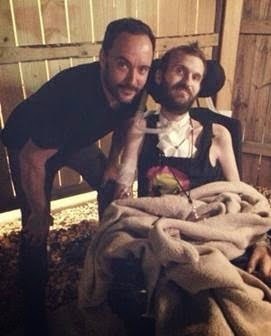
The documentary follows Hope and Steve from 1/2012 to 4/2014, and shows the highs and lows, from Steve dancing at his wedding to shortly after, when he is mobilized in a wheelchair. Aside from the couple’s mission to raise awareness and help find a cure or treatment, the documentary shows this couple’s love for each other and how it quickly overshadowed the disease.
Films really are powerful...

[image error]
I recently became aware of this new documentary Hope for Steve about Steve Dezember and his journey with ALS. I should say the journey of both he and his wife Hope, who accepted Steve's marriage proposal two days after he was diagnosed. Their story is heartbreaking, inspirational, and also a testament to the power of love.
Recently, a good friend of mine lost a close friend to ALS as well. This disease is devastating. Please keep an eye out for Hope for Steve and help spread more awareness. Let's find a cure for ALS!
To learn more about Hope for Steve and the Dezembers' mission, please visit their Facebook page or website.
In the meantime, here is a trailer for the film and more about the Dezembers story below.
"Let's cherish every day" and "Beat this disease" - Steve Dezember
Hope and Steve Dezember's StoryHope was working as a mental health therapist when she started dating Steve Dezember, an engineer recruiter, after connecting through mutual friends. The two dated for just six months before Steve, only 28, was diagnosed with ALS, a terminal and progressive neurodegenerative disease (also known as Lou Gehrig’s Disease). ALS affects the nerve cells in the brain and spinal cord and has no treatments or cure. ALS progressively robs those affected by causing muscle weakness, paralysis and, ultimately, respiratory failure. The average lifespan after diagnosis is two to five years, according to ALS.net.
Two days after receiving this devastating blow, Steve proposed to Hope. He told her, “I know this is going to be hard and you don’t have to stay. But if you do, I want you to be my wife.” Without hesitation Hope accepted and the two were married two months later.
Wasting no time, Steve and Hope honeymooned, went on a cross-country road trip and crossed other things off of their bucket list. In the midst of everything going on, they wanted to share their experiences in hopes that Steve’s journey could possibly change the course of the future of the disease.
Long story short, what was originally going to be a 15-minute informative film about ALS catapulted to a full-blown documentary called “Hope for Steve,” as the whole town of John’s Creek, GA wanted to help. Thanks to support of the town, the film was completely funded through Kickstarter, which raised $35,000 in 15 days. Everyone from the Dave Matthews Band (who has granted rights for his music to be used in the film and invited the couple on stage at a recent concert) to Michael Franti (who has become a close family friend) wanted to get involved.
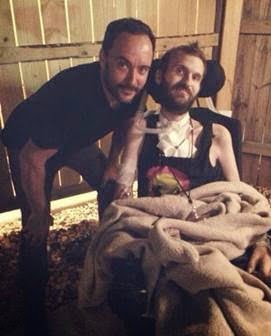
The documentary follows Hope and Steve from 1/2012 to 4/2014, and shows the highs and lows, from Steve dancing at his wedding to shortly after, when he is mobilized in a wheelchair. Aside from the couple’s mission to raise awareness and help find a cure or treatment, the documentary shows this couple’s love for each other and how it quickly overshadowed the disease.
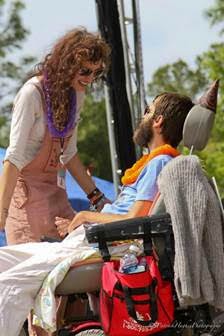
Hope's response to seeing a film about her and her husband: "Anxiously awaiting the movie we all get settled into our seats. Now Steve & I have only seen a rough version of the movie before this day, so we were very ready to finally see the finished project we have all worked so hard on. From the moment it starts, I have butterflies in my stomach and cannot sit back. I hold tight to Steve with a handful of tissues ready. The tears start right away, and as I find myself focusing on wiping Steve's tears away I am able to catch glimpses at the audience wiping away their own. Hearing the audience cry, cheer, laugh, and chant with our documentary is a feeling unlike anything I've ever felt. It was a moment that I will replay in my mind over and over. That kind of feedback is what you want from your audience."
Films really are powerful...
[image error]
"Hope for Steve" - A New Documentary about Steve Dezember's Journey with ALS
Hope for Steve
I recently became aware of this new documentary Hope for Steve about Steve Dezember and his journey with ALS. I should say the journey of both he and his wife Hope, who accepted Steve's marriage proposal two days after he was diagnosed. Their story is heartbreaking, inspirational, and also a testament to the power of love.
Recently, a good friend of mine lost a close friend to ALS as well. This disease is devastating. Please keep an eye out for Hope for Steve and help spread more awareness. Let's find a cure for ALS!
To learn more about Hope for Steve and the Dezembers' mission, please visit their Facebook page or website.
In the meantime, here is a trailer for the film and more about the Dezembers story below.
"Let's cherish every day" and "Beat this disease" - Steve Dezember
Hope and Steve Dezember's StoryHope was working as a mental health therapist when she started dating Steve Dezember, an engineer recruiter, after connecting through mutual friends. The two dated for just six months before Steve, only 28, was diagnosed with ALS, a terminal and progressive neurodegenerative disease (also known as Lou Gehrig’s Disease). ALS affects the nerve cells in the brain and spinal cord and has no treatments or cure. ALS progressively robs those affected by causing muscle weakness, paralysis and, ultimately, respiratory failure. The average lifespan after diagnosis is two to five years, according to ALS.net.
Two days after receiving this devastating blow, Steve proposed to Hope. He told her, “I know this is going to be hard and you don’t have to stay. But if you do, I want you to be my wife.” Without hesitation Hope accepted and the two were married two months later.
Wasting no time, Steve and Hope honeymooned, went on a cross-country road trip and crossed other things off of their bucket list. In the midst of everything going on, they wanted to share their experiences in hopes that Steve’s journey could possibly change the course of the future of the disease.
Long story short, what was originally going to be a 15-minute informative film about ALS catapulted to a full-blown documentary called “Hope for Steve,” as the whole town of John’s Creek, GA wanted to help. Thanks to support of the town, the film was completely funded through Kickstarter, which raised $35,000 in 15 days. Everyone from the Dave Matthews Band (who has granted rights for his music to be used in the film and invited the couple on stage at a recent concert) to Michael Franti (who has become a close family friend) wanted to get involved.
The documentary follows Hope and Steve from 1/2012 to 4/2014, and shows the highs and lows, from Steve dancing at his wedding to shortly after, when he is mobilized in a wheelchair. Aside from the couple’s mission to raise awareness and help find a cure or treatment, the documentary shows this couple’s love for each other and how it quickly overshadowed the disease.
Films really are powerful...

I recently became aware of this new documentary Hope for Steve about Steve Dezember and his journey with ALS. I should say the journey of both he and his wife Hope, who accepted Steve's marriage proposal two days after he was diagnosed. Their story is heartbreaking, inspirational, and also a testament to the power of love.
Recently, a good friend of mine lost a close friend to ALS as well. This disease is devastating. Please keep an eye out for Hope for Steve and help spread more awareness. Let's find a cure for ALS!
To learn more about Hope for Steve and the Dezembers' mission, please visit their Facebook page or website.
In the meantime, here is a trailer for the film and more about the Dezembers story below.
"Let's cherish every day" and "Beat this disease" - Steve Dezember
Hope and Steve Dezember's StoryHope was working as a mental health therapist when she started dating Steve Dezember, an engineer recruiter, after connecting through mutual friends. The two dated for just six months before Steve, only 28, was diagnosed with ALS, a terminal and progressive neurodegenerative disease (also known as Lou Gehrig’s Disease). ALS affects the nerve cells in the brain and spinal cord and has no treatments or cure. ALS progressively robs those affected by causing muscle weakness, paralysis and, ultimately, respiratory failure. The average lifespan after diagnosis is two to five years, according to ALS.net.
Two days after receiving this devastating blow, Steve proposed to Hope. He told her, “I know this is going to be hard and you don’t have to stay. But if you do, I want you to be my wife.” Without hesitation Hope accepted and the two were married two months later.
Wasting no time, Steve and Hope honeymooned, went on a cross-country road trip and crossed other things off of their bucket list. In the midst of everything going on, they wanted to share their experiences in hopes that Steve’s journey could possibly change the course of the future of the disease.
Long story short, what was originally going to be a 15-minute informative film about ALS catapulted to a full-blown documentary called “Hope for Steve,” as the whole town of John’s Creek, GA wanted to help. Thanks to support of the town, the film was completely funded through Kickstarter, which raised $35,000 in 15 days. Everyone from the Dave Matthews Band (who has granted rights for his music to be used in the film and invited the couple on stage at a recent concert) to Michael Franti (who has become a close family friend) wanted to get involved.
The documentary follows Hope and Steve from 1/2012 to 4/2014, and shows the highs and lows, from Steve dancing at his wedding to shortly after, when he is mobilized in a wheelchair. Aside from the couple’s mission to raise awareness and help find a cure or treatment, the documentary shows this couple’s love for each other and how it quickly overshadowed the disease.
Hope's response to seeing a film about her and her husband: "Anxiously awaiting the movie we all get settled into our seats. Now Steve & I have only seen a rough version of the movie before this day, so we were very ready to finally see the finished project we have all worked so hard on. From the moment it starts, I have butterflies in my stomach and cannot sit back. I hold tight to Steve with a handful of tissues ready. The tears start right away, and as I find myself focusing on wiping Steve's tears away I am able to catch glimpses at the audience wiping away their own. Hearing the audience cry, cheer, laugh, and chant with our documentary is a feeling unlike anything I've ever felt. It was a moment that I will replay in my mind over and over. That kind of feedback is what you want from your audience."
Films really are powerful...
November 10, 2014
My Novel 30 Days to Love Now Available on Amazon!

Super excited to be able to share my new adult romance novel 30 Days to Love on Amazon. I wrote this novel on Wattpad during the month of September. It's very, very loosely based on my own relationship with my husband. There were a few wonderful and not-so-wonderful things that happened early on in our relationship that I thought would make a good basis for a story about a young couple falling in love. Now that I have gotten this story out of my system, I'm excitedly embarking on my second novel.
I had a lot of fun writing 30 Days to Love. I actually wrote the story as a screenplay first and then decided to write it as a novel. I felt that it would make a better novel than film - it's a small intimate drama about new adults falling in love. Plus I figure that if the novel does well then it could make sense as a film at that point. Dramas are so hard to sell as films unless there is popular underlying material.
The structure of each chapter being one day in the characters' relationship really lent itself to a writing schedule of completing a chapter a day. I even chose to write it in a 30-day month - September. I would write one of the 30 days each morning. It took me about 2 to 4 hours to write each day at approximately 1000 to 3000 words per day.
At the end of the month, I had a novel and about 5000 reads on Wattpad.
I decided to revise it and then publish it on Amazon. Once I did that, I took most of the novel down off Wattpad and left the first chapter up as a teaser.
I chose to self-publish because as you all know, I'm an entrepreneur. I like to do things indie. And my long-term goal is to build content that my production company owns. This is just the beginning folks!
I had never written a novel before. It was really thrilling to write each day and see each character come to life. I didn't really change the story too much from what I came up with each September morning.
I feel that expanding my work into long fiction is really helping to strengthen my storytelling skills. I know it's going to help as I develop new feature films. I see this new writing endeavor as an enhancement of my work in film. Both go hand in hand. I hope you join me on this new side of my journey as an indie filmmaker, now indie storyteller.
I really hope you check out this novel. I think it's a realistic and fun look at a new romance. And if you do read it, please leave a review. I really want to know what you think.
You can find it on Amazon through this link: http://www.amazon.com/dp/B00PE0WXMO.
Thanks everyone![image error]
My Novel 30 Days to Love Now Available on Amazon!
Super excited to be able to share my new adult romance novel 30 Days to Love on Amazon. I wrote this novel on Wattpad during the month of September. It's very, very loosely based on my own relationship with my husband. There were a few wonderful and not-so-wonderful things that happened early on in our relationship that I thought would make a good basis for a story about a young couple falling in love. Now that I have gotten this story out of my system, I'm excitedly embarking on my second novel.
I had a lot of fun writing 30 Days to Love. I actually wrote the story as a screenplay first and then decided to write it as a novel. I felt that it would make a better novel than film - it's a small intimate drama about new adults falling in love. Plus I figure that if the novel does well then it could make sense as a film at that point. Dramas are so hard to sell as films unless there is popular underlying material.
The structure of each chapter being one day in the characters' relationship really lent itself to a writing schedule of completing a chapter a day. I even chose to write it in a 30-day month - September. I would write one of the 30 days each morning. It took me about 2 to 4 hours to write each day at approximately 1000 to 3000 words per day.
At the end of the month, I had a novel and about 5000 reads on Wattpad.
I decided to revise it and then publish it on Amazon. Once I did that, I took most of the novel down off Wattpad and left the first chapter up as a teaser.
I chose to self-publish because as you all know, I'm an entrepreneur. I like to do things indie. And my long-term goal is to build content that my production company owns. This is just the beginning folks!
I had never written a novel before. It was really thrilling to write each day and see each character come to life. I didn't really change the story too much from what I came up with each September morning.
I feel that expanding my work into long fiction is really helping to strengthen my storytelling skills. I know it's going to help as I develop new feature films. I see this new writing endeavor as an enhancement of my work in film. Both go hand in hand. I hope you join me on this new side of my journey as an indie filmmaker, now indie storyteller.
I really hope you check out this novel. I think it's a realistic and fun look at a new romance. And if you do read it, please leave a review. I really want to know what you think.
You can find it on Amazon through this link: http://www.amazon.com/dp/B00PE0WXMO.
Thanks everyone!

October 30, 2014
Where Does the Revenue Come from in Indie Film?
Oh where, oh where does the revenue come from in indie film? Unless you have a film in the marketplace, it's hard to know exactly where the revenue comes from. There are so many avenues to think about - domestic and foreign sales in theatrical, television/cable, Video-on-Demand (VOD), DVD, and nontheatrical/educational.
What I have found through the sales of my own titles is that most of the revenue from an independent film is generated from VOD. This means I have seen most of the sales of my films through On Demand via cable and digital distribution online through sites like iTunes, Amazon, Vudu, Netflix, and Hulu.
Theatrical releases for independent films are very hard to justify. They're costly and time-consuming and more often than not - a bust. It's very hard to fill theaters in cities where you have no friends or family to rally people to see your film on the big screen. When was the last time you went to see a random indie flick at your local theater? If you're like me, it takes publicity for me to even know about the film (and strong publicity usually takes time and money to generate) or a colleague/friend to push me to go. So unless you have a very niche audience to which you can market and have the time and money to build a strong grassroots campaign, doing a theatrical usually doesn't make sense for a small indie film.
So what's the solution to seeing your film on the big screen? Film festivals. Use film festivals as your theatrical release. Lean on the festivals to help you fill the theater and use the publicity from the screenings to build buzz that can help you sell the film once it hits the VOD platforms. And some festivals do pay screening fees so you can even earn some revenue from your screenings. Or you can use the festival circuit to travel the world, meet your audience, gather their email addresses, and get help building a fan base.
What about DVD? Unfortunately, DVD deals are mainly dead at this point unless you have a genre flick or a very popular indie film that Redbox cares about. In that case, you can strike a DVD deal. In other cases, a DVD manufacturer will either ask for a piece of your VOD or you will need to figure out how to create and sell DVDs on your own. We sell our film The Diary of Preston Plummer through Amazon's CreateSpace. It's not a huge moneymaker but every sale helps so it's worth doing.
Television sales of indie films are hard to come by these days. The networks have gotten to the point of only considering films with big-name actors. If you are lucky to break through this prerequisite (it's definitely possible - I've done it) and snag one, good for you! The sale of a small indie film to a TV network probably won't make a significant dent in your budget - unless your budget was teeny-tiny - but television sales certainly help with visibility of your film, which can help translate to more VOD revenue.
Foreign sales. Oy. Just oy. First, foreign buyers love to see big-name actors in the films they buy. And foreign countries don't have strong streaming solutions yet so most of the sales are for television, which means there are less markets in which to sell. To reach foreign buyers, you usually have to go through foreign sales agents because they have all the relationships to the buyers and these agents will have high expenses and take about 20% to 25% of your revenue from your foreign sales. There's definitely revenue to be had in the foreign market but the question is how to get most of it coming back to the filmmakers instead of it just lining the pockets of the foreign sales agents. It's a conundrum and trust me, I'm working on figuring out a solution.
Nontheatrical avenues like airlines and museums are viable arenas for sales but not every film will make sense for these buyers. Definitely go after them because again, every sale helps!
And, one of the biggest lessons I have learned is to forego all-rights deals, unless the distributor is paying off the debt, deferrals and investors. All-rights deals allow distributors to steal from Peter to pay Paul. For example, let's say your DVD sales tanked and you actually owe money in expenses for making the DVDs. The distributor will take revenue from your VOD sales and apply it towards their losses in the DVD deal. If you had sold the rights separately then you would have received all of your VOD revenue and the DVD distributor would have been in the red that quarter (something you don't want but it's even worse if your hard-earned revenue is sucked up by losses in another market).
Additionally, all-rights deals often come with a high sales fee, like 20%, and their expense caps are typically high with no oversight on how much they're spending on fulfilling each deal. It can cost $1500 to deliver to iTunes alone and the distributor may be tacking on additional fees to process the sale. How do you really know?
The best thing you can do is hold on to as many rights as you can and sell them individually. How do you do this? Hire a sales agent who has successfully sold the rights to their titles individually and agrees that selling the rights to your title separately is the best strategy for your film.
The money trail in indie film can be hard to follow. That's why there's a big push right now for more transparency from filmmakers about the kinds of deals they're getting. And filmmakers are speaking out. You can see case studies in the books by the Film Collaborative here. They offer free copies online.
Transparency will only increase our chances of successfully budgeting and paying off our films. Knowledge is power![image error]
What I have found through the sales of my own titles is that most of the revenue from an independent film is generated from VOD. This means I have seen most of the sales of my films through On Demand via cable and digital distribution online through sites like iTunes, Amazon, Vudu, Netflix, and Hulu.
Theatrical releases for independent films are very hard to justify. They're costly and time-consuming and more often than not - a bust. It's very hard to fill theaters in cities where you have no friends or family to rally people to see your film on the big screen. When was the last time you went to see a random indie flick at your local theater? If you're like me, it takes publicity for me to even know about the film (and strong publicity usually takes time and money to generate) or a colleague/friend to push me to go. So unless you have a very niche audience to which you can market and have the time and money to build a strong grassroots campaign, doing a theatrical usually doesn't make sense for a small indie film.
So what's the solution to seeing your film on the big screen? Film festivals. Use film festivals as your theatrical release. Lean on the festivals to help you fill the theater and use the publicity from the screenings to build buzz that can help you sell the film once it hits the VOD platforms. And some festivals do pay screening fees so you can even earn some revenue from your screenings. Or you can use the festival circuit to travel the world, meet your audience, gather their email addresses, and get help building a fan base.
What about DVD? Unfortunately, DVD deals are mainly dead at this point unless you have a genre flick or a very popular indie film that Redbox cares about. In that case, you can strike a DVD deal. In other cases, a DVD manufacturer will either ask for a piece of your VOD or you will need to figure out how to create and sell DVDs on your own. We sell our film The Diary of Preston Plummer through Amazon's CreateSpace. It's not a huge moneymaker but every sale helps so it's worth doing.
Television sales of indie films are hard to come by these days. The networks have gotten to the point of only considering films with big-name actors. If you are lucky to break through this prerequisite (it's definitely possible - I've done it) and snag one, good for you! The sale of a small indie film to a TV network probably won't make a significant dent in your budget - unless your budget was teeny-tiny - but television sales certainly help with visibility of your film, which can help translate to more VOD revenue.
Foreign sales. Oy. Just oy. First, foreign buyers love to see big-name actors in the films they buy. And foreign countries don't have strong streaming solutions yet so most of the sales are for television, which means there are less markets in which to sell. To reach foreign buyers, you usually have to go through foreign sales agents because they have all the relationships to the buyers and these agents will have high expenses and take about 20% to 25% of your revenue from your foreign sales. There's definitely revenue to be had in the foreign market but the question is how to get most of it coming back to the filmmakers instead of it just lining the pockets of the foreign sales agents. It's a conundrum and trust me, I'm working on figuring out a solution.
Nontheatrical avenues like airlines and museums are viable arenas for sales but not every film will make sense for these buyers. Definitely go after them because again, every sale helps!
And, one of the biggest lessons I have learned is to forego all-rights deals, unless the distributor is paying off the debt, deferrals and investors. All-rights deals allow distributors to steal from Peter to pay Paul. For example, let's say your DVD sales tanked and you actually owe money in expenses for making the DVDs. The distributor will take revenue from your VOD sales and apply it towards their losses in the DVD deal. If you had sold the rights separately then you would have received all of your VOD revenue and the DVD distributor would have been in the red that quarter (something you don't want but it's even worse if your hard-earned revenue is sucked up by losses in another market).
Additionally, all-rights deals often come with a high sales fee, like 20%, and their expense caps are typically high with no oversight on how much they're spending on fulfilling each deal. It can cost $1500 to deliver to iTunes alone and the distributor may be tacking on additional fees to process the sale. How do you really know?
The best thing you can do is hold on to as many rights as you can and sell them individually. How do you do this? Hire a sales agent who has successfully sold the rights to their titles individually and agrees that selling the rights to your title separately is the best strategy for your film.
The money trail in indie film can be hard to follow. That's why there's a big push right now for more transparency from filmmakers about the kinds of deals they're getting. And filmmakers are speaking out. You can see case studies in the books by the Film Collaborative here. They offer free copies online.
Transparency will only increase our chances of successfully budgeting and paying off our films. Knowledge is power![image error]
Where Does the Revenue Come from in Indie Film?
Oh where, oh where does the revenue come from in indie film? Unless you have a film in the marketplace, it's hard to know exactly where the revenue comes from. There are so many avenues to think about - domestic and foreign sales in theatrical, television/cable, Video-on-Demand (VOD), DVD, and nontheatrical/educational.
What I have found through the sales of my own titles is that most of the revenue from an independent film is generated from VOD. This means I have seen most of the sales of my films through On Demand via cable and digital distribution online through sites like iTunes, Amazon, Vudu, Netflix, and Hulu.
Theatrical releases for independent films are very hard to justify. They're costly and time-consuming and more often than not - a bust. It's very hard to fill theaters in cities where you have no friends or family to rally people to see your film on the big screen. When was the last time you went to see a random indie flick at your local theater? If you're like me, it takes publicity for me to even know about the film (and strong publicity usually takes time and money to generate) or a colleague/friend to push me to go. So unless you have a very niche audience to which you can market and have the time and money to build a strong grassroots campaign, doing a theatrical usually doesn't make sense for a small indie film.
So what's the solution to seeing your film on the big screen? Film festivals. Use film festivals as your theatrical release. Lean on the festivals to help you fill the theater and use the publicity from the screenings to build buzz that can help you sell the film once it hits the VOD platforms. And some festivals do pay screening fees so you can even earn some revenue from your screenings. Or you can use the festival circuit to travel the world, meet your audience, gather their email addresses, and get help building a fan base.
What about DVD? Unfortunately, DVD deals are mainly dead at this point unless you have a genre flick or a very popular indie film that Redbox cares about. In that case, you can strike a DVD deal. In other cases, a DVD manufacturer will either ask for a piece of your VOD or you will need to figure out how to create and sell DVDs on your own. We sell our film The Diary of Preston Plummer through Amazon's CreateSpace. It's not a huge moneymaker but every sale helps so it's worth doing.
Television sales of indie films are hard to come by these days. The networks have gotten to the point of only considering films with big-name actors. If you are lucky to break through this prerequisite (it's definitely possible - I've done it) and snag one, good for you! The sale of a small indie film to a TV network probably won't make a significant dent in your budget - unless your budget was teeny-tiny - but television sales certainly help with visibility of your film, which can help translate to more VOD revenue.
Foreign sales. Oy. Just oy. First, foreign buyers love to see big-name actors in the films they buy. And foreign countries don't have strong streaming solutions yet so most of the sales are for television, which means there are less markets in which to sell. To reach foreign buyers, you usually have to go through foreign sales agents because they have all the relationships to the buyers and these agents will have high expenses and take about 20% to 25% of your revenue from your foreign sales. There's definitely revenue to be had in the foreign market but the question is how to get most of it coming back to the filmmakers instead of it just lining the pockets of the foreign sales agents. It's a conundrum and trust me, I'm working on figuring out a solution.
Nontheatrical avenues like airlines and museums are viable arenas for sales but not every film will make sense for these buyers. Definitely go after them because again, every sale helps!
And, one of the biggest lessons I have learned is to forego all-rights deals, unless the distributor is paying off the debt, deferrals and investors. All-rights deals allow distributors to steal from Peter to pay Paul. For example, let's say your DVD sales tanked and you actually owe money in expenses for making the DVDs. The distributor will take revenue from your VOD sales and apply it towards their losses in the DVD deal. If you had sold the rights separately then you would have received all of your VOD revenue and the DVD distributor would have been in the red that quarter (something you don't want but it's even worse if your hard-earned revenue is sucked up by losses in another market).
Additionally, all-rights deals often come with a high sales fee, like 20%, and their expense caps are typically high with no oversight on how much they're spending on fulfilling each deal. It can cost $1500 to deliver to iTunes alone and the distributor may be tacking on additional fees to process the sale. How do you really know?
The best thing you can do is hold on to as many rights as you can and sell them individually. How do you do this? Hire a sales agent who has successfully sold the rights to their titles individually and agrees that selling the rights to your title separately is the best strategy for your film.
The money trail in indie film can be hard to follow. That's why there's a big push right now for more transparency from filmmakers about the kinds of deals they're getting. And filmmakers are speaking out. You can see case studies in the books by the Film Collaborative here. They offer free copies online.
Transparency will only increase our chances of successfully budgeting and paying off our films. Knowledge is power!
What I have found through the sales of my own titles is that most of the revenue from an independent film is generated from VOD. This means I have seen most of the sales of my films through On Demand via cable and digital distribution online through sites like iTunes, Amazon, Vudu, Netflix, and Hulu.
Theatrical releases for independent films are very hard to justify. They're costly and time-consuming and more often than not - a bust. It's very hard to fill theaters in cities where you have no friends or family to rally people to see your film on the big screen. When was the last time you went to see a random indie flick at your local theater? If you're like me, it takes publicity for me to even know about the film (and strong publicity usually takes time and money to generate) or a colleague/friend to push me to go. So unless you have a very niche audience to which you can market and have the time and money to build a strong grassroots campaign, doing a theatrical usually doesn't make sense for a small indie film.
So what's the solution to seeing your film on the big screen? Film festivals. Use film festivals as your theatrical release. Lean on the festivals to help you fill the theater and use the publicity from the screenings to build buzz that can help you sell the film once it hits the VOD platforms. And some festivals do pay screening fees so you can even earn some revenue from your screenings. Or you can use the festival circuit to travel the world, meet your audience, gather their email addresses, and get help building a fan base.
What about DVD? Unfortunately, DVD deals are mainly dead at this point unless you have a genre flick or a very popular indie film that Redbox cares about. In that case, you can strike a DVD deal. In other cases, a DVD manufacturer will either ask for a piece of your VOD or you will need to figure out how to create and sell DVDs on your own. We sell our film The Diary of Preston Plummer through Amazon's CreateSpace. It's not a huge moneymaker but every sale helps so it's worth doing.
Television sales of indie films are hard to come by these days. The networks have gotten to the point of only considering films with big-name actors. If you are lucky to break through this prerequisite (it's definitely possible - I've done it) and snag one, good for you! The sale of a small indie film to a TV network probably won't make a significant dent in your budget - unless your budget was teeny-tiny - but television sales certainly help with visibility of your film, which can help translate to more VOD revenue.
Foreign sales. Oy. Just oy. First, foreign buyers love to see big-name actors in the films they buy. And foreign countries don't have strong streaming solutions yet so most of the sales are for television, which means there are less markets in which to sell. To reach foreign buyers, you usually have to go through foreign sales agents because they have all the relationships to the buyers and these agents will have high expenses and take about 20% to 25% of your revenue from your foreign sales. There's definitely revenue to be had in the foreign market but the question is how to get most of it coming back to the filmmakers instead of it just lining the pockets of the foreign sales agents. It's a conundrum and trust me, I'm working on figuring out a solution.
Nontheatrical avenues like airlines and museums are viable arenas for sales but not every film will make sense for these buyers. Definitely go after them because again, every sale helps!
And, one of the biggest lessons I have learned is to forego all-rights deals, unless the distributor is paying off the debt, deferrals and investors. All-rights deals allow distributors to steal from Peter to pay Paul. For example, let's say your DVD sales tanked and you actually owe money in expenses for making the DVDs. The distributor will take revenue from your VOD sales and apply it towards their losses in the DVD deal. If you had sold the rights separately then you would have received all of your VOD revenue and the DVD distributor would have been in the red that quarter (something you don't want but it's even worse if your hard-earned revenue is sucked up by losses in another market).
Additionally, all-rights deals often come with a high sales fee, like 20%, and their expense caps are typically high with no oversight on how much they're spending on fulfilling each deal. It can cost $1500 to deliver to iTunes alone and the distributor may be tacking on additional fees to process the sale. How do you really know?
The best thing you can do is hold on to as many rights as you can and sell them individually. How do you do this? Hire a sales agent who has successfully sold the rights to their titles individually and agrees that selling the rights to your title separately is the best strategy for your film.
The money trail in indie film can be hard to follow. That's why there's a big push right now for more transparency from filmmakers about the kinds of deals they're getting. And filmmakers are speaking out. You can see case studies in the books by the Film Collaborative here. They offer free copies online.
Transparency will only increase our chances of successfully budgeting and paying off our films. Knowledge is power!
October 4, 2014
Feature on Jane Kelly Kosek (that's me) in Lady Clever!
Hi everyone! My good friend and colleague Abby Stern put together a wonderful feature on me and my work at Meritage Pictures for the Web site Lady Clever.


Abby really challenged me to dig deep about my motivations behind my work. It was really fun to ponder where I've been and where I'm going. I hope you check it out!
Here's a link to the article: Indie Film Producer Jane Kosek on the Silver Screen.
Cheers!

All About Indie Filmmaking (and Storytelling)

All About Indie Filmmaking is Jane Kelly Kosek's blog about storytelling.
...more
- Jane Kelly Kosek's profile
- 10 followers

