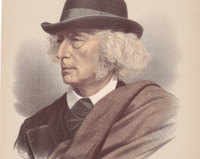
John Stuart Blackie was one of the most influential figures of nineteenth-century Scotland. He translated Goethe's Faust and brought first-hand knowledge of German philosophy to Scotland as a means of keeping the Enlightenment tradition alive. As first Professor of Humanity at Aberdeen from 1839 to 1852 and then Professor of Greek at Edinburgh until 1882, he played a central role in modernising the Scottish university curriculum, removing the dead hand of theological orthodoxy, raising standards, introducing tutorial teaching and establishing new chairs, including the Edinburgh chair of Celtic.
Blackie was also a great public man, corresponding with great and famous throughout Great Britain and Europe, from Goethe and Carlyle to Ruskin and GJohn Stuart Blackie was one of the most influential figures of nineteenth-century Scotland. He translated Goethe's Faust and brought first-hand knowledge of German philosophy to Scotland as a means of keeping the Enlightenment tradition alive. As first Professor of Humanity at Aberdeen from 1839 to 1852 and then Professor of Greek at Edinburgh until 1882, he played a central role in modernising the Scottish university curriculum, removing the dead hand of theological orthodoxy, raising standards, introducing tutorial teaching and establishing new chairs, including the Edinburgh chair of Celtic.
Blackie was also a great public man, corresponding with great and famous throughout Great Britain and Europe, from Goethe and Carlyle to Ruskin and Gladstone, and filling the pages of newspapers and journals with writings on the major issues of the day. For the last thirty years of his life he became closely involved in issues of Scottish nationalism and home rule, and as champion of the crofters is largely responsible for their contemporary survival and unique status....more

 Sign in with Facebook