Linda Shenton Matchett's Blog, page 86
April 30, 2018
Traveling Tuesday: Montana During WWIIHome to Glacier Nat...
Traveling Tuesday: Montana During WWII
 Home to Glacier National Park, Little Bighorn Battlefield National Monument, and Yellowstone National Park, Montana is a combination of mountain ranges, prairies terrain, and badlands. Located in the northwestern United States, it is bordered by Idaho, North and South Dakota, Wyoming, and three Canadian provinces. Despite being the third least populous state in the union, Montana made significant contributions to World War II.
War Dogs: Dogs for Defense was a program started by dog fanciers (mostly members of the AKC). The program asked US citizens to volunteer to give their dogs to the military for use as sentry dogs initially. Ultimately, dogs were also trained and sent overseas to be used for mine detection, delivering messages, and scouting out the enemy. If you want more information about this interesting segment of US WWII history, watch my podcast about Dogs for Defense on YouTube.
Camp Rimini is now a ghost town just outside of Helena, but was once a training camp for sled and pack dogs during WWII. Journalist Karen Fischer states in her article: “Rimini’s long winters and deep snow...were also ideal for training men and dogs in Arctic rescue and survival techniques, so the camp became the source of the teams and equipment used by the Arctic Search and Rescue Units of the Air Transport Command.”
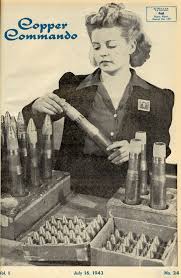 Mining: The need for copper, zinc, manganese, and other minerals skyrocketed during the war and revived the Montana mining industry. The metals were used to produce materiels such as weapons, vehicles, and other tools. Robert I. Nesmith was the chief photograph of the "Copper Commando" newspaper during the war, and he took hundreds of picture in Montana that displayed the work of everyday miners.
Because of the labor shortage as men went off to war, mining companies struggled to find employees, and the federal government pressured them to hire nontraditional workers, including women. The move met with resistance. Union officials and copper workers argued that women could not work in mines or smelters because they lacked the physical strength and stamina to do the job. Women worked in a variety of positions from picking up debris to bending wire to oiling machinery. Many of the women expressed pride that they could hold their own doing "men's work." Ursula Jurcich recalled that smelter work "wasn't any more strenuous than housework."
 Fort Missoula: Built in 1877 by the US Army to protect settlers in Western Montana from possible threats from Native Americans, the fort was remodeled between 1908 and 1914 before becoming a military training center during WWI. Nearly abandoned, it was taken over by the Civilian Conservation Corp in 1933 then handed to the Department of Naturalization and Immigration in 1941 for use as an Alien Detention Center. The 1,200 Italians house here were primarily merchant seamen, World's Fair employees, and the crew of an Italian luxury liner seized in the Panama Canal. About 1,000 Japanese-Americans and a few German-Americans were also interned at the fort.
Have you ever visited this majestic and historic state?


April 28, 2018
Blog Tour: Presumption and Partiality
Blog Tour: Presumption and Partiality

About the Book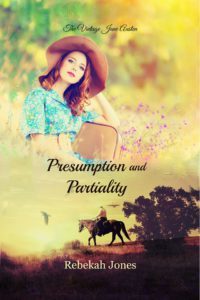
Title: Presumption and Partiality
Author: Rebekah Jones
Genre: Historical Christian Fiction
Release Date: November 27, 2017
Among the cotton fields and farmland of Gilbert, Arizona in the early years of the Great Depression, Mr. and Mrs. Bailey live a simple, but happy life with their five daughters on a cotton farm. When the wealthy Richard Buchanan moves to town, bringing his family, a friend, and a desire to learn about cotton, Matilda Bailey is convinced that he is the perfect candidate to marry her eldest daughter, Alice. Richard is cheerful, friendly, and likable. His friend Sidney Dennison doesn’t make such a good impression. Eloise Bailey decides he’s arrogant and self-conceited, but when Raymond Wolfe comes to town, accusing Sidney of dishonorable and treacherous conduct, Eloise is angered at the injustice of the situation. When the Buchanan household leaves town, Alice must turn to the Lord and face, perhaps, her most difficult test in trust, while Eloise takes a trip to visit her friend and may well discover a web of deceit that she doesn’t really want to believe exists.
Click here to purchase your copy.My ThoughtsI enjoy “retelling” books and thought the premise of Presumption and Partiality (love the title) being set during the Great Depression was interesting and unique. The author kept very close to the original Pride and Prejudice plot points, which gave the book credibility, but I was disappointed at some of the execution of the story. In the beginning I struggled to keep up with which character in the retelling was supposed to be which character in the original, but it got easier as the story progressed. The writing style and dialogue felt more like the Georgian/Regency era than the American 1930s, and I had trouble feeling the Depression era. The occasional references to Sidney’s Navajo heritage felt more like an aside than an integral part of the story. I would have liked to have seen this aspect developed more fully. Eloise’s mother was closely aligned with Austen’s original character, but I would have preferred the use of fewer exclamation points in her dialogue. I liked how the Collin’s character was portrayed, and also Eloise’s and Jane’s work with the poor and needy. It gave them extra depth and introduced an opportunity to explore Christian service. The other characters were also true to the original which I liked. The situation with the “Lydia” character had a creative slant to it, and the subject matter handled with sensitivity.
I received a copy of this book for free from CelebrateLit Publicity, and a favorable review was not required. All opinions expressed are my own.About the Author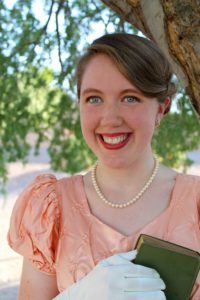
Rebekah Jones is first and foremost a follower of the Living God. She started writing as a little girl, seeking to glorify her King with her books and stories. Her goal is to write Bible-Centered, Christian Literature; books rich with interesting characters, intricate story lines, and always with the Word of God at the center. Besides writing, she is an avid reader, songwriter, pianist, singer, artist, and history student. She also loves children. She lives with her family in the Southwestern desert.
Guest Post from Rebekah JonesWhy is he a Navajo?
I’ve had more than one person ask me why I chose to make Sidney Dennison, the “Mr. Darcy” of my novel Presumption and Partiality, a Navajo Indian.
When I commenced planning and research for placing a retelling of Pride and Prejudice in the 1930’s United States, I found myself drawn to the desert of Arizona rather early on. Specifically, the tiny farm town of Gilbert. I knew, however, that few rich people lived in that area; certainly not enough to create social rifts large enough to recreate the social differences of the original novel.
I experimented in my head with a few different ideas, but the idea of Sidney as a Native American came to me one day and just clicked. I knew that I couldn’t fully pull off a Navajo who lived on the reservations. As much as I researched, I couldn’t quite get the feel. Yet, a man whose ancestry included a white man as a grandfather, who lived outside the reservations, though with relatives who clung to some of the old traditions, I thought I could do.
I used to wish I were an Indian, in part because I wanted to have great tracking skills, live in a tee-pee, possess superb bow and arrow abilities, and I wanted to ride a horse. True, most of that did not enter a 1930’s novel, despite my Navajo cowboy, because the eras are different. Though, Sidney did get a horse. Or technically, several.
Further, something about the silent, good-looking Indian appealed to me, much as I tend to shy away from writing about handsome and beautiful people, since they feel so common in fiction. The minute I began imagining the man with his Navajo ancestry, he just felt perfect.
By the end, Sidney turned out to be one of my favorite characters. (I can’t ever pick just one in my novels.) I think I made a good choice and I hope my readers will agree!
Blog StopsHere are the Rebekah's remaining blog stops:
April 29: Mary HakeApril 30: Proud to be an Autism MomApril 30: A Greater YesApril 30: Fiction AficionadoMay 1: Among the ReadsMay 1: Debbie's Dusty Deliberations
May 2: Janice's Book ReviewsMay 2: Jeanette's ThoughtsMay 3: Carpe DiemMay 3: A Baker's PerspectiveMay 4: Kaylee's Kind of WritesMay 4: With a Joyful NoiseMay 4: Have a Wonderful DayMay 5: Pause for TalesMay 5: Simple Harvest ReadsMay 6: Pursuing StacieMay 6: Big Reader SiteMay 7: Faery Tales are RealMay 7: By the BookMay 7: Reader's Cozy Corner
Giveaway To celebrate her tour, Rebekah is giving away a grand prize of the complete set of the Vintage Jane Austen Collection!!Click below to enter. Be sure to comment on this post before you enter to claim 9 extra entries! https://promosimple.com/ps/cc8f

About the Book
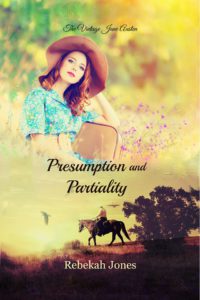
Title: Presumption and Partiality
Author: Rebekah Jones
Genre: Historical Christian Fiction
Release Date: November 27, 2017
Among the cotton fields and farmland of Gilbert, Arizona in the early years of the Great Depression, Mr. and Mrs. Bailey live a simple, but happy life with their five daughters on a cotton farm. When the wealthy Richard Buchanan moves to town, bringing his family, a friend, and a desire to learn about cotton, Matilda Bailey is convinced that he is the perfect candidate to marry her eldest daughter, Alice. Richard is cheerful, friendly, and likable. His friend Sidney Dennison doesn’t make such a good impression. Eloise Bailey decides he’s arrogant and self-conceited, but when Raymond Wolfe comes to town, accusing Sidney of dishonorable and treacherous conduct, Eloise is angered at the injustice of the situation. When the Buchanan household leaves town, Alice must turn to the Lord and face, perhaps, her most difficult test in trust, while Eloise takes a trip to visit her friend and may well discover a web of deceit that she doesn’t really want to believe exists.
Click here to purchase your copy.My ThoughtsI enjoy “retelling” books and thought the premise of Presumption and Partiality (love the title) being set during the Great Depression was interesting and unique. The author kept very close to the original Pride and Prejudice plot points, which gave the book credibility, but I was disappointed at some of the execution of the story. In the beginning I struggled to keep up with which character in the retelling was supposed to be which character in the original, but it got easier as the story progressed. The writing style and dialogue felt more like the Georgian/Regency era than the American 1930s, and I had trouble feeling the Depression era. The occasional references to Sidney’s Navajo heritage felt more like an aside than an integral part of the story. I would have liked to have seen this aspect developed more fully. Eloise’s mother was closely aligned with Austen’s original character, but I would have preferred the use of fewer exclamation points in her dialogue. I liked how the Collin’s character was portrayed, and also Eloise’s and Jane’s work with the poor and needy. It gave them extra depth and introduced an opportunity to explore Christian service. The other characters were also true to the original which I liked. The situation with the “Lydia” character had a creative slant to it, and the subject matter handled with sensitivity.
I received a copy of this book for free from CelebrateLit Publicity, and a favorable review was not required. All opinions expressed are my own.About the Author
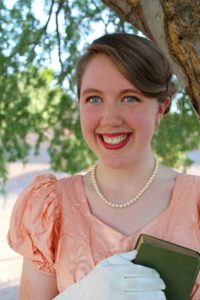
Rebekah Jones is first and foremost a follower of the Living God. She started writing as a little girl, seeking to glorify her King with her books and stories. Her goal is to write Bible-Centered, Christian Literature; books rich with interesting characters, intricate story lines, and always with the Word of God at the center. Besides writing, she is an avid reader, songwriter, pianist, singer, artist, and history student. She also loves children. She lives with her family in the Southwestern desert.
Guest Post from Rebekah JonesWhy is he a Navajo?
I’ve had more than one person ask me why I chose to make Sidney Dennison, the “Mr. Darcy” of my novel Presumption and Partiality, a Navajo Indian.
When I commenced planning and research for placing a retelling of Pride and Prejudice in the 1930’s United States, I found myself drawn to the desert of Arizona rather early on. Specifically, the tiny farm town of Gilbert. I knew, however, that few rich people lived in that area; certainly not enough to create social rifts large enough to recreate the social differences of the original novel.
I experimented in my head with a few different ideas, but the idea of Sidney as a Native American came to me one day and just clicked. I knew that I couldn’t fully pull off a Navajo who lived on the reservations. As much as I researched, I couldn’t quite get the feel. Yet, a man whose ancestry included a white man as a grandfather, who lived outside the reservations, though with relatives who clung to some of the old traditions, I thought I could do.
I used to wish I were an Indian, in part because I wanted to have great tracking skills, live in a tee-pee, possess superb bow and arrow abilities, and I wanted to ride a horse. True, most of that did not enter a 1930’s novel, despite my Navajo cowboy, because the eras are different. Though, Sidney did get a horse. Or technically, several.
Further, something about the silent, good-looking Indian appealed to me, much as I tend to shy away from writing about handsome and beautiful people, since they feel so common in fiction. The minute I began imagining the man with his Navajo ancestry, he just felt perfect.
By the end, Sidney turned out to be one of my favorite characters. (I can’t ever pick just one in my novels.) I think I made a good choice and I hope my readers will agree!
Blog StopsHere are the Rebekah's remaining blog stops:
April 29: Mary HakeApril 30: Proud to be an Autism MomApril 30: A Greater YesApril 30: Fiction AficionadoMay 1: Among the ReadsMay 1: Debbie's Dusty Deliberations
May 2: Janice's Book ReviewsMay 2: Jeanette's ThoughtsMay 3: Carpe DiemMay 3: A Baker's PerspectiveMay 4: Kaylee's Kind of WritesMay 4: With a Joyful NoiseMay 4: Have a Wonderful DayMay 5: Pause for TalesMay 5: Simple Harvest ReadsMay 6: Pursuing StacieMay 6: Big Reader SiteMay 7: Faery Tales are RealMay 7: By the BookMay 7: Reader's Cozy Corner
Giveaway
 To celebrate her tour, Rebekah is giving away a grand prize of the complete set of the Vintage Jane Austen Collection!!Click below to enter. Be sure to comment on this post before you enter to claim 9 extra entries! https://promosimple.com/ps/cc8f
April 25, 2018
Talkshow Thursday: Meet Author Rachel Good
Talkshow Thursday: Meet Author Rachel Good
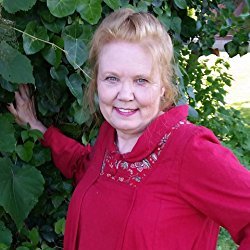 Linda: Thanks for joining me today. Congratulations on your latest release The Teacher’s Gift.The book explores themes of forgiveness and second chances. Where did you find your inspiration for this story?
Rachel: The idea for the story came to me when I was playing with my Amish friend’s daughter, who is on the autism spectrum. Then I met a young hearing-impaired girl with Down syndrome at an Amish secondhand store. I wondered about their schooling, which led to researching and attending Amish special needs schools and centers. Once I started meeting these students, along with their parents and teachers, my heart was touched. The Amish live their belief that each child is a precious gift from God by encouraging their children to live up to their potential and making them a vital part of the Amish community.
As for the forgiveness theme, years ago the Nickel Mines shooting in PA was devastating. A man entered an Amish schoolhouse and shot children. The Amish not only forgave the man, but also reached out to his family. Although as Christians, we’ve experienced the power of God’s forgiveness, the secular world couldn’t believe the way the Amish opened their hearts and embraced those who had hurt them. That tragedy taught me a lot about forgiveness, and that forgiveness can be the key to healing so many hurts. I wanted my Amish characters to live out that truth in the pages of my story.
LM: The age old question for writers – are you a planner or a “panster,” and what is your favorite part of the writing process?
Rachel: I used to be a planner. I had meticulous charts and sticky notes with plot points, but once I had so many deadlines close together, I didn’t have time to do all the planning. Now I write a brief synopsis before I began, so I have an idea of the beginning, middle, and end. Then I plunge in and write.
For me, the best part of the process is the creative part of coming up with ideas for new books. Actually writing them is much harder. Another favorite part of writing is suddenly getting a brainstorm in the middle of the story or realizing that an item or scene I included earlier that didn’t seem particularly important at the time is, in fact, an important element to resolving the plot. That happens often, and I know then that my writing has been led and my inspiration is coming from outside of me.
LM: Research is a large part of any book. How did you go about researching The Teacher’s Gift and did you discover any extra special tidbits of information?
Rachel: I spend a lot of time with Amish friends – doing chores on their farms, babysitting their children, and participating in special events. I try to be as accurate as possible when I choose my storylines and do a lot of research. For The Amish Teacher’s Gift, I spent time with parents and teachers of special needs children, visited schoolhouses, and toured the Community Care Center that teaches Amish and Mennonite children with special needs.
The thing that surprised me most was how up-to-date the Amish are in teaching children with special needs. In the Community Care Center, they had a multi-sensory environment—a room with dark walls and only a small string of Christmas lights twinkling. They’d added a recliner, a hammock, a ball pit (with those plastic balls they have at fast-food restaurants), and headphones for blocking out noise. It was such a peaceful place, I didn’t want to leave, and it works well to calm autistic children. They also used letterboards and many other teaching aids that have been shown by cutting-edge research to be the best. I tried to give the flavor of this in my book, but I wish everyone could tour the center and see it for themselves.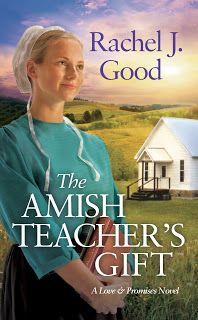 LM: How did you get started as a writer, and how did you decide to seek publication?
Rachel: When my 5 children were ages 8 and under, I needed to do something to help me keep my sanity.
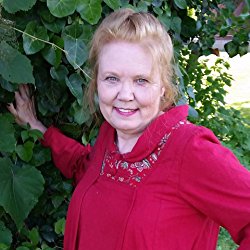 Linda: Thanks for joining me today. Congratulations on your latest release The Teacher’s Gift.The book explores themes of forgiveness and second chances. Where did you find your inspiration for this story?
Rachel: The idea for the story came to me when I was playing with my Amish friend’s daughter, who is on the autism spectrum. Then I met a young hearing-impaired girl with Down syndrome at an Amish secondhand store. I wondered about their schooling, which led to researching and attending Amish special needs schools and centers. Once I started meeting these students, along with their parents and teachers, my heart was touched. The Amish live their belief that each child is a precious gift from God by encouraging their children to live up to their potential and making them a vital part of the Amish community.
As for the forgiveness theme, years ago the Nickel Mines shooting in PA was devastating. A man entered an Amish schoolhouse and shot children. The Amish not only forgave the man, but also reached out to his family. Although as Christians, we’ve experienced the power of God’s forgiveness, the secular world couldn’t believe the way the Amish opened their hearts and embraced those who had hurt them. That tragedy taught me a lot about forgiveness, and that forgiveness can be the key to healing so many hurts. I wanted my Amish characters to live out that truth in the pages of my story.
LM: The age old question for writers – are you a planner or a “panster,” and what is your favorite part of the writing process?
Rachel: I used to be a planner. I had meticulous charts and sticky notes with plot points, but once I had so many deadlines close together, I didn’t have time to do all the planning. Now I write a brief synopsis before I began, so I have an idea of the beginning, middle, and end. Then I plunge in and write.
For me, the best part of the process is the creative part of coming up with ideas for new books. Actually writing them is much harder. Another favorite part of writing is suddenly getting a brainstorm in the middle of the story or realizing that an item or scene I included earlier that didn’t seem particularly important at the time is, in fact, an important element to resolving the plot. That happens often, and I know then that my writing has been led and my inspiration is coming from outside of me.
LM: Research is a large part of any book. How did you go about researching The Teacher’s Gift and did you discover any extra special tidbits of information?
Rachel: I spend a lot of time with Amish friends – doing chores on their farms, babysitting their children, and participating in special events. I try to be as accurate as possible when I choose my storylines and do a lot of research. For The Amish Teacher’s Gift, I spent time with parents and teachers of special needs children, visited schoolhouses, and toured the Community Care Center that teaches Amish and Mennonite children with special needs.
The thing that surprised me most was how up-to-date the Amish are in teaching children with special needs. In the Community Care Center, they had a multi-sensory environment—a room with dark walls and only a small string of Christmas lights twinkling. They’d added a recliner, a hammock, a ball pit (with those plastic balls they have at fast-food restaurants), and headphones for blocking out noise. It was such a peaceful place, I didn’t want to leave, and it works well to calm autistic children. They also used letterboards and many other teaching aids that have been shown by cutting-edge research to be the best. I tried to give the flavor of this in my book, but I wish everyone could tour the center and see it for themselves.
 LM: How did you get started as a writer, and how did you decide to seek publication?
 Rachel: When my 5 children were ages 8 and under, I needed to do something to help me keep my sanity.
April 24, 2018
Wartime Wednesday: Making your Own Clothes
Wartime Wednesday: Making your Own Clothes
 I once lost the button on a pair of pants, but my sewing skills are so abysmal I ended up using a decorative lapel pin in place of the button. The last thing I had made for myself was a poorly executed blouse in 9th grade Home Ec., so I didn’t keep needles or thread in the house. To be fair, to make the repair I would have had to go to the store and purchase the items, only to be left with a huge spool of thread I would never need again. Seemed like a waste, and the solution I came up with was fast and easy.
My mom made all our clothes while we were growing up, and I have a friend who is a professional seamstress. Meanwhile, I still can’t sew.
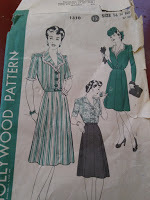
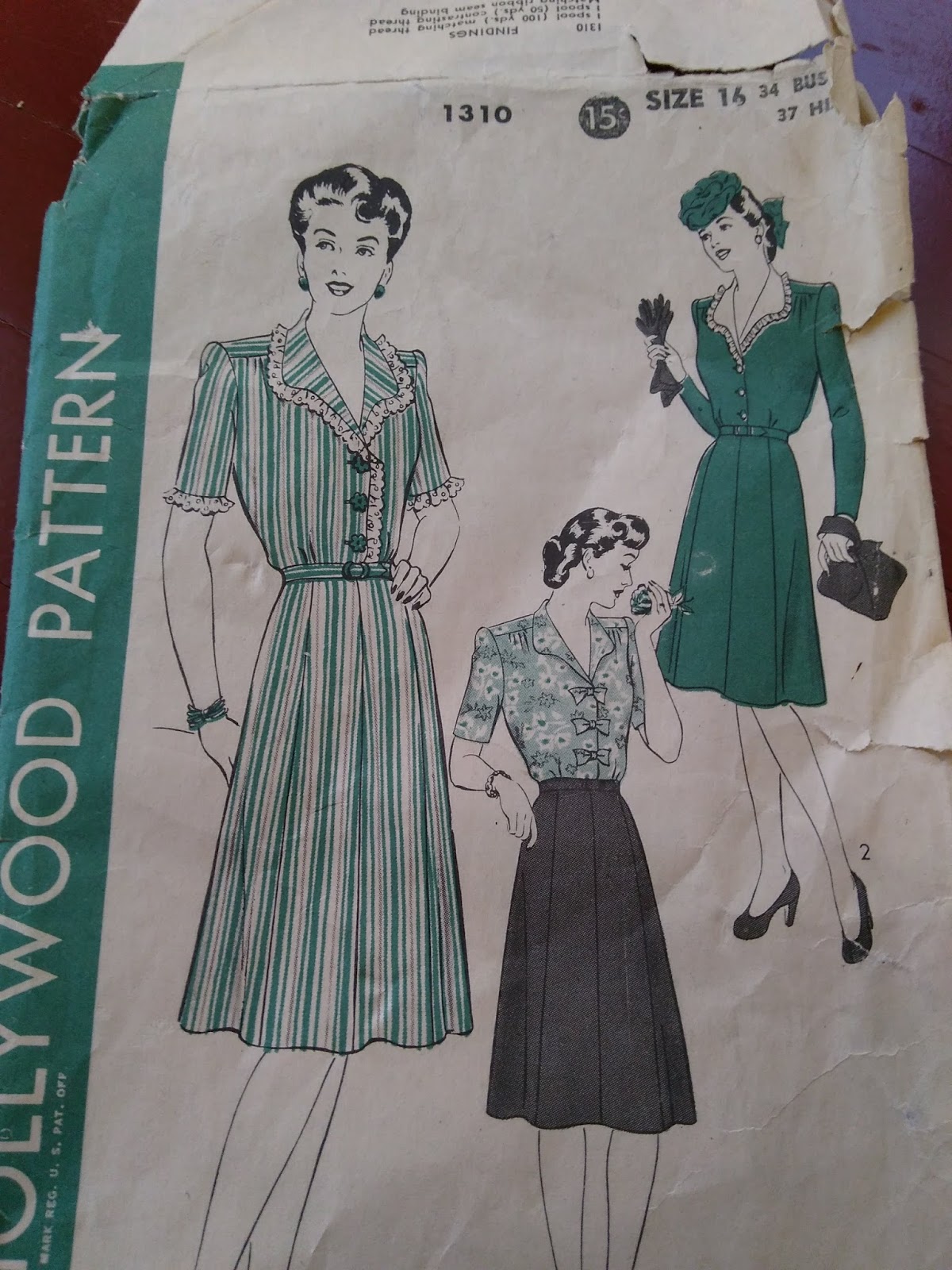
 Several times a month, I conduct speaking engagements about a variety of World War II topics, and as part of the event I wear one of two costumes that I had made from vintage patterns. The first is from Vogue and is for a jumpsuit that was worn as a uniform for the Women’s Land Army and some factories. The other is a Hollywood brand pattern and is for a day dress.
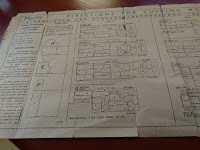
A fascinating discovery my seamstress friend and I made is that the craft of sewing has changed over the years. Some supplies had different names in the 40s such as the zipper that was called a slide closure. And techniques have also changed. When I was in school, we were taught to sew seams “right side together.” Simple enough, right? Apparently, that approach was developed later. The dress pattern I purchased advised the seamstress to create the skirt and top separately, rolling the seams and then connecting them. What?
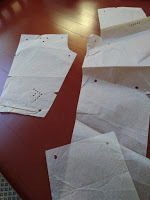 The tissue paper pieces of the Vogue pattern are also vastly different than pieces sold now. Modern patterns are imprinted with indications for seams, darts, and button holes. The vintage pattern pieces are blank with small holes punched in various locations to indicate sizing, and small triangle cutouts to indicate darts. Talk about confusing.
But as usual the government set out to help its citizens and issued helpful films. Sewing Simple Seams is from 1947, but there were plenty other movies created during the war.
The more I learn about what women did to provide for themselves and their families, the more in awe I am.
 I once lost the button on a pair of pants, but my sewing skills are so abysmal I ended up using a decorative lapel pin in place of the button. The last thing I had made for myself was a poorly executed blouse in 9th grade Home Ec., so I didn’t keep needles or thread in the house. To be fair, to make the repair I would have had to go to the store and purchase the items, only to be left with a huge spool of thread I would never need again. Seemed like a waste, and the solution I came up with was fast and easy.
My mom made all our clothes while we were growing up, and I have a friend who is a professional seamstress. Meanwhile, I still can’t sew.
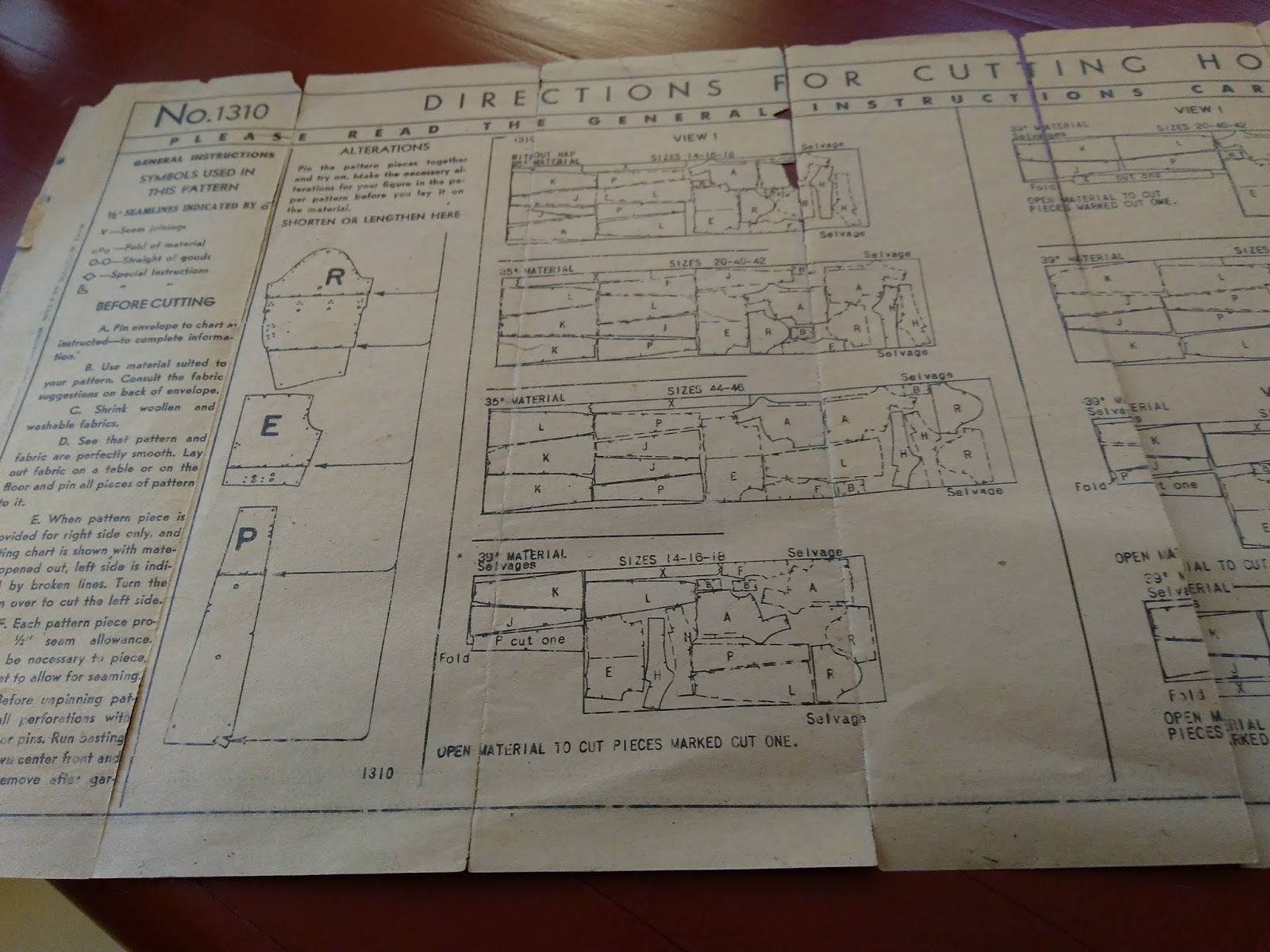 Several times a month, I conduct speaking engagements about a variety of World War II topics, and as part of the event I wear one of two costumes that I had made from vintage patterns. The first is from Vogue and is for a jumpsuit that was worn as a uniform for the Women’s Land Army and some factories. The other is a Hollywood brand pattern and is for a day dress.
 A fascinating discovery my seamstress friend and I made is that the craft of sewing has changed over the years. Some supplies had different names in the 40s such as the zipper that was called a slide closure. And techniques have also changed. When I was in school, we were taught to sew seams “right side together.” Simple enough, right? Apparently, that approach was developed later. The dress pattern I purchased advised the seamstress to create the skirt and top separately, rolling the seams and then connecting them. What?
 The tissue paper pieces of the Vogue pattern are also vastly different than pieces sold now. Modern patterns are imprinted with indications for seams, darts, and button holes. The vintage pattern pieces are blank with small holes punched in various locations to indicate sizing, and small triangle cutouts to indicate darts. Talk about confusing.
But as usual the government set out to help its citizens and issued helpful films. Sewing Simple Seams is from 1947, but there were plenty other movies created during the war.
The more I learn about what women did to provide for themselves and their families, the more in awe I am.
April 22, 2018
Mystery Monday: Drew Farthering Mysteries
Mystery Monday: Drew Farthering Mysteries
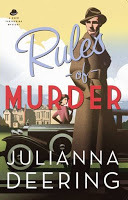 This spot has typically been reserved for information about writers from The Golden Age of Detective Fiction or other similar topics. Today I want to introduce you to Juliana Deering's Drew Farthering Mysteries that I discovered a couple of years ago as a review blogger.
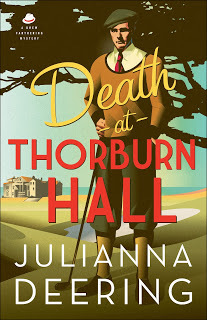
The books are set in 1930s England, and Amazon describes the series as Downton Abbey meets Agatha Christie, but I would have to disagree. To me the books are a mixture of Dorothy Sayers (Lord Wimsey) and Dashiell Hammett (Nick Charles without the liquor). Dapper and dashing, he is young enough to be cool, but as a titled, English gentleman who comes from a long line of English Lords, Drew is proper when the situation calls for it.
 The author, interestingly, is a fifth generation Texan, yet has obviously done her research, because the dialogue is decidedly British with no anachronisms or Americanisms (which I find too often in historical or books set in England). The descriptions of dress, social customs, and day-to-day life are vivid and sprinkled throughout, effectively evoking the era. The mysteries are clever, and red herrings, Macguffins, and clues abound, as to the possible suspects.
I enjoy historical fiction that informs and educates in addition to entertaining, and the Drew
Farthering series does that. With every book, I have come away with new knowledge which is tough to do, considering the amount of reading and research I've done for my own books.
Thus far there are six books, and I'm looking forward to the next installment of this delightful set.
Visit http://www.juliannadeering.com.
 This spot has typically been reserved for information about writers from The Golden Age of Detective Fiction or other similar topics. Today I want to introduce you to Juliana Deering's Drew Farthering Mysteries that I discovered a couple of years ago as a review blogger.
The books are set in 1930s England, and Amazon describes the series as Downton Abbey meets Agatha Christie, but I would have to disagree. To me the books are a mixture of Dorothy Sayers (Lord Wimsey) and Dashiell Hammett (Nick Charles without the liquor). Dapper and dashing, he is young enough to be cool, but as a titled, English gentleman who comes from a long line of English Lords, Drew is proper when the situation calls for it.
 The author, interestingly, is a fifth generation Texan, yet has obviously done her research, because the dialogue is decidedly British with no anachronisms or Americanisms (which I find too often in historical or books set in England). The descriptions of dress, social customs, and day-to-day life are vivid and sprinkled throughout, effectively evoking the era. The mysteries are clever, and red herrings, Macguffins, and clues abound, as to the possible suspects.
I enjoy historical fiction that informs and educates in addition to entertaining, and the Drew
Farthering series does that. With every book, I have come away with new knowledge which is tough to do, considering the amount of reading and research I've done for my own books.
Thus far there are six books, and I'm looking forward to the next installment of this delightful set.
Visit http://www.juliannadeering.com.
April 18, 2018
Talkshow Thursday: Meet award winning author Amanda Cabot
Talkshow Thursday: Meet award winning author Amanda Cabot
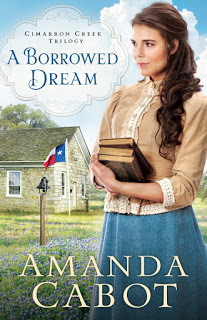
 Linda: Thanks for stopping by my blog, and congratulations on your latest release A Borrowed Dream. I appreciate that your books can be read in any order, even those part of a set. What was your inspiration for this particular story?
Amanda: I’m delighted to be here, Linda, and thank you for the opportunity to be part of your blog. As for the inspiration for this book, if you’ve read the last of my Westward Winds trilogy, With Autumn’s Return, you know that I’m interested in nineteenth century medicine, especially the advances that occurred when the horrors of what was called Heroic Medicine (techniques like bleeding and purging) were replaced by more modern theories such as cleanliness. I still shudder when I think about those leeches, not to mention the bleeding cups!
Since I’d already created a heroine who was a doctor (Elizabeth in With Autumn’s Return), I didn’t want to repeat that. That would be boring for you and for me. Instead, I decided to pair a woman who’s seen just how barbaric Heroic Medicine can be and who has a justifiable mistrust of all physicians with a highly skilled surgeon. You can imagine the conflict that caused.
LM: Wow! You're right - I can only imagine the conflict! How do you decide where to set a story?
Amanda: The short answer is: carefully. The full answer is a bit longer. First of all, the setting needs to be someplace I’ve actually visited. While I know some authors are comfortable doing their research about places online, I believe it’s important to know what the air smells like, to see and touch the plants that are growing there, to listen to residents’ accents, to taste the local cuisine. In other words, I need all my senses engaged before I can begin to write a book. It also has to be a place that ignites my imagination, and it’s an easier sell to a publisher if it’s a reader favorite. The Texas Hill Country meets all those criteria, which is the reason the majority of my books are set there.
LM: Lots of research goes into each story to ensure historical accuracy. On your website you indicate that a great place to start researching is the children’s section of the library. What is an “aha” or “wow” moment you had while conducting research for one of your books?
Amanda: When I started thinking about what became my Texas Dreams trilogy, I knew I wanted to set it in the Hill Country and expected my fictional town to have been settled by Germans like so many of the Hill Country communities. But as I was reading T.R. Fehrenbach’s Lone Star (not something I found in the children’s section!), I found a reference to a town whose settlers came from Alsace and were both French and German. That was a definite aha! moment, because it gave me a readymade conflict based on the centuries-old enmity between those two countries.
LM: I love that! Have you ever experienced writer’s block, and if so, what did you do to push through it?
Amanda: I’ve never had a full-fledged attack of writer’s block, but there are times when I’d rather be doing anything – even cleaning house, which is my least favorite thing in the world – than writing. When that happens, I take a walk. I’m a firm believer in the therapeutic effects of exercise, not only for burning calories but also for releasing endorphins and breaking through mental barriers.
LM: Great advice! What is your least favorite part of the writing process?
 Amanda: Without a doubt, it’s the first draft. I refer to them as the skeletons. Like real skeletons, first drafts are essential, because they’re the framework on which everything else rests, but they’re ugly. I’m always thrilled when I finish that first draft and can start adding the flesh and blood, which is my term for the second draft.
LM: Here are some quickies:
Amanda:Favorite childhood book: Little WomenFavorite season: SpringFavorite place to vacation: Yellowstone
LM: What is your next project?
Amanda: The publishing cycle is so long that you may not be surprised to know that I’m currently working on the first book in a new series. This one, which has only a working title at this point, will be released in 2020. Like the Cimarron Creek books, it’s set in a fictional town in the Texas Hill Country, but unlike them, it takes place in an earlier time, specifically 1856. Meanwhile, A Tender Hope, which is the last of the Cimarron Creek trilogy, has been through its first round of edits, and the cover is being designed as we speak. That book will be released in March 2019.
LM: Where can folks find you on the web?
Amanda:
The first place to start is my web site, www.amandacabot.com. That’s the go-to spot for information about each of my books, including excerpts, discussion group questions, and – new for A Borrowed Dream – bonus features.You can also find me on Facebook at either my author page https://www.facebook.com/AuthorAmandaCabot/ or my personal one https://www.facebook.com/amanda.j.cabotIf you prefer Twitter, I’m there too. https://twitter.com/AmandaJoyCabot/
And, if you’d like to learn a bit more about my adopted home, be sure to look for my Wednesday in Wyoming posts on my blog http://amandajoycabot.blogspot.com/.
Book Blurb: There is no such thing as an impossible dream . . .
Catherine Whitfield is sure that she will never again be able to trust anyone in the medical profession after the local doctor’s treatments killed her mother. Despite her loneliness and her broken heart, she carries bravely on as Cimarron Creek’s dutiful schoolteacher, resigned to a life where dreams rarely come true.
Austin Goddard is a newcomer to Cimarron Creek. Posing as a rancher, he fled to Texas to protect his daughter from a dangerous criminal. He’s managed to keep his past as a surgeon a secret. But when Catherine Whitfield captures his heart, he wonders how long he will be able to keep up the charade.
With a deft hand, Amanda Cabot teases out the strands of love, deception, and redemption in this charming tale of dreams deferred and hopes becoming reality.
Purchase Links: http://www.amazon.com/exec/obidos/ASIN/0800727576 https://www.barnesandnoble.com/w/a-borrowed-dream-amanda-cabot/1126332861?ean=9780800727574https://www.christianbook.com/a-borrowed-dream-2/amanda-cabot/9780800727574/pd/727570?product_redirect=1&Ntt=727570&item_code=&Ntk=keywords&event=ESRCP
Amanda's Bio: Amanda Cabot is the bestselling author of more than thirty novels including the Texas Dreams trilogy, the Westward Winds series, the Texas Crossroads trilogy, A Stolen Heart, and Christmas Roses. A former director of Information Technology, she has written everything from technical books and articles for IT professionals to mysteries for teenagers and romances for all ages. Amanda is delighted to now be a fulltime writer of Christian romances, living happily ever after with her husband in Wyoming.
 Linda: Thanks for stopping by my blog, and congratulations on your latest release A Borrowed Dream. I appreciate that your books can be read in any order, even those part of a set. What was your inspiration for this particular story?
Amanda: I’m delighted to be here, Linda, and thank you for the opportunity to be part of your blog. As for the inspiration for this book, if you’ve read the last of my Westward Winds trilogy, With Autumn’s Return, you know that I’m interested in nineteenth century medicine, especially the advances that occurred when the horrors of what was called Heroic Medicine (techniques like bleeding and purging) were replaced by more modern theories such as cleanliness. I still shudder when I think about those leeches, not to mention the bleeding cups!
Since I’d already created a heroine who was a doctor (Elizabeth in With Autumn’s Return), I didn’t want to repeat that. That would be boring for you and for me. Instead, I decided to pair a woman who’s seen just how barbaric Heroic Medicine can be and who has a justifiable mistrust of all physicians with a highly skilled surgeon. You can imagine the conflict that caused.
LM: Wow! You're right - I can only imagine the conflict! How do you decide where to set a story?
Amanda: The short answer is: carefully. The full answer is a bit longer. First of all, the setting needs to be someplace I’ve actually visited. While I know some authors are comfortable doing their research about places online, I believe it’s important to know what the air smells like, to see and touch the plants that are growing there, to listen to residents’ accents, to taste the local cuisine. In other words, I need all my senses engaged before I can begin to write a book. It also has to be a place that ignites my imagination, and it’s an easier sell to a publisher if it’s a reader favorite. The Texas Hill Country meets all those criteria, which is the reason the majority of my books are set there.
LM: Lots of research goes into each story to ensure historical accuracy. On your website you indicate that a great place to start researching is the children’s section of the library. What is an “aha” or “wow” moment you had while conducting research for one of your books?
Amanda: When I started thinking about what became my Texas Dreams trilogy, I knew I wanted to set it in the Hill Country and expected my fictional town to have been settled by Germans like so many of the Hill Country communities. But as I was reading T.R. Fehrenbach’s Lone Star (not something I found in the children’s section!), I found a reference to a town whose settlers came from Alsace and were both French and German. That was a definite aha! moment, because it gave me a readymade conflict based on the centuries-old enmity between those two countries.
LM: I love that! Have you ever experienced writer’s block, and if so, what did you do to push through it?
Amanda: I’ve never had a full-fledged attack of writer’s block, but there are times when I’d rather be doing anything – even cleaning house, which is my least favorite thing in the world – than writing. When that happens, I take a walk. I’m a firm believer in the therapeutic effects of exercise, not only for burning calories but also for releasing endorphins and breaking through mental barriers.
LM: Great advice! What is your least favorite part of the writing process?
 Amanda: Without a doubt, it’s the first draft. I refer to them as the skeletons. Like real skeletons, first drafts are essential, because they’re the framework on which everything else rests, but they’re ugly. I’m always thrilled when I finish that first draft and can start adding the flesh and blood, which is my term for the second draft.
LM: Here are some quickies:
Amanda:Favorite childhood book: Little WomenFavorite season: SpringFavorite place to vacation: Yellowstone
LM: What is your next project?
Amanda: The publishing cycle is so long that you may not be surprised to know that I’m currently working on the first book in a new series. This one, which has only a working title at this point, will be released in 2020. Like the Cimarron Creek books, it’s set in a fictional town in the Texas Hill Country, but unlike them, it takes place in an earlier time, specifically 1856. Meanwhile, A Tender Hope, which is the last of the Cimarron Creek trilogy, has been through its first round of edits, and the cover is being designed as we speak. That book will be released in March 2019.
LM: Where can folks find you on the web?
Amanda:
The first place to start is my web site, www.amandacabot.com. That’s the go-to spot for information about each of my books, including excerpts, discussion group questions, and – new for A Borrowed Dream – bonus features.You can also find me on Facebook at either my author page https://www.facebook.com/AuthorAmandaCabot/ or my personal one https://www.facebook.com/amanda.j.cabotIf you prefer Twitter, I’m there too. https://twitter.com/AmandaJoyCabot/
And, if you’d like to learn a bit more about my adopted home, be sure to look for my Wednesday in Wyoming posts on my blog http://amandajoycabot.blogspot.com/.
Book Blurb: There is no such thing as an impossible dream . . .
Catherine Whitfield is sure that she will never again be able to trust anyone in the medical profession after the local doctor’s treatments killed her mother. Despite her loneliness and her broken heart, she carries bravely on as Cimarron Creek’s dutiful schoolteacher, resigned to a life where dreams rarely come true.
Austin Goddard is a newcomer to Cimarron Creek. Posing as a rancher, he fled to Texas to protect his daughter from a dangerous criminal. He’s managed to keep his past as a surgeon a secret. But when Catherine Whitfield captures his heart, he wonders how long he will be able to keep up the charade.
With a deft hand, Amanda Cabot teases out the strands of love, deception, and redemption in this charming tale of dreams deferred and hopes becoming reality.
Purchase Links: http://www.amazon.com/exec/obidos/ASIN/0800727576 https://www.barnesandnoble.com/w/a-borrowed-dream-amanda-cabot/1126332861?ean=9780800727574https://www.christianbook.com/a-borrowed-dream-2/amanda-cabot/9780800727574/pd/727570?product_redirect=1&Ntt=727570&item_code=&Ntk=keywords&event=ESRCP
Amanda's Bio: Amanda Cabot is the bestselling author of more than thirty novels including the Texas Dreams trilogy, the Westward Winds series, the Texas Crossroads trilogy, A Stolen Heart, and Christmas Roses. A former director of Information Technology, she has written everything from technical books and articles for IT professionals to mysteries for teenagers and romances for all ages. Amanda is delighted to now be a fulltime writer of Christian romances, living happily ever after with her husband in Wyoming.
Wartime Wednesday: A book review
Wartime Wednesday: A book review
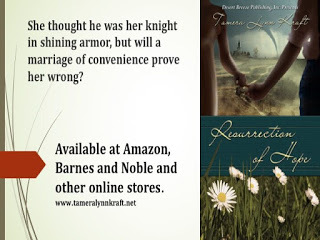
Today's Wartime Wednesday post is a review of Tamera Kraft's Resurrection of Hope set immediately following WWI (also known as The Great War). I'm not as familiar with this era as others I've heavily researched so I enjoyed the author's ability to set the stage and educate me without being dry or textbookish. I highly recommend this book - read on to find out why.
Resurrection of Hope started out with an attention-grabbing beginning and kept me turning pages late into the night. I finished the book in two sittings. The story was set immediately following WWI (The Great War), a time period I’m unfamiliar with, so I enjoyed the details and descriptions that educated me as well as helped immerse me into the era. Vivien and Henry both have so many issues, which frustrated me at some level, but created exquisite tension between them. Childhood baggage, misunderstandings, insecurities, and an inability to effectively communicate made their marriage a rocky road that seemed doomed to failure. Wounded by inept and cruel parents, both struggled to understand how God could care about them, and I wept for them as they sought answers to the difficult questions of life, especially why God allows those we love to be taken from us too early. The minor characters were not as well developed as I would have liked, and some of the solutions a little too pat, but the climax at the end was absolutely gripping. A story of grace and forgiveness, especially of ourselves. Highly recommended.
I received a copy of this book for free from CelebrateLit Publicity, and a positive review was not required. All opinions expressed are my own.
Purchase Link: http://www.amazon.com/dp/B01I8UNJGU
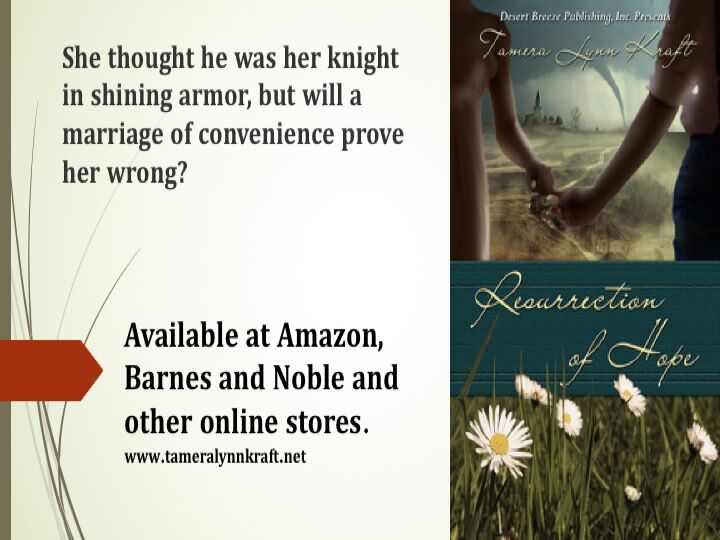
Today's Wartime Wednesday post is a review of Tamera Kraft's Resurrection of Hope set immediately following WWI (also known as The Great War). I'm not as familiar with this era as others I've heavily researched so I enjoyed the author's ability to set the stage and educate me without being dry or textbookish. I highly recommend this book - read on to find out why.
Resurrection of Hope started out with an attention-grabbing beginning and kept me turning pages late into the night. I finished the book in two sittings. The story was set immediately following WWI (The Great War), a time period I’m unfamiliar with, so I enjoyed the details and descriptions that educated me as well as helped immerse me into the era. Vivien and Henry both have so many issues, which frustrated me at some level, but created exquisite tension between them. Childhood baggage, misunderstandings, insecurities, and an inability to effectively communicate made their marriage a rocky road that seemed doomed to failure. Wounded by inept and cruel parents, both struggled to understand how God could care about them, and I wept for them as they sought answers to the difficult questions of life, especially why God allows those we love to be taken from us too early. The minor characters were not as well developed as I would have liked, and some of the solutions a little too pat, but the climax at the end was absolutely gripping. A story of grace and forgiveness, especially of ourselves. Highly recommended.
I received a copy of this book for free from CelebrateLit Publicity, and a positive review was not required. All opinions expressed are my own.
Purchase Link: http://www.amazon.com/dp/B01I8UNJGU
April 16, 2018
Traveling Tuesday: Wyoming and WWII
Traveling Tuesday: Wyoming and WWII
 Situated in the Mountain Region, Wyoming is the least populous state and the second least densely populated state. At 253,600 square kilometers, Wyoming is about half the size of Spain and slightly larger the UK. Bordered by Montana, South Dakota, Nebraska, Colorado, Utah, and Idaho, the state had a population of about 250,000 people in 1940.
About ten percent of the Wyoming’s men served in the Armed Forces, but the state played many more roles during World War II.
Army Air Bases: The Army Air Force (the Air Force separated from the Army in September 1947) established numerous airfields for training fighter and bomber pilots and air crews. The two major fields were located in Casper and Cheyenne. The fate of the bases is varied. Some became municipal airports while others were retained by the Air Force. Some were left to go back to the agricultural fields they had been. Meanwhile, the hundreds of “temporary” buildings still survive.
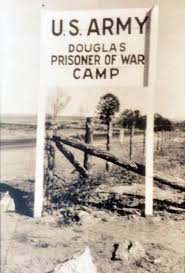
Camp Douglas POW Camp: From 1943 to 1946, the camp of 180 buildings housed Italian and German prisoners-of-war. Very few of the buildings remain, but the Officer’s club still stands. Inside the walls are covered in murals depicting western life and folklore. Painted by three Italian prisoners, the murals are now on the National Register of Historic Places with the National Park Service. The installation of the camp created a housing shortage for military personnel (not housed in the camp), so most residents of the city rented out rooms. In addition, because of the number of men who left to serve, there was a shortage of workers in the agricultural industry. Therefore, the some of the prisoners were used to fill the void. At its peak, the camp housed more than 3,000 inmates.
 Heart Mountain Relocation Camp: Many people are aware of the internment of Japanese citizens from the west coast states, but did you know there was a large population of Japanese, Italian, and German folks in Wyoming? Forced to register and carry photographic identification cards after the attack on Pearl Harbor, many of these people eventually lost their jobs. According to one article, railroad employees were fired, but miners continued to work. (Did no one else want the job? Did the government decide they couldn’t do any harm working deep in the mountains?) Eventually the Japanese were evacuated to the Heart Mountain Relocation Center located between Cody and Powell. Japanese from California were also transported there. The camp closed November 10, 1945, more than three months after the end of the war.
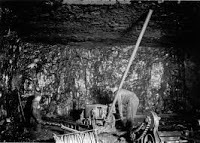 Mining: Coal mining in Wyoming commenced in 1867 with the arrival the Union Pacific Railroad. Coal was necessary to power the locomotives. Working this hard, dangerous job thousands of miners lost their lives from explosions and fires. In the early 1900s laws were passed to ensure worker safety. Coal had many uses, and its demand skyrocketed during WWII. Wyoming also mined iron and produced oil for the war effort.
A beautiful state with a proud history. Have you ever visited?
 Situated in the Mountain Region, Wyoming is the least populous state and the second least densely populated state. At 253,600 square kilometers, Wyoming is about half the size of Spain and slightly larger the UK. Bordered by Montana, South Dakota, Nebraska, Colorado, Utah, and Idaho, the state had a population of about 250,000 people in 1940.
 About ten percent of the Wyoming’s men served in the Armed Forces, but the state played many more roles during World War II.
Army Air Bases: The Army Air Force (the Air Force separated from the Army in September 1947) established numerous airfields for training fighter and bomber pilots and air crews. The two major fields were located in Casper and Cheyenne. The fate of the bases is varied. Some became municipal airports while others were retained by the Air Force. Some were left to go back to the agricultural fields they had been. Meanwhile, the hundreds of “temporary” buildings still survive.
Camp Douglas POW Camp: From 1943 to 1946, the camp of 180 buildings housed Italian and German prisoners-of-war. Very few of the buildings remain, but the Officer’s club still stands. Inside the walls are covered in murals depicting western life and folklore. Painted by three Italian prisoners, the murals are now on the National Register of Historic Places with the National Park Service. The installation of the camp created a housing shortage for military personnel (not housed in the camp), so most residents of the city rented out rooms. In addition, because of the number of men who left to serve, there was a shortage of workers in the agricultural industry. Therefore, the some of the prisoners were used to fill the void. At its peak, the camp housed more than 3,000 inmates.
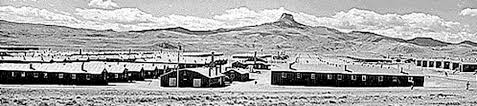 Heart Mountain Relocation Camp: Many people are aware of the internment of Japanese citizens from the west coast states, but did you know there was a large population of Japanese, Italian, and German folks in Wyoming? Forced to register and carry photographic identification cards after the attack on Pearl Harbor, many of these people eventually lost their jobs. According to one article, railroad employees were fired, but miners continued to work. (Did no one else want the job? Did the government decide they couldn’t do any harm working deep in the mountains?) Eventually the Japanese were evacuated to the Heart Mountain Relocation Center located between Cody and Powell. Japanese from California were also transported there. The camp closed November 10, 1945, more than three months after the end of the war.
 Mining: Coal mining in Wyoming commenced in 1867 with the arrival the Union Pacific Railroad. Coal was necessary to power the locomotives. Working this hard, dangerous job thousands of miners lost their lives from explosions and fires. In the early 1900s laws were passed to ensure worker safety. Coal had many uses, and its demand skyrocketed during WWII. Wyoming also mined iron and produced oil for the war effort.
A beautiful state with a proud history. Have you ever visited?
April 14, 2018
Blog Tour: Treacherous Trails
Blog Tour: Treacherous Trails
About the Book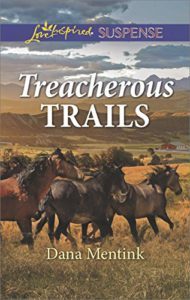 Title: Treacherous Trails
Author: Dana Mentink
Genre: Inspy Romanctic Suspense
Release Date: March, 2018
Falsely accused… Can she escape the real killer? In this second installment in the Gold Country Cowboys series, farrier Ella Cahill is accused of murder—and only former marine Owen Thorn, her brother’s best friend, can help clear her name. Now with someone trying to kill Ella, Owen must protect her…despite his promise to her brother to stay away from her. But can they work together to find the true killer before she becomes the next to die?
Click here to purchase your copy.
My ThoughtsTreacherous Trails is the second book in Dana Mentink’s Gold Country Cowboys series, and if possible, is better than the first which is excellent. The intrigue and suspense kept me turning pages and were deftly woven with the romantic thread of the developing relationships between Luke and Ella. Each struggled with insecurities and doubts in realistic and relatable ways. Luke’s family was warm and hospitable without being contrived or cliché. I felt Luke’s and Ella’s frustrations as they hit dead-end after dead-end while trying to prove Ella’s innocence. The plot twist at the end was a surprise, yet as I thought about it realized the author had laid the groundwork for it. Highly recommended.
I received a copy of this book for free from CelebrateLit Publicity, and a favorable review was not required. All opinions expressed are my own.About the Author

Dana Mentink is a two time American Christian Fiction Writers Carol Award winner, a Romantic Times Reviewer’s Choice Award and a Holt Medallion winner. She is a national bestselling author of over thirty five titles in the suspense and lighthearted romance genres. She is pleased to write for Harlequin’s Love Inspired Suspense, Harlequin Heartwarming and Harvest House. Dana was thrilled to be a semi-finalist in the Jeanne Robertson Comedy With Class Competition. Besides writing, she busies herself teaching third grade. Mostly, she loves to be home with Papa Bear, teen bear cubs affectionately nicknamed Yogi and Boo Boo, Junie, the nutty terrier, a chubby box turtle and a feisty parakeet. You can connect with Dana via her website at Guest Post from Dana MentinkHowdy, friends! I am so thrilled to be galloping into the second book in the Gold Country Cowboy series with you. This book was a hoot to write. It’s got a nice twisty mystery and plenty of danger! Our hero, twin Owen Thorn, is a Marine doing his darnedest not to fall in love with his brother’s little sister, but you know how these things go, don’t you, partners? There’s trouble ahead in cowboy country and this story will take you on a wild gallop to the happy ending! God bless and thanks for coming along!
Blog StopsHere are Dana's remaining Tour Stops:
April 15: C Jane ReadApril 15: The Power of WordsApril 16: To Everything a SeasonApril 16: Among the ReadsApril 16: Genesis 5020April 17: A Baker's PerspectiveApril 17: Two Points of InterestApril 18: Carpe DiemApril 18: Cafinated ReadsApril 19: Maureen's MusingsApril 19: Simple Harvest ReadsApril 20: Pause for TalesApril 20: Have a Wonderful DayApril 21: Because I said so - and other adventures in parentingApril 21: Proud to be an Autism MomApril 22: Bibliophile ReviewsApril 22: A Greater YesApril 23: Texas BookaholicApril 23: Debbie's Dusty DeliberationsApril 23: Artistic NobodyApril 24: Kat's Corner BooksApril 24: Redheaded Book LadyApril 24: Big Reader SiteApril 25: Margaret KazmierczakApril 25: Raining Butterfly KissesApril 25: RemembrancyGiveaway
To celebrate her tour, Dana is giving away a grand prize package of a $50 Amazon gift card, Cornbread Mix, and Cowboy Caviar Salsa!!Click below to enter. Be sure to comment on this post before you enter to claim 9 extra entries! https://promosimple.com/ps/ca46
About the Book
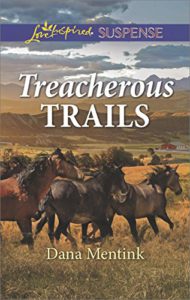 Title: Treacherous Trails
 Author: Dana Mentink
Genre: Inspy Romanctic Suspense
Release Date: March, 2018
Falsely accused… Can she escape the real killer? In this second installment in the Gold Country Cowboys series, farrier Ella Cahill is accused of murder—and only former marine Owen Thorn, her brother’s best friend, can help clear her name. Now with someone trying to kill Ella, Owen must protect her…despite his promise to her brother to stay away from her. But can they work together to find the true killer before she becomes the next to die?
Click here to purchase your copy.
My ThoughtsTreacherous Trails is the second book in Dana Mentink’s Gold Country Cowboys series, and if possible, is better than the first which is excellent. The intrigue and suspense kept me turning pages and were deftly woven with the romantic thread of the developing relationships between Luke and Ella. Each struggled with insecurities and doubts in realistic and relatable ways. Luke’s family was warm and hospitable without being contrived or cliché. I felt Luke’s and Ella’s frustrations as they hit dead-end after dead-end while trying to prove Ella’s innocence. The plot twist at the end was a surprise, yet as I thought about it realized the author had laid the groundwork for it. Highly recommended.
I received a copy of this book for free from CelebrateLit Publicity, and a favorable review was not required. All opinions expressed are my own.About the Author

Dana Mentink is a two time American Christian Fiction Writers Carol Award winner, a Romantic Times Reviewer’s Choice Award and a Holt Medallion winner. She is a national bestselling author of over thirty five titles in the suspense and lighthearted romance genres. She is pleased to write for Harlequin’s Love Inspired Suspense, Harlequin Heartwarming and Harvest House. Dana was thrilled to be a semi-finalist in the Jeanne Robertson Comedy With Class Competition. Besides writing, she busies herself teaching third grade. Mostly, she loves to be home with Papa Bear, teen bear cubs affectionately nicknamed Yogi and Boo Boo, Junie, the nutty terrier, a chubby box turtle and a feisty parakeet. You can connect with Dana via her website at Guest Post from Dana MentinkHowdy, friends! I am so thrilled to be galloping into the second book in the Gold Country Cowboy series with you. This book was a hoot to write. It’s got a nice twisty mystery and plenty of danger! Our hero, twin Owen Thorn, is a Marine doing his darnedest not to fall in love with his brother’s little sister, but you know how these things go, don’t you, partners? There’s trouble ahead in cowboy country and this story will take you on a wild gallop to the happy ending! God bless and thanks for coming along!
Blog StopsHere are Dana's remaining Tour Stops:
April 15: C Jane ReadApril 15: The Power of WordsApril 16: To Everything a SeasonApril 16: Among the ReadsApril 16: Genesis 5020April 17: A Baker's PerspectiveApril 17: Two Points of InterestApril 18: Carpe DiemApril 18: Cafinated ReadsApril 19: Maureen's MusingsApril 19: Simple Harvest ReadsApril 20: Pause for TalesApril 20: Have a Wonderful DayApril 21: Because I said so - and other adventures in parentingApril 21: Proud to be an Autism MomApril 22: Bibliophile ReviewsApril 22: A Greater YesApril 23: Texas BookaholicApril 23: Debbie's Dusty DeliberationsApril 23: Artistic NobodyApril 24: Kat's Corner BooksApril 24: Redheaded Book LadyApril 24: Big Reader SiteApril 25: Margaret KazmierczakApril 25: Raining Butterfly KissesApril 25: RemembrancyGiveaway
To celebrate her tour, Dana is giving away a grand prize package of a $50 Amazon gift card, Cornbread Mix, and Cowboy Caviar Salsa!!Click below to enter. Be sure to comment on this post before you enter to claim 9 extra entries! https://promosimple.com/ps/ca46
April 11, 2018
Talkshow Thursday: Introducing TM Brown
Talkshow Thursday: Introducing TM Brown
I'm pleased to welcome author TM Brown today. It is always fun to discover new authors, so I hope you'll take some time and get to know this interesting writer!
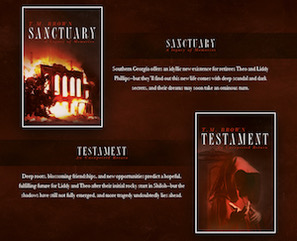
 Linda: Thanks for joining me today. Congratulations on your latest release Testament: An Unexpected Return (Shiloh Mystery Series, Book 2). Did you set out to write a series or did that just happen? Where did you find your inspiration for this story?
TM: Nope. I ventured down this road facing the formidable task of writing my first full-length novel. It wasn’t until the BETA reads did someone suggest I consider doing a sequel. By that point, my writing coach encouraged me to do so also. Thankfully, Testament proved to come together much smoother compared to the time and effort invested in creating Sanctuary.
LM: The age old question for writers – are you a planner or a “panster,” and what is your favorite part of the writing process?
TM: Okay. Sanctuary was written literally as a “panster.” Without an outline I allowed the characters to develop and share their story. Ergo, the final version of Sanctuary emerged after several rewrites and story tweaks consulting with my editor and writing coach. By the time I began creating Testament's story, I had attended a writing workshop and learned about the value of plotting and outlining before any writing begins. I became sold and now I am a planner. Of course, an occasional twist or turn occurs in all creative writing, but creating a preset outline and organizing the scenes prevents the characters from taking me down rabbit trails.
LM: Research is an important part of the writing process. How did you go about researching Testament: An Unexpected Return and did you discover any extra special tidbits of information?
TM: Being old school I have hundreds of printed out setting details, character profiles, and photos that I have used throughout the development of my stories. Yes, my stories are fiction, but I want readers to buy into the plausibility of the setting, characters, historical links used to create the backstory for time-lost Shiloh. The most satisfying feedback I received from readers came when they asked how accurate my story was? Was it based on actual events? And, where is the real Shiloh located? A smile always accompanies my responses.
LM: You started your writing career after a full career in the business world. What prompted you to start writing?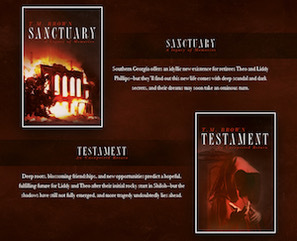 TM: My grandkids! I wanted to leave a legacy of love to them. However, my wife gets the credit. She told me plainly that my grandkids are unlikely to read the hundreds of devotions, bible studies, and sermons I’ve written, but they would likely read a story written by their Poppy. So I reminded myself that Jesus spoke to the crowds in parables to relay truths and they followed him wanting to hear more. I just expanded the concept into a novel idea. I pray that long after I am kicking up cloud dust, my grandsons and granddaughter will slide a dusty copy of one of my books and read some of it to their kids.
LM: Who are your literary heroes?
TM: John Steinbeck and Ernest Hemingway from my younger days. In recent years, John Grisham, especially his earlier books, influenced my love for writing about the South, just like he wrote about Ford County, Mississippi as the setting for many of his novels. The Painted House likely sparked my belief I could write my Shiloh stories. I would be remiss not to include Charles Martin - When Crickets Cry struck a chord in me and inspired me to write my own contemporary, heart-wrenching story about a time-lost Georgia small-town with links to Atlanta.
LM: Here are some quickies:
TM: Favorite food: Any sit-down meal that might include, "pass the black-eyed peas and fried okra please.” In other words, any country meal shared with family around a dining room table.
Favorite vacation spot: A mountain cabin overlooking a lake or river where laughter and giggles fill the air around an open-fire as S'mores get passed around.
Favorite place to write: Alone at home, scooted beneath my desk at home tapping on my iMac keyboard after several hours scribbling notes and sketching scene ideas into my notebooks.
LM: Book three in your series is slated for publication in 2019. What other projects do you have in the works?
TM: After these three books I have a couple more ideas floating around in my head, but I am also enjoying the recent opportunity of helping aspiring authors. I have already conducted workshops and spoken in front of groups about “Authorpreneurship.” Today it takes more than writing a good story to get your book read, and I try to help authors understand how to confidently market and promote their books. My wife and I also have plenty of plans to travel and spoil our grandchildren, which will take precedence in setting my writing calendar in the months ahead.
LM: Where can folks find you on the web?
TM: Website: http://TMBrownAuthor.comSocial Media Sites: http://tmbrownauthor.com/t-m-brown-social-media-sites
About the book: In this sequel to Sanctuary, A Legacy of Memories, Theo and Liddy are finally sinking deep roots into their new hometown of Shiloh. Friendships are blossoming as Liddy ponders an offer to become the new art teacher at Shiloh High while Theo sends off his manuscript for Jessie's Story to be published. Life appears to be settling down, but ominous shadows from the town's past herald more tragedy in little old Shiloh.
Purchase Link: http://tmbrownauthor.com/shop
I'm pleased to welcome author TM Brown today. It is always fun to discover new authors, so I hope you'll take some time and get to know this interesting writer!
 Linda: Thanks for joining me today. Congratulations on your latest release Testament: An Unexpected Return (Shiloh Mystery Series, Book 2). Did you set out to write a series or did that just happen? Where did you find your inspiration for this story?
TM: Nope. I ventured down this road facing the formidable task of writing my first full-length novel. It wasn’t until the BETA reads did someone suggest I consider doing a sequel. By that point, my writing coach encouraged me to do so also. Thankfully, Testament proved to come together much smoother compared to the time and effort invested in creating Sanctuary.
LM: The age old question for writers – are you a planner or a “panster,” and what is your favorite part of the writing process?
TM: Okay. Sanctuary was written literally as a “panster.” Without an outline I allowed the characters to develop and share their story. Ergo, the final version of Sanctuary emerged after several rewrites and story tweaks consulting with my editor and writing coach. By the time I began creating Testament's story, I had attended a writing workshop and learned about the value of plotting and outlining before any writing begins. I became sold and now I am a planner. Of course, an occasional twist or turn occurs in all creative writing, but creating a preset outline and organizing the scenes prevents the characters from taking me down rabbit trails.
LM: Research is an important part of the writing process. How did you go about researching Testament: An Unexpected Return and did you discover any extra special tidbits of information?
TM: Being old school I have hundreds of printed out setting details, character profiles, and photos that I have used throughout the development of my stories. Yes, my stories are fiction, but I want readers to buy into the plausibility of the setting, characters, historical links used to create the backstory for time-lost Shiloh. The most satisfying feedback I received from readers came when they asked how accurate my story was? Was it based on actual events? And, where is the real Shiloh located? A smile always accompanies my responses.
LM: You started your writing career after a full career in the business world. What prompted you to start writing?
 TM: My grandkids! I wanted to leave a legacy of love to them. However, my wife gets the credit. She told me plainly that my grandkids are unlikely to read the hundreds of devotions, bible studies, and sermons I’ve written, but they would likely read a story written by their Poppy. So I reminded myself that Jesus spoke to the crowds in parables to relay truths and they followed him wanting to hear more. I just expanded the concept into a novel idea. I pray that long after I am kicking up cloud dust, my grandsons and granddaughter will slide a dusty copy of one of my books and read some of it to their kids.
LM: Who are your literary heroes?
TM: John Steinbeck and Ernest Hemingway from my younger days. In recent years, John Grisham, especially his earlier books, influenced my love for writing about the South, just like he wrote about Ford County, Mississippi as the setting for many of his novels. The Painted House likely sparked my belief I could write my Shiloh stories. I would be remiss not to include Charles Martin - When Crickets Cry struck a chord in me and inspired me to write my own contemporary, heart-wrenching story about a time-lost Georgia small-town with links to Atlanta.
LM: Here are some quickies:
TM: Favorite food: Any sit-down meal that might include, "pass the black-eyed peas and fried okra please.” In other words, any country meal shared with family around a dining room table.
Favorite vacation spot: A mountain cabin overlooking a lake or river where laughter and giggles fill the air around an open-fire as S'mores get passed around.
Favorite place to write: Alone at home, scooted beneath my desk at home tapping on my iMac keyboard after several hours scribbling notes and sketching scene ideas into my notebooks.
LM: Book three in your series is slated for publication in 2019. What other projects do you have in the works?
TM: After these three books I have a couple more ideas floating around in my head, but I am also enjoying the recent opportunity of helping aspiring authors. I have already conducted workshops and spoken in front of groups about “Authorpreneurship.” Today it takes more than writing a good story to get your book read, and I try to help authors understand how to confidently market and promote their books. My wife and I also have plenty of plans to travel and spoil our grandchildren, which will take precedence in setting my writing calendar in the months ahead.
LM: Where can folks find you on the web?
TM: Website: http://TMBrownAuthor.comSocial Media Sites: http://tmbrownauthor.com/t-m-brown-social-media-sites
About the book: In this sequel to Sanctuary, A Legacy of Memories, Theo and Liddy are finally sinking deep roots into their new hometown of Shiloh. Friendships are blossoming as Liddy ponders an offer to become the new art teacher at Shiloh High while Theo sends off his manuscript for Jessie's Story to be published. Life appears to be settling down, but ominous shadows from the town's past herald more tragedy in little old Shiloh.
Purchase Link: http://tmbrownauthor.com/shop