David Dennington's Blog, page 3
March 5, 2019
REVIEW: ANIMAL FARM by George Orwell
Oh boy! This book affected me a great deal—was surprised by how much. Orwell was subtle and clever in writing this fable about a farm where the animals overthrow the farmer and take over. They decided make it an animals’ utopia of justice and fairness for all, since all animals are equal (some are more equal than others, it later transpired). After putting their hearts and souls into the revolution, things don’t get better, they get worse. The answer is for everyone to work harder. However, the pigs, who are the brains behind the show, get to live in the farmer’s house and to walk on their hind legs (something they’d sworn never to do). The ‘run of the mill’ animals are told how to think and how to behave by constant indoctrination from the developing upper class.
Orwell’s story is based on the Russian Revolution but could probably apply to the French, Cuban and Venezuelan Revolutions as well. Orwell was a Socialist; he rushed off to Spain to fight with the Communists in 1936, but he returned to England quite disillusioned, having realised that the Fascisti and the factions on his side were not really all that different. It’s a great pity that his tragic life was cut short. At age forty-seven, he was on his deathbed writing his second masterpiece, 1984. Had he lived longer, one wonders how his writing and political outlook may have changed, if at all, and what other great works he would have created to make us think deeply.
Orwell’s story is based on the Russian Revolution but could probably apply to the French, Cuban and Venezuelan Revolutions as well. Orwell was a Socialist; he rushed off to Spain to fight with the Communists in 1936, but he returned to England quite disillusioned, having realised that the Fascisti and the factions on his side were not really all that different. It’s a great pity that his tragic life was cut short. At age forty-seven, he was on his deathbed writing his second masterpiece, 1984. Had he lived longer, one wonders how his writing and political outlook may have changed, if at all, and what other great works he would have created to make us think deeply.


February 28, 2019
REVIEW of RIDE THE STORM by Sir Peter Masefield FIVE STARS
To Ride the Storm is a tour de force, a treasure trove for researchers of the airship era. It has its faults, but the factual accounts and details are amazing, though politically biased. Masefield paints a mostly rosy picture of the man at center of this saga, Lord Thomson of Cardington, depicting him as a great pioneer rather than a self-serving politician, which undoubtedly was part of the mix. In fact, he is rather slavish in his praise of Thomson. He slides in a few digs here and there, but without gusto. It is as much a portrait of Thomson as the story of R101, the ill-fated airship.
Masefield has fully described not only the nuts and bolts of it all (as well as few rivets), but also much of the human emotion—for which Masefield has been slammed mercilessly. But I have to confess, I enjoyed those parts! He tells of Thomson’s great love and devotion for Princess Marthe Bibesco of Romania. He tends to show this love being returned in full from a lady who was pursued by many powerful men in Europe, including Prime Minister Ramsay MacDonald (after Thomson’s tragic demise). No question, the princess was a fascinating woman and accomplished (she wrote sixty books!).
This was a glamorous epoch of innovation and style in all facets of life: travel, science, fashion, music, architecture and design. It was an era of wealth of Great Gatsby proportions—all that excess, the dawn of a new world. Heady times indeed! WWI was over and hopefully better times lay ahead.
To Ride the Storm will appeal more to serious researchers and airship historians, than to those looking for a light nonfiction work. It is also impossibly expensive to buy new at over $500.00.
Masefield has fully described not only the nuts and bolts of it all (as well as few rivets), but also much of the human emotion—for which Masefield has been slammed mercilessly. But I have to confess, I enjoyed those parts! He tells of Thomson’s great love and devotion for Princess Marthe Bibesco of Romania. He tends to show this love being returned in full from a lady who was pursued by many powerful men in Europe, including Prime Minister Ramsay MacDonald (after Thomson’s tragic demise). No question, the princess was a fascinating woman and accomplished (she wrote sixty books!).
This was a glamorous epoch of innovation and style in all facets of life: travel, science, fashion, music, architecture and design. It was an era of wealth of Great Gatsby proportions—all that excess, the dawn of a new world. Heady times indeed! WWI was over and hopefully better times lay ahead.
To Ride the Storm will appeal more to serious researchers and airship historians, than to those looking for a light nonfiction work. It is also impossibly expensive to buy new at over $500.00.
REVIEW of RIDE THE STORM by Sir Peter Masefield FIVE STARS
To Ride the Storm is a tour de force, a treasure trove for researchers of the airship era. It has its faults, but the factual accounts and details are amazing, though politically biased. Masefield paints a mostly rosy picture of the man at center of this saga, Lord Thomson of Cardington, depicting him as a great pioneer rather than a self-serving politician, which undoubtedly was part of the mix. In fact, he is rather slavish in his praise of Thomson. He slides in a few digs here and there, but without gusto. It is as much a portrait of Thomson as the story of R101, the ill-fated airship.
Masefield has fully described not only the nuts and bolts of it all (as well as few rivets), but also much of the human emotion—for which Masefield has been slammed mercilessly. But I have to confess, I enjoyed those parts! He tells of Thomson’s great love and devotion for Princess Marthe Bibesco of Romania. He tends to show this love being returned in full from a lady who was pursued by many powerful men in Europe, including Prime Minister Ramsay MacDonald (after Thomson’s tragic demise). No question, the princess was a fascinating woman and accomplished (she wrote sixty books!).
This was a glamorous epoch of innovation and style in all facets of life: travel, science, fashion, music, architecture and design. It was an era of wealth of Great Gatsby proportions—all that excess, the dawn of a new world. Heady times indeed! WWI was over and hopefully better times lay ahead.
To Ride the Storm will appeal more to serious researchers and airship historians, than to those looking for a light nonfiction work. It is also impossibly expensive to buy new at over $500.00.
Masefield has fully described not only the nuts and bolts of it all (as well as few rivets), but also much of the human emotion—for which Masefield has been slammed mercilessly. But I have to confess, I enjoyed those parts! He tells of Thomson’s great love and devotion for Princess Marthe Bibesco of Romania. He tends to show this love being returned in full from a lady who was pursued by many powerful men in Europe, including Prime Minister Ramsay MacDonald (after Thomson’s tragic demise). No question, the princess was a fascinating woman and accomplished (she wrote sixty books!).
This was a glamorous epoch of innovation and style in all facets of life: travel, science, fashion, music, architecture and design. It was an era of wealth of Great Gatsby proportions—all that excess, the dawn of a new world. Heady times indeed! WWI was over and hopefully better times lay ahead.
To Ride the Storm will appeal more to serious researchers and airship historians, than to those looking for a light nonfiction work. It is also impossibly expensive to buy new at over $500.00.
February 27, 2019
REVIEW OF SO DISTAINED by Nevil Shute. Published as THE MYSTERIOUS AVIATOR in the USA
I was an ardent Nevil Shute fan as a teenager. Still am. I plan to read all his books again. So Disdained is Nevil Shute’s second book, written in 1927 whilst he was working on the gigantic R100 Airship at Howden, Yorkshire. He was the airship’s mathematician/chief calculator, working during the day with the great engineer, Barnes Wallis. For relaxation, Shute started writing novels during the evenings. It paid off, with him later becoming the most popular author in the world for a time. It is interesting to observe his writing craft develop.
Reading this book reminds me of watching a very English 1940’s black and white film, and it seems structured that way. The characters are a bit thin and there is a series of improbable coincidences. But I suppose we should remind ourselves that coincidences are perfectly acceptable in art. Shute tends to depict the Fascisti as the good guys in Italy as they were fighting the Communists. Communism was stirring in Britain at the time and some mistakenly thought Fascism was the antidote, not realizing it was just another head of the same socialist, two-headed, rabid dog.
Shute portrays the overall decency of the English gentlemen of the 1920’s era with their sense of fair play. An enjoyable, easy read.
Reading this book reminds me of watching a very English 1940’s black and white film, and it seems structured that way. The characters are a bit thin and there is a series of improbable coincidences. But I suppose we should remind ourselves that coincidences are perfectly acceptable in art. Shute tends to depict the Fascisti as the good guys in Italy as they were fighting the Communists. Communism was stirring in Britain at the time and some mistakenly thought Fascism was the antidote, not realizing it was just another head of the same socialist, two-headed, rabid dog.
Shute portrays the overall decency of the English gentlemen of the 1920’s era with their sense of fair play. An enjoyable, easy read.
October 20, 2018
THE AIRSHIPMEN COUNTDOWN DEAL BEGINS OCTOBER 26, 2018
This epic is for lovers of historical fiction with a British/American flavor. Please check out the Amazon and Goodreads book pages and reviews to see if this is your cup of tea.
Riveting … Cinematic … Fist-biting suspense …Will Lt. Cmdr. Lou Remington climb the gangplank one last time? Be prepared to lose sleep. Based on actual events of the 1920’s.
PRAISE FOR THE AIRSHIPMEN
This is a story written on an epic scale and one of the things I most enjoy about Dennington's books is his development of female characters--they are not merely cardboard cutouts. Princess Marthe Bibesco is so vividly portrayed, she still haunts me. Jeffrey Keeten, Goodreads Top Book Reviewer
The Airshipmen is a riveting story that plays out against the background of one of the most intriguing chapters in history. David Dennington weaves a fascinating web of romance, courage, tragedy and shattered dreams and gives the reader a front row seat to eye-opening, high-stakes political battles on two continents. David Wright, Daily Mirror Journalist.
A gripping story masterfully told, this book reverberates in the reader's mind long after it's over. Steven Bauer, Hollow Tree Press.
DESCRIPTION
Lou Remington, a U.S. Marine, is the main character and witness to events. After World War One, in 1920, he joins the Navy in order to fly airships, leaving his not-so-serious girlfriend, Julia, behind in Great Falls. He is sent to England, as chief coxswain, for training with his crew to fly Airship ZR2 back to New Jersey. After a terrible accident, he meets the love of his life, Charlotte, and settles down to a blissful life in the Yorkshire countryside. But there is no rest for Lou, the British come knocking at their cottage door with offers for him to assist in building the mightiest and safest airships the world has ever known. Accepting the position could lead to a spectacular career with infinite rewards—or maybe cost him his life.
This irresistible offer leads to Lou rubbing shoulders with some of the most dynamic and fascinating characters in the world, from the highest in the land to the lowliest cabin boy. Lou’s nemesis, the towering Lord Thomson of Cardington, sets up two airship teams to compete against each other, leading to a great duel of sorts—a duel to the death in the sky between two gargantuan beasts. Bringing this true story to life is an array of strong, irresistible women who have strong influences on the airshipmen, as well as the heartbreaking outcome.
EXCERPT:
After an hour, Lou cradled her in his arms until it was time to leave. He got up and washed and put on his uniform. He went downstairs and left his kit bag by the door. Before going back upstairs, he took the framed photograph of Charlotte from the mantelpiece in the living room, wrapped it in a shirt, and slipped it into his kit bag. He searched for Fluffy, but she was nowhere to be found. He opened the back door. She wasn’t there.
Charlotte got up and put on a long, white, silk nightdress and came to him at the center of the bedroom. She stared at him and put her arms around his neck. She kissed his lips slowly and deliberately, seeming to savor the moment. He held her and took a handful of her hair, running it through his fingers at her back. She gazed at him with those huge, blue eyes, as if for the last time. He sensed she believed she’d never see him again.
God, you’re so beautiful! he thought.
“Oh God, I love your hair,” he said softly.
“Make the most of it,” she whispered.
“I am coming back, you know—I promise you.”
Doubt showed in her eyes.
“Better go,” he said, letting go of her.
She slowly removed her arms and followed him down to the door. They embraced and kissed again on the recessed front porch.
“See you in about three weeks, honey,” he said. “I love you.”
Her voice was barely audible. “Goodbye, Lou.”
He descended the steps to his motorbike, fastened his kit bag on the luggage rack and kicked it over. He climbed on and turned to Charlotte standing in the doorway, her long, white nightdress back-lit by the overhead light. She looked like an apparition of a Greek goddess, her flowing, black hair shining in the moonlight. He felt sick leaving her now, and guilty. He wished he could stay another hour, or just not leave at all. He bowed his head to her and waved. She didn’t move or make any gesture. Like a statue. He drove away believing he could never feel more miserable than this. But he was wrong.
Website http://www.daviddennington.com
AMAZON:
http://www.amazon.com/gp/product/B01A...
Riveting … Cinematic … Fist-biting suspense …Will Lt. Cmdr. Lou Remington climb the gangplank one last time? Be prepared to lose sleep. Based on actual events of the 1920’s.
PRAISE FOR THE AIRSHIPMEN
This is a story written on an epic scale and one of the things I most enjoy about Dennington's books is his development of female characters--they are not merely cardboard cutouts. Princess Marthe Bibesco is so vividly portrayed, she still haunts me. Jeffrey Keeten, Goodreads Top Book Reviewer
The Airshipmen is a riveting story that plays out against the background of one of the most intriguing chapters in history. David Dennington weaves a fascinating web of romance, courage, tragedy and shattered dreams and gives the reader a front row seat to eye-opening, high-stakes political battles on two continents. David Wright, Daily Mirror Journalist.
A gripping story masterfully told, this book reverberates in the reader's mind long after it's over. Steven Bauer, Hollow Tree Press.
DESCRIPTION
Lou Remington, a U.S. Marine, is the main character and witness to events. After World War One, in 1920, he joins the Navy in order to fly airships, leaving his not-so-serious girlfriend, Julia, behind in Great Falls. He is sent to England, as chief coxswain, for training with his crew to fly Airship ZR2 back to New Jersey. After a terrible accident, he meets the love of his life, Charlotte, and settles down to a blissful life in the Yorkshire countryside. But there is no rest for Lou, the British come knocking at their cottage door with offers for him to assist in building the mightiest and safest airships the world has ever known. Accepting the position could lead to a spectacular career with infinite rewards—or maybe cost him his life.
This irresistible offer leads to Lou rubbing shoulders with some of the most dynamic and fascinating characters in the world, from the highest in the land to the lowliest cabin boy. Lou’s nemesis, the towering Lord Thomson of Cardington, sets up two airship teams to compete against each other, leading to a great duel of sorts—a duel to the death in the sky between two gargantuan beasts. Bringing this true story to life is an array of strong, irresistible women who have strong influences on the airshipmen, as well as the heartbreaking outcome.
EXCERPT:
After an hour, Lou cradled her in his arms until it was time to leave. He got up and washed and put on his uniform. He went downstairs and left his kit bag by the door. Before going back upstairs, he took the framed photograph of Charlotte from the mantelpiece in the living room, wrapped it in a shirt, and slipped it into his kit bag. He searched for Fluffy, but she was nowhere to be found. He opened the back door. She wasn’t there.
Charlotte got up and put on a long, white, silk nightdress and came to him at the center of the bedroom. She stared at him and put her arms around his neck. She kissed his lips slowly and deliberately, seeming to savor the moment. He held her and took a handful of her hair, running it through his fingers at her back. She gazed at him with those huge, blue eyes, as if for the last time. He sensed she believed she’d never see him again.
God, you’re so beautiful! he thought.
“Oh God, I love your hair,” he said softly.
“Make the most of it,” she whispered.
“I am coming back, you know—I promise you.”
Doubt showed in her eyes.
“Better go,” he said, letting go of her.
She slowly removed her arms and followed him down to the door. They embraced and kissed again on the recessed front porch.
“See you in about three weeks, honey,” he said. “I love you.”
Her voice was barely audible. “Goodbye, Lou.”
He descended the steps to his motorbike, fastened his kit bag on the luggage rack and kicked it over. He climbed on and turned to Charlotte standing in the doorway, her long, white nightdress back-lit by the overhead light. She looked like an apparition of a Greek goddess, her flowing, black hair shining in the moonlight. He felt sick leaving her now, and guilty. He wished he could stay another hour, or just not leave at all. He bowed his head to her and waved. She didn’t move or make any gesture. Like a statue. He drove away believing he could never feel more miserable than this. But he was wrong.
Website http://www.daviddennington.com
AMAZON:
http://www.amazon.com/gp/product/B01A...
September 27, 2018
REVIEW: MY EXPERIENCES IN THE WORLD WAR by General J. Pershing.
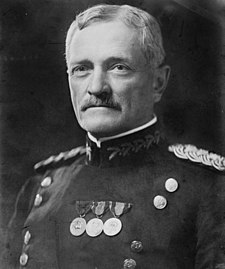
General of the Armies, John J. 'Black Jack' Pershing.
"Although observing statesmen and military men, others only vaguely, had sensed the situation as a menace of war, few seemed to appreciate that a resort to arms would involve practically the whole civilized world. Apparently none of the powers visualized what it would mean in its appalling destruction of human life, its devastation of countries, and in the suffering of populations."
This memoir with diary excerpts is a concise record of General Pershing’s experiences in his role in WWI, providing insight into the war told from the American perspective. It tells of his early life as a soldier, and events leading up to this war while the world sleepwalked its way into a catastrophe of indescribable proportions. No doubt, Pershing’s insights after this war helped shape the thinking of future American generals.
Pershing was unequivocal as to blame for this unspeakable tragedy which cost 20 million lives and wounded another 21 million.
"The details of what happened in the beginning are well known and the world has long since fixed the blame where it properly belongs—on the shoulders of the German Government of 1914."
He lists some of Germany’s atrocities and laments America’s lack of action in preparation for war:
"The invasion of Belgium was an open declaration of Germany’s attitude toward all neutral rights. If our people had grasped its meaning they would have at least insisted upon preparation to meet more effectively the later cumulative offenses of Germany against the law of nations, one of which was the sinking of the Lusitania."
Inaction played into the hands of Germany, she knew how long it would take the United States to put an army in the field.
Pershing comes off as modest and humane. In fact, he seemed to possess the patience of Job (for most of the time) and showed himself to be an astute politician in dealing with the French and British. I found it astonishing that both those powers tried to prevent Pershing from forming an American army. They felt that the millions of men being sent from the US, at the rate of 250,000 per month, should be fed into their own armies. Pershing was adamantly against this. He knew his men did not want to serve under any flag but their own. He also knew they would be slaughtered. The Allies had devised a system of defensive trench warfare as their mode of operation and training. Pershing was dead set against this.
"Trenches were not new to Americans, as both the Union and Confederate armies in the Civil War had used them extensively."
Pershing’s strategy was to fight aggressively on open ground and did not want his men trained exclusively in trench warfare. He also wanted his infantry to be well trained as crack shots with their rifles and was constantly frustrated by lack of training in these fighting techniques he’d specifically called for. Lack of preparation in aviation was dire and Pershing did not hold back as to his requirements to prosecute this war:
"The situation at that time as to aviation was such that every American ought to feel mortified to hear it mentioned. Out of 65 officers and about 1,000 men in the Air Service Section of the Signal Corps, there were 35 officers who could fly. We could not have put a single squadron in the field …"
When the general and his staff arrive in France, he was dumbfounded by the reception they received and there are many instances in the book where he tells of the emotion he felt and connection to the French people.
"The station was packed with people and the atmosphere seemed electrical with pent-up enthusiasm. The acclaim that greeted us as we drove through the streets en route to the hotel was a complete surprise. Women climbed into our automobiles screaming, “Vive l’Amerique,” and threw flowers until we were buried. It brought home to us a deep sense of the responsibility resting on America."
The Germans knew they only had a small window of opportunity to win the war before the Americans arrived with a force of more than 3 million men. After capitulation by the Russians at the Eastern Front, Germany rushed as many divisions as it could to the Western Front. Pershing began to understand the magnitude of the task before him. To form a properly trained army and air force from scratch was daunting. At last, the first Americans began to arrive and the French population was elated.
"This first appearance of American combat troops in Paris brought forth joyful acclaim from the people. On the march to Lafayette’s tomb the battalion was joined by a great crowd, many women forcing their way into the ranks and swinging along arm in arm with the men. With wreaths about their necks and bouquets in their hats and rifles. …Many dropped on their knees in reverence as the column went by."
But the clock was ticking. The next massive obstacle the general faced was getting his troops across the Atlantic. He points out that since the losses caused by the civil war American shipping was seriously depleted. The only way was for the Allies to use their ships for the purpose, but they were reluctant.
It is eye-opening, that is to say, what a great general has to think about in waging a world war—it’s not just a matter of charging off into battle. Pershing had to organize and manage: communications, first aid, hospital building, organization of the Red Cross and YMCA, shipping, road building, transportation (including railways), war material, lumber, horses and mules, billeting, morale, venereal disease, control of alcohol consumption, defense against poisonous gas, chaplains and religion, uniforms and cold weather gear, fuel, promotions, courts martial, justice and executions, the press and censorship. Pershing was hands-on with all these issues. For instance, he sent for specialists in forestry, lumbermen and 10,000 laborers for cutting down trees and setting up saw mills and building roads; railway engineers to organize railway transportation and repair of existing damaged cars and trains for movement of allied and American armies. Later, Spanish flu’ would occupy his mind and become a major factor, ultimately killing millions.
Pershing tells us about the use of poisonous gas which had been discussed at the Hague Conference in 1899 and to which Germany had subscribed to the agreement. But her armies dishonored this pledge, throwing humanity to the winds, becoming the first to use gas shells—which later they, themselves, must have regretted.
"The first gas attack had occurred on April 22, 1915, in the Ypres salient… What followed almost defies description … hundreds of men were thrown into a comatose or dying condition ..."
There were moments of great drama. When Pershing visited Beauvais to meet with the Supreme War Council the allies set upon him, insisting again and again that the American troops be allocated into the ranks of their own armies. He told them:
“ 'The time may come when the American Army will have to stand the brunt of this war, and it is not wise to fritter away our resources in this manner.' At this juncture, Lloyd George and M. Clemenceau, entered the room. Milner met Lloyd George at the door and said in a stage whisper behind his hand, 'You can’t budge him an inch.' Then all five attacked me with force. I said with the greatest possible emphasis, 'Gentlemen, I have thought this program over very deliberately and will not be coerced.' ”
There are references to ‘colored troops’. Pershing had commanded Americans of African descent earlier in his career and that was where his name ‘Black Jack’ Pershing originated. He’d commanded the ‘Buffalo Soldiers’ as they were called. This name was said to have been used by the Indians who respected them, finding them as ferocious as buffalo. Some black regiments went on to fight alongside the French and were highly decorated. A colored division, the 92nd, had been selected by the War Department for temporary service and training with the British armies, but their Military Attache in Washington protested. Pershing was surprised and wrote to Marshal Haig:
“May 5, 1918. “MY DEAR SIR DOUGLAS: …You will, appreciate my position in this matter, which is that these negroes are American citizens. Naturally, I cannot and will not discriminate against these soldiers."
Race comes up again in Pershing’s diary on June 22, 1919. Rumors are being spread and he hears about it when he talks to his men in the field.
"Colored soldiers highly incensed that false stories of their mistreatment are being circulated at home. …German propaganda was working overtime in the US to stir up trouble. …My earlier service with colored troops in the Regular Army had left a favorable impression on my mind. On the frontier and elsewhere, they were reliable and courageous … Exploits of two colored infantrymen some weeks ago in repelling much larger German patrol, killing and wounding several Germans and winning Croix de Guerre by their gallantry, has roused fine spirit of emulation among colored troops. … The only regret expressed is that they are not given more dangerous work to do. They are especially amused at the stories being circulated that the American colored troops are placed in the most dangerous positions, and all are desirous of having more active service than has been permitted them so far."
The Allies had doubts about the Americans, questioning their ability to fight as well as their own seasoned armies. The opportunity soon came to remove any reason for misgivings. The German attack of May 27th 1918 was made by thirty German divisions. It came as such a surprise that the French did not have time to destroy important bridges across the Aisne. American troops were rushed to Chateau-Thierry.
"The roads were crowded with French troops and refugees retreating in great confusion, many soldiers telling our men that all was lost. …Although in the battlefield for the first time, the Americans maintained their position and by their timely arrival stopped the German advance on Paris."
With the Americans in the fight, the tide was about to turn, but the shortage of horses and mules for hauling guns and war material was a continual problem and one gets the picture of the dreadful suffering of these magnificent creatures during man’s quest to kill one another.
"We were promised 80,000 of the 160,000 to be obtained through the requisition at the rate of 15,000 per month…These numbers, however, would still leave us with a large shortage …"
Extraordinary tales emerged after America’s first battles in the Chateau-Thierry/St. Mihiel region. Diary entry July 12, 1918:
"Took lunch with Harbord at Nanteuil-sur-Marne, where his brigade of the 2nd Division is resting. He told of a marine who had captured seventy-five German prisoners single-handed."
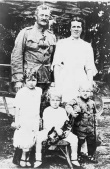
General Pershing, wife Helen
with three of their children.
There are touching moments, considering what Pershing had so recently endured: His wife and three daughters had died in a fire in San Francisco in August 1915. His black orderly had climbed through the window and rescued his son. During July of 1918, after his inspection of an aviation center, he went for a walk, which must have brought back heartbreaking memories.
"I visited the fine old pension in which I had spent two happy months with my family back in 1908. The beautiful garden, the shade trees, the swing, the children’s sand pile, all were the same, but now I was a stranger."
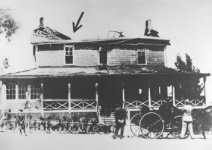
The Pershing home after the deadly fire of 1915
"The American troop build-up continued through 1918 at the rate of 250,000 per month. A cable made it clear that the War Department expected to have eighty divisions, or approximately 3,200,000 men, in France by July, 1919. The St. Mihiel victory probably did more than any single operation of the war to encourage the tired Allies. And initial moves of the German government to stop the fighting occurred at this time and without doubt because of the results of these four days of battle."
After fighting ceased, it was realized Germany was on its knees, no longer in a position to fight. Pershing had strong opinions about subsequent events.
"Instead of requiring the German forces to retire at once, leaving material, arms and equipment behind, the Armistice terms permitted them to march back to their homeland with colors flying and bands playing, posing as the victims of political conditions. … If unconditional surrender had been demanded, the Germans would, without doubt, have been compelled to yield, and their troops would have returned to Germany without arms, virtually as paroled prisoners of war. The surrender of the German armies would have been an advantage to the Allies in the enforcement of peace terms and would have been a greater deterrent against possible future German aggression."
Twenty years later, Germany resumed the war in its quest to be masters of Europe. I found this book factual and deeply interesting—a gold mine for researchers of the Great War from the American perspective.
September 15, 2018
JEFFREY KEETEN'S REVIEW of THE GHOST OF CAPTAIN HINCHLIFFE
Jeffrey Keeten kindly read and reviewed The Ghost of Captain Hinchliffe and did such a masterful job, I thought I'd post it here. I hope you like it too.
 The Ghost of Captain Hinchliffe by David Dennington
My rating: 4 of 5 stars
'Good evening, my name is Emilie Hinchliffe.’ More applause. ‘I’ve come here tonight to tell you my story,’ she gestured to the relevant subject of artwork as she spoke. ‘It’s about an heiress, an aeroplane, a ghost and the mightiest airship the world has ever seen. I know you’ve read the story of what happened to me, and to my husband and to many of his friends just recently. Tonight, I’m going to tell you the whole story.'

The Endeavor. The Stinson Detroiter plane used by Captain Hinchliffe and Elsie Mackay. Picture provided by David Dennington
On May 20th, 1927, Charles Lindbergh left Roosevelt Field in New York in his custom made, soon to be famous plane The Spirit of St. Louis.
He made the crossing in 33.5 hours and became the first man to complete a solo, nonstop flight from New York to a European landmass. He became the most famous man in the world. He also earned $25,000 in prize money.
The race was on to see who could make the trip from East to West.

Captain Raymond Hinchliffe
Captain Raymond Hinchliffe might have been an unlikely candidate to make the trip, but he was one of the most celebrated pilots of his era. During the Great War, he was shot down. He lost an eye in the resulting crash, and one leg would never be right again, but he was undaunted in his abilities to fly as well as any man. After the war, it wasn’t easy for him to find work as a commercial pilot, and frankly, that type of work was unfulfilling. He felt that he had one more great endeavor in him, and no one had beat him to it yet. He wanted to make that flight from East to West across the Atlantic, and the 10,000 pounds in prize money would give him and his wife Millie some security for the future.

Elsie Mackay
Elsie Mackay was a rich girl, not content to just be a socialite. She was an actress, which would be more than enough attention for most other young ladies, but for her, she too wanted to define herself by a bold action. There were few pilots in the 1920s, but there were really only a handful of female pilots. Some might say she was recklessly trying to impress her father, Lord Inchcape. Being the first woman to cross the Atlantic was a prize well worth trying for, despite the danger. For a woman as progressive as Elsie, keeping pace with the boys was not only fun and exciting, but also essential.

Captain Hinchliffe and his wife Millie.
Millie Hinchliffe was the wife of Captain Hinchliffe, a concert level pianist, and an accomplished painter. She had a knack for portrait painting; sometimes she expressed so well the inner life of her subject that it could be an uncomfortable revelation for the portrait sitter. Winston Churchill noticed her particular ability to capture the auras of her subjects. As this novel progressed, her otherworldly abilities became more acute, and she began to see visions that scared her into action to attempt to warn people of impending disaster. Her most terrifying vision of all regarded the mightiest airship ever built, the Cardington R101.
To know something horrifying that no one else knows is frustrating and lonely.
Meanwhile, the race was on for Hinchliffe and Mackay to get their Stinson Detroiter plane modified for the trip across the Atlantic. They knew a German team was nearly ready to attempt the crossing. There were no second place medals. There could only be one first. The tension was revving up with each new chapter.
One of the things I most enjoy about Dennington’s books is his development of female characters. They are not merely furniture or cardboard cutouts. They are women who are multi-talented and not at all compelled to be confined to a traditional role. They want to experience life on the same scale that any man would want. We certainly should not to forget these women of the air who dared to challenge this new frontier. Lauren Notaro, author of Crossing the Horizon, released this short, but poignant, video commemorating those women. Please do give it a quick look. 1:38 video of Crossing the Horizon
This book intersects with Dennington’s other book The Airshipmen, which I have also read and reviewed. Some characters in one book show up in the other. In his first book, he tells the tale of the airship Cardington R101. A special pleasure for me is that he brings the writer and engineer Nevil Shute to life and reminds me how much I enjoy his writing. I now haveplanes plans to read several of Shute’s books over the coming months.
Let’s return briefly to Millie so you can have some idea of the visions this poor woman was experiencing. The trick was to even interpret what she was seeing with any level of certainty.
"The train jerked forward. It traveled slowly away, she from him, he from her. He became drowned in black smoke. It was then, in the blackness, she saw his aura--usually vibrant multicolors--now predominantly purple and mauve. As she moved away, the black smoke, too, turned into swirling clouds of purple. She didn’t take her eyes from him until he was gone. She had an unbearable sinking feeling as he disappeared. What did it mean? She sank into her seat. As she’d watched him, she’d felt his spirit slipping away, as though this iron monster was pulling them apart, clacking wheels measuring the distance yard by yard. She felt terribly afraid.”
What does it mean?
David Dennington kindly agreed to answer a few questions.
Jeffrey D. Keeten: “The problem, of course, with the art of clairvoyance is that the demand for answers from so many people who lost someone in the Great War created opportunities for charlatans.”
David Dennington: “This was true after WW1 and the R101 disaster. I reckon probably only ten percent were genuine. Money was scarce, too, and it was a good way to pick up a few pounds/dollars.”
Jeffrey D. Keeten: “I've read before about the belief held by Arthur Conan Doyle which you explored in your novel, but I'm curious to know if you believe in clairvoyants?”

Arthur Conan Doyle spirit photo.
David Dennington: “Conan Doyle was a lovely guy. A bit naïve and was taken for a ride at times, I think. This is why I wanted to sit in circle and develop my own psychic ability. Then I could say, ‘I saw it myself’.”
JDK: “Can we speak with the dead? Have you attended a legitimate seance?”
DD: “Yes, sometimes, and yes, I have. I can only speak for myself. Growing up as a child, I always felt as though something was there. At 10, I distinctly remember being in my little schoolroom and looking round at all the girls. I liked girls. I thought what it might be like to be married. I was told that my wife’s name would begin with the letter ‘J.’ For many years, I went to school with a good friend who said his grandmother was a ‘medium’ and would I like to meet her. I always declined—not courageous enough. But when my father died at 48, when I was 20, he asked me again, and I said ‘yes.’ She was a kindly old soul with smiling eyes who chuckled all the time. Mrs. East is based on her and a composite of my own Nan who sat beside the picture on the wall of her own son ‘Lawrie,’ torpedoed by a Uboat in WW2. His death overshadowed the family all my life. So, the old lady took me to the Spiritualist church where I ‘sat in circle’ for a year or so; it is eerily similar to Mrs East in The Ghost. My own psychic development did occur. I do have some interesting tales to tell of my experiences and some over the years since. In circle, I did encounter mediums who were ‘powerful.’ You could actually feel it coming from their bodies, like electricity (ah, now I’m thinking of Madam Harandah!) There were others who I think were just ‘wannabees’ with no power at all. I attended ‘transfigurations,’ which was interesting, and was invited to ‘materializations,’ which I declined, feeling it was too open to fraud and the ‘darkside.’ But Millie Hinchliffe did go to all those things. I am thinking of writing a memoir of all my experiences in the psychic realm.”
“The thing about being given something, like a sign, is usually very small. But to you personally, when it happens, it’s huge. But when told to someone else, it might sound daft, or that you’ve got a screw loose. I’ll give you a couple of instances. The first one was when I’d returned from Bermuda with my family to London and was pretty depressed after being in such an exotic place, leading the life of Riley. I planned to take a job in Florida, which my friend Mike (we’d been friends from our Bahama days) had arranged for me. But I thought I would go up to London to Belgrave Square to the Spiritualist Alliance and get a reading (yes, the same place Millie went to with Mrs. East). I went there, and the medium, a man, was wary of me, thinking I was a journalist (I had a pencil and a notebook). He said I would go and live in Africa, to which I thought, ‘I will never set foot in Africa.’ As I was going out the door, he said, ‘You will write a book, a very big book, and it will be rather wonderful!’ Then he pointed at me and said, ‘You must pay your taxes!’ I’ve thought about that for years. If you look at the map, South Florida and Africa look similar. I was leaving for South Florida the following week. I wonder if he’d been shown a map and got it wrong. I wrote a ‘big book’ thirty years later. And I later got into massive trouble over my taxes, which hit me like a Mack truck—all unintentional on my part.”
“The second thing happened this year. And could be pure coincidence. My best friend Mike of fifty years (who found me the job in Florida) died of brain cancer in November last year. We are all like family. I was in Bermuda in May and during the night got up and came back to my room in the dark. I sat on the bed and fondly thought of my buddy Mike and imagined him saying to me, ‘I love you man; you are my brother, you know.’ Then I felt something weird in my left ear and put my hand to it. Something was stuck to my ear. I pulled it off and put the light on. I was a heart—a child’s sticky icon left on the bed by my grandchildren. There were others, I discovered, of the alphabet. What struck me was that it was over my ear, and it was the valentine symbol of love. It could have been a letter from the alphabet. Now, to you it probably all sounds silly, but I just wonder. I keep an open mind but am always skeptical. Mike, like Christopher Hitchens, was an atheist, and we had some fights about it. He was almost bitter about the subject. We had a set to about it in Spain, and on leaving, he hugged me goodbye. Somehow I knew that would be the last time I’d see him, though we tried three times to get to Florida to see him but were prevented by hurricanes, etc. In passing, I have to tell you that I love Hitchens and agree with most of what he says (and love to watch him on Youtube). I think to believe in God, the afterlife, and all that, you have to have imagination or, should I say, an imaginative type of mind. Hitchens was a Marxist, but he thought for himself; he did not move with the herd, and that made him fascinating to the media (and of course, he was light years ahead of all of them). Now like Mike, I wonder if he’s changed his views now he’s ‘over there’! Sorry, I digress.”
JDK: “Your two novels intersect. Have you any plans to build on this world with your next novel? There are so many interesting characters associated with this period of history. I could really see you being able to do four or five novels without leaving the confines of your original research too far.”
DD:”I love this idea and often think of doing it. Some people have said they would have liked to know more about the airship crewmen and that I didn’t tell enough about their lives—as if it wasn’t long enough already! Then there’s Martha and Ramsay MacDonald, of course.”
JDK:”You have an affinity for bringing strong female characters, real or imaginary, to life.”
DD: “Thank you.”
JDK: “Most memorably for me was Countess Marthe Bibesco from The Airshipmen. In this novel, Millie Hinchliffe and Elsie Mackay are so vividly portrayed one might say they still haunt me.”
DD: “Thank you. No author could ask for more than that.”
JDK “For that reason I would highly recommend your books to men and women without reservations. Male readers and female readers will find people they can identify with and, in some cases, maybe someone from the opposite sex. Was this a conscious part of your writing to achieve this balance?”
DD: “Actually, I don’t consciously do that. I listen. And I write down what they say. It’s like taking dictation. I think I can feel and think what a woman feels and thinks. Maybe it was from being around my mother as an only child with my Dad at work at nights, printing the Daily Mirror. Or, maybe, and this is just a big maybe, it’s from past lives, if you believe in any of that!”
JDK: “You must have a few female beta readers who must say from time to time, ‘Oh David, she wouldn't say that or do that?”
DD: “That has not happened yet. I have had a few Nevil Shute fans say I write like him. Sometimes I think he’s been looking over my shoulder. I kick myself now that I didn’t bring him into The Ghost. He could have been in the pub and met Hinch and Millie. He could have come down and had his portrait painted, and he could have advised her on writing her own book.”

A posed photo of Elsie Mackay. I love the shoes!
JDK: “What I really like about your female characters is the fact that they are multi-talented women. They aren't just good at one thing. That is certainly why I find them so fascinating.”
DD: “Thank you. I love women. All the women in my life have been wonderful: My Nan, my mother Lena, Aunt Vi (Lawrie’s sister--still alive and more like my sister), my cousin Dawn, my daughter (who is a super intelligent Tufts graduate, my editor, and the best read person I know), and Jennifer, my wife with a 'J.'”
“Thank you again, Jeffrey. As a writer, I must say you are someone who really 'gets it.'”
JDK: My special thanks to David Dennington for graciously agreeing to answer my questions and for providing me with several photos that I used in this review.
The Ghost of Captain Hinchliffe Video.
If you wish to see more of my most recent book and movie reviews, visit http://www.jeffreykeeten.com
I also have a Facebook blogger page at:https://www.facebook.com/JeffreyKeeten
View all my reviews
The Ghost of Captain Hinchliffe by David DenningtonMy rating: 4 of 5 stars
'Good evening, my name is Emilie Hinchliffe.’ More applause. ‘I’ve come here tonight to tell you my story,’ she gestured to the relevant subject of artwork as she spoke. ‘It’s about an heiress, an aeroplane, a ghost and the mightiest airship the world has ever seen. I know you’ve read the story of what happened to me, and to my husband and to many of his friends just recently. Tonight, I’m going to tell you the whole story.'

The Endeavor. The Stinson Detroiter plane used by Captain Hinchliffe and Elsie Mackay. Picture provided by David Dennington
On May 20th, 1927, Charles Lindbergh left Roosevelt Field in New York in his custom made, soon to be famous plane The Spirit of St. Louis.
He made the crossing in 33.5 hours and became the first man to complete a solo, nonstop flight from New York to a European landmass. He became the most famous man in the world. He also earned $25,000 in prize money.
The race was on to see who could make the trip from East to West.

Captain Raymond Hinchliffe
Captain Raymond Hinchliffe might have been an unlikely candidate to make the trip, but he was one of the most celebrated pilots of his era. During the Great War, he was shot down. He lost an eye in the resulting crash, and one leg would never be right again, but he was undaunted in his abilities to fly as well as any man. After the war, it wasn’t easy for him to find work as a commercial pilot, and frankly, that type of work was unfulfilling. He felt that he had one more great endeavor in him, and no one had beat him to it yet. He wanted to make that flight from East to West across the Atlantic, and the 10,000 pounds in prize money would give him and his wife Millie some security for the future.

Elsie Mackay
Elsie Mackay was a rich girl, not content to just be a socialite. She was an actress, which would be more than enough attention for most other young ladies, but for her, she too wanted to define herself by a bold action. There were few pilots in the 1920s, but there were really only a handful of female pilots. Some might say she was recklessly trying to impress her father, Lord Inchcape. Being the first woman to cross the Atlantic was a prize well worth trying for, despite the danger. For a woman as progressive as Elsie, keeping pace with the boys was not only fun and exciting, but also essential.

Captain Hinchliffe and his wife Millie.
Millie Hinchliffe was the wife of Captain Hinchliffe, a concert level pianist, and an accomplished painter. She had a knack for portrait painting; sometimes she expressed so well the inner life of her subject that it could be an uncomfortable revelation for the portrait sitter. Winston Churchill noticed her particular ability to capture the auras of her subjects. As this novel progressed, her otherworldly abilities became more acute, and she began to see visions that scared her into action to attempt to warn people of impending disaster. Her most terrifying vision of all regarded the mightiest airship ever built, the Cardington R101.
To know something horrifying that no one else knows is frustrating and lonely.
Meanwhile, the race was on for Hinchliffe and Mackay to get their Stinson Detroiter plane modified for the trip across the Atlantic. They knew a German team was nearly ready to attempt the crossing. There were no second place medals. There could only be one first. The tension was revving up with each new chapter.
One of the things I most enjoy about Dennington’s books is his development of female characters. They are not merely furniture or cardboard cutouts. They are women who are multi-talented and not at all compelled to be confined to a traditional role. They want to experience life on the same scale that any man would want. We certainly should not to forget these women of the air who dared to challenge this new frontier. Lauren Notaro, author of Crossing the Horizon, released this short, but poignant, video commemorating those women. Please do give it a quick look. 1:38 video of Crossing the Horizon
This book intersects with Dennington’s other book The Airshipmen, which I have also read and reviewed. Some characters in one book show up in the other. In his first book, he tells the tale of the airship Cardington R101. A special pleasure for me is that he brings the writer and engineer Nevil Shute to life and reminds me how much I enjoy his writing. I now have
Let’s return briefly to Millie so you can have some idea of the visions this poor woman was experiencing. The trick was to even interpret what she was seeing with any level of certainty.
"The train jerked forward. It traveled slowly away, she from him, he from her. He became drowned in black smoke. It was then, in the blackness, she saw his aura--usually vibrant multicolors--now predominantly purple and mauve. As she moved away, the black smoke, too, turned into swirling clouds of purple. She didn’t take her eyes from him until he was gone. She had an unbearable sinking feeling as he disappeared. What did it mean? She sank into her seat. As she’d watched him, she’d felt his spirit slipping away, as though this iron monster was pulling them apart, clacking wheels measuring the distance yard by yard. She felt terribly afraid.”
What does it mean?
David Dennington kindly agreed to answer a few questions.
Jeffrey D. Keeten: “The problem, of course, with the art of clairvoyance is that the demand for answers from so many people who lost someone in the Great War created opportunities for charlatans.”
David Dennington: “This was true after WW1 and the R101 disaster. I reckon probably only ten percent were genuine. Money was scarce, too, and it was a good way to pick up a few pounds/dollars.”
Jeffrey D. Keeten: “I've read before about the belief held by Arthur Conan Doyle which you explored in your novel, but I'm curious to know if you believe in clairvoyants?”

Arthur Conan Doyle spirit photo.
David Dennington: “Conan Doyle was a lovely guy. A bit naïve and was taken for a ride at times, I think. This is why I wanted to sit in circle and develop my own psychic ability. Then I could say, ‘I saw it myself’.”
JDK: “Can we speak with the dead? Have you attended a legitimate seance?”
DD: “Yes, sometimes, and yes, I have. I can only speak for myself. Growing up as a child, I always felt as though something was there. At 10, I distinctly remember being in my little schoolroom and looking round at all the girls. I liked girls. I thought what it might be like to be married. I was told that my wife’s name would begin with the letter ‘J.’ For many years, I went to school with a good friend who said his grandmother was a ‘medium’ and would I like to meet her. I always declined—not courageous enough. But when my father died at 48, when I was 20, he asked me again, and I said ‘yes.’ She was a kindly old soul with smiling eyes who chuckled all the time. Mrs. East is based on her and a composite of my own Nan who sat beside the picture on the wall of her own son ‘Lawrie,’ torpedoed by a Uboat in WW2. His death overshadowed the family all my life. So, the old lady took me to the Spiritualist church where I ‘sat in circle’ for a year or so; it is eerily similar to Mrs East in The Ghost. My own psychic development did occur. I do have some interesting tales to tell of my experiences and some over the years since. In circle, I did encounter mediums who were ‘powerful.’ You could actually feel it coming from their bodies, like electricity (ah, now I’m thinking of Madam Harandah!) There were others who I think were just ‘wannabees’ with no power at all. I attended ‘transfigurations,’ which was interesting, and was invited to ‘materializations,’ which I declined, feeling it was too open to fraud and the ‘darkside.’ But Millie Hinchliffe did go to all those things. I am thinking of writing a memoir of all my experiences in the psychic realm.”
“The thing about being given something, like a sign, is usually very small. But to you personally, when it happens, it’s huge. But when told to someone else, it might sound daft, or that you’ve got a screw loose. I’ll give you a couple of instances. The first one was when I’d returned from Bermuda with my family to London and was pretty depressed after being in such an exotic place, leading the life of Riley. I planned to take a job in Florida, which my friend Mike (we’d been friends from our Bahama days) had arranged for me. But I thought I would go up to London to Belgrave Square to the Spiritualist Alliance and get a reading (yes, the same place Millie went to with Mrs. East). I went there, and the medium, a man, was wary of me, thinking I was a journalist (I had a pencil and a notebook). He said I would go and live in Africa, to which I thought, ‘I will never set foot in Africa.’ As I was going out the door, he said, ‘You will write a book, a very big book, and it will be rather wonderful!’ Then he pointed at me and said, ‘You must pay your taxes!’ I’ve thought about that for years. If you look at the map, South Florida and Africa look similar. I was leaving for South Florida the following week. I wonder if he’d been shown a map and got it wrong. I wrote a ‘big book’ thirty years later. And I later got into massive trouble over my taxes, which hit me like a Mack truck—all unintentional on my part.”
“The second thing happened this year. And could be pure coincidence. My best friend Mike of fifty years (who found me the job in Florida) died of brain cancer in November last year. We are all like family. I was in Bermuda in May and during the night got up and came back to my room in the dark. I sat on the bed and fondly thought of my buddy Mike and imagined him saying to me, ‘I love you man; you are my brother, you know.’ Then I felt something weird in my left ear and put my hand to it. Something was stuck to my ear. I pulled it off and put the light on. I was a heart—a child’s sticky icon left on the bed by my grandchildren. There were others, I discovered, of the alphabet. What struck me was that it was over my ear, and it was the valentine symbol of love. It could have been a letter from the alphabet. Now, to you it probably all sounds silly, but I just wonder. I keep an open mind but am always skeptical. Mike, like Christopher Hitchens, was an atheist, and we had some fights about it. He was almost bitter about the subject. We had a set to about it in Spain, and on leaving, he hugged me goodbye. Somehow I knew that would be the last time I’d see him, though we tried three times to get to Florida to see him but were prevented by hurricanes, etc. In passing, I have to tell you that I love Hitchens and agree with most of what he says (and love to watch him on Youtube). I think to believe in God, the afterlife, and all that, you have to have imagination or, should I say, an imaginative type of mind. Hitchens was a Marxist, but he thought for himself; he did not move with the herd, and that made him fascinating to the media (and of course, he was light years ahead of all of them). Now like Mike, I wonder if he’s changed his views now he’s ‘over there’! Sorry, I digress.”
JDK: “Your two novels intersect. Have you any plans to build on this world with your next novel? There are so many interesting characters associated with this period of history. I could really see you being able to do four or five novels without leaving the confines of your original research too far.”
DD:”I love this idea and often think of doing it. Some people have said they would have liked to know more about the airship crewmen and that I didn’t tell enough about their lives—as if it wasn’t long enough already! Then there’s Martha and Ramsay MacDonald, of course.”
JDK:”You have an affinity for bringing strong female characters, real or imaginary, to life.”
DD: “Thank you.”
The Honourable Elsie Mackay.

JDK: “Most memorably for me was Countess Marthe Bibesco from The Airshipmen. In this novel, Millie Hinchliffe and Elsie Mackay are so vividly portrayed one might say they still haunt me.”
DD: “Thank you. No author could ask for more than that.”
JDK “For that reason I would highly recommend your books to men and women without reservations. Male readers and female readers will find people they can identify with and, in some cases, maybe someone from the opposite sex. Was this a conscious part of your writing to achieve this balance?”
DD: “Actually, I don’t consciously do that. I listen. And I write down what they say. It’s like taking dictation. I think I can feel and think what a woman feels and thinks. Maybe it was from being around my mother as an only child with my Dad at work at nights, printing the Daily Mirror. Or, maybe, and this is just a big maybe, it’s from past lives, if you believe in any of that!”
JDK: “You must have a few female beta readers who must say from time to time, ‘Oh David, she wouldn't say that or do that?”
DD: “That has not happened yet. I have had a few Nevil Shute fans say I write like him. Sometimes I think he’s been looking over my shoulder. I kick myself now that I didn’t bring him into The Ghost. He could have been in the pub and met Hinch and Millie. He could have come down and had his portrait painted, and he could have advised her on writing her own book.”

A posed photo of Elsie Mackay. I love the shoes!
JDK: “What I really like about your female characters is the fact that they are multi-talented women. They aren't just good at one thing. That is certainly why I find them so fascinating.”
DD: “Thank you. I love women. All the women in my life have been wonderful: My Nan, my mother Lena, Aunt Vi (Lawrie’s sister--still alive and more like my sister), my cousin Dawn, my daughter (who is a super intelligent Tufts graduate, my editor, and the best read person I know), and Jennifer, my wife with a 'J.'”
“Thank you again, Jeffrey. As a writer, I must say you are someone who really 'gets it.'”
JDK: My special thanks to David Dennington for graciously agreeing to answer my questions and for providing me with several photos that I used in this review.
The Ghost of Captain Hinchliffe Video.
If you wish to see more of my most recent book and movie reviews, visit http://www.jeffreykeeten.com
I also have a Facebook blogger page at:https://www.facebook.com/JeffreyKeeten
View all my reviews
August 28, 2018
REVIEW: MURDER ON THE ORIENT EXPRESS by Agatha Christie
This is my first read of an Agatha Christie novel, although I’ve seen many of the filmed versions and Poiret on TV. Murder on the Orient Express has been made into a beautiful film by Kenneth Branagh. It made me read book, especially to see some of the magnificent shots in the photo section. Great star-studded cast. Great pictures. Not boring. You’d think it would be, but no. The cast and the shooting carried it well. The book is an easy read. Plot was clever and I did not guess who the killer or killers were. I think this idea has been used of late in another British TV series. I will read more of Ms. Christie’s books over time.
August 13, 2018
REVIEW: WITH THE HELP OF GOD AND A FEW MARINES by A. W. CATLIN.
A very interesting read if you are a WW1 buff and interested in the Marines and their great sacrifice at Chateau Thierry and Belleau Wood. Here we see the British and French and their wonderful allies, after four long years, worn down, with the Germans about to deliver the knock out blow and take Paris.
Brigadier General Albertus Wright Catlin U.S.M.C. tells how the Marines were trained and their forces increased as they prepared to go in and assist France after having declared war on Germany (following the sinking of the Lusitania).
An overseas training camp was established at Quantico, Va., and I went down to take charge. There we received the graduates from the regular training stations as fast as they could be turned out, and through the summer and fall of 1917 we drilled ‘em and we drilled ‘em, until they were fit to go up against any foe on earth.
He tells of the Marine philosophy—their creed.
The Marine fights because fighting is the immediate and essential means to an end. He trusts implicitly the judgment of his superiors that the end justifies the means, not with the blind trust of the docile German, but from a well-grounded and well understood principle…They have never been deceived and they never hesitate.
Who are these Marines? A bare thousand of them challenged death in Belleau Wood with the same spirit that drove on the Six Hundred at Balaklava.
Catlin describes their background and why these men were chosen:
Sixty per cent of the entire regiment — mark this — sixty per cent of them were college men. Unquestionably, the intelligent, educated man makes the best soldier. There is no place for the mere brute in modern warfare.
Life in the trenches was hell. They hated the rats as much as the enemy.
…And the rats. They played over the men while they slept in the dug-outs. They lived and multiplied and made merry throughout the length of the trenches. There are regiments which keep terriers for the killing of rats in the trenches. We had no terrier, but the Fifth had a mascot that was nearly as good. It was an ant bear, a sort of raccoon, which some Marine had brought from Haiti. And it did murder rats ...
The Germans sometimes played dirty tricks which, even in war, are not worthy of any soldier.
If evidence were lacking of ingrained German untrustworthiness and treachery, the following from the lips of three men: 'During the progress of a hot engagement a number of Germans, hands aloft and crying ‘Kamerad!’ approached a platoon of Marines who, justifiably assuming it meant surrender, waited for the Germans to come into their lines as prisoners. When about three hundred yards distant, the first line of Germans suddenly fell flat upon their faces, disclosing that they had been dragging machine guns by means of ropes attached to their belts. With these guns the rear lines immediately opened fire and nearly thirty Marines went down …with a yell of rage, their comrades swept forward, bent on revenge. I am happy to state that not a German survived, for those who would have really surrendered when their dastardly ruse failed were bayoneted without mercy.'
Finally, the great struggle is over and Catlin correctly correctly states:
I believe that our part in this war has been vital, that if we had not gone in Germany would have won. The mere fact that half a million Americans were training on French soil was enough to hearten volatile France. They needed something more than mere fighters, and they got it in the nick of time. And if the United States Marines had not beaten back the Hun at Belleau Wood, Paris might easily have fallen.
It is heartbreaking to read what the general says about the German menace being at an end—Hitler and his criminal gangs were back for revenge within twenty years!
Well, the war is over, and we all rejoice in that. There has been enough of killing and of suffering. But it has not been fought in vain if Germany’s military power has been thoroughly broken and its menace to civilization ended forever.
The general’s last words are also heartbreaking, as well as prophetic.
And finally I pray for a more robust and heart-felt patriotism, a genuine love of country like that which the Frenchman feels. … It is my country that went into this war solely to save the ideals of Christianity from destruction. It is my country that sent the flower of its manhood to fight and die for that cause. It is my country that stands here on the great Western continent, facing the future with faith undimmed, ideals untarnished, in the full strength of her prime, the world-acknowledged champion of the rights of man. God save my country!
There have been vast structural changes to the landscape during this past century since WW1 and there is much for us to reflect upon in Brigadier General Catlin’s closing statements.
Brigadier General Albertus Wright Catlin U.S.M.C. tells how the Marines were trained and their forces increased as they prepared to go in and assist France after having declared war on Germany (following the sinking of the Lusitania).
An overseas training camp was established at Quantico, Va., and I went down to take charge. There we received the graduates from the regular training stations as fast as they could be turned out, and through the summer and fall of 1917 we drilled ‘em and we drilled ‘em, until they were fit to go up against any foe on earth.
He tells of the Marine philosophy—their creed.
The Marine fights because fighting is the immediate and essential means to an end. He trusts implicitly the judgment of his superiors that the end justifies the means, not with the blind trust of the docile German, but from a well-grounded and well understood principle…They have never been deceived and they never hesitate.
Who are these Marines? A bare thousand of them challenged death in Belleau Wood with the same spirit that drove on the Six Hundred at Balaklava.
Catlin describes their background and why these men were chosen:
Sixty per cent of the entire regiment — mark this — sixty per cent of them were college men. Unquestionably, the intelligent, educated man makes the best soldier. There is no place for the mere brute in modern warfare.
Life in the trenches was hell. They hated the rats as much as the enemy.
…And the rats. They played over the men while they slept in the dug-outs. They lived and multiplied and made merry throughout the length of the trenches. There are regiments which keep terriers for the killing of rats in the trenches. We had no terrier, but the Fifth had a mascot that was nearly as good. It was an ant bear, a sort of raccoon, which some Marine had brought from Haiti. And it did murder rats ...
The Germans sometimes played dirty tricks which, even in war, are not worthy of any soldier.
If evidence were lacking of ingrained German untrustworthiness and treachery, the following from the lips of three men: 'During the progress of a hot engagement a number of Germans, hands aloft and crying ‘Kamerad!’ approached a platoon of Marines who, justifiably assuming it meant surrender, waited for the Germans to come into their lines as prisoners. When about three hundred yards distant, the first line of Germans suddenly fell flat upon their faces, disclosing that they had been dragging machine guns by means of ropes attached to their belts. With these guns the rear lines immediately opened fire and nearly thirty Marines went down …with a yell of rage, their comrades swept forward, bent on revenge. I am happy to state that not a German survived, for those who would have really surrendered when their dastardly ruse failed were bayoneted without mercy.'
Finally, the great struggle is over and Catlin correctly correctly states:
I believe that our part in this war has been vital, that if we had not gone in Germany would have won. The mere fact that half a million Americans were training on French soil was enough to hearten volatile France. They needed something more than mere fighters, and they got it in the nick of time. And if the United States Marines had not beaten back the Hun at Belleau Wood, Paris might easily have fallen.
It is heartbreaking to read what the general says about the German menace being at an end—Hitler and his criminal gangs were back for revenge within twenty years!
Well, the war is over, and we all rejoice in that. There has been enough of killing and of suffering. But it has not been fought in vain if Germany’s military power has been thoroughly broken and its menace to civilization ended forever.
The general’s last words are also heartbreaking, as well as prophetic.
And finally I pray for a more robust and heart-felt patriotism, a genuine love of country like that which the Frenchman feels. … It is my country that went into this war solely to save the ideals of Christianity from destruction. It is my country that sent the flower of its manhood to fight and die for that cause. It is my country that stands here on the great Western continent, facing the future with faith undimmed, ideals untarnished, in the full strength of her prime, the world-acknowledged champion of the rights of man. God save my country!
There have been vast structural changes to the landscape during this past century since WW1 and there is much for us to reflect upon in Brigadier General Catlin’s closing statements.
August 10, 2018
REVIEW of SLIDE RULE by NEVIL SHUTE
I first read Slide Rule years ago after enjoying many of Shute’s other books, and it shaped my life in many ways. He’d overcome so much from being a child with a bad stammer. He was lucky in that he had wonderful parents. He was made fun of at his school in Hammersmith, not only by his school mates, but by his teachers, too. Life was an unbearable misery and he could not take it. So, he played truant, rode the trains or sat on railways stations observing the hubbub. Later, he rode into Kensington and spent hours in the British Museum studying the engineering exhibits like trains and planes. Maybe Fate was smiling upon him.
In 1915, Nevil and his family were sent to Ireland. His father was to be the Post Master for the British Postal Service. Nevil described how happy he and his brother, Fred, had been. But this was short-lived. Nevil happened to be standing on Sackville Street in Dublin, near the post office, when all hell broke loose; the armed Irish uprising had begun. The rebels rushed into the post office and took it over. The Irish didn’t much like an Englishman being sent to run their postal system! Luckily, Nevil’s dad was in another building at the time or he may have been a casualty. As a young lad of seventeen, Nevil acted as a stretcher bearer during those dangerous hours. He later received a commendation for his bravery.
Two years on, his brother, who Nevil said was the real literary one, was dying from shell wounds and gangrene inflicted at the Front in France. His mother and father had rushed to his bedside. Nevil knew it was just a matter of time before he, too, was sent to France to die—it was the fate of all young men. They expected it. After being called up and trained for combat, he was sent to the Isle of Grain for a time and, fortunately for him (and for us), the war ended and he was spared.
In Slide Rule, Nevil described going to Oxford and studying engineering at Balliol College. He said it was a pleasant experience, but his vacation time was even better, since he went to work for DeHavillands (for no pay!). There, he met important people who would shape his life and teach him about aeroplane design and flying.
Later, he was hired by Barnes Wallis as Chief Calculator at Vickers Aircraft to work on the design of Airship R100. He was based at first in Crayford, Kent, where he put his team together and worked on initial design calculations. He used to ride horses in Petts Wood in the early mornings on the common before going to work. I know that beautiful area—I once lived there with my own family.
As part of his research (bear in mind he knew nothing about airship design), Nevil studied the spectacular Airship R38 disaster of 1921 which occurred over the River Humber and killed most of the American and British crewmen aboard as that ship broke in two. His thoughts and writings on this tragic event were vital and for my own book.
R38’s midair breakup had severe ramifications effecting airship design as well as the final outcome of the airship program. Cardington was desperate not to repeat previous mistakes. As a consequence and understandably, they designed for strength, but this tended to make their creation heavier. It was a delicate balance and maddening.
Nevil was scathing in his criticism relating to the R38 in those early days—just as he would be nine years later after R101’s demise—not so much of the characters involved as with the system that caused it to occur, or perhaps I should say, that failed to prevent it occurring. He highlighted what happens when government gets into the mix in aviation development and experimental flight. The Challenger Disaster might be pointed to as a modern day example.
Nevil describes how in 1924, Lord Thomson set up the new British Airship Programme, whereby two teams, one private and one government, would work in competition. Thomson thought that he’d show once and for all that ‘government enterprise’ could out do ‘private enterprise’. Thomson believed the two systems were motivated by different underlying forces—the government by ‘the public good’, the private sector by ‘profit’—or as some called them: money-hungry profiteers!
When the private enterprise ship, R100, was ready and tested, it only remained for her to make a return flight to Canada. Later, the government ship, R101, was to make a voyage to India with Thomson on board. It was found that R101 was too heavy, while R100 adequately met contract requirements. The government team at Cardington made backdoor representations to the private team at Vickers to postpone their voyage. This was high stakes now. After being treated so badly by the government team for four years, Nevil and his bosses, Barnes Wallis and Dennis Burney, refused. They could hardly be expected to bail the other team out. So, in July of 1930, they slipped from the mast and set off for Canada.
The private Vickers team was lucky and made it to Canada and back while R101 was being cut in half so that an extra gas bag could be inserted to get her precious extra lift. On October 4th, 1930, R101 took off in a storm bound for India. Thomson had his schedule, which could not be delayed. She crashed on a hillside in Beauvais, the ignition of six million cubic feet of hydrogen lighting up the French countryside for miles. All but six were killed, including Thomson himself. There’s a lot more to this story in terms of human drama, making it an epic on a par with Titanic.
After that disaster, there was an inquiry of course. And like most government inquiries, no one was found guilty of anything. The airship program was abandoned and Nevil’s beloved Airship R100 was destroyed. The only people left in Britain qualified enough to testify were members of the Vickers team. The government did not ask them to testify, or even to attend the massive state funeral in London. Many of Nevil’s friends were among the dead.
In 2010, I was traveling from Heathrow to Dulles and I was reading Slide Rule again on my Kindle. I wanted to learn more about Nevil Shute’s life as an airshipman when he was Deputy Chief Engineer building Airship R100 in that monster shed in Howden, Yorkshire. Eyes tired, I put the book aside and looked out the window. We were flying along the St. Lawrence Seaway, Canada. I peered down at the Laurentian Mountains in the province of Quebec and marveled at the thought of how brave those men were when they flew just above the water down there on that Thursday, July 31, of 1930. They had flown over the majestic steamships Duchess of Bedford and Empress of Scotland, with their stately dark blue hulls and white topsides—with thousands cheering wildly up at them from their decks.
They had beat against a headwind making way at about 36 knots. During this leg of the voyage they experienced two severe problems, although Nevil seems to rather play it down in his stiff-upper-lip account. The first was due to turbulent air flowing down from the Saguenay River Valley that ran between 4,000 foot mountains into the St. Lawrence. It caused R100 to roll wildly and made for panicked moments on board. The crewmen in their engine cars signaled to say they had spotted severe damage to the cover on the tail sections. The ship was maneuvered to a calm area near an island on the opposite shore where the riggers precariously clambered around on the tail fins, high above the water, making repairs. After patching her up temporarily, they set off again.
The second incident occurred quite unnecessarily, through poor judgement, according to Nevil. While crawling around on the roof, the second officer and some riggers eyed a dangerous thunderstorm looming on the horizon. Major Scott, the most senior officer, ordered them to fly directly through it, despite the protestations of the captain. Scott had decided time was of the essence—suicide for an airship! As they entered the swirling black mass, the ship went from 1000 feet up to 5000 feet in a matter of seconds. To her credit, and the engineering genius of Barnes Wallis, the ship remained in one piece.
Peering down over the St. Lawrence that day helped somehow in my writing about these life-threatening, fist-biting events in The Airshipmen. I had to wonder what Nevil would have thought if he’d been able to look up and see our Boeing 777 careering along at 600 mph at 40,000 feet. He may have thought we were the crazy ones!
In Slide Rule, Nevil also tells of his business dealings with Airspeed. I hadn’t appreciated his entrepreneurial brilliance. He built an aircraft company rivaling De Havillands. His decency comes out in that text, his concerns for his employees (800 of them), if they went bust—which always appeared to be looming on the horizon. That was the core of Nevil’s personality: decency, goodness and modesty. I enjoyed this autobiography and seeing more than I’d seen in earlier readings over the years.
Some say the most important thing about a book is whether it changes the way you view life. Well, Nevil Shute’s novels certainly had an effect on me as a teenager. After reading his autobiography and novels, I wanted to build a company, to travel, to sail and to fly and yes, to write. I came close to accomplishing the first and managed the rest. I even ended up including Nevil in my own book. He was a thoroughly decent English chap, modest and underestimated. He was the type of man you’d want as a friend—a standup guy. I hope I’ve done him justice. I portrayed him as the most lovable character of them all.
In 1915, Nevil and his family were sent to Ireland. His father was to be the Post Master for the British Postal Service. Nevil described how happy he and his brother, Fred, had been. But this was short-lived. Nevil happened to be standing on Sackville Street in Dublin, near the post office, when all hell broke loose; the armed Irish uprising had begun. The rebels rushed into the post office and took it over. The Irish didn’t much like an Englishman being sent to run their postal system! Luckily, Nevil’s dad was in another building at the time or he may have been a casualty. As a young lad of seventeen, Nevil acted as a stretcher bearer during those dangerous hours. He later received a commendation for his bravery.
Two years on, his brother, who Nevil said was the real literary one, was dying from shell wounds and gangrene inflicted at the Front in France. His mother and father had rushed to his bedside. Nevil knew it was just a matter of time before he, too, was sent to France to die—it was the fate of all young men. They expected it. After being called up and trained for combat, he was sent to the Isle of Grain for a time and, fortunately for him (and for us), the war ended and he was spared.
In Slide Rule, Nevil described going to Oxford and studying engineering at Balliol College. He said it was a pleasant experience, but his vacation time was even better, since he went to work for DeHavillands (for no pay!). There, he met important people who would shape his life and teach him about aeroplane design and flying.
Later, he was hired by Barnes Wallis as Chief Calculator at Vickers Aircraft to work on the design of Airship R100. He was based at first in Crayford, Kent, where he put his team together and worked on initial design calculations. He used to ride horses in Petts Wood in the early mornings on the common before going to work. I know that beautiful area—I once lived there with my own family.
As part of his research (bear in mind he knew nothing about airship design), Nevil studied the spectacular Airship R38 disaster of 1921 which occurred over the River Humber and killed most of the American and British crewmen aboard as that ship broke in two. His thoughts and writings on this tragic event were vital and for my own book.
R38’s midair breakup had severe ramifications effecting airship design as well as the final outcome of the airship program. Cardington was desperate not to repeat previous mistakes. As a consequence and understandably, they designed for strength, but this tended to make their creation heavier. It was a delicate balance and maddening.
Nevil was scathing in his criticism relating to the R38 in those early days—just as he would be nine years later after R101’s demise—not so much of the characters involved as with the system that caused it to occur, or perhaps I should say, that failed to prevent it occurring. He highlighted what happens when government gets into the mix in aviation development and experimental flight. The Challenger Disaster might be pointed to as a modern day example.
Nevil describes how in 1924, Lord Thomson set up the new British Airship Programme, whereby two teams, one private and one government, would work in competition. Thomson thought that he’d show once and for all that ‘government enterprise’ could out do ‘private enterprise’. Thomson believed the two systems were motivated by different underlying forces—the government by ‘the public good’, the private sector by ‘profit’—or as some called them: money-hungry profiteers!
When the private enterprise ship, R100, was ready and tested, it only remained for her to make a return flight to Canada. Later, the government ship, R101, was to make a voyage to India with Thomson on board. It was found that R101 was too heavy, while R100 adequately met contract requirements. The government team at Cardington made backdoor representations to the private team at Vickers to postpone their voyage. This was high stakes now. After being treated so badly by the government team for four years, Nevil and his bosses, Barnes Wallis and Dennis Burney, refused. They could hardly be expected to bail the other team out. So, in July of 1930, they slipped from the mast and set off for Canada.
The private Vickers team was lucky and made it to Canada and back while R101 was being cut in half so that an extra gas bag could be inserted to get her precious extra lift. On October 4th, 1930, R101 took off in a storm bound for India. Thomson had his schedule, which could not be delayed. She crashed on a hillside in Beauvais, the ignition of six million cubic feet of hydrogen lighting up the French countryside for miles. All but six were killed, including Thomson himself. There’s a lot more to this story in terms of human drama, making it an epic on a par with Titanic.
After that disaster, there was an inquiry of course. And like most government inquiries, no one was found guilty of anything. The airship program was abandoned and Nevil’s beloved Airship R100 was destroyed. The only people left in Britain qualified enough to testify were members of the Vickers team. The government did not ask them to testify, or even to attend the massive state funeral in London. Many of Nevil’s friends were among the dead.
In 2010, I was traveling from Heathrow to Dulles and I was reading Slide Rule again on my Kindle. I wanted to learn more about Nevil Shute’s life as an airshipman when he was Deputy Chief Engineer building Airship R100 in that monster shed in Howden, Yorkshire. Eyes tired, I put the book aside and looked out the window. We were flying along the St. Lawrence Seaway, Canada. I peered down at the Laurentian Mountains in the province of Quebec and marveled at the thought of how brave those men were when they flew just above the water down there on that Thursday, July 31, of 1930. They had flown over the majestic steamships Duchess of Bedford and Empress of Scotland, with their stately dark blue hulls and white topsides—with thousands cheering wildly up at them from their decks.
They had beat against a headwind making way at about 36 knots. During this leg of the voyage they experienced two severe problems, although Nevil seems to rather play it down in his stiff-upper-lip account. The first was due to turbulent air flowing down from the Saguenay River Valley that ran between 4,000 foot mountains into the St. Lawrence. It caused R100 to roll wildly and made for panicked moments on board. The crewmen in their engine cars signaled to say they had spotted severe damage to the cover on the tail sections. The ship was maneuvered to a calm area near an island on the opposite shore where the riggers precariously clambered around on the tail fins, high above the water, making repairs. After patching her up temporarily, they set off again.
The second incident occurred quite unnecessarily, through poor judgement, according to Nevil. While crawling around on the roof, the second officer and some riggers eyed a dangerous thunderstorm looming on the horizon. Major Scott, the most senior officer, ordered them to fly directly through it, despite the protestations of the captain. Scott had decided time was of the essence—suicide for an airship! As they entered the swirling black mass, the ship went from 1000 feet up to 5000 feet in a matter of seconds. To her credit, and the engineering genius of Barnes Wallis, the ship remained in one piece.
Peering down over the St. Lawrence that day helped somehow in my writing about these life-threatening, fist-biting events in The Airshipmen. I had to wonder what Nevil would have thought if he’d been able to look up and see our Boeing 777 careering along at 600 mph at 40,000 feet. He may have thought we were the crazy ones!
In Slide Rule, Nevil also tells of his business dealings with Airspeed. I hadn’t appreciated his entrepreneurial brilliance. He built an aircraft company rivaling De Havillands. His decency comes out in that text, his concerns for his employees (800 of them), if they went bust—which always appeared to be looming on the horizon. That was the core of Nevil’s personality: decency, goodness and modesty. I enjoyed this autobiography and seeing more than I’d seen in earlier readings over the years.
Some say the most important thing about a book is whether it changes the way you view life. Well, Nevil Shute’s novels certainly had an effect on me as a teenager. After reading his autobiography and novels, I wanted to build a company, to travel, to sail and to fly and yes, to write. I came close to accomplishing the first and managed the rest. I even ended up including Nevil in my own book. He was a thoroughly decent English chap, modest and underestimated. He was the type of man you’d want as a friend—a standup guy. I hope I’ve done him justice. I portrayed him as the most lovable character of them all.