Mark Forstater's Blog, page 5
March 8, 2016
A Poem for the Monty Python Group
On July 5 2013, the NY Times wrote an article about my trial with the Pythons. This anonymous poem was added as a comment to the online article. I quite like it:
With a little grudge, with a little grudge
Open your purse ‘cause you’ve been defeated
With a little nudge from the trial judge
You’re worth’s slightly worse but not depleted
Sorry if it’s dumb to say
You’ve done all right in your lives
Really, is the sum you’ll pay
Worth such a fight in your lives
And though you feel rotten that he has won
Still I say don’t appeal, say that the deal is done
Is it just a grudge, just a little grudge
Hope the little nudge from the judge
Helps erase the grudge



March 1, 2016
A Spiritual Almanack- March: Early Growth
Hexagram 4: MENG (Childhood)
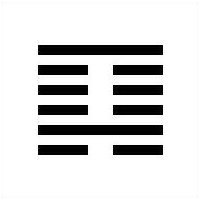
Mountain
Over
Water (stream)
I have always been regretting that I was not as wise as the day I was born.
H.D. Thoreau
All beginnings hide their magnificence. Life is unfolding, but it is not yet fully manifest: in the beginning of things, in early growth, we see only the tips, the first growths that hide enormous potential.
The image: A spring flows out of a mountain.
Water emerging from a deep source under the dark cover of the mountain collects naturally into a spring, pure and transparent, like the clarity of a child’s innocent mind. As it travels down the mountain and enters the valley the murmuring streams converge into a great river, grow broader and deeper and eventually merge into the sea. When the spring gushes forth, it doesn’t know where it will end, it just flows on and on, trusting its own nature. Everything begins in this small way and has the potential to become naturally great.
But at the foot of the mountain lies difficulty. After the spring emerges, sediment builds up and the initial pure clarity of the fresh spring is obscured and lost. Our own minds also start out pure and clear, showing the mind of Tao, but as we grow up we acquire conditioning – kleshas, ignorance, attachments, false illusions – which obscure our inner clarity, and we are left with the conditioned human mind, losing the real and gaining the false. We fail to see the world clearly, and our ego gets in the way.
The way to combat ignorance, to reverse the human mind back to the mind of Tao is through self-cultivation, through nourishing our correct nature, but it is difficult to do this without losing childlike innocence.
Lao Tzu was asked,
“Can you explain the Tao of keeping good health?”
He replied,
Can you embrace the One?
Can you keep from losing it?
Can you know good and bad fortune without consulting the oracle?
Can you rest where you ought to rest?
Can you stop when you have enough?
Can you leave others alone and seek it in yourself alone?
Can you flee from desire?
Can you be sincere?
Can you become like a little child? A child can cry all day without becoming hoarse — so perfect is its harmony. It can clench its fists all day without relaxing its grip – such is the concentration of its power. It can stare all day without moving its eyes — so unconcerned is it by the outside world. It walks but doesn’t know where. It rests where it’s placed, but it doesn’t know why. It unconsciously mingles with things, and just follows their flow. This is how to guard life.
Rabbi Jesus said,
Truly I say to you, unless you turn and become like children, you will never enter the kingdom of heaven.
All beginnings, whenever we start something new, whether it is a yoga teacher training course, a business, a relationship, a creative work, a new political or social movement or the birth of a child, all follow this pattern. We start everything with the expectation that it will grow, develop and prosper, and it can if we have the flexibility of yin to act in accordance with the time and follow the right principles.
The danger at the beginning of things can only be overcome by cultivating our virtues, our highest human values. These are the principles that can sustain our growth, help us to fulfill our potential, and avoid and correct any obstacles that arise. What are these virtues? Swami Satchidananda said that his teacher Swami Sivananda used to say that yoga was so simple. It was “just being good, doing good.” All new beginnings need to be sustained by the most positive values that we can bring to bear: love, compassion and honesty. The ethical teachings of the yamas and niyamas in Patanjali’s yoga sutras say the same thing – by living correctly, ethically, we can live well.
At our beginning we are innocence itself, pure love, and for most of us we are as close to our essence as we will ever be in this body and in this life. As we grow and develop we cross a bridge from love to fear and our task is to return to that beginning and go back over the bridge from fear to love.
When you watch a baby, she is completely at one with her body; her body moves where it needs to go, and her beauty is in her perfection. She is totally present; there is no future, there is no past.
The goal of yoga is to find our true essence, to be totally connected to the spirit or soul within, our inner God, and to be present in each and every moment, just as a baby is.
As we practise our yoga asanas, we are looking to release the habitual patterns of deep tension and bad posture that many of us have developed so that we can allow our bodies to move freely and without tension. It is our attention on the body as we practise and the conscious use of the breath that will help us to get in touch with the body’s inherent wisdom to keep us healthy and happy. As we allow the gravity and our breath to work for us and touch the ground with trust and love, we can learn to trust and love ourselves and the universe around us. This is how we can make the return journey to that bridge so that we can cross back from fear to love.
Pranayama practise and kriyas will help us to clear the impurities from the body, clear our energetic pathways and give us a deep inner strength. The purpose of meditation is to still the mind, learn to understand its wily ways and gain some control over it so that we can go beyond the conscious mind to something much deeper that puts us in touch with the God within us and the immense universal power within us and outside of us. This is true love and with this love we have nothing to fear.


February 8, 2016
Press Release for The 7th Python – Part 1
Here is our first Press Release for The 7th Python:
BOOK LAUNCH
THE EPIC STORY OF A FILM PRODUCER, BRITAIN’S BEST-LOVED COMEDY TROUPE, A CLASSIC COMEDY, AND HOW 40 YEARS ON THEY CLASHED IN A TRAGI-COMEDY OF BONE-BREAKING GREED, AND HEART-BREAKING DESPAIR.
STARRING MR JUSTICE NORRIS, THE LORD OF INJUSTICE, MONTY PYTHON AND MARK FORSTATER, FALSELY YCLEPT A TWAT.
LITERARY EDITORS SHOULD KNOW YCLEPT IS OLD ENGLISH FOR ‘CALLED’. SEE THE PRODUCER’S TALE DIRECTED BY GEOFFREY CHAUCER.
Monty Python and the Holy Grail is a comedy classic. Consistently voted in the top ten of all comedy films, it is the most profitable independent film ever made in the UK and has achieved worldwide box office success. Forty years on it is still screened.
The young man who produced the film was Mark Forstater, an American from Philadelphia who shared an apartment in New York with Terry Gilliam, before coming to England in the mid-Sixties to study at film school. Forstater liked the country so much he decided to stay and has been living and working here ever since.
The 7th Python (A Twat’s Tale) tells the story of the ups and downs in the making of Monty Python and the Holy Grail. It lifts the visor off the sometimes brilliantly creative, sometimes fractious relationships between the Pythons. They were comedy icons but they were also, cue cliché, human with all too human frailties, which Forstater describes sans cliché.
Everything was fine, rosy and profitable until Eric Idle came up with the idea for Spamalot, a stage musical based on the film. Spamalot became a smash hit. As producer of the original film, Forstater was entitled to a percentage of the profits from the film and its spin-offs. But then his share of the royalties was arbitrarily slashed. Did anyone consult the ‘twat’? No, though for 30 years and more Forstater had received his agreed share.
Forstater tried to talk to the Pythons; he wrote to them; he tried to negotiate. But the mighty Python was stubborn as a goat. (Note to editors: mixed metaphors intentional.) So Forstater had to go to law which led to Eric Idle dubbing him a ‘twat’.
Forstater tells of his trials and tribulations before, during and after the trial. For seven long years, he tried to get the Pythons and their management to see reason, and for seven long years, he failed.
The final section of the book offers a lesson for those thinking of going to law. After endless writs, witness statements, witless statements, etc., the Pythons appear in court. The judge says the original agreement could have been drafted better. It ends moderately happily for Forstater – he wins – and very happily for the lawyers in that they all get their fees.
Forstater was sustained in this ordeal by his belief in the Tao. He is the author of The Spiritual Teachings of Yoga (with Jo Manuel), The Spiritual Teachings of the Tao, The Spiritual Teachings of Marcus Aurelius, The Spiritual Teachings of Seneca (with Victoria Radin), The Living Wisdom Of Socrates and with Rudolf Reder I Survived a Secret Nazi Extermination Camp (Psychology News).
A must-read for Python fans and anyone interested in comedy – and human frailty.
Press Inquiries to Nigel Passingham – mob.: 07795024272, email: nigelpas@live.com


February 1, 2016
A Spiritual Almanack – February: SEEDS
Hexagram 3: Beginning
![i_ching_03_chun[1]](https://theageofanxiety.files.wordpress.com/2016/01/i_ching_03_chun1.jpg)
Cloud (water)
Over
Thunder
After stillness, action; after rest, movement; after completion: beginning. One yin and one yang make up the entire universe.
In February seeds lie in the ground, but they are not dormant. Within they are beginning to stir, slowly uncurling, starting the long journey to fulfil their mysterious inner potential. But we cannot see their progress; the ground hides them, just as our deepest motives and impulses, the mysterious unseen movers that cause us to move, lie hidden in our psyche.
The Decision of the I Ching Hexagram 3, Beginning says,
The beginning of a tiny sprout.
Sublimely prosperous and smooth.
Favourable to be steadfast and upright.
Do not act lightly.
From the slowly rousing seed, there emerges first a root, which buries itself deep into the soil, and then a tiny seedling appears, a tender shoot which rises up. This first tendril represents new life, and life grows out of two movements – the rise of yang and the descent of yin. The seed surrenders itself to the earth and in turn receives nourishment from it.
In our yoga practise as in life we need to follow both of these dimensions: using gravity to find our own root, and using our prana, our life energy, to rise up. We need to understand how we relate to the ground, how we use the ground. To find our own root is to learn to trust the earth, and to let it really support us, with no holding on to muscle tension. The ground represents elemental power and energy, the power that nurtures and grows. Can we trust it enough to just let go and rest into it?
The seed is the essence of the plant, just as our seeds – our cells and eggs – contain our essence, our inner self. So in this season our being starts to emerge from its hibernation, the life force unfolding towards the light. Seeds are powerhouses of energy, sharply concentrated and attentive foci of action. The smallest plant, soft and pliable, carries tremendous power in its root, the serenely unfolding yang power of the life force. We too have this power within us, but our fears, doubts and anxiety create obstacles that inhibit the release of the intense force of our life energy.
Hexagram 3 is an emblem of this situation: the crashing power of the thunder is damped down by the clouds above. Our tremendous latent power is covered over and inhibited. Before we are able to emerge into our own light we must make a journey back, a reversal into our root so that we can again emerge from it. Paradoxically, we make progress by moving backward, crablike, as the Tao Te Ching tells us,
The Tao moves the other way
The Tao works through weakness
To go back the other way means to return to the root, to the source and origin of our being, where our power lies hidden and sleeping, coiled like the serpent power – Kundalini. Yoga is a means of discovering and releasing this latent energy so that we can use it in daily life. Many of us live too much in our heads so we need to practice bringing our energy down to our base, our fundament. Vanda Scaravelli taught a yoga influenced strongly by using gravity, allowing the natural pull of weight to draw us down to earth, to ground ourself in ourself. When we work on the base – the essential, the fundamental – then we are working with the base chakra, the first power centre of the body. As we allow ourselves to be supported by life, solidly grounded on the earth, comfortable in our own skin, then we are balanced in the root chakra. And the root chakra is the support of all the other chakras.
Gurmukh Kaur Khalsa says:
We connect to the planet through our first chakra, and it’s where we return ourselves back to the earth beneath us. It is at our first chakra that we accept we are even here on earth. It is where we first say ‘yes’ to life.
Once we can unconditionally say ‘yes’ to life we can discover our true self, our true nature, and in doing so we liberate our energy and become free of fear, as the Katha Upanishad tells us,
. When the wise understand that it is only through the Eternal Self that we see, taste, smell, feel, hear, and enjoy, they meditate on this Self and go beyond all suffering. When we are present with our Self, we are beyond fear. And this is our true nature. The Eternal Self lives not only in our hearts but also among the physical elements. It is a boundless power manifesting as life itself, entering every heart, living there among the elements – that is the Eternal Self.
When we lose fear we automatically gain courage, which is why courage is one of Socrates’ cardinal virtues. He did not mean only the bravery of a soldier, but our everyday courage when we strive to overcome our deepest fears. Yoga can be a powerful tool to help us gather our courage, and learn to live in greater freedom. When we are free, we begin to see reality clearly, without the delusion of the past. In such a state, we can see the obstacles that stop us, can grow past our old conditioning, can learn to grow ‘prosperous and smooth’, just like the tiny plants.
As the Zen monk Tiantong Hongshi says,
Everywhere life is sufficient, in its way.
In us life is also sufficient, and we have everything we need within to fulfil our enormous potential. All we have to do is wake up and realise it.


January 25, 2016
Beyond Fearlessness
When I was suffering from the negative aspects of my law suit against the Pythons- mainly fear and insecurity – I was helped greatly by a book by the Tibetan Buddhist teacher Chogyam Trungpa. Trungpa was an amazing character who filled his short life with some impressive accomplishments, including establishing the first modern Buddhist University -Naropa- in Colorado. The book that I used was called Shambhala- The Sacred Path of the Warrior, and its teaching helped me to stay centred during my darkest days and nights.
This teaching says that confidence and bravery are primordial, and that fear and doubt are a later imposition upon them. The events that we encounter in life and how we respond to them create fear and doubt which stop us from acting in our best interests. Fear makes us cowards, even though we were not born cowards. By doubting ourselves we create anxiety. The combination of fear and anxiety gives us stress and if this becomes long lasting, we are in danger of serious illness. By understanding that before fear and doubt there was confidence, and in learning techniques (mainly meditation) to regain that confidence, we are able to go beyond fear into a kind of ‘fearless zone’. In this zone we can feel protected and can bring out our earliest and strongest positive qualities to fight the negative influences that are assailing us. In using our primordial confidence we are able to become warriors, not aggressive war-like soldiers, but warriors who can create, build and grow things. By re-igniting our inherent confidence, we are able to bring our positivity and inherent goodness to bear against the negativity.
There is a strong wisdom in this kind of warriorship, which merely asks us to become who we are, since if we really know who we are we will pursue our aims with bravery and confidence, and not hinder ourselves through fear of the future or doubt about our ability. This is what Heraclitus said about the Warrior:
“Out of every one hundred men, ten shouldn’t even be there, eighty are just targets, nine are the real fighters, and we are lucky to have them, for they make the battle. Ah, but the one, one is a warrior, and he will bring the others back.”
Bravery is not being afraid of who you are. The Shambhala teachings say that there is a basis of sanity and goodness in our lives which we can tap into at any time. Unfortunately we are not taught how to do this at school, but it’s good there are teachers in the world like Trungpa who can help us to get on the path to this wisdom.


January 18, 2016
Unique Book Launch for The 7th Python
I don’t know if anyone has ever created an animated cover for a book before, but we may be doing something original and unique in our launch for the hardback version of my book The 7th Python.
We – editor David Cohen, publicist Nigel Passingham , webmaster Richard Cobelli , social media maven Patrice Stephens, and writer/publisher yours truly – have been preparing a campaign to launch The 7th Python on an unsuspecting world. The centrepieces of the campaign are two animated videos of the book’s (cartoon) cover, which we plan to send to influencers and web sites in the English-speaking world with the aim of making our cover (via the animations) go viral.
The cover itself (soon to be revealed) was created by cartoonist Owen Williams. We asked Patrice Stephens how best to saturate the web with our attractive, colourful and funny cover, and she suggested putting it on all the social media sites such as Facebook, Instagram, Twitter and so on. She thought that the striking image would attract attention. Nigel Passingham then suggested that if the image caught peoples’ attention for a couple of seconds, wouldn’t an animated version keep them viewing for longer. Patrice agreed and said that we would need two versions- a 15 second version for twitter and Instagram, and a longer version for other media.
We were lucky to find a young and talented animator in Ruth Barrett, who created the two animations for us – one 15 seconds and the other 54. Composer Helene Muddiman (Ice Age 4) arranged Sousa’s Liberty Bell March (Monty Python’s theme tune) into a jokey music score (inspired by comic Les Dawson’s piano routines), and we were ready to roll.
The challenge – not quite the 12 travails of Hercules – is to see how many people the video can reach who would then blog, busk and bitch about the book.
Oh and buying it, too.
There’s no denying it
We want you buying it.
So we hope to entice as many as poss to our Facebook page – The 7th Python – and to our website http://www.the7thpython.com.
There you’ll find info on the book and be initiated into the mysteries of buying it.
P.S. Fans of Cleese may be distressed he’s now repeating his brilliant ‘thrash the car with a branch’ routine from Fawlty Towers as an ad for Specsavers!


January 12, 2016
The Book I’d Like To Write – Part 2
In 2003/4 the British Library put on an exhibition called Chinese Printmaking Today. It featured a dazzling array of printmaking skills, but to me the most impressive piece was a collection of four traditionally-bound Chinese books, printed on rice paper with indigo covers, string binding, and packed into beautiful walnut boxes. They looked like beautifully preserved examples of 15th and 16th century volumes. The work was called Tianshu (The Book From The Sky) and what was remarkable was that it was all an elaborate cultural joke. All of the 12,000 elaborately carved Chinese characters that made up the content of the book were all invented by the artist, Xu Bing, and they had no meaning at all. The books looked like the real thing, but were just elaborate nonsense.
It got me thinking what a real book that fell from the sky might reveal to us. The sky (tian) is Heaven for the ancient Chinese, and it’s where the ancestors, with all their accumulated wisdom and knowledge, go when they have died. What would our ancestors, looking down on our puny efforts, have to tell us about how we are living our lives. They must have made similar mistakes to us, but now they are unaffected by them, whereas we still have to live out the karma of our days contending with the results that we have caused. Perhaps such a book, told from this elevated POV, could give us guidance about how to conduct ourselves, how to avoid or at least deal with pain, troubles, and problems. This would be a great book to own. I decided (this is a joke) to ‘translate’ this book, since it is the only Chinese book I am capable of translating. I actually wrote to the artist asking him for the right to translate the book. He never wrote back. He must have thought I was mad. Maybe I am.
That’s how I got the idea of The Book That Fell From The Sky, a users guide for earthlings, full of advice from the past and the present, from the dead and the living, about how to look after your body, mind and spirit in this lifetime. This would be a great book to write, amazingly useful to people now. Of course I never got around to writing this book (yet), so I decided to re-title it The Blog That Fell From The Sky and since 2009 I have been posting messages about some of my concerns and ideas and projects.


January 10, 2016
The Book I’d Like to Write
Reading Somerset Maugham’s book on his life and craft, The Summing Up, I was intrigued by a story he quoted:
A Young King of the east, anxious to rule his country justly, sent for his sages and ordered them to gather the wisdom of the world so that he might learn how best to conduct himself.
After 30 years they returned with a string of camels laden with 5000 books. Here, they told him, is collected everything that wise men have learnt of the history and destiny of humanity. But the king was too busy with affairs of state to read 5000 books, so he ordered them to condense the knowledge.
Fifteen years later they returned with 500 books which they told the King contained all the wisdom of the world. But still there were too many to read and again he sent them away.
Ten more years passed and they returned with just 50 books. By now the king was old and tired and he said that even this amount was too much to consider. Go and condense this knowledge into one volume which would give me the epitome of human knowledge so that at long last I can learn what is most important for me to know.
Five years later they returned. By now these were old men who laid the result of their labours into the King’s hands. But now the King was also old and dying, and he did not have the strength to even read this one book.
How I would love to have this book, but I have never been able to find it. So I thought this would be a great book to write. Of course, I probably never will, I don’t think I have the ability. But I did conceive of a book like this once, and it was called The Book That Fell From The Sky. I never wrote it, and eventually decided to use the title for this blog – The Blog that Fell From The Sky.
Maybe one day I’ll try it again.


December 31, 2015
A SPIRITUAL ALMANAC – JANUARY: SILENCE
I am the secret of silence and the wisdom of the wise. Bhagavad Gita, Ch.10
*******
Hexagram 24: RETURN (FU)

Earth
over
Thunder
Short days; long nights;
The earth is silent;
Rest in the darkness.
At this time of year the yang energy is renewing itself; it is fragile and needs rest, nurturing and protection. This is a time to examine yourself, refine yourself, cultivate your virtue and master your mind, waiting for the right time to act in the days to come.
Lao Tzu said,
Attain utter emptiness;
Maintain the deepest stillness,
While all creatures rise and fall,
I silently watch their return.
*******
Silence is sacred; silence is our refuge; silence is our peace. Modern life is an assault of sound, a blast of brute noise designed to grab our attention and hold it entranced by sound so that we can be sold things we don’t need. TV commercials, muzak, the constant background hum of cars, trains and planes all distract us away from our inner peace.
Remember that the core of yoga is silence. When you can find that silent space within and stay in it, then you are in tune with yourself and the world: safe, secure and at home within your own skin. In this state you have no need to worry about the quality of your asana positions, or to wonder how someone else is getting along, or to fret about your work or other activities. You merely are. Existence itself is knowledge and bliss wrapped up in one, and you are that – you are one with all.
The earth, too, is silent in January, the generative power sunk deep within the ground. No birds sing, no insects buzz, and life sleeps in hibernation.
In Taoist alchemy this dead of winter represents the utmost quiescence, when real knowledge can emerge from primal emptiness. The alchemists call this the Living Midnight or Lead meets Winter, since winter followed by spring is like midnight followed by dawn, when the culmination of the cold dark yin energy is followed by the rising of the hot light yang energy. Slowly the yang energy emerges from its long winter sleep resting in the ground, and the potential for new life begins again.
It is a turning point in the year’s cycle. When things proceed to the extreme of the deepest darkness, they naturally alternate to the opposite: the dimmest light returns. This is a law of Nature. The time of darkness passes. The winter solstice brings back the banished light. And just as light returns, so we too must also return to our inner light. In the depths of our being we must seek the self, the one, our essence or origin- that ascending force of life.
*******
Prime Minister Pei Hsiu brought his written interpretation of Chan Buddhism for his master Huang Po to read. Huang Po accepted the text but put it aside without opening it, and remained silent. Pei Hsiu waited patiently for the words of his master, but Huang Po stayed silent. His silence lasted for a very long time. It filled the space between the two men and began to fill the entire hall. When the silence seemed loud enough to burst, Huang Po leaned towards the Prime Minister and said sofly, “Understand?”
Consider the meaning of this silence against the words rumbling on this page.
*********
When practicing asanas, or doing Tai Chi Chuan, we enter this meditative state of silence and in that quietness we are able to find our true selves, the inner essence, the kernel of who we really are.
The Person who in movement finds rest, and who understands that movement grows from stillness and rest, sees the light, and finds peace in all his actions. Bhagavad Gita, Ch. 4.
In Chinese the word for mind is hsin, which means the mind/heart. It can literally mean kernel or essence. Mind in a state of quiescence is similar to Christian innocence, the primal mind of humanity before the fruit of knowledge was eaten. To find this mind is to see your original face before you were born.
One secret of a successful life is to find a way to extend this silence into the other parts of life, into the busyness of life away from the yoga mat , where the stresses and conflicts of mundane existence can easily drag us away from our inner peace. Finding inner peace and maintaining inner peace are two separate practices.
*********
Silence is a place of great power. When we find those fleeting moments of silence our meditation can then undo our bodies from the inside, in subtle ways that the asanas cannot reach. The silent state of meditation is a healing state, providing a balance and harmony to all of our existence.
Periods of silence within a relationship indicate trust, love and peace – those moments when we have no need to talk, and are just able to accept the other person as they are – without criticism, judgement or withdrawal.
*******
In silent meditation, we put to rest our worries and cares, but meditation is not the ultimate answer. It is only a raft to get us to the distant shore:
The Master Huai-Jang asked Ma-Tsu, “Why do you sit all day in meditation?” Ma-Tsu answered, “I want to become a Buddha.” Hearing this, the Master picked up a brick and started rubbing it on a stone. “What are you doing?” asked Ma-Tsu. “I am polishing this brick to make a mirror.” “How can you make a mirror by rubbing a brick?” Ma-Tsu asked. “How can you become a Buddha by sitting in meditation?”
In the end we must return to the activity of life, to the crossroads and the marketplace, and share with others the insights and power we have discovered in meditation:

Barechested and barefooted he comes into the marketplace.
Muddy and covered in dust – how broadly he grins!
Without resorting to magical powers,
Withered trees begin to bloom.
*******
In the end silence brings us closer to our true nature and to God. It is in that silence that we can be present in the moment.
When we observe our breath we can find silence and stillness at that lovely pause at the end of the in-breath and before the breath turns at the end of the out-breath. These pauses, if we let them, can be our entry into the eternal.


December 7, 2015
Monty Python’s Airbrush
I never thought I would share a destiny with Leon Trotsky. Even though we are both Jewish (he was born Lev Davidovich Bronshtein) there is not much we have in common. The one thing we share is that we have both been airbrushed out of History.
After Lev broke with Stalin, Stalin had his publicity department airbrush Lev out of the photos that showed Lev’s role in creating the Soviet Union, in particular his role as the leader of the Red Army. He became one of the disappeared.
A while ago I was Watching the six part TV doc series of Monty Python: Almost The Truth (The Lawyer’s Cut). When I saw Episode 4 I began to understand how Lev must have felt. This episode dealt with the making of Monty Python and The Holy Grail, and I was intrigued to see that they managed to discuss the production of the film without interviewing or even mentioning the Producer of said film – i.e. me. There is one photo in which I appear but am unidentified.
This airbrushing was done because when this series was made I was already in dispute with the Pythons over Spamalot royalties. It did not suit their case to showcase my role in setting the film up in the way they wanted, and which benefited them enormously. So they just removed me from history. ‘Almost The Truth’ says it all.