
Stan C. Smith's Blog, page 13
July 7, 2023
Awesome Animal Fact - Catnip-Loving Cats
Continuing with the theme of animals that like to get high or drunk.
Did you know cats are irresistibly drawn to the plant Nepeta cataria? Of course, I'm talking about catnip. This one might seem obvious, but perhaps you don't know the whole story.
This plant also affects many wild cats, including lions and tigers, though the effects haven't been widely studied in wild cats.
Catnip, a plant in the mint family, is native to Europe, Asia, and Africa, and was brought to North America (and other places) by settlers. Now it grows in many areas around the world as a weed and in people's herb gardens.
Catnip contains an oil called nepetalactone, which enters a cat's nasal tissues and stimulate's the sensory neurons. These cells then send messages to neurons in the olfactory bulb, which then sends signals to two areas of the brain, the amygdala and hypothalamus. The amygdala helps control the cat's behaviors, and the hypothalamus stimulates a sexual response in the cat.
Basically, this causes the cat to display behaviors of a female in heat (even if the cat is male). The cat will rub its head on the plant, roll around on the ground, make sexy cat sounds, and salivate. This lasts for about ten minutes, then the cat becomes immune to the effects for about thirty minutes, after which it may start all over if the cat still has access to the plant.
Interestingly, this response is genetic, and it happens to only about 75% of cats. It is not thought to be dangerous to the cat and is not addictive.
Well, perhaps it's not physically addictive, but cats are repeatedly attracted to catnip, and they seem to enjoy the effect.
By the way... don't bother trying. Catnip does not affect humans.
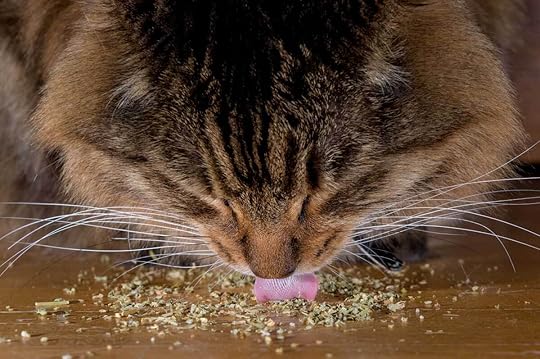
Photo Credits:
- Cat and catnip - DepositPhotos
Did you know cats are irresistibly drawn to the plant Nepeta cataria? Of course, I'm talking about catnip. This one might seem obvious, but perhaps you don't know the whole story.
This plant also affects many wild cats, including lions and tigers, though the effects haven't been widely studied in wild cats.
Catnip, a plant in the mint family, is native to Europe, Asia, and Africa, and was brought to North America (and other places) by settlers. Now it grows in many areas around the world as a weed and in people's herb gardens.
Catnip contains an oil called nepetalactone, which enters a cat's nasal tissues and stimulate's the sensory neurons. These cells then send messages to neurons in the olfactory bulb, which then sends signals to two areas of the brain, the amygdala and hypothalamus. The amygdala helps control the cat's behaviors, and the hypothalamus stimulates a sexual response in the cat.
Basically, this causes the cat to display behaviors of a female in heat (even if the cat is male). The cat will rub its head on the plant, roll around on the ground, make sexy cat sounds, and salivate. This lasts for about ten minutes, then the cat becomes immune to the effects for about thirty minutes, after which it may start all over if the cat still has access to the plant.
Interestingly, this response is genetic, and it happens to only about 75% of cats. It is not thought to be dangerous to the cat and is not addictive.
Well, perhaps it's not physically addictive, but cats are repeatedly attracted to catnip, and they seem to enjoy the effect.
By the way... don't bother trying. Catnip does not affect humans.
Photo Credits:
- Cat and catnip - DepositPhotos


June 30, 2023
Awesome Animal Fact - Millipede-munching Lemurs
Continuing with the theme of animals that like to get high or drunk.
Did you know black lemurs like to get high on millipedes? The lemurs bite the millipedes, resulting in a narcotic effect.
Madagascar has some pretty big arthropods (ever hear of the Madagascan hissing cockroach?), including some large millipedes. Lemurs typically eat fruit, but sometimes they will capture a large millipede and gently bite it, not even hard enough to kill it.
This bite causes the millipede to squirt out defense chemicals from glands in its legs (millipedes have a lot of legs). The lemur then discards the millipede and rubs the defense chemicals all over its fur. The millipede's toxic secretions contain cyanide and benzoquinone, which act as insect repellent on the lemur's body. This in itself is fascinating—an animal using natural insect repellent, not only preventing the discomfort of insect bites but also preventing insect-borne diseases such as malaria.
But wait, there's more to the story. The toxins also have a narcotic effect on the lemur, and the lemur starts drooling and goes into an intoxicated state, in which it appears to be lethargic and blissful.
Hmm... is this why the lemurs on the movie Madagascar seem so goofy?
Below are male and female black lemurs.

Photo Credits:
- Female and male black lemurs - DepositPhotos
Did you know black lemurs like to get high on millipedes? The lemurs bite the millipedes, resulting in a narcotic effect.
Madagascar has some pretty big arthropods (ever hear of the Madagascan hissing cockroach?), including some large millipedes. Lemurs typically eat fruit, but sometimes they will capture a large millipede and gently bite it, not even hard enough to kill it.
This bite causes the millipede to squirt out defense chemicals from glands in its legs (millipedes have a lot of legs). The lemur then discards the millipede and rubs the defense chemicals all over its fur. The millipede's toxic secretions contain cyanide and benzoquinone, which act as insect repellent on the lemur's body. This in itself is fascinating—an animal using natural insect repellent, not only preventing the discomfort of insect bites but also preventing insect-borne diseases such as malaria.
But wait, there's more to the story. The toxins also have a narcotic effect on the lemur, and the lemur starts drooling and goes into an intoxicated state, in which it appears to be lethargic and blissful.
Hmm... is this why the lemurs on the movie Madagascar seem so goofy?
Below are male and female black lemurs.
Photo Credits:
- Female and male black lemurs - DepositPhotos
June 24, 2023
Awesome Animal Fact - Guzzling Vervet Monkeys
I'm continuing with the theme of animals that like to get high or drunk. After all, why would humans be the only creatures craving the recreational effects of mind-altering drugs? Here's another example.
Did you know VERVET MONKEYS introduced to some Caribbean islands 300 years ago have developed a taste for alcohol? These monkeys originated in Africa, but slavers took them across the Atlantic to the Caribbean, where the monkeys either escaped or were released on several islands. They thrived and formed stable populations.
For the last 300 years, these vervet monkeys have been living on islands where sugar cane is the dominant crop grown by farmers. Before being harvested, the sugar cane will sometimes ferment. The vervet monkeys discovered the fermented cane juice and have considered it a treat ever since. Basically, they developed a taste for the alcoholic cane juice and the resulting effects.
Recent studies have shown that about 20% of the monkeys now prefer to drink sugar water mixed with alcohol over plain sugar water. But the research doesn't stop there. Interestingly, younger monkeys (the equivalent of teenagers) do most of the drinking. The researchers suggest that the older monkeys avoid the alcohol because they have to be "more alert and perceptive of the social dynamics of the group." So, the monkeys apparently reach a point in their lives where they decide to leave behind the heavy drinking and awful hangovers. Hmm... perhaps there is a lesson in there somewhere.
There are numerous stories from Caribbean islands of sneaky vervet monkeys stealing colorful cocktails from distracted tourists and happily guzzling them.
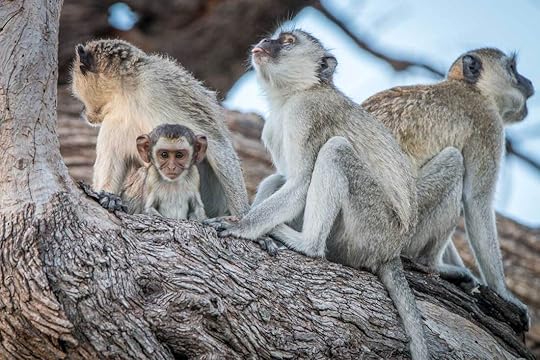
Photo Credits:
- Vervet monkeys - DepositPhotos
Did you know VERVET MONKEYS introduced to some Caribbean islands 300 years ago have developed a taste for alcohol? These monkeys originated in Africa, but slavers took them across the Atlantic to the Caribbean, where the monkeys either escaped or were released on several islands. They thrived and formed stable populations.
For the last 300 years, these vervet monkeys have been living on islands where sugar cane is the dominant crop grown by farmers. Before being harvested, the sugar cane will sometimes ferment. The vervet monkeys discovered the fermented cane juice and have considered it a treat ever since. Basically, they developed a taste for the alcoholic cane juice and the resulting effects.
Recent studies have shown that about 20% of the monkeys now prefer to drink sugar water mixed with alcohol over plain sugar water. But the research doesn't stop there. Interestingly, younger monkeys (the equivalent of teenagers) do most of the drinking. The researchers suggest that the older monkeys avoid the alcohol because they have to be "more alert and perceptive of the social dynamics of the group." So, the monkeys apparently reach a point in their lives where they decide to leave behind the heavy drinking and awful hangovers. Hmm... perhaps there is a lesson in there somewhere.
There are numerous stories from Caribbean islands of sneaky vervet monkeys stealing colorful cocktails from distracted tourists and happily guzzling them.
Photo Credits:
- Vervet monkeys - DepositPhotos
June 18, 2023
Awesome Animal Fact - Toad-licking Dogs
Have you ever wondered if other animals besides humans like to get high? Or drunk? Seriously, think about it. Why would humans be the only creatures craving the recreational effects of mind-altering drugs? In my next few posts, we'll take a look.
Did you know many dogs have become addicted to the toxic, hallucinogenic substance secreted by marine toads? Marine toads, which are the largest of all toads and can grow to almost 10 inches (25 cm) from snout to butt, originated in South America but have been introduced in many tropical areas around the world, mainly to control pest insects.
Marine toads, as well as some other types of toads, protect themselves by secreting a toxic substance from poison glands in their skin. If consumed, this toxin can be deadly, even to humans and other large animals such as dogs. In nonlethal doses, a substance in the toxin called bufotenine can cause hallucinogenic effects similar to those caused by LSD and mescaline.
Some humans have actually become addicted to this substance after repeatedly consuming it... a process commonly called "toad licking."
Uh... no thanks.
Actually, a guy named Albert Most founded the Church of the Toad of Light, the main purpose of which is to promote recreational toad licking.
Okay, so where do dogs come into the picture? Dogs are curious. They like to sniff, lick, and chew on things, especially other animals. Many dogs have been poisoned by eating marine toads, and those that don't die from the poison experience hallucinations. As a result, many of those dogs learn to hunt for marine toads and lick them just to experience the "high" over and over again. They become addicted. And it doesn't help that the toads' secretions taste sweet.
This happens everywhere marine toads live, but it has become a really common problem in Queensland, Australia. Veterinarians in the area are increasingly reporting dogs that are repeat offenders... they call them "serial lickers."
Unfortunately, these dog addicts are playing a dangerous game—a deadly overdose can happen at any time.

Photo Credit:
Marine toad - Stan C. Smith
Did you know many dogs have become addicted to the toxic, hallucinogenic substance secreted by marine toads? Marine toads, which are the largest of all toads and can grow to almost 10 inches (25 cm) from snout to butt, originated in South America but have been introduced in many tropical areas around the world, mainly to control pest insects.
Marine toads, as well as some other types of toads, protect themselves by secreting a toxic substance from poison glands in their skin. If consumed, this toxin can be deadly, even to humans and other large animals such as dogs. In nonlethal doses, a substance in the toxin called bufotenine can cause hallucinogenic effects similar to those caused by LSD and mescaline.
Some humans have actually become addicted to this substance after repeatedly consuming it... a process commonly called "toad licking."
Uh... no thanks.
Actually, a guy named Albert Most founded the Church of the Toad of Light, the main purpose of which is to promote recreational toad licking.
Okay, so where do dogs come into the picture? Dogs are curious. They like to sniff, lick, and chew on things, especially other animals. Many dogs have been poisoned by eating marine toads, and those that don't die from the poison experience hallucinations. As a result, many of those dogs learn to hunt for marine toads and lick them just to experience the "high" over and over again. They become addicted. And it doesn't help that the toads' secretions taste sweet.
This happens everywhere marine toads live, but it has become a really common problem in Queensland, Australia. Veterinarians in the area are increasingly reporting dogs that are repeat offenders... they call them "serial lickers."
Unfortunately, these dog addicts are playing a dangerous game—a deadly overdose can happen at any time.
Photo Credit:
Marine toad - Stan C. Smith
June 11, 2023
Awesome Plant Fact - Creepy Jabuticaba Tree
Did you know the jabuticaba has edible fruits that grow right on the main trunk of the tree? This makes the fruiting tree look really strange. Some would even call it creepy.
The jabuticaba, also called the Brazilian grape tree, is native to Brazil. The white flowers grow directly on the main trunk, an arrangement called cauliflory. After the flowers are pollinated, they become round, fleshy grape-like fruits, sometimes covering much of the tree's trunk. These trees have been cultivated for their delicious fruits since pre-Columbian times.
Jabuticaba trees are difficult to grow anywhere outside of their native range, and the fruits have a short shelf life, so the fruits are rarely available to people in other parts of the world. Interestingly, in Brazilian politics, the word jabuticaba is used to describe any situation that is thought to be so ridiculously and overly complex that it could only happen in Brazil (referring to the belief that jabuticaba trees only grow in Brazil).

Photo Credits:
- Jabuticaba tree - ws-tiago, CC BY 3.0, via Wikimedia Commons
The jabuticaba, also called the Brazilian grape tree, is native to Brazil. The white flowers grow directly on the main trunk, an arrangement called cauliflory. After the flowers are pollinated, they become round, fleshy grape-like fruits, sometimes covering much of the tree's trunk. These trees have been cultivated for their delicious fruits since pre-Columbian times.
Jabuticaba trees are difficult to grow anywhere outside of their native range, and the fruits have a short shelf life, so the fruits are rarely available to people in other parts of the world. Interestingly, in Brazilian politics, the word jabuticaba is used to describe any situation that is thought to be so ridiculously and overly complex that it could only happen in Brazil (referring to the belief that jabuticaba trees only grow in Brazil).
Photo Credits:
- Jabuticaba tree - ws-tiago, CC BY 3.0, via Wikimedia Commons
Awesome Plant Fact - Language of Flowers
Did you know FLORIOGRAPHY is an old "language of flowers," in which people would send messages of affection, desire, or disdain to others by delivering specific flower arrangements? This "language" became particularly popular and complex in England and the USA in Victorian times, and is often called Victorian floriography. Entire books have been published on the subtle nuances of the meanings of various flower combinations.
This form of expression was especially popular in the 19th century because strict social norms did not allow open expression of such feelings. Mostly forgotten for many decades, floriography is making a comeback. For example, for the funeral of his mother, the late queen, King Charles carefully selected an arrangement for a wreath, which included myrtle for love and prosperity, along with English oak to represent strength.
According to traditional floriography books, sweet pea flowers are given in gratitude, specifically meaning "Thank you for a wonderful time." Giving zinnias is an expression of everlasting friendship.
But not all plants carry a positive message. Giving someone buttercups is a way to tell them they are being childish.
We're all familiar with basil in cooking, right? Well, basil was traditionally a symbol of hatred. This goes all the way back to the ancient Greeks, who thought the plant's leaves resembled a basilisk's opening jaws. Who knew such a hateful herb could taste so good on pizza?
If you give someone a bundle of basil, you might want to make sure they aren't knowledgable about floriography.
Photo Credits:
- Basil - DepositPhotos
This form of expression was especially popular in the 19th century because strict social norms did not allow open expression of such feelings. Mostly forgotten for many decades, floriography is making a comeback. For example, for the funeral of his mother, the late queen, King Charles carefully selected an arrangement for a wreath, which included myrtle for love and prosperity, along with English oak to represent strength.
According to traditional floriography books, sweet pea flowers are given in gratitude, specifically meaning "Thank you for a wonderful time." Giving zinnias is an expression of everlasting friendship.
But not all plants carry a positive message. Giving someone buttercups is a way to tell them they are being childish.
We're all familiar with basil in cooking, right? Well, basil was traditionally a symbol of hatred. This goes all the way back to the ancient Greeks, who thought the plant's leaves resembled a basilisk's opening jaws. Who knew such a hateful herb could taste so good on pizza?
If you give someone a bundle of basil, you might want to make sure they aren't knowledgable about floriography.
Photo Credits:
- Basil - DepositPhotos
May 30, 2023
Awesome Animal Fact - Nippy Slow Loris
Continuing the theme of "Animals That Have Attacked Musicians."
Did you know Lady Gaga was bitten by a slow loris, the only venomous primate in the world?
Lady Gaga was using the animal as a prop in a music video. The loris, often called the "cutest animal on Earth," bit her finger. She was not seriously harmed, and she was reportedly a good sport about the bite.
After the incident, the production crew decided not to use the loris in the video. This is fortunate because slow lorises are endangered, and they are highly sought after as (illegal) pets. Whenever a slow loris video goes viral on social media, this results in a spike in the number of lorises illegally collected from the wild and sold as pets.
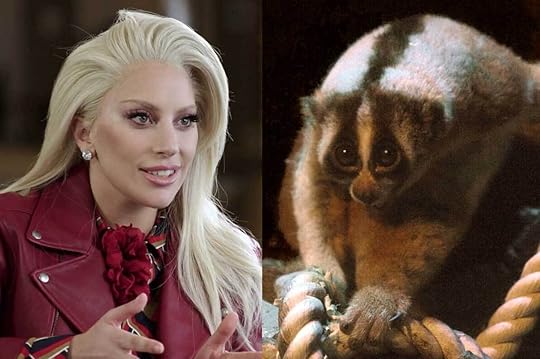
Photo Credits:
- Lady Gaga - Vimeo: SB50 Lady GaGa Interview - Creative Commons Attribution 3.0 Unported via Wikimedia Commons
- Slow Loris - OpenCage - Creative Commons Attribution-Share Alike 2.5 Generic - via Wikimedia Commons
Did you know Lady Gaga was bitten by a slow loris, the only venomous primate in the world?
Lady Gaga was using the animal as a prop in a music video. The loris, often called the "cutest animal on Earth," bit her finger. She was not seriously harmed, and she was reportedly a good sport about the bite.
After the incident, the production crew decided not to use the loris in the video. This is fortunate because slow lorises are endangered, and they are highly sought after as (illegal) pets. Whenever a slow loris video goes viral on social media, this results in a spike in the number of lorises illegally collected from the wild and sold as pets.
Photo Credits:
- Lady Gaga - Vimeo: SB50 Lady GaGa Interview - Creative Commons Attribution 3.0 Unported via Wikimedia Commons
- Slow Loris - OpenCage - Creative Commons Attribution-Share Alike 2.5 Generic - via Wikimedia Commons
May 25, 2023
Awesome Animal Fact - McCartney's Locusts
Continuing the theme of "Animals That Have Attacked Musicians."
Did you know Paul McCartney was swarmed by green locusts while performing on stage in Goiania, Brazil?
Hmm... I've never heard of locusts attacking a Beatle. 😐
At this concert, which kicked off a world tour, the grasshoppers were apparently drawn to the stage lights, and soon thousands of them were swarming the stage, and at times McCartney was almost covered from head to foot. Did he quit performing? Of course not, he's Paul McCartney, known for powering through his entire energetic performances without taking a break, sometimes without even taking a drink of water. He played through the three-hour set, undaunted by the swarm.
The green grasshopper is known as the Esperanca Grilo, which literally means "hope grasshopper." One particular grasshopper stayed on Paul's shoulder through the entire show, and at one point he introduced the grasshopper as "Harold" to the crowd of 47,000 fans.
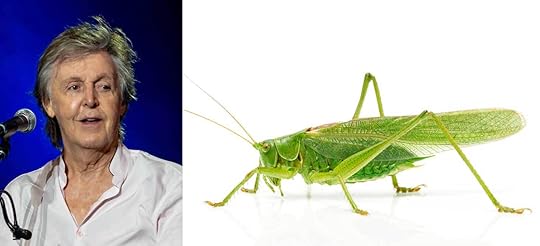
Photo Credits:
- Paul McCartney - Raph_PH - Creative Commons Attribution 2.0 Generic - via Wikimedia Commons
- Green grasshopper - DepositPhotos
Did you know Paul McCartney was swarmed by green locusts while performing on stage in Goiania, Brazil?
Hmm... I've never heard of locusts attacking a Beatle. 😐
At this concert, which kicked off a world tour, the grasshoppers were apparently drawn to the stage lights, and soon thousands of them were swarming the stage, and at times McCartney was almost covered from head to foot. Did he quit performing? Of course not, he's Paul McCartney, known for powering through his entire energetic performances without taking a break, sometimes without even taking a drink of water. He played through the three-hour set, undaunted by the swarm.
The green grasshopper is known as the Esperanca Grilo, which literally means "hope grasshopper." One particular grasshopper stayed on Paul's shoulder through the entire show, and at one point he introduced the grasshopper as "Harold" to the crowd of 47,000 fans.
Photo Credits:
- Paul McCartney - Raph_PH - Creative Commons Attribution 2.0 Generic - via Wikimedia Commons
- Green grasshopper - DepositPhotos
May 21, 2023
Awesome Animal Fact - Cash's Ostrich
My rather unusual theme for the next few Awesome Animal Facts: ANIMALS THAT HAVE ATTACKED MUSICIANS.
Did you know Johnny Cash was almost killed by one of his ostriches in 1981? Years ago, I read Cash's autobiography, and I was fascinated by his account of this attack, in which he wrote that he was almost killed by the animal.
Johnny Cash kept an animal park on his property in Tennessee. The musician was on a walk by himself when he got into a confrontation with his rather territorial male ostrich. Cash decided to show the bird who was in charge, but this didn't go as well as he'd hoped.
The ostrich kicked him, and its long defensive claw tore open his abdomen and broke two of his ribs. Then he fell to the ground, hit a large rock, and broke two more ribs. The gash in his stomach would have been much worse if the downward-slashing claw had not stopped when it hit Cash's belt buckle.
As if that weren't bad enough, the injury almost killed him in a second way. The prescribed drugs given to him for the pain led him back into the drug addiction that he had struggled to overcome years before.
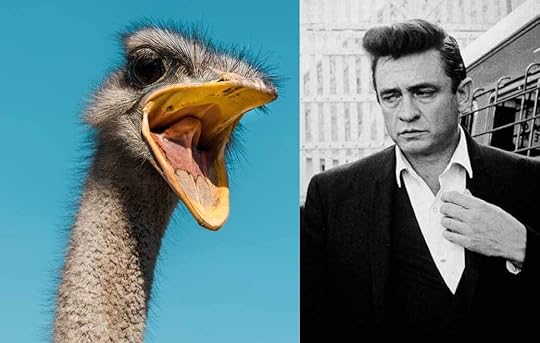
Photo Credits:
- Johnny Cash - Dillan Stradlin - Creative Commons Attribution-Share Alike 4.0 International - via Wikimedia Commons
- Ostrich with mouth open - DepositPhotos
Did you know Johnny Cash was almost killed by one of his ostriches in 1981? Years ago, I read Cash's autobiography, and I was fascinated by his account of this attack, in which he wrote that he was almost killed by the animal.
Johnny Cash kept an animal park on his property in Tennessee. The musician was on a walk by himself when he got into a confrontation with his rather territorial male ostrich. Cash decided to show the bird who was in charge, but this didn't go as well as he'd hoped.
The ostrich kicked him, and its long defensive claw tore open his abdomen and broke two of his ribs. Then he fell to the ground, hit a large rock, and broke two more ribs. The gash in his stomach would have been much worse if the downward-slashing claw had not stopped when it hit Cash's belt buckle.
As if that weren't bad enough, the injury almost killed him in a second way. The prescribed drugs given to him for the pain led him back into the drug addiction that he had struggled to overcome years before.
Photo Credits:
- Johnny Cash - Dillan Stradlin - Creative Commons Attribution-Share Alike 4.0 International - via Wikimedia Commons
- Ostrich with mouth open - DepositPhotos
May 16, 2023
Awesome Animal Fact - Anty Katydid
Did you know there are two species of katydids in Southeast Asia that mimic a black ant when they are young nymphs? They are often called ant-mimicking crickets.
You probably know that adult katydids are large and green. The adults actually mimic leaves to hide from predators. Most species of katydids have nymphs that look like... well, like miniature green katydids. But two species in the genus Macroxiphus have nymphs that do a remarkable job of looking and acting like ants. Why? Because many predators avoid ants, especially ants that look like a soldier backed up by a massive, powerful army that will attack if you pester them.
Anyway, these Macroxiphus katydids live in places where there are colonies of aggressive black ants. The katydid nymphs are black and look astoundingly similar to black ants. Even their long antennae are disguised to look like short ant antennae. How? By being black only near the base, making it harder to see the rest of the antennae. They even vibrate their antennae the way ants do.
So, these harmless, vulnerable baby katydids can go about their daily business protected only by their resemblance to a black ant. As they grow larger, they turn into normal green katydids. Below is a Macroxiphus nymph.

Photo Credits:
- Ant-mimicking cricket - Muhammad Mahdi Karim, GFDL 1.2, via Wikimedia Commons
You probably know that adult katydids are large and green. The adults actually mimic leaves to hide from predators. Most species of katydids have nymphs that look like... well, like miniature green katydids. But two species in the genus Macroxiphus have nymphs that do a remarkable job of looking and acting like ants. Why? Because many predators avoid ants, especially ants that look like a soldier backed up by a massive, powerful army that will attack if you pester them.
Anyway, these Macroxiphus katydids live in places where there are colonies of aggressive black ants. The katydid nymphs are black and look astoundingly similar to black ants. Even their long antennae are disguised to look like short ant antennae. How? By being black only near the base, making it harder to see the rest of the antennae. They even vibrate their antennae the way ants do.
So, these harmless, vulnerable baby katydids can go about their daily business protected only by their resemblance to a black ant. As they grow larger, they turn into normal green katydids. Below is a Macroxiphus nymph.
Photo Credits:
- Ant-mimicking cricket - Muhammad Mahdi Karim, GFDL 1.2, via Wikimedia Commons


