Alison Lee's Blog, page 4
October 9, 2023
100 Unique Names That Mean Friend for Boys and Girls
Are you searching for a name that not only sounds beautiful but also holds a deep meaning?
Look no further! In this article, we have compiled a list of 100 unique names that mean friend for both boys and girls.
These names are not only perfect for your little bundle of joy but also carry the essence of friendship.
Whether you want a name that reflects loyalty, companionship or simply the spirit of friendship, we’ve got you covered.
These 100 unique names that mean friend hail from various cultures and languages, each with its unique charm and history.
So dive in and discover the perfect name that will forever remind your child of the value and joy of true friendship.
Alain (French) – Meaning “handsome, cheerful friend.”
Amias (Latin) – Meaning “loved friend.”
Amicabilis (Latin) – Meaning “friendly” or “amiable.”
Amit (Hebrew) – Meaning “friend” or “companion.”
Amitai (Hebrew) – Meaning “my truth, my friend.”
Amigo (Spanish) – Meaning “friend.”
Anshul (Sanskrit) – Meaning “radiant, friendly.”
Anwar (Arabic) – Meaning “bright, shining friend.”
Arjuna (Sanskrit) – A character from Hindu mythology, known for his friendship with Lord Krishna.
Baruch (Hebrew) – Meaning “blessed friend.”
Carwyn (Welsh) – Meaning “blessed love” or “fair friend.”
Dusan (Slavic) – Meaning “soulful friend.”
Eliran (Hebrew) – Meaning “my God is my friend.”
Filiberto (Italian) – Meaning “bright, shining friend.”
Fridolf (Swedish) – Meaning “peaceful wolf, friendly wolf.”
Gil (Hebrew) – Meaning “joy” and symbolizing a joyful friend.
Haimi (Sanskrit) – Meaning “golden friend.”
Hamid (Arabic) – Meaning “praiseworthy friend.”
Haveron (Old French) – Meaning “friend” or “companion.”
Hitakar (Sanskrit) – Meaning “well-wishing friend.”
Iniko (African) – Meaning “friend.”
Javeed (Persian) – Meaning “eternal friend.”
Kalyan (Sanskrit) – Meaning “auspicious, fortunate friend.”
Karim (Arabic) – Meaning “generous, noble friend.”
Keagan (Irish) – Meaning “little fiery one, small friend.”
Kiro (Japanese) – Meaning “joyful son” or “happy friend.”
Maitreya (Sanskrit) – Meaning “friend” or “kind-hearted.”
Malik (Arabic) – Meaning “king” and symbolizing a noble friend.
Milap (Sanskrit) – Meaning “union, friendly.”
Mitra (Sanskrit) – Meaning “friend” or “ally.”
Nadim (Arabic) – Meaning “drinking companion, friend.”
Philippos (Greek) – Meaning “friend of horses.”
Priyankar (Sanskrit) – Meaning “dear friend.”
Rafi (Arabic) – Meaning “kind friend” or “noble friend.”
Reuel (Hebrew) – Meaning “friend of God.”
Sajan (Hindi) – Meaning “beloved friend.”
Salomon (Hebrew) – Meaning “peaceful friend.”
Shridhar (Sanskrit) – Meaning “possessor of Lakshmi (goddess of wealth and friendliness).”
Tabib (Arabic) – Meaning “doctor, healer, friendly.”
Tariq (Arabic) – Meaning “morning star” and symbolizing a guiding friend.
Ulysses (Greek) – Meaning “wrathful” but symbolizing a loyal and enduring friend.
Valentin (Latin) – Meaning “strong, healthy, brave friend.”
Vidar (Norse) – Meaning “forest warrior, wide friend.”
Wafi (Arabic) – Meaning “faithful, loyal friend.”
Xanthus (Greek) – Meaning “yellow” or “fair-haired friend.”
Yash (Sanskrit) – Meaning “fame, glory” and symbolizing a glorious friend.
Zafar (Arabic) – Meaning “victorious, triumphant friend.”
Zoltan (Hungarian) – Meaning “life, spirit, friend.”
Zuberi (African) – Meaning “strong friend.”
Zygmunt (Polish) – Meaning “victorious protector” and symbolizing a protective friend.
50 Unique Girl Names That Mean FriendAlodia (Spanish) – Meaning “wealthy friend.”
Amita (Sanskrit) – Meaning “friend” or “eternal friendship.”
Amity (English) – A word name representing friendship.
Anais (Hebrew) – A variant of Anna, meaning “grace” or “friendship.”
Anaya (Hebrew) – Meaning “caring friend.”
Amie (French) – A variant of Amy, meaning “beloved friend.”
Amica (Latin) – Meaning “friend” or “female friend.”
Amiee (French) – A variant of Amy, meaning “beloved friend.”
Amika (Japanese) – Meaning “friend.”
Amistad (Spanish) – Meaning “friendship.”
Ania (Polish) – A diminutive of Anna, meaning “grace” or “friendship.”
Amabel (Latin) – Meaning “lovable friend.”
Arcene (French) – Meaning “friendly.”
Binta (African) – Meaning “with God, close to God.”
Cara (Irish) – Meaning “friend.”
Chanda (Sanskrit) – Meaning “moon” and symbolizing a peaceful friend.
Corliss (English) – Meaning “cheerful, carefree friend.”
Dosta (Kazakh) – Meaning “friend.”
Elira (Albanian) – Meaning “to love or be a friend.”
Emanuela (Italian) – A feminine form of Emmanuel, meaning “God is with us.”
Filia (Greek) – Meaning “friendship.”
Frida (German) – Meaning “peaceful friend.”
Gael (Irish) – Meaning “stranger” or “foreigner,” but it can symbolize friendship.
Gitana (Spanish) – Meaning “friend.”
Hilary (Latin) – Meaning “cheerful” or “joyful friend.”
Hima (Sanskrit) – Meaning “snow” and symbolizing purity and friendship.
Ingrid (Scandinavian) – Meaning “beautiful, loved one” and symbolizing friendship.
Karima (Arabic) – Meaning “generous” or “noble friend.”
Leticia (Spanish) – Meaning “joy” and symbolizing a joyful friend.
Maitri (Sanskrit) – Meaning “friendship” or “compassion.”
Mari (Japanese) – Meaning “ball” or “circle,” symbolizing unity and friendship.
Milada (Czech) – Meaning “grace” and symbolizing a graceful friend.
Mizuki (Japanese) – Meaning “beautiful moon,” symbolizing peaceful friendship.
Mouna (Arabic) – Meaning “wish, desire” and symbolizing a desired friend.
Nadia (Russian) – Meaning “hope” and symbolizing a hopeful friend.
Noura (Arabic) – Meaning “light” and symbolizing an enlightening friend.
Orla (Irish) – Meaning “golden princess” and symbolizing a royal friend.
Priya (Sanskrit) – Meaning “beloved” and symbolizing a dear friend.
Rifa (Arabic) – Meaning “friend” or “companion.”
Sadiya (Arabic) – Meaning “fortunate” or “blessed friend.”
Salma (Arabic) – Meaning “peace” and symbolizing a peaceful friend.
Shilpa (Sanskrit) – Meaning “beauty” and symbolizing a beautiful friend.
Tabia (Swahili) – Meaning “nature” and symbolizing a natural friend.
Tifara (Hebrew) – Meaning “glory” and symbolizing a glorious friend.
Uma (Sanskrit) – Meaning “flax” and symbolizing a helpful friend.
Valora (Latin) – Meaning “brave friend.”
Wafa (Arabic) – Meaning “loyalty” and symbolizing a loyal friend.
Yara (Arabic) – Meaning “small butterfly” and symbolizing a free-spirited friend.
Zara (Arabic) – Meaning “princess” and symbolizing a royal friend.
Zoya (Russian) – Meaning “life” and symbolizing a lively friend.
Conclusion on the Names That Mean FriendAs we conclude our exploration of 100 boy and girl names that mean friend, we hope you’ve found inspiration, warmth and perhaps even the perfect name for your child or someone dear to you.
These names remind us that friendship is a universal treasure that transcends borders and languages.
Whether you choose a name that directly translates to “friend” or one that encapsulates the qualities of loyalty and love, remember that a name is not just a label; it carries the hopes, dreams and aspirations of both the giver and the receiver.
May the resonate with the values of friendship that you hold dear and serve as a beautiful reminder of the cherished connections in your life.
Found value in the above post on names that mean friend? Please support us by sharing it with others 
The post appeared first on Multiples Illuminated.


October 6, 2023
336 Unique Twin Names That Start With A
In this post, we’ll explore a curated list of twin names that start with A.
From timeless classics to unique and trendy options, we’ve gathered a diverse selection to inspire and assist you in selecting the perfect names for your little ones.
Whether you’re expecting twin boys, twin girls, or a combination of both, these twin names that start with A will help you find that perfect pair for your kids.
So buckle up and get ready for an exciting journey filled with all things A.
Trust us; by the end of this article, you’ll be itching to meet your little Amelias or Alexes!
112 Twin Names That Start With A for Twin Brothers
Here’s a list of 112 twin names that start with the letter a for twin brothers.
Aaron and Aidan
Aaron and Alistair
Aaron and Austin
Abbott and Aiken
Abbott and Alcott
Abel and Alan
Abel and Amory
Abel and Azrael
Abelard and Adriel
Abelard and Albus
Abelard and Ambrose
Abelard and Azlan
Abner and Abbott
Abraham and Adonis
Abraham and Amadeus
Abram and Adriel
Abram and Amos
Abram and Apollo
Abram and Atticus
Ace and Ash
Ace and Ashten
Adam and Austin
Adler and Alphonse
Adler and Armand
Adler and Ashwin
Adonis and Ambrose
Adrian and Anderson
Adrian and Angelo
Adrian and Anthony
Aiden and Ashton
Aiden and Austin
Aidric and Aleron
Aidric and Almeric
Alaric and Alastair
Alaric and Aldwin
Alaric and Alistair
Alaric and Ansel
Alden and Alder
Alden and Aldrich
Alden and Arlo
Alden and Aslan
Aldous and Atlas
Aldrich and Ansel
Aldrich and Arion
Aldwin and Almer
Aleron and Asa
Alexander and Andrew
Alistair and Almeric
Alistair and Anselm
Aloysius and Attwell
Alvin and Amherst
Alvin and Arthur
Alwin and Ashten
Amadeus and Aurelio
Amory and Arlen
Amos and Angus
Amos and Atlas
Anderson and Avery
Angelo and Aldwin
Angelo and Alessandro
Angelo and Alessio
Angelo and Angelo
Angelo and Antonio
Angelo and Archer
Angelo and Aroldo
Ansel and Attwell
Anselm and Azrael
Anson and Asa
Anthony and Asher
Apollo and Alaric
Apollo and Asher
Apollo and Atlas
Archer and Amadeus
Archer and Anson
Archer and Attwell
Archer and Augustus
Archer and Aurelius
Archer and Axel
Arlo and Aiken
Arlo and Aldrich
Armand and Azarius
Arrow and Adrian
Arrow and Aston
Arthur and August
Asa and Aiken
Asher and Aiden
Asher and Archer
Ashford and Alder
Ashwin and Aarav
Aslan and Arlen
Atlas and Apollo
Atlas and Archer
Atlas and Atticus
Atticus and Amory
Atticus and Apollo
Atticus and Ashford
Atticus and Atlas
Attwell and Alphonse
Attwell and Aubrey
Aubrey and Adrian
Audric and Arlen
Audric and Avelon
August and Atticus
Augustin and Ares
Augustus and Armand
Augustus and Aurelius
Austin and Amias
Avram and Amon
Axel and Alex
Azai and Amory
Azai and Azriel
Azriel and Amias
112 Twin Names That Start With A for Twin Sisters
Here’s a list of 112 twin names that start with the letter a for twin sisters.
Abigail and Amelia
Abrielle and Adalyn
Adaline and Adriana
Adaline and Alessandra
Adaline and Amelia
Adaline and Annabella
Adalyn and Adeline
Adalyn and Amara
Adalyn and Annabelle
Adalyn and Annalise
Adalyn and Aria
Adalyn and Aveline
Addison and Alina
Addison and Amethyst
Addison and Anastasia
Addison and Arabella
Addison and Aubrey
Addison and Aveline
Adelaide and Alessandra
Adeline and Adriana
Adeline and Amelia
Adelyn and Addison
Adelyn and Aveline
Adira and Adaline
Adira and Amelina
Adira and Annabelle
Adriana and Alessia
Adriana and Annalise
Adrienne and Adira
Alayna and Amelia
Alayna and Amethyst
Alayna and Annabella
Alayna and Aubrey
Alayna and Aubrielle
Alessandra and Alina
Alessandra and Amara
Alessandra and Aveline
Alessia and Amethyst
Alessia and Avalon
Alessia and Ayla
Alexa and Aurora
Alexis and Adira
Alexis and Arabella
Alice and Alexandra
Alice and Allison
Alina and Adalyn
Alina and Alessandra
Alina and Alexis
Alina and Annabella
Alina and Aria
Amara and Adalyn
Amara and Amelie
Amara and Annabelle
Amelia and Adaline
Amelia and Alexis
Amelia and Amelina
Amelia and Aurora
Amelie and Adira
Amelie and Amira
Amelie and Annabelle
Amelie and Aurora
Amelina and Amelia
Amelina and Annabelle
Amelina and Aubrey
Amethyst and Alessia
Amethyst and Amira
Amethyst and Anastasia
Amira and Adaline
Amira and Adeline
Amira and Aria
Anastasia and Adaline
Anastasia and Amira
Anastasia and Arabella
Angelina and Aurora
Anna and Ava
Annabella and Ashley
Annabelle and Aria
Annabelle and Avalon
Annalise and Adelyn
Annalise and Alessia
Annalise and Amara
Annalise and Avalon
Annelise and Adrienne
Arabella and Alexis
Arabella and Amelia
Arabella and Amelina
Arabella and Aveline
Aria and Adaline
Aria and Adelyn
Aria and Alessia
Aria and Aurora
Aria and Ava
Arielle and Aubrielle
Ashley and Addison
Ashley and Amara
Ashlyn and Addison
Aubrey and Adalyn
Aubrey and Arabella
Aubrey and Aurora
Aubrielle and Arabella
Aurora and Abigail
Aurora and Alexis
Aurora and Autumn
Autumn and Abigail
Ava and Adeline
Avalon and Adaline
Avalon and Anastasia
Aveline and Alessandra
Aveline and Amara
Aveline and Anastasia
Avery and Aubrey
Ayla and Amelie
Twin Names That Start With A for a Twin Brother and Sister
Here’s a list of 112 twin names that start with the letter a for a twin brother and sister.
Aaron and Abigail
Aaron and Addison
Aaron and Alice
Aaron and Amelia
Aaron and Annabelle
Aaron and Aria
Aaron and Ariana
Aaron and Ariella
Aaron and Aurora
Aaron and Ava
Abel and Amelia
Adam and Addison
Adam and Amelia
Adam and Annabelle
Adam and Arielle
Adam and Ashley
Adam and Ava
Adrian and Adaline
Adrian and Alice
Adrian and Amelia
Adrian and Aria
Adrian and Ava
Adrian and Aveline
Aidan and Abigail
Aidan and Abrielle
Aidan and Adalyn
Aidan and Addison
Aidan and Adelaide
Aidan and Adeline
Aidan and Alexandra
Aidan and Alice
Aidan and Amara
Aidan and Arabella
Aidan and Aria
Aidan and Aveline
Alex and Alexis
Alex and Alice
Alex and Amara
Alexander and Adeline
Alexander and Alexandra
Alexander and Alice
Alexander and Amelia
Alexander and Amira
Alexander and Annalise
Alexander and Aria
Alexander and Aubrey
Alfred and Aurora
Andrew and Abigail
Andrew and Adalyn
Andrew and Addison
Andrew and Arabella
Andrew and Aria
Andrew and Ariana
Andrew and Ava
Andrew and Aveline
Andrew and Avery
Anthony and Addison
Anthony and Adelaide
Anthony and Amelia
Anthony and Annabelle
Anthony and Annalise
Anthony and Aria
Anthony and Arielle
Anthony and Aurora
Anthony and Ava
Archer and Abigail
Archer and Adaline
Archer and Adalyn
Archer and Adelaide
Archer and Alice
Archer and Amelia
Archer and Annabelle
Archer and Arabella
Archer and Aurora
Arthur and Adelina
Arthur and Alice
Arthur and Amelia
Arthur and Annabelle
Arthur and Annalise
Arthur and Arabella
Arthur and Aria
Arthur and Ava
Asher and Abigail
Asher and Adelaide
Asher and Adeline
Asher and Amara
Asher and Amelia
Asher and Annabelle
Asher and Aria
Ashton and Adeline
Ashton and Amelia
Ashton and Aria
Ashton and Aurora
Ashton and Ava
Atlas and Abrielle
Atlas and Adaline
Atlas and Amethyst
Atlas and Aria
Atlas and Ariana
Atlas and Aurora
Austin and Abigail
Austin and Adalyn
Austin and Addison
Austin and Adeline
Austin and Alice
Austin and Amelia
Austin and Annalise
Austin and Arabella
Austin and Aubrey
Austin and Ava
Axel and Adrienne
Axel and Aurora
Conclusion on Twin Names That Start With A
In conclusion, choosing twin names that start with A can be a delightful and charming way to celebrate your little ones’ special bond.
From traditional choices like Amelia and Alexander to more unique options such as Aurora and Archer, there are countless possibilities to explore.
As you choose twin names that start with the letter A, remember to consider factors such as sound, popularity and meaning when making your decision.
Lastly, don’t forget to have fun with it!
This is a chance to embrace creativity and create a lasting connection between your twins.
So go ahead and dive into the magical world of A – your little duo will thank you for it!
Found value in the above post on twin names that start with A? Please support us by sharing it with others
The post appeared first on Multiples Illuminated.
426 Unique Pretty Last Names for Girls and Boys
Are you tired of the same old last names? Looking for unique and pretty last names to complete your baby’s identity?
Well, you’ve come to the right place!
In this article, we have curated an enchanting selection of pretty last names for both girls and boys.
Whether you want something sophisticated or whimsical, these pretty surnames will add a touch of elegance to any first name.
Get ready to find the perfect complement to your child’s unique personality!
245 Unique Pretty Last Names for Girls and their Meanings
We’ll start by looking at 245 unique pretty last names for girls. We’ve arranged them alphabetically to help you better choose a name for your little princess
Abigail – “Father’s joy” or “Gives joy.”
Ada – A name with several possible meanings, including “noble” and “prosperous.”
Adeline – A variation of Adela, meaning “noble” or “noble and kind.”
Adriana – The feminine form of Adrian, which means “man of Adria,” referring to the Adriatic Sea region.
Aella – A Greek name meaning “whirlwind” or “storm.”
Aisha – An Arabic name meaning “alive” or “living.”
Alana – A name of Irish origin, meaning “fair” or “beautiful.”
Alba – A Latin name meaning “dawn” or “white.”
Alejandra – The Spanish form of Alexandra, meaning “defender of mankind.”
Alice – A name of German origin, meaning “noble” or “noble kind.”
Alicia – A variation of Alice, also meaning “noble” or “noble kind.”
Alina – A name with various origins, including Slavic and Romanian, meaning “bright” or “beautiful.”
Alison – A variant of Alice, meaning “noble” or “exalted.”
Amelia – A name of Germanic origin, meaning “work” or “industrious.”
Amy – A name with French and Latin roots, meaning “beloved.”
Ana – A form of Anna, which means “grace” or “favor.”
Anastasia – A Greek name meaning “resurrection” or “rebirth.”
Angela – Derived from the Greek word for “messenger” or “angel.”
Anna – A name with multiple meanings, including “grace” or “favor.”
Annika – A diminutive of Anna, meaning “grace” or “favor.”
April – Derived from the Latin word “aperire,” meaning “to open” or “springtime.”
Arabella – A name of Latin origin, meaning “beautiful” or “yielding to prayer.”
Aria – An Italian name meaning “air” or “melody.”
Ariana – A variant of Ariadne, meaning “most holy” or “very holy.”
Ariel – Of Hebrew origin, it means “lion of God” or “God’s hearth.”
Ashley – A name with English roots, possibly meaning “ash tree meadow.”
Aurora – Named after the Roman goddess of the dawn, meaning “dawn” or “morning.”
Autumn – Refers to the season of fall.
Ava – A name of uncertain origin but often associated with “bird” or “life.”
Avery – An English name meaning “ruler of the elves.”
Ayla – A Turkish name meaning “moonlight” or “halo of light.”
Beatrix – A Latin name meaning “she who brings happiness” or “blessed.”
Bella – A name of Italian origin, meaning “beautiful.”
Bianca – An Italian name meaning “white” or “pure.”
Blair – Of Scottish origin, meaning “field” or “plain.”
Blake – Originally an English surname, meaning “black” or “dark.”
Blythe – An English name meaning “free spirit” or “joyous.”
Brooke – Refers to a small stream or brook.
Brynn – Of Welsh origin, meaning “hill” or “mound.”
Caitlin – An Irish name, a variation of Katherine, meaning “pure” or “clear.”
Callie – A diminutive of Caroline, meaning “free man” or “strong.”
Camila – A name with Latin roots, possibly meaning “virgin” or “unblemished.”
Camille – The French form of Camilla, meaning “young ceremonial attendant.”
Caroline – A feminine form of Charles, meaning “free man.”
Catherine – A name with Greek origins, meaning “pure” or “clear.”
Celeste – Of Latin origin, meaning “heavenly” or “celestial.”
Charlotte – A name of French origin, meaning “free man” or “petite.”
Chloe – A Greek name meaning “green shoot” or “young, green vegetation.”
Claire – A French name meaning “clear” or “bright.”
Clara – A name of Latin origin, meaning “clear” or “bright.”
Claudia – A name of Latin origin, meaning “lame” or “disabled.”
Clementine – A Latin name meaning “mild” or “merciful.”
Cora – A Greek name meaning “maiden” or “maiden-like.”
Coraline – A variation of Coral, referring to the precious marine material coral.
Courtney – An English name with uncertain origin and meaning.
Cristina – A variant of Christina, meaning “follower of Christ.”
Crystal – A name that refers to the clear, transparent gemstone crystal.
Dahlia – Named after the flower Dahlia, which is named in honor of botanist Anders Dahl.
Daisy – A flower name, representing the daisy flower, which symbolizes purity and innocence.
Dakota – A Native American name referring to the Dakota people, meaning “friend” or “ally.”
Dana – A name with multiple origins and meanings, including “wise” in Irish and “God is my judge” in Hebrew.
Danielle – A feminine form of Daniel, meaning “God is my judge.”
Daphne – A Greek name, meaning “laurel” or “bay tree.”
Darcy – An English name with uncertain origin and meaning.
Delilah – A Hebrew name meaning “delicate” or “weakened.”
Diana – A name of Latin origin, referring to the Roman goddess of the moon and hunting.
Dylan – A Welsh name, meaning “son of the sea” or “son of the wave.”
Eden – A Hebrew name meaning “paradise” or “delight.”
Eleanor – A name of Greek origin, meaning “shining light” or “bright one.”
Elena – A name with various origins, including Greek, meaning “light” or “torch.”
Elise – A name of French origin, often considered a short form of Elizabeth, meaning “pledged to God.”
Eliza – A diminutive of Elizabeth, meaning “pledged to God.”
Ella – A name with uncertain origin and meaning, often considered a short form of Eleanor or Ellen.
Ellie – A diminutive of Eleanor or Ellen, meaning “shining light” or “bright one.”
Eloise – A name of French and German origin, meaning “healthy” or “wide.”
Emily – A name of Latin origin, meaning “rival” or “eager.”
Emma – A name of German origin, meaning “whole” or “universal.”
Erica – A name of Norse origin, meaning “eternal ruler.”
Evelyn – A name of English origin, meaning “life” or “desired.”
Everly – A name with uncertain origin and meaning.
Faith – A word name representing belief and trust in religious contexts.
Felicity – A Latin name meaning “happiness” or “good fortune.”
Fiona – An Irish name, possibly meaning “fair” or “white.”
Florence – A Latin name meaning “prosperous” or “flourishing.”
Francesca – An Italian name, a feminine form of Francis, meaning “Frenchman” or “free man.”
Freya – A Norse name, referring to the goddess of love and beauty.
Gabriella – A feminine form of Gabriel, meaning “God is my strength.”
Gabrielle – A French variation of Gabriel, also meaning “God is my strength.”
Gemma – An Italian name, meaning “gem” or “jewel.”
Genevieve – A French name, meaning “tribe woman” or “woman of the people.”
Georgia – A name of Greek origin, meaning “farmer” or “earthworker.”
Gianna – An Italian name, a diminutive of Giovanna, meaning “God is gracious.”
Giselle – A German name, meaning “pledge” or “hostage.”
Grace – A name representing elegance, charm, and divine grace.
Hannah – A name of Hebrew origin, meaning “grace” or “favor.”
Harper – A name representing a harp player or musician.
Hazel – A name referring to the hazel tree or the hazelnut.
Heather – A name representing the heather plant, associated with Scotland.
Helena – A name of Greek origin, meaning “bright” or “shining light.”
Holly – A name representing the holly tree, often associated with Christmas.
Hope – A word name representing the feeling of optimism and expectation.
Isabella – A variant of Isabel, a Spanish and Italian name meaning “God is my oath.”
Isabelle – A French variant of Isabel, also meaning “God is my oath.”
Isla – A Scottish name referring to the island, often associated with “island” or “river.”
Ivy – A name representing the evergreen climbing plant.
Jacqueline – A French name meaning “supplanter” or “one who follows.”
Jade – A name representing the green gemstone jade, associated with purity and harmony.
Jamie – A name of uncertain origin and meaning, often considered a diminutive of James or Jacob.
Jane – A name of Hebrew origin, meaning “God is gracious.”
Jasmine – A name of Persian origin, referring to the fragrant flower.
Jenna – A name of English origin, often considered a diminutive of Jennifer or Jennifer.
Jennifer – A Welsh name meaning “white wave” or “fair and smooth.”
Jessica – A name of Hebrew origin, meaning “to behold” or “foresight.”
Jewel – A word name representing a precious gem or valuable object.
Julia – A name of Latin origin, often considered a feminine form of Julius, meaning “youthful.”
Juliet – A diminutive of Julia, often associated with Shakespeare’s tragic heroine.
Juniper – A name representing the juniper tree, known for its berries used in flavoring.
Justine – A Latin name meaning “just” or “fair.”
Kaia – A name with various origins, including Greek and Hawaiian, often meaning “earth” or “pure.”
Katherine – A name of Greek origin, meaning “pure” or “clear.”
Kayla – A name of uncertain origin and meaning, possibly derived from Katherine.
Kelly – An Irish name, meaning “warrior” or “bright-headed.”
Kendall – An English name meaning “valley of the River Kent.”
Kennedy – An Irish name meaning “misshapen head.”
Kimberly – An English name, possibly meaning “Cyneburg’s field” or “royal fortress.”
Kira – A name with various origins, including Russian and Greek, meaning “ruler” or “lord.”
Kylie – A name of Australian Aboriginal origin, possibly meaning “boomerang.”
Laci – A name of uncertain origin and meaning.
Laura – A name of Latin origin, meaning “laurel” or “victory.”
Lauren – A name of English origin, often considered a feminine form of Laurence.
Leah – A name of Hebrew origin, meaning “weary” or “mistress.”
Leanne – A name combining Lee, meaning “meadow,” and Anne, meaning “grace.”
Lila – A name with various origins, often meaning “purple” or “lilac.”
Lily – A name representing the lily flower, associated with purity and beauty.
Lindsay – A name of Scottish origin, meaning “Lincoln’s island.”
Lindsey – A name with English and Scottish origins, also referring to Lincoln’s island.
Logan – A Scottish name meaning “little hollow” or “small meadow.”
Lola – A name of Spanish origin, often considered a diminutive of Dolores, meaning “sorrows.”
London – A name referring to the capital city of England.
Lucy – A name of Latin origin, meaning “light” or “illumination.”
Luna – A Latin name meaning “moon.”
Lydia – An ancient Greek name, referring to the region of Lydia in Asia Minor.
Lyra – A name of Greek origin, referring to the lyre, a musical instrument.
Madeline – A variation of Madeleine, meaning “woman from Magdala.”
Madison – A name of English origin, often considered a feminine form of Matthew.
Maggie – A diminutive of Margaret, meaning “pearl.”
Mallory – A name of French origin, possibly meaning “unlucky.”
Maria – A name of Latin origin, meaning “beloved” or “sea of bitterness.”
Marilyn – A combination of Mary, meaning “beloved,” and Lynn, meaning “lake.”
Martha – A name of Aramaic origin, meaning “lady” or “mistress.”
Mary – A name of Hebrew origin, meaning “beloved” or “bitter.”
Matilda – A Germanic name meaning “mighty in battle.”
Megan – A Welsh name, often considered a diminutive of Margaret, meaning “pearl.”
Melanie – A Greek name meaning “black” or “dark.”
Melissa – A Greek name, often associated with honey, meaning “bee.”
Mercedes – A Spanish name, meaning “mercies” or “gifts.”
Mia – A name with various origins, often meaning “mine” or “wished-for child.”
Michelle – A French name, a feminine form of Michael, meaning “who is like God.”
Mila – A name with Slavic origins, meaning “gracious” or “dear.”
Mira – A name with various origins, including Latin and Slavic, meaning “wonder” or “peace.”
Molly – A diminutive of Mary, meaning “beloved” or “bitter.”
Monica – A name of Greek origin, meaning “advisor” or “alone.”
Morgan – A name with Welsh origins, meaning “sea circle” or “bright sea.”
Nadia – A name of Russian origin, meaning “hope.”
Natalia – A name of Latin origin, meaning “born on Christmas Day.”
Natalie – A name derived from Natalia, also meaning “born on Christmas Day.”
Nicole – A French name, meaning “victory of the people.”
Nina – A name of Russian origin, often considered a diminutive of names ending in -nina, meaning “grace.”
Noelle – A French name, meaning “Christmas.”
Nora – A name of Irish origin, often considered a diminutive of Honora, meaning “honor.”
Olivia – A name of Latin origin, meaning “olive tree” or “peace.”
Ophelia – A Greek name meaning “help” or “aid.”
Orla – An Irish name, meaning “golden princess” or “golden lady.”
Paige – A name referring to a page or servant.
Paisley – A Scottish name, possibly referring to a patterned fabric design.
Pamela – A name of English origin, often considered a combination of “pan” (all) and “melos” (song).
Paris – A name with uncertain origin and meaning, often associated with the capital of France.
Patricia – A name of Latin origin, meaning “noble” or “noblewoman.”
Paula – A feminine form of Paul, meaning “small” or “humble.”
Payton – A name of uncertain origin and meaning, often considered a variant of Peyton.
Penelope – A Greek name meaning “weaver” or “duck.”
Peyton – A name with uncertain origin and meaning.
Phoebe – A Greek name meaning “bright” or “radiant.”
Piper – A name referring to a player of the musical instrument, the pipe.
Poppy – A name referring to the red flower, often associated with remembrance.
Priscilla – A Latin name, meaning “ancient” or “venerable.”
Quinn – An Irish name, meaning “counsel” or “wisdom.”
Rachel – A name of Hebrew origin, meaning “ewe” or “female sheep.”
Rebecca – A name of Hebrew origin, meaning “to tie” or “to bind.”
Regina – A Latin name, meaning “queen” or “ruler.”
Renee – A French name, meaning “reborn” or “born again.”
Rihanna – A name of uncertain origin and meaning.
Riley – An Irish name, meaning “courageous” or “valiant.”
Rita – A name of Spanish and Italian origin, often considered a diminutive of Margarita, meaning “pearl.”
River – A name referring to a flowing body of water.
Robin – A name of English origin, referring to the bird.
Rosa – A Latin name, meaning “rose.”
Rose – A name representing the rose flower, symbolizing love and beauty.
Rosemary – A name combining Rose and Mary, often associated with the herb rosemary.
Rosie – A diminutive of Rose, meaning “rose.”
Ruby – A name representing the red gemstone ruby, symbolizing passion and energy.
Ruth – A name of Hebrew origin, meaning “compassionate friend” or “companion.”
Sabrina – A name of uncertain origin and meaning, often associated with the Sabrina river in England.
Sage – A name referring to the aromatic herb sage, symbolizing wisdom and purification.
Samantha – A name of uncertain origin and meaning, possibly derived from Samuel.
Sandra – A name often considered a diminutive of Alexandra or Alessandra, meaning “defender of mankind.”
Sarah – A name of Hebrew origin, meaning “princess” or “noblewoman.”
Savannah – A name referring to open grassy plains or savannahs.
Scarlet – A name representing the color scarlet, often associated with passion and intensity.
Selena – A name of Greek origin, meaning “moon goddess.”
Seraphina – A name of Hebrew origin, meaning “burning one” or “seraphim” (a type of angel).
Shannon – An Irish name, referring to the Shannon River, possibly meaning “wise river.”
Shelby – A name of uncertain origin and meaning.
Sierra – A name referring to mountain ranges, often associated with strength and nature.
Sophia – A name of Greek origin, meaning “wisdom.”
Sophie – A French diminutive of Sophia, also meaning “wisdom.”
Stella – A Latin name, meaning “star.”
Summer – A name representing the season of summer, associated with warmth and vitality.
Sydney – A name referring to the city of Sydney in Australia.
Sylvia – A name of Latin origin, possibly meaning “wooded” or “wild.”
Talia – A name of Hebrew origin, meaning “dew from God.”
Taylor – A name often considered gender-neutral, meaning “tailor” or “clothing maker.”
Tessa – A diminutive of Theresa or Terezia, meaning “harvester” or “to reap.”
Thea – A name of Greek origin, meaning “goddess” or “divine.”
Tiffany – A name often considered a reference to the luxury jewelry brand Tiffany & Co.
Tina – A diminutive of Christina or Christine, meaning “follower of Christ.”
Trinity – A word name representing the concept of the Holy Trinity in Christian theology.
Ulyana – A name with uncertain origin and meaning.
Ulyssa – A name of uncertain origin and meaning.
Ursa – A Latin name, meaning “bear,” often associated with the constellation Ursa Major and Ursa Minor.
Valentina – A Latin name, meaning “strong” or “healthy.”
Vanessa – A name created by author Jonathan Swift, possibly derived from “Vanessa” (a butterfly).
Veda – A name of Sanskrit origin, meaning “knowledge” or “sacred knowledge.”
Violet – A name representing the violet flower, symbolizing modesty and faithfulness.
Waverly – A name often considered to refer to “meadow of quivering aspens.”
Willow – A name representing the willow tree, symbolizing flexibility and grace.
Wren – A name referring to a small bird known for its melodic song.
Xena – A name of uncertain origin and meaning.
Ximena – A Spanish name, often considered a variation of Jimena, meaning “hear.”
Xyla – A name of uncertain origin and meaning.
Yara – A name with multiple origins, including Arabic and Brazilian, often meaning “water lady” or “small butterfly.”
Yasmine – A variant of Jasmine, meaning “fragrant flower.”
Zara – A name of Arabic origin, meaning “princess” or “blooming flower.”
Zephyr – A name representing the gentle west wind, often associated with calmness and peace.
Zoe – A Greek name, meaning “life.”
181 Unique Pretty Last Names for Boys and their Meanings

Looking for pretty last names for boys? Then treat yourself to these 181 unique surnames for boys.
We’ve also included the meaning of each name to help you pick the best. Enjoy!
Aaron – A name of Hebrew origin, meaning “high mountain” or “exalted.”
Abel – A name of Hebrew origin, possibly meaning “breath” or “vanity.”
Abraham – A name of Hebrew origin, meaning “father of many” or “father of a multitude.”
Adam – A name of Hebrew origin, meaning “man” or “earth.”
Adrian – A name of Latin origin, meaning “man of Adria,” referring to the Adriatic Sea region.
Aidan – An Irish name, meaning “little fire” or “fiery one.”
Alexander – A name of Greek origin, meaning “defender of the people.”
Alfred – A name of Old English origin, meaning “elf counsel” or “wise counselor.”
Allen – A name of Celtic origin, meaning “handsome” or “harmony.”
Andrew – A name of Greek origin, meaning “manly” or “strong.”
Anthony – A name of Latin origin, possibly meaning “priceless” or “worthy of praise.”
Archer – A name referring to a skilled bowman or archer.
Arthur – A name of Celtic origin, meaning “bear” or “noble.”
Asher – A name of Hebrew origin, meaning “happy” or “blessed.”
Ashton – An English name, possibly meaning “ash tree town.”
Atticus – A name of Greek origin, possibly meaning “man of Attica” (a region in Greece).
Austin – An English name, possibly meaning “great” or “magnificent.”
Benjamin – A name of Hebrew origin, meaning “son of the right hand.”
Bennett – A variant of Benedict, meaning “blessed” or “fortunate.”
Bentley – A name with English and Old Norse origins, meaning “clearing covered with bent grass.”
Blake – An English name, possibly meaning “black” or “dark-haired.”
Brandon – An English name, possibly meaning “broom-covered hill” or “hill covered in gorse.”
Brian – An Irish name, meaning “strong” or “noble.”
Bryce – A name of Scottish origin, possibly meaning “speckled” or “freckled.”
Bryson – A name derived from Bryan or Brian, meaning “son of Brian” or “son of a nobleman.”
Caleb – A name of Hebrew origin, possibly meaning “faithful” or “devotion to God.”
Callum – A Scottish name, meaning “dove” or “peace.”
Cameron – A Scottish name, meaning “crooked nose” or “bent nose.”
Carter – An English name, referring to a person who transports goods by cart.
Charles – A name of Germanic origin, meaning “man” or “free man.”
Christian – A name of Greek origin, meaning “follower of Christ.”
Christopher – A name of Greek origin, meaning “bearer of Christ.”
Clark – An English name, meaning “cleric” or “scribe.”
Clayton – An English name, meaning “clay settlement” or “place with clay.”
Cody – An Irish name, meaning “helpful” or “helpful one.”
Colin – A name of Scottish origin, meaning “young pup” or “cub.”
Connor – An Irish name, meaning “lover of hounds” or “wolf lover.”
Cooper – An English name, referring to a person who makes or repairs barrels.
Corey – A name of Irish origin, meaning “hollow” or “dwell in a hollow.”
Craig – A name of Scottish origin, meaning “rock” or “crag.”
Daniel – A name of Hebrew origin, meaning “God is my judge.”
David – A name of Hebrew origin, meaning “beloved” or “friend.”
Declan – An Irish name, possibly meaning “man of prayer” or “full of goodness.”
Derek – A name of Germanic origin, meaning “ruler of the people.”
Desmond – A name of Irish origin, meaning “one from South Munster.”
Dylan – A name of Welsh origin, meaning “son of the sea” or “sea.”
Eli – A name of Hebrew origin, meaning “ascended” or “my God.”
Elijah – A name of Hebrew origin, meaning “my God is Yahweh.”
Elliot – A name of English origin, meaning “God is my God.”
Ellis – A name of Welsh origin, meaning “benevolent” or “kind.”
Ethan – A name of Hebrew origin, meaning “strong,” “firm,” or “steadfast.”
Evan – A name of Welsh origin, meaning “young warrior” or “youth.”
Everett – A name of English origin, meaning “brave” or “strong as a wild boar.”
Felix – A Latin name, meaning “fortunate” or “lucky.”
Finn – A name of Irish origin, meaning “fair” or “white.”
Finnian – A name derived from Finn, meaning “fair” or “white.”
Gabriel – A name of Hebrew origin, meaning “God is my strength.”
Gavin – A name of Welsh origin, meaning “white hawk” or “little falcon.”
George – A name of Greek origin, meaning “farmer” or “earthworker.”
Gideon – A name of Hebrew origin, meaning “mighty warrior” or “hewer of wood.”
Graham – A name of Scottish origin, meaning “gravelly homestead” or “gray home.”
Grayson – A name of English origin, meaning “son of the steward” or “son of the gray-haired one.”
Gregory – A name of Greek origin, meaning “watchful” or “vigilant.”
Griffin – A name of Welsh origin, meaning “strong lord” or “lord of the forest.”
Gunner – A name of Scandinavian origin, meaning “bold warrior” or “cannon operator.”
Harrison – A name of English origin, meaning “son of Harry” or “son of Henry.”
Hayden – A name of English origin, meaning “heather-covered hill” or “hay valley.”
Henry – A name of Germanic origin, meaning “ruler of the household” or “estate ruler.”
Hudson – A name referring to the Hudson River, possibly meaning “son of Hugh” or “son of the mind.”
Hugo – A name of Germanic origin, meaning “mind,” “intellect,” or “spirit.”
Hunter – A name representing a person who hunts game or animals.
Ian – A Scottish variation of John, meaning “God is gracious.”
Isaac – A name of Hebrew origin, meaning “he will laugh.”
Isaiah – A name of Hebrew origin, meaning “Yahweh is salvation.”
Jackson – A name of English origin, meaning “son of Jack” or “son of John.”
Jacob – A name of Hebrew origin, meaning “supplanter” or “holder of the heel.”
James – A name of Hebrew origin, meaning “supplanter” or “holder of the heel.”
Jason – A name of Greek origin, meaning “healer” or “to heal.”
Jasper – A name of Persian origin, meaning “treasurer” or “bringer of treasure.”
Jayden – A modern name of uncertain origin and meaning.
Jeffrey – A name of Germanic origin, meaning “peaceful ruler” or “peaceful district.”
Jeremiah – A name of Hebrew origin, meaning “Yahweh will uplift” or “appointed by God.”
Jesse – A name of Hebrew origin, meaning “gift” or “wealth.”
Joel – A name of Hebrew origin, meaning “Yahweh is God.”
John – A name of Hebrew origin, meaning “God is gracious.”
Jonah – A name of Hebrew origin, meaning “dove” or “peaceful.”
Jonathan – A name of Hebrew origin, meaning “gift of God.”
Jordan – A name referring to the Jordan River, possibly meaning “descend” or “flow down.”
Joseph – A name of Hebrew origin, meaning “may he add” or “God increases.”
Joshua – A name of Hebrew origin, meaning “Yahweh is salvation.”
Julian – A name of Latin origin, meaning “youthful” or “downy-bearded.”
Justin – A name of Latin origin, meaning “just” or “fair.”
Kai – A name of Hawaiian origin, meaning “sea.”
Keegan – A name of Irish origin, possibly meaning “small flame” or “ardent.”
Kellan – An Irish name, meaning “slender” or “fair.”
Kevin – An Irish name, meaning “handsome” or “gentle.”
Kieran – An Irish name, meaning “little dark one” or “black-haired.”
Kyle – A name of Scottish origin, meaning “narrow strait” or “channel.”
Landon – An English name, possibly meaning “long hill” or “ridge.”
Lawrence – A name of Latin origin, meaning “from Laurentum,” a city in ancient Italy.
Leo – A name of Latin origin, meaning “lion.”
Liam – A name often considered a diminutive of William, meaning “strong-willed warrior.”
Lincoln – A name of English origin, meaning “lake settlement.”
Logan – A name of Scottish origin, meaning “small hollow” or “little warrior.”
Lucas – A name of Latin origin, meaning “light” or “illumination.”
Luke – A name of Greek origin, meaning “from Lucania,” a region in southern Italy.
Maddox – A name of Welsh origin, possibly meaning “fortunate” or “benevolent.”
Mason – A name of English origin, meaning “worker in stone” or “bricklayer.”
Matthew – A name of Hebrew origin, meaning “gift of God.”
Matthias – A name of Greek origin, meaning “gift of God.”
Max – A name often considered a diminutive of Maximilian, meaning “greatest.”
Michael – A name of Hebrew origin, meaning “who is like God?”
Miles – A name of Latin origin, meaning “soldier” or “merciful.”
Morgan – A name of Welsh origin, meaning “sea circle” or “bright sea.”
Nathan – A name of Hebrew origin, meaning “gift” or “given.”
Nathaniel – A name of Hebrew origin, meaning “gift of God.”
Nicholas – A name of Greek origin, meaning “victory of the people.”
Noah – A name of Hebrew origin, meaning “rest” or “comfort.”
Oliver – A name of Latin origin, possibly meaning “olive tree” or “peace.”
Oscar – A name of Irish origin, possibly meaning “deer lover” or “champion warrior.”
Owen – A name of Welsh origin, meaning “young warrior” or “well-born.”
Parker – A name of English origin, meaning “park keeper.”
Patrick – A name of Irish origin, meaning “noble” or “nobleman.”
Paul – A name of Latin origin, meaning “small” or “humble.”
Peter – A name of Greek origin, meaning “rock” or “stone.”
Peyton – A name of English origin, meaning “fighting man’s estate.”
Philip – A name of Greek origin, meaning “lover of horses.”
Phoenix – A name referring to the mythical bird that rises from its ashes.
Pierce – A name of English origin, meaning “rock” or “stone.”
Porter – A name of English origin, meaning “gatekeeper” or “doorkeeper.”
Preston – A name of English origin, meaning “priest’s town” or “town near a church.”
Quentin – A name of Latin origin, possibly meaning “fifth.”
Quinlan – An Irish name, meaning “slender” or “graceful.”
Quinn – An Irish name, meaning “descendant of Conn” or “chief.”
Rafael – A name of Hebrew origin, meaning “God has healed.”
Raphael – A name of Hebrew origin, also meaning “God has healed.”
Raymond – A name of Germanic origin, meaning “wise protector.”
Reid – A name of English origin, meaning “red-haired” or “red.”
Rhys – A name of Welsh origin, meaning “ardent” or “enthusiastic.”
Richard – A name of Germanic origin, meaning “brave ruler.”
Riley – An Irish name, meaning “valiant” or “courageous.”
Robert – A name of Germanic origin, meaning “bright fame.”
Robin – A name often considered a diminutive of Robert, meaning “bright fame.”
Roger – A name of Germanic origin, meaning “famous spear” or “renowned warrior.”
Rowan – A name of Irish origin, meaning “little redhead” or “red tree.”
Ryan – An Irish name, meaning “little king.”
Samuel – A name of Hebrew origin, meaning “heard by God.”
Santiago – A name of Spanish origin, meaning “Saint James.”
Sawyer – A name referring to a person who saws wood or timber.
Scott – A name of Scottish origin, meaning “from Scotland” or “a person from Scotland.”
Sebastian – A name of Greek origin, meaning “venerable” or “revered.”
Seth – A name of Hebrew origin, meaning “appointed” or “placed.”
Shane – An Irish name, possibly meaning “gift from God.”
Shawn – A variant of Sean, which is an Irish name meaning “God is gracious.”
Silas – A name of Latin origin, meaning “wooded” or “forest.”
Simon – A name of Hebrew origin, meaning “hearing” or “listening.”
Steven – A variant of Stephen, which means “crown” or “garland.”
Stuart – A name of Scottish origin, meaning “steward” or “guardian.”
Sullivan – An Irish name, meaning “black-eyed one” or “little dark-eyed one.”
Theo – A name often considered a diminutive of Theodore, meaning “gift of God.”
Theodore – A name of Greek origin, meaning “gift of God.”
Thomas – A name of Greek origin, meaning “twin.”
Timothy – A name of Greek origin, possibly meaning “honoring God.”
Tobias – A name of Hebrew origin, meaning “God is good.”
Todd – An English name, possibly meaning “fox” or “clever.”
Tommy – A diminutive of Thomas, meaning “twin.”
Trevor – A name of Welsh origin, meaning “homestead on a hill.”
Tristan – A name of Celtic origin, possibly meaning “riot” or “tumult.”
Tyler – An English name, meaning “tile maker” or “roof builder.”
Ulysses – A name of Greek origin, often associated with the legendary hero Odysseus.
Victor – A name of Latin origin, meaning “conqueror” or “victorious.”
Vincent – A name of Latin origin, meaning “conquering” or “victorious.”
Warren – An English name, meaning “enclosed park” or “protector.”
William – A name of Germanic origin, meaning “resolute protector” or “will helmet.”
Wyatt – A name of English origin, possibly meaning “brave in war.”
Xander – A diminutive of Alexander, meaning “defender of the people.”
Xavier – A name of Basque origin, meaning “new house” or “bright.”
Yael – A name of Hebrew origin, meaning “mountain goat” or “ibex.”
Yannick – A name of Breton origin, often considered a variant of John, meaning “God is gracious.”
Zachary – A name of Hebrew origin, meaning “remembered by God.”
Zane – A name of Hebrew origin, possibly meaning “gift from God.”
Conclusion on the Pretty Last Names for Girls and Boys
In conclusion, there are countless pretty last names to choose from for both girls and boys.
Whether you prefer elegant and sophisticated or unique and whimsical ones, there is something out there to suit every taste.
These pretty last names can add a touch of charm and personality to one’s identity, making them an important consideration when naming a child.
So take your time, explore different options, and find the perfect pretty last name that will make your little one stand out.
Happy naming!
P.S. Found value in the above post on pretty last names for girls and boys? Please support us by sharing it.
The post appeared first on Multiples Illuminated.
October 5, 2023
130 Nume de Băieți din Biblie și Semnificațiile Lor
A alege un nume pentru un copil este o decizie solemnă pentru părinți, adesea purtând semnificație profundă și importanță.
Pentru cei care caută inspirație din credința lor creștină, Biblia oferă o bogată varietate de nume cu conexiuni istorice și spirituale profunde.
În această postare, vom examina 130 de nume de băieți din Biblie, împreună cu semnificațiile lor biblice unice.
De la clasici atemporali precum David și Iosua la comori mai puțin cunoscute precum Onesimus și Zacharias, aceste nume de băieți din Biblie reflectă poveștile, valorile și credința care au modelat generații.
Așadar, fie că sunteți părinți în devenire sau pur și simplu sunteți curioși despre numele biblice pentru băieți, alăturați-vă nouă în explorarea unor nume de băieți din Biblie.
130 Nume de Băieți din Biblie și Semnificațiile Lor
1. Aaron – “Înălțat” sau “Munte Înalt.” Aaron a fost fratele lui Moise și primul preot înalt al Israelului.
2. Abaddon – În Biblie, acest nume este asociat cu un loc de distrugere sau “groapa fără fund” menționată în cartea Apocalipsei.
3. Abel – “Suflare” sau “Abur.” Abel a fost al doilea fiu al lui Adam și Eve, cunoscut pentru dreptatea sa.
4. Abia – “Yahweh este tatăl meu.” Este numele mai multor persoane din Biblie.
5. Abner – “Tatăl Luminii” sau “Tatăl meu este o lampă.” Abner a fost un comandant militar important în Vechiul Testament.
6. Avraam – “Tatăl Multor Națiuni.” Avraam este o figură semnificativă în Biblie, cunoscut pentru credința sa și legământul cu Dumnezeu.
7. Absalom – “Tatăl Păcii.” Absalom a fost fiul regelui David, cunoscut pentru rebeliunea împotriva tatălui său.
8. Adam – “Om” sau “Pământ.” Adam a fost primul om creat de Dumnezeu în Biblie.
9. Adonia – “Yahweh este Stăpânul meu.” Adonia a fost unul dintre fiii lui David.
10. Agripa – Un nume istoric, asociat cu regele Herod Agripa, menționat în Noul Testament.
11. Ahab – Semnificația numelui nu este dată explicit în Biblie, dar este numele unui rege rău al Israelului.
12. Ahaz – “El a Prins” sau “Stăpânitor.” Ahaz a fost un rege al Iudeei.
13. Ahazia – “Yahweh Aține” sau “Yahweh Susține.” Mai multe figuri biblice poartă acest nume.
14. Ahimelec – “Fratele unui Rege” sau “Fratele Sfaturilor.” Ahimelec a fost un preot în timpul lui David.
15. Ahitofel – “Frate al Nebuniei” sau “Nebunia Filistenilor.” Ahitofel a fost un consilier al regelui David și ulterior al lui Absalom.
16. Akiba – Un nume de origine biblică incertă, posibil legat de Akiva, un renumit rabin în tradiția evreiască.
17. Alexandru – Un nume de origine greacă, nu întâlnit în mod obișnuit în Biblie.
18. Alfeu – Un nume găsit în Noul Testament, tatăl unuia dintre apostoli, Iacob.
19. Amos – “Purtător de Greutăți” sau “A Purta.” Amos a fost un profet în Vechiul Testament.
20. Anania – “Yahweh este Bun.” Există mai multe persoane cu acest nume în Noul Testament.
21. Andrei – “Bărbat” sau “Curajos.” Andrei a fost unul dintre ucenicii lui Isus.
22. Aretas – Un nume istoric, numele unui rege menționat în Noul Testament.
23. Aristarh – Un nume de origine greacă, un tovarăș al Apostolului Pavel menționat în Noul Testament.
24. Așer – “Fericit” sau “Binecuvântat.” Așer a fost unul dintre cei doisprezece fii ai lui Iacob.
25. Barnaba – “Fiul Încurajării.” Barnaba a fost tovarășul Apostolului Pavel.
26. Bartimeu – “Fiul lui Timeu.” Bartimeu a fost un om orb pe care Isus l-a vindecat.
27. Baruh – “Binecuvântat” sau “Binecuvântare.” Baruh a fost un scrib și tovarășul profetului Ieremia.
28. Beniamin – “Fiul Dreptei Mâini.” Beniamin a fost unul dintre fiii lui Iacob.
29. Boaz – “Putere” sau “În El este Puterea.” Boaz a fost o figură prominentă în Cartea Rut.
30. Cain – “Posesiune” sau “Achiziție.” Cain a fost primul fiu al lui Adam și Eva, cunoscut pentru rolul său în povestea lui Cain și Abel.
31. Caleb – “Credincios” sau “Câine Credincios.” Caleb a fost unul dintre spionii trimiși să exploreze Țara Promisă și a arătat o mare credință în Dumnezeu.
32. Corneliu – Numele înseamnă “Corn” sau “Războinic al Cornului.” Corneliu a fost un centurion roman care s-a convertit la creștinism în Noul Testament.
33. Daniel – “Dumnezeu este Judecătorul meu.” Daniel a fost un profet cunoscut pentru înțelepciunea sa și pentru povestea bârlogului de lei.
34. David – “Iubit” sau “Prieten.” David a fost un rege renumit al Israelului, cunoscut pentru psalmii săi și înfrângerea lui Goliat.
35. Demetru – Un nume de origine greacă, nu găsit în mod obișnuit în Biblie.
36. Dionisie – Un nume de origine greacă, menționat în Noul Testament ca convertit la creștinism în Atena.
37. Ilie – “Dumnezeul meu este Yahweh.” Ilie a fost un profet prominent în Vechiul Testament.
38. Elisei – “Dumnezeu este Salvarea.” Elisei a fost un profet care a succedat lui Ilie.
39. Enoh – “Dedicat” sau “Consacrat.” Enoh a fost o figură în genealogia lui Adam și a fost cunoscut pentru că a umblat cu Dumnezeu.
40. Epafra – Un nume menționat în Noul Testament ca un colaborator al lui Pavel.
41. Epafrodit – Un nume menționat în Noul Testament, posibil însemnând “Dedicat lui Afrodita” în greacă.
42. Efraim – “Roditor” sau “Rodire Dublă.” Efraim a fost unul dintre fiii lui Iosif și o seminție a lui Israel.
43. Erazmus – Un nume de origine greacă, nu găsit în mod obișnuit în Biblie.
44. Ethan – “Puternic” sau “Ferm.” Ethan a fost un om înțelept și un muzician menționat în Cartea Psalmilor.
45. Eutih – Un nume menționat în Noul Testament, însemnând “Norocos” sau “Prospăt” în greacă.
46. Ezechiel – “Dumnezeu Întărește.” Ezechiel a fost un profet cunoscut pentru viziunile și profețiile sale.
47. Ezra – “Ajutor” sau “Ajutător.” Ezra a fost un scrib și preot care a avut un rol în restaurarea Israelului după exilul babilonian.
48. Felix – “Fericit” sau “Norocos.” Felix a fost un guvernator roman menționat în Noul Testament.
49. Festus – Un nume menționat în Noul Testament, probabil referindu-se la un guvernator roman.
50. Gavriil – “Dumnezeu este Puterea mea” sau “Dumnezeu este Războinicul meu.” Gavriil este un nume angelic menționat în Biblie ca mesager al lui Dumnezeu.
51. Gad – “Trupă” sau “Noroc.” Gad a fost unul dintre fiii lui Iacob și o seminție a lui Israel.
52. Gamaliel – “Dumnezeu este Răsplata mea” sau “Răsplata lui Dumnezeu.” Gamaliel a fost un fariseu respectat menționat în Noul Testament.
53. Gideon – “Tăietor” sau “Războinic Puternic.” Gideon a fost un judecător și lider militar în Vechiul Testament.
54. Avacum – “Îmbrățișare” sau “Luptător.” Avacum a fost un profet cunoscut pentru cartea sa din Vechiul Testament.
55. Hagai – “Festiv” sau “Festival.” Hagai a fost un profet care a încurajat reconstrucția Templului din Ierusalim după exilul babilonian.
56. Hanania – “Yahweh este Generos.” Există mai multe persoane cu acest nume în Biblie.
57. Herod – Un nume asociat cu dinastia conducătoare a lui Herod din Noul Testament, cunoscută pentru implicarea sa în viața lui Isus.
58. Ezechia – “Yahweh Întărește.” Ezechia a fost un rege drept al lui Iuda cunoscut pentru reformele sale.
59. Osea – “Mântuire” sau “Liberare.” Osea a fost un profet cunoscut pentru căsătoria sa simbolică cu o prostituată pentru a ilustra credincioșia lui Dumnezeu.
60. Isac – “El Râde” sau “Râs.” Isac a fost fiul lui Avraam și al Sarei, iar numele său reflectă râsul părinților săi când au auzit că va fi născut.
61. Isaia – “Yahweh este Mântuirea.” Isaia a fost un profet important în Vechiul Testament, cunoscut pentru profețiile sale despre Mesia.
62. Isahar – “Există o Recompensă” sau “Honorariu.” Isahar a fost unul dintre fiii lui Iacob și o seminție a lui Israel.
63. Iacob – “Înlocuitor” sau “Călcâiul Prindă.” Iacob, cunoscut și sub numele de Israel, a fost unul dintre patriarhii celor douăsprezece seminții ale lui Israel.
64. Jairus – “Trezit” sau “Iluminat.” Jairus a fost un lider de sinagogă al cărui fiu a fost înviat din morți de către Isus.
65. Iacov – “Înlocuitor” sau “Călcâiul Prindă.” Iacov a fost un nume obișnuit în Noul Testament, și au fost mai multe persoane cu acest nume.
66. Iason – “Vindecător” sau “Cel care vindecă.” Iason a fost o figură din Noul Testament.
67. Ieremia – “Yahweh Înălță” sau “Yahweh Descătușează.” Ieremia a fost un profet important cunoscut pentru cartea sa din Vechiul Testament.
68. Iese – “Dar” sau “Dețin.” Iese a fost tatăl regelui David.
69. Ioel – “Yahweh este Dumnezeu” sau “Yahweh este Puternic.” Ioel a fost un profet minor în Vechiul Testament.
70. Ioan – “Yahweh este Generos.” Ioan este un nume obișnuit în Noul Testament, și au fost mai multe persoane numite Ioan.
71. Iona – “Porumbel” sau “Pace.” Iona a fost un profet cunoscut pentru povestea în care a fost înghițit de o mare creatură.
72. Ionatan – “Yahweh a Dăruit” sau “Dar de la Dumnezeu.” Ionatan a fost fiul regelui Saul și un prieten apropiat al lui David.
73. Iosif – “El Poate Adăuga” sau “El Va Crește.” Iosif, fiul lui Iacob, a avut un rol semnificativ în Biblie, cunoscut pentru haina sa cu multe culori.
74. Iosua – “Yahweh este Mântuirea.” Iosua l-a succedat pe Moise și a condus israeliții în Țara Promisă.
75. Iosia – “Yahweh Întărește” sau “Pe care Yahweh Îl Vindecă.” Iosia a fost un rege drept al Iudeei cunoscut pentru reformele sale.
76. Iuda – “Laudă” sau “Să dăm Mulțumiri.” Iuda este un nume găsit în Noul Testament, și au fost mai multe persoane cu acest nume, inclusiv Iuda Iscarioteanul.
77. Iuda – “Laudă” sau “Să dăm Mulțumiri.” Iuda este un nume găsit în Noul Testament și este adesea asociat cu autorul Epistolei lui Iuda.
78. Iulius – Un nume de origine romană, menționat în Noul Testament.
79. Lazar – “Dumnezeu este Ajutorul Meu” sau “Dumnezeu a Ajutat.” Lazar este cunoscut pentru faptul că a fost înviat din morți de către Isus.
80. Levi – “Atașat” sau “Unit.” Levi a fost unul dintre fiii lui Iacob și o seminție a lui Israel.
81. Luca – “Dătător de Lumină” sau “Cel care aduce Lumină.” Luca a fost autorul Evangheliei lui Luca și al Faptelor Apostolilor din Noul Testament.
82. Maleahi – “Îngerul Meu” sau “Îngerul Meu.” Maleahi a fost un profet cunoscut pentru ultima carte din Vechiul Testament.
83. Marcu – Un nume comun în Noul Testament, și este asociat cu autorul Evangheliei lui Marcu.
84. Matei – “Dar de la Yahweh” sau “Dar de la Dumnezeu.” Matei a fost unul dintre cei doisprezece discipoli și autorul Evangheliei lui Matei.
85. Matia – “Dar de la Yahweh” sau “Dar de la Dumnezeu.” Matia a fost ales să-l înlocuiască pe Iuda Iscarioteanul ca unul dintre cei doisprezece apostoli.
86. Melchisedec – “Regele Dreptății.” Melchisedec a fost o figură misterioasă în Vechiul Testament, un preot și rege al Salemului.
87. Miheia – “Cine este ca Yahweh?” Miheia a fost un profet cunoscut pentru cartea sa din Vechiul Testament.
88. Mihail – “Cine este ca Dumnezeu?” Mihail este un nume angelic menționat în Biblie ca un arhanghel.
89. Mardoheu – Posibil derivat din numele persan Marduk, cu înțelesul de “Slujitor al lui Marduk.” Mardoheu a fost o figură centrală în Cartea Esterei.
90. Moise – Originea numelui nu este dată explicit în Biblie, dar poate fi legată de cuvântul ebraic pentru “scos,” referindu-se la faptul că Moise a fost scos din râul Nil când era bebeluș. Moise a fost un profet și lider care a primit Cele Zece Porunci de la Dumnezeu.
91. Natan – “El a Dat” sau “Dar de la Dumnezeu.” Natan a fost un profet în Vechiul Testament și un sfătuitor apropiat al regelui David.
92. Natanail – “Dumnezeu a Dat” sau “Dar de la Dumnezeu.” Natanail a fost unul dintre ucenicii lui Isus.
93. Neemia – “Yahweh Încurajează” sau “Mângâierea lui Yahweh.” Neemia a fost o figură din Vechiul Testament cunoscută pentru eforturile sale în reconstrucția zidurilor Ierusalimului.
94. Nicodim – “Victorie a Poporului” sau “Cuceritor al Poporului.” Nicodim a fost un fariseu și membru al sfatului iudeu care a venit la Isus noaptea căutând îndrumare.
95. Noe – “Odihnă” sau “Confort.” Noe a fost un om drept care a construit arca pentru a supraviețui Potopului Mare.
96. Obadia – “Slujitor al Yahweh.” Obadia a fost un profet minor în Vechiul Testament.
97. Obil – “Slujitor” sau “Adorator.” Obil a fost o figură în genealogia lui Isus.
98. Obed – “Slujitor” sau “Adorator.” Obed a fost o figură în genealogia lui Isus.
99. Onesimus – “Util” sau “Profitabil.” Onesimus a fost un sclav care a devenit creștin și este menționat în Noul Testament.
100. Onesifor – “Purtător de Profit” sau “Aducător de Profit.” Onesifor este menționat în Noul Testament ca un prieten de încredere al lui Paul.
101. Paul – “Mic” sau “Umil.” Paul, anterior cunoscut ca Saul, a fost un apostol prominent și autor a mai multor cărți din Noul Testament.
102. Petru – “Stâncă” sau “Piatră.” Petru, cunoscut și sub numele de Simon Petru, a fost unul dintre discipolii lui Isus și o figură centrală în Biserica creștină timpurie.
103. Filip – “Iubitor de Cai.” Filip a fost unul dintre cei doisprezece apostoli.
104. Pilat – Un nume istoric, referindu-se la Pontius Pilat, guvernatorul roman care a condus procesul și răstignirea lui Isus.
105. Pontius Pilat – Un nume istoric, referindu-se la guvernatorul roman care a avut un rol în procesul și răstignirea lui Isus.
106. Ruben – “Iată, un Fiu” sau “Iată, un Fiu.” Ruben a fost unul dintre fiii lui Iacob și o seminție a lui Israel.
107. Samson – “Soare” sau “Strălucire.” Samson a fost un judecător în Vechiul Testament cunoscut pentru puterea sa extraordinară.
108. Samuel – “Auzit de Dumnezeu” sau “Cerut de Dumnezeu.” Samuel a fost un profet și judecător în Vechiul Testament.
109. Saul – “Cerut” sau “Rugat.” Saul a fost primul rege al Israelului.
110. Set – “Numit” sau “Înlocuitor.” Set a fost unul dintre fiii lui Adam și Eva.
111. Șadraș – Un nume de origine babiloniană, dat unuia dintre cei trei tineri evrei care, împreună cu Meșac și Abed-Nego, au fost aruncați în cuptorul de foc în Cartea lui Daniel.
112. Silvan – Posibil derivat din numele latin Silvanus, cu semnificația “Pădure” sau “Pădure.” Silvan a fost un companion al lui Paul în Noul Testament.
113. Simeon – “Auzitor” sau “Cel care Ascultă.” Simeon a fost unul dintre fiii lui Iacob și o seminție a lui Israel.
114. Simon – “El a Auzit” sau “Cel care Ascultă.” Simon a fost un nume comun în Noul Testament, și au fost mai multe persoane cu acest nume.
115. Solomon – “Păcătos” sau “Liniștit.” Solomon a fost un rege înțelept și bogat al Israelului, cunoscut pentru înțelepciunea sa.
116. Ștefan – “Coroană” sau “Cel Încoronat.” Ștefan a fost unul dintre primii martiri creștini și este cunoscut pentru discursurile sale puternice din Noul Testament.
117. Tertius – “Al Treilea” sau “Cel Care Vine Al Treilea.” Tertius este menționat în Noul Testament ca scribul care a scris scrisoarea Apostolului Paul către Romani.
118. Tadeu – “Inimă Curajoasă” sau “Inimă Curajoasă.” Tadeu este unul dintre cei doisprezece apostoli și este cunoscut și ca Iuda Tadeu.
119. Toma – “Geamăn.” Toma, cunoscut și ca “Toma Necredinciosul,” a fost unul dintre ucenicii lui Isus.
120. Timotei – “Cinstirea lui Dumnezeu” sau “Cinstit de Dumnezeu.” Timotei a fost un apropiat companion al Apostolului Paul și este menționat în Noul Testament.
121. Titus – Sensul numelui nu este dat explicit în Biblie, dar Titus a fost un companion al Apostolului Paul și un lider în Biserica creștină timpurie.
122. Tobia – “Yahweh este Bun” sau “Dumnezeu este Bun.” Tobia este un nume găsit în Vechiul Testament.
123. Tovit – Sensul numelui nu este dat explicit în Biblie, dar Tovit este un personaj central în Cartea lui Tovit, cunoscut pentru pietatea și faptele sale caritabile.
124. Uriah – “Yahweh este Lumina Mea” sau “Lumina Domnului.” Uriah a fost un soldat hitit și soțul lui Batseba, implicat într-o poveste tragică cu regele David.
125. Uzia – “Yahweh este Forța Mea” sau “Forța Domnului.” Uzia a fost un rege al Iudeei cunoscut pentru prosperitatea și mândria sa.
126. Zaharia – “Yahweh și-a Amintit” sau “Amintit de Dumnezeu.” Zaharia a fost tatăl lui Ioan Botezătorul și este menționat în Noul Testament.
127. Zebedeu – Sensul numelui nu este dat explicit în Biblie, dar Zebedeu a fost tatăl apostolilor Iacov și Ioan.
128. Zaharia – “Yahweh și-a Amintit” sau “Amintit de Dumnezeu.” Zaharia a fost un profet în Vechiul Testament și tatăl lui Ioan Botezătorul.
129. Zedechia – “Yahweh este Dreptatea Mea” sau “Dreptatea Domnului.” Zedechia a fost un rege al Iudeei în timpul exilului babilonian.
130. Țefania – “Yahweh s-a Ascuns” sau “Ascuns de Dumnezeu.” Țefania a fost un profet cunoscut pentru Cartea lui Țefania din Vechiul Testament.
În Concluzia Noastră Despre Nume De Băieți Din BiblieÎn explorarea noastră a nume de băieți din Biblie, am descoperit o comoară de semnificații și conexiuni care se întind pe secole de istorie umană și credință.
Aceste biblice de băieți, fiecare purtându-și semnificația sa unică, oferă o fereastră spre bogăția narațiunilor biblice și valorile atemporale pe care le reprezintă.
Fie că vă atrag puterea numelor precum Iosua și Solomon, credința numelor precum Caleb și Nathaniel sau înțelepciunea numelor precum Solomon și Mica, Biblia oferă o varietate diversificată de opțiuni pentru cei care caută nume de băieți din Biblie cu semnificații profunde.
La final, alegerea unui nume pentru copilul dumneavoastră este una profund personală și este o decizie care poate fi ghidată de credința dumneavoastră, valorile și tradițiile familiale.
Sperăm că această postare despre nume de băieți din Biblie și semnificațiile lor v-a oferit inspirație și înțelegeri pe măsură ce vă începeți această călătorie semnificativă de a da nume copilului dumneavoastră.
The post 130 Nume de Băieți din Biblie și Semnificațiile Lor appeared first on Multiples Illuminated.
This Is The Exact 6th Grade Age In The USA
In the United States, 6th grade is usually attended by students who are around the age of 11 or 12, making them pre-teens.
It’s an exciting and transformative time in their lives as they transition from elementary school to middle school.
Here’s some more useful information about 6th graders in the US.
 Age and Development
Most 6th graders in the US are between 11 and 12 years old, although there can be some variation.
This age group is in the midst of early adolescence, a stage characterized by rapid physical and emotional changes.
As they approach puberty, they may experience growth spurts, changes in their voices and the onset of secondary sexual characteristics like breast development in girls and facial hair growth in boys.
Emotionally, they are developing a stronger sense of independence while still relying on guidance from adults.
SchoolingIn the US, 6th graders typically attend middle school, which is a bridge between elementary and high school.
Middle school can vary in structure from one district to another, but it generally covers grades 6 to 8.
Students have different teachers for different subjects, which helps them prepare for the more complex academic structure of high school.
CurriculumThe curriculum for 6th graders in the US is diverse, aiming to provide a well-rounded education.
Students study subjects such as mathematics, science, English language arts, social studies and physical education.
Additionally, they may have the opportunity to explore elective courses like art, music or foreign languages.
This broad curriculum helps students discover their interests and strengths.
Social and Emotional GrowthAt this age, 6th graders are learning important social and emotional skills.
They’re forming more complex friendships, navigating conflicts, and developing a greater sense of empathy.
Peer relationships become increasingly important, and students may start to experience peer pressure and the desire to fit in.
ChallengesLike any stage of development, 6th grade comes with its own set of challenges.
Students may struggle with the increased workload and responsibility of middle school.
They may also face issues related to self-esteem and body image as they undergo physical changes.
It’s important for parents and educators to provide support and guidance during this time.
Preparing for the FutureWhile 6th graders are still quite young, they are beginning to think about their futures.
They may start exploring career interests and setting academic goals.
It’s a critical time to foster a love for learning and help them see the connection between their education and their future opportunities.
Conclusion on the 6th Grade Age in the USAIn the United States, 6th grade age starts at 11 or 12.
It marks a pivotal year in a child’s educational journey as students are on the cusp of adolescence, experiencing both physical and emotional changes.
They attend middle school, where they encounter a diverse curriculum and have the opportunity to develop important social and emotional skills.
While there are challenges along the way, this stage of development is crucial for preparing young minds for the future.
Found value in the above post on the 6th grade age in the USA? Please support us by sharing it.
The post This Is The Exact 6th Grade Age In The USA appeared first on Multiples Illuminated.
October 4, 2023
132 Unique Twin Names for Boys and Girls That Rhyme
Are you expecting twins and looking for unique twin names for boys and girls that rhyme to help them stand out?
Then look no further!
In this article, we have compiled a list of 132 unique twin names for boys and girls that rhyme and that also exude charm and individuality.
From playful pairings like Lily and Billy to elegant combinations like Sophia and Elijah, are sure to capture your heart.
So sit back, relax, and get ready to be inspired by this list of unique twin names for boys and girls that rhyme.
132 Unique Twin Names for Boys and Girls That Rhyme
In conclusion, finding the perfect and unique twin names for boys and girls that rhyme can be a fun and creative process.
With our list of 132 unique twin names for boys and girls that rhyme, you have a wide range of choices that will make your twins stand out and bring a smile to everyone’s face.
Whether you prefer classic or modern, traditional or quirky, there is something for every taste.
So go ahead and let your imagination run wild as you explore these delightful unique twin names for boys and girls that rhyme.
Your twins will thank you for the thought and care you put into their special monikers. Happy naming!
Found value in the above post on 132 unique twin names for boys and girls that rhyme? Then please support us by sharing it with others. Thanks
The post appeared first on Multiples Illuminated.
October 3, 2023
100 Unique Peruvian Last Names/Surnames & Their Meanings
Looking for a list of Peruvian last names/surnames and their meanings? Then you’ve come to the right place.
Peru, a land of rich culture and diverse heritage, is known for its unique Peruvian surnames that often carry profound meanings and historical significance.
In this post, we’ll be taking a look at 100 unique Peruvian last names/surnames along with their meanings.
These Peruvian surnames, with roots in Spanish, Quechua, Basque and other languages, reflect the country’s multifaceted past and the blending of different cultures over centuries.
So join us on this journey to uncover the hidden stories behind these Peruvian last names/surnames and discover the fascinating tapestry of Peru’s heritage.
100 Unique Peruvian Last Names/Surnames & Their Meanings
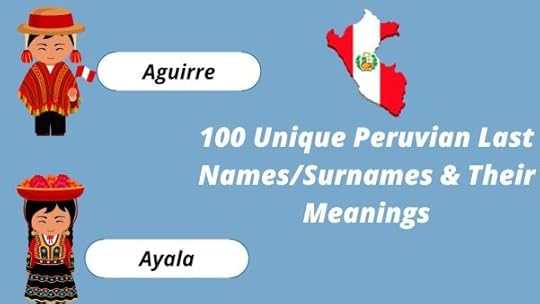
Note: Surnames are typically gender-neutral, so the below can be used for both boys and girls.
1. Aguirre
Meaning: Aguirre is of Basque origin and means “bush” or “thicket.”
Gender: It is a gender-neutral Peruvian surname, meaning it can be used for both boys and girls.
2. Alarcón
Meaning: Alarcón is of Spanish origin and is associated with “fortress” or “castle.”
Gender: It is typically a surname but can be used for both boys and girls as a first name.
3. Alvarez
Meaning: Alvarez is of Spanish origin and means “son of Alvaro” or “noble and wise.”
Gender: It is a common surname and is more often used for boys as a first name.
4. Aranda
Meaning: Aranda is of Spanish origin and is related to “a place with sand or gravel.”
Gender: It can be used for both boys and girls as a first name.
5. Arce
Meaning: Arce is of Spanish origin and means “maple tree” or “tree with reddish-brown bark.”
Gender: It can be used for both boys and girls as a first name.
6. Armas
Meaning: Armas is of Spanish origin and means “arms” or “weapons.”
Gender: It is typically a surname but can be used for both boys and girls as a first name.
7. Ayala
Meaning: Ayala is of Basque origin and means “slope” or “hillside.”
Gender: It can be used for both boys and girls as a first name.
8. Baca
Meaning: Baca is of Spanish origin and means “cow” or “ox.”
Gender: It is more commonly used as a surname rather than a first name.
9. Baldeon
Meaning: Baldeon doesn’t have a widely recognized meaning. It may be a less common surname.
Gender: It is more commonly used as a surname, and its suitability as a first name may vary.
10. Bautista
Meaning: Bautista is of Spanish origin and means “baptist,” often referring to John the Baptist.
Gender: It is commonly used for boys as a first name.
11. Benavides
Meaning: Benavides is of Spanish origin and doesn’t have a specific meaning.
Gender: It is typically used as a surname, but it can be used for both boys and girls as a first name.
12. Caballero
Meaning: Caballero is of Spanish origin and means “gentleman” or “knight.”
Gender: It is more commonly used as a surname rather than a first name.
13. Calderon
Meaning: Calderon is of Spanish origin and means “cauldron” or “large pot.”
Gender: It is more commonly used as a surname rather than a first name.
14. Carpio
Meaning: Carpio is of Spanish origin and refers to “a place with thorny bushes.”
Gender: It can be used for both boys and girls as a first name.
15. Casas
Meaning: Casas is of Spanish origin and means “houses” or “dwelling places.”
Gender: It is more commonly used as a surname rather than a first name.
16. Castillo
Meaning: Castillo is of Spanish origin and means “castle” or “fortress.”
Gender: It is more commonly used as a surname rather than a first name.
17. Castro
Meaning: Castro is of Spanish origin and means “castle” or “fortified place.”
Gender: It is more commonly used as a surname rather than a first name.
18. Chavez
Meaning: Chavez is of Spanish origin and means “horseman” or “rider.”
Gender: It is more commonly used as a surname rather than a first name.
19. Cisneros
Meaning: Cisneros is of Spanish origin and doesn’t have a widely recognized meaning.
Gender: It is typically used as a surname, but it can be used for both boys and girls as a first name.
20. Cornejo
Meaning: Cornejo is of Spanish origin and means “cornel tree” or “dogwood.”
Gender: It can be used for both boys and girls as a first name.
21. Coronado
Meaning: Coronado is of Spanish origin and means “crowned” or “having a crown.”
Gender: It is more commonly used as a surname rather than a first name.
22. Cueva
Meaning: Cueva is of Spanish origin and means “cave” or “cavern.”
Gender: It is more commonly used as a surname rather than a first name.
23. Del Pino
Meaning: Del Pino is of Spanish origin and means “of the pine tree” or “from the pine forest.”
Gender: It is more commonly used as a surname rather than a first name.
24. Delgado
Meaning: Delgado is of Spanish origin and means “thin” or “slender.”
Gender: It is more commonly used as a surname rather than a first name.
25. Diaz
Meaning: Diaz is of Spanish origin and means “son of Diego” or “supplanter.”
Gender: It is more commonly used as a surname rather than a first name.
26. Escobar
Meaning: Escobar is of Spanish origin and means “place with thorny bushes” or “thorn thicket.”
Gender: It is more commonly used as a surname rather than a first name.
27. Escudero
Meaning: Escudero is of Spanish origin and means “squire” or “shield-bearer.”
Gender: It is more commonly used as a surname rather than a first name.
28. Espinoza
Meaning: Espinoza is of Spanish origin and means “thorny” or “spiny.”
Gender: It is more commonly used as a surname rather than a first name.
29. Fernandez
Meaning: Fernandez is of Spanish origin and means “son of Fernando” or “bold voyager.”
Gender: It is more commonly used as a surname rather than a first name.
30. Figueroa
Meaning: Figueroa is of Spanish origin and means “fig tree” or “place of fig trees.”
Gender: It is more commonly used as a surname rather than a first name.
31. Flores
Meaning: Flores is of Spanish origin and means “flowers” or “blooms.”
Gender: It can be used for both boys and girls as a first name.
32. Galvez
Meaning: Galvez is of Spanish origin and doesn’t have a widely recognized meaning.
Gender: It is more commonly used as a surname rather than a first name.
33. Garcia
Meaning: Garcia is of Basque origin and means “young” or “youthful.”
Gender: It is more commonly used as a surname rather than a first name.
34. Gonzales
Meaning: Gonzales is of Spanish origin and means “son of Gonzalo” or “battle.”
Gender: It is more commonly used as a surname rather than a first name.
35. Guerra
Meaning: Guerra is of Spanish origin and means “war” or “battle.”
Gender: It is more commonly used as a surname rather than a first name.
36. Guzman
Meaning: Guzman is of Spanish origin and means “good man” or “noble man.”
Gender: It is more commonly used as a surname rather than a first name.
37. Herrera
Meaning: Herrera is of Spanish origin and means “blacksmith” or “ironworker.”
Gender: It is more commonly used as a surname rather than a first name.
38. Hidalgo
Meaning: Hidalgo is of Spanish origin and means “noble” or “gentleman.”
Gender: It is more commonly used as a surname rather than a first name.
39. Huaman
Meaning: Huaman is of Quechua origin and means “hawk” or “falcon.”
Gender: It can be used for both boys and girls as a first name.
40. Huancayo
Meaning: Huancayo is of Quechua origin and refers to a city in Peru.
Gender: It is more commonly used as a geographical reference rather than a first name.
41. Huertas
Meaning: Huertas is of Spanish origin and means “orchards” or “gardens.”
Gender: It is more commonly used as a surname rather than a first name.
42. Jara
Meaning: Jara is of Spanish origin and means “rockrose” or “cistus flower.”
Gender: It can be used for both boys and girls as a first name.
43. Landa
Meaning: Landa is of Basque origin and refers to “a cleared or cultivated land.”
Gender: It is more commonly used as a surname rather than a first name.
44. Lazo
Meaning: Lazo is of Spanish origin and means “knot” or “tie.”
Gender: It is more commonly used as a surname rather than a first name.
45. Leon
Meaning: Leon is of Spanish origin and means “lion.”
Gender: It is more commonly used as a surname rather than a first name.
46. Llave
Meaning: Llave is of Spanish origin and means “key.”
Gender: It is more commonly used as a surname rather than a first name.
47. Loayza
Meaning: Loayza is of Spanish origin and doesn’t have a widely recognized meaning.
Gender: It is more commonly used as a surname rather than a first name.
48. Lopez
Meaning: Lopez is of Spanish origin and means “son of Lope” or “wolf.”
Gender: It is more commonly used as a surname rather than a first name.
49. Luna
Meaning: Luna is of Latin origin and means “moon.”
Gender: It can be used for both boys and girls as a first name.
50. Martinez
Meaning: Martinez is of Spanish origin and means “son of Martin” or “warrior of Mars.”
Gender: It is more commonly used as a surname rather than a first name.
51. Medina
Meaning: Medina is of Arabic origin and refers to a “city” or “town.”
Gender: It is more commonly used as a surname rather than a first name.
52. Melgarejo
Meaning: Melgarejo is of Spanish origin and doesn’t have a widely recognized meaning.
Gender: It is more commonly used as a surname rather than a first name.
53. Mendoza
Meaning: Mendoza is of Basque origin and refers to a town in Spain.
Gender: It is more commonly used as a surname rather than a first name.
54. Montes
Meaning: Montes is of Spanish origin and means “mountains.”
Gender: It is more commonly used as a surname rather than a first name.
55. Morales
Meaning: Morales is of Spanish origin and means “mulberry trees” or “blackberry trees.”
Gender: It is more commonly used as a surname rather than a first name.
56. Navarro
Meaning: Navarro is of Basque origin and means “plains” or “valleys.”
Gender: It is more commonly used as a surname rather than a first name.
57. Nunez
Meaning: Nunez is of Spanish origin and means “son of Nuno” or “ninth.”
Gender: It is more commonly used as a surname rather than a first name.
58. Olivera
Meaning: Olivera is of Spanish origin and means “olive tree” or “olive grove.”
Gender: It is more commonly used as a surname rather than a first name.
59. Ortega
Meaning: Ortega is of Spanish origin and means “nettle” or “thornbush.”
Gender: It is more commonly used as a surname rather than a first name.
60. Pacheco
Meaning: Pacheco is of Spanish origin and means “peacock.”
Gender: It is more commonly used as a surname rather than a first name.
61. Palacios
Meaning: Palacios is of Spanish origin and means “palaces” or “noble residences.”
Gender: It is more commonly used as a surname rather than a first name.
62. Paredes
Meaning: Paredes is of Spanish origin and means “walls” or “fences.”
Gender: It is more commonly used as a surname rather than a first name
63. Peralta
Meaning: Peralta is of Spanish origin and means “high pear tree” or “elevated grove of pear trees.”
Gender: It is more commonly used as a surname rather than a first name.
64. Perez
Meaning: Perez is of Spanish origin and means “son of Pedro” or “rock.”
Gender: It is more commonly used as a surname rather than a first name.
65. Pinto
Meaning: Pinto is of Spanish origin and means “painted” or “colorful.”
Gender: It is more commonly used as a surname rather than a first name.
66. Pizarro
Meaning: Pizarro is of Spanish origin and doesn’t have a widely recognized meaning.
Gender: It is more commonly used as a surname rather than a first name.
67. Poma
Meaning: Poma is of Quechua origin and means “apple.”
Gender: It is more commonly used as a surname rather than a first name.
68. Quispe
Meaning: Quispe is of Quechua origin and means “free” or “liberated.”
Gender: It is more commonly used as a surname rather than a first name.
69. Ramirez
Meaning: Ramirez is of Spanish origin and means “son of Ramiro” or “wise protector.”
Gender: It is more commonly used as a surname rather than a first name.
70. Ramos
Meaning: Ramos is of Spanish origin and means “branches” or “boughs.”
Gender: It is more commonly used as a surname rather than a first name.
71. Rios
Meaning: Rios is of Spanish origin and means “rivers.”
Gender: It is more commonly used as a surname rather than a first name.
72. Rodriguez
Meaning: Rodriguez is of Spanish origin and means “son of Rodrigo” or “famous ruler.”
Gender: It is more commonly used as a surname rather than a first name.
73. Rojas
Meaning: Rojas is of Spanish origin and means “red.”
Gender: It is more commonly used as a surname rather than a first name.
74. Roman
Meaning: Roman is of Latin origin and means “Roman” or “citizen of Rome.”
Gender: It can be used for both boys and girls as a first name.
75. Salcedo
Meaning: Salcedo is of Spanish origin and means “willow grove” or “place of willow trees.”
Gender: It is more commonly used as a surname rather than a first name.
76. Sanchez
Meaning: Sanchez is of Spanish origin and means “son of Sancho” or “saint.”
Gender: It is more commonly used as a surname rather than a first name.
77. Santa Cruz
Meaning: Santa Cruz is of Spanish origin and means “Holy Cross.”
Gender: It is more commonly used as a surname rather than a first name.
78. Santiago
Meaning: Santiago is of Spanish origin and means “Saint James.”
Gender: It is more commonly used as a masculine first name.
79. Santillan
Meaning: Santillan is of Spanish origin and doesn’t have a widely recognized meaning.
Gender: It is more commonly used as a surname rather than a first name.
80. Santisteban
Meaning: Santisteban is of Spanish origin and means “Saint Stephen.”
Gender: It is more commonly used as a surname rather than a first name.
81. Silva
Meaning: Silva is of Latin origin and means “forest” or “woods.”
Gender: It is more commonly used as a surname rather than a first name.
82. Solis
Meaning: Solis is of Latin origin and means “sun” or “sunlight.”
Gender: It is more commonly used as a surname rather than a first name.
83. Soto
Meaning: Soto is of Spanish origin and means “grove” or “thicket.”
Gender: It is more commonly used as a surname rather than a first name.
84. Sulca
Meaning: Sulca doesn’t have a widely recognized meaning. It may be a less common surname.
Gender: It is more commonly used as a surname, and its suitability as a first name may vary.
85. Tafur
Meaning: Tafur doesn’t have a widely recognized meaning. It may be a less common surname.
Gender: It is more commonly used as a surname, and its suitability as a first name may vary.
86. Tello
Meaning: Tello is of Spanish origin and doesn’t have a widely recognized meaning.
Gender: It is more commonly used as a surname rather than a first name.
87. Tineo
Meaning: Tineo doesn’t have a widely recognized meaning. It may be a less common surname.
Gender: It is more commonly used as a surname, and its suitability as a first name may vary.
88. Torres
Meaning: Torres is of Spanish origin and means “towers.”
Gender: It is more commonly used as a surname rather than a first name.
89. Tovar
Meaning: Tovar is of Spanish origin and doesn’t have a widely recognized meaning.
Gender: It is more commonly used as a surname rather than a first name.
90. Tuesta
Meaning: Tuesta is of Spanish origin and doesn’t have a widely recognized meaning.
Gender: It is more commonly used as a surname rather than a first name.
91. Ugarte
Meaning: Ugarte is of Basque origin and doesn’t have a widely recognized meaning.
Gender: It is more commonly used as a surname rather than a first name.
92. Uribe
Meaning: Uribe is of Basque origin and doesn’t have a widely recognized meaning.
Gender: It is more commonly used as a surname rather than a first name.
93. Valenzuela
Meaning: Valenzuela is of Spanish origin and doesn’t have a widely recognized meaning.
Gender: It is more commonly used as a surname rather than a first name.
94. Vargas
Meaning: Vargas is of Spanish origin and doesn’t have a widely recognized meaning.
Gender: It is more commonly used as a surname rather than a first name.
95. Vega
Meaning: Vega is of Spanish origin and means “meadow” or “field.”
Gender: It can be used for both boys and girls as a first name.
96. Velasco
Meaning: Velasco is of Spanish origin and means “crow” or “raven.”
Gender: It is more commonly used as a surname rather than a first name.
97. Villanueva
Meaning: Villanueva is of Spanish origin and means “new town” or “new village.”
Gender: It is more commonly used as a surname rather than a first name.
98. Zamora
Meaning: Zamora is of Spanish origin and refers to a city in Spain.
Gender: It is more commonly used as a geographical reference rather than a first name.
99. Zapata
Meaning: Zapata is of Spanish origin and means “shoe” or “sandal.”
Gender: It is more commonly used as a surname rather than a first name.
100. Zavala
Meaning: Zavala is of Spanish origin and doesn’t have a widely recognised meaning.
Gender: It is more commonly used as a surname rather than a first name.
Conclusion on the 100 Unique Peruvian Last Names/Surnames & Their MeaningsAs we finish our journey through these 100 unique Peruvian last names and their meanings,” we’ve learned about the rich history that makes Peru’s names special.
These Peruvian last names hold stories from many generations, remind us of old traditions and show how the people in Peru have been strong.
From the Spanish conquerors to the native Quechua speakers, each name is like a special part of Peru’s history.
We hope this post has made you curious about Peruvian last names and what they mean.
It’s a way to remember that every name has a bit of history, and there’s a unique story behind each last name.
Whether you have family or just like learning about different cultures, these Peruvian last names and their meanings show a glimpse of Peru’s interesting past and present.
Found value in the above post on the 100 unique Peruvian last names/surnames and their meanings? Then please support us by sharing it with others. Thanks
The post appeared first on Multiples Illuminated.
October 2, 2023
147 Unique 3 Letter Names and Their Meanings (A-Z)
In this article, we have compiled a list of 147 unique 3 letter names and their meanings.
If you’re a parent choosing the perfect name for your soon-to-arrive bundle of joy, then this is a must-read post.
Names have the power to shape a child’s identity and influence their journey through life.
While the world is filled with countless names, we often find beauty in simplicity.
That’s why we’ve compiled a list of unique 3 letter names that parents might want to consider when naming their unborn child.
These 3 letter names may be short in letters, but they are rich in meaning, history and character.
Join us as we explore these charming and discover the origins and significance behind each one.
147 Unique 3 Letter Names and Their Meanings (A-Z)
1. Abe
Meaning: Abe is typically a short form of Abraham or Abel and means “father of nations” or “breath.”
Origin: Abe has Hebrew origins and is often used as a diminutive of longer names.
Suitability: Abe is a classic and friendly name that is suitable for boys. It carries a sense of strength and tradition.
2. Ace
Meaning: Ace means “one” or “unity” and is often associated with excellence or being the best at something.
Origin: Ace is of Latin origin and has a modern, cool appeal.
Suitability: Ace is a unisex name, but it is more commonly used for boys. It conveys a sense of skill and achievement.
3. Ada
Meaning: Ada is of German origin and means “noble.” It suggests grace and aristocracy.
Origin: Ada has a long history and is a classic name with royal connotations.
Suitability: Ada is a lovely name suited for girls. It carries an elegant and timeless charm.
4. Aja
Meaning: Aja is of Sanskrit origin and means “goat.” In Hindu mythology, Aja is also another name for the god Brahma.
Origin: Aja has ancient roots and is a unique, nature-inspired name.
Suitability: Aja can be a unisex name, but it is more often used for girls. It has a distinctive and exotic quality.
5. Ali
Meaning: Ali is of Arabic origin and means “exalted” or “noble.”
Origin: Ali is a name with deep cultural and religious significance, often associated with Islamic history.
Suitability: Ali is a unisex name but is commonly used for boys. It carries a sense of honor and respect.
6. Amy
Meaning: Amy is of French origin and means “beloved” or “loved one.”
Origin: Amy has a long history as a popular and endearing name.
Suitability: Amy is a classic and sweet name that is well-suited for girls. It has a warm and affectionate vibe.
7. Ana
Meaning: Ana is of Spanish and Portuguese origin and is a variant of the name Anna, which means “grace” or “favor.”
Origin: Ana is a name found in various cultures and languages, often as a form of Anna or Hannah.
Suitability: Ana is a beautiful and timeless name suitable for girls. It carries a sense of elegance and charm.
8. Ann
Meaning: Ann is of Hebrew origin and is a variant of Anne, which means “grace.”
Origin: Ann is a classic name with a rich history, often used as a standalone name or as part of longer names.
Suitability: Ann is a traditional and elegant name for girls. It conveys a sense of grace and simplicity.
9. Ara
Meaning: Ara has multiple origins, including Armenian (meaning “king”) and Arabic (meaning “opinion”).
Origin: Ara is a name with diverse cultural connections.
Suitability: Ara can be a unisex name, but it is more commonly used for boys. It has a strong and distinctive sound.
10. Ari
Meaning: Ari has different meanings in various languages, including “lion” in Hebrew and “eagle” in Finnish.
Origin: Ari is a short and versatile name with international appeal.
Suitability: Ari is a unisex name but is more frequently used for boys. It carries a sense of strength and nature-inspired imagery.
11. Art
Meaning: Art is often a short form of Arthur, which means “bear” in Celtic. It can also represent artistry and creativity.
Origin: Art has Celtic and Old English origins and is a timeless name.
Suitability: Art is typically used as a boy’s name. It carries a sense of strength and artistic flair.
12. Asa
Meaning: Asa means “physician” or “healer” in Hebrew.
Origin: Asa is of Hebrew origin and has a positive and nurturing connotation.
Suitability: Asa is a unisex name, but it’s more commonly used for boys. It represents qualities of care and well-being.
13. Ash
Meaning: Ash refers to the ash tree or ashes and has a nature-inspired significance.
Origin: Ash is a short and modern name with Anglo-Saxon roots.
Suitability: Ash can be a unisex name, but it is often used for boys. It has a simple and earthy appeal.
14. Ava
Meaning: Ava is of German origin and means “life” or “bird.”
Origin: Ava is a classic name with historical roots and has regained popularity in recent years.
Suitability: Ava is a timeless and elegant name for girls. It has a delicate and graceful aura.
15. Avi
Meaning: Avi is of Hebrew origin and means “my father” or “my God.”
Origin: Avi is a short and meaningful name often used as a diminutive.
Suitability: Avi is typically used for boys and reflects a sense of connection to family and spirituality.
16. Aya
Meaning: Aya has various meanings in different languages, including “colorful” in Japanese and “verse” in Hebrew.
Origin: Aya is a name with multicultural origins, making it unique and diverse.
Suitability: Aya can be a unisex name, but it is more frequently used for girls. It carries a sense of creativity and beauty.
17. Ayn
Meaning: Ayn is of Scottish origin and means “stream” or “river.”
Origin: Ayn is a nature-inspired name with a distinctive and tranquil feel.
Suitability: Ayn can be a unisex name, but it is often used for girls. It has a serene and flowing quality.
18. Bam
Meaning: Bam doesn’t have a widely recognized meaning as a name.
Origin: Bam is a short and modern name that may not have a specific origin.
Suitability: Bam can be a unisex name, but it is more commonly used for boys. It has a unique and contemporary sound.
19. Bay
Meaning: Bay is often associated with a body of water, such as a bay or inlet.
Origin: Bay is a simple and nature-inspired name.
Suitability: Bay can be a unisex name, but it is often used for boys. It carries a sense of openness and tranquility.
20. Bea
Meaning: Bea is a short form of Beatrice, which means “she who brings happiness” or “blessed.”
Origin: Bea has Italian and Latin origins and is a timeless and endearing name.
Suitability: Bea is a charming and classic name for girls. It conveys a sense of joy and positivity.
21. Ben
Meaning: Ben is of Hebrew origin and means “son of.” It signifies a familial connection.
Origin: Ben is a classic name with timeless appeal, often used as a standalone name or as part of longer names.
Suitability: Ben is typically a boy’s name, reflecting a sense of heritage and lineage.
22. Bob
Meaning: Bob is often a diminutive of Robert, which means “bright fame” or “famous one.”
Origin: Bob is a familiar and friendly name with English origins.
Suitability: Bob is commonly used for boys, and it has a casual and approachable quality.
23. Bud
Meaning: Bud is a nickname that implies a sense of youth or newness.
Origin: Bud is a casual and informal name.
Suitability: Bud is typically used for boys and conveys a sense of freshness and informality.
24. Cal
Meaning: Cal is often a short form of Calvin, which means “bald” or “bald-headed.”
Origin: Cal is a modern and concise name.
Suitability: Cal is commonly used for boys and has a straightforward and contemporary sound.
25. Cat
Meaning: Cat is often a short form of Catherine or Catharine, which means “pure” or “clear.”
Origin: Cat is a familiar and straightforward name.
Suitability: Cat is commonly used for girls, and it carries a sense of simplicity and elegance.
26. Coy
Meaning: Coy means “shy” or “reserved.”
Origin: Coy is a word with English origins that has been used as a name.
Suitability: Coy can be a unisex name but is more often used for boys. It signifies a sense of modesty and mystery.
27. Dan
Meaning: Dan is of Hebrew origin and means “God is my judge.”
Origin: Dan is a name with deep religious significance and has a timeless quality.
Suitability: Dan is typically a boy’s name, reflecting a sense of faith and guidance.
28. Dax
Meaning: Dax doesn’t have a widely recognized meaning as a name.
Origin: Dax is a modern and distinctive name with no specific origin.
Suitability: Dax is typically used for boys and has a unique and contemporary sound.
29. Dev
Meaning: Dev is of Sanskrit origin and means “god” or “deity.”
Origin: Dev is a name with spiritual connotations and cultural significance.
Suitability: Dev is commonly used for boys and reflects a connection to spirituality and divinity.
30. Dex
Meaning: Dex is often a short form of Dexter, which means “right-handed” or “skillful.”
Origin: Dex is a modern and concise name.
Suitability: Dex is typically a boy’s name, signifying skill and dexterity.
31. Don
Meaning: Don is often a short form of Donald, which means “world ruler” or “chief.”
Origin: Don has English and Scottish origins and is a strong and timeless name.
Suitability: Don is typically a boy’s name, reflecting leadership and authority.
32. Ed
Meaning: Ed is often a short form of Edward, which means “wealthy guardian” or “prosperous protector.”
Origin: Ed is a classic name with English origins.
Suitability: Ed is commonly used for boys and has a straightforward and traditional appeal.
33. Ela
Meaning: Ela is often a diminutive of Eleanor or Elaine, which means “light” or “bright.”
Origin: Ela is a charming and elegant name with various cultural connections.
Suitability: Ela is a lovely name suitable for girls, symbolizing brightness and grace.
34. Eli
Meaning: Eli is of Hebrew origin and means “ascend” or “lifted up.”
Origin: Eli is a name with strong biblical roots and is highly meaningful.
Suitability: Eli is a unisex name, but it is more frequently used for boys. It conveys a sense of spiritual elevation.
35. Ema
Meaning: Ema is often a variant of Emma, which means “whole” or “universal.”
Origin: Ema has Germanic origins and is a popular and endearing name.
Suitability: Ema is a classic and sweet name for girls. It signifies completeness and unity.
36. Emi
Meaning: Emi is often a diminutive of Emily, which means “rival” or “striving.”
Origin: Emi is a name with English and Latin origins.
Suitability: Emi is a charming and feminine name. It carries a sense of ambition and determination.
37. Ena
Meaning: Ena is often a short form of names like Imelda or Philomena and doesn’t have a widely recognized meaning on its own.
Origin: Ena is a name with various cultural connections.
Suitability: Ena can be a unisex name but is more often used for girls. It has a simple and versatile quality.
38. Eon
Meaning: Eon refers to an extremely long period of time, typically an age or era.
Origin: Eon is a word name with no specific origin.
Suitability: Eon can be a unisex name but is more commonly used for boys. It has a unique and futuristic sound.
39. Eva
Meaning: Eva is of Hebrew origin and means “life.”
Origin: Eva is a classic name with biblical roots.
Suitability: Eva is a timeless and elegant name for girls. It carries a deep and meaningful significance.
40. Eve
Meaning: Eve is often associated with the biblical figure of the first woman, meaning “living” or “life.”
Origin: Eve is a name with deep religious and historical connections.
Suitability: Eve is a classic and feminine name, symbolizing the beginning of life.
41. Fay
Meaning: Fay is of English origin and means “fairy.”
Origin: Fay is of English origin and means “fairy.” It has a whimsical and enchanting quality.
Suitability: Fay is commonly used as a girl’s name.
42. Gal
Meaning: Gal is of Hebrew origin and means “wave” or “ocean wave.”
Origin: Gal is a nature-inspired name with a unique and flowing sound.
Suitability: Gal can be a unisex name but is more commonly used for girls. It evokes the beauty and movement of water.
43. Gia
Meaning: Gia is often a short form of Gianna or Giovanna, which means “God is gracious.”
Origin: Gia has Italian and Greek origins and is a charming and endearing name.
Suitability: Gia is a lovely name for girls, signifying divine grace and blessings.
44. Gil
Meaning: Gil is often a short form of Gilbert or Gilda, which means “bright pledge” or “servant of God.”
Origin: Gil has Germanic and English origins and carries a sense of promise and devotion.
Suitability: Gil is typically used for boys and reflects a strong and honorable character.
45. Gus
(Meaning and Suitability previously provided)
Origin: Gus is of English origin and is a short form of Augustus, meaning “majestic” or “venerable.”
46. Hal
Meaning: Hal is of English origin and is a short form of Henry, meaning “ruler of the household.”
Origin: Hal is of English origin and is a short form of Henry, meaning “ruler of the household.”
Suitability: Hal is typically a boy’s name.
47. Ian
Meaning: Ian is a Scottish variant of John, which means “God is gracious.”
Origin: Ian is a name with Scottish and Gaelic roots.
Suitability: Ian is commonly used for boys and signifies divine grace and favor.
48. Ida
(Meaning and Suitability previously provided)
Origin: Ida is of Germanic origin and means “hardworking.” It is a charming and vintage name for girls.
49. Ila
Meaning: Ila is often a variant of Isla, which has uncertain origins but is associated with islands or rivers.
Origin: Ila is a name with a soft and flowing sound.
Suitability: Ila is typically used for girls and has a gentle and natural quality.
50. Ina
Meaning: Ina is often a short form of names like Ingrid or Carolina and may not have a widely recognized meaning on its own.
Origin: Ina is a name with various cultural connections.
Suitability: Ina can be a unisex name but is more often used for girls. It has a simple and versatile quality.
51. Ira
Meaning: Ira has multiple meanings, including “watchful,” “tree,” and “wrath.”
Origin: Ira is a name with diverse origins, making it unique and multifaceted.
Suitability: Ira can be a unisex name but is more commonly used for boys. It carries a sense of vigilance and strength.
52. Isa
Meaning: Isa is often a short form of names like Isabel or Isabella, which means “God is my oath.”
Origin: Isa has Hebrew origins and is a name with religious significance.
Suitability: Isa is commonly used for girls and reflects a commitment to faith and promises.
53. Iva
Meaning: Iva is often a short form of names like Ivana or Yvonne, which may have meanings related to “yew tree” or “archer.”
Origin: Iva has Slavic and French origins and is a name with natural and elegant connotations.
Suitability: Iva is a lovely name for girls, often symbolizing grace and resilience.
54. Ivy
Meaning: Ivy is a botanical name, representing the evergreen climbing plant.
Origin: Ivy is a nature-inspired name with English roots.
Suitability: Ivy is commonly used for girls and has a delicate and charming quality.
55. Jai
Meaning: Jai is of Sanskrit origin and means “victory” or “triumph.”
Origin: Jai is a name with cultural significance and a positive connotation.
Suitability: Jai can be a unisex name but is more frequently used for boys. It signifies success and achievement.
56. Jan
Meaning: Jan is often a short form of names like Janice or Janet, which may mean “God is gracious.”
Origin: Jan has Hebrew origins and is a name with religious significance.
Suitability: Jan is commonly used for boys and carries a sense of divine grace.
57. Jax
Meaning: Jax is often a short form of names like Jackson or Jaxon, which may not have a widely recognized meaning on their own.
Origin: Jax is a modern and concise name.
Suitability: Jax is typically used for boys and has a contemporary and energetic sound.
58. Jay
(Meaning and Suitability previously provided)
Origin: Jay is of Latin origin and means “joyful.” It has a unisex appeal, suitable for both boys and girls.
59. Jed
Meaning: Jed is often a short form of names like Jedidiah, which means “beloved of God.”
Origin: Jed has biblical origins and is a name with religious significance.
Suitability: Jed is typically used for boys and reflects a sense of divine love and affection.
60. Jet
Meaning: Jet refers to a type of black gemstone or a stream of high-speed particles.
Origin: Jet is a word name with no specific origin.
Suitability: Jet can be a unisex name, often used for boys. It has a sleek and modern sound.
61. Jim
Meaning: Jim is often a short form of James, which means “supplanter” or “one who follows.”
Origin: Jim is a classic name with English and Hebrew roots.
Suitability: Jim is commonly used for boys and has a friendly and approachable quality.
62. Jin
Meaning: Jin has various meanings in different cultures, including “gold” in Korean and “spirit” in Chinese.
Origin: Jin is a name with multicultural origins, making it diverse and meaningful.
Suitability: Jin can be a unisex name and has a unique and intriguing sound.
63. Joe
Meaning: Joe is often a short form of Joseph, which means “God will increase” or “he will add.”
Origin: Joe has Hebrew origins and is a name with religious significance.
Suitability: Joe is typically used for boys and reflects a sense of divine abundance.
64. Joy
Meaning: Joy means “happiness” or “delight,” representing a positive and joyful emotion.
Origin: Joy is a word name with English origins.
Suitability: Joy is commonly used for girls and carries a sense of cheerfulness and positivity.
65. Kai
Meaning: Kai has different meanings in various cultures, including “sea” in Hawaiian, “forgiveness” in Japanese, and “warrior” in Maori.
Origin: Kai is a name with international appeal and diverse interpretations.
Suitability: Kai is a unisex name and has a strong and adventurous connotation.
66. Kay
Meaning: Kay is often a short form of names like Katherine or Kayla, which may mean “pure” or “beloved.”
Origin: Kay has English and Greek origins.
Suitability: Kay is commonly used for girls and signifies purity and affection.
67. Kei
Meaning: Kei has multiple meanings in different cultures, including “blessed” in Japanese and “courageous” in Hawaiian.
Origin: Kei is a name with multicultural origins, making it diverse and meaningful.
Suitability: Kei can be a unisex name and carries positive qualities like blessings and bravery.
68. Ken
Meaning: Ken is often a short form of Kenneth, which means “handsome” or “born of fire.”
Origin: Ken has Scottish and Gaelic origins and is a name with a strong and attractive connotation.
Suitability: Ken is typically used for boys and reflects a sense of attractiveness and strength.
69. Kim
(Meaning and Suitability previously provided)
Origin: Kim is of English origin and means “royal fortress.” It is often used as a girl’s name in modern times.
70. Kip
Meaning: Kip means “pointed hill” or “hillock,” referring to a small, rounded hill.
Origin: Kip is a nature-inspired name with English origins.
Suitability: Kip is typically used for boys and has a simple and earthy quality.
71. Kit
Meaning: Kit is often a short form of Christopher or Katherine and may not have a widely recognized meaning on its own.
Origin: Kit is a concise and friendly name.
Suitability: Kit can be a unisex name but is more often used for boys. It has a casual and approachable sound.
72. Kye
Meaning: Kye is often a short form of names like Kyle or Kyler, which may not have a widely recognized meaning on their own.
Origin: Kye is a modern and concise name.
Suitability: Kye is typically used for boys and has a contemporary and energetic sound.
73. Lea
Meaning: Lea is often a variant of Leah, which means “weary” or “tired.”
Origin: Lea has Hebrew and English origins.
Suitability: Lea is a lovely name for girls, signifying endurance and resilience.
74. Lee
Meaning: Lee means “meadow” or “clearing,” representing an open and natural space.
Origin: Lee has Old English origins and is a name with a tranquil and serene connotation.
Suitability: Lee can be a unisex name and carries a sense of openness and tranquility.
75. Leo
Meaning: Leo is of Latin origin and means “lion.”
Origin: Leo is of Latin origin and means “lion.” It is a strong and masculine name, often chosen for boys.
Suitability: Leo is a strong boy’s name.
76. Lex
Meaning: Lex is often a short form of Alexander or Alexis, which means “defender of the people.”
Origin: Lex has Greek origins and carries a sense of protection and strength.
Suitability: Lex is typically used for boys and reflects a guardian-like quality.
77. Lia
Meaning: Lia is often a short form of names like Amelia or Julia, which may mean “industrious” or “youthful.”
Origin: Lia has various cultural connections and is a name with diverse interpretations.
Suitability: Lia is a lovely name for girls, signifying diligence and youthfulness.
78. Liv
Meaning: Liv means “life” or “to live” in Scandinavian languages, representing vitality and existence.
Origin: Liv is of Scandinavian origin and has a simple and meaningful connotation.
Suitability: Liv is commonly used for girls and carries a sense of vibrancy and vitality.
79. Liz
Meaning: Liz is often a short form of Elizabeth, which means “God is my oath” or “consecrated to God.”
Origin: Liz has Hebrew origins and is a name with religious significance.
Suitability: Liz is typically used for girls and reflects a commitment to faith and promises.
80. Lou
Meaning: Lou is often a short form of names like Louise or Louis, which means “famous warrior” or “renowned warrior.”
Origin: Lou has Germanic and French origins and carries a sense of courage and fame.
Suitability: Lou can be a unisex name but is more commonly used for boys. It signifies bravery and renown.
81. Luc
Meaning: Luc is often a short form of names like Lucius or Lucas, which means “light” or “illumination.”
Origin: Luc has Latin origins and carries a sense of brightness and positivity.
Suitability: Luc is typically used for boys and signifies a radiant personality.
82. Lux
Meaning: Lux means “light” or “brightness,” symbolizing illumination and clarity.
Origin: Lux is a word name with Latin origins.
Suitability: Lux can be a unisex name, often used for girls. It evokes the beauty and radiance of light.
83. Luz
Meaning: Luz means “light” or “brightness,” similar to Lux, and carries a sense of illumination and clarity.
Origin: Luz has Spanish origins and is a name with a luminous connotation.
Suitability: Luz is commonly used for girls and signifies radiance and clarity.
84. Mab
Meaning: Mab is often a short form of Mabel, which means “lovable” or “dear.”
Origin: Mab has English origins and is a charming and endearing name.
Suitability: Mab is typically used for girls and signifies affection and sweetness.
85. Mac
Meaning: Mac is often a short form of names like Mackenzie or Macaulay, which means “son of” or “descendant of.”
Origin: Mac has Scottish and Gaelic origins and carries a familial connection.
Suitability: Mac is typically used for boys and reflects a sense of heritage and lineage.
86. Mae
Meaning: Mae is often a short form of names like Margaret or Maureen, which may mean “pearl” or “bitter.”
Origin: Mae has English origins and is a classic and endearing name.
Suitability: Mae is a lovely name for girls, often symbolizing purity and beauty.
87. Mai
Meaning: Mai has various meanings in different cultures, including “ocean” in Vietnamese and “dance” in Japanese.
Origin: Mai is a name with multicultural origins, making it diverse and meaningful.
Suitability: Mai can be a unisex name and carries qualities like fluidity and grace.
88. Max
Meaning: Max is often a short form of Maximilian or Maxwell, which means “greatest” or “great stream.”
Origin: Max has Latin and Old English origins and is a strong and powerful name.
Suitability: Max is typically used for boys and signifies greatness and strength.
89. May
Meaning: May is often a short form of names like Mary or Margaret, which may mean “bitter” or “pearl.”
Origin: May has English and Latin origins and carries a sense of grace and elegance.
Suitability: May is a classic and feminine name, symbolizing beauty and purity.
90. Meg
Meaning: Meg is often a short form of names like Megan or Margaret, which may mean “pearl.”
Origin: Meg has Greek origins and is a charming and timeless name.
Suitability: Meg is typically used for girls and signifies the preciousness of a pearl.
91. Mei
Meaning: Mei has various meanings in different cultures, including “beautiful” in Chinese and “bud” in Japanese.
Origin: Mei is a name with multicultural origins, making it diverse and meaningful.
Suitability: Mei can be a unisex name and carries qualities like beauty and growth.
92. Mel
Meaning: Mel is often a short form of names like Melanie or Melvin, which may not have a widely recognized meaning on their own.
Origin: Mel is a simple and friendly name.
Suitability: Mel can be a unisex name but is more commonly used for boys. It has a casual and approachable quality.
93. Mia
Meaning: Mia is often a short form of names like Maria or Amelia, which may mean “bitter” or “beloved.”
Origin: Mia has Italian and Scandinavian origins and is a charming and endearing name.
Suitability: Mia is a lovely name for girls, signifying sweetness and affection.
94. Mya
Meaning: Mya is often a variant of names like Maya or Maia, which may mean “great” or “mother.”
Origin: Mya has Greek and Latin origins and carries a sense of significance and nurturing.
Suitability: Mya is a beautiful and timeless name for girls, often symbolizing greatness and maternal love.
95. Ned
Meaning: Ned is often a short form of names like Edward or Edmund, which means “wealthy guardian” or “prosperous protector.”
Origin: Ned has English and Old English origins and is a classic and friendly name.
Suitability: Ned is typically used for boys and signifies wealth and protection.
96. Nia
Meaning: Nia means “purpose” or “intention,” representing a sense of determination.
Origin: Nia is of Swahili origin and is a name with a meaningful and positive connotation.
Suitability: Nia is commonly used for girls and signifies a strong sense of purpose.
97. Nim
Meaning: Nim doesn’t have a widely recognized meaning as a name.
Origin: Nim is a short and modern name with no specific origin.
Suitability: Nim can be a unisex name, often chosen for its simplicity and uniqueness.
98. Noa
Meaning: Noa is often a variant of Noah, which means “rest” or “comfort.”
Origin: Noa has Hebrew origins and carries a sense of peace and tranquility.
Suitability: Noa is typically used for girls and reflects a peaceful and calming presence.
99. Noe
Meaning: Noe is often a variant of Noah, which means “rest” or “comfort.”
Origin: Noe has Hebrew origins and carries a sense of peace and tranquility, similar to Noa.
Suitability: Noe is typically used for boys and signifies a peaceful and comforting presence.
100. Nya
Meaning: Nya is often a variant of names like Nyah or Nia, which may mean “purpose” or “intention.”
Origin: Nya has various cultural connections and is a name with diverse interpretations.
Suitability: Nya is commonly used for girls and carries qualities like determination and focus.
101. Ola
Meaning: Ola is often a short form of names like Olga or Oleanna, which may mean “holy” or “blessed.”
Origin: Ola has Scandinavian and Slavic origins and is a name with positive and sacred connotations.
Suitability: Ola is a lovely name for girls, signifying holiness and blessings.
102. Ora
Meaning: Ora means “light” or “gold,” representing radiance and brilliance.
Origin: Ora has Hebrew origins and is a name with a luminous and positive connotation.
Suitability: Ora is commonly used for girls and signifies radiance and brightness.
103. Pam
Meaning: Pam is often a short form of Pamela, which may mean “all sweetness” or “honeyed.”
Origin: Pam is a simple and friendly name.
Suitability: Pam is typically used for girls and carries a sense of sweetness and charm.
104. Pat
Meaning: Pat is often a short form of Patrick or Patricia, which may mean “noble” or “noblewoman.”
Origin: Pat has Latin and Greek origins and carries a sense of nobility.
Suitability: Pat can be a unisex name but is more commonly used for boys. It signifies nobility and honor.
105. Pax
Meaning: Pax means “peace,” representing tranquility and harmony.
Origin: Pax has Latin origins and carries a profound sense of peace.
Suitability: Pax can be a unisex name and is often chosen for its peaceful and calming connotation.
106. Pia
Meaning: Pia means “pious” or “devout,” signifying a sense of religious devotion or sincerity.
Origin: Pia has Latin origins and carries a deep and spiritual connotation.
Suitability: Pia is commonly used for girls and reflects a strong sense of faith and sincerity.
107. Pip
Meaning: Pip is often a short form of Philip or Philippa, which means “lover of horses.”
Origin: Pip has English origins and is a friendly and casual name.
Suitability: Pip can be a unisex name but is more commonly used for boys. It signifies an affection for horses.
108. Poe
Meaning: Poe doesn’t have a widely recognized meaning as a name.
Origin: Poe is a short and modern name with no specific origin.
Suitability: Poe can be a unisex name, often chosen for its simplicity and uniqueness.
109. Rae
Meaning: Rae is often a short form of Rachel or Raymond, which may mean “ewe” or “wise protector.”
Origin: Rae has Hebrew and Germanic origins and carries qualities like gentleness and wisdom.
Suitability: Rae can be a unisex name but is more commonly used for girls. It signifies a kind and protective nature.
110. Rai
Meaning: Rai has various meanings in different cultures, including “thunder” in Japanese and “king” in Punjabi.
Origin: Rai is a name with multicultural origins, making it diverse and meaningful.
Suitability: Rai can be a unisex name and carries qualities like power and authority.
111. Ray
Meaning: Ray is often a short form of Raymond or Rachel, which may mean “wise protector” or “ewe.”
Origin: Ray has Germanic and Hebrew origins and carries qualities like wisdom and gentleness.
Suitability: Ray can be a unisex name but is more commonly used for boys. It signifies a wise and protective nature.
112. Rei
Meaning: Rei has various meanings in different cultures, including “bell” in Japanese and “king” in Portuguese.
Origin: Rei is a name with multicultural origins, making it diverse and meaningful.
Suitability: Rei can be a unisex name and carries qualities like sound and authority.
113. Ren
Meaning: Ren means “lotus” or “water lily” in Japanese, symbolizing purity and rebirth.
Origin: Ren has Japanese origins and is a name with a serene and natural connotation.
Suitability: Ren can be a unisex name and carries qualities like purity and renewal.
114. Rex
Meaning: Rex means “king” in Latin, representing regal and authoritative qualities.
Origin: Rex has Latin origins and carries a sense of power and leadership.
Suitability: Rex is typically used for boys and signifies royalty and authority.
115. Rey
Meaning: Rey means “king” in Spanish, similar to Rex, representing regal and authoritative qualities.
Origin: Rey has Spanish origins and carries a sense of power and leadership.
Suitability: Rey is typically used for boys and signifies royalty and authority.
116. Ria
Meaning: Ria has various meanings in different cultures, including “river” in Spanish and “small stream” in Sanskrit.
Origin: Ria is a name with multicultural connections, making it diverse and flowing.
Suitability: Ria is commonly used for girls and carries qualities like fluidity and grace.
117. Rio
Meaning: Rio means “river” in Spanish and Portuguese, symbolizing a flowing and natural element.
Origin: Rio has Spanish and Portuguese origins and is a name with a serene and rhythmic connotation.
Suitability: Rio can be a unisex name and signifies the beauty and movement of water.
118. Rob
Meaning: Rob is often a short form of Robert or Robin, which means “bright fame” or “famous one.”
Origin: Rob has Germanic and English origins and carries a sense of renown and brightness.
Suitability: Rob is typically used for boys and signifies fame and brightness.
119. Ron
Meaning: Ron is often a short form of Ronald or Veronica, which may mean “ruler’s counselor” or “true image.”
Origin: Ron has Germanic and Greek origins and carries qualities like wisdom and truth.
Suitability: Ron is typically used for boys and signifies counsel and authenticity.
120. Roy
Meaning: Roy means “king” or “royal” in French, representing regal and noble qualities.
Origin: Roy has French origins and carries a sense of royalty and grandeur.
Suitability: Roy is typically used for boys and signifies kingship and nobility.
121. Rya
Meaning: Rya doesn’t have a widely recognized meaning as a name.
Origin: Rya is a short and modern name with no specific origin.
Suitability: Rya can be a unisex name, often chosen for its simplicity and uniqueness.
122. Ryo
Meaning: Ryo has various meanings in different cultures, including “cool” or “refreshing” in Japanese and “river” in Spanish.
Origin: Ryo is a name with multicultural origins, making it diverse and meaningful.
Suitability: Ryo can be a unisex name and carries qualities like coolness and natural beauty.
123. Sai
Meaning: Sai has various meanings in different cultures, including “talented” or “smart” in Vietnamese and “saint” in Indian languages.
Origin: Sai is a name with multicultural connections, making it diverse and meaningful.
Suitability: Sai can be a unisex name and carries qualities like talent and spirituality.
124. Sal
Meaning: Sal is often a short form of names like Salvatore or Sally, which may mean “savior” or “noble.”
Origin: Sal has Italian and Latin origins and carries qualities like nobility and salvation.
Suitability: Sal can be a unisex name but is more commonly used for boys. It signifies nobility and rescue.
125. Sam
Meaning: Sam is often a short form of Samuel or Samantha, which may mean “heard by God” or “listener.”
Origin: Sam has Hebrew origins and carries qualities like attentiveness and divine connection.
Suitability: Sam can be a unisex name and signifies being attuned and responsive.
126. Sky
Meaning: Sky refers to the open expanse of the atmosphere above the Earth, symbolizing freedom and vastness.
Origin: Sky is a word name with English origins.
Suitability: Sky can be a unisex name and signifies the limitless and boundless nature of the sky.
127. Sol
Meaning: Sol means “sun” in Spanish, representing brightness and warmth.
Origin: Sol has Spanish origins and carries qualities like radiance and energy.
Suitability: Sol can be a unisex name and signifies the warmth and vitality of the sun.
128. Sue
Meaning: Sue is often a short form of Susan or Susanna, which may mean “lily” or “graceful.”
Origin: Sue has Hebrew and English origins and carries qualities like purity and grace.
Suitability: Sue is commonly used for girls and signifies gracefulness and purity.
129. Taj
Meaning: Taj means “crown” or “jewel,” representing regal and precious qualities.
Origin: Taj has Arabic origins and carries a sense of royalty and beauty.
Suitability: Taj is typically used for boys and signifies kingship and preciousness.
130. Taz
Meaning: Taz doesn’t have a widely recognized meaning as a name.
Origin: Taz is a short and modern name with no specific origin.
Suitability: Taz can be a unisex name, often chosen for its simplicity and uniqueness.
131. Ted
Meaning: Ted is often a short form of names like Theodore or Edward, which means “gift of God” or “wealthy guardian.”
Origin: Ted has Greek and Old English origins and carries qualities like divine blessing and prosperity.
Suitability: Ted is typically used for boys and signifies a gift from God.
132. Teo
Meaning: Teo is often a short form of names like Matteo or Mateo, which means “gift of God.”
Origin: Teo has Italian and Spanish origins and carries qualities like divine blessing.
Suitability: Teo is typically used for boys and signifies a gift from God.
133. Tia
Meaning: Tia is often a short form of names like Tianna or Tiana, which may mean “princess” or “crowned one.”
Origin: Tia has Greek and Latin origins and carries qualities like royalty and grace.
Suitability: Tia is commonly used for girls and signifies a regal and graceful presence.
134. Tim
Meaning: Tim is often a short form of Timothy, which means “honoring God” or “to honor God.”
Origin: Tim has Greek origins and carries qualities like devotion and respect.
Suitability: Tim is typically used for boys and signifies reverence and faithfulness.
135. Tom
Meaning: Tom is often a short form of Thomas, which means “twin.”
Origin: Tom has Aramaic origins and carries qualities related to being a twin.
Suitability: Tom is typically used for boys and signifies a twin connection.
136. Uma
Meaning: Uma means “flax” or “linen” in Sanskrit, symbolizing natural and earthy qualities.
Origin: Uma has Sanskrit origins and is a name with a down-to-earth and organic connotation.
Suitability: Uma is commonly used for girls and signifies natural beauty and simplicity.
137. Umi
Meaning: Umi means “ocean” in Japanese, representing the vastness and depth of the sea.
Origin: Umi has Japanese origins and carries qualities related to the ocean.
Suitability: Umi can be a unisex name and signifies the vastness and depth of the sea.
138. Una
Meaning: Una means “one” or “unity,” representing singularity and oneness.
Origin: Una has Latin origins and carries a sense of uniqueness and individuality.
Suitability: Una is commonly used for girls and signifies a special and singular presence.
139. Val
Meaning: Val is often a short form of names like Valerie or Valentine, which may mean “strong” or “healthy.”
Origin: Val has Latin origins and carries qualities like strength and vitality.
Suitability: Val can be a unisex name and signifies strength and health.
140. Van
Meaning: Van is often a short form of names like Vance or Ivan, which may not have a widely recognized meaning on their own.
Origin: Van is a simple and friendly name.
Suitability: Van can be a unisex name but is more commonly used for boys. It has a casual and approachable quality.
141. Vic
Meaning: Vic is often a short form of names like Victor or Victoria, which may mean “victorious” or “conqueror.”
Origin: Vic has Latin origins and carries qualities like victory and triumph.
Suitability: Vic can be a unisex name but is more commonly used for boys. It signifies victory and conquest.
142. Wes
Meaning: Wes is often a short form of names like Wesley or Weston, which may mean “west meadow” or “western town.”
Origin: Wes has Old English origins and carries qualities related to the west.
Suitability: Wes is typically used for boys and signifies a connection to the western direction.
143. Wyn
Meaning: Wyn means “blessing” or “fair” in Welsh, symbolizing positive qualities and fairness.
Origin: Wyn has Welsh origins and is a name with a positive and blessed connotation.
Suitability: Wyn can be a unisex name and signifies blessings and fairness.
144. Xan
Meaning: Xan is often a short form of names like Alexander or Xander, which means “defender of the people.”
Origin: Xan has Greek origins and carries a sense of protection and strength.
Suitability: Xan can be a unisex name and reflects a guardian-like quality.
145. Zak
Meaning: Zak is often a short form of Zachary or Zachariah, which may mean “remembered by God” or “God has remembered.”
Origin: Zak has Hebrew origins and carries qualities like divine remembrance.
Suitability: Zak is typically used for boys and signifies being remembered by God.
146. Zia
Meaning: Zia has various meanings in different cultures, including “light” in Arabic and “aunt” in Italian.
Origin: Zia is a name with multicultural connections, making it diverse and meaningful.
Suitability: Zia can be a unisex name and carries qualities like radiance and family ties.
147. Zoe
Meaning: Zoe means “life” or “alive,” symbolizing vitality and existence.
Origin: Zoe has Greek origins and carries a sense of vibrancy and energy.
Suitability: Zoe is commonly used for girls and signifies the essence of life and vitality.
Conclusion on the 147 Unique 3 Letter Names and Their Meanings (A-Z)In the quest for the ideal name for your little one, it’s essential to explore a variety of options and our list of unique 3 letter names has certainly offered an intriguing selection.
Whether you’re drawn to the strength of “Ari,” the simplicity of “Zoe,” or the timeless beauty of “Liv,” these 3 letter names prove that greatness can come in small packages.
As you embark on the journey of parenthood, remember that the name you choose is a gift that your child will carry with them throughout their life.
So, take your time, consider the meanings and origins that resonate with you, and most importantly, that feels right for your family.
May this list of unique 3 letter names serve as a source of inspiration as you welcome your precious addition into the world.
Found value in the above post on 147 unique 3 letter names and their meanings? Then please support us by sharing it with others. Thanks
The post appeared first on Multiples Illuminated.
September 29, 2023
85 Unique Japanese Boy Names and Their Meanings
In this post, we’ll look at a couple of unique Japanese boy names and their respective meanings.
In a world where names are not just labels but carry the essence of one’s identity, these Japanese boy names stand out for their elegance and deep meanings.
Each name tells a story, reflecting the culture, values and aspirations of Japan.
In this captivating journey, we’ll explore 85 unique Japanese boy names and their meanings.
From names evoking nature’s beauty to those symbolizing strength and wisdom, join us on this exploration of the rich tapestry of , where every syllable is a brushstroke on the canvas of a child’s future.
85 Unique Japanese Boy Names and Their Meanings
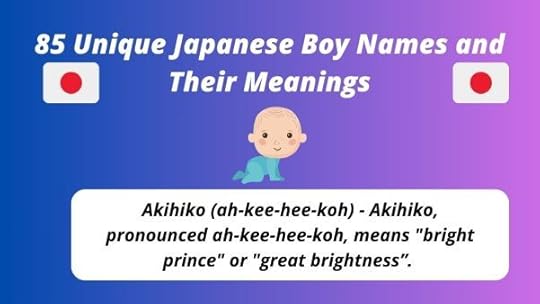
1. Akihiko (ah-kee-hee-koh) – Akihiko, pronounced ah-kee-hee-koh, means “bright prince” or “great brightness”. This name reflects regal qualities and a radiant personality, suitable for a young boy who shines like royalty.
2. Akio (ah-kee-oh) – Akio is pronounced ah-kee-oh and means “bright and manly.” It’s a name that signifies both brightness and strength.
3. Akira (ah-kee-rah) – Akira, pronounced ah-kee-rah, means “bright and clear.” It’s a name that reflects intelligence and a clear perspective, ideal for a boy with a sharp mind.
4. Daichi (dah-ee-chee) – Daichi, pronounced dah-ee-chee, stands for “great wisdom.” It’s a name that suggests intelligence and deep thinking, making it an excellent choice for a thoughtful boy.
5. Daiki (dah-ee-kee) – Daiki, pronounced dah-ee-kee, means “great glory” or “great radiance.” It reflects a sense of greatness and brightness.
6. Daisuke (dah-ee-skay) – Daisuke, pronounced dah-ee-skay, stands for “great help” or “big helper.” This name signifies assistance and support.
7. Haru (hah-roo) – Haru, pronounced hah-roo, translates to “spring.” This name embodies the freshness and renewal of the season, perfect for a boy born in the springtime.
8. Haruki (ha-roo-kee) – Haruki, pronounced ha-roo-kee, translates to “spring tree.” It’s a name that combines the freshness of spring with the strength of a tree, making it a name of growth and vitality.
9. Haruto (hah-roo-toh) – Haruto, pronounced hah-roo-toh, translates to “spring person.” It’s a name that embodies the freshness and vitality of spring, ideal for a lively young boy.
10. Hayato (hah-yah-toh) – Hayato, pronounced hah-yah-toh, means “falcon person.” It’s a name that suggests agility and sharpness, ideal for a boy with a keen mind.
11. Hikaru (hee-kah-roo) – Hikaru, pronounced hee-kah-roo, stands for “radiance” or “light.” It’s a name that reflects brightness and illumination.
12. Hiroki (hee-roh-kee) – Hiroki, pronounced hee-roh-kee, stands for “abundant joy.” This name reflects a cheerful and joyful disposition.
13. Hiroshi (hee-roh-shee) – Hiroshi, pronounced hee-roh-shee, translates to “generous.” It’s a name that embodies the qualities of kindness and generosity, suitable for a compassionate young boy.
14. Hiroto (hee-roh-toh) – Hiroto, pronounced hee-roh-toh, translates to “abundant person.” It’s a name that conveys richness and abundance, suitable for a boy with a prosperous future.
15. Isamu (ee-sah-moo) – Isamu, pronounced ee-sah-moo, represents “brave.” This name embodies courage and fearlessness, making it a strong and empowering choice.
16. Issei (ee-say) – Issei is pronounced ee-say and means “first-born” or “true star.” This name carries a sense of being the first and unique.
17. Kaito (kai-toh) – Kaito, pronounced kai-toh, translates to “ocean flying.” It’s a name that suggests a sense of freedom and adventure, perfect for a spirited young boy.
18. Katsuro (kaht-soo-roh) – Katsuro, pronounced kaht-soo-roh, means “victory son.” It’s a name that signifies triumph and success, making it a strong and empowering choice.
19. Kazuki (kah-zoo-kee) – Kazuki, pronounced kah-zoo-kee, stands for “peaceful hope” or “harmony”. It’s a name that carries a sense of tranquility and optimism, perfect for a boy who brings peace to others.
20. Kazuma (kah-zoo-mah) – Kazuma is pronounced kah-zoo-mah and means “peace and truth.” It’s a name that signifies a harmonious and honest nature.
21. Keiji (keh-jee) – Keiji, pronounced keh-jee, signifies “respect.” This name reflects honor and reverence, making it a name associated with respectfulness.
22. Kenji (ken-jee) – Kenji, pronounced ken-jee, means “wise and second son.” This name carries an air of wisdom and responsibility, ideal for a boy born as a second child.
23. Kenshin (ken-sheen) – Kenshin is pronounced ken-sheen and means “humble truth.” It’s a name that emphasizes humility and honesty.
24. Kenta (ken-tah) – Kenta, pronounced ken-tah, means “big and strong.” This name reflects physical strength and power, making it a name for a boy with a robust presence.
25. Kenzo (ken-zoh) – Kenzo, pronounced ken-zoh, stands for “strong and healthy.” This name reflects vitality and robustness, making it a strong and positive choice.
26. Kiyonori (kee-yoh-noh-ree) – Kiyonori is pronounced kee-yoh-noh-ree and means “pure and lawful.” This name signifies purity and adherence to principles.
27. Kiyoshi (kee-yoh-shee) – Kiyoshi, pronounced kee-yoh-shee, means “quiet” or “peaceful.” It’s a name that signifies serenity and calmness.
28. Kohaku (koh-hah-koo) – Kohaku is pronounced koh-hah-koo and means “amber.” It’s a name associated with the warm and rich color of amber.
29. Koharu (koh-hah-roo) – Koharu is a unisex name, pronounced koh-hah-roo, and means “spring” or “small and clear.” It’s a name associated with the freshness of spring and clarity.
30. Kohei (koh-hay) – Kohei, pronounced koh-hay, signifies “peaceful harmony.” This name reflects a peaceful and harmonious nature.
31. Koichi (koh-ee-chee) – Koichi, pronounced koh-ee-chee, signifies “peaceful first son.” This name combines the idea of peace with the significance of being the first-born.
32. Kosuke (koh-skay) – Kosuke, pronounced koh-skay, stands for “victorious help.” This name signifies triumph and support.
33. Kota (koh-tah) – Kota, pronounced koh-tah, signifies “happiness.” This name embodies the idea of joy and contentment, ideal for a boy who brings happiness to others.
34. Makoto (mah-koh-toh) – Makoto, pronounced mah-koh-toh, means “sincerity.” It’s a name that embodies honesty and authenticity, suitable for a boy with a genuine character.
35. Masaru (mah-sah-roo) – Masaru, pronounced mah-sah-roo, signifies “victorious.” This name carries a sense of triumph and success, making it a strong and empowering choice.
36. Naoki (nah-oh-kee) – Naoki, pronounced nah-oh-kee, stands for “honest tree.” This name symbolizes honesty and integrity, fitting for a boy with a strong moral compass.
37. Noboru (noh-boh-roo) – Noboru, pronounced noh-boh-roo, means “to rise.” This name conveys the idea of reaching greater heights and achieving one’s goals, making it an aspirational choice.
38. Rei (ray) – Rei is pronounced ray and means “zero” or “spirit.” It’s a name associated with purity and a strong spirit.
39. Ren (ren) – Ren, pronounced ren, means “lotus.” Lotus flowers symbolize purity and enlightenment, making this name a serene and meaningful choice for a boy.
40. Renji (ren-jee) – Renji, pronounced ren-jee, signifies “lotus temple.” Lotus flowers are often associated with purity and enlightenment, making this name a serene and meaningful choice.
41. Renjiro (ren-jee-roh) – Renjiro, pronounced ren-jee-roh, signifies “lotus son.” This name combines the purity of the lotus flower with the idea of a beloved son.
42. Renzo (ren-zoh) – Renzo, pronounced ren-zoh, stands for “benevolent son.” This name reflects kindness and compassion, making it a loving and caring choice.
43. Riku (ree-koo) – Riku, pronounced ree-koo, signifies “land.” It’s a name that connects with the earth and nature, making it a grounded and meaningful choice.
44. Ryo (ree-oh) – Ryo, pronounced ree-oh, stands for “refreshing and good.” This name conveys a sense of positivity and renewal, suitable for a boy with a refreshing personality.
45. Ryoma (ree-oh-mah) – Ryoma is pronounced ree-oh-mah and means “great and true.” It’s a name that embodies greatness and authenticity.
46. Ryosuke (ree-oh-skeh) – Ryosuke, pronounced ree-oh-skeh, stands for “clear and strong.” This name reflects clarity and resilience.
47. Ryota (ree-oh-tah) – Ryota, pronounced ree-oh-tah, means “clear and refreshing.” It’s a name that suggests purity and renewal, fitting for a boy with a refreshing presence.
48. Ryuji (ree-oo-jee) – Ryuji, pronounced ree-oo-jee, stands for “dragon and second son.” This name combines the power of a dragon with being the second child.
49. Sakura (sah-koo-rah) – Sakura is a unisex name, pronounced sah-koo-rah, and means “cherry blossom.” It’s a name associated with the beauty and fleeting nature of cherry blossoms.
50. Satoru (sah-toh-roo) – Satoru, pronounced sah-toh-roo, represents “to know.” This name reflects wisdom and knowledge, making it a suitable choice for an inquisitive young boy.
51. Satoshi (sah-toh-shee) – Satoshi, pronounced sah-toh-shee, means “wise and quick.” This name reflects intelligence and a sharp mind, making it an excellent choice for a boy with a quick wit.
52. Shinichi (shee-nee-chee) – Shinichi, pronounced shee-nee-chee, means “true first son.” This name reflects the importance of being the first-born and carries a sense of responsibility.
53. Shinji (sheen-jee) – Shinji, pronounced sheen-jee, signifies “true second son.” This name carries a sense of authenticity and being a second-born.
54. Sho (shoh) – Sho, pronounced shoh, stands for “to fly.” This name embodies the idea of freedom and adventure, ideal for a spirited young boy.
55. Shohei (shoh-heh-ee) – Shohei, pronounced shoh-heh-ee, signifies “to prosper.” This name reflects the hope for success and growth, suitable for a boy with ambitious dreams.
56. Shoma (shoh-mah) – Shoma, pronounced shoh-mah, means “to soar” or “to fly high.” It’s a name associated with ambition and reaching new heights.
57. Sora (soh-rah) – Sora, pronounced soh-rah, translates to “sky.” It’s a name that evokes a sense of vastness and limitless potential, perfect for an imaginative young boy.
58. Sosuke (soh-soo-keh) – Sosuke, pronounced soh-soo-keh, represents “brave son.” This name highlights courage and bravery, ideal for a boy with a fearless spirit.
59. Sotaro (soh-tah-roh) – Sotaro is pronounced soh-tah-roh and signifies “big and thick.” This name carries a sense of physical strength and presence.
60. Tadashi (tah-dah-shee) – Tadashi is pronounced tah-dah-shee and means “loyal” or “faithful.” It’s a name that signifies unwavering devotion.
61. Taichi (tie-chee) – Taichi is pronounced tie-chee and signifies “big one” or “grand first son.” This name reflects the importance of being the first-born.
62. Taiga (tie-gah) – Taiga, pronounced tie-gah, stands for “big and great.” This name carries a sense of strength and importance, making it an empowering choice.
63. Taiki (tie-kee) – Taiki, pronounced tie-kee, signifies “great radiance.” This name carries a sense of brightness and light, ideal for a boy who shines brightly.
64. Taishi (tie-shee) – Taishi, pronounced tie-shee, stands for “ambitious and determined.” This name reflects a strong drive to achieve one’s goals.
65. Takao (tah-kah-oh) – Takao is pronounced tah-kah-oh and means “noble and respectful.” This name emphasizes honor and reverence.
66. Takashi (tah-kah-shee) – Takashi is pronounced tah-kah-shee and means “noble and respectful.” It’s a name that emphasizes honor and respect.
67. Takeshi (tah-keh-shee) – Takeshi, pronounced tah-keh-shee, signifies “fierce warrior.” This name reflects strength and determination, making it an empowering choice for a boy with a warrior spirit.
68. Takumi (tah-koo-mee) – Takumi, pronounced tah-koo-mee, signifies “artisan” or “skilled craftsman.” This name reflects a talent for craftsmanship.
69. Tatsuya (taht-soo-yah) – Tatsuya, pronounced taht-soo-yah, represents “to achieve.” This name embodies the idea of reaching goals and accomplishments, ideal for a determined young boy.
70. Tetsuya (teh-tsoo-yah) – Tetsuya is pronounced teh-tsoo-yah and signifies “strong and heroic.” This name reflects strength and bravery.
71. Toshiro (toh-shee-roh) – Toshiro, pronounced toh-shee-roh, represents “talented and fourth son.” This name carries a sense of skill and uniqueness, fitting for a boy born as the fourth child.
72. Tsubasa (tsoo-bah-sah) – Tsubasa is pronounced tsoo-bah-sah and means “wings” or “flight.” It’s a name that suggests freedom and soaring.
73. Yamato (yah-mah-toh) – Yamato is pronounced yah-mah-toh and means “great harmony.” It’s a name that symbolizes unity and balance.
74. Yasuo (yah-soh-oh) – Yasuo is pronounced yah-soh-oh and signifies “peaceful man.” It’s a name that reflects a calm and tranquil personality.
75. Yori (yoh-ree) – Yori, pronounced yoh-ree, stands for “trust.” This name conveys reliability and dependability, making it a name associated with trustworthiness.
76. Yoshiki (yoh-shee-kee) – Yoshiki is pronounced yoh-shee-kee and signifies “radiant hope.” This name combines the idea of radiance with a sense of hope.
77. Yoshinori (yoh-shee-noh-ree) – Yoshinori is pronounced yoh-shee-noh-ree and means “righteous and well-cultivated.” This name signifies moral uprightness and refinement.
78. Yoshito (yoh-shee-toh) – Yoshito, pronounced yoh-shee-toh, signifies “righteous and wise.” This name reflects a sense of justice and wisdom.
79. Yuji (yoo-jee) – Yuji, pronounced yoo-jee, stands for “gentle second son.” This name conveys kindness and a peaceful nature, making it a loving choice for a second-born boy.
80. Yuki (yoo-kee) – Yuki, pronounced yoo-kee, translates to “snow.” This name evokes the beauty and serenity of winter, making it a poetic choice for a boy.
81. Yuma (yoo-mah) – Yuma, pronounced yoo-mah, represents “gentle and truth.” This name conveys a sense of gentleness and honesty, fitting for a boy with a truthful and kind-hearted nature.
82. Yusei (yoo-sei) – Yusei, pronounced yoo-sei, means “gentle and clear.” This name reflects a calm and transparent nature, suitable for a boy with a gentle and straightforward character.
83. Yusuke (yoo-skay) – Yusuke, pronounced yoo-skay, means “gentle and help” or “helpful.” It reflects a gentle and supportive nature.
84. Yuta (yoo-tah) – Yuta, pronounced yoo-tah, stands for “gentle and abundant.” This name conveys a gentle and bountiful nature.
85. Yuto (yoo-toh) – Yuto, pronounced yoo-toh, represents “gentle.” This name suggests a calm and kind-hearted nature, making it suitable for a boy with a gentle spirit.
Conclusion on the 85 Unique Japanese Boy Names and Their MeaningsAs we conclude our journey through these 85 unique Japanese boy names and their profound meanings, we’re reminded of the beauty and depth that names can carry.
Each of these Japanese boy names is like a whispered wish for a bright future, a testament to the values and aspirations of Japanese culture.
From the simplicity of “Ren” signifying the purity of a lotus flower to the strength of “Daichi” representing great wisdom, these Japanese boy names are a treasure trove of possibilities.
Choosing a name for your child is a special and deeply personal endeavour.
It’s a gift that will accompany them throughout their lives, shaping their identity and influencing their journey.
These Japanese boy names and their meanings offer a glimpse into a culture that values harmony, nature, and virtues like sincerity, wisdom and resilience.
Whether you’re drawn to the elegance of “Kaito” or the serenity of “Sora,” may this collection of Japanese boy names and their meanings inspire you as you embark on this meaningful decision.
Each name is a story waiting to be told, a legacy waiting to be written.
As you ponder these Japanese boy names, remember that the true meaning lies not only in their pronunciation but in the love, guidance, and support you provide to your child.
May your child’s name be a source of pride and a reminder of the values you hold dear.
In the end, the will be the first chapter in the extraordinary story of your child’s life.
May it be a tale of love, strength and boundless potential.
Found value in the above post on the 85 unique Japanese boy names and their meanings? Then please support us by sharing it with others. Thanks
The post appeared first on Multiples Illuminated.
September 28, 2023
200 Most Popular Mexican Last Names That Start With C and Their Meanings
Are you curious about Mexican last names that start with C and their meanings? Then look no further!
In this article, we have compiled a list of the 200 most popular Mexican last names that start with C and their fascinating meanings.
From iconic surnames like Cruz and Castro to lesser-known gems such as Cortez and Carrasco, this comprehensive guide will take you on a journey through Mexico’s rich cultural tapestry.
So get ready to explore the origins, histories, and deep-rooted significance behind these captivating !
How We Came Up With This List of Mexican Last Names that Start with CThese names are taken directly from the most recent US census data, providing a broader perspective on the prevalence of these surnames in the Hispanic community.
200 Most Popular Mexican Last Names That Start With C and Their Meanings
As we conclude our journey through the diverse landscape of Mexican last names that start with C, we are left with a profound appreciation for the cultural richness and historical depth embedded in each surname.
These often passed down through generations, serve as living connections to Mexico’s past, encompassing influences from indigenous peoples, Spanish colonizers and the passage of time itself.
They are more than words; they are the legacies of countless individuals and families.
These Mexican last names that start with C stand as testaments to the resilience and vibrancy of Mexico’s people, weaving together a tapestry of history and identity that continues to thrive in the present day.
Found value in the above post on the 200 most popular Mexican last names that start with C and their meanings? Then please support us by sharing it with others. Thanks
The post appeared first on Multiples Illuminated.