Sondi Warner's Blog, page 4
February 19, 2016
Where do you like to read?
Sondi is busy preparing for the release of deserving so we’re skipping the weekly re-cap, tell us where do you like to read.


Do you have a favorite chair, favorite room or favorite place you like to go to cuddle up with a book? Tell us in the comment section.



February 18, 2016
5 Lessons Unlearned by a Perfectionist Writer
–Sondi Warner, Writer/Blogger for Wrought Iron Reads
 Check out a Wrought Iron Reads friend! Get your free coaching session today.
I have a problem. I want to write perfectly. I get caught up in perfecting my writing through reading, researching and planning, and I can’t stand finding out pertinent info after the fact. Not to mention, it feels like a waste of time to do something the wrong way, only to have to correct it later. You feel my pain?
If that doesn’t seem like much of a problem to you, let’s remember the rules to writing a novel. Oh, wait, there are none.

Or, there may be too many. I’ve lost track. You see, with all the writer help blogs and articles out there–mine included–filling the internet with disjointed bits and flotsam of advice, it can be hard to keep track of the latest avant garde approach. Is first person point of view still in? Are billionaire romances out?
People hate cliffhangers? When did that happen? Who says serials aren’t cool anymore? Why can’t I just write whatever comes to mind? I need an outline? I don’t need an outline? What? WHAT?! What??
And, while some of what’s out there is about following the trends while others expressly forbid trying to keep up with the in-crowd, it can be tough for an indie author to drop letters on the screen while bombarded with answers to questions they never considered.
At the end of the day, if you want to get any writing done, you’ll have to stop Google searching and get to work. So, to steer you clear of the pitfall of perfectionism, here are my lessons unlearned.

Lesson: Books should be error proof and grammatically correct. Unlearned: When you’re writing, you don’t have perfect grammar. Nobody writes perfect grammar 100% of the time, and some stories work better without it. With a recent change in how Amazon reports books with errors, many writers are scrambling to keep their drafts as shelf-ready as possible, but the perfectionism is likely keeping the project stalled. Save the grammar and proofing questions for your editor instead of the internet, and just write the dang thing. #EditorJobSecurity ;)
Lesson: Books should follow a certain structure. Unlearned: Have you found the formula yet? Because I have. I’ve found several. I sometimes use them to good effect, but the truth about outlining and using formulas is that it works for some and not so much for others. I’m not recommending you throw all convention to the wind and try to write the most unique book in the world, since there’s reason to believe that that book won’t sell. I am, however, recommending that you not waste time trying out every formula you run across. Unless you have that kind of time, in which case, have fun!
Lesson: Indie books need ________. Unlearned: Indie books are books. They need the same things other books need: A great story, professional edit, catchy book blurb, awesome cover and big exposure. They don’t need a gimmick. So, stop searching out ways to set your awesome indie book apart, and just get it written. (Note to self.)
Lesson: Books should be sold here, here and here. Unlearned: Yes, you should sell your books wherever possible, and you should research places and ways to get your book out there. But, while you’re writing your book, worrying about how and where you’ll sell is putting the cart before the horse. Trying to write a book for the Walmart crowd while also trying to make it for the Barnes & Noble set will make you want to rip out your hair. How about you just write a book first?
Lesson: You’re not ready to be a writer until you have ________. Unlearned: Whether you fill in the blank with “more schooling,” “more money,” or more “more time,” none of the fillers are true. If you have a story within you and you have to drive to complete that tale, then you’re ready to be a writer. You don’t have to be published across the nation or have a billion fans/author platform. While having the two help, not having them won’t prevent you from being an author. Instead, focus on writing your book. Tell people about your writing. That’s a start to building your author platform. And, don’t believe the hype surrounding what you’ll need to get ahead because sometimes…sometimes all you need is to ditch Google and search yourself.
 Get it now!
When I wrote Jonquille, I had no advice, no mentor and no community helping me build the story. The perfectionist in me was bested by reality: There was simply no way to know everything I needed to know–even with extensive study–about being an indie author without testing the waters. Experience is the best teacher. So, writing Deserving came easier after making a few mistakes with my first indie published book.
I still want to write perfectly, and I still do a lot of research and reading up on how to do that, but I learned from mistakes how to spot my errors and when to hire an editor. I learned from experience how to market and promote my book the right way. And, I learned what’s most important is to get it written. I advocate learning as much as you can about your chosen craft, but I don’t advise getting bogged down in trying to follow all the rules and create the perfect bestseller.
Get out there and make a few mistakes. The good thing about writing is there’s always another story to tell. ;) Read. Write. Be. Entertained.
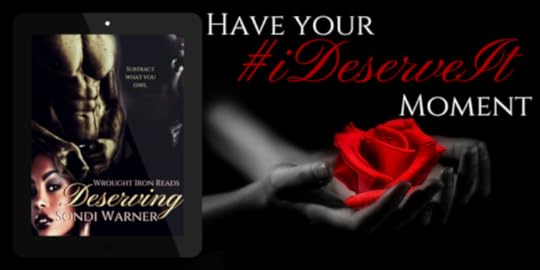
I’m looking for beta readers for my new book #Deserving. If you’re interested in receiving a free ARC copy to give me feedback and write a review, please email me at sondi.warner@gmail.com!
________________________________





February 17, 2016
Watch Out, Type A Writer!

–Sondi Warner, Writer/Blogger for Wrought Iron Reads
You know who you are. (Raises both handz.)
Type A Personality: You feel guilty if you take a minute to relax. You have such big goals that you feel you need to be doing something every second of the day. Everywhere you go and everything you do seems to be in hyper-speed. You walk fast, talk fast and tackle life with high energy, and you can’t do just one thing at a time. If you’re not multitasking, not enough work is getting done. After all, there’s no fun in life if you’re not hitting your targets and winning consistently. You’re a winner, for goodness sake!
And, while folks consider you competitive, aggressive and impatient—like that’s a bad thing—you know in your heart that every accomplishment on your long list of successes came as a result of your great work ethic and willingness to do whatever it took to come out on top.
Working every minute of the day, multitasking and getting things done as quickly and efficiently as possible are just some of the “perks” of the job for indie authors. Most of us don’t have a team of people helping us bring our story together and get it on the market. I’ve encountered friends who do everything from the writing and editing, to book cover design and trailers, and once their books are together, there’s still the work of marketing and promoting it.
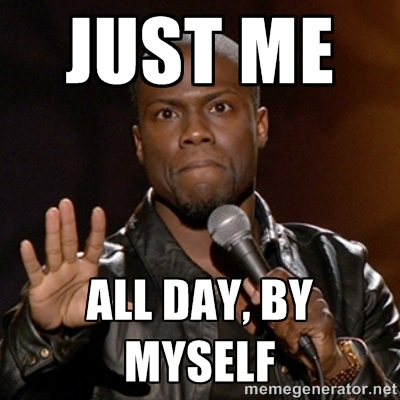 One writer, by myself.
Of course, we want our books to sell big, and having awards and other bestselling titles helps. So, even if you’re not a Type A personality, you may exhibit some Type A traits while trying to make it as a writer. Here’s where you need to watch out.
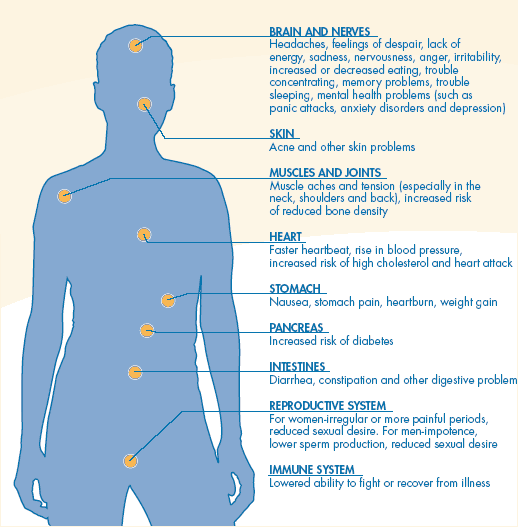
“Burnout is a state of emotional, mental, and physical exhaustion caused by excessive and prolonged stress. It occurs when you feel overwhelmed and unable to meet constant demands.” –HelpGuide.org
Burnout creeps in stealthily over time. It happens when writers feel overworked and undervalued. Risk factors include being underpaid, not receiving recognition for hard work, having too many responsibilities and being expected to be many things to many people. In short, this is the life most of us live, but not all of us experience burnout. Because other factors that contribute include our outlook on life and having a strong support system from friends and family.
When we’re overworked, we may not eat well or we get little sleep. Eventually this leads to frequent exhaustion, lowered immunity and frequent aches and pains. And, if we’re not careful, the worst effects of burnout are lack of motivation and withdrawing from responsibilities. When you show up late to work or procrastinate, it’s kind of tough to be at your best.
 Author: Gdudycha, Wikimedia Commons
There are things you can do to prevent burnout, even if you can’t necessarily lighten your workload.
Kick Burnout
Get up. Get breakfast. Get your blood sugar regulated.
Before you get to work, do some relaxing. Making relaxation a part of your schedule means it’s more likely to get done. Try yoga or journal writing, and make it a daily routine.
Don’t forget the basics. Your body may be a machine, but even machines require maintenance. Eat well and exercise regularly.
Don’t freak out. When you feel yourself getting overwhelmed, take a step back from work. It’ll be there when you get back to it.
Talk to friends and family. They may have no idea how much you have on your plate. Your support network is there for your benefit. If you need help with home life to make work easier, just ask. Take a night out with your friends and have some fun to repay the favor. It’s a win-win.
Give yourself a clock-out time. Most of us run and run until our bodies quit on us. It’s much healthier to know your limits and quit while you’re ahead.
In our highly connected world, it’s great to set aside time for no cellphones, tablets or laptops and get back to reality. You know what? You can do it now. ;) Happy Not Writing!



February 16, 2016
Yes, You Can Tell the Truth in Your Writing
–Sondi Warner, Writer/Blogger for Wrought Iron Reads
I heard authenticity in writing comes when you write what you know. Here’s another quote from American playwright David Mamet: “When you sit down to write, tell the truth from one moment to the next and see where it takes you.” It seems a straightforward method, but there are so many ways to sanitize our truths that you have to ask yourself, “Am I being honest?”
In fiction, we’re building worlds—painting fantasy from thin air or expounding on this green marble place we call reality—and we have control over which elements we show our reader. Do we talk about the weather? Do we keep it gritty—blood, farts and bullshit included? Do we write our same three best friends into every story because that’s what we know? (I’m looking at you, Seth, James and Jay.)
The truth according to Seth Rogen.
However the magic happens, as writers, we make the rules, and we try to stick to them. That’s one version of truth. For example, if people can fly in our book, then nobody bats an eye at the girl jumping off the building and coasting away on angel’s wings. And, when it comes to real world facts, we don’t try to fudge them. The Eiffel Tower is in Paris, so we don’t stick it in Bermuda. But let’s talk individual truths and “keeping it real.” Like politics or religion. The truths we keep a secret because they’re too hard to expose. The scary stuff.
Most writers try to keep it “real” without ruffling feathers or exposing their darkest inner thoughts because anyone with a head on his shoulders knows you can’t afford to offend the market. But, that’s not quite true. Writers who think like that are missing the nuance of how being brutally honest can take a good story to greatness.
.@anakocovic21 Maybe because gay people just look like… people?
— J.K. Rowling (@jk_rowling) March 24, 2015
 Controversy in a kid book? Level: Pro.
J.K. Rowling’s Harry Potter series was about a kid shoved in a closet by his unloving relatives, already a subject usually handled with care. But for kicks, she added a homosexual school administrator, some magicism (hate against Muggles), a dirty love triangle where the “good guy” doesn’t quite get the girl, and a mega-bunch of other details you wouldn’t ordinarily expect in books that were written essentially for middle grade and young adult readers.
Then there’s George R. R. Martin, considered a modern-day Tolkien. He’s no stranger to writing the truths people find uncomfortable. In his Game of Thrones series, Martin came under fire for scenes depicting violence against women, and in his defense Martin explained:
“[I]f you’re going to write about war, and you just want to include all the cool battles and heroes killing a lot of orcs and things like that and you don’t portray [sexual violence], then there’s something fundamentally dishonest about that. Rape, unfortunately, is still a part of war today. It’s not a strong testament to the human race, but I don’t think we should pretend it doesn’t exist.”
Literature is studded with similar success stories of books that explore the facets of human nature we find most unsettling or those that touch us in a gentler way with the same hard, thought provoking truths.
In my new book, Deserving, I tackled some of this. I wanted to write a compelling love story about a couple that was falling apart, because often in romance novels we get the sunny-side up version of being in love, and I think “not quite perfect” is a better way to describe most marriages and relationships. Juxtaposed against that backdrop, I wanted to tell the story of “the one that got away.”
 What I ended up with when I paired the two narratives was this complex menage a trois tale of Matteo and Angelina Fuentes who—in order to add spice to their failing marriage—hook up with Angelina’s high school crush, Kristi. Truth is, lots of everyday couples do some eyebrow raising things to stay connected. Also, just about every one of us loves our partner to pieces but still kinda miss the one that got away.
 March 2016
Of course, that’s not the only controversial thing going on in the book. The harder writing came when talking about wealth disparities, life for a single mom, the good, bad and ugly of raising a child with autism. I told my truth, but I tried mightily to tell more than that: The part of the narration that belongs to the characters and not the writer. I told their truth.
Take a look at the humility Kristi had to exhibit in this scene:
She dropped her head. “Sir, I need a job,” she said quietly. Matteo gently tugged the folder from her limp grasp and flipped it open. His brown eyes scanned the resume, and he sighed, handing it back. She had major gaps in her work history, and when she had been working, they were short stents.
“I hate to say it, but you’re simply not qualified for a managerial position. I appreciate you taking the time to come down here to personally let me know your concerns. We at Fuentes Affordable Housing have a mission to improve and respect our communities, and, I assure you, the matter will be resolved as quickly as possible. Now, as for work…Do you know your way around a mop and broom?”
“I…Yes.” She swallowed. “I’m a single mom. Of course I know how to clean.”
Yet, despite her humility, the reader is allowed a sense she begrudgingly accepts her lower position because she’s a desperate single mother in need of a job, and she’ll take anything she can get. There’s an ugly kernel of truth in that.
Perhaps, as Mamet recommends, if we take it from one scene to the next, the truth won’t be too overwhelming to tell. So, the next time you sit down to work on your story, make sure you’re ready to be brutally honest. Don’t worry about ruffling feathers. Birds can’t read. :)
Read. Write. Be. Entertained.



February 15, 2016
Back to the Books!
–Sondi Warner, Writer/Blogger for Wrought Iron Reads

Different is good.
While the rest of the world went about business as usual last week, down here in southeast Louisiana it was Mardi Gras season, and at Wrought Iron Reads we zapped off the computers, abandoned our cubicles and classrooms and paraded out to the party!
Where I’m located in Baton Rouge, there was a snark snafu when the Spanish Town parade organizers allowed tongue-in-cheek floats mocking the #BlackLivesMatter movement with #PinkLivesMatter against a backdrop of a flamingo being beat with a police baton. There was also apparently a float that stated “Rape is surprise sex.” (Really, Louisiana? Really?!) The less than appropriate slogans made a few ripples in the news but were largely ignored. I considered it a reminder that one man’s funny might be another man’s battle cry.

#PinkLivesMatter
Tasteless jokes aside, it was another successful purple, gold and green celebration throughout the region, and the week of revelry and ribald fun ended on a sweet note with Valentine’s Day. I’m guessing not too many folks gave up chocolate for Lent this year. Thanks, Calendar!
But now that the shenanigans are over, we’re back to the books. Yesterday on our homepage, as well as on FB and Twitter, we did the Cover Reveal for *drumroll, please!* Deserving. I’m pleased to announce Wrought Iron Reads is back on track with new books slated for release in the next few months, and first up is from yours truly! So while I continue giving you tips, tricks and hints for how to slam dunk your indie author career, I’ll also share with you my personal journey with a new title.
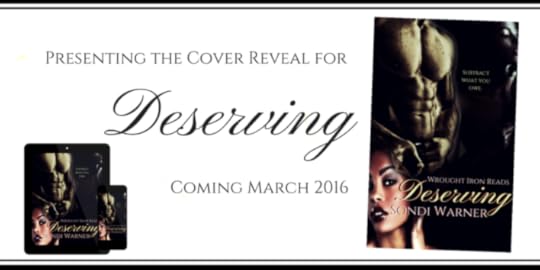
#GetWhatYouDeserve
Thinking on the Spanish Town parade drama and my own new book, controversy is the spice of life. While the parade had an air of exclusion—taking jabs at disenfranchised groups—Deserving is an interracial romance packed with a lagniappe mix of diversity. From a black woman married to a Latino man, to a single mom raising an autistic child, to a white character interested in our black female lead, to a polyamorous relationship, this gumbo had a little of this and that for every reader.
While writing the book, I wondered if it was too farfetched to present a world where people of such different backgrounds mingled indiscriminately. (Um, like in real life.) Sure, I know the current movement for diverse books and writers is a huge one. In fact, I wrote an article about it here. But, in this industry, there are rules, such as:
“Urban” books are a niche market, and books with black main characters should probably fall into that category.
Readers really hate reading about people having an affair in a romance novel.
LGBT books are a niche market, and anything non-heterosexual should probably fall into that category.
This round, I think I’ve managed to break every rule. Yay, me! Only time will tell if this book is well received. However, if some fans feel it’s okay in life to break social etiquette rules to foster an us vs. them theme, then I know there are readers who will agree to ditching the rules to show there’s no us vs. them. There is only humanity…and what humans do with their jiggly parts when no one is watching can be entertaining, regardless of race or sexuality!
So stay tuned to my “Writer People Problems” because I have so much in store for you! If you want to ride along with me as I promote and discuss my new book, you should go over and LIKE my author page on Facebook. And don’t forget: Read. Write. Be. Entertained. Because life’s too short for bad books.
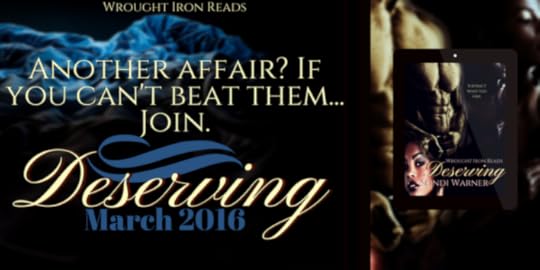
Who says an affair has to be a bad thing?



February 10, 2016
Don’t Write “Bullshit”
Here’s a flashback we hope you enjoy! Did you do much partying for Mardi Gras? Tell us in the comments below. :) And, stay tuned to our “Writer People Problems” to see the Feb. 14th Cover Reveal! –Sondi

Quick! Tell me something beautiful, deep and profound! Did it sound anything like, “To go along the path is to become one with it”? String together meaningless buzzwords, but retain the syntactic structure of a sensible statement, and some people will tell you that’s deep. According to Ph.D candidate Gordon Pennycook, that’s bullshit.
Pennycook, the author of “The Reception and Detection of Pseudo-profound Bullshit”—yep, a real academic paper that swears—presented 300 test subjects with randomly generated meaningless phrases to rate the profundity. Turns out 27 percent of subjects felt the nonsensical statements were “profound” or “very profound.”
Not surprisingly, Pennycook determined those who were more inclined to call bullshit statements profound were “less reflective, lower in cognitive ability…and more prone to…conspiratorial ideation.”
 Now, that’s deep…Or, is it?
But what about those who write this pseudo-profound crap? Iflscience.com broke down what the authors of the research consider bullshit, such as…
View original post 496 more words


February 8, 2016
Throw Me Sum’n, Mista! WIR New Release Soon
–Sondi Warner, Writer/Blogger for Wrought Iron Reads

With Mardi Gras season in full swing, we’re taking a short break to enjoy the parade routes and yell, “Throw me sum’n, mista!” By the way, we’ve got also got something to throw your way. It’s been several months since Wrought Iron Reads put out a new title, and we had a disappointing scheduling snafu that nullified all slated releases announced in November and December 2015. Now, we’re back on track and pleased to announce Deserving by yours truly, Wrought Iron Reads author, Sondi Warner! Are you ready for a cover reveal? Look for it on February 14th! Have a safe and happy Mardi Gras.


February 4, 2016
Get More Reviews: A Comprehensive Playbook

–Sondi Warner, Writer/Blogger for Wrought Iron Reads
When I became an indie author, I knew I needed to have a marketing plan in place to reach as many readers as possible, but none of my lofty “become a bestseller” ideas included leveraging the power of reviews. Whether reviews make much of a difference is debatable, but I still see many writers struggling to get those stars.
So, I did what I do best. I researched and pulled together this Review Touchdowns Playbook. See what plays are your strongest and where you might need to brush up on your A-game.
Pre-Game
 The game starts way before the game starts.
Make sure you develop a robust author platform to get the most out of these tips.
Rookie:
Your star players are your beta readers. Draft your team by asking your closest friends to read first, with the understanding that everyone won’t give a firm yes. If you have to resort to begging, then the interest just may not be there, and you shouldn’t force the issue.
Provide them a copy of your book in whatever format is best for their busy schedule. You can get Calibre for free to quickly and easily convert your file to a PDF for computer readers or EPUB or Mobi for friends who primarily use their phones for reading.
Check in periodically and don’t forget to tell them when the book goes live so they can post their reviews.
Level Up:
Use social media to find book lovers interested in getting a free read. Ask for email addresses to send them the file and a follow-up reminder to review the book when it goes live.
Put up flyers in your home town recruiting beta readers. Get a free QR Code here and apply it to your flyer to give anyone who sees the fastest route to your website or sign-up form. Again, collecting email addresses upfront gives you a way to send them the file and follow up.
Expert:
Do all of the above, plus…
Send out review requests to book blogs and BookTubers. Keep in mind, you’ll want to provide more than basic information about your book to entice reviewers to give it a chance. These lovely reviewers receive a LOT of requests, and to stand out from the crowd, you need to: Give a synopsis, book blurb, word count, genre and links where the book is available or a publication date if you haven’t yet published. Any other information the blogger asks for should also be provided, so do your homework.
Want a directory of book review blogs for indie authors? Try the Indie View.
Game Time
 Be ready to make the winning plays.
If the feedback you’ve received from readers isn’t as positive as you had hoped, you may want to reconsider hitting the publish button and do some rewrites and edits where necessary.
Rookie:
Place a “Review Me!” request in the front of your book reminding readers to review once they’re done reading. Sometimes a simple reminder is all it takes since most of us aren’t primed to rate things we use regularly. When was the last time you left a review for your favorite toothpaste or coffee brand?
Place a link to a sign-up form for your newsletter or blog. Anyone who signs up can be sent an email reminder to review your book, and you can tell them about other books you already have or that will soon be available.
Level Up:
Link up with fellow author buddies and bloggers to do author interviews to put a face to the byline. Foster a personal connection with your readers, and make sure to explain how much getting a review means to you and how you use such feedback to write better stories.
Learn the power of free. Use giveaways to reach readers willing to try you out but not willing to risk losing money. You can’t force everyone who gets a free copy to review, but you can add the request for reviews in your advertisement about the free book. Your ad might look something like this:
Expert:
Do the above, plus…
Provide thought-provoking questions at the end of your book to encourage book clubs to select your title. Instead of getting one review, you get plenty!
Check out Amazon’s top reviewers. Pick a Top Reviewer, go to their Amazon profile and see what books they’ve reviewed. Is your book similar to books they’ve reviewed? Use the contact info provided to send them a message and find out if they accept unsolicited pitches. Back away if they don’t. If they do, provide a professional pitch, including a free copy of your book. Getting a Top Reviewer to review your book can potentially increase your review count by 25%.
Post-Game
 Winners know the game never stops.
Your work isn’t done just because you’ve hit publish.
Rookie: When the reviews start rolling in, say thanks. Post a thank you note across social media and on your website. For the friends and family members who reviewed your work, thank them directly, face-to-face when possible. Nothing like a chest bump after a good game.
Level Up: Thank your reviewers and recognize them personally. Post excerpts from your reviews across social media and on your website. This can encourage others to follow the example.
Expert: Provide an incentive. Include an “If, then…” page at the end of your book. For instance, “If I get 100 reviews, then I’ll release a free book on my site!” Or, “If I get 25 reviews, then I’ll host a live Periscope Meet & Greet!” This gives readers something to look forward to after posting a review.
Feel like you’re ready to put your book in the game? Leave a comment below. Tell me which plays you use or what works for you. #BookReviewPlays


February 3, 2016
Are You Ready to Go Viral?
–Sondi Warner, Writer/Blogger for Wrought Iron Reads

You already have everything you need to make your awesomely written, professionally edited book with a super fresh cover go viral.* You just need to know the number: Dunbar’s number, 150.
“[A] hundred and fifty, is the number of people we call casual friends—the people, say, you’d invite to a large party…The next step down, fifty, is the number of people we call close friends—perhaps the people you’d invite to a group dinner…Then there’s the circle of fifteen: the friends that you can turn to for sympathy when you need it, the ones you can confide in about most things. The most intimate Dunbar number, five, is your close support group. These are your best friends (and often family members).”
Make your list. Know your people.
 Looking for friends.
Who are the 150 people you can email, DM, inbox, Snapchat, text message or talk to them face to face, asking them to read at least a portion of your new book? Give it to them for free. Encourage them to only read the whole book if it really grips them within the first few pages. (Make sure you’ve written a book that delivers that gripping start.) Ask them to post about the reading experience on their preferred social media site.
All 150 of your circle will not read your book. Most won’t even respond to your message. That’s okay.
You just need 50 close friends to talk about your book in the weeks leading up to going live. Know your people. They have no idea what you need unless you paint the picture, so ask them directly to post, share and spread the news about your upcoming book. Most will be glad to do this for you. You’re not hitting their pockets or taking up too much of their time.
 Squad goals.
If you get 15 well-written, honest reviews from your super supportive inner circle on the very first day you launch your book, this will increase your visibility. You will have to ask for this. Your friends are too busy to keep track of exactly what day you plan to launch, so give them a heads up and shoot them a link to make it easier for them to reach the review platform.
Make sure to pair this with a limited time FREE offer of your book to reap the word of mouth benefits your 50 close friends sowed leading up to release. You and your close friends should put out the word the book is available for FREE.
 Who’s in your number 5?
Now, ask your 5 closest friends to get your FREE book the day it goes live. That gives you 5 “Verified Buyers” who can review your book and have a greater likelihood of not getting their reviews lost in Amazon’s confusing review jungle. You might also see a huge jump into the Top 100, especially if your particular niche has few contenders (i.e., your book is in the Multicultural Time Traveler category.)
Those are the numbers, and now you know the people you need to reach to help you get your book off the ground. While your family and friends are not your customers, they are your supporters. Leverage that support to your advantage and be sure to show your appreciation. You might even consider adding an acknowledgments page to your book to thank your 150 personally.
Of course, if you want to reach as many readers as possible, then the strategies above can be combined with an intense marketing plan to make your 150 use their 150 to spread the word. Are you ready to go viral?
Mashable Explains Virality
*Highly viral books are well-written & professionally edited with high quality cover art.


February 2, 2016
The 5-Phase Self Edit
–Sondi Warner, Writer/Blogger for Wrought Iron Reads

You’re an indie author on a tight budget, and words like “hire an editor” make you cringe. Sure, you’d hire an editor if you had that kind of money. Since you don’t, you’re stuck squinting at the computer, hunting for errors in your perfect writing and having a hard time finding many.
"When you're writing, you go exploring. Editing is hunting instead of exploring." BRILLIANT from @amrycroftwriter https://t.co/1PwbBVEqbb
— Sondi Warner (@WIRUniverse) January 28, 2016
Although you may have encountered line editors who charge whopping rates, there are in fact editors who are willing to work with you to achieve a reasonable middle ground. You might also consider breaking your project up into smaller, more affordable chunks. Holding off on hitting publish isn’t the worst thing. It’s much worse to publish too quickly and get Amazon’s glaring “This book is riddled with errors” message. Worse, yet, to read a review that slams you for saying ‘here’ when you meant ‘her.’
The following is for writers with absolutely no money for an editor and no likelihood of raising money for an editor (as well as writers who want to present the best book forward when querying agents or submitting to publications and competitions.) For the budget impaired, there is a way to DIY, but it will take time, and you better be ready to check your ego at the door. Ready? Here goes:
Phase One: Put it away. Bryan Klems of The Writer’s Den from Writer’s Digest suggests, “Put it away for three weeks and then reread, making notes on its strengths and weaknesses, asking yourself what’s missing, and flagging places where you find yourself skimming. Then rewrite the manuscript at least once—twice is better.”
 Tears? There’s no crying in editing!
Phase Two: Don’t cry. Put it away like I said, rewrite like Bryan said, and then put it away again. Has it been another 3 weeks? Okay, now you’re ready to start editing. Told you this would take time.
Phase Three: Get some tools. This list from TheWritelife.com gives you some options to choose from. This is not your final step. This is like your ego slayer. At this point in life, you still feel your book is perfect. That’s okay. We all do, but it’s not.
Phase Four: After you’ve run your manuscript through your tool of choice, use Track Changes and make the appropriate corrections. Then, you need to do another read-through to check for any plot inconsistencies, dialogue problems, underdeveloped characters, etc. Here’s an idea of the kinds of questions you need to answer:
Is your heroine likeable? Does your hero make a believable transformation from beginning to end of the book?
What are the strengths and weaknesses of the plot? Are there any inconsistencies?
Do the facts check out? Is the weather in Zanzibar in December like you described it? How long does it take to drive from Los Angeles to Seattle?
Phase Five: After you’ve worked on consistency, plot and character development, print out a copy of your book and read it out loud. Sometimes hearing the words makes us look at them differently. Another tip is to edit line by line, using a blank page on top of your manuscript to hone in on fine details. Make notes in the margins to correct later.
When you’re done with these five phases, if you haven’t rewritten your book around five times, then you probably skipped a few steps, which you can’t afford to do. Invest this time into your book, and I guarantee you’ll transform your writing and boost the amount of positive feedback you get.
 Selfie of self-editing accomplishment. :)
Tell me your self-editing tips in the comment section below or hit me up on Twitter @WIRUniverse, #iEditMe!