
Adrian Collins's Blog, page 180
March 30, 2021
REVIEW: Zack Snyder’s Justice League
Zack Snyder’s Justice League is a film that I was approaching with mixed feelings. The DC Cinematic Universe has a reputation as something of a train wreck. Both Batman vs. Superman and Justice League‘s original cuts were considered to be terrible by a lot of fans. This was after the mixed reception that Man of Steel, Suicide Squad, and Birds of Prey got. While Wonder Woman and Shazam got good receptions, they were entirely removed from the rest of the DC Universe.
The story of the Snyder cut is a fascinating and tragic one. Zack Snyder having to stop his production of his version due to the suicide of his daughter. Joss Whedon proceeded to take over the film and made what was apparently 4 hours of footage into a single 2 hour movie with a number of new scenes that ramped up the humor. The result was, honestly, a disaster and came off like a poor man’s version of Joss’ The Avengers.
What happened next is what’s unique and possibly aided by the fact that a lot of us had way too much free time on our hands for a while. But a lot of fans heard about a “Snyder Cut” and demanded the chance to see it. It took on an almost mythical quality online and with the failure of Justice League’s theatrical version, people increasingly put out pressure for its release. Zack Snyder was given 70 million dollars to complete special effects and pay residuals to actors for a release of Zack Snyder’s Justice League.
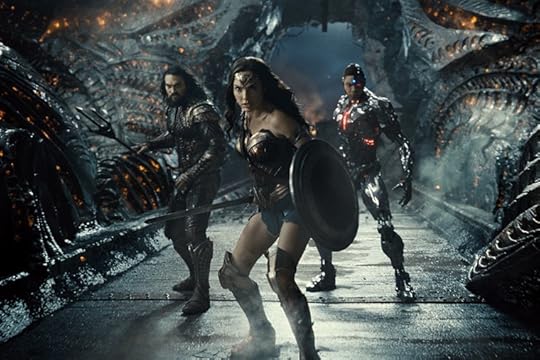
The results are impressive. What is easily one of the biggest reversals of quality in a cut since Blade Runner. I unironically say that I am not a Snyder fan, but this movie is fantastic. Perhaps lowered expectations is affecting my judgement or the fact that it is basically two movies shown back to back (with multiple chapter breaks). There’s no way this could be released in theaters.
The biggest improvements I found in Zack Snyder’s Justice League are that there’s an impressive number of character arcs and development scenes that make the movie feel more grounded. Cyborg has an entire storyline that was removed which was a crying shame. Here he’s shown from his origins, what he does with his powers, and his resentment toward his father that is both fair as well as unfair. Silas Stone (Joe Morton) and Victor Stone (Ray Fisher) both do magnificent jobs and I almost regret this isn’t a full Cyborg movie.
The special effects are also strongly improved with the infamous “Superman mustache” CGI having been corrected, presumably with Henry Cavill’s help, so that nothing looks embarrassing anymore. The characters are overall more serious too with only a few of the original jokes left in. The Flash doesn’t have his moment of self-doubt where he needs Batman to coach him to rescue people and that’s a shame but I only missed it as well as the “Wonder Woman is so hot” confession via the lasso of truth. Virtually every other scene is improved and the characters feel more like the heroes they were meant to be.

Oddly, perhaps the character most improved by the release of Zack Snyder’s Justice League is Steppenwolf. A one-dimensional world-conquering tyrant that felt like Mongul copying Thanos copying Darkseid is made into a three-dimensional character. He’s still a world-conquering tyrant but making him a homesick flunkie trying to appease Darkseid gives him some depth. We also get moments with Desaad and Darkseid that hint to a larger Fourth World cosmology. The special effects for him are also much better done and we get more of the original actor’s performance.
I’m actually disappointed that we’re not getting a larger Snyderverse out of this. Retroactively, this makes both Man of Steel and Superman vs. Batman better movies. I don’t agree with all of the choices like introducing the Martian Manhunter to do nothing with him and killing Superman in his second movie but I can see what everything was building toward. Even Jared Leto, who I loathed as the Joker in Suicide Squad, gives a pretty damn good performance in the epilogue.
This never would have worked in theaters but as people trapped in our houses by a plague, it’s certainly something I’m glad I have to watch and I encourage people to give it a shot. It’s really two movies in one and I wish it had been Justice League part 1 and part 2 officially but as a course correction you can’t do much better.
The post REVIEW: Zack Snyder’s Justice League appeared first on Grimdark Magazine.


March 29, 2021
REVIEW: The Shadow of the Gods by John Gwynne
I received an uncorrected proof copy of The Shadow of the Gods in exchange for an honest review. Thank you to John Gwynne and Orbit Books.
The Shadow of the Gods is a gritty and violent Norse mythology-inspired tale that features monsters, magic, vengeance, warbands, and shield walls. It takes place approximately 300-years after the Gods of Vigrið fought and battled themselves to annihilation and follows three distinct point of view perspectives as they traverse Gwynne’s well-realised dark fantasy world.
 These characters are Orka, an ex-warrior who lives with her husband and son at a quiet steading, Varg, a thrall who is running to escape his slave masters, and Elvar, a young warrior who is trying to find battle fame with the monster hunting warband the Battle-Grim. They all have deep and interesting pasts of which we are given more details of as the story progresses. Through the eyes of these characters, I was engrossed from the very first chapter and by about the fourth chapter I was chuffed to see that Gwynne had worked his magic again.
Gwynne has crafted a fresh and unique fantasy world and adventure that I’d summarise as a mixture of some of the finest elements from Norse Mythology and Bernard Cornwell’s The Last Kingdom novels. (There are a few people who get called “arselings” as homage to Leofric I imagine and warriors in this world wish to die with a weapon in their hand.) It features The Witcher-esque monsters and heartwarming friendships and camaraderie that I also adored in Gwynne’s The Faithful and the Fallen series. It seems like Gwynne went into writing this series with big ambitions and wasn’t going to hold back on his vision. This world is as majestic as it is haunting, as macabre as it is beautiful. An example is that one of Vigrið’s main cities is in the skull of a dead god. The imagery throughout is phenomenal.
The Shadow of the Gods has dozens of excellent set pieces, standout moments, action segments, skirmishes, and showdowns. So often I finished a chapter with a cheesy grin knowing that something awesome had just happened and imagining how epic a live-action version of these scenes would be. Gwynne is one of the best in the fantasy game at writing thrilling fighting and brutal action moments.
For a 500-page novel, there is a huge cast of characters. The three main protagonists are all great to follow but I did find myself most excited when returning to Orka’s storyline. I think this is probably due to Orka’s arc being more precise and classic fantasy than Varg’s and Elvar’s who both find themselves as members of warbands. In the warbands, there is a wide mix of players from varying backgrounds, cultures, and skillsets. Einar Half-Troll, Rokia, and Grend were really fine supporting characters and some of the banter and humour is witty and wry. When we returned to one of the warband-focused point of views, I will admit that I sometimes had to refamiliarise myself with the crew of each faction and what they’d been up to during their last chapter as their missions and objectives were similar occasionally. Also worth mentioning, a nice touch that I really enjoyed was when one of the characters would mention another person the reader is familiar with from another story arc, fitting another piece in the puzzle of how the storylines may be interconnected.
So, why am I only giving The Shadow of the Gods four-stars? Without a doubt, The Shadow of the Gods was my most anticipated read of the year and all the reviewers I trust have given it glowing five-star reviews. Gwynne is one of my favourite authors and I think all of the aforementioned are reasons that I overhyped it to myself. It’s an excellent start to what I have no doubt will be a stunning and fresh fantasy saga. I awarded Malice and A Time of Dread four-stars each too and ended up adoring those series. In my mind, I expected the world’s most phenomenal fantasy standalone novel and on that front, it doesn’t quite deliver. That being said, the endings are fantastic, the set-up for the next novel is intriguing, there may be animal or monster companions(!), it’s an addictive read, and, knowing Gwynne’s previous work, I think every book in the series will build on these fine foundations to a conclusion of epic, possibly world-shattering proportions. Gwynne’s a talented wordsmith and the next tale in The Bloodsworn Saga will probably be my most anticipated read of the year when that’s released too. If you haven’t read any of Gwynne’s books yet, The Shadow of the Gods might be the best place to start.
When searching for the main image for this review I came across an article about the amazing cover’s creation by the artist Marcus Whinney which you can see here. I implore you to check it out.
Read The Shadow of the Gods by John Gwynne
The post REVIEW: The Shadow of the Gods by John Gwynne appeared first on Grimdark Magazine.
March 28, 2021
REVIEW: Knight and Shadow by Flint Maxwell
Reading Flint Maxwell’s Knight and Shadow feels like you are reading and paying homage to the wonderful storytelling of Steven King and the classic fantasy hero story. Knight and Shadow is the story of a badass gun knight and a young boy on a quest to find him.
 The story begins with Ansen Kane going under the name Crowne – A brooding and a melancholy man hiding out in anonymity in what amounts to the old west. Kane, sitting and playing cards and minding his own business, is accosted by three bounty hunters looking for him. Kane wants none of it.
“His left hand brought the whiskey up to his lips once more, while the right hand rested on the butt of his own weapon, just beneath his long, leather coat. But his revolver was bit scavenged, nor did it come from the Long Ago. His revolver was forged in the fires of Wolfscar Volcano and was as deadly as the magic that leaked from within its chasm.”
Kane, “still as a stone,” evaluates the situation. The bounty hunters are typical bullies, Veiled threats, aggression, and bravado. “Kane’s face remained impassive. His fingers continued to hover over the revolver beneath his coat.”
You get the drift here… Knight and Shadow is classic western storytelling. Tension and bravado. Bad guys and misunderstood heroes. On the hand and another side of the continent, we have 17 years old Isaac milking his cow Carmen on his birthday. When a boy turns 17, he becomes a man. Isaac is celebrating this achievement with his mother. All he wants for his birthday is a riffle, something to hunt with, but deep down, he wants something worthy of the legendary gun knights. Gun knights that have been hunted down to extinction.
These two narratives, thousands of miles apart and utterly different in tone, come slamming together throughout the fascinating story. You like Ansen Kane as a character. He has morals, but his life is a series of gray choices. You like Isaac naivete and optimism, but you aren’t annoyed by it as a reader. Both characters develop and change throughout the story and culminate into some exhilarating action and outcome.
Knight and Shadow is a great read and worthy of its status as a SPFBO5 semi-finalist. I recommend it to anyone who loves westerns with a fantasy overtone.
Originally published on BeforeWeGoBlog.
Read Knight and Shadow by Flint Maxwell
The post REVIEW: Knight and Shadow by Flint Maxwell appeared first on Grimdark Magazine.
March 27, 2021
REVIEW: Deep Blue by David Niall Wilson
One of the most famous stories of music is the legend of Robert Johnson, blues player who supposedly sold his soul to the Devil at the crossroads for supernatural skill at his chosen craft. I’ve always been fascinated by that story and appreciate when horror books or shows reference it. Whether it’s Supernatural’s “Crossroad Blues” or Devil at the Crossroads.
 Deep Blue by David Niall Wilson is an interesting take on the classic legend. Brandt is a poor excuse for a blues guitarist and singer. How bad are his prospects? Well, the fact he’s a blues guitarist working out of a crappy small California town rather than trying to make it New Orleans should tell you everything you need to know. However, a chance encounter with a black man named Wally gives him the abilities he’s always craved. The power to channel emotion through his music so intense and powerful that he doesn’t need to go to his genre’s audience, its audience will find him.
It’s an unconventional horror novel that deals with the power of music and its relationship to pain. There’s no monster that runs out and starts stabbing people but a more cerebral take on spiritual corruption that comes with being able to touch something man was not meant to know. David Niall Wilson has a powerful grasp of the word and he is able to invoke just what the music makes Brandt, as well as the audience, feel.
Truth be told, Brandt didn’t need the Devil to push him into Hell since he doesn’t have far to fall. He’s lazy, drunk, and blames circumstance rather than his lack of effort. He treats the female member like garbage (due to the fact he lusts after her–charming guy). In a way, his “gift” gives him empathy as he learns to channel the pain of others but at a terrible cost that I won’t spoil for you.
Each of the book’s leads has their own issues. All of them are susceptible to the same sorts of temptations and powers that have infested Brandt. Following each of them is an interesting journey and helps give contrast to Brandt. Wilson’s prose is excellent, fluid, melancholy, and lyrical. He manages to bring out the absolute best in his characters even as they slowly succumb to the pain inside them.
Deep Blue is a horror novel that takes some time to get where it’s going. It’s a bit Stephen King-ish. The most evocative moments are not the supernatural but just how genuinely crappy the lives of its characters are because of their personal flaws as well as their inability to rise above them. The part of town they live in is a particularly banal sort of hell but that just makes it all the more believable the forces of evil would choose to sink their claws there. They’re halfway to perdition already.
In conclusion, I really enjoyed Deep Blue and if you’re willing to follow the story, it builds to a powerful climax and I believe horror fans will find it an excellent addition to their collection. I’ve always liked David Niall Wilson’s writing, but this may be his best work yet.
Read Deep Blue by David Niall Wilson
The post REVIEW: Deep Blue by David Niall Wilson appeared first on Grimdark Magazine.
March 26, 2021
REVIEW: Upright Women Wanted by Sarah Gailey
Upright Women Wanted by Sarah Gailey is a queer western with dystopian roots and a whole lot of moxie.
“She wanted that satisfaction. She wanted it for herself wanted it like a half-starved alley-rat watching that table through a window on a bellyaching night. She didn’t know how to get it—but she had a feeling that if she stuck with the Librarians for long enough, she might be able to figure it out. How to feast instead of starving.
How to like the person who she was instead of fighting it.”
 In this future, the State, in combination with religious fanaticism, controls everything you listen to, what you eat, and who you love. Our protagonist, Esther, is the daughter of a high-ranking official who is fleeing her home. Esther’s life was thrown into turmoil when her best friend and lover was hung in front of the town for owning unapproved reading materials. She hides in the back of a wagon of a Librarian with hopes of joining their group. A Librarian travels and provides approved reading materials to the townsfolk of the various frontier communities in their area. Esther hopes for a better life and to be cured of her’ wrongness.” What Esther finds is a group of people who are accepting and very much themselves. They are people who have to hide from the State but in secret live in queer relationships or live as non-binary individuals. Things that Esther did not think even possible.
“When there’s people around that we don’t trust, we let them think we’re the kinds of people who are allowed to exist. And the only kind of Librarian that’s allowed to exist is one who answers to she.”
Upright Women Wanted is a novella-length story, so author Sarah Gailey had to condense a lot of story, nuance, and world-building into few pages. For the most part, Gailey is very successful. They created an engaging story, highlighting critical societal problems that play a pivotal role in the plot and character development. The story is too short to provide you with a backstory on the librarians, though, which I badly wanted considering the depth of character their few lines had and how impactful they are. Bet and Leda are a queer couple in a solid long-term relationship, Cye is non-binary, and Amity rounds out the group but remains a mystery. Gailey could write a full-length novel in this world, and I am here for it. Esther is a good character also and is the most developed, but the other librarians stole the show.
The conflict of the story, aside from Esther’s initial reason for running, is the Damocles hovering over the group from being discovered. If they are found, the consequences will be dire. Instead, the group of librarians works to subvert the system from the inside. From there, the narrative plays out a bit with the Librarians dealing with skirmishes and problems in their line of work.
Upright Women Wanted is a clever book. Clever in wordplay, as in “what is an upright woman? But also creative in style and characterization. Gailey gets what it takes to create an engaging novella, just enough of a story bite that gets the readers hooked, and just enough back story and world-building to understand the setting. It is well done. I loved the characters, and it allows me to use the underutilized word like moxie. Them folks are full of all sorts of moxie, and I loved reading it.
Read Upright Women Wanted by Sarah Gailey
The post REVIEW: Upright Women Wanted by Sarah Gailey appeared first on Grimdark Magazine.
March 25, 2021
REVIEW: Hardwired by Walter Jon Williams
Hardwired by Walter Jon Williams is one of the foundational works of cyberpunk and something that was instrumental for the creation of Mike Pondsmith’s Cyberpunk 2020 (later Cyberpunk 2020) as well as spin-off Cyberpunk 2077 by CD Projekt Red. It is a world where the super-rich Orbitals have defeated the planet Earth’s Grounders and forced crushing unequal treaties upon them that are designed to make them wealthy beyond imagination. What this has done is also create an invisible economy that caters to the new market realities.
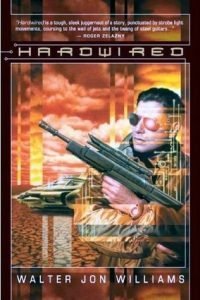 The book is centered around two protagonists: Cowboy and Sarah. Cowboy is a driver of a hover-tank across the badlands of America, delivering high-value items like medicine and other objects that bandits would otherwise seize. He’s of the belief he’s part of a noble resistance to corporate control but is really just another layer of them bleeding the Earthers dry.
Sarah is a prostitute turned assassin who is trying to deal with the fact her junkie brother is not going to survive much longer if they don’t get out of the environment they are in. She thus accepts a job to eliminate one of the Orbitals and upload a virus to their computer access despite how shady it all is. No sooner does she successfully pull off her mission does she find out that she’s now a loose end.
Hardwired will feel familiar to a lot of gamers because it is one of the bases for the “corporate warfare” theme that so many games are based around. The Rock War means that the corporate-controlled Orbitals have already won. What our heroes are fighting for is not to save the world but to simply save themselves. Many of their most effective acts of resistance are actually variants of white collar crime.
The bad guys can’t be overthrown but the system can be damaged and that’s perhaps the best thing that they can ask for. Not to destroy the oppression of the rich Orbitals on the poor Grounders but to throw a wrench in the system. Even that is perhaps too much because our (anti)heroes would gladly let bygones be bygones if not for the fact that they are hunted like animals. It’s a matter of survival and a cornered animal is at its most dangerous.
There’s a certain level of familiarity with this material that seasoned cyberpunk fans will find derivative: the evil megacorps, plucky antiheroes, weird cybernetic enhancements, and more. However, that’s because this is the book they’re all copying. This is a book that was written in the Eighties and is not given nearly the amount of attention it derives. It’s a classic of the genre but often overshadowed by Neuromancer and Blade Runner for its influences. Really, it’s a shame this has never been adapted to a movie or series.
In conclusion, I strongly recommend this book and think this is best treated as a one and done. It is technically a part of a series but this is a self-contained story that can be enjoyed on its own merits. The ending is perhaps a bit too happy but there’s significant cost to everyone and what victory that is achieved is done by being dirtier bastards than everyone else. The world moves on and it’s questionable whether it’s better or worse for what’s happened.
Read Hardwired by Walter Jon Williams
The post REVIEW: Hardwired by Walter Jon Williams appeared first on Grimdark Magazine.
March 24, 2021
REVIEW: The Tangleroot Palace by Marjorie Liu
The Tangleroot Palace is the new, debut short story collection from multi-award winning author Marjorie Liu, who is best know for her Monstress graphic novel series. It comprises six short stories and a novella, all of which are beautifully written, deeply engaging, and full of wonder and strong female characters. In “Sympathy for Bones,” a young voodoo magic apprentice challenges her mentor. In “The Briar and the Rose” two lovers team up against a witch who wants to rule a kingdom. “Call Her Savage” is an alternative history that pits a woman and her former childhood friend and lover against each other to save the Chinese Empire from the British. In “The Last Dignity of Man,” a megalomaniac scientist meets a man who is down on his luck and unwittingly hands over the horrors of his experiment to government. In “Where the Heart Lives” a poor young woman is adopted by a kind woman and her mute helper, and must learn about love to gain her freedom from a witch. “After the Blood” is a postapocalyptic tale about a mutated couple trying to save themselves and their family from a plague of zombies. And the novella, “The Tangleroot Palace,” features a young princess who runs away from her home to avoid marrying a warlord only to get trapped in the Tangleroot Forest with a witch. All of the stories feature empathetic characters and high conflict, which will keep you turning the pages until the end.
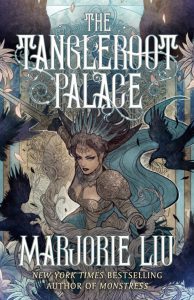 Perhaps the phrase “beautiful prose” is a bit overused and vague, but it is definitely applicable here, not because the language is flowery or “poetic” but because it vivid and concrete. In all of these stories, Liu takes readers somewhere new and strange and fully immerses them in stories deeply imbued with the old fashioned sense of wonder that is so fundamental not just to fantasy escapism but also to bringing imagination to life and showing old things in new ways. This is especially evident when Liu brings the reader into the woods in “Where the Heart Lives,” “After the Blood,” and “The Tangleroot Palace.” “The woods are lovely, dark, and deep” as the poet Robert Frost wrote, and Liu brings that darkness and depth alive, but the woods here are not lovely—they are strange and forbidding, full of mysterious horrors that await the unwitting adventurer. I am reminded of the stunning, World Fantasy Award-winning novel Mythago Wood by Robert Holdstock in these portrayals of mysterious and terrifying forests. Like Holdstock, Lui brings the woods to life with lively details that evoke mood and emotion rather than trying to tell readers what they should feel.
Liu brings her characters to life similarly with detail and story, showing us complex individuals in crises and allowing the characters to drive the conflicts rather than the other way around. Characters like the Duelist in “The Briar and Rose,” a woman who looks like man and finds that only love can release her from a life of death, challenge readers by showing them something new, even if it comes from the tales of old. Alexander in “The Last Dignity of Man,” makes us question the relative values of ambition and love. In the titular novella, Sally, the young princess, must find love despite the stories that are told of her lover. She is the epitome of adolescent rebellion until love shows it is more powerful than the stories. Amanda in “After the Blood,” tests our perceptions of love and forgiveness. If you think a lot of this is about love, you are correct, but my favorite character in The Tangleroot Palace, is Amanda’s lover Henry, a mutated zombie who lives by ingesting blood, often doing so by simply tearing the throat out of his victim with his teeth. He, too, must re-find love, both for Amanda and for his family.
Love, its challenges and its power, is a very strong theme here, but another theme is the power of story, which is predominant not only in the novella, but in the other stories as well, particularly in “The Briar and the Rose,” which shows us how stories bring wisdom, but also pain. “The Briar and the Rose,” is loosely based on the “Sleeping Beauty” fairy tale. In it the Duelist goes in search of stories to find wisdom, but eventually finds love is even more powerful. And after her crisis is resolved as best it can be, her story and the stories in which it is embedded live on in merchants’ tales and other stories of the kind she once sought.
But is it Grimdark? After all, that’s why we’re here, right? Well, I hope some of you, at least, read a variety of good fantasy literature, and if you do, you’ll probably want to check out The Tangleroot Palace. Nevertheless, there is definitely some dabbling in the realm of grimdark here, especially in “The Last Dignity of Man,” in which Alexander finds that his moral compass is not as reliable as he’d hoped, in “After the Blood,” in which Henry must make certain sacrifices to keep himself alive and must even wonder if keeping himself alive is worth the sacrifices he makes, and in “Call Her Savage,” in which Xing must choose between bad options. Overall, though, I would not necessarily call this a grimdark collection since a couple of the stories have decidedly happy endings, but I would call it a collection worth reading for any person who loves a good story well told. Liu is a top notch storyteller who will immerse you as a reader and inspire you as a writer. I highly recommend you give it a go.
Review: The Tangleroot Palace by Marjorie Liu
The post REVIEW: The Tangleroot Palace by Marjorie Liu appeared first on Grimdark Magazine.
March 23, 2021
REVIEW: The Fury of Magnus by Graham McNeill
The Fury of Magnus novella is the latest instalment in the ongoing Siege of Terra series as Black Library’s centrepiece project pushes towards a conclusion.
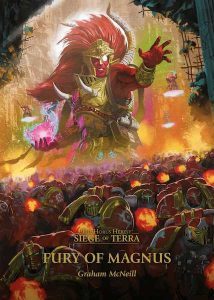 As a novella, Fury of Magnus is more of a side-quest concentrating on Magnus the Red who was pretty much absent from the endgame of the Horus Heresy in the old lore. It doesn’t take us closer to the conclusion but it does tie up some interesting ongoing stories and provide further insight into Magnus and the Emperor.
As is usually the case in Black Library novels, our point of view comes from more mundane folks than the demigods who the story focuses on, but they’re definitely more significant than the normal baseline humans with the perpetual Alivia Sureka and some Salamander marines.
The plot of Fury of Magnus involves Magnus and his inner cabal of Thousand Sons infiltrating the Imperial Palace in an attempt to retrieve the final shard of his soul. They are pursued by some Salamanders and Space Wolves and intercepted by Malcador the Sigilite with an appeal from the Emperor.
Everything here will be almost completely impenetrable to someone not familiar with the Warhammer 40k lore and it relies on a lot of set up work from previous books in the Horus Heresy series so this is absolutely not a jumping-on point.
The high points of Fury of Magnus are the insights into Magnus own personality and the weary humanity of Alivia. The best moment is Alivia looking down at her daughters in the refugee camp on Terra and lamenting how her mischievous child is fading away. It’s a touching moment that hammers home the human suffering of the setting, in stark contrast to the grand schemes of immortals. As the Horus Heresy sweeps to an end, we can sometimes overlook the sheer grimdark hopelessness and suffering at play while we enjoy the technicolour sparkle of demigods doing battle and reveals of lore that has remained vague for 40 years, so this is an important thing to see included.
While Fury of Magnus ties up Magnus’ story quite well – a story that McNeill has played a huge part in shaping, not least in 2010’s A Thousand Sons – and offers a view into the machinations of the Emperor and Sigilite it is very definitely added value rather than an integral part of the series.
McNeill has a deep understanding of this setting and these characters and it shows. He slips between the distinct voices of Salamanders, Space Wolves and Thousand Sons with ease and from baseline human refugees to Primarchs with a grace that only comes from familiarity. He weaves all of this, from intense battles to conversations held in a moment in between psychics into a cohesive whole that is no mean feat in such a well-realised world. It would be so easy for it to feel bitty.
All in all, Fury of Magnus is a solid outing in a very expansive series. As an audiobook it only takes 6 hours 45 minutes – voiced by the ever-impressive Jonathan Keeble – and I found it a neat palate cleanser between longer stories.
I’ll recommend this for Horus Heresy / Siege of Terra completists and fans of Magnus the Red and the Thousand Sons but it’s far from necessary and definitely not the title to break in newcomers to the setting.
3/5
Read The Fury of Magnus by Graham McNeill
The post REVIEW: The Fury of Magnus by Graham McNeill appeared first on Grimdark Magazine.
March 22, 2021
REVIEW: Villains Rule by MK Gibson
Villains Rule by MK Gibson is a rare thing that I quite enjoy: a comedic grimdark novel. It is about Jackson Blackwell a.k.a the Shadow Master, who is an advisor to the villains of the multiverse. For an enormous fee, the Dark Lords and supervillains can have Jackson coach them on the finer points of being a bad guy. Jackson won’t guarantee you’ll win but he’ll make sure that you manage to do much better than you would if you were just a generic one-dimensional baddie.
 At heart, this is a novel that makes fun of the typical tropes of genre fiction and is all the funnier for it. Plenty of stories are deconstructions of the silliest tropes in fiction with the best parodies also serving as good examples of their genre. Mel Brooks has made his career of making parodies of popular movies that are also enjoyable on their own. The Shadow Master series follows Jackson jumping from one archetypal setting to another but the first one deals with my favorite: high fantasy.
Jackson is a despicable protagonist and all the more entertaining for it. An arrogant, controlling, and condescending demi-god, Jackson has managed to forge an effective business model for himself but not one that is stable. You see, one thing he seems to have missed is that villains are bad guys. They do not like being told that not only is their business model flawed but Jackson can’t help but belittle people who are already fragile egos to begin with. Let’s face it, most dictators are less than good-humored.
This results in the central plot of the story that is Jackson losing his powers and getting dumped on a generic fantasy world that is just well-written enough (deliberately so by the author) to avoid being cliche. Without allies among the world’s villains, he must proceed to do the unthinkable: ally with the local heroes. That doesn’t mean he’s any less of a murderous snake in the grass but he’s still aware enough of how these stories go to direct things behind the scenes.
The supporting cast is pretty well done with a lot of the stock characters from what would be a typical Dungeons and Dragons novel (remember those? Stupid Hasbro). Jackson may have nothing but contempt for the typical farm boy turned hero but that doesn’t mean said farm boy isn’t listening when the Shadow Master reveals just how hypocritical the elves are. “Why aren’t you going after the Dark Lord despite thousands of years of experience and epic magic?”
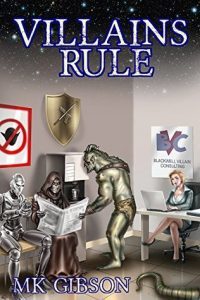
I’m not a fan of the cover art but I feel like it nicely conveys the basic idea of the book’s inner absurdity. This is an indie fantasy novel that is full of humor and an utterly despicable rake as its protagonist. I think that fans of fantasy and superhero fiction will both love this series. It’s a great way to relax and root for the bad guy.
Read Villains Rule by MK Gibson
The post REVIEW: Villains Rule by MK Gibson appeared first on Grimdark Magazine.
March 21, 2021
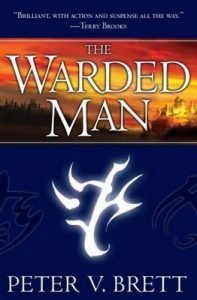
The Warded Man by Peter V. Brett Reread: Tibbet’s Brook
Hello, and welcome to the first part of The Warded Man reread. The first section we will discuss is the section called Tibbet’s Brook 318 – 319 ar(After Return). I will be discussing some spoiler aspects of the book, but it certainly won’t be everything.
 Aftermath 319 ar
The novel starts off with an introduction to a dire situation and one we will become accustomed to throughout the book, which is the aftermath of an attack. The chapter title is called Aftermath 319 ar. At this point, we don’t know much now, only that 27 are dead, but a family was spared because their wards held all night. And they watched the whole thing. This violence does not portend to fluffy bunnies and rainbows.
We are also introduced to Arlen; at the time of this chapter, he is 11 years old and working with his father out in the fields. Even at the young age of 11, I get a sense that Arlen is much wiser than his age allows. For example, the chapter outlines how Arlen handled a few bullies that had been torturing him. “Finally, Arlen had enough. He left a stout stick hidden in that spot, and the next time Cobie and his friends pounced, Arlen pretended to run, only to produce a weapon as if from thin air and come back swinging.” This is a very purposeful passage. Having read many of Peter V. Brett’s books, you come to understand that language and one-off memories like this are not for funsies, instead to show how a character could develop. This shows how Arlen is fine with violence, and he will not be hunted or tortured by foes larger than him.
This chapter also introduces us to the idea of a Jongleur. A profession of a traveling entertainer. This delights the children of the villages as life is hard and full of toil, and Jongleurs offer respite. Jongleurs often travel with messengers; news, like entertainment, is hard to come by. In this chapter, we are also introduced to a portable warded circle. Expensive, but it allows individuals a chance to travel distances and be safe at night from corelings. Arlen also talks a bit about how he wants to be a messenger. To travel the world and see the Free Cities.
With Arlen’s introduction, I think one of the most important quotes of the whole book happens in this chapter. It occurs after a character dies from an apparent suicide.
“Why?” He asked Ragen. “Why would he fight so hard last night, to kill himself now?” “Did he fight?” Ragen asked. “Did any of them fight? Or did they run and hide?”…”Sometimes hiding kills something inside you so that even if you survive the demons, you don’t really.”
With that, we are introduced to the central theme of The Warded Man, sometimes hiding is akin to dying. Ever since the corelings came, humans have been hiding and regressing. They are slowly dying. And not all are ok with it and would rather fight.
If It Was You 319 ar
This chapter happens a little bit later and again involves Arlen. His father wants to have a discussion with him about Uncle Cholie. In case we didn’t get the importance of the “hiding can be like dying” quote from the previous chapter. Brett reiterates the thought and how much it rings to 11-year-old Arlen. “Sometimes people live through an attack, but die anyway.”Arlen also believed Uncle Cholie to be a coward. This idea of Cholie being a coward shows an 11-year-old grasp of things. Even a wise 11-year-old. I found it to be good writing on Brett’s part. His father tells him that no one can fight the corelings, and hiding is the correct thing.
Arlen states there has to be a way… foreshadowing commences!
Later in the chapter, Arlen is joining the other villagers at the Jongleur’s show. The Jongleur is discussing a time for humans before the creation of wards, called The Age of Ignorance until they discovered writing that helped them utilize wards. Things were not always the way they are now. The Jongleur also discusses The First Demon War and the First Deliverer. “The Deliverer was a man called upon by the Creator to lead our armies and with him to lead us, we were winning!” The demons disappeared, and men could stop fighting. Great cities developed. The Age of Science came about where humans forgot magic.
Later in the chapter Arlen and his mother have a first-hand encounter with demons. There is a great rift between how Arlen sees the world and his father, safe behind the wards. This chapter hammers home how important that rift is. Arlen is someone who will fight, even if it means his own life. Whether that will be tempered by time and experience, we don’t know. But, we are given a glimpse into the kind of character Arlen is. It is also a chapter that is a tipping point for young Arlen, a moment of before and after.
“Back when the farm was safe. Back when his mother was well. Back when he didn’t know his father was a coward.”
All children have tipping points in their lives. Usually, it is when they discover that their parents are not gods but fallible people. This was Arlens.
A Night Alone 319 ar
A Night Alone is a pretty short chapter and details what happened to Arlen when he ran from his father into the woods after a fight between them. Arlen gets trapped in the dark, and the demons come. He makes his stand and creates a warded circle 6 feet in diameter. The demons thrash and try to kill him. Arlen learns some helpful information about demons and has his first experience with them alone. This tempers him a bit, as he is injured during the night. When night gives way to dawn, Arlen stumbles on towards Old Mey Frieman, who could help his mother. Or he was going to die trying.
Leesha 319 ar
Leesha is the first chapter where we are introduced to 12-year-old Leesha Paper. Paper, because her father runs the paper mill. The first line is, “Leesha spent the night in tears. That in itself was out of the ordinary, but it wasnt her mother that had her weeping this night.” Leesha hears that runes have failed somewhere, and she hears the screams of the hunted townsfolk. You can imagine of terrifying this could be to a child. Also, we learn that Leesha is promised to Gared Cutter and that he is strong and tall. She will give him many strong babies. Humans are being hunted to extinction, and babies are needed to keep everything going. Later in the chapter, the townsfolk are trying to help put out the fires from the burning houses set aflame by Fire demons. We are also introduced to the herb gatherer Hag Bruna. Old beyond old, she has saved the townsfolk with her knowledge of herbal lore time and time again. She also brooks no stupidity, and there is plenty of that going around. Much of the chapter is devoted to discussing how Leesha is waiting on her courses to marry Gared. She has always been taught that that was what she was here for, but over this chapter, we start to see that there might be more ways to live your life.
Much like Arlen’s chapters, Leesha’s chapters detail how she is not quite like the others in the town. But in juxtaposition to Arlen, Leesha wants to help. You see flashes of it in how she interacts with Bruna, but this will foreshadow who Leesha becomes.
The next two chapters, Crowded Home 319, and The Secrets of Fire are again about Leesha’s virginity and “pureness.” Gared and his father have had to come live with Leesha’s family while their home is repaired. This puts the two promised teenagers close overnight. The first night they do some heavy making out, but Leesha stops Gared before things go too far. This is an important line for Leesha and one that she considers sacred. Gared, in turn, tells his friends they had sex, which gets out to the whole town. Leesha is mortified and feels that she is ruined. This also demonstrates what a terrible person Gared is. Leesha knees Gared in the balls. I really like Leesha. Later, after Leesha declares that she will not marry Gared and fights with her abusive mother, Leesha runs away to Bruna’s house, and this starts her journey as a healer.
Rojer 318 ar
We first meet Rojer as a 3-year-old boy holding on to his mother’s skirts. Rojers’s family is the innkeeper for their village. Rojer’s mother is remarking how they need to get the wards fixed immediately as they are warping and not safe. Foreshadowing! Arrick Sweetsong pulls up; Sweetsong is a master Jongleur traveling as a herald for Duke Rhinebeck.
Later that evening, the wards fail.
This is a particularly vicious scene. Rojer’s parents are mauled, and Sweetsong is no hero. With her dying breath, Rojer’s mother saves him. Rojer is left with Sweetsong sitting in the dark. The whole village burns to the ground.
To The Free Cities 319 ar
This chapter is a pivotal point for Arlen. He has run away, been cut by demons, had infected wounds. Ragen found him from earlier chapters while he was delirious. Ragen helped him overcome the infection, and Arlen tells Ragen that he does not want to go back. It is also discovered that Arlen has an affinity for painting wards.
Fort Miln 319 ar
Arlen and Ragen make their way to the free cities, and Arlen gets his first view of what the city looks like. Ragen takes the responsibility of the boy and helps set him up with an apprenticeship of seven years with a warder.
The first section of the book sets the foundation for the three main characters and the paths that they are setting out on. They start as children, but end up heading into their various vocations. Rojer, is with Sweetsong and will probably end up a Jongleur. Leesha is with Brun and is starting herb gatherer training. And, Arlen is about to start with a warder. While not a lot of plot happened, we have a firm foundation for the story. I also like how the story is bisected by time. The story takes place over quite a few years, so we will have time jumps and see how each of the characters is fairing in their respective fields.
I am looking forward to talking a bit more about how each character’s inner strength starts to show. Until next week my friends.
Read The Warded Man by Peter V. Brett
The post The Warded Man by Peter V. Brett Reread: Tibbet’s Brook appeared first on Grimdark Magazine.


