
Adrian Collins's Blog, page 125
September 8, 2022
REVIEW: Mad God
Mad God is a grotesque, profane, brutal hallucinatory odyssey through a nightmarish hellscape. It is also, quite frankly, a work of art.
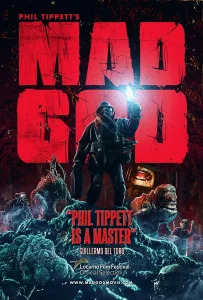 The brainchild of special effects and creature design luminary Phil Tippett, Mad God is the culmination of a long and storied career as well as the result of a decades long labor of love. Honestly, it’s hard to describe in any way that does it justice—or just devolve into an excessively effusive, expletive-laden histrionics. It deserves more than that. It deserves better. But how to even find the appropriate language, how to find the words to sufficiently describe the experience that is Mad God? Because more than anything, beyond its narrative, its aesthetics, and the colossus of work that went into its creation, Mad God is deeply experiential. I don’t think any two viewers could ever walk away from witnessing it—and make no mistake, you do not simply watch it, you witness it—with the same impression. No two viewers could ever process it the same, digest it the same. To be perfectly frank I’m quite sure there are more than a few people who wouldn’t even want to make their way through the entirety of its runtime. It’s…singular, in its delivery of the unapologetically grotesque. But for those brave enough to endure, it’s almost impossible to look away from.
Through the brisk 83 minutes of its total runtime, I couldn’t drag my eyes away from the screen. I was, quite literally, transfixed, and for so many reasons. The aforementioned visuals themselves are a large part of that. The screen at all times is crammed with stimuli, with imagery to pore over, with hellish landscapes to digest. There’s so much minutiae involved in every moment I’m already planning a second viewing just so I can spend more time poring over everything on display without having to worry about ingesting the movie itself. The sound design, also, is incredible and goes a long way towards elevating the experience and creating a disturbing ambience—a resonance, almost. Taken as a whole work, Mad God is something truly rare and I can confidently state that I found myself profoundly affected by it. Which is exceptional, as someone who spends an absurd amount of their time consuming movies and, at best, expecting only to be entertained. I was so much more than entertained by Mad God. A day later and I genuinely can’t stop thinking about it. The aesthetics haunt me, the imagery flashes through my mind. The world that Tippett created is something simultaneously and paradoxically horrific and rapturous.
One couldn’t be blamed for getting to the end and asking what the hell it was all about. I did. But I don’t feel as if it necessarily has to actually be about anything except the experience itself. The experience and what it evokes, what it pulls from you, what it makes you feel; how it affects you, and the state you find yourself in afterwards. Mad God plays with so many themes. Death, creation, madness, horror, pain, futility. Yet in the end it isn’t truly about any of those things. It is, always and again, about the experience. And maybe we sometimes need to be reminded of that. Of art, and media, and the fundamental experience of consuming it. It’s a lot. It’s strange. And as far as Mad God is concerned, it’s certainly not for everyone. But as far as I’m concerned, it’s a work of art and worth more than just five or five hundred stars. So if you’re interested in something new, and different, and you’re willing to take the plunge, definitely sit yourself down in front of Mad God.
You can watch Mad God on Amazon Prime.
The post REVIEW: Mad God appeared first on Grimdark Magazine.


September 7, 2022
REVIEW: War of the God Queen by David Hambling
War of the God Queen is an indie dark fantasy by David Hambling. I’m a huge fan of his Harry Stubbs series that I reviewed previously on this site. However, I was surprised to hear about him moving from writing occult detective novels and horror to a more fantastical series set during a Hyborian Age-like Bronze Age.
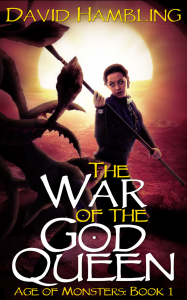 This is a direct sequel to The Dulwich Horror but has more in common with Brian Lumley’s later Titus Crow novels than the previous occult mysteries. Which is to say the best response to dealing with Cthulhu and his ilk is to stab them in the face. It also doesn’t require reading said book to understand it.
The premise is that the protagonist of The Dulwich Horror, Jessica, has been cast back into time. It is a pulpy adventure that takes place in a pre-Bronze Age Stone Age civilization. References are made to A Conneticut Yankee in King Arthur’s Court and the Barsoom novels with a joke that the protagonist, Jessica, isn’t like any of those supermen with their knowledge of engineering as well as military tactics.
Jessica is an Edwardian woman who finds herself soon the head of a time-lost band of women who are all of varying ethnicities. They avoid becoming the property of the local tribes due to some fast thinking and the belief they’re goddesses. They have an enemy in the Spawn of Cthulhu, however, who threaten to wipe out humanity before it can ever become a threat to even the lowliest of his servitors.
Much is made of Jessica trying to survive in a time without any form of metallurgy, hygeine, or amenities. It is also a work with a feminist slant as the women band together to try to assert their dignity. It is also a adventure about slaying prehistoric eldritch monsters. I liked the latter element a lot more and note this is a very Pulpy Conan-esque view of the Bronze Age and almost wish he’d gone full Howardian.
David Hambling has an engaging and entertaining writing style as well as a fascination with time travel. The Cthulhu Mythos here is less inscrutable and more overtly malevolent but it works well for a story about women attempting to avoid becoming fodder for their Innsmouth-esque plot to take over the world. Thankfully, all of the implied ick that kidnapping women from across time to breed monster babies is thwarted as well. It’s not that kind of book. It’s more, “stab the crazy squid cultists in the face.”
If this sounds like your sort of thing then definitely check it out. I love David Hambling’s occult mysteries more but this was a quirky and fun book despite its sometimes dark subject matter as well as offbeat concept.
Read The War of the God QueenThe post REVIEW: War of the God Queen by David Hambling appeared first on Grimdark Magazine.
September 6, 2022
REVIEW: The Emperor’s Soul by Brandon Sanderson
The Emperor’s Soul is Brandon Sanderson’s Hugo Award-winning novella inspired by his visit to the National Palace Museum in Taipei, Taiwan. Sanderson was duly impressed by the hundreds of thousands of artifacts on display, covering eight thousand years of Chinese history, and he was particularly drawn to the red stamps used by Chinese artists, scholars, and nobility. Sanderson developed a magic system based on these red stamps, giving them the ability to alter an object’s history, thereby recasting its future. With this, the central idea for The Emperor’s Soul was born.
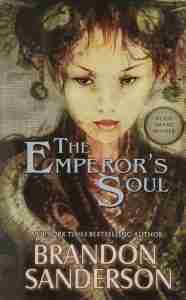 The Emperor’s Soul takes place in the Rose Empire on the same world as his epic fantasy novel, Elantris. Although The Emperor’s Soul connects to Sanderson’s greater Cosmere universe, it is a standalone story, and hence it is unnecessary to read any of his other work to understand and appreciate this novella.
At the beginning of The Emperor’s Soul, the young Emperor Ashravan is braindead after an assassination attempt which also claims the life of his beloved wife. The crime is apparently an inside job, committed by one of his corrupt council members vying for power.
Meanwhile, a young woman named Shai is imprisoned and facing execution for creating forgeries of both a famous painting and the Emperor’s scepter. Forgery is a magical art involving the carving and application of a soulstamp that captures the essence of an object and can make subtle alterations to its history. In the Rose Empire, forgery is considered to be an immoral and dangerous practice and is punishable by death.
Nevertheless, the Emperor’s advisors recognize Shai’s unmatched talent and give her one chance at freedom, which involves the greatest forgery of all: recreating the soul of the Emperor himself. Shai is given one hundred days to complete the forgery, the traditional grieving period for the Emperor to mourn the loss of his wife.
To achieve this nearly impossible task and prevent the fall of the Rose Empire, Shai must work closely with the Emperor’s most trusted advisor, the elderly Gaotona, who knows the Emperor better than anyone else. Gaotona does not approve of forgery but concedes that this is the only way to save his cherished Emperor.
Although The Emperor’s Soul is not an especially dark fantasy, grimdark lovers will appreciate the complex and opposing views on morality expressed by Shai and Gaotona during their thought-provoking discussions, and the respect that the two characters develop for each other over time.
I especially enjoyed the questions raised on the nature of art. Must art necessarily be original, or does the skill of forgery also constitute an artform? Is it possible for a forgery to improve upon the original work? As a master of forgery, can Shai herself be considered an artist?
Sanderson also raises important questions on the nature of the human soul. What exactly constitutes a soul? Can a soul be fully described and replicated? If yes, is the replica really the same person or simply a clone?
The Emperor’s Soul is also proof that you don’t need hundreds of pages to create a well-realized fantasy with compelling characters, a unique magic system, and thought-provoking questions on morality, art, politics, and the nature of human existence itself. Sanderson accomplishes all of this in a little over 100 pages, with a conclusion that leaves an enduring emotional impact on the reader. The Emperor’s Soul ranks among the best work by Brandon Sanderson over his incredibly prolific career.
5/5
Read The Emperor’s Soul by Brandon SandersonThe post REVIEW: The Emperor’s Soul by Brandon Sanderson appeared first on Grimdark Magazine.
REVIEW: House of the Dragon – Episode 3 ‘Second of His Name’
Time is flying by as three years have passed in the world of Westeros. The tension is building in House of the Dragon E3 as King Viserys and most of the realm (the men at least) are celebrating the second birthday of his baby son, Aegon. His wife, Queen Alicent Hightower is heavily pregnant and his daughter and heir, Princess Rhaenyra is fighting against the fact that she is the most eligible woman in the world as men from all of the great houses line up with proposals – all of which she is not interested in. Meanwhile, the sulking Prince Daemon, brother to the king and his former heir, is off fighting a war in the Stepstones, attempting to bring down the creepy Crab King.
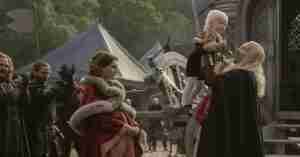 House of the Dragon E3 slows down the pace a bit more, continuing the tension building as the major characters in the coming conflict pop up into place, ready and waiting. You don’t need to be a reader of Fire and Blood or a lover of Game of Thrones to spot that dark times are coming. Viserys is drowning in wine as he tries to numb the feeling of isolation and helplessness that has swallowed him since his wife’s death. Rhaenyra is growing more distant as the realm expects Viserys to name his firstborn son as heir and she flees the hunt taking part in her little brother’s honour and spends the night talking with Sir Criston Cole about love and duty before slaughtering an attacking boar and caking herself in blood. As she displays her strength and anger, Viserys only appears weaker and more helpless as the hunting party capture a brown stag and hold the beast ready for an easy kill, one that he fumbles with.
There’s a gritty, earthy, lived-in feel to the world of House of the Dragon. It differs to Amazon’s pristine and glimmering The Rings of Power and suits a grimdark tale inspired by some of the bloodiest periods of human history. There’s a weariness to the characters that the audience can relate to and the great cast – especially the amazing Milly Alcock who seems has mastered the art of opening up to the audience with subtle facial expressions and movements – pull House of the Dragon E3 forward through the political dialogue and plotting before the episode builds up to some of the promised fire and blood. Matt Smith is as delightful as ever as the petulant warrior Prince Daemon as we finally have a chance to see why he is feared by many and seen as one of the best warriors in Westeros. House of the Dragon E3 continues to do what the previous episodes did so well – deliver a Game of Thrones experience that we have come to expect, but with added dragons. It still brings a few twists and shocks but for now, it is in a comfort zone as it doesn’t bring anything groundbreaking like its predecessor – but it does what we want so well and it is hard to argue with the end product.
The tension is building as we edge closer to the inevitable conflict. It’s a slow burn but House of the Dragon E3 is slowly feeding its audience what we want. More fire. More blood. Another great episode for fans of what has so far been a very consistent show. Grimdark for TV at its best.
The post appeared first on Grimdark Magazine.
September 3, 2022
REVIEW: Smiler’s Fair by Rebecca Levene
Rebecca Levene’s Smiler’s Fair, book one of The Hollow Gods, exemplifies the expression, “Don’t judge a book by its cover.” The subtle but lovely sky depictions do not adequately set the dark tone and nature of the novel. From the opening chapter, Levene teaches the reader to expect the unexpected.
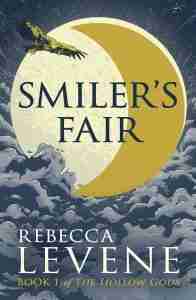 At its core, Smiler’s Fair is a book about a group of people. The coming of a royal son foretells a fatal threat to his powerful father and the rebirth of the moon god, Yron. Saved by his mother, the child narrowly escapes death with the notion he’ll one day return to claim what is his. An orphaned noblewoman enters into an arranged marriage, sending her down a path without a return. One man will learn the difficulties of mixing revenge, bravery, and alcohol, while another kills for sport and fun. A young boy will follow his heart at the cost of it, and a goatherder must reconcile a much bigger future than he ever imagined. All of their stories converge in the most unlikely of places: Smiler’s Fair. A carnival of pleasure will become a battleground for when the sun and moon fight, nothing is safe, especially things dwelling in the shadows.
The narrative of Smiler’s Fair utilizes multiple character perspectives with varying backgrounds, allowing the reader to experience a well-rounded view of the world. Levene’s prose oozes sensory details to create vivid imagery. This is true of both the most beautiful and the most disgusting of moments. Though the book uses familiar tropes, Levene subverts them in an unpredictable way while still keeping the payoff satisfying. The character choices layer into the overarching plot and make sense as the story develops. The fair itself also becomes a fully-fledged character, enhancing the reading experience.
Along with the unexpected direction of the story, the uniqueness of the world in Smiler’s Fair is a strength. Levene’s choices are creative and refreshing in a genre saturated by such similar creatures. Considering the book is around 400 pages, the lore is thoughtfully extensive, but neither is it overexplained nor overcomplicated. Some readers might find parts of the narrative rushed or not as well fleshed out, but Levene lays a solid foundation in this first book to build on in the succeeding novels. She’ll leave you wanting more.
From a grimdark perspective, Smiler’s Fair will check several reader boxes. Levene takes known character archetypes and applies a morally-grey twist as they make difficult decisions for survival. Levene’s action sequences are descriptively violent without holding back. Her world, very much like our own, is filled with majestic sites and horrifying elements. Thematically, Levene hones in on what it means to be human: “But nobody’s perfect, not truly. We all got our faults and our scars and the ways in which we’re different from each other” (23). I’m looking forward to seeing what comes next.
Read Smiler’s Fair by Rebecca LeveneThe post REVIEW: Smiler’s Fair by Rebecca Levene appeared first on Grimdark Magazine.
REVIEW: The Rings of Power – Episodes 1 & 2
Over twenty years have passed since The Lord of the Rings smashed records and swept up pretty much every award possible – proving that fantasy on the big screen, when done well, can be as successful as anything else. Now, Amazon have spent more than a dragon’s hoard on the rights and the making of a series for the small screen, a series based on Tolkien’s history of Middle-earth and tales before Bilbo, Fordo, Sam, Aragorn and friends. The landscape has change in the decades since Peter Jackson’s masterpiece with Game of Thrones, The Witcher, House of the Dragon, and The Wheel of Time all attempting to clutch at the fantasy crown. So, with the first two episodes out, how does The Rings of Power stack up? Will fans appreciate the return of the king or is something that should have been cast into the fire?
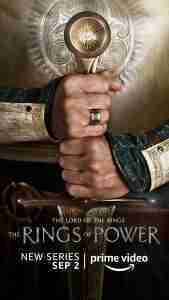 What do you get when you spend billions on a TV show based on a beloved work? High expectations. A bar that is almost impossible to hit. The Rings of Power E1 & 2 show the ambition and love that has gone into adapting Tolkien’s work. It is a slow burn, opening up the world and reminding the audience of why they fell in love with Middle-earth whilst informing them that this is a different world to the one they are used to. Visually, it surpasses anything else on the small screen and deserves to be seen on the biggest screen possible. A Galadriel scarred by the horrors of the war with Morgoth and his commander, Sauron, seeks vengeance. She is battle-hardened and stubborn – ignoring the lax attitude of her kin as they relax and settle in the belief that the war is over. Galadriel is the heart of the first episode, fighting to be heard when none will listen. The show quickens its pace whenever she is on screen as we are introduced to the ruling elves, downtrodden men, and hobbit-like Harfoots. It is not until the second episode that the series begins to hit its stride. The dwarves are as brilliant as ever and the magnificence of Khazad-Dum is a treat for the eyes as Elrond travels there on a mission for the master smith – Lord Celebrimbor. Part of the joy in watching the show is heading back into a beloved world and seeing the changes over time – similar to House of the Dragon. The stunning Khazad-Dum, thriving Elven realms, and new lands not touched on previously are all incredible enough to make The Rings of Power worth the watch but fans of The Lord of the Rings will be glad to know that there is an interesting story at play alongside all of the beauty as a threat in the East grows and threatens the free people of Middle-earth…
The beauty in The Lord of the Rings has always been in its simplicity. It is a good versus evil story with not many shades of grey and that may not be too the taste of the modern fantasy fan who has devoured Game of Thrones and The Witcher. There is darkness but it isn’t as grim as many fantasy series currently vying for attention on streaming platforms. It feels almost like a palette cleanser, something to be watched alongside House of the Dragon with a confidence that the two don’t share a mood to overwhelm but instead show the scope and potential of the fantasy genre on the small screen. Some of the lines are a little cheesy and it doesn’t hit the heights of Peter Jackson’s masterpiece but is that what we expected? The Rings of Power E1 & 2 sets up an intriguing tale in a beautifully realized world that millions of fans already love. There will be some bumps on the way but on the evidence of the first couple of episodes, it is a journey worth taking.
Ambitious, stunning to look at, but slightly flawed; The Rings of Power E1 & 2 display the potential of great fantasy series that’s biggest downfall may be the huge burden of expectation that weighs heavier than the One Ring near Mordor. It may not have yet met the expectations placed on it, but The Rings of Power has the potential to be the best example of high fantasy on the small screen yet.
The post REVIEW: The Rings of Power – Episodes 1 & 2 appeared first on Grimdark Magazine.
September 2, 2022
REVIEW: Echolands by J.H Williams III
I’ll preface this review with a statement that, ordinarily, would be found nearer to the end: Drop whatever else it is you’re doing and buy Echolands.
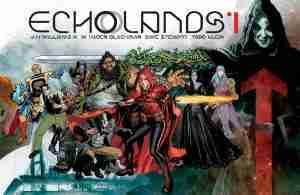 Honestly. What J.H. Williams III (hereafter referred to as JHW3) has crafted here, along with a similarly talented crew of artists and designers, is nothing short of fantastic. Echolands is a frenetic fever dream, twisting and warping folklore and fairytales into a surreal new mythology inhabiting a world stunningly like our own yet also utterly alien.
If you’re not already familiar with JHW3’s body of work, know that he is a stylistic chameleon who does not constrain himself to any particular aesthetic. Nor does he bother with anything like conventional layouts and simple linear story flow. Immediately upon holding Echolands in your hot little hands, you’ll first notice its format: it is wider than it is tall. This is something cleverly done to allow JHW3 more room to play with the aforementioned structure and flow, and it’s brilliant. The action of Echolands, the meat of it, moves at a dizzying pace along lines and within boxes that defy the norms of typical comic structure and it creates an exhilarating experience thatat first may seem confusing but has been constructed so well with such attention to detail that it guides the eye around the pages with little effort.
And the pages. Echolands has some of the lushest, prettiest, exciting art I’ve seen in a while and it’s yet another testament to JHW3’s skill that every single page can be so full to bursting yet never seem overcrowded or like any elements are at odds with each other. Here again, convention is bucked and we see styles and aesthetics thrown together in ways that may at first seem bizarre but instead blend together. Painted fairytale heroines cavort next to Kirby-esque demigods while characters that would feel at home in Sunday funnies yammer away. There are “dracs” and “steins” and zombies that exist entirely in monochromatic brushstrokes and more visual homages than can be easily counted within the pages of Echolands, but it’s a lot of fun to try.
Because each of these disparate styles serves a larger purpose within the narrative of Echolands, which is itself a story about stories. A world wherein stories, tall tales, myths and more have come alive and exist together in a tumultuous and outrageous world that might have at one time been our own world. The plot revolves around a quest, which nominally pushes everything forward, but the story is about the characters and their interactions as they define themselves and the world around them. Regretfully, it’s an adventure that ends all too soon after it begins, but it’s alright, because it’s only the first part of the adventure and there is more of Echolands to come. And I, for one, can’t wait.
Woven together by J.H. Williams III and his talented team, Echolands is an incredible piece of visual art and comic book storytelling that is engrossing, rapturous, and a hell of a lot of fun. Five stars, no question. Now go out there and get yourselves a copy.
Read Echolands by J.H Williams IIIThe post REVIEW: Echolands by J.H Williams III appeared first on Grimdark Magazine.
September 1, 2022
REVIEW: Hide by Kiersten White
It’s likely that most of Kiersten White’s readers have known from the beginning just what she’s capable of. However, I don’t think any of us could have expected that she would churn out such a dark and gutting social commentary for her adult debut, and she would do it so well. Hide hit me like a punch in the gut. I was absolutely floored by the sheer magnitude of the story and the pace at which it unfolded, coupled with a writing style that I feel, as a reader, I have had the privilege to watch grow into what it is now. Kiersten White possesses a stunning grasp of her craft, and has yet again delivered a novel I’ll remember for the rest of my life.
“Not a monster at all, but the most pathetically human of men.” –Hide, Kiersten White
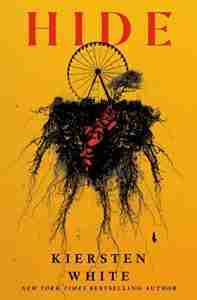 Hide is slightly deceiving when it presents to you a story about a horrific, sadistic hide-and- seek competition. While the book is about a group of fourteen young people offered a chance to win $50,000 in this strange competition run in the abandoned Amazement Park, the story that is told is much, much more than that. Soaked in suspense and teeming with an unshakable sense of dread, Hide is so much more than what it appears to be. When I first read the synopsis of this book, I was of course immediately hooked by its dark and enticing premise, but I didn’t expect to be reduced to a puddle of tears at midnight on a Saturday night when I finally finished it, clutching my overly-annotated copy with shaking hands.
Hide is a story with several strengths. The writing alone stands out as capable of carrying the story even if the characters and plot were lacking—which they are most certainly not—due to its sheer power. Kiersten White has always been a strong writer, but she has absolutely outdone herself with Hide. Told in clever metaphor, brilliantly unique syntax, and omniscient third person, Hide reads as very cinematic, the choice of tense presenting the readers with an advantage that the characters will never have. The reader gets to peek into each of our fourteen characters’ heads, the writing style serving as a powerful tool to wiggle even the most unassuming—or even evil—characters into your heart. To me, the true gut-punch of this story was the cleverly-masked social commentary that spoke directly to me. Even the acknowledgments section of this book had me in tears. Though it may not be for everyone, I have always had a soft spot for art that screams at the world. This book understands what it’s like to be young in this country, and paints a haunting picture of a new generation condemned to damnation by their predecessors.
Though at times the narrative shifts to show the absolute worst of humanity, the most monstrous—or pathetic?—of us all, you’d be mistaken to think that Hide wasn’t a story about hope. Without spoiling the plot, this book was heart-wrenchingly beautiful. Full of sorrow and pain, but also hope, the promise of forgiveness, of victory, of happiness. This book was everything I wanted and needed, and Mack, Brandon, Ava, and LeGrand will be with me forever. Even after writing this review, I still don’t think I can properly convey just how badly you need to read this book.
5 Stars
Read Hide by Kiersten WhiteThe post REVIEW: Hide by Kiersten White appeared first on Grimdark Magazine.
REVIEW: House of the Dragon – Episode 2 ‘The Rogue Prince’
The world of Westeros returned to our screens with all the blood and intrigue you would expect from the prequel to George RR Martin’s Game of Thrones. House of the Dragon E1 delivered what fans of Game of Thrones wanted with more dragons, plotting in the dark, and gruesome deaths than you could shake a sword at. House of the Dragon E2 allows the show to take a breath and ramp up the tension as the inevitable fiery path to the Dance of the Dragons begins to take shape.
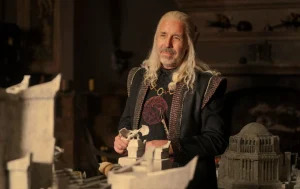 The Iron Throne doesn’t seem to like King Viserys I too much and Paddy Considine is great at showing a weariness that comes with such a position as the crown seems heavy and the throne too sharp and dangerous following the awful death of his wife and newborn son. The throne itself is cutting into his weak skin as powerful men plot to gain the ultimate power through their offerings of young daughters with the promise of a new male heir for the king in a world that does not want a woman to sit the throne. House of the Dragon E2 works brilliantly in the way it portrays the dynamics between the men and women in the series. Viserys wishes to mourn his wife but is reminded of his duty to the realm by the plotting Otto Hightower and the ambitious Corlyn Velaryon. With Daemon reminding the small council of his threat by taking up residence in Dragonstone and the creepy Crabfeeder causing unrest by the Narrow Sea, it seems the men of the world smell blood and Viserys looks for a way to strengthen his house. Meanwhile, the women of Westeros are pushed aside. Rhaenys has seen this scene before and warns the fiery Princess Rhaenyra that men will torch the world before seeing a woman on the Iron Throne. Well, Rhaenyra is sick of listening to men speaking about her as though she doesn’t matter and Milly Alcock plays her with a furious power and independence that will remind Game of Thrones fans of why they fell in love with the character of Daenerys Targaryen. The men’s actions not only push each other apart, but they drive a wedge between the women around them too, taking advantage of the young and weak but also creating wounds that fester until the young are ready to spread their wings and fight back.
House of the Dragon E2 is an episode designed to get the powder in place before the world is set alight with burning wildfire. Swords are pointing at King Viserys I and powerful players are putting their pieces in place, knowing full well that one wrong move means death in the game of thrones. War seems inevitable as conflict and alliances are born with numerous political players and warriors readying themselves for the ladder that will be ready to climb amidst the chaos.
House of the Dragon E2 continues the strong start to the series as tension cuts through every scene with another superbly acted episode. The petulant but so damn watchable Prince Daemon is still the star of the show for me but House of the Dragon E2 allows the rest of the incredible cast to flex their muscles and ensure that the audience are ready to invest in the large array of characters. A strong episode setting the pieces in place for what is sure to be a fascinating conflict as the men and women of House of the Dragon make their play for the Iron Throne. It may not hit the heady heights of the first episode, but House of the Dragon E2 promises that more is to come. A calm before the storm.
The post REVIEW: House of the Dragon – Episode 2 ‘The Rogue Prince’ appeared first on Grimdark Magazine.
August 31, 2022
REVIEW: Stranger Things – Season 4
Given that it’s currently the highest-streamed show on Netflix, and was popular enough to crash their servers, odds are good if you’re reading this you’ve already at least started season 4 of Netflix’s Stranger Things. It was an interesting and solid season, with enough changes to the formula to not feel like retreading ground while still very much feeling like Stranger Things.
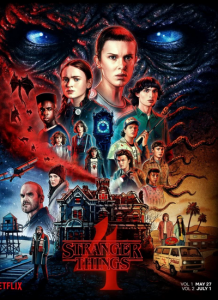 The biggest change to the formula was the villain. While the Demogorgon was animalistic and the Mind Flayer was alien, Vecna was sentient, humanoid, and able to communicate. His modus operandi was to find people with trauma, show them hallucinations, and then toy with them until killing them in a way that was sincerely shocking.
The other big change to Season 4 came as fallout from the ending of Season 3. Joyce moved her family, including Eleven, to California, and Hopper disappeared, a fake-out death that was almost immediately undercut by trailers showing him in season 4. This was the biggest issue with the season, because while the Hawkins plot was consistently excellent and thrilling from the first episode to the last, both other plotlines felt like there was a lot of filler. They both ended well, but it meant that Mike, Jonathan, and Will in particular felt sidelined for most of the season. There was wheel-spinning in the adult storyline as well, but the actors at least had a lot more to do.
Spoilers below:
The California plotline, with El, Will, Jonathan, and Mike, was the weakest right at the beginning. That Eleven would be bullied at school made sense, though Stranger Things has always been good about showing off the reality of cliques. That she would take Mike to a roller rink during what appeared to be a bully convention was ludicrous and over the top. It also didn’t feel particularly necessary for the arc of the rest of her season. Sure, Mike saying nearly word for word what Dr. Brenner had said to her during a formative time could be important, but it felt like once that incident was over it simply never happened.
 After that, Eleven’s plot kicked into gear as she retrained to get her powers back with Dr. Owens and Dr. Brenner in an underground bunker. Much of this involved examining her memories of her training as a child, and in particular her dealings with an orderly who turned out to be Henry Creel, aka 001, aka Vecna. She was tricked and freed him, and then sent him to the Upside Down. Small wonder he waited for her to be both out of Hawkins and de-powered before he began his series of ritual murders.
However, the rest of the California plot-line was largely a waste of time as Jonathan, Mike, Will, and Jonathan’s new stoner friend Argyle drive an extremely conspicuous pizza van that somehow the government cannot find.
The Russia plotline was also disappointing for most of the runtime. Joyce finds a Russian doll that suggests Hopper is alive, and someone is willing to smuggle him out of prison. She decides to pay the ransom, and gets betrayed by the smuggler, while Hopper flees his Russian prison, and is then caught and brought back. There’s nothing supernatural or related to the Upside Down that occurs (minus a roar) in this plot until episode 7. Thankfully, Joyce and Murray have some excellent dynamics at play and keep our attention even when the writing doesn’t.
However, it really picks up at the end, as Murray and Joyce infiltrate the prison to rescue him only to find out the Russians have their own Demogorgon they make their prisoners fight.
Now, with all that complaining out of the way, the entire Hawkins plotline is top-notch from start to finish. Vecna’s specific way of targeting people gives the characters still in Hawkins a timer to find possible solutions, especially when one of their own is next on the list. The episode Dear Billy, which is all about Vecna targeting Max, is the definite highlight of the season and quite possibly the series.
Newcomer Eddie Munson is another standout and the kind of character who fits so well into this world that it seems like he’s always been there. He’s way too old to be in school, having been held back several times, and he mostly wants to spend his time running Dungeons and Dragons and playing in a band. He’s played with a lot of outsider charm. His scene in the finale, playing a heavy metal concert to distract Demobats from Steve, Nancy, and Robin’s last-ditch effort to destroy Vecna, was, well, metal. That said, it was surprising it didn’t tie in with the larger use of music as a weapon against Vecna’s mind control powers.
Eddie’s opposite is the basketball player Jason, who soon starts a manhunt against Eddie, who he believes has killed his girlfriend (It was, of course, Vecna, but it’s hard to arrest a cosmic horror. How would you find a jury of their peers?) Jason riles up the whole town against Eddie’s Dungeons and Dragons gamers, bringing in the 1980’s Satanic Panic, but while this plotline seems tense at the time, the town seems to forget they were riled up by the time the season finale comes around. While what he does through the season is awful, it’s interesting that his action with the most long-lasting consequence is entirely accidental.
The convergence of these plot-lines was mostly fascinating for the way they managed to keep the groups separated even at the end, while maintaining one interdependent climax. There was no cheating, no magical communication that explained everything, but all the pieces fell together regardless.
The ending was apocalyptic, a decision which makes sense even if it may be more difficult to stick the landing. But The Duffer Bros have done well so far—and Season 4 has been the best since Season 1. I’ll trust them on it.
The post REVIEW: Stranger Things – Season 4 appeared first on Grimdark Magazine.


