
Debeshi Gooptu's Blog, page 2
April 23, 2021
The Ghosts of Gurugram

One of my novels, The Ghosts of Gurugram, has been serialized on Juggernaut Books. It tells the story of Tara Chatterjee who moves to Gurugram to make a fresh start after a painful breakup. She has no idea what lies in store for her. Things start unravelling when a cat starts following her around…
“Insightful and moving with flashes of wit, the story takes a look at the darker side of Gurgaon’s development and the growing menace of suicide and dowry-related deaths in the Millennium City.”
You can read all the episodes here.


The Ghosts of Gurugram: Episode 1

One of my novels, The Ghosts of Gurugram, is being serialized on Juggernaut Books. It is the story of Tara Chatterjee who moves to Gurugram to make a fresh start after a painful breakup. She has no idea what lies in store for her. Things start unravelling when a cat starts following her around…
You can read the first episode here.
April 14, 2021

March 1, 2021
Trainspotting (in fiction)
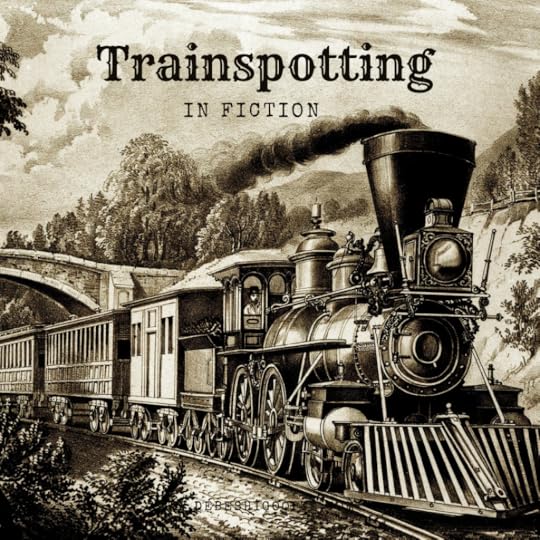 Photo Courtesy: Pixabay
My fascination with trains began well before I realized that I wanted to be a writer. In fact, it was probably a train journey that first led me down the writing track. Bad pun aside, I did write my first poem after a train ride to Puri as a little girl. The poem was published in a magazine called Friends, not in circulation anymore. I still remember the first four lines:
If you are going to the sea
Please take me
For that’s the place
I’m longing to be.
I learnt much later that train journeys have provided fodder for many famous writers. One of my favourites, Agatha Christie, has written several murder mysteries that feature trains. 4.50 from Paddington is about a woman who witnesses a woman being strangled on a train that runs parallel to hers. The Murder on the Orient Express and The Mystery of the Blue Train are some of her other novels with trains in them.
Train also feature prominently on Arthur Conan Doyle’s Sherlock Holmes series. Then, there is the famous E Nesbit novel, The Railway Children and a thrilling climax on Ian’s Fleming’s From Russia With Love. More recently, there is Paula Hawkins’ The Girl on the Train where a woman witnesses an incident from the train that sets her off on a bizarre journey of her own. The delightful Harry Potter series is full of stations and train journeys much like Enid Blyton’s popular Malory Towers and St Clare’s books. Closer home, there is Satyajit Ray’s Feluda series. Shonar Kella for instance where Feluda and Topshe meet Jatayu who becomes a dear friend and goes on many adventures with them.
Two of my short stories published by Juggernaut Books feature trains as a backdrop to incidents in the lives of protagonists. In The Magazine Seller, a young woman meets a man selling magazines on the train she boards to get to university. In A Chance Encounter, two people in unhappy marriages are drawn to each other while travelling in the same train compartment. Click on the links to read them.
Do you have any favourite train stories to add to this list?
February 20, 2021
Celebrate Your Love
The winning entries for the contest. A big thank you to everyone who participated!
 I made a portrait of my mother with loads and loads of love from my bottom of my heart ~ Gaurav Patgiri
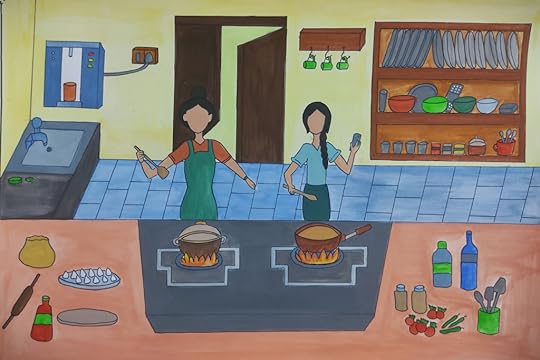 Cooking with my mother over the pandemic has been so much fun ~ Sukanya Das
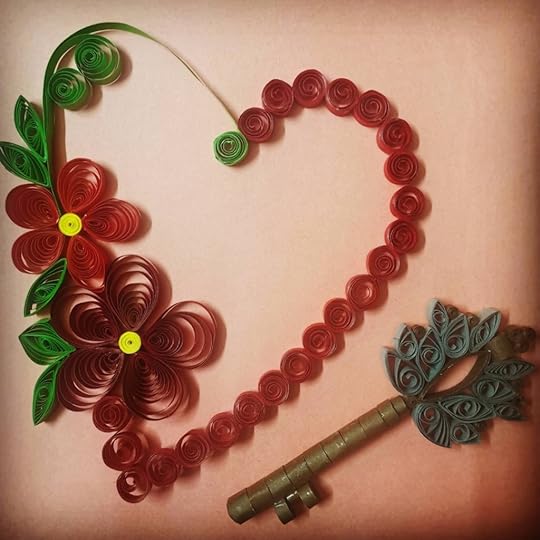 You are the key to my heart ~ Ashima Jain
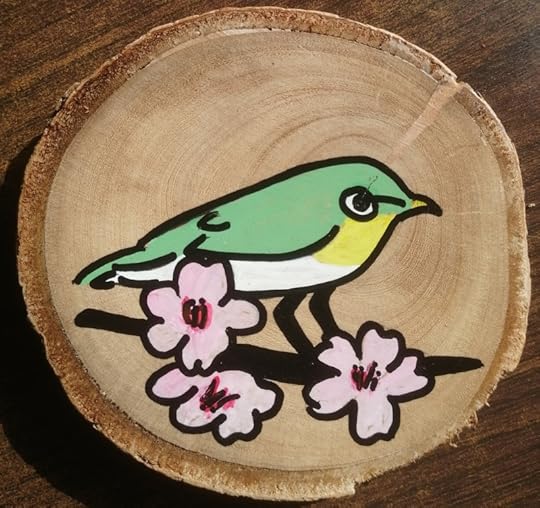 In memory of Dot, a little bird who was tragically drowned in a cup of steaming hot tea ~ Rupali Soni
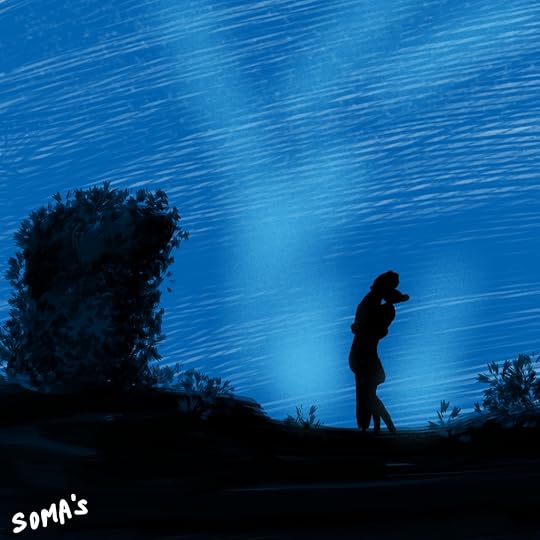 Last year taught us warmth of our near ones should not be taken for granted ~ Soma Dey
February 6, 2021
The Last Draft
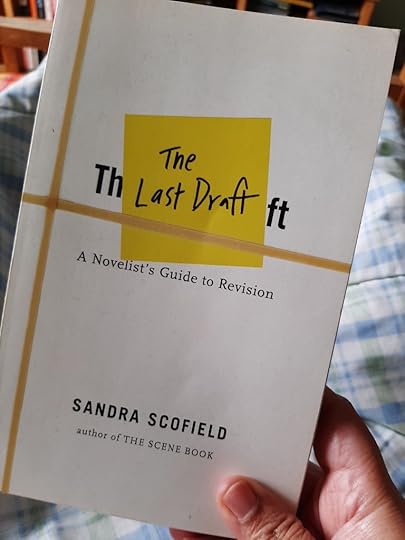
Sandra Scofield’s The Last Draft, A Novelist’s Guide to Revision is a useful book for writers who have completed the first draft of their novel and need help in producing the final – polished version. I’ve never owned books that offer help with writing in the past. This is my first. Writing, for me, is instinctive. I’ve never needed an instruction manual. So I did approach this one with a certain amount of cynicism.
Scofield is a critic, longtime teacher, and award-winning novelist with many writing workshops to her credit. In this book, she offers practical tips on how to re-look at the vision you have for your novel and approach the writing process with the new, improved larger picture in mind.
“Revision is a significantly different process because you work from a complete manuscript rather than a moving platform. Also, there is more analytical work in revision, more deliberate application of craft.”
Sandra Scofield
She gives helpful suggestions in each chapter and what personally worked for me, are the exercises that have been listed at every step of the way. You get to compare your novel with other books in the same genre and analyse how the authors have approached the theme and the narrative arc. This is a book for novices as well as experienced writers.
The Last Draft is a book that you can keep coming back to. As Scofield herself points out, a lot will change in the writing. Later, you will come back to the same questions, the same advice, the same exercises, and find you have gone somewhere altogether different from where you were headed. That’s just fine. That’s writing. The real book might appear in the margins of your draft. You can’t revise what you haven’t written down.
Note: This is NOT a paid review. I put up reviews of books that I buy as and when I feel like it.
The Last Draft
A Novelist’s Guide to Revision
Sandra Scofield
Penguin Books
Rs 499
January 28, 2021
Why do you want to write?
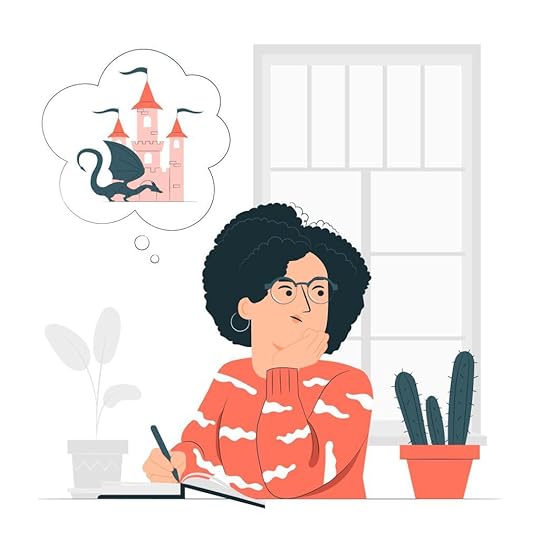 Image courtesy: Freepik
Hello again.
I meet many people, some young, others not-so-young, who tell me that they want to be a writer. A lot of them have never written anything in their lives. While that is not a disqualification, it helps to have some clarity about why one wants to be a writer.
If you read my last piece and did the exercise towards the end, you should have some initial thoughts on why you want to be a writer. You should also have figured out what timing works best for you and your writing spot.
In that case, let’s talk about writing for a while.
Writing is a form of communication. We can write for ourselves or we can write for others. One of the reasons people write is to communicate, get some sort of interest or action from the reader or the person they are communicating with.
When we are writing for ourselves, we are putting our thoughts down on paper. It helps us reflect and understand. Writing for ourselves is mostly private but one may want to share their writing with others.
When we write for others, our work may be reviewed and shared with the public.
There are a couple of good things about writing.
When you write, you exercise the mind. It’s not enough to exercise your body, you should do the same with your mind as well. Writing helps you do that.
Writing helps unclutter your mind. There is a lot of noise inside our heads. Often, the noise distracts us, makes us lose focus. When we write our thoughts down in a diary, journal or even a document in the laptop, it helps unclutter the mind.
Writing helps mine memories. I find this particularly useful when I’m writing. Of course, not all memories are pleasant but the happy ones are worth remembering, eh?
Writing down ideas often ends up generating more ideas. Whenever you get a brainwave, say an idea for a story, a blog post or even an article, write it down immediately. Storing things inside your head is a bad idea. You might end up forgetting them which would be a huge loss. When you write things down, you add to your inventory of creative ideas.
Writing is a great way to improve your communication skills. You have time to choose your words, polish your language and put together elegant sentences and phrases.
Are there any more reasons one should write? Do you want to write for yourself or do you want to write for an audience?
January 27, 2021
Contest Alert!
Last year taught us a lot about love. This year, how about celebrating the people in our lives who mean the world to us? The ones that are there (no matter what), the ones that care and the ones who will always have our backs. #CelebrateYourLove #ContestAlert

January 17, 2021
First things first. Form that habit.
 Image courtesy: Freepik
Exercise the writing muscle every day, even if it is only a letter, notes, a title list, a character sketch, a journal entry. Writers are like dancers, like athletes. Without that exercise, the muscles seize up
Jane Yolen
Of all the writing advice that I’ve read over the years, this is the one I like best. The one that makes complete sense to me. I think of writing as a habit – something that you do often and regularly, sometimes without knowing that you are doing it. I started writing seriously when I was 21. I had a job as an apprentice journalist with a leading business daily. I had to write or edit something every single day, whether I liked it or not. There were days when I had to write articles at a moment’s notice and if I said anything about writer’s block, I would have been fired immediately! Over the years, I wrote and wrote and now, not a day goes by when I don’t write something.
If you are an aspiring writer, it would help if you treat writing as a habit and develop it over time. It’s a bit like exercise. If you want to be fit and healthy, lose a few pounds along the way, you must get into a fitness routine. Walk every day or do a bit of yoga. It’s the same with writing. Here are some things that I do that might help.
Set aside some time to write every day. Once you do that, guard that time ferociously. It doesn’t matter what time of the day it is. There are writers who write at the crack of dawn while others write at night. The pandemic has turned me into an owl so I write at night, after all my chores are done. Choose a time that works best for you.
Once you have sorted out when you are going to write, make sure you spend a couple of minutes (to start with) every single day writing something. It can be a few lines of a draft for a story, a character sketch or even a poem. Whatever catches your fancy. The idea is to keep doing it till you get into the habit of sitting down either in front of the laptop or with a piece of paper and pen and write something. As Yolen says, exercise the muscle. Form the habit. It doesn’t matter if what you write doesn’t see the light of day. It doesn’t need to.
Choose a spot. It could be your desk, the bed or even a corner of the dining table. I have a desk but I usually write in bed. Once you have a spot, make sure you turn up every single day with your laptop or your diary. If there is something you are working on, continue with your project, else figure out what you want to write and get cracking.
Exercise: Why do you want to be a writer? Take a sheet of paper and write down three reasons.
In my next post, I’ll give you some ideas on how to get started. For the time being, choose your spot and time. Think about why you want to write.
See you next week!
December 24, 2020
Happy Holidays!
As we prepare to bid adieu to this year of many challenges, I hope all of you are safe and at home, following social distancing protocols and masking up when and if you step out. Stay safe and happy. Till we meet again, do feel free to go through my website and read my books.
 Image by Biljana Jovanovic from Pixabay
Debeshi Gooptu's Blog

- Debeshi Gooptu's profile
- 16 followers

