
Rolin Bruno's Blog, page 4
July 22, 2017
Was Nicodemus a Galilean?
Who was this man Nicodemus?
The Failed Arrest
Tempers were getting hot. The temple police had been sent out to arrest Jesus, but they came back empty-handed, saying, "Never has a man spoken the way this man speaks!" The chief priests were furious, responding, "You haven't also been led astray, have you? None of the rulers or Pharisees has believed in him, have they?"
But Nicodemus said to them, "Our Law does not judge a man unless it first hears from him and knows what he's doing, does it?" They answered him, "What, you aren't also from Galilee, are you? Search the scriptures, and you will see that no prophet arises out of Galilee!"
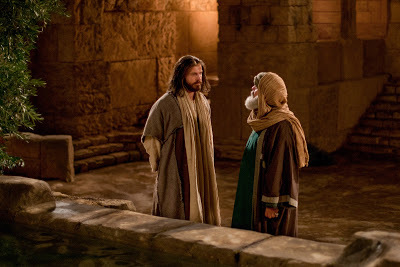 Traditional 'Old' NicodemusWords that sting:
Was that true? Why would they charge Nicodemus with being a Galilean? And who was this guy, anyway?
It turns out that Nicodemus, besides his three appearances in the Gospel of John, was well known to Josephus, the noted first-century writer of Jewish history. In addition, Nicodemus is also mentioned prominently in the Talmud, the body of ancient Jewish civil and ceremonial law which includes both the Mishna and the Gemara.
Nicodemus was known as one of the three wealthiest men in Jerusalem. Some say that he was the most wealthy of them all. As part of his wealth, he owned extensive plots of agricultural land, worked by Jewish peasants under the direction of local taskmasters. And where were these lands?
You guessed it. Nicodemus' land holdings were predominantly in Galilee, lower Galilee to be specific. Nicodemus was apparently good to his workers, for he was widely popular among the poor for his reputation of generosity. Although he was a Judean resident in Jerusalem, you can be safe in assuming that he would be seen frequently in Galilee, checking on his landholdings.
So did their (false) charge against Nicodemus sting? Possibly. Galileans were looked down upon by the Judeans, who lived in the 'right places' instead of in some remote province. But Nicodemus held a secure position in the Sanhedrin, the high council of the Jews, and could let such criticism roll off his back.
 The rich farmland of GalileeHow Old Was Nicodemus?
This is critical, for the historical Nicodemus was prominent mostly in the 50's and 60's of the first century. It is estimated that at the time he met Jesus he would had have to been between 10 and 40 years of age. Christian tradition looks upon Nicodemus as an old man when he met Jesus. But this is not necessarily true, for it is based on something Nicodemus said to Jesus: "How can a man be born [again] when he is old?" It is not necessary that Nicodemus was old when he said this. He could well have been between 30 and 40 years of age.
In the Hebrew spelling, he was known as Nakdimon ben Gurion, "Nicodemus son of Gurion." His real name was Boni, and he earned his nickname from a miracle he was reputed to have performed. In his later years, he was actively opposed to the Zealots who were trying to win independence from Rome, and with his wealth he helped fund the opponents of the Zealots.
 Historical 'Young' NicodemusProphets from Galilee:
Although it was true that the Messiah was prophesied to come from Bethlehem rather than Galilee, Nicodemus' opponents overlooked two prophets that did come from the land that we now call Galilee: Both Jonah and his father, the prophet Amittai (Truth), came from Gath-Hepher, about two miles from today's Nazareth, in the heart of Lower Galilee (2 Kings 14:25).
Perhaps if Nicodemus had looked this up, he could have embarrassed his accusers for their oversight of these two prophets.
Post 73
The Failed Arrest
Tempers were getting hot. The temple police had been sent out to arrest Jesus, but they came back empty-handed, saying, "Never has a man spoken the way this man speaks!" The chief priests were furious, responding, "You haven't also been led astray, have you? None of the rulers or Pharisees has believed in him, have they?"
But Nicodemus said to them, "Our Law does not judge a man unless it first hears from him and knows what he's doing, does it?" They answered him, "What, you aren't also from Galilee, are you? Search the scriptures, and you will see that no prophet arises out of Galilee!"
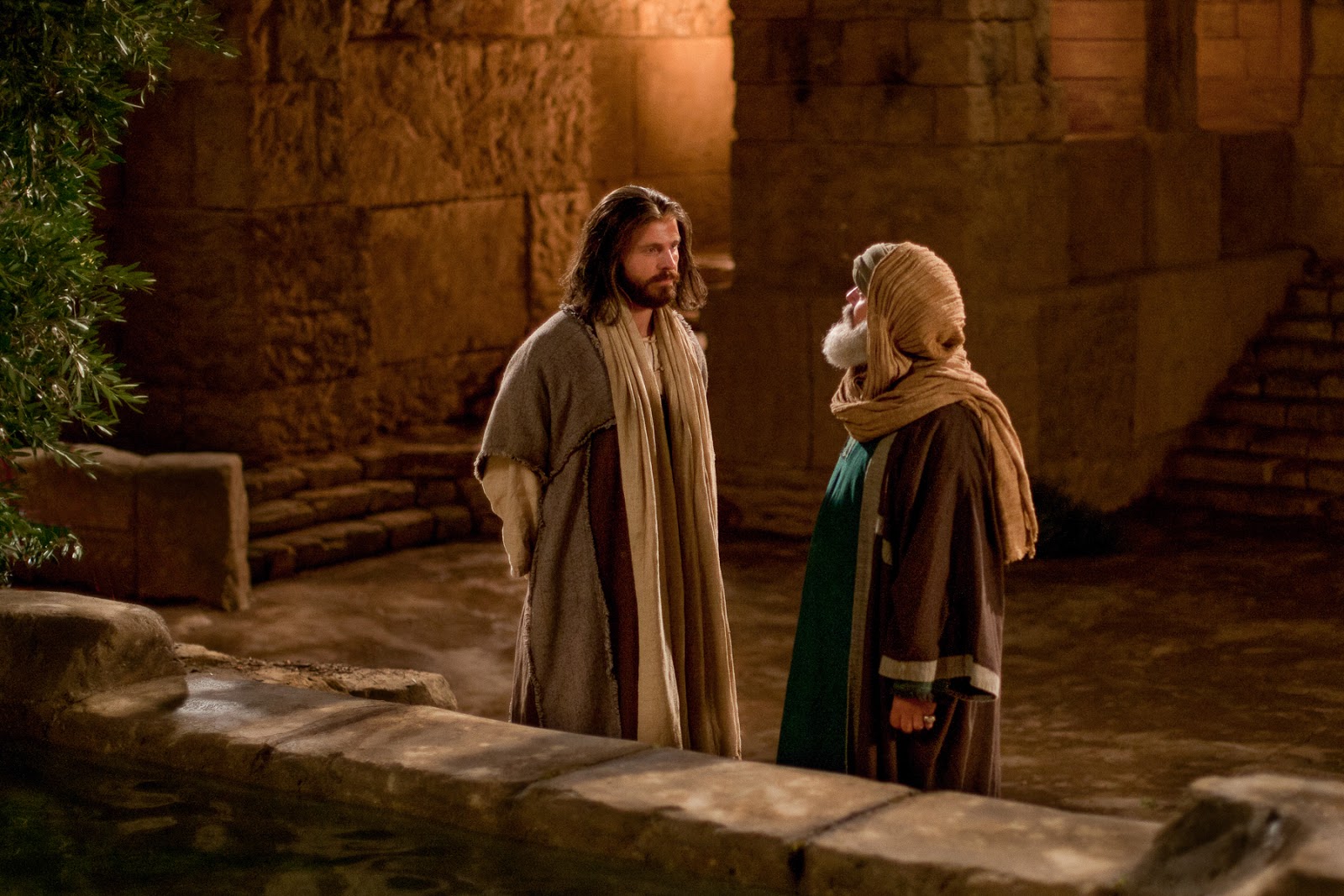 Traditional 'Old' NicodemusWords that sting:
Was that true? Why would they charge Nicodemus with being a Galilean? And who was this guy, anyway?
It turns out that Nicodemus, besides his three appearances in the Gospel of John, was well known to Josephus, the noted first-century writer of Jewish history. In addition, Nicodemus is also mentioned prominently in the Talmud, the body of ancient Jewish civil and ceremonial law which includes both the Mishna and the Gemara.
Nicodemus was known as one of the three wealthiest men in Jerusalem. Some say that he was the most wealthy of them all. As part of his wealth, he owned extensive plots of agricultural land, worked by Jewish peasants under the direction of local taskmasters. And where were these lands?
You guessed it. Nicodemus' land holdings were predominantly in Galilee, lower Galilee to be specific. Nicodemus was apparently good to his workers, for he was widely popular among the poor for his reputation of generosity. Although he was a Judean resident in Jerusalem, you can be safe in assuming that he would be seen frequently in Galilee, checking on his landholdings.
So did their (false) charge against Nicodemus sting? Possibly. Galileans were looked down upon by the Judeans, who lived in the 'right places' instead of in some remote province. But Nicodemus held a secure position in the Sanhedrin, the high council of the Jews, and could let such criticism roll off his back.
 The rich farmland of GalileeHow Old Was Nicodemus?
This is critical, for the historical Nicodemus was prominent mostly in the 50's and 60's of the first century. It is estimated that at the time he met Jesus he would had have to been between 10 and 40 years of age. Christian tradition looks upon Nicodemus as an old man when he met Jesus. But this is not necessarily true, for it is based on something Nicodemus said to Jesus: "How can a man be born [again] when he is old?" It is not necessary that Nicodemus was old when he said this. He could well have been between 30 and 40 years of age.
In the Hebrew spelling, he was known as Nakdimon ben Gurion, "Nicodemus son of Gurion." His real name was Boni, and he earned his nickname from a miracle he was reputed to have performed. In his later years, he was actively opposed to the Zealots who were trying to win independence from Rome, and with his wealth he helped fund the opponents of the Zealots.
 Historical 'Young' NicodemusProphets from Galilee:
Although it was true that the Messiah was prophesied to come from Bethlehem rather than Galilee, Nicodemus' opponents overlooked two prophets that did come from the land that we now call Galilee: Both Jonah and his father, the prophet Amittai (Truth), came from Gath-Hepher, about two miles from today's Nazareth, in the heart of Lower Galilee (2 Kings 14:25).
Perhaps if Nicodemus had looked this up, he could have embarrassed his accusers for their oversight of these two prophets.
Post 73


July 20, 2017
What Was Jesus' Earthly Inheritance?
What Did Jesus Own?
Other than at his birth and at his temple visit as a 12-year-old, Jesus' life before his baptism was relatively unremarkable. When he returned to Nazareth in the summer of AD 27 and spoke in the synagogue, the villagers said, "Isn't this just Joseph's son?" And when he returned again in the fall of AD 28, they doubled down on their doubt: "Isn't this the carpenter's son? Doesn't his family live right here? Where did this [ordinary] man get all this knowledge and power?" (Luke 4:22, Matthew 13:55).
So if Jesus led an ordinary life up to age 33 or so, what could he have acquired as possessions from his employment as a construction worker (carpenter)? His adoptive father Joseph has died, so what was Jesus' inheritance?
Out of a family of 7 or 8 children, James, the oldest step-brother, was due a double portion of the inheritance according to the customs of the land. In this case that meant that James would have inherited the family house, quite a grand place considering that it was owned and maintained by a professional carpenter. But James moved to Jerusalem after Jesus' death, and never married, meaning that the house would have fallen to younger brothers Joseph Junior and Simon. Jude, the youngest, inherited the 29-acre plot of farmland that the family owned. We know this from history, which tells us that Jude's grandsons were still working the land sixty year later. For Jesus' two or three stepsisters, their share of the family wealth would have consisted of the dowry they took with them when they got married.

So what was left for Jesus? I have some suggestions.
From the tale of Jesus' visit to Jerusalem at age 12, we know that he held an avid interest in the Hebrew scriptures, and was able to ask challenging questions about them. If we look at his preaching career, we know that Jesus was especially familiar with the book of the prophet Isaiah. This was a massive tome, which required a whole flock of goats slaughtered to have enough parchment to produce a single copy of the work.
Could Joseph have owned a copy of Isaiah? This would have been a costly and most precious possession. If so, Joseph would have certainly willed it and any other scrolls to his adoptive son Jesus, who had received powerful prophecies when he was an infant. Joseph would have had an active role in teaching Jesus about all the Hebrew scriptures. As Jesus grew taller and wiser, he apparently surpassed his father in the understanding of scripture, especially the book of Isaiah.

Most of those who learned to read Scripture would have been taught in the synagogue. No self-respecting synagogue would have been without copies of the five books of Moses. But for the small village of Nazareth, with maybe 200 residents, they may have had little more. Still, it was not impossible that they would have possessed the books of Isaiah and other prophets, for much of the property of these synagogues could have come from rich benefactors.
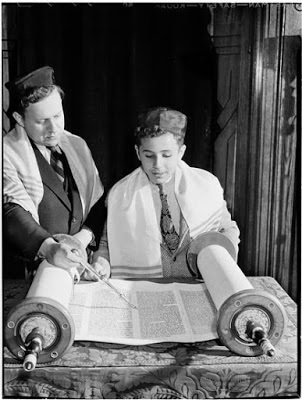
Here is an idea of how massive these scrolls can be. In this modern synagogue, this is probably a complete scroll of the five books of Moses, although it could also be the scroll of Isaiah.
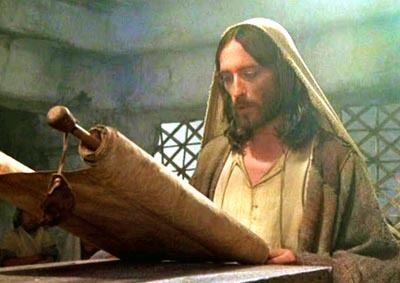
In the summer of AD 27, when Jesus was handed the scroll of Isaiah, he went directly to the passage he had in mind, in a book with which he was well familiar. (It is also possible that the passage to be read was preassigned according to a yearly calendar of readings.)
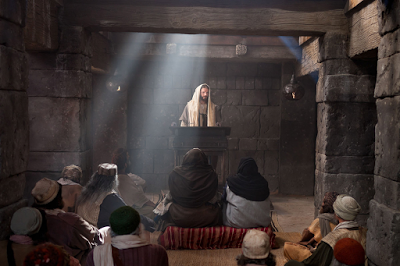
This image gives a good idea of how large the synagogue may have been in the village of Nazareth.
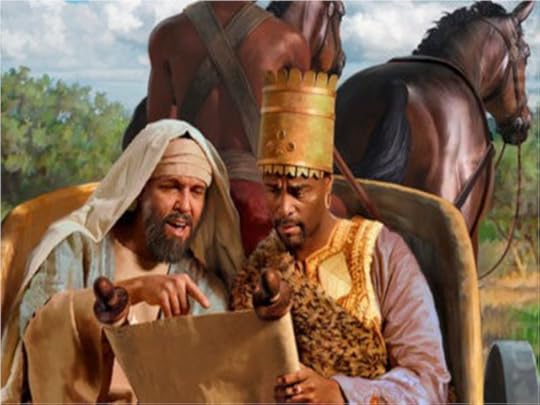
When Philip met the Ethiopian on the road back to his queen Candace, It was the scroll of Isaiah from which he was reading. This was a precious possession, and it may have been the sole purpose of his journey to purchase and bring back such a scroll. Perhaps it was intended for the use of the queen, or for a synagogue in Ethiopia. It may also have been purchased for the use of the Ethiopian servant himself, who wanted to learn from its ancient teachings.
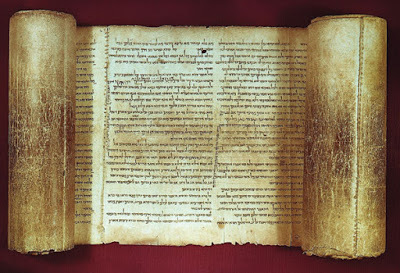
And so here is what one of those ancient copies of Isaiah really looked like. This is the Great Isaiah Scroll (known technically as 1QIsa), copied sometime between 150 and 100 BC. It is the best preserved and most complete of the Dead Sea Scrolls discovered in the mid-20th century. It is 1,100 years older than the best copy that was used to produce our Bibles today, and has only minor differences from the newer one, the Leningrad Codex, which is bound in book format.

The Scroll is written on 7 sheets of parchment sewn together, and is 24 feet long and 11 inches tall. Seven facsimile copies have been made, computer-printed onto actual parchment. I had the privilege of studying one of those copies, and looked for the appearance of the passage that Jesus read: Isaiah 61:1-2a.
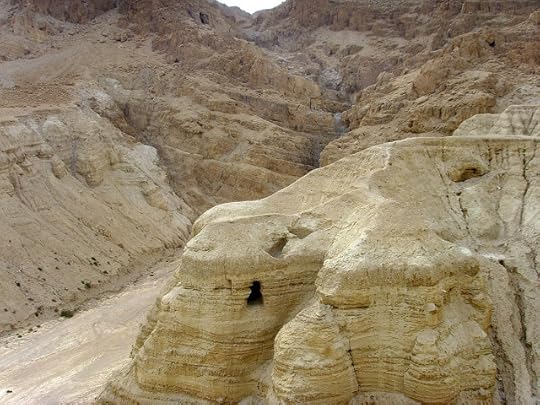
This is Cave One of the several caves where the Dead Sea Scrolls were discovered and retrieved primarily between 1946 and 1956. This overlooks the Dead Sea, and the Essene village of Qumran is near here.

This is the Shrine of the Book in Israel, which was built to display the Great Isaiah Scroll. However, some deterioration in the scroll was noted due to its exposure to light. One of the seven facsimile copies is on display there now.
 The Great Isaiah ScrollAnd this is the complete Great Isaiah Scroll, one of the most beloved treasures of the Jewish faith.
If Jesus owned such a treasure, he gave it to John son of Zebedee when, from the cross, he assigned to John the responsibility of Jesus to care for his mother.
But Jesus owns a greater treasure. Jesus' earthly possession is the "called-out-assembly" of his holy people--the church. He purchased it with his blood. It is his possession forever, and can never be taken away from him.
Post #72
Other than at his birth and at his temple visit as a 12-year-old, Jesus' life before his baptism was relatively unremarkable. When he returned to Nazareth in the summer of AD 27 and spoke in the synagogue, the villagers said, "Isn't this just Joseph's son?" And when he returned again in the fall of AD 28, they doubled down on their doubt: "Isn't this the carpenter's son? Doesn't his family live right here? Where did this [ordinary] man get all this knowledge and power?" (Luke 4:22, Matthew 13:55).
So if Jesus led an ordinary life up to age 33 or so, what could he have acquired as possessions from his employment as a construction worker (carpenter)? His adoptive father Joseph has died, so what was Jesus' inheritance?
Out of a family of 7 or 8 children, James, the oldest step-brother, was due a double portion of the inheritance according to the customs of the land. In this case that meant that James would have inherited the family house, quite a grand place considering that it was owned and maintained by a professional carpenter. But James moved to Jerusalem after Jesus' death, and never married, meaning that the house would have fallen to younger brothers Joseph Junior and Simon. Jude, the youngest, inherited the 29-acre plot of farmland that the family owned. We know this from history, which tells us that Jude's grandsons were still working the land sixty year later. For Jesus' two or three stepsisters, their share of the family wealth would have consisted of the dowry they took with them when they got married.

So what was left for Jesus? I have some suggestions.
From the tale of Jesus' visit to Jerusalem at age 12, we know that he held an avid interest in the Hebrew scriptures, and was able to ask challenging questions about them. If we look at his preaching career, we know that Jesus was especially familiar with the book of the prophet Isaiah. This was a massive tome, which required a whole flock of goats slaughtered to have enough parchment to produce a single copy of the work.
Could Joseph have owned a copy of Isaiah? This would have been a costly and most precious possession. If so, Joseph would have certainly willed it and any other scrolls to his adoptive son Jesus, who had received powerful prophecies when he was an infant. Joseph would have had an active role in teaching Jesus about all the Hebrew scriptures. As Jesus grew taller and wiser, he apparently surpassed his father in the understanding of scripture, especially the book of Isaiah.

Most of those who learned to read Scripture would have been taught in the synagogue. No self-respecting synagogue would have been without copies of the five books of Moses. But for the small village of Nazareth, with maybe 200 residents, they may have had little more. Still, it was not impossible that they would have possessed the books of Isaiah and other prophets, for much of the property of these synagogues could have come from rich benefactors.
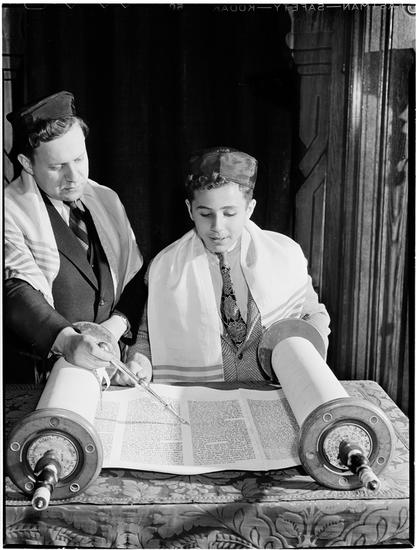
Here is an idea of how massive these scrolls can be. In this modern synagogue, this is probably a complete scroll of the five books of Moses, although it could also be the scroll of Isaiah.

In the summer of AD 27, when Jesus was handed the scroll of Isaiah, he went directly to the passage he had in mind, in a book with which he was well familiar. (It is also possible that the passage to be read was preassigned according to a yearly calendar of readings.)
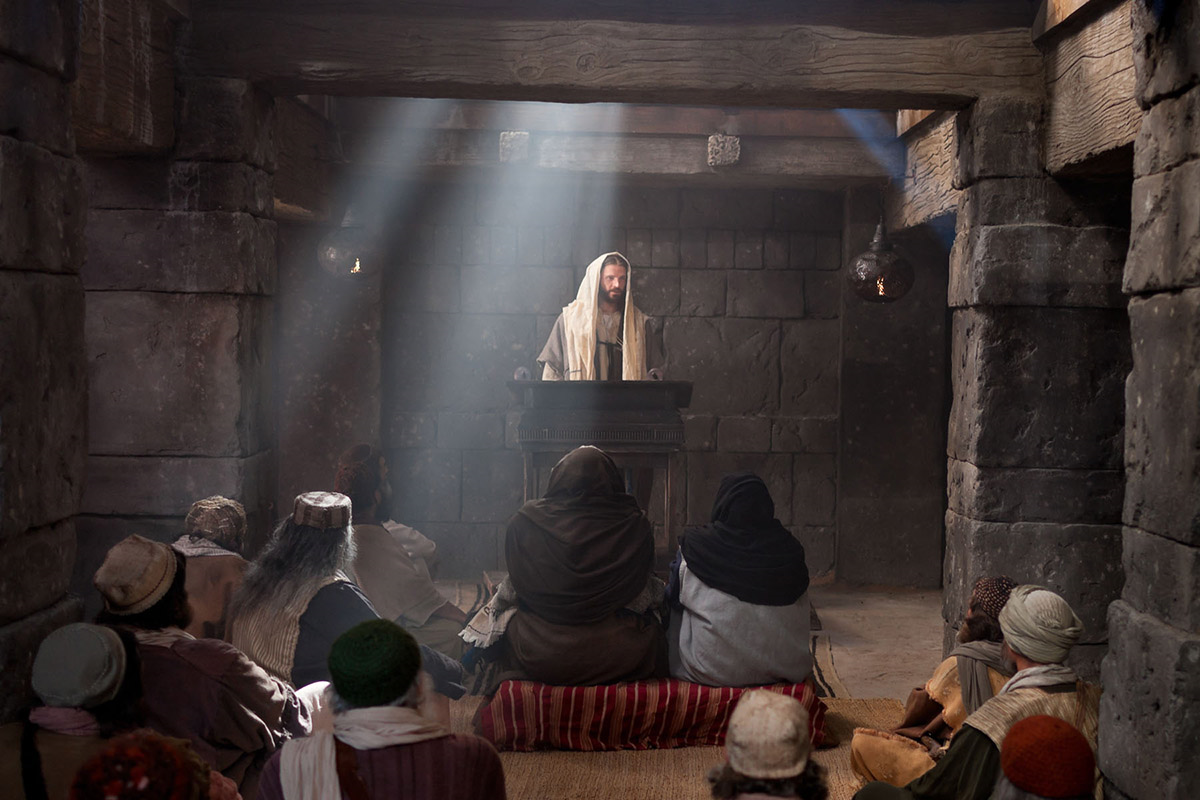
This image gives a good idea of how large the synagogue may have been in the village of Nazareth.
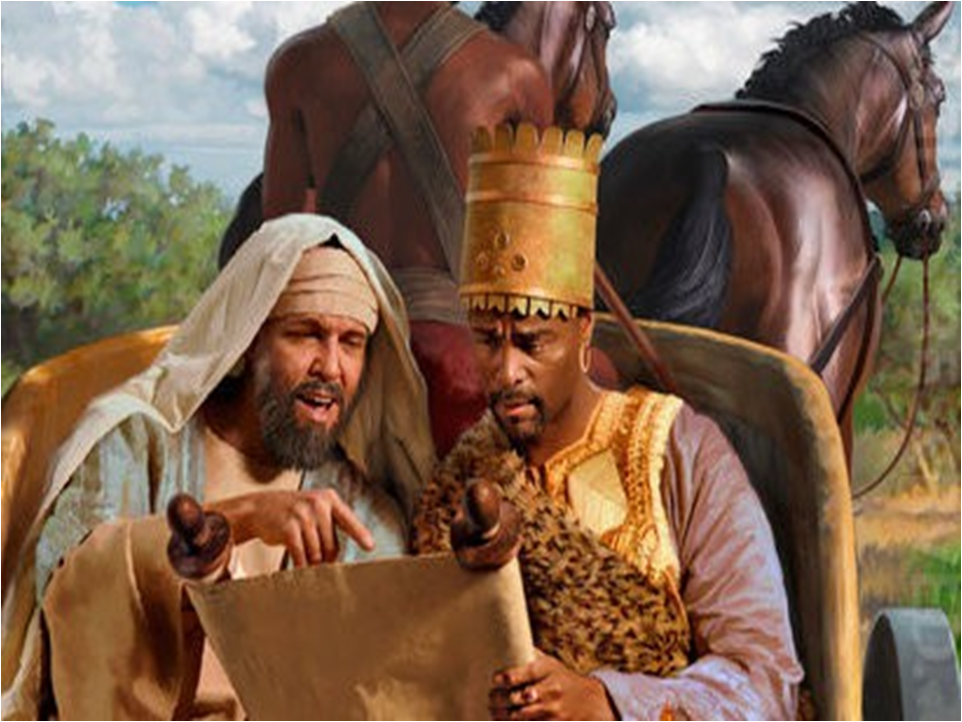
When Philip met the Ethiopian on the road back to his queen Candace, It was the scroll of Isaiah from which he was reading. This was a precious possession, and it may have been the sole purpose of his journey to purchase and bring back such a scroll. Perhaps it was intended for the use of the queen, or for a synagogue in Ethiopia. It may also have been purchased for the use of the Ethiopian servant himself, who wanted to learn from its ancient teachings.

And so here is what one of those ancient copies of Isaiah really looked like. This is the Great Isaiah Scroll (known technically as 1QIsa), copied sometime between 150 and 100 BC. It is the best preserved and most complete of the Dead Sea Scrolls discovered in the mid-20th century. It is 1,100 years older than the best copy that was used to produce our Bibles today, and has only minor differences from the newer one, the Leningrad Codex, which is bound in book format.

The Scroll is written on 7 sheets of parchment sewn together, and is 24 feet long and 11 inches tall. Seven facsimile copies have been made, computer-printed onto actual parchment. I had the privilege of studying one of those copies, and looked for the appearance of the passage that Jesus read: Isaiah 61:1-2a.

This is Cave One of the several caves where the Dead Sea Scrolls were discovered and retrieved primarily between 1946 and 1956. This overlooks the Dead Sea, and the Essene village of Qumran is near here.

This is the Shrine of the Book in Israel, which was built to display the Great Isaiah Scroll. However, some deterioration in the scroll was noted due to its exposure to light. One of the seven facsimile copies is on display there now.
 The Great Isaiah ScrollAnd this is the complete Great Isaiah Scroll, one of the most beloved treasures of the Jewish faith.
If Jesus owned such a treasure, he gave it to John son of Zebedee when, from the cross, he assigned to John the responsibility of Jesus to care for his mother.
But Jesus owns a greater treasure. Jesus' earthly possession is the "called-out-assembly" of his holy people--the church. He purchased it with his blood. It is his possession forever, and can never be taken away from him.
Post #72
July 10, 2017
Could Thaddeus be the Youngest Apostle?
A Closer Look at an Obscure Apostle
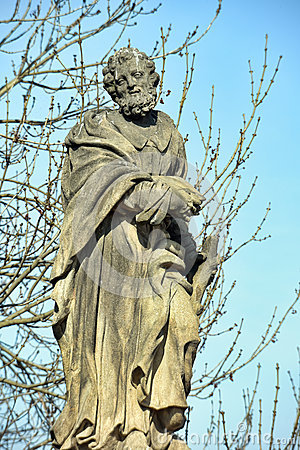 Judas Thaddeus by Jan Oldrich Mayer
1. Who is this 'Judas Thaddeus', Anyway?
In the Apostle lists of the gospels of Matthew and Mark, immediately after James the son of Alpheus, comes Thaddeus, and then Simon the Zealot. The name Thaddeus is not mentioned again in the entire Bible. In the apostle list of the Gospel of Luke, Simon Zealot's name comes after James Alpheus, and then comes a new name: "Judas [son of] James" (not [brother of], which is a mis-translation). This is an extra Judas, differentiated from Judas Iscariot, who betrayed Jesus. Luke doubles down on the name and parentage in Acts 1:13. This extra Judas show up once in John's Gospel, identified as "Judas, not Iscariot" (John 14:22). Only John gives him a speaking part: "Are you going to disclose yourself to us, and not to the world?"
It didn't take long for the ancient church fathers to identify this extra Judas as being the same as Thaddeus. In church tradition they began calling him "Jude" to differentiate him from "Judas Iscariot." But then later church fathers confused Jude the Apostle with Jude the step-brother of Jesus, and further confounded him as the author of the short letter of Jude. Recent scholarship has pretty much nailed down who was the author of the letter of Jude. By a great margin, it could be none other than Judas (Jude), the youngest step-brother of Jesus. It is a very early letter (perhaps the earliest), with a strict structure that carefully imitates the pesher letters found in the Dead Sea Scrolls.
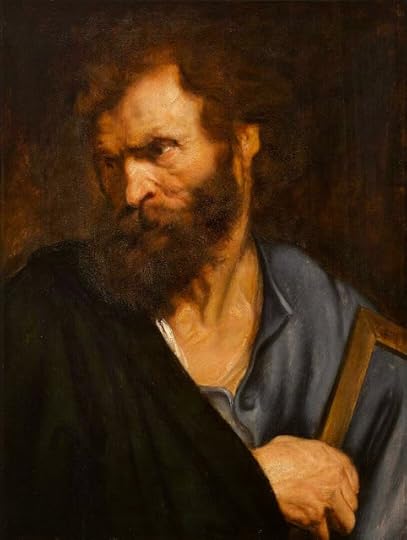 Judas Thaddeus by Anthony van Dyck
Could Judas Thaddeus be the Youngest Apostle?
The youngest apostle, at least in the realm of art, has always been assumed to be John son of Zebedee, who is always portrayed as the only apostle lacking facial hair. That is, John was thought to be too young to have grown a beard. He was identified as the "disciple whom Jesus loved," presumably because due to his youth, he needed extra guidance from the Master. And by my analysis, he was the "least" disciple, that is, the one whose job was to attend to the personal needs of the Master and would stay beside him when the remaining apostles had jobs to do, such as fetching food from a Samaritan town while Jesus rested by the well.
But there is another possibility, and this depends on identifying "James" the father of Judas Thaddeus. In the lists of Luke and Acts, Judas [Thaddeus] is separated from James Alpheus only by one name. In the lists of Matthew and Mark, [Judas] Thaddeus comes directly after James Alpheus. Scholars complain that James (actually, Jacob) is such a common name that there is no hope of identifying Thaddeus' father. But the close mentions of Judas T. with James A. likely betrays the possibility that everyone who wrote the synoptic gospels plus the intended early audience for these gospels already knew the identity of the father of Judas Thomas.
This makes James Alpheus and Judas Thaddeus James the only father & son team among the apostles. (Thaddeus seems to be a nickname.) Neither of these men were part of the first group of disciples, composed of professional fishermen and their friends. When they joined Jesus, Thaddeus could have just recently passed his bar Mitzvah and be a year or two younger than John of Zebedee. And he would not be in need of special extra attention from Jesus, because he worked directly at his own father's side.
Mark's gospel identifies the six working pairs among the apostles: 1) Peter and James Z, the older members of the fishing consortium, 2) John Z and Andrew, the younger members of the fishing consortium, 3) Philip and Nathanael bar Tholmai, friends of the consortium, 4) James son of Alpheus and Thaddeus grandson of Alpheus, 5) Matthew and Thomas, the carpenter/architect and the tax collector, and finally 6) Simon the Zealot and Judas son of the Man from Kerioth.
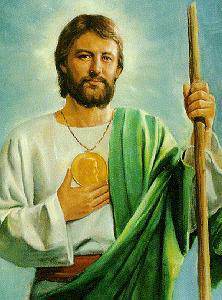 Judas Thaddeus with Healing Image of Christ
The Acts of Judas Thaddeus
In church tradition, the evangelistic work of Thaddeus was prodigious. He made disciples of Jesus in Judea, Idumea, Samaria, Syria, Persia, Libya, Beirut, and most famously, Edessa in Syria. Thaddeus brought to King Abgar of Edessa an image of Jesus, which the king looked upon and became cured of his disease. Later speculation identifies this image with the Shroud of Turin. In any case, the king became a follower of Jesus and spread the way as the newly official religion of Syria. (Other sources propose that Thaddeus of Edessa may have been a different person than Thaddeus the Apostle.) Prayer Medallion for the Lost Cause Apostle
The Apostle of Lost Causes
One story holds that, because Thaddeus shared a name with the traitor Iscariot, people were reluctant to come to him for help. This made Thaddeus even more encouraged to accept any call for help he received. So when people in need exhausted every other avenue, they turned to Thaddeus, the Apostle for Lost Causes.
And (below), it seems that Thaddeus has not been totally forgotten, for someone has written a screen play about his life and ministry.
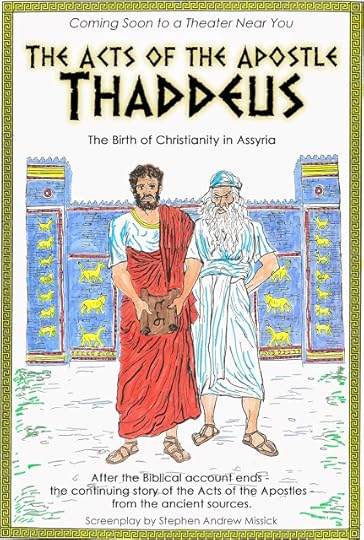 A Screenplay for Thaddeus
Post #71
 Judas Thaddeus by Jan Oldrich Mayer
1. Who is this 'Judas Thaddeus', Anyway?
In the Apostle lists of the gospels of Matthew and Mark, immediately after James the son of Alpheus, comes Thaddeus, and then Simon the Zealot. The name Thaddeus is not mentioned again in the entire Bible. In the apostle list of the Gospel of Luke, Simon Zealot's name comes after James Alpheus, and then comes a new name: "Judas [son of] James" (not [brother of], which is a mis-translation). This is an extra Judas, differentiated from Judas Iscariot, who betrayed Jesus. Luke doubles down on the name and parentage in Acts 1:13. This extra Judas show up once in John's Gospel, identified as "Judas, not Iscariot" (John 14:22). Only John gives him a speaking part: "Are you going to disclose yourself to us, and not to the world?"
It didn't take long for the ancient church fathers to identify this extra Judas as being the same as Thaddeus. In church tradition they began calling him "Jude" to differentiate him from "Judas Iscariot." But then later church fathers confused Jude the Apostle with Jude the step-brother of Jesus, and further confounded him as the author of the short letter of Jude. Recent scholarship has pretty much nailed down who was the author of the letter of Jude. By a great margin, it could be none other than Judas (Jude), the youngest step-brother of Jesus. It is a very early letter (perhaps the earliest), with a strict structure that carefully imitates the pesher letters found in the Dead Sea Scrolls.
 Judas Thaddeus by Anthony van Dyck
Could Judas Thaddeus be the Youngest Apostle?
The youngest apostle, at least in the realm of art, has always been assumed to be John son of Zebedee, who is always portrayed as the only apostle lacking facial hair. That is, John was thought to be too young to have grown a beard. He was identified as the "disciple whom Jesus loved," presumably because due to his youth, he needed extra guidance from the Master. And by my analysis, he was the "least" disciple, that is, the one whose job was to attend to the personal needs of the Master and would stay beside him when the remaining apostles had jobs to do, such as fetching food from a Samaritan town while Jesus rested by the well.
But there is another possibility, and this depends on identifying "James" the father of Judas Thaddeus. In the lists of Luke and Acts, Judas [Thaddeus] is separated from James Alpheus only by one name. In the lists of Matthew and Mark, [Judas] Thaddeus comes directly after James Alpheus. Scholars complain that James (actually, Jacob) is such a common name that there is no hope of identifying Thaddeus' father. But the close mentions of Judas T. with James A. likely betrays the possibility that everyone who wrote the synoptic gospels plus the intended early audience for these gospels already knew the identity of the father of Judas Thomas.
This makes James Alpheus and Judas Thaddeus James the only father & son team among the apostles. (Thaddeus seems to be a nickname.) Neither of these men were part of the first group of disciples, composed of professional fishermen and their friends. When they joined Jesus, Thaddeus could have just recently passed his bar Mitzvah and be a year or two younger than John of Zebedee. And he would not be in need of special extra attention from Jesus, because he worked directly at his own father's side.
Mark's gospel identifies the six working pairs among the apostles: 1) Peter and James Z, the older members of the fishing consortium, 2) John Z and Andrew, the younger members of the fishing consortium, 3) Philip and Nathanael bar Tholmai, friends of the consortium, 4) James son of Alpheus and Thaddeus grandson of Alpheus, 5) Matthew and Thomas, the carpenter/architect and the tax collector, and finally 6) Simon the Zealot and Judas son of the Man from Kerioth.
 Judas Thaddeus with Healing Image of Christ
The Acts of Judas Thaddeus
In church tradition, the evangelistic work of Thaddeus was prodigious. He made disciples of Jesus in Judea, Idumea, Samaria, Syria, Persia, Libya, Beirut, and most famously, Edessa in Syria. Thaddeus brought to King Abgar of Edessa an image of Jesus, which the king looked upon and became cured of his disease. Later speculation identifies this image with the Shroud of Turin. In any case, the king became a follower of Jesus and spread the way as the newly official religion of Syria. (Other sources propose that Thaddeus of Edessa may have been a different person than Thaddeus the Apostle.)
 Prayer Medallion for the Lost Cause Apostle
The Apostle of Lost Causes
One story holds that, because Thaddeus shared a name with the traitor Iscariot, people were reluctant to come to him for help. This made Thaddeus even more encouraged to accept any call for help he received. So when people in need exhausted every other avenue, they turned to Thaddeus, the Apostle for Lost Causes.
And (below), it seems that Thaddeus has not been totally forgotten, for someone has written a screen play about his life and ministry.
 A Screenplay for Thaddeus
Post #71
July 4, 2017
The Disciple That Jesus Loved
Did a Fisherman's Son Write a Gospel?Who indeed wrote the Gospel supposedly created by John?
In fact, who wrote the Book of Revelation, or the three Letters of John?
Top-notch scholars are by no means agreed, and they have a variety of theories backed up by selected facts and erudite opinions. It seems to some of them utterly fantastic that a young fisherman from the Sea of Galilee could grow up to write the most astounding and powerful theological book (Gospel) in the realm of Christianity, then go on to write the very different and thunderous Revelation of John.
How Many John's could there possibly be? Here's a partial list.
1. An unnamed disciple of John the Baptist and friend of Andrew,
2. The young John son of Zebedee, the fisherman brother of Simon Peter,
3. The unnamed "beloved disciple" who claims to have written John's Gospel (Jn 21:24),
3. John the Evangelist, by tradition the anonymous writer of the Gospel of John,
4. The unnamed elder who wrote the three letters of John,
5. John of Patmos, who wrote Revelation in a cave on the island of Patmos,
6. At least one man known as John, who was buried in Ephesus.
As I said, various scholars have come up with good, or at least logical reasons for separating out these individual characters. But not one of them has come up with enough data to eliminate the traditional view which asserts that all of these men are the same person, that is, the younger son of Zebedee who was a disciple of the Baptist, then a disciple of Jesus, who wrote the Gospel of John, the three letters of John, and indeed, the Revelation of John. This is the view I support.
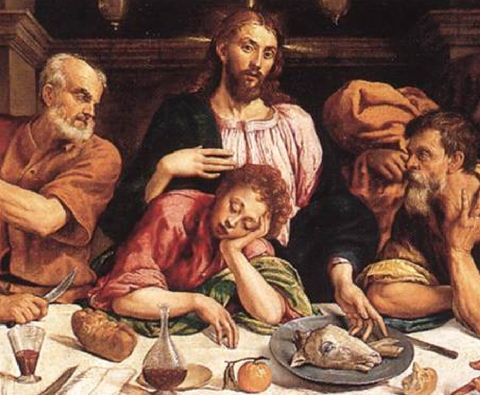 Last Supper Detail by Jacopo Bassano 1542Tradition: Was John the Youngest Disciple?Another strong tradition has been held over the ages that John was the youngest of the 12 central disciples of Jesus, and this was in part why he became "the disciple that Jesus loved." I have begun to doubt that, because of the possibility that Thaddeus may have been the youngest disciple, for reasons that I will lay out in my next blog post. In this post I'm going to examine some of the traditional portrayals of John son of Zebedee in famous paintings.
Tradition: John the Disciple of Jesus had no beard.Let's be clear about this: Judean and Samaritan men wore beards. Romans, especially Roman soldiers, did not. At least that is the traditional portrayal. But there's a problem with the AD 1542 painting above. John is front and center in this painting of the Last Supper, and appears to be, say, 12 to 15 years old. But by the time of the Last Supper, the disciples had been with Jesus for over three years. If John was only a 9- to 12-year-old child when he became a disciple, that would be a public scandal worthy of being noted in the gospels.
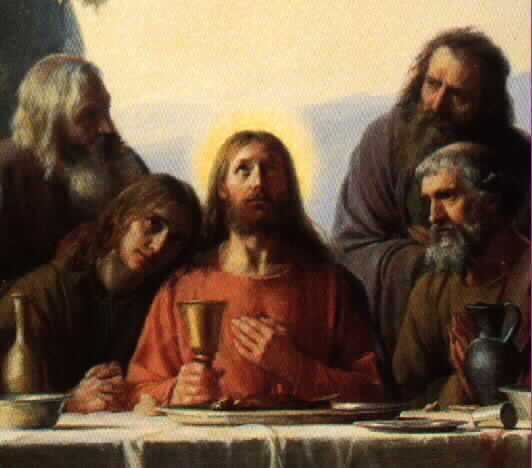 Another Last Supper DetailOn the other hand, if he had become a disciple after his "bar Mitzvah" at age 13, there would be nothing of note in his age. Being a "son of the Law," he was considered a man and would no longer be called a child. But that would make him 16 years of age or more, and should be sprouting at least a hint of some facial hair.
 Realistic Last SupperI like the painting above, the best of the available 'last supper' renditions, as it shows a friendlier Jesus and a John who may be sprouting the first wisps of facial hair.
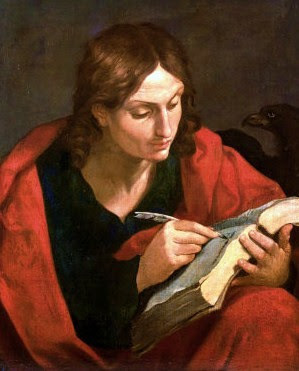 John the EvangelistThere's a lot wrong with the painting above, not the least of which is the lack of a beard. John wrote his Gospel some thirty years after Jesus was crucified, so he would be about 45 years old. Since he's not living in Judea any more, is he taking on the fashions of the gentiles? I doubt that. And that heavy tome he's writing! The first Bibles, containing all the books of the Old and New Testaments, would not be produced for another 3- to 400 years. He could write his Gospel, Revelation, and Letters in that tome and have room to write it again many times.
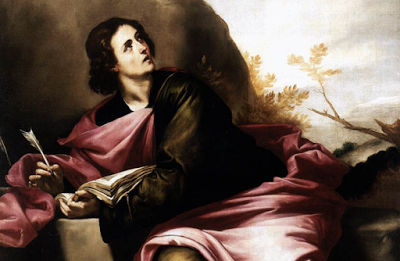 John of PatmosThis painting is even worse. It purports to show John writing down the visions he received on Patmos. The problem is, John was at least 80 years old when he wrote his Apocalypse. And even if he had taken up beardlessness, I doubt there were shaving tools in his cave. And If I were to live in a cave, I doubt that my clothes would look so spiffy and clean.
 The Beloved Disciple by Simon VouetHere's my favorite painting of what John may have looked like when he became a disciple of Jesus. He's still young and vulnerable, but he's beginning to question the world around him. Just in time, along comes Jesus with the answers.
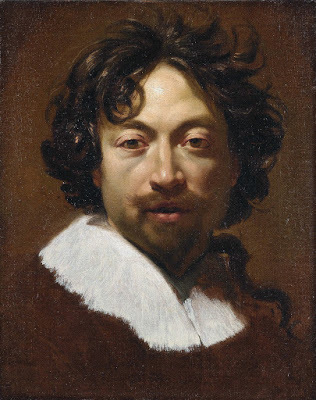 Self Portrait by Simon VouettBut on comparison of the above with the previous painting, it appears that Simon Vouett has created a depiction of John in line with Vouett's conception of his own likeness.
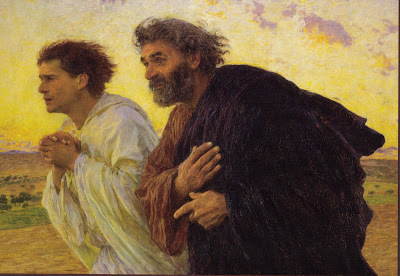 Cover image on Beth Moore bookThis painting of John and Peter looks like it would fit well in a period about 10 years after Jesus' ascension, when it became very dangerous to be a Christian in Judea. And perhaps John has shaved his beard to go under cover as a Roman.
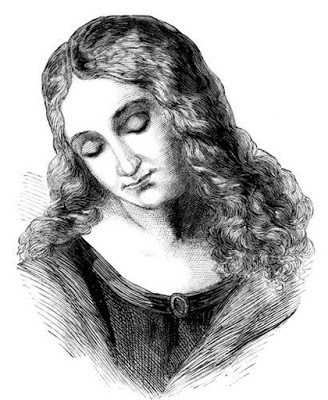 Beloved Disciple over-doneThis is horrible. The artist has attempted to show an unwarranted and over-done depiction of the softness of Jesus' young disciple, and has ended up with an image far more female than male.
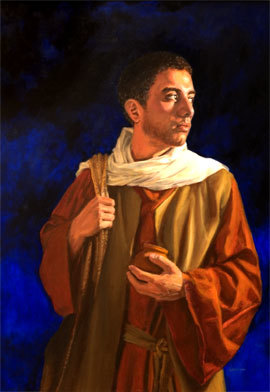 John the Teenage DiscipleAnd this is very good. It's not my favorite painting of John, but it places him at just the right age to participate in the Last Supper. This is the teenage Apostle John.
Post #70
In fact, who wrote the Book of Revelation, or the three Letters of John?
Top-notch scholars are by no means agreed, and they have a variety of theories backed up by selected facts and erudite opinions. It seems to some of them utterly fantastic that a young fisherman from the Sea of Galilee could grow up to write the most astounding and powerful theological book (Gospel) in the realm of Christianity, then go on to write the very different and thunderous Revelation of John.
How Many John's could there possibly be? Here's a partial list.
1. An unnamed disciple of John the Baptist and friend of Andrew,
2. The young John son of Zebedee, the fisherman brother of Simon Peter,
3. The unnamed "beloved disciple" who claims to have written John's Gospel (Jn 21:24),
3. John the Evangelist, by tradition the anonymous writer of the Gospel of John,
4. The unnamed elder who wrote the three letters of John,
5. John of Patmos, who wrote Revelation in a cave on the island of Patmos,
6. At least one man known as John, who was buried in Ephesus.
As I said, various scholars have come up with good, or at least logical reasons for separating out these individual characters. But not one of them has come up with enough data to eliminate the traditional view which asserts that all of these men are the same person, that is, the younger son of Zebedee who was a disciple of the Baptist, then a disciple of Jesus, who wrote the Gospel of John, the three letters of John, and indeed, the Revelation of John. This is the view I support.
 Last Supper Detail by Jacopo Bassano 1542Tradition: Was John the Youngest Disciple?Another strong tradition has been held over the ages that John was the youngest of the 12 central disciples of Jesus, and this was in part why he became "the disciple that Jesus loved." I have begun to doubt that, because of the possibility that Thaddeus may have been the youngest disciple, for reasons that I will lay out in my next blog post. In this post I'm going to examine some of the traditional portrayals of John son of Zebedee in famous paintings.
 Tradition: John the Disciple of Jesus had no beard.Let's be clear about this: Judean and Samaritan men wore beards. Romans, especially Roman soldiers, did not. At least that is the traditional portrayal. But there's a problem with the AD 1542 painting above. John is front and center in this painting of the Last Supper, and appears to be, say, 12 to 15 years old. But by the time of the Last Supper, the disciples had been with Jesus for over three years. If John was only a 9- to 12-year-old child when he became a disciple, that would be a public scandal worthy of being noted in the gospels.
 Another Last Supper DetailOn the other hand, if he had become a disciple after his "bar Mitzvah" at age 13, there would be nothing of note in his age. Being a "son of the Law," he was considered a man and would no longer be called a child. But that would make him 16 years of age or more, and should be sprouting at least a hint of some facial hair.
 Realistic Last SupperI like the painting above, the best of the available 'last supper' renditions, as it shows a friendlier Jesus and a John who may be sprouting the first wisps of facial hair.
 John the EvangelistThere's a lot wrong with the painting above, not the least of which is the lack of a beard. John wrote his Gospel some thirty years after Jesus was crucified, so he would be about 45 years old. Since he's not living in Judea any more, is he taking on the fashions of the gentiles? I doubt that. And that heavy tome he's writing! The first Bibles, containing all the books of the Old and New Testaments, would not be produced for another 3- to 400 years. He could write his Gospel, Revelation, and Letters in that tome and have room to write it again many times.
 John of PatmosThis painting is even worse. It purports to show John writing down the visions he received on Patmos. The problem is, John was at least 80 years old when he wrote his Apocalypse. And even if he had taken up beardlessness, I doubt there were shaving tools in his cave. And If I were to live in a cave, I doubt that my clothes would look so spiffy and clean.
 The Beloved Disciple by Simon VouetHere's my favorite painting of what John may have looked like when he became a disciple of Jesus. He's still young and vulnerable, but he's beginning to question the world around him. Just in time, along comes Jesus with the answers.
 Self Portrait by Simon VouettBut on comparison of the above with the previous painting, it appears that Simon Vouett has created a depiction of John in line with Vouett's conception of his own likeness.
 Cover image on Beth Moore bookThis painting of John and Peter looks like it would fit well in a period about 10 years after Jesus' ascension, when it became very dangerous to be a Christian in Judea. And perhaps John has shaved his beard to go under cover as a Roman.
 Beloved Disciple over-doneThis is horrible. The artist has attempted to show an unwarranted and over-done depiction of the softness of Jesus' young disciple, and has ended up with an image far more female than male.
 John the Teenage DiscipleAnd this is very good. It's not my favorite painting of John, but it places him at just the right age to participate in the Last Supper. This is the teenage Apostle John.
Post #70
June 26, 2017
Did Jesus Ever Sin?
Was Jesus Sinless? YES!
 John wrote, "In Jesus there is no sin" (1 John 3:5). Peter wrote, "Jesus committed no sin, and no deceit was found in his mouth" (1 Peter 2:22). As Christians, we believe that the one person who was without sin--Jesus--nevertheless died for our sins.
But here I will dig a little deeper. It will surprise me if I do not lose friends over the content of this post. But please hear me out, before you push the 'unfriend' button;
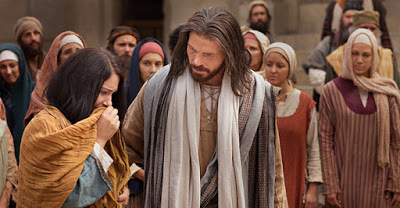 "Go, and sin no more."Can an Infant Sin?If an infant throws a bottle out of his crib, intentionally hitting his sibling on the head, did he sin? (Same question for her/she.) After the first time, he/she may even be aware that this is a wrong action, earning parental disapproval, not to mention the disapproval of the sibling. But is this sin?
If it is indeed sin, does the infant need to repent? The Christian definition of repent is "to turn from sin and dedicate oneself to the amendment of one's life." This infant may be learning the difference between right and wrong behavior, but I find it unlikely that he/she is ready to understand the concept of repentance.
Nevertheless, wrong has been done, and in the Christian worldview, wrong must be atoned for, after repentance. But how is this possible?
The Answer From JudaismSpeaking from the first century, among Second Temple Judaism, there is recognition that such wrong can take place, and there is a remedy: When an infant sins, the fault for the sin falls on the father, who must atone for the sin. The infant--or toddler, or child--has no blame imputed to him or her, and no obligation to atone for the sin before God.
In ancient Jewish culture, there is a tradition (unmentioned in the Bible, as far as I know) called bar Mitzvah. In today's culture, this is often a coming-out party, when the youngster takes on adult responsibility--not far different from a quinceanera in Latino culture.
But bar Mitzvah in Aramaic means "son of the Law," and was originally a celebration for the father, not the child, for the day when the father no longer was responsible for the sins of the child. Cracking open a flask of wine may have been a suitable action for that celebration. From this point onward, the youngster was expected to atone for his/her own sins, at the temple if called for. It was the responsibility of the father to prepare the son for this day.
A similar tradition may have been observed for mothers and daughters, but this is unclear in the sources to which I have been exposed.
So, What About the Young Jesus?We actually have an incident documented in the Bible when Jesus committed wrong and was responsible for damages to others. You'll find it in Luke's gospel, chapter 2 verses 41-52.
As Jesus' parents were returning from Passover, the boy Jesus stayed behind in Jerusalem, but his parents were unaware of it. Supposing him to be in the Caravan, they went a day's journey; and they began looking for him among their relatives and acquaintances. When they did not find him, they returned to Jerusalem looking for him. After three days they found him in the temple, sitting in the midst of the teachers, both listening and asking them questions (Luke 2:43-46).
His mother said to him, "Why have you treated us this way? Look, your father and I have been terribly worried looking for you." He answered, "Why were you looking for me? Didn't you know that I would have to be in my Father?" (This may be translated "in my Father's house" or "about my Father's business," referring to his Father in heaven.
TERRIBLY WORRIED! Two days travel and three days searching! It is likely that some of their relatives came back with the distraught parents, to help them look for Jesus. Although Jesus thought he had a good excuse, the time had not yet been fulfilled when he would leave his family and become a wandering prophet. Besides the worry and the travel, his parents (especially Joseph) experienced a loss of honor among his acquaintances, for having such a wayward son.
Did Jesus sin? Ah, here is where Luke helps us out. At verse 42, Luke writes,"When Jesus became 12 years old, they went up to Jerusalem according to the Passover custom," as had been their yearly custom. Barely 12 years old, as Luke points out, Jesus was not old enough to have become a "son of the Law," and no sin would be imputed to him. It was Joseph who had sinned, for not training Jesus to know that his action was inappropriate, and also for not adequately supervising Jesus in Jerusalem. Joseph likely had to make a guilt offering in the temple to atone for his sin, perhaps with Jesus in tow to show him the consequences of his actions.
At verse 52, Luke writes that "Jesus kept increasing in wisdom," pointing out that Jesus' actions were likely a result of immaturity in wisdom at age 12.
Did Jesus sin? Before God, no he didn't. Did he cause harm to others? Yes, but it was his adoptive father's job to set things right. Did he experience what all humans experience? Yes, including what happens when he does harm to others.

 John wrote, "In Jesus there is no sin" (1 John 3:5). Peter wrote, "Jesus committed no sin, and no deceit was found in his mouth" (1 Peter 2:22). As Christians, we believe that the one person who was without sin--Jesus--nevertheless died for our sins.
But here I will dig a little deeper. It will surprise me if I do not lose friends over the content of this post. But please hear me out, before you push the 'unfriend' button;
 "Go, and sin no more."Can an Infant Sin?If an infant throws a bottle out of his crib, intentionally hitting his sibling on the head, did he sin? (Same question for her/she.) After the first time, he/she may even be aware that this is a wrong action, earning parental disapproval, not to mention the disapproval of the sibling. But is this sin?
If it is indeed sin, does the infant need to repent? The Christian definition of repent is "to turn from sin and dedicate oneself to the amendment of one's life." This infant may be learning the difference between right and wrong behavior, but I find it unlikely that he/she is ready to understand the concept of repentance.
Nevertheless, wrong has been done, and in the Christian worldview, wrong must be atoned for, after repentance. But how is this possible?
The Answer From JudaismSpeaking from the first century, among Second Temple Judaism, there is recognition that such wrong can take place, and there is a remedy: When an infant sins, the fault for the sin falls on the father, who must atone for the sin. The infant--or toddler, or child--has no blame imputed to him or her, and no obligation to atone for the sin before God.
In ancient Jewish culture, there is a tradition (unmentioned in the Bible, as far as I know) called bar Mitzvah. In today's culture, this is often a coming-out party, when the youngster takes on adult responsibility--not far different from a quinceanera in Latino culture.
But bar Mitzvah in Aramaic means "son of the Law," and was originally a celebration for the father, not the child, for the day when the father no longer was responsible for the sins of the child. Cracking open a flask of wine may have been a suitable action for that celebration. From this point onward, the youngster was expected to atone for his/her own sins, at the temple if called for. It was the responsibility of the father to prepare the son for this day.
A similar tradition may have been observed for mothers and daughters, but this is unclear in the sources to which I have been exposed.
So, What About the Young Jesus?We actually have an incident documented in the Bible when Jesus committed wrong and was responsible for damages to others. You'll find it in Luke's gospel, chapter 2 verses 41-52.
As Jesus' parents were returning from Passover, the boy Jesus stayed behind in Jerusalem, but his parents were unaware of it. Supposing him to be in the Caravan, they went a day's journey; and they began looking for him among their relatives and acquaintances. When they did not find him, they returned to Jerusalem looking for him. After three days they found him in the temple, sitting in the midst of the teachers, both listening and asking them questions (Luke 2:43-46).
His mother said to him, "Why have you treated us this way? Look, your father and I have been terribly worried looking for you." He answered, "Why were you looking for me? Didn't you know that I would have to be in my Father?" (This may be translated "in my Father's house" or "about my Father's business," referring to his Father in heaven.
TERRIBLY WORRIED! Two days travel and three days searching! It is likely that some of their relatives came back with the distraught parents, to help them look for Jesus. Although Jesus thought he had a good excuse, the time had not yet been fulfilled when he would leave his family and become a wandering prophet. Besides the worry and the travel, his parents (especially Joseph) experienced a loss of honor among his acquaintances, for having such a wayward son.
Did Jesus sin? Ah, here is where Luke helps us out. At verse 42, Luke writes,"When Jesus became 12 years old, they went up to Jerusalem according to the Passover custom," as had been their yearly custom. Barely 12 years old, as Luke points out, Jesus was not old enough to have become a "son of the Law," and no sin would be imputed to him. It was Joseph who had sinned, for not training Jesus to know that his action was inappropriate, and also for not adequately supervising Jesus in Jerusalem. Joseph likely had to make a guilt offering in the temple to atone for his sin, perhaps with Jesus in tow to show him the consequences of his actions.
At verse 52, Luke writes that "Jesus kept increasing in wisdom," pointing out that Jesus' actions were likely a result of immaturity in wisdom at age 12.
Did Jesus sin? Before God, no he didn't. Did he cause harm to others? Yes, but it was his adoptive father's job to set things right. Did he experience what all humans experience? Yes, including what happens when he does harm to others.

June 20, 2017
WHERE'S CANA?
Where was Jesus' First Miracle Done?Cana is the answer, but where was Cana? Or to bring this up to date, which of the five contenders is the original Cana of the Gospel story?
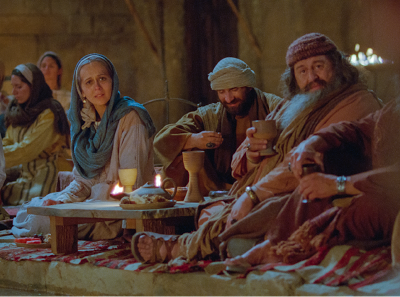 Mary: "They've run out of wine?"We have one biblical measurement for locating Cana: it's in Galilee, at the end of about a two-day hike from the Jordan River.
On the next day Jesus purposed to go into Galilee, and he found Philip and said to him, "Follow me." [Philip went to find Nathanael, and brought him to Jesus before they started on their hike, bringing along Peter and Andrew and John.] On the third day there was a wedding in Cana of Galilee, and the mother of Jesus was there. (John 1:43, [John 1:44-51,] John 2:1.
By my reconstruction, Jesus found Philip on Wednesday morning, they hiked that day and all of Thursday, and arrived in Cana on Friday with plenty of time for the wedding celebration before Sabbath began Friday eve. (I place the start of their hike on the Jordan River not far from the southern outlet of the Sea of Galilee. See my blog post of November 15, 2015 for the details.)
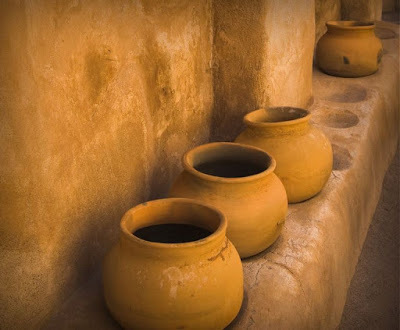 6 Stone Pots, 20 to 30 Gallons Each
Here are the five contenders for the location of Cana:
1: Qana, Lebanon. A whole bunch of fervent Lebanese Christians promote this south Lebanon town as the real Cana, despite the fact that the town isn't even in Galilee. But unless Jesus and company use holy teleportation, they are not going to reach Lebanon on a two-day hike. And if they did use supernatural transportation, the Gospel of John would surely have mentioned it. We can toss this one out.
 2. Kafr Kanna, Israel. If you ask the "Jesus Trail" tour guides for Cana, they will bring you here, where the ornate and imposing Franciscan Wedding Chapel is built next to where some ancient water jars were found. But there is no mention of any other archaeological support for this location. It is just the "traditional" site, four miles northeast of Nazareth..
3. Karm-er-Rasm, Israel. This recently excavated site is favored by the excavating archaeologist, having found evidence of a Roman town with a significant Jewish population in the right time period. It is just north of Kafr Kanna, which may have picked up its Cana reputation when Karm-er-Rasm disappeared below the sands. Other scholars, though, remain unconvinced.
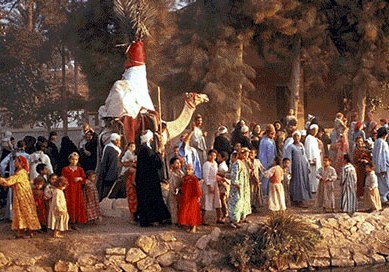 Fanciful Re-enactment of the Wedding Procession at Cana4. Khirbet Kana, Israel (translation: Ruins of Cana.". These extensive ruins sit on a limestone outcropping 300 feet above the floor of a valley which is 5.6 miles north of Kafr Kanna. A guidebook to the Holy Land written between AD 517 and 527 by one Theodosius confidently names this as the Cana location. Later explorers and cartographers of the Middle Ages also placed Cana here, saying that the spots where the six water jugs had stood could be plainly seen.
5. Ain Qam, Israel, "the Spring of Cana." The name of the place fits well, but this location has not been excavated. Plus, at one mile north of Nazareth it seems too close to be its own unique spot. If there were a major town here, it would have overshadowed Nazareth.
My vote for the true location of Cana is Khirbet Kana, #4 above.
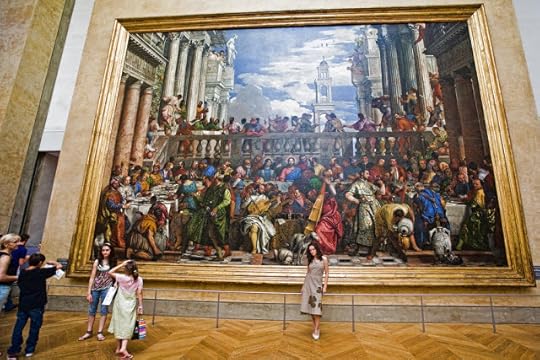 The Wedding at Cana is the Largest Painting in the Louvre
Post #68
 Mary: "They've run out of wine?"We have one biblical measurement for locating Cana: it's in Galilee, at the end of about a two-day hike from the Jordan River.
On the next day Jesus purposed to go into Galilee, and he found Philip and said to him, "Follow me." [Philip went to find Nathanael, and brought him to Jesus before they started on their hike, bringing along Peter and Andrew and John.] On the third day there was a wedding in Cana of Galilee, and the mother of Jesus was there. (John 1:43, [John 1:44-51,] John 2:1.
By my reconstruction, Jesus found Philip on Wednesday morning, they hiked that day and all of Thursday, and arrived in Cana on Friday with plenty of time for the wedding celebration before Sabbath began Friday eve. (I place the start of their hike on the Jordan River not far from the southern outlet of the Sea of Galilee. See my blog post of November 15, 2015 for the details.)
 6 Stone Pots, 20 to 30 Gallons Each
Here are the five contenders for the location of Cana:
1: Qana, Lebanon. A whole bunch of fervent Lebanese Christians promote this south Lebanon town as the real Cana, despite the fact that the town isn't even in Galilee. But unless Jesus and company use holy teleportation, they are not going to reach Lebanon on a two-day hike. And if they did use supernatural transportation, the Gospel of John would surely have mentioned it. We can toss this one out.
 2. Kafr Kanna, Israel. If you ask the "Jesus Trail" tour guides for Cana, they will bring you here, where the ornate and imposing Franciscan Wedding Chapel is built next to where some ancient water jars were found. But there is no mention of any other archaeological support for this location. It is just the "traditional" site, four miles northeast of Nazareth..
3. Karm-er-Rasm, Israel. This recently excavated site is favored by the excavating archaeologist, having found evidence of a Roman town with a significant Jewish population in the right time period. It is just north of Kafr Kanna, which may have picked up its Cana reputation when Karm-er-Rasm disappeared below the sands. Other scholars, though, remain unconvinced.
 Fanciful Re-enactment of the Wedding Procession at Cana4. Khirbet Kana, Israel (translation: Ruins of Cana.". These extensive ruins sit on a limestone outcropping 300 feet above the floor of a valley which is 5.6 miles north of Kafr Kanna. A guidebook to the Holy Land written between AD 517 and 527 by one Theodosius confidently names this as the Cana location. Later explorers and cartographers of the Middle Ages also placed Cana here, saying that the spots where the six water jugs had stood could be plainly seen.
 5. Ain Qam, Israel, "the Spring of Cana." The name of the place fits well, but this location has not been excavated. Plus, at one mile north of Nazareth it seems too close to be its own unique spot. If there were a major town here, it would have overshadowed Nazareth.
My vote for the true location of Cana is Khirbet Kana, #4 above.
 The Wedding at Cana is the Largest Painting in the Louvre
Post #68


