
B.J. Hoff's Blog, page 5
December 8, 2011
Write Grace
 I post this entry from my blog, Grace Notes, at least once a year, because I think it's worth remembering--a reminder for Christian novelists to hold closely in our hearts.
So--one more time ... Write Grace.
-----
As Christian novelists we're continually aware of elements we don't want to include in our work. There are excesses and "freedoms" and improprieties that simply don't belong in the writing of those who create from a Christian worldview. Just as an artist has choices in the elements he chooses to paint, so does the writer have choices in the stories he chooses to develop, the words he uses, the imaginary worlds he creates, and the people who inhabit those worlds.
On occasion, we hear grumbling about the "restrictions" of fiction written from a Christian worldview, about too many "do's and don't's." But the truth is that we have many more choices for what we can write than what we shouldn't write: a world of choices, really--a wealth of resources from which to draw whatever we need in order to create and add richness and beauty to our creation. We can choose the settings in which we place our stories, the characters in those stories, the arenas in which they contend and struggle, succeed and fail, what they give and what they take. It has less to do with what we can't write as it does how we write it.
With such limitless material at our disposal, need we really be concerned about what we can't do?
An element which I long ago committed to always keep as a part of my fiction is the same as that which many other Christian writers continue to include: that element is Grace. I want to write grace, to weave naturally and freely, if subtly, through my stories the grace of God ... to have story people who are not only touched by divine grace but who also extend it to others.
One continual challenge that keeps writing interesting for the Christian author is the exploration of the ways in which grace makes a difference in our lives and in our world. Although there is a line of thought that would have us believe that for fiction to be "realistic" or "convicting," it must also be void of redemption and tenderness and hope, in truth that's dishonest fiction. It's also unrealistic fiction. For the Christian writer to even make a pretense of writing a novel without hope, without grace, would be a lie and an affront to everything we believe. I can't imagine writing in a more bleak or desolate climate.
Some of the finest novels I've read, both literary and commercial and whether published in the general market or in CBA, do far more than keep grace a peripheral element of the story, but instead allow it to be an essential part of the story. We spend much time in our fictive worlds among our story people. I want those landscapes to be fertile and rich, and no matter how troubling the times or severe the struggles or torturous the pain, no matter how much fear or even violence is inflicted, I want to provide my readers with at least a glimpse of hope and grace by the time they finish the story.
That's not always an easy task, but as Christian writers, I hope we always have the courage and the conviction to "write grace."
BJ


November 17, 2011
The Kindle Fire
 Walt Mossberg headlined his recent article about the new Kindle Fire by calling it "A Grown-Up E-Reader with Tablet Spark." I was intrigued by his description, because that was exactly what I was looking for when I ordered mine. Now that I've had some hands-on experience with the device, I'm happy to say I got exactly what I wanted--and a little more.
Before I placed my order, I'd read a number of conflicting reviews about the Kindle Fire. Some I found to be right on target; others not so much. I'm not all that tech savvy, but because of all the buzz going around about this device--and because several friends have asked me about it, due to their own interest in purchasing one--I thought I'd comment briefly on my initial impressions.
First, it is not an "iPad killer," as it's been often dubbed. The KF lacks many of the features found on the Apple iPad. There's no camera (but for the life of me I have yet to figure out why anyone wants a camera on the iPad, awkward as it is to use. I much prefer the camera on my phone or, better yet, my Canon.). The KF has only 8 GB of built-in storage--but that doesn't really matter, given Amazon's unlimited cloud storage. It's smaller than the iPad at 7"--but that's a plus in terms of portability and holding it for any length of time when you're reading. The KF has no calendar or notepad. But it does have Amazon as its mother ship, and that's a very big plus.
Whether or not you'd be happy with the Kindle Fire depends, in my opinion, on your expectations for the device. In other words, what you want it to be. In my case, I primarily wanted the "grown-up e-reader" Mossberg mentioned. I like the options of reading in black on white, white on black, or the sepia/cream--my favorite. I also wanted a slightly smaller reader than the iPad that wouldn't become tiring when held for any length of time. I also wanted easy access to Amazon content, the ability to quickly check my e-mail while using the device rather than having to switch to another unit, and a better web browser than the one used on the earlier Kindle keyboard unit. The KF's browser is a little slower than the iPad's, but still quite an improvement over the older Kindle's. As far as I'm concerned, the "extras"--including movie, TV, and music streaming, plus several apps--are just that: extras.
As much as I appreciate my iPad, I have to admit that I also apreciate a few features that appear on the KF and not available to the iPad: An appealing and reasonable price. The size and light weight more desirable for an e-reader. Easy access to the Amazon marketplace. And unlimited cloud storage. The ease of use and great display I'd grown used to on the iPad are benefits of the KF as well.
I didn't want or need a "genuine tablet" to take the place of my iPad. I would never trade the work capability and utility of the iPad for the Kindle Fire, which is basically a device for Amazon content consumption. I wasn't looking for a mini-computer. There's not one out there that can begin to compare with my MacBook Air. I simply wanted exactly what Walt Mossberg wrote about: "a grown-up e-reader with tablet spark." That's what I got, and I'm completely happy with it. While I don't regret the bloated price I paid for my iPad some time ago, I'm very pleased--and somewhat impressed--with everything Amazon managed to cram into the KF for what even the critics concede to be a most reasonable price.
There are far more technical reviews all over the internet to help you get a better fix on the different devices available. This is just my way of providing a little more non-technical information for those of you who are still trying to make a decision between a full-fledged tablet or a unit that more closely resembles the Kindle Fire.
Good luck!
BJ
November 11, 2011
Veterans Day, 2011
 We owe our freedom to you--the veterans who purchased that freedom, often at a terrible price. Thanks to all the heroes of yesterday and today.
BJ
October 27, 2011
Ending on a High Note
 I mentioned in my last post that readers and writers seem to either like Prologues or not like them at all. The same thing could be said about Epilogues. If you read my novels, you know I use them, mostly because they're important to my own feelings of closure and satisfaction for my stories. Like prologues, epilogues are meant to be outside the story, separated by time or place, and told from a different perspective or point of view from the rest of the story. There are a number of uses for the epilogue, but one of my personal choices is to use it to suggest the future. Because I write almost entirely in series, this is especially important to help give the reader a sense of satisfaction at the end of the current story while pointing to or providing a hint about the next story in the series.
It's common for many authors to use the epilogue as a kind of summary, and there's a creative way to do that without stumbling into the trap of allowing it to be trite or dull. It can be a "wrap-up" without wrapping it up too neatly, especially in the case of a series.
However it's used, I believe an epilogue should be fresh, to the point, and brief. When it's over, it's over. Don't kick a dead horse and all that. In addition, be careful not to treat it as a sewing basket. Don't dump all the loose ends of the story here and pull off a "miracle ending" or a deus ex machina. Tie up those dangling threads before the epilogue so your readers don't end up tripping over them.
As is the case with prologues, the intent and purpose of epilogues need to be different for different genres. An epilogue for a thriller will vary from that of a character-driven historical novel, and a romance novel epilogue will take a different tone and focus than you'll find in a mystery. Also, an epilogue should blend well with the novel itself, even while stepping outside the story to add and enhance.
I suppose it's fair to say that my epilogues usually end on a "high note." (Could be the musician in me, and in fact, many of them do have a musical scene or something to do with music.) That doesn't mean that every single plot thread is neatly resolved and tucked away never to be seen again. As I mentioned before, it's important in series writing to provide a fair measure of satisfaction while pointing toward the next book and the future. Some of my epilogues can probably be said to have a bittersweet flavor. The ending might be satisfying--but not without a hovering cloud because of past events.
I like what John Gardner said about endings in his book, The Art of Fiction:
"A novel is like a symphony in that its closing movement echoes and resounds with all that has gone before ... It is this closing orchestration that the novel exists for. If such a close does not come, for whatever theoretically good reason, we shut the book with feelings of dissatisfaction, as if cheated."
I try never to cheat my readers. The Amen that I whisper to myself at the close of each book isn't so much a feeling of "The End" as it is a prayer for blessing on those who make it that far. (And a prayer of thanks for the goodness of the God Who continues to bring me that far.)
BJ
October 25, 2011
It's a Setup
I view each as a perfectly legitimate literary device that, when done well, can enrich a story. Prologues serve different purposes for different books, but whenever and wherever used, they have specific jobs to do. I've employed them in a number of ways: to point to the story itself, providing a hint of the problem or suspense or conflict to come; to offer a glimpse of some significant facet of characterization that would be difficult to present later on; to acquaint the reader with an experience from the character's past that's pertinent to his actions in the story; to introduce an "icon"--an object or symbol that will continue throughout the novel or the series; to pose a question or a hint of intrigue that will lead the reader into the story; to set the tone or the atmosphere of the story.
Some examples: in Prelude, the first book of my American Anthem series, the lead character of the entire series, Michael Emmanuel, is introduced as a young boy aboard a ship in New York Harbor as he prepares to leave for his home in Italy. He has an experience in which he hears a glorious music that he longs to "catch and hold"--an impossible feat. This experience, this desperation to "catch the distant music," informs Michael's ambition, his aspirations, and even his faith walk throughout his youth and his adulthood. In the second book--Cadence--the prologue features a pivotal moment in Michael's career on stage by pointing to a drastic change that will affect not only Michael's life, but his wife's as well. And in the third book--Jubilee--the prologue depicts the birth of his daughter, while posing not only a question about the future but also offering a bittersweet promise. Each event occurs "outside" the time frame of the story, yet is intended to take the hand of the reader and tug her into the story.
In my Emerald Ballad series, the prologue of each book had to do with the "icon" of the series--the Kavanagh harp, which was passed down across the centuries from one generation to another. Each prologue progresses chronologically from century to century as the reader follows the role of the harp in the lives of the main characters, both in America and in Ireland.
In A Distant Music, the first book of my Mountain Song Legacy,the "stage is set" to introduce the icons of the series--a silver flute and a penny whistle--and their significance to the main characters ... and an entire town.
In The Riverhaven Years, the prologues take the reader into the heart and memories of the main character--Rachel Brenneman--to hint of a mystery and a problem that will haunt her throughout the progression of the series.
Perhaps you've noticed that many writers of mystery and suspense novels use the prologue to show the commission of a crime or hint at the suspense element of the novel. In women's fiction, a prologue might depict a past event, setting up its relevancy to the story to follow. Some romance novels might provide a scene in the past of two characters, perhaps their "last good-bye," then begin the first chapter with the story unfolding to show the return of one of those characters to his or her hometown and the first encounter or reunion with the former sweetheart.
Prologues are extremely flexible; they can occur in the past or in the present--or even in the future. They can introduce, set a stage, show an act of violence, hint at future events, provide brief backstory, pose a question that needs to be answered, establish the narrator, show an experience that influenced a character, or--one of my favorites--set the mood or tone of the story.
More than anything else, I consider a prologue important for the purpose of intriguing the reader, luring her into the story. You might call it a setup.
As for the role of an epilogue ... well, that's for next time.
BJ
September 21, 2011
Such Friends
 Lately I've been reminded how very fortunate I am to have the truly wonderful readers I do, readers who have blessed me time and time again through the years, who continue to bless me, over and over again--and I thought I'd just take a moment to thank you.
By its very nature, writing is a solitary lifestyle. It would probably be a lonely lifestyle for many of us were it not for our families (and that includes our church families), our friends, other writers ... and our readers. Many of my readers pray for me, for my work, even for my family. And believe me, I'm more aware of those prayers than you can imagine! Some have become good friends, even though we've never met. Many drop me a note on a regular basis simply to let me know they're thinking of me and cheering me on as I work through the book in progress. Some "hawk" my books as they travel about the country, talking with bookstore folks, encouraging them to order titles they don't have on the shelf, at the same time making them aware of other authors writing inspirational and Christian fiction. And some of my readers are also writers who can pray with great understanding and empathy, because they've "been there and done that."
I wouldn't like to consider what a hole there would be in my life without these special friends. Many of you are reading this, and you know who you are. Know this also: you make a significant, powerful difference in my life--and I'm grateful for each one of you. Thank you for loving the stories that I love to bring to you, and thank you for pouring out your affection and your prayers on me. Because of you, my life is anything but solitary. Because of you, I'm blessed with a wide network of friends who care and who never hesitate to make the effort to let me know they care.
When I give thanks for you, my readers, a line from my favorite poet, W. B. Yeats, invariably comes to mind: "Think where man's glory most begins and ends, and say my glory was I had such friends."
Bless you for the many ways you bless me.
BJ
August 29, 2011
Why Amish Fiction?
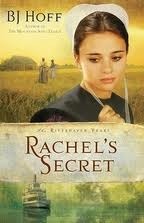 A question that seems to pop up often in my email has to do with why, after so many years of publishing general historical fiction, have I recently been writing "Amish fiction."
This may seem like an easy question to answer. Actually, it isn't--but let me just make three points that might explain it best:
1. First, I'm still writing historical fiction set in Appalachia, but more recently with mostly--but not all--Amish characters, so a series of Amish fiction isn't actually that much of a change for me. Also, whereas most Amish fiction published in the past few years has featured contemporary settings, I'm still writing in an 1800s setting, as I almost always do. The current series (The Riverhaven Years) is located in the hills of southern Ohio, close to the Ohio River, and as I mentioned, is peopled mostly by Amish characters, although the "anchor" character of the series--"Captain" Jeremiah Gant--is an Irish immigrant, and Asa, his helper-friend, is a freed slave.
In the series planned to follow The Riverhaven Years, the setting will also be historical, and will again feature a mix of some Amish and some non-Amish characters.
2. I've no doubt but what one of the reasons I'm writing Amish fiction is the same as one of the reasons you're reading Amish fiction. I discovered that I, also, really enjoy reading about the Amish: their culture, their faith, their customs (and their food)! I believe there's been a genuine longing by many of us over the past few years to return to a simpler lifestyle: a more basic, "uncluttered," way of living. Even if we can only read about it, there's a real comfort and contentment--and, yes, a fascination--about times and places less harried and unhurried, about faith that's active and alive, a faith that is lived as a vital part of everyday life, not super-structured, complicated, and relegated only to Sunday worship.
Not until I had actually develdoped nearly half of the first book in The Riverhaven Years did I discover an element I hadn't considered before I began writing about Amish characters. The very fact that the people are Plain in the way they live--in the way they dress simply and with no adornment, to the way they marry, raise their children, do their work, and conduct their daily lives--artificiality is stripped away and character is allowed to come shining through. That makes writing about them both a challenge and a joy. It makes weaving variety into the story details perhaps a little more challenging, but at the same time it makes character development and scene building more intriguing. And when you're writing about people you like, it heightens the joy of the craft.
I remember telling my husband a few years ago, long before I had any real thought of developing an Amish story, that if I were going to write about any people besides the Irish, it would most likely be the Amish. We live close to more than one Amish settlement, and of course in Ohio we're within easy traveling distance of several Amish communities, so research can be both fun and convenient. But more than anything else, the Amish people and their lifestyle have long interested me, and I've developed much respect and liking for those Amish folks I've talked with. I believe the primary reason I enjoy writing about the Amish people so much is because I enjoy them so much.
3. One of the elements of writing historical fiction that has always greatly appealed to me is the research. What to some is "work," is to me a source of pleasure. In fact, I have to restrain myself from putting too much of my research in the story itself. I always need to remember that my readers don't necessarily want all the details that interest me! So after years and years of researching "my own people" (the Irish), I've thoroughly enjoyed digging into another, different "community" and learning about its people. And with every new discovery, my interest in learning more continues to grow.
You can probably tell I'm having a great time writing Amish fiction. I can only hope you'll continue to have a great time reading it!
BJ
August 3, 2011
Q & A: "Writerly Questions"--Part 3
 I'm departing from the format I've used for the other two "Writerly Questions" entries by answering only one question this time. I think it's an important question, but the answer is lengthy. Actually, this response is updated and revised from a blog entry I wrote some time ago when the subject came up. This particular question seems to come round fairly often, mostly, I suspect, because of reviews, contest entry critiques, and other blog entries.
Q. Could you please explain to me what "sentimental fiction" means? I've seen this used in book reviews and it was also, in a very negative way, used to describe one of my books submitted in a contest.
A. The term "sentimental fiction" is almost always used in a negative way, because the inference is that the writing is mawkish, opinionated, and employs excessive, affected emotion. There's a legitimate case for this criticism with some fiction. If you read carefully, with an eye open to ways the author "works" to evoke certain emotions in you as a reader--sadness, love, sympathy, elation, outrage, etc.--you might detect certain deliberate attempts to squeeze out the feelings the author is hoping for. Most often you can spot these ploys by a character's emphasis on his/her own feelings. Instead of writing in such a way that will bring the reader into the character's world and her life, an author may effect a dramatic stream of emotional thoughts or dialogue, telling how the character feels, or "showing" those feelings by the use of florid prose or scenes with overwritten, turbulent emotion.
You may already be aware that a novel doesn't necessarily have to contain "too much emotion" or "false emotion" to be considered "sentimental fiction" by the critics. Faith fiction seems to be a favorite target. One almost gets the impression that the less real emotion, the better. Seldom, if ever, do you see this criticism hurled at a "literary novel." That's because in many literary novels, emotion is deliberately kept always on the periphery, if it exists at all, and the reader is kept at a certain distance from the charaters.
Unfortunately, over the past few years we've seen a trend toward an indiscriminate use of this phrase. It seems that it's become all too easy for reviewers and critics to pass this judgment on a whim. There are certain elements that will almost automatically evoke the label of "sentimental fiction," especially in regard to "Christian fiction" or "genre fiction" (a term that sometimes is used more to belittle than to categorize). For example: devotion (as in the devotion of the faithful or religious); romance (especially the "light" romantic story or the love stories depicted in inspirational novels, as opposed to an explicitly sexual, often dark story of destructive passion); morality; and patriotism. (The latter is one that's almost guaranteed to touch off a particularly wild-eyed censure.)
Frankly, I find the truly unemotional, dispassionate story–-no matter how extraordinary the writer's technique and style happen to be--deadly boring. If a novel's characters feel nothing, react to nothing, care about nothing, then I find myself leaning toward the conclusion that there is nothing in this book I care about reading ... and go looking for a better book.
But that doesn't mean I have any patience with the author who deliberately tries to wring emotion from me, whatever emotion that might be. Let's face it: when you've been writing (and reading) for years, you can see those efforts to manipulate your emotions coming at you, and it's annoying, at the least. I do, however, believe that genuine, natural emotion in the hands of a skillful, compassionate writer is a good thing, a necessary element and vital to our enjoyment of fiction.
So what is genuine sentiment in fiction? How can a writer avoid the too-obvious attempts to make readers feel what we want them to feel? Write with compassion as opposed to sentimentality. Learn to love your characters. Strive to respect them as people, as individuals, so you can honestly care, and care deeply, about what happens to them. Even our dark characters, our antagonists, deserve to be developed fully and realistically. No matter how unlikable or even despicable they may be, they still deserve our understanding, our honesty. In order to reach that kind of connection with characters, we have to know them--really know them, however long it takes. Until I know my characters well, I don't begin writing the story.
Instead of trying to purposely kindle sorrow or elation or indignation or frustration or any of the other emotions familiar to all readers, we need to develop characters in whom these emotions will come forth naturally as the characters work through the events of their lives. In this way, we allow emotion to exist and be revealed in and by our characters. We bring characters to our fiction who are so alive that the reader can feel the breath of those characters on her face as they pass by.
That won't necessarily eliminate criticism of our fiction, especially if we're writing novels that include hope and redemption. There is simply no way, no matter how brilliantly one may write, to avoid negative reviews from the critic who refuses to allow a place for the Christian worldview, who disparages that worldview. But if our characters are so real, so alive, that we can follow them through their world and their lives with understanding and respect and compassion, we can offer our readers the opportunity to do the same.
We need to remember that readers don't care in the least about reviews or criticism of our work. They care about the reading experience we can give them, the story–-the temporary world they can enter through our skill and artistry as writers, and perhaps what they can bring out of that world as a grace or an idea or an insight.
BJ
July 28, 2011
Q & A. "Writerly" Questions--Part 2
 Continuing with questions I'm often asked ...
Q. How do you plot? Chapter by chapter or an overall synopsis? Do you use detailed outlines?
A. Thanks for making this easy for me to answer. I don't plot. Never have. My story evolves through my characters. I believe it was the great Ray Bradbury who indicated that he simply found out what his hero or heroine wanted and then just followed them around all day. Well--that's how I write. Before I start writing, I know my characters. I know them well. I live with them eat with them, listen to them and just "follow them around all day." The story starts, continues, and ends through those characters.
Bradbury also said that he doesn't outline, doesn't plot because "when you plot books you take all the energy and vitality out of them. There's no blood. You have to live it from day to day and let your characters do things." (Listen to the Echoes: The Ray Bradbury Interviews by Sam Weller).
You'd probably be surprised by how many writers don't plot. For many of us, the story is born and developed in a variety of ways. With some, like myself, it's totally character driven. Other writers plot and plan to the final detail. I've always wished I could be one of those. I would love knowing exactly where to begin, where I'm going, and where I'm going to land.
I do keep a notebook (on the laptop, not the hand-written kind) in which I keep a record of character details, notes about the setting, about any back-story that's important to the book, etc., but that's simply for detail memory, not for "plotting."
Each writer has to learn what works for her/him and follow the road that eventually takes them to where the characters want to go. In my case, there are always detours and wrong turns. But that's all right. Learning how to get back on the right road is a vital part of the novel journey.
Q. If you were to make a list of the most important things you'd like to tell the beginning fiction writer, what would be at the top of the list?
A. Know your characters. Know them well. Really, really know them. Don't start writing until you do. If you're interested in developing characters with depth rather than one-dimensional talking heads--"real" people--keep the actual process of writing on hold until you know those characters as well as you know your family members or your closest friends. Or even better.
Q. Some of the questions I'm asked have to do with settings. One young writer asked me how to "build the worlds" of our novels so they become more than just backgrounds or stages for the story but instead seem to take on a life of their own.
I think that begins with using a setting that's interesting and appealing to the writer. One suggestion I offer is to make the setting a character. Unfortunately, attempts to bring this about are often futile because that advice is taken to mean applying more and more detailed description--a kind of tourist guide. Even the combination of description and the interplay of the senses isn't enough to accomplish this. After all, readers often admit to skipping description and detail--unless it's so dynamic, so intriguing, they're unaware that they're actually reading about setting.
How does a writer achieve this? There's more than one way, but here are a couple of ideas to help make a setting "come alive"--to create the kind of setting readers won't find boring or skip altogether: tie emotions to a setting's development.
Nostalgia, contentment, dread, fear, depression, tension, and other emotions familiar to a character's experience can be evoked by carefully written scenes and will go far to draw a reader into the story and the heart and soul of a story's characters. It's easier to show than tell, so let me use a brief example from one of my own books here--The Wind Harp, Book Two of the Mountain Song Legacy. Early in the story Maggie MacAuley is already beginning to second-guess the decision she's made to stay in her Kentucky hometown of Skingle Creek, a small coal-company community, rather than return to her former position as a teacher with Hull House in Chicago. I'm excerpting, but you get the idea:
"Maggie slipped out of bed and padded in her bare feet to the window. It was open, but not the slightest breeze stirred the curtains. The air was already muggy and thick, heavy with the acrid smell of coal dust. Trying to ignore the quarrel in the kitchen, she drew the curtain enough to look out on the narrow side yard, faded to a dull brown from lack of rain and the heat wave that had held steady for nearly three weeks.
A clothesline sagged from the side of the house to a limb on the gnarled old maple tree across the lot. A shovel leaned against the wall of the cellar near two overturned coal buckets ... From here she couldn't see Dredd's Mountain, where the mine dug into the hillside, but she was aware of its hovering presence all the same.
The coal company still owned the town, and the mine still spilled its ash and dust over the entirety of Skingle Creek, painting it a relentless gray. The house next door, which Tom Quigley religiously painted white every five years, wore the same smoky coat as her parents' home and every other house in town...
Maggie's feelings about Skingle Creek had never been as bitter or as sharply defined as those of her siblings or many of her now-relocated schoolmates. She too disliked the drabness, the oppressive veil of dust and grime that colored the town, where boredom bred mischief or worse trouble among the young people, and where heavy spirits were all too prevalent among their parents.
But Skingle Creek was home, and in a way she couldn't begin to understand, she had never lost her sense of belonging to this place. Her roots seemed to have grown deeper and stronger than those of her sisters, and although she'd eventually gone away, she had never felt a total separation from her hometown.
Where her sisters saw hopelessness and an intolerable monotony of days, Maggie had always sensed the heart of the town and believed in the goodness of its people and in a way of life that, hard as it was, was meant to be valued and preserved."
Notice some key words in the above: muggy, thick, heavy, faded, sagged, hovering presence, ash, dust, relentless gray, bitter, drabness, oppressive veil, roots, heart of the town, goodness of the people.
No doubt you've also read scenes where the weather becomes a kind of character. For example, a thunder and lightning storm often mirrors the tumultuous emotions of one character or more, or a cozy fire on a winter's night reflects a character's contentment. Often used, these "weather characters" can become stereotypes--but drawn with creativity and taking on the original voice of the narrator, they can go a long way in establishing mood and emotion.
A great way to provide setting with mood and ambiance is to feature a house and let it strike some characterization of its own. I absolutely love using this device. In my unabashedly Gothic Winds of Graystone Manor, Roman St.Clare, a Civil War photographer, has temporarily lost his way during his search for the inn where he'll be staying on Staten Island. It's cold, there's a thick fog, the wind is up, and Roman is suddenly disoriented. So far he's found the Island grim, with its "unsettling silence and a forlorn stillness that hinted of abandonment and desolation." Finally, he comes upon the road to the inn--Graystone Manor. See it through the character's eyes--always the best way to observe a setting or even another character ...
"Unexpectedly, the road leveled off. Soon after, it merged with a narrow, secluded lane. Roman slowed the wagon for a moment before going on, following what was little more than a rutted path, almost entirely dark and nearly hidden by the thickening fog and overhanging tree branches on either side ...
He was almost upon the lodging before he realized it. Dense stands of towering trees shielded most of the stone front, leaving only the immense entrance doors and adjacent windows in view. At the back of the property, a forested hill rose upward. Concealed as it was by trees and the fog-draped gloaming, the structure gave little evidence of life. Three windows were lit, two beside each other on the left corner of the second story and another on the ground level, near the doors.
What he could see was impressive, if slightly forbidding in its austerity. The rambling stone structure was one of those many-turreted, gabled manor houses that at the least would be a hundred years old, possibly much older. The stone was dark, deeply weathered, and in places stamped with ivy. It looked to be wholly surrounded by trees, many of a size that indicated an age even greater than that of the house. In several places, their branches scraped against the stone as if to seek entrance ..."
Key words? Secluded, dark, night descending, shroud, concealed, fog-draped gloaming, forbidding, austerity.
One more scene, this one with yet another house:
"Only moments later, the sun seemed to have disappeared, and Roman found himself hemmed in by woodland, dense and dark. An unexpected feeling of confusion and isolation swept over him at this sudden change of scene, and he realized his thoughts had gone wandering again ...
Within minutes, he realized that he'd misjudged his direction. Again he turned, and with the wolfhound now trotting ahead of him, he headed west. So intent was he on making his way back that he was completely unprepared for the monstrosity of a house that suddenly loomed in front of him. Like some sort of hulking, primeval beast, it seemed to appear out of nowhere, leering down from a slight rise just ahead.
Roman saw now that they had entered a kind of clearing, surrounded by dense foliage. The road leading up to the house could scarcely be made out, obscured as it was by the rank overgrowth of bramble bushes and weeds. Coarse brown grass grew high and out of control all about the house, pushing its way through the openings of a rusted iron fence and gate.
The house itself, reminiscent of Postmedieval English, appeared to be abandoned. The massive central chimney was missing a large chunk, and at the narrow second-story windows, darkness gaped out from behind shattered panes. Several wood shingles were broken off from the siding, perhaps from the gnarled tree branches that pressed in on either side, as if to squeeze the very life from the place. The steeply pitched tin roof, which looked to have been lifted on one side by years of windstorms, was leprous with rust spots ...
The low growl from Conor's throat startled him. As he looked from the dog back to the house, a vague feeling of unease spread over him. The wolfhound had the keen instincts characteristic of the breed, and Roman had learned to pay attention to those instincts.
But it was more than that, something he sensed on his own. He had always been excessively sensitive to mood--to the emotional barometer of other persons, as well as to the ambiance of whatever setting in which he happened to find himself. In truth, he thought it might be the very thing that had drawn him to photography. He found a keen satisfaction in attempting to capture the mood of a person or a place--even a house--and conveying it in realistic, oftentimes starkly dramatic ways with his camera.
At the moment, he sensed an almost oppressive air of malevolence, an impression of some sort of wintry menace out of all proportion to the actual setting ..."
Again, some key words: dense, dark, confusion, isolation, shuddering, dank chill, monstrosity of a house, loomed, leering, rusted, abandoned, darkness gaped, shattered panes, squeeze the very life, leprous, low growl, unease, oppressive air, malevolence, wintry menace.
I'm not certain, but I'd venture a guess that in almost all my books you'll find emotion linked to settings, and more than a few houses that hint of a personality of their own!
As I said above, there's more than one way to create settings that seem to "breathe" with their own life. The examples above are simply two of my personal favorites.
BJ
July 26, 2011
Q & A: "Writerly" Questions--Pt. 1
 Writers get asked a lot of questions, usually by those who are taking their first steps into the writing life or others who have been there for a time but aren't satisfied with the way their publishing efforts are working out. Here are a few examples, some taken from my blog and others as yet unpublished. I've tried to choose the ones I think might be most helpful, no matter where you are in the writing process. Because I've collected quite a number of these, I'm thinking these posts might end up as a kind of series, rather than just one too-lengthy entry.
-----
Q. Could you refer me to a good writers handbook or style book?
A. There are so many of these! Over the years, a writer builds up quite a collection. There are also usage handbooks and grammar handbooks and references--some more reliable than others. The ones I tend to use most often include the Chicago Manual of Style; The Careful Writer (Theodore Bernstein); Merriam-Webster's Manual for Writers and Editors; Merriam-Webster's Concise Handbook for Writers; Merriam-Webster's English Usage; Dictionary of Modern American Usage (Bryan Garner); The St. Martin's Handbook (Lunsford and Connors); A Dash of Style (Noah Lukeman--who also has quite a collection of books and tips for writers ... Google him to find most of these); and of course the old but reliable classics, Fowler's English Usage and Strunk and White's Elements of Style.
Q. Do you believe a writer should journal--and do you? ?
A. I believe journaling is important only to the writer who believes it is and thinks she benefits from in some way from the process, whether it's professionally or spiritually or emotionally.
I've tried--more than once, actually--to journal. But what I learned about myself is that the time and energy required to keep a journal seemed to drain time and energy away from my writing. I soon developed a kind of distaste and impatience for even the briefest journal entry and had to stop.
It was almost a disappointing realization. There are all these neat journals available--electronic and bound ones--and for a long time I had this preconceived notion that writers must benefit from keeping a journal because so many seem to do it. I didn't especially like learning that it didn't work for me at all, that in fact it worked against me.
In time I realized that the same effect that accompanied the act of journaling also applied to talking about my WIP. Other than a rare (and brief) brainstorming session with a friend, describing to any extent the novel I'm working on at any given time tends to draw a measure of excitement and energy away from the project.
So as much fun as it is to yack about current WIPs or write about them in elegant leathery journals, apparently it's verboten for me. But it might be just the thing for you. The only way to find out is to experiment.
Q. Do you use any writing software programs to develop your novels?
A. No. Like journaling, this is also something I've tried, experimenting with different programs such as Scriveners, Write it Now, StoryMill and others, all with the same result: I disliked them and found that, for me, they're a waste of time. Actually, it seemed to me that they took far too much time away from the writing itself and restricted my creativity. I think that's largely because the process of writing is almost a hundred percent instinctual for me. There's nothing organized about the way I work. I found that trying to make it organized directed the energy and flow of the work in the wrong direction.
That's not to say they're not good for some writers. I know many writers--published and unpublished--who strongly believe in writing software and use it on a regular basis. Again, using or not using these programs depends on what kind of writer you are and what works best for you. This is another place where experimenting is the best way to discover what's "right" and beneficial for your writing.
Q. I have a great idea for a novel, but my grammar leaves a lot to be desired. How sharp do I have to be in that area? Won't my editor correct any mistakes I make anyway?
A. I think I hear a few editors grinding their teeth. Look--your editor will try to catch any errors you might make, but his/her job isn't mopping up your spills. You'll greatly improve your chances of selling that great novel if upon reading those first few pages the editor sees that you have a good strong command of the language and how to use it. Do yourself (and your editor) a favor and take a refresher course in grammar skills either in the classroom or with a good "how-to" book. An editor wants to concentrate on working with you as a partner in making your novel not just "good," but better than good--think "excellent--" but he's going to expect you to do your job, not just lean on him. And good grammar is definitely a part of that job.
Q. Where can I get the best education to become a good writer (and a published one)?
A. Life and experience. In that order.
More in the next entry.
BJ
B.J. Hoff's Blog

- B.J. Hoff's profile
- 146 followers

