Thomas Emson's Blog, page 2
August 28, 2019
My chimp brain is overloaded
If you’ve read The Chimp Paradox by Steve Peters, you’ll get this title… It’s a mind management program designed by the guy who helped British cyclists become the best in the world. Anyway, it just gives you tools to better understand, and maybe control, that “I’m-losing-my-shit” part of your brain. I’m actually losing my shit right now over another chimp, MailChimp. Trying to set up a “subscribe” button on my website, and it’s just so mind-boggling. I think there’s a disconnect between people who work in tech and normal human beings. They think they’re being simple, but still use words like “integrated”. I don’t know what that means. So I’ve sort of set up something on my front page, and I’m giving away a free story, but there problem is – and I’m testing it – I’m not getting follow up emails as I’d requested when designing the form in MailChimp. My brain hurts so bad. So if you happen to subscribe (or attempt to), and you don’t get confirmation emails, and the email with the link to the free stor, email me, please, and I’ll send it to you.


August 12, 2019
Coming soon…
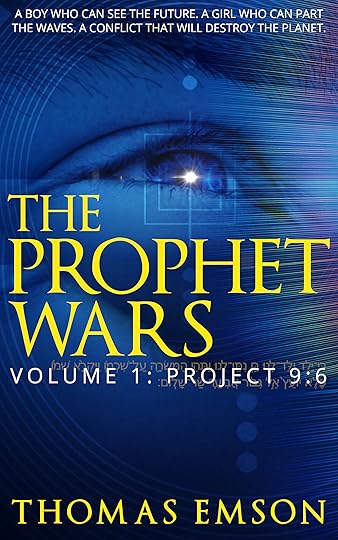
I’ll be self-publishing the first volume of my dystopian/sci-fi/fantasy/YA-but-suitable-for-grown-ups novel The Prophet Wars in the next few weeks.
This book’s been through the mill. I wrote it back in 2015. We were very optimistic it would find a home. My agent liked it; lots of readers I asked to look over it liked it.
But the publishing industry is unpredictable. To quote William Goldman, the screenwriter, “Nobody knows anything.” I certainly didn’t. The Prophet Wars did not find a home. Yes, people liked it a lot, but… always a but.
Usually these days “buts” are related to uncertainty. Publishers aren’t as willing to take risks – although to be honest we didn’t think The Prophet Wars was that risky. However, here’s the pitch:
Britain 2026. Crime is rife. Unemployment soars. There is hunger, there is misery, there is devastation. Our world is on the brink of catastrophe. Earthquakes, storms, wars and plagues blight the planet.
And dark forces are gathering…
The future looks bleak. And 15-year-old Billy Kingdom can see it coming. He dreams about disasters – and days later, they happen.
Through social media, Billy learns that other kids are experiencing similar visions. Online, he grows close to a girl named Tawny Lang.
But one night Billy, Tawny, and other youngsters from across Britain with the same gifts, are kidnapped by armed men. They are taken to an underground compound called The Caves run by Ruby Bleak and her teenage nephew Robin, a child genius lacking any empathy.
Holed up in the subterranean complex, Billy and Tawny develop a bond. The Caves, however, hides a sinister secret. The kids quickly learn that they are only guinea pigs in a plot to control the future. But Billy isn’t having any of it and plots his escape.
But will his desire to see his family again tear apart the trust and friendship he has forged with Tawny and create, for himself and the world, a deadly enemy?
An action-packed story set in the near future and dealing with themes such as family, relationship, trust, and the environment, this is the first volume of Thomas Emson’s Young Adult thriller.
Volume One, which is titled Project 9:6, will be available for pre-order very soon.
June 21, 2019
Zombie Britannica among Ezvid Wiki’s top choices
Really delighted to hear from the fabulous people at Ezvid Wiki this week telling me that Zombie Britannica has been included in their recently published wiki, Books with Inventive Takes on the Zombie Genre.
You can see the list here. There are some great zombie books selected. Very proud to have been chosen.
Zombie Britannica is a very “love-it-or-hate-it” novel. What we call Marmite here in the UK. As you’ll see from the reviews, opinion is polarised. But I’m glad to say that the “positive” column has the edge.
One of the criticisms doled out was that everything happens so quickly. But you see, that’s the whole point. Partly, the idea for ZB sprang from the research cited at the beginning of the novel – and it is actually a real study.
Carried out by a group of University of Ottawa mathematics students, it says a zombie outbreak would be devastating – and rapid.
Unless we “hit hard and hit often”, the researchers say, we would be very quickly overwhelmed by the undead – and civilisation would collapse.
So really Zombie Britannica is realistic in that regard. It is backed by science.
Anyway, thanks so much Ezvid Wiki. And if you’d like to know what happens after Zombie Britannica, a sequel, in the form of the short story “Where Moth and Rust Destroy”, can be found in my collection The Trees And Other Stories.
September 28, 2016
Writer, you are not alone: visiting FantasyCon
Last weekend I was in Scarborough at the British Fantasy Society’s FantasyCon. I travelled up from Kent with fellow writer Danny Rhodes, who’s had horror stories published in Black Static and Cemetery Dance, but is also an acclaimed contemporary novelist (his novel Fan about the Hillsborough disaster is wonderful).
It was quite a trek up north, but I was quite impressed by Scarborough. Very nice seaside town. And the convention itself, held at the Grand Hotel, was brilliant.
Guests included Adam Nevill and Joe Hill, whose honest and amusing Sunday afternoon slot was my highlight.
I also got to meet some peers: Simon Bestwick, Stephen Bacon, Mark West, Gary McMahon and Jim from Ginger Nuts of Horror. I also caught up with Graeme Reynolds and Christopher Teague, both of whom I’d met before.
Of course, I came away with a pile of books and I’m looking forard to ploughing through them. Paul Kane‘s novella The Rot looks good to me.
But what FantasyCon really did for me was give me a boost. I’ve not written much horror in the past few years, focusing on other material. But I’m now rejuvenated. So rejuvenated, in fact, that I have rejoined the Horror Writers Association.
I think Danny and I have made a pledge to become regulars at FantasyCon, and if you are a writer, I’d urge you to do the same – and not just with the BFS’s event. Networking is vital. You get to know people; you make friends. Who knows, you might even seal a deal.
But what you will get is a sense that you’re not alone.
Writing is a solitary business. Quite often it’s a struggle, creatively and financially. It’s hard when a book or story just won’t sell. And it’s great when one does.
Well, if you attend conventions, you’ll soon discover that we writers, we are all in the same boat. Our experiences, our ups and downs, are very similar.
So if you’re a writer of horror, fantasy or sci-fi, and you’ve never been to FantasyCon before, Sign up for next year’s event. Maybe I’ll see you there…
May 13, 2016
Reader power can get my novel published
 Many writers have manuscripts in drawers. A novel or two that no publisher wanted, for whatever reason.
These days, thanks to the likes of Amazon and Smashwords, these books don’t need to be hidden away. Writers can self-publish, and many do so successfully.
Now Amazon has yet another innovation: Kindle Scout. It’s described as “reader-powered publishing for new, never-before-published books”.
The idea is an author puts an extract of their novel on Kindle Scout and readers get to nominate the book for publication if they like what they read. If enough readers support the novel, the writer is offered a Kindle Scout publishing deal – and it’s a decent deal offering an advance, plus a 50% eBook royalty rate.
So what about my novel? It’s book 1 of The Prophet Wars, and it’s called Watchers. Primarily aimed at the YA audience, it’s cross-over enough that adults will enjoy it (hopefully; those who’ve read it have). It did the rounds of publishers, and although we were initially very optimistic, and enjoyed some decent feedback, we had no luck placing it. That happens. It’s a tough business, and you’ve just got to roll with the punches. But at least these days it doesn’t mean the book has to sit in a drawer. It can get published – if people want to read it; and books, really, should always be about what readers want.
If you’d like to see Watchers published, it would be great if you visited my Kindle Scout page, here, read an extract, sign up to your Amazon account, and nominate the novel. We have until the end of June, so get reading, get nominating! And thank you so much for all your support. I’ve always said it’s because of the reader that I write, and here’s where reader power really rules.
May 1, 2016
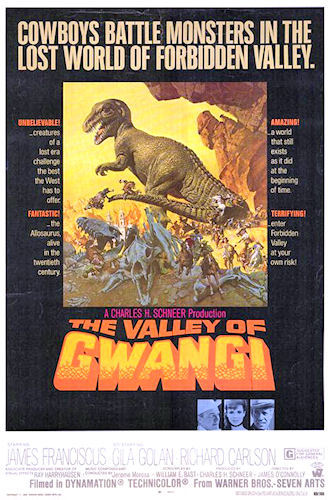
Movies That Should Be Re-made #1: The Valley Of Gwangi
 Fair use, https://en.wikipedia.org/w/index.php?..." width="204" height="306" srcset="http://thomasemson.com/wp-content/upl... 333w, http://thomasemson.com/wp-content/upl... 200w" sizes="(max-width: 204px) 100vw, 204px" />
By Source, Fair use, https://en.wikipedia.org/w/index.php?...
I recently heard they’ve re-made Ben-Hur, 1959 the epic starring Charlton Heston. Well, it’s actually described as a “re-adaptation” of the original novel, Ben-Hur: A Tale of the Christ, written by Lew Wallace in 1880.
Now I’m not against re-makes (or “re-adaptations”; whatever). Sometimes they work (Ocean’s Eleven worked well; Christopher Nolan’s Batman re-boots were genius). But I was unsure about Ben-Hur. Ben-Hur is just, well, Ben-Hur, isn’t it; like Jaws is Jaws. Do not touch. Anyway, it got me thinking about films that I’d could do with a re-make.
A few years back I reviewed The Valley Of Gwangi on a website. Now this dinosaur romp was a favourite of mine when I was growing up. and it’s definitely one I’d be interested in seeing re-made – not because the original is poor: it’s not; it’s brilliant. But because it would be fun, I think.
Anyway, here’s that review of The Valley Of Gwangi, and I suppose it’s also a case for re-making the movie:
ALTHOUGH directed by Englishman Jim O’Connelly, The Valley Of Gwangi will always be seen as a Ray Harryhausen film.
Made in 1969, this “cowboys vs. dinosaurs” fantasy features some of the finest examples of Harryhausen’s stop-motion animation – and it was also the last prehistoric-themed movie he worked on.
Harryhausen was the master of the monster movie, creating creatures for films such as The Beast From 20,000 Fathoms, The 7th Voyage Of Sinbad, It Came From Beneath The Sea, and in later years Clash Of The Titans (1981).
Interest in dinosaur films was declining at the time of Gwangi, and it wasn’t until Jurassic Park in 1993 that prehistoric monsters became fashionable again. They remain popular today, and that’s one reason why you should watch The Valley Of Gwangi, a true classic of the dinosaur genre.
It’s a wonderful, action-packed adventure story showcasing Harryhausen’s genius.
Gwangi’s about a bunch of cowboys, led by Tuck Kirby (James Franciscus), who head out to a place called the Forbidden Valley. In this lost canyon, they find dinosaurs by the dozen – including an allosaurus, the Gwangi of the title.
With the obligatory British – or more specifically, English – eccentric in tow (played by Laurence Naismith), the cowboys try to capture Gwangi.
In a scene that represents Harryhausen’s brilliance, the cowboys rope the allosaurus. Just watch and see if you can see the join. Actors toss ropes around the dinosaur’s neck, and although you know it’s animation, it is impossible to see where stop-motion and real-motion merge.
Gwangi gets loose and battles a styracosaurus, and after killing it chases the cowboys again. This time, they get the better of the allosaurus. Capturing it, the scene is set for a brilliant climax as they return Gwangi to civilization.
The dinosaur is put on display at a rodeo show but manages to break free. The crowd panics and stampedes. Gwangi goes on the rampage and gets involved in another Harryhausen stop-motion battle, this time with an elephant that was part of the show.
After killing the elephant, the allosaurus runs riot before finally being killed in a burning cathedral.
The Valley Of Gwangi is exciting and fun, and one of my favourite films from childhood. I remember being thrilled when I saw it first in the 1970s. I was probably about nine or ten, and the movie was relatively new at the time. But it still feels fresh to me today, despite how far more advanced special effects are by now.
Although it is Harryhausen’s special effects that take centre stage, there’s much more to The Valley Of Gwangi than stop-motion – great story, pacey direction, fabulous cast. It is a treat. Highly recommended.
March 12, 2016
How I write a novel and how you can write one, too
I start writing when I start. There’s no specific time. But we are up early because of the dogs. And my wife is very disciplined and gets to her desk by 8 a.m.
The office is a summer house at the bottom of the garden. Books and papers are piled everywhere. There’s a chair each for the dogs, and it’s got heating, too. Very cosy in winter.
After drinking a second cup of coffee, I meander to my desk.
Deadlines are vital for me. This is stems from my days as a journalist. Like Duke Ellington said, “I don’t need time, I need a deadline.” That’s me. Just like Duke.
I write a novel in six months, from start to finish. For the first draft, which is quite messy, I have a weekly word target – 8,000-10,000 a week.
A weekly target is better than a daily one. If you miss your daily target, you feel irritated. But miss a day if you’ve got a weekly target, and you can always catch up.
Sometimes I’ll write seven days a week, sometimes four – as long as I hit 8,000-10,000 words, it’s fine. It’s what weightlifters call auto-regulation. Go to the gym on Monday and you feel great – hit a max on your squat. Go in Wednesday, maybe you’re tired, do fewer repetitions. You workout depending on how you feel. Just the same with writing. So long as you hit those targets.
I work from an outline, the product of about a fortnight’s work. As I say, I plough through the first draft. I write straight on the computer in Arial 14pt. The draft is ugly. Very rough. I write notes as I go along. I put “blah blah blah” if I can’t think of anything to write, and just move on to the next scene.
If I need to check something – like the make of a car or the name of a street – I’ll just put “xxxxxxxx” in the manuscript where the make or the name should be.
My day finishes when I feel like it. I’ll try to do a decent amount of words, at least 1,000, but it’s not essential when you’ve got a weekly target. By lunchtime, I’m done. I might squeeze a few more words out after eating, but to be honest, I’m ready to do something else: read or watch TV, or take the dogs out.
The first draft takes me eight-to-ten weeks. Then, I’ll take a week out. Write something else maybe. Think about my first draft. Do some research. Check out those car makes and those street names.
After that, I’m ready to attack the manuscript. It’s a job of honing, of sculpting, of chopping, of cutting, of adding. The Arial 14pt becomes Times New Roman 12pt. The mess is divided into chapters and the chapters are usually given titles, though when you’ve got over 100 chapters that can become a challenge.
Draft two for me is the most difficult part of writing a book, but the most honest part. It’s where your story is unearthed, where you excavate it from the debris of draft one. I’ve learned never to trust a first draft. The second draft is where you find your truths.
Draft two can take up to eight weeks. I’ll then spend a few weeks tidying it up, producing a third, perhaps a fourth draft.
Then I take a week off before starting on the next book.
I was a journalist for 20 years so I’m used to deadlines. It can get tough, though, and I feel the pressure sometimes. But then I think, I’m a writer not a refugee fleeing war and oppression or a surgeon carrying out life-saving operations – that’s pressure. And after all, writing is what I love doing.
People ask where I get my inspiration from, but to be honest I don’t believe in inspiration. To me writing is a job. A trade or craft. A carpenter can’t wait for inspiration. Neither can a plumber. And Philip Pullman’s quote is pinned to the wall of our study:
An amateur thinks that to be a professional, one must wait for inspiration. A professional knows that if one waited for inspiration, one would be an amateur.
That inspires me. It gets me to my desk. It makes me sit down and write even if I’m not in the mood. You can always write something – even if it’s “blah blah blah”. I think a lot of novice writers worry about their first draft. They try to polish the first page without ever getting to the end of it. They fret over things, over every word, the small stuff.
Well, forget the small stuff. Let it go. Just finish your draft. Get to the end and love the mess you’ve created. Take a few days off before going back to it and then you can start to chisel and craft.
I love writing and telling stories – however, I love other people reading them more. Some people say, Even if no one ever published or read my stories, I’d still write.
I’m not convinced by that. The point of a story is to share it. You don’t tell yourself a story. That’s self-indulgent, surely. Storytelling is about readers (or listeners, maybe) as well as writers. Without readers/listeners you don’t have a story. I write to be read. I write to entertain. I love hearing from readers, and so far all the responses I’ve had have been positive. Most of the reviews I’ve received have been good.
I also like to share my writing process, and help other people, if I can. That’s why I wrote How To Write A Novel In 6 Months. Using some of the guidelines I mention in this article, I take you from blank page to book in 26 weeks. I would also be happy to come and talk to your writing group or creative writing class and run you through my ideas on how to finish your novel. Email me on thomasemson_info (at) yahoo (dot) co (dot) uk if you’re interested, and we can talk terms.
November 12, 2015
Four weeks to your first draft
It’s NaNoWriMo. You start on November 1, and by the end of the month the aim is to write a novel – or at least a 50,000-word first draft of a novel.
It’s a great idea. It really gets you writing if you’ve struggled in the past. You have a goal, and you drive towards it, relentlessly, hopefully.
I know some professional authors who’ve taken part, and benefitted, and I think anyone who wants to write a novel, but don’t know where or how to start, should have a crack.
There’s a great website full of tips and advice, and you can find forums and blogs all over the internet. You won’t lack support as you set out to finish your book. And I hope that all of you who started on November 1 are still in the game – you’re nearly half way through.
Fifty thousand words in a month sounds like a big challenge, and it is – but it is do-able.
You might think you have to write every day, but as I show in my book How To Write A Novel In 6 Months, you don’t have to.
Daily targets, in my opinion, can be the death of writing. You set yourself up for failure if you decide to write a novel and tell yourself: I have to write 2,000 words a day. It’s unlikely that will happen. Life will get in the way. Count on it.
So my strategy – and it has been since I wrote my second novel Skarlet – has been to give myself weekly targets.
During the first draft process, I aim to write between 8,000 and 10,000 words a week. That is not a big ask. The top end is a little over 1,400 words a day.
Yes, I know, I said don’t set yourself daily word targets – but that is an average daily count. You won’t be writing every day. Some days you’ll be doing “life”. So maybe you’ll write 700 words one day, but on another day – when you’re flying and you have more time – you will churn out 3,000.
And that’s what you should do with NaNoWriMo, too.
Break down that 50,000 into weekly targets and you get 12,500 words a week, or just under 1,800 a day.
It’s still a tough ask, but my suggestion is you use the weekly target, not the daily one. Hey, if you can and do write every day, great. But if for some reason you miss a day, with a weekly word target, you will not have to abandon your project. And you won’t feel bad about having a life, just like everyone else.
So if you’re into NaNoWriMo, and you’re starting to find it tough finding the time daily, look at a weekly target.
One day you might do 5,000. But the next it’s only 300, the following day you don’t get the time to work at all, but day four and you managed a 1,000, and the next it’s 3,000. Day six, you can’t get to your desk, so on the seventh day you can’t rest – you know you’ve got 3,200 words to write to hit your weekly 12,500 target.
You got there, but you still managed to deal with two non-writing days when life got in the way.
All the best with your NaNoWriMo project. Don’t give up. You’ll have a first draft by the time you finish. And writing a novel in a month is quite an achievement. And you didn;t even have to write on each of the 30 days.
November 7, 2015
The Trees and Other Stories in paperback
 My short story collection The Trees And Other Stories has been on Kindle for a while now, but in the next few weeks it will be available as a paperback. Here’s the cover. What do you think? I’ve published most of my books in the mainstream way – get a publisher; they do all the work. But I’m a big fan of DIY, these days. Self-publishing in the past was a precarious business. You dished out lots of money to firms who sometimes didn’t have your best interests at heart, and you’d probably have to schlep a pile of books around the stores, hoping the manager would take a few copies; hoping they’d sell a few copies. But Amazon changed all that: first with Kindle; now with CreateSpace. I know people are snooty about Amazon, but I’m not. They’ve democratized the publishing industry, and made the big, powerful players sit up and think. An way, I enjoy working on my books for Kindle and CreateSpace; I like doing covers and formatting – I’m a bit of a geek like that. In fact, I enjoy it so much, I’m thinking about providing a cover-design service. Have a look at the cover I designed for The Trees and see if you think I’m talking through my hat.
August 4, 2015
Win my guide to writing a novel
 Do you want a signed copy of HOW TO WRITE A NOVEL IN 6 MONTHS, my guide to finishing a 50,000 word book in just 24 weeks? I have four to give away.
Read on for a chance to win one.
But first, what’s the book about? Well, I write two, full-length novels a year, and a few years back developed a system that helped me hit my deadlines. I outline that very system in this book. It includes examples from my novels, and tips on how to to reach “The End”.
It’s a non-nonsense “how to” book written by someone who’s talked the talk and walked the walk. I’m not some “guru” who’s never written a novel in their life, or a “teacher” doing a PhD in creative writing and halfway through their literary masterpiece after ten years of study. No, I’ve actually written novels, and had them published.
So if you fancy winning a copy of my guide, just answer this very simple question.
What was the name of the werewolf heroine in my novel Maneater? Was it (a) Laura Greenacre; (b) Laura Blackacre; or (c) Greenie Acre.
Email your answers, along with your name and postal address, to thomasemson_info (at) yahoo (dot) co (dot) uk. Write “Book competition” in the subject line. The closing date for entries is midnight (GMT) on Sunday, August 9, 2015.