B.T. Lowry's Blog, page 2
July 9, 2016
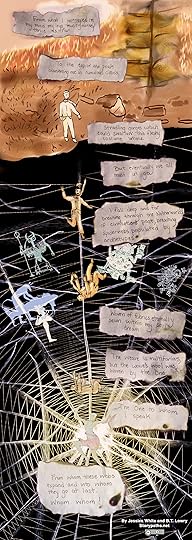
Falling Home, a graphic poem
Here’s a poem made into a comic about nature, consciousness and God, inspired by the Himalayas. Feel free to remix it. It’s best read by scrolling from the top down.


June 17, 2016
“Inside David” on Flash Fiction Podcast

Woo hoo!
One of my flash fiction (really short fiction) stories just got published in Flash Fiction Podcast, and the narrator did a great job.
It’s called ‘Inside David’, about a computer programmer who fantasizes a character to life in a video game he’s working on.
Here are the opening lines:
“With each line of code that he types on the screen, David becomes her. She grows inside him. Sola is her name. She’s twenty-something, with almond eyes, black hair and long bangs. Traumatised, unloved, afraid of what her own beauty evokes in men. But like all good video game characters, she can kick ass.”
Kindly check it out, and if you like it please leave a comment.
http://www.manawaker.com/podcast/ffp-0120-inside–david/
https://www.patreon.com/posts/ffp-0120-inside-5748200
https://youtu.be/1QXwhaVvizY
B.T. Lowry
May 7, 2016
Interview with author Alison McBain

Today I interview the illustrious Alison Mcbain, author of numerous intriguing short stories and a couple novels in projects. We talk about moral border lines in fiction and more. Read on…
B.T. Lowry: Hi Alison. I have an idea. Would you like to be the first interviewed author for storypaths.net? The way I’d like to do it is to ask one question at a time, then my next question may be based on the answer. So the interview would come from a chain of correspondence. I think this is more interesting than having a set of questions which doesn’t change based on the answers.
What do you think?
Alison McBain: Sure! I’d love to. 
April 22, 2016
A letter to India about our troubled relationship
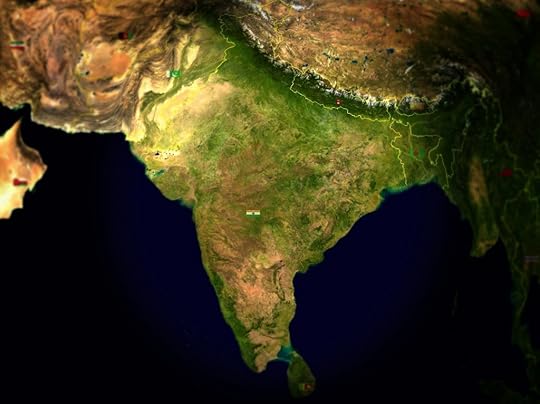
My dear India,
I’ve been meaning to write this letter for a long time. Don’t be alarmed. I still love you. But there are things I need to tell you, if this relationship is going to work out. You might not change. That’s up to you.
My words may sound pretentious and judgmental. So be it. But I need you to hear me.
Ever since I heard of you, I wanted to meet you. The way your people dress, with their colorful robes and swirling turbans. Their amazing cooking, with cone-shaped towers of powders—reds and yellows, sizzled into the juices of a subji. Or seeds of cumin mixed among cauliflower-parathas. Your amazing life and history, with philosopher kings and queens roaming your lands, bowing down to sages giving divine benedictions. Incarnations of gods and God have brushed their feet over your grasses. Green fields burst with bounties in your south, while the world’s tallest mountains form your crown in the north. Even as a child, some part of me always knew that when I wanted to learn what the deal was, spiritually speaking, I would go to you. Once I was done playing (I’m still not that serious).
In my teens, I finally met you.
At first I understood so little about you, although I was entranced by the incredible diversity of people, conceptions, and ways of life, all coexisting in you. I came to you mostly as a tourist. Over the decades I have come to know you a little better, though your every nook and cranny still holds mystery for me.
I’ve also been frustrated with you, yelled and cursed at your people for following a way of life not their own. For taking up the technology, infrastructure, fashions and media of materialistic cultures, without taking a moment to consider their benefits and demerits. Why should a man wear pants, socks, shoes and a shirt in a tropical climate? Why should those from a deeply spiritual culture emulate others?
Has modern Western culture been good for the West? The family unit has broken down. The environment is in tatters. People are depressed and angry. The bubble of those wealthy countries looks so sparkling and enticing to you, doesn’t it? Your people feel yourselves poor. But how long until that bubble pops? Your culture lasted thousands and thousands of years. America is only a few hundred years old, and already it’s falling apart. Why follow them? Your culture is old and deep. Why imitate gangs of youngsters still learning their way?
There are some more practical things I’d like to address as well. It’s important in a relationship to feel heard, and I need you to hear these things.
Like…
Why can’t your people drive in any kind of sensible way? They’ve adopted cars, which are a deeply flawed invention. But as long as they have them, why not adopt a logical system for traffic as well? High beams should be used when there is no oncoming traffic, otherwise you’ll blind them. Your turn signals are there for a reason. Dots in the middle of the road are there for a reason. You’ve chosen to have vehicles drive along the left side of the road, like in England. Why not stick to that? In a working traffic system, drivers hardly need to use their horns at all. They’re really for emergencies. In most countries, you could be in traffic for an entire day and not hear a single horn sounded. Can you imagine how much more peaceful that would be? The noise on your streets has made your people half-deaf.
Your traffic system runs in the same way as your country: impulsively and selfishly. No one has any faith in following a set of rules, to lead for a better outcome for everyone. “I want to go into that gap between two stuck cars right now, and I don’t care if it causes a traffic jam for two hours. I don’t even care if I’m in that jam. I want to go into that gap now.” This is how people think within your traffic, and this is how they think in business, the police force, and the government. Everywhere. “Never mind the greater good. I want what I want now.”
For God’s sake, clean the place up. There’s plastic everywhere. Plastic is not like ordinary waste. It’s a very, very stupid invention. To make something which lasts practically forever, and then manufacture it to be used once. You can’t dispose of it like you would normal waste. It’s making your country into a landfill. Actually the solution in the West isn’t any better; people waste far more, then hide it in holes in the ground for their children and grandchildren to deal with.
It’s really better not to use plastic at all. Some of your states have banned plastic bags. That is SUCH a good idea, and a beacon of good sense for the entire world. Yes, you can be a leader in the world. You are in many ways already.
Yet you’ve taken these things from the West without learning how to use them. In fact, these things were made in such a shortsighted way that it is hardly possible to use them well.
But these are my quibbles. In any relationship, there are things that will bug the other party. Bhagavan knows that I’m far from perfect.
These aren’t the things which really pain me about you. What pains me is to see you losing your deep and wonderful ways to stupid and superficial ‘culture’. What pains me is to see so-called holy men taking advantage of the general goodwill, naivety and respect that your people have toward men in saffron. Foreigners come with this naive respect as well, and they’re also taken advantage of. It hurts me to see your young people wearing T-shirts of dumb-ass heavy-metal bands which are already out of style in America, instead of dressing in the beautiful and meaningful clothes of their ancestors. It hurts me to see your people’s intelligence sucker-punched by the British education system, so that they think their own culture to be backward, while considering a shortsighted, spiritually blind, selfish consumer society to be the bees’ knees.
If you didn’t have much potential, all this wouldn’t bother me. I wouldn’t expect a crow to become a lion. But you could be so much more, and the gap between what you are and what you could be, is excruciating.
Oh India, you are more wealthy than anyone I know. Please, please, please, recognize this wealth and share it with the world. Who cares if your IT sector improves? Who cares whether your infrastructure catches up with the west? You are just serving foreign companies who are raping the earth. You were meant to serve gods and sages, not greedy corporations. Explore your own culture and resources. Protect the cows and land. Honor the real sadhus. Honor your holy books.
Think for yourselves.
Because I need your help. We all do.
______________________________________________

B.T. Lowry fell in love with India about twenty years ago, and has been in a troubled relationship with her ever since. He is a storyteller and filmmaker. While Tolkien and others rooted their Epic
Fantasy rooted in Europe, B.T. Lowry roots his in ancient and modern India.
For his free short stories and videos, check out the stories section of this site.
April 4, 2016
City of Blades, by Robert Jackson Bennett: Review

I’ve read many stories in which the characters have strong spiritual/religious beliefs, but those beliefs are just internal. They don’t seem to affect the reality of the story in any solid way. I’ve also read or seen a great many stories in which Greek gods co-habit the cosmos with us regular folks.
I want more than these two. I want to read about other gods who are real, and have real relationships with human beings.
Even if they’re made up.
Maybe especially.
Enter City of Stairs, by Robert Jackson Bennett, and the next in the series, City of Swords.
No doubt inspired by spiritual traditions from various parts of the world, the author presents a pantheon of gods who embody various qualities, like warfare and nurturing. Human followers flock to a particular god, because of the humans’ qualities. Those who are warlike are attracted to a warlike god. The gods are in turn effected and empowered by their followers. A reciprocal relationship exists between worshiper and worshiped, in which each is changing and empowering the other. Spoken and unspoken agreements exist between them, and the gods are not completely indestructible. In fact, many of them have been killed… or have they?
City of Blades deals with the land and followers of the warlike god, Voortya, a female Divinity. The land has been decimated after the Divinity’s death, and now work is going on to open the main river there, as a trading port for the rest of the continent.
Mulaghesh, a battle-ax of an old woman with one arm missing, plenty of psychic scars from warfare and a goodly ability to fight, is called in to help settle some mysteries in the region. She’s tired of fighting. She hates violence, but she’s committed so much of it.
In the course of the book, Mulaghesh struggles with questions about warfare and sacrifice. Is the warrior a vicious conqueror who takes from others for themselves and their country? Or can a warrior be a servant? There’s been steady warfare throughout the history of this fictional world (and ours, of course). Can it be stopped? The followers of Voortya were tribal and brutal. They needed no excuse to decimate another country, slaying its people. War was its own reason. But for all their justifications and social systems, do ‘civilized’ cultures wage warfare any less? Are such societies simply less honest in how they wage war?
Although the story is humorous, tongue-in-cheek and fantastical, it asks the reader to reconsider what it means to be a soldier and a warrior. It asks us when killing is and is not necessary. It’s also very far out from a conceptual point of view.
You can get these two books from the links below.
City of Stairs (The Divine Cities)


The Book of Phoenix, by Nnedi Okorafor: Review

The Book of Phoenix takes place when scientific civilization was still proudly manipulating the world on a vast scale, but just before its downfall. So perhaps around now?
Who Fears Death, by the same author, is a mystical story set in Africa after a future apocalypse. Intriguing, no? The reasons for the breakdown of society are mysterious. We know that locals and invaders have been at war, though it’s not clear what their races are by today’s names. At one point, the main character finds a cave full of old broken computers, from back when people use those things more. There are also some new technologies, like machines which collect water from the air in a few moments. Who Fears Death is set in the desert, and dark magical undercurrents (juju) run through it, which I found very intriguing.
So I picked up the prequel, The Book of Phoenix. It begins around the time of Who Fears Death, but quickly goes back in time through a story told to an old man, via an audio recording on a long disused electronic device. It has a young adult science fiction feel to it, more so than Who Fears Death.
The most striking part of this book, for me, is the main character’s quest for identity.
Phoenix is an African American woman by body, but she has never been to Africa, and has hardly seen America either, though she was born there. She was ‘birthed’ and brought up within a clinical testing environment, in a high-tech skyscraper run by a massively wealthy international corporation. Phoenix learns about the world through books, which she reads rapidly. She and the other test subjects within the skyscraper possess various powers, which the corporation hopes to exploit. She can become extremely hot, and, as it turns out explode herself and everything around her, then remake herself gradually again. Hence the title, the book of Phoenix.
The author, Nnedi Okorafor, is an African-American woman living, teaching and writing in the States. Being born in America, but with cultural and genetic ties to Africa, I can see why she would write a main character like Phoenix. Through Phoenix, Miss Okorafor has given me insight into what it’s like to have been formed by a culture other than your own. The corporate scientists in the novel are Phoenix’s exploiters, but they’re also her creators. She would not exist, as she knows herself, without their immoral experiments. She was born in their test tube. Yet she hates them.
Phoenix escapes, and fights to stop her parent corporation’s projects. All the while she tries to reconcile the fact that her identity, and her amazing abilities, apparently come from her oppressors. In the course of the book, she comes to accommodate this in a spiritual way: by understanding that her deeper self comes from a higher plane. From there she came through into a creation of the scientists. Although they had a hand in forming her body and abilities, she is not dependent on them for her deeper existence.
As Phoenix comes into her powers, she kicks an improbable amount of ass. Along with her fellow escapees, she works to dismantle the corporation which spawned them.
A few thoughts about the themes. The fist African-Americans were brought to America as slaves, for the purposes of landholders, politicians and other powerful controllers. The echoes of those sins echo throughout American society today. The life of an African-American today is molded by their ancestors’ enemies. The language they speak, the place they live, the schooling they receive: they all come from the society of their oppressors. It’s true for any oppressed society. Just look at the education system which the British established in India.
At least, that’s one way to see it.
The people who owned slaves are long dead, and it’s inaccurate to generalize entire races by the actions of some. There are plenty of descendants of slave-owners who virulently oppose their ancestors’ exploitation.
Conditioning is there, but at every moment, each of us has the free will to plot our own course.
Moreover, if I can understand that I am ultimately formed by forces beyond any earthly power, I can gain knowledge of my true self.
That’s what I took away from this excellent book.
You can get it here: The Book of Phoenix
March 31, 2016
Song of the Sea film review

I am a sucker for beautiful films. Don’t get me wrong; gritty stories, which tell it like it is from the trenches, also pull me in, and if the story doesn’t acknowledge the darker side of life at all, it usually seems cheesy.
But I love stories that show me the beauty and innocence in life, which weave a thread binding real life and myth–the conscious and the unconscious.
I recently watched the film, ‘Song of the Sea,’ written and directed by Tomm Moore, who also gave us ‘The Secret of Kells.’ It’s about a boy’s journey from being mean to being a good brother. It’s about a girl coming to know and accept her inner, secret self. It shows that the mundane world in which we move about is not the only world. The people we see in cities and towns are only some of the beings in existence. Part metaphor, part Irish myth, yet set in the modern day, this film reminds of something a great teacher ofbhakti-yoga said, Srila BR Sridhar Maharaja, that the world we perceive with our senses is just like the cream on top of an ocean of milk. There is so much more beneath the surface.
The artwork is gorgeous, with watercolor backgrounds and intricate patterns everywhere. The design of the characters is based on simple shapes– circles, triangles, squares and so on. The simple basis of the art makes the innovations all the more pleasing.
There are no enemies in this film’s story. Everyone is doing what they do for their own reasons, no one is wrong. Everyone is redeemed and it feels real, not corny.
Magical rules
Brandon Sanderson has some interesting thoughts about magical rules.
He speaks about a continuum of magic systems ranging from soft to hard. A soft magic system is mysterious. Its specific rules– if there are any– are unknown to the reader. An example is Gandalf in ‘The Lord of the Rings.’ What can and can’t he do, exactly? No one knows. The upside of this is that it gives the story a sense of mystery. The potential downside is that if characters use the magic to solve major problems, it seems like a copout.
A hard magic system is more ‘physical,’ in the sense that the reader understands its specific limitations. Superheroes are examples of this: Superman can fly, has laser vision, speed, strength etc. Wolverine can heal really quickly, has claws etc. If Wolverine could suddenly fly, we’d feel like someone pulled a fast one on us.
The magic system in ‘Song of the Sea’ is soft, but we get a general idea of what the characters are capable of, and no one suddenly becomes super powerful. But actually the rules are evident, but they are not physical rules. The magic is limited and liberated by the choices of the characters. As they make key choices the world around them unlocks. I’ll say no more. Watch it and you’ll see what I mean.
You can get it here: Song of the Sea
March 28, 2016
Sister, a Short Story
Dear Manjot (light of the heart),
I hope you and Kirandeep are well.
I want to remind you of our relationship, before you were born. Before I was born. I hope you don’t think I’m deluded.
You were so skinny that you slid through tiny hoops. I remember your bony shoulders poking through a blue sequined dress, which sparkled when you first found it. Your black, dreaded hair flopped around like a mop as you flipped and did handstands in train aisles or dangled with your knees hooked over sleeping-bunks. People clapped or pretended we weren’t there. Some gave money. I stood behind you in the aisles, a felt-tip moustache on my face, a man’s suit draped on me like a tent, pinned up around my bare calves.
I was your older brother and you my sister. Your name was Roma. Mine was Raj, though I was hardly a king. Do you remember?
I could play the ektara somewhat –the one-stringed instrument given us by our father. I wasn’t much for melody but the trains taught me rhythm: click-a-de clack, da-dunk, click-a-de clack, da-dunk. I twanged the ektara to the same rhythm which jostled the people back and forth. I think they liked that.
They said to me, “Boy! Sing Jaya Jagadish Hare!”
Or to you, “Can you pass through three hoops at once?”
And if we could do what they asked, they’d sing along and clap and would surely give us something. At first I didn’t know the popular Bengali and Oriya songs but I learned them as people sang for me what they wanted to hear. “Like this…”
You said to me when we were stopped at a country station, “I’ll learn how to balance on my mouth!” You’d seen a girl do this in a marketplace once, chest facing the ground and legs bending behind her head. “People will give rupees like a rain,” you said, nodding with raised eyebrows.
You dreamed of being a super-flexible yogi. I imagined I’d become a master musician. Such ideas kept us hopeful.
I remember when we switched trains, you waited on the old one until it started moving. I ordered you to join me on the platform but you leaned out the door and made a funny, defiant face. Finally you jumped off and ran along the platform, slowing to a stop. That made me angry, and I think that’s why you did it, because you liked me protecting you.
Do you have these memories? You died in between. So did I, but by God’s desire I recall the journey.
Evenings on the trains were best, when people hadn’t pulled their bunks down to sleep but were relaxed. They played cards, ate or entertained their kids. They’d give us a few rupees then. Big fat people, some of them. What they must have spent on food! The toilets’ stench was overpowered by the smell of hot rice, rotis and dahl.
I remember the day you died. We were curled against the train door. People sprayed us with water as they used the sink above us. The friction between the linked cars sounded like metal thunder. We stopped at a station where the train was cleaned.
I was thirsty. I jumped onto the platform as workers in orange overalls mounted the train. I went looking for drinkable water. People slept on benches under rows of fluorescent lights cutting the night. Shiva’s crescent moon hung amid dark clouds and a wind blew from arid hills.
While I was drinking, men in expensive shirts offered me potato-pea samosas with coconut chutney. I ate some and wanted to bring some back for you, but they got me talking about where I was from and what I did on the trains. They saw my ektara and asked me to sing. I sang a short tune, still thinking of you. They complimented me, said I should enroll in a music academy. They’d help me get in. “Sing another!”
I was caught by their attention and was singing so loudly that I didn’t hear the train leaving.
Finally I heard the click-a-de clack of the wheels rolling over joints in the track. I turned. The train was accelerating out of the station, doors and windows passing into the night. You were leaning out a door, searching the platform. I dropped my ektara with a crack-twang and ran to you, calling your name, “ROMA!” between sharp breaths. You looked at me and screamed, “RAJ!” I clawed at door handles and window latches locked from the inside. Far ahead you hung out an open door. I ran faster. Maybe I should have grabbed some window-bars but it was already going so fast. I had no idea where the train was going. Windows and doors fell ahead of me into darkness. I ran harder and you reached out your hand, but half the station lay between us. Your strained smile broke as you realized I wouldn’t catch up.
There’ll be dried teardrops on this paper, if you look closely.
Then your face changed. You got your funny defiant look. You jumped, clutching your colored hoops, you hit the ground and lost your footing. You crumpled then rolled and slid. You stopped against a column which kept the station’s roof up. Your hoops rolled along the platform and onto the tracks behind the caboose.
For a full year I kept thinking you’d show up again. People don’t really believe in death. Maybe because the soul is eternal. Death’s all around us: people, plants, animals dying, but does anyone think they’ll die? We know it intellectually but do we believe we’ll actually stop existing? Just the body dies; that I know now.
The men who’d given me samosas caught me from behind.
I spent almost two years with them. They didn’t bring me to music school but sent me begging. They weren’t kind men, but they provided a sort of shelter, and maybe that was my bad karma mixing with God’s protection of me.
You might be thinking that all this explains your strange dreams about trains. I’m laughing now. In this life, you’d rather walk from Ottawa to Whitehorse than get on a train.
The men sent me all over Eastern India, always with one other child. In pairs we’d beg on trains, perform or steal to make our quota. We were like cows wandering a city, eating whatever we could find then coming home to get milked. The men didn’t keep us in pairs long enough to get close; we might have run away together.
After a year I understood you were gone. With no close friends, I didn’t much want to live. I got sick and the men found me medicine but they didn’t know what they were doing. I fell ill at the beginning of the rainy season and left before its end. When I died, I was thinking of my little sister, of you.
It’s hard to describe how I knew it was you. You looked very different: twenty years old, not seven; tall and beautiful and of course in a completely different body. You were well-fed but slender with fine brown hair. I recognized you through a combination of many many small things. Your laughing-dove-chuckle was almost the same. So was the way you folded plastic packages while you talked. You used to jump when you were excited; now you roll up on your toes grinning unabashedly. The way your nose wrinkles when you smell something you don’t like, the way your ears rise when you’re annoyed, the way you move gracefully through a crowd like you’re gliding on ice… so many things.
Maybe you can see why I hesitated to tell you. It’s inappropriate I suppose. Your husband might get jealous. It seems strange, my trying to rekindle something from another life.
You’re my sister. These last thirty years, serving in the school together, I’ve had it confirmed who you are – or were – a million times in a million little ways. When I think of you in that other life, roaming around performing on trains, I see your face as it is now. Maybe you know too, and you just don’t know what to make of it.
You can speak about all this with me if you’d like, but you don’t have to. If you just give me a nod of recognition, I’ll be satisfied. Or if none of this makes sense, you can pretend you never read it and just consider me a fellow naturalized Indian, as we are in this life. I’m planning a trip to India soon. I want to visit the holy places before this body gets too old for the journey. I might stay there until I die. I’m quite sick already, as you know. So whatever awkwardness this letter might cause won’t last long. I’m laughing. Each life is so short, isn’t it!
In any case, please think of me as an old friend.
Your brother,
Nayan
A writer’s writer
I saw this video recently. It is the acceptance speech of science fiction and fantasy author Ursula K. Le Guin. She just received the National Book Foundation’s Medal for Distinguished Contribution to American Letters.
A friend of mine recommended her work to me sometime ago, but it took a while to get around to it. Recently I read, or rather heard, the books of the Earthsea Saga.
In a time of when fast action, tight plots, explosions and so on are the norm, I found her work refreshingly contemplative, mystic and subtle. As an author, I also found it liberating to read a story much so rich and poetic, which didn’t shy away from delving into an exploration of the main character’s deeper self.
In this talk, she speaks about how an author need not aim to please the financial big-guns, just to become rich and famous. An author is a servant and an artist, with a duty to connect with their audience and share something valuable.
I was looking today at a website where you can crowd source your book publication. This is also very interesting. So I admit, although I don’t think of myself in that way, that I have desired to be picked up by a big company. And I may yet, but the point is to be a writer, not to be a famous rich writer.
So I am looking to connect with more people who like the kind of work I make, spiritual fantasy.
How to age with grace
It’s tough getting old.
A friend of mine who’s pushing 70 told me that his body’s like an old car. First this bit goes, then that bit goes… It’s tougher still when you’re surrounded by images glorifying youth. On the media we see oily muscly men with practically no body hair, women who’s proportions have been photoshoped so that they resemble barbies.
But there are advantages.
If it’s a life well lived, old age can be one of the best times. You can reap the material fruits of working hard and saving money, can enjoy friendships which have deepened over time, and can act with deeper self-knowledge than before. Whatever we gather–be it knowledge, wisdom or stuff, we’ll likely have a store of it to relish and share later in life.
So what I’m thinking about today is, how to age with grace?
Some people really hit their stride in their later years, but in what? There are some things we can’t take with us into old age: the smooth skin, endurance and strength of youth. Oh, we can age more slowly or more quickly, depending on how we live. But age we must. Some of us are dragged into older age while desperately clinging to the things that only youth allows: tons of energy, lots of sex, unstoppable immune systems, parties… Of course if you watch your diet and do yoga, you can stretch your life out (hardy har har), but we’re all getting older. Or our bodies are, anyway.
Where are the Backstreet Boys, Spice Girls, New Kids on the Block?
Or where are any host of young actors and actresses who moved from A-list to B-list, then to C, then off into the oblivion of non-famousness, Sinéad O’Connor’s letter to Miley Cyrus (language warning) sums up the music industry, and really most entertainment industries. They’re factories which churn in the young, pretty and talented, then churn out the washed up. (It’s better to burn out than to fade away) Rock stars, movie stars and models have it easy in youth and hard in old age. In the media, women have it harder than men. The window of being suitable for the uses of those industries is small. The body will change.
Different parts of us age differently
Now the way I understand it, (based largely on the teachings of Bhagavad Gita and other spiritual books) we’ve got three aspects: our self (soul, spirit, atma), our mind and our body.
Body aging
Our bodies are aging constantly, starting at the moment of inception. I’ve heard a body hits its peak at around eighteen years, then slowly deteriorates from there.
Mind aging
Pursuits of the mind, on the other hand, often really kick off later in life. Many authors are published for the first time in their fifties or sixties. Professors hit their stride after much life experience. In their later years, scientists mine jewels from decades of research. Musicians become masters.
Yet the mind also fades later in life. Also death is ever approaching… what to do?
How to age with grace: spiritual life
I know many people entering into old age who really inspire me. They all share certain things in common: they’re engaged in spiritual practices. They identify themselves as being spiritual beings who continue after the body and mind fail. They know that their spirit doesn’t die, and they’re identifying with their spirit. They’re not holding onto something impermanent, and so they’re no afraid of entering old age and, eventually, dying.
I don’t believe in the moon
Now if you don’t believe in any kind of spiritual life whatsoever, that’s fine. I personally choose not to believe in the moon. Seriously though, I reckon if we spend our lives cultivating awareness of our immortal selves, old age and death won’t come as a shock. Death will just be the shedding of skin.
As a person puts on new garments, giving up old ones, similarly, the soul accepts new material bodies, giving up the old and useless ones. (Bhagavad Gita 2.22)
If you disagree with me, please say so in the comments! If you agree with me, you can debate respectfully with those who don’t. You can subscribe by clicking ‘follow’ in the lower right hand corner of the screen, or click facebook or twitter to share this around.
I’ll be publishing once every two weeks. I was doing once a week, but I want to put more time into each post, and also into getting them out there