David O'Sullivan's Blog, page 10
December 7, 2016
Any town drunk.
From out of the pub, the drunken man stumbles.
Into the black car park at 2 am, he falls.
All carparks look the same.
Lonely, dirty, quiet and painfully lit.
A white cat walks slowly by,
it is so hungry; each step brings it pain, and it will soon die.
The drunk stops by a light pole and leans against a green bin.
It was here one week ago
his friend was punched and killed.
It was on this spot the man died.
A red mark stains the ground; it looks like old, dried blood.
Here is another death. The drunk thinks about his dreams,
which, like the blood,
are now dried spots in lonely places.
The beer burns in his guts, and churns,
a sharp, hot wind blows grit.
Work again tomorrow, that depressing place.
His hand numb with drink and life holds him steady against the cold bin
and he cannot remember to which town his ex-wife
has moved his children.
Christmas is coming soon.


December 3, 2016
Dark places
Those dark places exist
Because your dreams die away like flames in melted candles
When at 4 am the darkness is running down your walls like rain
And there is a flash of light,
But the room is empty.
Was that someone standing at the end of the hall?
Look again and know no one is there.
The fear of knowing no one is there,
Like an empty room from where music is playing
Or an all-night radio station, where no one is playing music, but the music keeps playing.
Loneliness creeps into your life,
Enemies appear and everyone is against you
And you remember the girl
Who leaped from a bridge to the freeway below.
In that moment of silence before she died
Did she feel free?
Or does terror blind you?
It hurts so much, and it never ends.


December 1, 2016
Fishing from the boardwalk
Simon Ferris stood on the boardwalk and leaned over the edge, looking at a large timber pallet that floated in the salt water below. The timber was covered in shells and black worms. He stood a long time and wondered what the things on the pallet were. After a while, he pulled back and staggered down the boardwalk. The timber was uneven and hurt his legs which were twisted and weak. He had refused to take a wheelchair today; he wanted to walk.
Halfway down, back toward the street that led up into the city, he stopped and watched a pretty girl who sat on a bench in the shade near Shraff’s Amusement hall. She wore a tight red top, and her blonde hair was tied back with a blue ribbon. Next to her was a baby carriage. She leaned over occasionally to look inside. Each time she leaned over, she smiled. Her red lips pulled back showing her smooth white teeth.
Suddenly a great tiredness overtook Simon and his legs gave way under him. He toppled sideways, off the boardwalk, into the water below. An old man watching nearby, tapped a young man who stood next to him.
“A man just jumped off the boardwalk,” the old man said.
“Are you sure?” the young man answered. He looked over his shoulder. The young man held a fishing line and was reluctant to let it go.


The great beauty
She was one of those girls you always look at when she comes in the room,
you try to see her out of the corner of your eye,
you watch where she sits
and when she looks up you look away quickly, so you’re not just staring at her.
She has that long flowing hair that drives people crazy
and she is really well shaped.
Not thin like some stick, but pretty.
Her nose is a knockout; it sits there like it was made for nothing
but looking pretty.
When she smiles, it’s like when you see a new sports car or when you see a thousand dollars in cash,
you just look at it because you know it is so good.
But she comes in the room surrounded by friends
and smiling that thousands of dollars in a sports car smile
And she sits down over near the old timber bookshelves that have been there
since 100 AD or something
and she just owns the place.
We all belong here, and we can all take out the books and write on our laptops,
but she owns it, like we are lucky she lets us stay.
Anyway, no one from my table, over near the vending machines, can talk to her,
we all just look up every now and again
and feel that happy, calm feeling.
Knowing that someone so beautiful
can exist in the same town, the same university, as we do.


Story teller
He was a writer and a poet
A real writer though if you can understand,
He would bleed words all over the page.
Notebook after bloody notebook.
Piled up on the table and in his wardrobe
And his wife
Would say how he was always writing,
Even when he was supposed to be doing else.
He would journey back to his childhood in his mind
And tell us stories.
To catch the train, he and his sister
(Who was five years older),
Would have to walk across the neighbour’s farm to get to the little platform.
Then they would wave the train down with a flag
And it would puff to a stop so they could climb aboard.
One year, when he was about twelve years old,
Some kids started catching the train to school with them.
They were working on the farm nearby
And they were dirt poor.
These kids had no shoes
And summer spike grass
Or winter frost would attack their feet.
They had black toes and hard horny feet.
The boy, tall and thin, with long crooked teeth
Would get on the train and smile,
Hanging his hands down by his side, he would whistle,
And the kids would gather around him,
There as the train picked up speed and filled their lives with smoke and cold wind
He would tell a story.
The boy’s face would blaze as he spoke
And he would hold people with his words.
The poet would open his eyes after sharing that memory
And, a little sadly, would tell us
no matter how much he practiced and wrote,
He never captured people in the same way
As the poor boy with no shoes.


November 29, 2016
Familiar Faces
Familiar faces
I have seen, hundreds of miles from home, familiar faces.
I rarely have the courage to speak to them or ask questions.
I would rather let them pass by
and any happy meetings be missed.
It leaves me to wonder,
in the echo of those memories,
Was it them I saw on that distant street?
What is their story? Where are they going? Where have they been?
Silence.
Memories are a dark room.


Leather bag
The leather bag cost $560
The leather was thin but of beautiful design.
She bought it at an exclusive store downtown,
Where they keep the doors locked.
Her dresses all cost thousands of dollars too.
She would leave them on the back of the chairs in her room
Or they would be dropped on the floor
Like dead flowers.
Once, I picked a red dress up and held it to my face
And smelled her scent, then I hung it in the wardrobe
While she lay on a daybed by the window.
She watched me through half closed eyes.
She was tired of loving me, and that meant
I would soon be like an expensive dress, one she had worn to a party.
A dress she could never wear again.
I would sit in the back of her wardrobe
Untouched,
Never to see the light again.
Eventually, I would go to a box and placed in storage.
She could never be rid of anything,
Her things were stored or lost.
Things fell from favour, but she kept them all.
I would be hers, but I would be forgotten,
I would fall out of fashion.
I looked at that leather travel bag and picked it up,
She was going away without me,
I did not care to ask where.


November 23, 2016


The reading room.
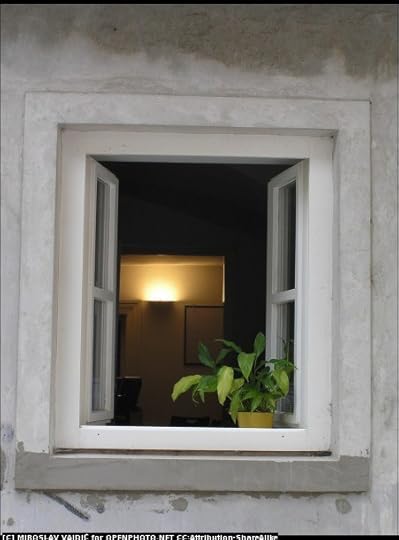
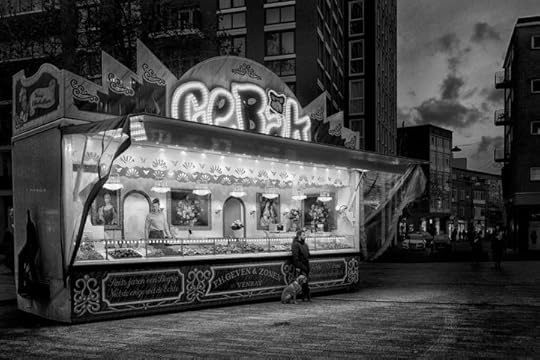
The French doors lie open,
the sun and breeze trip in, like visitors coming for tea.
The books sprawl across the old wicker table,
under them, a crisp white cloth.
The smell of toast dances with the summer morning.
birds, overjoyed by the beauty of life, sing along the branches of huge plane trees.
She has stepped away for a moment, but her perfume stays
like the ghost that fell in love with a queen.
These days of luxury, sun-kissed ease
are marked in difference from the older, darker days.
The money is less now, but she does not miss the abuse of wealth.
Sleep a long deep sleep
and wake with the gentle day,
let the universe provide for now.
Stand on the balcony and look down at the trees and green parkland,
and remember the dirty, city streets that can touch you no more.


November 22, 2016
Rental
“He stayed here two years,
before the end.
Did I tell you about Sam?” Mrs. Kubowicz asked me.
“No,” I said, “I don’t know him.”
Mrs. Kubowicz leaned against the wall and looked at me with happy eyes.
“This was his room. He was a very kind, quiet man.
He was six foot seven tall. I called him my gentle giant.
We were very close. We would watch television at night,
do you like to watch detective shows?” She asked me.
“Not much,” I answered. I did not like the look on her face; she looked disappointed.
She held her hand out to the room. I stepped inside and looked about.
“Why did he move out?” I asked.
A cowboy hat hung on the wall next to a picture of cattle on a farm.
The place not only had furniture, but belongings.
Models of trucks sat on a shelf above the window.
“He died. Suddenly. He crashed his truck on the highway to Canberra.
Killed him instantly.”
“Are these his things?”
“Yes, I can’t bring myself to throw them out, no one came to collect them.”
It was a small room, but it had its own bathroom and a space to cook. I liked the independence.
“I’ll take it.”
I settled on the bed and looked up at the ceiling.
It was quiet. Somewhere in the house, Mrs. Kubowicz moved about.
The vacuum came on.
I rolled on my side and opened the bedside drawer.
There sat an open box of condoms, some bills, and a notebook.
I opened the notebook and read a few pages.
The man’s life was recorded daily.
The last entry was dated five weeks ago.
It was a list of expenses. Rent had been crossed out and ‘zero’ written in.
I wondered how he managed free rent.