
Kirby Crow's Blog, page 3
March 3, 2014
THIS IS MY BOOMSTICK
Mmmkay, no, I don’t actually own a boomstick. What I do have is an Off switch (just as good in this context), and I’ve been thinking about misanthropy. Not the actual I-Hates-Most-Everybodies misanthropy, but why some of us flock to virtual communities while expressly avoiding deeper human contact on a daily basis. My social anxiety meter is in the medium-low range. I’m not fond of very large crowds (50% “germs!!!” 50% “you people are stealing all my air”) but I do fine in normal gatherings, parties, malls, etc. I’m not afraid to speak to an audience or go to an event. I don’t consider myself a recluse, yet days can pass where I venture no further than my front door and I won’t feel like I’ve missed anything. Between Tumblr, Twitter, blogging, the Internet and my gaming, it can often feel like I’ve been thoroughly socialized without ever leaving my desk. Maybe I’m just a new species of hermit.
A digital hermit. Dhermit? “Digimit” leads one to believe you’re a Pokemon while “dhermit” merely sounds like an epithet. We’ll go with the invective. 
If we think of human contact as an analog device and VR contact as digital, tactical advantage goes to the dhermit. Just like the quantization noise inherent in digital computers smooths out the raw analog signal, VR contact allows us to truncate those signals we reject and use our own methods of lossy compression to extract only what we want from the contact, only what we’re comfortable with. The essentials without the messy and complicated details.
As a bonus, there’s an Off switch.
An avatar is a representation of you. It’s rarely – with some exceptions, notably Second Life, where thousands of avatars represent the real-world appearance of their human pilots – an accurate one. Our avatars can be anything, any fragment of ourselves we wish to pour into it, a little or a lot. Most of us take our dreams, who we wished we could be, our best face, and we either enchant the world with the attempt or bore it to tears and the Mute button. We can even extract toxic elements of our persona that we dislike and indulge that beast through VR, although I don’t recommend it. As always, Karma (rather like the Internet) applies and She never forgets. Resist the temptation to be a shitcock.
In the absence of any meaningful social anxiety, is misanthropy the only label for avoiding other humans? What is it about interacting with an idealized version of a person that we find more appealing than face-to-face contact? Is it that VR contact is more immediate and gratifying, or is it that we get to dictate the variables (appearance, weather, length of contact, crowding, germs!!!) that are so uncontrollable in real life?
As always, I’m stuck squarely in the middle. I like my friends, I like restaurants, coffee shops, theaters, bookstores, and museums, and I’m willing to venture out and enjoy those. I’m also very aware and fond of the formidable power of my Off switch.


February 15, 2014
Brain in the closet
I had a dream last night where I was some kind of cop/detective working on a space station, but it was odd (like it’s not odd already?) because the station was more like a rundown urban moon colony, with soil and plants, buildings and sun and some kind of dome keeping in stuff, yanno like atmosphere and people. Important stuff! It had gravity because at some point I was running through an alleyway with a fellow cop who looked – yes, commence to making fun – like Daryl from The Walking Dead.
Daryl, why are we space cops? Daryl, why do the ground textures look like Minecraft dirt? Daryl, why are the zombies singing? Daryl, why did I know the lyrics to the zombie song?

I’ve been trying all morning to remember those lyrics.
My subconscious is like a giggling teenager in a closet, waiting for me to go to sleep so he can come out to play, so he can unpack all my daily weirdness, experiences, scattered thoughts and fragments of idea to staple together a semi-coherent existence that lasts only as long as my eyes are shut. When I wake up, his life goes to sleep.
I dream almost every night. Vivid dreams that seem to last hours. I firmly believe that an adult dedication to playtime –not just gaming, by the way– is what makes my sleeping imagination so fertile. If it’s true that dreams are the brain trawling through and recycling your information uptake, then the kinds of information you absorb relate to your dreams. Data in, data out. You have to marvel and wonder when you’re awake to do the same when you’re not.
February 10, 2014
My Life in My Head
I spend so much time in my own head. All writers do, actually. It’s just how we function, how we dream up our worlds, how we play out the scenes that we intend to put on paper. We borrow from every single thing we hear and see to construct those, awake or asleep. It’s never been a weird thing for me to spend hours daydreaming. It’s been an unproductive thing, but never a loss.
Inspiration comes from a variety of sources. In fact, it comes every source, conscious or not. Virtual worlds have been a foundation of inspiration to me for years. Not necessarily playing the game, but who I am when I play it. Not all players empathize and connect to the pre-crafted game character as they play the storyline. Most of us do connect to a degree, writers included, but every player brings a different plate to the table.
Games get an undeserved bad rap, for reasons that apply to only a small segment of the player base, but some logical criticisms are broader and are valid to most. The one problem I have with my gaming hobby is the false sense of accomplishment it can bring. A hobby is a hobby and should be for pleasure. You don’t need to justify a hobby, but gaming tries to trick me into thinking I’ve actually gotten something done, and that’s a problem.
Of course, playing something like Minecraft is different from games like Second Life—where you can actually sell your creations for Linden currency that can be converted to cash— but also different from games like Lord of the Rings Online or Warcraft, where all the content comes from the game servers and you’re never building a city or texturing a new outfit.
My particular creative brain demands a real-world result to labor. That’s why I tend to gravitate toward games where my playtime can be extrapolated from the virtual to the real. Blender, Zbrush, and Photoshop are the tools I use to make my virtual creations in Second Life, but I don’t do much with them. I play with them, I take snapshots before they get packed into the inventory. That’s about it. What do I get out of that? Personal satisfaction maybe, and it has made me a fair hand with the software. My friends keep telling me to get on the SL Marketplace, get a business going. I try. I have a few things for sale there, compared to the thousands I’ve created. My SL avatar has been in-world for 7 years, so my inventory is massive. But unlike other games, items become obsolete in SL, the code evolves, creations become more sophisticated. The first chairs and clothing I made in SL seem incredibly clunky now. I couldn’t give them away.

The most valuable things (to me) that I create in Second Life don’t stay in that world, not even a little. I have an office my avatar goes to in the morning, just like my real self moves to the laptop desk facing the big window. That’s where I sit down to write for the day, and sometimes when I need to feel like I’m somewhere else, my avatar goes wandering to forests, cities, ruined landscapes and alien vistas. Everything is inspiration, after all. I’ve always believed that the time I spend in my head isn’t a loss. When I type The End on a story or novel, I know that’s true.
Postscript: Next week the header image above will have “My Life in My Head” under my name. It’s no secret (you can tell from the lapses between posts) that I’ve struggled for years about what to write about on my blog. Writing about writing isn’t for me, neither is review or critique, book recommendations or movies, but I can yap forever about living virtually on the Hypergrid.
July 2, 2013
DMCA Musings and Muso
I found Muso DMCA Takedown service through Twitter. A well-known author in my genre tweeted about it and I thought I would give it a try, because I have to tell you the truth: I gave up playing whack-a-mole with illegal downloads of my work last year. I was spending an hour a day every morning tracking down the torrents and files, keeping records of the URLs, and serving DMCA notices through e-mail. When you’re already pressed to find time for writing, that hour becomes very precious. I realized I could either write new work, or I could spend my life trying to keep illegal downloads of old work out of the hands of readers. When you look at it like that, the choice becomes easy.
Muso’s price is a little steep, around $20 a month in USD. I still haven’t decided if it’s worth it and I’ll need to compare sales numbers from before and after I began using Muso to see if it’s made a difference.
Not every pirated ebook automatically means a lost sale. I can’t make an accurate guess of the percentages, but my gut tells me that at least half of all of these types of downloads are acts of laziness. It doesn’t mean that every downloaded novel was actually read. It doesn’t mean that every downloaded novel would have been purchased if only it hadn’t been made so readily available for free. It doesn’t even mean that the person who downloaded it was necessarily looking for a book written by me, since I will often find my books being offered in a gay fiction compilation of hundreds of novels. Therefore, I can’t say that when I go to a site and see that the book has been downloaded 1,500 times that I’ve lost royalties for 1,500 novels. I haven’t. A large percentage of those downloads do not represent and would never have represented a sale, and that’s because when it comes to ebooks, downloaders tend to just grab everything, shove it on to the drive or their Kindle, and hope that they’ll get around to reading it someday.
So, generally speaking, an illegally downloaded e-book does not necessarily mean lost money for me.
Back to that laziness thing: people will not pay for something if it’s being offered free right under their noses. We can debate the morality of this mindset forever, but I’m more interested in the facts. Specifically, I’m more interested in how these facts can result in better sales numbers for me, and one of the ways to do that is to remove temptation from the board.
If it becomes difficult to find free stuff, if you make people work for it, they’ll often decide it’s just easier to cough up the pittance for the e-book at Amazon rather than spend an hour scouring torrents and visiting dodgy websites loaded with malware that could take their computer down in flames. Again, not addressing the morality of taking stuff that doesn’t belong to you or of depriving us hard-working authors of our income, just observing how the system works.
And how it works is this: Muso removed over 30 pirated files of my work from general circulation in the past month, including 4 files from one site I had written off long ago as completely unresponsive. Since Muso will automatically re-file a DMCA notice for any copyrighted work that is not removed within 48 hours, it could be that I simply annoyed them enough to start deleting. When it comes to getting what you want, there are benefits to being a bother
The pros: you only have to fill in your information with Muso once. After that, everything is automatic or 1-click. You still need to maintain your campaigns, but the process becomes streamlined and much easier to deal with. You save time and you have the satisfaction of clicking a button and having something that was previously a huge pain in the ass taken care of for you.
You can never underestimate the value of kicking a pain in the tuckus to the curb.
With Muso, I feel like I’m actually getting something done about the piracy of my work, taking action instead of just passively letting it happen. It’s empowering to take back some control, and while it’s impossible to police every pirated copy, it’s satisfying to be able to deal with some of them.
The cons: Pricing could be cheaper. I don’t think they realize it, but breaching that $9.99 cap for digital service turns clients away. I mean, I love Lumosity.com, but I don’t love it $14.99 a month. At that price, my brain will have to do its own training. Writers Market is $5.99. Domain hosting for my author website is $11.00 a month. You see where I’m going with this? You have to budget your Internet services, because we all have more than one. $20 is a large bite. That’s one third of my total monthly billing for cable Internet service, and it will be at least another quarter before I find out if was worth it. It would also make Muso the most expensive digital service I subscribe to. Perhaps an option for Indie authors at a reduced price level would be in order here.
Muso’s web interface is not difficult, but you’ll need to spend time getting familiar with it. On an organic intuition scale, usability is quite good. However, the “Add Files” option is almost useless. Human beings can find pirated files in ways that a search engine can’t, and that’s what the Add Files option is for, but of the more than a dozen times I tried to enter a file location, the form rejected all but one entry. The dynamic nature of the Internet is the culprit here (and the ingenuity of piracy sites, who are doing some sneakily clever things with Java) but I think that option could be improved. As it stands, if you find a pirated file on your own that Muso’s interface can’t handle, you still have to do the paperwork yourself.
So in conclusion, despite the price, I’m inclined to give Muso a few more months. My workload is lightened and there have been results. Only time will tell from here, but I’m going to recommend it to my fellow authors and see how it goes for them. Good luck, guys!
*BIG HONKING NOTE: I always add a addendum here about file sharing in countries outside the US, Canada, and Europe: In a lot of places around the globe, my novels are either not available, the price range is beyond the means of the reader, or homosexual material is forbidden by law. In those cases, I can have no objection to file sharing. All I ask is that once you find the books you want to read, just read them and enjoy. Heck, write and tell me about it. I’d love to hear from you. Just please DO NOT RE-UPLOAD them back to file sharing, piracy & torrent sites. Share small!
March 5, 2013
“Where can I find music for my book trailer video?”
*This blog post is not intended as legal advice. No, seriously. It’s not. You do your own thing at your own risk. Always thoroughly research any website or service you intend to do business with.
I see this question posted several times a week on Twitter, Facebook, and various blogs on my feed: “Where can I find music for my book trailer?”
The simple answer is, you can find it just about anywhere, but it’s not free. Another simple answer would be you can find it but it’s not always free. Even simpler: Nothing is free.
Sure, it would be AMAZEBALLS to find free music tracks just lying on the ground like gumdrop flowers in WonkaLand, free for us to use however we want. I’d also like free rent, free groceries, and my own personal Michael Fassbender Replicant (no expiration date), but those aren’t happening either. Musicians have to earn a living like everyone else, and expecting them just to give you their stuff to because you say you need it is an entitled worldview. No, scratch that. It’s a dickbag worldview.
Don’t be a dickbag.
If you want to use a song for a fandom creation (vidding, fanvids, etc), this falls under a different category than commercial use. Just go to Newgrounds.com and click on the Audio tab. There are thousands of Creative Commons songs there completely free for noncommercial use. This means you have to give credit for the song (and a link to the artist’s website would be super nice too!) but you don’t have to contact them or pay them. It means you can’t include their song in another collection of songs or alter the song substantially. For example, changing the rhythm or creating a new mix from their song, but you can cut it to fit your video timeframe.
If you want to use a portion of a popular song by a famous artist for your fanvid – and you have previously purchased the song for personal use – this may or may not fall under the Fair Use clause of copyright. Using only a portion of the track is more likely to place in the gray area of Fair Use, but using the entire song almost certainly infringes upon the artist’s copyright. Yet, there are possibly millions of these fan-made videos with famous song tracks on YouTube. Why haven’t they been taken down?
Sometimes they are. The general answer is that there simply aren’t enough resources to police every single song, TV show, or movie on the Internet, and the harder studios and recording labels crack down on fans sharing material among themselves, the more ill-will it generates between media/content provider and audience. Obviously, this is counterproductive to a consumer environment dependent on actual fans.
Another reason that fandom creations manage to fly under the radar of legality is because they don’t generate any income. The moment you introduce cash to a fandom equation, the demarcation lines move and corporations get protective. Without profits, corporations cease to exist.
A book trailer is meant to advertise a product: your book. Therefore you need a commercial license, not a Creative Commons. If you want to use a song from Newgrounds for commercial use, you’ll have to contact the artist personally and ask them for permission. They may or may not require a fee for this. If your website does not generate ad revenue, the license may be less. If you intend to load your book trailer onto YouTube.com or Vimeo, then it might depend on whether or not you’re being paid ad revenue from your channel traffic.
By now you’re nodding your head and thinking “Wow, this is complicated.” Well, so is writing a book. If you wanted easy, you should’ve chosen a different profession. Maybe lumberjack or weasel-herder.
You also may have to get past the natural enthusiasm of a fledgling musician who suddenly has an author contacting them about their song. It’s astonishing that some people still see dollar signs when they hear “author”, even though the reality of that image should be pennies tucked into our scuffed loafers with the run-down heels.
“An author contacted me about using my song for their advertising! I want $500 every time they play it!”
Yeah. No. Back to reality. Let’s talk about some sites that license music tracks.
Unless you really do have enough disposable cash to start a bonfire, I don’t recommend Greenlight . A random sampling – clicking around on their website and entering in the information that the average author would provide (online advertising, 1 year, under 2 minutes) – Greenlight arrived at prices between $8,000 and $45,000.
You may commence hyena laughter now.
Songfreedom listed a quoted price of $34.99 per track, but they had no price-quotes specifically for background music for video. According to the FAQ on their website, authors would need to obtain a streaming license for this purpose, and there were no prices for streaming. It’s a bad sign when there’s no price.
Musopen claims to be a free music source and the five songs that I sampled from the website were attributed under a Creative Commons Public Domain license. For more information on what this is, go here . This could make Musopen a possible source for authors hunting for free music they can legally use commercially, but I had difficulty navigating their website and their Terms of Use page seemed to randomly close on me. In short, do some research before using songs from this site.
Jamendo.com also looked hopeful. While not free, their quoted prices for advertising licenses were in the feasible range for an author seriously looking to promote their book, between $90 and $270. It’s worth checking out.
Youlicense.com also showed potential, but they had no specific category for book trailers or product advertising, and their prices varied widely between services offered (from $6-$450). Basically, you need more info, and with so many other resources available, I’m not sure it’s worth your time.
Playtunes has a nifty interface and is a subscription-based service. Again, inexpensive and promising, and their stated conditions of use include “an audio or video production, website, app, computer game, slide-show, etc.”
While that doesn’t specifically mention “book trailer”, a reasonable interpretation would be video production. Their subscriptions begin at Free, where you buy credits at $10 a pop, with each track worth between 1 to 3 credits each. Monthly unlimited downloads start at $129, which could make Playtunes a viable resource for publishers and videographers.
And that’s all I had time to research today. Leave your own resources, links, and suggestions in the comments, and good luck finding your music.
February 22, 2013
How to Bake An Internet Furor
Measure 2 lbs self-rising flour.
Have an audience.
Make a Secret List.
Reveal to audience that there is a Secret List, but take no responsibility for creating the List. Inform that it was a poll.
Mix flour with milk, eggs, sugar, vanilla, and oil.
Reveal that there are people in the audience who may or may not be on the List.
Do not tell audience who is on the List. Or not on it.
*Refuse to divulge statistical numbers of actual poll respondents. Turn oven on. Watch it heat up.
State that the people on the List are “must-haves”, which places those not on the Secret List on the “not-must-haves” List. (Yes it really is quid pro quo. It’s the internet. Don’t give me that Bambi look.)
Place mixture in heated oven while audience begins to cook to a slow boil. Say something about unfortunate wording and inadvertent offense. Ignore the fact that the wording of a newsletter is secondary to the reality that there IS a list and telling writers that there IS a secret list and then not telling them whether or not they are on it or not is not like throwing gasoline on a fire, no, it’s like throwing another tanker of gasoline on a gasoline tanker fire.
Set timer. Calmly claim that angry audience members misinterpreted the meaning of simple phrases. (Don’t feel bad. Bill Clinton tried this one. Didn’t work out for him, either.)
Apologize for not taking into consideration the insecurities of the audience.
Fail to exercise self-criticism on wisdom of creating any List at all that you’re not prepared to own. Instead, why not place the blame of the resulting negativity on the shoulders of vapid, low-sales authors motivated by jealousy?
Listen to timer making frantic ding-ding-ding noises.
Have representative organizers make blanket statements about the emotional and/or ego-driven motivations of those who object to the List. Meanwhile, cake in oven has begun to resemble a poisonous atomic mushroom cloud.
Timer hops around the room like a Jack Russell cyborg terrier.
Do not implement the reasonable arguments made against the List that are put forth in a civil manner. Instead, focus on the members hurling insults, spreading rumors, and stomping, where you are clearly in the right.
Imply that you really expected more mature and professional behavior from authors.
Watch timer explode. Watch cake explode. Watch internet explode.
Start sweeping.
===================================================================================
And that’s how you bake a wank cake.
Listen, authors and readers, I have no present plans to attend Gay Romantic Lit. I haven’t been asked to attend GRL. No one has sent me any secret invite. I have no agenda, other than to make a blog post about a topic that has me interested. If I get asked to attend, I may or may not, but if I do (or don’t) it won’t have anything to do with GRL’s announcement, simply because I don’t think they deliberately did anything wrong.
Listen GRL organizers: everyone who criticizes you is not your enemy. It therefore doesn’t default that the recent criticisms leveled against GRL stem from the finest motivations, either. Some of what is being said about envious and protective authors behaving badly is (sadly) true. I know that my own Jellus-O-Meter starting ticking when I read the newsletter, but I refuse to feed that beast. None of that means that GRL is infallible.
You fucked up. Face it.
You didn’t fuck up by creating an author cap. Author caps are wise and reasonable in this venue. I support the author caps.
You didn’t fuck up by letting people know there WAS an author cap. There was one last year, too, and this didn’t happen.
You fucked up with a seriously ham-handed delivery to your audience of method, presentation, and response. That’s all. F minus on all three. But it’s not the end of the world. This can be fixed.
#1: Discard the list. If you’re not willing to reveal poll numbers, that shouts to people that the numbers were weak. It’s a huge gap in the process of fairness (which should be transparent) and so far you’re focusing on being annoyed that people will not stop focusing on the poll numbers. This is a non-viable method of defusing the situation. Authors will never, ever stop obsessing over numbers.
#2: Make your own executive-decision list of author invitations. No one that I’ve read disputes your right to do that. They only dispute the creation of an opaque list attributed to no one.
#3: Take responsibility for your list.
There’s still a great deal of goodwill out there for GRL. I have goodwill for the convention. I think it’s a wonderful, inclusive enterprise and I acknowledge the hard work and time out of their busy lives that the organizers have invested into it. It’s their baby, and I respect that.
But if hard work made you a saint, there would be statues of me everywhere. We’re all human and none of us are prescient. Obviously if the GRL organizers had somehow been able to know what kind of response they’d receive from their newsletter announcement, they would have re-calculated and gone in another direction. I have no doubt of that, and the statements made that the organizers deliberately set out to make GRL divisive and elitist should not be taken seriously. GRL also can’t be blamed for getting snippy and hurling back some of the same noxious poo that was being hurled at them. If anything, I’m amazed at their restraint. If that had been me, I doubt that any of my responses would have been printable.
This was simply a flawed procedure that was handled poorly, but the longer GRL keeps insisting that there is no flaw, the harder it’s going to be to recover from the bad PR and start mending fences.
Let’s all get to work, huh?
*You can deduce this number with a little work, based on attendance and the number of attendees who have stated they did not fill out a poll.
February 6, 2013
My Weinerific Take on “Please Don’t Pirate My Book Day”.
I want my money.
No, let me rephrase: I NEED my money.
That said, I completely grok that this isn’t always possible. Distribution & availability are very real barriers in some locations of planet Earth. National law can also be a barrier. In some countries (where I know my books are read anyway, yay!), it’s illegal to own a copy of my work, because reading material of a homosexual nature is forbidden and often punishable. In those cases, I’d like to air-lift an emergency payload of gay romance novels for the populace to wallpaper the sidewalks with.
Sigh. Oh Humans, why you so dumb and mean?
In some countries, the exchange rate for my books makes their pricing laughably out of reach. And yet, people still want to read them. I know, because I’ve heard from those people. So what to do?
First off, I try not to be a hoo-hoo. If you can’t afford my book, then you just can’t afford it and that’s that. I believe you. Given the choices of you never reading it and never giving me any money, or simply lifting it and reading it, I’d rather you lifted it and read your little heart out. The math says that I was never making any $$ in that scenario anyway, so really, it’s a win for me.
Speaking of winning, my real problem with e-piracy is when people try to win the Wiener of Coolness award among their peers by zipping ALL of my books into a file and uploading to a huge, popular sharing site accessible by, well, the whole world, thereby making my very own sweat-of-my-knuckles work free to the world. Their reward? Favorable comments and thanks you’s from the sharing masses.
I once pressured a particular wiener to take the file down and the comments started to swing my way, but they weren’t exactly favorable. “Xxx went to all that work to upload and poof! Just like that, that work was wasted by the selfish author!”
And then my brains leaked out through my nose like the raspberry jelly of stupid, because WHAT?
I don’t argue ebook piracy in real-time any more. I just don’t. There’s no point, because any way you slice that stinky cheese, the person you’re arguing with believes that their POV is the correct one and nothing you say will sway them. You hear me? NOTHING! You’re a toadying, stingy jerkface sell-out to the mega-corp Man and you probably spend your days in bed rolling on all the money you’ve made, so poopy on you, greedy author bastard blaaaarghhhh!
omg I’m never going to be able to afford the next issue of Teahouse!
Yeaaaaah. No. That’s not my life. I wish that was my life.
I don’t mind friends sharing my books among each other or a small circle, or even a largish circle. That’s what friends do. That’s what books do. But if you’re a friend of mine, what you won’t do is upload my books to a public mega-sharing/torrent site, because wieners-in-waiting also fondly dreaming of the Wiener of Coolness will absolutely swipe that file and upload it to their own account, which in turn gets swiped and uploaded by another wiener, and so on and so on.
That’s when it starts to matter to me financially: when I Google myself and Google suggests you get a free illegal download of my work along with visiting my website. I mean, thanks for the fucking web-hit and all, but sheesh!
Lemme sum up: I’m not against file sharing. I’ve never been against file-sharing. What I’m against is being broke and not getting paid for doing my job, and yet, like a thousand other jobs that we do for free in our lifetimes, I realize I can’t always be compensated.
And I’m good with that. Just… remember I’m a person, too, ok?
January 23, 2013
Review thoughts on “The Following”
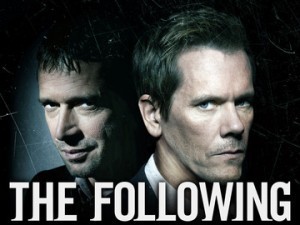
Image Credit: property of FOX Broadcasting
I would have enjoyed this show more if it contained a plot I could suspend disbelief for. I’m a big fan of James Purefoy, so I’ve been looking forward to this show for months.
Complicated back-stories reaching back several years works for fictional fantasy worlds like Game of Thrones and The Lord of the Rings. It often doesn’t work so well for urban crime fiction. Can you imagine visiting the childhood of Patrick Bateman in flashbacks of American Psycho? It’s unnecessary and it muddies the storytelling with an effort to make the tale seem larger than it is or to add depth to an overly-simplistic plot. An exception to that is the Hannibal series by Thomas Harris, but those are in a category of their own anyway.
The Following would have worked much better as a supernatural thriller. Kevin Bacon simply informing the audience in reminiscent dialogue that Joe Carroll (the serial killer villain, played by James Purefoy) is a gifted, mesmerizing teacher and cult figurehead was careless writing. I understand that the writing has to conform to a strictly-timed format and the segments are limited, but I saw no evidence of Joe Carroll’s great charisma in either the writing or the portrayal. Aside from the facts that (1) it would be very unlikely that Joe Carroll could find a single follower willing to kill for him and that (2) psychopaths generally do not function that way; Carroll finding a group of followers willing and societally able to dedicate years of their lives perpetuating lifestyle facades to get close to his “unfinished masterpiece” and help him murder her would be… astronomical.
Not like finding a needle in a haystack astronomical, but like finding a single specific needle in a stack of needles the size of Oregon.
That’s not to say you can’t write a show about a conspiracy of murderers colluding for a single purpose and make it work, because you can. Look at The Omen. Look at The Wicker Man, or Rosemary’s Baby. See a pattern yet?
As soon as it became apparent that there were conspirators working with Joe Carroll and the whole cult framework reared its head, I began to think of Lord of Illusions. More than a few themes of The Following closely mirror Lord of Illusions, but without the supernatural element. To be honest, I’m a little puzzled as to why they decided to leave that element out. It would have explained so much and also neatly dispensed with the faulty psychology holding the large-scale cult plot together. Why does a cult of aspiring serial killers pull together to follow this man? He’s a demon. See? That makes sense now.
But Joe Carroll is no Nix and The Following is too far-fetched to be labeled serious or gritty, though it certainly qualifies as a thriller. Sadly, since I was not feeling any of the characters, the first episode succeeded neither as a relationship-driven story or a horror story for me, but I always give new shows 3 episodes to prove out. Here’s hoping.
Another thing: I laid bets with a friend a few weeks ago that the chosen victims of The Following were going to be attractive young women. Corpses of the week, basically, picked for no other logical reason than being pretty. I know that conforms to the Poe connection the killer has, but it’s careless and it’s creepy and smacks of deliberate construction to serve an unpalatable purpose, like killing pretty women onscreen is more liable to garner an audience than offing truckdrivers or something. I was let down to win that bet. I hope I don’t win it next week.
If you watch TV crime shows for the actors, urban settings, and mature writing without being too critical, then watch The Following, because there’s some nifty camera work, hues, and music choices in there. Otherwise, it’s a lot of shock value for not enough payoff. Only you can decide if that works for you.
But I’m going to watch it next week, because I still have hope for it and, hello, James Purefoy.
January 14, 2013
Review: That Book Your Mad Ancestor Wrote, by K.J. Bishop
Earlier this year I had the pleasure of corresponding with author K.J. Bishop and was fortunate enough to read the manuscript of her new anthology, That Book Your Mad Ancestor Wrote, prior to publication. She was kind enough to mention me in her acknowledgements, and I’m thrilled to finally be able to write this review and hopefully steer you to Amazon (it’s available in Kindle format in the US and UK, and soon in paperback) to immediately purchase it.
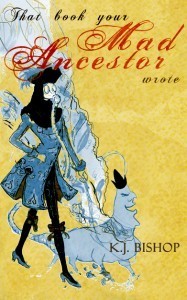
Because I care about you guys like that. Seriously, don’t miss out on this one. It’s genius.
It’s no secret how fond I am of the writing of K.J. Bishop, or of Kirsten herself, who is a pretty nifty human. It seems almost inadequate to dub her an author. She’s more like an artist of prose, but nothing so mundane or harmless as painting with letters. More like carving with an alphabet sword. There’s a quality about her writing that feels like wandering through a green garden overgrown with curious plants and bizarre structures: Here’s a bush trimmed in the shape of a lion with the head of a goose. Here’s a stone well full of stars instead of water. And here, strangest of all, is a misty path that endlessly leads back onto itself like a Mobius strip, bringing back versions of the same you, all slightly changed and speaking a different language.
Yes, that’s exactly how it is.
Fans of Bishop’s The Etched City (nominated for the World Fantasy Award in 2004) will be excited to read more about Gwynn in his full, black-hearted glory in The Art of Dying, and a somewhat toothier version of him in She Mirrors, both stories touching on the past and future of one of the most interesting not-villains of Bishop’s worlds.
One of my favorite stories of the collection is a very short one titled Last Drink Bird Head.
“Last Drink Bird Head didn’t fit in at school. When the others were candles, she was lemons. When doors closed she was on the wrong side. She hated the flavour of milk and cellophane. When she jumped rope she was a merry-go-round horse with an orange face. She couldn’t sit down anywhere, not even on the toilet, without saying ‘Last Drink Bird Head’ three times. When it was her turn to feed the goldfish she fed them glitter and they died.”
It’s all a bit insane, isn’t it? Beautifully, dreadfully so. While some of the stories – like the delightful cyberpunk Beach Rubble, or the upside-down apocalyptic The Heart of a Mouse – are fully-realized tales, others are like snatches of nightmare or the conversations of a fever dream. Mother’s Curtains is one such fragment, and packs a big punch for being so brief. There must be some kind of magic to that.
I believe I’ve begun to think of Bishop’s writing as a gleeful vacation from reading the way you’ve been taught you’re supposed to read. Rules here are about as necessary as pitchforks for soup. Here’s a temptation to take the analytical shades off and walk barefoot through alleyways and prisons, velvet-curtained brothels and the edges of black cliffs. Take the invitation, but watch your back when a citizen of her world passes by, because they’re all a little touched.
November 18, 2012
The Next Big Thing Blog Tour
How do you follow a subject line like that? Just don’t. Save yourself the embarrassment and get on with the show. The proof is in the pudding, the Borg is in the nanoprobe tubule, and all that.
Big, BIG thanks to the fabulous Alekzander Voinov for tagging me, and to Liesel Schwarz for tagging him first!
1) What is the working title of your next book?
“Hammer and Bone”
2) Where did the idea come from for the book?
Most of the stories came from dreams, or nightmares, as the case may be. I had this one very vivid dream that serves as the jumping-off point for “Hounds”, one of the longer tales in the book.
In my dream, I was hiding. The sky was black and starless, but it wasn’t a night sky, and I was beneath an invisible net. The net wasn’t magic. There was a technology to it. I was trying to shield myself and two others from fanged, armored creatures manning a great wall not far away. If they found us, I knew they’d kill us, and I also knew that we were completely outmatched. They had projectile weapons and beams on the towers, we had only knives. We were about to be discovered, and suddenly one of the women began to sing, and I knew -I just knew- that the song would save us. I knew the song, I knew the name of the singer, I knew everything.
It’s hard to encapsulate a vision, to shrink one blazing moment of understanding into the kinds of words that will translate a nascent (and imaginary) experience to a reader, but I attempted it in “Hammer and Bone”. Borg, nanoprobe, pudding.
3) What genre does your book fall under?
The stories are steampunk, speculative, dark fantasy, and horror.
4) What actors would you choose to play the part of your characters in a movie rendition?
Oh wow. Well, if I could pick anyone, I’d choose Angela Basset for the sharp, smart, and deadly Notch, but Loretta Devine would be equally amazing. Simon Woods for Roben, because there’s something strong but breakable in that character, and also because he just looks like Roben to me. Logan Lerman for the disillusioned and abandoned Prince Arin. Kevin McKidd for proud Veron and Djimon Hounsou for the eminently practical Nulf Asoka.
5) What is the one-sentence synopsis of your book?
13 dark, cross-genre tales with a queer slant.
6) Will your book be self-published or represented by an agency?
It’s under contract with Riptide, presently in development.
7) How long did it take you to write the first draft of the manuscript?
All in all, about a year.
8) What other books would you compare this story to within your genre?
I feel ridiculous and arrogant comparing my writing to the novels of authors I admire, but others have compared it to books like “Wormwood” or “Are You Loathsome Tonight?” by Poppy Z Brite (Billy Martin), or works by Caitlin R. Kiernan or Clive Barker.
The problem with comparison here is that not many authors publish whole anthologies of their shorter works, so there’s a limited pool of examples. I’m going with what editors have told me about my writing style and the manuscript.
9) Who or what inspired you to write this book?
They were the dreams that never went away, so…thank you nuerotransmitters? Just kidding. I credit K. J. Bishop’s work as inspiration. I dream the way she writes, I think; lush colors, stark images, detail, and sudden bursts of insight. Bishop’s “The Etched City” is like a stolen spyglass into a lucid dreamworld, and although “Hammer and Bone” is nothing at all like TEC, I hope to capture the same reaction in my readers that she snared me with.
10) What else about the book might pique the reader’s interest?
It’s got zombies, but they’re not your usual shamblers. Werewolves, but not the shaggy kind. Heroes who don’t fit the hero model and victims who are anything but. It’s like waking up to living someone else’s life: you wouldn’t know where you were or recognize the people around you. You’d have to work to get your bearings, and the curveballs would be vicious.


