Cynthia Harrison's Blog, page 36
April 26, 2015
Old Dog, New Trick
This new thing I am exploring is not really a trick. And I’m not a dog. But I’m 60 years old, so I’ve been on the planet for awhile. Anyone under, say, 40, might think by 60 we have it all figured out. Especially someone like me who has been working on “figuring it all out” for more than half my life. I always want to make my life better. I want better relationships, I want not to be sad, I want success, I want a happy family. I want to be happy inside and out.
Tall order. I’ve walked many paths that promised happiness through my years. I tried giving myself over to God, to Buddha, to yoga, to meditation, to dream analysis, to various therapies both old style and new age. It all helped, for awhile. But I tend to feel judged in or about all these things. Judgmental people freak me out bad. It does not feel good to be observed and found wanting. Found ridiculous, stupid, selfish.
So the judging and the feelings…who exactly does all that? Nobody in particular. Sometimes some person or other will make a veiled remark I expand into a harsh criticism. But the judgement is almost always from myself and I then project that others will see me as ridiculous or stupid or egotistical or selfish or simply lacking in some fundamental way. It never works the other way. I never project that people think I’m great, awesome, smart, creative, got it all together, am amazing.
Sometimes other people give me extravagant compliments. That feels good and I believe them. I don’t go around all the time putting myself down and being negative. It’s just not in my essential nature. But I do ride the waves of feelings that come at me from so many directions and I take stuff from “out there” in the world very much to heart. I take everything personally, even though I know, deep inside, that people rarely give my opinions and antics as much thought as I give to what they think about me. Truth is, others are most likely not thinking much about me, as they are too busy ruminating about what everybody else thinks of them.
I tend to overthink stuff. I spin scenarios out of a few words or a single sentence. It’s crazy to live this way and luckily I am not always in this mode. I’ve worked hard to gain a measure of peace, clarity and positive feelings. This is sometimes difficult for me to maintain when I come up against a tough situation or a maddening person. I have an exacting nature. I expect other people to behave with at least as much compassion and courtesy as I am able to muster. This does not always happen and my compassion bar is set pretty low. I’m better at courtesy Mostly, courtesy is simply a matter of biting my tongue:)

Kuan Yin Goddess of Compassion
I’d like to be a more compassionate person and for the past year I’ve been meditating on that every day. The compassionate mediation comes from Buddhist thought, and it starts with the self. Many people are hardest on themselves. Nobody can beat you up like that little voice in your head saying you have missed the mark, you are not good enough, you are … fill in the nasty blank.
It’s exhausting, mentally beating myself up. Part of this comes innocently: I am writer who wants to be a better writer. I am not naturally gifted in this area. I have a little talent and a lot of grit. I just don’t give up and I put in the hours and I have improved over the years. One way to do this is to listen to constructive criticism. It is like second nature now, although taking critique without devastation was difficult at first. And while I still take editorial input seriously and work on assimilating the stuff that makes sense to me, I should not take this function of “assimilating criticism” any further than my writing world.
I love the feeling of writing. The process of creating something beautiful. That’s key for me. Of course I want to shape it and make it meaningful for other people too, but the main thing is that feeling I get in process as I spin a world built of words into being. Some people are burned out by the word “creative” but that’s how I love feeling. Creating through words is essential to my soul. For me, it’s a core desire. Loving is another core desire. I want to feel love for my friends and family, for all of them, not just the ones who are easy to love, but the ones who are a little harder to hold close to my heart, too.
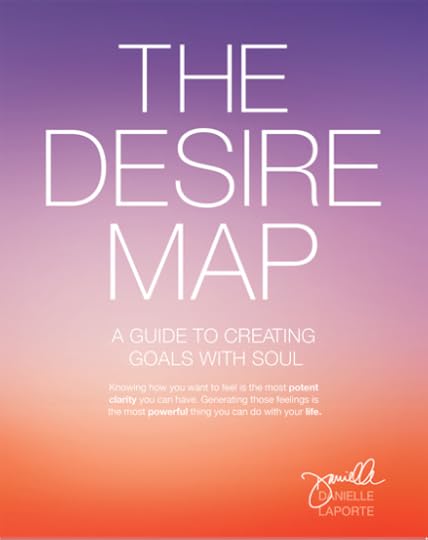
Here’s the new trick, it’s from a book called The Desire Map by Danille LaPorte, which is not really a trick, but a new way to live life: you start with how you want to feel and base all your decisions on what you know will keep those feelings alive. I don’t know much about how to do this, but I am taking a workshop soon to learn how to live from my desired feelings instead reacting to feelings that originate outside myself and I then project onto myself.
I will be posting more on my latest, and already very helpful, inner transformation as I continue the journey. Namaste.
Tagged: compassion, family, feeling good, happines, joy, love








April 24, 2015
Luke’s #1 Rule On Sale!
Luke’s #1 Rule on sale for 99 cents!
 April 24-May8
Tagged: 99 cent book, addiction, blended family, Kindle Sale, love, Luke's #1 Rule 






April 21, 2015
Blue Heaven Book Trailer
I made my first iMovie! A few of us did most of the footage for Blue Heaven ages ago & finally it’s here. I learned a lot…like what to film next time:)
Tagged: beaches, betrayal, blue heaven, book trailer, romance, sunset








April 20, 2015
Plotting a Thriller

I’ve had the idea for a psychological thriller for almost a year now. The minute I finished my latest novel (on my editor’s desk as I type this) I started planning the new one. I quickly realized there would be a LOT more research than usual. I had a new genre, a new setting, a new profession, which has since turned into several new professions. I almost said “maybe not.”
But my critique group meets next week, and a month ago I’d promised them a first chapter of the new book. I’d already done quite a bit of research on the setting and I knew the character since I’d written about her in two previous novels. Also, I had read How to Write a Damn Good Mystery by James N. Frey when I wrote Sweet Melissa, so I knew some stuff. Enough for a first chapter.

I had also done “research” of a sort when I attended Sleuthfest in Miami last month. I picked up a few books, read a couple of them, skimmed the reference text I knew I’d wear out before the WIP is finished. I’d attended workshops and even had an enlightening talk with an editor who gave me some names of agents who might be interested in the type of story I was planning to write.
Sometimes writing gets interrupted by social media. Occupational hazard. I “somehow” saw a post by Tim Baker yesterday, a writer I follow on Twitter.
Tim’s guest post had the word “research” in the heading. Because I finished my first chapter and realized I had a lot more research to do, I clicked the link. And learned a lot. Inspired, I got out James N. Frey’s How to Write a Damn Good Thriller and started taking notes. It turns out that a thriller does not have to be a mystery! It ONLY has to be “nonstop action, plot twists that surprise and excite, settings both exotic and vibrant, and an intense pace that never lets up until the adrenaline-packed climax.”
I sort of knew I wanted to write an action packed page turner. I wanted to challenge myself to write at that intense pace. I have the exotic and vibrant setting (just hope I can bring it to life). I didn’t know I’d need a high concept that can be contained in one sentence, not more than thirteen words. So I thought about all that and got some ideas. I actually wrote my high concept sentence! And then outlined a few of the twists coming up.
I found out that some high concepts are cliches. Like 9/11 terrorist stories. Oh. That was one of my first ideas…because of my setting. But I had another idea, so I went with it. James N. Frey says the goal of a mystery is to catch a killer, but the goal of a thriller is to stop evil. Makes sense; the page-turning thing would be easier to execute if the stakes are higher than just “catch a killer.”
So thanks for giving me some timely reminders to do my research, Tim, as it is already paying off. And thanks to Sonya for hosting Tim on her blog. It takes a village (of authors) to write a book.
Tagged: #MondayBlogs, James N. Frey, mysteries, research, thrillers, writing







April 17, 2015
Dieting Through the Decades
Life is a trip, a journey, an adventure. Sure there are bumps in the road, and I don’t mean cocaine. One of my main problems in the second half of my life has been weight. In my 20s I was a size 8. Then later, a 10. The much dreaded double digits, but I wasn’t too concerned. Yet.
30 Something
For me, when I quit smoking in my early 30s, after a dozen previous attempts, some lasting as long as a year or more, I started eating. As a smoker from an early age, my taste buds had been reduced to ash. I craved nicotine and food was a necessary evil.
Then my buds bloomed and suddenly I discovered sugar and fat and salt and pizza and burgers and chocolate and potato chips. In my 30s I gained 30 pounds. So for the first time in my life, I was a chunky size 14. But very happy to be done with cigarettes. I made a few weak attempts to lose weight, but I was so busy teaching every day, acquiring a graduate degree at night, taking care of my family, and writing that adding one more thing to my to-do list was next to impossible.
Fat 40

First half of my 40s, I was the fattest I’d ever been. Somehow I had gained 20 or 30 more pounds. I was a size 16-18 and wore a lot of Plus Sized outfits. Also, I’m petite, so I looked like a little butter ball. People even asked me if I was pregnant because the extra fat on my face plumped any wrinkles and I held the bulk of my extra fat in my middle.
After a friend showed me a photo of myself all dressed up and looking really huge, I joined Weight Watchers. This is me after losing a significant amount of weight. I went from size 18 to size 14. I’m not really slim and the love handles are evident. Most of my weight was still in my middle. I was somewhat okay with this weight.
50 Revision
After surgically induced menopause, I quickly shot up to a size 16 again. I started getting reports from my doctor that said I had pre-diabetes, high blood sugar, and metabolic syndrome. I took each one of these reports seriously, read all the books and tried all the diets. Sugar Busters, Atkins, Fat Flush, South Beach. They all worked as long as stuck to them. I never got below a size 14, though. And I couldn’t quit, or even limit, carbs for very long.
In my mid-50s, I developed Barrett’s Esophagus (a pre-cancer condition brought on by acid reflux) and had another surgery, this time to remove my gall bladder. My body, I was told, could no longer process fat and I’d have to maintain a low-fat diet for the rest of my life. So much for the low carb approach.

After reading Quantum Wellness, I became a vegetarian. Initially I lost weight, but not that much. The pre-cancer condition cleared up, which seemed like a miracle as I was told it was a “forever” condition and would never get better, only worse. I attributed this miracle to becoming vegetarian. I still get checked regularly for Barrett’s, but it has not come back.
I felt okay about having a cupcake now and then and dark chocolate became a “healthy” favorite. I love potato chips and mashed potatoes and french fries. Those are all vegetarian and I ate them. I balanced these splurge foods with soy products, pasta, brown rice, and multi-grain bread. I also ate pizza at least once a week. I love my wine. Also vodka martinis with blue cheese olives. Yet I also enjoy healthy fare like seafood and salad, things I did not like at all before becoming vegetarian.
In my late 50s, a friend successfully lost a lot of weight on a mini-meal plan and I followed it, vegetarian style. I lost 10 pounds and went to a size 12. Then, at age 59, I lost 10 more and went down to a size 10. But even so, my pre-diabetes was not getting better. My doctor suggested cutting carbs and alcohol. I was already cutting calories to the bone on the mini-meal plan. I wasn’t sure how to incorporate her suggestions and remain slim and vegetarian.
60s: The First Year
 I turned 60 last month. That’s me on my birthday. I want my 60s to be a healthy happy decade. I want to travel and be able to walk for miles and sleep well at night. I want to look at pictures and not see a muffin middle, which quickly reappears if I stop my semi-starvation diet for even a week. I want, more than anything to stop the endless round of gaining and losing and gaining again.
From Thanksgiving 2014 until March 2015, I packed on ten pounds. Two pounds a month. When I returned from a winter vacation, my carb cravings were intense. Soon, I couldn’t zip my size 10 jeans. And I had another sugar test scheduled in May. I knew I had to form some eating habits that would hold me for life. I felt out of control but also determined to make some necessary changes, and this time for good.
I of course bought yet another book, this one about forming good habits. In Better Than Before, Gretchen Rubin mentions another book, Why We Get Fat. She said the science was impeccable and she’d effortless lost weight and kept it off. So did her sister, a diabetic, and her father who had an issue with belly fat. This was just a side issue in her book about making and maintaining excellent habits. But it sparked my interest so I read the book in a day and was dismayed to find that my vegetarian diet was a real problem for my particular body. This book suggests the same thing my doctor did after the last sugar report: cut carbs. I’d already mostly forsaken sugar and that had not helped my glucose levels. Carbs were the clear culprit, at least for me.
The most brilliant analogy in Why We Get Fat is that not everyone who smokes gets lung cancer. And not everyone who eats carbs gets metabolic syndrome/glucose intolerance/insulin resistance/pre-diabetes. Those medical health terms all mean the same thing. And along with pre-diabetes comes a cascade of almost every serious disease you can think of, diseases that kill you, diseases that cut life short, diseases I’d been flirting with for decades.
When I quit smoking in my 30s, I saved myself from possible lung cancer. People with pre-diabetes are prone to various cancers, including cancer of the esophagus. I’d already done that. Got a reprieve. Didn’t want to go there again. Then with Type 2 diabetes, there’s a good chance of heart disease and dementia, especially Alzheimer’s. I have seen people I love, in their 60s, 70s and 80s suffer and die with these diseases. All of them were overweight. All of them had metabolic syndrome. Science has proven that these life-ending diseases are preventable, but only if you catch the culprit that creates every one of them: pre-diabetes.
Today
A little over two weeks ago, I decided to go very low carb until I could zip my size 10 jeans again. That happened within a week. In 17 days I lost 7 pounds. My first goal was to drop the 10 pounds I gained since last Thanksgiving and I am well on my way. There’s also my glucose testing next month. I don’t want yet another bad sugar report. I noticed another benefit of giving up “bad” carbs: I no longer crave sugar OR carbs. I no longer lose control and binge on anything in my pantry that contains mostly carbs. For the first time in forever, I can have cookies, bread, rice, potatoes, crackers, muffins, donuts and every other bad-for-me foods in the house for my husband, who has been the same healthy size since we married.
He’s one of the lucky people who does not have the propensity to gain weight when eating carbs. I’m not so it is good-bye to bad carbs forever. I’m pretty sure this time I will stick to the diet, because if I don’t, the rest of my life, as I envision it, with good health and great energy, will be over. I strongly believe (it only took a couple of decades to sink in) that if I correct my body’s insulin resistance, the best is yet to come.
Tagged: avoiding sugar, diabetes, diets, low carb, metabolic syndrome, quitting cigarettes, vegetarian, weight







April 15, 2015
Just Like Nancy Drew
This time the mystery is a little lighter with lots of laughs. If you like Stephanie Plum, you’ll love Paula Mitchell.

Read my new thoughts on a terrific indie at A Woman’s Wisdom







April 12, 2015
How To Find Writing Ideas
Where do you get your ideas? For writers, that is the most frequently asked question. It seems to vex many of my writer friends, but I’m not sure why. Maybe they don’t want to admit that they do nothing to produce ideas, that ideas simply float into their heads. Well, anyway, that’s what happens to me.
It starts with one little thought and builds from there. Does that sound difficult? It is.
For example, Sister Issues. I got the idea for my first published novel, an indie, while driving down a charming, winding river road in my town. I noted, not for the first time, that the quaint old Victorian houses were being torn down and cheap chain restaurants, strip mall drugstores, and branded coffee shops were replacing them.
I noticed this with some dismay because the house I was passing, one of the few actual homes left on that road, had always been a favorite. The lawn in back sloped down to the river, where the delicate leaves of an ancient willow tree trailed in the stream. What would happen to that house, it’s gingerbread architecture and flower gardens so lovingly painted and trimmed?
I felt a pang in my chest. Not for the first time. But what to do? People have to shop and eat and so forth. It’s progress. Which I cannot stop. But I can, in my head, put a young woman in that house and have her open a coffee shop on the main floor. She lives upstairs. Cher’s place is called the Sugar Shack because that song, from the early 1960s, floated into my head once the woman was up there getting comfortable.

An early cover from Sugar Shack
Sugar Shack eventually became Sister Issues
And so on. From the first idea comes setting or character and before I get too far down the page I start thinking about conflict. Which also comes out of the character and setting. I’d just been feeling conflicted about suburban sprawl, so that’s the larger issue, or the theme, as we former English teachers like to say. So the original idea bursts and flowers and then I pick it apart and arrange it in a vase…I mean a novel. I arrange it all into a novel. And there will be lovers because there just always is—I like to see people happy together. Well, first they have to suffer a little bit. That’s conflict, too. Then maybe they’ll be happy together. At least some of them.
So much of my novels come from my life. Not one word or deed in any of them is taken from my own experiences, but every single emotion of all the primary characters is something I’ve felt. This is not alarming, I’m just telling you the real answer to the question. Happily, I have never written from the point of view of a psycho-killer, at least not yet.
But I have had evil characters. Just like there is evil in life, and I have observed it, so too do my flawed, imperfect (but not psycho-killer) characters observe the evil around them. Frankly, they’re as baffled and dismayed as I am by all the hate and mayhem. Sometimes there are unexpected grace notes, too. You need them in life and in fiction. For example, soon after I self-published Sister Issues, The Wild Rose Press offered me a contract for my second novel, The Paris Notebook.

Library at USC where my son matriculated from grad school
At the time I came up with the idea for novel number two, I was teaching, it was my very first day, at a university. Before that I taught at a community college and before that I taught high school. So climbing the rungs of academia was a bit daunting for me, but I was a good enough teacher of English to muddle through. Except in my very first class on my very first day we heard The Simpsons coming through the wall. And another class laughing and laughing. I was teaching these young people how to write a college essay, and writing is not easy, and nobody was laughing.
My students looked at me like “Why aren’t you showing us cartoons and making jokes?” I did apologize for our rather dry subject matter, but I was curious. What was that other professor teaching? So being the questioner that I am, after class, I went over, introduced myself, and asked him. Turns out he was teaching the same exact course as me. He just did it different. We became friends, despite the fact that he was younger than I was and single to boot. And we still see each other once a year or so. He’s a Shakespeare scholar now.
And I write novels. That little story of meeting John set the first scene (later cut, alas) for The Paris Notebook. Two English teachers, with wildly different lives and at-odds ambitions, share an office. Sparks ensue. Also mayhem and evil. You know, I have to take my former comment back. I did delve a bit into the mind of a would-be psycho-killer in that novel. Just a bit, but the way I did it was to take that Super Ego “it’s all about me” part that is in all of us (but perhaps larger in myself than in you) and enlarged it to Big Box store size.
That’s how you find your way into a psycho-killer. Ha! Also, I read a couple of books for research. One was called The Psychopath Next Door. Evil becomes much less bewildering when you understand that most murderers and bad people simply have no empathy. They are born without a conscience. And they learn to hide this fact very early in life. They are charming and you probably love some of them, at least the ones who are not evil psychopaths. The gentler form of folk who lack empathy are simple sociopaths. Most sociopaths are not murderers or evil. They just don’t have the “I care” gene. Or, they only care about themselves. There’s more, and it’s fascinating and creepy, but I read that book a long time ago so I don’t want to muck up the authors’ research any more than I might have already done.
I love research. Usually non-fiction books. I like social science a lot, neuroscience and psychology, but I’ll read anything if it makes my story better. I’m a reader after all; most writers are. All writers should be. I read everything, including every genre of fiction. I like strong female characters in fiction. I also like strong females in real life. I once knew a strong woman who invited me to her place on Lake Huron up north.
She and her husband had bought these beat up hunting cabins. There were six of them. Together, they renovated these places, just as they had their historic home in our town. Then, the strong woman, who could plaster walls and refinish wood and hammer nails, also decorated these now sturdy cottages in the most adorable shabby chic style.

I’m from Michigan, so I love big water.
I spent the day in awe of her and a few years later I wrote the novel that would become the first in my Blue Lake series for The Wild Rose Press, Blue Heaven. My husband gave me the idea for Luke’s #1 Rule, the second book in that series. We’ve literally been married half our lives, but back when we were still newlyweds he said “I only had one rule when I was dating.” He kind of chuckled ruefully when he said this. But I was intrigued. “What?” I wanted to know. “No single moms.” He looked at me with his big blue eyes and we had a good long laugh because he’d married me, a single mom, and we were both pretty happy about it.
Our wedding almost didn’t happen. We broke up for a minute after we were engaged. But then we got back together and it was quite romantic and we went on in this fashion for more than twenty years before I remembered that remark and asked him if I could use his “one rule” idea to write a book. He wasn’t thrilled with that plan. But I begged and he said yes as long as absolutely nothing in the book resembled our real lives in any way. I promised. Then I asked my sons, who were little boys when we married but were now grown up men. “It won’t really be you and it’s not about us.” They didn’t mind, so I went ahead and wrote that book.
Husbands aren’t the only givers of ideas. Writers sometimes have critique groups that help. My critique partner gave me the final scene of Luke’s #1 Rule. She read my final scene and said, oh no, you don’t want to do that, do this instead. So I did. And then I had to turn in my next novel and I didn’t have the right title because hate and mayhem had ensued and it wasn’t the sweet little love story I thought it would be.

The largest writing group I belong to is Detroit Working Writers.
They’ve been around for more than 100 years.
I emailed my partner and said “Any ideas?” I listed all my bad ones. She felt so sorry for my broken brain that she sent a list, and down that list a bit was the perfect title. That is the name of my next book: Love and Death in Blue Lake. I hope it comes out sometime this summer, but you never know. I’ve had lots of writing partners through the years. Really, I can’t get by without them. And then there is my editor. She’s lovely. Having an editor is one of the best things about working for a publisher instead of going indie.
I have a couple of indie novels too. Sister Issues of course, with my daughter-in-law and her real life sister as cover models. Then I wrote a couple of indie paranormals and one of them, Sweet Melissa, actually does have a segment that is from my real life when I was a young hitchhiking hippie. Everything in that one section where Melissa’s friend talks her into hitching to Colorado really happened; I just moved it from a short story I’d written years ago. So writing is also about being willing to break your own rules for a story idea’s sake. And just following thse ideas wherever they lead you.
Tagged: #MondayBlogs, Character, conflict, evil, grace, how to start a novel, real life and your novel, setting, witing ideas







April 9, 2015
Addiction Stories
I’ve always been a sucker for a recovery memoir. Drinking: A Love Story still stays with me all these years later. Lit by Mary Karr simply lit up my life while I ingested its pages. But why? These are wretched stories of wrecked humans. Why did I love them so? Well there was the hard-won recovery. I used to wonder, even worry, why I liked these books so much. In addiction language they call this denial. I have always had a fair share of denial, and not just in regard to how many glasses of wine I consumed on a daily basis.
What the recovery memoir did for me, I had a hard time saying. Even before memoirs came into vogue, there was Eve Babitz’s amazing novel Sex and Rage, still on my bookshelf with a hardcover price of $8.95 and a bookplate proclaiming “From the library of Cynthia Jablonski.” (I have not been a Jablonski in over thirty years.) So my addiction to addiction stories goes way back. The copyright on Sex and Rage: Advice to Young Ladies Eager for a Good Time reads 1979.

Finally after decades of reading these stories, whether fictionalized or true, I started to recognize the main attraction: at least I wasn’t as bad as the authors. I couldn’t have a drinking problem. I knew what addiction looked like, I’d practically gotten a degree in the subject with all the first person accounts I read. And yet…after staying up all hours to finish It’s So Easy: and other lies by Duff McKagan, I think I finally found the mirror I’ve been looking for all these years. Duff is an unlikely mentor. He’s at least ten years younger than I am, at his height of using he consumed a half gallon of vodka a day plus prodigious amounts of cocaine (enabling him to drink more) and downers (to let him sleep). I get physically ill if I try for a third martini.

Duff is also the former bass player of Guns ‘N Roses, who came into splashy rock stardom in his 20s when I was a 30-something mom of two. I wasn’t a huge fan of the band, but I watched MTV. I mean, what woman on earth would not be caught by Axl Rose’s gorgeous face? Their music? Background, pretty much. I preferred Stevie Nicks, who had addiction problems of her own, and idolized Janis Joplin, who had died of an overdose when I was in my teens.
Still, when Duff listed his musical influences, he named many of the same bands (Clash, Stooges, Stones) I had treasured since my teen years. Okay, Clash was a little later, but boy do I love Joe Strummer. And so does Duff. I identified in so many incidental ways. We’ve also both been married three times. I have strong connections to Seattle where Duff was born, also Los Angeles, where he spent his 20s and early 30s. I was a non-traditional college student, like Duff. (Non-traditional just means we got a late start in higher education.) I found other things to like in Duff: he’s a fabulous storyteller and takes great literature and good writing skills seriously. I’m a writer and reader. Those are my two primary focuses and have been for as long as I can remember.

Through all the reading and writing, I did my share of drinking, but, as the addiction memoirs continued to assure me, I was not an alcoholic. Reading addiction stories helped me understand, eventually, that I have an addictive personality. I’m addicted to the genre of addiction stories, for example. I get hooked hard on things very easily. That could be why these stories resonate so strongly for me. I’m lucky, because I really can’t do drugs. Just about every drug, prescription or illegal, either bores me, scares me, or makes me physically ill.
After years of reading recovery memoirs I realized there was something I was addicted to–junk food. I just could not get off sugar. No matter how many times I lost that extra fifty pounds (btw 50 pounds was the amount of weight Duff gained during his addiction) I’d gain at least some of it back. Prescription diet pills twisted my stomach into knots and made me more anxious than I already was…which was about the time Xanax entered the picture.
Anxiety, panic and phobias are another similarity between Duff and me. I could totally relate to him having to be trashed to board an airplane and his free-floating anxiety, multiple phobias, and full-on panic attacks reminded me of myself. My quite recent self. I remember telling the doctor who’d given me diet pills that if I took a Xanax with it, I didn’t get the twisty tummy. She gave me a lecture, saying that my mixing meds was not healthy. So I stopped taking diet pills and started back up with the junk food. I continued to use Xanax until it gradually became a daily habit, sanctioned by my doctor for sleeplessness, anxiety, panic, migraine, and stress.
Duff has an intense little go-round with my favorite drug ever, and his story of kicking it inspires me right now, today, as I am slowly coming off what I thought was a pretty high dose. Compared to Duff, my dose was a baby aspirin. But my sugar jones was something else. Several years ago, I ditched the junk food, including all meat. About a year ago, I went off all sugar for good. Lost a fair chunk of weight each time. Not enough, but people started to notice because I was keeping it off.
That I combined wine and Xanax several times a week “concerned” my therapist, who I started seeing about six months ago for anxiety and depression. I told her I thought Xanax (among other things) was making me depressed. I wanted to get off it. Again. Not my first time kicking. We immediately halved my dosage of Xanax. Not a huge problem. Going from half to nothing has proven sticky. Could I be addicted to Xanax? What about wine? Was there something here, or maybe more than one thing, that needed addressing?

Next appointment I nailed my shrink with a look. “So does “concerned” mean you think I have a substance abuse problem?” Armed with years of addiction stories, knowing the jargon and the way the story always goes, I asked the next hard question. “Could I overdose?” My habit consisted of 4 mg of Xanax and three large glasses of Chardonnay every other day with a few martini moments on special occasions. Like if it was Friday. Nothing at all by Duff standards. And yet..if she was concerned, I was, too. For Duff, meditation played a role along with various forms of extreme sport and exercise. He liked the pain. I don’t much care for pain, myself. I like things gentle. Mellow. I walk, do yoga like it’s my religion and meditate every day.
So with meditation, Duff and I make yet another connection. Xanax drained me of energy to the point of a mild but chronic depression and drinking even the small amount I did gave me massive hangovers. My body had never liked what alcohol did to it. And it didn’t like pills much, either. Food, however, was the main culprit. Even after my own emergency surgery. Yet another thing Duff and I had in common. The explosion of an internal organ. Duff’s was way worse. Isn’t that the reason I first fell in love with addiction memoirs? Because they made me feel like I was not so far gone as some?
Back to my question to the therapist: Really? 4 mg of Xanax and 3 glasses of wine every other day might make me in danger of an OD? It’s possible, my therapist said, or, under the influence of that much, you might take more by mistake and then overdose. Ha. She had me. I kept pretty rigid count of my wine. I never finished a bottle, half, or three quarters but not to the last drop. That was my rule. Except sometimes…I broke my own rule. Rarely, but sometimes, I finished the bottle. Sometimes I had five Xanax.
We set up a program for me. Tapering off the Xanax. Taking a mini-break from alcohol, which was my idea. She does not think I’m an alcoholic. I was however risking dangerous combinations of substances. That’s over. Duff’s story gave me courage in the midst of my own drawn out detox from Xanax. Having read what Duff put his body through, and how he survived it, has strengthened my determination. I can do this. It’s time.

Now I finally understand why I’ve spent all these years reading addiction stories. I was searching for the one that most matched my own. Book after book, I was relieved. No, that’s not me. Nope, I’d never be able to drink/drug that much. But Duff’s memoir was The One. In the recovery lesson I have needed for myself, Duff exposes anxiety, panic and a crazy rainbow of phobias as the baseline reason for all the other stuff. Not until Duff talked so openly about his panic did I realize that, for me, it was not about addiction, but a mental condition which tended to cause addictive behaviors. Duff, after all the stories, held up a true mirror.
Tagged: addiction, alcohol, drugs, Duff, food, memoirs







April 8, 2015
A Deep & Twisty Mystery
My latest review for A Woman’s Wisdom, of thriller Concealment by Rose Edmunds, is up. Page turner alert!
Tagged: hoarders, mystery, psychological thirller, Rose Edmunds







April 6, 2015
Rosemary for Remembrance
Thinking about alternative therapies lately for health issues. It’s not like I haven’t tried herbal remedies before. Ginkgo and zinc and I still use, um, what’s it called? Starts with an E? Echinacea! I swear by that stuff for colds. Ginkgo did not help my memory, alas. But now comes a new option: rosemary.
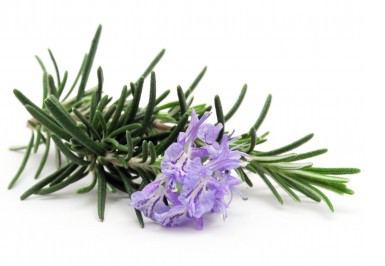
Actually, it’s pretty old. Shakespeare wrote it into Ophelia’s speech as she goes mad with love of Hamlet, strewing flowers and herbs hither and yon. “There’s rosemary, that’s for remembrance…” she says, tossing the flowers like scattering tears. Sometimes not remembering can be a blessing. Remembering better times with Hamlet, after all, is what brought about Ophelia’s suicide. Memories can be precious or poison.
But forgetting an easy word, or someone’s name, is simply annoying. When I get together with my friends, we say this forgetfulness is because we have so much more to remember now. Passwords, for example. I have a million of them. You, too, right? So maybe that somewhat wonky memory of mine is a product of life today. And maybe putting a drop of rosemary oil into my shampoo will make my hair healthier and improve my memory.
Meanwhile, I’m trying to pop fewer pills. Not because taking tons of pills is an old person cliché. I don’t mind being old; I quite enjoy it. For one thing, I have lots of time to peruse the dictionary or just putter patiently until the right word comes. It almost always does. Personally, I like pills just fine, it’s the side effects I despise. I’ve heard certain essential oils (herbs in concentrated liquid form) are cures for sleeplessness, migraine, acid reflux, even stress, which, come to think of it, probably caused all the other things.

I put a little drop of lavender into my palm last night, rubbed my hands together, and swiped the bottoms of my feet. My little instruction book said I could have put the lavender on my pillow, too. Slept like a baby. Another perk of being older, as in old enough to retire from the day job: I can stay in bed as long as I like. After slumbering a soothing eight hours (almost never happens) I lolled around in my warm cocoon for another hour, meditating. Not only had the lavender given me good rest, it had calmed me to the point of an early meditation, something I used to do regularly until anxiety to get my day started robbed me of that meditation time.
Meditation is the best way I know to cure ills, particularly mental ones like fear and panic. I regularly meditate in the afternoons (I’m happy to add a morning meditation in as well if the lavender keeps working!) and recently I added an element to a twenty year practice. I’m phobic and have been for most of my life. I’ve written about my struggles before. Until recently I thought that phobias were a permanent part of what it meant to be me. I accepted them and made peace with my less than easeful mind. Then I decided I’d try a few things, like facing my fears and learning to be braver with age.
Somehow just deciding helped. My plan was that I would, instead of immediately reaching for a pill or (worst case scenario) emergency vodka, I’d breathe and I let myself feel fear. I’d face it with the in breath and do my best to let it go with the out breath. I practiced this letting go during afternoon meditation and on sleepless dark nights. And breathed it in, tried to let it go with the out breath. I worked at it. I didn’t just auto-pop a pill or six.

When you meditate, everything slows down, so it’s very easy to watch fear unfold, to feel the heartbeat slowly accelerate. I have even meditated my way through mild panic attacks. It’s interesting. Not pleasant, but the side effects of doing this inner work are remarkable. Some months back fear of public speaking abruptly departed, and a few months later I started flying without meds. That’s actual flying in a plane, not a metaphor for euphoria. But I do feel euphoric!
Because, amazingly, without warning, in real life, phobia number three vanished a month ago. It happened in Florida while Al was driving. I knew about the bridge. I knew we’d be driving across it. I knew soon it would come into view and that would start the panicky feeling in my head, in my heart. I had already decided to let the fear come and to white-knuckle it. After all, I’d done that for years before things got too unmanageable and I went on medication.
Then, as the bridge came into my line of sight (I believe it’s the tallest suspension bridge in the world. Or maybe just the country. Or perhaps only Florida.) I didn’t feel the fear. I expected it and had my little bottles of emergency vodka in the glove box, just in case. But emergency vodka can be very inconvenient at nine o’clock in the morning, and I was hoping not to have to resort to it. So no fear. No anxiety. No panic.

To say I was amazed is making light of the liberation I felt. I was so happy and uninhibited, I opened the sunroof and popped out of the top, snapping photos as we approached the bridge. Absolutely zero fear. Also, I arrived sober at our destination, which is always nice. I gradually realized that I didn’t have to face that fear in the moment because I’d already done the work, months before. Meditating. It works.
So those are some mental miracles, but the physical ones still stubbornly cling. I’m making progress, though. My neurologist of close to two decades told me on our last visit that my migraine symptoms had decreased so dramatically that he felt I was fine to just let my GP handle the occasional medication refills. That is huge. No more “my” neurologist. No more “my” migraines.
Yeah, sure, I still stress. I still have fears. Phobias. Probably I have not experienced my last panicky moment. But full blown out of control panic attacks? I can’t remember the last time one came upon me. I had a dream last night about one of my remaining phobias. I have two left to conquer before I shuffle off this mortal coil, claustrophobia and fear of heights. I know the bridge is high, so maybe that’s all gone, but I need to tackle a mountain before I’m sure. So I had the “buried alive” dream under lavender’s spell. And I didn’t wake up in a panic. I woke up calm and ready to face anything. And that is something worth remembering.
Tagged: herbal rememdies, panic, phobia