Russell S. Newquist's Blog, page 8
June 20, 2017
Writing a Page Turner – Part 2


Most of the early readers of Post Traumatic Stress have called it a real page turner. Page turners are good. They’re fun to read. It’s a great complement from your readers.
But most of all, page turners sell.
People enjoy books that they don’t want to put down. And – here’s the real magic – page turners make them want to buy the sequel, too. This is how binge readers are born, and binge readers are where the money is.
One thing to keep in mind is that no one of these techniques is essential. You can write page turning novels by breaking any (and maybe even all) of these “rules.” This is just one approach, but it’s an approach that works pretty well.
Believe it or not, the “page turner” aspect of Post Traumatic Stress is mostly intentional. It’s technique that you can learn, and today I want to teach some of that to you.
Yesterday I mentioned that chapters are a key element of page turners. This should be pretty obvious. After all, chapters form one of the foundational building blocks of any novel. We’ve already discussed that short chapters can be helpful. Today, we’ll move on to a second chapter-related technique.
Secret #2 – End Each Chapter On A Hook
Having short chapters helps keep someone from deciding not to read the next one. But you also want to hit them on the other side. Give your readers a reason to keep reading.
The best way to do this is with a “hook” at the end of each chapter. A good hook consists of the following elements:
A hint of what’s coming next. Think about what’s next for the characters in the chapter you just finished. Provide a taste – but just a taste – of that, right at the end of the chapter.
A little bit of mystery. Don’t tell them everything. People like mysteries (indeed, its one of the better selling fiction genres).
A touch of danger, scandal, or intrigue. There’s a reason cliffhangers are called cliffhangers. You want to get the adrenaline going a bit here. In an action or horror oriented story, this can be easy. Just provide a bit of a hint about the next opponent your heroes will face. But you can pull this off in a drama just as well. Think more of obstacles rather than opponents, and give a clue about what challenge is coming next.
Make sure each challenge is successively harder than the previous one. That’s how you keep ramping up the intensity. Don’t blow all your big guns early. Save them for the climax.
Here are a few examples of final sentences from chapters of Post Traumatic Stress.
Then the dream came again. Note that at this point in the book, one nightmare has already been vividly recounted for the reader. That leaves a good impression that the dream coming is bad. This sentence leaves unresolved tension. The reader doesn’t want to end here, because it’s not a good feeling. He wants to keep reading until he can release that tension. Of course, you’re not going to let that happen.
“Heya, Mikey!” His nose glowed yellow as he growled, “can I come in and play?” This is an example of moving the first line of the next chapter to be the ending of the current chapter. A “new” opponent arrives. In this case, he’s actually already known to the hero, which increases the tension. The next chapter begins the true altercation.
But tonight he’d have to deal with something far worse: politicians, lawyers, and bureaucrats. This ending takes the dramatic route rather than foreshadowing action. Note that the previous paragraph gives a quick recap of life challenges the protagonist has already faced – rather serious challenges. This single sentence accomplishes several things at once. It provides a tantalizing hint of what’s coming next. The reader gets just a taste of scandal thanks to the job descriptions. It provides a character point – our hero clearly doesn’t like dealing with these kinds of people. It’s highly relatable – most of the rest of us don’t like it, either. And it’s a little funny. We all know that those things aren’t actually worse than fighting in a war (one of the challenges listed in the recap; our hero is an ex-soldier).
The lights went out. Then all hell broke loose. This one, on the other hand, is very action oriented. The chapter that follows is one of the truly major action set pieces of the book. In this case, it’s also pretty unexpected. The prior scene has built a decent amount of dramatic tension in a very different direction. Now, bam, the reader gets hit from the other side with physical tension. Standing on its own, this line seems moderately interesting. Together with the misdirection, it’s far more effective.
Bonus tip: One easy way to end your chapter on a hook is to take the first sentence of your next chapter and move it to the end of your current chapter.
The post Writing a Page Turner – Part 2 appeared first on Russell Newquist.


June 19, 2017
Writing a Page Turner – Part 1

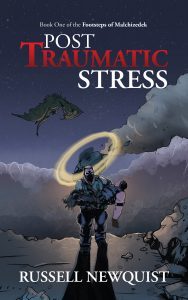 About a dozen people have now read Post Traumatic Stress and reported back to me. The early reviews fall neatly into three categories:
Sorry, it’s not my genre.
It’s not my genre, but I really liked it anyway.
Man, that was a real page turner!
I’m not losing sleep over the first group. In fact, I use the word group loosely here – that was one person! The second group is great to hear, and that included several people. But most of my beta readers, book blurbers, and editors are genre fans. Their response has been overwhelmingly the last answer.
Page turners are good. They’re fun to read. It’s a great complement from your readers.
But most of all, page turners sell.
People enjoy books that they don’t want to put down. And – here’s the real magic – page turners make them want to buy the sequel, too. This is how binge readers are born, and binge readers are where the money is.
Believe it or not, the “page turner” aspect of Post Traumatic Stress is mostly intentional. It’s technique that you can learn, and today I want to teach some of that to you.
Secret #1 – Keep your chapters short
Chapters are half the secret to a page turner. Since you were probably an avid reader before you became a writer, think about it from your own perspective. How many nights have you lay in bed reading and thought, “I’ll just read one more chapter?” As a writer, this is exactly the thought you want to convey to your reader.
Chapters are the natural “break” point for a book. That’s where your reader will put it down – if you let him. So don’t.
It’s easier for your reader to accept that one last (OK, it’s really for real the absolute last one this time!) chapter… and then to do it again, and again. This is especially true for Kindle readers. You can adjust the display on your e-reader device. Mine is set to tell me how many minutes (at my reading speed, calculated by the device) I have left in the current chapter. When I’m reading at 1AM (which happens rather a lot), it’s easy for me to look at a five minute chapter and say, “OK, I’ll just read that one.” But when I’m reading after midnight and I see a twenty minute chapter? That’s when I put the book down and go to sleep.
Be the page turner. Keep your chapters short. My average chapter length for Post Traumatic Stress is 1450 words. That’s only two manuscript pages, and only about a half dozen book pages.
Bonus tip: Try to keep each chapter to one “scene.” This will help you keep the chapters shorter and more tightly focused. But don’t slave yourself to this rule too tightly. Some scenes won’t be long enough to flesh out even a short chapter. Even so, try to keep them related.
My first draft of Post Traumatic Stress had one scene per chapter. In the second draft, I ended up cutting several chapters in half and merging them together. So now I have about 2-3 chapters that have two scenes rather than one. Still, the scenes tie very closely together, which is why I did it (that, and individually each scene was longer than it needed to be).
Tomorrow: how to ensure your reader desperately wants to start the next chapter.
The post Writing a Page Turner – Part 1 appeared first on Russell Newquist.
June 15, 2017
Don’t Blindly Follow Your Competition

Never, ever blindly follow your competition. I see people do this all the time – both in the writing world and the martial arts world. It’s a huge mistake, for multiple reasons.
First of all, successful marketing is very personal. A few years ago I had a conversation with a friend of mine once – a local gun store owner. I’ll never forget what he told me:
You and I could be marketing the exact same product at the exact same price with the exact same marketing – down to the same wording, phrasing, and imagery. And it might work for you, but not for me. Or the reverse, it might work for me but not for you.
My experience since has proven this statement to be 100% correct. When you’re not Disney or Coke or Microsoft, one of the gigantic brands of the world, successful marketing is personal. And if your marketing doesn’t connect your customers with you on a personal level, it won’t work.
Blindly copying your competition is highly impersonal. You’re not being you anymore. You’re being them.
Now, don’t misunderstand what I’m saying. Of course it’s worth keeping an eye on your competition. If they start doing something interesting, take a look at it. Just don’t blindly copy it.
Because it may not be working for them, either.
To illustrate the point, I want to return to yesterday’s story about the early years of my dojo.
I did something I didn’t want to do: I opened a class for 4 and 5 year old students. I resisted it. I’d taught this age group before, and the reality is that most kids at this age just aren’t ready for this kind of class. But my wife and I sat down, thought about it long and hard, and decided to give it a go. We put a ton of effort into it. We developed a special curriculum just for that age group, structured the class differently than we’d ever done before, altered our expectations, and altered the belt promotion timeline. If we were going to do it, we decided that we’d do it right.
We only had one teacher available for that class: my wife Morgon. Due to the times we scheduled the classes for, I couldn’t get out of my day job to teach it. And preschoolers require tons of attention. So to ensure that we maintained a good class, we capped that age group at six students per class. Also, because we only ran it once per week (vs two sessions a week for our normal classes) and also for a shorter duration (45 minutes instead of an hour), we basically charged half what we did for our normal classes.
Read that second paragraph again. From both a business perspective and a martial arts perspective, the class was a failure. It never really made enough money to be worth the time. And we never managed to get the class quality up to our standards. The latter reason, more than anything, is why we eventually shut it down. I didn’t feel good about offering a class that I didn’t believe in 100%.
But there’s more to the story. Right before I opened my dojo, another dojo opened just up the street. And when I say right before, I mean right before. In fact, I originally wanted to get their space. They beat me to it. When I inquired about the location, they’d already signed a contract. No worries for me – I just found another space and made do.
But I did keep a close eye on them, and I’m dead certain they kept a close eye on me. And when I started advertising my “full” preschool classes, lo and behold, they started pushing their own preschool classes. Hard.
The school’s owner made a classic mistake: he assumed that because I pushed this so hard, it must work for me. In reality, it was never working very well at all. I just made the best of the situation I’d found myself in.
That dojo closed down more than a year ago, and I’m still running. This single decision, obviously, isn’t why – nor should it be taken as a slam against them. This is a tough business, and I salute them for their time in the ring. But it was definitely a mistake – one that you and I can, and should, learn from.
Whatever latest thing your competition is trying may be working really well. Or it may not be working at all. It may be brilliant. But it’s just as likely that your competition is moronic. When you see your competition try something new on the marketing front, the very first question you should always ask is, “is it working?” If it is, the second question must be, “why?”
If you can’t definitively answer both questions, then be wary of it. That doesn’t mean don’t do it at all. Maybe it’s worth experimentation. But keep your experimentation cheap until you get good data of your own.
Even then, before you try it you need to ask one final question: “Is this compatible with my own brand?” It’s very difficult to repair damage to your brand once it’s done. So you want to work to keep your brand solid in the first place.
The post Don’t Blindly Follow Your Competition appeared first on Russell Newquist.
June 14, 2017
Marketing 101: Fake It Until You Make It

 When you’re first beginning any business endeavor you face a serious chicken-and-egg problem. People want to buy proven, successful products and services. But how can you create a proven, successful product or service when nobody will buy from you? You have to fake it until you make it.
I’d like to share a little story from the very early days of my dojo. Like all new businesses, we struggled in our early months. We had a non-trivial monthly overhead (mainly rent and utilities). And since we had very few students (because hey, we’d just opened the doors), those payments came straight out of my own pocket.
I did something I didn’t want to do: I opened a class for 4 and 5 year old students. I resisted it. I’d taught this age group before, and the reality is that most kids at this age just aren’t ready for this kind of class. But my wife and I sat down, thought about it long and hard, and decided to give it a go. We put a ton of effort into it. We developed a special curriculum just for that age group, structured the class differently than we’d ever done before, altered our expectations, and altered the belt promotion timeline. If we were going to do it, we decided that we’d do it right.
We only had one teacher available for that class: my wife Morgon. Due to the times we scheduled the classes for, I couldn’t get out of my day job to teach it. And preschoolers require tons of attention. So to ensure that we maintained a good class, we capped that age group at six students per class. Also, because we only ran it once per week (vs two sessions a week for our normal classes) and also for a shorter duration (45 minutes instead of an hour), we basically charged half what we did for our normal classes.
Put those two factors together and it’s easy to see that we never really made a lot of money off the class. But it did have two major benefits. First, it didn’t bring much money, but we desperately needed every dollar of it in those early days. If we hadn’t run that class, we probably would’ve had to close the doors. We came close enough to that as it was.
But more importantly, the class was always full. Always. Over a few years of running it, we only had two kids stay with it past that age group – and one of them was my own son. Kids rarely lasted more than three months. But we had a regular influx of new students joining the class, and that made up for it.
So we advertised that. We put that out everywhere we could: these classes are full. And it had the effect of elevating the status and prestige of our entire dojo. I mean, if our classes are full, we must be awesome, right?
Well, not entirely. It took six months before we had our first regular adult students. And our classes for older children grew steadily, but we had plenty of room for more. But it was still true: our preschool classes stayed full.
We faked it until we made it.
Now, I will put an important caveat on this: never, ever lie. It will come back to haunt you. But one of the secrets of marketing is that you don’t have to tell people everything. Tell them the good parts – and emphasize the best parts. No product is perfect. Your customers know that.
A second caveat: your product doesn’t have to be perfect, but it does need to be good. If your product sucks, then people will be unhappy with their purchase. But if your product is good, and its priced reasonably, your customers will stay happy even if it’s not a perfect product.
Tomorrow: why you should never, ever blindly follow your competition.
The post Marketing 101: Fake It Until You Make It appeared first on Russell Newquist.
June 13, 2017
A Place Outside the Wild – BOOK REVIEW

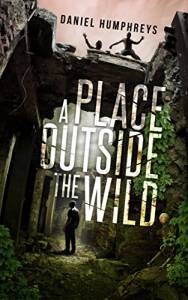
“A Place Outside the Wild” by Daniel Humphreys
When I made my Dragon Award nominations last week I promised a forthcoming book review for A Place Outside the Wild by Daniel Humphreys. Here that review is. As I’ve noted recently, I have not had the chance to read much fiction this year. I’m trying to catch up on that, and I’ve finally made some progress. I have several reviews forthcoming over the next couple of weeks, so keep an eye out.
Full disclosure: Dan and I “attended” the same online writing class from Larry Correia, and we’ve participated in the same closed Facebook group that resulted from that class. He’s also provided an excellent blurb for my upcoming novel, Post Traumatic Stress. With that said, these are my honest opinions on the book.
Let me also say this at the outset: this is a zombie book, and I’m not a particularly huge zombie fan. I like them OK. Sometimes. I’m definitely not big into the zombie craze that seems to have hit over the last decade or so. I love Shaun of the Dead. I kinda sorta enjoyed the “28 Days” movies. I’ve watched exactly one episode of The Walking Dead. It didn’t do anything for me.
I don’t particularly have anything against zombies. I just generally find them boring.
Also, I strongly dislike “science” zombies. I could write an entire post about this topic, but it largely boils down to the fact that most zombie writers aren’t scientists and they get it all wrong.
This book is about science zombies.
With all of that said, I didn’t like this book. I loved it. Dan had a steep hill to climb. He charged up it like a platoon of Marines, killed the defenders at the top, planted his flag, and did a little dance. I recommended this book for the Dragon Award in horror, and for good reason.
Dan has a humorous writing style that caught me from the beginning. The actual story, however, took just a little bit to warm up. But once it did, I didn’t want to put the book down. I really enjoyed all of the characters, and reading about their struggles trying to cope with the new world around them. In particular, I enjoyed Pete the amputee sniper and Larry, the protagonist’s father-in-law. And I enjoyed the way he wrote the children, which are difficult to get correct as a writer.
Another nice thing for a zombie book: this isn’t actually an action story. There is action in it, and it’s great. But it’s actually more of a drama – a really good drama.
I may, however, have sweated just a tad from my eyeballs when the Marines showed up to save the day playing Guns N’ Roses. But we’ll never speak of that again.
Last, but not least, Dan provides an explanation for the science zombies that I can actually get behind. As I noted before, most zombie writers aren’t scientists. Well, Dan isn’t, either… but he’s an IT guy. And I’ll just say that that does give him the right background to understand what he’s talking about here – at least enough to get me over the suspension of disbelief. Well done, Mr. Humphreys.
A Place Outside the Wild is a first novel, and it does show a bit of roughness from that. But the strengths of the story easily outweigh that. It’s an easy five out of five stars, and I’m very much looking forward to reading both the forthcoming sequel and his current new release, Fade. If you like Zombies, check this one out. Hell, even if you don’t like zombies, check this one out. It’s that good.
In case you were wondering, this is what he had to say about Post Traumatic Stress:
Post Traumatic Stress is a roller coaster thrill ride. It hooks you, clicks up to the peak, then sends you screaming all the way down. Masterfully done.
Post Traumatic Stress will be available on August 1. You can pre-order your copy now from Silver Empire.
The post A Place Outside the Wild – BOOK REVIEW appeared first on Russell Newquist.
June 12, 2017
The Continuation of the School of Spells & War

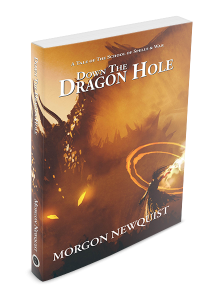 A few years ago Silver Empire launched its first major product – an anthology of short stories themed around “Manly Courage.” My wife Morgon contributed a story she’d had rattling around in her brain for some time. The story sprang in its entirety from a simple opening line she’d come up with after a panel at DragonCon one year:
There was a sword-wielding buffoon in the library shelves again.
The first draft of the story wasn’t that great. For one thing, it took itself far too seriously. And it carried a bit of a dour tone. So she reworked it. The new version came out fun and light-hearted and became the tale now known as Down the Dragon Hole. Frankly, I felt it ended up being the strongest story in our collection.
So she wrote some more. That spawned the School of Spells & War series. Currently, we’ve published three stories in the series. We have another three almost ready to launch. And with them, we’re launching a new way to get those stories.
Today, Morgon launches her new School of Spells & War Patreon. Now, obviously nobody has to support her on Patreon. But those who do will get several benefits:
Access to all new Spells & War stories a full month before they go live on Amazon.
Access to special bonus material: maps, world-building information, artwork, etc.
Extra stories not available anywhere else.
Her support tiers are set to pay out per story, so you won’t pay until and unless you get finished products. And as an extra bonus, we’re throwing in the first three Spells & War stories to all of her Patreon supporters, even at the lowest tiers. The lowest support tier is $1 per story – the same price we charge for the cheap stories on Amazon, and actually less than we charge for the longer, novella sized stories there. It’s a great deal.
Just in case you need some more encouragement, listen to her tell the story in her own words. Then be sure to drop by and support her.
The post The Continuation of the School of Spells & War appeared first on Russell Newquist.
June 8, 2017
Marketing Tip: Stop Whining

Here’s a pro marketing tip that far too many indie authors desperately need to hear: stop whining.
Let’s recall one of our lessons from a few posts ago:
Nobody will ever read your book if they don’t know it exists. Nobody. Ever.
Stop thinking of marketing as a dastardly activity and think of it as precisely two things:
Letting people know that your book exists.
Letting them know why they should read it.
Forget making people want to read your book (step two on our list). Before you can do that, you have to stop actively turning off potential readers. Making somebody want to read your book is hard. But making people not want to read your book? That’s so easy an idiot can do it – and a great many of them do exactly that.
You’ve probably already heard all kinds of great marketing advice: make sure your description makes the book sound interesting, etc, etc. But today I want to focus on one very specific aspect: your public presence. Not your books, yours.
So you’ve started a blog. You’ve started social media: Facebook, Twitter, etc. You’ve written hundreds of blog posts, thousands of social media posts, but nobody’s buying. Why not?
Here’s my absolute first question: how much do you whine on your blog and/or social media? Because I see a lot of it. A lot of it.
Remember, your public platforms are there to help you sell books. How are they going to do that? You want to look like the kind of person who writes interesting books. To do that, you have to actually look interesting yourself. And do you know what isn’t interesting to most readers?
Whining.
I’m not even saying you’re wrong. Whatever you’re whining about is probably legit: book piracy, having to charge too little in order for your book to sell, someone in the industry treated you unfairly. It all happens. Readers don’t care.
I’m going to take it one step further, though: stop self-deprecating yourself. It doesn’t sound humble. It sounds like you’re really not interesting. If you can’t even find a reason to think of yourself and your books as interesting, I can guarantee you that nobody else will, either.
Every single time you say something negative about yourself, every single time you whine, imagine that you’ve just lost two book sales. That’s money rushing out of your bank account. Is it really that bad? No, it’s actually far worse. Because the effects aren’t additive, they’re multiplicative. The more you do this, the worse it gets over time.
So stop it. Be yourself – that’s great and fine advice. But be the best version of yourself – or at least present that version in public. Stop killing your own book sales.
The post Marketing Tip: Stop Whining appeared first on Russell Newquist.
June 7, 2017
Marketing: Always Have a Plan

Brian picks up our discussion of marketing with another fantastic post in the series. Read the whole thing, because I’m only going to excerpt part of it.
Not to step on Russell’s toes, but I’ve got lots of experience with book giveaways. The result is that I’m much less bullish on giving books away for free than Russell is.
The best advice, as always, comes from Larry Correia: only do free if you have a plan.
Here are some pointers to help you make that plan:
If you only have one book, don’t give it away for free.
Most authors will tell you to make the first book in a series free. Consider giving away the second or third book in a series. I’ve found that people are more likely to go back and buy previous books in a series than they are to buy later installments after getting book one for free, but your mileage may vary.
Give away free copies of your books through your web site/mailing list. Kindle Unlimited requires a 90 day commitment, and it sucks. Seriously, getting paid based on number of KENPs read amounts to a pay cut from Amazon to tradpub royalty rates.The moral of the story? Always. Be. Closing!
I should have included some of these caveats in the original post. But I made an assumption – an assumption I know to be erroneous. I assumed that you always have a plan. I assumed this because proceeding into something like this without a plan is fundamentally foreign to me. On the other hand, I’ve known enough indie authors by now to fully understand how bad of an assumption this is.
I’ve witnessed lots of indie authors “try their hand” at marketing. For the vast majority of them, it goes something like this:
My friend did The Thing and it worked.
I need to sell more books.
I’m going to try The Thing.
It didn’t work.
Marketing sucks.
The Thing changes constantly, but you can see several consistent threads: book giveaways, Kindle Unlimited, popup ads to join the e-mail list, Facebook ads, Amazon ads, Google AdWords ads, etc.
Now, all of those things are fine. Any of them can work for you. But here’s the issue: over and over and over again, I see authors essentially just throwing these at the wall hoping something will stick.
That’s not how marketing works.
The thing to keep in mind is that any one of these techniques, on its own, will almost never work. If you run one ad – of any kind – and then don’t do anything else for three months, you will get terrible results. If you want success, you need several things.
Be consistent. You should engage in marketing activities regularly. The best thing you can do is set a simple goal for yourself: “Every day I will do at least one thing to help sell my product.” It doesn’t matter how big it is. If you do something every day, it will eventually add up.
Bonus tip: on average, a customer must see your product seven times before they purchase it. One ad campaign won’t do that for you, so you must maintain consistent marketing.
Track everything. And I mean everything. Record the results and compare them. If something works for you, put more time, energy, and money into it. If it doesn’t work for you stop.
Important caveat: you need to collect enough data to be sure it doesn’t work. Any data set with less than a thousand data points is useless. It’s noise, not information. For example: I’m running a pay-per-click ad. Until that ad has had one thousand impressions, the reported click-through-rates for that ad aren’t worth much. After that point, you have enough data to know: are my click through rates good enough or not?
Experiment. There’s throwing things at the wall to see what sticks and then there’s honest experimentation. What’s the difference? With honest experimentation, you tracking everything (see above). You make sure to collect enough data to make your records useful. And then you tweak it, slowly, one thing at a time, to see if you can improve it. If you leave out any one of these three steps, it’s not experimentation – it’s just throwing things at the wall.
Pro tip: failed experiments can still be useful. I’ve found specific advertising methods that work but don’t give me a high enough return on investment… yet. But when I have multiple books in a series, they’ll be worth revisiting.
Coordinate. Don’t do one marketing action in isolation. Do multiple things at the same time. Got a lot of free publicity from somewhere? Great – do a sale at the same time so you can capture as much of it as possible. Or time a new book release to match it. Run your own ads at the same time. If your book is already ranking high on Amazon from the success of one marketing technique, people who see it as a result of other techniques will be more likely to buy it. So plan everything together.
Bonus tip: consistency is good, but coordination is better. If you have limited funds, you’re better off running fewer, strong, coordinated campaigns spaced out throughout the year rather than running something constantly.
Create urgency. As an extension of the last bonus tip, you don’t want to run your specials all the time anyway. You want to create a sense of urgency. Make your customer want to get your product right now. That’s why sales work. They create the sense of urgency for you: buy this product now or you’ll lose out on this great deal. A customer who believes they can get your product at any time is a customer who most likely won’t get it at any time.
Plan ahead. I’m getting ready to launch a novel, and as part of the marketing campaign I’m already considering the launch of my next book.
Start early. I started laying groundwork to sell this book when I started writing it – three years ago. That work is already starting to pay off.
Above all, always have a plan. I’m launching a novel in August. I have an e-mail chain with 1400 words of notes about my marketing plans for the book launch. I have similar notes about Declan Finn’s new novel that we’re re-releasing next month. I’ve got a plan for consistent marketing. I already know how I’m going to track everything. I’ve got experiments I want to run. I’ve coordinated about a dozen separate marketing methods (and I’m still adding more). I’m planning sales to create urgency. And I’m already planning how I’m going to leverage this to launch the next book.
Because I always have a plan.
The post Marketing: Always Have a Plan appeared first on Russell Newquist.
June 6, 2017
2017 Dragon Award Nominations

 The nomination period for the 2017 Dragon Awards closes very soon. I waited until almost the last minute this year, but I do have a handful of recommendations.
Best Science Fiction Novel – I’m going to have to go with The Secret Kings by Brian Niemeier. Its predecessor proved worthy of last year’s Dragon Award, and the third book in the series only ratchets everything up further. Solid book. Read my review of it here.
Best Fantasy Novel – Hands down, A Sea of Skulls by Vox Day. I’ll have a review of this one up soonish, but this series continues to beat the pants off of A Song of Ice and Fire.
Best Young Adult Novel – Rachel and the Many Splendored Dreamland by L. Jagi Lamplighter. This book actually turned a 13 year old girl (horrible creatures!) into a lovable character, and deserves the award for that alone. But it’s a fantastic book on top of that. See my review for more details.
Best Military SF or Fantasy Novel – I’ve been too busy and haven’t read any this year.

June 5, 2017
Silver Empire Submissions Update

Submissions for our upcoming superheroes anthology are now closed. We’re still combing through all of the submissions we’ve received. If you’ve submitted a story and haven’t heard back from us yet, please be patient! We’re targeting a September release date for this project, and everything is looking good to make that happen.
We’re still accepting submissions for our upcoming Stairs in the Woods anthology, and will be until August 31. The target release date is October. We lined up a few authors ahead of time who should be turning in some very interesting stories! This anthology has very specific requirements, so please make sure you read them thoroughly before submitting.
We’re also accepting submissions for a space science fiction novel. Specifically, we’d really like to have either a pulpy space opera, a hard science fiction novel, or a military scifi novel. Submissions should be part of a series – bonus points if you have the second novel written or partly written already! Again, please be sure to see the submission guidelines.
And last, but certainly not least, we always need more short stories for Lyonesse. We’re looking for tales of wondrous, heroic adventure in the science fiction and fantasy realms. We run a new story every single week, so we burn through works rather quickly.
The post Silver Empire Submissions Update appeared first on Russell Newquist.