
Beverly Scott's Blog, page 16
May 20, 2014
“A Journey to Fiction” by Bev Scott
 “Very few Civil War veterans have thick files like this,” the staff person at the National Archives said as he handed me two thick folders in response to my request for information about my paternal grandfather. Excitedly I began to read the forms and letters, yellow with age, which documented my grandfather’s lengthy pursuit of Veterans Benefits. At first my only goal was to search for the truth of the whispered story, that he had another family. It was true! It was documented in these files. That was why my grandmother never received her widow’s benefits.
Reading these old documents, depositions and letters was intriguing. I learned details about Harvey Depew Scott, the man my grandmother married; but who was born John Howard Scott. He was born in 1840 and reported his father had died when he was four so he was raised by his uncle. He claimed his name was wrongly recorded when he enlisted a second time in the Civil War. He swore his only wife was my grandmother, Ellen; yet his first wife, Harriet, reported in her sworn deposition that he abandoned her in Texas with five children and a sixth on the way. I wanted to know more. Who were his parents? Were there other relatives that had similar names? When did he marry his first wife? When and why did they go to Texas? Could I find an explanation behind these details? Like many other Americans, I began a journey of genealogical research to see what I could find out about this mysterious man that my grandmother never mentioned to her family after he died.
 I had learned from the Archive files that he was born in Vermillion County, Indiana. I already knew that my grandmother’s family also came from Indiana so I made a trip to Indiana to visit cemeteries, libraries and county court house records. I learned the names of his parents, Paul and Rebecca Scott, when they married, stories about the uncle, Bill Swan who was a river boat captain, and when John and Harriet were married. I found the cemetery with the grave of Captain Bill Swan and a record of John’s mother, Rebecca, who was also Bill’s sister, dying in the poor house. Her body was given to Captain Swan but there was no record of her grave. I found minimal information about John’s father, Paul. I wanted to know who his parents were, did he have other relatives, where he lived before he came to Indiana, when he died and where he was buried.
 I was more successful in tracking down information about my grandmother, Ellen’s family. I visited a cemetery, now an overgrown in a cow pasture, in Putnam County, Indiana with her ancestor’s graves. I found family marriage and birth records back three generations. I later visited the small Nebraska town where her parents homesteaded and learned stories of her family and her siblings. I uncovered the marriage records listing my grandmother’s name as Eva Ellen Russell marrying Harvey Depew Scott in 1892. She was 22; he was 52. There were records of their homestead land claims made right after they married as well as land claims filed by Eva Ellen in the years after Harvey Depew died.
Later I found the newspaper report of Harvey Depew Scott’s death in 1911 in Hanley, New Mexico a small community outside of Tucumcari. Why were they in New Mexico? How long had they been there before Harvey Depew died? How long did my grandmother stay in New Mexico? My next trip was to New Mexico to see what else I could uncover about Harvey Depew Scott.
Have you begun a genealogical search to learn about your ancestors? What first got you interested?


February 6, 2014
“Coming Out as ‘Old’ ” by Bev Scott
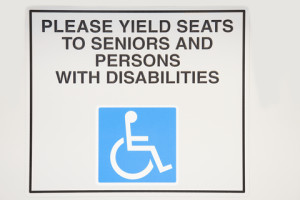
The young woman got up and offered me a seat. The signs behind her state that the front seats on the commuter train are reserved for seniors and others with disabilities. But not everyone pays
I have not made any effort to hide my age as I advanced through middle age and into that category we refer to as “senior” and now approaching “old”. I have appreciated the privileges of being senior such as reduce price fares on public transportation and at the movies. At the same time, when I look in the mirror, I reluctantly accept my changing appearance with graying hair, the permanent creases in my face and the wrinkling skin. Although I am fortunately healthy, my body is slowing down. I don’t have the energy I used to have to carry a full work load, give attention to my family and engage in social and volunteer activities. But I am not willing to hide my age. Indeed, I have “come out” publicly as I turned seventy writing “Seven Thoughts of Gratitude on Turning 70” and publishing an essay “Writing My First Novel at 70” in the new book “Seventy Things to Do When You Turn 70” edited by Ronnie Sellers and Mark Chimsky. attention to them. And, not all seniors want to admit their age or infirmities. I sat down gratefully not wanting to try to balance myself and my bags on the lurching train.
This public “coming out” has shocked some of my friends who refuse to reveal their age. Their refusal reminds me of my aunt who lied about her age until she was well into her eighties, even though we knew how old she was. Why are we not as proud to proclaim our age at 55, 60 or 70 as we were when we turned 12, 16 or 21? I have written elsewhere about the impact of ageism and an uncaring society on its elders. The discrimination in the workplace, caricatures in the media and the political environment that threatens Social Security and Medicate tells us that we are not valued as now vulnerable seniors who have contributed to our communities and our society. We absorb those beliefs into our own mental models and we judge ourselves as unimportant and worthless as we get “old”.
Instead, we need a sense of purpose, a way of contributing to our communities, engaging with others in activities that give us meaning and an attitude of appreciation for the wisdom of our experience, for the pleasure of the present moment and for the opportunities the future can bring us. Coming out as a vital, healthy, active senior enables us to counter the images we carry of elderly being synonymous with decline, deterioration and despair.
This coming out as a senior or as “old”, is similar, for me, to coming out as a lesbian. Rejecting and overcoming the societal mental models of aging is analogous to rejecting and overcoming the societal judgment of homosexuality. The wisdom of increasing acceptance from others by coming out has been a proven benefit in the progress of the LGBT movement. I believe coming out as a senior and admitting my age openly will also benefit all of us in finding more acknowledgement and appreciation of the value and wisdom of our life’s contribution.
This blog was published in The Transition Network newsletter in November of 2013, generating unprecedented response. You can see the responses in the TTN January Newsletter.
February 4, 2014
“What Is Your Legacy?” by Bev Scott
I found myself in conversation with a friend discussing the second edition of a professional book released last year. I commented that updating the book had not been a part of my plan for my third act, but it was a professional legacy. That conversation started me thinking more about my legacy and how I might use my third act to create and define that legacy. I use the term “the third act” to refer to that time after we transition from building a career and/or growing a family (our second act) into an intentionally designed stage in our lives which brings us meaning and purpose, opportunity to engage in our passions, enjoy the everyday pleasures and a sense of appreciation for the learning and rewards of our lives.
 In the past, I have often thought of legacy as the remembrance of a person who has died, the personal and, perhaps, professional memories of has left us…what others remember. More recently, I have come to understand that we can leave an intentional legacy designed before the end of our lives. Thus, the idea that updating my book for a second edition, is an intentional legacy. It is a concrete and practical way of providing guidance to future young professionals. It also provides me a way of reflecting on my own experience, capturing my learning from both the successes and failures, and offering some insight and perhaps even some wisdom.
Since I have been thinking about my professional legacy, I realized that another professional legacy I am leaving is The 3rd Act program I have co-created. As the bulging demographic of the baby boomers now reaching 60 continues, they will be responding to the question that poet Mary Oliver asks, “Tell me, what do you plan to do with your one wild and precious life?” In researching the work on positive aging for the 3rd Act, we found that investing ourselves in activities or causes outside ourselves, is one of the most significant contributions to healthy aging. Thus I hope The 3rd Act, as one of my legacies, supports the quest of coming mature generations.
Many who are focused on a family legacy put together family trees, document family stories and create family videos to leave for future generations. For me, at the personal level, time with my grandsons, sharing family stories and taking them on adventures is a legacy I hope they remember time with Grandma for future guidance and reminiscing. My next third act writing project is to write a historical novel based on the lives of my grandparents.
And finally, I will mention my will, the document that many of us think of when we hear the term legacy. Somehow for me, this is the least significant component of my legacy. My material and financial resources bear little connection to the person I am, the contribution I have made to learning, making the world a better place or raising a daughter and influencing her children. For now, I hope my professional book, The 3rd Act and my personal time spent with family and community organizations are all memorable legacies. And there may be more to come.
What is your legacy? Have you given thought to intentionally creating your professional or personal legacy? What will you leave for your family and the generations that follow? What is your third act action plan for your legacy?
(A longer version was published in “Seasonings: A Journal of Senior OD Practitioners”, Volume 7, Number 1, Winter 2010.)


