Derek Nudd's Blog, page 7
April 5, 2018
Review - The British Naval Staff in the First World War
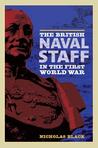 The British Naval Staff in the First World War by Nicholas Black
My rating: 4 of 5 stars
This book is a revised and expanded version of Dr Black's 2005 PhD thesis The Admiralty War Staff and its influence on the conduct of the naval war between 1914 and 1918. It sets out to dispel a selection of myths that have become embedded in in the popular consciousness: that the Admiralty was populated by those too old, sick or stupid to do anything else; that it was a sea-anchor holding back the agression and innovation of others; that each new combination of First Lord and First Sea Lord brought about a sharp change in policy and energy.
Does he succeed? On the whole, yes. He demonstrates convincingly that the War Staff, though by no means free of error, was not made up of the sick, the halt and the lame but rather of some of the brightest and most innovative minds in the Navy. He does this by detailed recourse to service records and dockets, where other authors have relied on post-war self-justification by those with axes to grind. He invites us to re-evaluate the accepted 'heroes' and 'monsters' of the era - not altogether convincingly for me, but I'm more open-minded on the subject than I was.
A few minor gripes. One of his stated objectives is to bring the contribution of the rest of Naval Intelligence out from behind the glare of Room 40; this he mostly fails to do. His discussion of the U-boat campaign gives the impression that British anti-submarine measures were largely ineffective throughout, whereas survivor evidence was that in the last year of the war they had a very healthy respect for depth charges (no doubt reinforced by the rapid expansion of the U-boat arm in 1917, which forced many inexperienced crews into the front line). And he defends Prince Battenburg's record as First Sea Lord in the body of the book, then seems almost to dismiss him in the Conclusion - curious!
Nonetheless this work is a welcome counterweight to the mass of literature which focusses on steel and cordite. It reminds us that they also fought who sat in safety, staring at dockets through sandpaper eyes.
View all my reviews


August 23, 2017
The Secret Tunnels of South Heighton
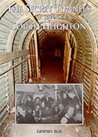 The Secret Tunnels of South Heighton: Tribute to H.M.S. Forward by G. Ellis
My rating: 4 of 5 stars
I put off starting this book for a long time - I'm not sure why. Perhaps I felt that a labour of love by a communications engineer turned self-taught archaeologist was bound to be disappointingly amateurish and/or dull. I could not have been more wrong.
The author remembered seeing the carefully-concealed construction work for this underground command, control, communications and intelligence headquarters as a child, and exploring the tunels after they were abandoned after the Second World War. Subsequent development almost obliterated the memory of a key link in the defence of Britain's south coast and, later, the liberation of western Europe. He set himself the task of preserving that memory and this book, clearly a labour of love, is the result.
Building the complex involved excavating 2,650 cu m (over 6,000 tons) of chalk up to 24m underground, without an enemy just a few minutes' flying time away noticing, then fitting it out and keeping it staffed twenty-four hours a day under conditions of extreme secrecy. There were two main entrances, one hidden in a former holiday home nearby and the other in the bank of a roadway. Additionally there were four concealed pill-boxes and an observation post cum emergency exit disguised as a hen-house.
Situated between Dover and Portsmouth the complex integrated naval, army and air intelligence and command for much of the Channel.
The author tracked down surviving witnesses and documents, and obtained permission for a number of tunnel explorations which seem unlikely to be repeated. Being picky, there is a certain amount of repetition which could have been avoided with a little more attention to structure, and I would have preferred a larger typeface (or is that my age?) Definitely a fascinating and worthwhile read though.
It also brings to mind The Last Ditch: Britain's Resistance Plans Against the Nazis by David Lampe. With so many members of the Auxiliaries and perhaps other clandestine outfits having taken their knowledge to their graves, I have to wonder how many other forgotten holes in the ground still riddle our fair land?
View all my reviews
July 19, 2017

July 8, 2017
Castaways of the Kriegsmarine
My next book is on track for a September release. I'm awaiting the last couple of review comments and checking everything for the n'th time myself. Which, of course, doesn't mean there won't be any howlers in there!
Castaways of the Kriegsmarine - How shipwrecked German seamen helped the Allies win the Second World War
Castaways of the Kriegsmarine - How shipwrecked German seamen helped the Allies win the Second World War
February 7, 2016

September 26, 2015
Max Hastings - The Secret War
On Tuesday I went to Hastings' talk and signing event for his new book. It seemed a bit of a cheek to charge entry (I wish I could get away with that!) but it was a good show and the view from the 14th floor conference room was lovely.
On a first skim through the book and index it seems very good on spies, signals intelligence and subversion; offering his usual interesting mix of overview and anecdote. Surprisingly it almost completely ignores prisoners-of-war as a source of intelligence, a field that has greatly opened up over the last few years.
More when I've actually read the book.
The Secret War: Spies, Codes and Guerrillas 1939–1945
On a first skim through the book and index it seems very good on spies, signals intelligence and subversion; offering his usual interesting mix of overview and anecdote. Surprisingly it almost completely ignores prisoners-of-war as a source of intelligence, a field that has greatly opened up over the last few years.
More when I've actually read the book.
The Secret War: Spies, Codes and Guerrillas 1939–1945