
Paul Magrs's Blog, page 11
March 11, 2020
An Interview with Eddie Robson
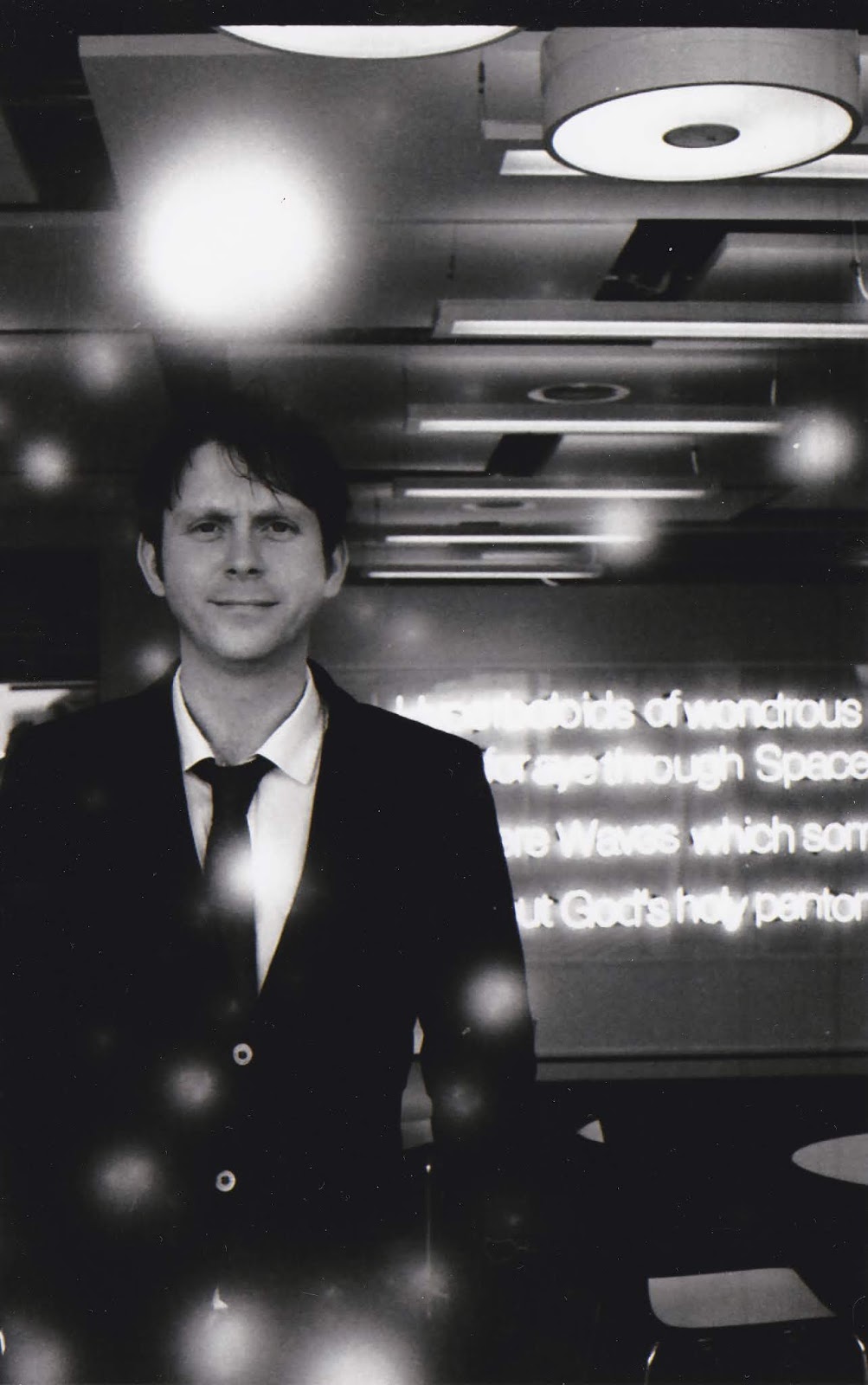 (Author photo by Sami Kelsh)
An Interview with Eddie Robson
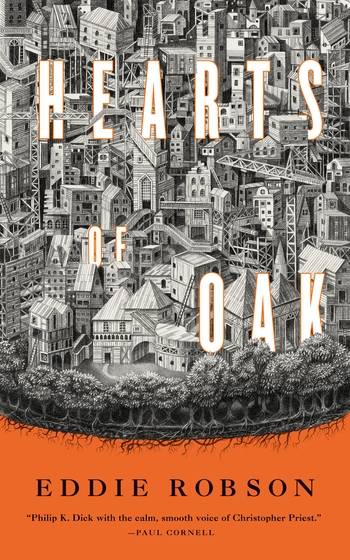
Please tell us everything we need to know about your most new book!
Hearts of Oak is about an architect and teacher called Iona, on the verge of retirement, who lives in a city made entirely of wood. A new student comes to see her, wearing a hat made of a material Iona doesn’t recognise. On the same day she goes to a funeral for a colleague and sees a man climb onto the coffin before it goes into the flames. Things get stranger from then on. Oh and the king of the city has a talking cat called Clarence.
How would you define the genre that your book falls into?
Science fiction.
Why did you fall in love with this genre in the first place, and which books / authors / series would you recommend?
I’ve loved sci-fi for as long as I can remember, back when I was avidly reading Transformers comics as a kid. I didn’t even think of it as sci-fi at the time, I didn’t know what that was. I came to it because I liked cool robots who turned into cars, but then I got into the characters. Simon Furman, who wrote all the best Transformers comics, was a huge influence on my tastes. In my teens it was mostly Doctor Who and Douglas Adams.
My SF and fantasy reading is very scattershot, partly because I’ve been reviewing for SFX for nearly twenty years and so I read whatever they send me! But I’ve discovered some great things while doing that job – Chris Beckett’s novels are wonderful, and I’ve just read Max Barry’s new one Providence, which is hugely impressive. In between those, the ones that have stayed with me most are maybe Angela Carter’s The Passion of New Eve – which I’d like to read again, as I feel like it might either be incredibly timely or incredibly dated – and Philip K Dick’s Time Out Of Joint. Dick makes being a sci-fi writer seem like the coolest thing you could possibly be. Which it is, of course.
You’ve written for various franchises over the years – you’ve been trusted with some really famous properties. How do you find working with other people’s creations, and making your mark in those worlds?
There’s obviously a degree of responsibility when you’re writing for something that has an existing audience, but provided I’m familiar with the franchise, I think it makes things easier just because a lot of decisions are already made for you. You know who the characters are, and as long as you write them well, people will be interested in them. You know what the tone and the rules of the world are – on an original project I think that’s often the hardest thing, you have a world of choice and you have to pin it down. Lots of my ideas could go in different directions and there’s a terrible fear of doing it the wrong way and wasting the idea. In a franchise you have a narrower range of choice, though of course tone does vary within a franchise.
You also know what the audience expects and what they’ll accept, and that’s very helpful. Often I’ll have an idea that’s set in a recognisable real world, either the contemporary world or the past, but there’s a fantasy or sci-fi element – and I have to introduce that in such a way that the audience doesn’t go ‘What the...?’ Whereas if I’m working in an existing franchise, I know that, for example, the audience for this thing will accept aliens, but won’t accept vampires. The great thing about Doctor Who is that it’s done all those things at some point, so it’s all up for grabs. I revealed a character was a vampire very late in one of my Big Finish Who plays, and there’s no way I could’ve got away with that in Star Trek, for instance. Though I could fancy writing Star Trek.
When I’m writing Doctor Who stuff I feel quite relaxed about it, because the target audience for a Doctor Who spinoff is basically someone like me, so I feel like I can just write for myself. I’m so familiar with the rhythms and storytelling strategies of Doctor Who, it comes much faster than other sorts of writing. I don’t worry about making a mark on it though – the number of licenced Who stories that have been written is huge, you’re always going to be a drop in the ocean.
Is there a franchise you haven’t written for yet that you’d like to?
I’ve always fancied writing a Hitch-Hiker’s Guide To The Galaxy story, but nobody’s ever going to commission me to do one, so I decided to just write it myself and put it out on a blog. I’ve just started it: https://eddierobson.wordpress.com/2020/03/08/this-is-of-course-impossible-chapter-1/
Is there a genre you couldn’t imagine ever writing in..?
I dunno, I’ll have a crack at anything really. Maybe war stories? And generally I don’t think I have the patience to write in-depth historical fiction – that level of research is beyond me, I think. I’m OK writing period settings if they’re after about 1900, because it’s not too far away from the present day and I’ve absorbed quite a lot about that time, but the further back you go, the trickier it gets – when I was writing my Who play The Secret History, which is set in 6th-century Constantinople, I kept getting tripped up by details. Likewise, if there are too many real people and events anchoring a story I get frustrated. I like having the freedom to make stuff up. That’s why I got into being a writer, to make stuff up.
And you’ve written for TV and audio – how different is that, do you find, from writing fiction..?
Massively different. Scripts are so much quicker. There’s been a five-year gap between my first novel and my new one, and it’s not that I ever stopped writing prose, I just keep parking my various prose projects to work on scripts. I didn’t have a publisher for Hearts of Oak when I wrote it, and I didn’t have one for Tomorrow Never Knows either, and these things take months to write even if you’re going quite quickly. Both books took ten years from start of writing to publication, because I kept doing a bit, then running out of steam, or some paid script work would come along. Sinking time into another novel seemed risky when I had no idea if it would get published.

A lot of the time, if I had a free fortnight when I didn’t have any work on, I had the choice of chipping away at the novel, or writing a spec script – and most of the time I’d write a script, because I could easily get a draft together in a fortnight, and I know various TV and radio development people and it’s always good to have a new script to send them. Even if they don’t want to make that script, they might think of you for another project.
But having said all that... after a few years I started getting bored of writing endless spec scripts that did the rounds and never got made and then just sat on my hard drive. And though it’s harder work, writing prose started to feel more enticing, just because I didn’t have to wait for someone to make it. Even if nobody published it, it was its own thing, and I could feel satisfied with that, and I started to feel more motivated. So although scripts are still my bread and butter, in the last couple of years I’ve made more time for writing prose.
It is harder work though – not only the sheer amount of words that go into a book, but it’s harder to wrestle a novel into the shape you want. The defined blocks of a script – action, dialogue, scenes – are easier to move around. Redrafting a script is like playing with Lego. Redrafting a novel is more like restructuring a huge sandcastle.
How did you get into writing in the first place, and how did you first get published..? Has it been a long and difficult road, or has it been relatively straightforward?
I have a clear memory, from when I was about 12, of walking home from school and thinking ‘I could be a writer’ and from then on that was all I really wanted to do. Having said that, I did very little writing in my teens. I started some pretty bad bits of Doctor Who fanfic but never finished them. When I was a student I started writing more seriously, and wrote for fanzines, and that was my way into writing for various magazines and Big Finish. For a few years I did lots of journalism, but that work started to tail off when magazines started closing in the 2000s and I felt it was drawing time away from my creative work anyway, which was what I really wanted to do.
I did an MA in Creative and Life Writing at Goldsmiths, using money I’d saved up from a job at London Buses and redundancy money from a job I’d had as a computer games journalist. That MA was a great experience, but I was torn between writing contemporary fiction and sci-fi. I tried both, and neither really came off, and for several years I saw myself as a scriptwriter, writing for Big Finish and BBC Radio and Hollyoaks, and I got myself a scripts agent. I did finally finish off the sci-fi novel I’d started, and sent it to dozens of book agents – but nothing happened. I’d given up on selling it and was on the verge of self-publishing when Snowbooks picked it up. Which was great – I’m glad it’s out there – but it sold really poorly and that knocked my confidence. I kept writing novels but found it hard to get over that hump around 30,000 words when the initial enthusiasm has worn off and you’ve got loads of words to go and it’s not as good as it was in your head before you started.
Weirdly in late 2018, when I roused myself for another go at writing novels instead of endless spec scripts, everything went much better. I’d started writing Hearts of Oak years earlier but thought ‘This is stupid. Why am I writing this? There’s no market for it.’ But I had a window to send it to Tor.com and they felt there was a market for it. And within months an entirely different novel I’d written got me an agent. So suddenly I was thinking of myself as a novelist again.
My career has been very odd and shapeless because I write in so many different genres and media. Sometimes I think I should have focused on one or two genres or media and then I’d be doing better in those fields, but then I might have closed off avenues that have led to good things. At one point I didn’t think my writing was funny enough and I should focus on drama, but then I started to get work in radio comedy and my sitcom Welcome To Our Village, Please Invade Carefully happened.
These days writers are meant to have a clear personal brand, and I don’t have that at all because I’m writing oddball SF novels and children’s TV and comedy and lots of other things. But I don’t know what to do about it, because I like doing all those things and if people are willing to pay me to do them, why would I say no? The truth is you have bizarrely little control over your career, because the projects that happen are just the ones that landed on the right desk at the right time. If the work keeps coming in and you’re enjoying the work and getting to put something of yourself into it, you’re doing well.
What are you going to write next..? Are you going to be working in the same vein? What can we expect to read.?
I’ve got four different novels in various states of completion. There’s the novel that got me my agent, which is a total departure, not sci-fi or fantasy – it’s about being a teenager in the 90s and being in long-distance relationships, and it’s semi-autobiographical, which I’ve never done before. I’d never thought about writing about that stuff but I was lying in bed one morning reading Sally Rooney’s Normal People and enjoying her evocation of teenage relationships and remembering my own teenage years and suddenly this book unfolded in my head within minutes. I even had the title, it’s called She Goes To Another School. We’re still looking for a publisher for that.
In addition I’m working on a contemporary novel which is a sort of romance, and an SF novel which is a murder mystery about telepathy. And then there’s something I’ve been wanting to write for years, a time travel story set in Manchester in 1966 and 1989, which I did 10,000 words of before realising it’s a huge story and is going to take a long time to write, so I’ve decided to work on that in bits between other projects. Ideally the non-SF novels will get picked up and I’ll keep doing my SF and this book will be the one that ties those two strands of my career together! But as I say you have bizarrely little control over your career, so I doubt it’ll work out like that.
Script-wise I have more stuff on the way – my kids’ audio series The Space Programme will be airing weekly episodes well into the summer, there’s three animated shows I’ve worked on that haven’t aired yet, and I wrote for the Chinese version of Humans, which is coming sometime this year. And I’ve got another Big Finish audio out in April, the first of the Susan’s War boxset. I’m trying to get more projects off the ground now, I rarely feel like I’m working at capacity.

Finally… tell us something surprising about yourself that your readers might not already know..!
I have never been beaten on the two-player VS mode on Sonic The Hedgehog 2. Once my friend Tom drew with me, but that’s the closest I’ve come to losing.


March 10, 2020
What Doctor Who needs to do now...
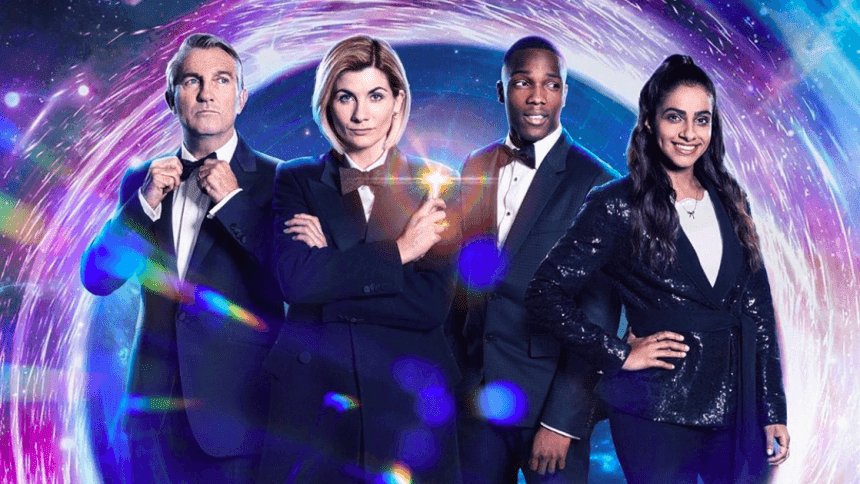
I love what they've been doing in Dr Who in all the recent seasons ... But the time is probably right for it to go a bit more traditional to win back its widespread popularity.
I'd go full on old school, with longer seasons and shorter, 25 min episodes if possible, lots of monsters and adventure and much less angst and exposition.
I'd have a Doctor in Victorian drag and a steampunk Tardis and one female assistant. I'd have no mention of Gallifrey.
I'd create lots of lovely, meaty roles for guest actors. And I'd do all the great story-shapes the show has ever done - exploring the deadly alien world, the base under siege, the quest adventure, the getting caught up in historical events, the invasion of earth, the whodunnit and the hidden enemy.
And I'd keep it straightforward enough for everyone to follow from week to week and above all... make it fun, funny, colourful - and never take itself too seriously.
February 17, 2020
An Interview with Bob Stone

An Interview with Bob Stone
Please tell us everything we need to know about your most recent book! Tell us how it fits in with your ongoing series?
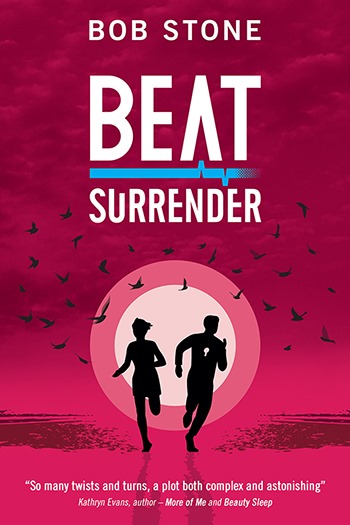
My latest book, “Perfect Beat” (to be published April 2020 by Beaten Track Publishing), is the third and final part of a trilogy which started with “Missing Beat” and continued in “Beat Surrender”. In it, I strive valiantly to tie up all the plot threads and associated loose ends in the story of Joey Cale, the hero of the series, who has found out that many other worlds exist other than the one he is used to. It’s a fairly classic battle of good versus evil, with the action taking place in my native Liverpool and on Pendle Hill in Lancashire (with a side trip to London in Book 2). I once described tying up the loose ends of a trilogy as being akin to trying to re-knit a sweater that has been mauled by a goat and I think that’s pretty accurate. I’ll know soon if I succeeded.
How would you define the genre that your book falls into?
It is officially described as Young Adult Fantasy, but I am keen to point out that as a genre, Young Adult is really only determined by the age of a book’s protagonist. To my mind, as far as the readership is concerned, “Young Adult” is where the intended age range starts, not where it finishes.

Why did you fall in love with this genre in the first place, and which books / authors / series would you recommend?
I hadn’t read much YA fiction since I was a young adult myself, many years ago, when I devoured books by Alan Garner, Terrance Dicks, Nicholas Fisk etc. Since owning my bookshop, however, my eyes have been opened to the wonderful range of YA fiction out there. It really started when I came across Kathryn Evans’ astonishingly good “More of Me”. I then got to do an event with Kathryn and four other authors, Sue Wallman, Patrice Lawrence, Eugene Lambert and Olivia Levez – all brilliant writers and all of whom I would recommend. Kathryn’s second book, “Beauty Sleep” is also superb. I thoroughly enjoyed “Jiddy Vardy” by Ruth Estevez and “The Book of Bera” and “Obsidian” by Suzie Wilde, both amazing authors and terrific people. Lu Hersey’s “Deep Water” is an amazing and original book too. And of course, one can’t go wrong with your own Martian trilogy, Paul.
Who do you read for pleasure?
Reading is always a pleasure so I read pretty much anything I can lay my hands on. I’m lucky enough to work with a lot of independent authors so I get to read books that I might not otherwise have come across. For example, “Grace and the Ghost” and “Angel’s Rebellion” by Estelle Maher are two of the books I have enjoyed most in recent years and they are both independently published (but shouldn’t be). I like a good thriller/horror novel too, so will always snap up the latest by Stephen King, Chris Brookmyre, Dennis Lehane and Robert Crais.
Would you write in other genres, do you think..? Is there a genre you couldn’t imagine ever writing in..?
I’ve had a go at most things. I wouldn’t really choose to write historical fiction because I don’t have the patience for all the research and I think I’ll probably give romance a miss too. My wife can explain why.
What’s the most wonderful thing about being a writer..?
In my case, it’s all the other brilliant writers I have got to know either in person or through social network sites. It can be a very supportive community and we all struggle with the same things. From a personal point of view, the best thing is the fact that, after 55 years on this planet, I can actually call myself a writer. I have written all my life, but now, thanks to the encouragement of some incredible friends (including my gorgeous wife, Wendy) and the faith of my awesome publisher, Debbie McGowan, I can refer to myself as a writer and that’s a feeling that is hard to beat.
And what’s the most challenging thing about the novelist’s life..?
The perpetual Imposter Syndrome. When my first book came out, I lived in dread of people saying “He runs a bookshop! He’s surrounded by books! He talks to writers all the time! You’d think he’d know better than that!” It didn’t happen, luckily, but with each new book I fear this will be the one where I’m found out.
Longhand on actual paper, or straight onto the computer..? How do you write that first draft?I write straight onto the computer, partly because my handwriting is so dire that even I would struggle to read it back. I’m also what’s called a “pantser”, as in flying by the seat of. I write without much plotting or planning and see where it takes me. There are, of course, very obvious risks in this approach. When I reviewed the first draft of “Missing Beat”, I had split the two main characters up and when it came to reunite them at the end, I realised that by this point they were actually on different days! It’s surprising how many plot points there were in a trilogy that I had started and meant to go back to. Having said that, some of them ended up being crucial to the ending, so it all looks like it was deliberate.
What is your readership like..? Are you in touch with them? Have you done readings and events and school visits?
My readers are without exception intelligent, discerning and extremely good looking, sexy people, as I am sure they would be the first to admit. I try and keep in touch as much as I can through social media and also because many of them are customers and friends of my shop. I’d love to do more author events and school visits, but escaping from the shop can be a bit of a challenge sometimes.
You’re a bookshop owner, too, aren’t you? Tell us about that! Is it as magical as it seems..?
I get to sell books to people who love books. What could be better? I get to meet authors, which to me is like going backstage to meet the band. I’m also lucky enough to be able to give shelf space to independent authors and do signings with them and hope that when they are famous, which some of them willbe, they remember me! There are many challenges involved in having a bookshop in this day and age, but when it goes right, there’s nothing else I would want to do.
How did you get into writing in the first place, and how did you first get published..? Has it been a long and difficult road, or has it been relatively straightforward?
I have written for as long as I could hold a pen and some would say my handwriting hasn’t improved much. “Missing Beat”, however, was the first full-length novel that I finished and I was lucky enough to have it accepted for publication by Beaten Track. I had, by that point, accumulated a number of letters from agents wishing me every success with my book, which was nice of them, and was on the point of giving up. The experience of working with Debbie at BTP has been a joy from start to finish. She is a terrific editor and very supportive of her authors. As roads go, it’s taken me a long time to find it, but it’s a good one.
What are you going to write next..? Are you going to be working in the same vein? What can we expect to read.?
I’ve got numerous projects in various stages of non-completion. I’m putting together a collection of short stories, which is intended as a companion piece to the Missing Beat trilogy and have started my next YA novel, which will probably be connected to the Welsh myths of the Mabinogion. But then I had another idea too, and now I sit at my computer, wonder for a while which one to work on and make a cup of tea instead!
Finally… tell us something surprising about yourself that your readers might not already know..!
I get into terrible trouble with questions like this, because I’m always tempted to lie. I claimed to be a pangolin wrangler once, and people believed me. It’s mainly because there really isn’t that much exciting or surprising to tell. I was once mocked by Geordie folk-rockers Lindisfarne though. Does that count?
February 13, 2020
An Interview with Una McCormack

An Interview with Una McCormack
Please tell us everything we need to know about your imminent publication!
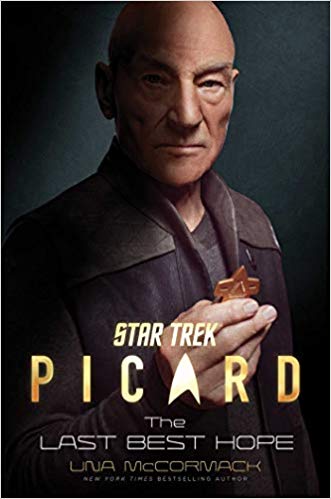
My latest book, The Last Best Hope, is a novel based on the new Star Trek: Picard series! There’ll be familiar characters, and also some new ones, and I am of course massively excited to be writing the first spin-off novel from this huge new show.
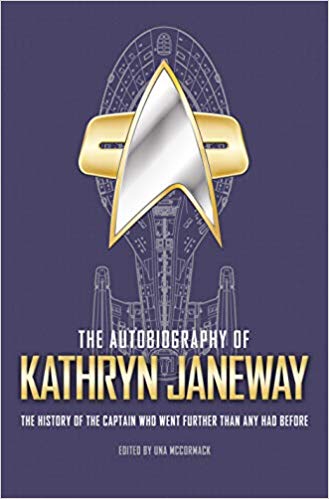
Later in the year, The Autobiography of Kathryn Janewaywill be published – Janeway’s life story from birth to returning to the Alpha Quadrant. The conceit is that I have “edited” the book, from stories Janeway has told me! So it’s all in first person, and it was huge fun working with her voice.
You’ve written for various franchises over the years – Doctor Who, Star Trek… You’ve been trusted with some really famous properties. How do you find working with other people’s creations, and making your mark in those worlds? Is there a franchise you haven’t written for yet that you’d like to?
My storytelling urge has always been to tell stories about what I’ve reading and watching. All my early writing was more Doctor Whoor, particularly Blake’s 7. Playground games, too. My instinct is to tell stories in response to other stories. Fanfiction was perfect this – not least because it has a community around it.
So I never felt constrained working within other people’s worlds. Sometimes I wanted to explore some aspect; sometimes I wanted to work out more about characters; sometimes I wanted to subvert the philosophy of the world. My novels about Garak from Star Trek: Deep Space Nine, for example, often take swipes at the taken-for-granted ideas of the Federation.
I would love to write a Firefly novel, and – although this is unlikely to happen – I would love to write a licensed spin-off set somewhere in Tolkien’s worlds.
Why did you fall in love with this SF in the first place, and which books / authors / series would you recommend?
Like many people my age, I fell in love with SF at the start of 1978, when I saw Star Wars in the cinema. That gave me a deep-seated love for the visual spectacle of a starscape or a spaceship.
But at the same time, I was starting to watch things like Blake’s 7 and Doctor Who, and that made me think about other aspects of SF: about how worlds can be different (for good or ill), and what we can do about that.
Then I started to read SF: the most important author to me as a young reader was Sylvia Engdahl. Her two novels, Enchantress from the Stars and The Far Side of Evil, are about a young woman, Elena, who is part of a space-faring anthropological service that explores less technologically advanced worlds. These books made me think about all kinds of things: when and how to intervene; how societies change and develop; ends and means. It’s all lovely stuff.
My favourite SF writer is Ursula K. Le Guin: surely readers of your blog will have read her already, but if not go for it!
I adore the SF adventure and genre playfulness of Lois McMaster Bujold’s Vorkogisan Saga (I have co-edited a volume of essays on her books, with Regina Yung Lee, which is coming out later this year from Liverpool University Press).
I have become a great admirer of Vonda N. McIntyre. She was one of the most significant feminist SF writers of that great explosion of women’s SF in the 70s and 80s. Later she wrote a great space opera series, Starfarers, and of course her Star Trek novels are amongst the best. I have written a critical afterword for her first novel, The Exile Waiting, for a recent reprint from Handheld Press.
Is there a genre or sub-genre you couldn’t imagine ever writing in..?
Honestly, no, although I suspect I would want to refract it through a science-fictional setting. If you’d asked me this question a few years ago, for example, I might have said a Western, which I had assumed were implicitly violent, racist, and misogynist. Then I decided to look at them with an open mind, and got very interested in them and the storytelling potential (and I saw Firefly and watched The Outlaw Josey Wales and read True Grit). One of my sf novels, The Baba Yaga, has a vibe of The Outlaw Josey Wales about it, and my novella The Undefeated was pitched as ‘feminist High Plains Drifter in space’.

I think that I would struggle to tell a detective or procedural story, since I get bored with the minutiae of details, and I’m not sufficiently invested in puzzle-solving as a pleasure of reading. I understand why people love to read and write books like this, but they’re not for me.
You were a teacher of Creative Writing for many years. How does that work? Did you find that being involved in so many works in progress by other people was actually beneficial to your own writing? Or did it get in the way?
Teaching creative writing is generally done through what’s known as workshopping: you meet each week with a group of other writing students, and each week one or two of you take your turn to have your work read and critiqued by other students, guided by the tutor (usually a professional writer). This involves creating a teaching environment that involves a lot of trust, clear boundaries, getting to know other people and find out what they want to do with their stories.
I personally found that the most effective way of teaching creative writing is to take a student’s draft, put it on an overhead projector, and then have the class watch as I walk through an edit of the piece, explaining my thinking and why I am making certain suggestions. Again, this involves a lot of trust within a group – and trust in your tutor too. But it teaches so much about sentence construction, word choice, precision of language, etc.
I have also taught creative writing PhDs, and I also mentor private students one-to-one. This is very much about developing a relationship with the individual; helping them clarify their own goals for their work, and giving them tools to be able to bring their projects to completion.
I personally find teaching writing extremely rewarding; it makes me think analytically about writing, and that can go back to my own practice. What got in the way of my own writing was teaching within the overly administered environment of contemporary universities. Now I am not working in HE, I have carried on mentoring writing students. I find it tremendously rewarding.
How did you get into writing in the first place, and how did you first get published? Has it been a long and difficult road, or has it been relatively straightforward?
I was, first and foremost, and continue to be, a fanfiction writer. I was writing stories in my head about characters from my favourite TV shows from when I was a very little girl. When I started writing as an adult (I didn’t really write fiction during my teenage years), it was, again, writing fanfiction – Blake’s 7 in this case. This happened to coincide with the explosion of internet fandom in the mid-90s. I met a bunch of highly creative and smart people who were writing B7 fanfiction at the time – honestly, it was like being part of an underground art movement. Amazing online creativity and beautiful zines. They encouraged me to finesse my writing style.
From there, I started to write fanfic based on Star Trek: Deep Space Nine, and I had the tremendous good fortune to be talent-spotted by the editor of the books range at the time. That was my first professional novel publication. Once you’re inside, as it were, it becomes easier to get commissioned, because you start to have a track record of being able to deliver on time and within brief. On the basis of the Trek novels, I was able to pitch for the Doctor Who range, and from that came lots of wonderful work with Big Finish.
My first novel was published in 2004, and it was only last year that I decided to take the plunge and become freelance. So while I wouldn’t say it’s been a difficult road, it’s been fairly slow and steady!
Tell us about being a woman writer in the world of science fiction, and tie-in fiction? Is it a Boy’s Club, really? Or has that changed?
It is substantially better than when I started out (I was, for example, the only woman in my university Doctor Who society)! To some extent, things were already changing (nobody has ever tried to harass me at a convention), but there are types of science fiction that were already a closed book to me. Comics, for example, felt like it was boys only, so did Star Wars. I’m sad I never felt comfortable getting into those spaces, not least because I think it would be fun to work in them.
I found the literary sf world a little difficult to negotiate at first, but I think that was chiefly because I was working in tie-in fiction, rather than because I was a woman, and I sometimes got the sense that tie-in writing was considered slightly down the geek hierarchy. That has changed massively in the last five or ten years, and I only ever get a positive reception now. I want to emphasize that this wasn’t universal, just one or two odd encounters, and most people were interested, curious, and welcoming.
Some people have been very good to me at certain moments in my career, and it’s made a massive difference to me. Gary Russell, for example, gave me my ‘in’ on both the Doctor Who novels and at Big Finish. And other colleagues, very recently, have put my name forwards for, e.g. radio slots because they knew it would make a big difference for me at this point in my career.
I think I was entering the sf world as a woman writer at exactly the right time. So much work had been done by the generation of second-wave feminists to clear the decks for my generation. I was able to say, “Well, no, I like tv sf and I like writing fanfiction, and I’m not going to apologise for that, and I don’t particularly feel the need to justify my tastes. Have you considered reading or writing beyond the familiar?”
I have certainly benefited from the general move to commission diverse voices (I am often the first or second woman to get a writer credit on a property!), and I have also dodged the worst of online misbehaviour. Some of the younger women coming through, for example, Doctor Who fandom, face a level of hostility online that I never received coming through. It’s not in any way OK.

What are you going to write next? Are you going to be working in the same vein? What can we expect to read?
I love writing franchise fiction, and will happily return to my familiar worlds and others given the chance!
I published a novella last year, The Undefeated, set in my “own” world, and I’m very keen to go back to that and tell more stories there. I would like to write more fiction setting in my “own” settings, and now that I’m writing full-time, I hope to be able to do that.
Finally… tell us something surprising about yourself that your readers might not already know!
My mind always goes blank with questions like this! I think I am pretty much how I present: I spend most of my time writing, and when I’m not writing, I’m reading! Er, I don’t have a formal qualification in English Literature beyond GCSE? That’s the best I can manage!
February 10, 2020
An Interview with Daniel Blythe
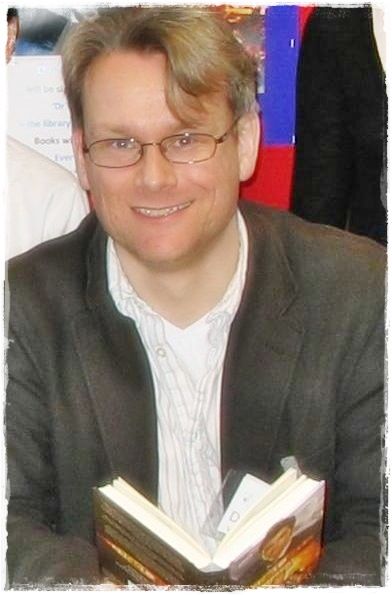
An Interview with Daniel Blythe.
Please tell us everything we need to know about your most recent book! Tell us how it fits in with your ongoing work. Is it a part of a series?Exiles is, broadly, a Young Adult science fiction novel. The characters in it range from 17 down to 12. It’s quite gritty and grim compared with the previous books I have done for young readers, and so when it comes to my school visits, I usually only talk about it in secondary schools, not primary. The setting is a young offenders’ prison world, The Edge, a harsh planet light years from Earth, where the fifty young inmates are expected to set up a society and look after themselves – and frankly, Earth’s government doesn’t care if they end up killing each other. Their resources and technology are limited, but somehow, through sheer determination and willpower, they’ve managed to hold things together!... Then, into this society comes our heroine Beth, the outsider, who falls from the skies into their lives – Beth, the girl in the escape pod, who is a member of the Chapter of Continual Progress, escaping from disaster into the skies. And Beth has to learn the way of life on The Edge pretty quickly if she’s going to survive. But around the same time she arrives, weird things are happening – sabotage, power-drains and mysterious attacks. And, of course, there are those who think the newcomer is somehow responsible. Things get worse – much worse…

I started writing Exiles as a stand-alone book, but before long it became clear to me how I could continue to explore the wider world in which it is set, and make that a trilogy. So that’s what I’m working on doing. Broadly, it’s about what happens to humanity when all its assumptions about what is safe and normal and reliable are removed – I can’t say too much more!
How would you define the genre that your book falls into? I suppose it has to be science fiction! People have different ideas about what that is, and what it means, but for me it’s just a means to put the characters in total isolation. I’ve also seen sci-fi described as being about the relationship between humanity and technology, and between humanity and its environment, and that’s definitely explored in the book too. But it’s also a thriller, a whodunnit, and oddly, a kind of space Western too, which I only realised halfway through writing it. I’m not even a fan of Westerns! (It’s an odd term, Western, isn’t it? Why are all those Nordic crime thrillers not called Northerns? They should be.)
Why did you fall in love with this genre in the first place, and which books / authors / series would you recommend?I just wanted to write a story about young people, finding their way in the world – in the galaxy! – but freed from the assumptions about young people in today’s society. Contemporary fiction for young readers can date very quickly – not just because of the technology, but also because of attitudes and contexts and so on. So, in a sense, I didn’t set out to write a science fiction novel. As a teenager, I read a bit of sci-fi, but perhaps not as much as you might expect. Robert Silverberg was one writer who left me completely shocked and stunned – sci-fi is allowed to do this? There’s an orgy in The Masks of Time, for goodness’ sake! You didn’t get that with Terrance Dicks! I felt I had to hide the book from my mum!...
But in my teens there wasn’t really any ‘Young Adult’ as a genre, and so you progressed from children’s books to adult books. So at 15, 16 years old I was reading things like The French Lieutenant’s Woman and The Wasp Factory and mentally taking notes about what novels were allowed to do.
Who do you read for pleasure?It’s very easy to fall back on comfort reading like Doctor Who, and there’s nothing wrong with that, but I am always on the lookout for new fiction people have recommended to me. But I actually went through a stage of having a bit of a break from fiction a couple of years back, and started reading really interesting historical stuff like Ruth Goodman’s How To Be A Victorian and Ian Mortimer’s Time Traveller’s Guide history books, which really bring history to life. Another great one I keep coming back to is Lacey and Danziger’s The Year 1000, which taught me all sorts of things I didn’t know. As light relief, over Christmas I read Nicholas Parsons’ book on the history of Just A Minute, which is equally fascinating in a different way!
You’ve worked in all kinds of different genres. How important is it for you to take a zig-zag path, exploring all these various kinds of story-telling?I was always very clear that I wanted to be a writer – I never grew up saying I wanted to be any sortof writer, just that I wanted to write. As my career has gone on, I have become aware of the necessity of this – writing all sorts of things to survive! The Encyclopaedia of Classic 80s Pop, for example, was my first non-fiction work, and one which was teased out of me by the editor David Shelley, who started talking to me about ‘cheesy’ films and rapidly realised I was more interested in the soundtracks – which was why I got commissioned to do a light-hearted, non-specialist music book.
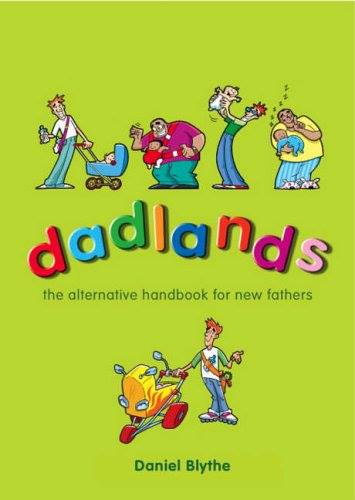
Dadlands came about because I was a father for the first time in 2000, and again in 2003, and I noticed the books we had got on the subject were all about all the stuff that’s aimed at the mother – pregnancy, breastfeeding, etc. – because of course only the mother can do that! But I wanted to do a friendly, approachable book for new dads. And that did OK – it ended up being translated into French, Finnish and Arabic!... The most frightening experience in my life happened as a parent, when my daughter had a febrile convulsion at the age of 14 months – when you see one, it looks like the worst thing in the world, and it’s quite common to think your child has actually died. We had it all – the tears, the terror, the midnight dash to A&E. But she was absolutely fine – a febrile convulsion is actually not very serious, and it’s just a seizure from having a high body temperature, with no lasting effects at all. There have been other terrifying moments too – they’ve both had radiators fall on them, which sounds horrifying when you say it like that, but is actually quite funny in retrospect. They’re now both very strong, determined, healthy young people of 17 and 19, studying hard, and enjoying life as people that age should… But you never stop worrying about them. So I suppose, in a way, wanting to write a book about parenting with a lightness of touch was a reaction to some of that terror! One day, I’ll do the sequel…
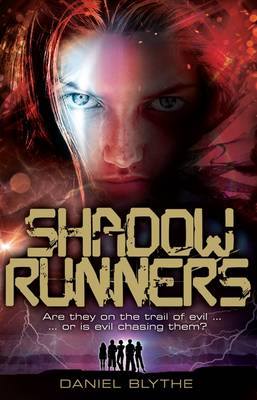
And so it went on – each different book was born out of its own particular circumstances. Shadow Runners was my first book for children, and it was bought by Chicken House, but the first Emerald Greene book had actually existed in some form for a while before that, even though the Emerald Greene books ended up coming out afterwards. And then I ended up doing the ‘reluctant reader’ stuff for Badger Learning, because I just approached them and said I thought I’d be quite good at it, because I’d done all this work in schools with reluctant readers. And they gave me a go, and I ended up doing eight books for them! The key to it, I found, was to write like Terrance Dicks – simply, clearly and never patronisingly.
One unifying factor is that people say I am quite good at writing women. It’s true that I often have female protagonists, and most of my books have a female narrator or female third-person viewpoint. This may be a conscious attempt to distance myself from my characters. As a man, I can’t ever know what it is like to be a woman, can’t ever feel it – all those years of lived experience, of decisions that have to be taken regarding health, personal safety, whether to have children, having to work hard to be recognised in your career and being criticised for it… All of that. But I can work hard to imagine it, to make it seem as if I know it… And that’s a great challenge for a writer.
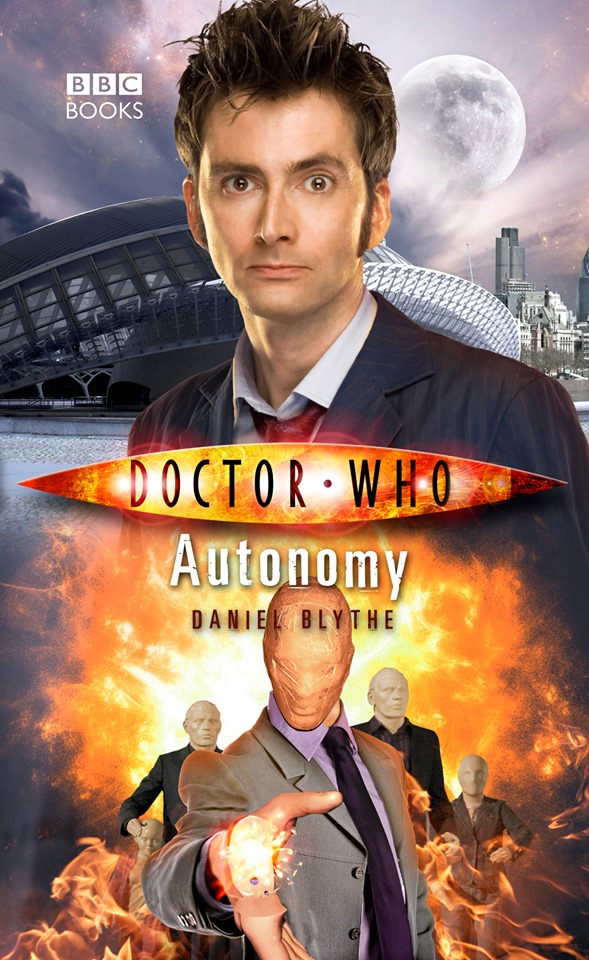
You’ve written for pre-existing franchises over the years. You’ve been trusted with some really famous properties. How do you find working with other people’s creations, and making your mark in those worlds? Is there a franchise you haven’t written for yet that you’d like to?To be honest, Doctor Whois the only one I know well enough. I’m happy to do my own stuff and the occasional bit of Doctor Who. There’s another Who thing coming, which I’ll mention in a bit! It’s a great honour to be, as you say, entrusted with the mythology for 250 pages, and it’s quite a relief when it goes down well! My second book for Virgin rather divided people’s opinions, but by the time I came back for Autonomy, I like to think I was more of a mature writer and had a better grasp on the idiom. Plus, of course, the remit was simply to do a story like TV Who! Which I think I did, and enjoyed doing, and other people seem to have enjoyed it too.
Is there a genre you couldn’t imagine ever writing in..?Probably romance. I mean, romance as part of something bigger, sure, and romantic relationships of all sorts figure in my books. But a book whose sole purpose is romance, probably not. It has a great following and there are people out there doing it brilliantly, so I’m not about to knock it!
What’s the most wonderful thing about being a writer..?A child in a school recently asked me the most wonderful question – she was only 7. I was doing a quite rare Q&A with a Year 2 class, who are only 6 and 7 years old, and this little girl asked: ‘Why is your job important?’ That really made me think! Why is what we do important? I think it’s because you are in charge of your own world and you create things which haven’t existed before. That’s incredibly powerful. What we are asking readers to do, if you stop and think about it, is actually very odd – we are asking them to care about people who don’t really exist, doing things that didn’t really happen. It’s part of the challenge of being a writer to make that seem real and make people care. You give people permission to use their imaginations. It should never be forgotten how important that is.
And what’s the most challenging thing about the novelist’s life..?Back in the 1990s, I remember reading the phrase ‘signal to noise ratio’, and it’s one that has stuck in my mind ever since. Some people make very small signals that create a lot of clamour, while others, like me, can be frantically gesticulating, ‘Hello! I’m over here!’ and feeling, well, ignored, really. I know a lot of writers like me, who are in middle-age now and have been doing this for as long as I have, say 20 years, feel increasingly frustrated that it seems to count for very little these days. (Oh dear! Now I sound rather pompously like the Duke of Forgill in Terror of the Zygons.) I know I’m not the only writer with 20+ books out there to get incredibly fed up, even offended, at being treated like a new writer sometimes!
But with changing direction every so often, you do need to re-invent yourself. I’m lucky that my agent, Caroline Montgomery at Rupert Crew Ltd., is very indulgent of my sometimes unfocused ideas and my urges to keep doing different things, and thankfully she has been very good at selling me in all these varied contexts. Going into schools is a great way to feel wanted and loved as a writer, because kids and teachers like to tell you how wonderful they think you are!
Longhand on actual paper, or straight onto the computer..? How do you write that first draft?I write incomprehensible notes in terrible handwriting, sometimes hundreds of pages for each book – not continuous narrative, but odd scraps, fragments, ideas, and so on. Writing the actual manuscript is done at the computer, and I can’t imagine doing it any other way. Each time I sit down to write, something I wrote before gets changed. I can never understand these people who count their drafts – I totally lose count!
What is your readership like..? Do you meet them at events, and get letters and email from them? You’ve done many school visits and readings for your YA books. Tell us about those!Yes, schools are great, and festivals too. I started going into schools in 2007, before I even had a new Doctor Who book to talk about, and when I didn’t really have a clue how to work in school or what to do. I gradually built it up over the years, to the point where I am doing 25-30 school visits a year. That feels like a lot, to me, but I know some people do more! And the money is very helpful. I now have a very informative 12-page information pack which I send out to schools, with testimonials and press reviews in, details of all my books, and options for all the different workshops I do.
Meeting the young readers is fantastic, and there are always kids who want to show you stuff they have written – I always make time for them. They are often the shy ones. Even a couple of minutes of encouragement will, I hope, stay with them and give them the boost they need.
Something people often don’t understand outside the writing world is that a visit to a school is not promotional, unless it is something your publishers have arranged (and that only happens very rarely). It’s a structured day of working with the kids. My typical day in a primary school would be a talk, with video and slides and so on, followed by question sessions, a team quiz, writing workshops and a book-signing. My workshops have different themes like Openings, Characters, Descriptive Writing, Ghost Stories, Science Fiction, and so on. I take books into school to sell, and only make the tiniest profit on them, because, of course, I buy them at author discount, and I then try and pass on that discount to the school as much as I can, so the kids get to buy a book a pound or two cheaper than it would be in the shops. One or two parents and teachers can look a bit doubtfully at this author sitting there apparently raking in the fivers from a queue of kids – if only they knew how little we actually get paid!
And you do get follow-up correspondence – sometimes from entire classes, with pictures too! Some schools want me to do answers to questions on a video, which I’ve also done.
How did you get into writing in the first place, and how did you first get published..? Has it been a long and difficult road, or has it been relatively straightforward?From the age of 16 or 17 I was ending stuff out to publishers, and getting some nice ‘no, thanks’ responses – I think that’s everyone’s experience at first. My big break was the New Adventures with Virgin – Peter Darvill-Evans gave me that chance to be published at the age of 24, and I will always be grateful to him for that. I thought I was ‘in’, then, but it wasn’t a leg-up into publishing – I still had to work hard, and so did my agent, to sell my novel The Cut to Penguin. Most literary publishers and editors don’t care that you’ve been published in genre fiction. There is a snobbery about it. So I was treated as a new writer by Penguin, and promoted as such, even though I had four or five years’ experience by the time The Cut came out. I can’t complain, though, because it did very well, and was promoted and reviewed to an extent which, now, just seems amazing to me – I didn’t appreciate it enough at the time. It got a big review in the Times! It’s one I still quote! Then they did the follow-up, Losing Faith, as a trade paperback with Hamish Hamilton, and things didn’t go quite so well with that, and disappointingly they didn’t do what they said they’d do in the contract, which was a B-format paperback a year later – I think that could have been its natural home, but what do I know? If people want to get hold of my old novels, The Cut, Losing Faith and This is the Day, they can do so by getting hold of the digital reprints which Endeavour Media have done. I’m still especially pleased with This is the Day, which is my thirtysomething young-mid-life crisis novel, all about family commitments and that particularly Mumsnet kind of middle-class snobbery and angst over houses and catchment areas and so on. It’s supposed to be a satire, which I think a lot of people missed at the time!
What are you going to write next..? Are you going to be working in the same vein? What can we expect to read.?Rather excitingly, I’ve done my first Big Finish audio play – I actually wrote it about a year ago, and it’s being recorded and released this year. I don’t know how much I am allowed to say about that right now, but it was great fun to do, and a great privilege, and very challenging, in an enjoyable way. I’m not a scriptwriter, at all! But I think I rose to the challenge. I’m also working on the sequel to Exiles, and a middle-grade historical book which I hope becomes a series too. And there are always other ideas buzzing around, formed to some degree or another. That’s the problem – I have too many! That questions writers always get asked: ‘Where do you get your ideas from?’ If only people understood that this is not the problem! It’s having enough time – and living long enough, and not being distracted by the business of life. We live in uncertain times, horribletimes, our lives dwarfed by these obscene people and these horrifically moronic decisions which just seem so wrong, so self-evidently stupid, and it’s hard not to exist in a state of continual worry and low-level depression. Life is running to stand still a lot of the time, and it’s very hard to be creative in that environment.
It might seem morbid that I say ‘living long enough’, but I don’t mean it to be – it’s just matter-of-fact. I turned 50 last year, and I’m looking very carefully at my own health. I’ve been lucky in that respect, but never take anything for granted. I’m well aware that I’ve got friends only a few years older who are already eyeing up their retirement, while I don’t think I will ever want to retire, or be able to! I’m far too young! I still feel like a new writer, a young writer, learning stuff every day.
Finally… tell us something surprising about yourself that your readers might not already know..!I used to be a magician! Yes, for years I was a member of the school’s ‘Magic Circle’. The secrets of the tricks were passed down from the older members, and we took our little magic shows out on the road to hospitals, schools and old people’s homes. One of my fellow Maidstone Grammar School magicians was Stuart Miles, who went on to Blue Peter fame. There were a few on-stage disasters, but I think we weathered them. Looking back on it, I really don’t know how I managed to do it – I am such an introvert, and I think I’d hate it now. But it was fun at the time!
February 7, 2020
Kara Dennison Interviews Nick Campbell

A slight change in format here today... as Kara Dennison interviews Nick Campbell about his recent book... which is part of a celebratory anniversary sextet of books published by www.obversebooks.co.uk
*
Every saga needs a beginning: a curiosity in a junkyard, a boy on Tatooine, the entire planet Earth exploding. Obverse Books’ anniversary Sextet is no different, and it opens with two formidable figures: transtemporal adventuress Iris Wildthyme, and author Nick Campbell, who steers her anniversary adventure.I sat down with Nick at a tea room (whose name and location I shall not reveal, as we didn’t technically have reservations or pay for our food) to discuss the kickoff for the miniseries, The Mystic Menagerie of Iris Wildthyme. In the time until we were discovered and had to beat a hasty retreat out the ladies’ room window, I had a delightful chat with him about the novella and his experience writing it. Join me, then, as we discuss time travel, fantasy, and inspiration over a pot of stolen English Breakfast:
Kara Dennison: You've written for Iris Wildthyme a few times now, but what was it that first drew you to her and her world as a reader?
Nick Campbell: About twenty years ago, I was informed that Paul Magrs was one of the most interesting writers for the Doctor Who books of that time: by a member of the Sisterhood of Karn, as it happens (the gay fan group from Kings Cross, that is). My first experience of Iris was a story called Old Flames, from a Who anthology released on cassette. In this incarnation she was played by Nicholas Courtney. She was more benevolent in that story than later on, but even there, she's doing the wrong things, saying the wrong things (sacreligious at that time to even refer to the Doctor as an 'old flame'), and being generally unpredictable - and lovable, too. In all Paul's stories about her, she's both attractive and subversive. She can enter any story we think has been done to death, and quicken its pulse.
KD: She does have a different energy from the Doctor when she crashes into someone's life, that's for sure. How did you bring that pulse-quickening feeling to life for Mystic Menagerie?
NC: Well, I thought the best way was to make her a rogue element in someone else’s life. We’ve got poor old Lynne having a bad day at work, and then Iris rides in out of nowhere, bringing chaos in her wake. In some ways I was paying homage to the great writer of children’s fantasy and ghost stories, Edith Nesbit (who actually had a daughter called Iris, so I’ve always thought of her as someone related). In things of hers like Five Children and It, perfectly ordinary kids happen across these wildly fabulous magical beings who involve them in fantastical adventures whether they like it or not.
KD: There are definitely a lot of looks-in from the fantastical throughout the book. Are there any in particular you can clue future readers into, or should they come in as unprepared as Lynne?
NC: I can reveal that there is a flying horse. In fact, I think he's my favourite character. There's a touch of Larry Grayson about him. There are all sorts of weird beings from antiquity, the sort of thing that E. Nesbit specialised in, and then there is the Sisterhood of King's Cross, which belongs much more to the world of Iris Wildthyme. I quite frightened myself writing about the Clock Watchers, if that's not giving too much away. They live in the gaps between one moment and the next, and in some ways they're the direct antithesis of Iris. They're joylessness, hopelessness, despair, and this is really a story about fighting back against all that. I'm not making it sound too serious, am I? Another scone for you, Kara?
KD: I should while I can — they don't make them like this at home. It's never hopeless if there's someone there fighting back, I think. And they do help Iris shine for Obverse's anniversary... which this is for, of course! How much bearing did the celebratory aspect of the Sextet have over the story?
[Things paused briefly here as a server seemed to realize we were no longer with the party we’d snuck in with. We moved our discussion, and our tea, under the table.]
NC: The main bearing it had, initially at least, was terrifying me with the responsibility of the thing. Obverse is a truly wonderful enterprise in a dirty world, simply devoted to putting fabulous adventures and eccentric heroes and mad ideas into the world (and then there’s The Black Archive, The Annual Years and other reference works celebrating the same spirit). It started with Iris and has gone on to explore all the other worlds that are celebrated by the other Sextet titles. I wanted to write a massive, mad escapade for Iris - and then I was asked to feature one very special moment. But that, for now, must remain a secret...
KD: It's a daunting thing, but you've done a fantastic (and fantastical) job! So go on, give us a peek... any particular lines or quotes you're really proud of? You can even leave out the context to make it extra enticing, if you prefer.
NC: Well, here's a bit that hopefully doesn't give too much away, Kara.'Listen,’ said the woman. Her voice sank unexpectedly to a hush. ‘No, really listen. Stop yammering on for a minute, be here now, and pay attention.’Lynne clenched her jaw shut furiously, but she obeyed. She listened to that pure, disquieting silence, and that persistent ticking clock. More than one, in fact, ticking and tocking out of time as though in conversation. She heard a gentle soughing, like the sound of a storm in-between the thunder and the flash.‘Doesn’t sound quite the same, does it?’ The woman’s eyes roved around the walls. ‘This isn’t the place you used to know. It’s changed. This place that you belong to and ever so vice versa – it doesn’t belong to you anymore. You have no claim on it. It’s been taken over.’‘What do you mean? Taken over by who?’‘Ha!’ The old woman grimaced a smile. ‘By people like me, of course!’ She looked wonderfully excited, and fairly chomped on her cigarette.‘Like you?’‘That’s right. Slightly mad, slightly homeless, slightly unearthly, more than slightly fabulous people. They’re in charge now. This place is going to run to their rules.’
KD: That's just the right amount of enticing! Unfortunately it looks like we're about to be kicked out, so while I'm getting the last of these scones in my bag... where else can people read your work once they're done with Mystic Menagerie?
NC: Well, I've written a variety of short stories for Obverse, including stories about Iris and Brenda the Bride of Frankenstein, as well as the mysterious Corrective Tender and the sinister Grandad with Snails. I've had short fiction and non-fiction published all over the place, and I'm working on something bigger - but for the time being, I'm writing a regular blog celebrating great children's literature: arguably the most fundamental books there are, sometimes the most interesting and inventive, which nonetheless receive minimal coverage from print and TV journalists. Visit my Impossible Library, here: impossible.home.blog.
Many thanks to Nick Campbell for his wonderful interview, and to [Redacted] Tea Room at [Redacted] for their swift service and impressive security. If you’re interested in picking up a copy of The Mystic Menagerie of Iris Wildthyme, or any other book in the Sextet, you can do so from the Obverse Books website.
February 6, 2020
An Interview with Samantha Lee Howe

An Interview with Samantha Lee Howe
Please tell us everything we need to know about your most recent book! Tell us how it fits in with all your other ongoing series…
My latest book is actually a standalone novel called THE STRANGER IN OUR BED for HarperCollins.
Here’s the blurb: ‘On the surface our main protagonist, Charlotte, is a happily married woman. But she is frustrated and lonely, a detail she keeps from her husband Tom. Then she meets Ewan Daniels and before she can help herself she falls in love. After a long affair, Ewan asks her to leave Tom. When she agrees and goes to meet Ewan however, he doesn’t show.’
It’s a twisty-turny thriller which hopefully keeps the reader on their toes – if there’s one thing I hate in a book it’s predictability ... so I try and ensure that everything I write has an element of unpredictability about it.
How would you define the genre that your book falls into?
This book is a psychological thriller, some would call it domestic noir.
Why did you fall in love with this genre in the first place, and which books / authors / series would you recommend?
I’ve been reading thrillers most of my life. Years ago, I devoured the works of Mary Higgins Clark, Sidney Sheldon and Dean Koontz. In recent years I’ve been reading some popular titles by authors such as Paul Finch, Caroline England, Abbie Frost and Peter James. In fact, I’ve also been writing thrillers for many years, they just happened to feature supernatural elements, or to have a family of vampires as the main protagonists, so it’s a genre I’m very familiar with.
You’ve worked in all kinds of different genres. How important is it for you to take a zig-zag path, exploring all these various kinds of story-telling?
The one thing that is similar in all writing is that you have to create convincing characters and situations regardless of the genre. Although most of my previous works have been horror, fantasy and science fiction, a lot of the stories I tell usual are very ‘thriller’ in their structure and are psychologically twisty. The challenge with writing mainstream thrillers is that you cannot explain a mystery by using some supernatural element. In a way it’s far harder to write and has to be possible in the real world. This is where the challenge comes from for the writer, but I love that and enjoy rising to it.
Is there a genre you couldn’t imagine ever writing in? Is there anything you couldn’t imagine bringing your own style to?
I’d probably have a go at anything if asked. Though I’m not sure I would want to write a romance novel or chick-lit. It’s not really me, and I think you have to be the demographic for the novels you write, otherwise you won’t do them as well as you should.
How did you get into writing in the first place, and how did you first get published? Has it been a long and difficult road, or has it been relatively straightforward?
It definitely has been a long road. I have always been a writer. At the age of eleven I decided I would be a novelist and I’ve pretty much never given up on that. But how the professional journey began was following the completion of my Master’s Degree in Creative Writing. I had this novel I’d written for my dissertation and I had been told by my tutor that it was good. I had no idea where to go with it and so I ended up using a vanity press as I knew nothing else at the time. The interesting thing with this, however, was that I then went on to win the Silver Award for Best Horror Novel in 2008 with the well established ForewordMagazine and following that I found a small press publisher called The House of Murky Depths who offered me an initial three book deal to republish the first, and to write two more volumes.
Since then, I’ve been working very hard towards getting bigger deals and better sales. It took twelve years and a change of genre, but I am now with HarperCollins and writing under my real name of Samantha Lee Howe … THE STRANGER IN OUR BED is being launched as a debut thriller with HarperCollins’ imprint One More Chapter.

What about public events, readings and conventions? Some authors don’t like doing these kinds of things – and others love it. Is getting out into the world a big part of being a writer these days?
Unlike before the age of digital, where mostly you browsed a book store in order to find your next read, these days people buy books in a variety of ways and formats. Sometimes they just use online book sellers and therefore might only become aware of those books that are ‘best sellers’. If they haven’t heard of you, why might they search for your titles in this circumstance? That’s why I believe it is really important to attend conventions, readings and other public events wherever possible to help connect with potential readers. It’s equally important to have an online presence, and to interact with people on social media, showing them that you are a real person that’s worth their time and investment.
Do you have a good sense of who your fans and readership are? Do you get a lot of messages and feedback?
I do feel I got into social media at exactly the right time. I have built up a presence that gives me a measure of who is buying my books, and more importantly who isn’t and why. I’ve been very lucky, I think, to have built relationships over the last twelve years with a variety of readers, who are sometimes very honest about how they feel about your works! They don’t always say what you want to hear, but if they keep supporting you then you know that you are doing things right. Even so, I’ve had some amazing feedback in the last year. Readers are coming out of the woodwork with massive support for the new book, and it’s felt like there has been a massive buzz about it. Which has been amazing.
What are you going to write next? Are you going to be working in the same vein? What can we expect to read?
I’m sticking to thriller writing for the immediate future. Partly this is because I feel I have said and done all I want to in horror for the time being, but also this genre really excites me. I’m currently working on a new standalone thriller and I have several ideas for the next few as well so I think I have plenty to keep me busy for the moment.
Tell us about your reading. Who do you turn to for comfort reading?
I’m currently reading lots of other thrillers – a study if you like of the market and what’s selling. I also need to do this to make sure that I create something different in my work. I still enjoy SF, Horror and Fantasy, but I’m not reading much in those genres right now. Even so, one of my main go to writers is Tanith Lee. I love her works and they always remind me that I’m still aspiring because I can’t imagine ever being able to write prose as effectively as she did!
Finally… tell us something surprising about yourself that your readers might not already know!
I love property programmes. I’m really into house design and have a fascination with home improvements! I love any excuse to go looking at other people’s houses too.
February 3, 2020
An Interview with Carole Matthews

An Interview with Carole Matthews
Please tell us everything we need to know about your most recent book!
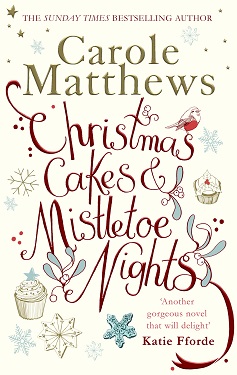
My last book was Happiness for Beginners, published in May last year. It’s based round a real-life farm, Animal Antiks, which offers alternative education for children and young adults with behavioural difficulties and mental health issues. I had such fun doing the research as I’m completely out of my comfort zone around animals – and allergic to all of them. It’s not put me off though as I’m currently writing a sequel. This was my 32ndnovel and hit the top ten of the bestseller list. It’s just been short-listed for the RNA Romantic Novel of the Year awards. I’m really pleased for myself and everyone who’s been involved in bringing it together.

What would you define your genre or style as..?
Funny, light-hearted romantic comedy/women’s fiction/chick-lit/ commercial – people can be sniffy about the various labels, but I don’t mind any title as long as people buy my books.
Why do you enjoy working in your genre, and which books / authors / series would you recommend? Who made you want to write romantic comedies?
I love it. I think it’s my natural home. I have once or twice explored my dark side in writing and that’s quite surprised me. I do like a bit of vampire action. I’m not sure my readers are ready for that though! I tried writing straight romance, but it always ended up comedic. There was no real influence, as such. I started writing romantic comedy when it wasn’t really that popular and I have Bridget Jones to thank for bringing into the spotlight. I started writing romantic comedy when it became possible to write about ‘ordinary’ lives – until then women’s commercial fiction had been, largely, bonkbusters like Jackie Collins and I didn’t know much about parties in Hollywood or yachts
What do you read for pleasure? Am I right in thinking you love really spooky and gory novels..?
I do! I tend to read outside my genre, though I do have my own rom-com authors that I love such as Jill Mansell, Milly Johnson and Sheila O’Flanagan. I also read Katie Fforde, Marian Keyes, Mike Gayle, Matt Dunn and David Nicholls. I like historicals, a high body count, fangs or being scared witless. I’ve recent enjoyed books by Laura Purcell – The Silent Companions and The Corset. My all-time favourite spooky story is Dark Matter by Michelle Paver. I’ve bought countless copies as gifts over the years. To me, it’s word-perfect. Chilling in tone and subject matter. Quite fancy writing a ghost story, if I ever make time!
Tell us about the landscape and setting of your books. Are they all set in the same place, more or less..? Where in the world are we, and why should everyone want to go there..?
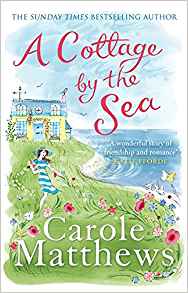
My books are set in different locations – some exotic, some in Costa del Keynes where I live. You can track when I’ve been paid over the years due to the lavish nature – or not – of the setting. I like it when people visit a place just because you’ve set a book there. A Cottage by the Sea has sent a lot of people on holiday to Pembrokeshire! One of my readers who read Wrapped Up in You – set in the Maasai Mara - has ended up working for a wildlife charity in Kenya. That’s dedication.
How did you get into writing in the first place, and how did you first get published..?
I entered a short story competition in Writing Magazine and won a thousand pounds. The first piece of fiction I’d written in the twenty years since I’d left school. I spent the prize money on a week-long writing retreat – the most sensible thing I’ve ever done! On the course, the tutor gave me the name of an agent and I sent my book off to him the week before Christmas and he took it home to read over the holiday. When the office opened in the new year, he took me on and sold the book a week later.

What’s the most wonderful thing about being a writer..?
Being able to make your characters do exactly what you want them to do! If only life were like that. Research too. I do a lot of behaving badly/bunking off in the name of research. I’ve also managed to convince my accountant that afternoon tea is quite the best form of research.
And what’s the most challenging thing about the novelist’s life..?
Erratic income. Though that has eased somewhat after writing so many books. The fear of being out of contract never goes away. As a commercial writer, constant deadlines can be difficult. In the early days it was isolation too, I think, so social media has been brilliant for that. Places like Our Writing Gang are so very helpful. It makes you realise that many writers have the same issues.
What is your readership like..? Do you meet them, or get letters from them? You do lots of social media stuff and competitions and all sorts with your readers, don’t you?
I’m blessed with the loveliest, most loyal readers. They send me birthday cards, baubles for my Christmas tree, chocolate, much and many things. They’re so kind. Even better, they buy my books. Some have been with me for the twenty-two years I’ve been published. I do all manner of comps, giveaways, live chats, outings, afternoon teas. I’ve even had my readers to parties and book events at Matthews’ Towers. I’ve got about 50k followers across Facebook, Twitter and Instagram. That takes a bit of feeding.

What are you going to write next..? Will there be another Christmassy book..?
My next book is out in June – Sunny Days & Sea Breezes. It’s set in the Isle of Wight – a place I adore. It was tough to write as my head was still in a farmyard, hence I’m currently writing a sequel to Happiness for Beginners cunningly titled, Christmas for Beginners. I have an unnervingly tight deadline as it’s out in October – just in time for Christmas!
Finally… tell us something surprising about yourself that your readers might not already know..!
I was once Miss Bournemouth Pier and my prize was four tickets to the Des O’Connor show.
January 10, 2020
An Interview with Paul Phipps-Williams

Please tell us everything we need to know about the new book!
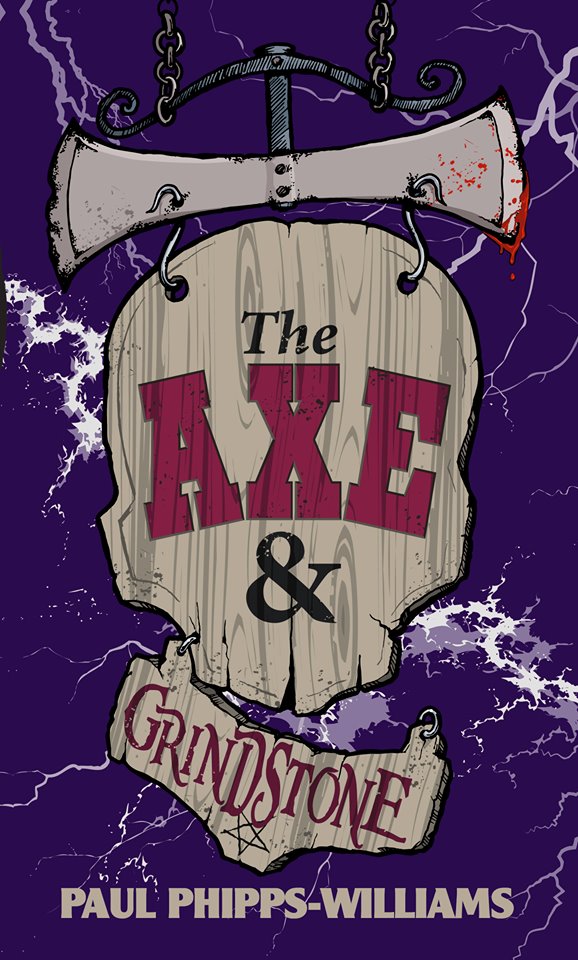
The Axe & Grindstone is the story of a pub landlord who discovers a secret door in his cellar to a world where screams are holy. He’s not best pleased to find he’s three days to save it.
Essentially, it’s set in the world of my early twenties, where I spent several years working in a busy town centre pub / club – one where, according to the book, the staff serve you fish and chips in the evening and then watch you throw it up again three hours later after four tequilas and an aftershock – and its complete opposite, the country pub where you damn well have to have the locals’ pint on the bar the moment you see them crossing the road. In their own tankard, if you please.
It’s a Tom Holt / Stephen King / Neil Gaiman style thing and, according to my publisher, the closest thing to Terry Pratchett since his hat. We take the main character, Mark, from his own little happy place, throw him into a place where rock monsters drink pints of cherry brandy, and see where he goes from there.
We published on Halloween, and it’s got some great reviews so far. It switches between contemporary light-hearted fantasy to outright pain-cultist horror, which you have to be prepared for! But as its seen (mostly) through Mark’s eyes, whatever you feel you can be sure he’s feeling too.
How did you get into writing in the first place, and how did you first get published..? Has it been a long and difficult road, or has it been straightforward?
It’s always been something I’ve enjoyed ever since school. But the gauntlet was thrown when my sister-in-law challenged me to a NanoWriMo duel back in 2013. I had no plan what I was doing, other than filling a page with answers to “what if…”
One of the answers was “what if there was a secret pub in the cellar,” and I went from there. I am a pantser, not a planner, so hadn’t a clue what was going to happen until Mark arrives at his new country pub, The Grindstone, and I typed the word ‘scratching’. And then everything came together and I was away.
I found the London Writers Café very useful when it came to drafting. They get around 20 people together in a back room of a pub: you get ten to fifteen minutes to read a section of your work and you get ten to fifteen minutes feedback and critique from other writers. It can be quite tough if you’re not used to it, but it was brilliant in improving and focusing both character development and prose.
I secured an agent on the third draft who loved it – but didn’t think she could sell it. So The Axe & Grindstone went onto the shelf as I worked with her for a couple of years on my second book, The Breath of Ages. And as soon as that was ready… she left the business. Which was slightly annoying…

So I returned to The Axe & Grindstone, having forgotten how much I loved it. One final spruce up and I submitted to BAD PRESS iNK, who decided to launch their publishing house with it! So no pressure there, then...
What was your career like up till now, and how did it lead to being an author?
I got myself a degree in Film and Video, specialising as a producer, and then decided the last thing I wanted to do was run around with a clipboard shouting ‘time is money’ at people, so I went to sell pencils at WHSmith and serve pints. Then I saw a job advert for the local Government Office so I applied and I’ve been a civil servant ever since. I’ve recently made the decision to change my working pattern, so every Wednesday is protected for writing and photography business studies. I’m the official photographer for Fantom Events, who run a lot of Doctor Who things – so my spare time is often spent trying to make Doctor Who actors giggle and smile at inopportune moments.
What other kinds of writing have you been getting up to, and do you see it as important, to have various side projects?
Most of my other work has been tiny little pieces of work for Big Finish. The horror elements in one chapter I read at the London Writers Café led to an offer to pitch for Dark Shadows. Confession was released in 2016 as part of Echoes of the Past with Behind Closed Doors in 2017 as part of Love Lives On. Doctor Who: A Small Semblance of Home followed in 2018.


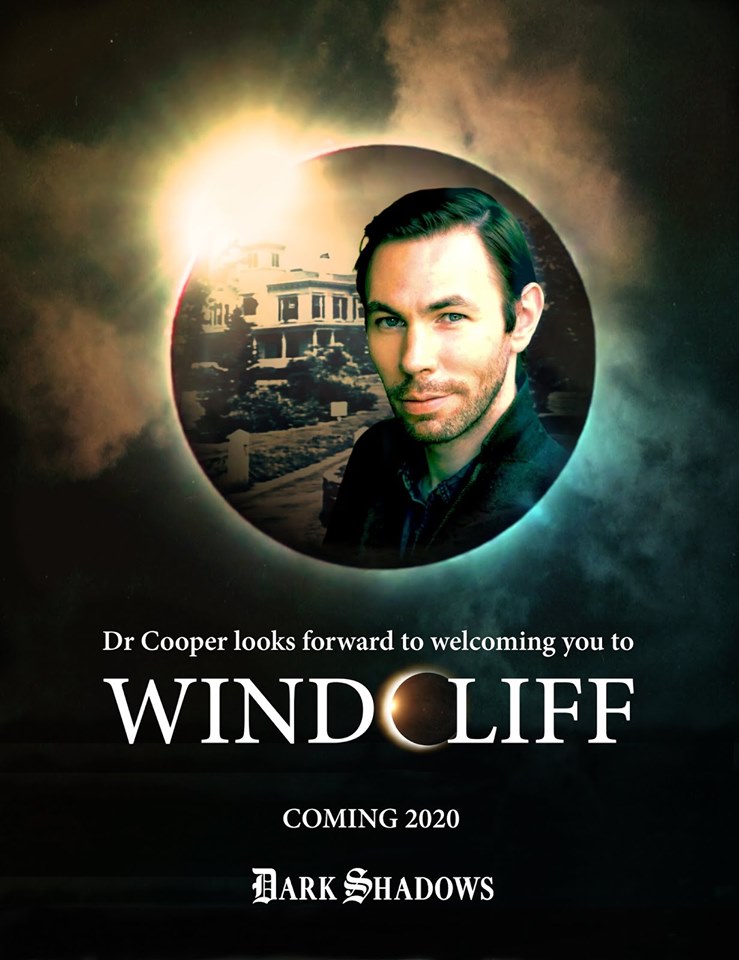
For the last eighteen months I’ve been co-writing Windcliff – the next 13 part full-cast audio Dark Shadows horror serial. It’s set in real-time and we want it to be the most terrifying thing Big Finish have done. The complexity of writing (and rewriting) eight hours of script in real time keeps making our heads explode a little bit. Which just adds to the gore, I guess.
How would you define the genre that your book falls into?
I’d call it contemporary fantasy horror, with a pint of Stella and a packet of pork scratchings.
Why did you fall in love with this genre in the first place, and which books / authors / series would you recommend?
Now you’re asking. Personally, I think it enables people to face fear from the comfort of their own home. I did a podcast recently with Keith Blakemore Noble, where we talk about why people like reading scary things. I think half of it is the adrenaline – we like being scared – and half of it is the feeling we’re glad worse things are happening to other people.
Personally, I like making nasty things happen to people. Not quite sure what it says about me.
Do you take elements of characters or overheard phrases from people you’ve observed..?
Not really. I wish I did, as that would be easier. Sometimes I’ll take stock photos of people who I think look like my characters and use them to build character descriptions.
I’m also up for being dared to include words in scripts. An actor dared me to get the word ‘entropy’ into the last one. It survived at least two drafts…
What are you going to write next..? Are you going to be working in the same vein?
Well, I’ve sort of promised BAD PRESS iNK a sequel. There’s a couple of unresolved issues for Mark, and he and the town have to deal with the impacts of what happens at the end of the book…
Have you got plans to do public events or readings to tie in with this book?
We’ve certainly got plans! The amazing team behind BAD PRESS iNK have a truck-load of ideas, and I just have to keep up with them!
Finally… tell us something surprising about yourself that your readers might not already know..!
I’m an open book – or at least I am if you follow me on twitter @misterphipps. But here goes: I was a missionary for three months when I was 19; I helped plan for what would happen if London 2012 went hideously wrong; I was in the House of Commons the day Tony Blair was purple powdered; I’ve passed two laws, and my cats are named after William Hartnell.
*
You can buy 'The Axe & Grindstone' here, and the publisher website for Bad Press ink is here!
January 8, 2020
An Interview with Iain McLaughlin

Please tell us everything we need to know about the new book!
Death on the Waves is the most recent in the Erimem series of Doctor Who spin off novels. Initially Erimem was a supporting character in The Eye of the Scorpion, a Big Finish Doctor Who audio play. At the recording, script editor and producer Gary Russell asked if he could keep Erimem aboard. Who was I to say no?
When Erimem departed the audios, I wasn’t ready to let her fade away, so I started her own range of novels, novellas and anthologies. It lets me work with lovely creative people, tell interesting stories and give new writers their first professional writing gigs. I don’t nail the books down to a single genre. I want the writers to write and tell the stories they want to tell. Tim Gambrell was telling a large scale, full-on sci-fi war story in the book before mine so I wanted to contrast that… and I was in the mood to pastiche Agatha Christie, so that’s what I did.
There’s a rather shabby ocean liner in the Med in 1934. Everyone aboard has secrets and everyone aboard has grievances. Erimem and her friends board the ship for a well-earned rest. Unfortunately that’s when the murders start…
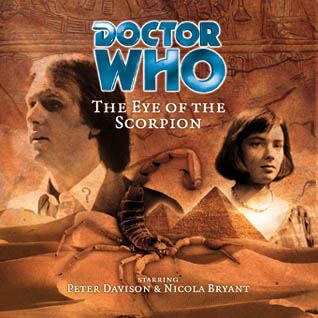

How did you get into writing in the first place, and how did you first get published..? Has it been a long and difficult road, or has it been straightforward?
When I left school I had to wait to find if I had been accepted to Uni. I was going to do a degree in English. Cash was tight in the house and I saw an advert for journalists at DC Thomson, the publisher which was based in my home town. I applied for that, somehow managed to get in, and on my first day I was put up in the office of the Nutty comic. I was there to proof-read the last issue and help on the first issue of Nutty’s replacement, the Hoot. I got scripts to write straight away, so I’ve been writing professionally since I was 18, and facing deadlines since then, too.
So, I was immensely lucky really, to go straight from school into a journalistic/writing job which demanded constant creativity. I was also lucky that the guys I worked with were all incredibly supportive, funny and helpful. They made learning the trade an absolute joy.


What was your career like up till now, and how did it lead to being an author?
Working on the comics was a wonderful preparation for the challenges of writing. We were all writing half a dozen comics scripts a week as well as proof-reading and handling the pages through to process, which was a pretty full week. But we were also a company that had a merchandise programme, so we would often be dragged away to write things we had no experience of, and be given no time to get ready. For instance, one afternoon when I was on the Dandy, the editor came in from a meeting and said, “Drop everything. There’s a greeting’s card meeting in the morning. We’ve to give licensing 100 card ideas by close of play.” So we all came up with about 30 ideas each in an hour and a half. Some of us could draw and sketched the ideas out as well. None of us had training in greetings cards but the mind-set in the comics was that we could turn our hands to anything. Occasionally we’d be seconded off to work on completely different papers, some of them entirely text based, or maybe even to the newspapers. You just had to deal with it. That gave me the confidence – or the arrogance – to think I could take on most things.
The first thing I had produced away from comics was The Eye of the Scorpion for Big Finish. Before that I’d been talking to BBV about doing a script for them.
Actually, back in very late 1988 I had submitted a script to Andrew Cartmel for Doctor Who. He replied in 1990 saying he had left the show, but kindly went through my script, pointing out technical things I’d got wrong and then inviting me to send him ideas at Casualty. His letter, which I still cherish by the way, arrived a few months after my Dad had died and I wasn’t in any state to write anything. But it was positive and I saw it as encouragement to try again later.
That led to talking to BBV, I got an agent (a terrible agent, but an agent all the same) and had a TV show in development for a while, and then I submitted to Big Finish. Big Finish picking up Scorpion and Erimem gave me the thought of maybe using Erimem in a Doctor Who novel. I started writing something which developed into Blood and Hope, which I did for Telos’ series of Doctor Who novellas. That was my first book. I wrote it in 4 weeks just after I’d been diagnosed with depression. Writing has always been one of my coping mechanisms for dealing with being (I think quite mildly compared with some) bipolar. Writing just lifts the weight from me and I can deal with things better after losing myself in a fiction for a while.
After Blood and Hope I found novels less of a terrifying prospect and I’ve done about 40 now. The thing about developing a second career as a freelance writer was that at DC Thomson I was seen as somebody who could take on different things, so I wound up script editing radio for them, editing novels and ultimately working as a writer and “creative consultant” on a TV series for them, which meant being involved in editing every script.These days I’m a freelancer, writing for anyone who will hire me. So, if anybody out there is looking for a writer at all… was that a bit too obvious?
What other kinds of writing have you been getting up to over the years apart from novels, and do you see it as important, to have various side projects and / or write in different forms?
I worked on the comics from 1985-2014. I wound up as editor of the Beano for a time. I still write comics when I can because I love them and it’s like being at home. At the moment I’m regularly on The Broons and Oor Wullie and I’ve written about 30 issues of Commando over the past few years. The great thing about Commando is that it’s a chance to delve into the psychology of war and the darker aspects of war. It’s not all about “Hande hoch!” and “For you, Englander, ze var is over!”. The publication has moved on since then. It’s now a lot deeper than that, and we often have stories from the view of, for want of a better word, the “enemy”. We’ve also introduced female protagonists who were a non-starter for many years.
I’ve written a fair bit of radio and audio over the years. At a guess I’d say 50 or 60 radio/audio plays. The most recent was the 50thanniversary audio revival of Up Pompeii, on which I had a role as one of the team doing a rewrite/edit to a stage script which used some existing material. It was rather fascinating – and a lot of fun – to wander about with Frankie Howerd in my head for a few months.
I’ve done some TV, though that’s a medium I’d really like to do more in, and I have the urge to do theatre.
One of the things I like doing most would be the teenage/Young Adult books I’ve done for reluctant readers. They deal with some really interesting subjects… racism, bereavement, coming out, isolation, peer pressure… these are all things we should talk about. I also think these books can draw people into reading who struggle with it. They’re written with a simpler style, with a more basic vocabulary, but the stories are still challenging. If we’re lucky… no, if we do our job as writers, we’ll draw some of these people who struggle with the idea of reading into people who enjoy reading. One of the best things you can do for a kid is give them books and instil a love of reading into them. There’s nothing as liberating or joyful as losing yourself in a good book.
How would you define the genre that your new book falls into?
One of the many things I like most about the Doctor Who universe is that there is room for so many different voices and flavours. I’ve done noir crime, epistolic historical, H. Rider Haggard pastiche, and the most recent, Death on the Waves, is a bit of a homage (French for rip-off, I believe) to Agatha Christie. So, it’s in the Doctor Who universe but it’s influenced by Agatha Christie and the regulars know it.Doctor Who is a wonderful universe to be in though. It’s so rich and diverse. Look at some of the current series which have an association to the show… Iris Wildthyme, Erimem, Lethbridge-Stewart and Faction Paradox… all of them are very different and have their own flavours and styles but they enrich that universe as a whole.
Why did you fall in love with this genre in the first place, and which books / authors / series would you recommend?
I have been a big fan of Christie’s work for 40 years or more. She gives so many tropes to work with and the fact that the public know these tropes so well means that you can get a lot of joy from subverting them. In my ideal world I would love to write a Miss Marple story. I love the way she works, the way she quietly watches people and allies deduction to a deep knowledge of human nature and human wickedness.
I think my first experience with Agatha Christie was probably the 1940s version of And Then There Were None. I walked home from school past a second hand book shop every day. I started popping in and picked up Agatha Christie novels based on seeing that film. I think I really became addicted after Joan Hickson’s Miss Marple series started on the BBC. I just threw myself into the books after that started. Joan Hickson was extraordinary. That amazing stillness in her as the brain whirred… it’s a quite wonderful performance.I’m hugely partial to Paul Doherty’s Egyptian mysteries with the judge Amerotke and Marilyn Todd’s Claudia Seferius series. The Amerotke books are absolutely packed with rich detail while the Claudia Seferius books are absolutely bouncing with wit and fun and attitude.
Do you take elements of characters or overheard phrases from people you’ve observed..?
I use a lot of the real world in my work, even though I often do sci-fi and horror. When I do The Broons and Oor Wullie, I delve into my family for a lot of family memories. The Broons in particular is very much like writing about my own extended family. This will mean little to most people beyond Scotland and the north of England but the Broons are genuine Scottish icons – Scotland’s first family, I’d call them. Everybody knows somebody just like at least one of the family.
For Commando I have used my grandfather’s exploits during WW1 – he joined up at the age of 15 because he thought it would be an adventure – as the basis for an issue and my Uncle Czepan was the inspiration for a trilogy, War Across Europe. It wasn’t his story but he certainly inspired and flavoured it.
Even when I’m doing sci-fi or a thriller or whatever, I usually try to get something real in the thoughts and emotions and reactions. That makes it much easier for the audience to relate to the characters. People are people, no matter the situation they’re in.
What are you going to write next..? Are you going to be working in the same vein?
If I was stroking my ego, I’d call myself a chameleon. I think a more honest interpretation is that I’m flibbertigibbet. I flit from genre to genre, from medium to medium and style to style. I think I’m kept fresh by moving between diverse projects. I also have a very short attention span… oh, look, a shiny thing.
I have a lot of projects in front of me for 2020 and beyond. I have a noir thriller that’s my next project after I finish the thriller I’m doing just now. I’ll be writing a western this year, which I have always wanted to do. That will be dedicated to my Dad. It’s a story I’ve had in mind for years. In my head it’s always been a film with Clint Eastwood directing Eastwood and Sean Connery, but I’ll be doing the novel as John Ford directing John Wayne and James Stewart. Does any of that make sense? I have a horror to write, too, along with a few other projects. I'm hoping Up Pompeii may go to a series and there’s the possibility of some other classic comedy work. I have Commandos to write, a cozy crime mystery novel and a few other things. There’s a novel I want to write – an alternative history about Elvis surviving his heart attack in 1977 and eventually closing Live Aid…but it’s actually about the relationship of the journalist telling the story with his ailing father. I wrote the first chapter three years ago. There was so much of my relationship with Dad in there that I’m a bit scared of going back to it. I’m not sure I can handle writing an entire novel when I’m sobbing all the way through.
One of the things I like about Doctor Who is that there are occasionally unofficial charity books. Anthologies and the like. I was in a few of those last year and I’m going back to the sequel of one of those projects. It’s a little treat for myself. So, I’ve got a lot of work in front of me, but there are still gaps in my schedule and I can’t wait to see what they get filled with.
How can people get hold of your work? Where do you recommend beginning with your books?
You can find most of my stuff on Amazon, I suppose, but I always prefer to go straight to the publisher – I’d rather publishers get the money than Amazon, so you can get my stuff from the home sites of the companies I work for… www.bigfinish.com ; www.thebespublishing.com ; https://spitefulpuppet.com/ ; https://www.badgerlearning.co.uk/… there are links to everything on my site, www.iainmclaughlin.co.uk .
If you fancy the Erimem series, you’re best to start with The Last Pharaoh. That the series opener, it sets up the situation and the characters and explains where Erimem is in her life. I think one of the Big Finish plays I wrote, The Veiled Leopard, is available free somewhere on their site. That’s a pretty good guide to my style of writing.
Finally… tell us something surprising about yourself that your readers might not already know..!
I am also Holly Millar. I have been known to write romance novels in my time, and when I do, I write them under the name Holly Millar.


