Luanne Castle's Blog, page 2
August 17, 2025
I Thought I Heard the Shuffle of Angels’ Feet – read it at MasticadoresUSA
Hope you enjoy this teeny prose poem/flash published at MasticadoresUSA, thanks to Editor Barbara Harris Leonhard. Enjoy the rest of your weekend!
https://masticadoresusa.wordpress.com/2025/08/17/i-thought-i-heard-the-shuffle-of-angels-feet-by-luanne-castle/



July 23, 2025
A Vampire Tale and a Country Earworm
I hate vampire stories, but after seeing a show on the history channel I realized one of my ancestors could have been a “vampire.” Here’s a micro based on that realization!
NEW SUBJECT: MY CURRENT EARWORMA True Strzyga Tale, So Forget the Movies You’ve Seen by Luanne Castle
Every once in a while I get an earworm that I can’t get out of my head. And it’s often an old song, sometimes one that I didn’t have the pleasure of hearing when it first came out.
My current earworm is 1985’s “The Highwayman” by Willie Nelson, Kris Kristofferson, Waylon Jennings, and Johnny Cash. The song won a Grammy for songwriter Jimmy Webb in 1986. But it was written earlier and had been recorded by Webb and by Glen Campbell.
After I say my piece, I am posting a video of the song as well as the written lyrics. Two things I wanted to mention. First is that I love Willie, Kris, and Johnny. I still hold a grudge against Waylon after about forty years. Maybe longer. Maybe it was an alcohol thing (him, not me), I don’t know. But he gave a concert in Grand Rapids, Michigan. It’s been so long I can no longer be sure if he was the headliner or not. He was HORRIBLE to the audience. Just surly, churlish, and nasty.
The other thing I wanted to mention is while I love this song, I don’t get it. I understand the romantic notion of a highwayman, but he was a thief and caused a lot of grief to the victims of his crimes (speaking about it as if it were a fictional story, since that’s what it is). The other life roles/occupations are admirable. The sailor. Our world is held together by sailors. The dam builder. I’ve been to the Hoover Dam and heard how many men died building it. So I looked up the dam at Boulder. A minimum of 96 men died during construction. Heroes!!!! Martyrs!!!! And then a starship pilot or astronaut. Captain Kirk! Captain Jean-Luc Picard!
Does it have anything to do with a fine line between a villain and a hero? I don’t know!!! What do you think?
If you can’t see the following video, ugh. I will try to split the link apart and you can put it together.
***
https:
W0?si=8x43JSpFkBZn9n5y
Here are the lyrics:
[Verse 1: Willie Nelson]I was a highwayman
Along the coach roads I did ride
With sword and pistol by my side
Many a young maid lost her baubles to my trade
Many a soldier shed his lifeblood on my blade
The bastards hung me in the spring of ’25
But I am still alive***[Verse 2: Kris Kristofferson]
I was a sailor
I was born upon the tide
And with the sea I did abide
I sailed a schooner around the Horn to Mexico
I went aloft and furled the mainsail in a blow
And when the yards broke off they said that I got killed
But I am living still***[Verse 3: Waylon Jennings & All]
I was a dam builder
Across a river deep and wide
Where steel and water did collide
A place called Boulder, on the wild Colorado
I slipped and fell into the wet concrete below
They buried me in that gray tomb that knows no sound
But I am still around
I’ll always be around
And around, and around, and around
And around, and around, and around…***[Verse 4: Johnny Cash & All]I fly a starship
Across the Universe divide
And when I reach the other side
I’ll find a place to rest my spirit if I can
Perhaps I may become a highwayman again
Or I may simply be a single drop of rain
But I will remain
And I’ll be back again
And again, and again, and again
And again, and again…
July 21, 2025
Channeling Ethel Merman
My mother-in-law Diana Dale Castle painted this picture of Ethel Merman. MIL used to hang out at the Broadway theatres during rehearsal time. She would research the actors’ roles and role history and sometimes ended up with a multiple image painting like this one. The painting is under glass which caused the lines in the photo. Also, the color is way off. I am wondering why color is so off in my iPhone pix.
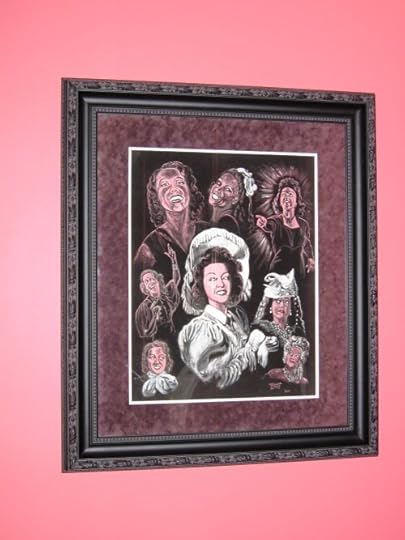
Switch: A Magazine of Microfiction, Editor Elizabeth R. George, published the story I wrote when this painting was demanding my attention. It hangs to the left of my desk . . . . This micro story, “Ethel Merman, American Treasure, May Have Expressed Regret,” allowed me to channel my inner Ethel as it’s Ethel talking to an interviewer.
The story is the 3rd one down.
July 16, 2025
“What Would Grandma Do” at LatinosUSA – English Edition
Did you have a wonderful grandmother? This fiction story is based on mine.
My story “What Would Grandma Do” is up at LatinosUSA -English Edition.
https://latinosenglishedition.wordpress.com/2025/07/16/what-would-grandma-do-by-luanne-castle/
July 14, 2025
Judy Kronenfeld on her Memoir _Apartness_ and Her Identity as a Scholar Poet, Part 2
3: I can’t tell you how much I love your poems. They are so honest, bare-faced, and loving. I’d like to share some lines from “Yiddish Kisses” here:
At your luncheon table
in the dementia wing, you’ve clasped
both my hands like prayer
times two above the soup.
Looks like broccoli-cheese, something
inedible. On our right,
a glowering resident twists away
from the looming spoon. Again you touch
my hand to your lips, then deposit
another wet word juicily
on my cheek—not quite missing
my ear—as if to speak
my nickname, katchkele. The papery
dowager on our left tremors down
her spoon and stares: envy? desire?
disgust?
Has your poetry writing style changed over the years? If it has, can you describe the movement and how you think it occurred? Also, I have a theory that a lot of poets who write other genres, as you do, feel in their hearts they are poets first. Do you feel that way? If so, how does that affect your other writing?
JK: I don’t think my poetry writing style has changed enormously over the years. I like imagery and metaphor, I like using sound to knit together a poem (not done consciously!), I like beauty—in a sense—for beauty’s sake. However, the ways in which I can put myself in a position to create imagery, linking sounds, and beauty have perhaps shifted a bit. When I was younger, and when I was teaching creative writing, incidents and subjects frequently suggested themselves fairly directly as starting points. I was engaging with writing students—which made structural, thematic, tonal poem possibilities occur frequently in response to my own experiences—even if I often had to wait for vacations to find the time to write. I was engaging with my elderly parents, who had moved out to my town from the East coast; our kids were still around, or, in college, but coming home for vacations. We camped with friends. We had more local friends. At this point, our lives are more circumscribed. More doctors, fewer living friends, kids and grandkids on the opposite coast, etc. etc. There are fewer pressing, subjects that drop into my lap. Or the ones that do (those doctors, say!) are clearly not going to help me create poems I want to write. In a sense, I have to court subjects for poems. For this reason, I’ve come to love the process involved in ekphrastic writing, although I don’t only write ekphrastic poems. I still feel the pull of Hopper, whose work still attracts so very much ekphrasis, and most certainly of Vivian Maier, whose photos capture my birth city, New York, during my childhood and adolescence. If I look at a Hopper painting or a Maier photo that attracts me, I don’t know what my subject is at all, until I let it emerge, slowly, from my response to what I see. I am delightfully surprised. And yes, revived memory of aspects of my early life is often crucial in this process.
Yes, I feel in my heart that I am a poet first. In a way, the process of writing a successful poem is more mysterious and harder that the process of writing a successful piece of creative nonfiction or memoir. But poems are usually short. And they can so easily be put away for a time, allowing the poet to see them so much more clearly afterwards. So one can have many poems in various stages of repair and disrepair to work on at one time (nose-to-the-grindstone attention is usually much less effective than a frequent glancing look, at least for me). I might write a brief essay in part for the pleasure of exercising sentence rhythms rather than line or poem rhythms. Or, if life circumstances so conspire, decide to use the longer personal essay to explore and think about an experience. But especially if my time is limited, I will always come back to the gratifying mysteries of writing poems.
4: Finally, Judy, our country’s sense of Jewishness has changed a great deal from the 1960s and 1970s when Philip Roth, Saul Bellow, and Isaac Bashevis Singer were literary greats. I remember skipping class and reading these books in the library instead. In fact, one of my areas of focus as a scholar early on was Jewish-American literature. But I could already see things changing. Those were all men writing from their own perspectives, for one thing. Then Tillie Olsen, Grace Paley, and Cynthia Ozick, among others, began to add their voices. But fast forward to now, and very few write any longer from a Jewish cultural point. Young people have no idea what it was like for eastern European Jewish immigrants and their children. You have published a new book which shares that experience, and I am grateful for it. I’d love for you to sum up what you hope readers take away from your childhood experience, that of your parents adjusting to American culture, and how you handled the cultural difference that naturally evolved between you and your parents.
JK: In some ways my family experience makes me think of Jewish-American writing of a period even earlier than that of Philip Roth, Bellow and Singer. Henry Roth, for example, in Call It Sleep. Another writer just a little earlier than Roth and Bellow, who often spoke to me, particularly of the sometime dreariness of lower middle-class life in the boroughs, was Bernard Malamud, in The Assistant, for example—one of his books without any magical realism, if I am recalling it correctly. There are quite a few Jewish novelists now (including Allegra Goodman, Nathan Englander, Rebecca Goldstein) but the angst of assimilation, the immigrant experience, are perhaps less salient subjects. And more write from within Jewish community and practices.
Self-representation to the “other,” particularly to the American-born, was such a complex, fearful and fraught thing for an immigrant like my mother. Perhaps the female parent, in an era in which women were even more restricted than now, less able to chart their own lives, was more vulnerable. Perhaps those with more education or indeed with more money were less fearful. My mother—maybe like other immigrants who don’t feel they fit in—always wanted the “other” to think her life, her family, her child, were all perfectly “rosy.” The immigrant is not comfortable enough to reveal her true situation, whatever it may be, to Americans. Perhaps it’s too dangerous to do so.
I suspect this self-protective self-presentation was related to being European-born and Jewish in the 20th century (or the late 19th). Anti-Semitism, pogroms, everything that led to the Holocaust, even if one escaped that horror—how could one not be fearful and calculated in how one presented the self? My mother’s degree of protectiveness probably varied somewhat with the environment and group she was in. When my parents moved from a town just outside New York City to my town in California, they were for the first time in their American lives living as a really tiny minority in Christian America. Even when she was in the hospital in her old age, and at least temporarily seeming to lose her mind, my mother tried to disguise her real self—a Jewish woman who kept kosher. She could not eat the “seafood” (containing shellfish) on the hospital menu, but she would not reveal why; she insisted she was “vegetarian.” It’s really possible that her nurse, as I recall, would not have understood my mother’s truth.
As a small, self-protective minority in a Gentile world, Jews like my immigrant mother also feel or felt particularly vulnerable to any shanda, that is, shame, disgrace, or scandal—that could embarrass them in their own group, or could feed Gentile stereotypes of the Jews. A Shanda could be something minor like a husband yelling at his wife in an argument (Sha! The neighbors!) or something major, like a child’s emotional illness (one of my aunts went from doctor to doctor until she found one who pronounced her child wasn’t suffering from such a disorder).
Being a child of parents of modest means and modest education necessarily meant being upwardly mobile, wanting to rise higher in the social hierarchy than my folks, which they surely desired for me as well, although they certainly wanted to improve their circumstances, too. Class embarrassment and ethnic minority embarrassment felt closely related to me as a child and adolescent in my parents’ household. Getting ahead or helping your American child get ahead involved a certain amount of “putting on the dog,” for my mother, in particular, that is, trying to look more cultured than she was, as well as, for both parents, deliberate ingratiation with the American “other.” But it could also involve crouching low, tucking in one’s tail, avoiding eye contact, submitting to the alpha dog.
My mother probably overwhelmed the matrons of the Smith College Club of New York—who interviewed me (us?) in our three-room apartment for a possible scholarship, with a lavish display of fruit, cake, cookies and coffee—though they kept mum. She also spoke to them in what she fancied a “genteel” way. But when I had to go to Smith for my on-campus interview she deputized my favorite uncle’s wife, her American-born sister-in-law, to accompany me, because she knew enough to mistrust her own heavily Yiddish-German-accented English, maybe even sensed her untameably bushy hair might be a strike against me.
A form of calculated self-presentation and ingratiation was even necessary at the doctor’s; my mother flattered hers, and minimized the severity of her symptoms, so that he would not find anything requiring too onerous treatment. (I can’t not feel sympathy for this! It’s so easy to be over-medicalized.)
Putting on the dog—the thing I found so uncomfortable when my mother did it, in a sense misrepresenting herself—nevertheless was kind of what I had to do in the hierarchical social and educational world I wanted to rise in. (My Manhattan high school even helped by providing speech classes to eradicate Bronx and Brooklyn accents.) One form it took was being more effusively grateful for granted opportunities (e.g. that scholarship to Smith), than I felt was concordant with my self-respect. But such behavior was necessary—as immigrants found out. Ingratiation worked. A blasé or cool attitude is much easier to affect when you’re content with your social status. My mother’s fear of being recognized as “different” and her instinct to hide that difference speaks to the history of the world she came from—but also to the angst of many minorities in an America always suspicious of them, in which they have to work to gain their acceptance.
Perhaps all immigrant parents embarrass their first-generation children at one time or another. Perhaps one can only accept the embarrassing and less cultured aspects of one’s parents’ behavior after one has escaped them. Even if not being able to speak honestly about the self was an understandable and necessary part of the immigrant’s self-presentation, being able to speak honestly is required for the writer. Yet, New Criticism seemed to this first-generation child of immigrants to valorize poetry that was in itself almost a version of putting on the dog: controlled, elegant, willed into being out of a disinterested desire to create a perfect artifact. Like my mother or father giving the rosiest pictures of themselves and their family, unable to trust American strangers with their truths, I could not at first reveal the shanda of my family’s very modest means, or my mother’s superstitious spitting poo poo and saying kinehora (“no evil eye”) when someone praised her American child. I had to learn that my writing could be sparked by the very vulnerabilities I thought might keep me from it. It was necessary to stop feeling this impediment to open the floodgates.
In closing, I must assert how dedicated my parents were to their only child, how incredibly hard and unselfishly they worked so that my future would be better than theirs. And how, in fact, my mother, with her limited education, insisted that I have a nose-to-the-grindstone approach to school work, which, finally, contributed to a certain stick-to-itiveness that has allowed me to reach personal goals. Immigrants who come directly out of threatening or difficult situations have a huge drive to better themselves and their children’s lives. But thankfully, my folks never pushed this “English major” to move towards “Business” or “Economics”— something “practical.”
Author bio:
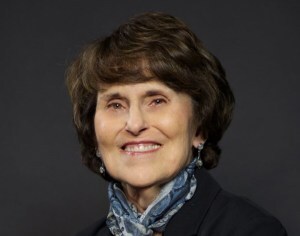
Judy Kronenfeld’s six full-length books of poetry include If Only There Were Stations of the Air (Sheila-Na-Gig Editions, 2024), Groaning and Singing (FutureCycle, 2022), Bird Flying through the Banquet (FutureCycle, 2017), Shimmer (WordTech, 2012), and Light Lowering in Diminished Sevenths, 2nd edition (Antrim House, 2012)—winner of the 2007 Litchfield Review Poetry Book Prize. Her third chapbook, Oh Memory, You Unlocked Cabinet of Amazements! was released by Bamboo Dart Press in June, 2024. Her poems have been published by such journals as Cider Press Review, DMQ Review, Gyroscope Review, MacQueen’s Quinterly, New Ohio Review, Offcourse, One (Jacar Press), One Art, Rattle, Sheila-Na-Gig, Valparaiso Poetry Review, and Verdad, and four dozen of them have appeared in anthologies. She is a four-time Pushcart Prize nominee, and has also been nominated for Best of the Net. Judy has also published criticism, including King Lear and the Naked Truth (Duke, 1998), short stories, and creative nonfiction. Apartness: A Memoir in Essays and Poems, was published by Inlandia Books in February, 2025.
July 10, 2025
Judy Kronenfeld on her Memoir _Apartness_ and Her Identity as a Scholar Poet, Part 1
Today I am introducing poet and writer Judy Kronenfeld. Although we didn’t know each other at the time, Judy and I were at the University of California, Riverside, at the same time–Judy taught there when I was a grad student.
Here is a beautiful poem Judy published in Sheila-Na-Gig, “Blue Corduroy Baseball Cap.”
Judy has recently published a wonderful memoir comprised of prose and poetry called Apartness. Here is the book description:
Through a collection of honest yet often humorous essays and complementary poems, Apartness: A Memoir in Essays and Poems grapples with the feeling of unbelonging as a first-generation Jewish-American woman from an immigrant family in a primarily Protestant nation. Kronenfeld illuminates a sense of divide between herself and the world around her with graceful vulnerability and truthful ambivalence as she reckons with religion, social class, and aging.
Apartness is for anyone who has ever felt left out or struggled to find home.
My addition to the above description is that I think it’s a book for everyone.
My interview of Judy is in two parts. Today I am posting part 1 and next Monday I will post part 2 and will link back to this post. My questions are in italics; Judy’s responses are in Roman type. Here is part 1, which consists of two questions and answers:1: Judy, you are a scholar and a poet/writer, two identities that have often warred with each other. When I was graduating with my PhD a fellow graduate student who knew I wanted to return to poetry told me that Sharon Olds said she was going to forget everything she learned (in grad school) so she could write poetry. The reference I found to a similar quote by Olds is from the Writers Almanac: “So what I said was something like: ‘Give me my own poems and I’ll give up everything that I’ve learned.’” https://writersalmanac.publicradio.org/index.php%3Fdate=2011%252F11%252F19.html Her point was that she had learned the impersonal New Critical way of reading poetry (aka literature) and wanted to write intimate poetry fresh from personal experience, in other words autobiographical. As you know and write about in your book, New Criticism doesn’t allow the reader to take the writer’s own life into consideration. And this mentality permeated the landscape throughout the 40s, 50s, and 60s when poets like Sylvia Plath began to take it apart. You were steeped in New Criticism, yet you wanted to write poems based on your own emotions and experience. How did you weave those two aspects of yourself—creative and scholar–into one? Or did you have to keep them separate and if so do you feel as if you have two minds?
JK: For much, but far from all of my adult life, I have been involved with producing either scholarship or creative work—most often poetry, but also creative nonfiction and some short fiction. But I have also taught literature and criticism while trying to write creatively, or done scholarly research and writing, while teaching creative writing! Talk about liminality! And yes, it certainly can feel as if one is participating in divided and distinguished worlds. Yet that liminality may also foster “a disinclination to work within institutionalized frameworks of thought,” as I say in the preface to my critical and historical book on King Lear.
I’ve tended to be something of a muckraker in response to the limitations of various academic approaches to literature. I was shocked at the almost religious “New Critical” shunning of historical and social context in my first English seminar (on the English novel) as an undergraduate, for example, and hoped to correct it in my own critical work. And I was skeptical (in a way that ultimately led to some of the understandings that underpin my book King Lear and the Naked Truth) of the simplistic “old historical” paradigm used as a heuristic for examining 17th century literature by one of my English professors in graduate school. He put “Anglicans” in one box labeled something like “appropriately or decently dressed” and “Puritans” in another labeled “the naked truth.” And this governing polarity was expected to illuminate content and form in a great deal of literature. My lucky New Critically close reading of Saussure in a seminar on Structuralism (taught by my anthropologist husband in 1972) gave me an understanding of contrast and reference in language that illuminated such matters as Reformation controversy on the appropriate “clothing” or “dress” in church services. “In short,” to quote my book, “the Reformation controversialists . . . all claim . . . to be as clothed and naked as they ought to be. . . . [S]hared contrasts and abstractions concerning appropriate and inappropriate uses of clothing permit controversialists to ‘talk the same language,’ even though they may not mean the same things at all” (p.67). Their specific referents for their abstract terms are what one needs to look at. What is an example of “comely” or “decent” clothing in the church? What is not?
To try to summarize a crucial point of my very long and rather complex book of criticism here is a bit insane. But it serves to illustrate, perhaps, that my desire to deeply understand the history, culture, and language in and surrounding literature I love has been important for me, even if I have not written on early modern literature since my book on Lear was published in 1998 (with the exception of a handful of book reviews from 1998 to 2001). So much of my self was deeply invested in criticism; I had to “say goodbye” to it in an emotionally and intellectually meaningful and public way by pushing myself to complete this very comprehensive critical book which makes use of everything I knew and learned about language and the religious culture of Shakespeare’s time. And I must say, to read any part of it again, after many years teaching creative writing until my retirement, and even more years writing poetry, is to acquaint myself with a mind reclaimable but somewhat foreign.
New Criticism, especially when I was an undergraduate, seemed to enshrine a view of creative writing as accomplished quite coolly and impersonally, perhaps best by a social elite, and not by ethnic minorities, or, indeed, very much by women. Yet the secular and religious poetry of John Donne and the religious poetry of George Herbert, for example, were passionate! And New Critical pedagogy also encouraged the student to give herself to such poetry, to live with its sounds and rhythms, to take such poems into herself. At the same time, this Jewish girl had to process such poems intellectually, which meant understanding enough of Christian theology to grasp the speaker’s emotions in a way fully related to his words. I was moved (even if not converted), perhaps because the course I took in the Metaphysicals as an undergraduate allowed me to concentrate fully and thoroughly on lyric poetry of a particular historical moment, for the first time. I was in love with lyric poetry and also with the leap across time involved in understanding it.
This experience of slow emotional processing of poems, combined with analytical and intellectual understanding, deposited the poems in my mind and heart in a lasting way, I found. Something I had deeply felt and analytically absorbed, for example, the sound of a line like “Oh! of thine only worthy blood”—in Donne’s sonnet “If poisonous minerals, and if that tree”—whose rhythm and wailing long o’s contrast with the sound of immediately preceding lines, could subliminally affect something unrelated I was writing years later. I think it’s important for those who want to write poetry to have this combined experience of emotional and intellectual understanding of poems when they begin to study. It was an experience that affected my own teaching of creative writing. I think analysis deposits the words read along with the emotional reaction one has to them in the writer’s mind in a more lasting way than emotional reaction alone.
2: Your essays—and I hate to call them essays because that word has always conjured up the boring genre of literature I didn’t want to read in grad school. Give me poetry, give me novels, or for teaching even give me drama so the class can read aloud. At the time, there was nothing called creative nonfiction, so everything else was called an essay. And I notice you call your pieces essays, but they are exciting and filled with fascinating cultural and historical details, emotional resonance, and an ability to straddle both a perceived mainstream American culture and your own ethnic upbringing that creates a tone of loving humor. Each essay on its own is a wonderful “article” that feels so satisfying to this reader. Taken together, they create an autobiographical feel as they are the archival creation of a life. Have you been writing essays as long as you have poetry? How do you know when a particular image or memory will work best in a poem or an essay? Did writing scholarly essays help you in writing creative essays such as those in the book?
JK: I haven’t been writing personal essays/creative nonfiction as long, or as frequently as I’ve written poetry. But I have kept private diaries or journals intermittently since adolescence and have quite a collection of these. In the last decade or so, I have slacked off. There were never obligatory daily entries (even weekly or monthly ones). I wrote when I needed to describe a new environment, or record a complex, disturbing or confusing experience, or indulge in a fantasy, or release anger or distress—really for any reason involving some sort of burden of emotion and/or thought relieved by the loops and glide of a pen in the hand. It wasn’t until the complex experience recounted in “Death and Belief” that I tried to deal in a public voice with a multi-layered experience that, as it turned out, shined a light on some central conundrums of my life. Once I had done this, it became possible to do it again. Writing scholarly essays was really different from writing these personal memoir essays. One has many sources to organize and credit, an argument to construct that relates to current critical paradigms, i.e. speaks in the current critical language of the academic institution of “English,” so it can be understood by academicians, yet provides something new as well. The task of organizing is definitely labor-intensive. In contrast, writing the essays that comprise Apartness (which I did not originally write with the idea of combining them into a book) was in many ways more spontaneous, indeed, easier (although that definitely does not mean that I did not revise!). I had written stories and published a number of them before I began writing these memoir essays which can share narrative arcs, characters, and dialogue, with fiction. However, the experience of learning to organize a lot of material is always a useful one, whether for the critical or the personal essay, though the materials are different.
Memory has long been an essential aspect of my poetry, perhaps because I returned to writing poetry, and first dedicated myself to the process in early middle age, when I was already able to look back on so much life. I don’t think there’s anything intrinsic to a particular image or memory that makes it work better in a poem or an essay. But essays are, of course, usually more discursive, so there has to be enough meat to the memory and the experience to sustain longer, perhaps more multi-faceted consideration. Both essays and poems have elements of showing, rather than telling, but a poem’s approach to a memory may be more glancing—even if only because it contains fewer words. A few of the shorter pieces included in Apartness, like “Blue Bowl of Sky,” are probably more like what has sometimes been called “lyric essay.” And the line between that and “prose poem” (“Resident Dead,” for example, was originally published in a collection of prose poems) might be pretty fuzzy.
Watch for part 2 on Monday!
Author bio:
Judy Kronenfeld’s six full-length books of poetry include If Only There Were Stations of the Air (Sheila-Na-Gig Editions, 2024), Groaning and Singing (FutureCycle, 2022), Bird Flying through the Banquet (FutureCycle, 2017), Shimmer (WordTech, 2012), and Light Lowering in Diminished Sevenths, 2nd edition (Antrim House, 2012)—winner of the 2007 Litchfield Review Poetry Book Prize. Her third chapbook, Oh Memory, You Unlocked Cabinet of Amazements! was released by Bamboo Dart Press in June, 2024. Her poems have been published by such journals as Cider Press Review, DMQ Review, Gyroscope Review, MacQueen’s Quinterly, New Ohio Review, Offcourse, One (Jacar Press), One Art, Rattle, Sheila-Na-Gig, Valparaiso Poetry Review, and Verdad, and four dozen of them have appeared in anthologies. She is a four-time Pushcart Prize nominee, and has also been nominated for Best of the Net. Judy has also published criticism, including King Lear and the Naked Truth (Duke, 1998), short stories, and creative nonfiction. Apartness: A Memoir in Essays and Poems, was published by Inlandia Books in February, 2025.
Judy Kronenfeld on her memoir Apartness and Her Identity as a Scholar Poet, Part 1
Today I am introducing poet and writer Judy Kronenfeld. Although we didn’t know each other at the time, Judy and I were at the University of California, Riverside, at the same time–Judy taught there when I was a grad student.
Here is a beautiful poem Judy published in Sheila-Na-Gig, “Blue Corduroy Baseball Cap.”
Judy has recently published a wonderful memoir comprised of prose and poetry called Apartness. Here is the book description:
Through a collection of honest yet often humorous essays and complementary poems, Apartness: A Memoir in Essays and Poems grapples with the feeling of unbelonging as a first-generation Jewish-American woman from an immigrant family in a primarily Protestant nation. Kronenfeld illuminates a sense of divide between herself and the world around her with graceful vulnerability and truthful ambivalence as she reckons with religion, social class, and aging.
Apartness is for anyone who has ever felt left out or struggled to find home.
My addition to the above description is that I think it’s a book for everyone.
My interview of Judy is in two parts. Today I am posting part 1 and next Monday I will post part 2 and will link back to this post. My questions are in italics; Judy’s responses are in Roman type. Here is part 1, which consists of two questions and answers:1: Judy, you are a scholar and a poet/writer, two identities that have often warred with each other. When I was graduating with my PhD a fellow graduate student who knew I wanted to return to poetry told me that Sharon Olds said she was going to forget everything she learned (in grad school) so she could write poetry. The reference I found to a similar quote by Olds is from the Writers Almanac: “So what I said was something like: ‘Give me my own poems and I’ll give up everything that I’ve learned.’” https://writersalmanac.publicradio.org/index.php%3Fdate=2011%252F11%252F19.html Her point was that she had learned the impersonal New Critical way of reading poetry (aka literature) and wanted to write intimate poetry fresh from personal experience, in other words autobiographical. As you know and write about in your book, New Criticism doesn’t allow the reader to take the writer’s own life into consideration. And this mentality permeated the landscape throughout the 40s, 50s, and 60s when poets like Sylvia Plath began to take it apart. You were steeped in New Criticism, yet you wanted to write poems based on your own emotions and experience. How did you weave those two aspects of yourself—creative and scholar–into one? Or did you have to keep them separate and if so do you feel as if you have two minds?
JK: For much, but far from all of my adult life, I have been involved with producing either scholarship or creative work—most often poetry, but also creative nonfiction and some short fiction. But I have also taught literature and criticism while trying to write creatively, or done scholarly research and writing, while teaching creative writing! Talk about liminality! And yes, it certainly can feel as if one is participating in divided and distinguished worlds. Yet that liminality may also foster “a disinclination to work within institutionalized frameworks of thought,” as I say in the preface to my critical and historical book on King Lear.
I’ve tended to be something of a muckraker in response to the limitations of various academic approaches to literature. I was shocked at the almost religious “New Critical” shunning of historical and social context in my first English seminar (on the English novel) as an undergraduate, for example, and hoped to correct it in my own critical work. And I was skeptical (in a way that ultimately led to some of the understandings that underpin my book King Lear and the Naked Truth) of the simplistic “old historical” paradigm used as a heuristic for examining 17th century literature by one of my English professors in graduate school. He put “Anglicans” in one box labeled something like “appropriately or decently dressed” and “Puritans” in another labeled “the naked truth.” And this governing polarity was expected to illuminate content and form in a great deal of literature. My lucky New Critically close reading of Saussure in a seminar on Structuralism (taught by my anthropologist husband in 1972) gave me an understanding of contrast and reference in language that illuminated such matters as Reformation controversy on the appropriate “clothing” or “dress” in church services. “In short,” to quote my book, “the Reformation controversialists . . . all claim . . . to be as clothed and naked as they ought to be. . . . [S]hared contrasts and abstractions concerning appropriate and inappropriate uses of clothing permit controversialists to ‘talk the same language,’ even though they may not mean the same things at all” (p.67). Their specific referents for their abstract terms are what one needs to look at. What is an example of “comely” or “decent” clothing in the church? What is not?
To try to summarize a crucial point of my very long and rather complex book of criticism here is a bit insane. But it serves to illustrate, perhaps, that my desire to deeply understand the history, culture, and language in and surrounding literature I love has been important for me, even if I have not written on early modern literature since my book on Lear was published in 1998 (with the exception of a handful of book reviews from 1998 to 2001). So much of my self was deeply invested in criticism; I had to “say goodbye” to it in an emotionally and intellectually meaningful and public way by pushing myself to complete this very comprehensive critical book which makes use of everything I knew and learned about language and the religious culture of Shakespeare’s time. And I must say, to read any part of it again, after many years teaching creative writing until my retirement, and even more years writing poetry, is to acquaint myself with a mind reclaimable but somewhat foreign.
New Criticism, especially when I was an undergraduate, seemed to enshrine a view of creative writing as accomplished quite coolly and impersonally, perhaps best by a social elite, and not by ethnic minorities, or, indeed, very much by women. Yet the secular and religious poetry of John Donne and the religious poetry of George Herbert, for example, were passionate! And New Critical pedagogy also encouraged the student to give herself to such poetry, to live with its sounds and rhythms, to take such poems into herself. At the same time, this Jewish girl had to process such poems intellectually, which meant understanding enough of Christian theology to grasp the speaker’s emotions in a way fully related to his words. I was moved (even if not converted), perhaps because the course I took in the Metaphysicals as an undergraduate allowed me to concentrate fully and thoroughly on lyric poetry of a particular historical moment, for the first time. I was in love with lyric poetry and also with the leap across time involved in understanding it.
This experience of slow emotional processing of poems, combined with analytical and intellectual understanding, deposited the poems in my mind and heart in a lasting way, I found. Something I had deeply felt and analytically absorbed, for example, the sound of a line like “Oh! of thine only worthy blood”—in Donne’s sonnet “If poisonous minerals, and if that tree”—whose rhythm and wailing long o’s contrast with the sound of immediately preceding lines, could subliminally affect something unrelated I was writing years later. I think it’s important for those who want to write poetry to have this combined experience of emotional and intellectual understanding of poems when they begin to study. It was an experience that affected my own teaching of creative writing. I think analysis deposits the words read along with the emotional reaction one has to them in the writer’s mind in a more lasting way than emotional reaction alone.
2: Your essays—and I hate to call them essays because that word has always conjured up the boring genre of literature I didn’t want to read in grad school. Give me poetry, give me novels, or for teaching even give me drama so the class can read aloud. At the time, there was nothing called creative nonfiction, so everything else was called an essay. And I notice you call your pieces essays, but they are exciting and filled with fascinating cultural and historical details, emotional resonance, and an ability to straddle both a perceived mainstream American culture and your own ethnic upbringing that creates a tone of loving humor. Each essay on its own is a wonderful “article” that feels so satisfying to this reader. Taken together, they create an autobiographical feel as they are the archival creation of a life. Have you been writing essays as long as you have poetry? How do you know when a particular image or memory will work best in a poem or an essay? Did writing scholarly essays help you in writing creative essays such as those in the book?
JK: I haven’t been writing personal essays/creative nonfiction as long, or as frequently as I’ve written poetry. But I have kept private diaries or journals intermittently since adolescence and have quite a collection of these. In the last decade or so, I have slacked off. There were never obligatory daily entries (even weekly or monthly ones). I wrote when I needed to describe a new environment, or record a complex, disturbing or confusing experience, or indulge in a fantasy, or release anger or distress—really for any reason involving some sort of burden of emotion and/or thought relieved by the loops and glide of a pen in the hand. It wasn’t until the complex experience recounted in “Death and Belief” that I tried to deal in a public voice with a multi-layered experience that, as it turned out, shined a light on some central conundrums of my life. Once I had done this, it became possible to do it again. Writing scholarly essays was really different from writing these personal memoir essays. One has many sources to organize and credit, an argument to construct that relates to current critical paradigms, i.e. speaks in the current critical language of the academic institution of “English,” so it can be understood by academicians, yet provides something new as well. The task of organizing is definitely labor-intensive. In contrast, writing the essays that comprise Apartness (which I did not originally write with the idea of combining them into a book) was in many ways more spontaneous, indeed, easier (although that definitely does not mean that I did not revise!). I had written stories and published a number of them before I began writing these memoir essays which can share narrative arcs, characters, and dialogue, with fiction. However, the experience of learning to organize a lot of material is always a useful one, whether for the critical or the personal essay, though the materials are different.
Memory has long been an essential aspect of my poetry, perhaps because I returned to writing poetry, and first dedicated myself to the process in early middle age, when I was already able to look back on so much life. I don’t think there’s anything intrinsic to a particular image or memory that makes it work better in a poem or an essay. But essays are, of course, usually more discursive, so there has to be enough meat to the memory and the experience to sustain longer, perhaps more multi-faceted consideration. Both essays and poems have elements of showing, rather than telling, but a poem’s approach to a memory may be more glancing—even if only because it contains fewer words. A few of the shorter pieces included in Apartness, like “Blue Bowl of Sky,” are probably more like what has sometimes been called “lyric essay.” And the line between that and “prose poem” (“Resident Dead,” for example, was originally published in a collection of prose poems) might be pretty fuzzy.
Watch for part 2 on Monday!
Author bio:
Judy Kronenfeld’s six full-length books of poetry include If Only There Were Stations of the Air (Sheila-Na-Gig Editions, 2024), Groaning and Singing (FutureCycle, 2022), Bird Flying through the Banquet (FutureCycle, 2017), Shimmer (WordTech, 2012), and Light Lowering in Diminished Sevenths, 2nd edition (Antrim House, 2012)—winner of the 2007 Litchfield Review Poetry Book Prize. Her third chapbook, Oh Memory, You Unlocked Cabinet of Amazements! was released by Bamboo Dart Press in June, 2024. Her poems have been published by such journals as Cider Press Review, DMQ Review, Gyroscope Review, MacQueen’s Quinterly, New Ohio Review, Offcourse, One (Jacar Press), One Art, Rattle, Sheila-Na-Gig, Valparaiso Poetry Review, and Verdad, and four dozen of them have appeared in anthologies. She is a four-time Pushcart Prize nominee, and has also been nominated for Best of the Net. Judy has also published criticism, including King Lear and the Naked Truth (Duke, 1998), short stories, and creative nonfiction. Apartness: A Memoir in Essays and Poems, was published by Inlandia Books in February, 2025.
July 9, 2025
Flash Fairy Tale “Magic” at LatinosUSA – English Edition
Do you like fairy tales and fantasy? If so, you might like my flash story, “Magic.” Editor Juan Re Crivello just published it at LatinosUSA – English Edition.
Note: Magic is something special that is often found in fairy tales and fantasy stories. In this story, magic is “personified” as a horse.
If you want to leave a comment, please do so after the story on the journal’s site. Thank you for reading!!!!!! and I hope you like it.
[image error]You can take a horse to water by Graham Horn is licensed under CC-BY-SA 2.0","created_timestamp":"1336906886","copyright":"","focal_length":"13.7","iso":"100","shutter_speed":"0.0025","title":"You can take a horse to water","orientation":"0"}" data-image-title="3169288_4304d796" data-image-description="" data-image-caption="
You can take a horse to water by Graham Horn is licensed under CC-BY-SA 2.0
" data-medium-file="https://i0.wp.com/writersite.org/wp-c..." data-large-file="https://i0.wp.com/writersite.org/wp-c..." class="size-medium wp-image-20323" src="https://i0.wp.com/writersite.org/wp-c..." alt="You can take a horse to water" width="300" height="220" srcset="https://i0.wp.com/writersite.org/wp-c... 300w, https://i0.wp.com/writersite.org/wp-c... 640w" sizes="(max-width: 300px) 100vw, 300px" />You can take a horse to water by Graham Horn is licensed under CC-BY-SA 2.0
June 27, 2025
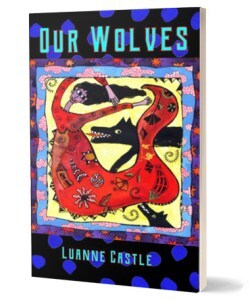
Interviewed by LatinosUSA about Poetry and Our Wolves
I’m thrilled that Editor Juan Re Crivello has interviewed me for LatinosUSA-English Edition’s. Hope you like it! Here’s a link:
https://latinosenglishedition.wordpress.com/2025/06/27/the-internet-has-given-new-life-to-poetry-luanne-castle/
June 9, 2025
Sirens to Larks: Interview with Poet Rose Mary Boehm
Please meet the prolific and multidimensional poet, Rose Mary Boehm. She has graciously consented to an interview. I will give you her official bio first, but you’ll discover in her interview replies that there is so much more to Rose and her poetry than what can be discovered in a paragraph.
German-born UK national, Rose Mary Boehm lives and works in Lima, Peru. Author of two novels and ‘Tangents’, a full-length poetry collection published in the UK in 2010/2011, her work has been widely published in US poetry journals (online and print). She was three times winner of the now defunct Goodreads monthly competition and has been nominated for a Pushcart and Best of Net. Her other poetry collections are: ‘From the Ruhr to Somewhere Near Dresden 1939-1949: A Child’s Journey’; ‘Peru Blues or Lady Gaga Won’t Be Back’; ‘The Rain Girl’; ‘Do Oceans Have Underwater Borders?’; ‘Whistling in the Dark’; ‘Saudade’, and ‘Life Stuff’. A new chapbook is about to be published by Kelsay Books. Find out more about the author and her work on her website: https://www.rose-mary-boehm-poet.com/
INTERVIEW OF ROSE MARY BOEHM
I first met Rose in the Verse Virtual poetry community and journal. The journal itself is part of a community of poets that are very supportive of each other.
At the end of the interview I won’t respond because I want to leave you with how Rose ends the interview. Thank you, Rose.
I have a theory that the creative chronology of a poet is more important than the physical chronology; however, the poet is first shaped in childhood experience. Your book From the Ruhr to Somewhere Near Dresden 1939 to 1949: A Child’s Journey, is a witness to those years, but years that were intensely defined by being a German child living in Germany during WWII. The book describes the deprivation of a war fought elsewhere and on the homeland. Please share a poem from the book and tell us what you hope the book accomplishes.
Having been a young child during WWII in Germany (I had just turned seven when the War ended) will forever colour everything I do and think and feel. I have a kind of PTSD which is well controlled (even though I just cannot, CANNOT read stories and see photos of the children of Gaza without despairing completely), but I can’t help referring back to my childhood again and again in many poems.
Now that I am in the last years of my life, I am desperate that my children and their children should not experience war, and this seems increasingly unlikely, the way the wind is blowing all over the world. It makes me scared and sad.
The book, From the Ruhr to Somewhere Near Dresden 1939 to 1949: A Child’s Journey, was a bit of an exorcism, a talk with a therapist perhaps, and hopefully a message to all children who lived either this war or any other. And, if they survive, how they often find (a somewhat troubled) childhood, remember the finer points of a caterpillar rather than the next plane strafing the house, the next bomb killing your neighbours, your parents, or you… if you’ve been small enough not to understand it all. My brother, eight years older, was not so lucky.
The collection is more of a story told in free verse than individual poems, numbered only in the order of telling the story. Seen totally from the child’s point of view, told in the child’s voice. Whatever I remember I remembered in this way – once I started looking.
I think I have to use two poems to give you an idea of the contrasts (‘normal’ childhood versus little-understood horror):
Poem 5
Mother calls them ‘Christmas trees’. My brother calls them flares.
I am wrapped in a blanket, sitting on Mother’s arm.
We are on the balcony. It is nighttime. Danger time.
These ‘Christmas trees’ stay for a while, suspended in the night sky.
Now she runs with me down to the shelter. Moments later
there is the whizz, the rumble. I press my hands to my ears.
In the shelter I always lie on the sofa and trace the pattern
of the velvet cover. Maybe that man with the hoarse, loud voice
comes in these explosions and sweeps through the house,
killing everything with his breath. Black. He wears black
and he has a cape, like on the posters.
The siren won’t sound the ‘all clear’ tonight—that long, long howl
which tells us it’s alright to go back upstairs.
As during thunderstorms, the bangs come closer.
My brother looks as white as a ghost
and holds me tight. Mother comes to my other side
and holds us both. Suddenly the candles die.
Screams.
Silence.
Confusion.
Everyone speaks at once.
‘Where are the matches–must have been next door.
The Brandt’s… Must have been the Brandt’s.’
A light appears from the other side
and a figure in white. It’s Herr Brandt holding a candle.
I can’t help giggling. He’s wearing long, worn-out underpants.
Many houses are still burning.
Burning flesh stinks,
burning rubber stinks.
Death stinks.
Poem 6
I stand on the balcony. On tiptoes.
I’ll see him any minute now. The tram has
turned the corner, and it’s the tram
on which Father usually comes.
It’s a sunny afternoon
and I feel expectant and happy.
I can see his trench-coated figure,
recognize the way he walks, the way
he wears his hat. He carries his leather case
and something wrapped in paper. He probably
bought two of those flat fish with yellow spots
because it’s Friday. We always eat fish on Friday.
I am never quite sure whether it’s Friday
because he brings the fish, or whether
he brings the fish because it’s Friday.
From your poems that I have read and those I have had the pleasure of hearing you read aloud, I have taken away that you have lived through a variety of changes: lovers and husbands, having children, living in various countries, learning many languages. How do you think your “multiple lives” and languages enrich your poetry? It might help if you have a couple of quotes from your poems to illustrate your points.
Yes, Luanne, it’s been a rich and varied life, full of pain, miracles, adventures, more pain, and much, much love. There is no way I can not weave this into my poetry. What am I saying, I am weaving nothing: it ‘weaves’ me. Those memories want out, and most of the time they become poems.
I chose the following poem as an illustration where my travels did not produce ‘place poems’ but a deeply-felt incorporation of history, place, and DNA.
A Pilgrimage
In Rosh HaNicra I look across
to Lebanon. Below me is the sea.
I pick up a stone and let it bounce
against the rocks.
The Sea of Galilee cuts me
with contrition. I want to atone
for sins to which I feel fettered
by blood. The Jordan washes the dusty crust
of the Negev from my skin.
The Dead Sea lifts my burden.
Haifa receives me in a language
I understand, Bethlehem’s brittle
alliances don’t inspire. My friend rejects
the kipah and holds my hand.
And Yom Rishon is the first day.
The languages are an enrichment and sometimes a small-ish problem: with each language you learn so much more than words. You internalise different cultures, customs, religions (or interpretations of it), images, music, rhythms. That’s definitely enriching. What can make you stumble at times are words you know in one language, you can feel what they mean in its totality in your belly, but there is no way they can be directly translated into their complete components in one English word. You have to ‘write around’ that word in order to make its full, round meaning understood in the way you do.
Of course, my travels, my pains, my children have all been sources for poems in many iterations. But instead of a few quotes, I think I’d better use the title poem of my collection ‘Saudade’, a poem that is the perfect example of ‘writing around’ the meaning (as perceive by me) of the word ‘saudade’ which means so many things in Portuguese:
What is Saudade?
A moment that passes like
a paler shade of Spring,
like the knowledge of a certainty,
the vague promise of repeat.
The echo of something
which never was, a butterfly wing
that may have brushed your cheek.
Dreaming of indolence.
Expecting the first rains on dry fields,
not quite hearing the last lark before
the autumn winds, the first smell of snow,
the never-ending final summer dance.
Softest touch of his hand on yours,
the death of an infatuation.
Your evanescent youth.
A strange bliss in your longing,
fear of fulfilment. Praying
for the becalmed sea of inertia.
Celebration of absence.
You carry a sharp, merciless
switchblade made of stainless grief.
If you had to leave quickly and could only take two of your books, which would they be and why? I’m not asking which you think are the technically best collections, but the ones closest to your heart now. Do you think your feelings about any of your poems has changed over the years?
Oh my, that’s the ‘impossible’ question. Each one of my books represents an important part of me, and I can’t leave even one important part of me behind. I’d rather think that I would be allowed to grab’em all. It’s a ‘Sophie’s Choice’, if I may use such a heartrenting example for mere books (but they are my children too, in a way).
If hard-pressed, tortured, threatened with a bucket of maggots, I’d probably choose ‘The Rain Girl’ and ‘Saudade’. Still, just writing this hurts. I also need ‘Life Stuff’. But please, let us keep that very much between us.
Rose, what brought you to Peru and what is your creative life like there? What does Peru add to your poetry?
I was brought to Peru by my Peruvian husband, Luis (a Luis is affectionately known as ‘Lucho’ in Peru). I met Lucho in Madrid, where I had moved to from London, licking my wounds from a previous marriage that hadn’t made it. By the time Lucho and I got together, I was quite ‘together’ again too, or this new love adventure wouldn’t have worked. Take it from Granny: never marry on the rebound!
We stayed in Madrid for 18 years, and then took the plunge. We have now been in Lima for almost 14 years.
Peru was the first time where I lived (not just visited) a completely different planet, new language (even though I was fluent in Spanish – it’s a different Spanish here), poverty, llamas, braids, hats, Andean music, the gentlest of people as well as cheap lives easily taken over a cell phone. My book ‘Peru Blues’ was the result. I couldn’t write it now, I had to write it while I still saw everything with ‘foreign’ eyes. Over the years Peru became home, no longer an unknown country, and many things one no longer ‘sees’.
For example:
At the Seaside in Peru
Houses made from basket weave lean
into the dunes of the desert only a few meters
from the salty dance of the Pacific,
shivering in the stiff breeze.
Sand mixed with plastic and excrement,
small children crawl atop the landfill
with burlap sacks, the odd pig snuffles
between shards and pieces of iron.
A half-dead plant wrenched from the root,
reminder of what once was — unsalvageable.
Here I am, holding a small, brown hand,
sticky and bruised. Her large dark eyes
are those of a cornered deer.
Her mother turns to leave.
Contrasts
I remember lipstick smears on empty wine glasses, kisses
blown into the air, muak, muak, how good to see you,
Dahhling. There were important decisions
to be made. Go for Dior or Cacharel, and the wonder
how some women would never lose that dark-red
which ringed their mouths and made them appear
like fathomless caves, dangerous suction channels
inhaling man and mammal into Dante’s Inferno,
and the whispers behind long-nailed hands, ready
to claw and destroy, freckled breasts arching out
of low-cut silks and cashmeres, gold weighing
on bony hands. ‘Can’t be too rich or too thin,
Honey,’ that’s what the Duchess said. And now
I am watching from afar, on the screens of lies
which used to be the ‘small’ screens, how mudslides
reclaim the riverbed. The poorest build their precarious
homes there every year against all advice and the offer
of other land. My grandfather, some say, my mother, say others.
Tradition meets ignorance, and they tearfully watch again
their houses, children, wives and husbands
disappear under boulders and mud.
Please describe your current project and why it is important to you. Why is it important to readers?
One of my current projects is a chapbook called, ‘The Matter of Words’, that’ll be coming out in the autumn of this year. I LOVE words, and – as I did with ‘Saudade’ – have written poems (short ones and longer ones) around ‘difficult’ words, words that are not used in daily speech as a matter of course.
But there is a full-length manuscript that is now looking for a home. That one – I won’t mention the title or give an example poem, not to discourage potential publishers, you know how iffy they often are about ‘previously’ published or curated – is a collection of all my favourite poems written since the publication of my other books, or those that didn’t quite fit. This may well become another one I’ll sneak into my backpack when I have to leave a lot behind.
And that’s where we are, that backpack. I am 87, and where I am going in the not too distant future I won’t need a backpack, and I can only hope that my writing will not completely disappear but give some meaning, joy (or tears) to those I leave behind.