
Doranna Durgin's Blog, page 3
June 26, 2025
Heidi and Lucy Rock Cattle at the Appaloosa Youth World and Nationals
By Patty Wilber
We try to avoid complaining about rain in New Mexico, but we do try to work around it, so when the forecast was for heavy rain Tuesday prior to our 3 am departure Wednesday for the Appaloosa Youth World and National show, we decided to bring Lucy and their trailer to my house because the Tucker’s 1.5 mile unpaved driveway can become impassable when wet.
Good choice by us because they got two inches and the barn area flooded!
I only got an inch and have a much shorter packed gravel drive that was perfectly fine. Lucy loves to roll when it gets wet, so she took advantage of the weather and had a mud bath. She got to travel coated in dirt!
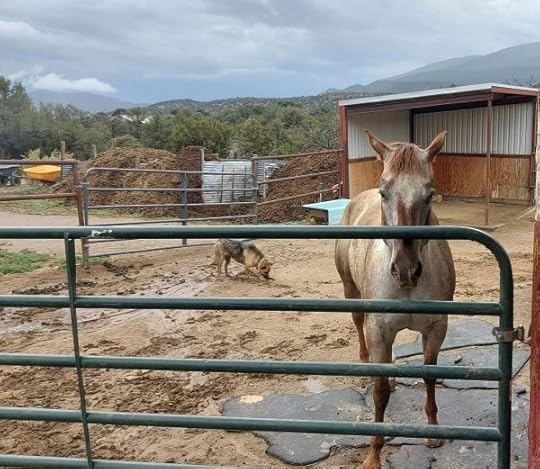
Lucy loves mud! So does Zuri (dog in the background).
It was about 550 miles to Oklahoma City, and when we arrived Wednesday afternoon, Lucy got a snack, a drink, and a well bedded stall so she could relax a little. Then she had a light work out to loosen her up, and we went over some tips for running the dry work patterns for Youth Boxing and Open Cow Horse. After that, Lucy got an outdoor shower (she has never loved the indoor wash racks) to get the mud off!
Thursday, Heidi rode in in the morning and they looked really smooth and relaxed. Our start time wasn’t projected to be until 5:30 pm, so we headed to the roping pen to cheer on our fellow New Mexican Shawn Carrel. He won four National Championships, two reserves and a fourth! And high point non-pro cattle horse!
The roping and steer dobbing finished earlier than projected so Youth Boxing got moved up from 5:30 pm to 3:30 pm.
Heidi was first in the draw. She ran in, stopped, backed, ran two beautiful circles to the right and was starting her circles to the left when a cow busted through the end gate and came charging into the arena! Not being sure what to do, Heidi gamely kept running her pattern. The judges quickly stopped her and she and Lucy calmly waited while they cow remover guy tried to get the wayward bovine out of the arena. It did not want to go and it took a good five minutes to evacuate that beast! Heidi had the choice to start her run again immediately or go to the end of the draw. She chose the end of the draw. Good choice.
This gave her a chance to catch her breath and watch. It turned out that ALL the cows were big and really high energy. They were held at the top of a ramp and when the competitors called for their cow, they ran down a ramp, burst into the arena and charged. Every time. Most riders got new cows, but the second cows were just as bad as the firsts! Heidi’s run was no exception! On her second cow, she made a good turn and then it got by, but she caught it, shaped it up, ran it back down to the correct end, and got it to start listening to her. She was the only one able to do that. She also had an excellent reining pattern and she won the class by a large margin! This was extra satisfying because last year she had a winning go with the reining and cow work but earned big penalties for opening her hand on the romal rein.
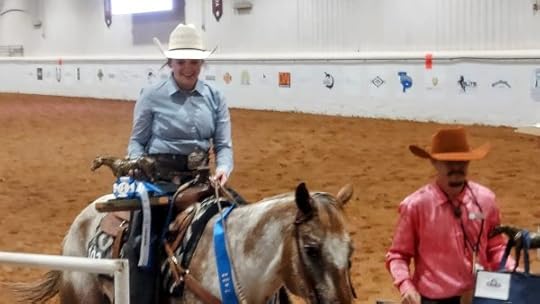
Got some loot!
We didn’t have that much time until Open Cow horse because as the winner, Lucy had to have her blood drawn for drug testing. Lucy hates needles, so we brought her to her stall and the vet had me cover her eye and I expected him to thump her neck and then insert the needle, but NO, he just hauled off and stabbed her–skillfully because he got the blood, but the surprise attack was exactly why she hates needles in the first place! Fortunately, everyone survived!
The cows were the same batch as for Youth, but seemed slightly less dramatic. Still, everyone except Heidi lost their cows and two horses had falls. That was scary. Heidi put together a solid reining pattern and a solid cattle go, earning her first place in limited open and open! Impressive!! It was pretty amazing!
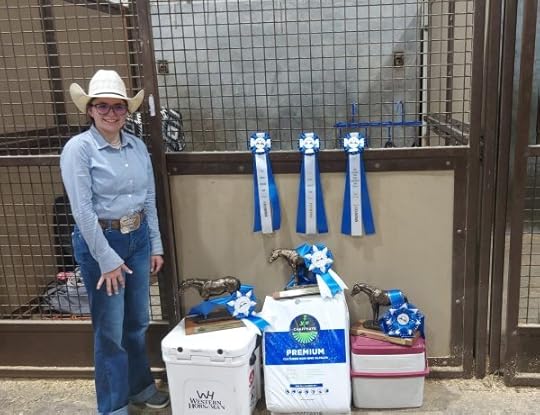
Nice array of ribbons! I am very proud of Heidi and Lucy. They earned these awards through the work they put in!
Check out this video of the first day of the show! Heidi and Lucy are in there twice!
Happy Friday! We are driving home!


June 13, 2025
Bank Robber’s Knot
By Patty Wilber
I have written about knots before, and came to the conclusion that the bowline (also known as the king of knots) was great for tying horses because although it is not a quick release, it does not tighten up when a horse sits back on it, so you can always get it undone. All the “quick release” knots I knew are worthless in an emergency because you can’t get to the knot when the horse is in the middle of a panic, and when the panic is over the quick release is too tight to release, so what’s the point?
Here is a nice video on the bowline vs. a quick release that a lot of folks use.
Another knot I sometimes use is shown below. It doesn’t tighten too much if pulled on, but it also seems easy for horses to untie. Here is a bad diagram I tried to make.

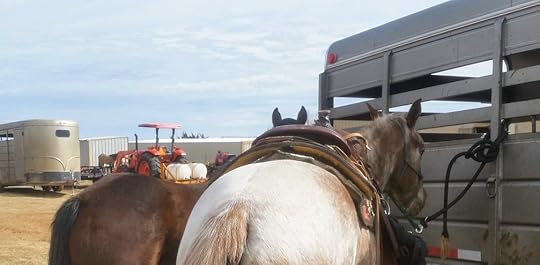
The Overhand Knot. And Lucy (R) and Birdie (L) in Clovis,
I recently stumbled across the Bank Robber’s Knot. (Also known as the Highwayman’s Knot.) This knot does not tighten up AND it is a quick release! It is my new favorite.

There are videos of this knot, but I thought this diagram was easier to follow, even though I was doing it wrong for a few days and had to review the diagram!
I still ALWAYS carry a sharp knife to cut my horse out of trouble if necessary!
A couple of other things to consider, which mostly were in the original knot post but I thought were worth repeating.
Do not tie to anything that will break. Horse sits back, thing breaks, horse runs off with broken thing chasing it. Never good.
Do not tie to anything that will move. Like a round pen panel or a two-horse trailer not hooked to a truck. Horse sits back, panel or whole round pen comes, too. Trailer tips over. All bad.
Do not tie to dead trees. Not even big ones that seem stable. They fall over. Been there. Cometa did that by pushing on the tree. He didn’t even pull back.
Do not tie so long or low the equine can get a foot over the lead rope.
Do not tie so high the animal cannot hold its head in a natural position.
Happy safe tying!
June 6, 2025
Trip Advisor: White Mountain Wilderness, Upper Bonito Dispersed Recreational Area
By Patty Wilber
The campground was good! The riding was amazing!
Me, Amber, Mary Ann and Patty S. spent the last three days horse camping at the Upper Bonito Dispersed Recreational Area in the Lincoln National Forest near Nogal and Ruidoso. This is where the trailheads for the Argentina and Bonito canyons start and lead into the White Mountain Wilderness. I had never been there and I had thought it was called Argentina Bonita.
Many thanks to Marsha Parr for tips and routes that were invaluable!
At the end of road 107, the campground has equestrian sites where you just pull over into a wide spot. Super easy for trailers. There are four sites that have a horse pen with them. There is no trailer length restriction even though one site said there was. The forest service site linked above was not at all helpful but we were able to call and get the information we needed about the campground. I found Marsha on Facebook and she and a trail rider that came into the campground Tuesday provided good trail information that allowed us to plan some fine routes.
The campground was clean, the outhouses were clean, and the campground was patrolled several times a day by uniformed people, but interestingly, often in private vehicles. The forest is in Stage II fire restrictions and our (legal) propane fire ring was checked and verified as fine. That was nice to see! This was a far cry from Jack’s Creek in the Pecos two weeks ago, which was also in Stage II. At Jack’s there were zero patrols and at least five sites with roaring fires.
The horse pens were huge, and would be great for two horses that are buddies, but our animals are not buddies, so we used three pens and highlined one animal. The pens have cement floors covered by rubber mats, but there are just four pens total. There are ample spots to park and highline should the pens be full, but mid-week, we were the only horse campers.
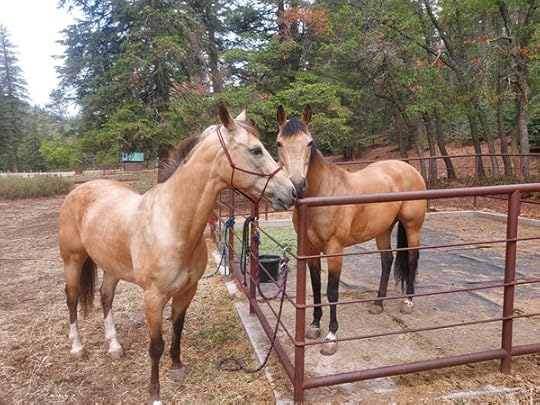
LT (outside) and Zima (inside) agreeing that the pens are nice. LT’s pen can be seen in the background with the pink bucket. It was a little farther from Zima than she wanted to be but she managed alright. On another note, I love how their coats look at this time of year!
We understood it to be a dry camp, and we brought ample water. There is a hand pump at the front of the equestrian area with non-potable water, but I couldn’t get any water to come out of it at all, after about 15 pumps. There is no electricity.
We loved the trails! They were interesting, had some challenging parts, covered varied terrain, and provided great views!
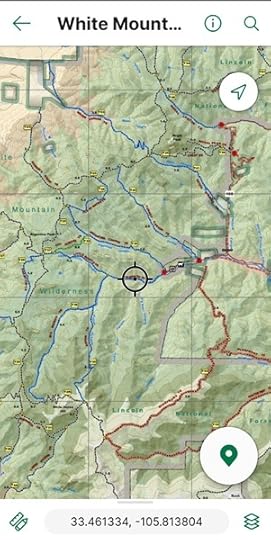
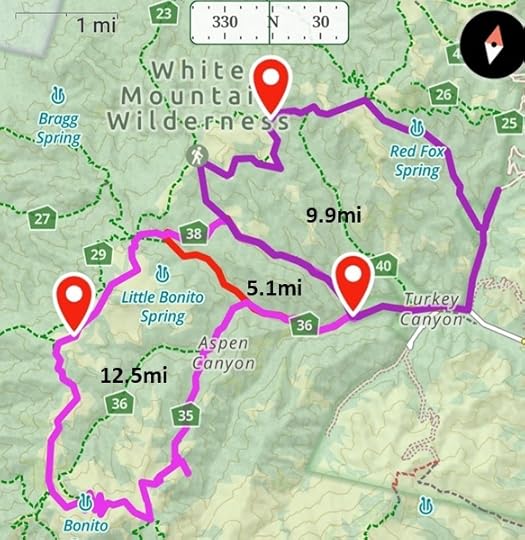
Day 1. 5.1 miles. I talked to the riders that came in and they warned of a treacherous section with a slick rock where horses had fallen on Big Bonita. It was apparently 10 feet long, was near a shear dropoff, and would be much better to go up it than down. We had planned a Big Bonita (36), Little Bonita (37), Cut Across (38), Argentina (39) loop, so we went ahead and did that, figuring we could just see what the bad spot looked like.
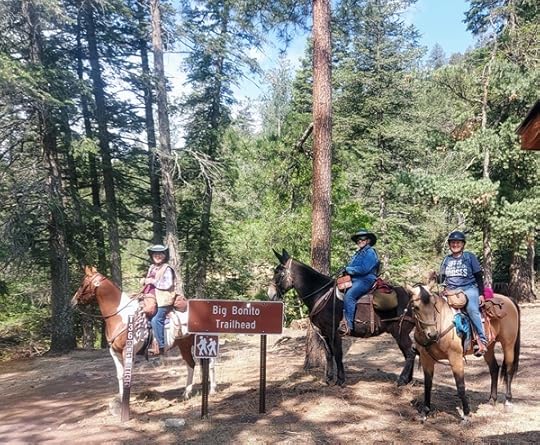
Mary Ann, Amber, and Patty S. at the trailhead at the campground.
The trail is in a forest of big ponderous and other conifers, crosses some small streams, and climbs about 900 feet to the Cut Across. The Cut Across Trail goes through a burn scar and drops steeply down to the Argentina Canyon trail. We kept looking for the treacherous spot and we couldn’t figure out where it was. No 10-foot sections of slick rock that were tough to skirt. No hundred-foot cliffs to fall off. (He did not, in his defense, actually say there was a 100-foot cliff to fall off, but that was kind of what it sounded like…)
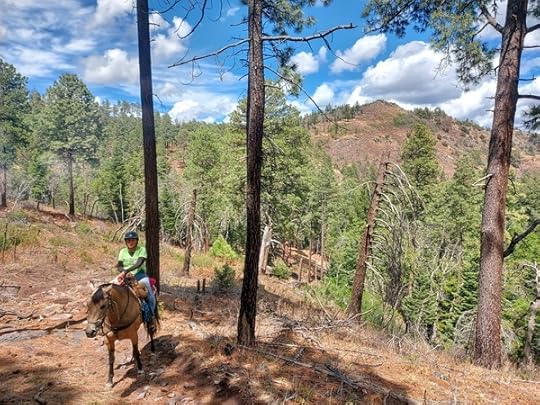
Patty S. and Zima on the Cut Across Trail, as it is dropping down to Argentina Canyon.
As we reached the Argentina Canyon, we saw a feral pig trap, which was something we had not seen before. Then we rode the few miles back to camp. A perfect first-day ride, except Amber stayed at at camp to figure out an issue with her living quarters, so she missed it!
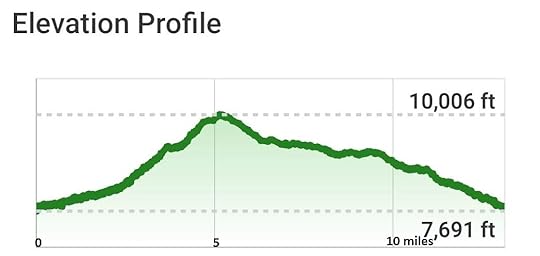
Day 2. 12.5 miles. And 4400 feet of elevation gain. Big Bonito (36) to Aspen (35) to Crest (25) to something to the Cut Across (38)–oops–meant to stay on the Crest, but got thrown off track by the sign that pointed to Argentina by way of the Cut Accross–to Argentina (39) (again).
It was a tough climb of nearly 2200 feet the first five miles! We spotted the “treacherous” section on Big Bonita! It was a smooth 1.5-foot wide slab and a 15-foot incline that one could slide off. Apparently, several had. But, it seemed obvious that one should not step on it, and it was really easy to go around. Maybe I was wearing my flamingo bucket hat when I was talking to him and he was afraid we were a bunch of yahoos!
We turned off Big Bonito on to Aspen, and we had intel that there were down trees but all were passable. Turns out there were 20 trees we would have removed if we were working. All were easy enough to step over or to get by. Aspen trail got steeper and steeper and we stopped frequently to let our steeds catch their breath.
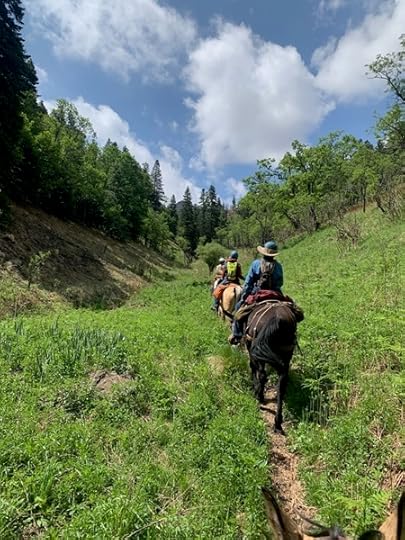
Aspen Trail, lower down. Green! Aspen. oaks, locust, doug fir, ponderosa. Beautiful! Photo by Patty S.
We climbed out of the trees and switched backed up and up across the face of a steep grassy slope. It looked daunting but as we did it, it was not as bad as it looked. As we topped out, the views were fantastic!
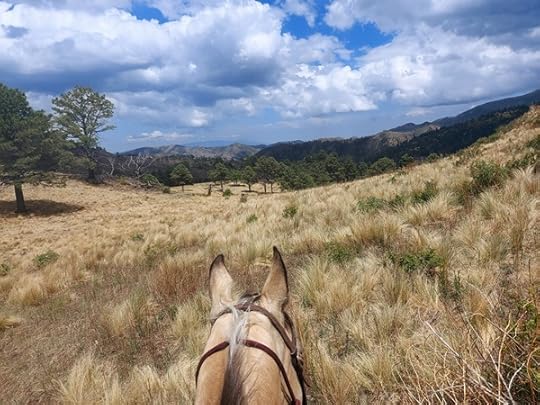
LT seems to really like her latest job as my primary backcountry horse! At 15 she is so much more settled than she was as a young cowhorse!
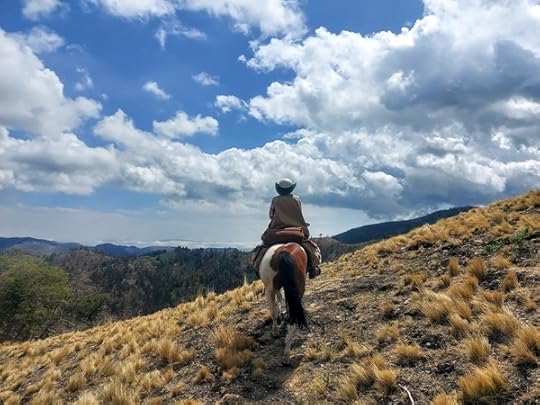
Mary Ann coming to a crucial spot!
We missed a sharp turn about here and started down a trail that started feeling a bit iffy as it was oddly narrow and had no real trail bed Also, there were a number of elk tracks but no horse prints. We stopped and pulled out All Trails (Amber) and Gaia (me) and agreed that we’d missed a sharp right. We back-tracked and found it easily–there was even a cairn, but we’d been overcome by the views!
Once back on the trail, we realized we were not done climbing and we were not done traversing the sides of the sheerish slopes. We did see a cow elk and then five bulls in velvet burst out in front of us. LT startled, but not much. She was much more disturbed by a tiny bird flying out of a bush later on.
We made Crest Trail and had to climb a bit more and then we started down. The five bulls were ahead of us and they ran straight down the steep slope you can see in the photo below. It was fun to see how they moved and kept their balance!
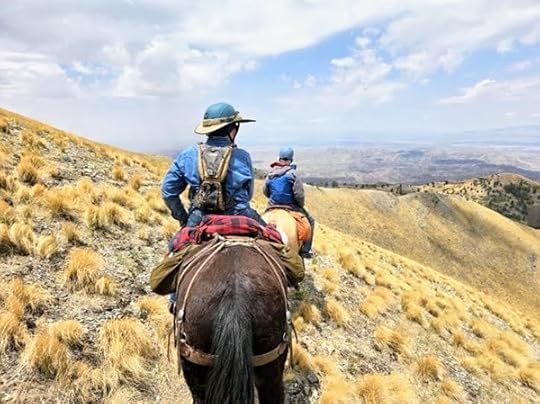
Amber and me. It was windy and a bit chilly. LT felt tired to me at this point after all that climbing. Photo by Mary Ann.
We went down some serious switchbacks (see map) and as the trail curved around there was an oak grove out of the wind that had good trees to tie and views. We enjoyed our lunch there. The bounce in LT’s step returned after lunch and we rode the Crest Trail with its views until were headed down toward the Cut Across, then Argentina and camp. A challenging, beautiful, and satisfying day!
Day 3. 9.9 miles. I had Marsha’s Equilab track, but with no cell signal I couldn’t get it to open on a map that showed the trails, so I matched the shape of the track to my map and figured out the trails. I don’t know which direction she went, but we decided to take road 107, to road 108, to Skull SpringsTrail (41) to the Crest (25) to Clear Water Trail (42) to Argentina (39). We went down Argentina every single day, but this time from the very top!
We knew that 41 was hard to find and sure enough, we missed it because there is no sign on the road and there are private property signs on either side. We pulled out the All Trails and Gaia again and found it. There did not seem to be any designated parking lot, but we were riding, so not a problem. This trail had a different set of plants. It was drier and climbed up through oak groves instead of conifers. Of course, there were nice views at the top!
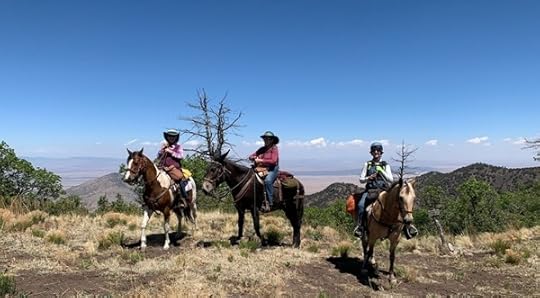
At the top of Skull Springs Trail. Mary Ann, Amber, me. In the distance you can see the black of the Malpais Lava flow that is near Carrizozo, NM. It is about 5000 years old. I thought it was called the McCartys Lava flow, but that is near Grants, NM, and is about 3000 years old. Photo by Patty S.
We followed the Crest Trail to Clear Water Trail. It followed what appeared to be the rim of an old volcano. There were what we think were old sheep pens at points where there were once springs. The water troughs were dry. The Clear Water Trail had a junction with Argentina (our favorite downward route to camp, apparently) and there was a live seep there that the equines appreciated.
We made it down by 1 pm, packed up, ate lunch, and headed home.
Another excellent adventure!
Happy Friday!
May 30, 2025
Cleared Trails Thanks to Pecos Chapter BCH!
By Patty Wilber
The Pecos Chapter of the Back Country Horseman has worked in the Manzanos and the Pecos this year and while I have only made two projects, my better half has been on all of them with 28-year-old Cometa as his mount and Penny as his pack horse. Now that he is retired, it looks like he is going to outwork me with the club for the second year in a row!
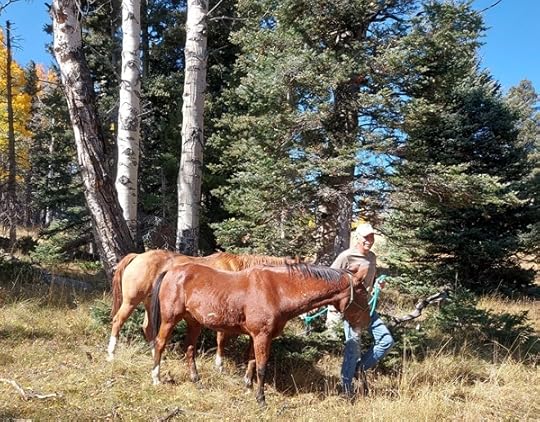
Jim with Cometa (bay, front) and Penny.
The club has had really good participation in these early projects! Starting out of the Albuquerque Trail trailhead, we cleared 4th of July to the Crest Trail, to Mosca. As well as all of Albuquerque Trail and Cerro Blanco with two teams in one day! The tree load was not as high as it has been in some years but we removed over 70 logs!
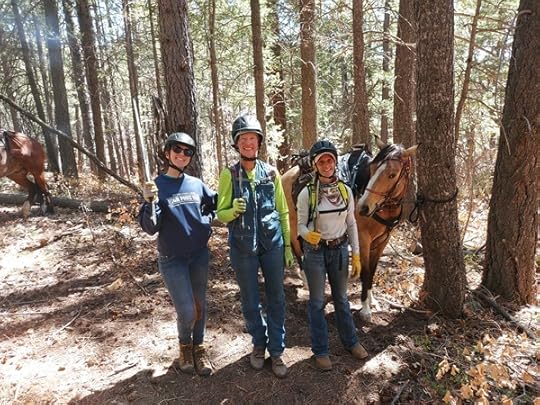
Colleen, me, and Jessica on 4th of July. Stella the horse forgot to pose!
Then we (the royal we–I was not on these) went to Red Canyon Trailhead on two days and cleared Box Trail, Red Canyon, Spruce, and the Crest trail between Red Canyon and Spruce! The big hole we filled with the Volunteers for the Outdoors last year held up really well! There were some big trees down, but not much can stop our crews!
Over Memorial Day we went to Jack’s Creek Campground in the Pecos. We had two crews each day. With all the cuts to the Forest Service, there was no camp host, no water as the system broke and no funds have been allocated to fix it, and our old coordinators have all been fired or left. I think it is a travesty.
We cleared from the campground to Beatty’s Cabin (80+ trees) which took two days, and from the campground to Baldy Lake (40+) trees with one crew on one day.
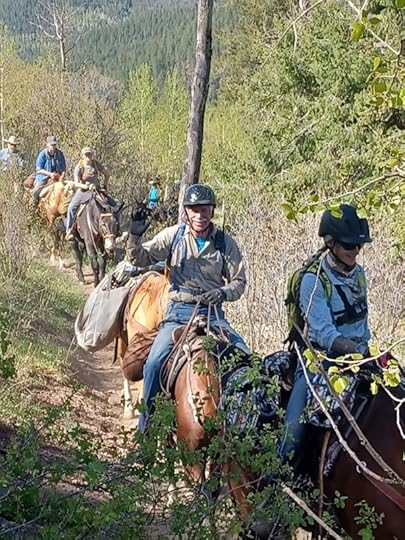
Jessica and Jim, followed by Abby and Taryn Climbing out of Jack’s Creek. Photo by Rene Herber and downloaded from the Pecos BCH Facebook site.
We had both hikers and riders which can speed things up since the hikers can pull the small stuff off the trail more easily than a horse person can, but horses can go farther faster and carry a lot of tools.
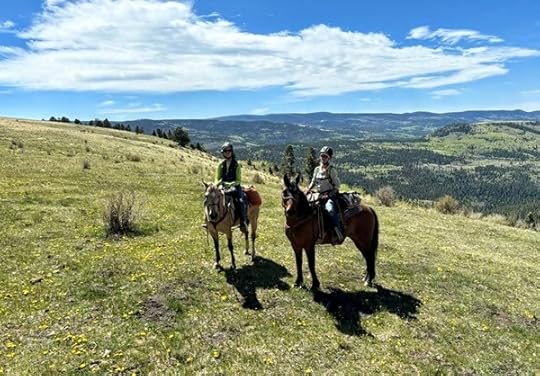
Me on LT and Jessica on Trigger on the Sound of Music Meadow (our name for it) at the junction of 257 and 25 out of Jack’s Creek. This was Trigger’s first camping trip and first water crossings under saddle. He was really steady and after he figured out the water, he looked like an old hand!
The 2013 Jaroso burn scar on the way to Baldy Lake was impassable to stock before we got there. We helped and got help from Joseph Gonzales who was packing in. We got him through! Our new Katana Boy saws are amazing and we never even pulled the two-man saw out!
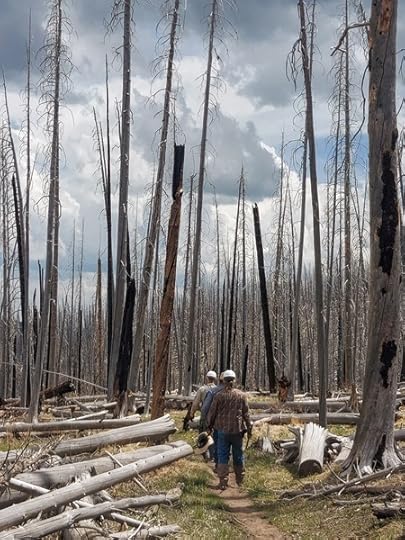
We spend a lot of time in the 2013 Jaroso burn scar. There are still a large number of dead trees to fall in the coming years!
Our next projects may include working north on the Crest Trail from Spruce in the Manzanos, which we have never done, and Stewart Lake and Cave Creek in the Pecos. We also have a few pack trips planned to haul supplies for foot crews!
These BCH projects are among my favorite activities, and our horses seem to like them as well!
Happy Friday!
May 23, 2025
How to flood the tack room of a trailer
By Patty Wilber
My friend Peter and I went up north last week and we drove my truck and trailer through a creek. It was pretty cool, so on the way back, we stopped to take a picture. This turned out to be a mistake because the water was deep enough that it flooded the tack room!
We drove through on the way there, without stopping, and the tack room held up fine. Stopping was the killer.
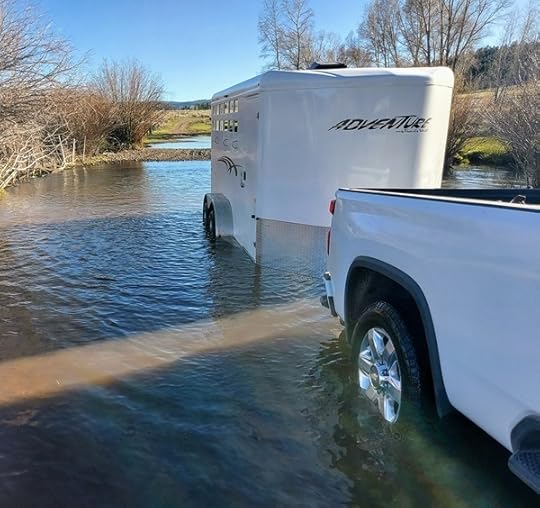
I didn’t realize that had happened because I didn’t open the tack room that night when I got home. But Jim used the trailer the next day and everything on the carpeted floor was soaked!
This was the third trailer I’ve flooded!
The first two, in my defense, were water tank malfunctions.
I bought a water tank for my old brown trailer and the shop installed it with a nylon strap, which seemed fine. Except we do a fair number of trips on rough back country roads, and on the way to Cruces Basin, all that vibration wore through the straps. The water tank fell over. All the water spilled out.
That trailer had a basic slat floor, so the tack room didn’t fill up with water, but it got pretty wet in there and all our water was lost… This was on the same road where, on a different trip, the door on our truck bed camper popped open, a bunch of our stuff jettisoned and was lost forever. That road has caused doors to fall off, and axles too, just saying.
We fixed that water tank by having our friend Richard design a metal brace that was bolted in. We fixed that camper door by bunging it shut after that.
Later, we bought a new Trails West trailer with a nice sleeping area and side tack. There was a 40-gallon water tank, securely installed in the tack room of the new trailer.

A secure metal shelf with a lip where the water tank sits.
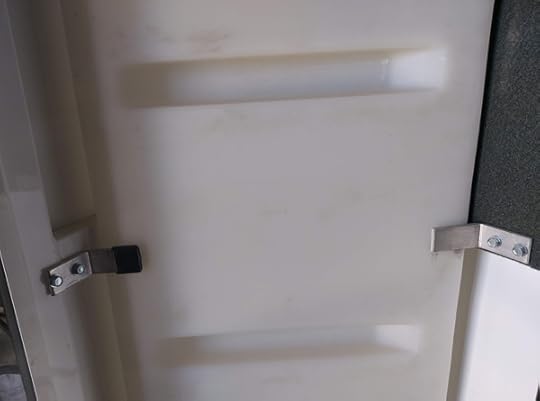
Bolted in, metal brackets, securing the tank.
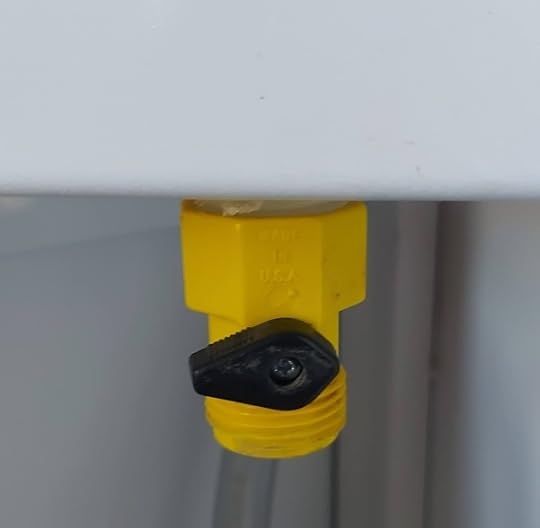
Unfortunately, it had a plastic spigot. And, the tack room and sleeping area were more insulated and less leaky than the brown stock trailer… We went on the same notorious road into Cruces Basin. Some stuff rattled around, hit, and BROKE! the plastic spigot. Forty gallons of water poured into the tack room, which leaked into the sleeping area, but didn’t leak out all that much. It was a flooded mess, and of course, we lost all our water, again.
Our (brilliant, again) friend Richard was on this trip with us, with his work truck, which just happened to have a nice metal spigot, which he installed. We have had no problems since.
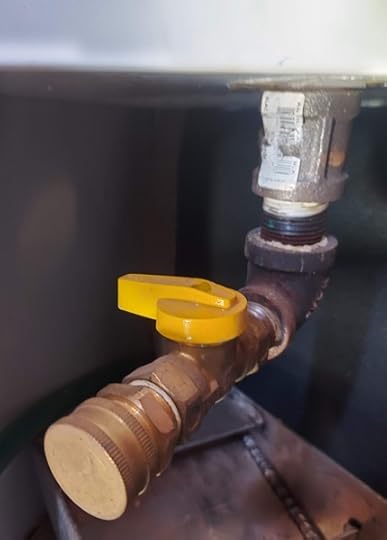
The trailer I just flooded by stopping in the creek (which, coincidentally was not on the road to Cruces Basin, but in the same general area….) has a nice, securely installed 30-gallon tank. It also has a plastic spigot. I probably should put a metal one on there!
A few fun shots from the trip.
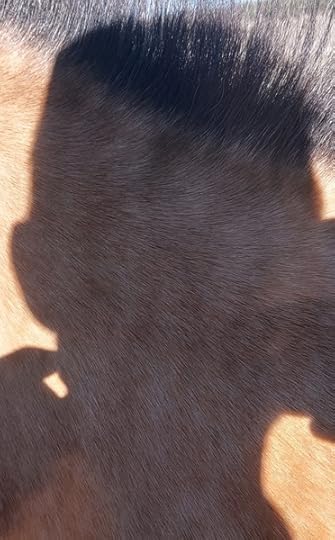
Optical illusion shadow of my head and LT’s crazy mane. My new spike do?
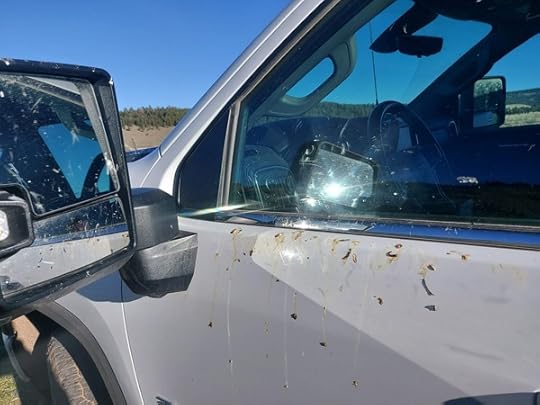
Birds had a lot of fun fighting with their reflections in my side mirrors and pooping on the truck. I saw them doing it as we rode in, but I didn’t see what species and they flew off as we approached.
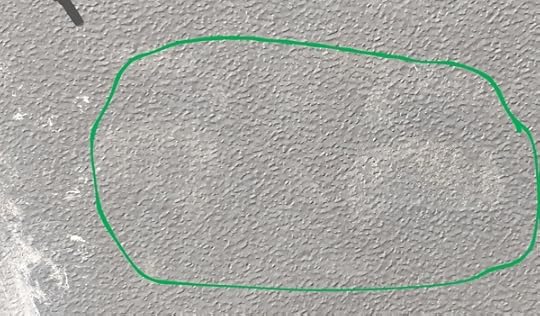
A bear was messing with the NRCS Snotel station (San Antonio Sink) and left pawprints on it. They are hard to make out.
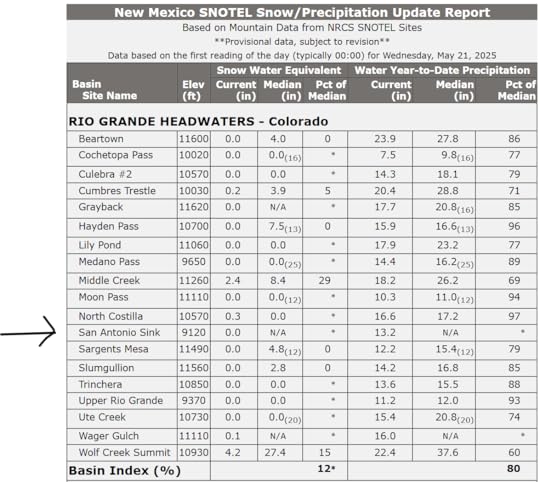
Snotel data from the website linked above
Off to the Pecos Wilderness this weekend with Back Country Horseman!
May 16, 2025
The Acquired Immune System and Vaccine Efficacy in Horses vs. People
By Patty Wilber
I got vaccines last week. Three shots: shingles, COVID, and a combined shot (Tdap) for tetanus, diphtheria, and pertussis. Just for the record, they made me feel pretty puny for a couple days. And led me to researching vaccines for horses.
The shingles is a two-shot series (second one in July) and when the series is complete, should protect me from that scourge for the rest of my life. The Tdap is good for 10 years, and the COVID, unfortunately, is only good for around six months. Many other human vaccines are good for our lifetimes.
This got me thinking about vaccines in horses. The rabies vaccine can protect a horse for three years, but most other horse vaccines are only good for six to 12 months. Why is horse vaccine effectiveness so short-lived?
The immune system is incredibly complicated but here is a simplified version of how vaccines activate the Acquired Immune System to create long-term immunity in humans.
The shot delivers an inactive version or portion of the pathogen. White blood cells called macrophages engulf the pathogen part, process it, and then “present” a molecular fragment on their surfaces. Another white cell, called a T-helper cell, recognizes the fragment on the macrophage and binds to it. This interaction between the macrophage and the T-helper cells “activates” the T-helper cell.
In the meantime, B-cells (ANOTHER white blood cell) also bring the pathogen inside, process it, and present the very same fragments on their surfaces. The activated T-helper cells bind to that fragment attached to the B-cell, and this interaction causes the B-cell to become a plasma/memory cell. The plasma cells produce the antibodies that can attack that specific type of pathogen.
The plasma cells are also called memory cells because some of them continue to circulate in our blood for years and if that pathogen is encountered, the plasma cells recognize it, divide, and produce millions of antibodies in a short amount of time. All those antibodies neutralize the pathogen and prevent us from being sick from that pathogen! So many vaccines for humans work this way and provide long-term immunity created by our own cells. Vaccines, honestly, are a miracle of modern medicine.
The horse Acquired Immune System works as I described for humans, except that the memory cells don’t last all that long, so long-term antibody-mediated immunity is not achieved. Instead, we have to restimulate the system every six to 12 months by re- vaccinating. In New Mexico, that usually means a shot or shots for Eastern and Western Encephalomyelitis, Equine Influenza, Tetanus, Rhinopneumonitis (equine herpesvirus), and West Nile is/are given once or twice a year to prevent morbidity and mortality from those diseases.
There is no specific research I could find to explain why horses do not have a strong memory cell response. Some untested hypotheses include: 1. Horses have a more robust innate immune system than humans so are born with the ability to fight off a lot of pathogens, and don’t need to acquire protection. 2. Horses evolved as relatively short-lived species, so the cost of producing memory cells that lasted a long time wasn’t worth it. 3. Horses move around a lot, so would be expected to encounter novel pathogens in each new location, so why waste energy remembering last pasture’s pathogens when the new location has all new illnesses? 4. The immune system can consume a lot of energy, and horses need to prioritize that energy for running away from predators instead.
Happy Friday!
May 9, 2025
The LP Gene in Gette, 2025
By Patty Wilber
Modified from the 2024 Gette and LP blog post.
The LP gene occurs in Appaloosa horses as well as a number of other breeds. LP stands for “leopard”. The name of the LP gene is a bit of a misnomer because a “leopard” horse is white all over, with spots and only occurs if a horse has one LP and one PATN gene.
The LP gene alone produces horses that usually have white sclera, striped hooves, mottled skin, and progressive depigmentation (varnish roaning). The extent of the varnishing is highly variable. According to Wikipedia, “Varnishing is more common among Appaloosa horses, and less common among Norikers and Knabstruppers, whose breed associations find it undesirable.[5]” I was unable to read the (5) reference myself, so left the link in case anyone wanted to explore further.
Here is a chart that sums up LP + PATN nicely! It is from A Complete Guide to Leopard Complex (Appaloosa) Patterns.

Gette has only one copy of the LP gene and no PATN gene. She has white sclera, striped hooves, mottled skin, and spots. She is also developing the “varnish roan” coat pattern.
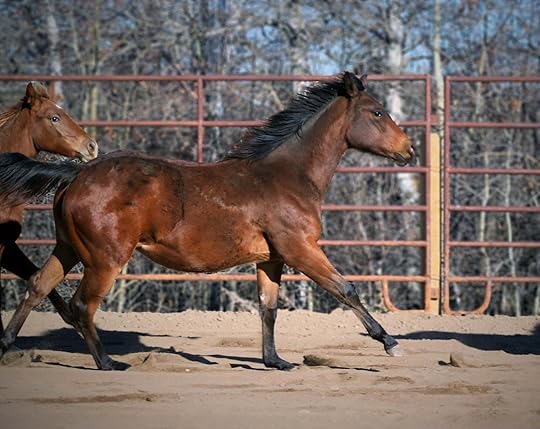
Gette, 2021, weanling. She has spots, but no varnishing yet. Photo by Heather McLevin.
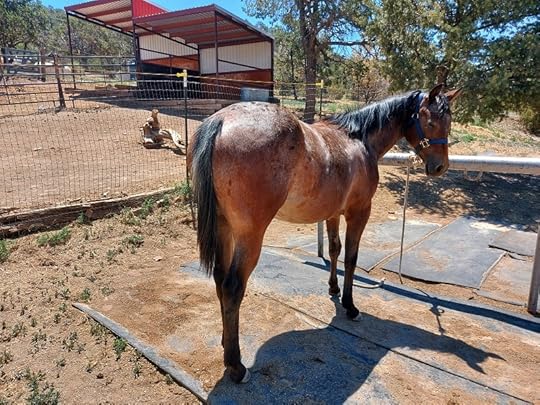
Gette, June, 2022. Yearling. Definitely more white.
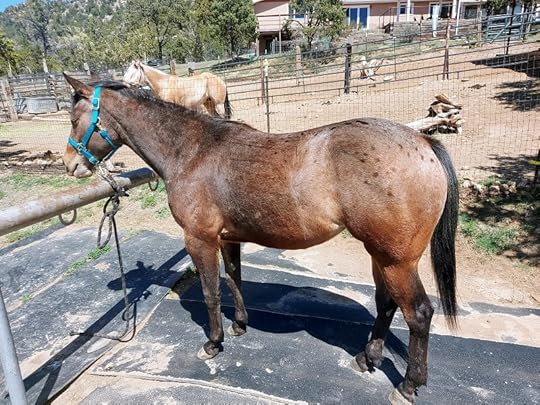
Gette, two years old, 4.26.23, with her eyes closed! This photo was taken before she was fully shed out.
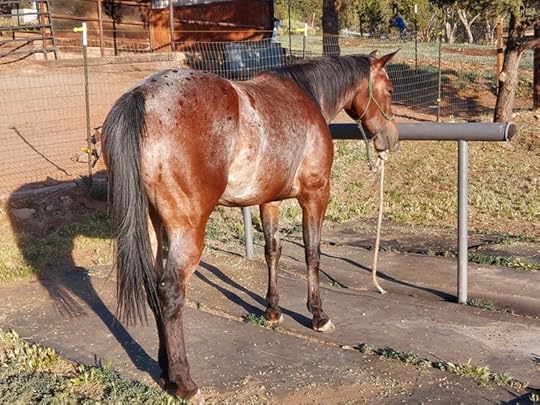
Gette, May 30, 2024. Three. Note the increased gray in her tail,
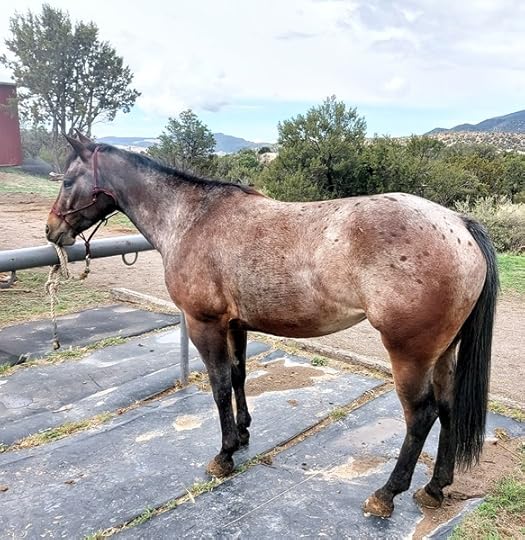
May 9, 2025. Gette. Four. Not fully shed out, but definitely more white than last year! It is funny how the spots do not depigment.
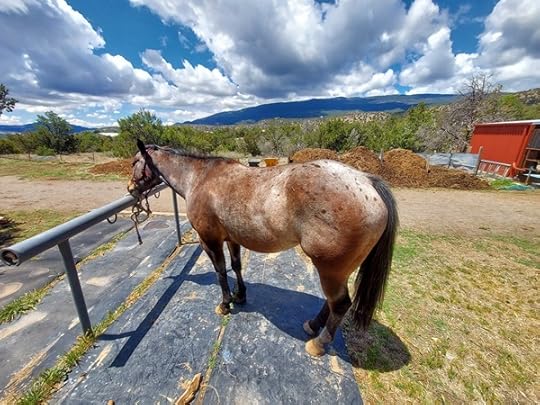
5.9.25 Bad angle on Gette, but the sky is so pretty!
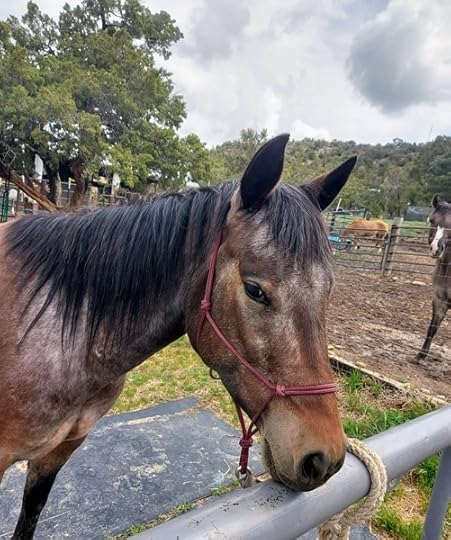
5.9.25 Note the white coming in on her face. The bony areas stay dark longer. Chika is photo bombing!
Eventually, she will be nearly all white! I suppose I should do a monthly photo shoot to show how her color varies over the year, as well, because she is a lot darker (and hairier) in the winter.
If you are interested in playing a horse breeding game, where you can apparently breed Appaloosas (and the genetics are pretty realistic, they claim), try this: Horse Reality I didn’t try it, so if you do, let me know how you like it!
Happy Friday!
May 2, 2025
Fixing Stirrup Treads
By Patty Wilber
I put a foot in a stirrup multiple times on most days, and I confess I never even noticed there was leather wrapped around my stirrups until one piece wore out and fell off!
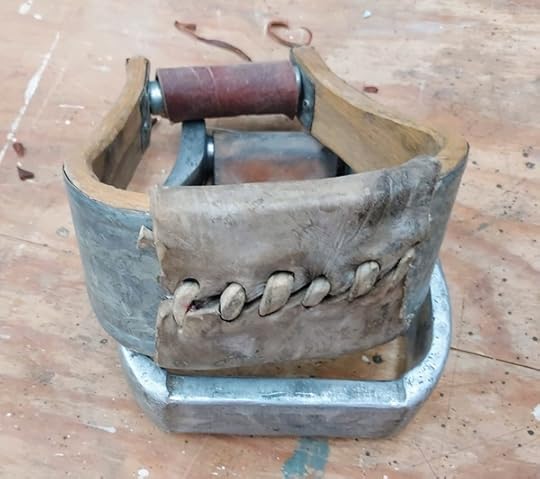
A stirrup with a rawhide wrap and my naked stirrup.
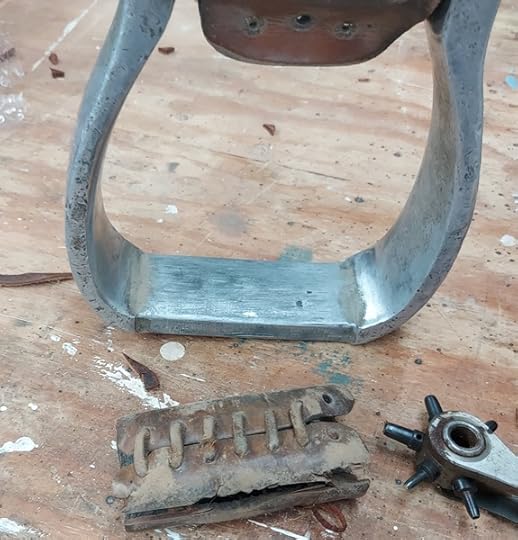
My worn-out piece. Bottom side up.
I rode for one day with one stirrup treaded and one untreaded, and decided I needed to fix that issue, so I looked online to figure out what that piece was even called! Stirrup treads. Turns out there are stirrup tread replacement kits and DYI videos, too.
Then my friend Peter pointed out that he had a bunch of leather, and tools. He offered to help me with the project.
First, we measured the stirrup width and circumference. But we failed to add some extra on the circumference to account for the bend. We cut a slightly bigger piece.
(And good thing we did this ourselves because the kit leather, all cut and pre-punched, would have been too big, and I would have ended up doing it myself anyway.)
Peter edged the piece and rounded the corners so it’d look nicer and not tend to catch on things. (I caught on two branches today and now have two holes in a pair of riding tights, so catching on stuff is not an idle issue with me…)
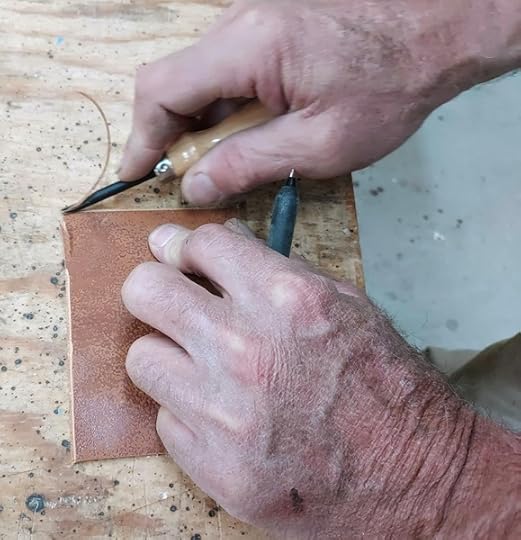
Edging the new tread.
We measured the distance from the edge to place the holes and I punched holes.
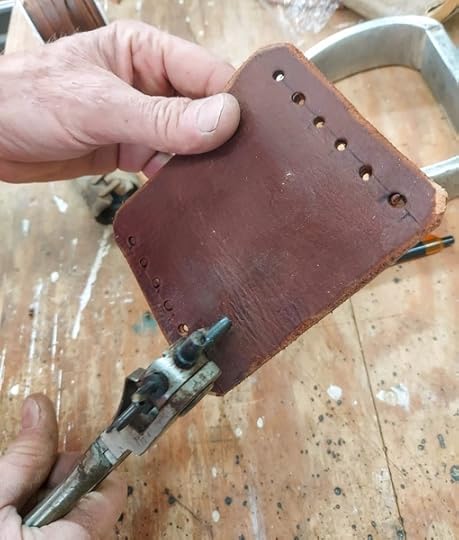
Punching holes.
Then Peter soaked the leather so it would be soft and easily wrap around the stirrup. I studied the intact stirrup and then laced the first one on.
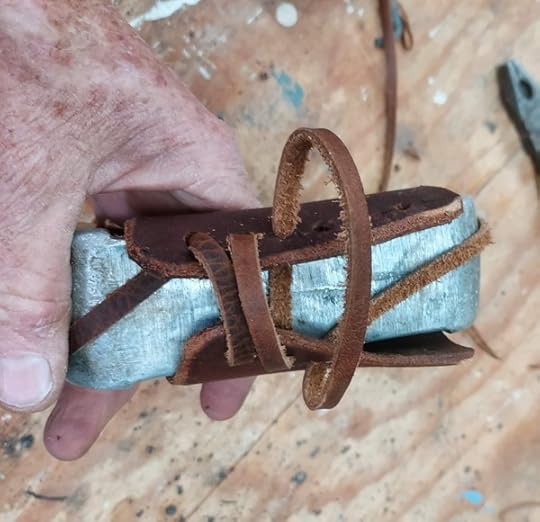
Lacing the new tread on!
Then we started on the second one but had to undo and re-lace because we skipped a hole.
Soon we had two newly-treaded stirrups!
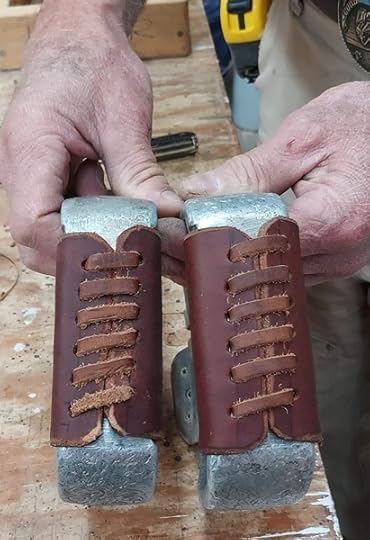
I let the lacing flip over on the last hole of the stirrup on the left. Should have fixed that, but oh well. The lacing ends are just stuffed back under. They aren’t secured to anything.
That was a pretty simple but very satisfying project! We fixed a saddle part I had never even named!
Happy Friday!
April 25, 2025
The importance of trail riding in purple
By Patty Wilber
My plan was to synthesize scientific studies discussing the importance of trail riding for show horses, but I only found opinion pieces, not research papers. So, I’ll just add my own two cents to the topic, after I talk about the purple part.
I met my friend Mary Ann S. for a trail ride today, and we were both wearing a lot of purple. I mean, who on earth even owns purple jeans? Well, apparently, both of us.
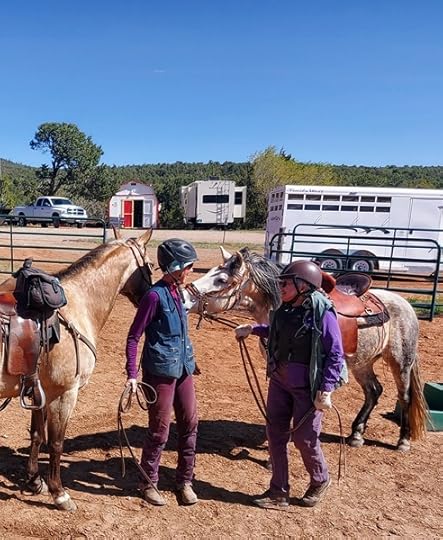
Me with LT and Mary Ann with Sombra. We are very purple!
Gayle, who rode with us, also was wearing purplish pink. I think that counts, even if she didn’t have purple jeans.
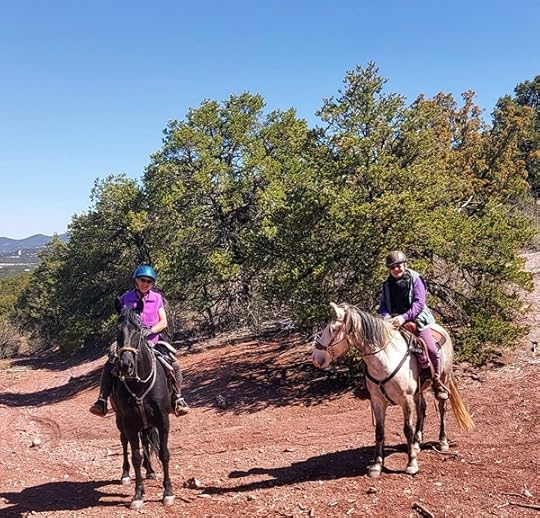
Gayle and MaryAnn.
Then later, I did another trail ride with Colleen and SHE was wearing purple leggings! I do not know what the cosmic significance of all this purple might be, but there must be something!
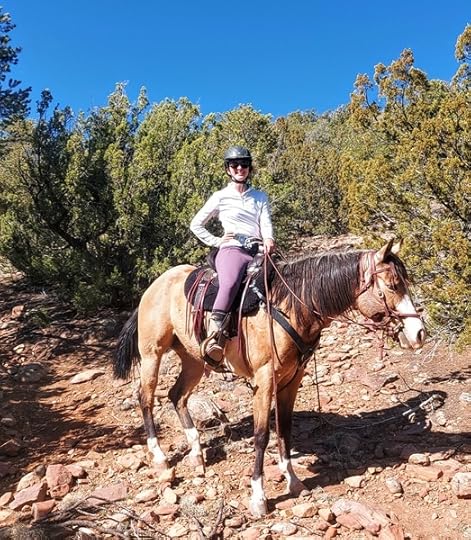
Colleen in purple leggings on Stella!
And now, a quick list of my opinions about why trial riding is important for show horses.
Getting out of the arena gives a horse more experiences, which should help them be more relaxed when they encounter new things at shows.Drilling on show skills every day is mentally draining. Trail riding can provide a good mental break and keep horses from burning out.Drilling on show skills can be physically draining, also. Getting out on hills and rocks uses different muscles and can increase overall fitness while giving the drill-fatigued muscles a break.Riding over varied surfaces can increase coordination and focus.Wearing purple while riding out on the trail makes every benefit 100x more potent!Happy Friday!
April 11, 2025
How the LP gene works in Appaloosas
By Patty Wilber
To recap from the last two weeks: The LP gene, which is associated with spotted coat patterns in Appaloosas and other spotted breeds, causes Congenital Stationary Night Blindness in the homozygous (two copies of the LP gene) form and increases predisposition to Equine Recurrent Uveitis in the heterozygous form (one copy of the LP gene).
This week, I want to talk about how this one gene can cause eye issues AND a spotted coat pattern.
A gene is a segment of DNA that normally codes for a product. The Lp gene is more formally called the TRPM1 gene and the unmutated version codes for a protein, called, drum roll, the Transient Receptor Potential cation channel subfamily M member 1 (TRPM1). Notice how the gene name and the protein name align. I looked up why the protein has “transient” in its name, and it is a historical naming artifact, and not indicative of the behavior of the protein.
The TRPM1 protein is primarily found in two cell types in horses:
ON-bipolar cells . These cells are “involved in the pathway that receives visualsignals from cells called rods, which are used to see in low light. This signaling is an
essential step in the transmission of visual information from the eyes to the brain.” This explains why eyesight in low-light conditions can be affected.Melanocytes. These are cells that produce pigment in hair and skin. That explains why the mutated form affects skin and hair color.
Congential Stationary Night Blindness: The mutated LP gene has DNA code disrupted in such a way that TRPM1 protein production is essentially stopped in the eye. Horses with two copies of the mutated version of the gene (LP/LP) have only 0.05% the the TRMP1 found in lp/lp horses. This results in the failure of ON-bipolar cells to pass information forward. Low light information is supposed follow a pathway from the rod cells to ON-bipolar cells to ganglion cells to the optic nerve to the brain, but the pathway is broken by the lack of TRPM1 at the On-bipolar cell step and no low-light information gets to the brain via that pathway. The result is CSNB. See last week’s blog for a discussion on why some horses with CSNB can still see in low light conditions.
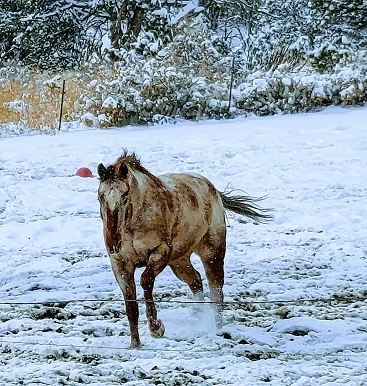
Lucy, February, 2022. LP/LP. She has CSNB due to the LP/LP status, and varnish roaning, common in Appaloosas with at least one LP.
Melanocytes. TRPM1 is involved in pigment production in melanocytes, so based on the effects in the eye, it might seem reasonable to assume that LP/LP horses would be 100% white and LP/lp horses would have colored coats, not the spots.
It turns out there are other pigment-production pathways in melanocytes, so even melanocytes with low TRPM1 might be able to produce color.
It is also hypothesized that some regions of the horse’s body contain melanocytes that are more sensitive to low TRMP1, and thus produce less or no pigment similar to something seen in mice.
Mishappen melanosomes due to the defective gene might be a cause for progressive depigmentation seen in horses with at least one LP gene.
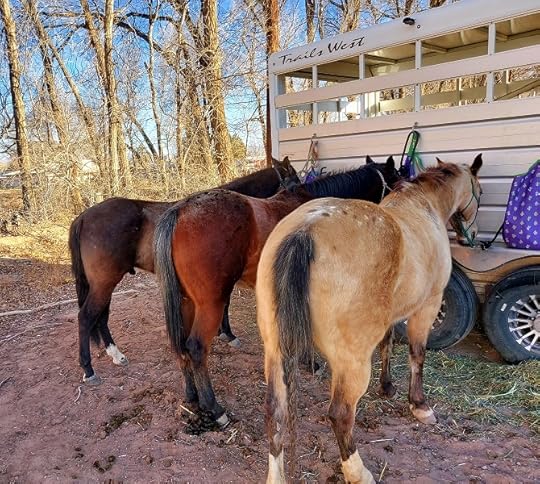
2023 LT: buckskin LP/lp with minimal progressive depigmentation (but see blog on her tail), Gette 2 years old LP/lp (middle) and she is showing the start of depigmentation; Rip lp/lp. No depigmentation, as he doesn’t have an LP.
All in all, my research on coat color and the LP gene was less satisfying than the research on CSNB because while the mutated LP gene is definitely associated with low TRPM1 and TRPM1 is associated with pigment production in skin and hair, the details of where pigment is produced and why there is progressive depigmentation seem to remain unexplained.
Please excuse typos…I ran out of gas for a solid review.


