
Lea Wait's Blog, page 298
February 22, 2015
Just Hold Your Nose and Write
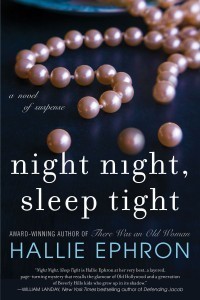 “Just hold your nose and write,” is my friend Hallie Ephron’s motto. Hallie has a new book coming out in March, Night, Night, Sleep Tight, a novel of suspense about Hollywood in the 1950s and 1980s. If you’ve never read Hallie’s books, you should, because they’re terrific. If you want a little taste, just to try, she has a short story with the same characters and setting up for $1.99 for Kindle here.
Anyway, I have been chanting Hallie’s motto as if it were a mantra as I steam toward the end of the first draft of Fogged Inn, the fourth book in my Maine Clambake Mystery series. I really want to finish the draft before we leave Key West on March 1. We’re doing a little sight-seeing and family visiting on the way home, and I’m hoping to have that week to let the manuscript “rest,” before I begin the first round of revisions.
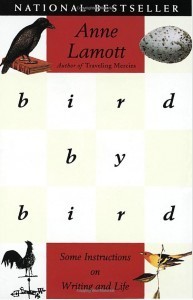 Anne Lamott says famously in Bird by Bird, that we all have to write sh**ty first drafts, but sometimes I feel I abuse the privilege. The problem is, I can’t really think unless I write. I’ve always been like this. Back in the day, I solved complex business problems by writing the detailed memo supporting my recommendation–and in the writing process discovered what my recommendation actually was. The memo often never left my computer. Usually it was was transformed into a high level series of Powerpoint bullets. But having written it, I knew my case inside and out, and believed it in myself, and therefore could defend it.
For better or for worse, it’s the same with fiction. For Fogged Inn, I wrote a high level synopsis for my agent and my editor. It’s turned out to be mostly accurate as the first draft has unfolded, but man does it leave out a ton of important information, all of which I have to make up along the way.
I’ve never successfully completed an outline. I do sort of a look-ahead-see-around-the-next-bend form of planning that I call scaffolding. (My writer friend Barb Goffman calls it being a plantser, the combination of the two fiction-writing approaches known as being a plotter or a seat-of-the-pantser.) I brainstorm outside of the draft. When I’m stuck, or feel something is lacking, I’ll write back stories for characters or use a brainstorming technique of 20 reasons. (Write down 20 reasons Joe goes down the cellar…)
 But ultimately, there’s no substitute for working it out in the writing. Stephen King says characters reveal themselves in the writing like photographs in the developer’s bath, and that is certainly my experience. (I wonder how much longer anyone will understand that analogy?)
It’s fashionable for professional writers to claim there’s no such thing as writer’s block, but I know what it’s like to be at the crossroads where you can’t write because you don’t know what comes next and you don’t know what comes next because you aren’t writing.
 In those moments, I whip myself with my motto, “The only way to it is through it.” I conjure up Hallie’s, “Hold your nose and write.” And I dangle in front myself as a reward the part of the writing process I absolutely love. “If you finish this #$%^& first draft,” I tell myself, “you get to revise.”
Junot Diaz says writing a novel is an act of faith. Faith in the beginning that your idea is good enough to be a novel, faith in the middle that it will somehow lead to the ending, faith as you write the ending that is has anything to do with the beginning you wrote so many months ago.
You gotta have faith.
I have faith that I will be returning to New England soon with a completed first draft. It will be too short, terrible, disjointed, out of order, and full of dead ends and things-I-forgot-to-tell-you-earlier. But it will be done.


February 20, 2015
Weekend Update: February 21-22, 2015
 Next week at Maine Crime Writers there will be posts by Barb Ross (Monday), Susan Vaughan (Tuesday), Kate Flora (Wednesday), Vaughn Hardacker (Thursday), and special guest Brenda Buchanan (Friday).
In the news department, here’s what’s happening with some of us who blog regularly at Maine Crime Writers:
Columnist Maureen Milliken did a great article about Kate Flora’s true crime, Death Dealer, this week. Lots of interesting stuff about some of the Maine heroes of the book, and what surprises an author after a book is published. Here’s the link: http://www.centralmaine.com/2015/02/18/maine-search-crew-the-real-deal-in-death-dealer/
from Kathy Lynn Emerson: Finalists for the Agatha in the short story category (Art Taylor, Barb Goffman, Edith Maxwell and Kathy Lynn Emerson—that would be me) have decided to do a little group publicity. The first installment appeared yesterday in Art Taylor’s blog at Criminal Minds. Next up will be Edith Maxwell’s March 6th post at Wicked Cozy Authors. I’ll remind you of that closer to the date. Then we’ll all be here at Maine Crime Writers when it’s my turn to blog in April. If you want to read our nominated stories, go to Malice Domestic and click on the “awards” link at the top of the page.
Maine Crime Wave
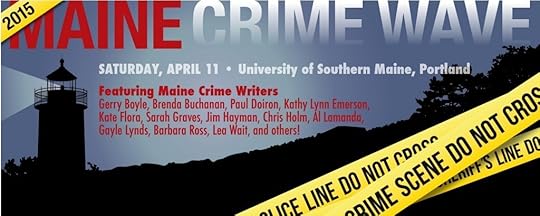 A whole bunch of current Maine Crime Writers, alumni, guest bloggers and Friends of the Blog, are going to be teaching, paneling and hanging out at the Maine Crime Wave, sponsored by the Maine Writers and Publishers Alliance. The date is April 11. Registration is here. We’d love to see you! And there are some fun things in the works for Friday night as well. We’ll update you when the details are final.
Here’s the schedule for the day.
8:00 AM – 8:45 AM–Meet and Greet
8:45 AM – 9:45 AM
SAY HOW, SAY WHEN, SAY WHAT?
Real Writers on the Realities of Research
Panelists: Paul Doiron, Gayle Lynds, Lea Wait Moderator: Gerry Boyle
10:00 AM – 11:00 AM–Workshop Session I
MURDER WITHOUT THE GORE
Tips for Writing Successful Traditional Mysteries
Kathy Lynn Emerson
REVISING YOUR MANUSCRIPT
A Phased Approach
Barbara Ross
11:30 AM – 12:30 PM–Workshop Session II
HEROES & HEROINES, VICTIMS & VILLAINS
Creating Unforgettable Characters for Your Crime Novel
Jim Hayman
PLANTING EVIDENCE AND TURNING UP THE HEAT
How to Play Fair with Your Mystery and Still Ratchet Up the Suspense
Chris Holm
12:30 PM – 2:00 PM–Lunch
2:00 PM – 3:00 PM
BUT SHE HAD RED HAIR IN THE LAST BOOK
Creating and Sustaining A Series
Panelists: Kathy Lynn Emerson, Sarah Graves, Al Lamanda
Moderator: Brenda Buchanan
3:15 PM – 4:15 PM
CONGRATULATIONS. YOU’RE PUBLISHED. NOW YOU HAVE A NEW JOB
The Other Aspects of a Writer’s Career
Panelists: Chris Holm, Lukas Ortiz, Katherine Osborne, Barbara Ross
Moderator: Kate Flora
Throughout the Day
Book Sales by Kelly’s Books to Go, Book signings, Manuscript critiques
An invitation to readers of this blog: Do you have news relating to Maine, Crime, or Writing? We’d love to hear from you. Just comment below to share. Don’t forget that comments are entered for a chance to win our wonderful basket of books and the very special moose and lobster cookie cutters.
And a reminder: If your library, school, or organization is looking for a speaker, we are often available to talk about the writing process, research, where we get our ideas, and other mysteries of the business. Contact Kate Flora: mailto: kateflora@gmail.com
February 19, 2015
Poem From My Past
Lea Wait, here, thinking about writing I did (literally) years ago. I’d always wanted to be a writer. But when, in my early and mid twenties, I was living in a tiny walk-up in Greenwich Village (where else would a writer live?) and trying to write, I only ended up creating stacks of poems. True, I was also working full-time and going to school at night. I felt too young to write fiction. But poems were short, and the ones I wrote were generally ironic or sarcastic … they were fun.
Recently I glanced through several folders of them (yes, I kept some, as memorabilia,) and found this one. In light of the 50 Shades phenomena, I decided to go back to the Lea Wait of the early 70s, and share.
MY SON
My dear, it’s embarrassing.
I was hoping you wouldn’t be asking.
Every family has to have one.
He lives in New York. Greenwich Village, even.
Not married.
At least alone, he lives.
In this world, some comfort.
No; no beard. But hair – you should see!
Girls? Girls, he doesn’t like.
Don’t be looking!
Boys he doesn’t like neither.
Independent, he calls it.
Stubborn, I tell him.
Doing? Smoking strange things, no doubt.
Writing a novel, he says.
They all do that down there.
His sister Sarah says he hasn’t found himself.
If he finds another self,
I’d like to see it, my dear.
And the tribulation …
But have you seen the book?
Autographed — he could do less?–
To his dear mother.
Sophie, to have an author for a son!
Only a mother could tell.
And skip chapter five …
He made it up, sure.
All those boys, and girls, and
Scandalous.
Particularly page 87.
Third paragraph from the bottom.
Could my son have done this?
It’s going to be X-rated, sure.
My son, the author.
Sunshine and Poetry Beat Ice Cycles in Your Face
By Al Lamanda
Along with everyone else in the Great Northeast, I’ve had it with this winter. Not so much the cold, but the relentless snowstorms. One after another so that by mid-January, my picnic table had vanished under six feet of snow. There are mounds of snow piled so high in my backyard, I could hollow them out and use them as a garage.
After the most recent storm, I was breaking three-foot-long ice cycles off my roof when I realized that I had reached my limit. It was time for some sunshine on a warm beach.
Next stop, Puerto Rico. Eight degrees and snowing at the airport when I left, eighty-two and sunny upon arrival. I sat on the beach and drank coconut mike straight from the coconut. I snorkeled, climbed the mountains in El Yunque Tropical Rain Forest, walked the blue cobblestone streets of Old San Juan, explored the four hundred-year-old El Morro fort, went zip lining above the trees in the rain forest, and ate a great deal of wonderful Puerto Rican food. And all with sunshine and tropical breezes on my face.
Somewhere between beach time and Old San Juan, I met a young writer while I was enjoying a genuine cup of Puerto Rican coffee at a local shop. She was in her early twenties and wrote poetry. She showed me some poems she had written and they were quite good. We started talking books, writers, and what it takes to be successful in the business of selling prose.
I’m no expert by any means, but I do know the basics and I shared them with her.
First and foremost and above all others, Be Original. Nobody likes a copycat, not agents, publishers or readers. Find your own voice. It’s in there and if you write enough, it will make itself known. The worst thing a writer can do is mimic the style and voice of another writer with the hope of fooling an agent or reader. Trust me, you won’t.
Write. Simple enough, except that it isn’t. Most people I’ve met who want to be writers find out soon enough that it’s hard work that requires many house spent alone as you agonize over a chapter that you just can’t seem to finish. Most I’ve met can’t do it, quickly give up and vow to return to their unfinished manuscript in ten or twelve years. When they’re more seasoned. Except that they only way to be more seasoned at writing is to constantly write.
Learn grammar, spelling and punctuation. Learn the difference between its and it’s, your and you’re and their and they’re, because if the agent you queried spends more time correcting your grammar than reading your story, it will wind up in the trash can.
Get feedback. Show your work to family and friends and ask what they think. They will tell you. If you are hesitant to show your work to your spouse, family and friends, how will you able to show with confidence to an agent. Feedback from family and friends is a valuable support system.
Learn to accept criticism. You are going to get a lot of it. However, not all criticism is necessarily a bad thing. We, as writers can learn a great deal from constructive criticism if we keep an open mind. Criticism has exposed weakness in my plot, character flaws and many other things that helped to make me a better writer. So don’t take criticism with a grain of salt, learn from it.
Grow the skin of a Rhino, because you’re going to need it. Writing is not for the thin-skinned. If you can’t take rejection and a lot of it, writing is not for you. Many, and by many I mean most agents will pass on you the first go around. You need to have a very thick skin to handle this kind of rejection until somebody finally says yes. What you never do is strike out at an agent or publisher for rejecting you. They are doing their job the same as you, and they may very well say yes the next time you query you, unless you have written them a very nasty email, which they will remember.
Know your audience. For goodness sake, why would you query an agent interested in romance about the mystery you’ve written? Know your genre and query those interested in it. The same goes for marketing. Market yourself on sites like Facebook and Twitter to readers of your genre. Forget trying to amass large numbers of people that aren’t interested in your work just for the sake of having followers.
The young poet was grateful for out time and conversation and as all good things must come to an end, so did our coffee and my vacation.
Now, if you will excuse me, I have some snow to shovel.
Al Lamanda is the author of many mystery novels, including the Edgar Award nominated John Bekker series.
February 17, 2015
Drum roll please!
Jayne here – I’ve been dying to let you all know about this, but couldn’t announce it until today.
Here it is – the award I received this morning!
One of the earliest advocates protecting cyberstalking and cyberbullying victims, Jayne A. Hitchcock received the 2015 M3AAWG Mary Litynski Award today for her efforts in assisting targeted individuals, training law enforcement, supporting antiharassment legislation and teaching teenagers how to protect themselves from potential threats.
The lifetime achievement award for her work as co-founder of Working to Halt Online Abuse (WHO@) and in aiding thousands of online victims was presented today by the Messaging, Malware and Mobile Anti-Abuse Working Group at the M3AAWG 33rd General Meeting in San Francisco.
Hitchcock became an anti-abuse advocate in 1996 when a scammer targeted her with threatening emails and posted defaming messages in her name after she exposed a fraudulent publishing scheme on a Usenet message board. When the local police did not have the tools or knowledge to help her, Hitchcock fought back by learning all she could about the technology.
As a result, she became one of the earliest experts on how to identify online stalkers. She testified in support of the first U.S. email cyberstalking bill passed in 1998 and either has helped draft or supported legislative efforts establishing online harassment as a crime in 20 states. In her middle and high school educational programs for students, she shows how the students’ supposedly innocuous social media posts and profiles can make them vulnerable to threats and harassment.
“Cyberstalking and harassment are hideous online crimes because victims often suffer in fearful silence without knowing where to turn for help or even that help is available. Jayne has brought this problem out
in the open and her commitment has saved lives and kept the industry focused on working together to find solutions,” said Chris Roosenraad, M3AAWG chairman of the Board.
About half the cases submitted to WHO@, a volunteer nonprofit organization fighting online harassment, are perpetuated by someone the victim knows such as a friend, ex-spouse or previous work colleague. The other half usually results from “road rage” when an online disagreement escalates to dangerous proportions, Hitchcock said in her acceptance speech at the M3AAWG meeting.
“When a communication becomes threatening or harassing, you should respond just once by succinctly telling the perpetuator to stop contacting you. Don’t get pulled into their emotional manipulation or accusations. After that, don’t reply to their emails or other communications but keep a copy of everything. Also be sure to contact the abuse department where the agitation started, such as Facebook, Twitter or Snapchat,” Hitchcock said.
To help protect yourself from being harassed, Hitchcock suggested:
• Use a gender-neutral email address.
• Use an email address from a free provider, such as Gmail or Yahoo!, rather then one supplied by your online service provider. This will make it harder for a stalker to discover where you live.
• Avoid heated online arguments – just step away before the discussion becomes toxic.
• Do not help friends who are being stalked or harassed by engaging with the perpetrators on their behalf. Instead, support their efforts to stop the crime by directing them to contact the appropriate authorities and abuse desks.
In her educational outreach programs, Hitchcock shows students exactly what type of information a stranger can find about them online. Although teenagers are sophisticated in their use of technology, many are shocked at the personal details they thought were private but can be easily accessed.
Teenagers also need to understand that cyberbullying can be a crime and there are nonjudgmental people and organizations to protect them. Hitchcock encourages students to report abuse by talking with a trusted adult such as teacher or coach, direct messaging the WHO@ mascot she introduces in the program that is set up on social media, or completing the WHO@ harassment reporting form at www.haltabuse.org, among other resources.
“Bullied students often have no clue where to go for help and many are desperate. Students can be very reluctant to tell their parents, even those with good family relationships, because they’re afraid the first line of defense will be to take away their Internet privileges.” Hitchcock said.
Since it’s founding in 1999, WHO@ has helped over 4,000 victims and now has a staff of 28 advocates. Hitchcock also has written a book on how to stay safe online, Net Crimes & Misdemeanors, in its second edition, and one exploring criminal exploits linked to the Internet, True Crime Online. A book on cyberbullying is planned for 2016.
The M3AAWG Mary Litynski Award is presented annually to someone who has worked tirelessly behind the scenes for many years to help protect online users. Information and the submission form for the 2016
award are at https://www.m3aawg.org/events/maawg-m....
About the Messaging, Malware and Mobile Anti-Abuse Working Group (M3AAWG)
The Messaging, Malware and Mobile Anti-Abuse Working Group (M3AAWG) is where the industry comes together to work against bots, malware, spam, viruses, denial-of-service attacks and other online
exploitation. M3AAWG (www.M3AAWG.org) represents more than one billion mailboxes from some of the largest network operators worldwide. It leverages the depth and experience of its global membership to tackle abuse on existing networks and new emerging services through technology, collaboration and public policy. It also works to educate global policy makers on the technical and operational issues related to online abuse and messaging. Headquartered in San Francisco, Calif., M3AAWG is driven by market needs and supported by major network operators and messaging providers.
February 16, 2015
Women Could and Women Did
 Kathy Lynn Emerson here, stealing this title from a program fellow historical mystery writers Sharan Newman and Miriam Grace Monfredo used to present to debunk the idea that women in the past all fit into a neat stereotype. Fictional female sleuths in series set in the past are often accused of being “too modern” and there’s always someone who will claim that “women didn’t act that way back then.” While it may be true that most women didn’t, there have always been exceptions.
Since I’m once again writing historical mysteries with a female protagonist, I’ve already encountered a few readers who still buy into a limited view of history. The truth is that some sixteenth-century Englishwomen were extremely well educated. More than a few managed their own businesses or ran estates on their own behalf or for absent husbands. A number even pursued careers in the arts, several as portrait painters and a few as writers, although much of what they created has now been lost.
In a society where, under the law, a woman passed from the control of her father or guardian into the custody of her husband, it seems obvious that some women would resent being treated as chattel and find ways to rebel. They weren’t feminists in the modern sense, but content with their lot? I don’t think so.
 In my new series, I gave Mistress Rosamond Jaffrey financial independence by having her husband settle an annuity on her. Of course, the annuity came from what was her inheritance to begin with but sixteenth-century English law decreed that everything a woman possessed became her husband’s from the moment they said their wedding vows. In cases where a marriage had failed, the courts often had to force the husband to grant his wife money to live on, but there is no reason why one couldn’t willingly do so. Once she has the wherewithal, Rosamond buys a house near London, determined to live on her own. A similar financial arrangement in my Face Down series accounted for Lady Appleton’s independence in the first few mysteries. Once she was widowed, of course, she gained complete control of her property and finances.
This independent widow is the one who raised and educated Rosamond, her late husband’s illegitimate daughter. In fact, she spoiled Rosamond, who is already willful by nature. Is it any wonder that she grew up to resent any sort of restriction? She’s wise enough not to flout society outright, but she’s also clever enough to find ways to work around the rules of proper behavior. When she wants to attend plays in a nearby inn yard, rather scandalous behavior for a respectable young woman, she disguises herself to appear older and pays well for the privacy of a room overlooking the stage. A little later in Murder in the Queen’s Wardrobe, it occurs to her that she would have even more freedom if she were to disguise herself as a boy.
 Yes, I can see you shaking your head. That old cliché! Just because Shakespeare’s heroines put on male clothing doesn’t mean real women did. After all, the parts of women on stage were played by men, so those weren’t really females in disguise in the plays.
Turns out, art was imitating life. There were quite a few women living and working as men in medieval times, especially in Holland, Germany, and England, but no one really took notice of them until the late sixteenth century. It was even more common for women to dress in men’s clothing for specific, short-term reasons—travel, festivals, flight, to accompany a spouse into battle or on board ship, and for erotic stimulation. In 1573, a woman dressed as a man led the defense of Haarlem against Spanish forces and was hailed as the Dutch Joan of Arc. An Italian woman took part in the battle of Lepanto as a sailor. The disguise of another woman was only discovered after her death on a battlefield in 1589. She and her lover were both serving as soldiers in the Dutch army when they were killed.
 In England, the majority of records of women wearing men’s clothing come from court records, both civil and ecclesiastical. Dorothy Clayton, for example, a prostitute, was arrested in 1575 for wearing men’s clothing in public in London. She was found guilty and committed to Bridewell and also required to do public penance by standing in the pillory for two hours in the same “men’s attire” that had been the reason for her arrest. Public penance was the usual punishment for women who were caught. It was meted out to one Joanna Goodman in 1569 when she disguised herself as her husband’s male servant in order to accompany him to war. In 1596, Joanna Towler of Downham, Essex was a bit more audacious. She was taken to task before the church courts (otherwise known as the bawdy courts) for going to church services on the Sabbath dressed in men’s clothing.
According to one of my sources, The Tradition of Female Transvestism in Early Modern Europe (1989), the recorded cases of women disguising themselves as men are many and varied. Some disguises failed within hours. Others successfully deceived all and sundry for more than ten years. I think I can justify letting Rosamond put on her boys’ clothing every once in awhile, especially on those occasions when she needs to travel but doesn’t want the bother of a sidesaddle and an escort.

NEWS FLASH: The hardcover edition of Murder in the Queen’s Wardrobe is now available in the U. S., at least at Amazon and Barnes and Noble. Release date for the Kindle and Nook editions is still listed as March 1st.

February 13, 2015
Does Romance Belong in a Mystery: Please Discuss
(Note: Kate’s husband often tells her that her books would be more successful is she left out all that relationship stuff. So today, we take that topic to our writers and here are their responses)
 From Kathy Lynn Emerson/Kaitlyn Dunnett: Let me tell you a little story. Back in July of 2014 on the CrimeThruTime yahoo group, there was a discussion of whether or not romance belonged in historical mysteries. Some felt it had no place, or remarked that they avoided reading series that burdened the sleuth with a love interest. Others felt obliged to take a jab at romance novels in general. Yes, the term “bodice-ripper” appeared. I held off posting my opinion at first, afraid I’d come off sounding defensive. The term bodice-ripper is a hot button for me, since it is not only inaccurate, but also derogatory. Of my fifty-one published books, twenty-six of them are mysteries, but fourteen are either contemporary category romance or historical romantic suspense. I can’t speak for anyone else, but in my case writing romance novels, which are as much about relationships as they are about sex, taught me how to develop convincing relationships between my sleuths and all those close to them—family and friends as well as lovers. To me, that’s what turns a character from a cardboard cutout into a human being. Romance novels also rely on the writer being able to sustain sexual tension. What better training ground for learning how to create suspense in a mystery? The truth is, some of the best mysteries, past and present, include romance. Even series where the detective is celibate, such as Ellis Peters’s Cadfael, often contain subplots where a pair (or two) of young lovers complicate the case for the sleuth.
Susan Vaughan: Relationships, and not just romantic ones, should be an important part of a mystery. Relationships help make the sleuth a more rounded and believable character, showing his or her personality—with flaws, conflicts, desires—in interaction with friends, family, and lovers. In a mystery series with a continuing sleuth and cast of secondary characters, an author has the opportunity to build a romantic relationship over several books.
Barb Ross: As a reader, I can take my mysteries with or without romance. Relationship was part of

romantic martini, La Jolla, January 2013
what attracted me, and kept me reading, Julia Spencer-Fleming’s Clare Fergusson and Russ Van Alstyne mysteries and Dennis Lehane’s Kenzie and Gennaro books, though I wouldn’t have kept reading if the writing and the mysteries in each weren’t so very strong. Two of my favorite, favorite sleuths, Ruth Rendell’s Reg Wexford and Louise Penny’s Armand Gamache are happily married, even uxorious. I love that and it’s part of what inspired me to write a happily married sleuth in my first novel, The Death of an Ambitious Woman.
There’s more romance in my new Maine Clambake series. It’s more expected, though not required, in the cozy genre, but Julia Snowden, my sleuth, is thirty, a time of life when people are often making big decisions about their future. She returns to Busman’s Harbor to find her junior high crush still there, as well as the boy-next-door, who’s become a cop. For awhile I thought we were headed to the “dreaded triangle,” but it hasn’t turned out that way.
Sarah Graves: I think romance in mysteries can heighten suspense first of all in the will-they-or-won’t-they department, as with Bruce Willis and Cybil Shepherd in the TV series “Moonlighting” — but only for as long as the question remains. Once it’s solved, that tension is over and needs to be replaced, for instance with a brilliantly evocative portrait of coupledom, as in the Nick-and-Nora duo in The Thin Man, etc. Or there’s the yearning-from-afar scenario, or the gone-but-not-forgotten situation, or… Anything but boring happiness, actually, works fine for me in mysteries. There is, however, the problem of why is the hero/heroine such a fool as to be all hung up on the obviously unsuitable but still desperately desired love interest; I usually solve this (I hope) by letting the protagonist wonder the same thing…but not have the answer. (This does require convincing the reader of the desperate desirability of you-know-who, however!)
Kate Flora: Despite what my husband says about romance or relationships screwing up my books, in a series, I like to see romance, or the development of relationships, as part of the character arc. (Though if I were Stephanie Plum, I’d have to have two husbands.) In my first Joe Burgess book, Playing God, Burgess was in an almost monk-like state, having become relationship-averse because of all he’s seen through his job. He also feared, because his father was a nasty drunk who used to beat his mother, that he had within himself dangerous seeds of violence. Over the course of four books, Burgess has gone from being the outsider, longing for normal while fearing it, to being in a committed, loving relationship and living with Chris and three kids, and trying to square “normal” with his passionate commitment to his job. I think that having the complexities and complications of making and sustaining relationships makes characters deeper and the books more real. It also amps up the tension between work and family, within the inner lives of the protagonists, and within the relationship.
Gerry Boyle and I were having a conversation about this earlier in the week, and Gerry pointed out that both his character, Jack McMorrow, and Joe Burgess are in jobs where they feel a calling to secure justice. They feel deep obligations to life and to work, and it is work that comes, as Gerry put it, with “an inflated sense of right and wrong…in their minds this is their job, their duty.” These conflicting instincts—between love and relationship, and work which is truly a calling—absolutely puts pressure on their relationships and creates tension in the books. (Though I have to say, Gerry can make waiting for the mailman so tense I’m on the edge of my chair, never mind relationships.)
Assuming that we have created characters that our readers care about, their challenge, as Gerry put it, is “to figure out how to have a normal life and do what they do.” It’s not easy, especially when long-term commitments and kids enter the picture. Because of the stresses their commitment to work puts on their jobs, Gerry posed what I think is a fascinating question: Are we exploring the nature of love? How far we can stretch it without something breaking?
John Clark: As both a reader and writer and drawing on both mystery and extensive experience with YA, I think that romance is the ‘safe harbor’ factor that does a number of things. 1-it makes characters more appealing and fleshed out, 2-it lends some sanity to a world/story where most everything else is dark and threatening, 3-it gives readers something extra to anticipate. Think about the Hunger Games series. Would Katnis have as much depth and appeal if she were totally cold and focused on killing and survival? Frankly, it’s the romantic elements in YA dystopian fiction that draw me in. If they’re really well done, I can’t put the book down. Finally I think a lot of people like to imagine themselves in that role and it’s a nice escape…Just ask Harlequin.
Readers: What say you? A lot of romance? A little? You can take it or leave it? Do you prefer something like early James Lee Burke novels, where Dave Robicheaux’s girlfriends frequently got killed? Are you interested in how characters balance work and life?
Midwinter Funk
This essay is from a book by my late mother, A. Carman Clark, called From The Orange Mailbox, notes from a few country acres.
 Midwinter funk begins at 3 p.m. on Sunday. Some doctors, social workers and psychologists have already taken trips south to soak up sunshine and fresh fruit supplements so they’ll have the energy to cope with the anxiety attacks this season brings to their offices.
Cabin fever, which often begins as early as Jan. 10, is usually treated with the advice to either get out of the cabin or invite some fellow human beings in.
But with the advent of the midwinter funk period, many northern residents have reached the point of snarling at their most congenial friends and mewling about fears of running out of wood, money and enough energy to get out of bed in the morning. Although medical textbooks neither list this seasonal malady nor suggest specific treatments, most people who have spent more than two winters north of latitude 42 begin to avoid slack jawed, bent shouldered neighbors who only want to moan about the misery of winter.
During these weeks when–as the old almanacs stated–“Days lengthen; cold strengthens,” other  citizen dash forth to scale ice-covered cliffs, race snowmobiles across frozen ponds or just waddle about layered in down-filled garments exclaiming, “Isn’t this invigorating?”
Beween the anxious and the active are the “snugged-in” types–those who have been anticipating these winter weeks. They don’t enjoy driving on icy roads but accept such inconveniences as a natural part of winter. And in accepting he fact that winter does exist and the weather sometimes is nasty, these folks settle down to celebrate the season.
Looking forward to winter weeks seems to start with an attitude toward the whole cycle of seasons. Spring planting and summer harvesting provide foods for February meals. The messy peeling and cleaning was done before the freezing and canning. If, during those preparatory activities, pleasant thoughts of being snugged-in with plenty to eat were allowed to expand and grow, the confinement by weather can be a welcome reward–planned leisure with time to relax and think.
There’s an up-country story about a friendly couple who moved up from the city and after a winter storm decided to call on a neighbor whom they heard lived alone. The neighbor was not grateful. No, he didn’t need anything. And he did not care to be interrupted. “I been just waiting for a slow-down storm so’s I could get acquainted with myself again. February’s my reckoning time.”
Could it be that some of the discontent and unrest associated with midwinter funk periods comes from avoiding a time of reckoning and getting acquainted with one’s self?
Celebrating winter as a time to settle in and relax, a time to indulge in some of the “someday I’m going to . . .” activities, tends to make the weeks fly by. A special pile of books reserved to dip into, another good try at sketching the starkness of white birches against a clump of pines, updating family albums and genealogical records or learning to play a recorder can be personal rewards.
Midwinter is a time for cooking sprees–for trying out something new. With the stoves pouring out heat, the sourdough starter can be reactivated while reading tales of the Old West and the Yukon gold rush when the prospectors were called “sourdoughs” because they carried their wild yeast cultures inside their shirts to keep it bubbling. Keading a bath of sourdough pumpernickel dark with a bit of bitter chocolate and rye and whole wheat flours can bring back memories of other breads tasted in far away places.
 Peppercorns–once so highly prized they changed the course of history–are reputed to aid digestion and dispositions. Yeast bread with onions and a full teaspoon of freshly ground black pepper will fill a winter house with aromas. Peppercorns crushed roughly (hammer whacked within a plastic bag) and patted into steak for a lively steak au poivre deserves a place with February taste treats.
Individual reactions to cold and to confinement when weather discourages driving can be irritability, unrest or pleasure and probably the mind-set was programmed while setting in the storm windows last fall. Seek out some cheerful, snugged-in types. The way they deal with the “Februaries” just might be contagious.
February 12, 2015
Where to Begin?
Dorothy Cannell here: In response to a request from publisher I spent the better part of last week slogging out an outline for the third book in my mystery series featuring Florence Norris, housekeeper at an ancestral home in the English village of Dovecote Hatch. Period – early nineteen-thirties. This was not a fifty-page requirement, just a couple of paragraphs giving the gist of the plot; but on sitting down at the keyboard – forget fingers – I became all thumbs and toes. It wasn’t that I didn’t have the plot in my head. Indeed, I have whiled away considerable time during the past few months telling myself the story of Peril in the Parish, until it developed the feel of a movie – clear in places, grainy in others that I’d watched many times over. But, herein lay the problem with the outline; the movie didn’t always open in the same place. I had three chapter ones. And choosing among them fluctuated on weighing the benefits of each.
My original intent was to immediately introduce twenty-three-year-old Sophie Dawson who has an unfortunate history of unwillingly attracting the attentions of married men. After one particularly unfortunate episode she feels compelled to leave her London lodgings and seek sanctuary with an aunt in Dovecote Hatch. There the possibility of true love awaits her upon meeting the handsome new vicar of St. Peter’s Church, if she can survive a murderer’s plans for her to share the same fate as another young woman many years ago.
My second idea was to start with the aforementioned vicar, Aiden Carr, being informed by the sexton that there was a skeleton in a churchyard grave where it did not belong. The discovery being made when it was redug in order for an elderly woman to rejoin her twenty-year deceased husband beneath the sod. The skeleton could not have been his because it was female. I liked this opening because it focused immediately on a long held secret, whose revelation could endanger present lives.
Third thought was that I could get to the heart of current situation quicker if I provided an early indication as to the identity of the skeleton. Finally I decided to go with this one:
OUTLINE
On a January night in 1933 The Dog and Whistle is empty of customers due to inclement weather until a stranger enters and over the course of several drinks confides in the proprietor, George Bird, a story from his past. He begins by saying that twenty years ago to the day he buried a loved one. George takes this in the accepted sense, of having attended her funeral, but the man proceeds to make clear he is speaking literally. As a fifteen-year-old boy he had been awakened by his parents in the early hours of a morning with the news that his sister (aged twenty) had bled to death after slashing her wrists in a tin bath tub. Amidst the grief was the awareness that a suicide burial would not be permitted in the churchyard, but the father had come up with an idea to circumvent this prohibition. This was to place her body in grave of a man who had been buried a few days before. Accomplishing this had required the son’s help. An act he now said had haunted him ever since. George was left wondering why he had been made the confidante of this tale.
This event finds connection the following May when the handsome new vicar of St. Peter’s Church is informed by the sexton that upon digging a grave for an elderly woman he had discovered a skeleton. One that could not be that of her twenty-year deceased husband because it had been buried only three feet deep. Shortly afterwards the vicar’s new bride receives a series of vicious anonymous letters, and in seeking into their origin, Florence Norris and George discover a link to that long ago suicide. One that a murderer will put to use for his or her own advantage.
I wonder if other writers dither half as much as I do about where to begin. It’s silly because nothing is cast in stone. I had written Chapter Three of Dovecote Hatch – due out in a few months, before coming up with an entirely new idea, bringing in a previously un-thought of character leading to my changing the identity of the murderer. But to put paid to dithering in getting going with the actual writing of Peril in the Parish. I have typed the first sentence:
“On a March evening in 1933 a pronouncement by Jimmy Griggs that the dingy, bedraggled mist looked like to thicken into fog made for a rare occurrence at the Dog and Whistle. By eight o’clock the taproom had emptied of customers. George Bird stood wiping down the bar …. “
February 9, 2015
So You Think You Want to Be a Crime Writer?
Warning: This is a blog about process. If a writer’s process bores you, go bake brownies or something.

My back deck, mid storm on Monday
Kate Flora here, watching the snow come down, trying to remind myself that winter is a great season for writing. Not that I don’t know that. I’m at my desk every day. And yesterday, after putting it off for a month, I finally started working on my new Joe Burgess mystery, Who Leads the World Astray. As you know, there’s always a lot of talk in the writing world about whether a writer is an outliner who carefully plots out the entire book beforehand, or whether a writer is a “pantser” or one who plots by the seat of her pants, following the story as it emerges from her fingers or her pen.
I am neither. I’ve decided to call myself a cooker. By this I mean that I cook a plot for several months inside my head before the first word ever lands on paper or my screen. It means that I go bumbling around, mulling the plot over and wondering about various aspects of the story for a long time before I start the actual writing. I’ve joked with bookstore and library audiences about this period, in which I think I should have a label affixed which, in the way of Paddington Bear, urges people: Please Look After This Writer. Thank You. If Found, Please Return To…etc. It isn’t entirely a joke, because what will happen is that I’ll be going along, running an errand or shopping for groceries, and suddenly another part of the plot will become clear and I’ll be stuck there, staring at the frozen peas, while I’m walking Burgess through some event in the story.
In general, at some level of detail, I will know what the crime scene looks like, who the victim or victims are, who did it, why they did it, and who my other suspects will be. The rest, like the pantsers, I discover along the way.
Which brings me to yesterday and the opening chapter of the book. Years ago, when I first started

Officer Wes Mecham’s car trunk.
writing mysteries, I cherished the misguided notion that what a writer did was sit at her desk and make things up. It’s true. That’s what we do. But when we’re writing in the crime arena, there’s a whole lot we can’t make up. And that is particularly true in the realm of the police procedural. There has been a Bob Seger song running through my head today. The song is Against the Wind, and the particular line from the song goes like this: “Wish I didn’t know now what I didn’t know then.” http://yhoo.it/1DTY52t
Before I spent all these hours reading criminalistics textbooks, Practical Homicide Investigation, forensic entomology, and attending the Writers’ Police Academy http://www.writerspoliceacademy.com , I was comfortable with my imagination. Now I have a question at almost every step. I’ve very envious of my friends Brian Thiem and Bruce Coffin, who are retired police detectives, because when they write about this stuff, they’ve been there and done it. I have to ask a thousand questions, and then imagine it for my characters.

Mock accident scene, Writers’ Police Academy
So, here’s what happened yesterday. I planned that Burgess would be driving back from South Portland where he’d gone to interview a witness, and on the way he got a call asking him to check on two officers who’d gone to answer a shots fired call and weren’t answering their phones or responding to their radios. Burgess was looking at the sky and thinking that it was about to rain. And a little voice in my head said: Never open a book with the weather. Elmore Leonard’s rules for writing: http://nyti.ms/1g4zRt3
I revised my opening so that he’s thinking about the little snot he’s just interviewed, who’s the witness in an assault but now “doesn’t want to be involved.” It gives me a chance to show Burgess’s attitude, his compassion for victims, his disdain for people who won’t step up. And then I get to talk about the clouds as he arrives at the scene and starts down an overgrown road into the woods.
But it’s winter and I’m sitting at my desk, and have I really chosen the right place to set this scene? So

Blood spatter analysis. Arterial spray.
I call up my map of Portland and check out the satellite images and make sure I’ve identified the right roads leading to that location, and now I’m back to work. I skip trying to identify what trees are growing along the road, something the brilliant Gerry Boyle would know at once, and I can answer later. Get on with it already, I remind myself. Nothing has happened yet. Why will the reader care? But then, just around a bend in the road, there’s a body. A uniformed body. Lying in the road.
Okay. So now I face the challenge of leading my detective through the opening crime scene and the dual challenge of a police detective coming upon a fellow officer who has been shot, which is an emotional firestorm. He has to examine the body. Determine that the officer—a rookie, a kid with his whole life ahead of him, newly married, hopeful, coming into this career to do good—is dead. Simultaneous dealing the fact of this death, and all that means for the thin blue line, and taking mental notes about the crime scene, making the calls to bring a crime scene team in ASAP, and realizing that that previously interesting gray sky is now starting to spit rain, which will disperse the blood spatter patterns on the dirt and may destroy footprints or other significant evidence. I quickly hope back onto the internet to look at blood spatter patterns from an arterial spray. http://science.howstuffworks.com/bloo...

If it’s going to rain, we’ll need a tent to protect the scene.
And that’s not all. It looks like a rifle shot. Maybe a sniper? Is the shooter still out there, and Burgess a sitting duck? And there is still the second officer to account for. Will he be shot, too? And what on earth is this about?
Dear readers, I am only five pages into this book. The first 1000 words out of 80,000. A decade ago, maybe I could have made it all up. Now? I will limp along, sending frantic memos out to cops, doing research, and settling back into the amazing part—rejoining characters I’ve come to care deeply about. The adventure begins.
Lea Wait's Blog

- Lea Wait's profile
- 509 followers

