
Lea Wait's Blog, page 269
February 4, 2016
HAVE YOU HEARD OF THE ALCATRAZ EEL?
Vaughn Hardacker here: In my last post I wrote about Elizabeth Short, The Black Dahlia. I’d like once again to cover a true crime case, this one much closer to home. I’d like to introduce you to The Alcatraz Eel.
Who was the ALCATRAZ EEL ?
John Millage Stadig – a young man from northern Maine – who, through his own genius and daring, became a folk hero and legend in a decade of criminals comprising the likes of Al Capone, John Dillinger, Ma Barker, Bonnie and Clyde, Roy Gardner and Machine Gun Kelly.
John Stadig was born in Jemptland (about two miles from where I live) near Caribou in northern Maine in December 1908, Stadig moved to St. Francis with his family and later across the St. John River to St. Francis, New Brunswick. In his rather short life, he had also taken up residence in Bradbury and Bangor, Maine as well as Boston, Massachusetts; Indianapolis, Indiana; Las Vegas, Nevada; Washington state, and Kansas.
Stadig came from a long line of mechanically inclined people. He also worked on log drives, keeping motors going on boats, and worked the shore, where his name is carved in a rock at “The Ledge” along the St. John River. He tinkered with electricity and was a store clerk, but never stayed at one job too long. Dead at 28, he spent many years in prison.
Criminal History
John Stadig’s early life was calm. From an affluent family, he could have been educated or gone on to do anything he wanted but during the Depression years he found his own way to make money, using plates and printing presses to print counterfeit money. That part of his life brought him to several federal prisons, including McNeil Island in Washington, Alcatraz in San Francisco Bay, and Leavenworth, Kansas.
His early crimes included motor vehicle crimes, petty larceny, larceny and violation of the Dyer Act, the national motor vehicle act that made interstate transportation of stolen vehicles a federal crime. His first prison term began in Boston in June 1927 when he was 19 years old.
It was in New Brunswick that he was first arrested for making counterfeit money. That was June 1930. He served some time in Canadian jails, but his notoriety increased when he was arrested in Las Vegas, Nevada in November 1931 and he began his first term in a federal prison.

John Stadig: The Alcatraz Eel
He and four other men were arrested for making $100,000 in $5, $10 and $20 bills. He testified against the others and was sentenced to 18 months in the Nevada State Prison.
Within 10 months, he was arrested again for counterfeiting, this time in Chicago. He escaped from federal marshals on his way to court, only to be arrested again two months later for counterfeiting in San Francisco.
Prison Life
Stadig did time in several federal prisons, including McNeil Island in Washington, Alcatraz in San Francisco Bay, and Leavenworth, Kansas, where he ended his life by cutting his jugular vein. Sentenced to six years in prison, he was sent to McNeil Island, from which he escaped within one month. Recaptured, he was sentenced to two more years in prison.

Alcatraz Dungeon Cell
Stadig was among the first 50 civilians jailed at Alcatraz, which was built as a military fortress in 1853 and used as a Civil War prison in 1861. Closed by the military in 1934, it became a notorious jail. He was taken to Alcatraz in August 1934. Two months later, he was taken to Oregon to be tried on counterfeiting charges. Convicted again, he escaped from federal marshals by jumping from a moving train while en route to Alcatraz. Having slipped by his guards on two different occasions, he was given his nickname: The Alcatraz Eel.

Henri Young spent a total of three years in the dungeon at Alcatraz
Recaptured seven days later, he was returned to Alcatraz where he was confined in the dungeon cells below the prison’s main cell blocks, where problem prisoners were kept in darkness and solitary confinement. Dungeon prisoners have described their time there: “There’s no light. It’s wet. You’re in shackles. You’re naked. It’s horribly cold. There are rats and bugs.” ( One prisoner, Henri Young, {portrayed by Kevin Bacon in the movie: Murder in the First} whose original arrest was stealing $5.00‡ from a store that was also a post office–which made it a federal offense–spent three years in the dungeons. Standig spent nowhere near that much time in the dungeon, but still went mad. During the ensuing two years he attempted suicide four times. In September 1936 he was transferred to the federal prison in Leavenworth, Kansas, where three days later, on Sept. 24, 1936, he slashing his throat, killing himself.
His body was returned by train to Fort Kent. He was buried in the Congregational Cemetery in St. Francis.
‡ A March 16, 1994 letter to The New York Times from the Federal Bureau of Prisons points out that Henri Young went to Alcatraz after serving time in two state prisons for burglary and robbery. His subsequent Federal crime was bank robbery, not theft from a post office. He did not commit suicide at Alcatraz in the 1940’s; he completed his sentence there in 1954, then served a term in Washington State Penitentiary for murder. He was paroled there in 1972, and it is not known where he is or whether he is alive. This correction was delayed by checking at The Times.


February 3, 2016
Why do Maine crime writers love Sherlock Holmes? It’s elementary, dear reader
Hi folks. Maureen here in my cozy central Maine bungalow, which is worlds away in so many ways from 221B Baker Street, the famous address of Sherlock Holmes.
But while we’re worlds away in every possible way, like most mystery writers, Holmes (and Watson) is always with me. I was reminded of this Sunday, when I attended the fantastic Portland Stage Company production of “The Hound of the Baskervilles,” a rousing third-wall breaking, fairly profane comedy that still managed to capture Arthur Conan Doyle’s classic story.

The Portland Stage Company’s “Hound of the Baskervilles” was a hilarious take on Sherlock Holmes.
The show was followed by a panel featuring fellow Maine Crime Writers Chris Holm, Gayle Lyndes, Paul Doiron and Kate Flora.
It shouldn’t come as a surprise to anyone who reads crime fiction that every single one of the panelists went way back to their formative years with Holmes. I’m pretty sure most mystery writers can say the same.
“The Hound of the Baskervilles” was my favorite Holmes story. I was deeply, profoundly influenced by that fog on the moor, the quicksand and the scary-as-hell hound that terrorized the Baskerville family. As the panelists pointed out, some of the scariest things are those that aren’t seen. That fits the bill.
That foggy moor and another one had such a huge impact on me, they heavily influenced the climatic scene in my book, “Cold Hard News.”
The second life-changing bog was the one that Lord Peter Wimsey wanders into during a blinding fog and almost sinks to his death in “Clouds of Witness.” Wimsey is saved by his loyal man, Bunter, who manages to keep him from going under with his walking stick until a couple locals come along and pull him out. (Yeah, spoiler alert, but the book was written in 1928, so I get a pass.)

Maine Crime Writers, from left, Chris Holm, Gayle Lyndes, Paul Doiron and Kate Flora, discuss “The Hound of the Baskervilles” after the Portland Stage Company production Sunday.
Wasn’t it great to be a young reader and be so affected by what we read? The moors of “Baskervilles” and that foggy nearly fatal bog in “Clouds of Witness” settled into my brain and it felt like there was never any doubt they’d make their way into a book.
One of the points the crime writers panel made at Sunday’s show in Portland was that aside from all the other things, one thing that makes Sherlock Holmes so popular is that it’s a buddy story. Holmes and Watson, bickering, deducing, hanging out and solving crimes together.
I started reading mysteries as soon as I started reading books. I always loved them. But as much as I loved Conan Doyle, Dorothy Sayers’ Lord Peter Wimsey books were the ones that sucked me in like the mud in an English bog and never let go.
They were the first mystery novels I read that I truly focused on character. And they were buddy stories, too. Not just Wimsey and his man Bunter, who was with him in the trenches of World War I and understood like no one else the shell shock that still affected Lord Peter, at least in the early novels, but also Charles Parker, Wimsey’s pal at Scotland Yard.

My 40-year-old copy of “Clouds of Witness.”
While Bunter is the solid, always-there, unfailingly loyal pillar for Wimsey, I always found the relationship with Parker much more interesting. Divided by class, but dear friends, the two manage to have an equal relationship, though always with a little bit of tension. “Clouds of Witness” is one of my favorites of the Wimsey books. Besides the sinking-in-the-bog scene, it also has a major conflict between Wimsey and Parker. Parker falls in love with Wimsey’s sister, who’s on the unsavory side of some of the happenings in the book. I won’t spoil it more for you here, in case you actually do read it, but that conflict — two friends who care deeply for each other but are torn apart by a fundamental, visceral disagreement that may rip their friendship to shreds, had enough of an impact on me that it also found its way into “Cold Hard News.”
As much as I always knew I’d have a climatic bog scene in my mystery novel — knew it without ever really thinking about it — I also knew I’d have some deep conflict between two friends that wasn’t really anyone’s fault, but also may not be possible to mend.
I was once asked, when talking about influences from my youthful reading on scenes in my book, whether that wasn’t “cheating.” After all, couldn’t I come up with my own stuff instead of stealing it from other, better writers?
I think I quoted my gradeschool teacher, Sister Catherine, who used to remind us that even Shakespeare “wasn’t one big original.”
But more than that, I feel that all the books we read and love throughout our lives become a part of us. The huge influence that Conan Doyle, and even more so Dorothy Sayers, had on me helped form the writer I am. Those scenes by Conan Doyle and Sayers, and so many others, had become part of the tapestry of my mind long before I ever actually wrote my book. They’d spent decades forming themselves into the story I wanted to tell. I’m humbled when I say that those writers, all the ones who came before me and whose books were such a large part of my young life, are my constant companions as I try to do what they did.
I’m grateful to them for the role they played in my life and still do, and if the scenes in my book that formed out of their influence have half the effect on a reader theirs did on me, I’ll consider that homage to them. It’s the least I can do.
.Speaking of loving books, libraries, book stores, mysteries and writers: If you can make it, please be sure to come by the Sandwich Public Library in Sandwich, Massachusetts, from 2 to 3:30 p.m. Saturday, where I will join fellow crime writers Kate Flora and Arlene Kay, and moderator Leslie Wheeler on a Sisters in Crime Speakers’ Bureau panel “It’s a Mystery to Me.” The panel is part of a Sisters in Crime presentation to Titcomb’s Bookshop in Sandwich, winner of SincNE’s “We Love Bookstores!” competition. I love to talk mysteries and writers, and I’d love to see you there. Thanks for reading!
Maureen Milliken is the author of Cold Hard News, the first book in the Bernie O’Dea mystery series. Follow her on twitter, @mmilliken47, like her Facebook page, Maureen Milliken mysteries, and sign up for email updates at her website maureenmilliken.com. Cold Hard News was recently released in digitial audio, and is available on Audible, Amazon and iTunes.
February 2, 2016
Found in Translation
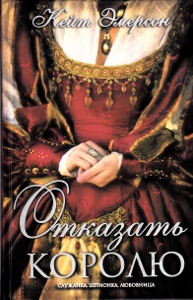
 Kaitlyn Dunnett/Kathy Lynn Emerson here. The contents of this post have been in my “blog topics” file for quite a while now. I’ve been trying to decide if this topic was blogworthy or not. I alternate between thinking this text is hilarious and worrying that people will think I am poking fun at those whose first language is not English. Seriously—no disrespect is intended. In fact, the Russian edition of The King’s Damsel, one of the historical novels I wrote as Kate Emerson, is my one and only genuine best seller. It was a book club selection and as such sold more copies than any other single book I’ve written.
So, onward. The material below is the preface to that edition, translated from Russian into English and sent to me to make sure there were no glaring errors in historical fact. I was instructed not to change to text. As you will see, the wording in English is often . . . interesting, and reading this did make me wonder how well my words fared when translated into Russian, but all-in-all, it does sum up what happens in my story. Here goes:
Intrigues Behind the Throne
It seems rather difficult a task to find another period in the history of medieval England that has been constantly attracting writers as much as the times of King Henry the Eighth who ruled between 1509 and 1547. Such an obvious interest is provoked by a number of reasons, the Monarch’s private life being not the least of them. Six wives, one after another, are more than normal for any man. To follow all the intricate ways leading from divorces to new royal marriages is a real thrill both for authors and for their readers. Especially providing we do not forget that King Henry, not a man of virtue when it came to love affairs, sent to the scaffold two of his wives for having been unfaithful to the king, which crime then amounted to high treason.
Five years before his death, the august sinner was punished with obesity to such a degree that he lost the ability to walk, compelled to be pushed in a wheelchair. Yet, at the time The King’s Damsel by the U.S. author Kate Emerson is set King Henry VIII was still a very attractive man. Here, we see him through the eyes of the novel’s heroine, Thomasine “Tamsin” Lodge, who is the narrator of the story, and we have to agree that “his appearance never failed to arouse people’s admiration.” A big and very handsome man, a skilled rider, fencer and hunter, a true gallant, a witty man in a good company, an excellent dancer and a composer of refined music, Henry fails to win Tamsin’s sympathies on account of his single fault: His Majesty is going to get divorced from his legitimate consort, old Queen Catherine of Aragon, in order to marry Anne Boleyn who fascinates him beyond reason. The king is driven not by love only, but also by political considerations: he should have a son, an heir of the throne of England. If this desire of Henry’s comes true, Princess Mary, his daughter by Catherine, will lose her right of succession.
This divorce and subsequent marriage created a deep division within the royal household. Thomasine Lodge, who was orphaned at the age of 13 and then became, through her guardian’s efforts, a maid of honor of Princess Mary, got truly attached to Her Highness. She is ready for great sacrifices in the name of her mistress, for the sake of the latter’s well-being and happiness. A lot of crafty intrigues and artful designs await the reader’s attention — those flourishing at the court, among the ladies and cavaliers of the self-assured king and his Lady Anne, whose cleverness matched only her prescience, and those instigated by Princess Mary, who had to grow up far away from both her parents and to quickly learn the intricate ways behind the throne.
The King’s Damsel is abundant in details of ladies’-in-waiting everyday life, court rules and etiquette, state ceremonies. Life in the royal palace, so noble and dignified in its outward appearance, requires one always to be on one’s guard in order not to risk one’s career or even one’s own life. Tamsin, a young provincial girl, managed to win the Princess’s favor due to her talent to invent and tell stories while her mistress was extremely bored with her obligatory embroideries. As the years pass, she becomes a real master of survival at the court. Yet, she happens to have a tinge of adventurism in her nature — enough to start, very carefully (as she sees it herself), a risky game of her own…
Thomasine Lodge is a fictitious character created by Kate Emerson’s imagination. The author was guided by letters and reports of the Spanish ambassador to England, saying that some nameless but very pretty lady of the court happened to attract the king’s attentions and was almost banished by Queen Anne. Some other characters in the book are also fictitious but most of the characters in The King’s Damsel are real historical figures, and there are special references concerning them after the main text of the novel. Even so, it is hard to disbelieve the reality of Tamsin herself as she is described so vividly and convincingly. By the way, she is loyal to the Princess but not so fanatically as to forget her own future and her own happiness. As a rich heiress, she hates staying a puppet of her loathsome guardian. Due to author’s masterly plot, Tamsin’s fate excites the reader not less — even more — than that of royal characters. When some Rafe Pinckney, a young man with curly dark hair and a courageous look on his face with an aquiline nose, appears in the novel, a shrewd reader clearly understands that this man is destined to play a very important part in Tamsin’s further life. However, they have to undergo many an ordeal before the novel’s happy end.

Written in Russian, this preface appears to have attracted plenty of readers. Color me relieved. I’d love to hear what experiences other writers have had with translations. And if any of you, readers or writers, are fluent in another language, what has been your impression of books translated from English? I remember that back when I was writing romance novels, the French editions were always much shorter than the English versions. I never could figure out what it was that they cut.
P.S. The second Kate Emerson novel to be translated into Russian, At the King’s Pleasure, had only moderate success.

Kaitlyn Dunnett/Kathy Lynn Emerson is the author of over fifty books written under several names. She won the Agatha Award in 2008 for best mystery nonfiction for How to Write Killer Historical Mysteries and was an Agatha Award finalist in 2014 in the best mystery short story category for “The Blessing Witch.” Currently she writes the contemporary Liss MacCrimmon Mysteries (The Scottie Barked at Midnight) as Kaitlyn and the historical Mistress Jaffrey Mysteries (Murder in the Merchant’s Hall) as Kathy. The latter series is a spin-off from her earlier “Face Down” series and is set in Elizabethan England. Her websites are www.KaitlynDunnett.com and www.KathyLynnEmerson.com
February 1, 2016
Page 2
Hi. Barb here. I am back in Key West and ready to sing another ode to my favorite small town newspaper, The Key West Citizen. And most specifically, Page 2, the best page in the paper because it tells us all, residents and visitors alike, everything we need to know.
 Will downtown be crowded? Check the cruise boat schedule. It tells you how many are in town today and what time they are arriving and leaving. All cruise boats have to leave the pier before sunset, and often it’s fun, while having a libation and watching the sun go down, to see one of those sideways skyscrapers pull out of port.
Need to get in your car and go somewhere? (A rarity in Key West.) What will the traffic be like? There’s a listing of all the local road projects on Page 2.
There’s the ever amusing crime report, something I’ve written about before. I think most mystery writers read their local crime reports, but criminals in South Florida are equal parts imaginative and stupid. Carl Hiaasen has made a good living from writing about them and believe me, he’s not making anything up.
And then there’s the Citizen’s Voice column where people call in or e-mail comments. Anywhere I travel, I find reading these columns in any paper a bit scary. The anonymity gives people license to be a little nuts. But Page 2 never fails me. Lately there was someone complaining about a tourist driving too fast and running over an iguana. Then, of course, someone else had to say the iguanas were an overgrown, overpopulated, invasive species and he was sure the driver was not a tourist but a local who was aiming for it. Someone else complained about the dogs running loose on the beach, saying Florida was both an open carry and a stand your ground state and he wouldn’t hesitate to shoot if a another dog jumped on him. Then someone else suggested leaving the iguanas and dogs alone and running over or shooting the tourists who are the most invasive species of all.
Also, leaf blowers. Necessary, evil, or necessary evil?
Page 2 also contains the This Day History Column, and this year, they’ve been running the daily entry from the diary of William R. Hackley. Hackley lived in the Keys from 1829 to 1857 and kept a diary most of that time.
Here are some of last week’s entries.
 January 26, 1855: William R. Hackley recorded in his diary: Rose at 5:45 and walked to the Salt Ponds. Bath. At 9 a.m. barometer 29.42, thermometer 72, wind south southwest moderate, weather clear with flying clouds. Last night having the symptoms of a violent cold coming on took a glass of hot whiskey toddy which I do not think did any good. The steamer Star of the West came in last night about 2 without a pilot. The schooner Activa also got in bringing the quit claim deeds to the ends of Eaton and Caroline streets executed by William C. Greene.
January 27, 1855: William R. Hackley recorded in his diary: Rose about 6:30 and bath. At 8:30 a.m., barometer 29.46, thermometer 70, wind north northwest moderate, weather clear. The roads are so muddy that I did not walk this morning. Last night my throat being sore put a wet bandage on it. Matilda, Hattie and Annie all have sore throats and colds. The winter has had many changes from hot to cold and a great deal of water has fallen, every northern has been preceded by heavy rainfalls attended with thunder and lighting. Read papers. At 4 p.m. went up to see Mrs. C.C. Adams with Matilda. The children had gone up to the Barracks earlier to see Capt.Israel Vogdes’ children. I went to the church with Matilda to practice in the choir.
January 28, 1855: William R. Hackley recorded in his diary: Rose at 5:45 and walked up the beach to the Salt Ponds and back the same way, went on the Fort to see the work they are getting along fast. At 8:40 a.m., barometer 29.36, thermometer 69.5, wind east southeast moderate with flying clouds. Read papers. P.M. Read Harper’s. A seaman who died yesterday on board the Princeton was buried about 3 from the wharf,a detachment of men and officers landed with the corpse.At 4 p.m. barometer 29.32.5, thermometer 77, wind south southwest fresh with flying clouds. Walked to the Fort with Matilda and the children.
I really enjoy these daily views of what someone in the same town was doing on the same day 161 years ago.
But, as always, the final word goes to the Citizens Voice column, where some wag posted:
Arose at 5:54 a.m., wife still snoring softly. Bath. At 7:55 a.m. barometer 29.54 and rising and falling, light winds outta nowhere, thermometer smashed by leaf blower enraged person. Walked to town, attended city commissioner meeting and watched semi-normal people morph into Bubbas. Home to lunch, wife on again about no visible means of support. Placated myself with two hard lemonades and a snooze. After dinner, walked around salt lick ponds (counter clockwise) then home and noticed iguana poo on my crocs. Can’t the city do something? Then read Citizen’s Voice and fell asleep immediately.
January 31, 2016
Mind, Body, and Words
Lea Wait, here.
Mystery writers work to perfect the first line of their book or story. Is that sentence intriguing? Does it hint at challenges to come? Is it perhaps … scary?
Well, today I’m writing a very scary first line.
One week ago my husband, artist Bob Thomas, had a stroke.

Lea’s husband, artist
Bob Thomas
A roast chicken was in the oven, we were talking and getting dinner, and he dropped the dishes he was taking out of a cabinet. As they shattered on the floor, he turned to me. His mouth was distorted, and he drooled as he said, in amazement and anger, pointing at the broken dishes, “My hand doesn’t work.”
He spent five or six hours at our local emergency room having tests, and then was admitted to an intensive care room where he could be monitored. Fifteen hours later his speech was better, although, normally left-handed, he couldn’t hold anything with his left hand, and he couldn’t eat, because he couldn’t swallow.
Thirty hours after the stroke he had another episode. His speech slurred again. He had another CAT scan.
And we both started to be educated.
His (thankfully, small) stroke had destroyed connections between his brain and both his left hand and the muscles in his mouth and throat. Speech and occupational/hand therapists immediately started to work with him to re-learn those skills; skills that had been automatic hours before. He could hold a spoon as long as he focused on holding the spoon. As soon as someone spoke, or came into the room, or he thought of something else … the spoon fell. He choked when he tried to swallow.
His major worry was that he wouldn’t be able to paint again. How could he hold a paint brush?

Bob & two of his paintings at gallery
Seven days after his stroke, Bob’s now home. He’s determined to regain the functions he lost, and he’s making major strides. Despite dropping his brush several times, he’s even completed a painting he’d been working on before his stroke — completed it well. He’s eating, small bites, in a quiet room, as he focuses on the process of swallowing. His voice is normal.
He’ll be seeing therapists and doctors for a while. But he’ll recover. It may take some time, but, with continuing work, his body will come back to close to what it was before his stroke. We are thankful and hopeful.
Bob and I have both learned a lot in the past week. We’ve learned that we’re ready to tough out what will come. We’ve learned not to take our bodies (or our lives) for granted. And we’ve learned the power of focus.
When Bob didn’t focus on chewing and swallowing he choked. When he didn’t focus on his hand, he dropped things. When he did focus, his body worked – and each time it worked he retrained it to work better the next time.

A Few of Bob’s Paintings
Which brings me to the third part of the title of this blog — “words.” Because, like our bodies, our words can also be taken for granted. We speak sloppily, using whichever words come first, whether or not they reflect exactly what we want to say. We don’t worry about this because, we assure ourselves, “people know what we mean.”
But the truth is, often they don’t. They don’t hear the nuances behind our thoughts. And those nuances can lead to major misunderstandings. (Think: voters who believe grandiose political promises without specific, credible, plans to turn those promises into realities.)
Those of us who write are guilty of the same thing: we write hurriedly, casually. We excuse incorrect grammar as “too formal.” We use the same words over and over because they’re the easiest, the most common. Not because they best reflect our thoughts.
Editing does for writing what focus is doing for Bob’s body: it retrains us to recognize when our writing is imperfect; when it doesn’t reflect exactly what our brain intended it to do. (It may mean realizing that our thinking is also sloppy.)
This kind of focus takes time. It means not assuming “people will understand.” It means writing precisely what we mean; choosing the perfect word and sentence construction, and, ultimately, putting together tightly written paragraphs, chapters and plots.
If we don’t take the time to convey our thoughts in the best possible way, we are letting our readers, and ourselves, down. We are leaving our brains in the “idle” position.
Focusing is exhausting. But it’s also strengthening. It keeps our minds and skills in peak condition.
Because we need to do our best today. We can’t take for granted that we can put it off until tomorrow.
January 29, 2016
Weekend Update: January 30-31, 2016
 Next week at Maine Crime Writers there will be posts by Lea Wait (Monday), Barb Ross (Tuesday), Kaitlyn Dunnett/Kathy Lynn Emerson (Wednesday), Maureen Milliken (Thursday), and Vaughn Hardacker (Friday).
In the news department, here’s what’s happening with some of us who blog regularly at Maine Crime Writers:
Maureen Milliken is excited to announce that the audio version of her novel Cold Hard News, the debut in the Bernie O’Dea mystery series, is now available on Audible, iTunes and Amazon. She got the boost to pursue audio from Dale Phillips, who’s posted about it on Maine Crime Writers.

Checked out Audible.com and look what I saw! Cold Hard News leading the new releases.
Maureen is also scheduled to appear as part of a panel with the Sisters in Crime NE Speakers bureau at the Sandwich Public Library, “It’s a Mystery to Me,” in Sandwich, Mass., Saturday, Feb. 6. She’ll be joined by fellow Maine Crime Writer Kate Flora and Arlene Kay, as well as moderator Leslie Wheeler. It’s sponsored by Titcomb’s Bookshop. Details were also firmed up last week for two upcoming events: The SINCNE speakers bureau is planning an event for Thursday, April 14, at Maureen’s childhood library, Lithgow Public Library, in Augusta. Stay tuned for details. And finally, April being the coolest month, Maureen will appear on a panel of debut writers at Maine Crime Wave, along with fellow Maine Crime Writer Brenda Buchanan, and Dick Cass and Brendan Reilly, moderated by Kate Flora. That’s April 9 — save the date!
Working on a short story? Don’t miss the submissions deadlines for Level Best Books and the Al Blanchard Award: http://levelbestbooks.com/submissions
Haven’t read Beat, Slay, Love? Love free stuff? Well, it is now available as an audio book, and one of this week’s lucky commenters will win a free download. All we ask is that, if you like it, you consider leaving a positive review.
An invitation to readers of this blog: Do you have news relating to Maine, Crime, or Writing? We’d love to hear from you. Just comment below to share.
And a reminder: If your library, school, or organization is looking for a speaker, we are often available to talk about the writing process, research, where we get our ideas, and other mysteries of the business. Contact Kate Flora: mailto: kateflora@gmail.com
January 28, 2016
You Might Be Next
 Kate Flora: We’ve been visiting the big city—San Francisco—and leaving my desk and exploring new territory always reminds me how important it is to get out now and then to go “character shopping.” Once, years ago, when I spoke to a high school class, I told them that while they thought they were there to watch me, actually I was there to watch them. Then I took them through some observation exercises. What does a classroom sound like? What behaviors can I observe? What are the details that might help to bring a character to life?
Now I have a whole city to provide me with characters. Shortly after we arrived, we took BART (the Bay area subway system) over to Berkeley to see our friends’ newly purchased house. As I gazed around the subway car, I realized that my husband and I were the only people there who weren’t plugged into our phones. Nearly everyone had earphones on, and everyone was staring intently at screens.
There was something almost ritualistic about it, like people entering the Church of the Cell Phone. The car would stop. People would get on. They would find seats and immediately bow over their phones. And never lift their eyes to see the people around them. Perhaps it was kind of them—no one could see me stare.
The forty-something blonde with the lank hair and phenomenal gum chewing skills is a definite candidate for one of Joe Burgess’s reluctant witnesses. She’ll absolutely have to blow one of those defiant bubbles in his face.
For Thea Kozak, who consults to private schools, there was the gaggle of high school kids.

I can’t photograph people, so this is what else I’ve been seeing
The large, perhaps Samoan dandy with his burgundy suede boots, and his entourage of girls—his beautiful African-American girlfriend and her plain and pudgy girlfriends. When he wasn’t taking selfies of himself (most of the time), there was some actual conversation going on. When he finally stood, anticipating his stop, he planted one of those burgundy wonders on the seat and wiggled it around to admire it. My imagination stuck an older lady with a cane into the scene so she could whack him and tell him to get his dirty foot off the seat.
At the next stop, the door opened and three young black teens got on. Two dashed for the back, the third threw himself down on the seat in front of us. Yes, mama said it was rude to stare, but there was some kind of amazing physics going on. The waistband of his jeans only reached the top of his thighs. Between that and his actual waist was an 8-9 inch expanse of shiny red boxers. A sweet-faced lad with honey brown skin and an amiable grin. But how, oh how, did he keep those pants on when he walked? Perhaps gravity was the reason he reclined rather than sat? Eventually he got up and ambled down the car to join his friends and I waited with ‘baited breath for the descent of the pants. It must have been magic because despite the narrowness of his hips and the absurdity of their position, they never fell off. Imagine my cynical cop watching that performance? I have seen such pants fall down, though. In airports. On the street. On the stairs leaving the subway.
It was followed by one his cohort spilling a Coke, which rolled in a suspicious brown stream up and down the car as we made our herky/jerky way to the other side of the bay. Repellant in real life; amusing in a book.

Not a blue-haired boy but a fascinating pair of shrubs
And speaking of fashion, the only other set of people interacting with each other instead of with their phones were the tall, awkward, skinny blue-haired boy and his teeny girlfriend. He had to bend like a stork to reach her face, but he couldn’t stop kissing her. Ah. Young love. Or young lust? What a springboard for a character’s imagination.
There is a young Middle Eastern couple with a small baby. She looks far too young to be a mother. He is dressed like a dandy. The baby is in colorful fleece. After a signal passes between them, they get up and walk to the end of the car, and return, he carrying a sign begging for money, she, eyes down, trailing in his wake, holding the sleeping baby. How can they even get anyone’s attention, when all the eyes are on their phones. Only one person gives them money, a geeky young man who digs in his backpack. They move on to the next car.
On the escalator to the street, there is a man wearing a luscious, soft-looking brown cashmere dress.
Then on into Berkeley, approaching the campus via a city street where in clear defiance of

A rogue vine
the “No Drug Area” signs, gaggles of odd, shabby-looking people were gathered in a miasmic fog of marijuana. Gone are the used bookstores, in their place food joints and stores selling vinyl. Past a row of booths alternating activism with recruitment for campus fraternities and organizations. Pre-business. Pre-law. Pre-medicine. Environmental awareness. Come to a lecture on socialism. I’m remembering my college days. We had a dress code. They have an undress code—often the largest pieces of clothing worn are piratical, over-the-knee boots.
I am tucking my mental notebook away when we pass a lovely young woman with russet curls and a sprinkle of freckles who appears to be scrutinizing something botanical. How academic. How pleasing to see her taking an interest in her environment. But alas. No. She is just looking for the right backdrop and lighting for her selfie.
For 2016, I have vowed to concentrate on “otheries.” Taking note of the world around me. It’s a writer’s job. And how richly I am being rewarded.
the Death of an Old Family Friend
John Clark reprising a piece I wrote for Wolf Moon Journal back in 2005 in the hope it brightens your day as we creep into February.
On the Death of An Old Family Friend

Great grandfather Horatio Clark who was one of many in the family who loved to garden and fish
When you marry, you gain more than a partner. You acquire new relatives, different ways of thinking, new customs and family celebrations. All of these are more or less expected parts of a new blended life. If you are lucky, you gain some unexpected things as well. I gained new realms to explore, and I did; hunting and fishing through parts of Maine that had previously been odd names on a topographic map.
I got in the habit of sitting on the front steps with my father-in-law. He would talk about catching trout in a spot a couple miles in from a particular tote road or trolling for salmon just before dusk with a Rangely spinner below a certain dam. As we watched the setting sun creep across the hill on the other side of the road, I would share my own memories of fly fishing the Carabasset River with my father before it was lined with ski chalets, and trout were still plentiful enough to be fooled by eight year old boys. I=d reminisce about the gold nugget my grandfather found while fishing the North branch of the Dead River and how my father would hike nine miles into Spencer Stream to catch monster trout. These were companionable moments interspersed with the cry of hawks and the beckoning sounds of float planes on their way to Moosehead Lake.
I began to explore some of these inherited realms, sometimes alone, sometimes with my wife or friends. There was something magic about wading down the middle of a stream, chest deep in cool water, automatically casting streamer flies while lost in thought. Sometimes those moments would be pleasantly interrupted by the sharp tug of a hungry trout or the wary gaze of a deer caught in the act of drinking. By the end of the day, my body would be tired and my soul recharged.

Fixing the Wire bridge over the Carrabasssett River not far from my grandparents’ house in New Portland
Certain spots began to acquire their own lore; The overgrown blueberry field where a bear was surprised while eating grubs from an anthill, the streamside trail where a mother hawk maintained her uneasy vigil until satisfied that we were uninterested in her hatchlings, the remote pond where moose and deer ambled through the shallows together, completely indifferent to our presence, the springhole where I suddenly found myself chest deep in frigid water while ice fishing. Each became a part of a blended heritage to be shared with my children while sitting on front steps and listening to the sounds of summer.
One August, while fishing one of my inherited streams, I dangled a fly in a small pool below the remnants of a long destroyed mill. The spot had often rewarded me with dinner. To my astonishment a huge brook trout swam out of the jumble of old millwork to eye my offering. After looking it over with the contemptuous experience of trout-like wisdom, he turned gracefully and swam back into the rocky den from whence he had come. I was stunned! In years of fishing this brook, nothing of this size had ever shown itself, not had there ever been a hint a fish this big existed. Numerous attempts with different flies resulted in a couple curtain calls, but nary a nibble. I returned home to share my adventure. Over the rest of the season, I returned several times. Each time my mammoth friend would emerge, eye my offering and grandly swim back to his rocky hideaway. His pool was so small and his length so long that he had to use the entire pool to turn around. One evening just before the season closed, I brought Beth with me and she was treated to a command performance complete with a tentative nibble on the evening‘s offering.

Even when the boat wasn’t ready, I was thinking about fishing as a kid.
Summer slipped into fall, fishing was replaced by duck hunting and then by deer hunting. Winter brought holiday gatherings where I shared the story of my mammoth friend with those from >away=. Ice fishing became the prime weekend activity, with slow periods filled by meals cooked over outdoor fires and everyone remembering fishing tales from past seasons. More than once I shared the story of my friend and we all wondered how such a large fish had come to live in such a small pool.
As winter faded into spring, Maine experienced what was to become known as the 500 Year Flood. Heavy rains rapidly ate away the snow cover, creating torrents where small rivulets had been just the day before. River towns were evacuated and it seemed like entire forests were rushing madly under bridges. The events surrounding the flooding and the safety of loved ones erased all thoughts of my friend.
When spring once more passed its mantle of green to summer, I returned to the stream. As I approached the old mill site, I was saddened at the changes wrought by the flood. Pools I had fished for years were unrecognizable, with rocks pushed far downstream. The remains of the old mill were gone. After an hour of fishing in every possible spot, I realized my friend was gone. Smaller fish still lurked among the nearby rocks, but the big trout was just a memory to be shared with friends and family on summer afternoons when the siren song of float planes headed for remote ponds fill the skies.

If you’d rather be here right now, raise your hand.
January 26, 2016
Finding Faces
Kaitlyn Dunnett/Kathy Lynn Emerson here. It’s confession time—I’m not very good at finding fresh ways to describe the physical appearance of my characters. What do they look like? Sometimes I have no idea.
I do make character sheets on which I record height, weight, build, hair and eye color and so on, but when it comes to finding a way to make each one stand out for the reader I am always left fumbling for the right words.
Over the years I’ve worked up a “cheat sheet” listing details that describe a character’s attributes. It’s broken down into the following categories: attitude, build, complexion, ears, eyes, face and facial hair, fingers, gait, hair, hands, laugh, nervous habits, nose, smell, and voice. Yes, those are alphabetical. No, they don’t have a particular rationale behind them, other than being areas where I’ve managed to accumulate a variety of descriptive words and phrases that I can mix and match when creating a new character. Under gait, for example, the list includes awkward, slight limp, rolling, slow-moving, hobbling, scuttling, shambling, light on his feet, shuffling movement, and flat-footed. Hair omits the standard colors and includes straw-colored, mud-colored, rich blue-black that reflects the sunlight, sand-colored, ginger, and also lank, bald, thinning, and receding hairline.
 Such word lists are great as far as they go, but sometimes I have the feeling I should be doing more. When I was working on The Scottie Barked at Midnight, which has an unusually large cast of new characters, I decided to try something I know some writers have used successfully—clipping photos from magazine ads to help visualize what their characters look like. The problem, of course, is that most of the people in those are too good looking. News stories provide more variety. In fact, years ago, I had a certain small-time Maine politician in mind when I was creating a particularly smarmy villain.
 Other than that, though, the only time I’ve matched a character with a real person’s picture was after the fact. Rosamond Jaffrey’s late, unlamented father, Sir Robert Appleton, from my Face Down mysteries and, now, the Mistress Jaffrey mystery series I write as Kathy Lynn Emerson, found his perfect embodiment in Colin Firth, as seen as the not-so-nice Lord Wessex in Shakespeare in Love. Other attempts to find faces that match my imaginary people usually end up with me saying “he’s a cross between x and y.”
 One caveat—it’s almost always a bad idea to come right out and describe someone as looking like a celebrity. For one thing, it dates the book. And, of course, this doesn’t work at all well in an historical unless you’re sure your readers will know what a character means when he says someone is a dead ringer for Lord Byron or King Henry or Bram Stoker (who, incidentally, was quite a good-looking man).
 But to get back to the Liss MacCrimmon series—the plot of The Scottie Barked at Midnight centers around a television talent competition called Variety, Live. Making up the rules and deciding on each character’s talent was the easy part. I still had to describe each contestant in a way that would make them separate and distinct in the reader’s mind. Second confession—I don’t much care for The Voice or American Idol or any others of that ilk. The only competition I do watch is Dancing with the Stars . . . and that gave me an idea.
 Why not, I asked myself, use former competitors on Dancing with the Stars as the inspiration for my characters? There are certainly plenty of different physical characteristics on display in any given season. So I gave it a try. You’ll have noticed that I’ve sprinkled photos of celebrities throughout this post. The characters they inspired are, in the order they appear in the post, M.C. Roy Eastmont and contestants Willetta Farwell, Mo Heedles, Elise Isley, Iris Jansen, Hal Quarles, and “The Great Umberto” aka Oscar Yates. Keep in mind that I only borrowed physical features, not the real person’s personality or talent.
 So, what do you think? If you’ve read the book, do these photos fit your idea of the character? If you haven’t read it, does the physical appearance of the person in the picture seem to go well with the character’s name? All bets are off, by the way, for Mo Heedles. She is a real person who won character-naming rights at a Malice Domestic auction after the book was already written. Before that, “Mo” was named Carla Uvedale.
 There’s no question that using this technique gave me the variety I was after for this book, but I found that I had no particular urge to do it again when I was writing this year’s Liss MacCrimmon mystery, Kilt at the Highland Games (July). That said, I’d be very curious to hear about other writers’ experiences in taking the inspiration for their characters’ appearance from pictures of real people. Did it work for you? Have you done it more than once? Chime in, please, and share.

Kaitlyn Dunnett/Kathy Lynn Emerson is the author of over fifty books written under several names. She won the Agatha Award in 2008 for best mystery nonfiction for How to Write Killer Historical Mysteries and was an Agatha Award finalist in 2014 in the best mystery short story category for “The Blessing Witch.” Currently she writes the contemporary Liss MacCrimmon Mysteries (The Scottie Barked at Midnight) as Kaitlyn and the historical Mistress Jaffrey Mysteries (Murder in the Merchant’s Hall) as Kathy. The latter series is a spin-off from her earlier “Face Down” series and is set in Elizabethan England. Her websites are www.KaitlynDunnett.com and www.KathyLynnEmerson.com
On Books
Bruce Robert Coffin here. Wishing each of you the best 2016 has to offer.
The other day I was busy editing the manuscript to my second novel — far from finished but editing is something writers do when the writing isn’t going so well — when a random thought popped into my head. What is the big deal about books? No really. They are only paper and ink after all. Only words printed on pages, bound together by a spine, sandwiched between two cloth-covered pieces of cardboard, then wrapped in a shiny dust jacket. Nothing too extraordinary, right?
But if books really are no big deal, if they don’t rise beyond the sum of their parts, why then do we love them so? Why do we erect buildings dedicated to them? Why are we compelled to purchase shelves to hold them, and boxes in which to store them? Why do we display our books on coffee tables and night stands as if they were endearing photos of loved ones? Or race to the store to buy the latest in a series? Or stand in line to have one autographed by a total stranger?
I pondered the question for a while. Pondering is also something writers do, especially when the writing isn’t going so well. Suddenly, the answer came to me, like a bolt of lightning from a clear blue sky (hey, I’m allowed one cliché). Maybe the answer to the question is….that they aren’t really books at all. They are more like portals, capable of whisking us away to strange new places, and new dimensions. To boldly go where no man, or women, has gone before… Sorry, I get carried away.
Books can transport us back to a time when we were different people, younger versions of ourselves. Don’t believe me? Try picking up a copy of Clifford the Big Red Dog or Where the Wild Things Are, then tell me you can’t see images from your childhood dancing before your very eyes. Or Charlie and the Chocolate Factory by Ronald Dahl. I still recall sitting at my desk in third grade while our homeroom teacher read to us. Still remember trying to imagine what an everlasting gobstopper or a snozzberry would taste like.

 One summer, when I was but a wee lad, I pedaled my bike to a local flea market every week so I could gaze upon their vast collection of antique children’s books. Displayed proudly upon painted shelves was a treasure trove of all things mystery. There were Nancy Drew Mysteries, The Hardy Boys, and Spin and Marty, titles that pre-dated me but intrigued me all the same. I can still remember their musty smell and little white price stickers. Oh, what a quarter would buy. So very captivating were their covers and illustrations. I deliberated over them like an indecisive teen perusing the latest record album bin at the local LaVerdiere’s. Even the book titles were brilliant: The Secret of the Caves, The Ghost at Skeleton Rock, The Whispering Statue, and The Mystery of the Dragon Fire. I had no idea what dragon fire was, but I knew I couldn’t wait to get that book home and delve into its mystery.


When I turned twelve, I read my first Stephen King novel, Salem’s Lot. I can still recall the smell of those new pages, the same magical scent as the pop quiz sheets straight from the school office mimeograph. I also remember King’s book scared the hell out of me, as have many of his subsequent works. I read King’s book mostly at night, alone, in my room, frequently unnerved by the feeling that someone was watching me from outside the window. Maybe Danny Glick?
As I aged, my tastes changed, along with my books: One Police Plaza, Tuesdays with Morrie, Of Mice and Men, and A Walk in the Woods. I imagined myself hiking up and down mountains along the Appalachian Trail while chatting with Bryson, or maybe sharing a cream soda with Katz. Each book represented a new chapter in my life, new memories.
More than just paper and ink, books are endless streams of thought and consciousness, knowledge and ideas. Each possessing the power to entertain, to enrich, and to teach us to grow. Books allow us safe passage, an escape from this world to another, if only for a short while. Evoking an infinite number of emotions, the best books are like an amusement park thrill ride, lifting our spirits one moment and then rocketing us downward toward some imaginary horror the next.
What is the big deal about books, you ask? Why not open one and find out?
Lea Wait's Blog

- Lea Wait's profile
- 509 followers

