
Lea Wait's Blog, page 245
November 11, 2016
Weekend Update: November 12-13, 2016
 Next week at Maine Crime Writers, there will be posts by Kaitlyn Dunnett/Kathy Lynn Emerson (Monday) Lea Wait (Tuesday), Brenda Buchanan (Wednesday), Jen Blood (Thursday), and Jessie Crockett (Friday).
In the news department, here’s what’s happening with some of us who blog regularly at Maine Crime Writers:
Many of the Maine Crime Writers are at New England Crime Bake from Friday through Sunday. With any luck, pictures will be added during the weekend.
From November 17-20, Lea Wait will be at Studio 53, 53 Townsend Avenue in Boothbay Harbor, Maine, as part of “Gifts for Giving,” a celebration of locally created art, crafts, jewelry … and, yes, books. She’ll be there from 11-4 on Thursday the 17th, from 11 until 8 on Friday the 18th (opening reception from 5 until 8!), from 7 a.m. (yes, it’s Early Bird Sale time in Boothbay Harbor. Shop in your PJ’s!) until 8 p.m., and Sunday, November 20, from 11 until 5.
Last Sunday afternoon, a bunch (a gaggle? a gang? a clutch?) of Maine Crime Writers gathered at Bull Feeney’s Pub in Portland for Noir @ The Bar, where each did a three minute reading from published or yet-to-be published work. It was the inaugural Maine N@TB, and we were blessed will a full house of engaged listeners. Here’s a photo of the dozen who participated.

From left, Maureen Milliken, Bruce Coffin, Barbara Ross, Jessie Crockett/Jessica Estevao, Richard Cass, Brenda Buchanan, Julia Spencer-Fleming, E.J. Fechenda, Gayle Lynds, Jen Blood, John Sheldon and Brendan Rielly.
Watch for another Noir @ The Bar sometime in late winter, when we once again will need an afternoon of fellowship and laughs.
An invitation to readers of this blog: Do you have news relating to Maine, Crime, or Writing? We’d love to hear from you. Just comment below to share.
And a reminder: If your library, school, or organization is looking for a speaker, we are often available to talk about the writing process, research, where we get our ideas, and other mysteries of the business. Contact Kate Flora


November 10, 2016
The Comforting World of Crime
Kate Flora, here, and yes, I really did mean that crime can be comforting. Let me begin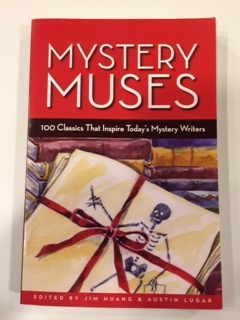 with a story.
Several years ago…fifteen, to be more precise…we suffered a terrible national tragedy on a day in September when terrorists flew airplanes into the Twin Towers and the Pentagon. Shortly after that event, my friend Hallie Ephron had a book launch planned. She arrived at the book party a little bit late, and a little bit frustrated, having just come from doing a radio interview. In the course of that interview, the interviewer had challenged the legitimacy of holding the launch of a crime novel at such a terrible time. Didn’t Hallie feel guilty, the interviewer inquired, about promoting fiction that profits from violence and death?
Hallie’s reply was brilliant, and correct. She said that we should all wish that the real world was more like the world of a crime novel, where good guys triumph, bad guys get caught, and moral order is restored to the world.
I don’t know about you, but I am feeling a great need for order and comfort and morality right now. Which is why I am suggesting that you join me in taking refuge in reading crime novels.
 It really doesn’t matter which corner of the big crime-writing tent you choose. Maybe you lean toward romantic suspense, with that double happy ending of crime solved or dastardly deed averted and a bit of happy ever after. Or perhaps you like the shoot ‘em up, beat ‘em up, casual violence of a Paladin like Lee Child’s Jack Reacher, books which provide a reliably American hero to root for who will always step up for the underdog. Maybe you like the mind-game contests between the investigators and the diabolical bad guys in one of Jeff Deaver’s brilliantly plotted thrillers? Or feel comforted by the idea of having Robert Crais’s Joe Pike watching your back? Personally, I’d like to hang out with Sara Paretsky’s V.I. Warshawski.
Perhaps your cup of tea is more in the vein of Agatha Christie? Less blood, more social norms. Right now, it can be very comforting to spend time with people who have good manners and obey social conventions. A bit of Margery Allingham, perhaps, and the very proper Albert Campion and his manservant Lugg, or the charmingly bumbling Lord Peter Whimsey, with his impeccable servant and the insightful and witty Harriet Vane? Even when we learn that Harriet has committed the shocking act of cohabiting before marriage, she is still a model of good manners and decorum.
Maybe the wearying cycle of bad news just makes you want to get out of town. Go someplace different where you can steep yourself in the landscape and forget about the state of the country. For that, you could go west with Tony Hillerman, or into the wilds of Wyoming with Craig Johnson’s Sheriff Longmire, or up to the wilds of Minnesota with William Kent Krueger. Or you could spend more time in Maine with Barbara Ross’s Clam Bake series or Lea Wait’s Shadow’s series.
If you really need to get out of town, there are mysteries set all over the world, and you could just set up a twelve-month calendar and visit a different venue every month.
Personally, right now, I would love someone to have my back…one of those kick-ass sidekicks who do bad stuff and break laws and compel cooperation and answers from the reluctant? If you’d like to explore sidekicks, we did a blog post here a while back on the subject. Here’s the link: http://mainecrimewriters.com/group-post/whod-have-your-back Stephanie Plum, perhaps? She might loan you Ranger. Or you can make up your own sidekick, which might be a fun way to spend another afternoon avoiding the news.
Feeling dystopic? How about Ben Winter’s The Last Policeman?
Or if you want to be transported by descriptive prose, go back to an old Mary Stewart romantic suspense, or make your way through John D. MacDonald. Both will have some dated social conventions, and some rather old-fashioned versions of the male/female relationship. But right now, that doesn’t seem half bad.
 And guess what?
The good guys win.
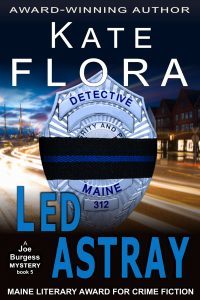
So, dear reader, if you are going to escape into crime fiction, what will you be reading? (I am so hoping it is my new Joe Burgess)
Between now and December 9th, folks who leave comments will be eligible to win a bag of goodies perfect for your mystery reading escape–tea and biscuits! (Actually including Effie’s Oatcakes, which are perfectly heavenly. And perhaps some shortbreads?)
November 9, 2016
Every Time I Pass An Empty House

John Clark reflecting on an unusual opportunity Kate and I had as kids and what happened afterward. We weren’t ten yet, I guess, when Mom and Dad signed up for the IFYE program (http://ifyeusa.org/). Over a four year period, we hosted three young men and a young woman from foreign countries.. This was at a time when Maine was whiter than white. The only time we saw anyone with a different skin color was when Black people worked the carnival rides at the Union Fair. Nobody knew about Franco-Americans and my idea of a minority was Nancy Simmons, the only Catholic in my class.
Sampson Magsudpor was from Iran, Krishna Laldas was from Pakistan and Perveez Rustamji and Verendra Singh were from India. Not only did we kids get a fabulous cultural education from having them live in our farmhouse for four consecutive summers, but we got to learn foreign words, tasted new cuisine and got major bragging rights when at least one of them visited our elementary school classrooms for an uber show and tell.

IFYE group photo with Sampson.
In return, these young people learned to swim in a Maine Lake, cook American style, pick blueberries, take care of chickens, garden and discover how different American country life was. Given that this happened some 50+ years ago, my memories aren’t that clear, but I suspect at least a couple of them came from wealthy families and there was a certain amount of culture shock. Still, their stays were a good time for all and my parents kept in touch by mail with them for years afterward. Perveez even sent Mom a sari that we found in a drawer after she died.
I’ve often wondered what happened to them after returning to their respective countries and how the experience affected them in later years. For me, at least, it defused any unease I had about people from foreign countries. That sense of comfort remained with me when I went to Arizona State, a school that had students from all over the globe. My first friend freshman year was George Castano, a fellow who had come to ASU from Colombia to study architecture. I later made friends with students from Thailand, Sweden and Saudi Arabia, as well as Mexico. In hindsight, I don’t remember any racial, cultural or religious animosity on my part.

Sampson with Me, Kate and Sara
I mention that because of the climate of unease, fear and distrust surrounding us these days. Our daughters, Sara and Lisa were active in the Latin and German clubs at Cony High School. Sara spent a week in Europe, while Lisa hosted a German student for two weeks and then spent two weeks staying in Germany as part of the German-American Partnership program. She maintains contact with several members of the German contingent to this day. We also hosted a Russian teen and two teen girls from Japan for shorter periods when the girls were in high school. In addition, they had classmates who had come from several foreign countries including Cambodia and the Dominican Republic. Both girls entered adulthood free of racial prejudice and homophobia.
These cultural experiences made three generations in the Clark family better citizens of the world because we were exposed to foreign cultures early on. These days, all too many Mainers (of all ages) are more likely to be fearful and hostile at the idea of immigrants or refugees coming to the Pine Tree State. I believe we should be aggressive in encouraging people from all lands and cultures to come here. At least two articles have appeared in Maine newspapers recently regarding the dilemma older Maine farmers are facing regarding who will take over when they’re no longer able to work the land.
Think for a moment. How many refugees farmed at home before having to flee or before being displaced. I bet the number is high…AND they sure weren’t doing it with anywhere near as good equipment as Maine farmers have. What if we matched some of them with elderly farmers, subsidizing them until they were able to start building equity by producing crops. I bet there are plenty of immigrants who would find freezing weather beats the hell out of dodging bullets and getting burned out of their homes.
Every time I pass a house that’s been for sale for any length of time or has been abandoned and is in danger of going past the point where it can be repaired, I wish we could offer it, along with support and training, to a refugee family. Doing so would not only revitalize our rural communities, but offer our kids the same cultural opportunities my family enjoyed, not to mention creating that work force we’ll need if we have any hope of attracting new jobs to rural Maine.
November 8, 2016
The Day After
Brendan Rielly: I’m not sure how I drew the short straw of blogging the day after  Election Day. Since I’m writing this in advance of Election Day, I could make predictions and see how close I get. But that would either reaffirm what I’m already happy about or pour salt in a very open wound. Instead, I’ll just post two things.
First, to all who love books, read, buy, check out, borrow the books written by the wonderful authors blogging on this site. I have read many of their books. They are unique and a joy. And, writing this several days before Election Day, it is reaffirming to know that heroes have flaws but still win.
Second, watch this video of a dog absolutely flipping out when his owner dresses up as his favorite toy. We all need a good laugh.
Dog Video
Cheers! See you on the other side.
November 7, 2016
THIS CAMPAIGN NOT THE NASTIEST?
Not even close, according to several articles I read. Never fear. This won’t be an historical treatise, thick with party platforms and wide-ranging political details. We’re going way back in U.S. history, to take a look at nineteenth-century mudslinging.
Forbes.com claims 1800 gave us the first, pitting President John Adams against Vice-President Thomas Jefferson. As in many contemporary elections, a lot of the insults were left to surrogates.
 An Adams supporter, the president of Yale University publicly said that if Jefferson were to become the president, “we would see our wives and daughters the victims of legal prostitution.” And a partisan Connecticut newspaper warned that electing Jefferson would create a nation where “murder, robbery, rape, adultery and incest will openly be taught and practiced.”
 Jefferson’s partisans fought back with wild claims by hiring a writer to sling insults—James Callender, an influential journalist of the time who had been imprisoned by the Adams administration for violating the Sedition Act (a 1798 bill criminalizing making false statements critical of the federal government). Callendar wrote that Adams was warmongering, a “repulsive pedant,” and a “gross hypocrite” who “possessed a hideous hermaphroditical character.” Jefferson won. One wonders what his opponents would think if they could see his likeness on Mount Rushmore. After such a nasty election, Congress passed the Twelfth Amendment, no longer permitting the nominee with the second-highest number of votes to be elected vice president.
Almost thirty years later came the next dirty campaign, between President John Quincy Adams and Andrew Jackson. J.Q. Adams must have learned a bit about harsh campaigning from his father.
 Adams had begun his career in diplomacy, eventually becoming America’s ambassador to Russia. The Jackson side spread the rumor that Adams had sold his wife’s maid to the czar for sexual services. Adams, they claimed, owed his success in Russia to his pimping prowess. He was further accused of having a pool table in the White House paid for with government money. As the mud flew back and forth, Adams attacked Jackson’s military successes and campaigns. When this fell somewhat flat, Jackson’s marriage became another weapon.
 Jackson’s wife Rachel was a divorcee, having married him after escaping an abusive marriage. Jackson was accused of adultery and living in sin, no small accusation in 1828. A pamphlet called Rachel Jackson a “convicted adulteress” and said she was prone to “open and notorious lewdness.” Andrew Jackson won the election, but sadly, the mud-slinging campaign took its toll on his wife. Shortly after her husband’s election, she died, due to “unknown reasons.” Jackson was devastated and blamed her death on the attacks by the Adams camp. He refused to make the traditional visit to the outgoing president.
The final contest I’ll address features U.S. Senator James Gillespie Blaine of Maine against Governor Grover Cleveland of New York. Mainers know Blaine’s distinguished career—journalist and the owner of the Kennebec Journal, Speaker of the Maine House of Representatives, twice U. S. Secretary of State, and U.S. Representative, serving as the 27th Speaker of the House.
 Just as an aside, I’ll add that in 1862 Blaine purchased a large Augusta home as a present for his wife. Given to the state by their daughter after World War I, the house was established as the official residence of the governor of Maine. Blaine’s was such a distinguished career that many may not know about the scandals bandied about in the Blaine/Cleveland campaign.Rather than on party platforms, the campaign focused on the candidates’ morality and personalities.
Cleveland’s supporters raised an old scandal against Blaine, of shady dealings with the Union Pacific Railroad. Letters surfaced that confirmed he knew he was involved in corrupt business. On one of the most damaging, he had written, “Burn this letter,” giving his opponents the rallying cry “Blaine, Blaine, James G. Blaine, the continental liar from the state of Maine. ‘Burn this letter!’” Blaine described these attacks as “stale slander,” but the letters made his denials implausible.
 To turn the tables, Blaine’s backers found reports that Cleveland had fathered an illegitimate child. He fully supported the child, although another man, his law partner, was also involved with the woman. The rallying cry this time was “Ma, Ma, where’s my pa?” After Cleveland was elected, they added, “Gone to the White House. Ha! Ha! Ha!”
Harsh words, wild accusations, outright lies, and nastiness, yes, in all three of those elections, and in others I didn’t address. Nineteenth-century attacks and ugly cartoons were printed in newspapers and pamphlets and circulated daily or weekly to the reading public. 2016 accusations and nastiness are shared hourly, even 24/7, in a constant barrage of print, social media, and television coverage. Who can say which is worse or more damaging? In the past, the nation has recovered from election nastiness—well, most of the time—and moved ahead.

November 6, 2016
Counting the Ballots
One day before Election Day! Details and developments in this year’s election, presidential and local, have filled news networks, newspapers, conversations, and lawn signs for over a year
Tomorrow (we hope) it will be over. Decided. Finished. At least for 2016.
One of the many differences between this election and previous ones is the allegation by one of the candidates that the results are rigged. Maybe people vote more than once. Maybe dead people vote.
And, it’s true, voting machines do occasionally break down or malfunction. Not often, and usually quickly fixed, but it does happen.
But not in my home town.
My town (Edgecomb, Maine) has approximately one thousand registered voters, divided fairly evenly between Republicans, Democrats and Independents … with a liberal sprinkling of Green Party members. In past presidential elections about 80% of registered voters exercised their civic right and duty and showed up at the Town Hall on election day.
But there are no voting machines in Edgecomb. We vote the old-fashioned way. We count ballots by hand, and we double and triple check each other. And there have been no accusations of voter fraud. Ever. This year, I’ll be one of those counting.
I wrote that on Facebook a couple of weeks ago and one of my friends said voting by paper ballots was “quaint.”
Maybe so. But it works. Maybe not in a large city, where it would take days to count the ballots. But in a small town? Absolutely.
Registered voters walk into Town Hall, where a volunteer locates their name in a large ledger and checks the name off. Rarely, the volunteer asks the person who they are. Most of the time he or she knows. We’re all neighbors. No proof of identification needed.
Handed a paper ballot and a pencil, the voter goes to one of several open “booths” at the side of the room and fills in the oval next to the candidates of his or her choice. They then fold their ballot and slide it into the slot in a pine box on a table at the end of the room. (There are two boxes: the wooden box, used on election day, and another, blue metal, box that is locked until the polls are closed, which contains absentee and early voting ballots.)
No one remembers for how many years that wooden ballot box has been used – but estimates start at “at least a hundred years.” So — ballots for Roosevelt (maybe both of them) may have been placed in that box.
Tradition!
Polls in Maine close at eight p.m. Ballot counters (including my husband and I) will get to the Town Hall by 7:45, ready to work. (One of our fellow local ballot counters this year is, by chance, certified as an international election monitor. She’s monitored elections in the Middle East and Africa. So — in case of an unforeseen problem – we have an expert on hand!)
Ballots are removed from the two boxes, unfolded, and put in piles of fifty.
Then pairs of two voters (one from each major party) take each pile and place the ballots between them. Using the “verbal concurrent” method, they count the lot together, each keeping a tally sheet. One reads the office and the choice of candidate and marks it on his or her summary sheet. His partner repeats the office and candidate and enters the vote on her summary sheet. When the team completes all fifty ballots, they compare their totals. If tallies do not agree, they must recount.
No comments on results are permitted.
Each pile of fifty counted ballots and the two tally sheets are given to the Town Clerk, who checks that the tally sheets agree, bands the ballots with one tally sheet, and uses the other as input to a “grand tally” of town votes. Tally sheets are sealed in a tamper-proof container with the voted ballots.

Edgecomb Town Hall
The same procedure is done for referendum issues. (This year Maine has referendums on marijuana legalization, funding public education, firearm background checks, raising the minimum wage, and ranked choice voting. All important issues.)
Paper ballots are not valid if the voter signs or initials them, puts a symbol on the ballot that could identify him or her, adds a comment or statement, or votes for more than one candidate for one office. Stickers may not be used to vote for write-in candidates.
I don’t know how long it will take us to count the ballots tomorrow night. It will be my first time. I’m told by more experienced counters that sometimes they finish by 9:30 — other times not until 11:00. News bureaus sometimes call to check results. County police are on call during the process, and move between voting locations to ensure no problems arise.
It’s all a part of the democratic process in the United States. And, no matter what the results of the election, in my town, state, or even in the country — although I have preferences about what I’d prefer as the results — I’m proud to be part of the continuum of ballot counters that have kept our elections honest since the beginning.
It’s what we do in this country.
See you at the polls!
November 4, 2016
Weekend Update: November 5-6, 2016
Next week at Maine Crime Writers, there will be posts by Lea Wait (Monday) Susan Vaughan (Tuesday), Brendan Rielly (Wednesday), John Clark (Thursday), and Kate Flora (Friday).
In the news department, here’s what’s happening with some of us who blog regularly at Maine Crime Writers:
from Kaitlyn Dunnett: As Kathy Lynn Emerson, I have a short story, “Lady Appleton and the Creature of the Night.” in the December Alfred Hitchcock Mystery Magazine, which will be in stores November 11. This is something of a departure for me. It’s historical, and as accurate as I could make it in all respects . . . except that there’s this supernatural creature in the woods near Leigh Abbey. I’ve played with this idea for a long time and I think I finally managed the right blend of reality and fantasy. I’ll be curious to see what readers think.
Bruce Robert Coffin: will be reading from his novel, Among the Shadows, at Books in the ‘Brook, Saturday, November 5th from 4 – 5 PM. Also appearing is award winning novelist Shonna Milliken Humphrey. The event will be held at Continuum for Creativity, 863 Main Street, Westbrook. Copies of both author’s books will be available for purchase.
Lea Wait will be speaking with the “Memoir Café” at Rockland Senior College on Wednesday, November 9. The class as been using Lea’s Living and Writing on the Coast of Maine as a text.
Lea Wait and Barbara Ross will be speaking and signing at Sherman’s Maine Coast Bookshop and Cafe in Damariscotta, Maine on Saturday from 1:00 to 3:00.
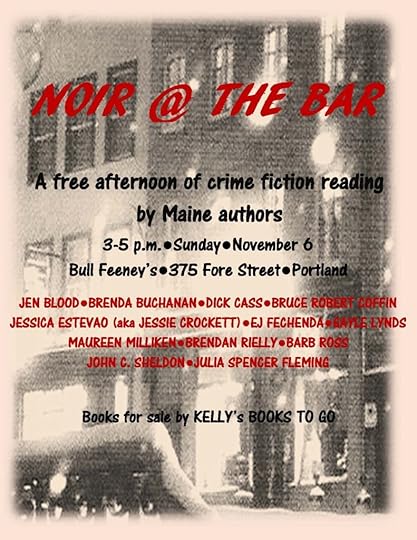
Maine crime and mystery writers read from their work at Bull Feeney’s in Portland, Sunday, 3:00 to 5:00.
And many of us will be heading to Dedham, Massachusetts, Friday the 11th through Sunday the 13th to speak at and participate in the New England Crime Bake, a conference run jointly by Sisters in Crime of New England and Mystery Writers of America – New England branch. Barbara Ross, Kate Flora, Lea Wait, Jen Blood, Bruce Coffin, Jim Hayman, Maureen Milliken, … and many other authors and fans. Should be a great weekend!
An invitation to readers of this blog: Do you have news relating to Maine, Crime, or Writing? We’d love to hear from you. Just comment below to share.
And a reminder: If your library, school, or organization is looking for a speaker, we are often available to talk about the writing process, research, where we get our ideas, and other mysteries of the business. Contact Kate Flora
Save
Save
November 3, 2016
The Perfect Game
Seriously, Cass? More baseball stuff? Well, feel free to move along if you don’t have a yen for The Perfect Game but if you stick around, I’ll try to connect it to something closer to our hearts.
The great Rogers Hornsby, famous baseball player and manager, was once asked how he amused himself after the baseball season was over. “I’ll tell you what I do,” he said. “I stare out the window and wait for spring.”
Well, by the time this post appears, the 2016 World Series will be history and regardless of who triumphs, all of us who are fanatic about the game will sit down to stare out the window until spring . . training . . arrives. In the spirit of that, I’ve been contemplating how much trying to write a book reminds me of playing a baseball game.
The first and most obvious resemblance is the air of utter uncertainty at the beginning of things. Entering the ball park, you are confronted with the tabula rasa of the emerald field, some of its features standard from park to park (pitcher’s mound to home plate, the distance between the bases) and some unique (the Pesky Pole in Fenway,  the brick outfield wall in Wrigley). Is there another sport where the ground rules change from venue to venue?
Within all that blank and unruly space lies the possibility there is in the game—either game—and all the uncertainty of how to begin and where to go. For an instant, before the work begins, everything is clean and hopeful and perfect. And then . . the first pitch. The first sentence. And if you read a lot, other writers’ first sentences can stall you right there. You want to throw a strike.
“None of the merry-go-rounds seemed to work any more.” (John Dunne, True  Confessions)
“Sunday morning, Ordell took Louis to watch the white-power demonstration in downtown Palm Beach.” (Elmore Leonard, Rum Punch)
“Jackie Brown at 26, with no expression on his face, said that he could get some guns.” (George V. Higgins, The Friends of Eddie Coyle)
You launch into your book with no more idea what is about to happen on the field than the peanut vendor high in the left field bleachers. You hope you can write a sentence that draws like one of those. The game begins. But slowly. Thoughtfully.
From the first pitch, the first words set, you are now the impatient victim of incremental progress. Each ball, each sentence, sends you deeper into the construction, the whole you will not see before it’s done. You lay your words in, make your pitches and take your at-bats, bit by bit, moment by moment, each one building on the ones that came ahead of it and those that might come after. But ever so slowly, with much staring and spitting and rubbing up the tools of your game. Each tiny mote of effort lives in and of itself and at the same time, contributes to a whole.
What is beautiful about this incremental process, though, what makes it both difficult and addicting, is the endless possibility. With each pitch, each word, idea, and sentence you throw out, you create a further place of possibility. What comes next? A bunt? A full swing? Fast ball or slider? A bit of dialogue, some description, a little backstory? Each bit sends you in a new direction, into more possibility, and more, until the possibilities begin to limit themselves by what has preceded them. And then you can only bet on certain acts, certain words, to take you to the end in sight.
And hovering over the whole, always? Failure. The best hitter in baseball—Ted Williams, please; 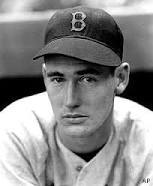 Joe me no DiMaggios—only hit the ball safely four times out of ten. Most writers I know would accept that rate of success in a heartbeat. And truly? Isn’t that part of why we continue pitching the balls, swinging the bat, moving the pen? Nothing in what we do is perfectible and if it were that easy to succeed, everyone would want to do it. And none of it would mean as much.
I had a student tell me once she wished to have written a book, by which I understood she wasn’t yet willing to commit to the plodding, necessary, sometimes nasty work of shaping her ideas, building her story, learning her characters. I hope she eventually learned what she would have to do to bring her wish into the present.
Because the final similarity is this: really, no one much cares what you’re doing. It’s at bottom, a game—an important one, but still only a game—and when the stands are empty, when you type The End, your pleasure is likely not in the product you’ve ended up with, but with the time you’ve spent inside the game. The process, folks. Much as we love the sunshine of fame (minor or major), the win, we have to love to play the game even more.
Introducing Eggnog Murder and Christmas Traditions
by Barb, who’s finally admitting the days are getting shorter, the temperatures colder. Sigh.
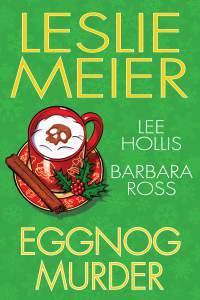 This is official Kensington release week for Eggnog Murder in hardcover, ebook and audiobook. The large print edition is coming in early December. Eggnog Murder is getting some great reviews, including a starred review from Publishers Weekly!
The book is a collection of three holiday novellas all set in coastal Maine. The other stories are by well-known cozy authors Leslie Meier and Lee Hollis. We were all given the same assignment by Kensington– 25,000 to 35,000 words, and the words “eggnog murder.” It’s fascinating to see where each of us went from there. Since this is a Maine blog, I thought it might be interesting to find out where each of us found the holiday traditions for our towns.
 Leslie Meier is the New York Times bestselling author of over twenty Lucy Stone mysteries and has also written for Ellery Queen’s Mystery Magazine. She is currently at work on the next Lucy Stone mystery. Readers can visit her website at www.LeslieMeier.com. Leslie’s novella is titled “Eggnog Murder.”
Leslie: The Lucy Stone Mystery Series draws heavily on holidays, and I do rely on the holiday celebrations that take place in my town, Harwich, Mass. as well as ones in Maine, where I vacation every summer, and also my own family traditions. Candy Corn Murder was inspired by the Pumpkin Fest in Damariscotta, Maine, which is the next town from Bristol, where we always stay in a cabin owned by family members. I must confess I never actually attended the entire Pumpkin Fest in Damariscotta, as it takes place in the fall, but they have a nice website that was very helpful.
I also worked for some years as a small town reporter for local weekly newspapers on Cape Cod so I have covered and written about many local festivals, which have popped up in my books. One of my favorite characters, Corney Clark, is the executive director of the Tinker’s Cove Chamber of Commerce, and she is always working hard to promote business in Lucy’s fictional home town. Corney came up with the idea for a Christmas stroll, which was an important part of my novella, “Eggnog Murder,” and my husband and I always enjoy the annual holiday strolls in our town of Harwich and in nearby Chatham. I always hope for a little light snow to fall for the strolls, and some times it does. Fortunately for us, nobody has served poisoned eggnog — not yet, anyway!
 Lee Hollis is the pen name for a brother and sister writing team. Rick Copp is a veteran film and television writer/producer and also the author of two other mystery novel series. He lives in Palm Springs, California. Holly Simason is an award-winning food and cocktails columnist living in North Carolina. Together they write the Hayley Powell Food and Cocktails Mystery series. You may visit their website at www.LeeHollisMysteries.com. their story is titled, “Death by Eggnog.”
Holly (one half of the team behind author Lee Hollis): “Death by Eggnog” in Eggnog Murder is set in our hometown of Bar Harbor, Maine. We love using real Bar Harbor traditions, events and places in our stories. In “Death By Eggnog” we used a little fact and fiction creating the event/venue where all of the excitement happens.
Bar Harbor has many, many restaurants but at the end of the season, as the last tourists leave, there is just a small handful left open for the winter months, so we created the Restaurant Association dinner at the Masonic Hall where our murder takes place.
There isn’t exactly a association dinner but there have been local restaurants getting together for a good cause and creating some of their favorite dishes that people can sample for an admission fee that helps out a good cause.
The Masonic Hall is a real venue used by locals for birthday parties, anniversaries, baby showers, dances (like our Hayseed Ball we used in another book) and I even had the privilege of judging a chocolate competition there when I was working for the local newspaper, The Mount Desert Islander.
We have school children singing Christmas carols at the Jesup Memorial Library which is true during the holiday season when the local pre-school stops by, but they are better received then how the children were in our story.
We have also used the town’s annual Christmas tree lighting in another one of our books that was set during the holidays.
We love taking fact and mixing it up with some fiction and our readers have let us know that they love it too. Some say they feel that they are in the story right along with our characters. This make us very happy to hear and we just love our hometown and the people in it.
One quick note, Rick and I have an agreement that if a murder takes place in a local establishment we won’t use the true name. We always make up a new name for it. We would hate for someone to think there was some truth in the story. Yikes!
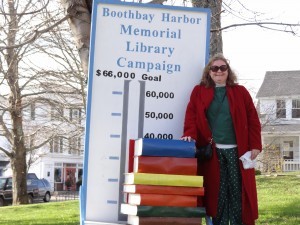
Barb shopping in her pajamas
Barb: My story is “Nogged Off.” I’ve never written a Christmas story about my fictional town of Busman’s Harbor before, and I was thrilled to do it.
I used a combination of real Boothbay holiday events, like the Saturday everyone shops in their pajamas (I’ve written about that here) and Men’s night. I’ve called it Gentlemen’s Night in the novella, because it evokes the feel of time when men only had to buy one present and their wives took care of the rest. (My father had a strict policy of only buying gifts at places that gift-wrapped. “I will shop, but I will not wrap,” he’d say.)
Boothbay does have a Festival of Trees, but the one I describe in “Nogged Off,” is much more like the one at the Navy base in Newport, Rhode Island, where my friend Vida and I used to take our kids when they were little. Other traditions, like the Snowden’s “cookie day” came from my own life.
Because the novella takes place over four days, the timeline for all the local events is compressed. In real life they start before Thanksgiving and continue through December. The biggest holiday attraction in Boothbay, Gardens Aglow, at the Boothbay Botanical Gardens, just started last year, and was too new to make it into the book. I guess that leaves me something to include if I ever get another chance to write about a Busman’s Harbor Christmas.
We hope you enjoy Eggnog Murder, and we hope you agree we’ve captured something of the holiday in Maine.
Save
Save
Save
Save
Save
Save
Save
Save
Save
Save
Save
Save
Save
November 1, 2016
Want to sample Maine’s mystery writers? Here’s your chance.
I’ve never really gotten it when people tell me they don’t read mysteries or don’t like mysteries. Particularly when I’m told it by someone who’s read one of my books, and says they “enjoyed it, even though I don’t usually (whatever) mysteries.”
Mystery, as a genre, is funny. There are so many sub-genres, so many differences, that “mystery” is really difficult to categorize. Some people have told me they don’t read them because they’re too scary or gory, there’s too much violence. But there are many that simply aren’t scary, gory or violent and are still good reads. Some people have told me they have trouble following the plots. Confession: I often do, too. But that doesn’t bother me.
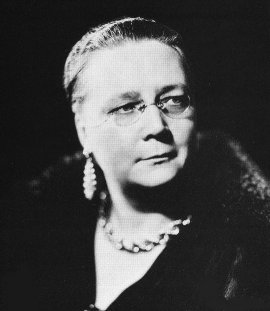
Dorothy L. Sayers, author of the Lord Peter Wimsey mysteries. (Photo courtesy Sayers.org.uk)
I’ve read Dorothy L. Sayers MURDER MUST ADVERTISE maybe a dozen times, and there are still things about the plot I don’t get (or maybe it’s just that cricket game that takes up a whole chapter). Yet, it’s one of my favorite mysteries. Same goes for Sayers’ THE NINE TAILORS, though maybe it’s just church bell-ringing. Sayers was so good with character and story the plot was an afterthought as far as I was concerned, though it obviously wasn’t to her. Her plots are as excellently drawn as the rest of her books.
As you may have guessed, I’m not a big plot person. With most books, not just those by the great DLS, I just let plot wash over me a lot of the time and am usually surprised if I figure the whole thing out. I’m much more interested in the characters and what they’re doing and how they feel and how they relate to each other and what’s going on in the story that’s carried along by the plot (or vice-versa). Writing-wise, this can be a challenge for me, but that’s a blog post for a different day.
There are also people who are all plot, all the time. Neither of us are “right” or “wrong.” Cozy? Thriller? Hard boiled? Whatever. None of it is right or wrong and none alone defines “mystery.” Say to me that you “don’t like” mysteries, and I bet you just haven’t found the right kind.
That’s one reason why I’m so excited about Sunday’s upcoming Noir @ the Bar event in Portland. A dozen Maine crime and mystery writers, many of whom are regular contributors to blog or guest contributors, are going to read short passages from their work. What better way to sample the variety we offer?
Noir @ the Bar is 3-5 p.m., Sunday, November 6, at Bull Feeney’s, 375 Fore St., Portland. To find out more, go to the Noir @ the Bar Facebook page.
Participants include:
JEN BLOOD: Author of the popular Erin Solomon series, she’s put her dog training background to work with the release this month of THE DARKEST THREAD, the first in the Flint K-9 Search and Rescue series. Find out more about Jen at jenblood.com.
BRENDA BUCHANAN: Brenda, an attorney and former journalist, is author of the Maine-based Joe Gale mystery series, the third of which, TRUTH BEAT, was released earlier this year. To find out more about Brenda, go to brendabuchananwrites.com.
DICK CASS: Dick is the author of SOLO ACT, a jazz mystery featuring sleuth Elder Darrow, as well as many short stories. Find out more about Dick at his Facebook page, Dick Cass – Writer.
BRUCE ROBERT COFFIN: Bruce, a retired Portland police detective sergeant, is the author of recently released, AMONG THE SHADOWS, his debut mystery novel, the first in the John Byron series. Find out more about Bruce at brucerobertcoffin.com.
JESSICA ESTEVAO (aka JESSIE CROCKETT): As Jessie Crockett, she’s author of the Sugar Grove Mysteries; as Jessica Estevao, her first Change of Fortune mystery, WHISPERS BEYOND THE VEIL, came out this fall. To learn more about her, go to jessicaestevao.com.
E.J. FECHENDA: E.J. is the author of the New Mafia Trilogy and numerous short stories. Find out more about her at her Facebook page, EJ Fechenda Author or her Amazon author page, EJ Fechenda.
GAYLE LYNDS: Described as the “reigning queen of the espionage thriller,” Gayle’s new thriller THE ASSASSINS, was recently released. Learn more about Gayle and her books at gaylelynds.com.
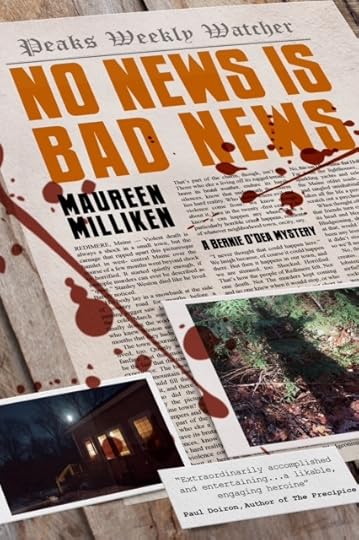
No News is Bad News, the second in the Bernie O’Dea mystery series.
MAUREEN MILLIKEN: That’s right, me! I’m a former journalist and the second in my Maine and journalism-based Bernie O’Dea mystery series, NO NEWS IS BAD NEWS, was released this summer. Find out more about me and my books at maureenmilliken.com.
BRENDAN RIELLY: Brendan’s books range from a tongue-in-cheek guide to parenting to his thriller AN UNBEATEN MAN, released last year and named 2016 Best Crime Fiction winner by the Maine Writers and Publisher’s Association. To learn more about Brendan, go to riellybooks.com.
BARB ROSS: Barb is the author of the popular Maine Clambake mystery series. The latest, ICED UNDER, comes out next month. To find out more about Barb, go to maineclambakemysteries.com.
JOHN C. SHELDON: John is a former attorney, including a stint as a Franklin County prosecutor, and is now a legal mediator and arbitrator. He has collaborated on three published mystery short stories with his wife, Gayle Lynds.
JULIA SPENCER FLEMING: A New York Times bestselling author, Julia writes the Rev. Clare Fergusson/Russ Van Alstyne suspense mysteries, which feature an Episcopalian minister. For more on Julia and her books, go to juliaspencerfleming.com.
So, see? I defy you to leave Noir @ the Bar without hearing something that you think you’d like to read more of. On top of that, we’re a fun group. Come on over and check us out.
Maureen Milliken is the author of the Bernie O’Dea mystery series. Follow her on Twitter at@mmilliken47 and like her Facebook page at Maureen Milliken mysteries. Sign up for email updates at maureenmilliken.com.
Lea Wait's Blog

- Lea Wait's profile
- 509 followers

