
Rhobin Lee Courtright's Blog, page 8
December 7, 2015
To Honor a Pearl Harbor Survivor
 Johndean JacobsAn excerpt from my Dad's account of December 7, 1941. I'm very glad he survived.
Hickam Field -- US Air Force Base , middle of Pearl Harbor, Hawaii
Sunday morning, December 7th, I arose early and after breakfast I went to the orderly room to type some letters. The orderly room was the headquarters of the squadron, one officer for the commander and the Adjutant, another for the 1st sergeant, the clerk typists (me) and a file clerk. I was now officially not going to radio-gunnery school. I got a small promotion and was now a ‘paper pusher.’ I didn’t enlist to push paper. I was going to fly! Ride in an airplane. Be a hero. Boy, was I dumb.
Shortly before 8 o’clock, I heard some explosions and felt the building shake. This was a large building. Living quarters for a thousand men, and a center mess hall for feeding twelve thousand each meal. Believe me, I had spent a solid month on KP, I knew how many men ate there. I ran outside to see what the commotion was, and saw fighter planes buzzing all around, and what sounded like fire crackers. Then I saw the rising sun emblem and realized they were Japanese. My god, they were trying to scare us with fire crackers like they did the Chinese. Ha!
Then I saw some tracer bullets fly across the field and hit the hospital, a quarter mile away. And, out of the corner of my eye I saw four or five guys running around the flag pole suddenly fly apart into pieces like ragdolls. I turned, ran inside to alert the guard. The phone was dead but the field phone rang. “This is Colonel Somebody or other, who am I talking to?”
“Jacobs, Johndean, Private, 16012660.” Boy, was I military. Also dumber than hell. “Private Jacobs, this phone is your post. This is war. Leave you post and you will be shot. Orders will follow.”
Suddenly a bomb blast blew in part of the outside wall of the office. I pulled the staples holding the wire to the base board around the walls and took the phone outside into the hall. Now I had two walls between me and the outside. I could still hear the firecrackers overhead, and decided it was bullets striking the copper clad cement roof.
Later, while on Guadalcanal, the only notice of bombs falling was the sound of them whistling through the air. I could tell within a small area just where they would fall. I knew if I should roll out of my cot into a slit trench or go back to sleep. One night I stood up and watched one fall, then heard another one close, and I hit the fox hole. I immediately popped out and… all hell broke loose. I slammed back into the hole and then stuck my head out and, low and behold, there was another string of firecrackers floating down with a paper parachute. Ha! Scared me just as they did the Chinese!
I could still man the phone and see out the doors of the building. I saw a fellow running zig-zag across the parade ground holding a World War I helmet full of beer. Seems the Snake Ranch, the beer hall, had been blown up. A Jap plane was zig-zagging right after him. He must have made it. I saw him a week later, still alive; sober, but alive. He was one of the outcasts, or one whose parents paid for him to stay in the Army in Hawaii. There were quite a few of them around. They all got a monthly check, with a bonus to re-up when their enlistment was up.
One of the new men ran in one door and a bomb blast blew him across the hall and out the other door. Lt. Workman, the Adjutant, told a couple of fellows to take him to the hospital. He sure looked dead to me, but they picked him up and ran out. Three or four men ran in and wanted mattresses from the supply room that was in the center of the room. Seems they had broken into the armament room and had a 30 caliber machine gun with bullets out on the parade ground. Well, the Japs let them get all set up with the mattresses for protection and blew men, mattresses, and all away. They dropped daisy cutters on them—anti-personnel bombs that exploded just above ground and either cut you all up or killed you, usually both.
The First Sergeant of the 72nd Squadron ran by pointing and shouting, “Get out, get out, bombs overhead.” Willie Workman made a dash outside and dove under some burning cars in the parking lot. He got shrapnel in the ass and a Purple Heart. Corporal Jack Reynard rushed out and dove behind the bushes next to the building. Shrapnel took off the top of his head. Purple Heart. Posthumously. He had replaced a hot-shot serial gunner as Charge of Quarters that morning. Later, we did get up three of our B-18 bombers and when they pulled up into formation, the hot-shot shot up the tail of one of our own planes. Claimed he saw a Jap plane out there. No one else did. I don’t remember him after this, maybe they dumped him.
The Squadron Commander rushed in and slid down the wall beside me, real scared looking. “Hell, Captain, wait ‘til our fighters from Wheeler Field get up.”
“Oh haven’t you heard? There is no more Wheeler Field,” he sobbed. My I did, too!
He didn’t smoke, but I offered him one of my Camels. He took it, and between us, we smoked up two packs in about two hours…
The bombing slowed, and he told me that he relieved me of my post and to get out if I could. So, out I went. Across the parade ground I saw a guy trying to stick an arm back on and an older fellow trying to stick guts back inside his stomach. On the ramp our pretty line of airplanes was a shambles. One of the new B-17s that had landed from the States during the raid was broken in half. The huge hangers were all wrecked except one that had hardly any damage. The flag on the pole was shredded. Quite a few bodies and pieces were lying around.
Soon a Colonel came by in the side car of a motorcycle with a megaphone shouting the Japs had landed in the mountains wearing cotton khaki clothes. Anyone in CKC’s in one hour would be shot. We all had either CKC’s or civilian clothes on. There was a mad dash to get changed into blue fatigue clothes. Another motorcycle, another Colonel: “Japs have landed on the beach wearing blue coveralls. Anyone in blue in one hour will be shot. More than one GI walked around in his underwear. If some hot-shot had of thought of that, bare naked was the only next move. By evening, guns had been set up all around. There was a theory you had to fire a short burst about every half hour to keep the gun ‘cleared.' Everyone did. Shortly after dark, about five or six Navy planes came in across the ramp flashing their landing lights on and off. Some damn fool cleared his gun, sending tracers near them. Then everyone was shooting at them. I doubt if even one of them made it—looked like a solid wall of fire. I jumped under a barracks to protect me from falling lead.


To Honor a Pearl Harbor Suvivor
Johndean JacobsAn excerpt from my dad's account of December 7, 1941. I'm very glad he survived.Hickam Field -- US Air Force Base , middle of Pearl Harbor, Hawaii
Sunday morning, December 7th, I arose early and after breakfast I went to the orderly room to type some letters. The orderly room was the headquarters of the squadron, one officer for the commander and the Adjutant, another for the 1st sergeant, the clerk typists (me) and a file clerk. I was now officially not going to radio-gunnery school. I got a small promotion and was now a ‘paper pusher.’ I didn’t enlist to push paper. I was going to fly! Ride in an airplane. Be a hero. Boy, was I dumb.
Shortly before 8 o’clock, I heard some explosions and felt the building shake. This was a large building. Living quarters for a thousand men, and a center mess hall for feeding twelve thousand each meal. Believe me, I had spent a solid month on KP, I knew how many men ate there. I ran outside to see what the commotion was, and saw fighter planes buzzing all around, and what sounded like fire crackers. Then I saw the rising sun emblem and realized they were Japanese. My god, they were trying to scare us with fire crackers like they did the Chinese. Ha! Then I saw some tracer bullets fly across the field and hit the hospital, a quarter mile away. And, out of the corner of my eye I saw four or five guys running around the flag pole suddenly fly apart into pieces like ragdolls. I turned, ran inside to alert the guard. The phone was dead but the field phone rang. “This is Colonel Somebody or other, who am I talking to?”
“Jacobs, Johndean, Private, 16012660.” Boy, was I military. Also dumber than hell. “Private Jacobs, this phone is your post. This is war. Leave you post and you will be shot. Orders will follow.”
Suddenly a bomb blast blew in part of the outside wall of the office. I pulled the staples holding the wire to the base board around the walls and took the phone outside into the hall. Now I had two walls between me and the outside. I could still hear the firecrackers overhead, and decided it was bullets striking the copper clad cement roof.
Later, while on Guadalcanal, the only notice of bombs falling was the sound of them whistling through the air. I could tell within a small area just where they would fall. I knew if I should roll out of my cot into a slit trench or go back to sleep. One night I stood up and watched on fall, then heard another one close, and I hit the fox hole. I immediately popped out and… all hell broke loose. I slammed back into the hole and then stuck my head out and, low and behold, there was another string of firecrackers floating down with a paper parachute. Ha! Scared me just as they did the Chinese!
I could still man the phone and see out the doors of the building. I saw a fellow running zig-zag across the parade ground holding a World War I helmet full of beer. Seems the Snake Ranch, the beer hall, had been blown up. A Jap plane was zig-zagging right after him. He must have made it. I saw him a week later, still alive; sober, but alive. He was one of the outcasts, or one whose parents paid for him to stay in the Army in Hawaii. There were quite a few of them around. They all got a monthly check, with a bonus to re-up when their enlistment was up.
One of the new men ran in one door and a bomb blast blew him across the hall and out the other door. Lt. Workman, the Adjutant, told a couple of fellows to take him to the hospital. He sure looked dead to me, but they picked him up and ran out. Three or four men ran in and wanted mattresses from the supply room that was in the center of the room. Seems they had broken into the armament room and had a 30 caliber machine gun with bullets out on the parade ground. Well, the Japs let them get all set up with the mattresses for protection and blew men, mattresses, and all away. They dropped daisy cutters on them—anti-personnel bombs that exploded just above ground and either cut you all up or killed you, usually both.
The First Sergeant of the 72nd Squadron ran by pointing and shouting, “Get out, get out, bombs overhead.” Willie Workman made a dash outside and dove under some burning cars in the parking lot. He got shrapnel in the ass and a Purple Heart. Corporal Jack Reynard rushed out and dove behind the bushes next to the building. Shrapnel took of the top of his head. Purple Heart. Posthumously. He had replaced a hot-shot serial gunner as Charge of Quarters that morning. Later, we did get up three of our B-18 bombers and when they pulled up into formation, the hot-shot shot up the tail of one of our own planes. Claimed he saw a Jap plane out there. No one else did. I don’t remember him after this, maybe they dumped him.
The Squadron Commander rushed in and slid down the wall beside me, real scared looking. “Hell, Captain, wait ‘til our fighters from Wheeler Field get up.”
“Oh haven’t you heard? There is no more Wheeler Field,” he sobbed. My I did, too!
He didn’t smoke, but I offered him one of my Camels. He took it, and between us, we smoked up two packs in about two hours…
The bombing slowed and he told me that he relieved me of my post and to get out if I could. So, out I went. Across the parade ground I saw a guy trying to stick an arm back on and an older fellow trying to stick guts back inside his stomach. On the ramp our pretty line of airplanes was a shambles. One of the new B-17s that had landed from the States during the raid was broken in half. The huge hangers were all wrecked except one that had hardly any damage. The flag on the pole was shredded. Quite a few bodies and pieces were lying around.
Soon a Colonel came by in the side car of a motorcycle with a megaphone shouting the Japs had landed in the mountains wearing cotton khaki clothes. Anyone in CKC’s in one hour would be shot. We all had either CKC’s or civilian clothes on. There was a mad dash to get changed into blue fatigue clothes. Another motorcycle, another Colonel: “Japs have landed on the beach wearing blue coveralls. Anyone in blue in one hour will be shot. More than one GI walked around in his underwear. If some hot-shot had of thought of that, bare naked was the only next move. By evening, guns had been set up all around. There was a theory you had to fire a short burst about every half hour to keep the gun ‘cleared.' Everyone did. Shortly after dark, about five or six Navy planes came in across the ramp flashing their landing lights on and off. Some damn fool cleared his gun, sending tracers near them. Then everyone was shooting at them. I doubt if even one of them made it—looked like a solid wall of fire. I jumped under a barracks to protect me from falling lead.
November 20, 2015
Doing Kindness
 Bill is usually the one to stop when someone's car is on the roadside and it looks like the driver is having a problem. I've heard warnings for women not to stop, as the problem might turn out to be their own, so I'm always wary. Yet, one time last year on the way into a school I saw an older pickup truck on the roadside with a man and a woman outside the truck. There wasn't much traffic, and it was very cold and gray out. I passed them, and having second thoughts, turned around and went back.
The woman recognized me, and I think she said I had been her instructor. Once students are out of my class, I usually forget their names because I have a whole new set to remember, so while she looked familiar, I didn't recognize her. They were out of gas. I offered to drive her to the party store three or four miles up the road and bring her back. At the store, I went in bought a cup of coffee and told the clerk to ring her gas up on my card. I waited in my car for my passenger to return from inside the store. She said someone paid for the gas, and guessed that I had. She thanked me while I started the drive back to the truck. She chatted a lot, and I think I remember her saying her husband was on the way to a job interview, or was just starting a job, can't remember, but I was glad I stopped. I know how upsetting running out of gas can be. Dropping her off, I was soon on my way to work. Hopefully, I helped turn the bad start of that couple's day a little brighter, but I realized that the stop had made my day better just knowing I had made a tiny difference in the world.
With what has happened in Paris this past weekend, and all the turmoil over accepting immigrants, I realized in a world filled with hate, bigotry, and distrust, such simple actions as helping strangers can help alleviate fear and restore a sense that not everything is bad, tiny bit by bit.
Please visit the following blogs relating to other random acts of kindness.
Diane Bator
Skye Taylor
Fiona McGier
Bob Rich
Marci Baun
Connie Vines
Rachael Kosinski
Hollie Glover
Judy Copek
Anne Stenhouse
October 30, 2015
My Fascination with Crows and Ravens
St. Luke 12:24: Consider the ravens: for they neither sow nor reap; which neither have storehouse nor bar; and God feedeth them; how much more are ye better than the fowls? (From The Bible, St. James Version. 1958)
My Dad loved to bake bread, but sometimes the raw dough went wrong (sometimes, I think, on purpose), and he would put it in the backyard where the crows would come and eat it. He would watch their antics, claiming sometimes they became drunk because yeast dough forms alcohol as it ages. Moreover, one ‘boss’ crow seemed to have charge over the other crows. Somehow its mannerisms reminded him of his father, so he called that crow Jake (for Jacobs). The crow crew became Jake and the boys. Dad was known as Jake, too, so when in died on Halloween in 1995, at his funeral someone sent flowers with crows in it, indicating he was now with Jake and the boys.
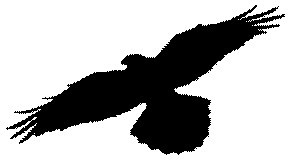
I’ve always found crows and ravens interesting birds. Ravens are largest, the size of hawks; and crows are the size of pigeons, still large birds. In flight you can tell the difference in their tails. Raven tail feathers take on an ovate shape, crows more of a fan shape. The raven also has a rounded, ‘Roman,’ nose, and perhaps look a little scruffier. Most are a glossy black, making them look very dramatic in the daylight. They are two different species of the genus Corvus, which in Latin means raven, but are often considered interchangeable in lore and mythology.
Some societies believe them signs of bad luck, others as bringers of good will and wisdom. The call of the raven, that deep, gravely, cras-cras sound? It means tomorrow in Latin. So if an ancient Roman were walking and pondering looming events and heard a raven’s call predicting tomorrow, and perchance his thoughts came true, then the legend would arise that ravens were oracles or message carriers from the gods, which is part of the lore.
That glossy black color? When tied to its scavenging nature, it led to some nefarious associations with witchcraft, demonism, and the devil in some societies. We associate the color black with many evil connotations. Maybe because the blackness of night diminishes our vision and is just naturally scary. Therefore, for some, crows and ravens became evil spirits. Yet for others, they thwart evil spirits. Many North American Native American tribes believed the raven was the bringer of light and the world's creator. Isn’t it strange that Lucifer was also a bringer of light before his fall?
The fact that Corvus eat carrion, including human bodies, probably led to their becoming associated with death. Since they most likely settled down to eat after the chaos of battle had finished, they became signs that danger was over, but they also became associated with death. This death affinity might have led to their becoming known as carriers of souls to the spiritual world. For some, if crows and ravens could carry souls to the spiritual world, then they could return with messages from the same realm.
It’s not too far a leap from battle to murder, or for the soul carrier to become the soul, so in some societies their association extended to murdered persons with the raven becoming the ghost of the murdered person. In any event, ancient warriors didn’t want to see a crow or raven before a battle, as it might predict imminent demise. It also gives an interesting take on Odin’s ravens Huginn and Maninn. Could they have represented mythical Valkyries carrying warriors to Valhalla?
Could this have also led to how they are represent at the Tower of London in England? “The guardians of the Tower: ‘If the ravens leave the Tower, the kingdom will fall…’Ravens have contradictory lore messages. From the amount of mythology and folklore, it seems these birds have interested humans forever. Perhaps through the eons, humans noticed their intelligence. In recent years, tests for intelligence have proven these birds' innate ability to solve simple problems, even that ravens were capable of using a tool to achieve their aims. Perhaps ancients saw this intelligent bird perform a thoughtful feat to get to some food and named him the trickster.
The Roman gods Athena and Apollo both had raven companions, as did the Norse god Odin. As mentioned, Odin’s ravens were Huginn, meaning thought, and Maninn, with some thinking it meant memory, or others who thought it meant desire. Ravens have respectable roles in the Christain Bible, too. Consider what God told Elijah the Tishbite from Gilead: I Kings 17: (4) And it shall be, that thou shalt drink of the brook; and I have commanded the ravens to feed thee there. (5) So he went and did according unto the word of the Lord: for he went and dwelt by the brook Cherith that is before Jordan. (6) And the ravens brought him bread and flesh in the morning, and bread and flesh in the evening; and he drank of the brook. (From the Bible, St. James Version. 1958.)
All in all, crows and ravens are just other inhabitants of our world, living according to their own rules with nary a thought for what humans think of them. That's how it should be. Whatever symbolic signs we accord them are ours, not theirs.
After my dad’s funeral, my family flew back to Missouri. Arriving home, I stood in the driveway and looked at a large black silhouette in the old sycamore tree towering over the house from the backyard. For the first time ever I saw a raven in this suburban area, a rare event. One sat at the very top branch of the tree. I knew he was Jake, and have treasured both crows and ravens ever since.
My Dad loved to bake bread, but sometimes the raw dough went wrong (sometimes, I think, on purpose), and he would put it in the backyard where the crows would come and eat it. He would watch their antics, claiming sometimes they became drunk because yeast dough forms alcohol as it ages. Moreover, one ‘boss’ crow seemed to have charge over the other crows. Somehow its mannerisms reminded him of his father, so he called that crow Jake (for Jacobs). The crow crew became Jake and the boys. Dad was known as Jake, too, so when in died on Halloween in 1995, at his funeral someone sent flowers with crows in it, indicating he was now with Jake and the boys.
I’ve always found crows and ravens interesting birds. Ravens are largest, the size of hawks; and crows are the size of pigeons, still large birds. In flight you can tell the difference in their tails. Raven tail feathers take on an ovate shape, crows more of a fan shape. The raven also has a rounded, ‘Roman,’ nose, and perhaps look a little scruffier. Most are a glossy black, making them look very dramatic in the daylight. They are two different species of the genus Corvus, which in Latin means raven, but are often considered interchangeable in lore and mythology.
Some societies believe them signs of bad luck, others as bringers of good will and wisdom. The call of the raven, that deep, gravely, cras-cras sound? It means tomorrow in Latin. So if an ancient Roman were walking and pondering looming events and heard a raven’s call predicting tomorrow, and perchance his thoughts came true, then the legend would arise that ravens were oracles or message carriers from the gods, which is part of the lore.
That glossy black color? When tied to its scavenging nature, it led to some nefarious associations with witchcraft, demonism, and the devil in some societies. We associate the color black with many evil connotations. Maybe because the blackness of night diminishes our vision and is just naturally scary. Therefore, for some, crows and ravens became evil spirits. Yet for others, they thwart evil spirits. Many North American Native American tribes believed the raven was the bringer of light and the world's creator. Isn’t it strange that Lucifer was also a bringer of light before his fall?
The fact that Corvus eat carrion, including human bodies, probably led to their becoming associated with death. Since they most likely settled down to eat after the chaos of battle had finished, they became signs that danger was over, but they also became associated with death. This death affinity might have led to their becoming known as carriers of souls to the spiritual world. For some, if crows and ravens could carry souls to the spiritual world, then they could return with messages from the same realm.
It’s not too far a leap from battle to murder, or for the soul carrier to become the soul, so in some societies their association extended to murdered persons with the raven becoming the ghost of the murdered person. In any event, ancient warriors didn’t want to see a crow or raven before a battle, as it might predict imminent demise. It also gives an interesting take on Odin’s ravens Huginn and Maninn. Could they have represented mythical Valkyries carrying warriors to Valhalla?
Could this have also led to how they are represent at the Tower of London in England? “The guardians of the Tower: ‘If the ravens leave the Tower, the kingdom will fall…’Ravens have contradictory lore messages. From the amount of mythology and folklore, it seems these birds have interested humans forever. Perhaps through the eons, humans noticed their intelligence. In recent years, tests for intelligence have proven these birds' innate ability to solve simple problems, even that ravens were capable of using a tool to achieve their aims. Perhaps ancients saw this intelligent bird perform a thoughtful feat to get to some food and named him the trickster.
The Roman gods Athena and Apollo both had raven companions, as did the Norse god Odin. As mentioned, Odin’s ravens were Huginn, meaning thought, and Maninn, with some thinking it meant memory, or others who thought it meant desire. Ravens have respectable roles in the Christain Bible, too. Consider what God told Elijah the Tishbite from Gilead: I Kings 17: (4) And it shall be, that thou shalt drink of the brook; and I have commanded the ravens to feed thee there. (5) So he went and did according unto the word of the Lord: for he went and dwelt by the brook Cherith that is before Jordan. (6) And the ravens brought him bread and flesh in the morning, and bread and flesh in the evening; and he drank of the brook. (From the Bible, St. James Version. 1958.)
All in all, crows and ravens are just other inhabitants of our world, living according to their own rules with nary a thought for what humans think of them. That's how it should be. Whatever symbolic signs we accord them are ours, not theirs.
After my dad’s funeral, my family flew back to Missouri. Arriving home, I stood in the driveway and looked at a large black silhouette in the old sycamore tree towering over the house from the backyard. For the first time ever I saw a raven in this suburban area, a rare event. One sat at the very top branch of the tree. I knew he was Jake, and have treasured both crows and ravens ever since.
October 23, 2015
Benevolent and Violent Spirits
While I love the images of paranormal beings, I do not believe they exist in the physical world; not angels, demons, dragons, ghosts, ghouls, phoenix, mermaids, unicorns, werewolves, vampires, or zombies. If something doesn’t have a chemical identity, i.e. no sub atomic particles are involved in a thing’s makeup, then it cannot exist in this universe. Yet, while I do not believe they exist in reality (a whole 'nother kettle of strange concepts), I must also admit in some ways, maybe they do. I think they exist in our imagination, hopping between the brain’s neurons and synapses. Humans seem to need them, and the imagination can be a very powerful and insistent tool. Does that make them real or unreal?
Sometimes these images become so firmly entrenched in a mind that the person believes them real. Certainly many people believe in them, especially when they are tied to faith. With the changing understanding of the universe by quantum physicists with their theories about how sub-atomic particles operate, with theories of space time, and with the possibility of multiple universes, an infinitesimal probability exists for their physical reality.
Another interesting link to this idea is that we often identify some people by the characteristics we associate with these beings. Those who suck the life out of their associates are called vampires, or bloodsuckers. Those who are inevitably caring and giving, we know as angels. Those we've loved and have passed will always haunt our memories. Are they any less real to us? These human angels, spirits, ghosts, and demons I definitely believe in. People have done things far beyond angelic and far worse than demonic.
The image of an angel on one shoulder and the devil on the other isn’t about these beings' existence, but about a choice an individual must make and then how they bear the consequences of their choice, which dresses these beings with moral cloth. Other paranormal characters also deliver messages about choices: dragons are protective or destructive, phoenixes tell us to ascend from failure, zombies tell us to change our lifestyle, werewolves about our changeable nature, and ghouls remind us to be wary. Therein lies the story.
Why do these symbolic personas continue to intrigue us?
Probably because their characteristics are so human, and because they relate such fascinating stories and lessons. Another reason might be that the human imagination is such a resilient and compelling feature of human identity. Minds are capable of creating spiritual voices and internal personages, both good and evil. And if we can imagine our own individual phantom presences, we can certainly identify with those paranormal beings entrenched in history since we have not essentially changed from those long-ago folk. Soul, spirit, inner being, self, heart, or psyche, whatever we want to call it, our insistent inner voices understand these powerful allegorical beings. Each identity symbolizes a message about being human; therefore, I enjoy reading and writing about them while trying to understand their purpose and message.
Please visit these other blogs participating in this round-robin topic:
Marci Baun
Margaret Fieland
Diane Bator
Beverley Bateman
A.J. Maguire
Fiona McGier
Heather Haven
Bob Rich
Anne Stenhouse
Helena Fairfax
Hollie Glover
Rachael Kosinski
Connie Vines
Skye Taylor
October 9, 2015
A Confederate Flag in Michigan?
I pass your home every day as I go and return from work and always think: You’re flying a Confederate flag in Michigan. Really?
While I respect your right to free speech, and I presume flying this flag is a form of free speech, I wonder at your purpose.
Are you trying to say you are a rebel at heart? Perhaps you are proclaiming your Southern roots, which have been relocated north? Are you voicing a determination for states’ rights? Or perhaps you are proclaiming your racial beliefs?
You do know you are in Michigan, right? A Union state. A state that sent seven regiments of soldiers to fight under the red, white, and blue as represented in the stars and stripes of our National Flag.
 So many soldiers that Lincoln is claimed to have said, “Thank God for Michigan.” Between 14 and 15 thousand of those soldiers died of battle wounds or disease and never returned home. That’s about one out of every six who went; so many Michiganders died fighting the cross bars of the Confederate flag you fly.
Since then, many more men and women from Michigan have served the stars and stripes. They fought for you to keep the right of free speech and expression, even for you to fly the flag that would have denied the same rights to so many of our citizens. Maybe you're trying to say their efforts were, and continue to be, in vain? They weren't and aren't. You're flying the losers flag. May we not subvert the flag that represents our Constitution, the flag that represents our rights, the flag of the United States of America. Let us hope it continues to fly proclaiming the same for millennia to come, for all of us.
September 18, 2015
Social Issues in Entertainment Reading
I am very concerned about many global social issues from climate, over population, pollution, extinction of species, and the loss of native habitats, to food production and the inhuman manner in which many food animals are being kept, religious extremism, war going on for over a decade, the destruction of antiquities. And that's just a start. So many issues, so little time. Am I a worrywart? I wonder sometimes if it isn't my age as I worry about my grand-children's future. I think of them and concerns enter my mind about the uneven quality of education across the United States, the cost of higher education, the increase in income inequality, failing infrastructure, and a democracy showing signs of changing into a plutocracy. I tell myself I'm using foresight, but maybe I'm just that worrywart. I don't think so, but maybe. I believe in human ingenuity, but for all the creativity, imagination, invention, and philosophy of humans in general, I find the species lacks any interest in foresight as to what might happen from their ingenuity.Do any of these topics occur in my stories? Yes, even though I write scifi/fantasy. From the outcome of a cataclysmic century in Magic Aegis, to corporate control and manipulation of employees in Crewkin, to genetic manipulation and indoctrination for super soldiers in Nanite Warrior, my stories contain social outcomes arising from some of today's issues. I like exploring where an issue might go, what might happen, and how humans will react. It might be hubris, but I like to believe perhaps I provide my readers a look at issues they can relate to without the histrionics of today's argumentative and often disbelieving population. I also believe such inclusions add to my story's depth, add to the setting and plot line, and even to the characteristics of the characters.
While I don't think all novels have to include social issues as part of the story, I do think issues are often the heart of a story, if only personal or family related issues. These are often based on social issues, too. Topics like abuse, and PTSD among veterans, homelessness, poverty, misinterpretations of law, and the ethics and moral issues in contemporary society.
What current issues are important to you? How often do modern social/global issues take place in the stories you read, no matter what era or genera you write?
Please be sure to see other author's opinion on this topic:
Skye Taylor
A.J. Maguire
Beverley Bateman
Margaret Fieland
Marci Baun
Victoria Chatham
Connie Vines
Bob Rich
Rachael Kosinski
Helena Fairfax
Judith Copek
August 21, 2015
Stereotyped Characters?
Have you ever started reading a new story or author and realize you've met the characters before? Chances are you've run into a stereotyped character.According to Merriam-Webster Online Dictionary a stereotype is "to believe unfairly that all people or things with a particular characteristic are the same." In daily life, stereotyping is and us vs them mentality. Race, gender, religion, education, age, nationality, employment, economics, status, abilities, disabilities—you name a difference, there's probably a stereotype to fit it. In daily life, no matter how unfair, they are often hard to escape (watch commercials), but in stories, it might not always be such a bad inequity.
I think in writing, stereotyping creates cliche characters, making shortcuts for the author, especially in secondary characters. Little thought is wasted on these minor characters. You mention a word such as 'butler' or 'blonde' or 'biker' and a perception enters the reader's mind. Another type of stereotyping I've encountered is when reading many volumes from the same author. Sometimes the same characters show up with different names, blended into author-concentric stereotype. I might be guilty of this offense, but I believe these stereotypes develop because they emerge from the same imagination. It takes work to break out of such patterns. This type of stereotyping might even appeal to some readers since they know what characters they will encounter when reading that author's material. I've also read stories where a character (main or secondary) begins as a stereotype but before the story's end, has metamorphosed into something so much more.
This said, are there genres of reading that stereotype men and women?
Oh yes.
In romance, just look at the book covers: muscular, '6-pack' alpha males with brawny chests and huge biceps, often brunette, and with weapons proficiency so they can be labeled 'protective.' Another stereotype is super bad boy who only need a woman's love to bring him to the straight and narrow (BS).
Women in books have been stereotyped for decades, but thankfully, some of those stereotypes are breaking down. Beware, however—new ones develop: the new powerful woman, the CEO or female elected official. Power, you know, after being considered 'chattel' for hundreds of years, goes to a woman's head only to prove the ancient adage 'women need controlling.' AND WOMEN (the largest book-buying demographic) are buying into this.
Perhaps the appeal of a stereotype is that a reader can see some of the traits of a stereotype in themselves, so identify with the character.
But characters can be based on other characters. It happens in crime/suspense novels with both detectives/investigators and criminals. How many of current TV shows have a Sherlock Holmes type detective? (I'm hooked.) How many super intelligent criminals have you encountered in reading? More over, it is cross genre: Is Bones a reincarnation of Spock? Is Booth really Captain Kirk? Is that why I like that show so much?
Why does this happen? I believe the main reason is that a certain stereotypes sell stories, whether in print, TV or film...until they doesn't. Then the publishers/producers look for the next hot selling character type and publish stories with those character profiles. The reading public goes through trends often identified by generational shifts and major social crisis, and these changes can help create those stereotypical profiles. They may go out of style and disappear only to return at some future time.
For the last few years we have been going through the super intelligent 'nerd' stereotype.
And the 'bimbo' girlfriend never seems to go away, or the too smart, unattractive spinster stereotype.
How do I try to prevent stereotyping in my writing? I've used two methods.
The first is determining my characters' personality styles. The Personality Self-Prortrait (1990) by John M. Oldham, MD and Lois B. Morris, delineates personality types. Dream up a character and then decide on his or her character personality pattern. There are thirteen recognized personality styles. We all have some of the characteristics of each, but it the dominant pattern that counts. For example, do you want your character to be excessively emotional and dependent on a relationship? Someone who is vivid, spontaneous, and flirty, with an over-the-top personality? Someone who hogs attention and praise and is excessively concerned about appearance? They would have dramatic personality style and could slip into a histrionic personality disorder. The information in the book is fascinating.
The other method involves Jungian psychology delineated by archetypes, or characters with a purpose. These include heroes, mentors, threshold guardians, heralds, shapeshifters, shadows, and tricksters. While these might sound like stereotypical castings, they are not. As Joseph Campbell in The Hero with a Thousand Faces, and Valdimir Propp in his study of Russian Fairy tales, certain characteristics of plots and characters seem to have deep psychological impact and importance in the purpose of stories. While readers might not notice this, almost all story arcs display these characteristics. If you want an easy introduction, read Christopher Vogler's The Writer's Journey, Mythic Structures For Writers.
Check out the following author blogs on this topic (always fascinating reading!):
Beverley Bateman
Diane Bator
Marci Baun
Connie Vines
Rachael Kosinski
Anne Stenhouse
Skye Taylor
Heidi M. Thomas
Fiona McGier
Helena Fairfax
August 8, 2015
A Commonality Among Languages?
At MIT's Department of Brain and Cognitive Sciences, Professor Edward Gibson and two grad students, Kyle Mahowalk and Richard Futrell, have been looking for links between all languages. The billions of people on Earth use 6500 different languages, all having distinct sound and meaning structures (and different alphabets!). However, Gibson, Mahowalk, and Futrell think rather than sound or meaning, languages may share an organizational method. All languages seem to put words that go together close together. In other words, and from what I understand, all languages put describers and modifiers close to the word they effect, so language syntax may have a link.
Cathleen O'Grady in her article 'MIT claims to have found a "language universal" that ties all languages together' posted this two days ago at Ars Technica. Huffington Post has a video interview with Edward Gibson, PhD. on the findings of the study.
While this isn't much help to my learning Russian words words and tenses, it might be helpful when I start putting the words I'm learning into some meaningful utterance. But hey, no hurry, I'm still stuck on the alphabet.
July 24, 2015
Bow-wow and Me-oww in Stories
Since
Lassie Come Home
and
Black Beauty
animals have been characters in fiction, but this topic is about using them in stories from the human viewpoint, not the animal's viewpoint. Can animals be characters or are they just part of the plot or setting?I love animals of all ilk, even spiders...when they're outdoors with other nefarious insects, not in the house, please. That goes for mice, rats, snakes, and other pests considered vermin indoors. But I'm not talking about those types of animals, and yes, they have their place and purpose and may appear in stories for similar reasons. Nothing is worse than being hunted in the dark by an animal with night vision, enhanced hearing and scent detection that has lost its fear of humankind. And remember, it was a flood of rats covered with fleas that wiped out a third of the human population with bubonic plague in the Middle Ages. So an animal's presence in a story isn't always a warm, cuddly, or fun feature, but I love encountering them in stories.
Characters carry out the plotline in stories. That's stating the obvious, I know. Named characters are important ones, unnamed ones are usually part of the setting or placeholders referred to by their profession, sex, or species: policeman, nurse, doctor, saleswoman, doorman, woman, man, dog or Siamese cat. Even in English grammar it explains if an animal is named, its pronoun becomes he or she (a character), if unnamed, it is called it(a placeholder).
 B&W BB is watching you, and she is as fast as her name.
A human character owning many pets shows something about that that character, but not about the pets. A character's treatment of an animal or pet tells the reader many significant things about that person's good or evil tendencies. A trained police dog or service animal with their human partner, on the other hand, takes on the aspect of a character—they have personality and a definite function within the story.
Often pets in family situation stories become part of the family, so become characters, and often perform important functions in the story. Characters who have become isolated for one reason or another, might have animals as companions that become more important to them than any human, which happens in my story Acceptance . The protagonists, Kissre, is estranged from her human family. As a mercenary in a Renaissance type setting, her horse and her dog are her family. Both animals have important functions within the plot, too.
I use animals as characters because if you own pets, you know they already are characters. Each one’s personality is slightly different from the other. Pets can be great secondary characters, both for good and evil purposes. Dogs and cats, even horses, can make a person laugh, sigh in comfort, feel compassion, or fear for personal safety. They are entertaining, encouraging, loyal and non-judgmental. They usually are not inherently evil unless misused by humans, a situation that can cause intense tension in a story, so pets are good at showing the best and sometimes the worst in their human counterparts.
In reality, dogs and cats are often used for their mental healing capabilities, reaching people sunk into their own minds because of trauma or age, people tuned out on worldly matters. A pet animal can sometimes return these lost souls to themselves even if only temporarily. Maybe physically, too. Recent investigative studies shows that the resonate waves of a cat’s purr can heal bones and muscles—as reported in Scientific American. Wouldn’t that make an interesting character in a science fiction or fantasy story?
This article is just an animal lover's opinion on animals in fiction, but science is proving animals are not the purely unthinking instinct driven disposable-if-humans-so-desire creatures. Studies are showing they are more intelligent than many people want to believe. Besides, instinct still drives humans as well...so no condescending name calling about stupid animals, hear?
The following authors are also covering this topic on their blogs. Please check out what each author has to say.
Skye Taylor
Beverley Bateman
Victoria Chatham
Connie Vines
Margaret Fieland
Rachael Kosinski
Kay Sisk
Judith Copek
Marci Baun
Diane Bator
Anne Stenhouse


