
Max Allan Collins's Blog, page 16
January 26, 2023
Breaking News: 25% off pre-order books at B&N
Ending 1/27, Barnes & Noble has a 25% off coupon on all preorders (physical, digital, and digital audiobooks).
Code: PREORDER25
The following are our unbiased recommendations. Get a deal, and tell those algorithms to boost Max’s books!
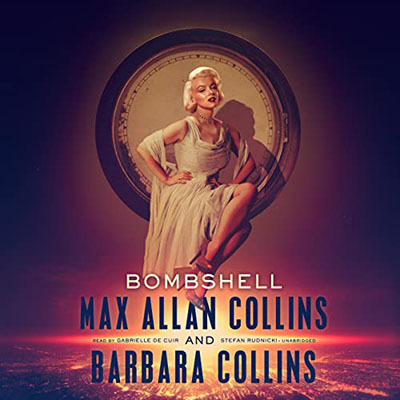
Bombshell (Barbara Allan, February) — Digital Audiobook

Regeneration (Barbara Allan, February) — Digital Audiobook

Spillane: King of Pulp Fiction (February) — Hardcover, eBook, Digital Audiobook
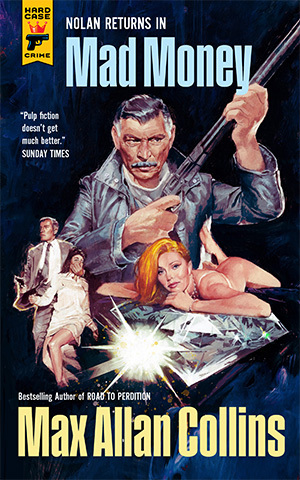
Mad Money (Nolan, April) — Paperback, eBook
A Long Time Dead: A Mike Hammer Casebook (April) — Digital Audiobook
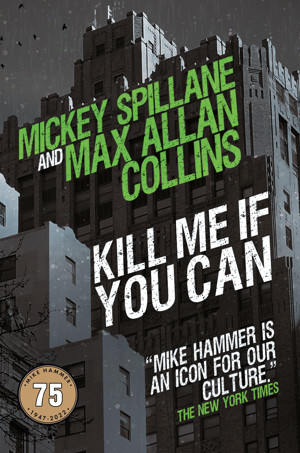
Kill Me if you Can (Mike Hammer, August) — Mass Market Paperback


January 24, 2023
Bundle Born, Bornes Born, Legends Made, Unlikely Edgar Nom

Hardcover:


E-Book:


Digital Audiobook:
The Big Bundle goes on sale TODAY!
Here is one of my better interviews, probably good because it was conducted by my great editor and pal at Titan Books, Andrew Sumner.
The Big Bundle books went quick, but – interestingly – we had only 11 requests for those 10 copies; in other words, almost everybody who entered won. I suspect people are assuming if they don’t immediately enter, they are screwed; but I hope these giveaways haven’t run their course.
The promised giveaway of Spillane – King of Pulp Fiction is held up because copies I was supposed to receive for this purpose have yet to show up. When they do, I’ll mount another book giveaway.
* * *Here is a front page (stop the presses!) article from (as I write this) today’s Muscatine Journal, a nice job by Andrea Grubaugh. It details accurately some nice recent news I received.
Muscatine Mystery-series AuthorReceives Nomination
for a 2023 Edgar Award
Muscatine’s Max Allan Collins was among the nominees when the Mystery Writers of America announced finalists for the 2023 Edgar Allan Poe Awards, a series of awards meant to honor mystery-focused stories both fiction and nonfiction. Nominees were announced Thursday, Jan. 19, for the 77th annual Edgar Awards ceremony set for April 27 at the New York Marriott Marquis Times Square.
One of the nominees in the Best Paperback Original category was the novel Quarry’s Blood, written by Collins.
Collins called the nomination “an utter surprise.”
“The Quarry series has always been a cult favorite, and well-reviewed, but this kind of mainstream recognition is unusual, unexpected and appreciated,” he said.
Collins has been nominated for an Edgar Award before, but the honor still is special and exciting.
On Thursday, January 19, the Mystery Writers of America announced its nominees for the 2023 Edgar Allan Poe Awards. Among the nominees for Best Paperback Original, one of the books selected was the novel Quarry’s Blood, written by Muscatine’s very own Max Allan Collins.
“I’ve been nominated several times in both nonfiction and fiction categories,” Collins said, “and in 2017 received a Life Achievement ‘Edgar’ award, the Grand Master. But in a 50-plus-year career, I’ve been nominated perhaps half a dozen times, so it’s not something that happens every day.”
Collins’ Quarry Series was created at the Writers Workshop in Iowa City in 1971, while the first Quarry novel was published in 1976. According to Collins, three more Quarry books were produced, with the series then ending after the publisher didn’t ask for more.
“Over the years, (that series’) cult following grew, and I’d get fan mail about the books — pre-email! So I did one more in the mid-’80s,” he explained. “Then about 20 years ago, editor Charles Ardai at Hard Case Crime asked me to do another, and I took the opportunity to write what I thought would be the final book in the series, The Last Quarry.”
This so-called finale, however, once again proved to be popular, to the point where it became a short film (“A Matter of Principal”) and eventually a movie (The Last Lullaby), both of which Collins wrote. A prequel entitled The First Quarry was also written by Collins in the hopes of filling in the blanks of his now-famous hitman’s career. A one-season show based off the series was also made for Cinemax in 2016.
“The character just keeps going,” Collins said.
As for this latest entry, it takes place in the present time period with Quarry himself being Collins’ age at about 70, which he considers to be old for a protagonist in this kind of story. He felt it was this element plus some surprising emotional content that might have made the story all the more appealing to readers.
“It brings him full circle, back to a book originally published as The Broker and later as Quarry, which was set in ‘Port City, Iowa’ — obviously Muscatine,” he said. “It’s unusual for a series novel to be nominated at all for an Edgar because long-running series usually get overlooked, so this nomination was nothing I was anticipating.”
Although he wasn’t sure if his book would be the one bringing home the award this year, Collins said he still felt touched by the acknowledgment.
“This really is one of those times when just being nominated is a special honor,” he said.
Okay, that’s the article, and a particularly good and accurate one for a local newspaper. I’ve had some doozies written about me around here (in the worst sense of the word “doozy”).
Still, a correction or two, or anyway clarification. First of all, I wish I were 70, but I am 74 and will be 75 soon (I believe there are 37 shopping days left till my birthday on March 3, not yet a national holiday).
Second, not only am I not convinced I’ll be bringing home the award this year, I am convinced – in a way, I’m certain – I won’t be. This nomination is such a fluke I am having trouble processing it – novels in series are rarely nominated by the Mystery Writers of America, and novels in long-running series are really, really, really rarely if ever nominated. Add to that the violence and sex that makes the Quarry novels about as un-Woke as they get. The other nominated titles seem to be much more in step with current tastes.
Third, I will almost certainly not attend, so by definition will not be bringing anything home with me. I would like to attend, but a couple of things discourage me. There’s a book in another category that, should it win, would distress me terribly (particularly since I am likely fated to lose in my category). I will allow regular readers here to determine what that book and who that author that is, but don’t look for me to confirm and/or deny. Also, Barb and I are already preparing to attend Bouchercon and one trip per year for us is plenty. We have not traveled to this kind of event since my open heart surgery and Covid lockdown. While I am more or less back to normal, I do tire much more easily than before – I was a force of nature then, whereas now I’m what remains after a force of nature hits.
It’s probably ironic that just last week, I think it was, I was complaining here that Quarry’s Blood was a forgotten child, published too early in the year to make the various Favorite Books lists for 2022…and further whined that The Big Bundle, a December 2022 publication, hadn’t come out in time to be considered.
Truth is, Quarry’s Blood and The Big Bundle did make a handful of those lists, for which I am grateful. And I will be submitting both for the Shamus awards – Quarry is kind of a shirt-tail PI, but he’s been nominated by the PWA before.
Also, on January 19, I received word that I’m receiving another life achievement award of sorts – I’m being named a Muscatine Community College Legend, which around these here parts is a pretty big deal. I was informed thusly: “Our MCC Legends committee would like to honor you as our 2023 Legend for all of the contributions you have – and continue to make – to advance the fine arts.” More generally, the Legends award honors individuals who have been significant supporters of the college, its students, faculty and staff. I attended from 1966 – 1968, and taught there from 1971 – 1976 (the only real job I ever had, except for bussing tables). Barb and I fell in love there, and married shortly after graduation; so MCC has a special resonance for me/us. There will be a dinner on March 30.
* * *Last week something else cool happened, albeit kind of odd.
Tom Hanks gave an interview proclaiming Road to Perdition his favorite of his films (yay!) but then wondered why nobody ever asked him about it (huh?).
Here’s the thing – I know that film is talked about often, because I do an Internet search on myself every week – not because I’m an egomaniac but due to the need to provide these updates with links to relevant articles. Okay, and I’m an egomaniac.
Anyway, people are out there all the time talking about Road to Perdition. Usually it’s in a familiar context: a discussion of the best Tom Hanks or Paul Newman or Sam Mendes films; a look back at the best gangster films of the past 25 years; or, often, the answer to the musical question, You Didn’t Know This Movie Came from a Comic Book, Did You?
If you drop by here regularly, you’ve seen me link to those articles frequently. I would imagine Tom Hanks doesn’t spend his time pathetically doing internet searches of himself. And I would guess most interviewers have little to ask of him about a performance that was perfect. So his confusion about RTP’s enduring nature is understandable.
What blew me away was how much coverage this got. I counted something like twenty websites that picked the story up, and any number of newspapers. It was mostly the same story. Like this version.
[This is the interview, queued to the question prompting the Road response. Worth a watch!–Nate]
* * *Barb and I have completed our drafts of Antiques Foe, and I will be assembling the finished product today from a stack of chapters into one manuscript file for me to proof-read tomorrow and Barb to enter (and approve) my corrections and changes. It should be shipped by Wednesday end of day, at the latest.
In the old days “shipped” meant getting a physical manuscript to a FexEx “mailbox” before the last collection, which I think was five or six p.m. This meant printing out several manuscripts, again physical copies (the one area where I am not so adamant about preferring physical media).
This is a good one. Barb did a magnificent job with Brandy and Vivian Borne’s latest, rather harrowing adventure, and, really, it could have been successfully published before I landed a glove on it. Barb claims to like and approve of the tweaks and additions I’ve made, and continues to be the easiest person to collaborate with on the planet. If I had somebody fooling around with my perfectly good words, I’d have a good old-fashioned coniption fit.
She claims the next book in the series will be the last one, and I can understand why – she works incredibly hard on her manuscripts. Coming off a Nate Heller (Too Many Bullets), I can understand how you can do something you love and dread doing it again.
* * *CrimeReads highlights The Big Bundle as a book coming out this week.
Quarry’s Blood was one of Glen Davis’s favorites of 2022. (Scroll down.)
Here’s an interesting but odd article on what fans of Road to Perdition don’t know about that film. It claims that the rainy climax took place in a boxing ring in the graphic novel. No, it was a boxing ring in an early draft of the script. In the graphic novel, the rainy death was (as in history) Connor Looney’s, not his father. No boxing ring at all. God save us from experts!
Finally, CBR considers Road to Perdition one of the ten great crime graphic novels! (So do I, but I can’t think of another 9.)
M.A.C.
January 17, 2023
Book Giveaway! Blue Christmas and Bucket Lists…
Hardcover:
E-Book:
Digital Audiobook:
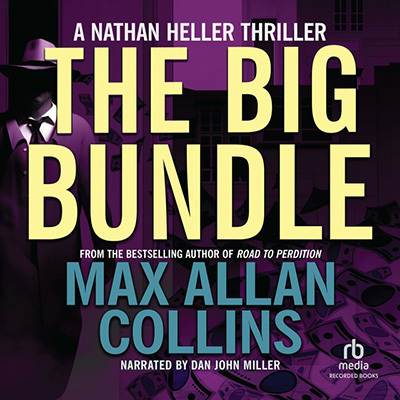
We have a book giveaway this week – ten copies of the hardcover of The Big Bundle. You agree to write a review for Amazon and/or other on-line reviewing sites, like Barnes & Noble or even your own blog. This is for USA only – overseas is, I’m afraid, too expensive.
Write me at macphilms@hotmail.com, and even if you’ve entered before (including winning), include your snail-mail address.
The book will be out in about a week and a half, so time’s a wastin’. (I may not be writing Caleb anymore, but some things get in your blood.)
The audio may or may not already be available – I haven’t been able to determine that. But it will definitely be out when the book itself is released (it’s out there now on e-book). Barb and I listened to the first third of it on a jaunt to Cedar Rapids yesterday, and Dan John Miller is simply brilliant as Nate Heller and this extensive cast of characters. He’s always good but he’s outdone himself here.
* * *We hope to include Mickey Spillane’s Encore for Murder on a Blu-ray/DVD release of the expanded Mike Hammer’s Mickey Spillane documentary, which Phil Dingeldein and I are working on right now. I think this makes more sense than releasing it on its own, because it is after all a local production, even with the commanding presence of Gary Sandy, who I think is really terrific as Mike.
But the experience of shooting the play (which we did live, as well as two dress rehearsals) and then editing the footage into a kind of movie got those juices flowing again. I honestly didn’t think, post-heart surgery, that doing a film project was possible. But this showed me, on a more limited scale, a project was possible.
We are going after grant money to get Blue Christmas off the ground. It will be, to say the least, a low budget production. Probably $75,000 plus that much again “in kind.” We initially were going to mount it as a play and shoot it that way, as we had with Encore for Murder, only with actual pre-production, as opposed to me just realizing we might have hold of something and oughta shoot it.
If the grants don’t come through, we would still do it, most likely, and would go the play route in the fall, with four cameras recording two dress rehearsals and two performances. We will be in a smaller theater – at Muscatine Community College, where years ago Barb and I fell in love and I later taught for a while – and if we do shoot it film-style, that black-box theater will be converted into a studio.
There is a part of me – the part of me that loves movies at least as much as I love books – that wishes I had gone the film route. There is a power to Chinatown, Vertigo and the Aldrich/Bezzerides Kiss Me Deadly that in my experience can rarely be touched in a book. (Feel free to disagree. I was shaped as a storyteller more by Hammett, Chandler, Spillane and Cain than by TV or movies. So I get that view.)
But I also like the collaborative aspect of making a film. It’s part of why I’ve stayed active with my band since 1974 (and from 1966 to 1971 before that). I am fine with working by myself, and as an only child am a loner. And the control that can be exercised in writing a novel or story is all-inclusive – nobody tells me what to do.
In collaborations, however, the human interaction is compelling and rewarding. Since I am a natural leader – I don’t know how to behave otherwise (I’m not proud of it) – I still tend to hold sway over the decision making. But that input from others makes the result far richer.
We are also in the “bucket list” area – not a term I love. But I am going to be 75 on March 3 (start shopping now!) and (like I said before) time’s a wastin’.
I began having a sense of the ticking clock well before my health issues kicked in. I started ticking off dream projects as early as Mommy, which was all about my obsessive desire to see Patty McCormack play a grown-up variation on The Bad Seed. USS Powderkeg (also published Red Sky in Morning) was about honoring my father and getting his WW2 story, with all its racial implications, told. Black Hats represented my desire to do a Wyatt Earp book.
Sometimes bucket list projects have foisted themselves on me. I thought Eliot Ness: An Untouchable Life was my last word on Ness. But Brad Schwartz convinced me we should write the definitive history of both Ness in Chicago and in Cleveland – though the instigator was Ken Burns. When he got Ness wrong in his Prohibition documentary series, by listening to uninformed, biased “experts,” those two massive books Brad and I did became necessary.
Blue Christmas is a story that has great meaning for me. As I’ve said here before, it was a story written on Christmas Eve 1992 – all fifty pages of the novella, in one fevered sitting – that got me back up on the pony to ride, after the bastards at the Tribune took Dick Tracy away from me.
I, of course, did not realize the Tribune had done me a favor, because I was about to fill the slack with Road to Perdition. I know I’ve mentioned this before, but I also think about what Dean Martin said: the two best things that ever happened to him were teaming up with Jerry Lewis…and breaking up with Jerry Lewis.
* * *The great Ed Catto has written a lovely piece about Ms. Tree. Don’t miss this one. It’s right here.
J. Kingston Pierce was nice enough to say this at the Rap Sheet: “Among the non-fiction releases I look forward to seeing (is) Spillane: King of Pulp Fiction, Max Allan Collins and James L. Traylor’s ‘first ever’ biography of ‘the most popular and most influential pulp writer of all time.’” See that in context here.
Here’s a nice look at Jacques Futrelle, the detective mystery writer who starred in my The Titanic Murders. (I rate a mention!)
You may have already seen this interesting article on Quarry, but it’s worth at least one look.
M.A.C.
January 10, 2023
Fancy Cover and Year’s End/Year’s End Woes
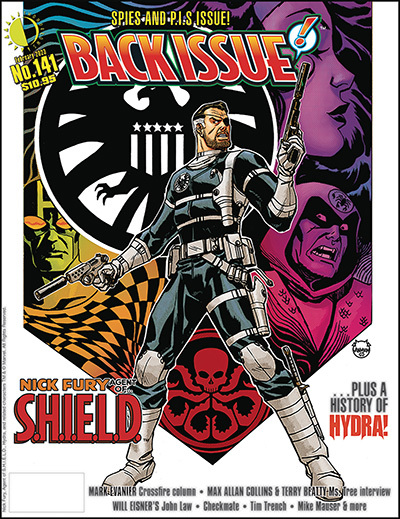
An in-depth Ms. Tree-centric interview with Terry Beatty and me appears in issue #141 of Backissue magazine (“SPIES AND P.I.S ISSUE!”). It proves beyond a shadow of a doubt that Terry’s memory is better than mine (a low bar, eh, Terry?). Thank you to interviewer Stephan Friedt for doing such a great and thorough job, and selecting images that show once and for all how good Terry Beatty is.
Backissue #141 with its beautifully laid out and illustrated article (we’re in the Mike Mauser article too) is available here.
* * *Here is an advance review of The Big Bundle, the new Nate Heller. It’s from Deadly Pleasures, a long-running, very good mystery fanzine which I believe is strictly available as an e-zine now…or is it returning to print? I’ll check into that and get back to you.
In the meantime, here’s the review:
THE BIG BUNDLE by Max Allan Collins (Hard Case Crime, $22.99, December 2022) Rating: AIn 1953 six-year-old Bobby Greenlease is kidnapped. His wealthy parents call on the services of private investigator Nathan Heller, who had represented them in another matter some years earlier. Robert Greenlease insists on having the kidnapping of his son handled on his terms with as little interference from the FBI and police as possible. The kidnappers pick up the ransom, as scheduled, but Bobby is not returned. The kidnappers, however, assure the family that he’ll be back, safe and sound, within twenty-four additional hours. But then half of the $600,000 ransom disappears and things take a turn for the worse. Five years later Heller is called back to try to find the missing money. But Washington politics, Bobby Kennedy, and Jimmy Hoffa all manage to get tangled up with Heller’s efforts to help Greenlease once again.
All of the Heller novels are based in solid fact, thoroughly researched, with details of the characters and their eventual fates detailed at the conclusion of the story. Of course the real-life kidnapping of Bobby
Greenlease is nowhere near as well-known as the 1932 abduction and murder of the Lindbergh baby. Heller had investigated that crime, as well, in Max Allan Collins’ Stolen Away (1992). In spite of the outcome of that case, he is once again entrusted with finding and returning a missing child to his parents.
Collins is a master (actually an MWA Grand Master!) at finding a plausible method of inserting his long-running fictional detective into the events of the day. He does this by using actual places, events and real people such as Kennedy, Hoffa, Chuck Berry, and Drew Pearson to add authenticity to the narrative. In doing so Collins immerses the reader in the 1950s’ era lifestyle. What’s even more remarkable is that he’s been doing this for forty years, since his 1983 debut Heller novel, True Detective.
If you’ve never read a Heller novel, don’t be discouraged by the fact that this is the eighteenth book (plus a number of short stories) in the series. The chronicles are not published in any specific order, moving around in time from the days of Capone and Nitti to Monroe and the Kennedys. But this one, the first from Hard Case Crime, is as good a place to jump in as any other. Then you’ll want to go back to the 1920s and start with that first one in what is one of the finest historical crime novel series being published today.
Don’t know who wrote the review. Possibly editor George Easter himself. I’ll let you know when I know.
The Big Bundle is, according to Amazon, going to be available later this month (January 24). As it was officially (and actually) published in December of last year, this just about guarantees screwing me up for awards consideration, and of course the book was not read by most of the people who do year’s end “Best of” lists. This is not a plan to make my life miserable (I don’t think), just the books getting tied up in London in a dock strike.
The e-book has been available since the originally announced publication date, and I’m not sure about the audio book (read by the great Dan John Miller). I know the latter exists, because (like the hardcover edition) I’ve had the audio book since early December.
Sigh, as the great Charlie Brown frequently said.
But the Big Bundle reviews have been stellar so far, especially the starred Publisher’s Weekly, and (among others) Deadly Pleasures is a nice one, too, obviously.
A problem that few of you who stop by here will have is that a certain breed of dedicated mystery reader refuses to start reading a series with any entry but the first, and doggedly plows on ahead in order of publication. I am anal retentive enough to understand this. But it really hurts writers of a long-running series – it’s the sales and response to the current book in a series that determines whether there will be any more.
So when a reader who has (finally) decided to take a look at Nathan Heller (or any long-running series) feels obligated to start with the first book, he or she is actually decreasing the chances of that series continuing. The current entry’s sales dictate the future, or lack of one, for the series. My suggestion is: sample the current book, and if you like it, go back to the beginning. And in the case of Nathan Heller (and for that matter Quarry), keep in mind that the books were neither written nor published in chronological order.
At the beginning, the first four Heller novels were indeed written in chronological order, with the first three comprising the Frank Nitti Trilogy. But starting with Stolen Away (the fifth published Heller), I began jumping around – the famous unsolved (or controversially “solved” crime) at the heart of a Heller novel simply reflected what I was interested in writing about and/or what I could sell to an editor. So in Stolen Away (the longest entry in the saga), the novel begins before the first book (True Detective) and its last section takes place after the third book, True Crime. In fact, that last section of True Crime takes place after Blood and Thunder, as well. Confused yet?
This is bound to give the anal retentive among you a migraine. But in the case of Nathan Heller, you can’t easily read them in chronological order–Damned in Paradise, for example, takes place in the middle of Stolen Away! You have to read part of one book, move to another book, then come back again to the previous one you began.
Reading the books in the order in which they were written makes more sense, but not much. The danger for me is that some readers might skip a Heller because the famous case my guy is working on is not of particular interest to them. Then that reader has got out of the habit of reading Heller.
The Big Bundle is an unusual Heller in one sense: the famous crime (the Greenlease kidnapping) at its center is not as famous as it once was. Everybody remembers the Lindbergh baby, but few recall little Bobby Greenlease. The narrative does involve Jimmy Hoffa and Bobby Kennedy.
Interestingly, I get occasional complaints from readers who stay away from Heller – or have read one or two and bail on the series – because they can’t accept one private detective being involved in so many famous crimes. These are the kind of people who have no problem with Perry Mason handling 100 murder cases and Archie & Nero solving seventy-some murder mysteries. People! Take the ride.
The Greenlease case got on my radar a long, long time ago, and I knew I would get around to it. It’s frustrating to me that the book was published when it was – December books (which, as I say, The Big Bundle is – pub date is December 2022) – tend to fall between the cracks where Best of the Year lists are concerned. Not the reader/reviewers fault: they can only reflect back on what they’ve been able to read.
A few have. Reviewers who received ARCs or e-mail galleys have included The Big Bundle perhaps three or four times on best of year’s end lists. But it’s frustrating. It’s hard enough to get anybody to sing about a book in a long-running series without the music falling between the cracks of the piano.
And then there’s the Edgars – it’s tough enough under good circumstances to get acknowledged in that field of competition. But the confusion of a book published in December but not widely available till late January seems a guarantee for no attention at all.
I am not alone. Any writer who has a book published in December is up against it. Actually, any writer who has a book published in January (and the next few months) is, too. People have shorter memories than they do attention spans. Quarry’s Blood got fabulous reviews but it was published in February ‘22 and I don’t know a single year’s end best of list it made. (If you know of one, give me a shout.)
Why do you suppose is that there’s such a prejudice against long-running series in awards consideration? In many cases, it’s other mystery writers (many of whom write series) doing the judging. As fans of the mystery genre, we bow to the likes of Rex Stout, Sir Arthur Conan Doyle, Agatha Christie, Raymond Chandler, Erle Stanley Gardner, and Dorothy Sayers, who devoted themselves (well, Doyle reluctantly) to series that ran a good long while. Today, series entries are routinely ignored in awards consideration. Publishers scrap-heap series, even long-running ones, to make room for new series (which are also doomed to be dropped after an entry or two, because no publisher today wants to spend their time building a series).
I don’t know that anything can be done about any of this. Call me a whiner (and I certainly am!) but it’s a frustration that many mystery writers…perhaps most…feel from time to time.
* * *The second of the three Fancy Anders short novels is soon to appear (March 7), Fancy Anders for the Boys. I just did the proof read on the galleys and was very pleased. The art, again by the great Fay Dalton (the cover and one full-page illo for each of the ten chapters) is superb. This week you get a look at the stunning cover Fay provided.

The Fancy Anders novellas are primarily e-books, but Neo Text (who continue to be wonderful to work with) does a short print run followed by POD, so you physical media types (like me) can have an actual book version.
The advantage of the e-book over print is that Fay’s art is mostly in color and you get gray tones in the print version. The three short novels (which I wrote back-to-back during the Covid lockdown) were designed to tell one long story in the fashion of serialization that the pulp Black Mask indulged in – with Hammett’s The Dain Curse, for example, which told three stories each of which resolved but also intertwined into what is now seen as a novel.
The end game is going to be to find a publisher who will do all three books in a larger format with the illos in full color (a few have limited color) and that it will be seen as the novel I always intended.
I loved doing this project and adore Fancy and relish the ‘40s period. I hope I get to do more, though in what format I have no idea (yet).
* * *Some of you may recall that I have at times in interviews I’ve mentioned the impact of certain writers (Alexandre Dumas père, author of Three Muskateers and its sequels, for example) of historical fiction on the true-crime based Nathan Heller novels. The name I cite most prominently is Samuel Shellabarger, author of two of my favorite books (and movies), Captain from Castille and Prince of Foxes. Shellabarger wrote several more novels in this vein, and a few other things (he died rather young, at least young by my standards), but I recently – to my delighted surprise – learned that he had started out as a mystery writer.
He was also an academic and scholar, so he published under pen names: John Esteven and Peter Loring. I have begun picking his mystery novels up, when I can afford them – they don’t run cheap – and I’m reading one now. Graveyard Watch (1938) by Esteven isn’t very good, though, and I’m hopeful others of Shellabarger’s mysteries are better.
This one is in first-person with an Irish-American narrator whose brogue drips off the page. Among other things, Shellabarger was a linguist, so this reflects an interest of his, but it doesn’t make the read any smoother. And he reports an accent from an Asian woman that I can’t begin to decipher (both the accent and the woman).
I will try others by him, though, because learning of Shellabarger’s mystery writer roots, I suddenly felt like I’d found a kindred spirit. Heller is definitely in the vein of Shellabarger’s fictional heroes who find themselves smack in the middle of non-fictional history.
* * *Here’s a nice write-up on the forthcoming Classic Flix release of The Long Wait (with my commentary).
Finally, the best crime comics are selected here (check out #8).
M.A.C.
January 3, 2023
Nathan Heller, Blue Christmas Project & Mickey Spillane
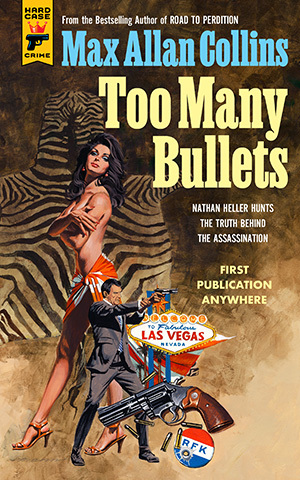
I have just completed my proofing of the typeset version of Too Many Bullets, the next (and perhaps final) Nathan Heller novel, coming from Hard Case Crime in the fall of 2023, which seems to be the year we find ourselves in.
A certain number of the hearty souls who check in here regularly (and also those who show up irregularly) are readers of my Quarry, Nolan and other series whose entries run in the traditional 60,000 words or so length. Some others may be comics fan who are interested in Ms. Tree, Road to Perdition and my other occasional forays into graphic noveldom.
This means, these readers have not yet sampled Nathan Heller, the series I consider my best and most significant work. It may be because the books deal with history and these readers are unaware that historical subject matter does not discourage me from trafficking in sex and violence; or perhaps they are put off by the length – these two HCC Heller novels are 80,000 words each. I say gently to these folks that another 20,000 words or so will not kill you, nor will the historical content, although the research for these two recent Hellers damn near killed me. I remind these readers that later this month (delayed by a dock strike in London) physical copies of the new Heller, The Big Bundle, will be available. The e-book and (I think) the audio versions are both available now.
But a certain kind of reader – I will not go so far as to invoke OCD or Anal Retentive tendencies, having both of those conditions myself – won’t start reading a new series anywhere but the beginning. Despite my concerted efforts to make each Heller novel stand alone, such readers are stubborn about starting at the start.
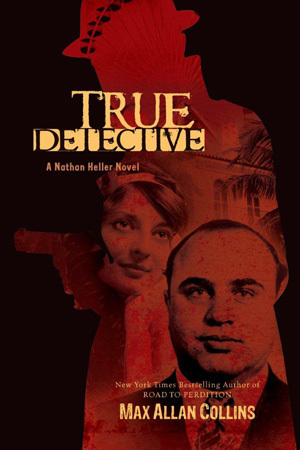
For that reason I am pleased to announce that True Detective (1983) will be promoted via Amazon Monthly Deals: starting 1/1/2023 and running through 1/31/2023, the first Nathan Heller novel (a winner of the Best Novel Shamus from the Private Eye Writers of America) will be offered on e-book at 1.99 USD.
 * * *
* * *Doing the read-through (and tweaking of) Too Many Bullets was an interesting experience. I felt generally very good about the book – in fact, I was really satisfied with it and felt like it showed me at the top of my game.
And I was writing well during the months of actual writing (many months of research preceded that), despite having health issues then, including two brief hospital stays related to my A-fib. But despite what I felt was a high standard of work, I also came across uncharacteristic lapses – word repetition, pronoun confusion, and occasional lack of clarity.
It was odd to see me with my powers intact but now and then flagging, probably due to those health issues. Thankfully I am doing much better on that front, but it was sobering to see the lapses. I’m sure advancing age is another factor. But I will keep at this as long as my marbles are more or less intact.
Still, I’m sure my HCC editor Charles Ardai will wince when he sees I am sending 44 correction pages out of 300 hundred pages or so.
As for whether there will be another Heller novel after Too Many Bullets, that depends on sales, frankly. I have yet to write the major Heller/Hoffa novel I’ve had in mind for, oh, thirty years.
But we are at least nearing the end of Heller’s run. The research is just too daunting for a duffer.
* * *About a month ago, here, I wrote this (feel free to skip):
I’ve told this story before, but I’ll tell it again on the occasion of the Christmas Season. Just before Thanksgiving 1992 – right before – I received a letter from the Chicago Tribune Syndicate editor letting me go from the Dick Tracy strip after my 15 year run. Shortly thereafter Bantam cancelled Nate Heller and returned the novel Carnal Hours to me after the editor there had accepted it enthusiastically. (The previous entry, Stolen Away, had won the Best Novel “Shamus” award from the Private Eye Writers of America.)On Christmas Eve 1992, still shellshocked, I wrote “A Wreath for Marley,” the lead story in the
Blue Christmas collection ($2.99 on e-book). It has been published several times, including in the Otto Penzler anthology, The Big Book of Christmas Mysteries. The story is what they call (hideously) a “mash-up” – of A Christmas Carol and The Maltese Falcon. Its significance is that it showed me getting back into the game after two bad batterings. The story is a long one, probably 15,000 words, and was done in one fevered sitting. It remains my favorite short story of mine.It almost became my second indie movie – there’s a script, you will not be surprised to learn – but the success of Mommy led to us deciding to do
Mommy’s Day instead.Since I wrote this post, I’ve been exploring – with Chad Bishop, who put together Encore for Murder with me as a video presentation (stay tuned) – mounting a production of Blue Christmas here in Muscatine that could be presented as a live performance but also shot as a feature much as we did Eliot Ness: An Untouchable Life.
But Blue Christmas exists as a novella and as a film script, and no live performance version was ever written. Adding a second level of problems, er, challenges, a script for the stage is needed, with an eye on putting together the feature. So it needed to be a hybrid – a screenplay written for the live-performance stage.
Does your head hurt yet?
Still, I have long intended to someday take the time to write a stage play version of Blue Christmas. It’s a story I believe in and that has special resonance for me, as the piece of fiction I wrote on a long-ago Christmas eve that got me back up on the one-horse sleigh writing again after having my career get yanked out from under me.
Anyway, I spent a week on it, over Christmas (appropriately) and I’m very happy with it. Putting together a piece that was intended to have fairly elaborate special effects for a low-budget indie film and doing it instead live on stage…tricky. I am proud of how I solved the challenges…the problems…as the only stage play I’ve previously written is Eliot Ness.
But, as I say, it’s set up in a screenplay manner, in part because we are going after a couple of grants that are intended for backing low-budget feature films, not stage productions.
In the meantime, I’m entering Encore for Murder in a couple of Iowa film festivals, getting back in the game a little. As much as I love writing fiction – and even relish the solitary nature of it – I have to admit I’m never happier than when I’m in an editing suite working with my pal, Phil Dingeldein. And working with Chad Bishop has been a joy, as well.
Speaking of Phil, last Thursday he and a two-person crew – Justin Hall and Hannah Miner – came to Muscatine and shot the additional footage for our expanded version of Mike Hammer’s Mickey Spillane. The original documentary was shot in 1998 and released in 1999, and this brings the Spillane story up to date, from Mickey’s final years through the work I’ve done completing his unfinished manuscripts.
We are talking to VCI, who have released a lot of my stuff in the past (but never the Spillane doc) and hope to include Encore for Murder as a bonus feature. It’s a natural flow as we have Gary Sandy talking about playing Mike Hammer in the new documentary footage.
* * *Here’s a two-party review of several of my Batman issues. These fans don’t realize that I was subjected to artist changes (artists who apparently didn’t have access to character designs from the previous issue!) and that no Batman “bible” existed, meaning I had to fly by my bat wings into unknown backstory territory. They do like my Penguin story, however.
Road to Perdition is back on Netflix.
Finally, here’s a great write-up on the forthcoming Nolan two-fer, Mad Money.
M.A.C.
December 27, 2022
Bob Dylan, Private Eye? Also, Christmas 2022!
We had an official Christmas at the Collins household this year. My definition of an Official Christmas includes the following:
1. Receiving a Pee Wee Herman Christmas card from Paul Reubens.
2. My wife’s Christmas cookies (her late Grandmother Mull’s recipe).
3. Spending Christmas Eve and Christmas morning with Mr. and Mrs. Nathan Collins and our grandchildren, Sam, 7, and Lucy, 4.
4. Watching the Alastair Sim version of Scrooge
5. Watching the original Miracle on 34th Street

 * * *
* * *As was the case with so many of you, we here in Iowa were gifted with weather that looked like Christmas and felt like Hell. It did not get in the way of our excessive exchange of gifts and consumption of food, all of which went off as planned. That Nate, Abby, Sam and Lucy live just seven houses up the street from us made Christmas almost as joyful as Covid lockdown.
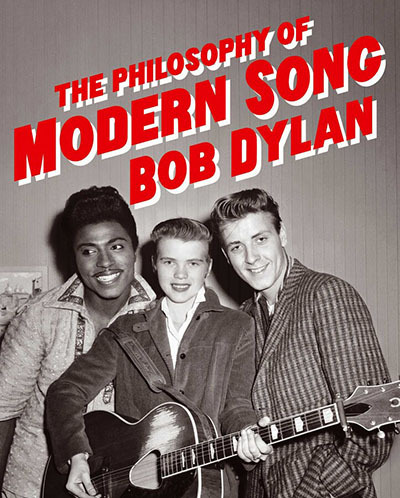
Among the many gifts I received – physical media like books and CDs (remember those?) – was a tome entitled The Philosophy of Modern Song by Bob Dylan. To discuss that volume properly, I need to back up over almost sixty years ago to share with you my relationship with Bob Dylan.
No, I never met him. But he was a major part of the regular poker sessions I attended with my high school buddies, including such names meaningless to you as Jan McRoberts, Jim Hoffmann, Mike Bloom, Ron Parker, Jon McRae and John Leuck. Others came and went, but those were the regulars. Jan, Jim and Jon are gone, but I am happy to say Mike, Ron and John are still with us.
John was a latecomer to the poker group. He had attended Catholic schools until junior or senior high school sometime; around then he moved in next door to Mike Bloom and they became fast friends – they were both swimming champs. A strikingly handsome young man, John was hipper than the rest of us. More sophisticated.
We always listened to the Beatles, the Turtles and Sonny & Cher while we played cards…except when we played at John’s. He put on James Brown records, which just sounded like ridiculous noise to me at the time. He also played Bob Dylan records. These albums included the pre-electric ones, and I had never heard anything worse in my life. The singing was nasal and off-key and the lyrics to the self-composed songs were gibberish.
My dislike, nay, my contempt was such that on the rare occasions when I was winning at poker, John would smile to himself and put some Bob Dylan on and I would begin to lose. Actually, not “begin” – I would immediately tumble into the abyss of defeat, leaving behind money earned at my bus boy job, money I could ill afford to lose.
Playing in a rock combo as I did, my opinion of Dylan (and James Brown) changed over the coming years, particularly as pertained to songwriting. Some of the latter seemed laughably pretentious (actually, kinda still does), but undeniably a lot of wonderful songs were in there – the Turtles doing “It Ain’t Me Babe,” the Association “One Too Many Mornings,” the Byrds any number of things, all and more were favorites of mine then and now.
John Lennon (among many others) started imitating Dylan’s singing style, only largely minus the nasal aspect and on key. With our comics-professionals band Seduction of the Innocent at San Diego Comic Con, we played the heart-breaking “Knockin’ On Heaven’s Door” (miss you, Miguel) and the audience was properly swept up in it. This continued for…forever, with Tom Petty essentially becoming the Bob Dylan Who Sang in Tune.
Now and then I have actually warmed to a Dylan-sung song, though my hand still goes at once to the radio to get rid of “Like a Rolling Stone” or “Lay Lady Lay.” And, years after the fact, I learned that my musical idol, Bobby Darin, was an early proponent of Dylan’s work (so early on that BD pronounced it “die-linn” in interviews). Now I know that Bob Dylan was (and is) a proponent of Darin’s.
I found this out reading perhaps the best book I received this Christmas (among a number of wonderful additions to my library), The Philosophy of Modern Song by…wait for it…Bob Dylan.
My God, it’s a wonderful read. It is, not surprisingly, an idiosyncratic ride that is at once random and rigidly organized, festooned with fun and apt and sometimes heartbreaking pictures (news photos, movie stills, comic book pages, pulp covers) that illustrate a collection of Dylan’s reactions to various songs and artists. A fun fifties fan magazine-portrait of Miguel’s mom Rosemary Clooney beaming in her front doorway is across from the “Come On-A My House” essay, which terms that jaunty number as “The song of the guy who’s got thirty corpses under his basement and human skulls in the refrigerator.”
Though arranged like chapters, no exact format reveals itself. An essay may be seven pages long (“Black Magic Woman” by Santana) or one paragraph (“Long Tall Sally”). Often the song is discussed by way of Dylan’s personal transformation of that song into a story. Sometimes, not always, such a mini-essay is followed by a knowing, compassionate appraisal of the artist.
This is not a book I consumed cover to cover. I am still reading it – gradually. It’s what I’d call a “bedroom book,” from which I assign myself a few chapters before my mind moves itself away from my problems and concerns into whatever I’m reading – in this case, a talented man’s response to songs that touched him. (It is definitely not a “bathroom book.”) I have gravitated to the subjects that interest me most – his essays on Johnnie Ray, Dean Martin, Rick Nelson and Little Richard were among those I was first drawn to, and impressed by. Some of the songs discussed (and artists) are obscure, and I’ll get around to them in this 300-plus-page book. Entries focused more on song than artist include “Volare” and especially “Where Or When,” though Dion gets some nice attention there. Some essays are a bit befuddling, like the fairly lengthy look at “Don’t Let Me Be Misunderstood” that doesn’t mention Eric Burden and the Animals and barely references Nina Simone.
The biggest surprise to me, however, is the prose style itself. This guy Bob Dylan could have been a great crime writer, a private eye chronicler par excellence. Listen to him riffing on Rick Nelson’s “Poor Little Fool”:
You went on a spree and left a trail of sensitive violated hearts, but that came to an end when you ran up against someone who buckled you, one on one, who made you fall to pieces and eat the dirt. You were brainless, no doubt about that. She played with you and teased you with her happy-go-lucky ways, she was easygoing and cheerful, unbothered. She fondled and stroked you, and with her baby blue peepers she enchanted you, she was a real knockout. She sized you up, she was captivating and shrewd and lousy with lies. Oh yeah, you were an absolute blockhead beyond a doubt.…Now you’re obsolete and out of date, and you’re walking in the night down by the river, but the water’s dead. You’re moving one leg at a time. Another girl has got her hand on your shoulder….
The Philosophy of Modern Song is filled with prose like this, stuff Chandler or Spillane (not Hammett) might have written. It hits me in a personal place. I am not a reader of poetry. Generally, outside of songwriting, I don’t like it. It makes me think of what Kurt Vonnegut told us, typically deadpan wry, when he visited the Writers Workshop (where a year before he’d been teaching): “Fiction writers resent poets because poets are always between works.”
What I like is poetic prose, if it’s not overdone. Several of my contemporaries in the private eye field (whose names I will not mention) are lauded by fans for wonderful prose…writing that curdles my stomach. Chandler and Spillane could do this poetic prose and hardly anybody since, profundity tumbling out of a mouth with a Lucky Strike dangling out of it. Some writers in crime fiction are smart enough not to try – Don Westlake always said, “Good writing is invisible.”
But, damn, I wish Bob Dylan had just written songs and the occasional private eye novel, or that I had learned to look past the nasal tones and off-key singing and let his personal poetry get through to me, unfiltered.
By the way, Bobby Darin gets two chapters in Dylan’s book, the only artist who does. Check this out for proof.
* * *This essay says Daniel Craig’s best movie is…wait for it….
M.A.C.
December 21, 2022
Blue Christmas News Flash
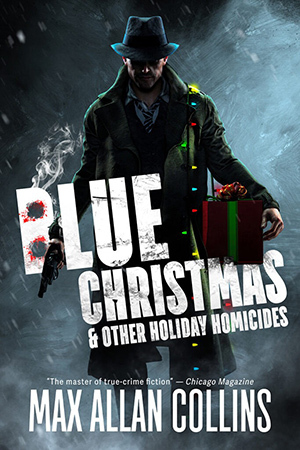
Just in time for the holidays, Blue Christmas and Other Holiday Homicides is only $0.99 on the Amazon Kindle store. (Sale ends December 27th.) This killer collection includes six holiday-themed stories: “A Wreath for Marley” (Christmas), “Mommy” (Mother’s Day), “Flowers for Bill O’Reilly” (Memorial Day), “His Father’s Ghost” (Father’s Day), “Firecracker Kill” (Fourth of July), and “A Bird for Becky” (Thanksgiving). Don’t miss this deal!
E-Book:
December 20, 2022
Publisher’s Weekly, the Spillane Doc, Encore and More!
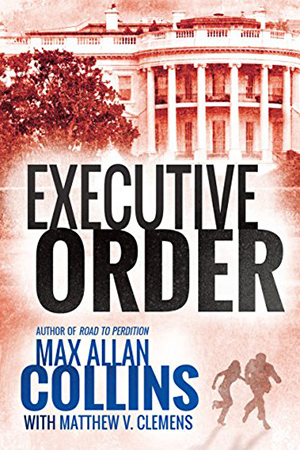
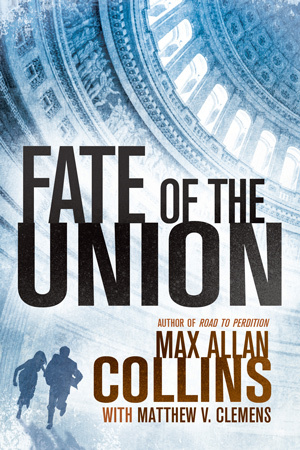
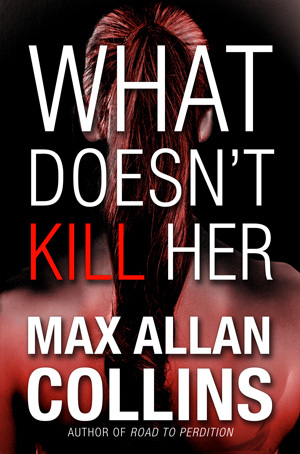
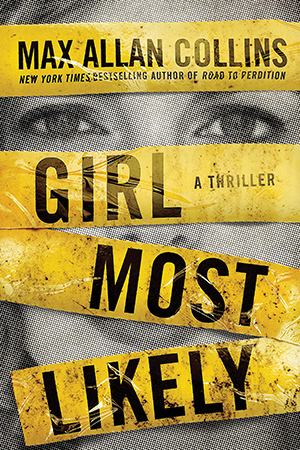
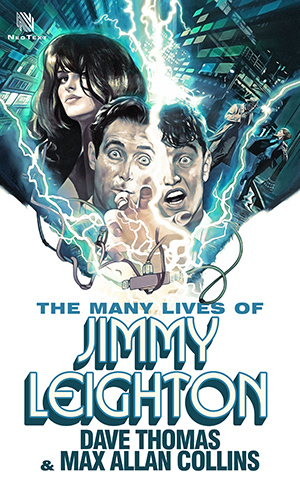
For those of you looking for cyber stocking stuffers, or who will need a way to use that Amazon gift cards you’ll be receiving, four of my books are on sale as Kindle titles right now for a meager $1.99 each until the end of 2022. You can avail yourself of the Collins/Clemens titles Executive Order, Fate of the Union, What Doesn’t Kill Her and my solo title, Girl Most Likely. Also available for $1.99 (not sure for how long) is my collaboration with SCTV’s Dave Thomas, The Many Lives of Jimmy Leighton, a science-fiction-tinged crime thriller.
The three Clemens co-authored titles are among my bestsellers at Amazon, and Girl and Jimmy are two of my personal favorites, which if you haven’t tried, you have this opportunity to brighten our mutual Christmases by doing so.
E-Book:
E-Book:
E-Book:
E-Book:
E-Book:
Spillane – King of Pulp Fiction (Mysterious Press) will be out February 7 of next year, which is sooner than it sounds. James Traylor and I had a nice if brief interview with longtime Spillane buff Michael Barson in the latest Publisher’s Weekly.
You can see it here, including color photos of me and of co-author Jim Traylor, which we are considering releasing as NFT trading cards at $99 each.
This week I’m planning to shoot the material for the expanded edition of my 1999 documentary, Mike Hammer’s Mickey Spillane. Several years ago, the doc was edited (and slightly updated) from forty-eight minutes to thirty-some) for the Criterion release of Kiss Me Deadly.
I’ve been planning to reinsert some footage we cut initially (it had run something like fifty-three minutes), and to insert new interview footage with myself, to cover things not discussed and to include what has happened regarding Mickey’s work since his death in 2006.
Phil Dingeldein, my partner in cinematic crime, has found a very good copy of the documentary among our materials and shared it with me. At risk of sounding foolishly boastful, I had forgotten had good it was. Further, it was tightly edited with Chris Christiansen’s terrific score playing almost non-stop beneath. That made it problematic to insert anything that had been previously edited out, material we would have to locate among the dozens of tapes from the 1998 shoot. Mickey’s interview footage had taken up ten Betacam tapes alone.
And as tempting as it might be to restore what I’d been encouraged to cut years ago, disrupting the smooth edit of what arguably is my best work as a filmmaker is not worth doing. For this reason, I’ve decided to expand the current cut in a new way. It will open with an explanatory introduction by me, and at the conclusion of the original documentary a sort of epilogue will follow, bringing the Spillane story up to date. It will also expand the doc to around an hour, which is considered feature length in the documentary game.
The tricky thing is that this new footage will be primarily me talking on camera, which is something not even my late mother would have relished seeing. Our challenge is to include enough interesting visual material to edit over my mug as we can manage. Oh, you’ll see plenty of me, just not enough to turn most stomachs.
We will be covering Mickey’s final novel (Something’s Down There) and his passing, including his request to me to complete the last Mike Hammer novel (The Goliath Bone) and to develop his unfinished material. But it will also briefly discuss our friendship and our collaboration on various projects, including anthologies of his and other mystery writers, the Mike Danger comic book series, and the documentary the viewer will just have seen.
The focus will be on the posthumous collaborative novels and conclude with the 75th anniversary of Mike Hammer’s debut in I, the Jury (1947). We’ll include documentary footage of the production here in Muscatine, Iowa, of Encore for Murder with Gary Sandy, including interview footage with Gary and the actors who play Velda and Pat Chambers. This should connect Mike Hammer’s Mickey Spillane – the 75th Anniversary Edition nicely to the feature version we’ve recently completed of the Encore for Murder live performance. I am hopeful that we will see a Blu-ray and/or DVD of the new version of the Spillane doc with Encore for Murder as a bonus feature.
As I said, the expanded documentary will come in around sixty minutes or a tad under, and should be a good length for the streaming services and possibly for PBS. Whether Encore for Murder will stream or not, I can’t say. But I will do my best to make it available to any of you who are interested. I am probably too close to know how good it is or isn’t. Clearly Gary Sandy is wonderful as Mike, and the local actors are much better than I could ever have hoped. Several clearly are professional level, and everyone does well.
The production’s MVP is Chad Bishop, who has (under the burden of my supervision) edited Encore for Murder from the actual performance and two dress rehearsals, with the bulk of the footage taken from the former. Chad was the on-stage foley person – part of the fun of doing a Golden Age Radio-style show is having the sound effects performed on stage. But in addition to doing all the foley work, Chad was mixing the sound and laying in recorded sound effects and music cues…all done live. If he had not pulled that feat off, we couldn’t even have considered putting together a “movie” version of our production.
I know I’ve talked about this before, but I look back on what we did in September of this past year with a bit of wonder.
I was initially approached to do a Dick Tracy radio show and refused, then offered the use of my play “Encore for Murder,” which in 2011 Stacy Keach had recorded with a full cast for Blackstone audio. Later Gary Sandy had starred in live productions in Owensboro, Kentucky, in 2012, and in Clearwater, Florida, in 2018. I had been present for both, not directing but able to work with the director and actors in both cases.
So when local theater maven Karen Cooney – who is affiliated with the Muscatine Art Center – asked me to do a Golden Age Radio-style play, I of course thought of “Encore.” Initially I was going to play Hammer myself, but Karen suggested I ask Gary. It was a long shot, and I said I’d think about it.
Before taking that step, I wanted to see what kind of cast Karen had put together. I attended the first table read and was impressed. I went home and told Barb I thought the actors were quite good, but didn’t trust my judgment – I wanted them to be good, after all. Barb, who is totally no-nonsense (she has to be), agreed to come to the next rehearsal. I read Hammer, which seemed to perk the players up even further. When Barb and I went home, she said, “You’re right. They’re good.”
I called Phil and got the project on his radar. I told him if this thing came together, we should try to shoot it with multiple cameras. Throughout the month or rehearsals, co-directing with Karen, I kept Phil in the loop. But it wasn’t till the week of the performance that I said, “Let’s do this thing. I don’t want it to disappear into the ether.”
We shot the two rehearsals and the performance with multiple cameras (four), some provided and operated by Phil, others by Chad, who runs Muscatine’s public access channel 9. On performance night, unbeknownst to us, one of the key cameras ceased to function for the last ten minutes of the show. That’s one of the places where having dress rehearsal footage came in handy.
Keep in mind Gary was only present for three days. The rest of our cast is amateur (a few are pro-am, having appeared in some indie films). But we would at the very least have something for Chad’s public access channel, and I was – and am – hopeful one of the two PBS stations in my area might be interested.
I think it’s likely that the Spillane documentary will be on some streaming services. Whether Encore for Murder will be deemed worthy remains to be seen. I will let you know, and be frank about our fate.
As I said last week, I will be entering this into a couple of Iowa film festivals.
* * *
If you have Netflix, I would guess you are occasionally disappointed, even frustrated, by their original fare. But when they get it right, they get it right. And their Who Killed Santa? A Murderville Murder Mystery is hilariously wonderful. You should probably watch the six episodes of the Murderville series on Netflix first; but it should work on you even without that.
The premise is that a famous actor or sports star portrays the partner of Terry Seattle, a homicide cop played by Will Arnett. The mysteries are actually clever and can be solved if you pay attention, which the guest stars sometimes don’t. You see, they have not seen the script, which makes them the butt of the jokes cascading through each episode – at least when Arnett isn’t taking the comic heat himself.
It’s based on a wonderful British series, Murder in Successville, which ran for three seasons. The celebrities on Successville are not always recognizable to an American audience, but it works just the same. You can find those original episodes on You Tube. (I wrote a little bit about Murderville before, back in February of this fading year.)
* * *Matt Clemens and I did a joint interview on a podcast hosted by the talented and gracious Terrence McCauley that you may find of interest. Matt was excellent. I will tell you frankly that I sucked. I talked too much, I didn’t wait for the questions, I was searching for words, and my only excuse was the podcast hadn’t got on my calendar and I was caught flatfooted by it. But Matt is good.
Here’s a nice essay on the film version of Road to Perdition.
This essay looks at the tropes that can be found – or in some cases were generated by – Mickey Spillane’s Mike Hammer. I am mentioned.
This years-late review of my Dick Tracy: The Secret Files anthology is well done, if a tad late in the game.
The article calls Road to Perdition one of the best crime comics of all time. You bet! But, uh…where’s Ms. Tree?
M.A.C.
December 13, 2022
Stockings Well-Stuffed
I have been getting my stocking stuffed early (I am very happy to say) with good reviews for The Big Bundle and Spillane – King of Pulp Fiction.
You may recall that The Big Bundle received a starred review from Publisher’s Weekly and went on to being one of PW’s Books of the Week. Now here is PW’s starred review of Spillane – King of Pulp Fiction (due out the first week of February and can be pre-ordered now):
Pre-order now!
Hardcover:
E-Book:
Spillane: King of Pulp Fiction
Max Allan Collins and James L. Traylor. Mysterious, $26.95 (384p) ISBN 978-1-61316-379-5
In 1947, Mickey Spillane (1918–2006) unleashed his hyperbolic private eye and WWII vet, Mike Hammer, on the world with I, the Jury, a revenge saga that featured a major infusion of sexual innuendo and unfettered violence that scandalized not only other mystery writers but also the publishing industry and beyond. In this illuminating biography, the first devoted to Spillane, MWA Grandmaster Collins (the Nathan Heller series), a late-life collaborator of Spillane’s, and critic Traylor provide incisive analysis of Spillane’s unique career. Employing exhaustive research and their access to Spillane’s personal archives, the authors move from Spillane’s precocious childhood to his time at comic book publisher Timely writing text fillers; his WWII service as a flight instructor; the epic breakthrough with the Signet/NAL paperback edition of I, the Jury; the superstar years of 1948–1953, when each Mike Hammer novel was reprinted in the millions; and his surprise conversion to the Jehovah’s Witness movement. Spillane’s growing appetite for acting and star-making turn in the 1970s as a TV pitchman for Miller Lite beer is recounted in colorful detail, while his long-delayed triumph in being named a Grand Master by his MWA peers in 1995 is quite affecting. The book concludes with several highly informative appendices, including Collins’s fascinating “Completing Mickey Spillane.” This definitive work is indispensable for any fan of the revolutionary Spillane and his two-fisted novels. Agent: Dominick Abel, Dominick Abel Literary. (Feb.)
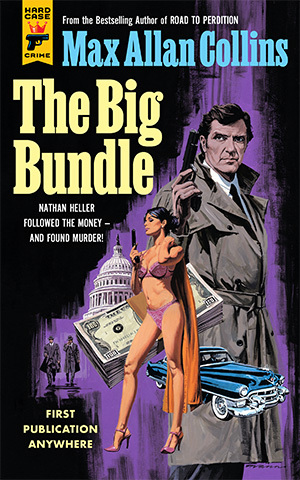
* * *Not to leave The Big Bundle out of the mix – available now on e-book and on audio and in hardcover next month – here’s a great write-up from that pro’s pro in prose (sorry!), James Reasoner.
Hardcover:
E-Book:
Digital Audiobook:
The Big Bundle
– Max Allan CollinsMax Allan Collins’ Nathan Heller series began in 1983 with True Detective. (Almost 40 years ago? How is that possible?) True Detective is one of the best private detective novels I’ve ever read. Through 18 more novels and story collections since then, Collins has maintained an incredibly lofty standard on this series and kept it alive through several different publishers, a pretty impressive feat in itself.
The Heller series moves to Hard Case Crime, a match that seems well-nigh perfect to me, with The Big Bundle. The Heller novels always involve real-life crimes, and in this one, it’s a high-profile kidnapping in Kansas City in which the six-year-old son of a wealthy Cadillac distributor is abducted. The kidnappers want $600,000 in ransom money. There’s something off about the whole deal, however, and Heller is called in to try to help recover the boy before it’s too late.
A lot of twists and turns and violence and tragedy ensue. The kidnappers are caught, but only half of the ransom money is recovered. What happened to the other half? That’s the question that brings Heller back to Missouri five years later, in a high-stakes mystery involving not only many low-level criminals but also Bobby Kennedy and Jimmy Hoffa.
As always, the research is thorough and meticulous, the background is fascinating, and the pace is great. Collins had me staying up later than usual and flipping the pages to find out what was going to happen. And of course, Nathan Heller is a great protagonist, smart, stubborn, plenty tough when he needs to be. The Big Bundle is classic private-eye fiction, just like the rest of the Heller series. I had a great time reading it and give it a high recommendation. It’s available in e-book and audio editions now, and a hardcover is on the way.
* * *I have been working on the video presentation of the Mike Hammer radio-style play, Encore for Murder, performed here in Muscatine, Iowa, on September 17 with Gary Sandy reprising his role as the famous detective. Phil Dingeldein, Chad Bishop and I recorded the performance on multiple cameras (and recorded two dress rehearsals, too, for protective coverage).
Chad – who was the on-stage foley artist, again radio-show style – is an expert editor (among much else) and he and I have been assembling the show from the available material. It’s a big but fun editing job.
I frankly think it’s very good, but there’s a chance I’m just deluded. I can tell you I am almost giddy being back in an editing suite and working on what is essentially an indie film again. I think our local cast did a terrific job supporting a pro like Gary, whose presence raised everybody’s game. Gary, as you may know, played Lt. Max Anderson in my feature, Mommy’s Day (1997)
Phil and I, of course, are longtime collaborators. It’s always a joy to work with him. (He produced the two commentaries I did, and the restored Brian Keith pilot film, for Classic Flix on I, the Jury as well as the forthcoming The Long Wait.)
What are we going to do with this thing?
I am considering entering it in a few Iowa film festivals, and may offer it to Iowa PBS and/or the Quad Cities PBS station, WQPT. I will show it to my buddy Bob Blair, the honcho at VCI home video, where we are talking about releasing an expanded version of my documentary, Mike Hammer’s Mickey Spillane (1999), which is still in progress. Encore for Murder might be a bonus feature there…or possibly a separate release. I need to see how people outside the Muscatine bubble might react.
I can only say that everywhere I go around here, I am still hearing from locals about how great the show was…and it’s been almost three months since our one-night performance.
For you Mike Hammer fans, I promise that at the very least I will make it available here, possibly as a DVD.
Stay (as we used to say) tuned.
* * *If you are looking for stocking stuffers (for yourself or others) and have already ordered the Classic Flix Blu-ray/4K/3D I, the Jury, here are other Mike Hammer flicks that are available on Blu-ray at Kino (all under twenty bucks each):
The Girl Hunters (Mickey as Mike; includes my commentary)
My Gun Is Quick (flawed but interesting)
I, the Jury (1982 remake with Armand Assante)
* * *I have said here several times that the Michael Bay movie The Rock (1996) is really the slightly disguised last Sean Connery-starring James Bond movie. The proof has been assembled here, and it’s worth your time if you’re at all a Bond fan (are you listening, Matthew Clemens?). (How about you, Nate Collins?…It’s a Nic Cage movie, son!).
The great J. Kingston Pierce at the equally great Rap Sheet site catches people up to what I’ve been doing of late. I should say that my assumption (which Jeff reports) that Too Many Bullets will be one of the longest Heller novels to date did not come to pass. Oh, it’s pretty long – 80,000 words – but that’s the length of The Big Bundle, and both fall short of True Detective and Stolen Away, in the door-stop length department.
Here’s a good Big Bundle review at Bookgasm, though I disagree with the reviewer’s assessment of the second half of the novel, the second section having been singled out for praise elsewhere (some nice reviews are already posted at Amazon).
I am very pleased (no surprise!) with narrator Stefan Rudnicki’s reading of the new Mike Hammer book, Kill Me If You Can. He’s managed to make the loss of Stacy Keach as narrator much easier to go down. Stefan is the honcho at Skyboat Media, and while first appearing back in 2015, this essay on my work and Skyboat’s interest therein you may find worth your time. A video clip of Stefan at work on Quarry’s Choice is included. By the way, Stefan and Skyboat just picked up the short story collection, originally published by Mysterious Press, A Long Time Dead – A Mike Hammer Casebook. Should be out on audio next year.
It should be noted that Kill Me If You Can might be considered a collection, as the Hammer yarn of that name might rightly be considered a novella, and the rest of the book includes five Spillane/Collins short stories, two of which are significant Hammer tales taken from film scripts of Mickey’s.
* * *Several books are reviewed here, and one of them (scroll down) is Kill Me, Darling.
Next is this very good and wide-ranging essay (at the sublimely named site Monkeys Fighting Robots) on my work with an emphasis on Road to Perdition. Check it out.
The prose novel version (the one from Brash Books) of Road to Perdition gets a nice write-up here. It’s about books you might like if you’ve enjoyed the work of George V. Higgins. Somewhat ironically, it was the fiction of Higgins that made me stop reading other authors of crime fiction because I felt myself being too influenced by his distinctive style. The same write-up (from author J.T. Conroe) makes an appearance in a column about Richard Stark’s The Hunter.
Finally, this is an annotated list of the best 12 Mickey Spillane novels – and about half of them I had something to do with! That’s gratifying, but in any case, this is worth a look.
M.A.C.
December 6, 2022
A Stocking Stuffer and Christmas Crime
E-Book:
Trade Paperback:

If you are looking for a stocking-stuffer type gift – a book, say – you might consider Blue Christmas and Other Holiday Homicides from Wolfpack, available in trade paperback (also e-book, but I’m not sure how you stuff one of those in a stocking).
I’ve told this story before, but I’ll tell it again on the occasion of the Christmas Season. Just before Thanksgiving 1992 – right before – I received a letter from the Chicago Tribune Syndicate editor letting me go from the Dick Tracy strip after my 15 year run. Shortly thereafter Bantam cancelled Nate Heller and returned the novel Carnal Hours to me after the editor there had accepted it enthusiastically. (The previous entry, Stolen Away, had won the Best Novel “Shamus” award from the Private Eye Writers of America.)
On Christmas Eve 1992, still shellshocked, I wrote “A Wreath for Marley,” the lead story in the Blue Christmas collection. It has been published several times, including in the Otto Penzler anthology, The Big Book of Christmas Mysteries. The story is what they call (hideously) a “mash-up” – of A Christmas Carol and The Maltese Falcon. Its significance is that it showed me getting back into the game after two bad batterings. The story is a long one, probably 15,000 words, and was done in one fevered sitting. It remains my favorite short story of mine.
It almost became my second indie movie – there’s a script, you will not be surprised to learn – but the success of Mommy led to us deciding to do Mommy’s Day instead.
Anyway, on the occasion of the Christmas season, what follows is largely a rerun from 2020, but reworked with some new stuff interspersed.
Let’s start with the five great Christmas movies:
1. Scrooge (1951). Alistair Sim is the definitive Scrooge in the definitive filming of A Christmas Carol. And let’s definitely not start with the current Spirited, an overstuffed turkey that some misguided souls are already calling a Christmas classic. It has a nice premise (the story told from the ghosts’ POV) and lots of songs, most of which sound like each other, and tons of gymnastic dancing and one shaky premise blending into another (Is it about people being able to change? Or about having no friends and finding one? Is it the story of the Ghost of Christmas Past falling in unlikely love, or the story of his charge getting over himself?). As an added bonus, it goes on forever. Actually, the stars – Will Ferrell and Ryan Reynolds – have nice, funny moments now and then. But we have a candy cane of an eighty-minute movie stuffed inside a two-hour stocking full of lumped coal.
2. Miracle on 34th Street (1947). Hollywood filmmaking at its best, with Edmund Gwen the definitive, real Santa Claus, Natalie Wood in her greatest child performance, John Payne reminding us he should have been a major star, and Maureen O’Hara as a smart, strong career woman/working mother who could not be more glamorous. Beware at all costs the 1994 remake.
3. It’s a Wonderful Life (1946). Heartwarming but harrowing, this film is home to one of James Stewart’s bravest performances and happens to be Frank Capra’s best. This one got a good TV-movie, gender-reversed remake that may turn up again this year: It Happened One Christmas (1977) with Marlo Thomas and Wayne Rogers.
4. A Christmas Story (1983), Jean Shepherd’s unlikely claim to fame, and a Christmas movie with Mike Hammer and Carl Kolchak in it. Now if only the four PBS specials about Ralphie and his family would emerge on legal home video! What we have instead is a weak Christmas Story 2, a true sequel with a tragically miscast Charles Grodin in the McGavin role (A Summer Story), and this year’s A Christmas Story Christmas with the original Ralphie, Peter Billingsley, uneven but worth a watch.
5. Christmas Vacation (1989) uncovers every Christmas nightmare possible when families get together and Daddy tries too hard. This holds up very well and has unexpectedly eclipsed the original film. Its secret is nailing every real Christmas-at-home horror and taking each up a notch. And it’s easily Chevy Chase’s best performance.
Other worthwhile cinematic Christmas cheer:
Bad Santa (2003). This dark comedy has a warm heart, but you have to wade through a whole lot of black humor to get there – well worth it, though. Billy Bob Thornton is wonderful, but the late John Ritter (who apparently died during the production) has the funniest moments in a side-splitting film. Its very underrated sequel, Bad Santa 2 (2016), is perhaps even funnier with Kathy Bates almost stealing the picture playing Billy Bob Thorton’s genuinely evil mother. The original film is out there in two versions, a Director’s Cut and an Unrated Cut (well, a third version if you want the theatrical cut). Both versions are good and you might alternate them from Christmas to Christmas, year to year. The unrated cut is twelve minutes longer.
Holiday Inn (1942) is easily better than White Christmas, although the latter has its charms – it’s helped keep Danny Kaye from being forgotten, and my pal Miguel Ferrer’s mom is in it. The original is funnier and ultimately more heart-warming, though the Lincoln’s Birthday blackface number is not just tasteless, it’s one of Irving Berlin’s worst songs (“Abraham”). Shudder for a few moments, then fast-forward.
Bell, Book and Candle (1958) is an old favorite of ours, the movie Kim Novak and James Stewart made together right after Vertigo, serving as kind of an unlikely happy-ending coda to that great film. With Jack Lemmon and Ernie Kovacs bouncing beautifully off each other, it’s a precursor to Bewitched with a great George Dunning score.
The Family Man (2000) with Nic Cage, a modern reworking of It’s a Wonderful Life, is heartwarming and funny. Cage may be an over-the-top actor, but the man commits – he gives one thousand percent to every performance, and this time he has a terrific movie to do it in. There is a melancholy feel to the ending, though, as the path not taken by Cage dissolves behind him at the close, meaning some cute kids bite the imaginary dust.
The Twelve Days of Christmas (2004). This shameless reworking of Groundhog’s Day as a TV Christmas movie is funny and rewarding – good-hearted but with a darkly comic sensibility. Steven Weber is excellent as the successful slick businessman who has twelve tries to get Christmas Eve right. Molly Shannon gets her best post-SNL role. If Hallmark movies were this good, we wouldn’t be bitching about them.
Three Godfathers (1948). This John Ford western stars John Wayne and is surprisingly gritty and even harrowing before a finale that you may find too sentimental – that combination is typical Ford, though. It’s dedicated to Harry Carey and “introduces” Harry Carey, Jr., who is very good, as is Pedro Armendariz.
Prancer (1989). This features a naturalistic performance from child actor Rebecca Herrell in a smalltown/rural variation on Miracle on 34th Street. Is the reindeer the little girl helps back to health really Santa’s Prancer? Sam Elliot is uncompromising as the father who doesn’t understand his daughter, whose mother has died.
Remember the Night (1940) is the second best (after Double Indemnity) of the films Barbara Stanwyck and Fred McMurray made together. Written by Preston Sturges, it makes its humanistic points with sentiment, not sentimentality, with an occasional noir jolt.
I, the Jury (1953). On the joyous occasion of its 3-D Blu-ray/4K release, note that this much underrated first Mike Hammer movie is set at Christmas and plays off of that throughout, with holiday cards and carols the connective tissue. Biff Elliott (like the movie itself) is much underrated, and the cast is filled with wonderful character actors. The great John Alton shot it. And I am thrilled that many of the reviews of the Classic Flix limited release are giving this strong private eye film reconsideration and overdue praise.
A Christmas Horror Story (2015) features William Shatner as the comic glue (a disc jockey) holding together inter-related stories about Krampus and Christmas. There are almost as many horror movies about Christmas as there are Christmas movies, but this is one of the best in a now cluttered field. It was put together by many of the Orphan Black people.
Office Christmas Party (2016) is a very funny raunchy comedy that eventually betrays a good heart. The great cast includes Jason Bateman and Kate McKinnon. I would recommend the theatrical release, as most of the raunch included in the unrated cut isn’t particularly funny and tends not to involve any key players.
Scrooge (1970) is the second-best Christmas Carol movie. Albert Finney is wonderful as Ebenezer in this musical version, with the Leslie Briccuse score perhaps the one most like his work with Anthony Newley, who did not contribute to this score but who played Scrooge in the much-seen British stage version (which came after the film). The best song in the current Spirited (“Good Afternoon!”) is a rip-off of this film’s “Thank You Very Much.”
Arthur Christmas (2012) is a CGI cartoon with a smart, witty script. The voices in this British production include James McAvoy, Hugh Laurie, Bill Nighy and Jim Broadbent. The neglected son of Santa rises to the occasion when a toy isn’t delivered despite a state-of-the-art technologically advanced system of his favored brother’s. My seven year-old grandson Nate likes this one and so do I.
There are several special Murdoch Mysteries Christmas movies, and not all are good. But one of them is: “The Night Before Christmas” (2021), a witty Agatha Christie Old Dark House tribute. This long-running show is comfort food for Barb and me, and this example shows why we put up with the occasional clinker (to quote Ralphie’s Old Man) for the joys of most episodes.
The two Poirot/David Suchet Christmas episodes are also worth seeking out for seasonal viewing: “The Theft of the Royal Ruby” and the movie-length “Hercule Poirot’s Christmas.”
* * *Publisher’s Weekly chose The Big Bundle as one of its “Books of the Week.”
Finally, here’s a great You Tube review of the I, the Jury disc.
M.A.C.


