Ursula Bauer's Blog, page 3
June 8, 2011
Of course, you know this means war
It's hot. It's after Memorial Day. That means gardening. And war. Me. The woodchuck. The plants hang in the balance.
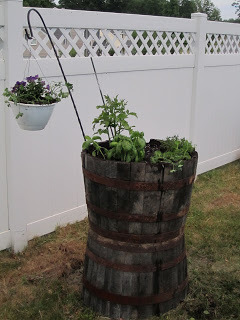
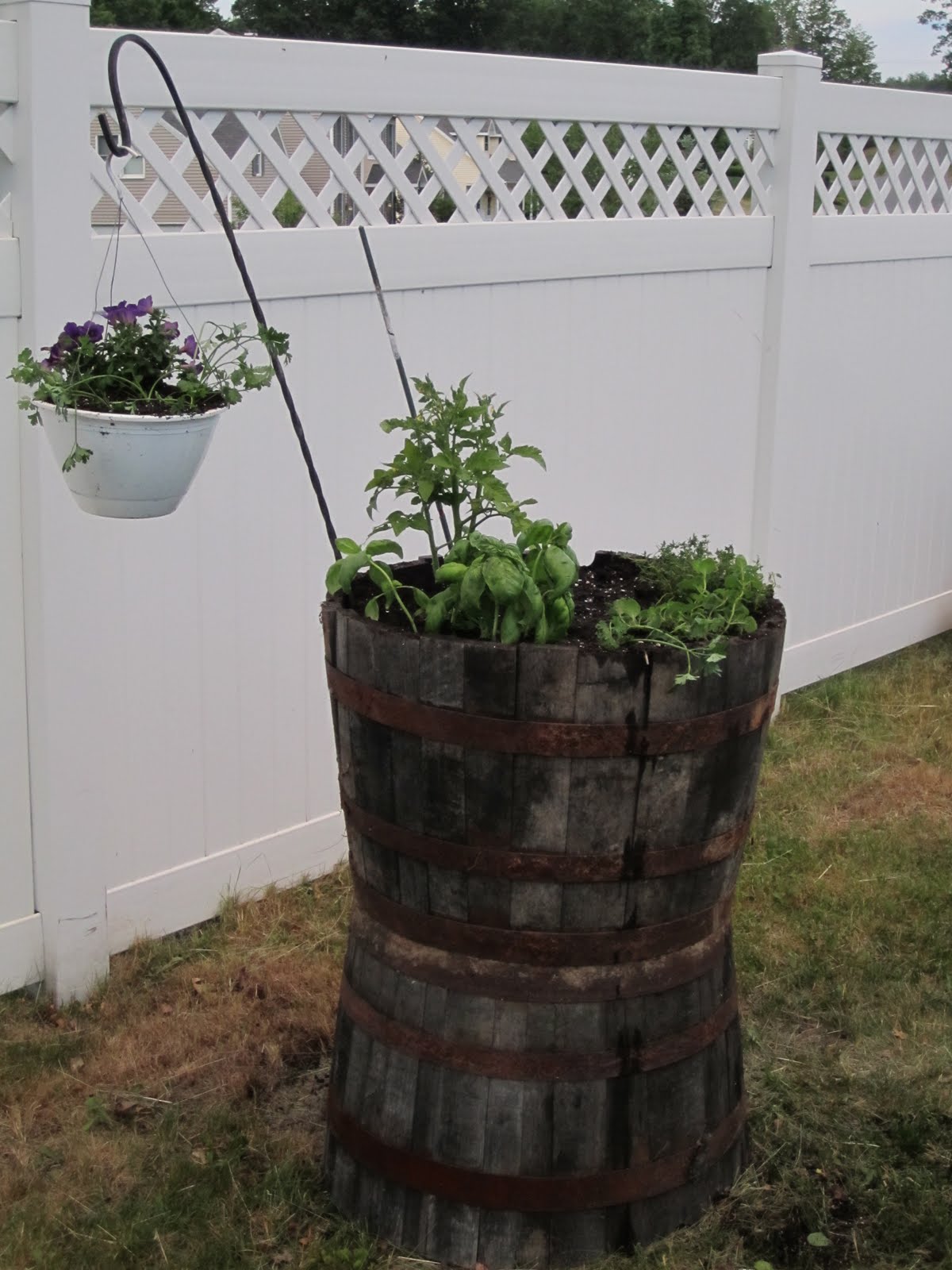
This year I went small, last year not at all, but my new strategy involves whiskey barrels (yes, once again whiskey saves the day). Previously I'd planted in them, now I doubled up, so the top barrel half is raised waist height for me (I'm 5'9"). Fingers crossed this will keep the critters out of my stuff. As an added protection, I planted a Shepard's crook into the barrel half, and hung a planter off it filled with the woodchuck's favorites: petunias and flat leaf Italian parsley. The main barrel has cherry tomatoes, more parsley, basil, Greek oregano, and German thyme. Very international. Smells amazing! Especially in the rising heat.
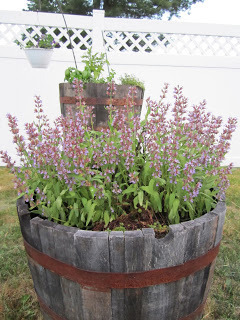
 The barrel of sage must not be on his tasty treat list. Each year it remains in the same spot, untouched, growing bigger and bigger. The bees and butterflies are loving it this year, and the blooms are out of this world purple. At sunset they seem to glow.
But let this not be a lull, more so a call to arms. I'm ready, if there is any foray by the critter across the borders, I will get the have a heart trap and we will tangle.
On other notes, A Haunting Affair is almost ready for release. It's in production now for formatting, and I'll be updating the website to have all the relevant information. Very exciting, a garden and a new book. A good way to venture into June.
This year I went small, last year not at all, but my new strategy involves whiskey barrels (yes, once again whiskey saves the day). Previously I'd planted in them, now I doubled up, so the top barrel half is raised waist height for me (I'm 5'9"). Fingers crossed this will keep the critters out of my stuff. As an added protection, I planted a Shepard's crook into the barrel half, and hung a planter off it filled with the woodchuck's favorites: petunias and flat leaf Italian parsley. The main barrel has cherry tomatoes, more parsley, basil, Greek oregano, and German thyme. Very international. Smells amazing! Especially in the rising heat.
 The barrel of sage must not be on his tasty treat list. Each year it remains in the same spot, untouched, growing bigger and bigger. The bees and butterflies are loving it this year, and the blooms are out of this world purple. At sunset they seem to glow.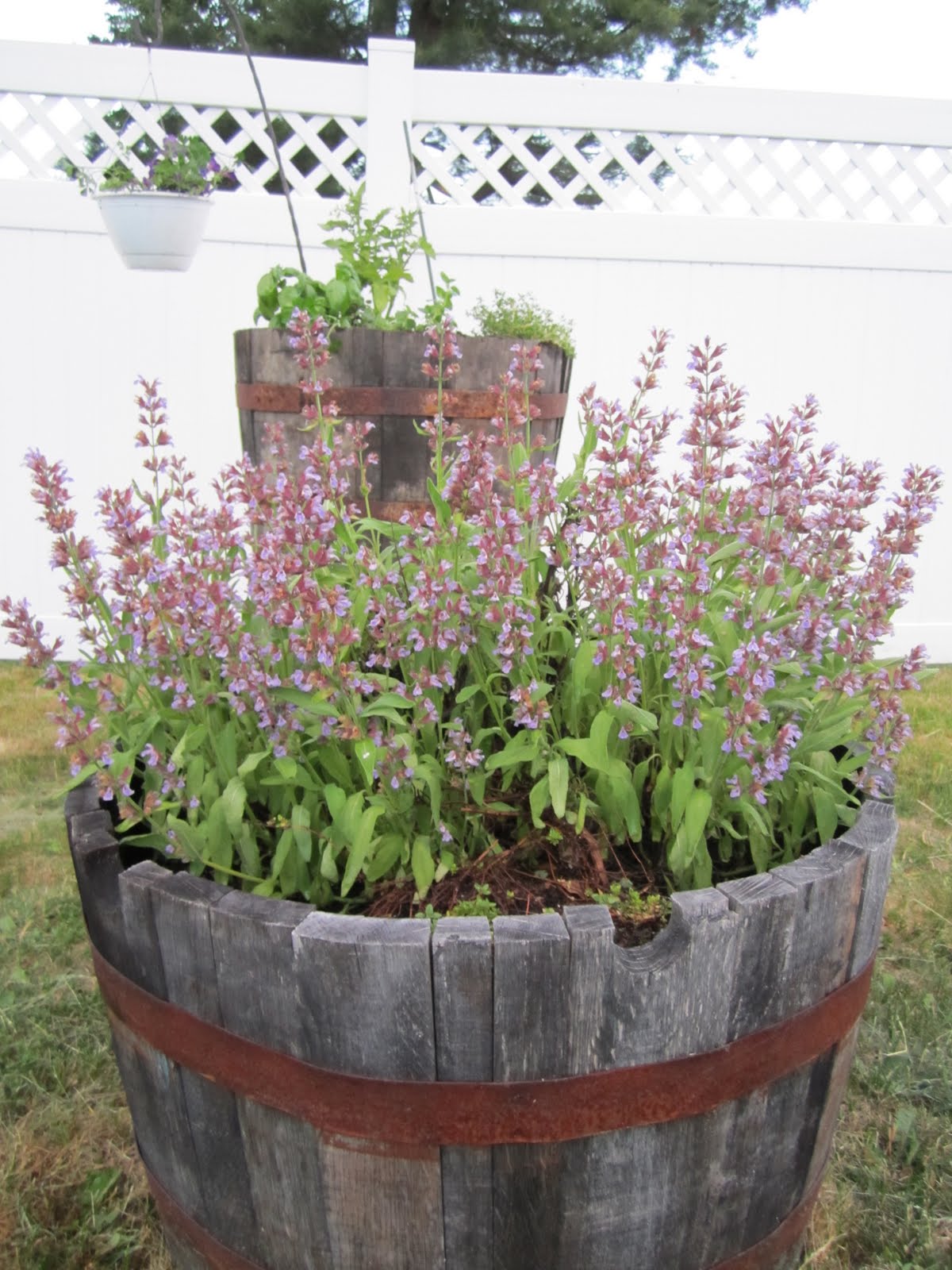
But let this not be a lull, more so a call to arms. I'm ready, if there is any foray by the critter across the borders, I will get the have a heart trap and we will tangle.
On other notes, A Haunting Affair is almost ready for release. It's in production now for formatting, and I'll be updating the website to have all the relevant information. Very exciting, a garden and a new book. A good way to venture into June.


April 20, 2011
TIP FROM THE TRENCHES: Cooling Down Self Editing Hell
If you write, and ever get a chance to take the Self Editing Class with Angela James, do it. Better, if you ever get a chance to work with her directly, grab with both hands!
Been in edit hell for a while. I've had at this manuscript multiple times so it's easy to numb up and miss things when surgical precision is most needed. To aid the scalpel sweep that produces my final line by line read through copy, I used a TIP from Editor Angela James and it worked to highlight weak spots quick: Grammar check on Word. I know - that's like 'so Mickey mouse' - except, it isn't. You won't accept most suggestions, since voice comes through in style and style isn't always on the 'up and up' as far as the check is concerned. It's a quick way to zero in on potential trouble spots, and worth it as one of your first, and one of your last round pre-flight checks.
I had format issues that this sussed out which is why I gave it a try, but I also found it caught some weak sentences, as well as confusing text, faster than another line by line read through. Employing it gave me a much better copy to do my last line by line read through, too, a big plus. It helped my adverb hunt (Stephen King in On Writing has an excellent explanation of why to avoid overuse of adverbs.). In the end it forced a few re-writes that made better sentences, and gave me a chance to cut more junk words. A Haunting Affair is a category sized contemporary paranormal romance. Its length and story demand tight pacing and economy of words. I like words, and often use way too many. So I know my weak spots. But this made finding them faster and trust me, after so many times at the wheel, I was ready for a co-pilot. After going through the last process, I had my final line by line read through copy and was able to get through that edit round in half the time it would have taken if I'd not tried this tip.
So on this leg of the revision journey in addition to weak sentences I hit the low hanging fruit of:
1. Extraneous activity w/dialogue. Dialogue makes things move fast when you read. Attribution is key, but motion for the sake of motion doesn't enhance the story. So cut a bunch of that.
2. LY - adverbs - kept some, junked most
3. Overuse of low value words: Just, Really, Very, etc.
4. Passive voice and extraneous description
5. Weird format errors achieved though multiple revisions w/track changes.
6. Name change justification and name consistency
7. Flagrant spelling errors (My personal favorite - I am inventive w/letters and do not follow rules, only whim)
What's left:
■25 more pages to 'The End'
■Changing a key item to something more timely and recognizable
■Tim's last pass on copyedit for spelling or misused words
Then:
Off to the format guy (who also did my cover)
.
Been in edit hell for a while. I've had at this manuscript multiple times so it's easy to numb up and miss things when surgical precision is most needed. To aid the scalpel sweep that produces my final line by line read through copy, I used a TIP from Editor Angela James and it worked to highlight weak spots quick: Grammar check on Word. I know - that's like 'so Mickey mouse' - except, it isn't. You won't accept most suggestions, since voice comes through in style and style isn't always on the 'up and up' as far as the check is concerned. It's a quick way to zero in on potential trouble spots, and worth it as one of your first, and one of your last round pre-flight checks.
I had format issues that this sussed out which is why I gave it a try, but I also found it caught some weak sentences, as well as confusing text, faster than another line by line read through. Employing it gave me a much better copy to do my last line by line read through, too, a big plus. It helped my adverb hunt (Stephen King in On Writing has an excellent explanation of why to avoid overuse of adverbs.). In the end it forced a few re-writes that made better sentences, and gave me a chance to cut more junk words. A Haunting Affair is a category sized contemporary paranormal romance. Its length and story demand tight pacing and economy of words. I like words, and often use way too many. So I know my weak spots. But this made finding them faster and trust me, after so many times at the wheel, I was ready for a co-pilot. After going through the last process, I had my final line by line read through copy and was able to get through that edit round in half the time it would have taken if I'd not tried this tip.
So on this leg of the revision journey in addition to weak sentences I hit the low hanging fruit of:
1. Extraneous activity w/dialogue. Dialogue makes things move fast when you read. Attribution is key, but motion for the sake of motion doesn't enhance the story. So cut a bunch of that.
2. LY - adverbs - kept some, junked most
3. Overuse of low value words: Just, Really, Very, etc.
4. Passive voice and extraneous description
5. Weird format errors achieved though multiple revisions w/track changes.
6. Name change justification and name consistency
7. Flagrant spelling errors (My personal favorite - I am inventive w/letters and do not follow rules, only whim)
What's left:
■25 more pages to 'The End'
■Changing a key item to something more timely and recognizable
■Tim's last pass on copyedit for spelling or misused words
Then:
Off to the format guy (who also did my cover)
.
January 12, 2011
Make it So - The Impossible becomes Possible
I read this fantastic book recently: Where Good Ideas Come From - The Natural History of Innovation , by Steven Johnson. I found it as a recommendation on a blog. It's a science writer's analysis of Innovation and what drives it. I read it because samples were intriguing, and because I wanted to really think about how I can be innovative – in my writing, in my career, in my life. I first purchased it on Kindle and read it in one sitting because I couldn't stop (crack for the mind, got to love that). Then I purchased the hardcover.
So, you're thinking egg head bore snore, right? Wrong. There are many ideas he considers, but I want to talk about something Mr. Johnson calls Adjacent Possibilities, and relate it back to the revolution in publishing, the changing power structure between author and producer, because it really fits. And because if you have this framework in place to funnel thoughts, you might wind up popping out of your usual track and making some quantum shifts. At the very least, you'll get wheels turning in a different way.
Adjacent Possibilities, basically, are the things that exist to make other things happen. Without electricity, for example, would the lightbulb work? Nope. We had to have some other things in play prior to the lightbulb making a meaningful entry onto the scene. If the curtain call came prior to understanding some basic electrical principals, the lightbulb would be a dismal failure. Or at least, an un-self actualized failure. Let's bring that in focus for the writer. An idea must have the right time. If the idea is there, but it's missing solid adjacent possibilities to help maximize or enable it's impact, then it remains an idea, and sometimes a failure. Failures aren't bad, they're actually good, but that's a discussion for another blog. Back to Adjacent Possibilities. Let's talk about the prototypical mass publisher, Guttenberg, and what publishing and book release was prior to his appearance.
Bibles were hard to make. Time consuming. Expensive. So not a lot of folks had bibles. But some did. They were around. In circulation. But man, did you need to lay it in to make one happen. (Think Publishing of 5 years ago). Guttenberg's around, and he's an idea man, but he's missing something: an adjacent possibility that when it appears, will change his life, bank balance and the world for ever after. Fast forward to the revolution in printing that allowed for mass production: the printing press. Enter the adjacent possibility. Guttenberg sees this and thinks, 'man, I can DO something with this technology'. He takes an existing product, a book called the Bible (an existing manuscript), and applies the adjacent possibility of this revolutionary new technology (e readers, e publishing platforms for author direct publishing, and the net/social media platforms that make marketing easier, faster and far more direct), and wham! Now bibles are getting out there, into the hands of many. These bibles are not as pretty in production value as the first bibles, but they're bibles. Guess what? His audience is hungry for them. It's this vast untapped demand. They like the price, the immediacy, it works for them. So both bibles exist in tandem now, but his is out and about, and here's the turning point: publishing was never the same again.
Fast forward to today's digital publishing revolution. The technology and convergence of so many adjacent possibilities (The internet, social medial, Print on Demand, Amazon, e readers, B&N, a recession causing a new awareness of cost containment in a buying public, blogs, instant exchange of information) has created an evolutionary leap no one could have predicted. In fact, I'm not sure where this will head, and what the final iteration will be but there is one fact we can't escape: THIS IS A GAME CHANGER. The power structure is shifting, what will it become? Right now, large entities are slow to catch up so indie pubs are enjoying unprecedented opportunity. Will that change once the NY pubs figure out a way to maximize electronic and personal marketing strategies? Will top authors do the same? For example: Amazon gives passive publicity by rankings. Depending on price, or free, you can increase a chance of getting into a TOP RANKING. 99 or Free. I'm noticing more big name authors giving up freebies and 99 cent work. Will the combination of price and name squeeze out spots for the indie author, the way they did in the traditional model of 'we have only so many slots for books, so we're going with reliable producers vs. the unknown with the off the wall idea'? Or has the indie author carved a place that the large machine will never be able to remove, or duplicate in response? What about trad publishers like Harlequin opening up digital only press affiliates like Carina Press? What will happen when/if trad publishers give more digital % royalty to authors? Will we see more digital bidding wars for authors in the future? (already several indies have been picked up by agents and a few courted by publishers). What role will small press mainly digital publishers play, like Samhain Publishing, and how might that change? What will be the new measures of success? Will Print on Demand save bookstores, or be another coffin nail?
There are millions more questions. Like, as an author, why would I go with a traditional publisher vs. going it myself? As a publisher, how will I recruit and retain productive authors and what do I need to change in the existing model to stay not only competitive but out of bankruptcy?
I don't know the answers. But I do find it all amazing. We are in the midst of a revolution.
For some additional thoughts on innovation and the ways to support and develop an innovative state of mind, read Steven Johnson's book Where Good Ideas Come From - The Natural History of Innovation and visit his blog. You will not be dissapointed, and I bet it may trigger your own personal revolution.
For more on the state of the indie publishing revolution, check out Joe Konrath's blog and step off from the many links there. I liken him to a war corrospondant. He's on the front line, reporting as the salvos fly, and has more voices speaking there than I could ever capture. He also has links to each side the revolutionary front, trad and indie.
For cutting edge info on where digital publishing is headed, follow anything Angela James writes. She's a former Samhain editor and the current head at Carina. If anyone knows digital and impact to the industry, it's her. (She's on twitter, and facebook)
Now if I were really tech savvy, I'd give all kinds of link backs but since I'm barely beyond chisle and stone tablet some days, the links in the post will have to do. To those I referenced, thanks!
So, you're thinking egg head bore snore, right? Wrong. There are many ideas he considers, but I want to talk about something Mr. Johnson calls Adjacent Possibilities, and relate it back to the revolution in publishing, the changing power structure between author and producer, because it really fits. And because if you have this framework in place to funnel thoughts, you might wind up popping out of your usual track and making some quantum shifts. At the very least, you'll get wheels turning in a different way.
Adjacent Possibilities, basically, are the things that exist to make other things happen. Without electricity, for example, would the lightbulb work? Nope. We had to have some other things in play prior to the lightbulb making a meaningful entry onto the scene. If the curtain call came prior to understanding some basic electrical principals, the lightbulb would be a dismal failure. Or at least, an un-self actualized failure. Let's bring that in focus for the writer. An idea must have the right time. If the idea is there, but it's missing solid adjacent possibilities to help maximize or enable it's impact, then it remains an idea, and sometimes a failure. Failures aren't bad, they're actually good, but that's a discussion for another blog. Back to Adjacent Possibilities. Let's talk about the prototypical mass publisher, Guttenberg, and what publishing and book release was prior to his appearance.
Bibles were hard to make. Time consuming. Expensive. So not a lot of folks had bibles. But some did. They were around. In circulation. But man, did you need to lay it in to make one happen. (Think Publishing of 5 years ago). Guttenberg's around, and he's an idea man, but he's missing something: an adjacent possibility that when it appears, will change his life, bank balance and the world for ever after. Fast forward to the revolution in printing that allowed for mass production: the printing press. Enter the adjacent possibility. Guttenberg sees this and thinks, 'man, I can DO something with this technology'. He takes an existing product, a book called the Bible (an existing manuscript), and applies the adjacent possibility of this revolutionary new technology (e readers, e publishing platforms for author direct publishing, and the net/social media platforms that make marketing easier, faster and far more direct), and wham! Now bibles are getting out there, into the hands of many. These bibles are not as pretty in production value as the first bibles, but they're bibles. Guess what? His audience is hungry for them. It's this vast untapped demand. They like the price, the immediacy, it works for them. So both bibles exist in tandem now, but his is out and about, and here's the turning point: publishing was never the same again.
Fast forward to today's digital publishing revolution. The technology and convergence of so many adjacent possibilities (The internet, social medial, Print on Demand, Amazon, e readers, B&N, a recession causing a new awareness of cost containment in a buying public, blogs, instant exchange of information) has created an evolutionary leap no one could have predicted. In fact, I'm not sure where this will head, and what the final iteration will be but there is one fact we can't escape: THIS IS A GAME CHANGER. The power structure is shifting, what will it become? Right now, large entities are slow to catch up so indie pubs are enjoying unprecedented opportunity. Will that change once the NY pubs figure out a way to maximize electronic and personal marketing strategies? Will top authors do the same? For example: Amazon gives passive publicity by rankings. Depending on price, or free, you can increase a chance of getting into a TOP RANKING. 99 or Free. I'm noticing more big name authors giving up freebies and 99 cent work. Will the combination of price and name squeeze out spots for the indie author, the way they did in the traditional model of 'we have only so many slots for books, so we're going with reliable producers vs. the unknown with the off the wall idea'? Or has the indie author carved a place that the large machine will never be able to remove, or duplicate in response? What about trad publishers like Harlequin opening up digital only press affiliates like Carina Press? What will happen when/if trad publishers give more digital % royalty to authors? Will we see more digital bidding wars for authors in the future? (already several indies have been picked up by agents and a few courted by publishers). What role will small press mainly digital publishers play, like Samhain Publishing, and how might that change? What will be the new measures of success? Will Print on Demand save bookstores, or be another coffin nail?
There are millions more questions. Like, as an author, why would I go with a traditional publisher vs. going it myself? As a publisher, how will I recruit and retain productive authors and what do I need to change in the existing model to stay not only competitive but out of bankruptcy?
I don't know the answers. But I do find it all amazing. We are in the midst of a revolution.
For some additional thoughts on innovation and the ways to support and develop an innovative state of mind, read Steven Johnson's book Where Good Ideas Come From - The Natural History of Innovation and visit his blog. You will not be dissapointed, and I bet it may trigger your own personal revolution.
For more on the state of the indie publishing revolution, check out Joe Konrath's blog and step off from the many links there. I liken him to a war corrospondant. He's on the front line, reporting as the salvos fly, and has more voices speaking there than I could ever capture. He also has links to each side the revolutionary front, trad and indie.
For cutting edge info on where digital publishing is headed, follow anything Angela James writes. She's a former Samhain editor and the current head at Carina. If anyone knows digital and impact to the industry, it's her. (She's on twitter, and facebook)
Now if I were really tech savvy, I'd give all kinds of link backs but since I'm barely beyond chisle and stone tablet some days, the links in the post will have to do. To those I referenced, thanks!
January 8, 2011
Welcome traveler - the future is NOW
I found this great spot I bet TONS of folks knew about already: Goodreads. I finally have a place I can post book reviews in a quick manner, and a place to find more books to read. And I dig the list of recent reviews because it's such a mixed bag you don't know what you'll run across while exploring.
What does all this mean? It means I'm coming out of the cave and discovering technology. Uh oh. That can only hint at much trouble to come.
Personally I get bogged down sometimes by all the tech floating around. Maybe because I'm working on a computer all day for the day job. Not sure. But I have decided it's worth it to judiciously connect here and there, because there's a ton of cool things and people to find. I see some folks are plugged in everywhere. Impressive. They've figured out the secrets of bending time. Not to post resolutions, I want to bypass written records of intentions as much as possible this year, but, I'm shooting for balance. Balance in work/home, balance in organic/tech, balance in busy/and chill. That means balance in off and on line, because on line is a place curious travelers can lose themselves in, like visiting the fairy realm. Time is different, fluid and trippy. So back to Goodreads: it makes it easy to shop and easy fits in with the 2011 master plan of balance. There, master plan. Way better than 'annual resolutions'. So props Goodreads, and my favorite authors and those yet to become favorites, reviews coming at you!
What does all this mean? It means I'm coming out of the cave and discovering technology. Uh oh. That can only hint at much trouble to come.
Personally I get bogged down sometimes by all the tech floating around. Maybe because I'm working on a computer all day for the day job. Not sure. But I have decided it's worth it to judiciously connect here and there, because there's a ton of cool things and people to find. I see some folks are plugged in everywhere. Impressive. They've figured out the secrets of bending time. Not to post resolutions, I want to bypass written records of intentions as much as possible this year, but, I'm shooting for balance. Balance in work/home, balance in organic/tech, balance in busy/and chill. That means balance in off and on line, because on line is a place curious travelers can lose themselves in, like visiting the fairy realm. Time is different, fluid and trippy. So back to Goodreads: it makes it easy to shop and easy fits in with the 2011 master plan of balance. There, master plan. Way better than 'annual resolutions'. So props Goodreads, and my favorite authors and those yet to become favorites, reviews coming at you!
November 8, 2010
Rosemary Bread Recipe
By popular demand, here is the homemade rosemary bread recipe. I made this after reading The Search by Nora Roberts. The heroine had a friend who made her the bread and homemade minestrone soup too. And I thought, mmm, sounds good. Then I got busy in the kitchen and made both. I have the recipe home made minestrone as well. Will post that one at a later date. It's the easiest soup recipe ever. (and I am not kidding!) But for now, here's the bread.
Ingredients1 tablespoon white sugar1 cup warm water1 (.25 ounce) package active dry yeast1 teaspoon salt2 tablespoons butter, softened1 1/2 tablespoons rosemary1 teaspoon Italian seasoningOptional: 1 full heaping teaspoon of either garlic pepper or garlic powder3 cups bread flour1 tablespoon olive oil1 egg, beaten (optional)Directions1. Dissolve the sugar in warm water in a medium bowl, and mix in the yeast. 2. Optional: grind 1 1/2 tblspoons rosemary, add other seasonings, set aside. This releases the oils and reduces the woody spikes of the rosemary.3. When yeast is bubbly, mix in salt, butter, 1 tablespoon rosemary, and Italian seasoning. Mix in 2 cups flour. Gradually add remaining flour to form a workable dough, and knead 10 to 12 minutes. 4. Coat the inside of a large bowl with olive oil. Place dough in bowl, cover, and allow to rise 1 hour in a warm location. 5. Punch down dough, and divide in half. Line a baking sheet with parchment paper. Lightly grease paper. Shape dough into 2 round loaves, and place on the baking sheet. Sprinkle with remaining rosemary. Cover, and allow to rise 1 hour, or until doubled in size. (Optional tip: if you toss a little bit of corn meal down and then put the bread on that, you bake up a nice bottem.)6. Preheat oven to 375 degrees F (190 degrees C). 7. Brush loaves with egg. Bake 15 to 20 minutes in the preheated oven, or until golden brown. The egg wash makes them golden and helps the crust form. (Optional: you can also toss ice cubes into the oven, or an oven safe dish while baking to get a thicker crust. it's an old breadmaker's tip, the steam helps a crust form.)
Ingredients1 tablespoon white sugar1 cup warm water1 (.25 ounce) package active dry yeast1 teaspoon salt2 tablespoons butter, softened1 1/2 tablespoons rosemary1 teaspoon Italian seasoningOptional: 1 full heaping teaspoon of either garlic pepper or garlic powder3 cups bread flour1 tablespoon olive oil1 egg, beaten (optional)Directions1. Dissolve the sugar in warm water in a medium bowl, and mix in the yeast. 2. Optional: grind 1 1/2 tblspoons rosemary, add other seasonings, set aside. This releases the oils and reduces the woody spikes of the rosemary.3. When yeast is bubbly, mix in salt, butter, 1 tablespoon rosemary, and Italian seasoning. Mix in 2 cups flour. Gradually add remaining flour to form a workable dough, and knead 10 to 12 minutes. 4. Coat the inside of a large bowl with olive oil. Place dough in bowl, cover, and allow to rise 1 hour in a warm location. 5. Punch down dough, and divide in half. Line a baking sheet with parchment paper. Lightly grease paper. Shape dough into 2 round loaves, and place on the baking sheet. Sprinkle with remaining rosemary. Cover, and allow to rise 1 hour, or until doubled in size. (Optional tip: if you toss a little bit of corn meal down and then put the bread on that, you bake up a nice bottem.)6. Preheat oven to 375 degrees F (190 degrees C). 7. Brush loaves with egg. Bake 15 to 20 minutes in the preheated oven, or until golden brown. The egg wash makes them golden and helps the crust form. (Optional: you can also toss ice cubes into the oven, or an oven safe dish while baking to get a thicker crust. it's an old breadmaker's tip, the steam helps a crust form.)
July 13, 2010
New Stuff from the New Book
There's this program where you put in text and it says who you write like. So I popped in an excerpt from the book I just finished writing in June. It's a contemporary romantic suspense in a gothic setting with paranormal elements.(Ghosties and psychics and a creepy old great camp in the Adirondacks, old cold murder case with very much alive killer out for more blood, and serious heat between two people who couldn't be more wrong for one another. Plus lots of lies and even more secrets.).
According to the ghost in the machine, I write like Stepehen King. So I guess for my target, I hit the mark. Here's the link to the site so you can test your own stuff, and below is the raw, unedited excerpt I used as a sample. Don't know that it's King-esque, but hey, that's cool too!
*******************************
His touch was firm heat and sparked up the slow burn that had been building all day night in his presence. She hated being close to him this way. All her senses went wild, and all her better thoughts and intentions go into the trash. Emma put her hand on his broad chest. Stifled the urge to let it roam and instead pushed back lightly. "You brought me here. You might want to trust me. I'm not a con anymore."
Sam didn't release her. Instead he grabbed her other arm and pulled her close. Slanted a piercing gaze at her. Made her want to be held forever, even though she was spitting mad at the same time. "I'm trying to do the right thing. It's hard when you don't know what that is. I'm in unfamiliar territory."
The moment spun out between them as tension and desire escalated. Her heart was so loud hammering against her rib cage. He must have heard it. Did he see what he was doing to her? Did he care? She drew an unsteady breath and met his gaze head on. "We're both out of our element."
The smile he flashed was boyish and at odds with the predator lurking in his eyes. "Do you forgive me?"
He was sexy as hell right now. And he was hiding something. "Do you trust me?"
"I do."
"Then prove it. Tell me what's really going on." That would do the trick. If he told her, then he was worth her time and bother. If he held back, or worse, lied, she'd do the job she came to do, but other than that, write him off. She didn't have time for players. "Tell me what you're holding back."
"Keith isn't haunting the lodge, Emma." Sam's wide chest rose enticingly as he took a deep breath. "He's haunting me."
According to the ghost in the machine, I write like Stepehen King. So I guess for my target, I hit the mark. Here's the link to the site so you can test your own stuff, and below is the raw, unedited excerpt I used as a sample. Don't know that it's King-esque, but hey, that's cool too!
*******************************
His touch was firm heat and sparked up the slow burn that had been building all day night in his presence. She hated being close to him this way. All her senses went wild, and all her better thoughts and intentions go into the trash. Emma put her hand on his broad chest. Stifled the urge to let it roam and instead pushed back lightly. "You brought me here. You might want to trust me. I'm not a con anymore."
Sam didn't release her. Instead he grabbed her other arm and pulled her close. Slanted a piercing gaze at her. Made her want to be held forever, even though she was spitting mad at the same time. "I'm trying to do the right thing. It's hard when you don't know what that is. I'm in unfamiliar territory."
The moment spun out between them as tension and desire escalated. Her heart was so loud hammering against her rib cage. He must have heard it. Did he see what he was doing to her? Did he care? She drew an unsteady breath and met his gaze head on. "We're both out of our element."
The smile he flashed was boyish and at odds with the predator lurking in his eyes. "Do you forgive me?"
He was sexy as hell right now. And he was hiding something. "Do you trust me?"
"I do."
"Then prove it. Tell me what's really going on." That would do the trick. If he told her, then he was worth her time and bother. If he held back, or worse, lied, she'd do the job she came to do, but other than that, write him off. She didn't have time for players. "Tell me what you're holding back."
"Keith isn't haunting the lodge, Emma." Sam's wide chest rose enticingly as he took a deep breath. "He's haunting me."
February 27, 2010
Amaretto Cake

For all those Amaretto lovers on Facebook - You KNOW who you are!!!!
Amaretto cake (4 Miniatures, or one regular 6 cup size)
(from Better Homes and Gardens New Baking Book)
¾ cup butter
3 eggs
1 ½ cups flour
1 teaspoon baking powder
½ teaspoon ground nutmeg
¾ cut granulated sugar
¼ cup amaretto (for cake)
1 teaspoon finely shredded lemon peel
½ teaspoon vanilla
1/3 cup granulated sugar
¼ cup cold water
2 tablespoons brown sugar
2 tablespoons light-colored corn syrup
½ cup amaretto (for syrup)
1.Allow butter and eggs to go to room temperature. Generously grease and flour six 4 inch fluted tub pans or 1 6 cup fluted tube pan (the bundt cake pan)
2.Beat butter till creamed, then add the sugar and cream until mixture is fluffy. Can use a motorized hand mixer for this, unless you are old school (like me) and have a killer arm.
3.Stir in ¼ cup amaretto, lemon peel, and vanilla. Add eggs, 1 at a time, beating for 1 minute after each addition and scraping bowl often. GRADUALLY add flour mixture to egg mixture, beating on medium-low speed just until combined.
4.Pour into pan(s)
5.Bake in 325 degree oven 20 – 25 minutes for 4 inch pans and 40 – 45 minutes for the 6 cup pan , or until toothpick near center comes out clean. Cool in pans on wire racks. Remove after about 10 minutes (should fall out easily). Cool the rest of way on wire racks. When cool, pierce generously with tines of fork.
6.For syrup, in medium saucepan combine the ½ cup granulated sugar, the water, brown sugar and corn syrup. Cook and stir over medium heat until bubbly and most of the sugar is dissolved. Remove from heat and stir in ½ cup amaretto. Cool for a few minutes, up to 5.
7.Dip fluted top and sizes of small cakes into syrup. Spoon or brush any remaining over tops of cakes. FOR 6 CUP: spoon or brush syrup over top and sides of cake, reusing syrup on the tray.
Chill. If wrapped or in container and chilled can last up to 3 weeks.
Now, picture this cake, warmed, with a small side of Bryer's All Natural Vanilla Ice Cream, and an amaretto sour chaser? Yes. MMMMMmmmmmmm!!!!!!!

February 19, 2010
Writer Myth, Writer Magic
I had a weird week, so I decided to take a break from my 'normal' every day world, and do a full day of being a writer. Immersion therapy. I needed to freshen up, and get going with finishing my current book. Only 6 – 10 chapters to go, so really, what was the obstacle other than life itself?
I took a day off from work, woke up with a plan and set it in motion. Feed the Muse. Part of the menu? Visit a local café in downtown, a very bohemian place with outstanding atmosphere, tea and cofee to die for, and cupcakes. Yes. BIG CUPCAKES. Flavour Café & Lounge is in a brick brownstone, filled with local art, a lot of yummy stuff, a bunch of off beat things, a fab couch, and just a good overall vibe. I grabbed a spot at a big table in the second room, sipped my Mayan Chai tea, sugared up on my enormous cupcake (This was my lunch. I had to feed the muse, right? Well the muse is a damn picky eater!) Got the lap top out, and went to work.
The goal was to get out of my normal environment and cause a jolt in the creative pattern, get the juice going to get the words on the page. Now what is weird, writing in a café has NEVER held appeal for me. In fact, it's been sort of standing joke. Only tortured literary writers go to cafes to write. They write long epic stories that go no where, and lament the unbearable lightness of being. They write poetry no one gets. They drink lots of coffee but it never perks them up. These are the folks who write in cafes. Besides, writing in the café, that is the stuff of writer lore. Like part of our writer collective unconscious. A story carried from generation to generation of writer since stylus found clay tablet. The writer's myth. Not the writer reality. Or the writer truth. And yet, I decided to do it anyway. Falling back on some primal author instinct, and I had to wonder why?
If the draw was so strong, then beyond the cliché, there must be fire beneath the smoke. Always up for a challenge, I put it to the test. And I have to say, I understand now why it is such an enduring part of the author's mythic schema: because things got going, words got down on the page, the story trotted along nicely, and I got a sugar rush that could power ten space shuttles and a runaway bus.
The café is busy at a steady pace, people in and out, at tables, at the couch, talking, eating, working on computers or cell phones, but I found it a soothing blend that allowed me to drift out of the heavy reality of the world, and relax into my storytelling. This writer's myth, it is passed on the way it is passed on because it has merit and bears fruit.
Now, I got it going on for about an hour, when life came to call. Had to meet with my contractor about renovations. So I drove back up the hill, had some fun picking out what would be done to the master bath, and then decided I'd had such success earlier– let me try the writing in a café experiment, but this time in another café. This was an uptown café, or more appropriately, a suburban glam café. Set in a strip mall, very chic décor, nothing rogue going on. I had a cup of decaf, not so great. I sat in an overstuffed chair with a candle at my table, but somehow, the atmosphere was thin. I did get words on paper, the right ones too, and the story marched on, but I suspect I was working off the previous buzz. I found the surroundings a distraction I had to work through.
Part cliché, part mythic act, writing in the café taught me a valuable lesson today: In finding a place that is not the normal place you create, yet one that allows you safe passage into the headspace writers enter when they need the words to flow, the spark of creation ignites. I imagine for some writers, Flavour would be a bad fit, and the place up the hill, Nirvana. I learned too, that on coming home, the perceived block wasn't an obstacle anymore. I bet you can get the same in a library, a park, a corner bar. But the café has that enduring mystique, and it stands as marker for all those other places that are not your normal haunt, but carry a certain allure, charm and cache, and allow you to duck, if only for a few hours, the slings and arrows of the normal mortal world for a far more satisfying adventure in the land of your story.
There is merit to our writer's myth, and sometimes we need to go into that innermost cave of creativity via an entrance located in a café off the beaten path, where the tea is always hot and the cupcakes always at the ready.
I took a day off from work, woke up with a plan and set it in motion. Feed the Muse. Part of the menu? Visit a local café in downtown, a very bohemian place with outstanding atmosphere, tea and cofee to die for, and cupcakes. Yes. BIG CUPCAKES. Flavour Café & Lounge is in a brick brownstone, filled with local art, a lot of yummy stuff, a bunch of off beat things, a fab couch, and just a good overall vibe. I grabbed a spot at a big table in the second room, sipped my Mayan Chai tea, sugared up on my enormous cupcake (This was my lunch. I had to feed the muse, right? Well the muse is a damn picky eater!) Got the lap top out, and went to work.
The goal was to get out of my normal environment and cause a jolt in the creative pattern, get the juice going to get the words on the page. Now what is weird, writing in a café has NEVER held appeal for me. In fact, it's been sort of standing joke. Only tortured literary writers go to cafes to write. They write long epic stories that go no where, and lament the unbearable lightness of being. They write poetry no one gets. They drink lots of coffee but it never perks them up. These are the folks who write in cafes. Besides, writing in the café, that is the stuff of writer lore. Like part of our writer collective unconscious. A story carried from generation to generation of writer since stylus found clay tablet. The writer's myth. Not the writer reality. Or the writer truth. And yet, I decided to do it anyway. Falling back on some primal author instinct, and I had to wonder why?
If the draw was so strong, then beyond the cliché, there must be fire beneath the smoke. Always up for a challenge, I put it to the test. And I have to say, I understand now why it is such an enduring part of the author's mythic schema: because things got going, words got down on the page, the story trotted along nicely, and I got a sugar rush that could power ten space shuttles and a runaway bus.
The café is busy at a steady pace, people in and out, at tables, at the couch, talking, eating, working on computers or cell phones, but I found it a soothing blend that allowed me to drift out of the heavy reality of the world, and relax into my storytelling. This writer's myth, it is passed on the way it is passed on because it has merit and bears fruit.
Now, I got it going on for about an hour, when life came to call. Had to meet with my contractor about renovations. So I drove back up the hill, had some fun picking out what would be done to the master bath, and then decided I'd had such success earlier– let me try the writing in a café experiment, but this time in another café. This was an uptown café, or more appropriately, a suburban glam café. Set in a strip mall, very chic décor, nothing rogue going on. I had a cup of decaf, not so great. I sat in an overstuffed chair with a candle at my table, but somehow, the atmosphere was thin. I did get words on paper, the right ones too, and the story marched on, but I suspect I was working off the previous buzz. I found the surroundings a distraction I had to work through.
Part cliché, part mythic act, writing in the café taught me a valuable lesson today: In finding a place that is not the normal place you create, yet one that allows you safe passage into the headspace writers enter when they need the words to flow, the spark of creation ignites. I imagine for some writers, Flavour would be a bad fit, and the place up the hill, Nirvana. I learned too, that on coming home, the perceived block wasn't an obstacle anymore. I bet you can get the same in a library, a park, a corner bar. But the café has that enduring mystique, and it stands as marker for all those other places that are not your normal haunt, but carry a certain allure, charm and cache, and allow you to duck, if only for a few hours, the slings and arrows of the normal mortal world for a far more satisfying adventure in the land of your story.
There is merit to our writer's myth, and sometimes we need to go into that innermost cave of creativity via an entrance located in a café off the beaten path, where the tea is always hot and the cupcakes always at the ready.