
Rowan Manahan's Blog: Fortify Your Oasis, page 2
January 11, 2011
Not getting interviews? Is your CV getting read at all?
 An enjoyable back and forth on the
CV Clinic
at Guardian Careers last week. Here is the final comment I made that day, having read oodles of queries from job-seekers who probably had average-or-better CVs, but who weren't getting any interviews.
An enjoyable back and forth on the
CV Clinic
at Guardian Careers last week. Here is the final comment I made that day, having read oodles of queries from job-seekers who probably had average-or-better CVs, but who weren't getting any interviews.I find it interesting to note that many of the queries here are about CVs - but only to the extent of getting that CV onto the right person's desk. It seems to me that many of the problems being presented here today centre on 'Route of Entry' rather than CV per se.
I don't find it surprising that a job-hunt that is centred on recruitment agencies, online applications and the occasional directly advertised job is proving frustrating for the hunter. The signal-to-noise ratio for those first two routes is such that no matter how good your CV is, you risk not being noticed.
This combination of right CV on the right desk at the right time is very rare ... Think long and hard about how you are going to achieve that. The full clinic is here with lots of good ideas from the assembled experts, well worth a look.
Don't get lost in the noise - "Your CV? Ah yes, I'm sure I came across it the other day"
It is a given that you need a superb CV.
It is a given that you need a CV that is tailored to each potential employer's needs (this might only involve tweaking 5-15% of the content of your CV, but that 5-15% will be the bit that makes one particular employer go "Aha!" when they read it).
It is a given that you need to be able to talk about achievement and contribution rather than just responsibilities and duties.
What is not a given is this - How do you ensure that your beautifully-crafted CV gets read at all?
All of our mothers probably uttered the same piece of advice to us when we were children - "Don't talk to strangers." And yet, the majority of job-hunters spend the majority of their efforts on doing precisely that.
I suspect that we need a Clinic looking at how to reach out in the marketplace to people who are not complete strangers. I work with employers every day and they don't want to waste time, money or management effort talking to time-stealers. And let's face it - the screening and selection process is enormously time-consuming. In a market where time = money, the most useful thing you can do as a job-hunter is to save an employer some time.
So assuming you can get your CV onto the right desk, it needs to reflect that at the very first glance. The employer needs to be thinking, "Yes! This person is right in the frame of what I am looking for to fill this vacancy."
90% of CVs that I read utterly fail to do this.
They are generic, one-size-fits-all, self-centred, documents. Read back through all the advice from the experts here - it all says the same thing. WRITE WITH THE READER IN MIND. 90% of people nod their heads at this advice when I meet them at seminars or correspond with them in a setting like this. And yet 90% of the CVs I read are average-to-poor.
Write with the reader in mind. Really. If you can do that, you will be head and shoulders above the competition.

[image error]


January 5, 2011
The lost art of the coherent sentence 2
I had forgotten this amazing piece from
Joseph O'Connor
on the topic of being inordinately fond of the word "like"
[image error]


RSS readers may need to click through to the postBig hat-tip to Matto for reminding me of this one – it really, like, brightened up, like, my day? Ya know?
[image error]
January 4, 2011
The lost art of the coherent sentence
I have noticed a problem when interviewing entry-level candidates in the recent past. These are well-educated, beautifully-presented candidates, with good CVs; but they have a problem.
The problem is they sound like morons.
Why? Because they pepper their speech with qualifiers and irritators and because they don't seem to be capable of uttering simple, emphatic, declarative sentences.
Now, on the one hand, this is a good thing - it makes my job as an interviewer much easier as I can winnow out the most incoherent candidates with relative ease. On another hand, this makes my life much easier because my career management practice is kept busy by unsuccessful candidates who come along to Fortify "looking for a few pointers" on where they are going wrong at interview. On yet another hand, it makes me very sad that the combined efforts of parents and teachers are producing a generation of people who sound like idiots.
I came across an article in one of the Sunday newspapers a while back that captured this for me. The reporter interviewed a series of teenagers by the simple expedient of leaving her Dictaphone in the middle of the table and then WROTE DOWN EVERY WORD those teenagers had uttered. Here's Holly, aged 16, from Dublin: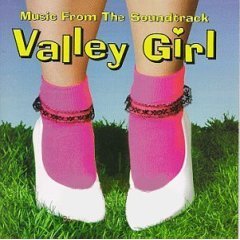 Is it just me, or does Holly seem to have difficulty uttering a simple sentence?
Is it just me, or does Holly sound, like, just a little uncertain - about everything?
Is it just me, or does Holly sound like a gushing, incoherent, half-wit?
I'm not trying to be cruel or mean here folks, I'm really not. But I wouldn't hire Holly to put up a shed in my garden, much less to represent my company to ... like, anyone.
I have written about this before and referenced the film Clueless with Alicia Silverstone, in which she brilliantly parodied this vacant, Valley Girl mode of delivery. It seems to me that a whole generation missed the joke - because they started copying her! One of the commenters on that post remarked: "Ten years ago, talking like this was satire. Now it is how US vice-presidential nominees articulate their views. Sigh." Sigh indeed ... Have another little read of those words of wisdom from Holly:
UPDATE: The male of the species does this too. The ubiquitous filler-word for females is "like", the males seem to favour "ya know" and "sorta" – frequently with an interrogative lilt in their tone. Why are these people afraid of sounding like they know something, like they're sure of something? Are certainty, lucidity and knowledge completely outmoded concepts now?
Must-seeTaylor Mali slamming on speaking with conviction
[image error]


The problem is they sound like morons.
Why? Because they pepper their speech with qualifiers and irritators and because they don't seem to be capable of uttering simple, emphatic, declarative sentences.
Now, on the one hand, this is a good thing - it makes my job as an interviewer much easier as I can winnow out the most incoherent candidates with relative ease. On another hand, this makes my life much easier because my career management practice is kept busy by unsuccessful candidates who come along to Fortify "looking for a few pointers" on where they are going wrong at interview. On yet another hand, it makes me very sad that the combined efforts of parents and teachers are producing a generation of people who sound like idiots.
I came across an article in one of the Sunday newspapers a while back that captured this for me. The reporter interviewed a series of teenagers by the simple expedient of leaving her Dictaphone in the middle of the table and then WROTE DOWN EVERY WORD those teenagers had uttered. Here's Holly, aged 16, from Dublin:
I like going out with my friends and, like, we sometimes go to the cinema, or just, like, go to someone's house and just hang around or, like, we'd go to the Wes [a teenage disco in Dublin]. Like, it's not bad at all, like, I love going there.
You'll find it's all different schools going there and, like, all, like, my friends are in different schools as well, so it's good. I was thinking of doing event management, and then, like, maybe doing a business course first and moving on to that. I think they have like, a bad reputation, but like, not all teenagers are bad. I don't know any that would be rebellious.
I have, like, just a good amount of freedom, like, not too much but, like, I'm allowed go out a lot and, like, go out with my friends and stuff. Like, my parents wouldn't be really strict, but they'd be, like, normal strict, like. They wouldn't let me go off to town at night, like. If I'd want to do something, my parents would give me money. So I wouldn't really know anything about the recession.
Mostly, like, my sister Georgia would be my influence because she is a model, but, like, she's always been, like, my sister – she hasn't, like, changed or anything because she's in the newspapers and stuff.
Most of the guys that I hang around with, like, we're really good friends, so I wouldn't mind if I went out with no make-up on, but, like, then I would go out with make-up on, but if I didn't have any make-up on and I met them on the street, like, I'd say "Hi." I wouldn't, like, mind.
 Is it just me, or does Holly seem to have difficulty uttering a simple sentence?
Is it just me, or does Holly sound, like, just a little uncertain - about everything?
Is it just me, or does Holly sound like a gushing, incoherent, half-wit?
I'm not trying to be cruel or mean here folks, I'm really not. But I wouldn't hire Holly to put up a shed in my garden, much less to represent my company to ... like, anyone.
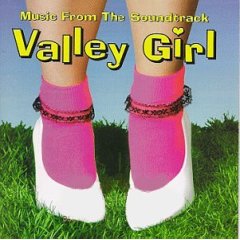
I have written about this before and referenced the film Clueless with Alicia Silverstone, in which she brilliantly parodied this vacant, Valley Girl mode of delivery. It seems to me that a whole generation missed the joke - because they started copying her! One of the commenters on that post remarked: "Ten years ago, talking like this was satire. Now it is how US vice-presidential nominees articulate their views. Sigh." Sigh indeed ... Have another little read of those words of wisdom from Holly:
I like going out with my friends and, LIKE, we sometimes go to the cinema, or just, LIKE, go to someone's house and just hang around or, LIKE, we'd go to the Wes. LIKE, it's not bad at all, LIKE; I love going there.
You'll find it's all different schools going there and, LIKE, all, LIKE, my friends are in different schools as well, so it's good. I was thinking of doing event management, and then, LIKE, maybe doing a business course first and moving on to that. I think they have LIKE a bad reputation, but LIKE, not all teenagers are bad. I don't know any that would be rebellious.
I have, LIKE, just a good amount of freedom, LIKE, not too much but, LIKE, I'm allowed go out a lot and, LIKE, go out with my friends and stuff. LIKE, my parents wouldn't be really strict, but they'd be, LIKE, normal strict, LIKE. They wouldn't let me go off to town at night, LIKE. If I'd want to do something, my parents would give me money. So I wouldn't really know anything about the recession.
Mostly, LIKE, my sister Georgia would be my influence because she is a model, but, LIKE, she's always been, LIKE, my sister – she hasn't, LIKE, changed or anything because she's in the newspapers and stuff.
Most of the guys that I hang around with, LIKE, we're really good friends, so I wouldn't mind if I went out with no make-up on, but, LIKE, then I would go out with make-up on, but if I didn't have any make-up on and I met them on the street, LIKE, I'd say "Hi." I wouldn't, LIKE, mind.Is it just me or is that far too many uses of the word LIKE? I was at a marvellous evening of storytelling some months back and shared a few pieces and thoughts with the audience. When I read out those gems of Holly's, the audience rocked with laughter and I'm sorry to say I don't think they were laughing with Holly ...
UPDATE: The male of the species does this too. The ubiquitous filler-word for females is "like", the males seem to favour "ya know" and "sorta" – frequently with an interrogative lilt in their tone. Why are these people afraid of sounding like they know something, like they're sure of something? Are certainty, lucidity and knowledge completely outmoded concepts now?
Must-seeTaylor Mali slamming on speaking with conviction
[image error]
November 29, 2010
Guardian Careers podcast

Hmmm - apparently, I'm a "Brilliant interview guru" now. How shiny is that!? Well that's what the nice folks on Guardian Careers seem to think. [Thank you Kerry]
Great fun chatting through the ins and outs of the sweaty-palms experience of the modern job interview. I hope you find a thought or two that may help. We talked about: How much prep is enough?
Mindset - butterflies in the tummy, good or bad?
Is it possible to do something extra to establish rapport with your interviewer?
"Do you have any questions for us?" Killer questions to ask.
Should you chase them after interview or is it as case of "Don't call us, we'll call you"?
Clickety click to hear all the juicy stuff (my bit starts about 9 minutes in)
[image error]


November 1, 2010
Telling the truth in a job interview
My number one piece of advice to candidates for job interviews is to drop the mask and be themselves. Everything after that is tactical. If you are not sufficiently confident to speak your mind and talk at a meaningful level about your approach in the workplace, then you probably aren't going to get hired anyway; and if you do, it may well be into a square peg in a round hole situation.
I work every day with people who are having difficulties in their working lives and the majority of them will point to unpleasant episodes in those working lives arising from untruths.
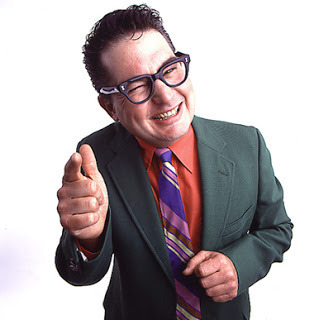
Why would you do this? What healthy relationship can be formed on the basis of both sides misrepresenting themselves from the outset? The only possible explanation under the relationship analogy is that the party who is spouting untruths is looking for a quick, no-strings, probably exploitative, encounter and is not going to respect you in the morning. It doesn't work in love and it certainly does not work in the world of work.
It seems to me the world of work isn't working very well these days. Gee, I wonder why?
Manahan's Mantra [so very boring, I know]:
[image error]


I work every day with people who are having difficulties in their working lives and the majority of them will point to unpleasant episodes in those working lives arising from untruths.

"Hey! Don't forget I got an A+ in my Ethics paper ... although, to be fair, I did cheat on that exam."The untruth may derive from an employer 'embiggening' a job description to try and attract high-flying candidates. Employers do this all the time – dressing up job titles or hiding the reality of a stagnant (or toxic) corporate culture behind weasel-language in their corporate creed. Naive job-hunters lie all the time too, thinking that once they get into the company that somehow, everything will magically sort itself out – candidates constantly suggest that they have a skill or talent that they do not or take credit for something they didn't do; and hence cannot transfer into the new job.
Why would you do this? What healthy relationship can be formed on the basis of both sides misrepresenting themselves from the outset? The only possible explanation under the relationship analogy is that the party who is spouting untruths is looking for a quick, no-strings, probably exploitative, encounter and is not going to respect you in the morning. It doesn't work in love and it certainly does not work in the world of work.
It seems to me the world of work isn't working very well these days. Gee, I wonder why?
Manahan's Mantra [so very boring, I know]:
IF YOU HAVE TO LIE TO GET YOUR FOOT IN THE DOOR, THEN THIS ISN'T THE JOB FOR YOU.
[image error]
October 29, 2010
Stop - an idea worth spreading
Last weekend, I kicked back and read two books cover to cover. It was a bank holiday weekend and I was going to be taking some time off this week anyway, but She-Who-Must-Be-Obeyed didn't seem to be too impressed that I was chilling out to the level that I was. When I go home tonight, I am going to show her this TEDx Talk from the amazing Scott Stratten.
Enjoy your weekend. Try doing nothing. Nothing.
Related posts:Slowing things downWork-life balance
[image error]


RSS Readers may need to click through to the post(Okay, I have to admit it. I did get off my ass on Monday and I hung a good-sized mahogany door with no assistance, practically herniating myself in the process. Joints popping? Delayed onset muscle soreness without the delayed onset and "sore" not being in any way an adequate term to describe what I was feeling? Middle age? When the hell did that happen?)
Enjoy your weekend. Try doing nothing. Nothing.
Related posts:Slowing things downWork-life balance
[image error]
August 31, 2010
The curse of masculinity?
From the Irish Independent:
 THE CURSE OF MASCULINITYMasculinity is an 'illness' that can lead to isolation, loneliness and fear. Simply put, men wrongly always pursue short-term gains ahead of long-term interests. By Ailin Quinlan

A male MP is found dead from asphyxiation after indulging in a perverse and dangerous form of sexual activity involving bondage and the deprivation of air during orgasm.
There's no end, in fact, to the stories of successful men whose identities have been subverted by sex, money and violence, says psychoanalytic psychotherapist Adam Jukes. Barely a day goes by without a story of a man involved in compromising, illicit or illegal behaviour, from sex to violence or financial corruption, he observes. These men all have one thing in common - their masculinity - which, in his controversial new book, Is There A Cure For Masculinity?, Jukes likens to an illness or personality disorder. "Every major non-geological disaster in history has been man-made, from climate change to the credit crunch and from warfare to genocide. Men's denial of vulnerability and the need to consume and acquire are intricately connected." Masculinity, argues Jukes, is like an illness acquired in early boyhood. It is, he believes, built on a 'fault' created during the Oedipal crisis and is hugely destructive. ... "That's why men engage in risk-taking behaviour. We think with our willies and our willies are not very intelligent! The reason masculinity is not fit for purpose is because men will always put short-term gain ahead of long-term interest. Men are the ones who gamble, who commit most of the crime, rape and murder, and who indulge in risky sex."
Much of male behaviour - the quest for power and status, chronic sulking, workaholism, risk-taking, infidelity - is a paradoxical defence against men's overwhelming feelings of weakness, vulnerability and humiliation, Jukes argues.
But not everyone agrees. Masculinity is not an illness acquired in boyhood - it's just the way men are, says career consultant and author Rowan Manahan. Men are simply "hard-wired" to be risk-takers and competitive, believes Manahan, whose job brings him into regular contact with everyone from entry-level employees to boardroom executives.
Yes, he acknowledges, masculinity often means men are less inclined to put their hand up to seek help because they don't wish to reveal their vulnerability - but masculinity is not all bad, insists the father of two girls.
"Masculinity is also a good thing because since the dawn of time men have been wanting to make better tools or fly to the moon - we're constantly pushing the boundaries. However, I'd also say that it's a bad thing because there's a lot of adrenalin and testosterone-fuelled stupidity happening around us every day," he says.
"We're pretty un-evolved for coping with the modern world. Men still share about 90 percent [I actually said that homo sapiens shares circa 95%] of their DNA with chimps - look at the behaviour of traders in any boardroom of any financial institution! It's like the beach volleyball scene in Top Gun but without the baby oil - all chest-thumping, high-fiving and willy-waving!"
"We are cavemen in good suits. We all have an inner caveman; he's the voice in our head which tells us that after a long day in the office we can come home and do nothing and contribute nothing because we have completed the day's hunt."...
Full article is here.
Follow-on rant to come
[image error]


 THE CURSE OF MASCULINITYMasculinity is an 'illness' that can lead to isolation, loneliness and fear. Simply put, men wrongly always pursue short-term gains ahead of long-term interests. By Ailin Quinlan

Photo credit: The wonderful Sandra LeidholdtA president begins an illicit affair with an intern at the White House. He is 25 years her senior. The affair is discovered. There is a huge fuss, which eventually dies down with only minor damage to his reputation. He is married to a beautiful and clever woman who has given up a great deal to support him in fulfiling his ambitions. A cabinet minister is discovered to be having an affair with an actress 20 years his junior. It emerges that apart from enjoying sucking her toes, he insists on wearing the shirt of the football team he supports while they are making love. His wife and the mother of his three children forgives him, although the disclosure of the affair by the actress costs him his career.
A male MP is found dead from asphyxiation after indulging in a perverse and dangerous form of sexual activity involving bondage and the deprivation of air during orgasm.
There's no end, in fact, to the stories of successful men whose identities have been subverted by sex, money and violence, says psychoanalytic psychotherapist Adam Jukes. Barely a day goes by without a story of a man involved in compromising, illicit or illegal behaviour, from sex to violence or financial corruption, he observes. These men all have one thing in common - their masculinity - which, in his controversial new book, Is There A Cure For Masculinity?, Jukes likens to an illness or personality disorder. "Every major non-geological disaster in history has been man-made, from climate change to the credit crunch and from warfare to genocide. Men's denial of vulnerability and the need to consume and acquire are intricately connected." Masculinity, argues Jukes, is like an illness acquired in early boyhood. It is, he believes, built on a 'fault' created during the Oedipal crisis and is hugely destructive. ... "That's why men engage in risk-taking behaviour. We think with our willies and our willies are not very intelligent! The reason masculinity is not fit for purpose is because men will always put short-term gain ahead of long-term interest. Men are the ones who gamble, who commit most of the crime, rape and murder, and who indulge in risky sex."
Much of male behaviour - the quest for power and status, chronic sulking, workaholism, risk-taking, infidelity - is a paradoxical defence against men's overwhelming feelings of weakness, vulnerability and humiliation, Jukes argues.
But not everyone agrees. Masculinity is not an illness acquired in boyhood - it's just the way men are, says career consultant and author Rowan Manahan. Men are simply "hard-wired" to be risk-takers and competitive, believes Manahan, whose job brings him into regular contact with everyone from entry-level employees to boardroom executives.
Yes, he acknowledges, masculinity often means men are less inclined to put their hand up to seek help because they don't wish to reveal their vulnerability - but masculinity is not all bad, insists the father of two girls.
"Masculinity is also a good thing because since the dawn of time men have been wanting to make better tools or fly to the moon - we're constantly pushing the boundaries. However, I'd also say that it's a bad thing because there's a lot of adrenalin and testosterone-fuelled stupidity happening around us every day," he says.
"We're pretty un-evolved for coping with the modern world. Men still share about 90 percent [I actually said that homo sapiens shares circa 95%] of their DNA with chimps - look at the behaviour of traders in any boardroom of any financial institution! It's like the beach volleyball scene in Top Gun but without the baby oil - all chest-thumping, high-fiving and willy-waving!"
"We are cavemen in good suits. We all have an inner caveman; he's the voice in our head which tells us that after a long day in the office we can come home and do nothing and contribute nothing because we have completed the day's hunt."...
Full article is here.
Follow-on rant to come
[image error]
Fortify Your Oasis

Rowan's musings on the world of work, career management and personal development
...more
- Rowan Manahan's profile
- 14 followers

