
Azam Gill's Blog, page 3
May 4, 2021
4 DAYS AGO
The Times praises the thriller’s “… convincingly cloying atmosphere of a city subjugated to a foreign power, a plot that reaches across war-torn Europe and into the rifts in the Nazi factions, and a hero who tries to be a good man in a bad world. Powerful stuff.”
Lloyd talks of his fourth novel as “a defining moment in French and European history,” illustrating “a generation that is disappearing. Their voices won’t be heard firsthand for much longer. It’s up to subsequent generations to make sure those voices and those stories continue to be heard.”
 The Unwanted Dead by Chris Lloyd
By Azam Gill
THE UNWANTED DEAD, a French-Resistance historical thriller by Chris Lloyd, is “a thoughtful, haunting thriller,” in the words of Mick Herron, Crime Writers’ Association’s 2013 Gold Dagger winner.
The Times praises the thriller’s “… convincingly cloying atmosphere of a city subjugated to a foreign power, a plot that reaches across war-torn Europe and into the rifts in the Nazi factions, and a hero who tries to be a good man in a bad world. Powerful stuff.”
Lloyd talks of his fourth novel as “a defining moment in French and European history,” illustrating “a generation that is disappearing. Their voices won’t be heard firsthand for much longer. It’s up to subsequent generations to make sure those voices and those stories continue to be heard.”
THE UNWANTED DEAD features Eddie Giral, a Paris police detective living under the shadow cast by his experiences in World War I, who is now forced to come to terms with the Nazi Occupation. On the day German troops march into Paris, four refugees are found dead in a railway truck. Watching helplessly as his world changes forever, Eddie focuses on the one thing left under his control: finding whoever is responsible for the murders of the dead no one wants to claim. To do so, he must tread the razor’s edge between the Occupation and the Resistance, truth and lies, the man he is, and the man he was—all the while becoming whoever he must be to survive in this new and terrible order descending on his home.
Lloyd says he “wanted to explore the effects on Eddie of trying to keep a balance between doing his job, negotiating a path between working with the Occupier while also resisting them, and retaining some form of what he would see as normality under such extreme circumstances.”
The conflict of interest surrounding an officer of the law makes for a powerful character study. Eddie Giral’s country, city, and profession demand his unswerving loyalty, whereas the invaders and occupiers impose their own agenda.
Lloyd says he was intrigued by “how a police detective would be able to do their job and keep their focus while there was so much destruction and hardship going on around them. That immediately gave me the character—Eddie Giral—an emotionally scarred veteran of the First World War who has made many mistakes in his life but who tries to retain some semblance of humanity under the new order. The … situation is his chance for redemption for past errors, but it’s also a potential descent into the self-destructive ways of his previous life.”
Giral emerges as neither “an all-good action hero nor an all-bad antihero, but a person with the foibles and weaknesses that we all share, and who struggles to survive intact in adverse times.”
The induced challenge of managing such intersecting conflicts within a historical framework is not for the faint-hearted, but Lloyd chose and successfully met this challenge, leading Andrew Taylor, an award-winning, bestselling crime writer, to describe THE UNWANTED DEAD as “such a powerful and morally nuanced crime novel.”
Lloyd admits that “the book’s biggest challenge also proved to be its greatest opportunity—the research…. I wanted the period and the setting to be as accurate as possible. THE UNWANTED DEAD takes place in the first 10 days of the Occupation” and draws out “all the various nuances and visions of what resistance meant to the different groups, and the rivalries and disagreements that it engendered. This, alongside the equally complex factions within the Occupier, are areas that fascinate me and that I’m particularly looking forward to exploring in subsequent books in Eddie’s story.”
Lloyd claims he was born to write: “I can’t remember a time when I wasn’t writing—I was lucky in that my mum encouraged me to read and my dad encouraged me to write, and I spent my childhood writing short stories and sketches. It was when my mum gave me a copy of Ian Serraillier’s Silver Sword that it seemed to distil in my mind that that was what I wanted to do. Later, I loved the contrast between the golden-age writers, such as Josephine Tey and Agatha Christie, and the hard-boiled noir writers of the likes of Raymond Chandler and Dashiell Hammett. I try to achieve a crossover between the two worlds. In more recent years, I love the historical works of Robert Harris, Philip Kerr, and David Downing, and the resonance their stories have on today’s world. They are all qualities to strive for.”
He writes at a “lovely old wooden desk,” surrounded by “books, paintings and objects that have meaning for me. Outside the window, I see houses, trees, and hills, but I’ve turned my desk at a right angle to the window, so the view is there for when I need it, not a distraction.
“When I write, I like working with two screens—one to write on and a second where I have the story outline in view.”
Lloyd has had a lifelong love affair with the conflict between the Resistance and Collaboration in Occupied France, which continues in France to this day.
He grew up in Cardiff, Wales. Following his graduation in Spanish and French, he spent twenty-four years in Catalonia, teaching English, working in educational publishing, translating, and travel writing. He has also lived in Grenoble, France, researching the often-underappreciated depth and complexity of the French Resistance movement.
He now lives in his native Wales where he also works as a writer-translator and is an active member of Crime Cymru, a “collective of crime writers who are from Wales, live in Wales, or set their stories in Wales. A former rugby player and committed supporter, he is also an avid traveler.


April 8, 2021
Yes, Prime Minister!
The Father-crow Kakakzai, and I are neutral to Prime Minister Imran Khan’s governance and cricket stardom. Or cricket in any other form, for that matter. His current success in igniting world headlines in the Age of Woke is, however, as admirable as his erstwhile cricketing ability. Accident or design have no relevance here. Climbing the high moral ground as part of his perception of prime ministerial duty, has exposed him to the fickleness of intemperate elements.
PM Khan’s statements on rape in Pakistan have been interpreted as insinuations of victim-blaming, even provoking his usually faithful ex-lady, Ms. Jemima Khan (née Goldsmith)’s ire.
Words to the effect he is being accused of.
1. That women’s sexually explicit choice of dress in public tempts the weak-willed.
2. “…that sexual violence was a result of ‘increasing obscenity’ and a product of India, the West and Hollywood movies”— BBC.
3. That he witnessed the sixties revolution of “sex, drugs and rock n’ roll” from his academic perch at Oxford University.
Let’s take the third point first.
He omitted publicly confessing that he did have a lot of fun, but can be forgiven for the oversight since TV time is limited. That aside, he may be reminded that the sexual revolution, by condoning sex between consenting adults, developing the pill for women followed by condom freebies actually, by making nooky more accessible, provided rape-decreasing measures!
Secondly, if rape comes from Bollywood plotting on behalf of Hollywood to undermine Pakistan’s pristine moral stature, then there must be psycho-sociological studies to support the contention. In their absence, this charge constitutes blame-shifting and stokes Pakistan’s thriving conspiracy cottage industry.
Actually, the first point was badly misstated since his gofer had lost the cheat sheet provided by the brilliant staffer who took his recent picture under the eternal banyan that whispers the timeless wisdom of India.
Here’s what the cheat sheet said.
“Governments of the past seventy years of Pakistan’s history were too busy channeling foreign aid into off-shore accounts to worry about education. With a literacy rate of only 59%, the male population is still prone to misinterpret a lady’s choice of dress. However, the intense popularity of Ertugrul the Conqueror will be followed by a custom-designed programme ordered by President Erdogan to promote Kemalism in Pakistan. Subsequently, we’ll all go to school, and like Turkey, end up with 95.5% literacy so the choice of a lady’s dress becomes irrelevant.”
Alas, a gust of wind caused the cheat sheet to float up in the air, where Father-crow Kakakzai nipped it in its beak, and took it up to his tree to hold for ransom, but a stronger gust of wind snatched it out and dropped it right into the glass of lassi being nursed by the Brilliant Staffer, dreaming of his fellowship to an American think tank.
July 24, 2020
Secular Turkey under Threat Azam Gill
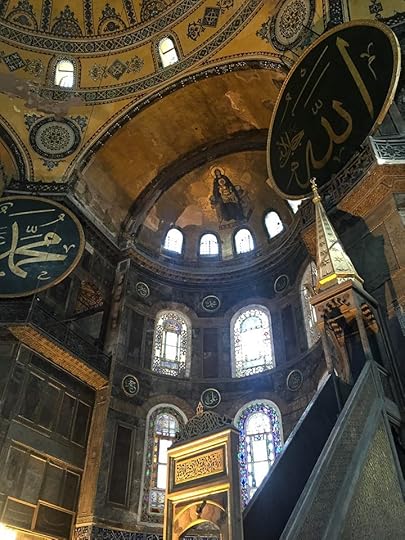
Turkey’s ambitious revivalists have dragged Istanbul’s 1483-year-old Hagia Sophia World Heritage Site into their own identity crisis. To their satisfaction, Turkey’s Council of State ruled that the Hagia Sophia should revert to its last status as a mosque, based on the defunct Right of Conquest, while ignoring its origin as a world-class cathedral.
By confirming the definition of aggression codified in the Nuremberg Principles, United Nations General Assembly Resolution 3314 played the funeral march over any residual Right of Conquest delusion among former empires. Yet, appallingly for this day and age, Mr. Numan Kurtulmus, deputy chairman of Turkey’s ruling Justice and Development Party (AKP) unhesitatingly declared: “Hagia Sophia is our geographical property… conquered …by the sword …”
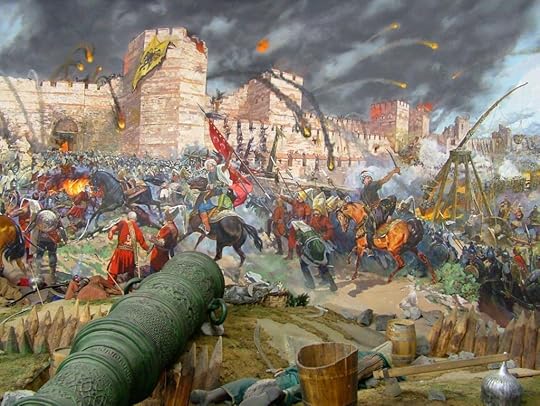
After winning Istanbul “by the sword” in 1453, Sultan Mehmed II appropriated the entire city as his personal possession and then carved it up between endowment property as ‘vaqf,’ public land called ‘miri,’ and eventually some private ownership as mülk. He made the 900-year old Hagia Sophia Cathedral his prized personal possession which he flaunted to the rest of the world by converting it into a mosque.
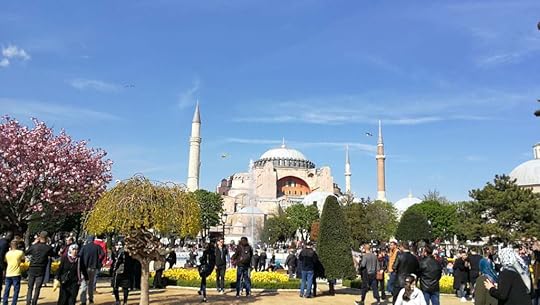
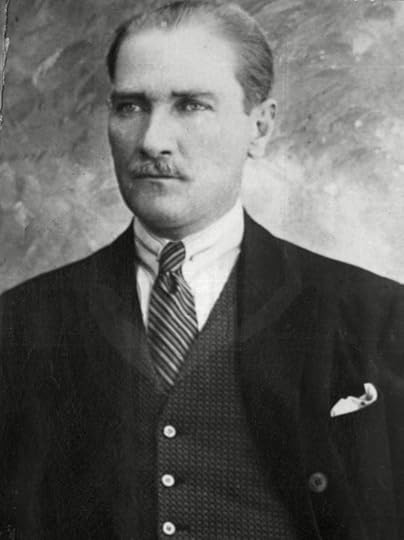
Five hundred years later, modern Turkey’s sagacious founding-father, Kemal Pasha Ataturk, instituted secularism and sought reconciliation by converting the Hagia Sophia Church-Mosque into a museum for all.
The divisive issue was laid to rest for decades, during which the world applauded Turkey’s social and political development put into motion by Ataturk.
Yet, Mr. Erdogan and his revivalists are hell-bent on upsetting the apple-cart to realize their delusions of grandeur by actually resurrecting their medieval past, which threatens Turkey’s hard-won soft power.
The judicial validation of the Right of Conquest over six thousand square meters of the Hagia Sophia will only whet their appetite to reclaim more. They are trapped in their self-cast spell of nostalgic reactionary expansionism.
Now, precedent in hand, they will keep chipping at Turkey’s secularism until it is laid bare to the bone and meekly relapses into the gloom of a self-righteous theocracy.
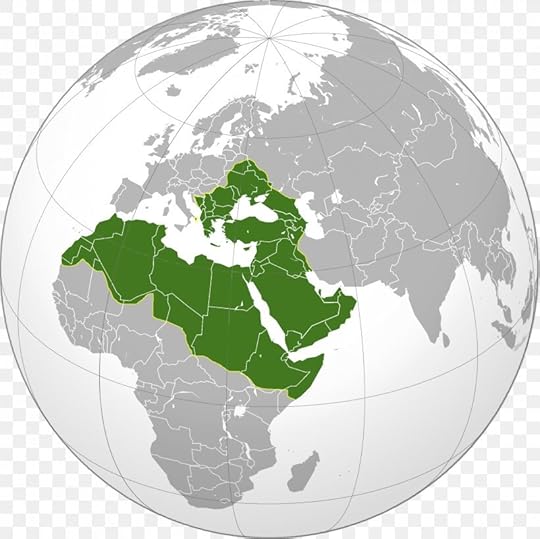
Turkey’s empire encompassed over twenty countries, stretching from Eastern Europe to the sands of Arabia.
Perhaps the revivalists are now going to start claiming them all, starting with Saudi Arabia, which they ignominiously lost to a Bedouin chief called Ibn Saud, assisted by one T. E. Lawrence.
Referring to the four hundred and thirty-five churches and synagogues in Turkey, which he believes exonerates the current decision, it slipped the Turkish president’s mind that the equation of Hagia Sophia does not include the Jewish faith! This Freudian slip, exposes him as one of those people who really believe in a vast Judo-Christian conspiracy to subvert the destiny of Muslims, confirmed by his forced comparisons between Hagia Sophia and the Al Aqsa Mosque in Jerusalem.
Borrowing the elegance of the ‘churches and synagogues’ argument, Turkey’s 82,693 mosques should be enough for Muslims to worship in without re-appropriating a church.
Istanbul’s Camlica mosque rivals, if not surpasses, any religious edifice of Byzantine or Turkish splendor. The 150-million-Turkish Lira, women-friendly Calica Mosque in Istanbul is the brainchild of two female architects, and a synthesis of Turkey’s fine arts and technical mastery that upholds the legacy of Koca Mimar Sinan Agha, one of history’s greatest architects.
The 4.5-ton finial capping the main dome is unique. Its worshipper-capacity exceeds 60,000, complemented by a 3,500-capacity car park, a 1,000-capacity conference hall, an 11,000 square meter museum, an Islamic art gallery, a library and, a tunnel connecting it to the residential area.
And Turkey’s revivalists still obsess over Hagia Sophia for a mosque.
Mr. Erdogan’s government has apparently encouraged this divisive issue for a premium seat on the medieval revivalist bandwagon by overturning Kemal Pasha Ataturk’s secular legacy, hoping, thereby, to wrest the leadership of the Muslim world from its former Saudi Arabian subjects and checkmate Shia Iran’s ambitions.
It would be good to remember that there is no consensus in Turkey on returning Hagia Sophia to its last, though not original status. To determine that would require a referendum.
After all, Orhan Pamuk, reportedly told the BBC: “There are millions of secular Turks like me who are crying against this but their voices are not heard.” Evoking the obsolete Right of Conquest, only draws attention to Turkey’s aggressive past for which it has never apologized or expressed a sign of regret, unlike many of its counterparts.To free Hagia Sophia from the identity crisis it has been ensnared in, it should remain a museum except for Fridays, for a Muslim service and, Sundays for a Christian service, with joint bring and share meals once a month.If not, then it should be granted its past status of a church, for which Turkey’s far-sighted magnanimity will receive the world’s deafening applause for true greatness.
Jalaludin Rumi’s wisdom transcends time: “yesterday I was clever, so I wanted to change the world; today I am wise, so I am changing myself.”
https://www.getrevue.co/profile/undefined

