Rob Kitchin's Blog, page 22
April 24, 2020
Review of On Leaving a Prague Window by David Brierley (1996, Little Brown and Co)
 Eighteen months after The Velvet Revolution in Czechoslovakia and the country is still finding its feet. The apparatus of the old state has faded into the shadows but are still pulling strings, exerting influence and trying to protect themselves from accusations related to their regime. Melina Prerova is seeking answers to the death of her journalist lover during the last uprising in 1968. Disgraced Father Alois Fulcek has found himself helping her. Broucek, a high ranking official in the Finance Ministry who had been abusing his power hears of their quest and seeks to shut them down, pulling favours from old colleagues. The fulcrum of the three main actors is a concern for Radl, a kingpin from the previous regime keen to retain his power in the new state by reinventing himself. Will truth out or be supressed as the country tries to come to terms with life post-Communism. Brierley’s novel is an allegory of the transition, secrets and power. It kind of works at one level, but the story is very drawn out and not very engaging for much of its telling. It’s kind of difficult to care about any of the characters and the thriller element is quite flat. The result is a story lacks heart and hook.


April 18, 2020
Just friends?
‘I guess we’re friends now then,’ Tony said, leaning against the fridge. ‘Having discussed life, the universe and fashion disasters.’
‘Men and women can never be friends,’ Jane slurred.
‘Because sex always gets in the way, right?’
‘Right.’
‘So, does that mean that straight men can never be friends with gay men?’
‘No!’
‘Or straight women with lesbians?’
‘No. Jesus, Tony!’
‘So, why?’
‘Because, eventually …’
‘Even if they’re not attracted to each other?’
‘You’re not attracted to me?’
‘I’d sleep with you in a heartbeat.’
‘I knew it!’
‘So?’
‘You were never going to be just a friend, anyway.’
A drabble is a story of exactly 100 words.
‘Men and women can never be friends,’ Jane slurred.
‘Because sex always gets in the way, right?’
‘Right.’
‘So, does that mean that straight men can never be friends with gay men?’
‘No!’
‘Or straight women with lesbians?’
‘No. Jesus, Tony!’
‘So, why?’
‘Because, eventually …’
‘Even if they’re not attracted to each other?’
‘You’re not attracted to me?’
‘I’d sleep with you in a heartbeat.’
‘I knew it!’
‘So?’
‘You were never going to be just a friend, anyway.’
A drabble is a story of exactly 100 words.
April 16, 2020
Review of Spook Country by William Gibson (2007, Putnam)
 Former band singer turned journalist, Hollis Henry, is on an assignment in Los Angeles for soon-to-be-launched Node magazine. Her task is to write about the new phenomena of locative virtual art and track down Bobby Chombo, a genius with locative technologies, who has a side-line troubleshooting navigation issues for government bodies, and is a fan of Hollis’ band, Curfew. Tito is a member of a shadowy, Cuban-Chinese mafia-style family with Russian connections, who is passing information along a chain in New York. He’s pursued by Brown, a hardnosed operative for an unnamed government agency, and Milgram, a junkie held on a short-lease by Brown who can interpret Tito’s messages. Pawns in a larger game that has Chombo and a shipping container at its core, Hollis, Tito and Milgram find themselves centre stage while barely aware of what is really going-on as they operate in spook country.
The second book in the Blue Ant trilogy, Spook Country can be read as a standalone. Whereas the Sprawl and Bridge trilogies explored possible near futures, this tale exposes realities already unfolding focusing on locative virtual art and emerging neo-geographies and connecting them into a shadow world of corrupt government post 9/11. At the same time, it still retains a sense of other-worldliness, with the three main characters being drawn into a world that seems to operate alongside or behind-the-scenes; of government secrets and unnamed organizations working and battling covertly yet in plain sight. Gibson spins an engaging, sometimes elliptical tale, told in his characteristic style, charting the three strands that follow the principal characters of Hollis, Tito and Milgram. These strands gradually converge, leading to a nice denouement. An interesting, understated thriller.

April 14, 2020
Review of Money to Burn by Katy Munger (1999, Avon)
 Casey Jones is a sassy, take-no-crap female PI who operates without a license for Bobby D., a hugely overweight lothario who charms his middle-aged clients. The third book in the series set in North Carolina, Casey’s new case is to protect a scientist, Thomas Nash, who’s been receiving threats while pursuing his quest to create a safer cigarette. Not long after she takes on the bodyguard role, Nash and his lab are burned to the ground. Investigating his death is not job Casey is going to leave to the cops. She starts to hunt for clues among Nash’s business venture and Durham’s wealthy tobacco elite and the family of the Nash’s financee. There’s plenty of intrigue to keep the gossip magazines in business, but it proves more difficult to spot the murderer.
 I read books 1-5 pretty much when published, enjoying the combination of light-hearted humour, good mystery plots and engaging lead character. Casey lives in the moment and is happy to roll with the punches and between the sheets, determined to get her man and the criminal. In this outing, she’s out of her comfort zone mixing with high society, who seem to live by different rules. She’s not going to let a little inferiority complex hinder her though as she moves between down-at-heel bars, tobacco farms, and fancy parties and debutante balls. Munger spins out an engaging plot with plenty of potential suspects, intrigue, chases, dangerous encounters, and romantic interest, building to a nice denouement. And there’s a good sense of place and nicely spun social observation. Which leads me to wonder why I never completed the series; I might see if I can track down copies of books 6 and 7.

April 11, 2020
Lockdown With The Smiths
‘I vote we start a family project,’ Matt said.
‘I don’t think so, Dad,’ Emily said, staring at her smartphone.
‘I don’t mean a jigsaw or whatever. We could form a band or make a movie or our own reality TV show – Lockdown With The Smiths.’
‘I’d sooner do the jigsaw,’ Conor said, his head in the fridge.
‘Let’s do it,’ Sadie said.
‘Mum!’ Emily cried. ‘I’m not being in a band with Dad.’
‘I vote parody movie.’
‘The Addams Family,’ Matt suggested.
‘Shaun of the Dead,’ Conor countered.
‘Only if we can kill Mum and Dad,’ Emily said. ‘Repeatedly.’
A drabble is a story of exactly 100 words.
‘I don’t think so, Dad,’ Emily said, staring at her smartphone.
‘I don’t mean a jigsaw or whatever. We could form a band or make a movie or our own reality TV show – Lockdown With The Smiths.’
‘I’d sooner do the jigsaw,’ Conor said, his head in the fridge.
‘Let’s do it,’ Sadie said.
‘Mum!’ Emily cried. ‘I’m not being in a band with Dad.’
‘I vote parody movie.’
‘The Addams Family,’ Matt suggested.
‘Shaun of the Dead,’ Conor countered.
‘Only if we can kill Mum and Dad,’ Emily said. ‘Repeatedly.’
A drabble is a story of exactly 100 words.
April 9, 2020
Review of Holy Orders by Benjamin Black (2013, Picador)
 Jimmy Minor, a newspaper reporter, is retrieved from a canal where he’d been dumped after a savage beating. The corpse ends up on Quirke’s slab in the pathology lab. Quirke is familiar with the reporter, who is a friend of his daughter, Phoebe. Along with Inspector Hackett, he starts to investigate the death following two clues: a letter to a priest and a note concerning tinkers. This is a reasonably long book about a quite simple case. There was plenty of opportunity to turn it into a more complex or interesting investigation by exploring the Church, newspaper or tinker angles and leveraging in intrigue and conflict through them. Instead, there is the start of a thread related to Jimmy’s newspaper that goes nowhere, and the Church thread kind of goes the same way. Instead, what we get are long passages concerning Quirke’s state of mind and his relationships to those around him, and dozens of pages about his daughter and her life that’s stuck in a rut. Interesting in their own way but introspective and they barely move the story forward. The result is a book much more about the characters than the plot, yet the characters were not that fascinating.
April 6, 2020
Review of The Eye of the Cricket by James Sallis (1997, Oldcastle Books)
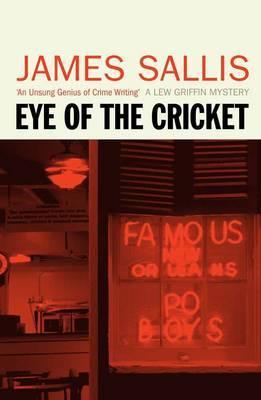 Lew Griffin is a some-time English literature academic, some-time detective, and always melancholy with a self-destructive streak, scraping by in New Orleans. The fourth book in the series, Lew is now in his 50s and finds himself looking for three missing children: a teenager who has started to hang around with a wayward cousin; the troubled son of a cop friend; and his own son, David, who disappeared years before. The neighbours also want him to bring the reign of terror of teenage thieves to an end. Lew takes his usual meandering path through bars, restaurants, back streets, shelters, and philosophical reflections, meeting a new love on the way. But as usual he finds it difficult to keep everything on track as he wanders amongst the broken and lost, knowing that he too struggles to stay on a path. Sallis spins out the tale at a sedate, reflective pace, pausing to dwell on the nature and meaning of life and the social realities of being poor in the Deep South. Indeed, along with the exquisite prose, this is the real strength of the storytelling, blending philosophical asides and reflections on people and place with the long arc of Lew’s life and his quest to resolve his detection. I was captivated for the entire story.
April 4, 2020
David?
‘It’s me. Joan.’ She grabbed David’s wrist, but he shook her free.
‘Leave me alone.’ He picked up his pace.
‘David, please,’ Joan said, trotting alongside.
‘My name is Michael.’
‘It’s David. What’s wrong with you? Have you lost your memory?’
‘Nothing’s wrong, except I’m being hassled by a stranger.’
‘I’m your wife! We’ve been married seven years.’
‘I’m not married! I’ve never been married.’
‘David!’
‘Will you leave me alone!’
‘Hey, Joan!’
She turned to the voice.
‘David! What the …’
Michael glanced across the street and stopped. His mirror image faced him.
‘How can …’ Joan mumbled. ‘David?’
A drabble is a story of exactly 100 words
‘Leave me alone.’ He picked up his pace.
‘David, please,’ Joan said, trotting alongside.
‘My name is Michael.’
‘It’s David. What’s wrong with you? Have you lost your memory?’
‘Nothing’s wrong, except I’m being hassled by a stranger.’
‘I’m your wife! We’ve been married seven years.’
‘I’m not married! I’ve never been married.’
‘David!’
‘Will you leave me alone!’
‘Hey, Joan!’
She turned to the voice.
‘David! What the …’
Michael glanced across the street and stopped. His mirror image faced him.
‘How can …’ Joan mumbled. ‘David?’
A drabble is a story of exactly 100 words
April 3, 2020
March reads
 Another slow month of reading in March. Having discovered Netflix I've shifted my fictive consumption somewhat across media. The read of the month was Sven Hassel's anti-war novel, which I'd first read as a teenager.
The Bomber by Liza Marklund ***.5
Dead Meat by Philip Kerr ****
Birth Marks by Sarah Dunant ***
Legion of the Damned by Sven Hassel ****.5
The City in Flames by Michael Russell ***.5
Dixie City Jam by James Lee Burke ***
March 28, 2020
Scare and scar
The dogs in the yard have been restless since five, catching the scent of something on the wind. I’ve barely slept again, haunted by sorrow and regret; unable to escape this house, its land and routines, nor the memories that bind me to them. The hens tussle as I approach the coop door. They tumble out, darting between my legs, racing across the field to a scatter of yesterday’s vegetables. The dogs watch them passively, waiting for direction, itching to visit the top field where the sheep are grazing and the ‘accident’ happened. Those scare quotes still scare and scar.
A drabble is a story of exactly 100 words.
A drabble is a story of exactly 100 words.