
Joel Jenkins's Blog, page 4
May 16, 2013
Science Fiction Trails
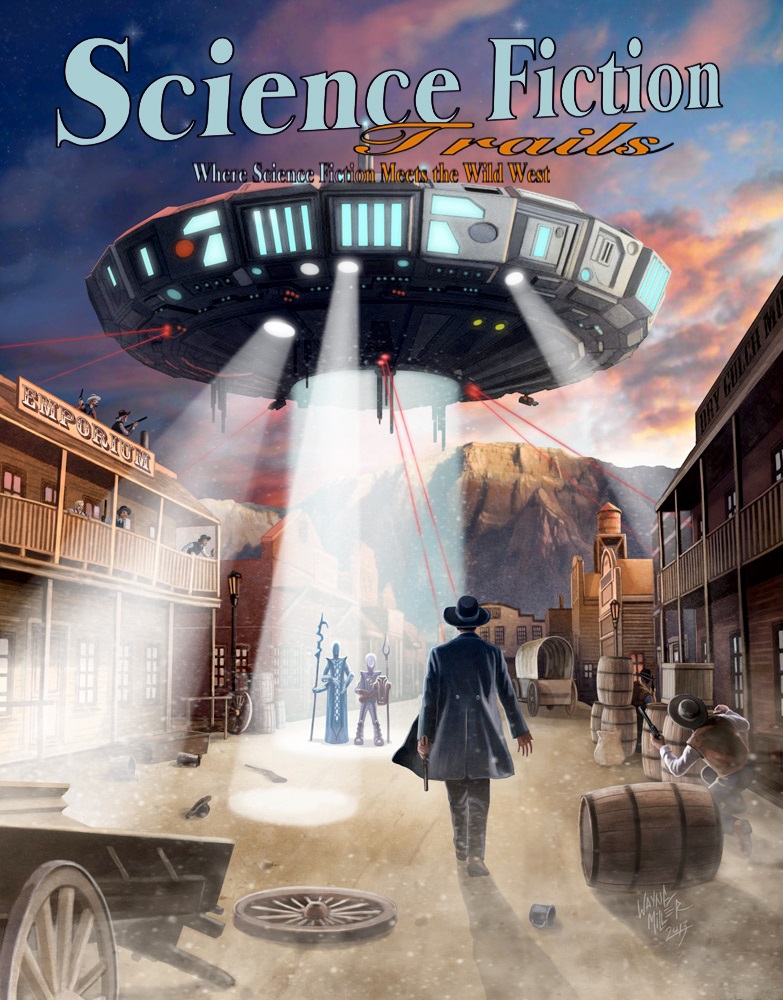
My contribution to Science Fiction Trails #10 isn't much more than a couple of paragraphs about the Shootout at the OK Corral, but I wanted to share this awesome cover. This issue is available on Amazon.


May 14, 2013
Over the last few years I've written five sword and scien...
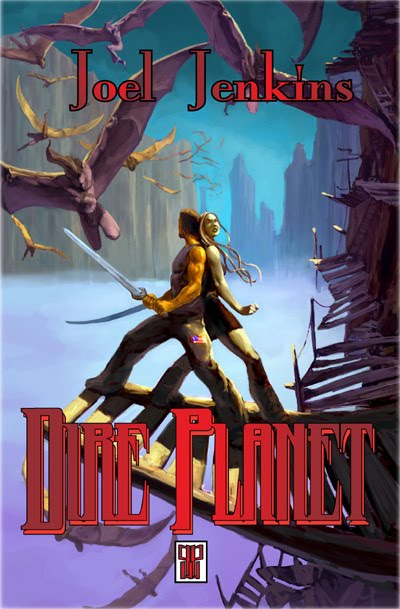
Over the last few years I've written five sword and science fiction books about stranded astronaut Garvey Dire. The first one is currently available on Amazon as a Kindle download at no charge. This offer ends on May 18th around midnight, so take advantage of it while you can.
May 13, 2013
Cliche vs. Archetype
The rookie cop, the experienced and jaded cop, the crooked cop, the gung-ho cop, the idealistic cop, the buddy cops, the stupid cop, the brilliant detective, the angry sergeant, the cop striving for redemption. What are these? Certain professors of literature, and many a movie or book reviewer would say they are clichés or stereotypes. And we all know that cliches and stereotypes are bad, so as authors we should avoid them like the plague (hey, that turn of phrase qualifies as a cliche), right?
Not so quick, I say. If all these variations on the cop character are cliches—and they have been used many times and many ways—what does an author have left work with? Maybe an author should abandon the idea of writing a cop story at all, maybe tell a story about a struggling farmer. Wait, that's a cliché, too. How about a wealthy farmer, perhaps a plantation owner? Hmm, that's been done, as well.
What's an author to do if he wants to avoid the cries of cliché and stereotype that critics and literature professors will shout out to the world as soon as they flip through your book and find a character that's fits a prototype long since established by other authors who came before you? Probably, the only thing an author can do to avoid these criticisms is to not write anything at all. Because, as I've demonstrated above, there are very few character types that haven't been explored, to some extent, already.
Another, less derogatory term, for the mold of a tried and true character is an archetype, and this is the designation that I prefer. A good writer won't shy away from drawing on these archetypes for the characters in their stories. They provide a quickly identifiable character for the reader, which won't slow the pace of the story. Then, gradually, the author may clothe that archetype with flesh and blood, wonts and desires, and the true character will reveal itself. Often the true character will be in-line with the standard archetype, but other times you will find the character revealing secrets about themselves, which may send your story reeling in startling directions. Instead of being afraid of these sudden turns, embrace them, hold on tight and see where the ride takes you.
Villains will suddenly become sympathetic as they reveal that they want to change their stripes. You'll see noble heroes become selfish and fall, you'll see tragedy turn to triumph, and triumph turn to tragedy, and you will be able to tell wonderful stories. And all these stories will contain clichés, because you aren't the first or even the ten thousandth writer to put pen to paper. Clichés are unavoidable, but you can spin these archetypes into golden tales that will thrill, entertain and amaze—even if your local literature professor turns her nose up at your plebeian efforts.
May 7, 2013
Burning Books

This is all that's left of the Weird Worlds of Joel Jenkins--or rather the proof copy. Once I finished correcting the proof copy and uploaded those corrections to the printer, I threw it on the burn pile. This page escaped the conflagration and blew across the yard.
May 2, 2013
Long Term Works in Progress

A couple of years ago I blogged a list of long term projects in progress and, for my own edification or mental sorting of projects, I have revisited that list to evaluate where am and added a couple of possible projects. These are all collections of stories or novels which are in various stages of completeness or incompleteness, as it may be.
Officially, I've only committed to the publication of three more novels which are:
1) Weird Worlds of Joel Jenkins (Due some time soon)
2) Gantlet Brothers: Sold Out (final proofing stage)
3) The Coming of Crow (Dropping sometime in 2014)
After Coming of Crow (my 17th book) hits Amazon, I'm going to do some evaluation on my usage of time, and decide how best to approach the rest of my projects, if at all.
So here's my review of my last Long Term Projects List:
1)Immortals of the Dire Planet (First Chapter Written)
2)Abominations of the Dire Planet (Nothing but ideas)
3)Strommand Greatrix novel (Outline finished)
4) One Foot in My Grave: the autobiography of risk-taker September Peterson and his battles with cystic fibrosis and life. (Now Published)
5) The Samuel T. Ogden Zombies and Skateboards collection (43,500 words)
6) Midnight Avengers: The Eel and Adder collection (56,000 words)
7) The Gantlet Brothers: Sold Out (94,000 words. Complete. Final Proofing Stage)
8) Lone Crow: Gunmen of the Hollow Earth novel (17,873)
9) Lone Crow collection (Currently over 90,000 words. Finishing one nearly complete tale with Shotgun Ferguson and writing one more 10,000+ word story about Crow and Six-Gun Susannah Johnson disposing of an evil artifact off the stormy shores of Costa Rica)
10) Weird Worlds of Joel Jenkins: short story and novella collection (Finished at 112,000 words)
11) Barclay Salvage: the interplanetary adventures of Aaron Barclay and his intrepid crew of salvagers (79,246 words, but needs some more stories tying things together and giving some resolution)
12) Dogs and Sorcerers: Tales from the City of Bathos book 3 (Only one story written, but a host of ideas)
13) The Fiends of Necropolis: Damon St. Cloud (Nothing written)
14) Damage Inc. Collection (47,159 words)
15) Monica Killingsworth Collection (14,695)
16) Jack Scarlet werewolf collection (23,811)
17) Michael and Candice Thunder collection: race cars and the supernatural in a post-apocalyptic world (67,976)
18) In the Belly of the Behemoth: Shadrak and Asher (68,123)
19) Temple Houston Collection: Guns Against Temple (64,839)
Possible Added Projects:
Art of Action Fiction with Josh Reynolds & Derrick Ferguson (Developmental Stage)
Dire Planet Compendium (Encyclopedia and Artwork)
Tales of the Dire Planet (20k words)
April 25, 2013
Purple Prose: A Manifesto

In writerly circles it has become popular to denigrate purple prose and throw the phrase around like an epithet, putting it in the same category as the adverb, and terming it a bane, a blight, and a pox upon all literary endeavors. Not so, say I!
Purple prose is ornate, descriptive, poetic or sensually evocative writing which is thought to break the flow of the story or to draw excessive attention to itself. I contend that, in an effort to distance themselves from the criticism of purple prose, many authors have devolved to the other extreme and write flat, dull and lifeless prose—words that live in a colorless void that lacks any sensuality (and I speak in terms of touch, sight, sound, scent, and taste) or context. This extreme effort to eschew the purple has caused bland, deaf, dumb, and blind writing to become the new norm.
It will come as no surprise to anyone that has read my work, that I have been accused of purple prose. One critic told me that my “dense, descriptive prose gets in the way of the action.” I beg to differ, but ultimately I leave it to the reader to decide if my balancing act between action and description has been successful. Some think so, others do not—and it comes as no surprise to me that the modern reader might find my writing style odd and alien, just as though a child raised on saltless and spiceless foods might find a sudden infusion of flavors strange and unpalatable.
I revel in the muscular verb, the evocative adjective, the sights and sounds transcribed by a far-reaching vocabulary that breathes life into mere markings on a page. Give me the colorful, the lurid, and the vivid and I'll leave the limp, lifeless, and unpoetic to other writers.
April 12, 2013
Robot Stories

This just announced from James Palmer of Mechanoid Press:
"ROBOT STORIES, featuring work by Joel Jenkins, James Ray Tuck Jr and Jim Kinley (aka Pulp Impossible), coming this summer from Mechanoid Press, featuring artwork by Rondo award-winning artist Mark Maddox."
As for me, I'm looking forward to being part of this anthology. Word has it that in addition to giant Nazi robots (which a certain master of disguise (The Adder) and a certain escape artist (The Eel) encounter), it's got giant monsters and even some aliens.
April 11, 2013
Book Cave Interview
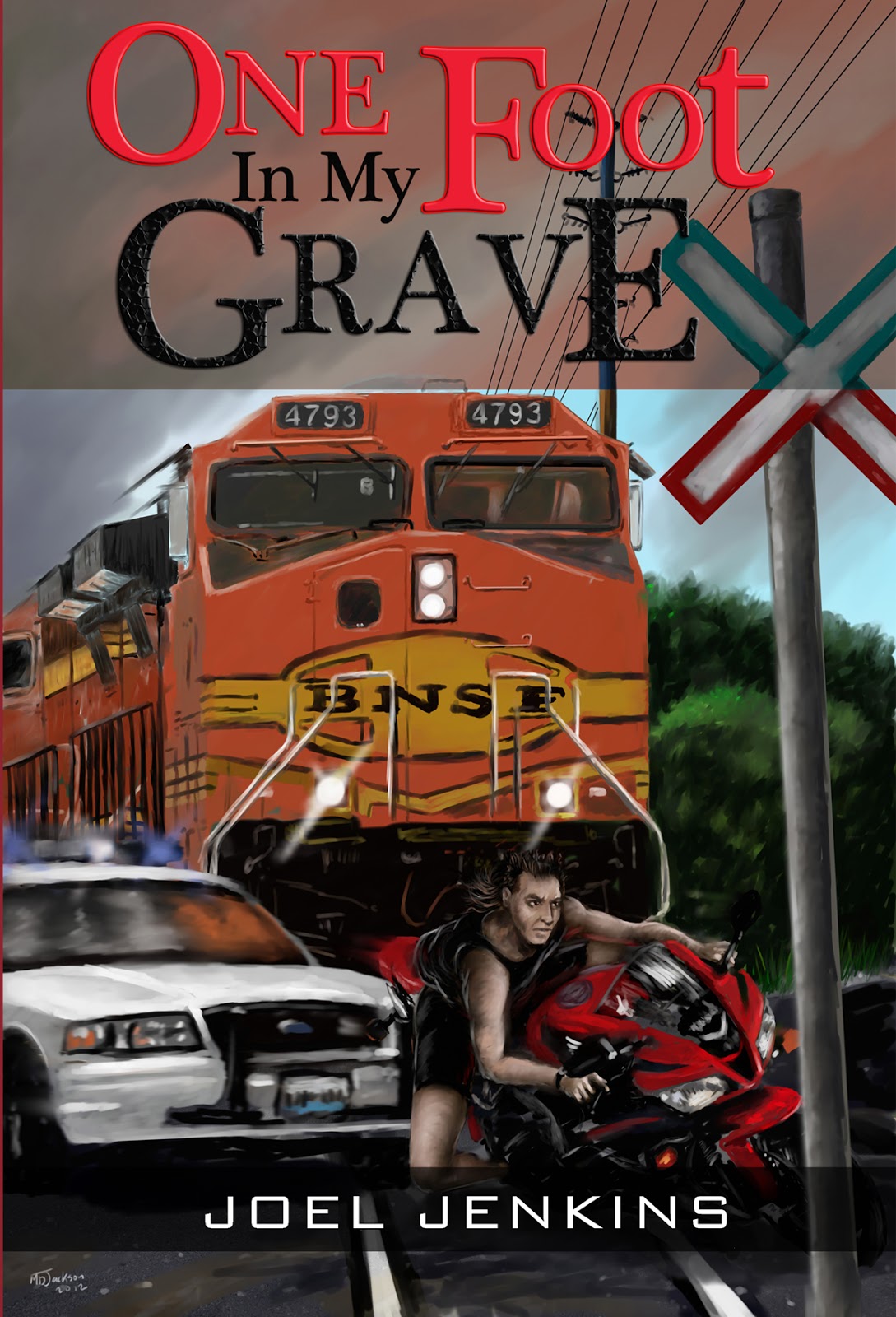
Art Sippo and Ric Croxton of the Book Cave took time out to interview me about a pair of my most recent books, One Foot in My Grave: One Man's Battle with Cystic Fibrosis and The Island of Lost Souls, an Arthurian fantasy adventure featuring the brother knights Balin and Balan. You can can listen to the Book Cave Podcast here.

April 6, 2013
Writing Unrepentant Characters

From the Iliad to the western dime novels, there is a long history of anti-heroes or protagonists that behave with only their self interest in mind and lack virtue, morality, or other heroic values. To the writer, telling a story about such characters provides particular challenges. If a character has no redeeming qualities the reader may not care at all what happens to the protagonist and quit reading. I've discarded many books and short stories, because I didn't care about the protagonist enough to continue.
So what works? What can bring a reader to the table when your main character is a thoroughly unrepentant character of the lowest morals?
Cheat Around the Edges: Though your character lacks many moral principles, he does have at least one good quality or admirable goal. An example of this sort of character is James Bond, who has little in the way of morals or principles (or is willing to compromise them to accomplish his goals), yet he doesn't hesitate to lay his life on the line to protect England from villainous organizations of all stripes and hues. This helps us buy into Bond and care what happens to him, even as he uses and discards strings of women with little regard to what happens to them after he gets the information that he wants. Also, Fleming does a good job of showing Bond's inner turmoil, which the movies rarely reflect, and also of showing the physical and mental toll that his job takes.Evil vs. Less Evil: The protagonist, though not motivated by the welfare of others, is acting against a greater evil than he, so in effect he becomes the 'good guy' of the piece by contrast. An example of this is Moorcock's Elric of Melnibone.Selective Story Telling: Your character is a ruthless mercenary who has slaughtered many innocents, but you choose only to tell the stories where he has been wronged by someone else and is seeking redress, or where for some reason he decides that it is in his interest to help another. Conan is a good example of this sort of character. On close examination of his character he has no moral qualms about killing and plundering, but those incidents are glossed over somewhat and the Robert E Howard stories tend to incorporate the first two elements of Cheating Around the Edges and Evil vs. Less Evil. This way, we can relate to Conan, even though the reality is that he might knife us in a dark alley if he thought we might have a few coins in our pocket.
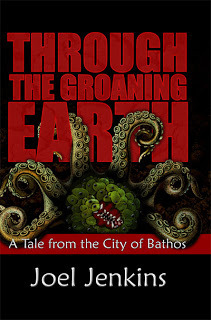
Machinations and Train Wrecks: In part five of Through the Groaning Earth (also available for $2.99 Kindle version), The Jewels of Sagra Yoth, I tell the story of Willen, who has no redeeming qualities whatsoever except for unrestrained ambition. He's a two-bit loser thief and murderer out to make a name for himself. To my surprise, I've had comments from readers that this is one of their favorite sections from the book. Why does this section work, when there is utterly no reason to like Willen or care what happens to him? Here's my theory:a) The character has a clearly defined goalb) The character struggles mightily to gain that goalc)The character uses every bit of his limited brain power to orchestrate his theft, and so we are interested in the machinations and his underhanded efforts.d)The reader wants to watch the train wreck.
I think this last bit cannot be underestimated. Not only do readers deserve to see the character reap the whirlwind of his poor choices, but the writer has a duty to show that bad decisions have bad consequences. Willen struggles mightily to steal the Jewels of Sagra Yoth and then, in the end, all his evil actions come back to haunt him, and he realizes that maybe he's not quite as smart as he thought.
For another example of thoroughly unrepentant and irredeemable characters look to Derrick Ferguson's Diamondback stories. These stories don't so much use the devices of Cheating around the Edges or Evil vs. Less Evil, or even Selective Story Telling, but rely on the Machinations and Train Wreck principles. The reader is enthralled by all the machinations, double dealings, and backstabbings, and wants to see the ensuing trainwreck. Honestly, I didn't care so much if the deadly killer Diamondback lived or died, but I did want to see how everything played out, and that kept me reading until the very last word.
March 21, 2013
Strange Trails
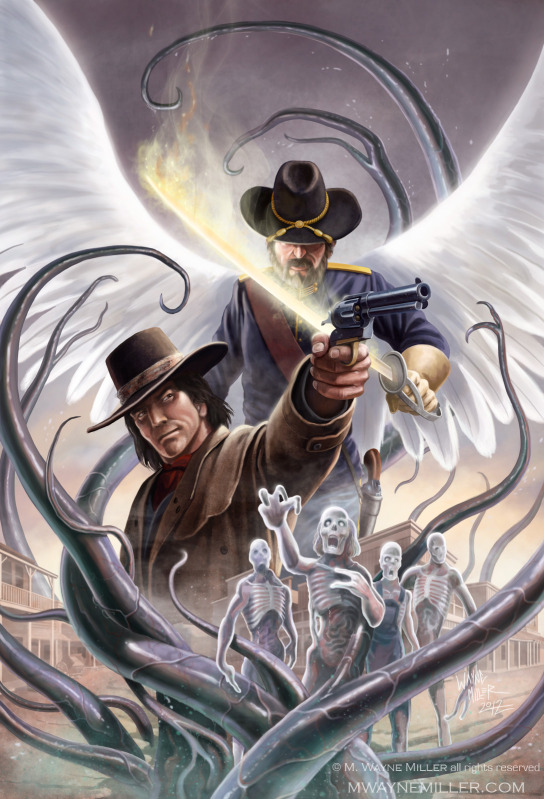
Here's the press release for an anthology project that's coming down the pike. Around June, I expect to turn in a Lone Crow story for this one.


