Dan Jorgensen's Blog, page 400
June 21, 2018
His Secret To Writing Success
“I often will write a scene from three different points of view to find out which has the most tension and which way I’m able to conceal the information I’m trying to conceal. And that is, at the end of the day, what writing suspense is all about.”– Dan Brown
Born on June 22, 1964, Brown has utilized that technique to perfection. His thrillers exude suspense and his readers flock to them, having purchased well over 200 million copies since his first success, The DaVinci Code, burst onto the scene in 2003. Brown's novels are treasure hunts featuring recurring themes of cryptography, keys, symbols, codes and, of course, conspiracy theories. They’ve been translated into 52 languages.
While writing is his life it wasn’t that way until the mid-1990s when he was on vacation, read a thriller by Sidney Sheldon, and decided that’s what he really wanted to do. Up until then he had been a successful musician, and was a singer, songwriter and pianist in Hollywood, where he also taught music at the prestigious Beverly Hills Preparatory School. A member of the National Academy of Songwriters, he had been a frequent participant in that organization’s events, but once he made the move to be a writer he dropped music and went full bore into his new field – for which millions of readers are forever grateful. Brown likes to use the real people in his life as key characters. It’s a a great writing technique that every writer should consider and certainly helps answer that old question, “Where do you get your characters?”
 When asked the secret to his success, he simply says, “Hard work. I still get up every morning at 4 a.m. I write seven days a week, including Christmas. I still face a blank page every morning, and my characters don’t really care how many books I’ve sold.”
 Share A Writer’s Moment with a friend by clicking the g+1 button below.


June 20, 2018
Curiosity About People's Lives
“Why do we read biography? Why do we choose to write it? Because we are human beings, programmed to be curious about other human beings, and to experience something of their lives. This has always been so - look at the Bible, crammed with biographies, very popular reading.” – Claire Tomalin
Known for biographies of such luminaries as Charles Dickens, Thomas Hardy and Jane Austin, among others, Tomalin was born in London on this date in 1933. After her first husband, journalist Nicholas Tomalin, was killed while working as a war correspondent, she decided to try writing herself. She worked in publishing and journalism as literary editor of the New Statesman, then The Sunday Times, while bringing up her 5 children. In 1974 she turned to biography with The Life and Death of Mary Wollstonecraft, which earned her the coveted Whitbread Book Award. It also set her on a writing path that produced 10 bestselling biographies and won her over a dozen top prizes.
She said one of the books she has most enjoyed writing (and is considered one of the best ever on her subject) was Charles Dickens: A Life, published in 2011.
“Everyone finds their own version of Charles Dickens,” she said. “The child-victim, the irrepressibly ambitious young man, the reporter, the demonic worker, the tireless walker. The radical, the protector of orphans, helper of the needy, man of good works, the republican. The hater and the lover of America. The giver of parties, the magician, the traveler.”
 “Dickens . . . was a writer who rightly saw his power as coming through his fiction.”
Share A Writer’s Moment with a friend by clicking the g+1 button below.
June 19, 2018
Memory - A Boundless Writing Flow
“Memory is funny. Once you hit a vein the problem is not how to remember but how to control the flow.” – Tobias Wolff
Born on this date in 1945, Wolff is a short story writer, memoirist, novelist, and teacher of creative writing especially known for his memoirs This Boy's Life and In Pharaoh's Army. His short story collection The Barracks Thief won the PEN/Faulkner Award for Fiction. And, Wolff's lifetime body of work was honored in 2015 when he received a National Medal of Arts award.
A Vietnam veteran (Special Forces), he completed several tours of duty there before heading back to school to study creative writing and ultimately beginning his award-winning writing career. Wolff said he had wanted to be a writer since age 14 but work and then the military always got in the way. Since then he has used many of his "life" experiences in his writing and is especially noted for using autobiographical elements in his stories.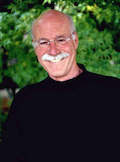 After earning several degrees, Wolff started teaching creative writing in the late 1980s, first at Syracuse and then at Stanford. Dozens of successful writers trace their beginnings to classes and mentoring provided by Wolff, who has counseled and taught them in all genres. That being said, it is writing a short story that remains his favorite.
“Everything," he said, "has to be pulling weight in a short story for it to be really of the first order.”
Share A Writer’s Momentwith a friend by clicking the g+1 button below.
Born on this date in 1945, Wolff is a short story writer, memoirist, novelist, and teacher of creative writing especially known for his memoirs This Boy's Life and In Pharaoh's Army. His short story collection The Barracks Thief won the PEN/Faulkner Award for Fiction. And, Wolff's lifetime body of work was honored in 2015 when he received a National Medal of Arts award.
A Vietnam veteran (Special Forces), he completed several tours of duty there before heading back to school to study creative writing and ultimately beginning his award-winning writing career. Wolff said he had wanted to be a writer since age 14 but work and then the military always got in the way. Since then he has used many of his "life" experiences in his writing and is especially noted for using autobiographical elements in his stories.
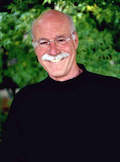 After earning several degrees, Wolff started teaching creative writing in the late 1980s, first at Syracuse and then at Stanford. Dozens of successful writers trace their beginnings to classes and mentoring provided by Wolff, who has counseled and taught them in all genres. That being said, it is writing a short story that remains his favorite.
“Everything," he said, "has to be pulling weight in a short story for it to be really of the first order.”
Share A Writer’s Momentwith a friend by clicking the g+1 button below.
June 17, 2018
'Residing' in History
“Journalism allows its readers to witness history; fiction gives its readers an opportunity to live it.” – John Hersey
Born in China on this date in 1914, American writer and journalist Hersey was a storyteller extraordinaire. His account of the aftermath of the atomic bomb dropped on Hiroshima, Japan, was adjudged the finest piece of American journalism of the 20th century by a 36-member panel associated with New York University’s journalism department.
A graduate of Yale, where he not only studied English and Journalism but also was a standout football player, Hersey went to work as a private secretary for Nobel Prize winning novelist Sinclair Lewis, then became a leading writer at Timemagazine, including serving as a war correspondent during WWII.
 It was right at war’s end that he wrote his first novel, A Bell for Adano, based on one of his assignments in Italy during the war. That debut novel won him a Pulitzer Prize and also became an award-winning movie. Despite his many accolades and awards, Hersey always said that he had as many failures as he did successes and each played an important life role.
 “Learning,” he said, “starts with failure; the first failure is the beginning of education.”
Share A Writer’s Moment with a friend by clicking the g+1 button below.
The 'Opportunity' To Reside in History
“Journalism allows its readers to witness history; fiction gives its readers an opportunity to live it.” – John Hersey
Born in China on this date in 1914, American writer and journalist Hersey was a storyteller extraordinaire. His account of the aftermath of the atomic bomb dropped on Hiroshima, Japan, was adjudged the finest piece of American journalism of the 20th century by a 36-member panel associated with New York University’s journalism department.
A graduate of Yale, where he not only studied English and Journalism but also was a standout football player, Hersey went to work as a private secretary for Nobel Prize winning novelist Sinclair Lewis, then became a leading writer at Timemagazine, including serving as a war correspondent during WWII.
It was right at war’s end that he wrote his first novel, A Bell for Adano, based on one of his assignments in Italy during the war. That debut novel won him a Pulitzer Prize and also became an award-winning movie. Despite his many accolades and awards, Hersey always said that he had as many failures as he did successes and each played an important life role. “Learning,” he said, “starts with failure; the first failure is the beginning of education.”
Share A Writer’s Moment with a friend by clicking the g+1 button below.
June 16, 2018
Understanding Good Writing, And Truth
“The job of the poet is to render the world - to see it and report it without loss, without perversion. No poet ever talks about feelings. Only sentimental people do.” – Mark Van Doren
I wrote earlier about Van Doren, who won the 1940 Pulitzer Prize for his book Collected Poems 1922–1938. Interestingly he became the second member of his family to win a Pulitzer, his older brother Carl earning the honor in 1938.

The author of numerous short stories, novels, and plays, Van Doren was above all a poet and a teacher. As Thomas Merton said in a letter to Van Doren, "You always used your gifts to make people admire and understand poetry and good writing and truth." For Saturday’s Poem, here is Van Doren’s
Spring ThunderListen, The wind is still,
And far away in the night --
See! The uplands fill
With a running light.
Open the doors. It is warm;
And where the sky was clear--
Look! The head of a storm
That marches here!
Come under the trembling hedge--
Fast, although you fumble...
There! Did you hear the edge
of winter crumble?
Share A Writer’s Moment with a friend by clicking the g+1 button below.
June 15, 2018
Standing Up For What Is Right
“To love what you do and feel that it matters how could anything be more fun?”
– Katharine Graham
Award-winning writer and publisher of The Washington Post for over two decades, Graham, who was born on June 16, 1917, wrote a Pulitzer Prize winning memoir and led an editorial team that not only revived a so-so newspaper but also made it into a national power. The Post, subject of a recent Tom Hanks-Meryl Streep movie by the same name, set the benchmarks for “how it’s done” in investigative journalism.
Graham said that she always stood behind her reporters and longtime editor Ben Bradlee and never wavered in her belief that what they were doing was not only right, but necessary.
A Republican who led investigative reporting into Presidential misconduct on both sides, she said politics should never get in the way of good reporting. “It matters not if a person is from one party or another. If someone has done something that needs to be exposed in print, then that’s what a good reporter should do.”
 She was awarded the Freedom Medal and The Presidential Medal of Freedom, and shortly before her death in 2001, the International Press Institute named her one of the world’s 50 most influential and powerful media people of the 20th century. “Once, power was considered a masculine attribute,” Graham said when told of the honor. “In fact, power has no sex.”
 Share A Writer’s Moment with a friend by clicking the g+1 button below.
June 14, 2018
What Writer's Block?
“There's no writer's block; there's only distraction.” – Carolyn Chute
Born on this date in 1947, Chute is a populist political activist strongly identified with the culture of poor, rural western Maine. Her first, and best known, novel, The Beans of Egypt, Maine, was published in 1985 and made into a 1994 film of the same name, directed by Jennifer Warren. Chute's has two other books, Letourneau's Used Auto Parts and Merry Menalso set in the town of Egypt, Maine.
“I never wanted to be a writer. I still don't,” Chute said, and yet she has been honored with several major writing awards and two major writing fellowships, one from Guggenheim and another from the Thornton Wilder Foundation.
 Shealso devotes considerable time and support to the New England Literature Program, offering both creative writing workshops and the study of many of New England’s greatest writers.
“Whenever I write, I write what I find to be the way people are,” Chute said. “I never use any symbolism at all, but if you write as true to life as you possibly can, people will see symbolism. They'll all see different symbolism, but they're apt to because you can see it in life.”
Share A Writer’s Moment with a friend by clicking the g+1 button below.
June 13, 2018
Imparting Praise and Hope
“The art of teaching is the art of assisting discovery.”– Mark Van Doren
Born in Illinois on this date in 1894, Van Doren was a Pulitzer Prize-winning poet, writer and critic, and one of the nation’s leading scholars during a 40-year career as Professor of English at Columbia University. There he inspired a generation of influential writers and thinkers including Thomas Merton, Robert Lax, John Berryman, Whittaker Chambers, and Beat Generation writers such as Allen Ginsberg and Jack Kerouac.
Van Doren joined the Columbia University faculty in 1920, having been preceded by his brother Carl, who also won a Pulitzer Prize for his writing. Mark Van Doren went on to become one of Columbia's greatest teachers and a "legendary classroom presence" teaching English until 1959, at which point he became Professor Emeritus until his death in 1972.
 He authored 12 books of poetry, 3 novels, and an astounding 17 nonfiction books, including the definitive Mark Van Doren on the Great Poems of Western Literature, published in 1962 and one of the great resource books of the 20th Century. Van Doren also served as literary editor of The Nation from 1924–28, and its film critic from 1935 to 1938.
“Bring ideas in and entertain them royally,” Van Doren advised his writing students, “for one of them may become the king.”
Share A Writer’s Moment with a friend by clicking the g+1 button below.
June 12, 2018
Emotional Connects; Writing Success
“There is no better test of character than when you're tossed into crisis. That's when we see one's true colors shine through. So I try my best to make my characters personally involved in the plot, in a way that stresses them and tests them.”– Tess Gerritsen
Gerritsen, born on this date in 1953, grew up in San Diego and longed to be a writer, but her family had reservations about the sustainability of a writing career, so Gerritsen chose a career in medicine.
But while home on maternity leave, she finally took the plunge into the writing world, although not into the genre’ that would ultimately make her famous. Instead, she went with Harlequin and did a series of paperback romance novels. Her colleagues kept urging her to combine her writing skills and medical background instead, and finally in 1996 she wrote Harvest, her first medical thriller. It’s the story of a detective and doctor working together (sound familiar?) to solve the mystery of orphans disappearing and who they think are being used as organ donors. Three more bestselling medical thrillers followed before she wrote her landmark medical examiner/detective partnership called Rizzoli and Isles. Twelve books and a 7-year television series followed. To date she’s had her books published in 40 countries with sales of over 25 million.
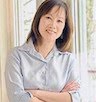 “I think that, for physicians who want to become writers, they have the material and the smarts,” Gerritsen said in a bit of advice to any fellow doctors hoping to get into the writing field. “They have the logic, they know the stories; it's just a matter of being able to connect with their emotional sides - that's the key to writing good fiction.”
Share A Writer’s Moment with a friend by clicking the g+1 button below.