Dan Jorgensen's Blog, page 154
March 6, 2023
A Writer's Moment: Shaping tales from the natural world


Shaping tales from the natural world
“The natural world is the only one we have. To try to not see the natural world - to put on blinders and avoid seeing it - would for me seem like a form of madness. I'm also interested in the way landscape shapes individuals and populations, and from that, cultures.” - Rick Bass
Bass, who was born on this date in 1958, is the son of a geologist and studied petroleum geology at Utah State University. He started writing short stories on his lunch breaks while working as a petroleum geologist in Jackson, MS, and eventually gravitated toward environmental activism. Today he and his wife, artist Elizabeth Hughes Bass, live in a remote area where he both writes and works on environmental issues.
Among his more than two dozen books are the award-winning Where the Sea Used to Be, his short story collection The Lives of Rocks, and his autobiographical Why I Came West. While he has an equal number of nonfiction and fiction works, he said approaching the latter, especially incorporating tales about real people, is more delicate.
“I think a novelist must be more tender with living or 'real' people,” he said. “The moral imperative of having been entrusted with their story looms before you every day, in every sentence. A novel that features real people is complicated, but in the end, that extra challenge is all for the good.”
March 4, 2023
A Writer's Moment: 'A call to action'
'A call to action'
“Poetry can tell us about what's going on in our lives - not only our personal but our social and political lives.” – Juan Felipe Herrera
Born in 1948, the child of migrant farmers, Herrera served as U. S. Poet Laureate from 2015-17. Among his many awards are the Ezra Jack Keats award for Calling the Doves, and the National Book Critics Circle Award in Poetry for Half the World in Light. “Poetry is a call to action," he said. "And it also is action.” For Saturday’s Poem, here is Herrera’s,
Let Me Tell You What A Poem Brings
Before you go further,
let me tell you what a poem brings,
first, you must know the secret, there is no poem
to speak of, it is a way to attain a life without boundaries,
yes, it is that easy, a poem, imagine me telling you this,
instead of going day by day against the razors, well,
the judgments, all the tick-tock bronze, a leather jacket
sizing you up, the fashion mall, for example, from
the outside you think you are being entertained,
when you enter, things change, you get caught by surprise,
your mouth goes sour, you get thirsty, your legs grow cold
standing still in the middle of a storm, a poem, of course,
is always open for business too, except, as you can see,
it isn't exactly business that pulls your spirit into
the alarming waters, there you can bathe, you can play,
you can even join in on the gossip—the mist, that is,
the mist becomes central to your existence.
@font-face {font-family:"MS 明朝"; mso-font-charset:78; mso-generic-font-family:auto; mso-font-pitch:variable; mso-font-signature:-536870145 1791491579 18 0 131231 0;}@font-face {font-family:"Cambria Math"; panose-1:2 4 5 3 5 4 6 3 2 4; mso-font-charset:0; mso-generic-font-family:auto; mso-font-pitch:variable; mso-font-signature:-536870145 1107305727 0 0 415 0;}@font-face {font-family:Cambria; panose-1:2 4 5 3 5 4 6 3 2 4; mso-font-charset:0; mso-generic-font-family:auto; mso-font-pitch:variable; mso-font-signature:-536870145 1073743103 0 0 415 0;}p.MsoNormal, li.MsoNormal, div.MsoNormal {mso-style-unhide:no; mso-style-qformat:yes; mso-style-parent:""; margin:0in; margin-bottom:.0001pt; mso-pagination:widow-orphan; font-size:12.0pt; font-family:Cambria; mso-ascii-font-family:Cambria; mso-ascii-theme-font:minor-latin; mso-fareast-font-family:"MS 明朝"; mso-fareast-theme-font:minor-fareast; mso-hansi-font-family:Cambria; mso-hansi-theme-font:minor-latin; mso-bidi-font-family:"Times New Roman"; mso-bidi-theme-font:minor-bidi;}h1 {mso-style-priority:9; mso-style-unhide:no; mso-style-qformat:yes; mso-style-link:"Heading 1 Char"; mso-style-next:Normal; margin-top:24.0pt; margin-right:0in; margin-bottom:0in; margin-left:0in; margin-bottom:.0001pt; mso-pagination:widow-orphan lines-together; page-break-after:avoid; mso-outline-level:1; font-size:16.0pt; font-family:Calibri; mso-ascii-font-family:Calibri; mso-ascii-theme-font:major-latin; mso-fareast-font-family:"MS ゴシック"; mso-fareast-theme-font:major-fareast; mso-hansi-font-family:Calibri; mso-hansi-theme-font:major-latin; mso-bidi-font-family:"Times New Roman"; mso-bidi-theme-font:major-bidi; color:#345A8A; mso-themecolor:accent1; mso-themeshade:181; mso-font-kerning:0pt;}span.Heading1Char {mso-style-name:"Heading 1 Char"; mso-style-priority:9; mso-style-unhide:no; mso-style-locked:yes; mso-style-link:"Heading 1"; mso-ansi-font-size:16.0pt; mso-bidi-font-size:16.0pt; font-family:Calibri; mso-ascii-font-family:Calibri; mso-ascii-theme-font:major-latin; mso-fareast-font-family:"MS ゴシック"; mso-fareast-theme-font:major-fareast; mso-hansi-font-family:Calibri; mso-hansi-theme-font:major-latin; mso-bidi-font-family:"Times New Roman"; mso-bidi-theme-font:major-bidi; color:#345A8A; mso-themecolor:accent1; mso-themeshade:181; font-weight:bold;}.MsoChpDefault {mso-style-type:export-only; mso-default-props:yes; font-family:Cambria; mso-ascii-font-family:Cambria; mso-ascii-theme-font:minor-latin; mso-fareast-font-family:"MS 明朝"; mso-fareast-theme-font:minor-fareast; mso-hansi-font-family:Cambria; mso-hansi-theme-font:minor-latin; mso-bidi-font-family:"Times New Roman"; mso-bidi-theme-font:minor-bidi;}div.WordSection1 {page:WordSection1;}
March 3, 2023
A Writer's Moment: Reflecting 'the power of a good teacher'
Reflecting 'the power of a good teacher'
“I have come to believe that a great teacher is a great artist and that there are as few as there are any other great artists. Teaching might even be the greatest of the arts, since the medium is the human mind and spirit.”—John Steinbeck.
Like many of the great writers of the 20th Century John Steinbeck, born this week in 1902, was a newspaper reporter before he tried his hand at creative writing. And like many of his contemporaries, including good friend Ernest Hemingway, he spent time as a war correspondent during World War II following the phenomenal success of his 1939 novel, The Grapes of Wrath, which won both the National Book Award and The Pulitzer Prize.
His writing career began at age 14 and in later life said he wished he would have spent more time under the tutelage of some of the teachers who made a lifelong impression. The power of a good teacher, he said, is immeasureable.
While Steinbeck wrote a number of novels and short stories that did not succeed, many more did, including Of Mice and Men, Tortilla Flats, and The Long Valley. Several of his books were made into movies, and in 1962, shortly before his death, he was awarded the Nobel Prize for Literature. [image error]
March 2, 2023
A Writer's Moment: Setting 'voice' from end to beginning
Setting 'voice' from end to beginning
“Titles are important; I have them before I have books that belong to them. I have last chapters in my mind before I see first chapters, too. I usually begin with endings, with a sense of aftermath, of dust settling, of epilogue.” – John Irving
Novelist and Academy Award-winning screenwriter Irving (born on this date in 1942) first achieved critical and popular acclaim with the international success of the 1978 novel The World According to Garp. Since then he has had many other best sellers and also had 5 of his novels, including the Academy Award-winner The Cider House Rules, adapted to film.
Irving started writing fiction at age 26, had only limited success and became a college professor before writing Garp and earning worldwide acclaim. Of his 15 novels, 4 have reached number one on the New York Times Bestseller List, and said all of his books grow out of his development
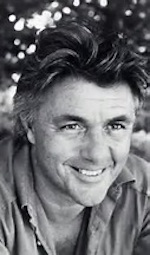 of the endings first – not necessarily a unique style but one that has paid big dividends for him. “I write the last line, and then I write the line before that,” he said. “I find myself writing backwards for a while, until I have a solid sense of how that ending sounds and feels. You have to know what your voice sounds like at the end of the story, because it tells you how to sound when you begin.”
March 1, 2023
A Writer's Moment: 'What will engage your readers?'
'What will engage your readers?'
“One of the disconcerting things about writing for publication is that you're trying to clear your little parcel of land in a field where Taste is king - and, as we all know, there's no accounting for Taste.” – Darin Strauss
Born on this date in 1970, Strauss has handled writing's “taste” test just fine, earning a number of major awards and a Guggenheim Fellowship for “exceptional creative ability in the arts.”
A native of Long Island, he studied writing at Tufts University and then headed west, starting out as “Entertainment” reporter for the Aspen Times. After struggling on a $50 per article rate, he decided to “head home,” as it were. “I thought, 'I'll come back to New York.’ I worked for the Aspen Times when I lived in Aspen. I'll work for the New York Times when I live in New York.' It didn't work out that way.”
Instead, he became a best-selling author. His first book, Chang & Eng, won a basketful of awards, and his second, The Real McCoy, earned him the Guggenheim. His poignant Half A Life won numerous major awards and “must read” citations and the National Book Critics Circle Award. A frequent guest speaker, he also teaches writing at New York University where he advises his students to avoid excessive scene setting and “get into the story.” “The main thing is to think strategically.
 What will engage your readers? Trust me when I tell you that few people are eager to read a story whose opening lines sound like a dissertation on giant bugs.”