Dan Jorgensen's Blog, page 126
September 20, 2023
A Writer's Moment: Historical accuracy in fact, and words


Historical accuracy in fact, and words
“Iwrite novels, mostly historical ones, and I try hard to keep them accurate asto historical facts, milieu and flavor.” – Gary Jennings
Born on this date in1928, Jennings wrotethe bestselling historical book Aztec andhad a stellar career as a writer of historical fiction. A native of Virginia, he began writing as a war correspondent in the Korean War (awardeda Bronze Star for heroism in the process).
His thoroughlyresearched – and sometimes massive – novels are known for theirdetail. He spent12 years in Mexico researching Aztec andits sequel Aztec Autumn and joined 9different circus troupes to write his bestseller Spangle. In the course of hiswriting Jennings learned that many words modern writers take for granted simplydidn’t exist in the time periods he wanted to represent – something he said allwriters, especially of historical fiction, should be prepared to deal with. He suggested that a writer looking for a project might consider “. . . a good, thick,complete-as-possible dictionary of 'What People Used to Call Things.' “I could list hundreds of words I'vecome up against in the course of my work that did not exist in the era of whichI was writing and for which I never could find a suitably old-time, archaic orobsolete substitute.“
September 19, 2023
Elevating the national conscious
“Inever went to a John Wayne movie to find a philosophy to live by or to absorb aprofound message. I went for the simple pleasure of spending a couple of hoursseeing the bad guys lose.” – Mike Royko
Born on this date in 1932, Roykowrote over 7,500 columns for the Chicago Daily News, the ChicagoSun-Times, and the Chicago Tribune, beginning as a humorist focusedon daily life in Chicago before authoring Boss, a scathing negativebiography of Chicago Mayor Richard J. Daley in 1971. In 1972 he won the Pulitzer Prize for Commentary.
Royko, who grew up in poverty andwas a decorated military veteran, wrote his first columns for his Air ForceBase newspaper, beginning in 1955. Ultimately, his columns were syndicated in more than 600 newspapers andhe also wrote or compiled dozens of "That's Outrageous!" columns for Reader'sDigest.
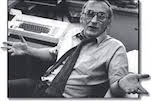 His stories touchedon everything from politics to sports to the movies and many were compiled intoa dozen books, including three published posthumously. The National Press Club honored him with itsLifetime Achievement Award shortly before his death in 1997.
 Royko said that while he love writing he also loved writing put into action on the movie screen. "A good andstrong movie," he said, "can have a more powerful social impact than any and all politicalspeeches or newspaper editorials and columns."
A Writer's Moment: Elevating the national conscious
September 18, 2023
Mining that 'believability' factor
“Family legends confirm that I'vebeen a storyteller pretty much from the moment I learned to talk. Iquickly learned that character, pacing and plot were important to any work offiction, but that nothing was more important than believability.” – Lynn Abbey
Abbey, born on this date in 1948 inUpstate New York, brings a unique combination to her writing – being first acomputer programmer, historian and astrophysicist, then a writer. With her background in history, she said, “Ilove to curl up with a book about some dusty corner of history.”
In spite of that, her own writingbegan and mostly remains in fantasy fiction. She broke into the field in 1979 with her novel Daughter of theBright Moon and the short story "The Face of Chaos," part of a ThievesWorld shared world anthology. Shesaid she’s a big fan of anthologies because editors are interested in allcomers, and you have a great chance to be included even if you’re a beginningwriter.
Thus, In 2002, she not only returnedto Thieves World with the novel Sanctuary,but she also began editing new short story anthologies, beginning with TurningPoints.
“For me,” she said, “writing a shortstory is much, much harder than writing a novel. Short-story writing requires an exquisitesense of balance. Novelists, frankly, can get away with more. A novel can havea dull spot or two, because the reader has made a different commitment.”
@font-face {font-family:Times; panose-1:2 0 5 0 0 0 0 0 0 0; mso-font-charset:0; mso-generic-font-family:auto; mso-font-pitch:variable; mso-font-signature:3 0 0 0 1 0;}@font-face {font-family:"MS 明朝"; panose-1:0 0 0 0 0 0 0 0 0 0; mso-font-charset:128; mso-generic-font-family:roman; mso-font-format:other; mso-font-pitch:fixed; mso-font-signature:1 134676480 16 0 131072 0;}@font-face {font-family:"Cambria Math"; panose-1:2 4 5 3 5 4 6 3 2 4; mso-font-charset:0; mso-generic-font-family:auto; mso-font-pitch:variable; mso-font-signature:-536870145 1107305727 0 0 415 0;}@font-face {font-family:Cambria; panose-1:2 4 5 3 5 4 6 3 2 4; mso-font-charset:0; mso-generic-font-family:auto; mso-font-pitch:variable; mso-font-signature:-536870145 1073743103 0 0 415 0;}p.MsoNormal, li.MsoNormal, div.MsoNormal {mso-style-unhide:no; mso-style-qformat:yes; mso-style-parent:""; margin:0in; margin-bottom:.0001pt; mso-pagination:widow-orphan; font-size:12.0pt; font-family:Cambria; mso-ascii-font-family:Cambria; mso-ascii-theme-font:minor-latin; mso-fareast-font-family:"MS 明朝"; mso-fareast-theme-font:minor-fareast; mso-hansi-font-family:Cambria; mso-hansi-theme-font:minor-latin; mso-bidi-font-family:"Times New Roman"; mso-bidi-theme-font:minor-bidi;}.MsoChpDefault {mso-style-type:export-only; mso-default-props:yes; font-family:Cambria; mso-ascii-font-family:Cambria; mso-ascii-theme-font:minor-latin; mso-fareast-font-family:"MS 明朝"; mso-fareast-theme-font:minor-fareast; mso-hansi-font-family:Cambria; mso-hansi-theme-font:minor-latin; mso-bidi-font-family:"Times New Roman"; mso-bidi-theme-font:minor-bidi;}div.WordSection1 {page:WordSection1;}
A Writer's Moment: Mining that 'believability' factor
September 16, 2023
Star gazing
“Apoet should always be 'collaborating' with his public, but this public, in themass, cannot make itself heard, and he has to guess at its requirements and itscriticisms.” – Louis MacNeice
Irish poet MacNeice was widelyappreciated by the public during his lifetime (1907-63) due in part to hisrelaxed, but socially and emotionally aware style. He was part ofthe generation called the Auden Group, sometimes known as the "Thirties Poets,”that included W. H. Auden, Stephen Spender and Cecil Day-Lewis (father of actorDaniel Day-Lewis). For Saturday’s Poem here is MacNeice’s,
Star-Gazer
Forty-two years ago (to me if to no one else
The number is of some interest) it was a brilliant starry night
And the westward train was empty and had no corridors
So darting from side to side I could catch the unwonted sight
Of those almost intolerably bright
Holes, punched in the sky, which excited me partly because
Of their Latin names and partly because I had read in the textbooks
How very far off they were, it seemed their light
Had left them (some at least) long years before I was.
And this remembering now I mark that what
Light was leaving some of them at least then,
Forty-two years ago, will never arrive
In time for me to catch it, which light when
It does get here may find that there is not
Anyone left alive
To run from side to side in a late night train
Admiring it and adding thoughts in vain.
@font-face {font-family:Times; panose-1:2 0 5 0 0 0 0 0 0 0; mso-font-charset:0; mso-generic-font-family:auto; mso-font-pitch:variable; mso-font-signature:3 0 0 0 1 0;}@font-face {font-family:"MS 明朝"; panose-1:0 0 0 0 0 0 0 0 0 0; mso-font-charset:128; mso-generic-font-family:roman; mso-font-format:other; mso-font-pitch:fixed; mso-font-signature:1 134676480 16 0 131072 0;}@font-face {font-family:"MS 明朝"; panose-1:0 0 0 0 0 0 0 0 0 0; mso-font-charset:128; mso-generic-font-family:roman; mso-font-format:other; mso-font-pitch:fixed; mso-font-signature:1 134676480 16 0 131072 0;}@font-face {font-family:Cambria; panose-1:2 4 5 3 5 4 6 3 2 4; mso-font-charset:0; mso-generic-font-family:auto; mso-font-pitch:variable; mso-font-signature:-536870145 1073743103 0 0 415 0;}p.MsoNormal, li.MsoNormal, div.MsoNormal {mso-style-unhide:no; mso-style-qformat:yes; mso-style-parent:""; margin:0in; margin-bottom:.0001pt; mso-pagination:widow-orphan; font-size:12.0pt; font-family:Cambria; mso-ascii-font-family:Cambria; mso-ascii-theme-font:minor-latin; mso-fareast-font-family:"MS 明朝"; mso-fareast-theme-font:minor-fareast; mso-hansi-font-family:Cambria; mso-hansi-theme-font:minor-latin; mso-bidi-font-family:"Times New Roman"; mso-bidi-theme-font:minor-bidi;}.MsoChpDefault {mso-style-type:export-only; mso-default-props:yes; font-family:Cambria; mso-ascii-font-family:Cambria; mso-ascii-theme-font:minor-latin; mso-fareast-font-family:"MS 明朝"; mso-fareast-theme-font:minor-fareast; mso-hansi-font-family:Cambria; mso-hansi-theme-font:minor-latin; mso-bidi-font-family:"Times New Roman"; mso-bidi-theme-font:minor-bidi;}div.WordSection1 {page:WordSection1;}
A Writer's Moment: Star gazing
September 14, 2023
Making way for a children's book classic
“Ilived with them in my studio in New York. And of course if I were doing thatbook today . . . I would have gone to wherethe wild ducks were and where I could study them - I would have gone to thecountry somewhere.” – Robert McCloskey
The “they” McCloskeyrefers to are several mallard ducks he purchased and took home in order tostudy their movements, sounds and actions. The result was one of the world's most well-known children's books,Make Way for Ducklings.
McCloskey, born on this date in 1914, wrote and illustrated many children’s books that remain as classics. MakeWay was one of two to win the prestigious Caldecott Medal awarded in recognition of best-illustrated picturebook. McCloskey also won for Time of Wonder becoming the first writer/artist to win more than once. Three of hisother books, including the wonderful Blueberriesfor Sal, were finalists.
MakeWay features a mallard pair that nests onan island in Boston’s Charles River. After raising 8 ducklings, the mother leads them to the Public Garden indowntown Boston. Famously, a friendlypoliceman stops traffic for them to cross a busy street. The beloved story hasbecome a Boston institution and "official" childen's book of Massachusetts.
In 1987, renownedsculptor Nancy Schön created a bronze version of Mrs. Mallard and theducklings, installing them near a downtown Boston park where thousands ofchildren climb them and many more people photograph them annually. The park is also the site of an annual MakeWay for Ducklings Mother's Day parade, featuring hundreds of childrendressed in the costumes of their favorite characters.
 McCloskey, who died in 2003, said “I get a lot of letters, not only from children butfrom adults, too. Almost every week, every month, clippings come in from somepart of the world where ducks are crossing the street.”