Dan Jorgensen's Blog, page 102
February 21, 2024
'Finding stories in History's margins'
“Ialways try to find a story in the margins of history, but I don't like to dotoo much that's improbable.” – Philip Kerr
Born in Scotland on Feb. 22, 1956Kerr (who died in 2018) earned accolades for his “Bernie Gunther” historicalthrillers primarily set in Germany during the 1930s, World War II and the ColdWar. He authored more than 30 books offiction, several nonfiction works and a dozen children's books, including the Children of the Lamp series under thename P.B. Kerr.
Kerr started writing inmiddle school and in his lifetime was honored for his creative work by a number of British writing groups and organizations. He also was a frequentcontributor of essays to The Sunday Times and The Evening Standard, although his forte’ was historicalfiction.
Kerr said his best advice to historical fiction writers was to "immerse yourselves in the time period" about which you are writing.
“History asks us to imagineourselves in a period, but it's a very different situation when you're in thatperiod and faced with those situations,” he said. “The hardest thing is to write about people.First and foremost, you have to encounter their humanity. That is the only wayyou can make them live as characters on the page.”
@font-face {font-family:"MS 明朝"; mso-font-charset:78; mso-generic-font-family:auto; mso-font-pitch:variable; mso-font-signature:-536870145 1791491579 18 0 131231 0;}@font-face {font-family:"Cambria Math"; panose-1:2 4 5 3 5 4 6 3 2 4; mso-font-charset:0; mso-generic-font-family:auto; mso-font-pitch:variable; mso-font-signature:-536870145 1107305727 0 0 415 0;}@font-face {font-family:Cambria; panose-1:2 4 5 3 5 4 6 3 2 4; mso-font-charset:0; mso-generic-font-family:auto; mso-font-pitch:variable; mso-font-signature:-536870145 1073743103 0 0 415 0;}p.MsoNormal, li.MsoNormal, div.MsoNormal {mso-style-unhide:no; mso-style-qformat:yes; mso-style-parent:""; margin:0in; margin-bottom:.0001pt; mso-pagination:widow-orphan; font-size:12.0pt; font-family:Cambria; mso-ascii-font-family:Cambria; mso-ascii-theme-font:minor-latin; mso-fareast-font-family:"MS 明朝"; mso-fareast-theme-font:minor-fareast; mso-hansi-font-family:Cambria; mso-hansi-theme-font:minor-latin; mso-bidi-font-family:"Times New Roman"; mso-bidi-theme-font:minor-bidi;}.MsoChpDefault {mso-style-type:export-only; mso-default-props:yes; font-family:Cambria; mso-ascii-font-family:Cambria; mso-ascii-theme-font:minor-latin; mso-fareast-font-family:"MS 明朝"; mso-fareast-theme-font:minor-fareast; mso-hansi-font-family:Cambria; mso-hansi-theme-font:minor-latin; mso-bidi-font-family:"Times New Roman"; mso-bidi-theme-font:minor-bidi;}div.WordSection1 {page:WordSection1;}


February 20, 2024
A Writer's Moment: Passion + History equals Success
Passion + History equals Success
“Youhave to have heart's passion to write a novel.”– Alan Furst
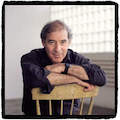
Born in New York City on this datein 1941, Furst is noted for spy novels set just prior to World War II, an eraand genre’ he first explored in the late 1980s after taking a trip along theDanube. Before becoming a full-timenovelist, he studied English at Oberlin College, worked in advertising andwrote articles for both magazines and newspapers, including the prestigious International Herald Tribune inParis.
Furst, who arguably can lay claim to the title“Inventor of the Historical Spy Novel,” has especially been lauded for hissuccessful evocations of Eastern European peoples and places during thetumultuous era of 1933-1942. While allof his historical espionage novels are loosely connected, only hismega-bestsellers The World at Night and Red Gold share a commonplot.
@font-face {font-family:Times; panose-1:2 0 5 0 0 0 0 0 0 0; mso-font-charset:0; mso-generic-font-family:auto; mso-font-pitch:variable; mso-font-signature:3 0 0 0 1 0;}@font-face {font-family:"MS 明朝"; mso-font-charset:78; mso-generic-font-family:auto; mso-font-pitch:variable; mso-font-signature:-536870145 1791491579 18 0 131231 0;}@font-face {font-family:"Cambria Math"; panose-1:2 4 5 3 5 4 6 3 2 4; mso-font-charset:0; mso-generic-font-family:auto; mso-font-pitch:variable; mso-font-signature:-536870145 1107305727 0 0 415 0;}@font-face {font-family:Cambria; panose-1:2 4 5 3 5 4 6 3 2 4; mso-font-charset:0; mso-generic-font-family:auto; mso-font-pitch:variable; mso-font-signature:-536870145 1073743103 0 0 415 0;}p.MsoNormal, li.MsoNormal, div.MsoNormal {mso-style-unhide:no; mso-style-qformat:yes; mso-style-parent:""; margin:0in; margin-bottom:.0001pt; mso-pagination:widow-orphan; font-size:12.0pt; font-family:Cambria; mso-ascii-font-family:Cambria; mso-ascii-theme-font:minor-latin; mso-fareast-font-family:"MS 明朝"; mso-fareast-theme-font:minor-fareast; mso-hansi-font-family:Cambria; mso-hansi-theme-font:minor-latin; mso-bidi-font-family:"Times New Roman"; mso-bidi-theme-font:minor-bidi;}.MsoChpDefault {mso-style-type:export-only; mso-default-props:yes; font-family:Cambria; mso-ascii-font-family:Cambria; mso-ascii-theme-font:minor-latin; mso-fareast-font-family:"MS 明朝"; mso-fareast-theme-font:minor-fareast; mso-hansi-font-family:Cambria; mso-hansi-theme-font:minor-latin; mso-bidi-font-family:"Times New Roman"; mso-bidi-theme-font:minor-bidi;}div.WordSection1 {page:WordSection1;}
“Idon't really write plots," he said. "I use history as the engine that drives everything."
February 19, 2024
A Writer's Moment: 'Reflecting life as you see it'
'Reflecting life as you see it'
“I think that when you're writingfiction what you're doing is reflecting life as you see it, and putting downhow you think and how other people think, and the sort of confusions that youdon't normally like to admit to.” – Helen Fielding
An English novelist and screenwriter, Fieldingis best known as the creator of the character Bridget Jones and her novels and films about the the life of this 30-something Londener trying to make sense of life and love.
Written in the 1990s Bridget Jones's Diaryand Bridget Jones: The Edge of Reason sold multi-millions and spawned two award-winningfilms of the same name. Her 2016 book Bridget Jone's Baby: The Diaries also had great success. A survey conductedby The Guardian newspaper, Bridget Jones’s Diary was named as oneof the ten novels that best defined the 20th century.
Born on this date in 1958, Fielding gravitatedto writing at an early age and became a journalist right out of college, firstworking for the BBC and then as a journalist and columnist for several major British newspapers.
 She actually wrote BridgetJones’s Diary as a weekly "serial" column in the London newspaper The Independent, much in the waythat you might make entries in a journal or diary. Eventually she had both a great following of readers and the chapters of her book.
Fielding creditsBridget’s success to the fact that, at heart, the story is about “the gap between how we feel we are expected to beand how we actually are.” And, ofcourse, she says her use of humor made it even more popular. “Comedy tends to comeout of things which are quite painful and serious.”
February 17, 2024
A Writer's Moment: 'Feeling experience and pressing it further'
'Feeling experience and pressing it further'
“Onereason to write a poem is to flush from the deep thickets of the self somethought, feeling, comprehension, question, music, you didn't know was in you,or in the world.” Jane Hirshfield
Poetand essayist Hirshfield, born in New York in February of 1953, is the author of10 poetry collections, including this past year’s The Asking: New and Selected Poems. Each has earned numerous awards as has her highlyregarded book of essays about poetry, Nine Gates: Entering the Mind ofPoetry.
“My job as a human being as well as a writeris to feel as thoroughly as possible the experience that I am part of, and thenpress it a little further,” she said. ForSaturday’s poem here is Hirshfield’s,
ChangingEverything
I was walking again
in the woods,
a yellow light
was sifting all I saw.
Willfully,
with a cold heart,
I took a stick,
lifted it to the opposite side
of the path.
There, I said to myself,
that's done now.
Brushing one hand against the other,
to clean them
of the tiny fragments of bark.
@font-face {font-family:Times; panose-1:2 0 5 0 0 0 0 0 0 0; mso-font-charset:0; mso-generic-font-family:auto; mso-font-pitch:variable; mso-font-signature:3 0 0 0 1 0;}@font-face {font-family:"MS 明朝"; mso-font-charset:78; mso-generic-font-family:auto; mso-font-pitch:variable; mso-font-signature:-536870145 1791491579 18 0 131231 0;}@font-face {font-family:"Cambria Math"; panose-1:2 4 5 3 5 4 6 3 2 4; mso-font-charset:0; mso-generic-font-family:auto; mso-font-pitch:variable; mso-font-signature:-536870145 1107305727 0 0 415 0;}@font-face {font-family:Cambria; panose-1:2 4 5 3 5 4 6 3 2 4; mso-font-charset:0; mso-generic-font-family:auto; mso-font-pitch:variable; mso-font-signature:-536870145 1073743103 0 0 415 0;}p.MsoNormal, li.MsoNormal, div.MsoNormal {mso-style-unhide:no; mso-style-qformat:yes; mso-style-parent:""; margin:0in; margin-bottom:.0001pt; mso-pagination:widow-orphan; font-size:12.0pt; font-family:Cambria; mso-ascii-font-family:Cambria; mso-ascii-theme-font:minor-latin; mso-fareast-font-family:"MS 明朝"; mso-fareast-theme-font:minor-fareast; mso-hansi-font-family:Cambria; mso-hansi-theme-font:minor-latin; mso-bidi-font-family:"Times New Roman"; mso-bidi-theme-font:minor-bidi;}.MsoChpDefault {mso-style-type:export-only; mso-default-props:yes; font-family:Cambria; mso-ascii-font-family:Cambria; mso-ascii-theme-font:minor-latin; mso-fareast-font-family:"MS 明朝"; mso-fareast-theme-font:minor-fareast; mso-hansi-font-family:Cambria; mso-hansi-theme-font:minor-latin; mso-bidi-font-family:"Times New Roman"; mso-bidi-theme-font:minor-bidi;}div.WordSection1 {page:WordSection1;}
February 16, 2024
A Writer's Moment: 'Always about the most important things'
'Always about the most important things'
“Reading is probably what leads mostwriters to writing.” – Richard Ford
A novelist, shortstory writer and award-winning editor, Ford is perhaps best-known for his novelsThe Sportswriter and its sequels, Independence Day (winner of both the Pulitzer Prize and ThePEN/Faulkner Award), The Lay of the Land and Let Me BeFrank with You, also a Pulitzer Prize finalist.
A nativeMississippian born on this date in 1944, Ford also wrote the terrific shortstory collection Rock Springs, which has been widely anthologized. Astory collection mostly set in Montana, it includes some of his most popularstories and cemented his reputation as one of the finest writers of the last 50years.
Ford struggled withdyslexia in his growing up years and didn’t get seriously interested in even readingliterature until his college days at Michigan State. He has stated in interviews that his dyslexiamay, however, have helped him as a reader and writer forcing him to read andwrite at a slow and thoughtful pace.
Like many greatwriters, Ford states the best way to be a great writer is to write about whatyou know best. “Happiness for me,” hesaid, “is getting to write about themost important things I know.”
@font-face {font-family:"MS 明朝"; mso-font-charset:78; mso-generic-font-family:auto; mso-font-pitch:variable; mso-font-signature:-536870145 1791491579 18 0 131231 0;}@font-face {font-family:"Cambria Math"; panose-1:2 4 5 3 5 4 6 3 2 4; mso-font-charset:0; mso-generic-font-family:auto; mso-font-pitch:variable; mso-font-signature:-536870145 1107305727 0 0 415 0;}@font-face {font-family:Cambria; panose-1:2 4 5 3 5 4 6 3 2 4; mso-font-charset:0; mso-generic-font-family:auto; mso-font-pitch:variable; mso-font-signature:-536870145 1073743103 0 0 415 0;}p.MsoNormal, li.MsoNormal, div.MsoNormal {mso-style-unhide:no; mso-style-qformat:yes; mso-style-parent:""; margin:0in; margin-bottom:.0001pt; mso-pagination:widow-orphan; font-size:12.0pt; font-family:Cambria; mso-ascii-font-family:Cambria; mso-ascii-theme-font:minor-latin; mso-fareast-font-family:"MS 明朝"; mso-fareast-theme-font:minor-fareast; mso-hansi-font-family:Cambria; mso-hansi-theme-font:minor-latin; mso-bidi-font-family:"Times New Roman"; mso-bidi-theme-font:minor-bidi;}span.bqquotelink {mso-style-name:bqquotelink; mso-style-unhide:no;}.MsoChpDefault {mso-style-type:export-only; mso-default-props:yes; font-family:Cambria; mso-ascii-font-family:Cambria; mso-ascii-theme-font:minor-latin; mso-fareast-font-family:"MS 明朝"; mso-fareast-theme-font:minor-fareast; mso-hansi-font-family:Cambria; mso-hansi-theme-font:minor-latin; mso-bidi-font-family:"Times New Roman"; mso-bidi-theme-font:minor-bidi;}div.WordSection1 {page:WordSection1;}